Markets
News
Analysis
User
24/7
Economic Calendar
Education
Data
- Names
- Latest
- Prev



Signal Accounts for Members
All Signal Accounts
All Contests


U.S. Cleveland Fed CPI MoM (SA) (Dec)A:--
F: --
P: --
U.S. Cleveland Fed CPI MoM (Dec)A:--
F: --
P: --
China, Mainland M0 Money Supply YoY (Dec)--
F: --
P: --
China, Mainland M1 Money Supply YoY (Dec)--
F: --
P: --
China, Mainland M2 Money Supply YoY (Dec)--
F: --
P: --
U.S. EIA Natural Gas Production Forecast For The Next Year (Jan)A:--
F: --
P: --
U.S. EIA Short-Term Crude Production Forecast For The Next Year (Jan)A:--
F: --
P: --
U.S. EIA Short-Term Crude Production Forecast For The Year (Jan)A:--
F: --
P: --
EIA Monthly Short-Term Energy Outlook
U.S. 30-Year Bond Auction Avg. YieldA:--
F: --
P: --
Argentina 12-Month CPI (Dec)A:--
F: --
P: --
U.S. Budget Balance (Dec)A:--
F: --
P: --
Argentina CPI MoM (Dec)A:--
F: --
P: --
Argentina National CPI YoY (Dec)A:--
F: --
P: --
Richmond Federal Reserve President Barkin delivered a speech.
U.S. API Weekly Cushing Crude Oil StocksA:--
F: --
P: --
U.S. API Weekly Crude Oil StocksA:--
F: --
P: --
U.S. API Weekly Refined Oil StocksA:--
F: --
P: --
U.S. API Weekly Gasoline StocksA:--
F: --
P: --
South Korea Unemployment Rate (SA) (Dec)A:--
F: --
P: --
Japan Reuters Tankan Non-Manufacturers Index (Jan)A:--
F: --
P: --
Japan Reuters Tankan Manufacturers Index (Jan)A:--
F: --
P: --
China, Mainland Exports YoY (CNH) (Dec)A:--
F: --
P: --
China, Mainland Trade Balance (USD) (Dec)A:--
F: --
P: --
China, Mainland Trade Balance (CNH) (Dec)A:--
F: --
P: --
China, Mainland Exports (Dec)A:--
F: --
P: --
China, Mainland Imports YoY (CNH) (Dec)A:--
F: --
P: --
China, Mainland Imports (CNH) (Dec)A:--
F: --
P: --
China, Mainland Imports YoY (USD) (Dec)A:--
F: --
P: --
China, Mainland Exports YoY (USD) (Dec)A:--
F: --
P: --
China, Mainland Outstanding Loans Growth YoY (Dec)--
F: --
P: --
U.K. 10-Year Note Auction Yield--
F: --
P: --
Canada Leading Index MoM (Dec)--
F: --
P: --
U.S. MBA Mortgage Application Activity Index WoW--
F: --
P: --
U.S. Core PPI YoY (Nov)--
F: --
P: --
U.S. PPI MoM (SA) (Nov)--
F: --
P: --
U.S. PPI YoY (Nov)--
F: --
P: --
U.S. Current Account (Q3)--
F: --
P: --
U.S. Retail Sales YoY (Nov)--
F: --
P: --
U.S. Retail Sales (Nov)--
F: --
P: --
U.S. Core Retail Sales MoM (Nov)--
F: --
P: --
U.S. PPI YoY (Excl. Food, Energy & Trade) (Nov)--
F: --
P: --
U.S. PPI MoM Final (Excl. Food, Energy and Trade) (SA) (Nov)--
F: --
P: --
U.S. Core Retail Sales (Nov)--
F: --
P: --
U.S. Retail Sales MoM (Excl. Automobile) (SA) (Nov)--
F: --
P: --
U.S. Retail Sales MoM (Nov)--
F: --
P: --
U.S. Retail Sales MoM (Excl. Gas Stations & Vehicle Dealers) (SA) (Nov)--
F: --
P: --
U.S. Core PPI MoM (SA) (Nov)--
F: --
P: --
Philadelphia Fed President Henry Paulson delivers a speech
U.S. Commercial Inventory MoM (Oct)--
F: --
P: --
U.S. Existing Home Sales Annualized Total (Dec)--
F: --
P: --
U.S. Existing Home Sales Annualized MoM (Dec)--
F: --
P: --
U.S. EIA Weekly Cushing, Oklahoma Crude Oil Stocks Change--
F: --
P: --
U.S. EIA Weekly Crude Stocks Change--
F: --
P: --
U.S. EIA Weekly Gasoline Stocks Change--
F: --
P: --
U.S. EIA Weekly Crude Demand Projected by Production--
F: --
P: --
U.S. EIA Weekly Crude Oil Imports Changes--
F: --
P: --
U.S. EIA Weekly Heating Oil Stock Changes--
F: --
P: --
U.S. Refinitiv/Ipsos Primary Consumer Sentiment Index (PCSI) (Jan)--
F: --
P: --
Japan Domestic Enterprise Commodity Price Index YoY (Dec)--
F: --
P: --
Japan Domestic Enterprise Commodity Price Index MoM (Dec)--
F: --
P: --


No matching data
Latest Views
Latest Views
Trending Topics
Top Columnists
Latest Update
White Label
Data API
Web Plug-ins
Affiliate Program
View All

No data
China’s rare earth exports climbed to their highest level since at least 2014 in 2025, rising 12.9% year on year, even after Beijing imposed new restrictions on several key elements....
Poland's central bank is at a crossroads, with its recent streak of interest rate cuts likely coming to a halt. Analysts overwhelmingly expect the Monetary Policy Council (MPC) to hold its benchmark rate at 4% this week, but a surprisingly low inflation report has made the decision far from certain.
After cutting borrowing costs at its last five meetings, the central bank appears ready to shift to a wait-and-see approach. Governor Adam Glapinski has signaled a desire to evaluate the impact of the past easing, which saw rates lowered by a total of 175 basis points in six steps last year.
This view is supported by a Bloomberg survey, where 29 of 32 economists predicted that the MPC will keep rates on hold. Fellow panelist Henryk Wnorowski also suggested that the next potential cut would not occur until March at the earliest.
Despite the consensus for a pause, the decision is not a foregone conclusion. The primary reason for the uncertainty is an unexpected dip in inflation, which fell below the central bank’s 2.5% target in December. This development strengthens the argument for continued monetary easing.
The division among policymakers is clear. MPC member Ireneusz Dabrowski commented last week that another rate reduction was equally as likely as holding firm. Analysts at PKO Bank Polski SA are in the minority forecasting a quarter-point cut, stating in a note, "The outcome of the MPC meeting will remain uncertain until the very end."
Adding another layer of unpredictability is a change in the council's composition. This week’s meeting will be the first for Marcin Zarzecki, a new member appointed by President Karol Nawrocki. Zarzecki, whose views on monetary policy are not publicly known, replaces Cezary Kochalski, whose term concluded in December. His vote could prove decisive in what is expected to be a close call.
The December Consumer Price Index (CPI) report was as complex as analysts predicted, but the real story of inflation isn't in the headline numbers. A closer look at money supply and central bank activity reveals pressures that the official data may be missing.
At first glance, the December inflation data seemed to align with expectations, offering a sliver of optimism for markets hoping for future monetary easing.
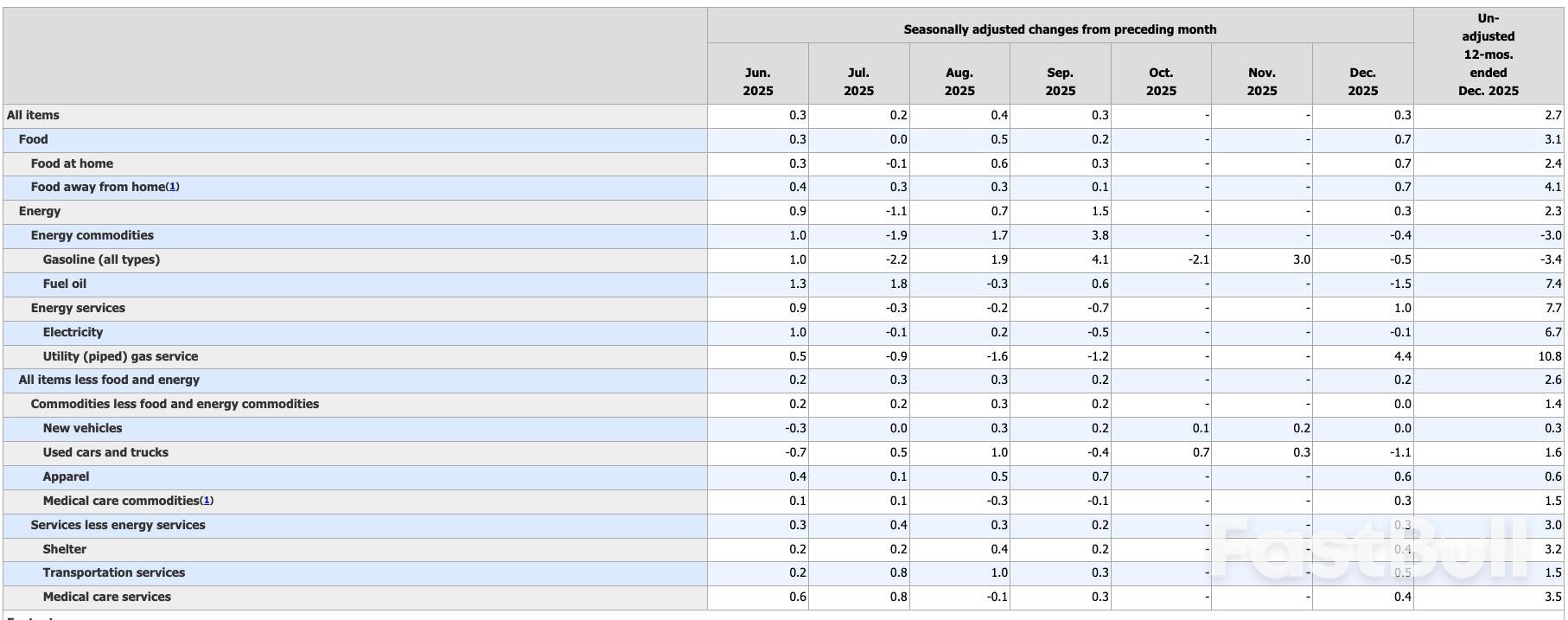
The overall CPI rose 0.3% month-on-month, holding the annual inflation rate steady at 2.7%. When stripping out volatile food and energy costs, the core CPI increased by 0.2% for the month, with the annual rate unchanged at 2.6%. This slightly cooler-than-expected core reading fueled speculation that the Federal Reserve might continue easing monetary policy in 2026.
However, a persistent trend lies beneath the surface. Over the last six available readings, core CPI has posted increases of 0.2%, 0.3%, 0.3%, 0.2%, 0.2%, and 0.2%. This pattern annualizes to a rate of 2.8%, showing that core inflation has been stuck in this range for over a year.
A detailed breakdown of the December report shows specific price pressures:
• Shelter: Increased by 0.4%
• Food: Surged by 0.7%
• Energy: Rose by 0.3%, even as gasoline prices fell 0.4%
• Services: Grew by 0.3%
• Used Cars & Trucks: Posted the largest decline, falling 1.1%

It’s crucial to approach the CPI report with caution. The data's reliability has been questioned, particularly following a November report some critics described as heavily estimated.
Furthermore, the government's methodology for calculating CPI was revised in the 1990s, leading to a formula that many argue systematically understates the true rise in the cost of living. If the formula from the 1970s were still in use, today's official CPI figures would likely be closer to 6%.
Even based on the current official data, inflation remains well above the Federal Reserve's target. As Ellen Zentner, chief economic strategist at Morgan Stanley, noted, the situation feels familiar.
"We've seen this movie before—inflation isn't reheating, but it remains above target," Zentner stated. "Today's inflation report doesn't give the Fed what it needs to cut interest rates later this month."
The CPI measures price changes in a specific basket of goods, but it only captures a symptom of inflation. Historically, economists defined inflation as an increase in the supply of money and credit. Rising prices are the consequence of this monetary expansion.
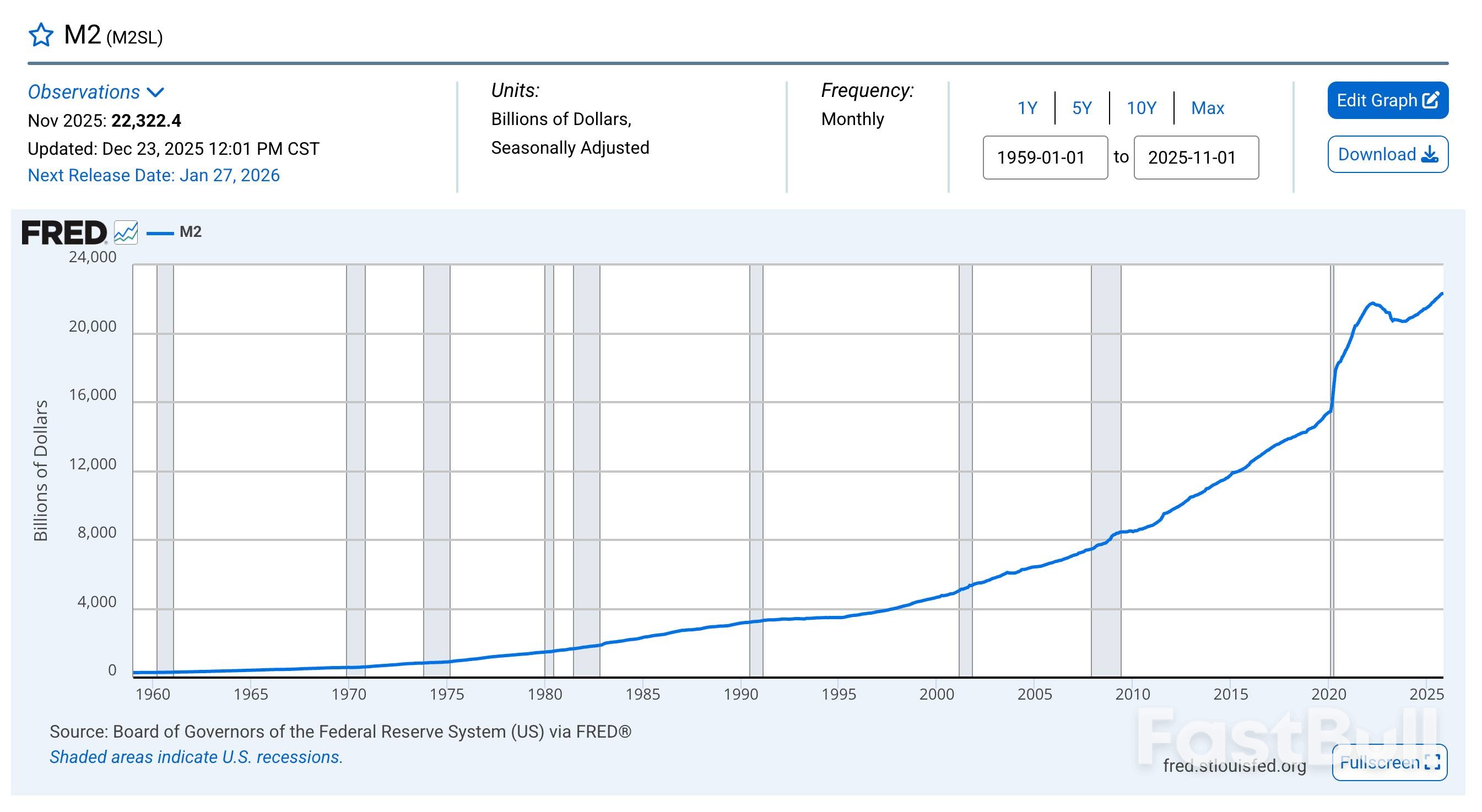
By this fundamental measure, inflation is not only present but accelerating. The M2 money supply is currently growing at its fastest rate since July 2022. After hitting a low in October 2023, the money supply has resumed its upward trajectory, now surpassing its pandemic-era peak as money creation has quickened in recent months.

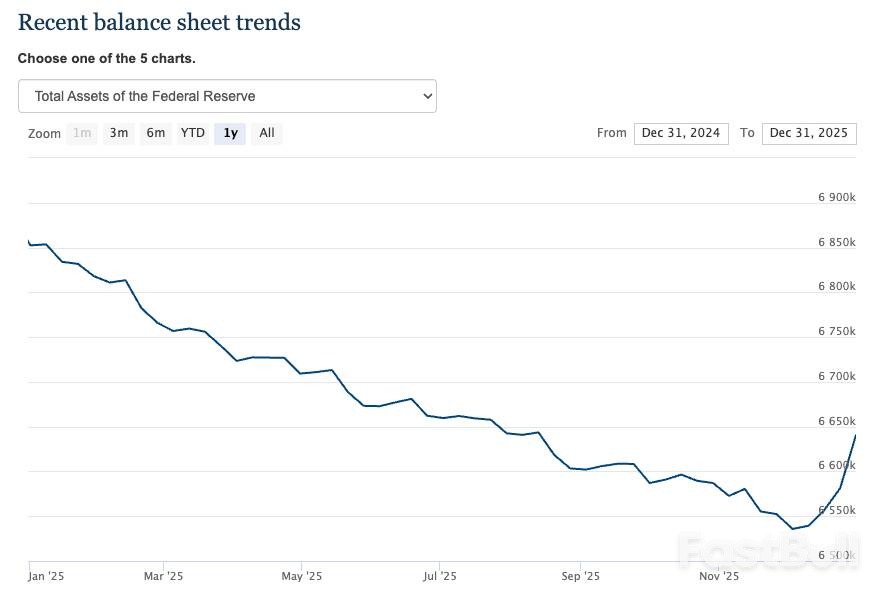
Further evidence of rising inflationary pressure comes from the Federal Reserve's balance sheet, which is once again expanding.
Last month, the central bank resumed purchasing U.S. Treasuries with newly created money, effectively restarting its quantitative easing (QE) program. This direct injection of liquidity into the financial system is, by definition, inflationary.

This leads to a fundamental conflict for the central bank. The Fed is caught in a Catch-22: it needs to loosen monetary policy through rate cuts and QE to support a debt-laden economy, but it also needs higher rates to bring price inflation back under control. It cannot do both at the same time.
Any "cooler than expected" CPI report provides political cover to prioritize easing, despite official rhetoric aimed at managing expectations. This dynamic ensures that even if official price metrics cool temporarily, the underlying inflationary forces are likely to grow stronger.
The latest data from the U.S. Bureau of Labor Statistics confirms that headline inflation remained at 2.7% for the year ending in December 2025, signaling a period of continued economic stability.
This figure, which met market expectations, provides crucial insight for both Federal Reserve policymakers and market participants, including those in the cryptocurrency space. The report also showed that core inflation, which strips out volatile food and energy prices, held firm at 2.6%.
The December 2025 report revealed no month-over-month changes from November, reinforcing the theme of price stability. The primary components driving the annual figure include:
• Energy Prices: Increased by 2.3% year-over-year.
• Food Prices: Rose by 3.1% over the same period.
The consistency in these numbers suggests that the underlying price pressures in the economy are not accelerating, providing a predictable environment for businesses and consumers.
With both headline and core inflation showing no unexpected volatility, the Federal Reserve is less likely to make aggressive adjustments to its monetary policy. Economists widely believe that this trend of stable inflation supports the case for holding interest rates steady in upcoming policy meetings.
Continued stability over several months could strengthen confidence in the effectiveness of current economic strategies and allow for more predictable financial planning.
The cryptocurrency sector registered no significant reaction to the inflation report. Market analysts noted that major assets like Bitcoin and Ethereum did not experience any immediate volatility following the release of the data.
This lack of response is typical when economic figures align with consensus forecasts. Since the stable inflation numbers did not introduce new uncertainty into the broader financial landscape, the crypto market continued to trade on its own specific drivers and sentiment.
U.S. Secretary of State Marco Rubio and India's External Affairs Minister Subrahmanyam Jaishankar held discussions on trade Tuesday, raising questions about the future of a long-awaited bilateral deal.
According to a U.S. Department of State statement, the two officials discussed ongoing trade negotiations, energy security, and critical minerals. The conversation also touched on their "shared interest in strengthening economic cooperation" and expanding bilateral civil nuclear cooperation.
The call took place just one day after Sergio Gor, the new U.S. ambassador to India, expressed confidence that the two nations, as close partners, would resolve their differences, including the delayed trade agreement.
The negotiations are happening against a backdrop of a sharp downturn in U.S.-India relations during Donald Trump's second presidency. Washington has imposed tariffs of 50% on India—among the highest in the world—partly due to its purchases of Russian oil.
Despite months of negotiations and multiple phone calls between Trump and Indian Prime Minister Narendra Modi, India remains one of the few major economies without a trade agreement with the United States.
Recent official comments have sent mixed messages about the deal's progress. Last week, U.S. Commerce Secretary Howard Lutnick claimed a trade agreement failed to materialize last year because Modi did not call Trump. India dismissed this assertion as inaccurate.
Despite the friction, India has taken steps to appease the Trump administration, such as reducing its purchases of Russian oil. Ambassador Gor noted this week that both sides "continue to actively engage" and are determined to get the trade talks across the finish line.
White Label
Data API
Web Plug-ins
Poster Maker
Affiliate Program
The risk of loss in trading financial instruments such as stocks, FX, commodities, futures, bonds, ETFs and crypto can be substantial. You may sustain a total loss of the funds that you deposit with your broker. Therefore, you should carefully consider whether such trading is suitable for you in light of your circumstances and financial resources.
No decision to invest should be made without thoroughly conducting due diligence by yourself or consulting with your financial advisors. Our web content might not suit you since we don't know your financial conditions and investment needs. Our financial information might have latency or contain inaccuracy, so you should be fully responsible for any of your trading and investment decisions. The company will not be responsible for your capital loss.
Without getting permission from the website, you are not allowed to copy the website's graphics, texts, or trademarks. Intellectual property rights in the content or data incorporated into this website belong to its providers and exchange merchants.
Not Logged In
Log in to access more features

FastBull Membership
Not yet
Purchase
Log In
Sign Up