

Markets
News
Analysis
User
24/7
Economic Calendar
Education
Data
- Names
- Latest
- Prev



Signal Accounts for Members
All Signal Accounts
All Contests
 Brazil IPCA Inflation Index YoY (Nov)
A:--
F: --
P: --
Brazil CPI YoY (Nov)A:--
F: --
P: --
 U.S. MBA Mortgage Application Activity Index WoW
A:--
F: --
P: --
U.S. Labor Cost Index QoQ (Q3)A:--
F: --
P: --
 Canada Overnight Target Rate
A:--
F: --
P: --
BOC Monetary Policy Report U.S. EIA Weekly Gasoline Stocks ChangeA:--
F: --
P: --
U.S. EIA Weekly Crude Demand Projected by ProductionA:--
F: --
P: --
U.S. EIA Weekly Cushing, Oklahoma Crude Oil Stocks ChangeA:--
F: --
P: --
U.S. EIA Weekly Crude Stocks ChangeA:--
F: --
P: --
U.S. EIA Weekly Crude Oil Imports ChangesA:--
F: --
P: --
U.S. EIA Weekly Heating Oil Stock ChangesA:--
F: --
P: --
U.S. Refinitiv/Ipsos Primary Consumer Sentiment Index (PCSI) (Dec)A:--
F: --
P: --
 China, Mainland M1 Money Supply YoY (Nov)
--
F: --
P: --
China, Mainland M0 Money Supply YoY (Nov)--
F: --
P: --
China, Mainland M2 Money Supply YoY (Nov)--
F: --
P: --
 Russia CPI YoY (Nov)
A:--
F: --
P: --
U.S. Federal Funds Rate Projections-Longer Run (Q4)A:--
F: --
P: --
U.S. Federal Funds Rate Projections-1st Year (Q4)A:--
F: --
P: --
U.S. Target Federal Funds Rate Lower Limit (Overnight Reverse Repo Rate)A:--
F: --
P: --
U.S. Federal Funds Rate Projections-2nd Year (Q4)A:--
F: --
P: --
U.S. Budget Balance (Nov)A:--
F: --
P: --
U.S. Target Federal Funds Rate Upper Limit (Excess Reserves Ratio)A:--
F: --
P: --
U.S. Interest Rate On Reserve BalancesA:--
F: --
P: --
U.S. Federal Funds Rate Projections-Current (Q4)A:--
F: --
P: --
U.S. Federal Funds Rate TargetA:--
F: --
P: --
U.S. Federal Funds Rate Projections-3rd Year (Q4)A:--
F: --
P: --
FOMC Statement FOMC Press Conference Brazil Selic Interest RateA:--
F: --
P: --
 U.K. 3-Month RICS House Price Balance (Nov)
--
F: --
P: --
 Australia Employment (Nov)
--
F: --
P: --
Australia Full-time Employment (SA) (Nov)--
F: --
P: --
Australia Unemployment Rate (SA) (Nov)--
F: --
P: --
Australia Labor Force Participation Rate (SA) (Nov)--
F: --
P: --
 Turkey Retail Sales YoY (Oct)
--
F: --
P: --
 South Africa Mining Output YoY (Oct)
--
F: --
P: --
South Africa Gold Production YoY (Oct)--
F: --
P: --
 Italy Quarterly Unemployment Rate (SA) (Q3)
--
F: --
P: --
 IEA Oil Market Report Turkey 1-Week Repo Rate
--
F: --
P: --
South Africa Refinitiv/Ipsos Primary Consumer Sentiment Index (PCSI) (Dec)--
F: --
P: --
Turkey Overnight Lending Rate (O/N) (Dec)--
F: --
P: --
Turkey Late Liquidity Window Rate (LON) (Dec)--
F: --
P: --
U.K. Refinitiv/Ipsos Primary Consumer Sentiment Index (PCSI) (Dec)--
F: --
P: --
Brazil Retail Sales MoM (Oct)--
F: --
P: --
U.S. Weekly Continued Jobless Claims (SA)--
F: --
P: --
U.S. Exports (Sept)--
F: --
P: --
U.S. Trade Balance (Sept)--
F: --
P: --
U.S. Weekly Initial Jobless Claims (SA)--
F: --
P: --
Canada Imports (SA) (Sept)--
F: --
P: --
U.S. Initial Jobless Claims 4-Week Avg. (SA)--
F: --
P: --
Canada Trade Balance (SA) (Sept)--
F: --
P: --
Canada Exports (SA) (Sept)--
F: --
P: --
U.S. Wholesale Sales MoM (SA) (Sept)--
F: --
P: --
U.S. EIA Weekly Natural Gas Stocks Change--
F: --
P: --
U.S. 30-Year Bond Auction Avg. Yield--
F: --
P: --
 Argentina CPI MoM (Nov)
--
F: --
P: --
Argentina National CPI YoY (Nov)--
F: --
P: --
Argentina 12-Month CPI (Nov)--
F: --
P: --
U.S. Weekly Treasuries Held by Foreign Central Banks--
F: --
P: --


No matching data

Latest Views
Latest Views
Trending Topics
Top Columnists
Latest Update
White Label
Data API
Web Plug-ins
Affiliate Program
View All
No data
China's Premier Li Qiang said on Tuesday the "mutually destructive consequences of tariffs have become increasingly evident" over 2025, in remarks at a "1+10 Dialogue" including the heads of the IMF, World Trade Organization and World Bank.
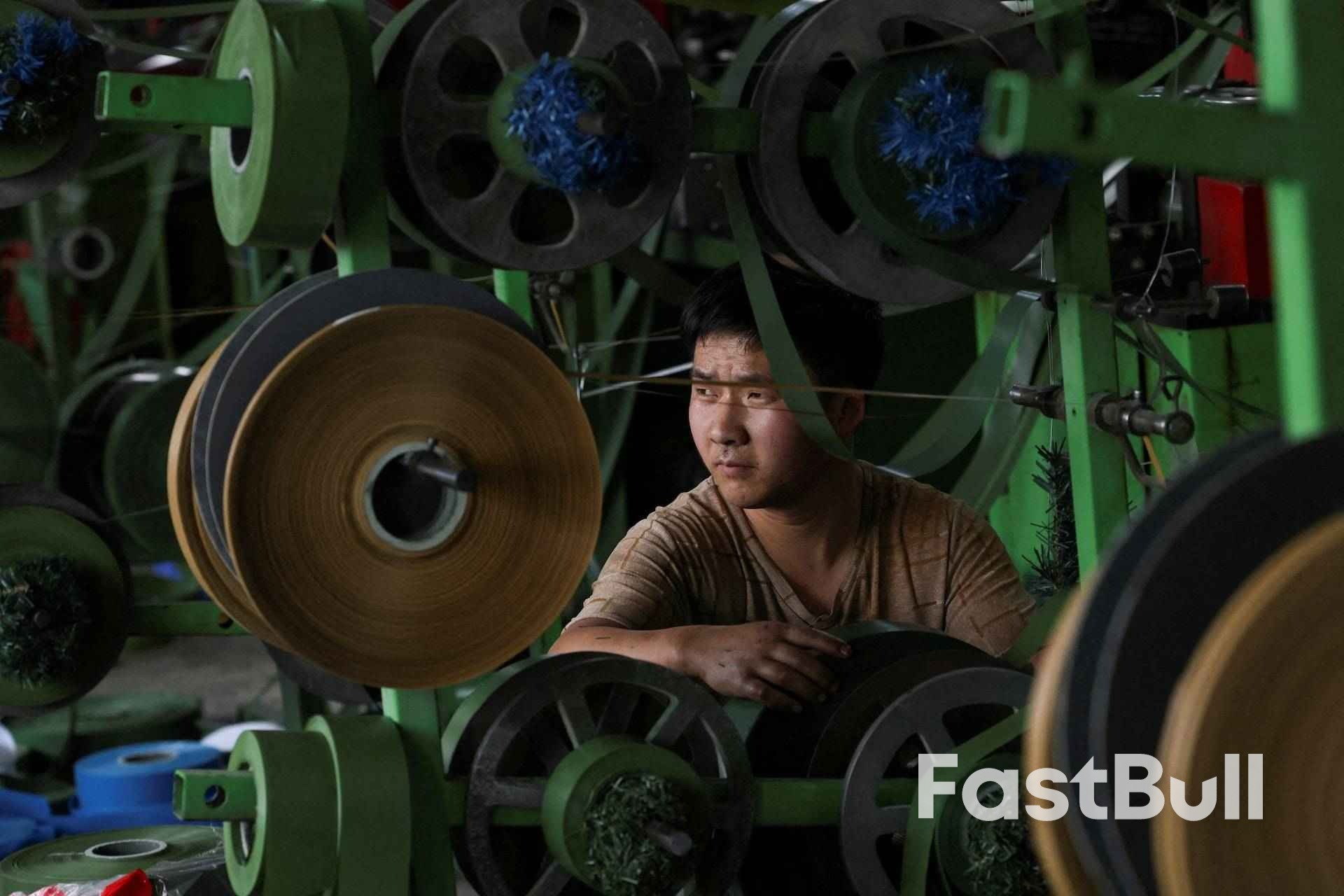
China's Premier Li Qiang said on Tuesday the "mutually destructive consequences of tariffs have become increasingly evident" over 2025, in remarks at a "1+10 Dialogue" including the heads of the IMF, World Trade Organization and World Bank.
Without naming U.S. President Donald Trump, China's second-highest ranking official told the meeting in Beijing that greater effort was needed to reform global economic governance due to the trade barriers.
China's trade surplus topped $1 trillion for the first time in November, trade data showed on Monday, which economists say is linked to Trump's tariffs diverting shipments from the world's second-largest economy to other markets, putting pressure on manufacturing sectors in those economies.
"Since the beginning of the year, the threat of tariffs has loomed over the global economy," Li told the meeting, which also includes senior officials from the OECD and International Labour Organization.
Li also said artificial intelligence is becoming central to trade, highlighting models such as China's DeepSeek as drivers of the global transformation of traditional industries and as catalysts for growth in new sectors, including smart robots and wearable devices.
Chinese foreign investment in green power jumped to $80 billion in the past year as Beijing leveraged its dominance in energy transition technologies, according to Climate Energy Finance.
The funds were pledged in the year through November 2025, the Australian-based think tank said in a report released on Sunday, and compare with $100 billion of investment over the previous two years.
US President Donald Trump's aggressive trade tariffs and shifting geopolitical policies have prompted many developing countries to deepen ties with China, while Washington's hostility to clean energy has also played into Beijing's hands. Even before the US's pullback, China already dominated sectors like wind, solar and electric vehicle batteries.
"The clean-tech economy represents a flourishing form of South-South cooperation, where national development goals meet China's techno-industrial might," Caroline Wang, an analyst at CEF, said in the report. "While the US sees China's rise as a threat, many developing countries are inspired by its success and aim to emulate it."
Southeast Asia remains the top destination for Chinese clean-technology capital, CEF said, without giving a regional breakdown of the numbers. Major projects include a $6 billion battery plant in Indonesia being jointly developed by Contemporary Amperex Technology Co. Ltd., Indonesia Battery Corp., and PT Aneka Tambang. The Middle East and North Africa have emerged as the fastest-growing regions for Chinese investment in the battery and solar sectors, according to the Australian think tank.
Countries are offering various incentives to attract Chinese clean-tech investment – from competitive tax rates to fast-tracked project approvals – with a focus on building local manufacturing capacity, boosting employment, and facilitating joint-venture projects with local partners, Wang said.
More first-time car buyers in China want to buy battery electric vehicles over other types of powertrains, due to their affordability, range of models and improved charging, according to a Bloomberg Intelligence survey.
Mexico's Congress is set to vote this week on President Claudia Sheinbaum's proposed tariffs on China, part of a broader plan to shield local producers and ease trade tensions with the US.
As military tensions between China and Japan reach the highest level in more than a decade, the sparsely populated island of Yonaguni finds itself right on the front lines. Up and down the 160-strong Ryukyu island chain, Japan is quickly putting in place missile batteries, radar towers, ammunition storage sites and other combat facilities
The United States will allow chip giant Nvidia to export its advanced artificial intellegence chips to China, US President Donald Trump said on Monday, after he reached an agreement with Chinese President Xi Jinping.
Nvidia is currently the largest US company by market value, having quickly risen with the AI wave.
The announcement marks a notable shift in US' tech export policy, especially for advanced AI chips. Former US President Joe Biden's government had heavily restricted the sale of advanced chips to China over concerns of its applications in the Chinese military.
Trump made the announcement in a post on Truth Social, saying he had informed Xi that Washington would permit Nvidia to export its H200 products to "approved customers" in China and other countries, "under conditions that allow of continued strong National Security."
"President Xi responded positively! 25% will be paid to the United States of America," he wrote, adding that the move would benefit US taxpayers, increase jobs and strengthen US manufacturing.
A White House spokesperson clarified that the 25% fee would be an import tax from Taiwan where the chips are made. They will be imported to the US for a security review before being exported to China.
The US president assured that the nation would maintain its lead in AI as US customers were already moving to the highly advanced Blackwell chips, followed by the next generation Rubin chips, "neither of which are part of this deal."
"Offering H200 to approved customers, vetted by the Department of Commerce, strikes a thoughtful balance that is great for America," Nvidia said in a statement. Its Chief Executive Officer Jensen Huang has long lobbied the White House to reverse the Biden-era policy of restricting China's access to powerful chips.
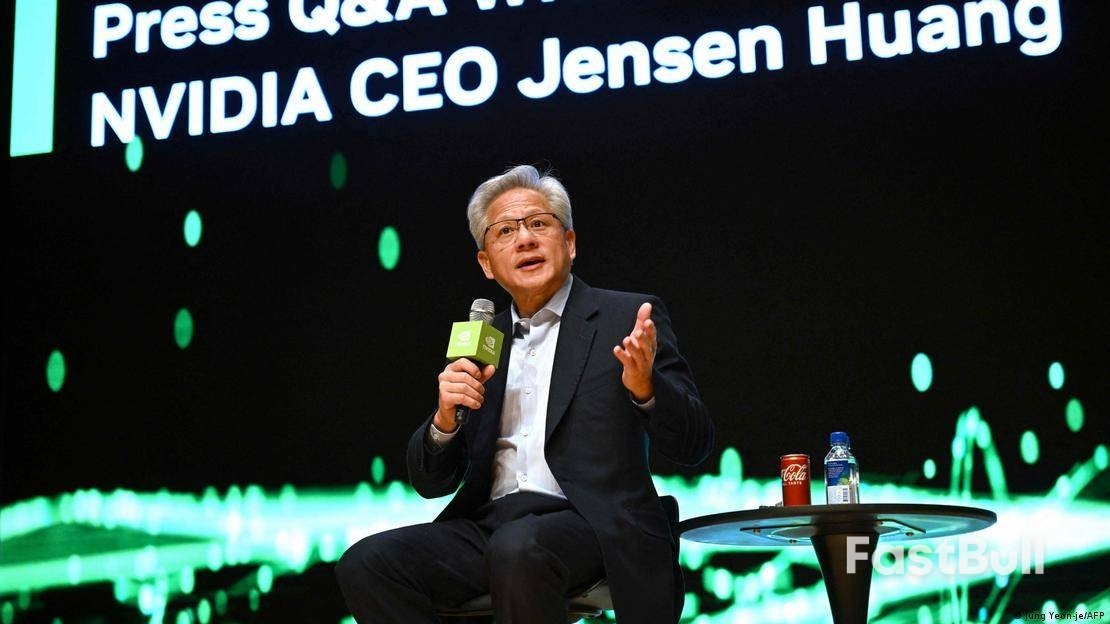 Jensen Huang's Nvidia is currently the largest US company by market value [FILE: October 2025]Image: Jung Yeon-je/AFP
Trump said the Department of Commerce was finalizing the details but the "same approach will apply to AMD, Intel, and other GREAT American Companies."
Several Democrats in the US Senate reacted to the deal by issuing a statement, "calling it a colossal economic and national security failure."
"Access to these chips would give China's military transformational technology to make its weapons more lethal, carry out more effective cyberattacks against American businesses and critical infrastructure and strengthen their economic and manufacturing sector," the lawmakers said.
The senators cited a recent statement by Chinese AI company DeepSeek, which said the lack of access to advanced US-designed chips was their biggest challenge in competing withe American AI companies like OpenAI, Google, Microsoft and Perplexity.
Meanwhile, Washington-based Institute for Progress' Alex Stapp, called the policy a "massive own goal," in a football reference. He said the H200 was "6x more powerful than the H20, which was previously the most powerful chip approved for export."
The deal's announcement comes days after Massacheusetts Senator Elizabeth Warren, a Democrat, alluded to a backroom arrangement between Trump and Huang which involved a donation to build the East Wing Ballroom at the White House.
"I'm asking Microsoft, Nvidia, Meta, Apple, Amazon, Union Pacific, and Comcast about their donations to Trump's 'Big Gold Ballroom'," she said in a post on X.
China does not currently allow its companies to use US technologies, making it unclear if Trump's announcement will prompt a policy change in Beijing.
"Chinese firms want H200s, but the Chinese state is driven by paranoia and pride — paranoia about backdoors and dependence on US chips, and pride in pushing domestic alternatives," said Craig Singleton, a senior fellow at the Washington think tank Foundation for Defense of Democracies.
"Washington may approve the chips, but Beijing still has to let them in," he added.
Indian government bonds may continue to struggle on Tuesday, after witnessing a sharp plunge in the previous session after the central bank did not include the liquid benchmark paper in this week's bond purchase.
The benchmark 10-year yield (IN063335G=CC) is likely to drift in a 6.55% to 6.60% band, a private-bank trader said. It ended at 6.5697% on Monday. Bond yields rise when prices fall.
"The tide has completely shifted in favour of bears, and we could see some more selloff today, as there is no big reason for buying," the trader said.
The Reserve Bank of India will conduct bond purchase worth 500 billion rupees ($5.55 billion) on Thursday and this includes papers maturing from four to 25 years, but not the most-traded and liquid 10-year bond. This soured market sentiment and spurred a broad selloff on Monday.
Last week, the RBI cut its key repo rate by 25 basis points and left the door open for further easing, while announcing steps to boost banking-sector liquidity.
BMI, a Fitch Ratings unit, believes the current repo rate value is close to its terminal level and forecasts no further changes till the end of the next financial year.
Focus stays on the Federal Reserve's monetary policy decision due late on Wednesday. The U.S. central bank is expected to deliver a rate cut, but the market fears a hawkish guidance and a slower pace of cuts in 2026.
India's overnight index swap rates jumped on Monday largely driven by paying from offshore investors that expect a hawkish guidance from the Fed this week.

The U.S. Department of Justice said on Monday it had sued a Virginia county's school board for allowing a biologically female student access to the boy's locker room and then punishing the boys for complaining.
It was the latest action by the department over the gender policies of some schools across the country.
The department said in a release that it had sued the Loudoun County School Board "for its denial of equal protection based on religion."
The lawsuit alleges that the school board's gender policy permitting transgender children to use whichever locker room corresponds with their gender identity "requires students and faculty to accept and promote gender ideology" with which they may not agree.
Loudoun County Public Schools, located on the northwestern outskirts of Washington, DC, said in an email that it could not comment on any matter involving pending litigation.
"Students do not shed their First Amendment rights at the schoolhouse gate," Assistant Attorney General Harmeet Dhillon said. "Loudoun County's decision to advance and promote gender ideology tramples on the rights of religious students who cannot embrace ideas that deny biological reality."
The Trump administration has taken legal action against several schools and universities across the U.S. over their gender policies.
In a series of executive orders, Trump has banned transgender people from serving in the military, barred transgender girls and women from competing in female sports and ordered an end to federal funding for school programs that include "gender ideology."
The lawsuit against the Loudoun County School Board comes after the board voted in August to maintain its gender policy allowing transgender children to use whichever bathroom they choose, despite an order from the Department of Education in July that it change the policy or face punishment.
At that time, the board said in a statement that the order from the federal government to change its policy would force it to not comply with federal court precedent that transgender students be allowed to use the bathroom of the gender they identify with.
In September, the Department of Education's Office for Civil Rights found that Loudoun County schools were discriminating against male students on the basis of sex.
The office said that the school had failed to investigate complaints of sexual harassment made by two male students "concerning the presence of a member of the opposite sex in male-only intimate spaces yet thoroughly investigated the female student's sexual harassment complaint about the boys."
The gender policy of Loudoun County Public Schools came in the cross-hairs of the Trump administration after Virginia Governor Glenn Youngkin, a Republican, in May asked the state Attorney General Jason Miyares, also a Republican, to investigate claims that the school board had punished students and parents who had spoken out against its gender policy.
Miyares said in a June statement that his office had found that Loudoun County Public Schools had engaged in retaliation against students "for expressing their discomfort for being forced to share a locker room with a member of the opposite sex."
President Donald Trump announced that inflation will continue to decrease in the U.S., asserting no risk of deflation, as seen in recent official economic metrics.
This statement underscores Trump's economic policy success claims amidst continued above-target inflation, affecting U.S. economic sentiment but showing no immediate direct impact on cryptocurrency markets.
President Donald Trump reinforced that inflation is declining but dismissed the occurrence of deflation. The White House attributes this trend to policy measures such as deregulatory strategies and energy advancements under Trump's leadership.
Market implications include perceptions of a disinflationary environment while inflation remains above the 2% target. This scenario positions macro assets like BTC as potential hedges in expectation of easing monetary policies.
"Grocery prices are down, mortgage rates are down, and inflation has been defeated." — Donald J. Trump
728 RM B 7/F GEE LOK IND BLDG NO 34 HUNG TO RD KWUN TONG KLN HONG KONG


White Label
Data API
Web Plug-ins
Poster Maker
Affiliate Program
The risk of loss in trading financial instruments such as stocks, FX, commodities, futures, bonds, ETFs and crypto can be substantial. You may sustain a total loss of the funds that you deposit with your broker. Therefore, you should carefully consider whether such trading is suitable for you in light of your circumstances and financial resources.
No decision to invest should be made without thoroughly conducting due diligence by yourself or consulting with your financial advisors. Our web content might not suit you since we don't know your financial conditions and investment needs. Our financial information might have latency or contain inaccuracy, so you should be fully responsible for any of your trading and investment decisions. The company will not be responsible for your capital loss.
Without getting permission from the website, you are not allowed to copy the website's graphics, texts, or trademarks. Intellectual property rights in the content or data incorporated into this website belong to its providers and exchange merchants.
Not Logged In
Log in to access more features

FastBull Membership
Not yet
Purchase


Log In
Sign Up


