Markets
News
Analysis
User
24/7
Economic Calendar
Education
Data
- Names
- Latest
- Prev


Signal Accounts for Members
All Signal Accounts
All Contests


U.S. EIA Weekly Crude Stocks ChangeA:--
F: --
P: --
U.S. EIA Weekly Heating Oil Stock ChangesA:--
F: --
P: --
U.S. EIA Weekly Gasoline Stocks ChangeA:--
F: --
P: --
U.S. EIA Weekly Crude Demand Projected by ProductionA:--
F: --
P: --
Russia PPI YoY (Nov)A:--
F: --
P: --
Russia PPI MoM (Nov)A:--
F: --
P: --
Australia Consumer Inflation ExpectationsA:--
F: --
P: --
South Africa PPI YoY (Nov)A:--
F: --
P: --
Euro Zone Construction Output MoM (SA) (Oct)A:--
F: --
Euro Zone Construction Output YoY (Oct)A:--
F: --
P: --
U.K. BOE MPC Vote Unchanged (Dec)A:--
F: --
P: --
Mexico Retail Sales MoM (Oct)A:--
F: --
P: --
U.K. Benchmark Interest RateA:--
F: --
P: --
U.K. BOE MPC Vote Cut (Dec)A:--
F: --
P: --
U.K. BOE MPC Vote Hike (Dec)A:--
F: --
P: --
MPC Rate Statement
Euro Zone ECB Deposit RateA:--
F: --
P: --
Euro Zone ECB Marginal Lending RateA:--
F: --
P: --
Euro Zone ECB Main Refinancing RateA:--
F: --
P: --
ECB Monetary Policy Statement
Canada Average Weekly Earnings YoY (Oct)A:--
F: --
U.S. Core CPI YoY (Not SA) (Nov)A:--
F: --
P: --
U.S. Weekly Initial Jobless Claims (SA)A:--
F: --
U.S. Weekly Continued Jobless Claims (SA)A:--
F: --
U.S. Real Income MoM (SA) (Nov)--
F: --
P: --
U.S. CPI YoY (Not SA) (Nov)A:--
F: --
P: --
U.S. Initial Jobless Claims 4-Week Avg. (SA)A:--
F: --
U.S. Philadelphia Fed Business Activity Index (SA) (Dec)A:--
F: --
P: --
U.S. Philadelphia Fed Manufacturing Employment Index (Dec)A:--
F: --
P: --
U.S. Core CPI (SA) (Nov)A:--
F: --
P: --
ECB Press Conference
U.S. EIA Weekly Natural Gas Stocks Change--
F: --
P: --
U.S. Kansas Fed Manufacturing Production Index (Dec)--
F: --
P: --
U.S. Cleveland Fed CPI MoM (Nov)--
F: --
P: --
Russia PPI MoM (Nov)--
F: --
P: --
Russia PPI YoY (Nov)--
F: --
P: --
U.S. Cleveland Fed CPI MoM (SA) (Nov)--
F: --
P: --
U.S. Kansas Fed Manufacturing Composite Index (Dec)--
F: --
P: --
Mexico Policy Interest Rate--
F: --
P: --
Argentina Trade Balance (Nov)--
F: --
P: --
Argentina Unemployment Rate (Q3)--
F: --
P: --
South Korea PPI MoM (Nov)--
F: --
P: --
U.S. Weekly Treasuries Held by Foreign Central Banks--
F: --
P: --
Japan National CPI MoM (Not SA) (Nov)--
F: --
P: --
Japan CPI MoM (Nov)--
F: --
P: --
Japan National Core CPI YoY (Nov)--
F: --
P: --
Japan CPI YoY (Excl. Fresh Food & Energy) (Nov)--
F: --
P: --
Japan National CPI MoM (Excl. Food & Energy) (Nov)--
F: --
P: --
Japan National CPI YoY (Excl. Food & Energy) (Nov)--
F: --
P: --
Japan National CPI YoY (Nov)--
F: --
P: --
Japan National CPI MoM (Nov)--
F: --
P: --
U.K. GfK Consumer Confidence Index (Dec)--
F: --
P: --
Japan Benchmark Interest Rate--
F: --
P: --
BOJ Monetary Policy Statement
Australia Commodity Price YoY--
F: --
P: --
BOJ Press Conference
Turkey Consumer Confidence Index (Dec)--
F: --
P: --
U.K. Retail Sales YoY (SA) (Nov)--
F: --
P: --
U.K. Core Retail Sales YoY (SA) (Nov)--
F: --
P: --
Germany PPI YoY (Nov)--
F: --
P: --
Germany PPI MoM (Nov)--
F: --
P: --


No matching data
Latest Views
Latest Views
Trending Topics
Top Columnists
Latest Update
White Label
Data API
Web Plug-ins
Affiliate Program
View All

No data
China is dispatching a diplomat to Cambodia and Thailand as a new bout of violence between the two Southeast Asian nations threatens to derail a ceasefire brokered by President Donald Trump.
Deng Xijun, China's Special Envoy for Asian Affairs, will travel to Cambodia and Thailand on Thursday to conduct mediation, the Foreign Ministry in Beijing said in a statement.
"China closely follows the ongoing border conflict between the two countries," according to the statement. "Through its own way, China has been working actively for deescalation."
Trump has pushed for peace since the conflict spiked in July and has threatened both with trade retaliation if either nation violates the terms of an October peace declaration he orchestrated. While Deng has traveled at least twice to seek mediation, this is his first since the so-called Kuala Lumpur Peace Accords were signed.
Clashes along the 800-kilometer (497-mile) border resumed earlier this month, including Thai airstrikes on Cambodian military targets. More than two dozen people have been killed, including 16 Thai soldiers and 12 Cambodian civilians, and over half a million people have fled the area because of the fighting.
China has engaged with both sides since the start of the violence, but has kept a much lower profile than the US as Beijing generally avoids publicly intervening in conflicts, beyond seeking to facilitate discussions.
The Trump administration has sought to highlight that China hasn't played a role in the peace process. The White House didn't immediately respond to a request for comment sent outside normal working hours.
Trump called both leaders last week to push again for a ceasefire, although the fighting has since continued.
Malaysia's Prime Minister Anwar Ibrahim, who chairs Asean this year, said Wednesday that he's been in contact with the leaders as well, and that both told him they want to resolve their border clashes as soon as possible.
Deng's trip also comes as Cambodia's use of Chinese weapons comes into focus, following reports that the Thai military seized a large number of Chinese-made weapons from Cambodian soldiers.
China's Foreign Ministry spokesman Guo Jiakun didn't confirm nor deny the news at a press briefing Wednesday, but reiterated that Beijing has had "normal defense cooperation" with both countries and that such cooperation doesn't target any third party.
Thailand, which is a treaty ally with the US, has far larger and more sophisticated armed forces than Cambodia. Its attacks on Cambodia have included the use of American F-16 fighter jets.
Key Points:

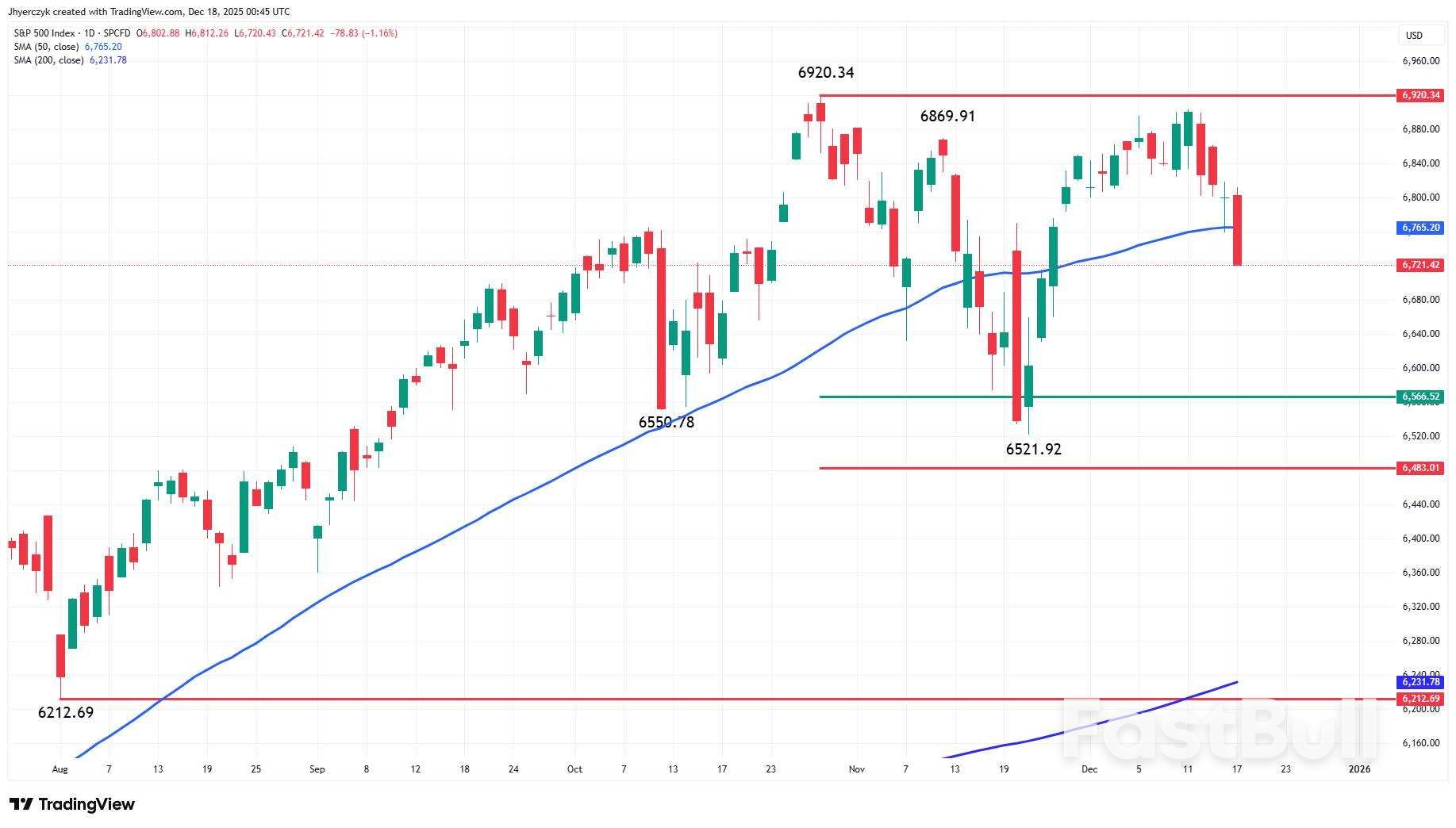
Daily S&P 500 Index (SPX)U.S. stocks finished Wednesday on the back foot, with the S&P 500 and Nasdaq closing at three-week lows as renewed unease around artificial intelligence funding hit big-name tech.
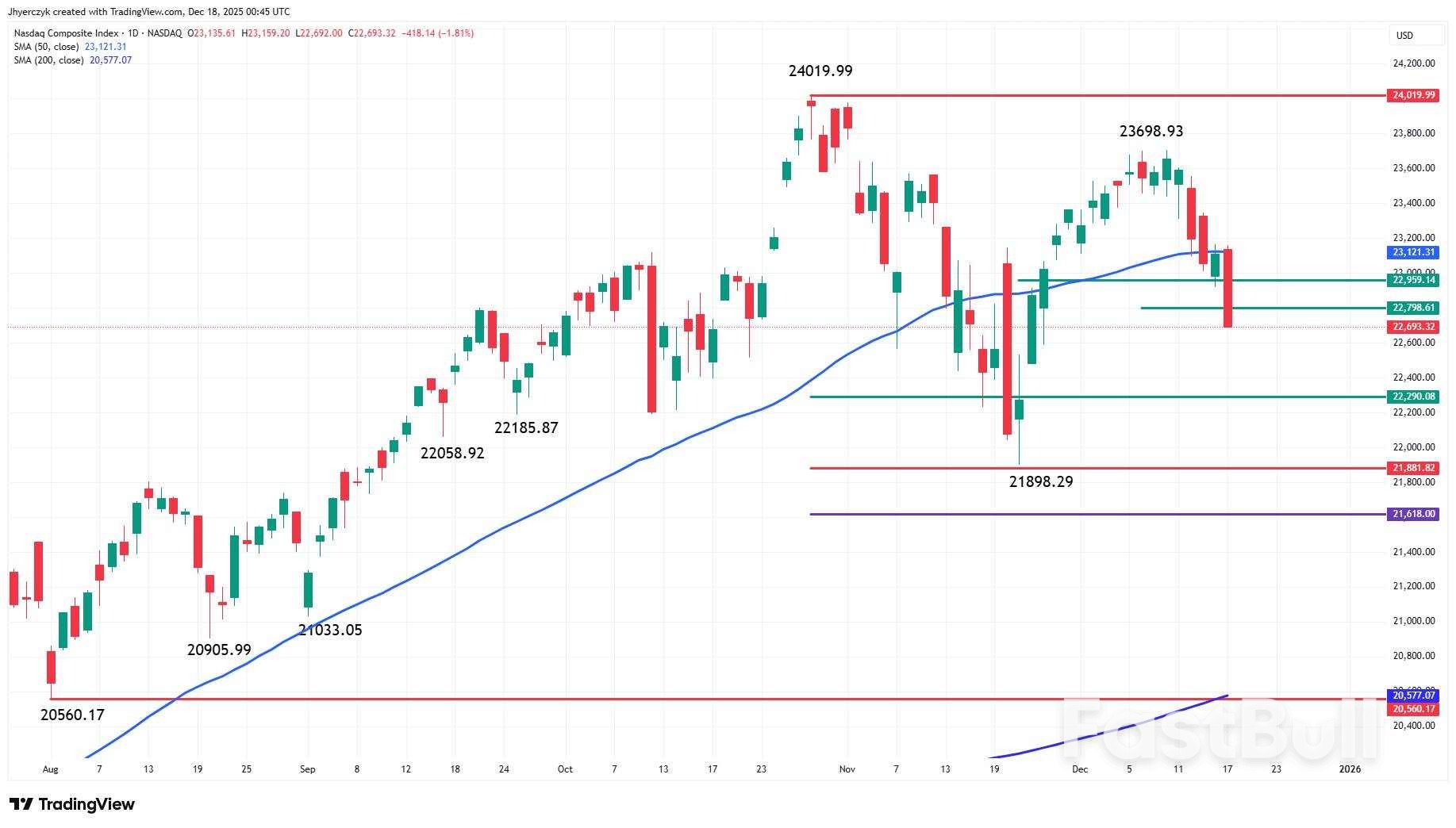
Daily Nasdaq Composite Index (IXIC)The selling wasn't panicky, but it was persistent. Traders trimmed exposure where conviction has thinned, especially across chips and cloud names tied to heavy capital spending.
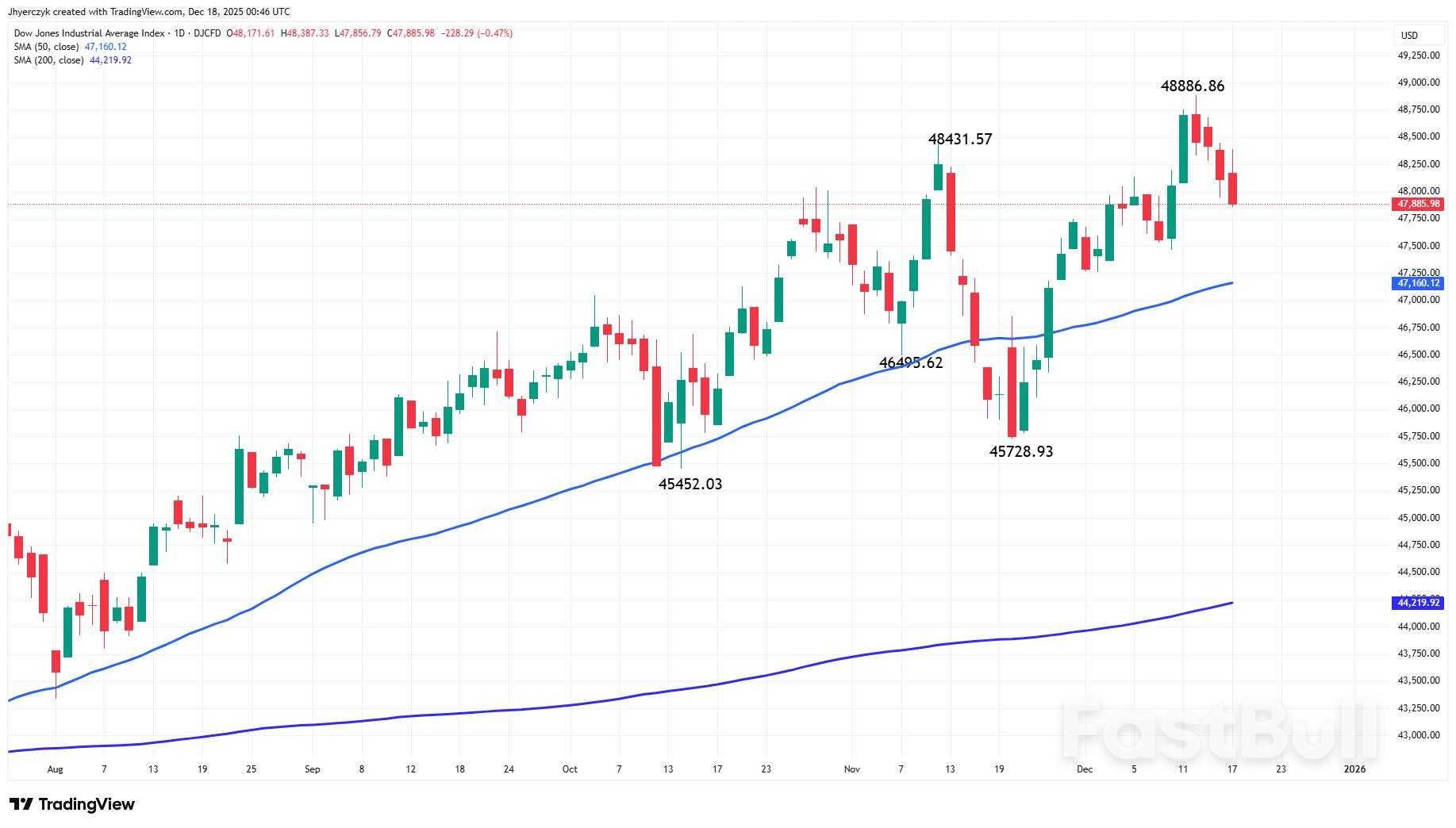
Daily Dow Jones Industrial Average IndexThe Dow slipped 228 points, while the S&P 500 fell 1.16% and the Nasdaq dropped 1.81%. Breadth leaned defensive, and volume ran slightly above recent averages — a sign this wasn't just passive drift lower.
The pressure started in megacap tech. Oracle slid 5.4% after reports that Blue Owl Capital won't back a planned $10 billion data center deal. That hit a nerve. The market has been fine with big AI checks — until it isn't.
Nvidia fell 3.8% and Broadcom dropped 4.5%, dragging the chip index down nearly 4%. The message was clear: traders are questioning how much balance sheet strain the sector can absorb before returns become harder to justify. There's growing concern that AI spending is feeding back into itself, with OpenAI sitting at the center of the loop.
Amazon slipped 0.6% after news it's in talks to invest roughly $10 billion in OpenAI. The deal may strengthen its AI position, but the tape treated it as another reminder that the bill is still rising.
They're stepping back rather than chasing dips — at least for now. Decliners outpaced advancers by a wide margin, especially on the Nasdaq. This wasn't indiscriminate selling, but positioning felt lighter as traders reassessed exposure going into year-end.
Alphabet shares fell 3.2% after reports that Google is working with Meta to challenge Nvidia's software edge. It's ambitious, but the market focused on execution risk and timelines rather than the long-term vision.
Outside tech, media names were mixed. Netflix edged higher after its bid for Warner Bros Discovery gained board support, while Warner Bros and Paramount slid after rejecting a hostile offer.
Energy stocks provided a pocket of strength. Crude prices climbed after President Trump ordered a blockade of sanctioned oil tankers linked to Venezuela. ConocoPhillips and Occidental both jumped more than 4%, offering some balance to an otherwise tech-heavy selloff.
Rates also helped steady nerves at the margin. Fed Governor Christopher Waller said the central bank still has room to cut if the labor market softens. That kept yields in check, even if it didn't spark risk-on buying.
The next test is Thursday's consumer inflation report. A softer print could calm nerves around rates, but it won't answer the bigger question hanging over tech: how sustainable all this AI spending really is.
Bottom line: the market isn't abandoning AI, but it's no longer giving the trade a free pass. Until confidence improves on returns, traders look content to stay selective rather than aggressive.

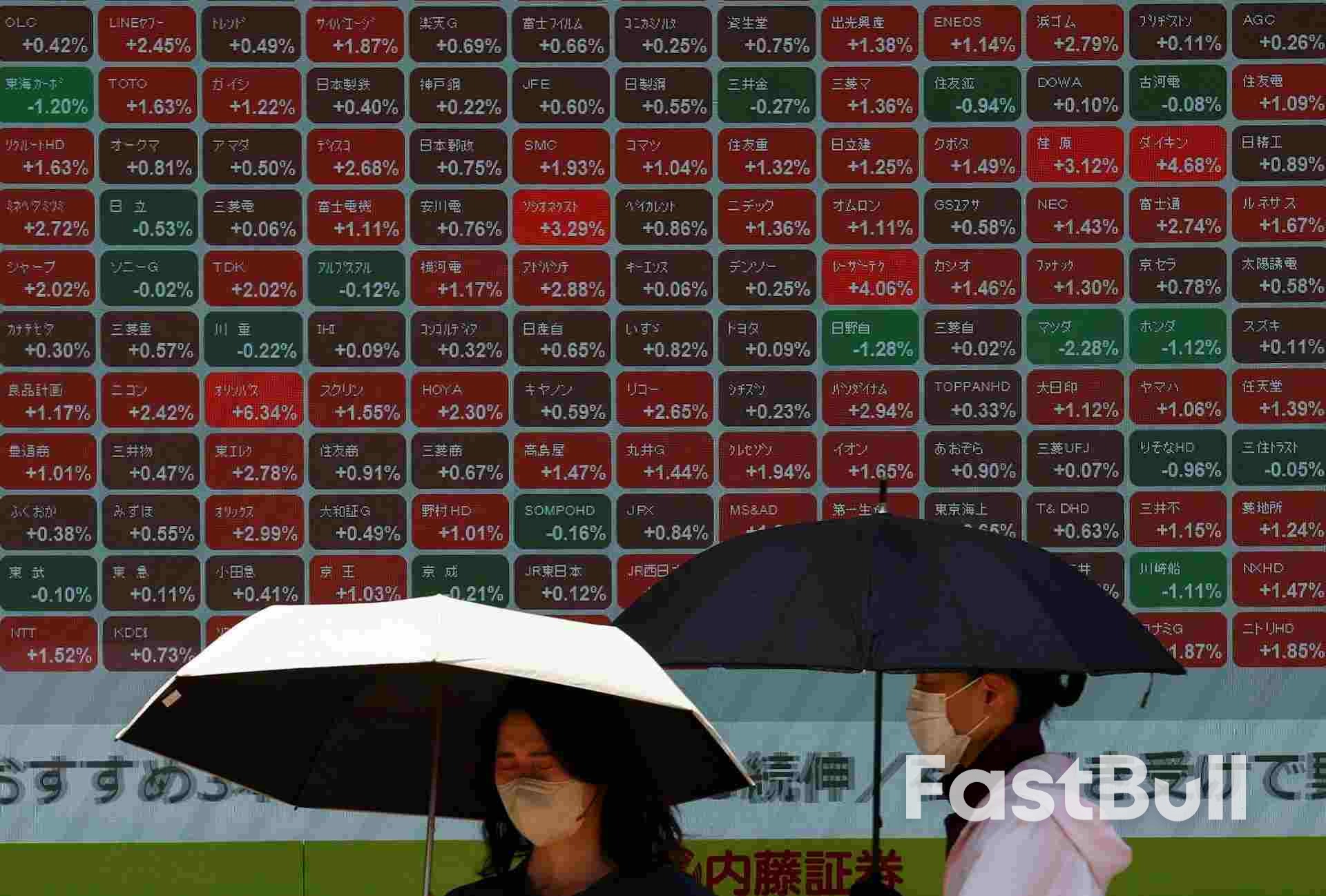
Asian shares fell on Thursday as the tech sector took a beating on renewed angst about AI spending, while investors braced for a wave of central bank meetings set to underscore policy divergence worldwide.
Geopolitical tensions are roiling the commodities markets. Oil prices extended a rebound from five-year lows after President Donald Trump ordered a "blockade" of all sanctioned oil tankers entering and leaving Venezuela. Silver hit a new record that helped pull up gold.
Sterling nursed losses after an unexpected drop in UK inflation all but guaranteed a rate cut from the Bank of England later in the day.
The European Central Bank, the Norges Bank and Riksbank are also due to deliver their policy decisions on Thursday, with focus squarely on the outlook as all three are widely expected to hold rates steady. In the region, traders are bracing for a rate hike in Japan on Friday though there is less certainty about the pace of tightening next year.
MSCI's broadest index of Asia-Pacific shares outside Japan (.MIAPJ0000PUS), fell 0.5% as South Korea (.KS11),dropped 1.3% and Hong Kong's Hang Seng index (.HSI),slipped 0.5%. Japan's Nikkei (.N225),was down 1.2%.
Nasdaq futures gained 0.3% and S&P 500 futures rose 0.2%, after a tech-led selloff on Wall Street as investors grappled with renewed concerns over record AI spending. Shares of AI bellwether Nvidia (NVDA.O), tumbled 3.8%.
Oracle (ORCL.N),plunged 5.4% after it announced an equity deal to support a data center project would not include a key partner Blue Owl Capital (OWL.N), The stock has shed almost 50% from mid-September when a deal with OpenAI sparked a 35% one-day rally.
"Oracle remained the primary source of anxiety... This latest setback deepened investor scepticism around Oracle's aggressive AI infrastructure buildout," said Tony Sycamore, analyst at IG, adding that he has now moved to a more neutral stance on the Nasdaq 100.
"Worries over soaring capex, heavy debt, construction delays, OpenAI's massive cash burn, and mixed Q2 earnings have eroded confidence, positioning Oracle as the poster child of fading AI infrastructure hype."
On the monetary policy front in the U.S., Federal Reserve Governor Christopher Waller, who is expected to be interviewed by Trump as a candidate for the next Fed chair, said the central bank has room to cut interest rates amid signs of job market weakness.
Investors are also watching out for a U.S. inflation report for November later in the day that will not include the month-on-month measure since a record government shutdown prevented data collection for October.
Forecasts are centred on an annual rise of 3% in core inflation last month.
In the forex markets, sterling held at $1.3374, having slumped to as far as $1.3313 overnight after data showed British inflation fell much more than forecast to 3.2% in November, its lowest since March. That all but cemented the case for a rate cut from the BOE later in the day, which is about 98% priced in.
The euro was steady at $1.1742, not far from a three-month top of $1.18, ahead of the European Central Bank policy decision where expectations are for no change.
Treasuries were largely steady. Two-year Treasury yields fell 1 basis point to 3.4725%, having budged little overnight, while the 10-year yield was flat at 4.1431%.
Oil prices gained for a second day after Trump's announcement of the Venezuela blockade with most exports from the country remaining on hold. U.S. crude rose 1.7% to $56.91 per barrel, while Brent crude futures were up 1.5% at $60.62 a barrel.
Spot gold prices slipped 0.3% to $4,330 per ounce, while silver also eased 0.2% to $66.17 per ounce but remained just a touch below a record high of $66.88 hit on Wednesday.
Honda Motor Co. will halt production at plants in Japan and China in coming weeks, highlighting the lingering fallout of the global chip shortage.
The Japanese carmaker will suspend output in Japan on Jan. 5 and Jan. 6, a spokesperson said Thursday, without specifying which plants will be affected. All three of the facilities in its joint venture in China, Guangqi Honda Automobile Co., will be offline from Dec. 29 to Jan. 2.
The company had said it anticipated getting disrupted production back on track from late November, but the looming suspension of some of its factories indicates ongoing snarls in the supply chain. Honda shares declined 1.5% in Tokyo. Japanese media outlets reported the news earlier.
Carmakers around the world have had their production plans thrown into disarray in recent months after China blocked Nexperia BV — owned by Chinese company Wingtech Technology Co. — from exporting products made at its local plants.
Honda has been hit hard, with the chip shortage prompting it to reduce its sales forecast to to 3.34 million units from 3.62 million. It had previously curbed or suspended output at some plants in North American due the issue.
Nexperia makes semiconductors used in vehicle control systems for functions such as activating windshield wipers and opening a window.

Oil prices rallied yesterday on growing supply risks facing the market. This strength has continued in early-morning trading today.
There are concerns over Venezuelan oil exports after President Trump announced that the US will impose a blockade on sanctioned oil tankers entering and leaving the country. This puts at risk around 600k b/d of oil exports, the majority of which goes to China. However, flows to the US, currently around 160k b/d, will likely continue. This oil is from Chevron, which previously received a licence from the US government to continue operating in Venezuela. The key questions are, first, how effective this blockade will be, and second, how long it will last. This will be important in determining the impact on the oil market.
Reports yesterday that the US government is preparing even stricter sanctions on Russia's energy sector pose a larger supply risk to the market -- in case President Putin fails to agree to a peace deal with Ukraine. Given the surplus outlook and Brent trading around $60/bbl, Trump has room to be more aggressive with sanctions.
Weekly inventory data from the Energy Information Administration (EIA) shows that US crude oil inventories fell by 1.27m barrels over the last week. This was much less than the 9.3m barrel decline the API reported the previous day. The draw was primarily driven by stronger exports over the week, with crude oil exports increasing 655k b/d WoW to 4.66m b/d. Meanwhile, gasoline and distillate fuel oil inventories increased by 4.81m barrels and 1.71m barrels, respectively. These builds in refined-product stocks were supported by refinery runs reaching their highest level since early September.
European gas prices rallied yesterday, with TTF settling 2.22% higher on the day amid forecasts for colder than usual weather towards the end of the month. Strength in the oil market likely provided some support as well. However, the latest positioning data continues to indicate that speculators are increasingly bearish on the European gas market. Investment funds sold a further 7.9TWh in TTF over the last reporting week, leaving them with a net short of 92.8TWh. This is the largest net short since early 2020. The gross short stands at a record 546TWh, up 18.4TWh over the week. It continues to pose a risk to the market should we see any supply disruptions or demand surges.
Gold is trading just shy of its all-time high above $4,381/oz, a level last seen in October, as tensions rise in Venezuela following Trump's blockade order for all sanctioned tankers. The US president is also pressuring Nicolas Maduro amid a regional military buildup.
The market is awaiting US inflation data on Thursday, which could signal further monetary easing. This follows the Federal Reserve's third consecutive rate cut earlier this month. For now, traders assign a probability of less than 25% of a reduction in January.
Gold has surged over 60% year-to-date, its strongest annual performance since 1979. The rally is underpinned by robust central bank buying, macro uncertainty, and a structural shift in strategic asset allocation. Geopolitical uncertainty has been a key driver of gold's exceptional rally this year.
We remain positive on our gold outlook, with macro tailwinds and fundamentals pointing to further upside next year. We expect gold prices to reach new record highs in 2026. The downside should be limited, as any weakness will likely attract renewed interest from both retail and institutional buyers.
Silver, meanwhile, hit another record high above $66.50/oz. Prices have now more than doubled year-to-date. Investor appetite remains strong, as silver-backed ETFs continue to attract inflows. The outlook remains constructive into 2026, supported by robust industrial demand from solar PV installations and battery technologies, alongside sustained investment flows.
CBOT soybean prices yesterday hovered near their lowest level since October, pressured by strong global supply prospects and a lack of fresh Chinese buying. In a recent report, CONAB estimates soybean production in Brazil to reach 177.1mt in 2025/26, up 3.3% from last season. Weather remains a key factor, but crop stress to date has been minimal. China has started selling soybeans from state reserves to clear storage ahead of incoming US shipments. It purchased an additional 198kt of US soybeans, according to recent USDA data, bringing total purchases since October to around 3.7mt. China has increased purchases but must continue to buy steadily to meet commitments under a late-October agreement.
Data from Ukraine's Ministry of Agriculture indicate that grain and legume exports in 2025/26 declined to approximately 13.8mt tons as of 17 December, representing a year-on-year decline of 29%. Total corn shipments stood at 4.8mt (-40% YoY), while wheat exports fell 17% YoY to 7.6mt.
White Label
Data API
Web Plug-ins
Poster Maker
Affiliate Program
The risk of loss in trading financial instruments such as stocks, FX, commodities, futures, bonds, ETFs and crypto can be substantial. You may sustain a total loss of the funds that you deposit with your broker. Therefore, you should carefully consider whether such trading is suitable for you in light of your circumstances and financial resources.
No decision to invest should be made without thoroughly conducting due diligence by yourself or consulting with your financial advisors. Our web content might not suit you since we don't know your financial conditions and investment needs. Our financial information might have latency or contain inaccuracy, so you should be fully responsible for any of your trading and investment decisions. The company will not be responsible for your capital loss.
Without getting permission from the website, you are not allowed to copy the website's graphics, texts, or trademarks. Intellectual property rights in the content or data incorporated into this website belong to its providers and exchange merchants.
Not Logged In
Log in to access more features

FastBull Membership
Not yet
Purchase
Log In
Sign Up