Markets
News
Analysis
User
24/7
Economic Calendar
Education
Data
- Names
- Latest
- Prev



Signal Accounts for Members
All Signal Accounts
All Contests


U.S. Total Building Permits (SA) (Oct)--
F: --
P: --
U.S. Building Permits MoM (SA) (Oct)--
F: --
P: --
U.S. Annual New Housing Starts (SA) (Oct)--
F: --
P: --
U.S. Government Employment (Dec)--
F: --
P: --
U.S. UMich 5-Year-Ahead Inflation Expectations Prelim YoY (Jan)--
F: --
P: --
U.S. UMich Consumer Sentiment Index Prelim (Jan)--
F: --
P: --
U.S. UMich Current Economic Conditions Index Prelim (Jan)--
F: --
P: --
U.S. UMich Consumer Expectations Index Prelim (Jan)--
F: --
P: --
U.S. UMich 1-Year-Ahead Inflation Expectations Prelim (Jan)--
F: --
P: --
U.S. 5-10 Year-Ahead Inflation Expectations (Jan)--
F: --
P: --
U.S. Weekly Total Oil Rig Count--
F: --
P: --
U.S. Weekly Total Rig Count--
F: --
P: --
Indonesia Retail Sales YoY (Nov)A:--
F: --
P: --
Euro Zone Sentix Investor Confidence Index (Jan)A:--
F: --
P: --
India CPI YoY (Dec)A:--
F: --
P: --
Canada National Economic Confidence IndexA:--
F: --
P: --
Germany Current Account (Not SA) (Nov)A:--
F: --
P: --
U.S. Conference Board Employment Trends Index (SA) (Dec)A:--
F: --
China, Mainland M0 Money Supply YoY (Dec)--
F: --
P: --
China, Mainland M2 Money Supply YoY (Dec)--
F: --
P: --
China, Mainland M1 Money Supply YoY (Dec)--
F: --
P: --
U.S. 3-Year Note Auction YieldA:--
F: --
P: --
Richmond Federal Reserve President Barkin delivered a speech.
U.S. 10-Year Note Auction Avg. YieldA:--
F: --
P: --
New York Federal Reserve President Williams delivered a speech.
Japan Trade Balance (Customs Data) (SA) (Nov)A:--
F: --
P: --
Japan Trade Balance (Nov)A:--
F: --
P: --
U.K. BRC Overall Retail Sales YoY (Dec)A:--
F: --
P: --
U.K. BRC Like-For-Like Retail Sales YoY (Dec)A:--
F: --
P: --
Turkey Retail Sales YoY (Nov)A:--
F: --
P: --
U.S. NFIB Small Business Optimism Index (SA) (Dec)--
F: --
P: --
Brazil Services Growth YoY (Nov)--
F: --
P: --
Canada Building Permits MoM (SA) (Nov)--
F: --
P: --
U.S. CPI MoM (SA) (Dec)--
F: --
P: --
U.S. CPI YoY (Not SA) (Dec)--
F: --
P: --
U.S. Real Income MoM (SA) (Dec)--
F: --
P: --
U.S. CPI MoM (Not SA) (Dec)--
F: --
P: --
U.S. Core CPI (SA) (Dec)--
F: --
P: --
U.S. Core CPI YoY (Not SA) (Dec)--
F: --
P: --
U.S. Core CPI MoM (SA) (Dec)--
F: --
P: --
U.S. Weekly Redbook Index YoY--
F: --
P: --
U.S. New Home Sales Annualized MoM (Oct)--
F: --
P: --
U.S. Annual Total New Home Sales (Oct)--
F: --
P: --
U.S. Cleveland Fed CPI MoM (SA) (Dec)--
F: --
P: --
U.S. Cleveland Fed CPI MoM (Dec)--
F: --
P: --
China, Mainland Exports (Dec)--
F: --
P: --
China, Mainland Imports YoY (CNH) (Dec)--
F: --
P: --
China, Mainland Imports (CNH) (Dec)--
F: --
P: --
China, Mainland Trade Balance (CNH) (Dec)--
F: --
P: --
China, Mainland Imports YoY (USD) (Dec)--
F: --
P: --
China, Mainland Exports YoY (USD) (Dec)--
F: --
P: --
U.S. EIA Natural Gas Production Forecast For The Next Year (Jan)--
F: --
P: --
U.S. EIA Short-Term Crude Production Forecast For The Next Year (Jan)--
F: --
P: --
U.S. EIA Short-Term Crude Production Forecast For The Year (Jan)--
F: --
P: --
EIA Monthly Short-Term Energy Outlook
U.S. 30-Year Bond Auction Avg. Yield--
F: --
P: --
U.S. Budget Balance (Dec)--
F: --
P: --
Argentina 12-Month CPI (Dec)--
F: --
P: --
Argentina National CPI YoY (Dec)--
F: --
P: --
Argentina CPI MoM (Dec)--
F: --
P: --
Richmond Federal Reserve President Barkin delivered a speech.


No matching data
Latest Views
Latest Views
Trending Topics
Top Columnists
Latest Update
White Label
Data API
Web Plug-ins
Affiliate Program
View All

No data
Canada's PM Carney visits China to recalibrate trade, eyeing a strategic pivot from US uncertainty.
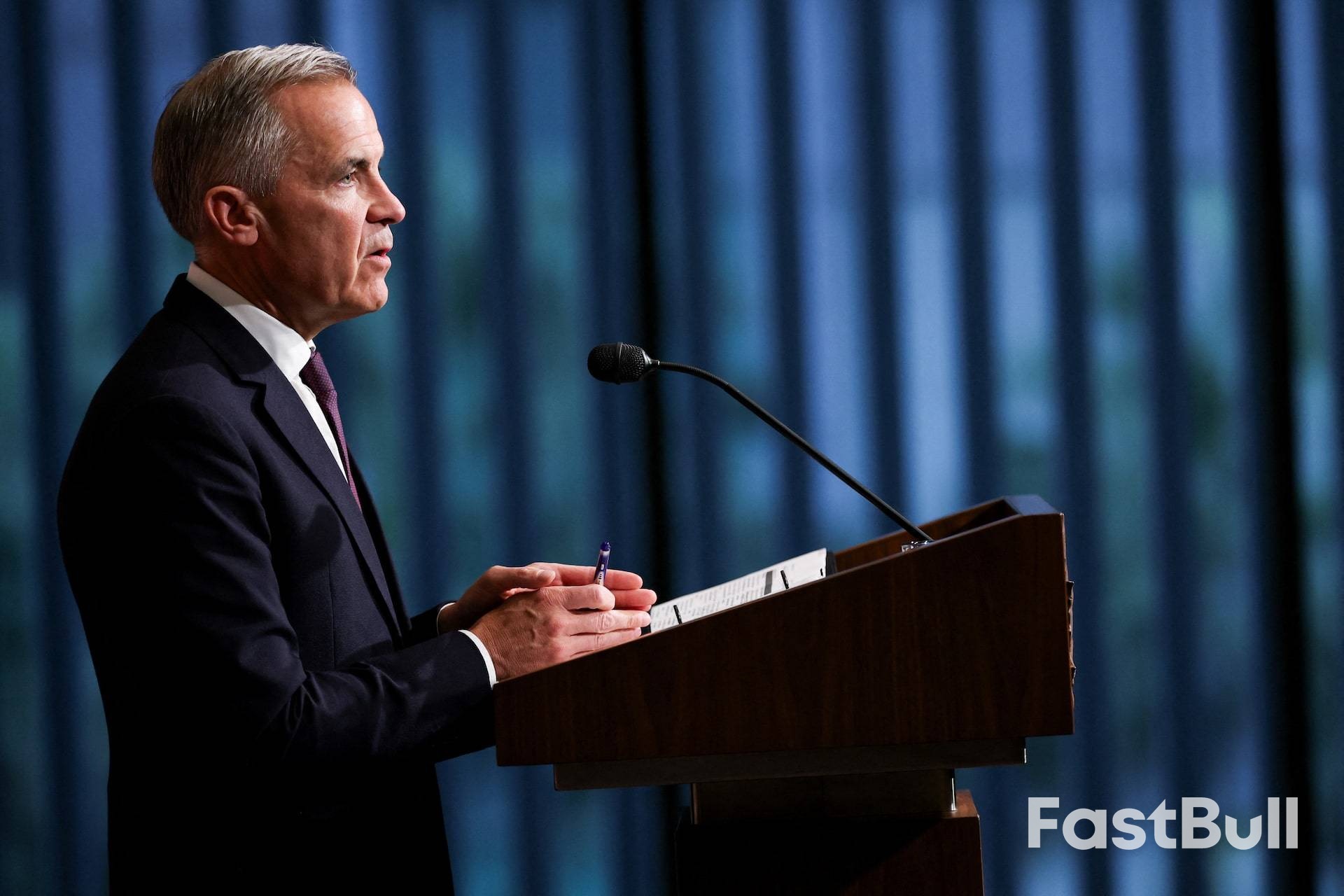
Canadian Prime Minister Mark Carney departs for China on Tuesday for a critical summit on trade and international security, a move that comes as Canada's relationship with the United States faces growing uncertainty from a trade war and annexation threats by President Donald Trump.
The visit is the first to Beijing by a Canadian prime minister since 2017 and signals a potential turning point in relations between the two nations. It follows a period of strained ties under former Prime Minister Justin Trudeau, which deteriorated after Canada arrested the chief financial officer of Chinese tech giant Huawei in 2018.
This trip was set in motion last October when Carney met with Chinese President Xi Jinping in South Korea. While that meeting produced no major breakthroughs, it opened the door for deeper engagement. Now, experts anticipate that concrete deals, or at least promises of future agreements, are on the table.
Analysts believe the visit is far more than a symbolic gesture and will be watched closely in Washington. Greg MacEachern, a former senior Liberal ministerial adviser, noted that an invitation for a prime minister to visit China is rarely for "window dressing."
"There's a political risk this could upset President Trump, but Prime Minister Carney clearly wants to send the message that Canada is open for business," MacEachern said. "And the Canadian government has made the calculation that it's worth it."
Senior Canadian officials have confirmed that Carney is expected to sign several memoranda that are currently under discussion. For its part, the Chinese foreign ministry stated it looks forward to deepening mutual trust with Canada during the visit, which runs from January 14-17.
High on the agenda are key Canadian exports, particularly crude oil and canola.
According to a source familiar with the talks, potential deals could pave the way for increased exports of Canadian crude to China. Currently, Canada sends about 90% of its oil to the United States. However, a planned increase in U.S. oil imports from Venezuela threatens to reduce American demand for Canadian crude, making diversification a strategic priority.
Progress is also expected on the issue of Chinese tariffs on Canadian canola exports, though senior officials do not anticipate a definitive resolution during the trip. China imposed preliminary anti-dumping duties on Canadian canola in August, escalating a year-long dispute that began after Ottawa placed tariffs on Chinese electric vehicle (EV) imports. These duties have effectively halted canola exports to what was once its largest market.
Colin Hornby, head of the Manitoba farm group Keystone Agricultural Producers, expressed cautious optimism, stating that while he doesn't expect an immediate agreement to lift the tariffs, he is hopeful for a resolution in the coming weeks or months.
The trade friction originated with Canada's tariffs on Chinese EVs, a policy introduced under the administration of former U.S. President Joe Biden. Lynette Ong, a professor of Chinese politics at the University of Toronto, suggests that with the recent souring of Canada-U.S. relations, maintaining alignment with Washington on this issue is no longer a priority for Ottawa.
The situation is further complicated by domestic politics. Doug Ford, the premier of Ontario, Canada's auto manufacturing hub, has urged Carney not to "back down," arguing the EV tariffs should only be removed if China commits to opening a manufacturing facility in the province.
"Both Canada and China want to signal their good intentions, so they each need to give away something," Ong explained, highlighting the delicate negotiations at play.
Despite the economic opportunities, the push for closer ties with China comes with significant concerns. Vina Nadjibulla, vice-president of the Asia Pacific Foundation of Canada, warned that increased cooperation in sensitive sectors like AI and critical minerals could jeopardize Canadian security. "There are clear red lines not to be crossed," she stated.
Canada has previously voiced concerns over human rights violations in China, including:
• The jailing of pro-democracy media mogul Jimmy Lai.
• The secret execution of four Canadians in China last year.
• Past interference in Canadian elections.
Cheuk Kwan, co-chair of the Toronto Association for Democracy in China, said he hoped Canada would "not fall into the trap of appeasing China just to secure bilateral trade agreements."
The diplomatic sensitivity of the visit was underscored when two Canadian Members of Parliament announced they were ending a trip to Taiwan ahead of Carney's arrival in China to avoid any confusion with Canada's official foreign policy.
China appears to be rolling out the red carpet, with plans to welcome Carney at Beijing's Great Hall of the People. Joseph Torigian, an expert on Chinese politics at American University, described this as part of a potential "charm offensive."
Torigian suggested China may be looking to bolster its global reputation, especially after the recent U.S. seizure of Venezuelan President Nicolas Maduro. "The Chinese might make a case during bilateral meetings with Canada about how unreliable the U.S. is as a partner and how dangerous they are," he said. "Whereas China is willing to help Canada expand its trade relationships outside of its hemisphere if the Canadians are willing to play ball."
Venezuelan opposition leader and Nobel laureate Maria Corina Machado is scheduled to meet with US President Donald Trump at the White House this Thursday, according to US media reports.
The meeting comes on the heels of a decisive US military operation in Venezuela. The Trump-ordered intervention led to the removal of President Nicolas Maduro, who was subsequently transported to the United States to face charges related to drug smuggling.
This invitation marks a significant shift in President Trump's approach to Maria Corina Machado. Previously, the US president had sidelined her as a potential successor to Maduro, publicly questioning whether she had enough support or respect within Venezuela. Instead, the Trump administration had focused on direct negotiations with Maduro's Vice President, Delcy Rodriguez.
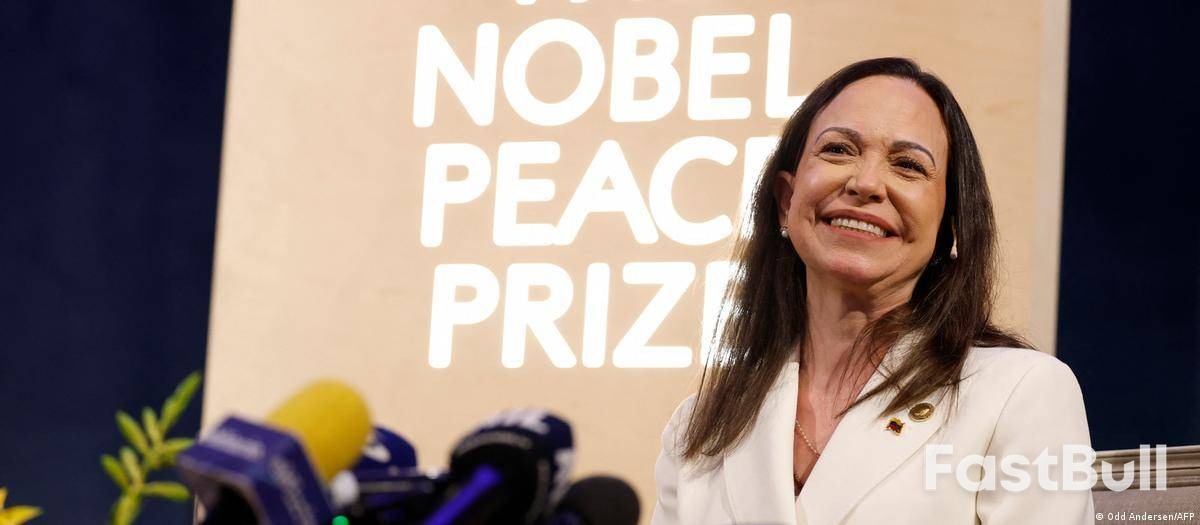
Machado recently re-emerged on the international stage after months in hiding. Her first public appearance was in December in Oslo, where she accepted her Nobel Peace Prize. She later confirmed that she had received assistance from the United States to leave Venezuela undetected.

It is widely known that President Trump has expressed a desire to receive the Nobel Peace Prize himself, frequently citing his role in ending various conflicts.
In what appears to be a diplomatic gesture, Machado hinted she might offer her Nobel medal to Trump. Speaking on Fox News, she framed the award as a prize for the Venezuelan people and expressed a desire to "give it to him and share it with him."
However, the Nobel Institute in Oslo quickly clarified the rules surrounding the prestigious award. In an official statement, the institute confirmed that a prize cannot be transferred or shared after it has been awarded.
"A Nobel Prize can neither be revoked, shared, nor transferred to others," the statement read. "Once the announcement has been made, the decision stands for all time."
Japan's Defense Minister, Shinjiro Koizumi, has confirmed that Tokyo will implement appropriate countermeasures in response to China's decision to restrict exports of military-applicable dual-use items.
Speaking from the Honolulu Defense Forum, Koizumi stated that Japan is demanding a complete reversal of the ban. The new Chinese policy, announced last week, affects the sale of over 800 items, including critical rare earth minerals, to end-users that could potentially enhance Japan's military capabilities.
While Japan's government is still analyzing the full scope of China's export controls, the move has already raised significant concerns.
"There are many unclear aspects regarding the scope and content of these measures," Koizumi said. "I will refrain from commenting on their impact on the defense industry at this time. However, after careful analysis, we will consider necessary responses."
Beijing's action is widely seen as an attempt to leverage its dominance in the rare earths market. These materials are essential for a wide range of modern products, from electric vehicles and smartphones to advanced missile systems. China has framed the export limit as a measure to curb a military threat from Japan.
The export restrictions are part of a broader series of pressure tactics linked to the ongoing dispute over Taiwan. Tensions between Asia's two largest economies flared in November after comments from Japanese Prime Minister Sanae Takaichi, who suggested Japan might deploy its military if China attempts to take Taiwan by force.
In response to the growing weaponization of supply chains, finance ministers from the Group of Seven (G7) nations met in Washington on Monday. The agenda focused on addressing "vulnerabilities in critical minerals supply chains," a direct challenge to the leverage China holds in global trade and geopolitical negotiations.
The United States, Japan's closest ally, has remained publicly quiet on the matter. When asked if he sought more explicit backing from Washington, Koizumi avoided a direct answer, instead reinforcing the strength of the bilateral relationship.
"We will continue to overcome challenges together and move forward side by side. That will not change," he affirmed.
Earlier in the day, Koizumi delivered a speech in which he condemned the "weaponization of everything." He argued that the lines between peacetime and conflict—and between military and non-military domains—are becoming dangerously blurred.
"The weaponization of economy, technology, resources, information and cyberspace," Koizumi warned, has made it difficult to distinguish "truth and fake news."
The defense minister's stop in Hawaii precedes a trip to Los Angeles to meet with defense companies. He is then scheduled to meet with Defense Secretary Pete Hegseth in Washington on Thursday.
Oil prices pushed higher for a fourth consecutive session in Asian trading on Tuesday, driven by mounting fears of supply disruptions from key geopolitical hotspots.
Brent crude futures for March delivery climbed 0.4% to $64.10 a barrel, a level not seen in over seven weeks. West Texas Intermediate (WTI) crude futures saw a similar 0.4% gain, reaching a one-month high of $59.70 a barrel.
The primary catalyst for the rally is the escalating anti-government unrest in Iran, a major OPEC producer. The demonstrations, the largest in years, have turned violent, with reports of significant casualties as security forces respond.
This internal turmoil has introduced a substantial risk premium into the market. The situation has drawn a sharp response from the United States, with President Donald Trump warning of potential military action if Iranian authorities continue using lethal force.
Further escalating economic pressure, Trump announced plans for a 25% tariff on any nation conducting business with Tehran. This move puts a spotlight on major buyers like China. "Whether this secondary tariff threat is sufficient to push China away from Iranian oil remains to be seen," noted analysts at ING in a research note.
President Trump is reportedly scheduled to meet with senior advisers on Tuesday to weigh his options regarding Iran.
Supply anxieties are not confined to the Middle East. The ongoing conflict in Ukraine continues to impact Russia's oil export capabilities, adding another layer of concern for the market.
Ukrainian attacks have targeted Russian oil facilities and export hubs, including the critical Caspian Pipeline Consortium (CPC) terminal near Novorossiysk.
According to Bloomberg, this will put significant pressure on Kazakh oil exports this month. Shipments from the CPC terminal are now projected to be between 800,000 and 900,000 barrels per day—approximately 45% below original forecasts.
While supply risks are dominating headlines, developments in another OPEC member, Venezuela, could eventually add barrels back to the market. Following recent political shifts and the capture of President Nicolas Maduro, the country is preparing to resume oil exports after a period of disruption.
President Trump announced last week that Caracas is expected to transfer up to 50 million barrels of oil to the United States, a move that could eventually ease global supply tightness if it materializes.
U.S. consumer prices are expected to show a marked acceleration in December, a development that will likely solidify the Federal Reserve's decision to hold interest rates steady this month. However, the anticipated jump in inflation is largely a statistical rebound, correcting for data distortions caused by a prior government shutdown that made November's figures appear artificially low.
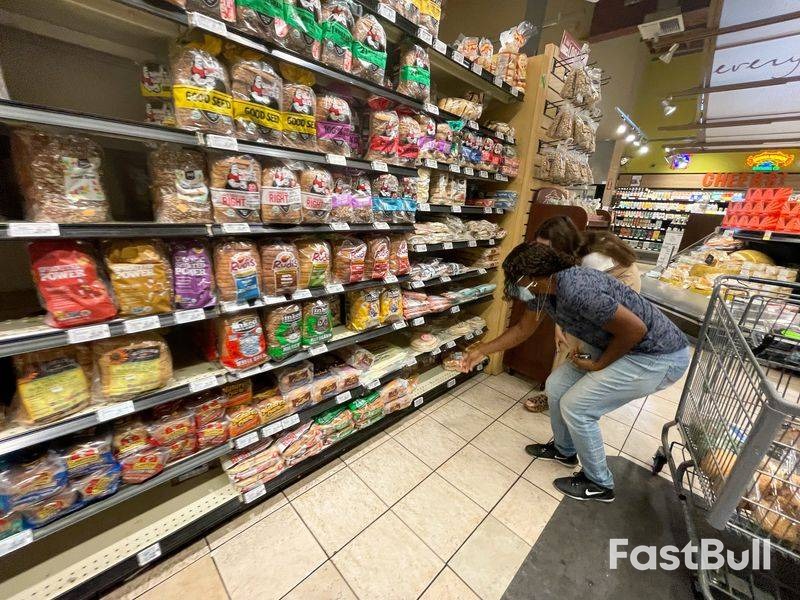
The 43-day government shutdown created significant challenges for data collection. The Bureau of Labor Statistics (BLS) was unable to gather price data for October and instead used a "carry-forward" method to compile the November CPI report. This technique, which essentially treated October prices as unchanged, resulted in an underestimation of inflation.
These distortions were particularly evident in rental market data and goods prices. The upcoming December report is expected to correct some of these statistical anomalies, revealing a clearer picture of underlying price pressures. This follows recent labor market news showing a dip in the unemployment rate despite modest job growth.
Oscar Munoz, chief U.S. macro strategist at TD Securities, noted that while a "meaningful payback" is expected, the full reversal won't be immediate. He specified that the distortions in rent data will not be fully resolved until the April 2026 report.
Economists surveyed by Reuters predict the Consumer Price Index (CPI) rose by 0.3% in December, driven by higher costs for food and energy, particularly electricity for data centers. On an annual basis, CPI is forecast to have increased by 2.7%, matching the gain seen in November.

When stripping out volatile food and energy components, the core CPI is also projected to have risen by 0.3% for the month. This would push the year-over-year core inflation rate to 2.7%, up from 2.6% in November. For context, the BLS estimated that both headline and core CPI increased by 0.2% between September and November.
Rising inflation has become a key political issue, affecting President Donald Trump's approval ratings ahead of the 2026 congressional elections.
Beyond the shutdown-related noise, economists anticipate the December data will reveal a gradual pass-through of the Trump administration's tariffs into consumer prices. While businesses have absorbed some of these costs, the underlying inflationary trend that existed before the shutdown is expected to re-emerge.
An acceleration is anticipated across several categories, including:
• New motor vehicles
• Furniture
• Apparel
"The rebound in goods prices is likely to be more pronounced than in services given the sector's wider prevalence of holiday discounting," said Sarah House, a senior economist at Wells Fargo. She added that services prices should also bounce back, especially in seasonal categories like lodging and airfares.
The BLS has explained that its methodology for calculating rent and owners' equivalent rent, which uses a 6-month panel, is the reason for the delayed correction. The effects of the carry-forward imputation from October 2025 will only fully resolve when that housing panel is revisited in April 2026.
The Federal Reserve, which targets 2% inflation based on the Personal Consumption Expenditures (PCE) Price Index, is widely expected to keep its benchmark interest rate in the 3.50%-3.75% range at its January 27-28 meeting.
The economic outlook is further complicated by political tensions. Most economists do not foresee a rate cut before Fed Chair Jerome Powell's term ends in May, partly due to an escalation of conflict with President Trump. The Trump administration has initiated a criminal investigation into Powell, which the Fed chief has labeled a "pretext" to influence monetary policy.
"We have a lot of manufactured uncertainties generated by Washington, that is obviously not good for the economy, and ultimately, I think that could lead to a higher inflation," commented Sung Won Sohn, a finance and economics professor at Loyola Marymount University. "We want low interest rates, but this is not the way to do it."
The United States and Taiwan are nearing a significant trade agreement, with Taipei reporting that a "broad consensus" has been reached on new tariff structures. A source close to the negotiations suggests a final announcement could be made by the end of January.

Taiwan’s primary objective in the talks is to reduce the tariff rate on its exports to the U.S. from 20% to 15%. According to a statement from Taiwan's Office of Trade Negotiations, this goal is now within reach as both parties have aligned on the key issues. It is important to note that Taiwan's crucial semiconductor exports are not currently subject to these U.S. tariffs.
The two sides are now focused on scheduling a final meeting to conclude the deal. A source familiar with the matter stated, "It's now just a matter of getting all the final details in order."
Alongside tariff reductions, technology and manufacturing commitments appear to be central to the negotiations. Taiwan, a global leader in semiconductor production, has consistently offered to help the U.S. replicate its successful model of building tech clusters around dedicated science parks.
A recent report from the New York Times indicated that the Trump administration is pushing for a commitment from chipmaking giant TSMC to construct at least five additional facilities in Arizona as part of the broader deal.
When asked about potential new investments, TSMC declined to comment beyond its previously announced pledge of $165 billion for its U.S. operations. The Office of the United States Trade Representative did not provide an immediate response when contacted for comment.
White Label
Data API
Web Plug-ins
Poster Maker
Affiliate Program
The risk of loss in trading financial instruments such as stocks, FX, commodities, futures, bonds, ETFs and crypto can be substantial. You may sustain a total loss of the funds that you deposit with your broker. Therefore, you should carefully consider whether such trading is suitable for you in light of your circumstances and financial resources.
No decision to invest should be made without thoroughly conducting due diligence by yourself or consulting with your financial advisors. Our web content might not suit you since we don't know your financial conditions and investment needs. Our financial information might have latency or contain inaccuracy, so you should be fully responsible for any of your trading and investment decisions. The company will not be responsible for your capital loss.
Without getting permission from the website, you are not allowed to copy the website's graphics, texts, or trademarks. Intellectual property rights in the content or data incorporated into this website belong to its providers and exchange merchants.
Not Logged In
Log in to access more features

FastBull Membership
Not yet
Purchase
Log In
Sign Up