• Trade
  • Markets
  • Copy
  • Contests
  • News
  • 24/7
  • Calendar
  • Q&A
  • Chats
Trending
Screeners
SYMBOL
LAST
BID
ASK
HIGH
LOW
NET CHG.
%CHG.
SPREAD
SPX
S&P 500 Index
6949.68
6949.68
6949.68
6967.31
6925.10
+5.21
+ 0.08%
--
DJI
Dow Jones Industrial Average
49394.28
49394.28
49394.28
49616.70
49246.24
-48.15
-0.10%
--
IXIC
NASDAQ Composite Index
23552.23
23552.23
23552.23
23664.26
23446.81
+22.22
+ 0.09%
--
USDX
US Dollar Index
99.130
99.210
99.130
99.250
98.920
+0.010
+ 0.01%
--
EURUSD
Euro / US Dollar
1.15995
1.16003
1.15995
1.16272
1.15843
-0.00097
-0.08%
--
GBPUSD
Pound Sterling / US Dollar
1.33835
1.33844
1.33835
1.34127
1.33660
+0.00028
+ 0.02%
--
XAUUSD
Gold / US Dollar
4590.31
4590.74
4590.31
4620.79
4536.73
-25.64
-0.56%
--
WTI
Light Sweet Crude Oil
59.337
59.367
59.337
60.010
58.781
+0.203
+ 0.34%
--

Community Accounts

Signal Accounts
--
Profit Accounts
--
Loss Accounts
--
View More

Become a signal provider

Sell trading signals to earn additional income

View More

Guide to Copy Trading

Get started with ease and confidence

View More

Signal Accounts for Members

All Signal Accounts

Best Return
  • Best Return
  • Best P/L
  • Best MDD
Past 1W
  • Past 1W
  • Past 1M
  • Past 1Y

All Contests

  • All
  • Trump Updates
  • Recommend
  • Stocks
  • Cryptocurrencies
  • Central Banks
  • Featured News
Top News Only
Share

Egypt President Sisi: Ready To Restart US Mediation Between Egypt And Ethiopia To Resolve Question Of "The Nile Water Sharing" Once And For All

Share

Chicago Corn Futures Fell Over 4.6% This Week, Soybeans Fell 0.6%, And Soybean Oil Rose About 5.7%. On Friday (January 16), The Bloomberg Grains Index Closed Up 1.02% At 28.7983 Points In New York Trading, Down 1.84% For The Week. It Experienced A Significant Drop At 01:00 Beijing Time On January 13, And Subsequently Fluctuated At Low Levels. This Week, CBOT Corn Futures Fell 4.66% To $4.25 Per Bushel. CBOT Wheat Futures Rose 0.14% To $5.18 Per Bushel. CBOT Soybean Futures Fell 0.59% To $10.5675 Per Bushel, Soybean Meal Futures Fell 4.54%, And Soybean Oil Futures Rose 5.68%

Share

Barclays: Limited US Strikes On Iran Could Quickly Erase $3-4/Bbl Geopolitical Oil Premium

Share

US Officials Have Floated Idea Of Broadening A Gaza “Board Of Peace” Headed By Trump To Include Other Hotspots Such As Ukraine And Venezuela,

Share

JPMorgan Chase Surpasses Dimensional To Become The World's Largest Issuer Of Actively Managed Exchange-traded Funds (ETFs). According To Data Compiled By Bloomberg, The Asset Management Arm Of JPMorgan Chase Currently Manages Nearly $257 Billion In Actively Managed ETF Assets Globally, Slightly Exceeding Dimensional Fund Advisors' Approximately $255 Billion

Share

IAEA: Secured The Agreement Of Both The Russian Federation And Ukraine To Implement A Localized Ceasefire

Share

Brent Crude Futures Settle At $64.13/Bbl, Up 37 Cents, 0.58 Percent

Share

IMF: Board Of The International Monetary Fund (IMF) Today Completed The Fourth Review Of The 48-Month (Ecf) For Ethiopia

Share

WTI Crude Oil Futures For February Delivery Closed At $59.44 Per Barrel. Nymex Natural Gas Futures For February Delivery Closed At $3.1030 Per Million British Thermal Units (MMBtu). Nymex Gasoline Futures For February Delivery Closed At $1.7852 Per Gallon, And Nymex Heating Oil Futures For February Delivery Closed At $2.2376 Per Gallon

Share

USA Crude Oil Futures Settle At $59.44/Bbl, Up 25 Cents, 0.42 Percent

Share

US Federal Aviation Administration Issues Warnings To Airlines To Exercise Caution When Operating In Various Areas Above Panama, Mexico, Central America, Colombia And Parts Of Pacific Ocean Due To Military Activities And Potential Interference

Share

ICE Certified Arabica Stocks Decreased By 2644 As Of January 16, 2026

Share

Easa: Potential For USA Military Action Has Placed Iranian Air Defence Forces On Heightened State Of Alert, Currently Increased Likelihood Of Misidentification Within Fir Tehran

Share

Easa On Iran Says Presence & Possible Use Wide Range Of Weapons & Air-Defence Systems Creates High Risk To Civil Flights Operating At All Altitudes

Share

Peru's Central Bank Says Buy 195 Million Dollars In Spot Market

Share

ICE - Gasoil Speculators Raise Net Long Positions By 15424 Contracts To 52519 In Week To January 13

Share

ICE - Brent Crude Speculators Raise Net Long Positions By 85496 Contracts To 208461 In Week To January 13

Share

ICE Futures Europe - Feed Wheat Speculators Trim Net Short Position By 5 Lots To 1118 Lots As Of Jan 13 - Exchange Cot Data

Share

ICE Futures Europe - Robusta Coffee Speculators Raise Net Long Position By 554 Lots To 4068 Lots As Of Jan 13 - Exchange Cot Data

Share

ICE Futures Europe - White Sugar Speculators Raise Net Long Position By 4544 Lots To 48203 Lots As Of Jan 13 - Exchange Cot Data

TIME
ACT
FCST
PREV
U.S. NY Fed Manufacturing Prices Received Index (Jan)

A:--

F: --

P: --

U.S. NY Fed Manufacturing New Orders Index (Jan)

A:--

F: --

P: --

U.S. NY Fed Manufacturing Employment Index (Jan)

A:--

F: --

P: --

U.S. Export Price Index YoY (Nov)

A:--

F: --

P: --

U.S. NY Fed Manufacturing Index (Jan)

A:--

F: --

P: --
U.S. Initial Jobless Claims 4-Week Avg. (SA)

A:--

F: --

P: --
U.S. Export Price Index MoM (Nov)

A:--

F: --

P: --

Canada Manufacturing Unfilled Orders MoM (Nov)

A:--

F: --

P: --

Canada Manufacturing New Orders MoM (Nov)

A:--

F: --

P: --

U.S. Philadelphia Fed Manufacturing Employment Index (Jan)

A:--

F: --

P: --

Canada Wholesale Sales YoY (Nov)

A:--

F: --

P: --

Canada Wholesale Inventory MoM (Nov)

A:--

F: --

P: --

U.S. Philadelphia Fed Business Activity Index (SA) (Jan)

A:--

F: --

P: --

U.S. EIA Weekly Natural Gas Stocks Change

A:--

F: --

P: --

Richmond Federal Reserve President Barkin delivered a speech.
U.S. Weekly Treasuries Held by Foreign Central Banks

A:--

F: --

P: --

Germany CPI Final MoM (Dec)

A:--

F: --

P: --

Germany CPI Final YoY (Dec)

A:--

F: --

P: --

Germany HICP Final MoM (Dec)

A:--

F: --

P: --

Germany HICP Final YoY (Dec)

A:--

F: --

P: --

Brazil PPI MoM (Nov)

A:--

F: --

P: --

Canada New Housing Starts (Dec)

A:--

F: --

P: --
U.S. Capacity Utilization MoM (SA) (Dec)

A:--

F: --

P: --
U.S. Industrial Output YoY (Dec)

A:--

F: --

P: --

U.S. Manufacturing Capacity Utilization (Dec)

A:--

F: --

P: --

U.S. Manufacturing Output MoM (SA) (Dec)

A:--

F: --

P: --
U.S. Industrial Output MoM (SA) (Dec)

A:--

F: --

P: --
U.S. NAHB Housing Market Index (Jan)

A:--

F: --

P: --

Russia CPI YoY (Dec)

A:--

F: --

P: --

U.S. Weekly Total Rig Count

A:--

F: --

P: --

U.S. Weekly Total Oil Rig Count

A:--

F: --

P: --

Japan Core Machinery Orders YoY (Nov)

--

F: --

P: --

Japan Core Machinery Orders MoM (Nov)

--

F: --

P: --

U.K. Rightmove House Price Index YoY (Jan)

--

F: --

P: --

China, Mainland GDP YoY (YTD) (Q4)

--

F: --

P: --

China, Mainland Industrial Output YoY (YTD) (Dec)

--

F: --

P: --

Japan Industrial Output Final MoM (Nov)

--

F: --

P: --

Japan Industrial Output Final YoY (Nov)

--

F: --

P: --

Euro Zone Core HICP Final MoM (Dec)

--

F: --

P: --

Euro Zone HICP Final MoM (Dec)

--

F: --

P: --

Euro Zone HICP Final YoY (Dec)

--

F: --

P: --

Euro Zone HICP MoM (Excl. Food & Energy) (Dec)

--

F: --

P: --

Euro Zone Core CPI Final YoY (Dec)

--

F: --

P: --

Euro Zone Core HICP Final YoY (Dec)

--

F: --

P: --

Euro Zone CPI YoY (Excl. Tobacco) (Dec)

--

F: --

P: --

Euro Zone Core CPI Final MoM (Dec)

--

F: --

P: --

Canada National Economic Confidence Index

--

F: --

P: --

Canada CPI MoM (SA) (Dec)

--

F: --

P: --

Canada Core CPI MoM (SA) (Dec)

--

F: --

P: --

Canada CPI YoY (SA) (Dec)

--

F: --

P: --

Canada Trimmed CPI YoY (SA) (Dec)

--

F: --

P: --

Canada CPI YoY (Dec)

--

F: --

P: --

Canada CPI MoM (Dec)

--

F: --

P: --

Canada Core CPI YoY (Dec)

--

F: --

P: --

Canada Core CPI MoM (Dec)

--

F: --

P: --

South Korea PPI MoM (Dec)

--

F: --

P: --

China, Mainland 1-Year Loan Prime Rate (LPR)

--

F: --

P: --

China, Mainland 5-Year Loan Prime Rate

--

F: --

P: --

Germany PPI YoY (Dec)

--

F: --

P: --

Germany PPI MoM (Dec)

--

F: --

P: --

Q&A with Experts
    • All
    • Chatrooms
    • Groups
    • Friends
    Kung Fu flag
    bagus
    @bagusgood. I'm currently buying through range trading
    Kung Fu flag
    ADKK987
    Is holding trade till weekends are allowed in funding pips account 5k 2 step
    @ADKK987I think most propfirms allow it. Check with your propfirm
    Kung Fu flag
    SABR
    What do you think about the market now? What do you say, where will it fly?
    @SABRthe price is bouncing between 4589 and 5627, even as I said before
    Everthguti flag
    At this time it is no longer beneficial to operate
    Kung Fu flag
    Everthguti
    At this time it is no longer beneficial to operate
    @Everthgutino, not at all. You're right. It should be good night to the market
    3383256 flag
    join this channel. its free and awesome signals no fee nothing. no Ib change
    3383256 flag
    Kung Fu
    @Kung Fuyes its allowed
    3383256 flag
    ADKK987
    Can anyone tell me
    @ADKK987yes it's allowed
    ADKK987 flag
    Thank you🤝
    ADKK987 flag
    One question
    ADKK987 flag
    Can i adjust TP and SL after market closed?
    3383256 flag
    yes please
    umer flag
    ADKK987
    Can i adjust TP and SL after market closed?
    @ADKK987no
    umer flag
    you need to do it before the market is closed
    Everthguti flag
    Let's look forward to Sunday with great anticipation and good analysis.
    ADKK987 flag
    umer
    you need to do it before the market is closed
    Got it thnkx@umer 🤝
    umer flag
    and if market opens with gap up or down then your SL will be at the CMP
    umer flag
    ADKK987
    do you trade on real on funfed @ADKK987
    umer flag
    Everthguti
    Let's look forward to Sunday with great anticipation and good analysis.
    @Everthgutisure. if you need any help
    umer flag
    i am here
    Type here...
    Add Symbol or Code

      No matching data

      All
      Trump Updates
      Recommend
      Stocks
      Cryptocurrencies
      Central Banks
      Featured News
      • All
      • Russia-Ukraine Conflict
      • Middle East Flashpoint
      • All
      • Russia-Ukraine Conflict
      • Middle East Flashpoint
      Search
      Products

      Charts Free Forever

      Chats Q&A with Experts
      Screeners Economic Calendar Data Tools
      Membership Features
      Data Warehouse Market Trends Institutional Data Policy Rates Macro

      Market Trends

      Market Sentiment Order Book Forex Correlations

      Top Indicators

      Charts Free Forever
      Markets

      News

      News Analysis 24/7 Columns Education
      From Institutions From Analysts
      Topics Columnists

      Latest Views

      Latest Views

      Trending Topics

      Top Columnists

      Latest Update

      Signals

      Copy Rankings Latest Signals Become a signal provider AI Rating
      Contests
      Brokers

      Overview Brokers Assessment Rankings Regulators News Claims
      Broker listing Forex Brokers Comparison Tool Live Spread Comparison Scam
      Q&A Complaint Scam Alert Videos Tips to Detect Scam
      More

      Business
      Events
      Careers About Us Advertising Help Center

      White Label

      Data API

      Web Plug-ins

      Affiliate Program

      Awards Institution Evaluation IB Seminar Salon Event Exhibition
      Vietnam Thailand Singapore Dubai
      Fans Party Investment Sharing Session
      FastBull Summit BrokersView Expo
      Recent Searches
        Top Searches
          Markets
          News
          Analysis
          User
          24/7
          Economic Calendar
          Education
          Data
          • Names
          • Latest
          • Prev

          View All

          No data

          Scan to Download

          Faster Charts, Chat Faster!

          Download App
          English
          • English
          • Español
          • العربية
          • Bahasa Indonesia
          • Bahasa Melayu
          • Tiếng Việt
          • ภาษาไทย
          • Français
          • Italiano
          • Türkçe
          • Русский язык
          • 简中
          • 繁中
          Open Account
          Search
          Products
          Charts Free Forever
          Markets
          News
          Signals

          Copy Rankings Latest Signals Become a signal provider AI Rating
          Contests
          Brokers

          Overview Brokers Assessment Rankings Regulators News Claims
          Broker listing Forex Brokers Comparison Tool Live Spread Comparison Scam
          Q&A Complaint Scam Alert Videos Tips to Detect Scam
          More

          Business
          Events
          Careers About Us Advertising Help Center

          White Label

          Data API

          Web Plug-ins

          Affiliate Program

          Awards Institution Evaluation IB Seminar Salon Event Exhibition
          Vietnam Thailand Singapore Dubai
          Fans Party Investment Sharing Session
          FastBull Summit BrokersView Expo

          Canadian Inflation Holds Firm as BoC Eyes 2027 Hike

          Nathaniel Wright

          Economic

          Remarks of Officials

          Data Interpretation

          Central Bank

          Summary:

          Canada's pivotal data week reveals inflation's tenacity and cautious sentiment, guiding the BoC's stable policy into 2026.

          A critical week of Canadian economic data is ahead, featuring the final monthly inflation report for 2025 and the Bank of Canada's (BoC) Q4 Business Outlook Survey on Monday, followed by November's retail sales figures on Friday. These releases will offer crucial insights into the country's economic trajectory heading into the new year.
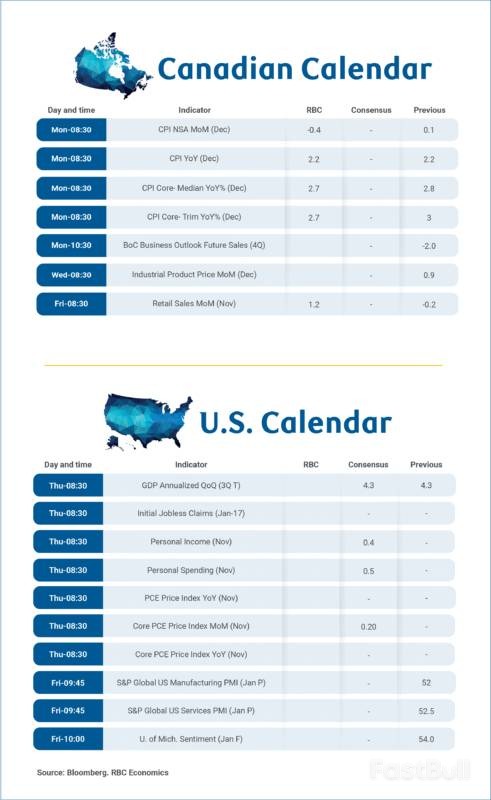
          Figure 1: Key economic indicators for Canada and the U.S. are scheduled for release, providing a crucial snapshot of North American economic health.

          Dissecting December's Inflation Report

          Headline inflation for December is expected to remain largely unchanged, holding steady at the 2.2% year-over-year rate seen in November. Core price growth trends are also anticipated to show little movement, leaving inflation running moderately above the Bank of Canada's 2% target.

          Conflicting Price Pressures

          Two key components are pulling the headline number in opposite directions:

          • Energy Prices: A significant 8% drop in gasoline prices during December should drag overall energy costs further below last year's levels.

          • Food Prices: Food inflation has remained high throughout 2025 after a brief easing in late 2024. Price growth is forecast to climb above 5% in December. This is partly due to base effects from a temporary GST/HST tax holiday on restaurant meals a year prior, but high grocery price inflation, which stood at 4.7% in November, continues to be a major driver.

          Core Inflation Remains a Concern

          When volatile food and energy products are excluded, inflation is projected to edge down to 2.3% from 2.4% in November. While this would be the second consecutive month of improvement, it's not enough to bring inflation back to the central bank's comfort zone.

          The BoC's preferred measures—the median and trim CPI—both registered 2.8% year-over-year increases in November, highlighting persistent underlying price pressures that remain well above the 2% target.

          How Tax Policies Skew the Numbers

          Year-over-year inflation figures continue to be distorted by government policy changes. The removal of the consumer carbon tax in most provinces last April is still suppressing annual energy price growth. Conversely, the temporary GST/HST tax break that ran from mid-December 2024 to mid-February 2025 will artificially inflate the annual price growth figure for December, though this impact may be limited by an offsetting rise in pre-tax prices a year ago.

          Business Outlook Signals Caution

          The Q4 Business Outlook Survey, released just ahead of the BoC's next interest rate decision, is expected to paint a familiar picture. The Q3 survey pointed to an economy stabilizing at a subdued level, and the upcoming report will likely show more of the same: muted demand, cautious pricing behavior, and restrained hiring plans among Canadian firms.
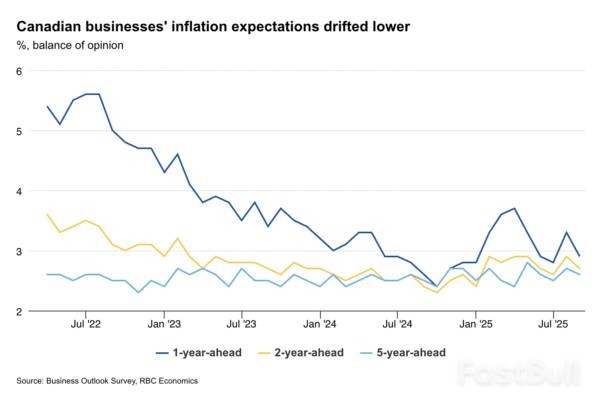
          Figure 2: Canadian businesses' inflation expectations have been trending lower across all time horizons, though they remain above the Bank of Canada's 2% target, according to survey data up to July 2025.

          BoC's Holding Pattern into 2026

          Despite some weaknesses, the Bank of Canada likely remains cautiously optimistic. While heavily trade-exposed sectors have underperformed, the worst-case international trade scenarios feared earlier in the year have not materialized.

          Furthermore, domestic consumer demand appears resilient. The upcoming retail sales report for November is expected to reinforce this, with Statistics Canada's advance estimate pointing to a strong 1.2% monthly increase. Data from our cardholder spending tracker also showed domestic purchases firming up through the holiday season.

          Given this backdrop, the forecast is for the Bank of Canada to leave its overnight rate unchanged throughout 2026. The next policy move is more likely to be a hike, but that is not expected to occur until 2027.

          To stay updated on all economic events of today, please check out our Economic calendar
          Risk Warnings and Disclaimers
          You understand and acknowledge that there is a high degree of risk involved in trading. Following any strategies or investment methods may lead to potential losses. The content on the site is provided by our contributors and analysts for information purposes only. You are solely responsible for determining whether any trading assets, securities, strategy, or any other product is suitable for investing based on your own investment objectives and financial situation.
          Add to Favorites
          Share

          China's Master Plan for Rare Earths Dominance

          Nathaniel Wright

          Political

          Commodity

          Remarks of Officials

          Economic

          Energy

          China–U.S. Trade War

          Global supply chains for rare earths have become a major political battleground. As China tightens its grip with export controls, the United States and its allies are scrambling to build alternative sources and reduce their dependency. But while the world focuses on restrictions, a far more complex strategy is unfolding inside China.

          Beijing’s game plan is not just about cutting off supply. It’s a sophisticated, multi-layered approach combining a powerful domestic industrial policy, strategic international cooperation, and a carefully calibrated use of export controls. Focusing only on the threat of a supply cutoff misses the bigger picture of how China is adapting to reinforce its dominance in the face of U.S. pressure.

          Beyond Mining: Upgrading the Industrial Engine at Home

          China's advantage in rare earths was never just about its mineral reserves. Its real power comes from an unmatched ability to integrate extraction, processing, and downstream manufacturing at an enormous scale. This dominance is the direct result of state-level strategic planning that has funneled capital, technology, and regulatory support across the entire value chain.

          For years, Beijing has prioritized moving up from a simple raw material extractor to a high-value industrial powerhouse. This technological upgrade has been fueled by a state-led capital allocation model that directs massive credit into the sector. While this sometimes led to oversupply and low prices, it also created steep barriers to entry for foreign competitors. Early environmental regulations also allowed China to scale up its processing capacity rapidly, achieving economies of scale that others find nearly impossible to match.

          More recently, China's policy has shifted from quantity to quality. The new focus is on cementing its advantage through:

          • Increased government funding for research and development.

          • Tighter regulatory and environmental standards.

          • Consolidating key producers through state-guided mergers.

          • Strengthening midstream and downstream manufacturing for electric vehicles, renewable energy, and other advanced sectors.

          These moves aim to anchor China's power not in the volume of earth it digs up, but in its deep industrial capacity, technological superiority, and systemic control over the entire supply chain.

          The Carrot: Cooperation as a Tool of Influence

          While most policy debates center on the coercive threat of China's rare earth power, economic leverage can be used as both a carrot and a stick. Long before the current geopolitical tensions, China was embedding itself in overseas mineral projects through its "Going Out" strategy and the Belt and Road Initiative.

          As U.S.-led decoupling efforts gain momentum, China is now using its rare earth expertise as an inducement for cooperation. Beijing is actively exploring ways to leverage its advanced processing capacity to build closer economic ties with other nations.

          A prime example is the reported discussion between China and Malaysia in October 2025 about a potential partnership to build a new refinery. The project would likely involve Chinese technical assistance to process critical materials needed for EV motors, wind turbines, and advanced electronics.

          Because outright technology transfer is restricted, Chinese state-owned firms are likely to engage through joint ventures, equipment sales, and engineer training programs. This allows China to support industrial development in partner countries and externalize some production stages while keeping a firm grip on core technologies and downstream markets. By offering targeted assistance, Beijing strengthens its position within global supply networks and counters the push for a broad realignment toward the United States.

          The Scalpel: Why Export Controls Are Calibrated, Not Crude

          While China's export controls can inflict real costs, they also have consequences. The United States and its allies are now actively restructuring their supply chains in direct response to the threat of future Chinese restrictions. In early 2026, a G-7 ministerial meeting in Washington focused squarely on building supply chain resilience, considering measures like price floors and international incentives to break away from Chinese supply.

          This push is backed by several U.S.-led initiatives. Washington is increasing state funding and expanding cooperation with allies like Australia and Japan, as well as partners in Southeast Asia such as Malaysia and Thailand, to build alternative capacity. The goal is to institutionalize diversification, treating potential supply disruptions not as one-off shocks but as a permanent risk.

          Beijing understands that using its rare earth leverage as a blunt weapon risks accelerating this decoupling. As a result, its export controls have been applied with cautious calibration. The slowdown in exports after the April 2025 curbs, followed by a rebound after talks in London later that year, shows this flexibility. Similarly, restrictions imposed in October 2025 were suspended after a meeting between U.S. President Donald Trump and Chinese President Xi Jinping.

          This pattern reveals that China uses export controls as both a retaliatory tool and a powerful bargaining chip. The aim is to manage supply and preserve leverage without triggering a full-scale economic conflict.

          China's Strategy Is More Than Just a Threat

          To understand China's rare earth strategy, looking only at export controls is a mistake. While these restrictions grab headlines, they are just one tool in a much larger toolkit.

          Instead of relying on outright bans, Beijing is executing a multifaceted strategy that combines strengthening its domestic industrial base, offering cooperation as an incentive, and applying restrictions with surgical precision. Together, these efforts allow China to solidify its industrial power, manage the pace of global diversification, and mitigate geopolitical risks in a world where critical minerals have become central to great power competition.

          To stay updated on all economic events of today, please check out our Economic calendar
          Risk Warnings and Disclaimers
          You understand and acknowledge that there is a high degree of risk involved in trading. Following any strategies or investment methods may lead to potential losses. The content on the site is provided by our contributors and analysts for information purposes only. You are solely responsible for determining whether any trading assets, securities, strategy, or any other product is suitable for investing based on your own investment objectives and financial situation.
          Add to Favorites
          Share

          Canada Forges New China Pact to Counter US Tariffs

          King Ten

          Political

          Remarks of Officials

          Economic

          Energy

          China–U.S. Trade War

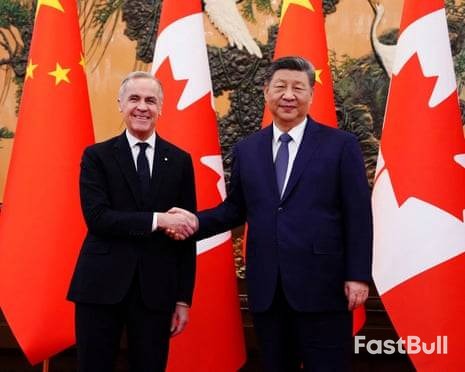
          Canadian Prime Minister Mark Carney and Chinese President Xi Jinping have launched a "new strategic partnership," marking the first visit to Beijing by a Canadian leader in eight years and signaling a significant diplomatic reset. The move aims to reshape Canada's trade relationships amid ongoing economic pressure from the United States.

          Canadian Prime Minister Mark Carney meets with Chinese President Xi Jinping in Beijing to establish a new strategic partnership.

          "Together we can build on the best of what this relationship has been in the past to create a new one adapted to new global realities," Carney told Xi during their meeting in the Great Hall of the People.

          Why Canada is Pivoting to China

          The state visit highlights Canada's urgent need to diversify its export markets and reduce its economic dependence on the United States. The strategic shift follows President Donald Trump's decision to impose sharp tariffs on key Canadian goods, including steel, aluminum, vehicles, and lumber.

          In response, Carney has set a goal to double Canada's non-US exports by 2035. While the U.S. remains its primary economic partner, accounting for about 75% of Canadian goods exports in 2024, the trade friction has forced Ottawa to seek new opportunities. China, currently Canada's second-largest market, received less than 4% of its exports in the same year.

          Breaking Down the New Agreements

          The talks in Beijing produced several preliminary agreements aimed at strengthening economic ties and reopening channels of communication that had been frozen for years.

          Key outcomes of the visit include:

          • Preliminary Trade Deal: A foundational agreement to reduce tariffs, which includes a commitment for Canada to import 49,000 electric vehicles from China at preferential rates.

          • Energy Cooperation: A pact covering both clean energy and fossil fuels. This reopens ministerial-level talks and could lead to Canada importing more Chinese clean-energy technology while increasing its fossil fuel exports to China. In 2024, only 2% of Canada's crude oil was sent to the Chinese market.

          • Expanded Sector Pacts: Additional agreements were signed to boost cooperation in forestry, culture, and tourism.

          Carney identified agriculture, energy, and finance as the sectors offering the most immediate opportunities for progress under the new strategic partnership.

          From Diplomatic Freeze to Cautious Rapprochement

          The renewed cooperation marks a turnaround from years of diplomatic tension. Relations between Ottawa and Beijing deteriorated sharply in 2018 after Canada arrested Huawei's Chief Financial Officer, Meng Wanzhou, on a U.S. warrant. China responded by detaining two Canadians on espionage charges, sparking a series of retaliatory tariffs and accusations of Chinese interference in Canadian elections.

          Both sides have now signaled a desire to move forward. Xi told Carney that their previous meeting at the Apec summit in October 2025 "opened a new chapter" for improving relations. He added that the "healthy and stable development of China-Canada relations serves the common interests of our two countries."

          During his trip, Carney also met with China's Premier, Li Qiang, and is scheduled to hold talks with business leaders to further discuss trade. While officials continue negotiations to finalize a broader agreement on lowering tariffs, the visit itself represents a calculated strategic pivot for Canada in a changing global economic landscape.

          To stay updated on all economic events of today, please check out our Economic calendar
          Risk Warnings and Disclaimers
          You understand and acknowledge that there is a high degree of risk involved in trading. Following any strategies or investment methods may lead to potential losses. The content on the site is provided by our contributors and analysts for information purposes only. You are solely responsible for determining whether any trading assets, securities, strategy, or any other product is suitable for investing based on your own investment objectives and financial situation.
          Add to Favorites
          Share

          Fed's Bowman: Weak Job Market Keeps Rate Cuts on the Table

          Michelle

          Remarks of Officials

          Economic

          Central Bank

          Political

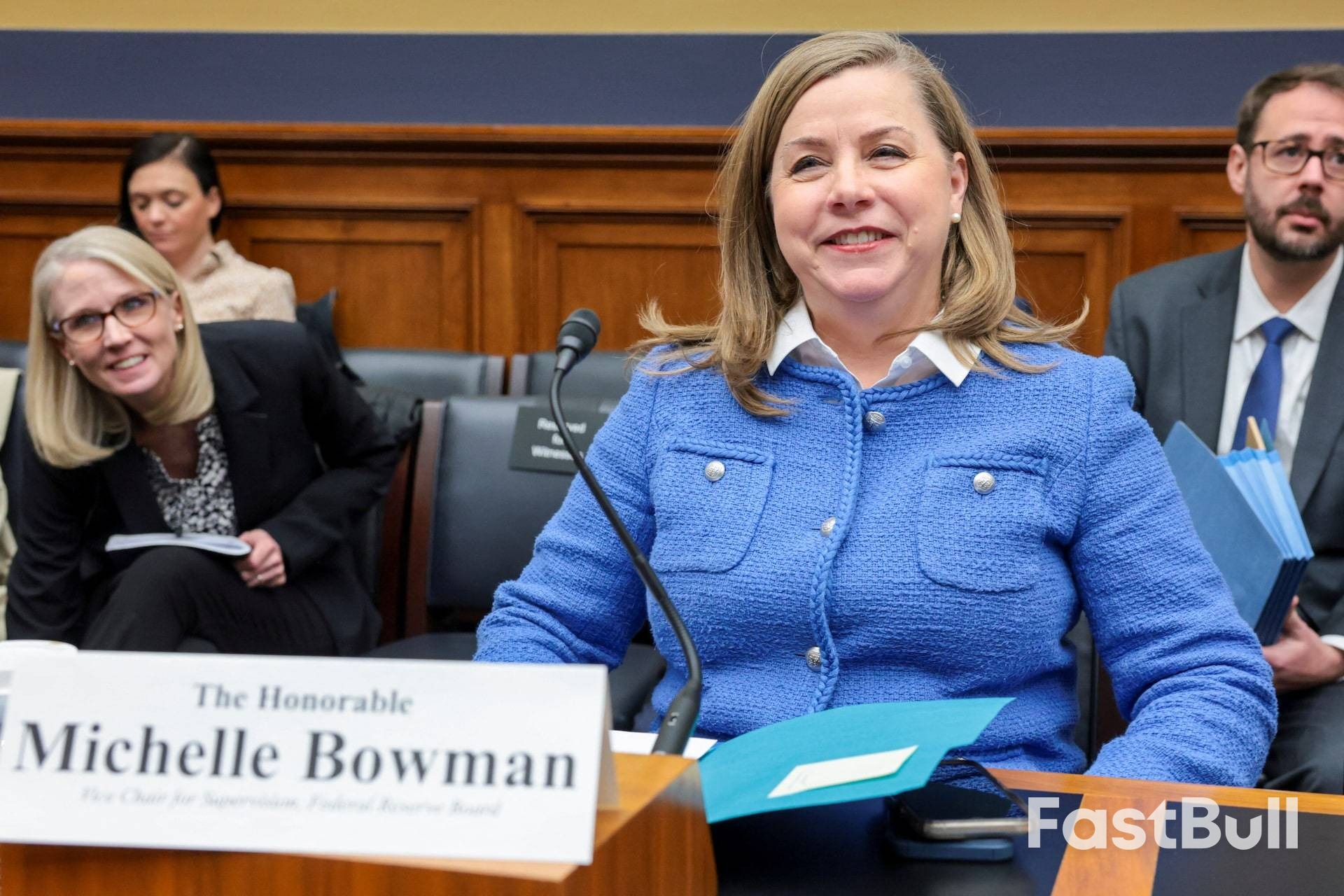
          Federal Reserve Vice Chair for Supervision Michelle Bowman stated on Friday that a fragile U.S. job market, which could weaken quickly, means the central bank must be prepared to cut interest rates again if necessary.

          Federal Reserve Vice Chair for Supervision Michelle Bowman stated the central bank should remain open to further interest rate cuts.

          A Call for Policy Flexibility

          In a speech for the New England Economic Forum, Bowman argued that without a "clear and sustained improvement in labor market conditions, we should remain ready to adjust policy to bring it closer to neutral." She emphasized that while monetary policy is not on a predetermined path, the Fed "should also avoid signaling that we will pause" on more rate cuts unless economic conditions change.

          Bowman described the current monetary policy stance as "moderately restrictive" and stressed that officials should be forward-looking when setting rates. She advocated for using forecasts informed by a wide range of indicators and direct engagement with businesses and communities.

          Balancing Inflation and Employment Risks

          Bowman’s baseline forecast is for continued solid economic expansion and a labor market stabilizing near full employment as policy becomes less restrictive. However, she noted that the risks to the Fed's dual mandate are uneven.

          She believes price pressures are likely to ease as the effects of trade tariffs diminish, bringing underlying inflation closer to the Fed's 2% target. In contrast, she sees the job market as "increasingly more fragile" and warned it "could continue to deteriorate in the coming months." Given that conditions can shift rapidly, Bowman argued for the Fed to remain nimble on policy decisions.

          The Fed's Current Cautious Approach

          The Federal Reserve enters 2026 with policymakers generally expecting inflation to moderate, the job market to stabilize, and economic growth to remain decent as uncertainty from President Donald Trump's policies subsides.

          In the last months of 2025, the Fed cut its benchmark interest rate by three-quarters of a percentage point, bringing it to a range of 3.50%-3.75%. These cuts were intended to support a weakening job market while keeping enough restraint to lower high inflation.

          At their December 9-10 meeting, Fed officials projected a single quarter-percentage-point rate cut for 2026. Since the start of the year, they have signaled no immediate urgency to act, preferring to wait for more evidence that inflation, still well above the 2% target, is on a downward path.

          This cautious stance comes amid considerable pressure from President Trump to lower rates further. The president is expected to soon announce his choice to succeed Fed Chair Jerome Powell, whose term ends in May. Tensions recently escalated after it was revealed the administration is criminally targeting the Fed over costs related to its headquarters renovation, an action Powell described as a response to the central bank exercising independent judgment on rate policy.

          To stay updated on all economic events of today, please check out our Economic calendar
          Risk Warnings and Disclaimers
          You understand and acknowledge that there is a high degree of risk involved in trading. Following any strategies or investment methods may lead to potential losses. The content on the site is provided by our contributors and analysts for information purposes only. You are solely responsible for determining whether any trading assets, securities, strategy, or any other product is suitable for investing based on your own investment objectives and financial situation.
          Add to Favorites
          Share

          ‘Markets are callous’: Why stocks aren’t fazed by Iran, Greenland or Venezuela

          Adam

          Stocks

          Economic

          The first two weeks of 2026 have seen U.S. President Donald Trump’s administration capture Venezuela’s president, threaten to respond to Iran’s violent crackdown on protests, and talk up the possibility of using force to seize Greenland. So why are stocks rising?
          The headlines have caused price swings in asset classes like gold, silver and oil as traders sought safe havens and weighed the impact a U.S. intervention in the Middle East could have on oil supply.
          Equity markets, however, appear to be shrugging off the news. The S&P 500 has had just three losing sessions since markets began the new trading year, and was up around 1.5% year-to-date at Thursday’s close. Europe, Latin America and the Middle East, where the tensions hit much closer to home, have also risen, as have Asia-Pacific stocks.

          The U.S. view

          Wall Street’s three major averages have made gains despite the news, appearing to shrug off U.S. President Donald Trump’s apparent willingness to order military operations overseas and threats to take territory from a close ally by force.
          Alongside the S&P 500′s gain, Wall Street’s two other major averages are up this year: the Dow Jones Industrial Average has added close to 3%, while tech-heavy Nasdaq Composite is up 1.2%.
          Eric Freedman, chief investment officer for Chicago-based Northern Trust Wealth Management, which manages assets worth $492.6 billion, said markets hadn’t been moved by Trump’s actions and rhetoric on Iran, Venezuela, and Greenland partly because no other large economic or military powers had responded.
          “Markets are looking at these events in isolation, and it would likely take a unique response to each flare-up to drive more market agita,” he told CNBC in an email. “We don’t want to speculate what subsequent actions may follow, but what we would be concerned with beyond the human conditions in a given region would be if lines are drawn that impact trade in an increasingly sequestered world.”
          A U.S. Supreme Court ruling is due soon on the legality of Trump’s tariffs, but, in the meantime, global investors appear to have adapted to the White House’s 2025 pivots, Freedman said.
          “Increased flare ups beyond what has occurred already could push countries to revisit trade ties or threaten sanctions, but until they arrive, markets will remain in more reactive mode if an event happens and not necessarily adjust portfolio positioning now in anticipation of an event,” he added. “If markets were leaning into prescriptive positioning or the thought that taking defensive measures was appropriate because flare-up probabilities were increasing, we would likely see a weaker U.S. dollar.”
          The U.S. dollar index, which measures the greenback against a basket of major rivals, has risen by around 1% since the beginning of the year.

          Equity market ‘meh’

          Alex Morris, CEO of Washington, D.C.-headquartered F/m Investments, called stock market investors’ reactions “equity market ‘meh’.”
          “Geopolitics are simmering, but not boiling over,” he said. “The president’s use of highly targeted shows of force but low-time and personnel in-theater operations leaves markets little to react to.
          “Short-lived and final events (no ongoing commitment) give little for markets to react to. News happens and that’s it. It also helps there has been no meaningful response from Iran or Venezuela.”
          Morris argued that the market’s muted reaction was underpinned by a “growing inurement” to what the Trump says, and increasingly, to what he does.
          “Despite substantial action, there is little the president is unwilling to immediately backtrack on and much of the flood the zone action has been undone or overturned,” he added. “The market has learned to temper enthusiasm and wait for receipts.”
          Anthony Esposito, founder and CEO of AscalonVI Capital, said markets have not cared to discount geopolitical risk for some time now.
          “Israel bombs Iran – the S&P 500 was down 1% overnight and closed down just 50bps. U.S. bombs Iran – almost no reaction,” he told CNBC.
          “Venezuela, Greenland could be seen as positives for the markets and even GDP in the U.S., [but] with no regard for the what ifs,” he said, noting that energy production, rare earth procurement, national security and infrastructure expansion were all at play.
          “Iran is the wild card,” he added, saying the market slid earlier this week “until Trump settled fears,” by seeming to back away from military action. “If there was an event in Iran the market would react (oil up, stocks down, gold up) but aside from that the markets are focused on rates, growth, earnings and the Trump agenda.”

          European rally

          Stocks in Europe have also strengthened even amid questions about the future of Greenland, a self-governing Danish territory in the Arctic, and what Trump’s determination to take the island could mean for NATO and continental defense. The pan-European Stoxx 600 has added almost 4%.
          “Bottom line, there is a lot of issues but as yet, they haven’t created an impact via investor sentiment or activity,” said Toni Meadows, head of investment at U.K.-based BRI Wealth Management.
          “This might not always be the case,” he added. “Greenland is [the] bigger deal in terms of impact as this is an argument within NATO, so if at some point the market believes Trump’s threat to make it a military conflict then markets will react,” he said. “But for now, it is a case of stay close to the news flow.”
          Benjamin Jones, global head of research at Invesco, told CNBC in an email that historically, geopolitics, military conflicts, and unconventional policy haven’t weighed on portfolios as much as investors fear.
          “Many geopolitical events are troubling, but markets are callous and only react meaningfully and sustainably when these events impact economic fundamentals or lead to a change in policy,” he said.
          “History is clear, equity markets have historically performed well in the 12 months following a spike in geopolitical risk.”

          Asian stocks on the rise

          In fact, the MSCI AC Asia Pacific Index, which tracks large and mid-cap stocks across 15 Asia-Pacific countries, has risen over 5% this year to a record high. Japan’s benchmark Nikkei 225 and South Korea’s Kospi similarly reached all-time highs in recent days.
          Market watchers said the increases are not investors being complacent, but fundamentals like the absence of major oil shocks and the expectation that easier monetary policy and AI spending will continue to underpin earnings growth.
          “The impact of geopolitical events would usually transmit to global markets via the oil price but the oil market is not seeing significant shocks so far,” said Yap Fook Hien, senior investment strategist at Standard Chartered.
          Yap added that Asian investors and global equity markets are driven more by policy stimulus, including U.S. rate cuts and AI investments, all of which support a strong outlook for earnings growth this year.
          “Geopolitics remain a key risk but the shock since Liberation Day in April 2025 has conditioned markets to respond more calmly to Trump’s actions,” he said.
          Morningstar’s Southeast Asia managing director, Shihan Abeyguna, told CNBC that markets may now view geopolitics as “a chronic risk rather than an acute shock.”
          He added that Asia valuations are not stretched enough to make markets vulnerable to prolonged drawdowns without a genuine shock.
          Geopolitical concerns in the region “tend to be more calibrated, so it would need to be a true unexpected shock that would alter earnings expectations,” said Abeyguna.

          Source: cnbc

          To stay updated on all economic events of today, please check out our Economic calendar
          Risk Warnings and Disclaimers
          You understand and acknowledge that there is a high degree of risk involved in trading. Following any strategies or investment methods may lead to potential losses. The content on the site is provided by our contributors and analysts for information purposes only. You are solely responsible for determining whether any trading assets, securities, strategy, or any other product is suitable for investing based on your own investment objectives and financial situation.
          Add to Favorites
          Share

          White House Adviser Hassett Plays Down Probe Of Fed Chair Powell

          Devin

          Central Bank

          WASHINGTON, Jan 16 (Reuters) - White House adviser Kevin Hassett played down the federal criminal investigation into Federal Reserve Chair Jerome Powell on Friday, saying he expected there would be "nothing to see here".

          The Trump administration has opened a criminal investigation into Powell over cost overruns for a $2.5 billion project to renovate two historical buildings at the Fed's headquarters complex. Powell, who disclosed the probe on Sunday, denies wrongdoing, and said the unprecedented actions were a pretext to put pressure on him for not satisfying U.S. President Donald Trump's long-running demands for sharply lower interest rates.

          Hassett, the director of the National Economic Council who is a candidate to replace Powell, said in an interview with Fox Business Network that he wished there had been more transparency from the Fed about cost overruns of building renovations.

          "The bottom line is, I expect, you know, Jay is a good man - I expect that there's nothing to see here, that the cost overruns are related to things like asbestos, as he says. But I sure wish they had been more transparent," Hassett said.

          The probe drew criticism from foreign economic officials, investors and former U.S. government officials from both political parties - as well as lawmakers in Trump's own Republican Party, as politicizing sensitive policymaking.

          Powell's term as Fed chair ends in May. Trump has yet to announce a replacement.

          Hassett tried to minimize the federal criminal probe as a "simple request for information".

          "I'm sure the information will be forthcoming shortly, and then things will move forward," he told "Mornings with Maria."

          Source: Investing

          Risk Warnings and Disclaimers
          You understand and acknowledge that there is a high degree of risk involved in trading. Following any strategies or investment methods may lead to potential losses. The content on the site is provided by our contributors and analysts for information purposes only. You are solely responsible for determining whether any trading assets, securities, strategy, or any other product is suitable for investing based on your own investment objectives and financial situation.
          Add to Favorites
          Share

          US Engages Venezuela on Two Fronts After Maduro's Capture

          Isaac Bennett

          Remarks of Officials

          Political

          The Trump administration is pursuing a dual-track strategy in its relationship with Venezuela, marked by high-level diplomatic meetings in both Caracas and Washington following the capture of President Nicolas Maduro earlier this year.

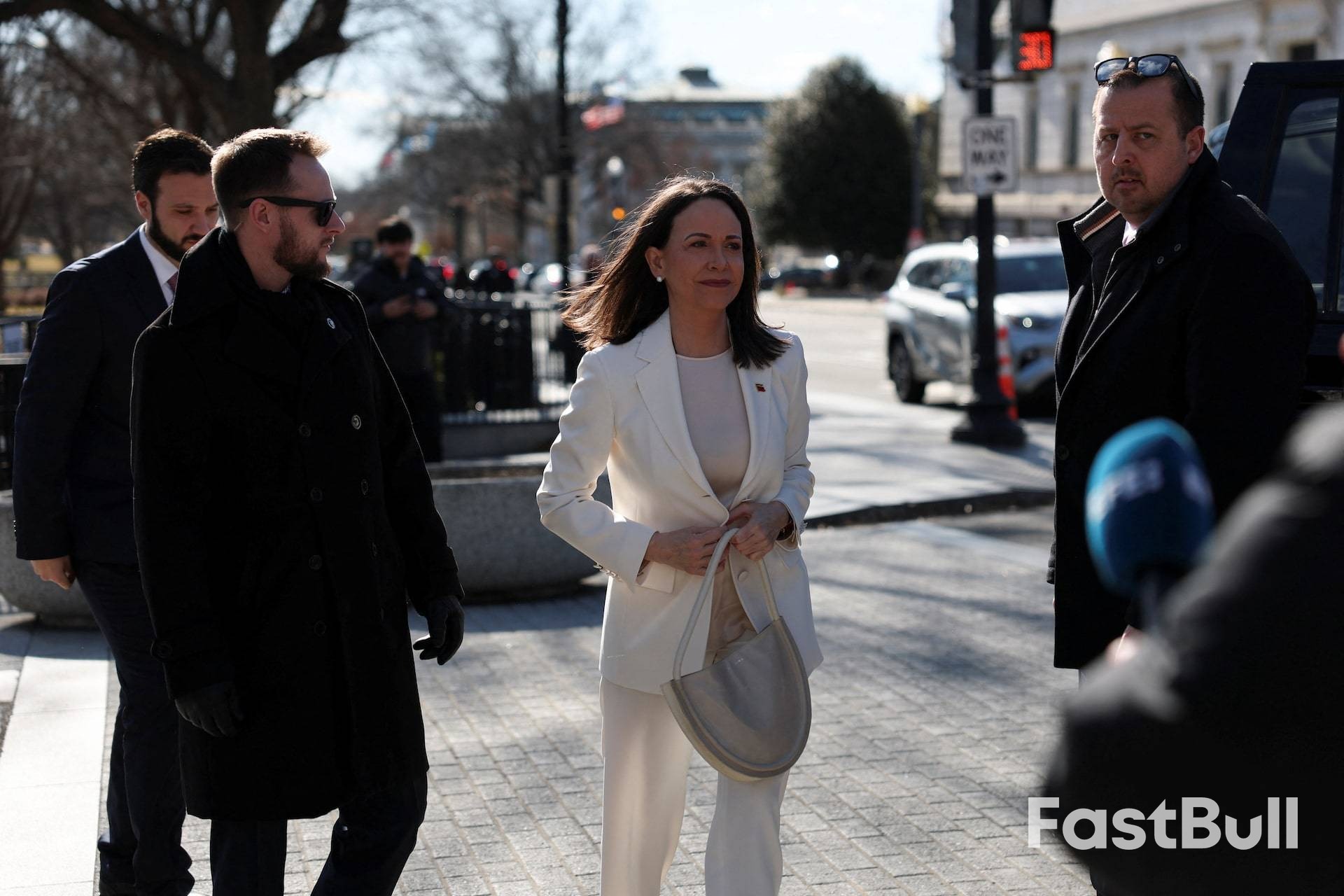
          In a significant move, CIA Director John Ratcliffe met with Venezuela's acting president, Delcy Rodriguez, in Caracas. Simultaneously, Venezuelan opposition leader Maria Corina Machado held a meeting with President Donald Trump at the White House.

          The Washington Channel: Trump Hosts the Opposition

          Maria Corina Machado, a prominent liberal opposition figure, met with President Trump on Thursday. The meeting was highlighted by a significant gesture: Machado presented Trump with the Nobel Peace Prize medal she had received the previous year.

          Venezuelan opposition leader Maria Corina Machado in Washington D.C. ahead of a high-profile meeting with President Donald Trump.

          After what she described as an "excellent" meeting, Trump publicly thanked Machado for the medal on social media, calling it "a wonderful gesture of mutual respect." Machado is scheduled to speak with reporters on Friday at the Heritage Foundation, a conservative think tank with strong connections to the Trump administration.

          The Caracas Channel: CIA Director Meets Interim Government

          John Ratcliffe’s visit to Caracas makes him the most senior U.S. official known to have met with acting President Delcy Rodriguez since the U.S. attack on January 3 that resulted in the capture of Nicolas Maduro and his wife.

          According to a U.S. official, the CIA chief met with Rodriguez at Trump's direction. The key objectives of the meeting were:

          • To signal that the United States is seeking an improved working relationship.

          • To discuss intelligence cooperation and economic stability.

          • To demand assurances that Venezuela will not serve as a "safe haven for America's adversaries, especially narco-traffickers."

          Political Tensions Remain High

          The diplomatic overtures are set against a backdrop of deep political friction. During her first State of the Union address on Thursday, acting President Rodriguez appeared to take a swipe at Machado's visit to Washington.

          "If I should visit Washington," Rodriguez told the Venezuelan people, "I will do so with my head held high, walking, not on my knees."

          Risk Warnings and Disclaimers
          You understand and acknowledge that there is a high degree of risk involved in trading. Following any strategies or investment methods may lead to potential losses. The content on the site is provided by our contributors and analysts for information purposes only. You are solely responsible for determining whether any trading assets, securities, strategy, or any other product is suitable for investing based on your own investment objectives and financial situation.
          Add to Favorites
          Share
          FastBull
          Copyright © 2026 FastBull Ltd

          728 RM B 7/F GEE LOK IND BLDG NO 34 HUNG TO RD KWUN TONG KLN HONG KONG

          TelegramInstagramTwitterfacebooklinkedin
          App Store Google Play Google Play
          Products
          Charts

          Chats

          Q&A with Experts
          Screeners
          Economic Calendar
          Data
          Tools
          Membership
          Features
          Function
          Markets
          Copy Trading
          Latest Signals
          Contests
          News
          Analysis
          24/7
          Columns
          Education
          Company
          Careers
          About Us
          Contact Us
          Advertising
          Help Center
          Feedback
          User Agreement
          Privacy Policy
          Personal Information Protection Statement
          Business

          White Label

          Data API

          Web Plug-ins

          Poster Maker

          Affiliate Program

          Risk Disclosure

          The risk of loss in trading financial instruments such as stocks, FX, commodities, futures, bonds, ETFs and crypto can be substantial. You may sustain a total loss of the funds that you deposit with your broker. Therefore, you should carefully consider whether such trading is suitable for you in light of your circumstances and financial resources.

          No decision to invest should be made without thoroughly conducting due diligence by yourself or consulting with your financial advisors. Our web content might not suit you since we don't know your financial conditions and investment needs. Our financial information might have latency or contain inaccuracy, so you should be fully responsible for any of your trading and investment decisions. The company will not be responsible for your capital loss.

          Without getting permission from the website, you are not allowed to copy the website's graphics, texts, or trademarks. Intellectual property rights in the content or data incorporated into this website belong to its providers and exchange merchants.

          Not Logged In

          Log in to access more features

          FastBull Membership

          Not yet

          Purchase

          Become a signal provider
          Help Center
          Customer Service
          Dark Mode
          Price Up/Down Colors

          Log In

          Sign Up
          Position
          Layout
          Fullscreen
          Default to Chart
          The chart page opens by default when you visit fastbull.com