Markets
News
Analysis
User
24/7
Economic Calendar
Education
Data
- Names
- Latest
- Prev



Signal Accounts for Members
All Signal Accounts
All Contests


Euro Zone Industrial Output MoM (Nov)A:--
F: --
Euro Zone Trade Balance (SA) (Nov)A:--
F: --
Euro Zone Trade Balance (Not SA) (Nov)A:--
F: --
Euro Zone Industrial Output YoY (Nov)A:--
F: --
South Africa Refinitiv/Ipsos Primary Consumer Sentiment Index (PCSI) (Jan)A:--
F: --
P: --
U.K. Refinitiv/Ipsos Primary Consumer Sentiment Index (PCSI) (Jan)A:--
F: --
P: --
Brazil Retail Sales MoM (Nov)A:--
F: --
P: --
U.S. NY Fed Manufacturing Prices Received Index (Jan)A:--
F: --
P: --
U.S. NY Fed Manufacturing New Orders Index (Jan)A:--
F: --
P: --
U.S. NY Fed Manufacturing Employment Index (Jan)A:--
F: --
P: --
U.S. Export Price Index YoY (Nov)A:--
F: --
P: --
U.S. NY Fed Manufacturing Index (Jan)A:--
F: --
U.S. Initial Jobless Claims 4-Week Avg. (SA)A:--
F: --
U.S. Export Price Index MoM (Nov)A:--
F: --
P: --
Canada Manufacturing Unfilled Orders MoM (Nov)A:--
F: --
P: --
Canada Manufacturing New Orders MoM (Nov)A:--
F: --
P: --
U.S. Philadelphia Fed Manufacturing Employment Index (Jan)A:--
F: --
P: --
Canada Wholesale Inventory YoY (Nov)A:--
F: --
P: --
Canada Manufacturing Inventory MoM (Nov)A:--
F: --
P: --
Canada Wholesale Sales YoY (Nov)A:--
F: --
P: --
Canada Wholesale Inventory MoM (Nov)A:--
F: --
P: --
U.S. Import Price Index YoY (Nov)A:--
F: --
U.S. Import Price Index MoM (Nov)A:--
F: --
P: --
U.S. Weekly Continued Jobless Claims (SA)A:--
F: --
Canada Wholesale Sales MoM (SA) (Nov)A:--
F: --
P: --
U.S. Weekly Initial Jobless Claims (SA)A:--
F: --
U.S. Philadelphia Fed Business Activity Index (SA) (Jan)A:--
F: --
P: --
U.S. EIA Weekly Natural Gas Stocks ChangeA:--
F: --
P: --
Richmond Federal Reserve President Barkin delivered a speech.
U.S. Weekly Treasuries Held by Foreign Central BanksA:--
F: --
P: --
Germany CPI Final MoM (Dec)--
F: --
P: --
Germany CPI Final YoY (Dec)--
F: --
P: --
Germany HICP Final MoM (Dec)--
F: --
P: --
Germany HICP Final YoY (Dec)--
F: --
P: --
Brazil PPI MoM (Nov)--
F: --
P: --
Canada New Housing Starts (Dec)--
F: --
P: --
U.S. Capacity Utilization MoM (SA) (Dec)--
F: --
P: --
U.S. Industrial Output YoY (Dec)--
F: --
P: --
U.S. Manufacturing Capacity Utilization (Dec)--
F: --
P: --
U.S. Manufacturing Output MoM (SA) (Dec)--
F: --
P: --
U.S. Industrial Output MoM (SA) (Dec)--
F: --
P: --
U.S. NAHB Housing Market Index (Jan)--
F: --
P: --
Russia CPI YoY (Dec)--
F: --
P: --
U.S. Weekly Total Rig Count--
F: --
P: --
U.S. Weekly Total Oil Rig Count--
F: --
P: --
Japan Core Machinery Orders YoY (Nov)--
F: --
P: --
Japan Core Machinery Orders MoM (Nov)--
F: --
P: --
U.K. Rightmove House Price Index YoY (Jan)--
F: --
P: --
China, Mainland GDP YoY (YTD) (Q4)--
F: --
P: --
China, Mainland Industrial Output YoY (YTD) (Dec)--
F: --
P: --
Japan Industrial Output Final MoM (Nov)--
F: --
P: --
Japan Industrial Output Final YoY (Nov)--
F: --
P: --
Euro Zone Core HICP Final MoM (Dec)--
F: --
P: --
Euro Zone HICP Final MoM (Dec)--
F: --
P: --
Euro Zone HICP Final YoY (Dec)--
F: --
P: --
Euro Zone HICP MoM (Excl. Food & Energy) (Dec)--
F: --
P: --
Euro Zone Core CPI Final YoY (Dec)--
F: --
P: --
Euro Zone Core HICP Final YoY (Dec)--
F: --
P: --
Euro Zone CPI YoY (Excl. Tobacco) (Dec)--
F: --
P: --
Euro Zone Core CPI Final MoM (Dec)--
F: --
P: --


No matching data
Latest Views
Latest Views
Trending Topics
Top Columnists
Latest Update
White Label
Data API
Web Plug-ins
Affiliate Program
View All

No data
Bolsonaro's family has repeatedly complained about the conditions in which he was being held. The former president is serving a 27-year prison sentence for attempting a coup following his 2022 election loss.
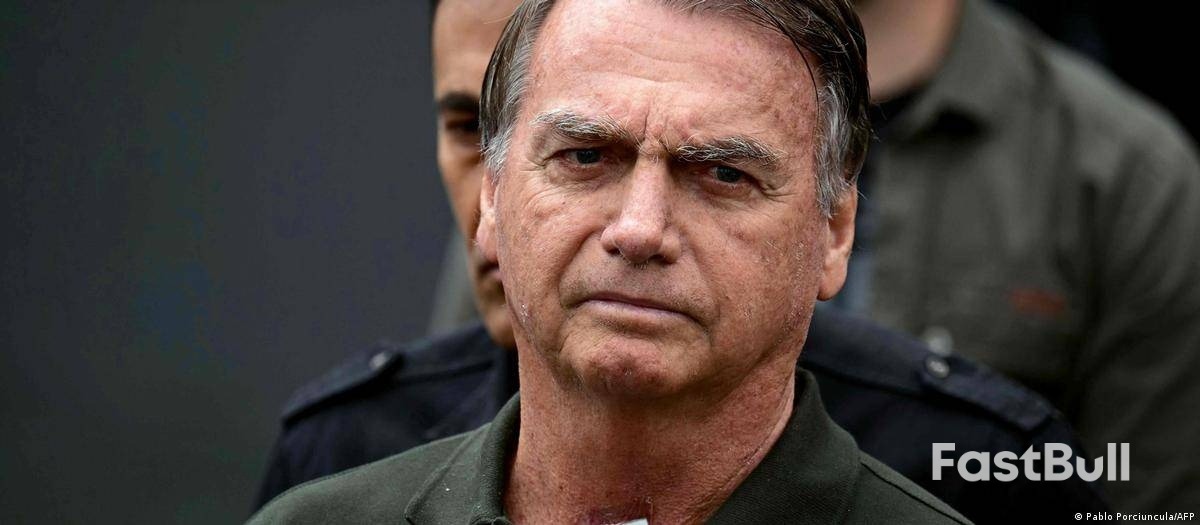
Brazil's Supreme Court has ordered the transfer of former President Jair Bolsonaro from the federal police headquarters in Brasilia to a prison complex where he will enjoy "more favorable conditions."
At the prison, the 70-year-old will have a 54-square-meter (581-square-foot) room with a 10-square-meter outside area that he can access at will.
The new cell is much bigger than the 12-square-meter-room he had been in previously. It includes a bedroom, a bathroom, a kitchen and a living room, the court said.
The 70-year-old former leader will also have increased time for family visits.
Furthermore, physiotherapy equipment, such as a treadmill and a bicycle, will be installed.
The move comes after repeated complaints from Bolsonaro's family about the conditions of his detention.
They said Bolsonaro was being mistreated and not getting adequate medical attention.
Supreme Court Justice Alexandre de Moraes denied the accusations.
The judge said Bolsonaro was convicted of extremely serious crimes and that his custodial sentence was not a "hotel stay or a vacation colony."
He also said, "There has been a systematic attempt to delegitimize the regular and lawful execution of the custodial sentence of Jair Messias Bolsonaro."
The former president is serving a 27-year prison sentence for orchestrating a failed coup following his 2022 election loss to Luiz Inacio Lula da Silva.
Bolsonaro has always denied wrongdoing.
His lawyers have been pushing for a transfer to house arrest on medical grounds.
Since starting his sentence, Bolsonaro has made several trips to a nearby hospital.
Earlier this month, he underwent tests after a fall in prison, but no serious injury was revealed.
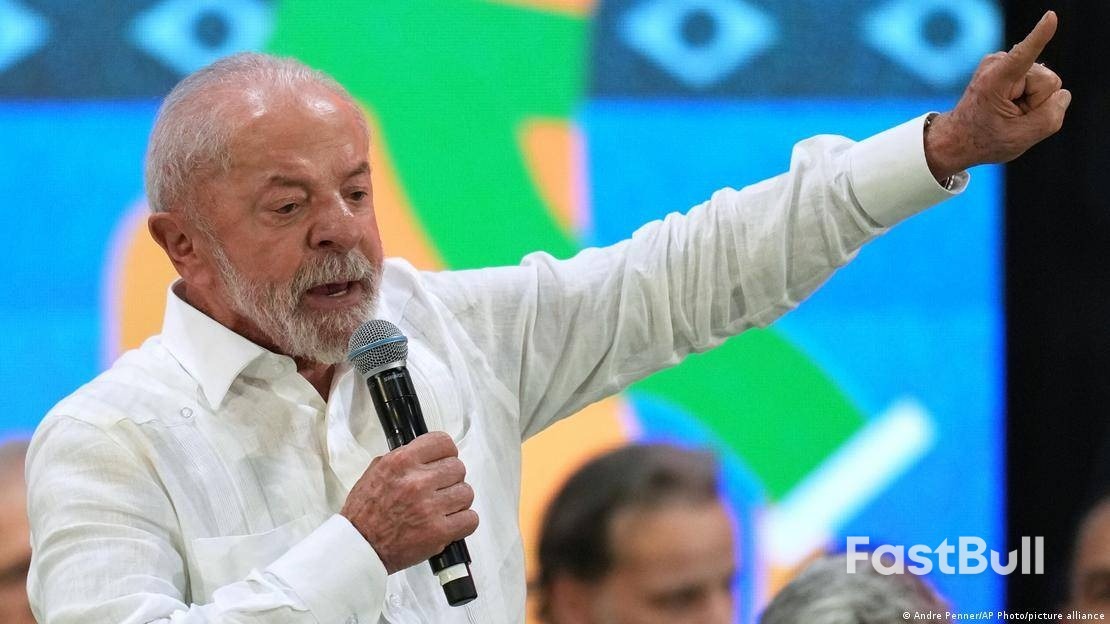
Brazilians will go to the polls to elect a new president in October, and Lula is seeking a fourth term in officeImage: Andre Penner/AP Photo/picture allianceBrazil's Congress late last year passed a bill that would have reduced Bolsonaro's time in jail from 27 years to two.
But President Lula vetoed the legislation on January 8.
Lawmakers will still have the final say, as Congress has the right to override his veto.
Brazilians will go to the polls to elect a new president in October, and Lula is seeking a fourth term.
Bolsonaro, meanwhile, has anointed his eldest son, Senator Flavio Bolsonaro, as his political heir and presidential candidate.
Heavy rainfall in northeast Australia has triggered floods that are hampering mine operations and disrupting supplies of metallurgical coal in the region.
Some coal miners have declared force majeure on portions of their shipments or warned customers of potential delays, according to traders, who asked not to be named as they are not authorized to speak to the media. The companies include Stanmore Resources Ltd., GM3 — a joint venture between Golden Energy and Resources and M Resources Ltd. — as well as Pembroke Resources Pty Ltd. and Fitzroy Coal Sales Pty Ltd.
Major miners such as Anglo American Plc and Glencore Plc have also been impacted but have not declared force majeure, the traders said. Argus Media reported that the road and rail disruptions had limited Glencore's ability to supply copper concentrate for multiple days.
The disruptions follow an unusually wet start to summer in Queensland state, where some areas have seen rainfall close to their monthly precipitation averages weeks earlier than normal, due in part to Tropical Cyclone Koji.
Forecasters are warning that another weather system could form over the region from Monday, potentially compounding the impact on mining and transport operations.
Elsewhere in Australia, heavy rain is affecting parts of Victoria, with flash floods sweeping away cars on Great Ocean Road.
Stanmore, GM3, Pembroke, Fitzroy Coal, Anglo and Glencore did not immediately respond to requests for comment.
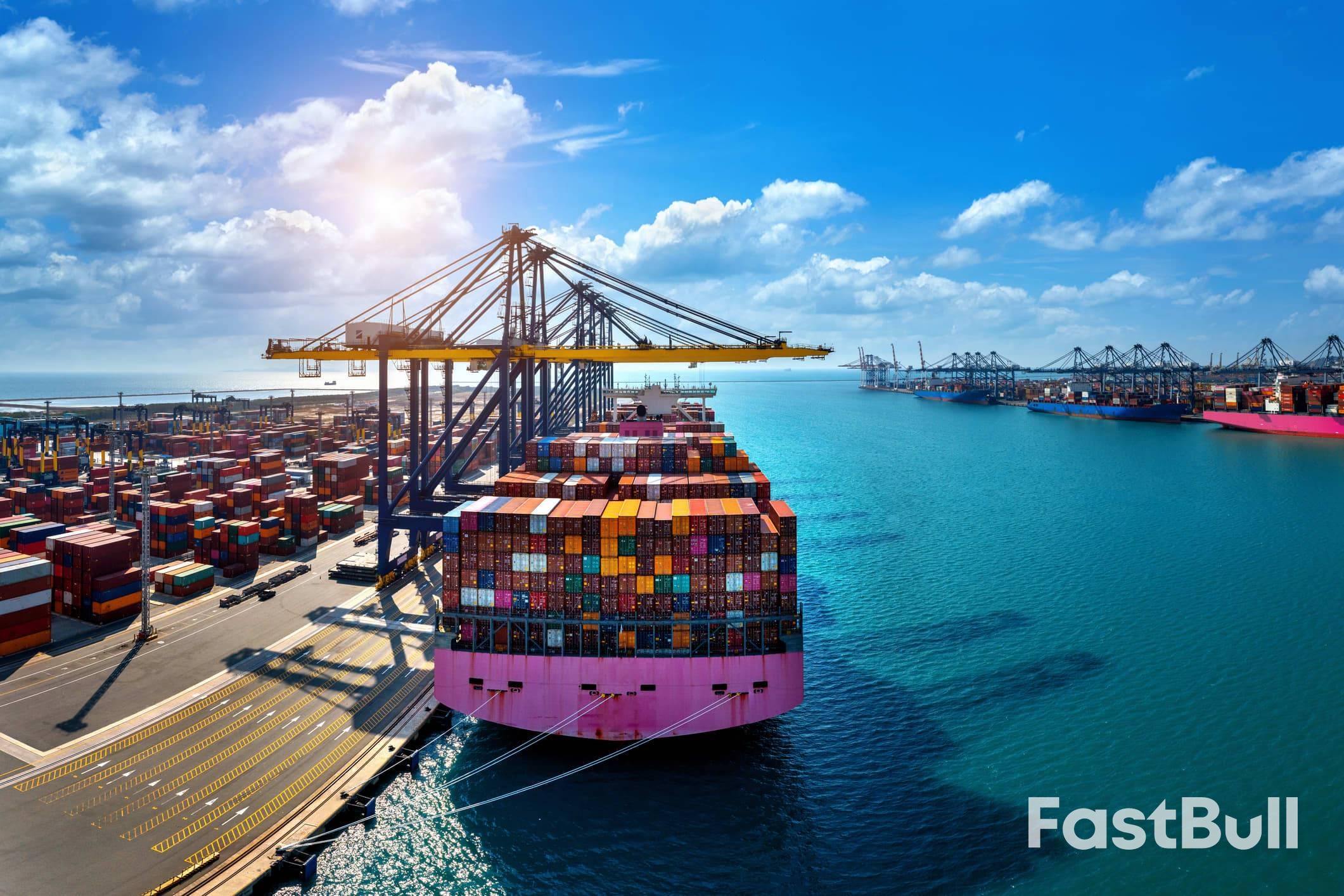
Recent trade data reveals a significant shift in India's export strategy, with shipments to China surging while those to the United States are declining. This pivot comes as New Delhi navigates the impact of steep U.S. tariffs and actively seeks to diversify its markets.

In December, India's exports to China skyrocketed by 67% to reach $2 billion. In sharp contrast, goods shipped to the U.S.—historically India's largest export market—fell by 1.8% to $6.8 billion. The shift follows the imposition of 50% tariffs by the U.S. on Indian goods, among the highest for any country and a move that has strained economic and diplomatic ties.
The trend extends beyond a single month. During the first nine months of the fiscal year ending March 2026, India's exports to mainland China have climbed by nearly 37%, with shipments to Hong Kong also jumping by over 25%.
This growing economic relationship has been supported by a diplomatic thaw. Relations have been warming since Prime Minister Narendra Modi and Chinese President Xi Jinping met at the Shanghai Cooperation Organization summit in September, sharing a vision of partnership over rivalry. More recently, India's Foreign Secretary Vikram Misri met with Sun Haiyan, a Vice Minister of the Communist Party of China, to discuss stabilizing bilateral ties with a focus on business.
According to India's commerce ministry, China has now overtaken the U.S. as India's largest goods trading partner. Between April and December 2025, bilateral trade with China totaled $110.20 billion, eclipsing the $105.31 billion in trade with the U.S.
While trade with China grows, it presents a significant challenge for India: a massive trade deficit. This stands in stark contrast to its trading relationship with the United States.
• With the U.S.: New Delhi enjoys a trade surplus, which stood at over $26 billion from April to December.
• With China: The trade deficit has been soaring, reaching $81.7 billion over the same period.
For the full fiscal year 2025, India's trade with Washington was $131.84 billion, while trade with its Asian neighbor was $127.71 billion, not including Hong Kong.
Hopes for resolving trade friction with Washington hinge on a potential deal that has so far remained elusive. India's Trade Secretary, Rajesh Agrawal, recently stated that New Delhi was "very near" to finalizing an agreement but declined to provide a timeline.
The U.S. side has offered conflicting accounts. U.S. Commerce Secretary Howard Lutnick claimed a deal fell through because Prime Minister Modi did not call President Trump, an assertion the Indian side has called "inaccurate." Meanwhile, the new U.S. Ambassador to India, Sergio Gor, acknowledged that finalizing a deal is "not an easy task" but affirmed that Washington is "determined to get there."
Faced with U.S. tariffs and an ambition to become an export powerhouse, India is actively diversifying its trade relationships.
According to Trade Secretary Agrawal, the country is close to signing a long-awaited trade pact with the European Union this month. Since the U.S. tariffs were announced, India has also secured trade agreements with the UK and Oman, with another deal with New Zealand expected to be signed in the first half of 2026.
S. C. Ralhan, president of the Federation of Indian Export Organisations, emphasized the success of this strategy, noting that India has a "well-diversified and resilient export footprint." He listed the UAE, China, Netherlands, UK, and Germany as top destinations alongside the U.S.
Ralhan added that this diversification is "particularly critical at a time when global trade routes are being reshaped due to geo-political conflicts, sanctions, shipping disruptions and strategic realignments."
Three U.S. House Democrats are accusing the Securities and Exchange Commission of retreating from its enforcement duties in the crypto sector and calling on Chairman Paul Atkins to explain its pullback from high-profile crypto cases — including the case against Tron founder Justin Sun.
In a Thursday letter to Atkins, House Representatives Maxine Waters, Sean Casten, and Brad Sherman expressed alarm over the SEC's dismissal of more than a dozen crypto-related cases since early 2025, including litigation against Binance, Coinbase, and Kraken.
"Given the industry's history of investor-harm and the clear mandate of the securities laws to protect market participants, this turn raises troubling questions about the SEC's priorities and effectiveness," the letter said.
The lawmakers argued that the SEC's retreat has coincided with a surge in political spending by crypto firms, creating what they described as an "unmistakable inference of a pay-to-play scheme."
According to the letter, crypto companies donated at least $85 million to President Trump's reelection campaign, while firms whose enforcement actions were dismissed in 2025 — including Coinbase, Kraken, Ripple, Robinhood, and Crypto.com — each contributed at least $1 million to Trump's inauguration.
The lawmakers focused particular attention on the SEC's pause of its enforcement action against Justin Sun, saying the extended pause in the agency's enforcement suggests that politically connected figures may be securing preferential treatment.
They noted that Sun invested more than $75 million in Trump-linked crypto ventures, including World Liberty Financial, in late 2024 and early 2025.
Sun was sued in 2023 for allegedly orchestrating the unregistered offer and sale of crypto securities, manipulating trading volumes, and engaging in unlawful celebrity promotion. In February 2025, the SEC requested a stay to explore a potential settlement.
"The SEC's request to stay the Sun case, which has now been in place for 11 months, signals to the market that securities laws are enforced selectively, and that those with sufficient political influence can evade accountability," the lawmakers wrote.
The Democratic lawmakers also raised national security concerns about Sun's alleged ties to China, pointing to his involvement in research programs at China's Central Party School, publications in state media platforms, and his past claims of connections to Chinese officials.
Alongside the letter, the lawmakers issued a separate document preservation request for all communications related to the decision to pause the Sun litigation, including any contacts with third parties attempting to influence the outcome.
The Block has reached out to a spokesperson representing Sun for comment.
Canadian Prime Minister Mark Carney is meeting with China's top leadership, including President Xi Jinping, in a significant move to reshape global partnerships. The visit comes as Canada navigates strained relations with the United States following disruptive trade policies implemented by Donald Trump.
Marking the first visit to China by a Canadian leader in eight years, Carney is signaling a clear strategic shift. During a meeting on Thursday, he told Chinese Premier Li Qiang, "I believe the progress we have made in this partnership sets up well for the new world order."
Carney's scheduled talks with President Xi on Friday follow a pattern of Western leaders, including the UK's Keir Starmer and Germany's Friedrich Merz, seeking to rebuild ties with Beijing after a trade truce between the U.S. and China stabilized relations.
Since taking office last year, Carney has focused on resetting relations and deepening trade with the Asian economic superpower. The high-level meetings build on a recently unveiled agreement designed to expand bilateral commerce in several key areas:
• Energy
• Lumber
• Cultural exchanges
• Pet food exports
On Thursday, Carney also met with executives from major Chinese corporations, including China National Petroleum Corp. and the electric vehicle battery manufacturer Contemporary Amperex Technology Co. Ltd. (CATL).
The diplomatic outreach to China occurs against a complex geopolitical backdrop. Carney has frequently described the Canada-US relationship as having suffered a historic "rupture" due to an array of tariffs imposed by Trump.
This creates a delicate situation for Canada, which faces difficult negotiations with the Trump administration over the North American free trade pact. Complicating matters, U.S. officials have been pressuring both Canada and Mexico to erect barriers against Chinese products as a precondition for those talks.
Despite the positive momentum, two major trade irritants remain unresolved between Canada and China. Ottawa hopes to convince Beijing to ease tariffs on its agricultural products. Meanwhile, Xi's government is pushing for Canada to roll back its own levies on Chinese-made electric vehicles.
The change in Canada's official tone is stark. Canadian Industry Minister Melanie Joly told reporters on Thursday that the current objective is to bring "stability" to the relationship. This contrasts sharply with her assessment in 2022, when, as foreign minister, she called China an "increasingly disruptive global power."
In a pointed comparison, Joly added that the recent discussions in China have been more predictable than talks with other nations. "You know what? The conversations here have been more predictable and stable than sometimes with other countries, including our neighbor," she said.
Carney is expected to speak with reporters in Beijing later on Friday.
The United States has announced the second phase of a fragile ceasefire in Gaza, throwing its weight behind a new "Palestinian Technocratic Government" designed to manage the territory's transition after the conflict. Former President Donald Trump confirmed his support for the plan on Thursday, which aims to establish stability even as the truce that began in October continues to be violated.

The U.S.-backed initiative centers on the creation of the "National Committee for the Administration of Gaza," a body of technocrats intended to govern the region. According to the plan agreed to by Israel and Hamas in October, this committee will be supervised by an international "Board of Peace."
In a social media post, Trump stated, "I am backing a newly appointed Palestinian Technocratic Government... to govern Gaza during its transition." He also revealed that he will personally chair the Board of Peace and that its members would be announced shortly.

The proposed structure has drawn criticism from some experts, who argue that having Trump chair a body supervising Gaza's governance resembles a colonial framework.
The 15-member technocratic committee will be led by Ali Shaath, a former deputy minister in the Palestinian Authority who previously managed the development of industrial zones. Mediators Egypt, Qatar, and Turkey confirmed his leadership, and Trump described the committee members as "unwaveringly committed to a PEACEFUL future."
Despite the diplomatic push, the ceasefire on the ground remains extremely fragile. Since the truce began in October, both Israel and Hamas have accused each other of violations. The violence has continued, with reports indicating that over 440 Palestinians, including more than 100 children, and three Israeli soldiers have been killed.
Several key issues continue to test the agreement's viability:
• The failure to retrieve the remains of the last Israeli hostage.
• Israeli delays in reopening Gaza's border crossing with Egypt.
• Hamas's refusal to disarm its military wing.
As Washington and its partners move into the second phase of the plan, they face the significant challenges of implementing a "comprehensive demilitarization agreement" with Hamas. This phase is also tied to further Israeli withdrawal from Gaza and the deployment of an international peacekeeping force.
The regional mediators—Egypt, Qatar, and Turkey—are tasked with helping to secure the disarmament agreement with Hamas, a cornerstone of the plan's long-term success.
This initiative unfolds against the backdrop of a devastating conflict that began in late 2023. Israel's assault on Gaza has resulted in tens of thousands of deaths, triggered a severe hunger crisis, and displaced the entire population. Numerous rights experts and a U.N. inquiry have labeled the actions as genocide. Israel maintains it acted in self-defense following the 2023 Hamas-led attack, which killed 1,200 people and resulted in over 250 hostages being taken.

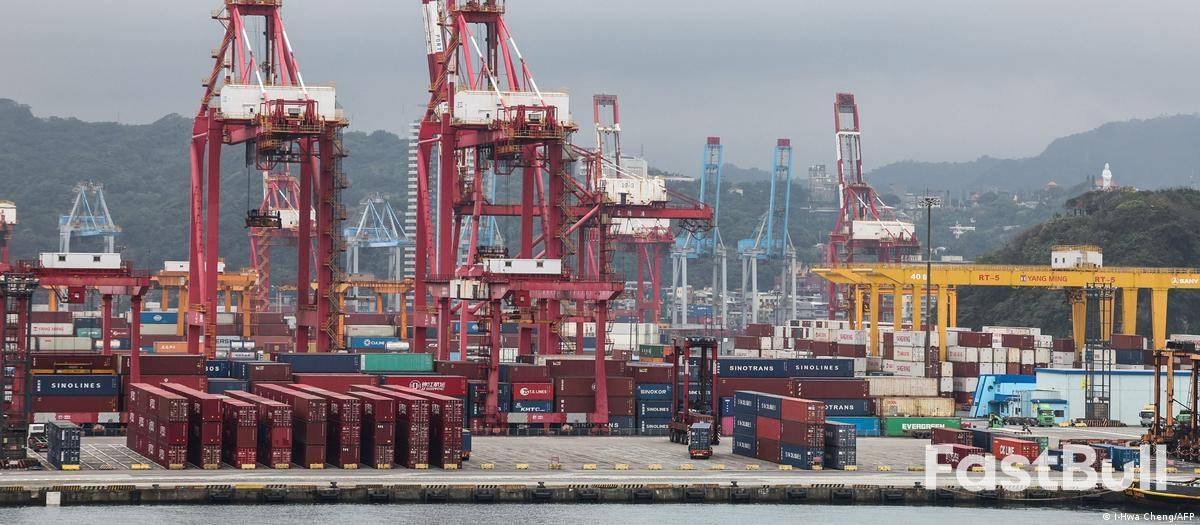
The United States and Taiwan have finalized a trade agreement designed to shift a significant portion of the global semiconductor supply chain onto American soil. The deal, announced late Thursday, lowers tariffs on Taiwanese exports in exchange for massive direct investments in the US tech sector.
According to US Commerce Secretary Howard Lutnick, the objective is to bring 40% of Taiwan's entire chip production and supply chain to the United States. In an interview with CNBC, Lutnick stated that tariffs on Taiwan could have been as high as 100% if Taipei had not agreed to manufacture in the US.
The US Commerce Department said the agreement will "drive a massive reshoring of America's semiconductor sector."
This move is expected to provoke a reaction from China, which considers Taiwan part of its territory and frequently criticizes Washington's influence over the island. For its part, Taiwan relies on the US as a critical ally to counter pressure from Beijing.
The long-negotiated agreement outlines major financial and industrial commitments from both sides.
• Tariff Reductions: The US will lower tariffs on Taiwanese goods from 20% to 15%. This rate will be capped for sectors like auto parts, timber, and lumber. Tariffs on generic pharmaceuticals and certain natural resources will be eliminated entirely.
• Direct Investment: Taiwanese technology companies will make new, direct investments in the US totaling at least $250 billion. This capital is aimed at expanding American capacity in advanced semiconductors and artificial intelligence.
• TSMC's Contribution: The investment figure includes the $100 billion that Taiwanese chipmaker TSMC committed in 2025.
• Additional Credit: The Trump administration added that Taiwan will also guarantee an extra $250 billion in credit to encourage further investment in the US.
The core US strategy is to regain self-sufficiency in an industry it invented. While semiconductors remain a key American export, the most cutting-edge chips—essential for the defense, automotive, and AI industries—are now manufactured in Taiwan.
"We're going to bring it all over so we become self-sufficient in the capacity of building semiconductors," Lutnick said.
The deal underscores the strategic leverage Washington holds. Speaking about Taiwan, Lutnick bluntly told CNBC, "Look, they need to keep our president happy, right, because our president is the key to protecting their country."
Taiwanese officials framed the agreement as a strategic partnership. Vice Premier Cheng Li-chun described the tariff deal as "unique" and confirmed it will be sent to Taiwan's parliament for approval. She emphasized Taipei's hope to become a close strategic partner with the US.
Addressing concerns about offshoring its core industry, Cheng clarified the government's position. "This is not about moving industry out of Taiwan," she told reporters. "Our tech industry is already an international one."
White Label
Data API
Web Plug-ins
Poster Maker
Affiliate Program
The risk of loss in trading financial instruments such as stocks, FX, commodities, futures, bonds, ETFs and crypto can be substantial. You may sustain a total loss of the funds that you deposit with your broker. Therefore, you should carefully consider whether such trading is suitable for you in light of your circumstances and financial resources.
No decision to invest should be made without thoroughly conducting due diligence by yourself or consulting with your financial advisors. Our web content might not suit you since we don't know your financial conditions and investment needs. Our financial information might have latency or contain inaccuracy, so you should be fully responsible for any of your trading and investment decisions. The company will not be responsible for your capital loss.
Without getting permission from the website, you are not allowed to copy the website's graphics, texts, or trademarks. Intellectual property rights in the content or data incorporated into this website belong to its providers and exchange merchants.
Not Logged In
Log in to access more features

FastBull Membership
Not yet
Purchase
Log In
Sign Up