• Trade
  • Markets
  • Copy
  • Contests
  • News
  • 24/7
  • Calendar
  • Q&A
  • Chats
Trending
Screeners
SYMBOL
LAST
BID
ASK
HIGH
LOW
NET CHG.
%CHG.
SPREAD
SPX
S&P 500 Index
6854.50
6854.50
6854.50
6861.30
6847.07
+27.09
+ 0.40%
--
DJI
Dow Jones Industrial Average
48615.45
48615.45
48615.45
48679.14
48557.21
+157.41
+ 0.32%
--
IXIC
NASDAQ Composite Index
23297.91
23297.91
23297.91
23345.56
23265.18
+102.75
+ 0.44%
--
USDX
US Dollar Index
97.830
97.910
97.830
98.070
97.810
-0.120
-0.12%
--
EURUSD
Euro / US Dollar
1.17564
1.17571
1.17564
1.17596
1.17262
+0.00170
+ 0.14%
--
GBPUSD
Pound Sterling / US Dollar
1.33953
1.33963
1.33953
1.33961
1.33546
+0.00246
+ 0.18%
--
XAUUSD
Gold / US Dollar
4332.30
4332.71
4332.30
4350.16
4294.68
+32.91
+ 0.77%
--
WTI
Light Sweet Crude Oil
56.889
56.919
56.889
57.601
56.789
-0.344
-0.60%
--

Community Accounts

Signal Accounts
--
Profit Accounts
--
Loss Accounts
--
View More

Become a signal provider

Sell trading signals to earn additional income

View More

Guide to Copy Trading

Get started with ease and confidence

View More

Signal Accounts for Members

All Signal Accounts

Best Return
  • Best Return
  • Best P/L
  • Best MDD
Past 1W
  • Past 1W
  • Past 1M
  • Past 1Y

All Contests

  • All
  • Trump Updates
  • Recommend
  • Stocks
  • Cryptocurrencies
  • Central Banks
  • Featured News
Top News Only
Share

The Nasdaq Golden Dragon China Index Fell 0.9% In Early Trading

Share

The S&P 500 Opened 32.78 Points Higher, Or 0.48%, At 6860.19; The Dow Jones Industrial Average Opened 136.31 Points Higher, Or 0.28%, At 48594.36; And The Nasdaq Composite Opened 134.87 Points Higher, Or 0.58%, At 23330.04

Share

Miran: Goods Inflation Could Be Settling In At A Higher Level Than Was Normal Before The Pandemic, But That Will Be More Than Offset By Housing Disinflation

Share

Miran, Who Dissented In Favor Of A Larger Cut At Last Fed Meeting, Repeats Keeping Policy Too Tight Will Lead To Job Losses

Share

Miran: Does Not Think Higher Goods Inflation Is Mostly From Tariffs, But Acknowledges Does Not Have A Full Explanation For It

Share

Toronto Stock Index .GSPTSE Rises 67.16 Points, Or 0.21 Percent, To 31594.55 At Open

Share

Miran: Excluding Housing And Non-Market Based Items, Core Pce Inflation May Be Below 2.3%, “Within Noise” Of The Fed's 2% Target

Share

Polish State Assets Minister Balczun Says Jsw Needs Over USD 830 Million Financing To Keep Liquidity For A Year

Share

Miran: Prices Are “Once Again Stable” And Monetary Policy Should Reflect That

Share

Fed's Miran: Current Excess Inflation Is Not Reflective Of Underlying Supply And Demand In The Economy

Share

Portugal Treasury Puts 2026 Net Financing Needs At 13 Billion Euros, Up From 10.8 Billion In 2025

Share

Portugal Treasury Expects 2026 Net Financing Needs At 29.4 Billion Euros, Up From 25.8 Billion In 2025

Share

Bank Of America Says With Indonesia's Smelter Now Ramping Up, It Expects Aluminium Supply Growth To Accelerate To 2.6% Year On Year In 2026

Share

Bank Of America Expects A Deficit In Aluminium Next Year And Sees Prices Pushing Above $3000/T

Share

Fed Data - USA Effective Federal Funds Rate At 3.64 Percent On 12 December On $102 Billion In Trades Versus 3.64 Percent On $99 Billion On 11 December

Share

Brazil's Petrobras Says No Impact Seen On Oil, Petroleum Products Output As Workers Start Planned Strike

Share

Statement: US Travel Group Warns New Proposed Trump Administration Requirements For Foreign Tourists To Provide Social Media Histories Could Mean Millions Of People Opting Not To Visit

Share

Blackrock: Kerry White Will Become Head Of Citi Investment Management At Citi Wealth

Share

Blackrock: Rob Jasminski, Head Of Citi Investment Management, Has Joined With Team

Share

Blackrock: Effective Dec 15, Citi Investment Management Employees Will Join Blackrock

TIME
ACT
FCST
PREV
Japan Tankan Small Manufacturing Outlook Index (Q4)

A:--

F: --

P: --

Japan Tankan Large Non-Manufacturing Outlook Index (Q4)

A:--

F: --

P: --

Japan Tankan Large Manufacturing Outlook Index (Q4)

A:--

F: --

P: --

Japan Tankan Small Manufacturing Diffusion Index (Q4)

A:--

F: --

P: --

Japan Tankan Large Manufacturing Diffusion Index (Q4)

A:--

F: --

P: --

Japan Tankan Large-Enterprise Capital Expenditure YoY (Q4)

A:--

F: --

P: --

U.K. Rightmove House Price Index YoY (Dec)

A:--

F: --

P: --

China, Mainland Industrial Output YoY (YTD) (Nov)

A:--

F: --

P: --

China, Mainland Urban Area Unemployment Rate (Nov)

A:--

F: --

P: --

Saudi Arabia CPI YoY (Nov)

A:--

F: --

P: --

Euro Zone Industrial Output YoY (Oct)

A:--

F: --

P: --

Euro Zone Industrial Output MoM (Oct)

A:--

F: --

P: --

Canada Existing Home Sales MoM (Nov)

A:--

F: --

P: --

Canada National Economic Confidence Index

A:--

F: --

P: --

Canada New Housing Starts (Nov)

A:--

F: --

P: --
U.S. NY Fed Manufacturing Employment Index (Dec)

A:--

F: --

P: --

U.S. NY Fed Manufacturing Index (Dec)

A:--

F: --

P: --

Canada Core CPI YoY (Nov)

A:--

F: --

P: --

Canada Manufacturing Unfilled Orders MoM (Oct)

A:--

F: --

P: --

U.S. NY Fed Manufacturing Prices Received Index (Dec)

A:--

F: --

P: --

U.S. NY Fed Manufacturing New Orders Index (Dec)

A:--

F: --

P: --

Canada Manufacturing New Orders MoM (Oct)

A:--

F: --

P: --

Canada Core CPI MoM (Nov)

A:--

F: --

P: --

Canada Trimmed CPI YoY (SA) (Nov)

A:--

F: --

P: --

Canada Manufacturing Inventory MoM (Oct)

A:--

F: --

P: --

Canada CPI YoY (Nov)

A:--

F: --

P: --

Canada CPI MoM (Nov)

A:--

F: --

P: --

Canada CPI YoY (SA) (Nov)

A:--

F: --

P: --

Canada Core CPI MoM (SA) (Nov)

A:--

F: --

P: --

Canada CPI MoM (SA) (Nov)

A:--

F: --

P: --

Federal Reserve Board Governor Milan delivered a speech
U.S. NAHB Housing Market Index (Dec)

--

F: --

P: --

Australia Composite PMI Prelim (Dec)

--

F: --

P: --

Australia Services PMI Prelim (Dec)

--

F: --

P: --

Australia Manufacturing PMI Prelim (Dec)

--

F: --

P: --

Japan Manufacturing PMI Prelim (SA) (Dec)

--

F: --

P: --

U.K. 3-Month ILO Employment Change (Oct)

--

F: --

P: --

U.K. Unemployment Claimant Count (Nov)

--

F: --

P: --

U.K. Unemployment Rate (Nov)

--

F: --

P: --

U.K. 3-Month ILO Unemployment Rate (Oct)

--

F: --

P: --

U.K. Average Weekly Earnings (3-Month Average, Including Bonuses) YoY (Oct)

--

F: --

P: --

U.K. Average Weekly Earnings (3-Month Average, Excluding Bonuses) YoY (Oct)

--

F: --

P: --

France Services PMI Prelim (Dec)

--

F: --

P: --

France Composite PMI Prelim (SA) (Dec)

--

F: --

P: --

France Manufacturing PMI Prelim (Dec)

--

F: --

P: --

Germany Services PMI Prelim (SA) (Dec)

--

F: --

P: --

Germany Manufacturing PMI Prelim (SA) (Dec)

--

F: --

P: --

Germany Composite PMI Prelim (SA) (Dec)

--

F: --

P: --

Euro Zone Composite PMI Prelim (SA) (Dec)

--

F: --

P: --

Euro Zone Services PMI Prelim (SA) (Dec)

--

F: --

P: --

Euro Zone Manufacturing PMI Prelim (SA) (Dec)

--

F: --

P: --

U.K. Services PMI Prelim (Dec)

--

F: --

P: --

U.K. Manufacturing PMI Prelim (Dec)

--

F: --

P: --

U.K. Composite PMI Prelim (Dec)

--

F: --

P: --

Euro Zone ZEW Economic Sentiment Index (Dec)

--

F: --

P: --

Germany ZEW Current Conditions Index (Dec)

--

F: --

P: --

Germany ZEW Economic Sentiment Index (Dec)

--

F: --

P: --

Euro Zone Trade Balance (Not SA) (Oct)

--

F: --

P: --

Euro Zone ZEW Current Conditions Index (Dec)

--

F: --

P: --

Euro Zone Trade Balance (SA) (Oct)

--

F: --

P: --

U.S. Retail Sales MoM (Excl. Automobile) (SA) (Oct)

--

F: --

P: --

Q&A with Experts
    • All
    • Chatrooms
    • Groups
    • Friends
    Connecting
    .
    .
    .
    Type here...
    Add Symbol or Code

      No matching data

      All
      Trump Updates
      Recommend
      Stocks
      Cryptocurrencies
      Central Banks
      Featured News
      • All
      • Russia-Ukraine Conflict
      • Middle East Flashpoint
      • All
      • Russia-Ukraine Conflict
      • Middle East Flashpoint
      Search
      Products

      Charts Free Forever

      Chats Q&A with Experts
      Screeners Economic Calendar Data Tools
      Membership Features
      Data Warehouse Market Trends Institutional Data Policy Rates Macro

      Market Trends

      Market Sentiment Order Book Forex Correlations

      Top Indicators

      Charts Free Forever
      Markets

      News

      News Analysis 24/7 Columns Education
      From Institutions From Analysts
      Topics Columnists

      Latest Views

      Latest Views

      Trending Topics

      Top Columnists

      Latest Update

      Signals

      Copy Rankings Latest Signals Become a signal provider AI Rating
      Contests
      Brokers

      Overview Brokers Assessment Rankings Regulators News Claims
      Broker listing Forex Brokers Comparison Tool Live Spread Comparison Scam
      Q&A Complaint Scam Alert Videos Tips to Detect Scam
      More

      Business
      Events
      Careers About Us Advertising Help Center

      White Label

      Data API

      Web Plug-ins

      Affiliate Program

      Awards Institution Evaluation IB Seminar Salon Event Exhibition
      Vietnam Thailand Singapore Dubai
      Fans Party Investment Sharing Session
      FastBull Summit BrokersView Expo
      Recent Searches
        Top Searches
          Markets
          News
          Analysis
          User
          24/7
          Economic Calendar
          Education
          Data
          • Names
          • Latest
          • Prev

          View All

          No data

          Scan to Download

          Faster Charts, Chat Faster!

          Download App
          English
          • English
          • Español
          • العربية
          • Bahasa Indonesia
          • Bahasa Melayu
          • Tiếng Việt
          • ภาษาไทย
          • Français
          • Italiano
          • Türkçe
          • Русский язык
          • 简中
          • 繁中
          Open Account
          Search
          Products
          Charts Free Forever
          Markets
          News
          Signals

          Copy Rankings Latest Signals Become a signal provider AI Rating
          Contests
          Brokers

          Overview Brokers Assessment Rankings Regulators News Claims
          Broker listing Forex Brokers Comparison Tool Live Spread Comparison Scam
          Q&A Complaint Scam Alert Videos Tips to Detect Scam
          More

          Business
          Events
          Careers About Us Advertising Help Center

          White Label

          Data API

          Web Plug-ins

          Affiliate Program

          Awards Institution Evaluation IB Seminar Salon Event Exhibition
          Vietnam Thailand Singapore Dubai
          Fans Party Investment Sharing Session
          FastBull Summit BrokersView Expo

          ‘Accounts For The Bulk Of South Asia’s Economy’: World Bank Projects India’s Growth At 7.5 For 2024

          Alex

          Economic

          Summary:

          World Bank, in its report, credited India's robust growth for the economic growth in the region. The recoveries in Pakistan and Sri Lanka economies also drove the growth in the region.

          The Indian economy is projected to grow at a robust 7.5 per cent in 2024, stated the World Bank, that credited India for a bulk of the growth in the South Asian economy. The report stated that South Asia’s prospects remain bright in the short term but there still are concerns in the horizon.
          “In India, which accounts for the bulk of the region’s economy, output growth is expected to reach 7.5 per cent in FY23/24 before returning to 6.6 per cent over the medium term, with activity in services and industry expected to remain robust,” state the World Bank report. “In India, output growth is projected to reach 7.5 per cent in FY2023/24 on the back of robust growth in Q3 of FY2023/24. Growth is expected to moderate to 6.6 per cent in FY2024/25 before picking up in subsequent years as a decade of robust public investment yields growth dividends. +e expected slowdown in growth between FY2023/24 and FY2024/25 mainly reflects a deceleration in investment from its elevated pace in the previous year. Growth in services and industry is expected to remain robust, the latter aided by strong construction and real estate activity. Inflationary pressures are expected to subside, creating more policy space for easing financial conditions. Over the medium term, the fiscal deficit and government debt are projected to decline, supported by robust output growth and consolidation efforts by the central government,” the World Bank report stated.
          This comes after India’s manufacturing PMI for the month of March was reported to have reached a 16-year high at 59.1, according to HSBC final India Manufacturing Purchasing Managers' Index, compiled by S&P Global. Hiring increased at the strongest rate in six months, new order exports increased to the highest since May 2020, and manufacturing output rose for the 33rd month in March. As per S&P, the outlook for the upcoming year was optimistic.
          “South Asia is expected to continue to be the fastest-growing emerging market and developing economy (EMDE) region over the next two years. This is largely thanks to robust growth in India, but growth is also expected to pick up in most other South Asian economies. However, growth in the near term is more reliant on the public sector than elsewhere, whereas private investment, in particular, continues to be weak,” the report stated.
          The World Bank, in its report added that overall in South Asia, the growth is expected to be strong at 6.0-6.1 per cent in 2024. This growth is driven by the recoveries of Pakistan and Sri Lanka economies, and the strong growth in India.
          The bank said that while the rest of the region is picking up, it is expected to remain below pre-pandemic averages.
          “South Asia’s growth outlook is somewhat stronger than in the previous edition of this report, by 0.4 percentage points for 2024 and 0.3 percentage points for 2025. +is primarily reflects upward revisions to investment growth in India and somewhat faster-than-anticipated rebounds from last year’s recessions in Pakistan and Sri Lanka,” it added.
          India’s inflation remained within the Reserve Bank of India’s 2-6 per cent target range since a spike in the mid-2023, stated the report. The policy rate has remained unchanged since February 2023. Food price inflation has been elevated, partly reflecting a weak harvest due to El Niño, the bank said.
          According to a recent State Bank of India report, RBI is not likely to alter the rates this upcoming Monetary Policy Committee meeting, scheduled from April 3-5. According to the SBI, RBI is expected to cut rates only in the third quarter of FY25.
          Net portfolio rebounded in India, the World Bank report added. Government revenues are expected to increase on the back of continued efforts to broaden the tax base and improve tax administration, and current expenditures are likely to decrease as pandemic-related measures are wound down, it said.
          “South Asia’s growth prospects remain bright in the short run, but fragile fiscal positions and increasing climate shocks are dark clouds on the horizon. To make growth more resilient, countries need to adopt policies to boost private investment and strengthen employment growth,” said Martin Raiser, World Bank Vice President for South Asia.

          Source:BusinessToday

          To stay updated on all economic events of today, please check out our Economic calendar
          Risk Warnings and Disclaimers
          You understand and acknowledge that there is a high degree of risk involved in trading. Following any strategies or investment methods may lead to potential losses. The content on the site is provided by our contributors and analysts for information purposes only. You are solely responsible for determining whether any trading assets, securities, strategy, or any other product is suitable for investing based on your own investment objectives and financial situation.
          Add to Favorites
          Share

          Markets Wrap: Stocks and Bonds Decline as Expectations for Fed Rate Cuts are Reduced

          Ukadike Micheal

          Bond

          Stocks

          Economic

          Treasury yields surged, and US equity futures stumbled as fresh economic data bolstered the expectation of prolonged higher interest rates. The robust private payroll report, surpassing economists' projections, highlighted continued strong hiring trends in the US, setting the stage for a closely watched monthly payrolls report on Friday, pivotal for the Federal Reserve's future policy trajectory. Contracts on major indices signaled a lackluster start for Wall Street, with Treasury yields reflecting a shift in market sentiment away from anticipated rate cuts.
          Investors awaited Federal Reserve Chair Jerome Powell's remarks later in the day for further insights into the central bank's stance. Powell's comments could provide clarity on the Fed's approach to managing inflationary pressures and navigating the economic recovery amid uncertainties.
          Meanwhile, in Europe, equities remained stagnant as bond yields dipped following an inflation print that fell below expectations, reinforcing beliefs in ECB policy easing come June. The divergence in economic indicators between the US and Europe underscores the varied paths of recovery and policy responses across regions, contributing to market volatility and investor uncertainty.
          The upward trajectory of commodity prices, including Brent crude and copper, heightened concerns about inflation, fueling speculation about the potential impact on consumer spending and corporate profitability. Rising input costs could squeeze profit margins for businesses, posing challenges to sustained economic growth.
          Moreover, Taiwan's earthquake introduced uncertainties regarding chip production, affecting shares of key chipmakers. The disruption in semiconductor supply chains underscores the vulnerability of global manufacturing networks to external shocks, highlighting potential risks to the broader economy's stability.
          In premarket trading in New York, Intel Corp. witnessed a decline after warning of declining revenue and widening losses, triggering losses across the semiconductor sector. The semiconductor industry's performance serves as a bellwether for broader market sentiment, reflecting investors' concerns about the outlook for technology companies amid evolving economic conditions and regulatory pressures.
          The cautious market sentiment underscores lingering uncertainties surrounding inflation, interest rates, and geopolitical events, influencing investor behavior and market dynamics in the foreseeable future. As investors navigate these uncertainties, a vigilant approach is essential to navigate the evolving market landscape and capitalize on emerging opportunities.

          Source: Bloomberg

          To stay updated on all economic events of today, please check out our Economic calendar
          Risk Warnings and Disclaimers
          You understand and acknowledge that there is a high degree of risk involved in trading. Following any strategies or investment methods may lead to potential losses. The content on the site is provided by our contributors and analysts for information purposes only. You are solely responsible for determining whether any trading assets, securities, strategy, or any other product is suitable for investing based on your own investment objectives and financial situation.
          Add to Favorites
          Share

          Will the NFP Report Take June off the Rate-Cut Map? – Preview

          XM

          Forex

          Economic

          Central Bank

          Data and Fed rhetoric weigh on Fed rate cut bets

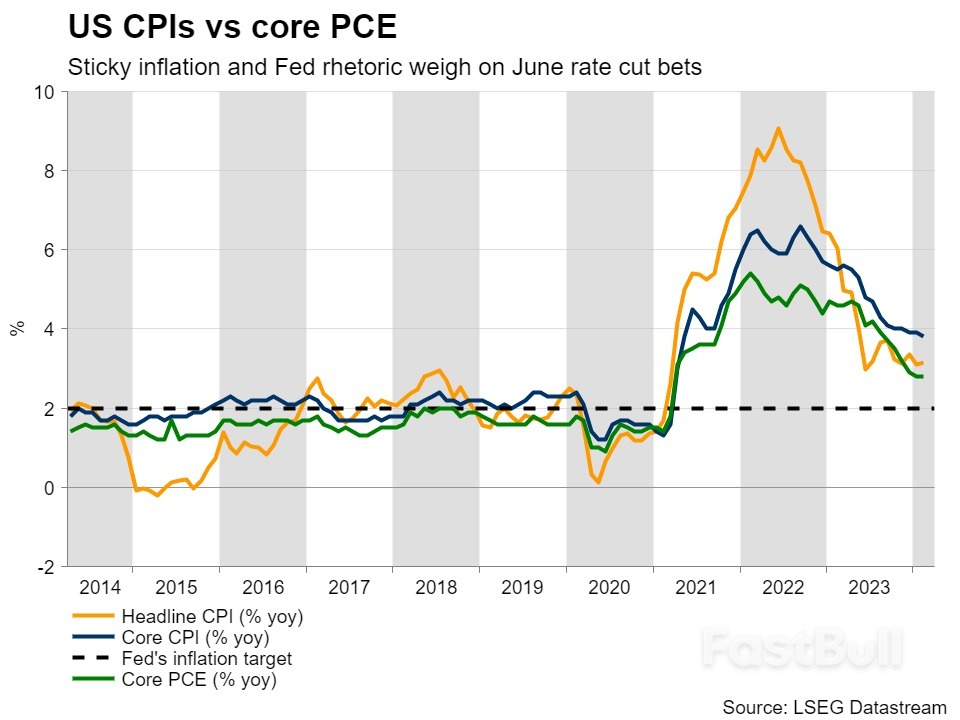
          At its latest gathering, the Fed appeared more dovish than expected, still pointing to three quarter-point rate cuts for 2024. This allowed market participants to add back to their June cut bets, lifting the probability for a 25bps reduction to around 80%.
          However, this proved to be a temporary assessment. Last week, Fed Governor Waller said that the Committee is in no rush to start cutting interest rates, a view echoed by Fed Chair Powell on Friday, after the core PCE index came at 2.8% y/y, as it was expected.Will the NFP Report Take June off the Rate-Cut Map? – Preview_1This allowed dollar bulls to jump back into the action, adding to their positions on Monday after the ISM manufacturing PMI for March expanded for the first time since September 2022. The prices subindex rose to 55.8 from 52.5, corroborating the outlook painted by the S&P Global flash PMIs for the month, which revealed that selling prices rose at the fastest pace in just under a year.
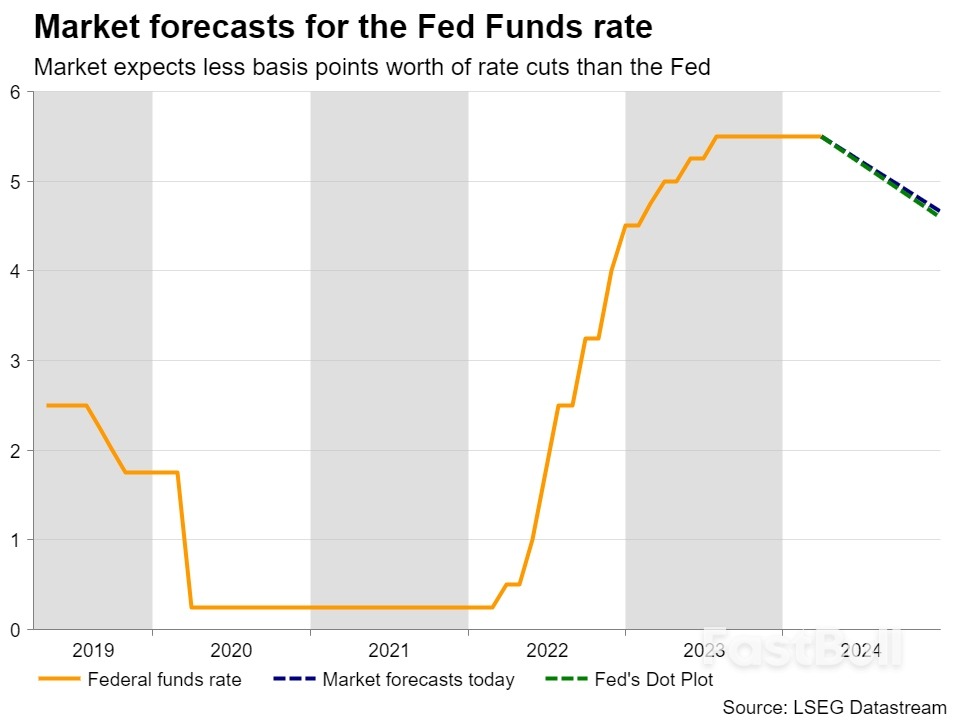
          Combined with the upward revision of the Atlanta Fed GDPNow model to 2.8% from 2.3% for Q1, the latest developments prompted investors to push back again their rate reduction bets According to Fed funds futures, the probability of a first quarter-point reduction in June has dropped to around 65%, while the total number of basis points worth of rate cuts by the end of the year has been decreased to 68.Will the NFP Report Take June off the Rate-Cut Map? – Preview_2From anticipating around 160bs at the start of the year, the market is now expecting less reductions than the 75bps projected by the Fed itself, which adds downside risks to the dollar in case of disappointing data moving forward.

          Will further easing in labor market ring the alarm bells?

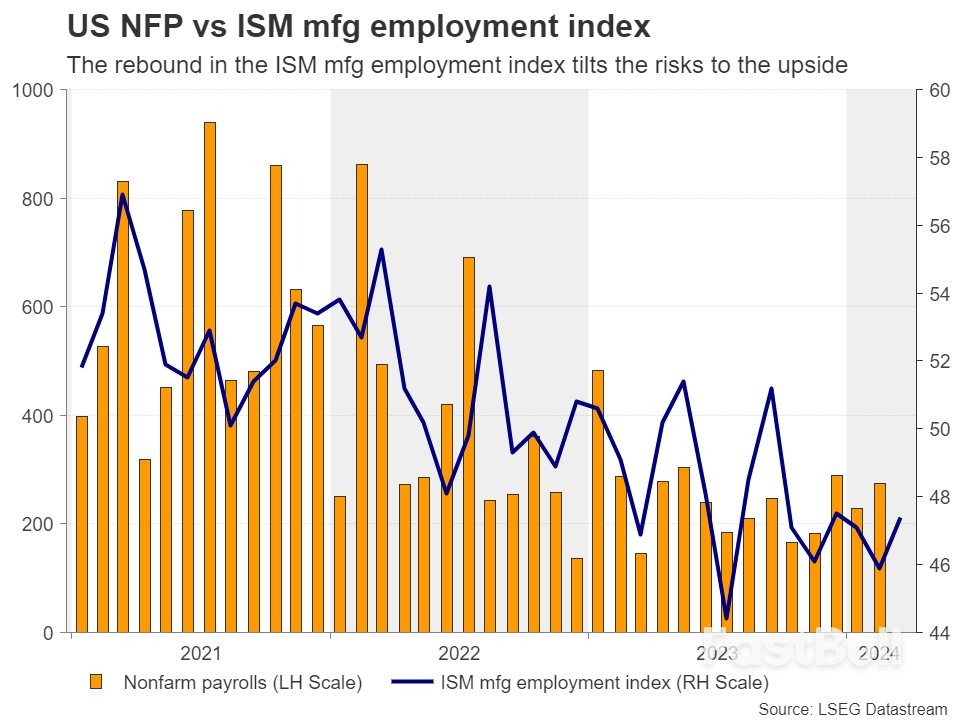
          With that in mind, the next major event on investors’ agenda may be Friday’s US employment report for March. The unemployment rate is expected to have held steady at 3.9% and nonfarm payrolls are forecast to have slowed to 205k from 275k. That said, the rebound in the employment subindex of the ISM manufacturing PMI tilts the risks to the upside. Average hourly earnings are expected to slow somewhat to 4.1% y/y from 4.3%.Will the NFP Report Take June off the Rate-Cut Map? – Preview_3These numbers point to further easing in the labor market, but they are far from suggesting that a rate cut is urgent. After all another month of above 200k jobs is very encouraging for the economy, while a wage growth rate at around 4% is unlikely to help inflation come down faster than previously thought.

          Dollar may continue to outperform the euro

          The dollar is likely to stay the course north especially against the euro, as according to money markets, a June quarter-point reduction is more than fully priced in, while following recent dovish remarks by ECB member Villeroy de Galhau and Stournaras, there is a nearly 20% chance for a cut at the upcoming meeting on April 11.
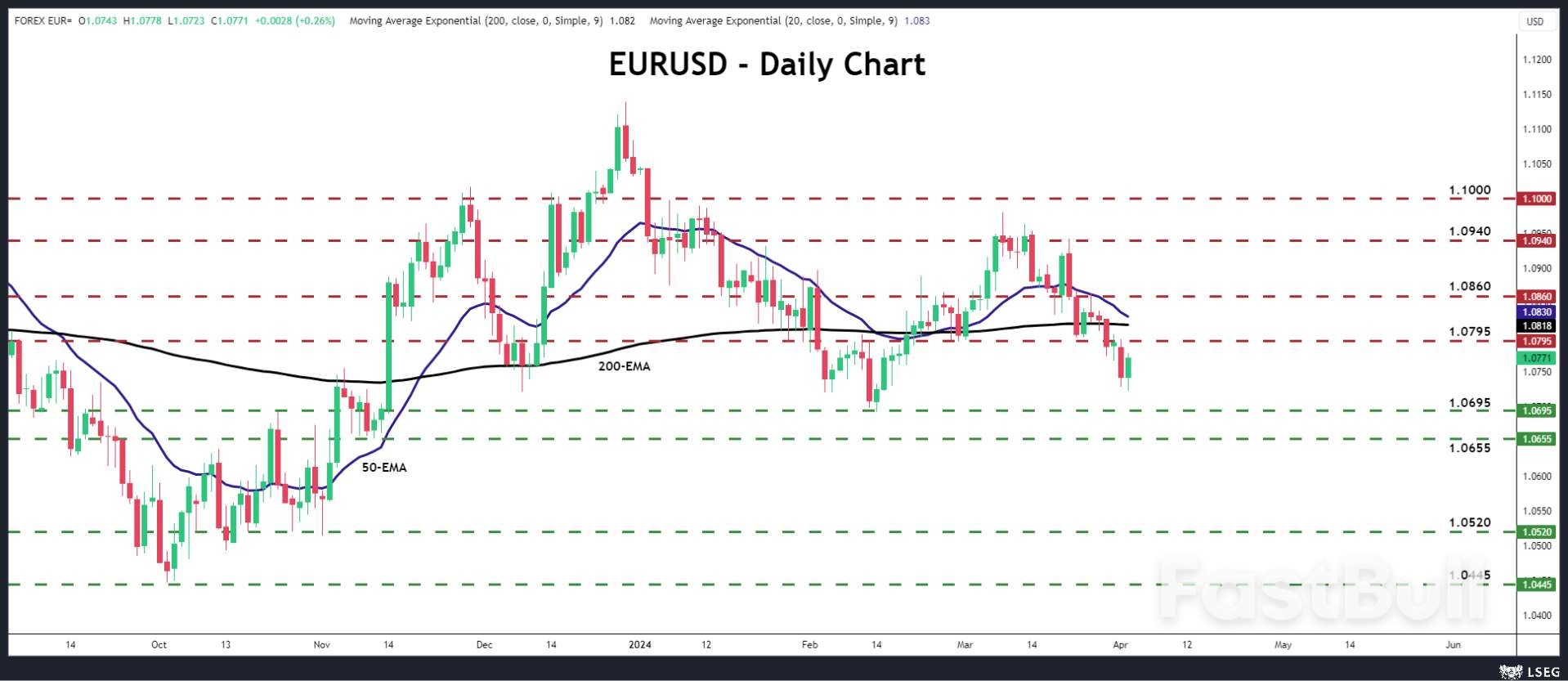
          Euro/dollar fell below the key support zone of 1.0795 on Thursday and accelerated its slide this week, headed for the very important area between 1.0655 and 1.0695. A decisive dip below 1.0655 could carry larger bearish implications and perhaps pave the way towards the 1.0520 barrier, marked by the lows of October 26 and November 1.Will the NFP Report Take June off the Rate-Cut Map? – Preview_4Nonetheless, in case the jobs report disappoints, the pair may rebound and break back above 1.0795, but for the outlook to start looking brighter, a move all the way above the round number of 1.1000 may be needed.
          To stay updated on all economic events of today, please check out our Economic calendar
          Risk Warnings and Disclaimers
          You understand and acknowledge that there is a high degree of risk involved in trading. Following any strategies or investment methods may lead to potential losses. The content on the site is provided by our contributors and analysts for information purposes only. You are solely responsible for determining whether any trading assets, securities, strategy, or any other product is suitable for investing based on your own investment objectives and financial situation.
          Add to Favorites
          Share

          Private Sector Employment Grows by 184,000 Jobs in March; Annual Compensation Rises by 5.1%: ADP National Employment Report

          Ukadike Micheal

          Economic

          Forex

          In March, the United States witnessed a significant surge in private sector employment, with companies adding 184,000 jobs, marking the most substantial increase since July. This notable uptick in job creation reflects a positive trajectory for the labor market and underscores the resilience of the economy amidst ongoing challenges.
          The data, released by the ADP Research Institute in collaboration with the Stanford Digital Economy Lab, provides valuable insights into employment trends and wage dynamics. It serves as a crucial barometer for policymakers, economists, and businesses alike, offering a comprehensive view of the private sector labor market.
          One of the most striking aspects of the March employment report is the acceleration in wage growth, particularly for job changers. With a remarkable 10% increase from the previous year, this surge in wages highlights the increasing demand for skilled workers and underscores the competitive nature of the labor market. Additionally, workers who remained in their positions also experienced significant pay bumps, with a median increase of 5.1% from the previous year, indicating stability and growth in compensation.
          Nela Richardson, chief economist at ADP, emphasized the notable pay gains observed across key industries such as construction, financial services, and manufacturing. These sectors, which are critical drivers of economic activity, saw significant increases in compensation, reflecting buoyant hiring trends and robust demand for skilled labor. Despite concerns about inflationary pressures, Richardson noted that wage growth remained robust across both goods and services sectors, highlighting the underlying strength of the labor market.
          Furthermore, the broad-based nature of job creation in March is a positive indicator of economic health, with notable increases observed across various sectors such as leisure and hospitality, construction, and trade and transportation. This widespread improvement in employment prospects underscores the resilience of the economy and suggests continued momentum in the labor market.
          Looking ahead, economists are eagerly anticipating the government's monthly employment report, which is expected to show a gain of approximately 215,000 nonfarm payrolls. While this pace would represent a slight slowdown from previous months, it still reflects a solid level of job creation and suggests that the labor market remains robust.
          Overall, the March employment data paints a positive picture of the US economy, with robust job creation and accelerating wage growth signaling strength and resilience. These trends are expected to support consumer spending, business investment, and overall economic growth in the coming months, providing a solid foundation for continued expansion. As policymakers and investors analyze this data, it will be essential to monitor how these employment trends evolve and their implications for monetary policy and market dynamics.

          Source: ADP Research Institute

          To stay updated on all economic events of today, please check out our Economic calendar
          Risk Warnings and Disclaimers
          You understand and acknowledge that there is a high degree of risk involved in trading. Following any strategies or investment methods may lead to potential losses. The content on the site is provided by our contributors and analysts for information purposes only. You are solely responsible for determining whether any trading assets, securities, strategy, or any other product is suitable for investing based on your own investment objectives and financial situation.
          Add to Favorites
          Share

          Eurozone Inflation Unexpectedly Eases, Boosting Rate Cut Case

          Warren Takunda

          Economic

          Forex

          Euro zone inflation fell unexpectedly last month, solidifying the case for the European Central Bank to start lowering borrowing costs from record highs.
          Consumer price growth in the 20 nations sharing the euro currency slowed to 2.4% in March from 2.6% a month earlier, defying expectations for a steady rate as food, energy and industrial goods prices all pulled the headline figure lower.
          Underlying inflation, closely watched by the ECB to gauge the durability of price pressures, meanwhile fell to 2.9% from 3.1%, coming below expectations for 3.0%, data from Eurostat, the EU's statistic's agency showed on Wednesday.
          The only potential concern for the ECB will be that services inflation has been holding steady at 4.0% for months now, suggesting that relatively quick wage growth is keeping prices in the sector under constant pressure.
          Inflation has been on a steady downward path for more than a year but has fallen more quickly since last autumn than many had predicted, shifting the debate to just how soon and how fast the ECB will unwind record rate hikes.
          Meeting next week, the central bank is expected to acknowledge the improved outlook but policymakers are unlikely to cut rates straight away, having repeatedly pointed to June as the next crucial meeting for policy setting.
          This is why investors see almost no chance of a cut on April 11 but have fully priced in a move for June, followed by another two or three steps later this year.
          The ECB has been cautious in starting to ease policy because it only expects inflation back at its 2% target next year, even as some private forecasters take a more benign view, projecting the headline rate at around 2% by this autumn.
          The ECB has said it needs to see essential wage data from the early part of the year before it is comfortable easing policy. Some policymakers also fear that moving too far before the U.S. Federal Reserve begins reducing rates could be counterproductive, since a cut would weaken the euro and boost imported inflation.
          Wages have been growing relatively quickly in recent quarters but the pace of growth is slowing and workers are still only slowly recouping real purchasing power lost to several years of rapid inflation.
          Still, unemployment is holding at a record low 6.5%, separate Eurostat data showed on Wednesday, suggesting that the labour market remains exceptionally tight.
          Although oil prices have been steadily increasing since the start of the year, crucial natural gas prices remain low after an unusually mild winter, pointing to mild but still manageable risks from energy costs in the months ahead.
          Dovish policymakers, meanwhile, argue that economic growth is now exceptionally weak as the euro zone has been skirting a recession for six quarters now.
          This weakens corporate pricing power and thus eases price pressures, so the ECB can afford to ease up on the brakes, especially since lower commodity prices are also helping disinflation.
          While the ECB is far from settled on how far rates could fall, most appear to agree that the deposit rate, now at 4%, will restrict growth at least until it hits 3%, so the initial cuts are more about easing restriction than providing stimulus.

          Source: Reuters

          To stay updated on all economic events of today, please check out our Economic calendar
          Risk Warnings and Disclaimers
          You understand and acknowledge that there is a high degree of risk involved in trading. Following any strategies or investment methods may lead to potential losses. The content on the site is provided by our contributors and analysts for information purposes only. You are solely responsible for determining whether any trading assets, securities, strategy, or any other product is suitable for investing based on your own investment objectives and financial situation.
          Add to Favorites
          Share

          Yuan Sinks Toward Limit Of Trading Range, Risking PBOC Pushback

          Samantha Luan

          Central Bank

          Forex

          China’s defense of its currency is heading toward a milestone moment that may trigger a more forceful response from authorities to punish short-sellers.
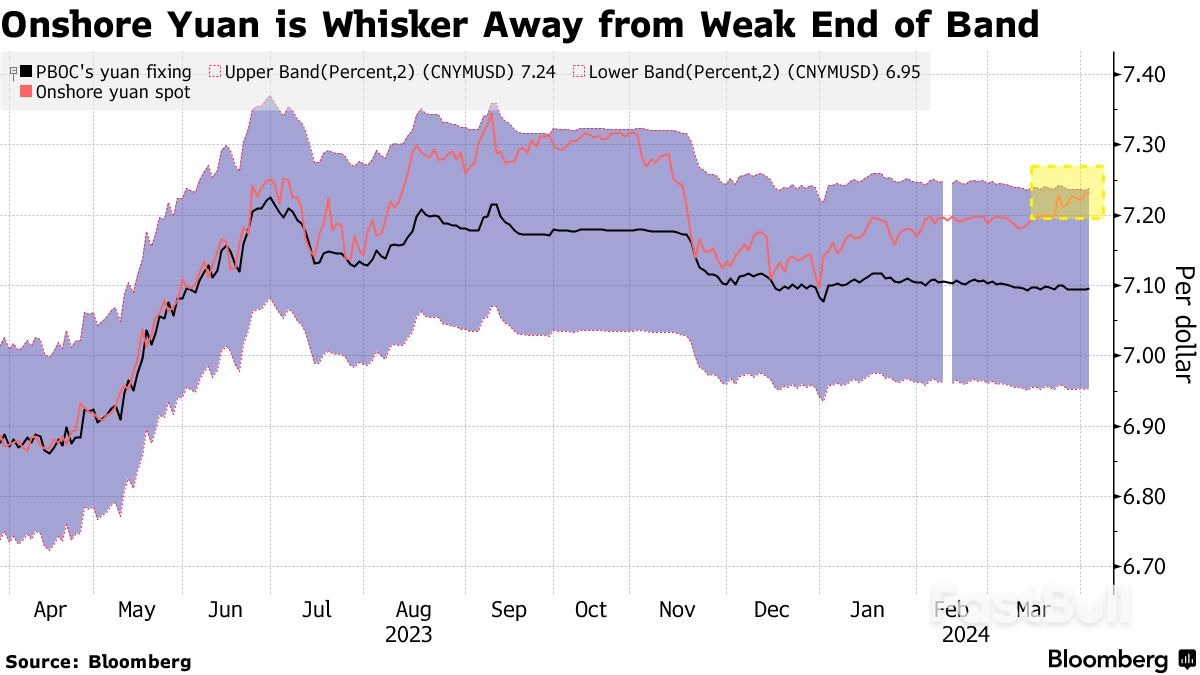
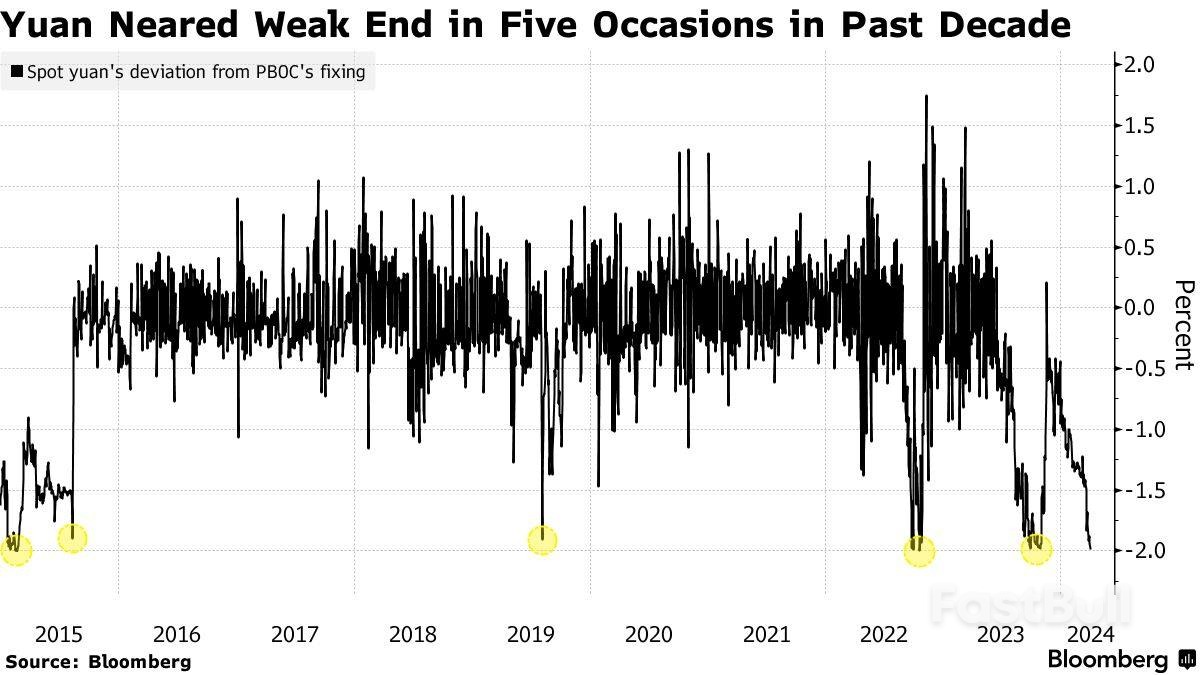
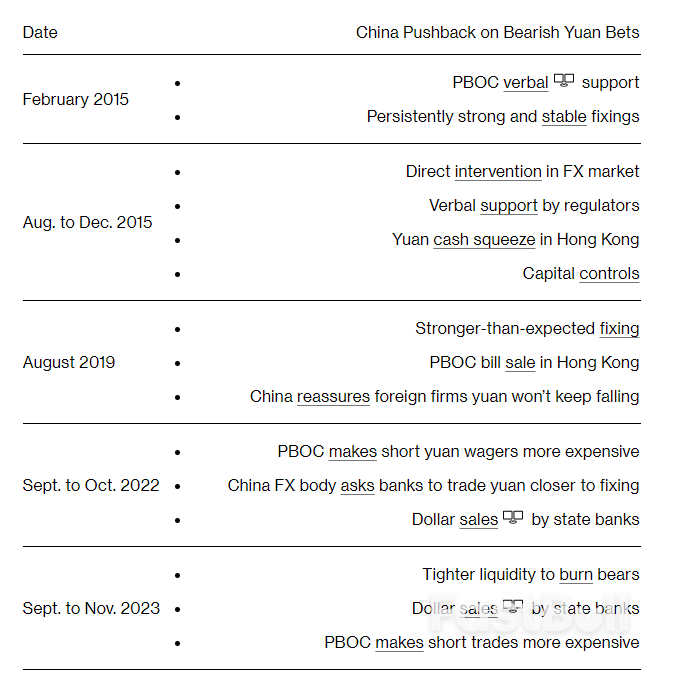
          Having weakened the yuan to within a whisker of its fixed trading range against the dollar on Wednesday, investors are now in danger of being slapped with anything from direct intervention to a dramatic liquidity squeeze in the offshore market. Over the past decade, the People’s Bank of China has stepped in aggressively to stabilize the yuan on each of the five occasions it neared that policy red line.
          In constant conflict trying to keep policy loose enough to stimulate growth but the currency strong enough to avoid disorderly capital outflows, the PBOC has a tendency to react slowly then take sudden action. That translates to a tolerance of moderate yuan depreciation which can quickly shift to measures to boost the currency to prevent market panic.
          “A continued slide in the yuan undermines both investor and consumer confidence, which in turn weighs on growth conditions and is counterproductive to authorities’ longer-term economic ambitions,” said Simon Harvey, head of foreign-exchange analysis at Monex Europe Ltd. “A similar playbook to late last year can be expected — quasi-intervention through state banks, regulatory tweaks and adjustments to liquidity conditions.”
          Yuan Sinks Toward Limit Of Trading Range, Risking PBOC Pushback_1
          Recent resilience in the dollar — a result of bets that the Federal Reserve will keep its policy rates higher for longer — is making the PBOC’s mandate even more difficult. Other Asian central banks, including those in Japan and Indonesia, are also faced with defending their currencies more aggressively after they sank to multi-decade lows.
          On Wednesday, the yuan weakened to 7.2364 per dollar, within 0.01% of the edge of its permitted trading range.

          Yuan History

          Chinese policymakers have always been vigilant of currency depreciation pressure as it can easily spill over to local stocks and hurt the appeal of bonds. A rapid yuan drop can also lead to a vicious cycle of capital outflows and exacerbate currency losses, like it did after a shock devaluation in 2015.
          That’s why the PBOC keeps a tight leash over the yuan with its daily reference rate and fixed trading band for the currency. Onshore, the currency is only allowed to move 2% above and below the so-called fixing that’s released by the central bank on every trading session.
          Alex Loo, a macro strategist at TD Securities, said the PBOC may order state banks to sell dollars imminently or boost the cost of making bearish trades against the yuan if the currency keeps falling.
          “The PBOC is likely sending a strong signal to investors that it has little tolerance for further weakness,” Loo said. “Without any change in guidance from higher-ups, they are likely to stick to their ‘stable yuan’ mandate for now.”
          Yuan Sinks Toward Limit Of Trading Range, Risking PBOC Pushback_2
          Since the most recent tweak of the band in 2014, the yuan has never moved outside of its permitted range. This week, it moved to just 0.01 percentage shy of the weak end of that threshold.
          In previous cases where the yuan got this close, the PBOC has pushed back with aggressive measures. Apart from a sharply stronger fixing, it also adopted tools like verbal warnings, capital curbs and even dollar sales by state banks.
          Yuan Sinks Toward Limit Of Trading Range, Risking PBOC Pushback_3
          The downside is these measures carry a high reputational cost, hindering aspirations to make the yuan a more international currency.

          No Panic

          Analysts agree that the PBOC will manage the yuan closely to prevent it from touching the trading band and that there has been no sign of a panic selloff. Demand for bearish bets in the options market remained muted and expected swings are still among the lowest in Asia, according to data compiled by Bloomberg.
          An action from Beijing can’t be ruled out if hawkish comments from the Federal Reserve or upbeat US economic data fuel further gains in the dollar. China’s onshore foreign-exchange markets will be closed for a holiday on Thursday and Friday.
          “The PBOC will defend its 2% band for now — the recent fixing has shown clearly that PBOC wants to dispel speculation about this mini devaluation,” said Tommy Xie, an economist at Oversea-Chinese Banking Corp Ltd.

          Source:Bloomberg

          Risk Warnings and Disclaimers
          You understand and acknowledge that there is a high degree of risk involved in trading. Following any strategies or investment methods may lead to potential losses. The content on the site is provided by our contributors and analysts for information purposes only. You are solely responsible for determining whether any trading assets, securities, strategy, or any other product is suitable for investing based on your own investment objectives and financial situation.
          Add to Favorites
          Share

          Escalating Geopolitical Tensions Propel Gold Prices to New All-Time Highs Just Below $2,300

          Zi Cheng

          Traders' Opinions

          Commodity

          Fundamental Analysis

          After reaching record highs near $2,290 during Wednesday's European session on various positive factors, the price of gold (XAU/USD) experiences a decline. Near-term demand for the precious metal remains strong due to escalating geopolitical tensions in Eastern Europe and the Middle East, which drive investors toward safe-haven assets like gold. Despite the increase in bond yields and diminishing expectations for Federal Reserve (Fed) rate cuts in June, geopolitical uncertainties continue to support bullion prices.
          The 10-year US Treasury yields surge to 4.37% as Fed policymakers express confidence in the robust economic outlook and tight labor market conditions. Cleveland Fed Bank President Loretta Mester emphasizes the importance of not rushing into rate cuts, stating, "I think the bigger risk would be to begin reducing the funds rate too early." The Fed's reluctance to cut rates could further tighten the labor market, potentially leading to increased wage growth and inflation. Typically, higher bond yields reduce the attractiveness of gold as an investment due to the higher opportunity cost associated with holding the precious metal.
          The focal point of the week will be the release of United States Nonfarm Payrolls (NFP) data on Friday. This labor market report will shape market expectations regarding potential Fed rate cuts in June.
          The upward momentum in gold prices persists amid heightened geopolitical tensions, bolstering the demand for safe-haven assets while the US Dollar retraces from recent four-month highs. Escalating geopolitical uncertainties prompt investors to seek refuge in assets like gold.
          In Eastern Europe, ongoing drone attacks launched by Ukraine against Russian oil refineries have exacerbated tensions between Moscow and Kyiv. President Joe Biden voiced concern over Ukraine's targeting of Russia's oil infrastructure, warning of potential severe repercussions on global oil prices.

          Technical Analysis

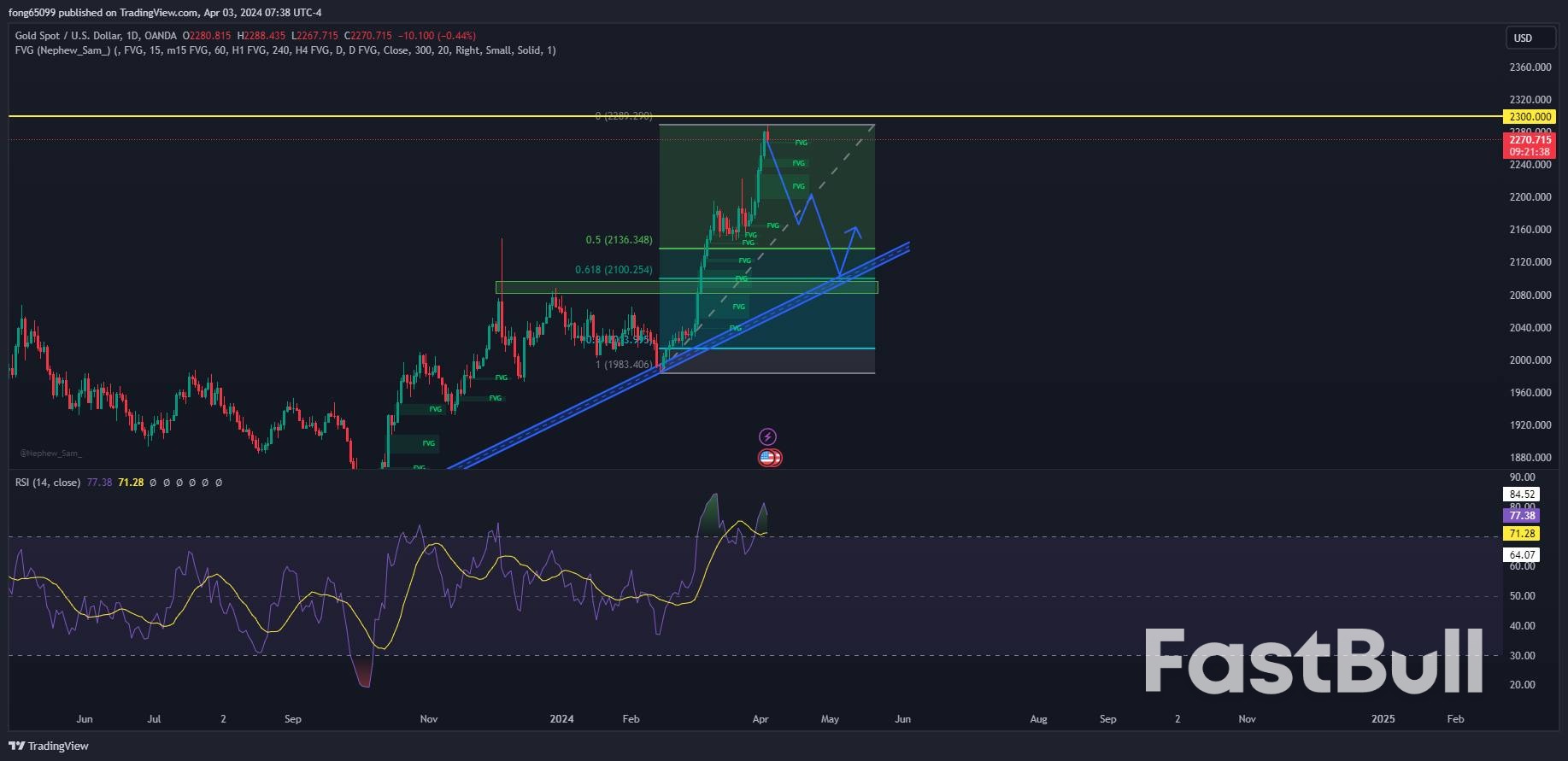
          XAU/USD has been trading in an all time high price where we dont have any previous resistance to look for retracement opportunities. The only choice that we can rely on is the psychological resistance which is $2300 which is believed to be able to hold Gold for some time before propelling for new higher prices.
          It is too risky to take long positions on XAU/USD now as there is no retracement yet for such an aggressive bullish move leaving lots of fair value gaps behind and we are too near to the psychological resistance. Let's remain patient for the retracement to look for long opportunities.
          Escalating Geopolitical Tensions Propel Gold Prices to New All-Time Highs Just Below $2,300_1
          Risk Warnings and Disclaimers
          You understand and acknowledge that there is a high degree of risk involved in trading. Following any strategies or investment methods may lead to potential losses. The content on the site is provided by our contributors and analysts for information purposes only. You are solely responsible for determining whether any trading assets, securities, strategy, or any other product is suitable for investing based on your own investment objectives and financial situation.
          Add to Favorites
          Share
          FastBull
          Copyright © 2025 FastBull Ltd

          728 RM B 7/F GEE LOK IND BLDG NO 34 HUNG TO RD KWUN TONG KLN HONG KONG

          TelegramInstagramTwitterfacebooklinkedin
          App Store Google Play Google Play
          Products
          Charts

          Chats

          Q&A with Experts
          Screeners
          Economic Calendar
          Data
          Tools
          Membership
          Features
          Function
          Markets
          Copy Trading
          Latest Signals
          Contests
          News
          Analysis
          24/7
          Columns
          Education
          Company
          Careers
          About Us
          Contact Us
          Advertising
          Help Center
          Feedback
          User Agreement
          Privacy Policy
          Business

          White Label

          Data API

          Web Plug-ins

          Poster Maker

          Affiliate Program

          Risk Disclosure

          The risk of loss in trading financial instruments such as stocks, FX, commodities, futures, bonds, ETFs and crypto can be substantial. You may sustain a total loss of the funds that you deposit with your broker. Therefore, you should carefully consider whether such trading is suitable for you in light of your circumstances and financial resources.

          No decision to invest should be made without thoroughly conducting due diligence by yourself or consulting with your financial advisors. Our web content might not suit you since we don't know your financial conditions and investment needs. Our financial information might have latency or contain inaccuracy, so you should be fully responsible for any of your trading and investment decisions. The company will not be responsible for your capital loss.

          Without getting permission from the website, you are not allowed to copy the website's graphics, texts, or trademarks. Intellectual property rights in the content or data incorporated into this website belong to its providers and exchange merchants.

          Not Logged In

          Log in to access more features

          FastBull Membership

          Not yet

          Purchase

          Become a signal provider
          Help Center
          Customer Service
          Dark Mode
          Price Up/Down Colors

          Log In

          Sign Up

          Position
          Layout
          Fullscreen
          Default to Chart
          The chart page opens by default when you visit fastbull.com