Markets
News
Analysis
User
24/7
Economic Calendar
Education
Data
- Names
- Latest
- Prev


Signal Accounts for Members
All Signal Accounts
All Contests


Turkey Trade BalanceA:--
F: --
P: --
Germany Construction PMI (SA) (Nov)A:--
F: --
P: --
Euro Zone IHS Markit Construction PMI (Nov)A:--
F: --
P: --
Italy IHS Markit Construction PMI (Nov)A:--
F: --
P: --
U.K. Markit/CIPS Construction PMI (Nov)A:--
F: --
P: --
France 10-Year OAT Auction Avg. YieldA:--
F: --
P: --
Euro Zone Retail Sales MoM (Oct)A:--
F: --
P: --
Euro Zone Retail Sales YoY (Oct)A:--
F: --
P: --
Brazil GDP YoY (Q3)A:--
F: --
P: --
U.S. Challenger Job Cuts (Nov)A:--
F: --
P: --
U.S. Challenger Job Cuts MoM (Nov)A:--
F: --
P: --
U.S. Challenger Job Cuts YoY (Nov)A:--
F: --
P: --
U.S. Initial Jobless Claims 4-Week Avg. (SA)A:--
F: --
P: --
U.S. Weekly Initial Jobless Claims (SA)A:--
F: --
P: --
U.S. Weekly Continued Jobless Claims (SA)A:--
F: --
P: --
Canada Ivey PMI (SA) (Nov)A:--
F: --
P: --
Canada Ivey PMI (Not SA) (Nov)A:--
F: --
P: --
U.S. Non-Defense Capital Durable Goods Orders Revised MoM (Excl. Aircraft) (SA) (Sept)A:--
F: --
U.S. Factory Orders MoM (Excl. Transport) (Sept)A:--
F: --
P: --
U.S. Factory Orders MoM (Sept)A:--
F: --
P: --
U.S. Factory Orders MoM (Excl. Defense) (Sept)A:--
F: --
P: --
U.S. EIA Weekly Natural Gas Stocks ChangeA:--
F: --
P: --
Saudi Arabia Crude Oil ProductionA:--
F: --
P: --
U.S. Weekly Treasuries Held by Foreign Central BanksA:--
F: --
P: --
Japan Foreign Exchange Reserves (Nov)A:--
F: --
P: --
India Repo RateA:--
F: --
P: --
India Benchmark Interest RateA:--
F: --
P: --
India Reverse Repo RateA:--
F: --
P: --
India Cash Reserve RatioA:--
F: --
P: --
Japan Leading Indicators Prelim (Oct)A:--
F: --
P: --
U.K. Halifax House Price Index YoY (SA) (Nov)--
F: --
P: --
U.K. Halifax House Price Index MoM (SA) (Nov)--
F: --
P: --
France Current Account (Not SA) (Oct)--
F: --
P: --
France Trade Balance (SA) (Oct)--
F: --
P: --
France Industrial Output MoM (SA) (Oct)--
F: --
P: --
Italy Retail Sales MoM (SA) (Oct)--
F: --
P: --
Euro Zone Employment YoY (SA) (Q3)--
F: --
P: --
Euro Zone GDP Final YoY (Q3)--
F: --
P: --
Euro Zone GDP Final QoQ (Q3)--
F: --
P: --
Euro Zone Employment Final QoQ (SA) (Q3)--
F: --
P: --
Euro Zone Employment Final (SA) (Q3)--
F: --
Brazil PPI MoM (Oct)--
F: --
P: --
Mexico Consumer Confidence Index (Nov)--
F: --
P: --
Canada Unemployment Rate (SA) (Nov)--
F: --
P: --
Canada Labor Force Participation Rate (SA) (Nov)--
F: --
P: --
Canada Employment (SA) (Nov)--
F: --
P: --
Canada Part-Time Employment (SA) (Nov)--
F: --
P: --
Canada Full-time Employment (SA) (Nov)--
F: --
P: --
U.S. Dallas Fed PCE Price Index YoY (Sept)--
F: --
P: --
U.S. PCE Price Index YoY (SA) (Sept)--
F: --
P: --
U.S. PCE Price Index MoM (Sept)--
F: --
P: --
U.S. Personal Outlays MoM (SA) (Sept)--
F: --
P: --
U.S. Core PCE Price Index MoM (Sept)--
F: --
P: --
U.S. UMich 5-Year-Ahead Inflation Expectations Prelim YoY (Dec)--
F: --
P: --
U.S. Core PCE Price Index YoY (Sept)--
F: --
P: --
U.S. 5-10 Year-Ahead Inflation Expectations (Dec)--
F: --
P: --
U.S. UMich Current Economic Conditions Index Prelim (Dec)--
F: --
P: --
U.S. UMich Consumer Sentiment Index Prelim (Dec)--
F: --
P: --
U.S. UMich 1-Year-Ahead Inflation Expectations Prelim (Dec)--
F: --
P: --
U.S. UMich Consumer Expectations Index Prelim (Dec)--
F: --
P: --


No matching data
Latest Views
Latest Views
Trending Topics
Top Columnists
Latest Update
White Label
Data API
Web Plug-ins
Affiliate Program
View All

No data
Oil prices went up by 1.7% on Tuesday as markets grappled with the latest US sanctions on Russian Oil against optimism that the US Government shutdown could end soon.
The challenge for bulls is that concerns continue to linger around oversupply in Q4 of 2025 and beyond.
Concerns around a supply glut is down to major oil producers, including the United States, the members of OPEC, and Russia, are all pumping very large amounts. The resilience of US shale output, combined with the difficulty in coordinating deep, sustained cuts across the OPEC+ alliance, has maintained production at levels that consistently exceed utilization.
The physical consequences of this glut are evident in global inventory dynamics. There has been a recent spike in crude oil stored onboard ships, often termed "floating storage," particularly in Asian waters.
Furthermore, substantial volumes of unsold cargoes are accumulating in the Middle East
This accumulation on both land and at sea points directly to softening immediate demand and signals a profound weakness in the physical spot market. When sellers must compete to offload stockpiles, it raises fears of prolonged price weakness.
This has been playing on the mind of market participants for the last few months which has no doubt kept Oil prices subdued.
Adding further downward pressure to the market are significant macroeconomic headwinds.
Global oil demand growth remains sluggish, contributing to the existing surplus. Furthermore, the sustained strength of the US dollar of late, influenced by delays in anticipated Federal Reserve rate cuts, makes dollar-denominated crude oil more expensive for international buyers. This currency effect acts as a marginal dampener on demand, exacerbating the supply/demand mismatch.
The fact that inventory accumulation is so widespread implies that the market structure is either in contango or rapidly moving toward it, where future prices significantly exceed spot prices.
This structure compensates traders for the cost of storage, reinforcing the bearish view that immediate supply far exceeds current needs, thereby favoring strategic stockpiling over immediate consumption.
A significant downside risk stems from the potential fragility of OPEC+ compliance. Despite the current surplus, there remains the risk of further increases in OPEC+ production targets.
Should compliance falter, or should high-volume producers abandon output restraint, the glut would worsen instantly, potentially accelerating the technical move toward the $55.00 level.
Another factor affecting Oil prices was the trouble faced by the Russian company Lukoil in Iraq due to US sanctions. Because of the sanctions, Lukoil could not handle international payments, forcing it to stop certain activities at the West Qurna-2 oil field. This field is very important to Iraq, producing about 480,000 barrels of oil a day, or about 9% of their total output.
Right now, Iraq's oil authorities have stopped all payments both cash and oil shipments owed to Lukoil because they must follow US and UK sanctions. This payment freeze is causing immediate operational problems.
The biggest long-term risk is that if the payment issues aren't fixed, Lukoil has threatened to completely stop production and leave the massive West Qurna-2 field within six months. Losing such a huge producer would be very hard for Iraq to manage and represents a major, long-term risk that could seriously reduce global oil supply in the future.
Furthermore, these sanctions are having an indirect effect on the current oil oversupply. Sanctions are forcing big Asian buyers like China and India to purchase less Russian oil and instead buy more from the Middle East. This unsold Russian oil is then being stored on ships or in reserves, adding to the existing global oil surplus and pushing prices down.
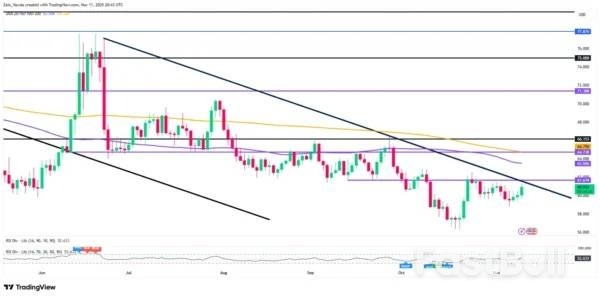
From a technical analysis standpoint, WTI crude oil has been stuck in a consolidation phase in the critical $59.50 to $62.00 zone, an area that has exhibited significant "market memory" from previous trading periods.
The long-term descending trendline is being tested at present at the same time the RSI period-14 has crossed above the 50 neutral level.
Is this a precursor to a trendline break?
Even if it is, recent price action suggests that bullish momentum may fade quickly. This is also backed up by the overarching macroeconomic factors discussed above.
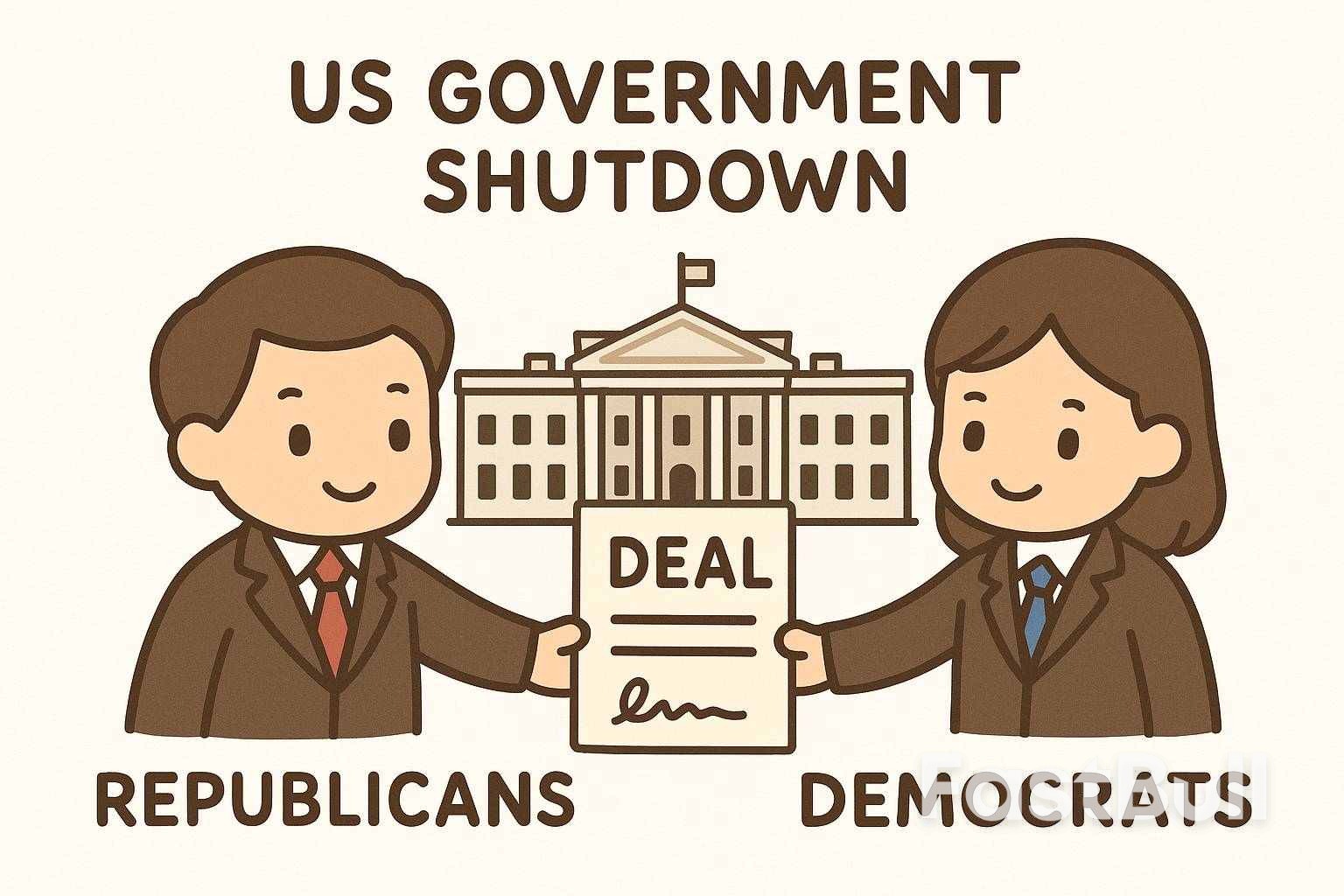
Is the longest government shutdown in American history about to finally end? New developments over the weekend signaled that the standoff could be over, as the possibility of an agreement came to light.
As it turned out, eight Senate Democrats broke ranks with their party leadership and voted with Republicans to advance a deal that could reopen the government this week.
So what's actually in this deal? Why did some Democrats support it and why are others are furious? And what could still go wrong?
Here's everything you need to know about this historic agreement.
The federal government shut down at midnight on October 1, 2025 when Congress failed to pass funding legislation for the 2026 fiscal year. The core issue? Healthcare subsidies under the Affordable Care Act (ACA) that are set to expire at the end of December.
Democrats refused to pass any funding bill without guaranteeing an extension of these enhanced tax credits, which help over 20 million Americans afford health insurance. Republicans rejected this demand, insisting on a "clean" funding bill with no policy add-ons. For 40 days, the Senate held vote after vote, with neither side willing to budge after 14 failed attempts.
Then, on Sunday evening, something shifted. The Senate voted 60-40 to advance a funding package, which is exactly the threshold needed to overcome a filibuster.
Eight members of the Democratic caucus provided the crucial votes needed to advance the bill:
Three of these Senators (Shaheen, Hassan, and King) actually negotiated the deal with Republicans and the White House. All three are former governors who emphasized their experience running state governments during crises.
Only one Republican voted against the deal: Sen. Rand Paul of Kentucky, who opposes it because he says it adds to the national debt.
The agreement has several major components:
Funding Through January 30: The deal includes a continuing resolution that funds the government at current spending levels until the end of January. This gives Congress more than two months to negotiate full-year funding bills.
Three Full-Year Spending Bills: The package includes complete, year-long funding for three government departments:
Federal Worker Protections: The deal reverses all workforce reductions and layoffs that occurred during the shutdown. It also guarantees that all federal employees—both those furloughed and those required to work—will receive back pay. Additionally, it prevents any new layoffs through the end of the fiscal year in September 2026.
The Healthcare Compromise: This is where things get controversial. The deal does not extend the ACA subsidies that Democrats demanded. Instead, it includes a promise from Senate Majority Leader John Thune that the Senate will hold a vote on a Democratic-sponsored bill to extend the subsidies by mid-December.
That's it. Just a promise of a vote, not a guarantee that it will pass.
Let's be clear about what this means for Democrats:
What They Got:
What They Didn't Get:
The senators who voted for the deal defended it by saying the shutdown strategy wasn't working. Senator Angus King told reporters that almost seven weeks of "fruitless attempts" to garner much-needed support for the extension of tax credits was not the way to go, while Senator Jeanne Shaheen bluntly pointed out that this was "the only deal on the table."
The bill is scheduled to head to the House of Representatives, and votes are expected to come in as early as November 12.
House Republicans are mostly expected to support the bill and GOP leadership is planning to pass it with Republican votes only, not counting on Democratic support given the backlash from House Democrats.
Once both chambers pass the bill, it goes to President Trump, who mentioned Sunday evening that "it looks like we're getting close to the shutdown ending," so expectations are for him to sign it without a hitch.
While the path forward seems clearer than it has in 40 days, several things could still go wrong:
Senate Procedural Delays: Any single senator can slow down the process with procedural objections. While Senate Majority Leader Thune hopes for final passage within "hours not days," if senators object, it could drag out.
House Republican Defections: With most House Democrats expected to vote against the bill, Johnson can afford very few Republican defections. Some conservative Republicans have already expressed concerns and if more than a handful of Republicans join Democrats in opposition, the bill could fail.
White House Complications: While Trump indicated support for ending the shutdown, he has a tendency to insert himself into negotiations at the last minute. His refusal to commit on healthcare issues could still cause problems.
House Democratic Discharge Petition: House Democrats are considering using a discharge petition, which is a procedural move that requires 218 signatures, to force a vote on ACA subsidy extensions. If they can get some moderate Republicans on board (and some have supported extensions), this could complicate the legislative schedule and create new conflicts.
Flight Disruptions and Travel Delays: Ironically, the shutdown itself is making it harder to end the shutdown. With over 1,000 flights canceled daily due to air traffic control staffing shortages, getting all House members back to Washington for a vote could be logistically challenging. Johnson specifically warned members about travel delays when urging them to return "right now."
After being in government shutdown limbo for 40 long days, Congress is finally on the verge of reopening the federal government. The deal is far from perfect and has split Democrats down the middle.
It funds the government through January and secures critical programs, but it doesn't directly address the healthcare subsidy cliff that Democrats say will harm millions of Americans.
The compromise reflects a harsh political reality: with Republicans controlling both chambers of Congress and the White House, Democrats had limited leverage.
The eight Democrats who voted for the deal calculated that continuing the shutdown wouldn't force Republicans to budge on healthcare, while causing immense suffering to federal workers and vulnerable Americans.
Whether this was the right call remains hotly debated. What's certain is that the battle over ACA subsidies isn't over, it's just moving to a December vote with an uncertain outcome.
For now, if the Senate and House can finalize votes this week, nearly 900,000 furloughed federal workers will get back pay, 1.4 million essential workers will finally receive paychecks, and 42 million Americans will see their SNAP benefits restored.
What to Watch: Senate final passage (expected early this week), House vote (expected Wednesday), whether Speaker Johnson schedules any vote on ACA subsidies, and whether the December Senate vote on healthcare can attract enough Republican support to pass.
Even as a U.S.–China trade truce appears to be holding, analysts caution that the détente remains fragile in a rivalry increasingly defined by strategic competition.
A flurry of decisions, outlined in the sweeping trade deal struck by U.S. President Donald Trump with Chinese leader Xi Jinping last month, took effect on Monday, with rollbacks of steep tariffs and export controls.
The U.S. halved fentanyl-linked tariffs on imports from China to 10% and extended for a year a truce that lowered the reciprocal tariff rate from 34% to 10%.
In return, China's Ministry of Commerce rolled back several export restrictions on critical minerals and rare earth materials to the U.S. on Monday. Those curbs, first imposed on Oct. 9, had targeted materials vital for military hardware, semiconductors, and other high-tech industries.
Beijing also reversed retaliatory limits on exports of gallium, germanium, antimony, and other so-called super-hard materials such as synthetic diamonds and boron nitrides. Those measures, introduced in December 2024, were widely seen as a response to Washington's expanded semiconductor export restrictions on China.
Still, Morgan Stanley economists said that Beijing has not unwound the export-control framework it introduced in April – likely to maintain a "calibrated choke-point" meant to preserve leverage.
Given the persisting strategic rivalry, "we view rolling negotiations, episodic flare-ups, and policy asymmetry as the new equilibrium," the economists said.
China is also reportedly developing a so-called "validated end-user" system, or VEU, to block rare earth exports to companies with ties to the U.S. military, the Wall Street Journal reported Tuesday, citing unnamed sources.
The system, if strictly implemented, could make it more difficult for automotive and aerospace companies with both civilian and defense clients to import certain Chinese materials, the Journal reported.
Beijing on Monday added 13 fentanyl precursors to its export control list, requiring a license for shipments to the U.S., Mexico, and Canada.
The Ministry of Commerce also suspended sanctions against five U.S.-linked subsidiaries of South Korea's shipbuilder Hanwha Ocean for a year, while the Ministry of Transport paused measures targeting the U.S. shipping sector, including port fees. The U.S. Trade Representative said Sunday it would suspend its own measures for one year.
As part of the bilateral agreement, the White House said China agreed to purchase 12 million metric tons of soybeans by the end of this year and 25 million annually over the next three years. Beijing, which has not confirmed those numbers, appeared to have resumed soybean purchases from the U.S. recently, according to Reuters, after shunning them for most parts of this year.
"These steps suggest 'so far, so good,' but in reality, this is just the beginning," said Wendy Cutler, senior vice president at Asia Society Policy Institute. While there were incentives for both sides to keep the truce in place, such "de-escalatory moves tend to be short-lived," she added.
China's economy, weighed down by the prolonged trade war with Washington, grew 4.8% in the third quarter — its slowest in a year and down from 5.2% in the second quarter.
In a notice Monday, China's State Council announced 13 measures to promote private investment in several major state-dominated industries.
China's push for self-reliance amid "fierce international competition" at last month's top economic plenum was a sign that the leadership is linking growth goals more closely to strategic competition with the U.S., said Neil Thomas, a fellow on Chinese politics at the Asia Society.
"Beijing is not chasing a grand bargain [but] seeking a truce to buy time and build leverage," Thomas added. He added that while Washington and Beijing both prioritize self-reliance over interdependence, Xi is betting that his strategic resolve will outlast Trump's.

The Senate Agriculture Committee has released a draft of its portion of a much-awaited digital assets market structure bill — a critical step toward accelerating institutional and retail adoption of cryptocurrencies.
Unveiled on Monday by Agriculture Chair John Boozman, R-Ark., and Sen. Cory Booker, D-N.J., the bipartisan discussion draft lays the groundwork for creating guardrails for the crypto industry in the U.S. It also establishes guidelines for institutions that want to work with digital assets, from bitcoin and ether to tokenized financial instruments.
"This is the most consequential roadmap for how an institution is going to integrate digital assets into their business," Cody Carbone, CEO of crypto trade association Digital Chamber, told CNBC. "It's like the best possible step-by-step of what type of compliance rules requirements they would need to follow to work with crypto."Here are five key takeaways from the discussion draft.
The text classifies some of the largest digital assets by market capitalization such as bitcoin and ether as "digital commodities," placing them under the Commodity Futures Trading Commission's purview.
This provision removes a major blocker to digital asset adoption for institutional fiduciaries, Juan Leon, an analyst at crypto-focused asset manager Bitwise, told CNBC.
"Compliance and risk departments will finally have a federal statute to point to," Leon said. "This shifts the internal conversation … [and] it provides the legal certainty required to move assets into a formal, strategic allocation."
It will also create "a starkly bifurcated market" consisting of regulated and unregulated tokens, with the former class of assets seeing "a massive influx of institutional capital, deep liquidity and a robust derivatives ecosystem."
The draft calls for crypto companies to "establish governance, personnel, and financial resource separation among affiliated entities that perform distinct regulated functions."
Bitwise's Leon interprets the provision as a challenge to the "all-in-one" business model that is common among crypto exchanges. According to those models, an exchange, broker, custodian, and proprietary trading desk are all wrapped up into one entity.
In other words, digital asset firms could be required to keep their various businesses separated like traditional financial companies, according to Leon. The change would serve as "a foundational pillar for institutional adoption."
The text gives more power to the CFTC, empowering it to work in tandem with the Securities and Exchange Commission to issue joint rulemaking on crypto-related matters.
"There's a lot more power or authority delegated to the CFTC to have jurisdiction over this industry," Carbone said.
The shift comes after the SEC for years served as the main regulator of digital assets, after it edged out the CFTC to gain authority over the industry.
The draft calls for regulated entities to pay fees to the CFTC. Those fees would go toward registering digital commodity exchanges, brokers and dealers, in addition to conducting oversight of regulated entities and carrying out education and outreach.
The text calls for crypto exchanges to only permit trading of digital commodities that are "not readily susceptible to manipulation."
It's a provision that could reduce the number of "rug pulls" and other scams that are still common in some parts of the crypto industry, with the goal of establishing standards and building confidence in the market.
The Senate Agriculture Committee's discussion draft is far from final, but it does offer critical insights into the direction of efforts to pass crypto-friendly regulations in the U.S., according to Carbone.
"It's not final, it's not done, but this gives a good sense of where Congress is going and what the final rules may be," Carbone said.
The committee will likely spend the next few weeks getting feedback on their draft, meaning it may be "almost impossible to get [a final version of this part of the bill] done by the end of the year," he added.
However, that period will give lawmakers time to offer more concrete guidance on several issues that are bracketed – or not yet finalized – in the discussion draft. Those include provisions on anti-money laundering rules and regulations specific to decentralized finance players.
Several crypto players plan to work in tandem with lawmakers to help iron out those details, among others.
"We've long said crypto is a bipartisan issue, and this draft from Chairman Boozman and Senator Booker reflects that," Moonpay President Keith Grossman told CNBC. "It's critical that legislation distinguishes between centralized intermediaries and decentralized systems, and we look forward to working with the Committee to get it right."
The discussion draft is only one piece of larger legislative efforts to overhaul regulations for the crypto industry, according to Carbone. Ultimately, the text will be combined with the Senate Banking Committee's draft on the digital assets market structure in a bid to create one comprehensive bill.
And although lawmakers are nowhere near the finish line in that process, crypto firms are finding other ways to work with regulators and other authorities to meaningfully advance their industry, Grayscale Investments Chief Legal Officer Craig Salm told CNBC.
"In the absence of comprehensive legislation, we've still seen meaningful progress on the regulatory front," Salm said, adding that the SEC, Internal Revenue Service and Treasury Department have recently provided guidance around staking in crypto exchange-traded products. "That said, thoughtful legislation will be critical to solidifying the foundation of the digital asset industry in the U.S. and unlocking even greater value for investors and consumers."
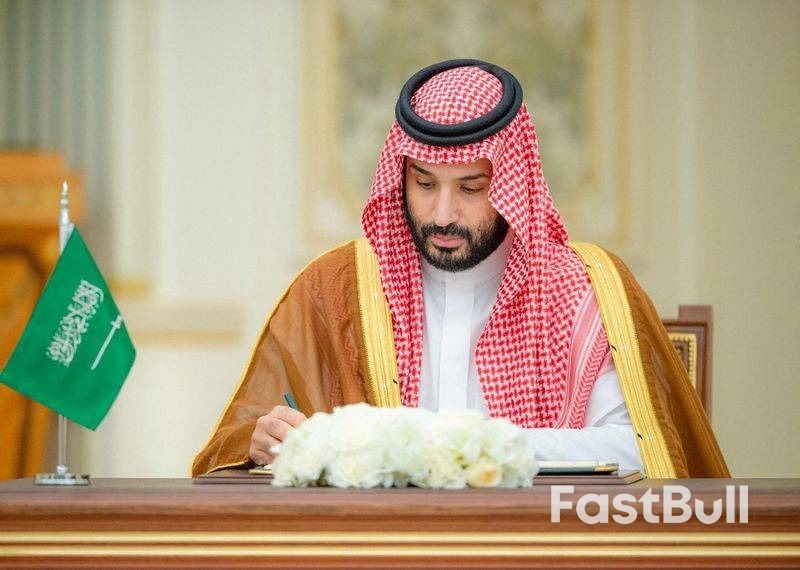
Saudi Arabia is expected to host a U.S.-Saudi investment summit in Washington on November 19 during a visit by Crown Prince Mohammed bin Salman, according to a source familiar with the planning.
Bin Salman will be in Washington to meet with President Donald Trump at the White House on November 18, a White House official said last week.
The summit will be held on the sidelines of bin Salman's visit and not be a part of his official schedule, the source said, declining to be identified because the event is not yet public.
Trump and Bin Salman may drop in, but their participation was not currently part of the program, the source added.
News of the summit was first reported by CBS News, which, citing an invitation, reported that the event would be held at the John F. Kennedy Center for the Performing Arts and co-hosted by the Ministry of Investment of Saudi Arabia and the U.S.-Saudi Business Council.

Bin Salman will visit Washington as Trump pushes Saudi Arabia to join the list of nations that have joined the Abraham Accords normalizing relations between Israel and Muslim-majority nations.
Saudi Arabia is one of the largest customers for U.S. arms, and Trump and bin Salman may also discuss a U.S.-Saudi defense agreement. The Financial Times reported last month that there were hopes the two countries could sign such an agreement during bin Salman's visit.
Australia's spy chief has accused hackers working for China's government of probing his nation's communications and infrastructure networks.
In a speech to a financial regulation conference on Wednesday in Melbourne, Mike Burgess, director-general of the Australian Security Intelligence Organisation, said while the US has been the main target, the scope of Chinese state-linked actors has widened.
"We have seen Chinese hackers probing our critical infrastructure," he said, referring to the Volt Typhoon group. The same hackers "compromised American critical infrastructure networks to pre-position for sabotage," Burgess said.
Another group of state-sponsored Chinese hackers, Salt Typhoon, has been probing telecommunications networks in Australia and has penetrated networks in the US for espionage purposes, he said.
Australia's spy chief said cyber-enabled espionage is appealing to foreign intelligence agencies because it's low-cost and potentially high-impact, as well as being deniable and scalable. The Salt Typhoon and Volt Typhoon hacking groups work for Chinese government intelligence and the military, Burgess said.
"Once access is gained — the network is penetrated — what happens next is a matter of intent not capability," he said. "I do not think we – and I mean all of us – truly appreciate how disruptive, how devastating, this could be."
Australian and other allied intelligence services warned early in 2024 that Volt Typhoon had been inside some critical industry networks for years. The Chinese government has consistently denied that it is involved in hacking or cyber espionage.
China's Ministry of Foreign Affairs did not respond to a request for comment sent outside normal working hours.
Burgess also referenced Australia's 2018 decision to exclude Chinese firms from building the nation's 5G network.
He said the telecommunications network was "at the top of the nation's most critical infrastructure list," which prompted the government to exclude "high-risk" vendors such as Huawei Technologies Co., a move that was later followed by a number of other countries across the world.
SoftBank Group shares fell over 7% Wednesday after the company said it sold its entire stake in U.S. chipmaker Nvidia for $5.83 billion, as the Japanese giant looks to capitalize on its "all in" bet on ChatGPT maker OpenAI.
In its earnings report, SoftBank said it sold 32.1 million Nvidia shares in October, and also trimmed its T-Mobile position, raising $9.17 billion.
Asia-Pacific markets mostly rose Wednesday, after Wall Street traded mixed on hopes that the record-setting U.S. government shutdown could be nearing an end and AI trade stumbling.
Japan's benchmark Nikkei 225 fell 0.26%, while the Topix added 0.35%. South Korea's Kospi was flat, while the small-cap Kosdaq added 0.62%.
Futures for Hong Kong's Hang Seng Index pointed to a slightly higher open, trading at 26,865, against the index's previous close of 26,696.41.
Investors will be keeping a close eye on SoftBank shares as well as tech stocks in Asia after the Japanese giant said Tuesday it sold its entire stake in U.S. chipmaker Nvidia for $5.83 billion, as it looks to capitalize on its "all in" bet on ChatGPT maker OpenAI.
Overnight in the U.S., the three major averages closed mixed. The Dow Jones Industrial Average rallied to a fresh closing record Tuesday, while the Nasdaq Composite struggled as investors moved money away from technology stocks into other parts of the market that traded at lower valuations.
The 30-stock Dow rose 559.33 points, or 1.18%, to close at 47,927.96, with those on Wall Street buying up shares of various blue-chip names, including health care giants Merck, Amgen and Johnson & Johnson. The S&P 500 also rose 0.21% to finish at 6,846.61. However, the tech-heavy Nasdaq lost 0.25% to settle at 23,468.30.
White Label
Data API
Web Plug-ins
Poster Maker
Affiliate Program
The risk of loss in trading financial instruments such as stocks, FX, commodities, futures, bonds, ETFs and crypto can be substantial. You may sustain a total loss of the funds that you deposit with your broker. Therefore, you should carefully consider whether such trading is suitable for you in light of your circumstances and financial resources.
No decision to invest should be made without thoroughly conducting due diligence by yourself or consulting with your financial advisors. Our web content might not suit you since we don't know your financial conditions and investment needs. Our financial information might have latency or contain inaccuracy, so you should be fully responsible for any of your trading and investment decisions. The company will not be responsible for your capital loss.
Without getting permission from the website, you are not allowed to copy the website's graphics, texts, or trademarks. Intellectual property rights in the content or data incorporated into this website belong to its providers and exchange merchants.
Not Logged In
Log in to access more features

FastBull Membership
Not yet
Purchase
Log In
Sign Up