Markets
News
Analysis
User
24/7
Economic Calendar
Education
Data
- Names
- Latest
- Prev


Signal Accounts for Members
All Signal Accounts
All Contests


U.K. Trade Balance (Oct)A:--
F: --
P: --
U.K. Services Index MoMA:--
F: --
P: --
U.K. Construction Output MoM (SA) (Oct)A:--
F: --
P: --
U.K. Industrial Output YoY (Oct)A:--
F: --
P: --
U.K. Trade Balance (SA) (Oct)A:--
F: --
P: --
U.K. Trade Balance EU (SA) (Oct)A:--
F: --
P: --
U.K. Manufacturing Output YoY (Oct)A:--
F: --
P: --
U.K. GDP MoM (Oct)A:--
F: --
P: --
U.K. GDP YoY (SA) (Oct)A:--
F: --
P: --
U.K. Industrial Output MoM (Oct)A:--
F: --
P: --
U.K. Construction Output YoY (Oct)A:--
F: --
P: --
France HICP Final MoM (Nov)A:--
F: --
P: --
China, Mainland Outstanding Loans Growth YoY (Nov)A:--
F: --
P: --
China, Mainland M2 Money Supply YoY (Nov)A:--
F: --
P: --
China, Mainland M0 Money Supply YoY (Nov)A:--
F: --
P: --
China, Mainland M1 Money Supply YoY (Nov)A:--
F: --
P: --
India CPI YoY (Nov)A:--
F: --
P: --
India Deposit Gowth YoYA:--
F: --
P: --
Brazil Services Growth YoY (Oct)A:--
F: --
P: --
Mexico Industrial Output YoY (Oct)A:--
F: --
P: --
Russia Trade Balance (Oct)A:--
F: --
P: --
Philadelphia Fed President Henry Paulson delivers a speech
Canada Building Permits MoM (SA) (Oct)A:--
F: --
P: --
Canada Wholesale Sales YoY (Oct)A:--
F: --
P: --
Canada Wholesale Inventory MoM (Oct)A:--
F: --
P: --
Canada Wholesale Inventory YoY (Oct)A:--
F: --
P: --
Canada Wholesale Sales MoM (SA) (Oct)A:--
F: --
P: --
Germany Current Account (Not SA) (Oct)A:--
F: --
P: --
U.S. Weekly Total Rig CountA:--
F: --
P: --
U.S. Weekly Total Oil Rig CountA:--
F: --
P: --
Japan Tankan Large Non-Manufacturing Diffusion Index (Q4)--
F: --
P: --
Japan Tankan Small Manufacturing Outlook Index (Q4)--
F: --
P: --
Japan Tankan Large Non-Manufacturing Outlook Index (Q4)--
F: --
P: --
Japan Tankan Large Manufacturing Outlook Index (Q4)--
F: --
P: --
Japan Tankan Small Manufacturing Diffusion Index (Q4)--
F: --
P: --
Japan Tankan Large Manufacturing Diffusion Index (Q4)--
F: --
P: --
Japan Tankan Large-Enterprise Capital Expenditure YoY (Q4)--
F: --
P: --
U.K. Rightmove House Price Index YoY (Dec)--
F: --
P: --
China, Mainland Industrial Output YoY (YTD) (Nov)--
F: --
P: --
China, Mainland Urban Area Unemployment Rate (Nov)--
F: --
P: --
Saudi Arabia CPI YoY (Nov)--
F: --
P: --
Euro Zone Industrial Output YoY (Oct)--
F: --
P: --
Euro Zone Industrial Output MoM (Oct)--
F: --
P: --
Canada Existing Home Sales MoM (Nov)--
F: --
P: --
Euro Zone Total Reserve Assets (Nov)--
F: --
P: --
U.K. Inflation Rate Expectations--
F: --
P: --
Canada National Economic Confidence Index--
F: --
P: --
Canada New Housing Starts (Nov)--
F: --
P: --
U.S. NY Fed Manufacturing Employment Index (Dec)--
F: --
P: --
U.S. NY Fed Manufacturing Index (Dec)--
F: --
P: --
Canada Core CPI YoY (Nov)--
F: --
P: --
Canada Manufacturing Unfilled Orders MoM (Oct)--
F: --
P: --
Canada Manufacturing New Orders MoM (Oct)--
F: --
P: --
Canada Core CPI MoM (Nov)--
F: --
P: --
Canada Manufacturing Inventory MoM (Oct)--
F: --
P: --
Canada CPI YoY (Nov)--
F: --
P: --
Canada CPI MoM (Nov)--
F: --
P: --
Canada CPI YoY (SA) (Nov)--
F: --
P: --
Canada Core CPI MoM (SA) (Nov)--
F: --
P: --
Canada CPI MoM (SA) (Nov)--
F: --
P: --


No matching data
Latest Views
Latest Views
Trending Topics
Top Columnists
Latest Update
White Label
Data API
Web Plug-ins
Affiliate Program
View All

No data
The US Federal Reserve cut the Fed Funds rate by 25 bps to 3.5%–3.75% at its meeting on Wednesday, in a 9-3 vote, with two hawkish dissenters (Goolsbee and Schmid, who favoured no cut) and one dovish dissenter (Stephen Miran, who favoured a larger 50 bp cut).
In Norway, the Regional Survey is due for release. We expect it to confirm that growth continues to rise at a moderate pace, with capacity utilization largely unchanged and indicate that the level of activity is somewhat below normal. Specifically, we expect that respondents in the survey will expect 0.3-0.4% growth next quarter, that capacity utilization will be unchanged at 35% and that the number of companies experiencing labour shortages will fall from 25% to 24%.
In Sweden, the final figures for November inflation are being published. The preliminary figures surprised to the downside, with CPI at 0.3% y/y, CPIF 2.3% y/y, and CPIF ex. energy 2.4% y/y. As preliminary estimates are generally reliable, significant revisions are unlikely. It will be interesting to analyse the details to understand the factors behind the surprise. Specifically, whether the low outcome is linked to seasonal variations or other underlying causes.
In central bank space, attention turns to the Swiss National Bank, where we forecast the rate to remain unchanged at 0.00%. The Central Bank of Turkey is also set to release its rate decision.
What happened yesterday
In the US, the Federal Reserve cut its policy rate target by 25bp to 3.50-3.75% last night, as widely anticipated. Miran voted for a larger 50bp cut, while Schmid and Goolsbee dissented in favour of a hold, also in line with our expectations. We (and the markets) had expected Powell to push back against market pricing further rate cuts for 2026. However, his avoidance of strong forward guidance led to a decline in UST yields and broad USD weakening during the press conference. We maintain our Fed call and expect two final rate cuts in March and June. The Fed also announced reserve management purchases of T-bills starting 12 December at USD 40bn per month, indicating more front-loaded easing to liquidity policies than we anticipated.
Ahead of the meeting, the US Q3 Employment Cost Index signalled slightly slower-than-expected wage growth at 0.8% q/q (prior: 1.0%). This pace is close to ideal for the Fed – supporting consumption without driving inflation – and is positive for overall risk sentiment.
In Sweden, October economic activity data showed a slight decline, with lower production in the business sector as well as declining household consumption. The GDP indicator fell by 0.3% m/m, though its volatility warrants cautious interpretation. Overall, the data aligned with our expectations of slower growth for Q4, reflecting lagged effects of the summer slowdown, and does not alter the positive outlook heading into 2026.
In Norway, November core inflation declined to 3.0% y/y (cons: 3.1%, prior: 3.0%), driven by domestic and imported goods ex. food. Annual growth in household appliances and electronics dropped close to September levels, indicating that volatility was likely influenced by Black week adjustments. The print is marginally lower than Norges Bank's estimate from the September MPR at 3.1%, reinforcing the disinflationary trend. While this is unlikely to affect Norges Bank's rate path next week, it provides scope for signalling a more aggressive cutting cycle, dependent on the Regional Network survey today.
In Canada, the Bank of Canada kept the rate unchanged at 2.25% as widely expected.
In Denmark, November inflation held steady at 2.1% y/y. Food prices declined 0.9% from October, which could potentially have a positive impact on consumer sentiment.
Equities: Equity investors cheered the not-so-hawkish Fed cut yesterday. S&P 500 jumped 1% at the press conference, eventually closing 0.7% higher and small cap Russell 2000 1.3% higher. The rate decision triggered a clear cyclical preference in markets: Value cyclicals like materials, industrials, and consumer discretionary were all ~2% higher. This is interesting. Previously this year we have seen cyclical growth stocks – mag 7, basically – rallying at dovish surprises. This time, it was more of a "run it hot" reaction in markets, where expectations of stronger macro fuelled the move higher rather than lower yields. This fits our narrative very well.
One sector worth highlighting is health care, performing very strong in the risk-on session yesterday. This is a bit odd in a historical context, but health care has been behaving like a cyclical sector in recent trading. This has certainly been a tremendous rally, but we take profits today and neutralize our health care sector call. Reason for this is that the positive health care call has been a valuation call, and this argument has rapidly changed. The relative discount has gone from 20% to 10% vs global markets the last three months, which we think is a fair discount at this part of the cycle. For instance, health care now trades close to the multiple of consumer staples, after a 20% discount at the bottom.
FI and FX: Yesterday's Fed rate cut was a rather balanced one, but given that markets expected a hawkish cut, market reactions were slightly to the soft side. Rates rallied somewhat and the USD weakened a tad with EUR/USD trading at 1.169. Only tiny and transitory, negative reactions in EUR/SEK and EUR/NOK following the FOMC decision. Ahead of the Fed rate decision European rates rose once again, resulting in the fifth consecutive day of higher rates. Potential rate cuts for the ECB have by now been eliminated for 2026. This morning, EUR/SEK is back at 10.84 and EUR/NOK trades at 11.83.
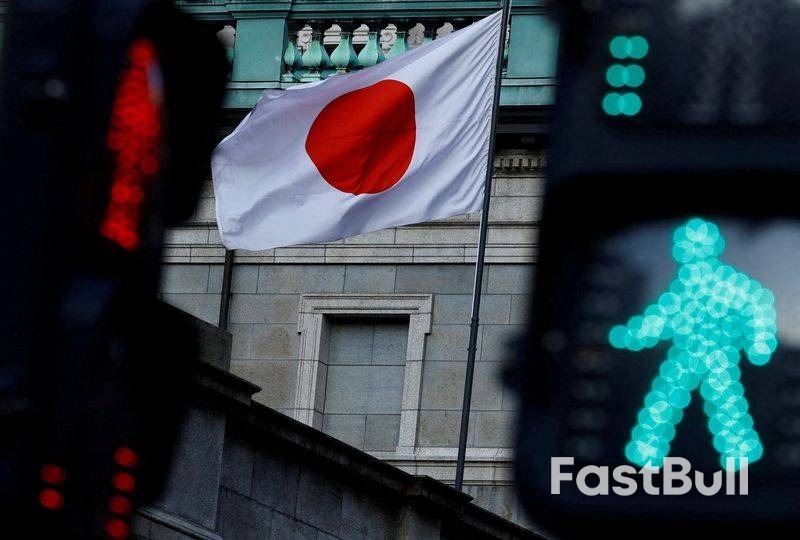
The yen struck a record low against the offshore yuan this week, raising concerns about imported inflation in Japan where the central bank's policy normalization remains gradual.
The Japanese currency has also weakened against China's tightly managed onshore yuan, with the pair hovering near its lowest since 1992. The offshore yuan was introduced in 2010.
A cautious BOJ and lingering fiscal concerns are pressuring the yen, whose weakness has now broadened beyond the dollar and euro to include currencies of key trading partners such as China and Australia. The delay in normalizing monetary conditions keeps Japan's real effective exchange rate near multi-decade lows and may amplify imported inflation pressures, given China is Japan's largest source of imports, even amid simmering political tensions.
"A weak yen is problematic because it increases inflation risk, which in turn is politically unpopular," said Moh Siong Sim, FX strategist at Bank of Singapore. "The BOJ faces a delicate balancing act of curbing yen weakness while containing upward pressure on JGB yields."
The BOJ is widely expected to raise interest rates by 25 basis points at next week's policy meeting, with overnight index swaps pricing in a 92% chance of a move. And yet, investors are sticking with bearish yen bets, reflecting expectations Japan's yields will remain substantially below those of the US even after a potential BOJ move.
Meanwhile, there are doubts Beijing will tolerate sustained gains in the yuan. A firmer currency supports capital inflows and China's financial-opening goals, but excessive appreciation risks undermining exports that are a critical pillar of the economy.
Traders will be watching whether the People's Bank of China allows the recent offshore yuan's gains to flow through in upcoming fixings, or if it will curb further appreciation.
The UK housing market showed signs of distress in November as the latest survey from the Royal Institution of Chartered Surveyors reflected what analysts characterized as an unenthusiastic response from estate agents to the government's Budget announcement.
The RICS UK Residential Market Survey revealed that all near-term metrics turned negative, with house prices continuing to face modest downward pressure at the national level.
The trade body indicated that the subdued backdrop is expected to persist over coming months, the report said.
New buyer enquiries fell by 32% in November, worsening from a 24% decline in October and marking the weakest reading since late 2023, according to the survey data.
This represented the fifth successive report in which the measure remained in negative territory, with most parts of the UK seeing a consistently negative trend in new buyer interest.
Sales agreed recorded a 24% decline in November, broadly unchanged from the 23% fall in October.
The near-term sales outlook weakened slightly, with expectations for the coming three months shifting from a 3% fall to a 6% decline, suggesting a more negative short-term view.
However, the 12-month outlook improved, with the November reading rising to 15% growth from a 7% decline in October.
New vendor instructions registered a 19% decline in November, virtually unchanged from the 20% decline in October. The brokerage suggested that fewer homeowners were willing to begin the sales process ahead of the Budget announcement.
House prices showed a net decline of 16% in November, compared with a 19% decline in October. These downward trends were most pronounced in what the report describes as "traditionally affordability-constrained regions," including the South East, East Anglia, and London.
Near-term house price expectations also remained negative, with a net 15% expecting prices to fall over the next three months, slightly more than the 12% expecting a fall in October.
However, the 12-month outlook strengthened, with a net 24% of survey participants expecting prices to rise, up from 16% expecting an increase in October, the strongest reading since June.
The rental market also showed signs of weakness. Tenant demand recorded a net decline of 22% in November, a sharp deterioration from the 4% decline in October.
Landlord instructions fell by 39% in November, compared with a 34% decline in October, marking the weakest reading since April 2020.
RBC Capital Markets linked the weakening rental market to a mix of Budget uncertainty and the recent passage of the Renters Reform Act.
It added that recent changes to property income tax and the so-called "mansion tax" could further reduce buy-to-let landlord appetite in the near term.
Estate agents now expect rents to increase by 2.5% over the next 12 months, slightly below the 3% average forecast over the previous six months.
RBC analysts suggested that UK households traditionally show strong interest in property listings on Boxing Day morning, with record viewing figures expected on Rightmove.
They predicted that RICS' December survey would prove more upbeat than the post-Budget November edition.
The Bank of Japan sees limited need for emergency intervention to restrain rising bond yields, a move that runs counter to its effort to roll back stimulus, three sources familiar with its thinking said.
Growing market anticipation of an interest rate hike in December has pushed up the benchmark 10-year Japanese government bond (JGB) yield to an 18-year high this week, drawing attention to how the central bank could respond.
BOJ Governor Kazuo Ueda, speaking in parliament on Tuesday, said recent increases in bond yields were "somewhat rapid" and reiterated the central bank's readiness to respond nimbly in exceptional circumstances.
Policymakers are keeping a watchful eye on market moves but are reluctant to take action presently, such as ramping up bond purchases or conducting emergency market operations, the sources said, citing a high threshold for intervention.
They also see no imminent need to tweak the BOJ's plan to steadily reduce bond purchases, including for super-long tenors that have recently led to yields rising to record highs, they said.
"It would take a panicky sell-off that is out of sync with fundamentals, something Japan isn't seeing right now," said one of the sources on the high hurdle for the BOJ to ramp up bond buying, a view echoed by two other sources.
Rather, the recent yield rises are due to investors taking a wait-and-see approach on uncertainty over how far the BOJ could eventually raise rates, and how much of bonds the government will sell to fund next fiscal year's budget, they said.
Ueda has signalled the BOJ will offer some clarity on its future rate-hike path when the board decides to raise rates to 0.75% from 0.5% - a move markets expect at next week's policy meeting.
Last year, the BOJ exited a decade-long, massive stimulus including by ditching its bond yield curve control and slowing the pace of JGB purchases.
In laying out its taper plan, the BOJ said that while long-term rates should be determined by markets, it will respond "nimbly" if yields rise rapidly in a way out of sync with fundamentals.
Ueda has repeated the language, whenever asked about yield moves at press briefings or in parliament, including on Tuesday.
The 10-year JGB yield rose to an 18-year high of 1.97% on Monday, approaching the psychologically important 2% line that has not been breached for nearly two decades.
The BOJ will focus on what is driving the moves rather than specific yield levels, and stay cautious on intervening as doing so would give a wrong signal to markets that it could discontinue efforts to normalise policy, the sources said.
Intervening would also give markets the impression the BOJ has a line in the sand on where it would step in, running counter to its attempt to have market forces drive bond price moves, they said.

Yields around the globe have been climbing in recent weeks, as many central banks signalled they are either at or near the end of their own easing cycles, while the BOJ is widely anticipated to hike rates at its policy meeting next week.
JGB yields have also risen on expectations that Prime Minister Sanae Takaichi's expansionary fiscal policy would lead to a huge issuance of bonds, at a time the BOJ was reducing its presence in the market.
White Label
Data API
Web Plug-ins
Poster Maker
Affiliate Program
The risk of loss in trading financial instruments such as stocks, FX, commodities, futures, bonds, ETFs and crypto can be substantial. You may sustain a total loss of the funds that you deposit with your broker. Therefore, you should carefully consider whether such trading is suitable for you in light of your circumstances and financial resources.
No decision to invest should be made without thoroughly conducting due diligence by yourself or consulting with your financial advisors. Our web content might not suit you since we don't know your financial conditions and investment needs. Our financial information might have latency or contain inaccuracy, so you should be fully responsible for any of your trading and investment decisions. The company will not be responsible for your capital loss.
Without getting permission from the website, you are not allowed to copy the website's graphics, texts, or trademarks. Intellectual property rights in the content or data incorporated into this website belong to its providers and exchange merchants.
Not Logged In
Log in to access more features

FastBull Membership
Not yet
Purchase
Log In
Sign Up