Markets
News
Analysis
User
24/7
Economic Calendar
Education
Data
- Names
- Latest
- Prev


Signal Accounts for Members
All Signal Accounts
All Contests


Japan Tankan Small Manufacturing Outlook Index (Q4)A:--
F: --
P: --
Japan Tankan Large Non-Manufacturing Outlook Index (Q4)A:--
F: --
P: --
Japan Tankan Large Manufacturing Outlook Index (Q4)A:--
F: --
P: --
Japan Tankan Small Manufacturing Diffusion Index (Q4)A:--
F: --
P: --
Japan Tankan Large-Enterprise Capital Expenditure YoY (Q4)A:--
F: --
P: --
U.K. Rightmove House Price Index YoY (Dec)A:--
F: --
P: --
China, Mainland Industrial Output YoY (YTD) (Nov)A:--
F: --
P: --
China, Mainland Urban Area Unemployment Rate (Nov)A:--
F: --
P: --
Saudi Arabia CPI YoY (Nov)A:--
F: --
P: --
Euro Zone Industrial Output YoY (Oct)A:--
F: --
P: --
Euro Zone Industrial Output MoM (Oct)A:--
F: --
P: --
Canada Existing Home Sales MoM (Nov)A:--
F: --
P: --
Canada National Economic Confidence IndexA:--
F: --
P: --
Canada New Housing Starts (Nov)A:--
F: --
U.S. NY Fed Manufacturing Employment Index (Dec)A:--
F: --
P: --
U.S. NY Fed Manufacturing Index (Dec)A:--
F: --
P: --
Canada Core CPI YoY (Nov)A:--
F: --
P: --
Canada Manufacturing Unfilled Orders MoM (Oct)A:--
F: --
P: --
U.S. NY Fed Manufacturing Prices Received Index (Dec)A:--
F: --
P: --
U.S. NY Fed Manufacturing New Orders Index (Dec)A:--
F: --
P: --
Canada Manufacturing New Orders MoM (Oct)A:--
F: --
P: --
Canada Core CPI MoM (Nov)A:--
F: --
P: --
Canada Trimmed CPI YoY (SA) (Nov)A:--
F: --
P: --
Canada Manufacturing Inventory MoM (Oct)A:--
F: --
P: --
Canada CPI YoY (Nov)A:--
F: --
P: --
Canada CPI MoM (Nov)A:--
F: --
P: --
Canada CPI YoY (SA) (Nov)A:--
F: --
P: --
Canada Core CPI MoM (SA) (Nov)A:--
F: --
P: --
Canada CPI MoM (SA) (Nov)A:--
F: --
P: --
Federal Reserve Board Governor Milan delivered a speech
U.S. NAHB Housing Market Index (Dec)A:--
F: --
P: --
Australia Composite PMI Prelim (Dec)--
F: --
P: --
Australia Services PMI Prelim (Dec)--
F: --
P: --
Australia Manufacturing PMI Prelim (Dec)--
F: --
P: --
Japan Manufacturing PMI Prelim (SA) (Dec)--
F: --
P: --
U.K. 3-Month ILO Employment Change (Oct)--
F: --
P: --
U.K. Unemployment Claimant Count (Nov)--
F: --
P: --
U.K. Unemployment Rate (Nov)--
F: --
P: --
U.K. 3-Month ILO Unemployment Rate (Oct)--
F: --
P: --
U.K. Average Weekly Earnings (3-Month Average, Including Bonuses) YoY (Oct)--
F: --
P: --
U.K. Average Weekly Earnings (3-Month Average, Excluding Bonuses) YoY (Oct)--
F: --
P: --
France Services PMI Prelim (Dec)--
F: --
P: --
France Composite PMI Prelim (SA) (Dec)--
F: --
P: --
France Manufacturing PMI Prelim (Dec)--
F: --
P: --
Germany Services PMI Prelim (SA) (Dec)--
F: --
P: --
Germany Manufacturing PMI Prelim (SA) (Dec)--
F: --
P: --
Germany Composite PMI Prelim (SA) (Dec)--
F: --
P: --
Euro Zone Composite PMI Prelim (SA) (Dec)--
F: --
P: --
Euro Zone Services PMI Prelim (SA) (Dec)--
F: --
P: --
Euro Zone Manufacturing PMI Prelim (SA) (Dec)--
F: --
P: --
U.K. Services PMI Prelim (Dec)--
F: --
P: --
U.K. Manufacturing PMI Prelim (Dec)--
F: --
P: --
U.K. Composite PMI Prelim (Dec)--
F: --
P: --
Euro Zone ZEW Economic Sentiment Index (Dec)--
F: --
P: --
Germany ZEW Current Conditions Index (Dec)--
F: --
P: --
Germany ZEW Economic Sentiment Index (Dec)--
F: --
P: --
Euro Zone Trade Balance (Not SA) (Oct)--
F: --
P: --
Euro Zone ZEW Current Conditions Index (Dec)--
F: --
P: --
Euro Zone Trade Balance (SA) (Oct)--
F: --
P: --
U.S. Retail Sales MoM (Excl. Gas Stations & Vehicle Dealers) (SA) (Oct)--
F: --
P: --
U.S. Retail Sales MoM (Excl. Automobile) (SA) (Oct)--
F: --
P: --


No matching data
Latest Views
Latest Views
Trending Topics
Top Columnists
Latest Update
White Label
Data API
Web Plug-ins
Affiliate Program
View All

No data
Today is expected to be somewhat quiet on the data front, although we highlight speeches from New York Fed President John Williams and Fed Governor Stephen Miran in the evening.
Today is expected to be somewhat quiet on the data front, although we highlight speeches from New York Fed President John Williams and Fed Governor Stephen Miran in the evening. Markets will be looking for comments on US monetary policy.
The rest of the week will offer many interesting figures ahead of key central bank meetings on Thursday. Important for the euro area, flash PMIs will be released on Tuesday, the final inflation print for November on Wednesday and the ECB growth forecast on Thursday.
Across the Atlantic, the delayed US nonfarm payrolls and full November Jobs Report are set for release on Tuesday along with October retail sales data and December flash PMIs. On Thursday, the November CPI is due for release in the afternoon.
All eyes will be on the Thursday central bank meetings from the ECB, Riksbank, Norges Bank and Bank of England (BoE). Market consensus expects the ECB to leave the deposit rate unchanged on the back of data coming in stronger than expected by the ECB staff. We also expect the Riksbank and Norges bank to keep interest rates steady in line with market pricing. The BoE is expected to cut the bank rate, but the labour market report on Tuesday and November CPI figures on Wednesday may play a role in the final outcome.
Rounding off the week, the Bank of Japan (BoJ) will hold its meeting. Markets have increasingly expected the BoJ to hike the interest rate in recent weeks as Governor Ueda said he will "consider pros and cons".
What happened overnight
In China, the monthly batch of data showed retail sales growth declining to 1.3% in November from 2.9% in October. Industrial output growth slowed marginally to 4.8% y/y in November from 4.9% y/y in October. The figures were below expectations of 2.8% and 5.0% respectively. The housing market continued to weaken, with home prices declining 0.4% m/m and 2.4% y/y in November. As expected, China continues to be a two-speed economy with strong exports and tech development but weak domestic demand.
In Japan, the quarterly Tankan business survey showed manufacturing sentiment rising to +17 in December from the already high level of +15 in September. Sentiment improved in manufacturing to +11 from +7, while the non-manufacturing sentiment stayed at +21. The overall sentiment was +24, +21 and +11 for Large-, Medium- and Small Enterprises respectively. The business sentiment remained fairly strong, however the forecast for next quarter expects sentiment to take a smaller decline as businesses eye a BoJ hike this week.
In the US, we had the first comments following the FOMC December meeting, however they did not provide any clear new signals. Goolsbee was not "hawkish" on interest rates next year, but felt optimistic that they could fall this year, although he felt uncomfortable front loading looser monetary policy. Hammock commented on the labour market gradually cooling but also pointed at inflation remaining above target.
In Sweden, the labour force survey (LFS) for November showed encouraging employment growth of 0.6% m/m. The unemployment rate remained at high levels but edged down to 9.1% SA from 9.3%. The Riksbank will likely continue to express concerns about the labour market during their meeting on Thursday. SPES unemployment declined for the fourth consecutive month in November to 6.7%.
In Germany, the final inflation data for November confirmed the flash estimates. CPI held steady at 2.3% y/y with electricity prices declining 1.5% y/y and food inflation remaining at low levels of 1.2% y/y. The large upside surprise in the HICP index was also confirmed, which rose to 2.6% y/y. HICP services inflation was the culprit behind the surprise as it rose to 4.2% y/y from 3.6% y/y.
Equities: Global equities had a rough end to the week, as renewed concerns around lofty tech valuations weighed on risk sentiment and pushed major indices lower. The S&P 500 ended Friday down 1.1%, resulting in a negative week overall. Friday's session showed a clear defensive tilt, with cyclicals underperforming by almost 1 percentage point. The Nasdaq ended the day 1.7% lower, while the Russell 2000 declined by around the same magnitude. Over the week as a whole, the MSCI World index ended the week down only around 0.2%.
FI and FX: We have a busy week ahead of us with plenty of central bank meetings and with very different outcomes. We have Norges Bank and the Riksbank meeting on Thursday together with the ECB and Bank of England and finally, Bank of Japan on Friday. The Bank of England is expected to cut rates, while BoJ is expected to hike rates – both by 25bp. ECB, Norges Bank and the Riksbank are all on hold, although Norges Bank is expected to signal a cut in March and the ECB is expected to signal they are on hold and possibly reverse some of the repricing we have seen lately.
Last week ended on a mixed note for equities. Looking at global index performance, the message was fairly clear: investor appetite is waning for AI-related technology stocks, while non-tech and more value-oriented pockets of the market are benefiting from the latest Federal Reserve (Fed) rate cut.
In the US, the Dow Jones briefly hit a fresh all-time high on Friday before retreating, while the tech-heavy Nasdaq fell 1.9%, sliding into its 50-day moving average. Earnings from Oracle and Broadcom were not strong enough to reignite enthusiasm, with investors instead focusing on high leverage, elevated debt levels and cloudy revenue visibility.
To rub salt in the wound, Oracle said it is pushing back the completion dates of some data centres developed for Nvidia from 2027 to 2028, citing labour and material shortages. That announcement proved to be the final blow: Oracle shares fell another 4.5% on Friday, after plunging more than 10% the day before following its Q3 results. Stress is also visible across related assets: Oracle's new investment-grade bonds are trading at distressed levels, while its five-year CDS spiked to the highest level since 2009.
When the market's AI risk barometer struggles, the sector's kingpin is unlikely to remain unscathed. Nvidia shares fell more than 3%, despite reports that Chinese demand for its H200 chips exceeds current production capacity. Nvidia is now allowed to sell these chips to China provided a 25% cut of revenues is paid to the US government. The issue, however, is that there is no guarantee Beijing will allow Chinese firms to purchase them freely, given its determination to build domestic chip capacity. China, therefore, may not provide the safety net investors are hoping for.
More broadly, while Nvidia's revenues continue to grow thanks to massive investment in AI infrastructure, investors increasingly want to see monetisation through AI-enabled end products, not just spending. That matters because investors ultimately finance this capex cycle through equity and bond markets. If their support fades, spending will need to be trimmed — and Nvidia would inevitably feel the impact.
Against this backdrop, Bitcoin — often seen as a bellwether of tech and risk appetite — remained under pressure over the weekend. While slightly firmer this morning, it is still trading below $90'000. Asian tech stocks also opened the week on the back foot, with SoftBank down more than 6%. If the global tech sell-off deepens, Bitcoin could retest — and potentially break — the key $80'000 support level.
Looking ahead, Micron's earnings this week could add to the gloom for the tech sector. A deeper tech correction would likely accelerate rotation into non-tech and non-US assets. In the US, the Dow Jones could continue to attract flows, while in Europe the Stoxx 600 and FTSE 100 may benefit from their value tilt. For the UK market, a potential Bank of England (BoE) rate cut on Thursday could provide additional support. The BoE is expected to lower rates by 25bp, as it continues to support a weakening economy. Recent UK growth data were particularly poor, and upcoming budget measures are unlikely to improve the outlook in the near term.
China is also struggling. Recent growth, retail sales and industrial production data disappointed sharply, underscoring how reliant Chinese markets have become on tech optimism. The silver lining is that Beijing is likely to respond with further stimulus, which typically resonates well with investors.
Elsewhere, both the European Central Bank (ECB) and the Bank of Japan (BoJ) will deliver their final policy decisions of the year. The ECB is expected to stay on hold, arguing that policy is close to equilibrium while remaining data-dependent. In contrast, the BoJ is widely expected to hike rates. That move appears largely priced in, with Japanese yields rising sharply: the 10-year has pushed above 1.95%, while the 30-year is flirting with 3.40%, narrowing the gap with US yields. This raises the risk of Japanese investors repatriating capital from US Treasuries.
But, Keep Calm! The Federal Reserve has begun buying roughly $40bn per month of short-term Treasury bills to support bank reserves and stabilise short-term funding markets after years of quantitative tightening weighed on liquidity. Officials stress this is not QE, but a "reserve management" operation aimed at ensuring sufficient reserves to keep policy rates under control.
Better news: According to the New York Fed's operational schedule, total transactions could exceed $54bn over the next month, including reserve-management purchases and reinvestments. And frankly, regardless of the label, $40bn of central-bank Treasury buying is still $40bn of liquidity entering the system — liquidity that tends to find its way into stocks, bonds and metals.
The final test this week will be US CPI and non-farm payrolls. Investors want soft labour data to justify further rate cuts — but not numbers too weak to signal a sharp earnings slowdown. And everyone wants inflation to continue easing toward the Fed's 2% target. Lower inflation remains the key ingredient for sustaining risk appetite.
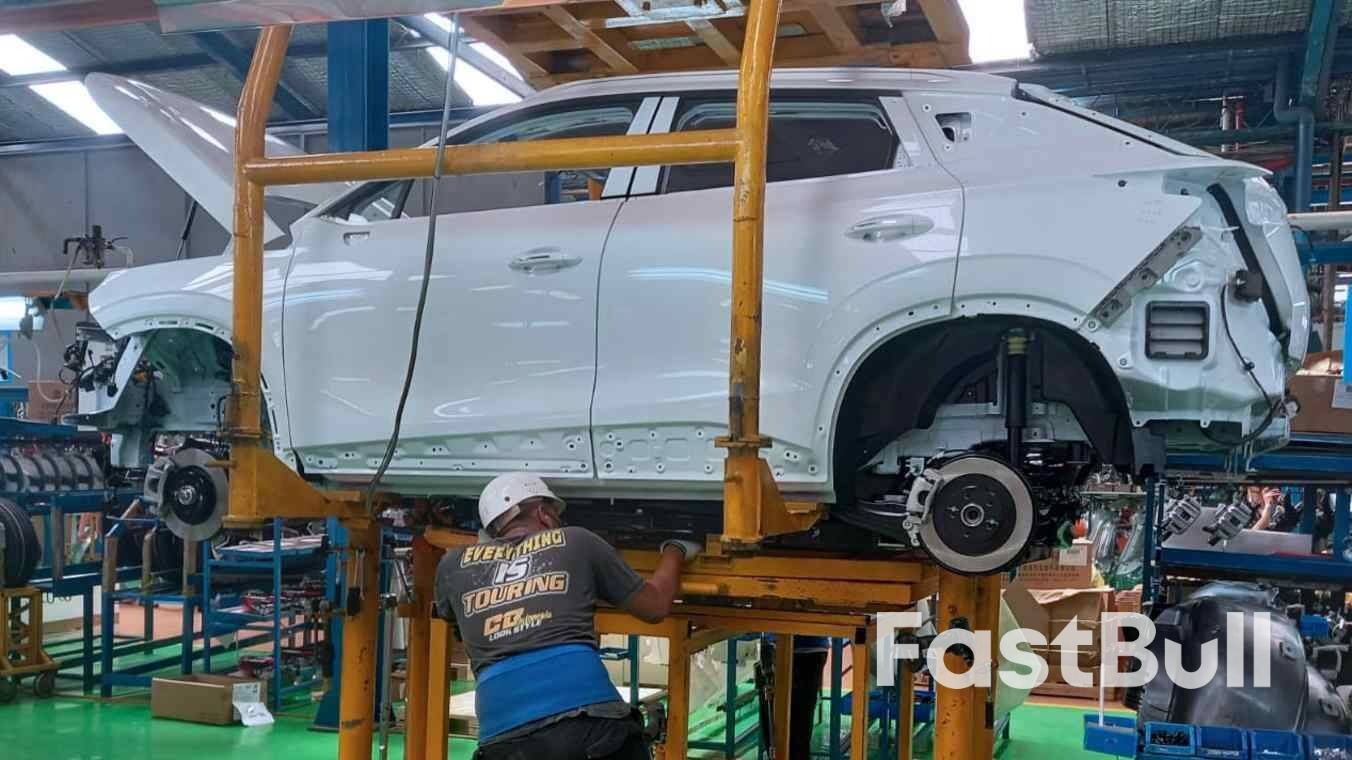
Chinese electric vehicle maker Xpeng said Monday it will start producing vehicles in Malaysia in 2026 in partnership with EP Manufacturing Berhad (EPMB), shifting from an export-led model to a focus on localized production.
Based on the semi-knocked down (SKD) production model, the Guangzhou-headquartered EV maker's partially assembled vehicles will be completed at EPMB's facility in Malacca, about 110 kilometers south of Kuala Lumpur.
The company did not disclose the specific timing for the production, nor did it announce any manufacturing targets.
The partnership marks Xpeng's third localization push abroad, following its collaborations with Magna Steyr in Austria and Handal Indonesia Motor in Indonesia, both also using the SKD model.
"Establishing a local production project in Malaysia is a significant milestone in Xpeng's global strategy and underscores our long-term commitment to the ASEAN region," said James Wu, vice president at Xpeng.
Xpeng said the Malaysian venture reflects its shift from vehicle exports to localized production, and will also help serve the region's right-hand drive market. The company's cars are currently imported and distributed by Bermaz Auto, a key shareholder of EPMB.
Besides Malaysia, Southeast Asian countries with right-hand drive vehicles include Brunei, Indonesia, Thailand and Singapore.
Chinese automakers, including Xpeng, have been reshaping the EV landscape in Southeast Asia, leveraging their price competitiveness, advanced in-car features and strategic partnerships to accelerate localization. Chinese brands now account for more than half of the ASEAN EV market, particularly in Thailand and Indonesia, through names such as BYD, Chery and MG.
Backed by various incentives offered by local governments transitioning to clean energy, their presence has eroded the longstanding dominance of Japanese automakers, whose cautious approach to electrification has left gaps in the market.

Xpeng's partnership strategy in Malaysia appears aimed at capitalizing on the country's excise-duty exemption for locally assembled EVs, as the tax break for fully imported EVs will be scrapped by the end of 2025. Local production will also help optimize supply-chain costs and improve operational efficiency, the company said, allowing it to tap its local partner's "mature manufacturing experience and market insights."
"Together, we are committed to delivering high-quality, intelligent EVs to Malaysian consumers and supporting the nation's sustainable industrial ambitions," said Hamidon Abdullah, founder and executive chairman of EPMB, an original equipment manufacturer.
Malaysia, which aims for EVs to account for 20% of total industry volume by 2030, topped unit sales in Southeast Asia in the first 10 months of the year with 655,328 vehicles, according to automotive research firm MarkLines.
Prior to its partnership with Xpeng, EPMB had struck similar deals with Chinese state-owned automakers SAIC Motor and BAIC Motor, as well as Great Wall Motor. The Kuala Lumpur-listed company also supplies parts to other Malaysia-based automakers, including Proton, Perodua, Honda and Mazda.
In a stock market filing on Monday, EPMB said it will begin assembling the Xpeng G6, a sedan, by March 31, and the X9, a multipurpose vehicle, by May 25.
Xpeng, which currently offers four types of premium vehicles, delivered 391,937 vehicles in the first 11 months of the year, up 156% from the same period in 2024. Over the same time frame, its overseas deliveries reached 39,800 vehicles, a 95% increase from a year earlier, supported by a sales and service network that spans 52 countries and regions.
Heading into 2025's last full trading week, the focus will likely be the incoming government data on the economy, which had been delayed by the federal shutdown.
While investors and Federal Reserve officials are hungry for an update, the shutdown did more than delay the reports; it muddied the actual data collection. Fed Chair Jerome Powell cautioned against reading too much into the reports, saying "we're going to get data, but we're going to have to look at it carefully and with a somewhat skeptical eye" until the year-end data comes out in January. Still, the jobs report will likely provide a sense of direction, and as Sarah Hansen writes, the news isn't likely to be good for the economy.
Just two days after the jobs report, we'll get the November Consumer Price Index, and that data is also not likely to be friendly. Forecasts call for inflation to tick higher above 3%, both overall and excluding food and energy. That's well above the Fed's 2% target. Also due are reports on retail sales and the Fed's favored inflation indicator, the Personal Consumption Expenditures Price Index. Our weekly economic calendar can be found here.
All this is happening while divisions grow at the Fed. For now at least, only one interest rate cut is penciled in for 2026. But expectations can (and likely will) change as the economic picture becomes clearer.
Last week brought losses for artificial-intelligence-related stocks after shoddy earnings, as well as a slight boost in small-cap names. Two of the stocks that had been leaders in the AI tech rally—Oracle ORCL and Broadcomm AVGO—got battered after their latest earnings reports.
In mid-September, Oracle looked unstoppable, having nearly doubled in 2025. This included a 36% one-day jump on news that the firm had added $317 billion in performance obligations (revenue from contracts that have been signed but not yet fulfilled). Things soured when it was revealed that $300 billion of that came from a deal with ChatGPT creator OpenAI, which is reported to generate less than $20 billion in revenue per year. By the time Oracle reported earnings last Wednesday, its stock had lost a third of its value since Sept. 10. It had become a poster child for investor concerns about overinvestment and unsustainable borrowing to fund AI spending.
The company's earnings report only made things worse, as reported revenue and operating income fell short of expectations, while management said it would be spending more on its data center buildout. Oracle lost another 10% on Thursday and 6% on Friday, wiping out more than its entire September rally. Morningstar equity analyst Luke Yang lowered the stock's fair value estimate to $286 from $340, and he now thinks it is undervalued.
Investors also found Broadcom's earnings lacking. Even as the company posted record revenues, the focus appeared to be on its commentary that its now-booming AI-chip business has lower margins than non-AI products. The stock, which had weathered the slump suffered elsewhere in the tech sector in recent weeks, tumbled 11% on Friday. Morningstar senior equity analyst William Kerwin urges investors to buy the dip: "Broadcom's AI chip business is accelerating, and we see even greater astronomic growth ahead ... investors now have a terrific opportunity to buy into an AI winner."
While tech stocks took losses last week, the on-again/off-again rotation to small caps was back on. Small-cap value stocks rose nearly 2.0%, and mid value stocks were up 1.7%. Commentators attributed some of the bounce to market expectations of more interest rate cuts next year, which is challenging to square with conflicting guidance from the Fed. But with large-cap stocks up 20% this year, ahead of the 15% gain on small-company stocks, it's possible it's just a reflection of repositioning more than anything fundamental.
Bank of Japan officials are likely to start selling the central bank's pile of exchange-traded funds as early as next month, according to people familiar with the matter, a process expected to take decades to complete.
The bank will offload the assets little by little to avoid roiling markets as was decided at a September policy board meeting, the people said. The holdings had a market value of ¥83 trillion ($534 billion) at the end of September and a book value of ¥37.1 trillion, according to the central bank.
The September decision set out plans to sell the ETFs at a pace of ¥330 billion per year based on book value. A simple calculation indicates the process will take around 112 years if that pace remains unchanged.
The BOJ wants to make the market response of the sales almost unnoticeable like it did for the sales of stocks brought from beleaguered banks in 2000s, the people said. The selling of those stocks was completed in July after about a decade of offloading that didn't disrupt financial markets.
With Japan's stock market rising sharply over the last couple of years, the market value of the assets has surged.
The central bank expects to keep a steady pace of monthly sales, according to the people. There is no change in their stance of minimizing disruption in the market, they added. Still, the bank may stop selling the ETFs if there is an event similar to the Global Financial Crisis in 2008, the people said.
Sumitomo Mitsui Trust Bank won an auction to be the conductor of the sales, the central bank reported earlier this month.
Key points:
China's foreign minister has pressed the Gulf Cooperation Council to conclude long-running talks on a free trade agreement with China, attributing the urgency to rising protectionism and unilateralism as free trade comes "under attack", according to a Monday statement from the ministry.
Chinese Foreign Minister Wang Yi is on a three-nation tour in the Middle East that began in the United Arab Emirates and is expected to end in Jordan. He met GCC Secretary-General Jasem Mohamed Albudaiwi in Riyadh on Sunday, when he also met top Saudi officials separately.
"The talks have lasted for more than 20 years, and conditions for all aspects are basically mature, it is time to make a final decision," he said during a meeting with Albudaiwi, according to the Chinese foreign ministry.
A successful FTA will send a "strong signal to the world about defending multilateralism," Wang said, adding that China was supportive of the bloc strengthening its strategic autonomy and coordination, and advancing its integration process.
China has interests in deepening cooperation in economy, trade, investment and other fields with the GCC as well, Wang said.
China and Saudi Arabia agreed to closer communication and coordination on regional and international issues, with Beijing lauding Riyadh's role in Middle East diplomacy and security, other statements following a meeting between the nations' foreign ministers showed.
Wang's meeting with Saudi Arabia's Foreign Minister Prince Faisal bin Farhan Al-Saud also took place on Sunday in the Saudi capital.
A joint statement published by China's official news agency Xinhua did not elaborate on the issues where the two countries would strengthen coordination, but mentioned China's support for Saudi Arabia and Iran enhancing their relations as well as support from both sides for the "comprehensive and just settlement" of the Palestinian issue.
"(China) appreciates Saudi Arabia's leading role and efforts to achieve regional and international security and stability," said the statement released on Monday.
Wang told his Saudi counterpart that China regarded Saudi Arabia as a "priority for Middle East diplomacy" and an important partner in global diplomacy, a Chinese foreign ministry statement on Monday said.
He also encouraged more cooperation in energy and investments, as well as in the fields of new energy and green transformation.
In a separate meeting with Saudi Crown Prince Mohammed bin Salman, Wang underscored China's readiness to play a part as the "most reliable partner" in the Middle Eastern country's revitalisation, as well as "inject more stabilising factors" to realise peace and security in the region, another foreign ministry statement showed.
The countries have agreed to mutually exempt visas for diplomatic and special passport holders from both sides, according to the joint statement.
White Label
Data API
Web Plug-ins
Poster Maker
Affiliate Program
The risk of loss in trading financial instruments such as stocks, FX, commodities, futures, bonds, ETFs and crypto can be substantial. You may sustain a total loss of the funds that you deposit with your broker. Therefore, you should carefully consider whether such trading is suitable for you in light of your circumstances and financial resources.
No decision to invest should be made without thoroughly conducting due diligence by yourself or consulting with your financial advisors. Our web content might not suit you since we don't know your financial conditions and investment needs. Our financial information might have latency or contain inaccuracy, so you should be fully responsible for any of your trading and investment decisions. The company will not be responsible for your capital loss.
Without getting permission from the website, you are not allowed to copy the website's graphics, texts, or trademarks. Intellectual property rights in the content or data incorporated into this website belong to its providers and exchange merchants.
Not Logged In
Log in to access more features

FastBull Membership
Not yet
Purchase
Log In
Sign Up