Markets
News
Analysis
User
24/7
Economic Calendar
Education
Data
- Names
- Latest
- Prev



Signal Accounts for Members
All Signal Accounts
All Contests


France 10-Year OAT Auction Avg. YieldA:--
F: --
P: --
Euro Zone Retail Sales YoY (Oct)A:--
F: --
P: --
Brazil GDP YoY (Q3)A:--
F: --
P: --
U.S. Challenger Job Cuts (Nov)A:--
F: --
P: --
U.S. Challenger Job Cuts MoM (Nov)A:--
F: --
P: --
U.S. Challenger Job Cuts YoY (Nov)A:--
F: --
P: --
U.S. Initial Jobless Claims 4-Week Avg. (SA)A:--
F: --
P: --
U.S. Weekly Initial Jobless Claims (SA)A:--
F: --
P: --
U.S. Weekly Continued Jobless Claims (SA)A:--
F: --
P: --
Canada Ivey PMI (SA) (Nov)A:--
F: --
P: --
Canada Ivey PMI (Not SA) (Nov)A:--
F: --
P: --
U.S. Non-Defense Capital Durable Goods Orders Revised MoM (Excl. Aircraft) (SA) (Sept)A:--
F: --
U.S. Factory Orders MoM (Excl. Transport) (Sept)A:--
F: --
P: --
U.S. Factory Orders MoM (Sept)A:--
F: --
P: --
U.S. Factory Orders MoM (Excl. Defense) (Sept)A:--
F: --
P: --
U.S. EIA Weekly Natural Gas Stocks ChangeA:--
F: --
P: --
Saudi Arabia Crude Oil ProductionA:--
F: --
P: --
U.S. Weekly Treasuries Held by Foreign Central BanksA:--
F: --
P: --
Japan Foreign Exchange Reserves (Nov)A:--
F: --
P: --
India Repo RateA:--
F: --
P: --
India Benchmark Interest RateA:--
F: --
P: --
India Reverse Repo RateA:--
F: --
P: --
India Cash Reserve RatioA:--
F: --
P: --
Japan Leading Indicators Prelim (Oct)A:--
F: --
P: --
U.K. Halifax House Price Index YoY (SA) (Nov)A:--
F: --
P: --
U.K. Halifax House Price Index MoM (SA) (Nov)A:--
F: --
P: --
France Current Account (Not SA) (Oct)A:--
F: --
P: --
France Trade Balance (SA) (Oct)A:--
F: --
P: --
France Industrial Output MoM (SA) (Oct)A:--
F: --
P: --
Italy Retail Sales MoM (SA) (Oct)A:--
F: --
P: --
Euro Zone Employment YoY (SA) (Q3)--
F: --
P: --
Euro Zone GDP Final YoY (Q3)--
F: --
P: --
Euro Zone GDP Final QoQ (Q3)--
F: --
P: --
Euro Zone Employment Final QoQ (SA) (Q3)--
F: --
P: --
Euro Zone Employment Final (SA) (Q3)--
F: --
Brazil PPI MoM (Oct)--
F: --
P: --
Mexico Consumer Confidence Index (Nov)--
F: --
P: --
Canada Unemployment Rate (SA) (Nov)--
F: --
P: --
Canada Labor Force Participation Rate (SA) (Nov)--
F: --
P: --
Canada Employment (SA) (Nov)--
F: --
P: --
Canada Part-Time Employment (SA) (Nov)--
F: --
P: --
Canada Full-time Employment (SA) (Nov)--
F: --
P: --
U.S. Personal Income MoM (Sept)--
F: --
P: --
U.S. Dallas Fed PCE Price Index YoY (Sept)--
F: --
P: --
U.S. PCE Price Index YoY (SA) (Sept)--
F: --
P: --
U.S. PCE Price Index MoM (Sept)--
F: --
P: --
U.S. Personal Outlays MoM (SA) (Sept)--
F: --
P: --
U.S. Core PCE Price Index MoM (Sept)--
F: --
P: --
U.S. UMich 5-Year-Ahead Inflation Expectations Prelim YoY (Dec)--
F: --
P: --
U.S. Core PCE Price Index YoY (Sept)--
F: --
P: --
U.S. Real Personal Consumption Expenditures MoM (Sept)--
F: --
P: --
U.S. 5-10 Year-Ahead Inflation Expectations (Dec)--
F: --
P: --
U.S. UMich Current Economic Conditions Index Prelim (Dec)--
F: --
P: --
U.S. UMich Consumer Sentiment Index Prelim (Dec)--
F: --
P: --
U.S. UMich 1-Year-Ahead Inflation Expectations Prelim (Dec)--
F: --
P: --
U.S. UMich Consumer Expectations Index Prelim (Dec)--
F: --
P: --
U.S. Weekly Total Rig Count--
F: --
P: --
U.S. Weekly Total Oil Rig Count--
F: --
P: --
U.S. Consumer Credit (SA) (Oct)--
F: --
P: --
China, Mainland Foreign Exchange Reserves (Nov)--
F: --
P: --


No matching data
Latest Views
Latest Views
Trending Topics
Top Columnists
Latest Update
White Label
Data API
Web Plug-ins
Affiliate Program
View All

No data
Private equity activity has been sluggish since mid-2022 – demanding caution on the part of investors. But green shoots of recovery and a pick-up in investment deal-making could signal a turning point.


The “sandwich generation” refers to individuals who simultaneously care for their ageing parents while supporting their own children. This demographic trend is becoming increasingly prevalent in Malaysia because of the ageing population, rising life expectancy and strong cultural expectations that children will care for their elderly parents. As the proportion of senior citizens grows, the responsibilities of the sandwich generation will intensify, placing substantial economic and emotional pressure on working adults.
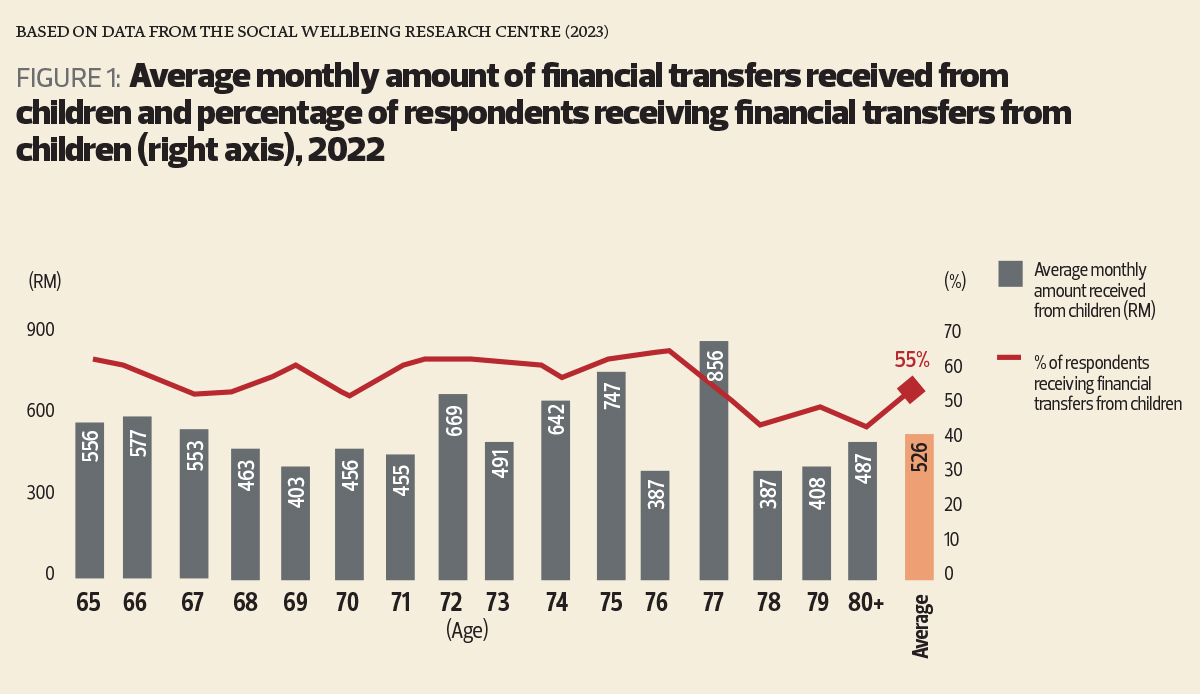
Malaysia’s healthcare and social security systems have proved inadequate in providing comprehensive support for the elderly. As a result, many elderly Malaysians rely heavily on financial assistance from their children. According to the Malaysia Ageing and Retirement Survey (MARS) by the Social Wellbeing Research Centre (SWRC) at Universiti Malaya, more than half of the elderly respondents (55%) depend on financial transfers from their children, averaging RM526 a month .
This dependency highlights the inadequacies of old-age income arrangements such as the Employees Provident Fund, which often fall short in covering basic living expenses and medical costs for older adults. The MARS data shows that only 5.1% of senior citizens have EPF savings to last beyond the age of 65, exacerbating the financial burden on their children.
The dual role of supporting both ageing parents and dependent children places significant financial strain on the sandwich generation. Balancing the costs of their children’s education with the medical and living expenses of their elderly parents is a daunting challenge. MARS data shows that in 2022, individuals aged 40 to 50 allocated an average of RM234 to their parents, representing 7.4% of the average monthly income for the same year. This burden is further compounded by the rising cost of living in Malaysia. The past decade has seen significant increases in the cost of essential goods and services (cumulative increase of 30.8% since 2010), forcing many middle-aged individuals to prioritise the needs of their immediate family over long-term savings and investments. For instance, the national housing affordability index indicates that housing prices are beyond the reach of the average Malaysian household, with a median multiple of 4.7 times the median annual household income, exceeding the internationally accepted affordability threshold of 3.0 times. This situation forces many sandwich-generation families to allocate a substantial portion of their income to housing expenses, further reducing their capacity to support both their children and ageing parents.
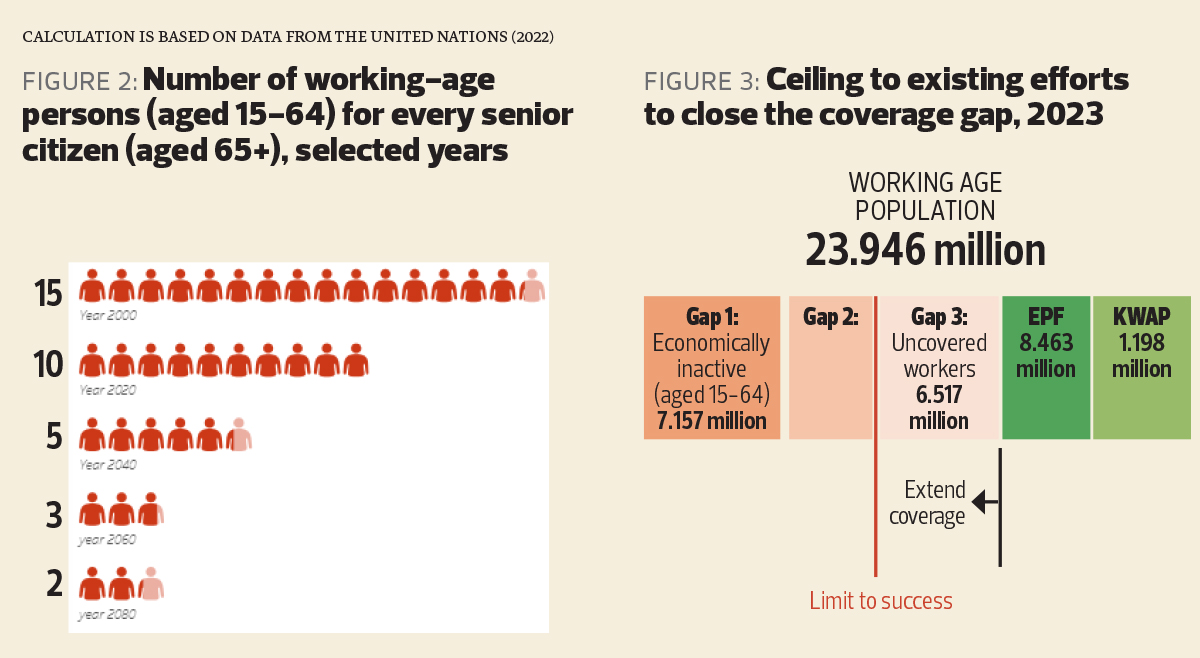
Malaysia’s demographic landscape is undergoing profound changes, with significant implications for economic development, social security and healthcare. The number of working-age persons to support one senior citizen has declined from 15:1 in 2000 to 10:1 in 2020, and is projected to decrease further to 3:1 by 2060. This shift places immense pressure on working-age adults to support senior citizens, especially in the absence of comprehensive public income security for seniors.
The Malaysian labour market also faces challenges that exacerbate the pressures on the sandwich generation. One of the most significant issues is the high incidence of low pay, defined as the percentage of the workforce earning less than two-thirds of the median wage. In Malaysia, over 30% of the workforce falls into this category, more than double the Organisation for Economic Co-operation and Development’s 14% low-pay incidence rate. This low-wage structure is coupled with wage disparities along geographical, educational and skill lines. Added to this, the female labour force participation rate, at 55.8% in 2022, is significantly lower than the male participation rate of 81.9%. These disparities contribute to inadequate old-age protection, particularly for vulnerable groups such as women, self-employed workers and low-wage earners.
Malaysia’s reliance on an insurance model based on labour market participation and income level, with limited government intervention, results in lower coverage rates and inadequate benefits for most Malaysians. This situation places significant pressure on the sandwich generation to provide for their ageing parents.
In 2023, 13.735 million working-age individuals, or 57.36% of the population, were not covered by either EPF or Retirement Fund (Inc) (KWAP). These coverage gaps leave many individuals vulnerable to old-age poverty, disproportionately affecting senior citizens.
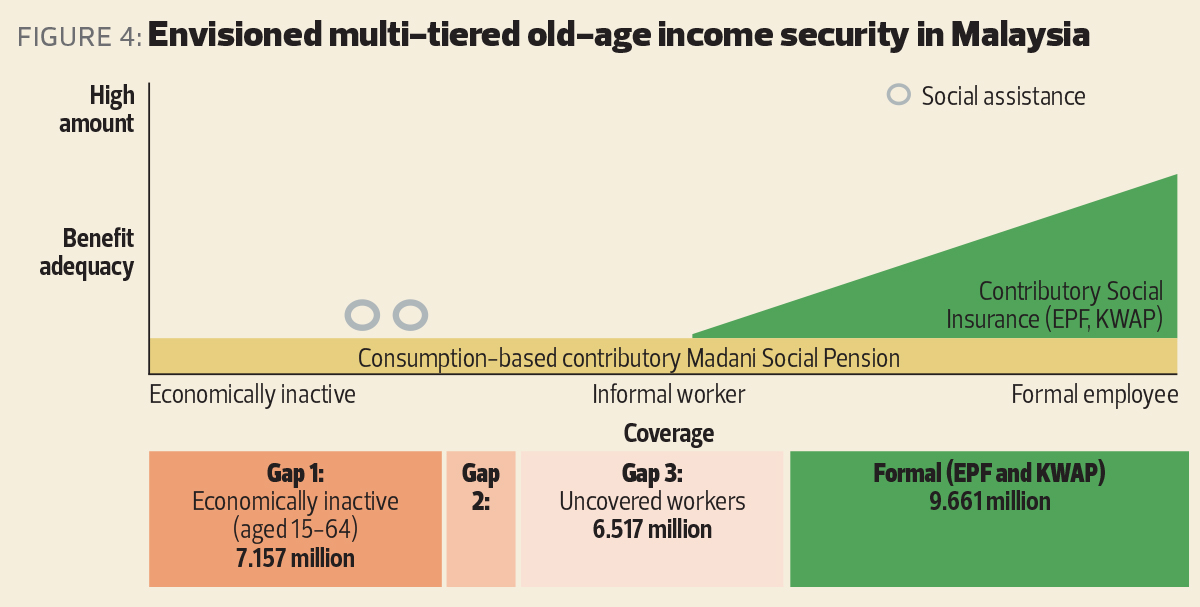
Closing the coverage gap, therefore, is essential to alleviating the financial strain on the sandwich generation. Effective policy formulation requires a detailed examination of the various segments within the working-age population, acknowledging the specific factors contributing to each gap. For example, EPF’s initiatives, such as i-Saraan, aim to extend coverage to the informal sector and gig economy but fall short in addressing gap 2 (unemployed individuals) and gap 1 (those not in the labour market, particularly women with family responsibilities). These groups risk reaching retirement age without sufficient accumulated savings for old-age income security, leaving them vulnerable to poverty in their senior years and dependent on their children for support. Addressing these gaps comprehensively is crucial for ensuring equitable old-age security across all segments of society.
Pension adequacy is another significant weakness in Malaysia’s current system. EPF statistics show that more than one-third of contributors withdraw their retirement savings as a lump sum at retirement, currently set at age 55. However, the median savings amount at age 54 is only RM44,025, equivalent to just nine months of per capita income as at 2023. This median savings obscures the fact that female members have a median savings of only RM29,975 compared to RM63,351 for male members, highlighting the compounded financial vulnerability faced by women in retirement.
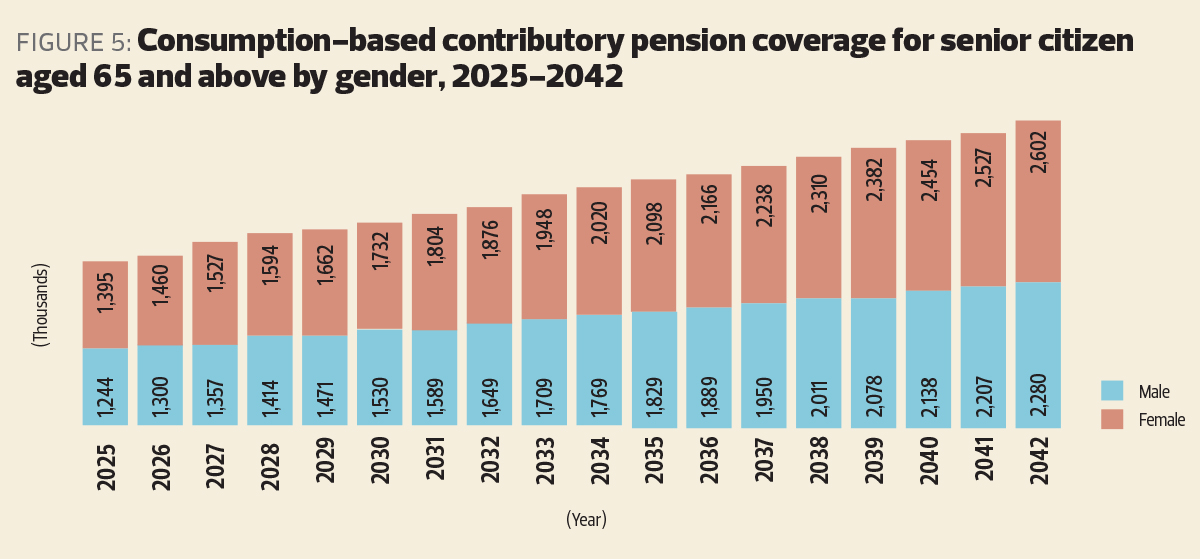
Given the pressing challenges faced by the sandwich generation, the introduction of a consumption-based contributory pension (CBCP) offers a sustainable and equitable solution. Unlike traditional pension schemes that rely on direct payments from labour income, CBCP introduces a 2% contribution linked directly to consumption, harnessing the economic activity of all residents, regardless of employment status. By extending coverage to all senior citizens, including those without employment records, CBCP would particularly benefit women and individuals in unstable forms of employment who are currently excluded from old-age income security.
CBCP offers a distinct advantage by directly linking contributions to a tangible social benefit — a flat-rate pension of RM700 a month for senior citizens. This direct connection could make CBCP more palatable to the public, positioning it as a progressive policy that not only addresses old-age income security but also alleviates the financial pressures on the sandwich generation.
Integrating a flat CBCP as a foundational pillar within Malaysia’s pension system would provide a vital complement to existing earnings-related tiers, such as EPF. This strategic approach would significantly broaden the pension system’s reach, encompassing informal and self-employed workers who are often left out of traditional pension schemes, as well as individuals outside the labour force. By ensuring that all senior citizens, regardless of their labour force participation, have access to a guaranteed minimum level of income security, this integration would create a more inclusive and equitable pension framework, addressing critical gaps and enhancing overall social protection.
By coordinating CBCP with existing old-age income security measures and emphasising synergies, the integrated system can effectively reduce inequality and enhance economic security for the elderly population. This approach also maintains incentives for saving in higher level protection, such as EPF and private sector saving, and labour market participation within Malaysia’s overall fiscal framework.
The proposed CBCP, providing RM700 per month to senior citizens aged 65 and above, would correct the discriminatory labour market, benefiting women more than men, as they tend to live longer.
The overall cost of CBCP is projected to range from 1.019% to 1.063% of gross domestic product by 2045, with a 2% consumption-based contribution generating sufficient revenue (1.08% of GDP annually) to cover these costs.
Social pensions have significantly reduced old-age poverty and influenced political outcomes in various countries, often benefiting ruling parties electorally. However, implementing a consumption-based contribution in Malaysia faces political challenges, particularly because of past negative experience with consumption-based taxes such as the Goods and Services Tax. Introduced in 2015, GST was unpopular for its regressive impact, leading to its repeal in 2018.
Despite these concerns, CBCP could be politically viable because, unlike GST, it directly links a 2% consumption contribution to a flat-rate benefit of RM700 for senior citizens. This connection between contributions and social benefits may make CBCP more acceptable to the public, as it supports the elderly, especially those financially dependent on their children.
To further ease CBCP’s implementation, we suggest reducing workers’ EPF contributions by 2%, which would lead to an increase in real wage and offset the impact of the new contribution.
Evidence from other countries shows that well-designed social pensions can garner significant public support and become a political asset for governments. For example, the universal old-age pension introduced in Lesotho in 2004 helped the government win subsequent elections, while Peru’s “Pensión 65” programme, launched in 2011, significantly boosted electoral success. Similar evidence was seen in Georgia, Kenya, Bolivia, Brazil and Mauritius. These examples demonstrate the strong appeal of social pensions to the electorate, particularly the sandwich generation.
The introduction of CBCP in Malaysia offers a viable solution to the financial and emotional pressures faced by the sandwich generation. By extending coverage to all senior citizens, particularly those excluded from traditional pension schemes, CBCP would alleviate the burden on working adults while providing a more inclusive and sustainable social protection system. CBCP represents a forward-thinking policy that addresses the challenges of an ageing population and strengthens the fabric of Malaysian society.

The European car industry is facing challenging times in keeping up with the historic transition to electric vehicles, while competition from new entrants like BYD mounts. It's fair to say that short-term interests are heavily influencing the course.
You can perhaps see that in the latest news from Volvo. It announced on Thursday that it's U-turned on its heavily promoted targets to produce only electric vehicles by 2030 as demand slows.
The shift to EVs is a non-linear journey with many uncertainties, as we have seen over the last couple of years. But it’s increasingly putting European carmakers under pressure while total new car sales fail to return to pre-pandemic levels in their home markets. Volkswagen’s CEO, Oliver Blume, sees the competitive environment becoming tougher and emphasises the importance of focusing on production costs and competitiveness as the group's global market share has started to erode with the uptake of EVs.
At the same time, Volkswagen, as well as several other European carmakers, including Ford and Mercedes, have announced plans to push back earlier targets to phase out sales of internal combustion engines (ICE-)vehicles in Europe. This is remarkable, so what’s going on? Well, there are a number of considerations behind this:
Due to production costs and severe competition, margins on BEVs are still poor and much lower than on plug-in hybrids, PHEVs, conventional hybrids HEVs or petrol cars. Pushing too hard would hurt profitability in the short run.
Demand for EVs is currently stagnating in Europe as middle-class drivers are hesitant to make the shift, and lease and rental companies struggle with low residual values.
The European EV supply chain still needs time to develop, while lower lithium-ion battery prices, and Chinese levels dropping below $100 per kWh challenging new local facilities. Meanwhile, carmakers still depend on China, which entails risks.
Carmakers made their ICE phase-out pledges prior to the final decision by the European Union and UK to enforce 2035 as the deadline to make the shift. This gave manufacturers more spare time compared to the initial proposal (2030).
Carmakers also seek flexibility in the current uncertain (fiscal support and trade) policy environment, with government changes potentially having a significant impact.
Share of electric vehicles (BEV*) in total new car registrations per region

Amid all the short-term interests and uncertainties, carmakers realise they can't afford to miss out on EVs, and the direction of travel remains clear. The EU is not expected to soften its CO2 targets for production either. This means EV investment programmes and new model development still require speed.
The decision to temporise the shift is very much intended to maintain profitability and preserve flexibility in a highly uncertain environment. Western EV sales are slowing for several reasons, but this is a temporary development. The direction of travel has not changed, and investments in the makeover of product portfolios still need to continue to secure long-term positions in the market over the next decade.


Donald Trump’s crypto project World Liberty Financial will launch on Monday, Sept. 16, former President and Republican presidential bidder announced.
In a Sept. 12 video posted to X, Trump said he would be going live on the platform on Monday to launch the project controlled by his sons, Donald Jr. and Eric Trump.
“We’re embracing the future with crypto and leaving the slow and outdated big banks behind,” he said.
Trump has previously made several cryptic posts concerning World Liberty Financial, vaguely positioning it as a decentralized finance (DeFi) platform for borrowing and lending.
A reported white paper said the project will allow users to store money in a digital wallet, offer a credit account system, borrow or lend cash to others, and use tokens to invest in assets like crypto.
A nontransferable governance token has also been mentioned as part of the platform.
Statements from World Liberty Financial have also suggested it wants to spread the use of United States dollar-pegged stablecoins in DeFi.
Along with bullish comments about stablecoins, the project has teased a partnership and collaboration with DeFi protocol Aave, possibly indicating World Liberty Financial will be built on the Ethereum blockchain.
Trump has secured strong support within the crypto community since promising to support the industry if again elected president in November.
He’s pledged clearer regulations and said he’d fire Securities and Exchange Commission chair Gary Gensler, who has undertaken enforcement actions against multiple large crypto firms.
Sentiment around World Liberty Financial has been mixed, with some questioning Trump’s decision to launch the project while also running for president, with World Liberty Financial set to go live 50 days out from the election.
Nic Carter, a Trump supporter and Castle Island Ventures partner, told Politico on Sept. 6 that the project was a “huge mistake.”
“It looks like Trump’s inner circle is just cashing in on his recent embrace of crypto in a kind of naive way,” he said. “Frankly it looks like they’re burning a lot of the goodwill that’s been built with the industry so far.”
Those linked to the venture have faced an onslaught from hackers and scammers.
Scammers also managed to hack Donald’s daughter-in-law Lara and his daughter Tiffany Trump’s X accounts on Sept. 4, posting sham links claiming to be connected to World Liberty Financial.
On Aug. 30, the official World Liberty Financial Telegram group had to denounce a series of fake ads and giveaways attempting to profit from hype around the project.
While Aug. 8, Eric Trump had to clarify that a Restore the Republic (RTR) memecoin was not affiliated with World Liberty Financial after it surged $155 million within hours of its debut.
Russia’s communications watchdog Roskomnadzor plans to spend 59 billion rubles (RM2.8 billion) over the next five years to upgrade its internet traffic-filtering capabilities, the Russian edition of Forbes reported on Tuesday.
The money will be used to upgrade hardware used to filter internet traffic, as well as block or slow down certain resources, Forbes reported, citing documents.
Russia passed a law in 2019 to enable the country to cut itself off entirely from the internet, in what it calls a campaign to maintain its digital sovereignty. Following the full-scale invasion of Ukraine, the Kremlin forced out several foreign social media and internet companies, although many services remain accessible via virtual private networks, or VPNs.
The system upgrades will allow Russian authorities to better restrict access to VPNs, according to the document.
New equipment has been purchased yearly since 2020 as traffic volumes grow, Roskomnadzor’s press service said, according to Forbes.
The Biden administration recently hosted representatives of several major tech companies, including Amazon.com Inc, Alphabet Inc’s Google and Microsoft Corp, to discuss government-funded internet censorship evasion tools, Reuters reported last week.
White Label
Data API
Web Plug-ins
Poster Maker
Affiliate Program
The risk of loss in trading financial instruments such as stocks, FX, commodities, futures, bonds, ETFs and crypto can be substantial. You may sustain a total loss of the funds that you deposit with your broker. Therefore, you should carefully consider whether such trading is suitable for you in light of your circumstances and financial resources.
No decision to invest should be made without thoroughly conducting due diligence by yourself or consulting with your financial advisors. Our web content might not suit you since we don't know your financial conditions and investment needs. Our financial information might have latency or contain inaccuracy, so you should be fully responsible for any of your trading and investment decisions. The company will not be responsible for your capital loss.
Without getting permission from the website, you are not allowed to copy the website's graphics, texts, or trademarks. Intellectual property rights in the content or data incorporated into this website belong to its providers and exchange merchants.
Not Logged In
Log in to access more features

FastBull Membership
Not yet
Purchase
Log In
Sign Up