• Trade
  • Markets
  • Copy
  • Contests
  • News
  • 24/7
  • Calendar
  • Q&A
  • Chats
Trending
Screeners
SYMBOL
LAST
BID
ASK
HIGH
LOW
NET CHG.
%CHG.
SPREAD
SPX
S&P 500 Index
6827.42
6827.42
6827.42
6899.86
6801.80
-73.58
-1.07%
--
DJI
Dow Jones Industrial Average
48458.04
48458.04
48458.04
48886.86
48334.10
-245.98
-0.51%
--
IXIC
NASDAQ Composite Index
23195.16
23195.16
23195.16
23554.89
23094.51
-398.69
-1.69%
--
USDX
US Dollar Index
97.980
98.060
97.980
98.020
97.980
+0.030
+ 0.03%
--
EURUSD
Euro / US Dollar
1.17398
1.17407
1.17398
1.17402
1.17285
+0.00004
0.00%
--
GBPUSD
Pound Sterling / US Dollar
1.33682
1.33696
1.33682
1.33732
1.33580
-0.00025
-0.02%
--
XAUUSD
Gold / US Dollar
4302.74
4303.18
4302.74
4307.76
4294.68
+3.35
+ 0.08%
--
WTI
Light Sweet Crude Oil
57.381
57.418
57.381
57.386
57.194
+0.148
+ 0.26%
--

Community Accounts

Signal Accounts
--
Profit Accounts
--
Loss Accounts
--
View More

Become a signal provider

Sell trading signals to earn additional income

View More

Guide to Copy Trading

Get started with ease and confidence

View More

Signal Accounts for Members

All Signal Accounts

Best Return
  • Best Return
  • Best P/L
  • Best MDD
Past 1W
  • Past 1W
  • Past 1M
  • Past 1Y

All Contests

  • All
  • Trump Updates
  • Recommend
  • Stocks
  • Cryptocurrencies
  • Central Banks
  • Featured News
Top News Only
Share

Australia's S&P/ASX 200 Index Down 0.6% At 8647.60 Points In Early Trade

Share

Nomura CEO: Aim To Develop Japanese Direct Lending Market

Share

Nomura CEO: Aim To Bring Private Debt Know-How From Overseas

Share

HSBC - Scheme Consideration Refers To Proposal For Privatisation Of Hang Seng Bank

Share

[Report: SpaceX Launches Bake-Off Process To Select Underwriters For Potential IPO] According To Sources Familiar With The Matter, SpaceX Executives Have Initiated A Process To Select Wall Street Investment Banks To Advise The Company On Its Initial Public Offering (IPO). Several Investment Banks Are Scheduled To Submit Their First Round Of Proposals This Week, A Process Known As "bake-off," Which Represents The Most Concrete Step The Rocket Maker Has Taken Towards A Potentially "blockbuster IPO," According To The Sources

Share

RBNZ: ASB Has Co-Operated With The Reserve Bank And Has Admitted Liability For All Seven Causes Of Action

Share

RBNZ: Court Proceedings For Breaches Of Core Requirements Under Anti-Money Laundering And Countering Financing Of Terrorism Act From At Least December 2019

Share

Jose Antonio Kast Leads Chile Presidential Election's Runoff Vote With 4.46% Of Ballots Counted: Official Count

Share

Mayor: Russian Air Defence Units Destroy Drone Heading For Moscow

Share

Australia's ASIC - ASIC And Reserve Bank Of Australia Will Step Up Their Review To Uplift Their Joint Supervisory Model

Share

US Envoy Witkoff Says A Lot Of Progress Was Made At Berlin Talks On Russia/Ukraine War

Share

Syria's President Sharaa Sends Condolences To Trump Over Killing Of USA Soldiers In Syria - Syrian Presidency

Share

ECOWAS Commission President: ECOWAS Rejects Guinea-Bissau Junta Transition Plan, Demands Return To Constitutional Order

Share

On Sunday (December 14), The Bangladesh DSE Broad Index Closed Down 0.62% At 4932.97 Points

Share

US President Trump: A New Federal Reserve Chairman Will Be Chosen Soon

Share

US President Trump: Inflation Is “completely Offset” And You Don’t Want To See Deflation

Share

Trump: Will Be A Lot Of Damage Done To The People That Attacked Troops In Syria

Share

Trump: Terrible Attack In Bondi Beach

Share

Interior Ministry - Syria Arrests Five Suspects In Shooting Of USA And Syrian Troops In Palmyra

Share

France Says Conditions For EU Vote On MERCOSUR Deal Not Yet Met, Despite Recent Progress — Prime Minister's Office

TIME
ACT
FCST
PREV
U.K. Trade Balance (Oct)

A:--

F: --

P: --

U.K. Services Index MoM

A:--

F: --

P: --

U.K. Construction Output MoM (SA) (Oct)

A:--

F: --

P: --

U.K. Industrial Output YoY (Oct)

A:--

F: --

P: --

U.K. Trade Balance (SA) (Oct)

A:--

F: --

P: --

U.K. Trade Balance EU (SA) (Oct)

A:--

F: --

P: --

U.K. Manufacturing Output YoY (Oct)

A:--

F: --

P: --

U.K. GDP MoM (Oct)

A:--

F: --

P: --

U.K. GDP YoY (SA) (Oct)

A:--

F: --

P: --

U.K. Industrial Output MoM (Oct)

A:--

F: --

P: --

U.K. Construction Output YoY (Oct)

A:--

F: --

P: --

France HICP Final MoM (Nov)

A:--

F: --

P: --

China, Mainland Outstanding Loans Growth YoY (Nov)

A:--

F: --

P: --

China, Mainland M2 Money Supply YoY (Nov)

A:--

F: --

P: --

China, Mainland M0 Money Supply YoY (Nov)

A:--

F: --

P: --

China, Mainland M1 Money Supply YoY (Nov)

A:--

F: --

P: --

India CPI YoY (Nov)

A:--

F: --

P: --

India Deposit Gowth YoY

A:--

F: --

P: --

Brazil Services Growth YoY (Oct)

A:--

F: --

P: --

Mexico Industrial Output YoY (Oct)

A:--

F: --

P: --

Russia Trade Balance (Oct)

A:--

F: --

P: --

Philadelphia Fed President Henry Paulson delivers a speech
Canada Building Permits MoM (SA) (Oct)

A:--

F: --

P: --

Canada Wholesale Sales YoY (Oct)

A:--

F: --

P: --

Canada Wholesale Inventory MoM (Oct)

A:--

F: --

P: --

Canada Wholesale Inventory YoY (Oct)

A:--

F: --

P: --

Canada Wholesale Sales MoM (SA) (Oct)

A:--

F: --

P: --

Germany Current Account (Not SA) (Oct)

A:--

F: --

P: --

U.S. Weekly Total Rig Count

A:--

F: --

P: --

U.S. Weekly Total Oil Rig Count

A:--

F: --

P: --

Japan Tankan Large Non-Manufacturing Diffusion Index (Q4)

--

F: --

P: --

Japan Tankan Small Manufacturing Outlook Index (Q4)

--

F: --

P: --

Japan Tankan Large Non-Manufacturing Outlook Index (Q4)

--

F: --

P: --

Japan Tankan Large Manufacturing Outlook Index (Q4)

--

F: --

P: --

Japan Tankan Small Manufacturing Diffusion Index (Q4)

--

F: --

P: --

Japan Tankan Large Manufacturing Diffusion Index (Q4)

--

F: --

P: --

Japan Tankan Large-Enterprise Capital Expenditure YoY (Q4)

--

F: --

P: --

U.K. Rightmove House Price Index YoY (Dec)

--

F: --

P: --

China, Mainland Industrial Output YoY (YTD) (Nov)

--

F: --

P: --

China, Mainland Urban Area Unemployment Rate (Nov)

--

F: --

P: --

Saudi Arabia CPI YoY (Nov)

--

F: --

P: --

Euro Zone Industrial Output YoY (Oct)

--

F: --

P: --

Euro Zone Industrial Output MoM (Oct)

--

F: --

P: --

Canada Existing Home Sales MoM (Nov)

--

F: --

P: --

Euro Zone Total Reserve Assets (Nov)

--

F: --

P: --

U.K. Inflation Rate Expectations

--

F: --

P: --

Canada National Economic Confidence Index

--

F: --

P: --

Canada New Housing Starts (Nov)

--

F: --

P: --

U.S. NY Fed Manufacturing Employment Index (Dec)

--

F: --

P: --

U.S. NY Fed Manufacturing Index (Dec)

--

F: --

P: --

Canada Core CPI YoY (Nov)

--

F: --

P: --

Canada Manufacturing Unfilled Orders MoM (Oct)

--

F: --

P: --

Canada Manufacturing New Orders MoM (Oct)

--

F: --

P: --

Canada Core CPI MoM (Nov)

--

F: --

P: --

Canada Manufacturing Inventory MoM (Oct)

--

F: --

P: --

Canada CPI YoY (Nov)

--

F: --

P: --

Canada CPI MoM (Nov)

--

F: --

P: --

Canada CPI YoY (SA) (Nov)

--

F: --

P: --

Canada Core CPI MoM (SA) (Nov)

--

F: --

P: --

Canada CPI MoM (SA) (Nov)

--

F: --

P: --

Q&A with Experts
    • All
    • Chatrooms
    • Groups
    • Friends
    Connecting
    .
    .
    .
    Type here...
    Add Symbol or Code

      No matching data

      All
      Trump Updates
      Recommend
      Stocks
      Cryptocurrencies
      Central Banks
      Featured News
      • All
      • Russia-Ukraine Conflict
      • Middle East Flashpoint
      • All
      • Russia-Ukraine Conflict
      • Middle East Flashpoint
      Search
      Products

      Charts Free Forever

      Chats Q&A with Experts
      Screeners Economic Calendar Data Tools
      Membership Features
      Data Warehouse Market Trends Institutional Data Policy Rates Macro

      Market Trends

      Market Sentiment Order Book Forex Correlations

      Top Indicators

      Charts Free Forever
      Markets

      News

      News Analysis 24/7 Columns Education
      From Institutions From Analysts
      Topics Columnists

      Latest Views

      Latest Views

      Trending Topics

      Top Columnists

      Latest Update

      Signals

      Copy Rankings Latest Signals Become a signal provider AI Rating
      Contests
      Brokers

      Overview Brokers Assessment Rankings Regulators News Claims
      Broker listing Forex Brokers Comparison Tool Live Spread Comparison Scam
      Q&A Complaint Scam Alert Videos Tips to Detect Scam
      More

      Business
      Events
      Careers About Us Advertising Help Center

      White Label

      Data API

      Web Plug-ins

      Affiliate Program

      Awards Institution Evaluation IB Seminar Salon Event Exhibition
      Vietnam Thailand Singapore Dubai
      Fans Party Investment Sharing Session
      FastBull Summit BrokersView Expo
      Recent Searches
        Top Searches
          Markets
          News
          Analysis
          User
          24/7
          Economic Calendar
          Education
          Data
          • Names
          • Latest
          • Prev

          View All

          No data

          Scan to Download

          Faster Charts, Chat Faster!

          Download App
          English
          • English
          • Español
          • العربية
          • Bahasa Indonesia
          • Bahasa Melayu
          • Tiếng Việt
          • ภาษาไทย
          • Français
          • Italiano
          • Türkçe
          • Русский язык
          • 简中
          • 繁中
          Open Account
          Search
          Products
          Charts Free Forever
          Markets
          News
          Signals

          Copy Rankings Latest Signals Become a signal provider AI Rating
          Contests
          Brokers

          Overview Brokers Assessment Rankings Regulators News Claims
          Broker listing Forex Brokers Comparison Tool Live Spread Comparison Scam
          Q&A Complaint Scam Alert Videos Tips to Detect Scam
          More

          Business
          Events
          Careers About Us Advertising Help Center

          White Label

          Data API

          Web Plug-ins

          Affiliate Program

          Awards Institution Evaluation IB Seminar Salon Event Exhibition
          Vietnam Thailand Singapore Dubai
          Fans Party Investment Sharing Session
          FastBull Summit BrokersView Expo

          Why is Cardano price down today?

          Warren Takunda

          Economic

          Cryptocurrency

          Summary:

          ADA price remains in a downtrend as a handful of factors weigh on the altcoin.
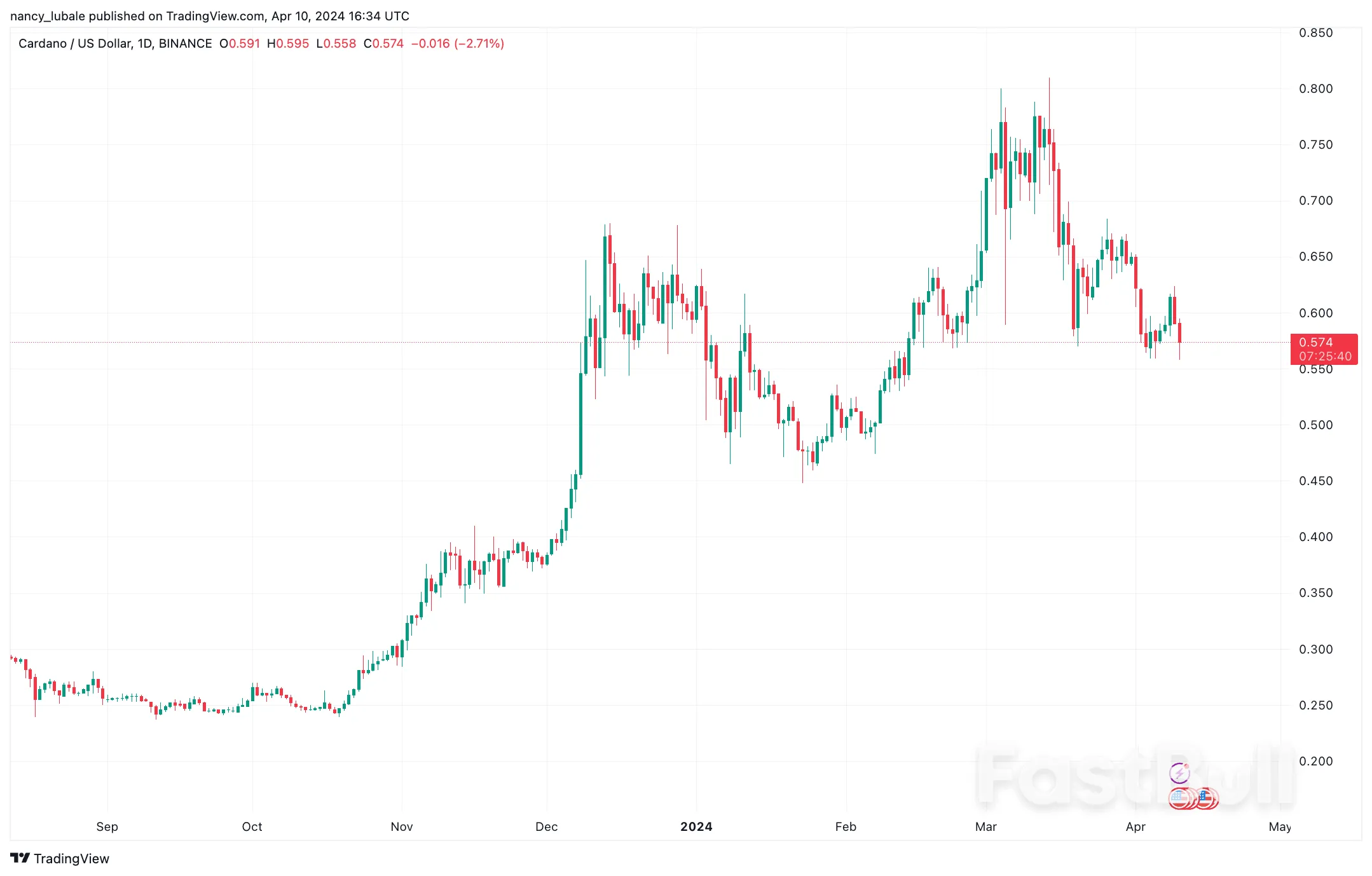
          Cardano’s native token took on a big portion of the daily losses incurred during the April 10 crypto market rout.
          Data from Cointelegraph Markets Pro and TradingView reveals that the ADA price fell to an intraday low of $0.558 on April 10, down 3% over the last 24 hours.

          Why is Cardano price down today?_1ADA/USD daily chart.

          Let us discuss the factors driving ADA price down today.

          Weak on-chain metrics underly ADA’s downside

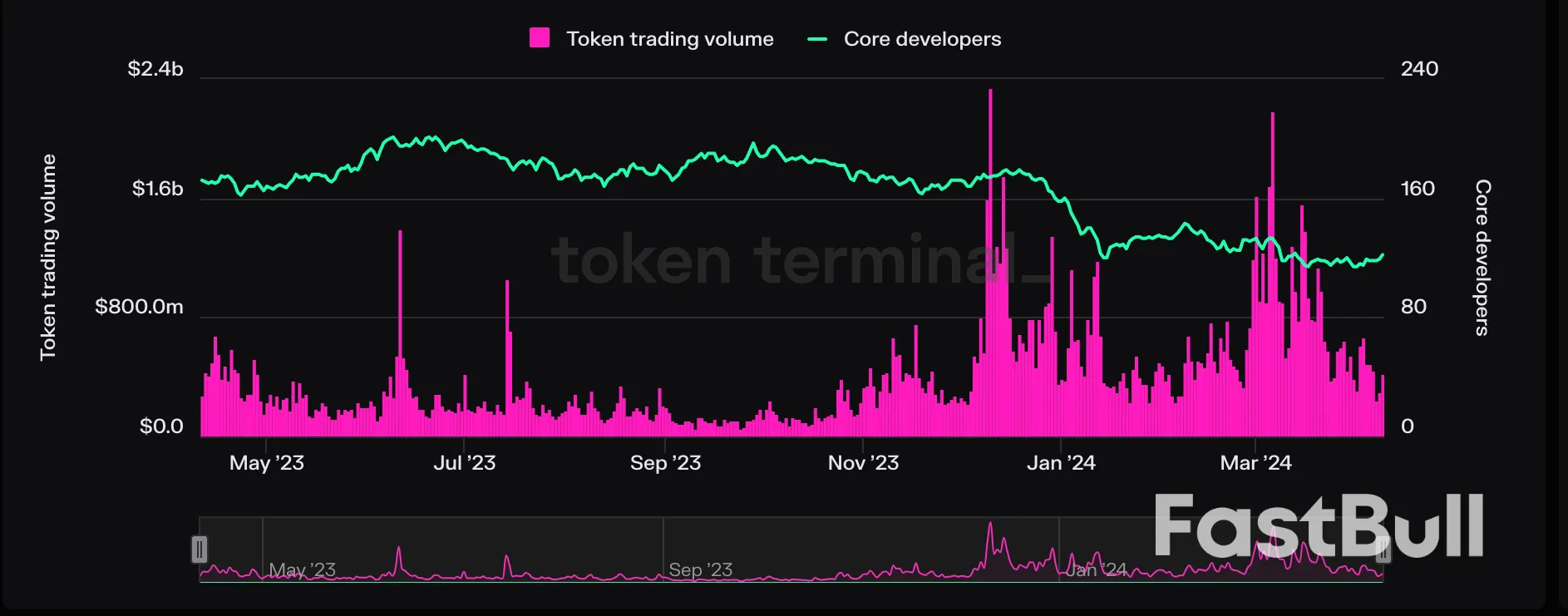
          Data from Token Terminal reveals that the drop in ADA price coincides with a modest drop in the token’s trading volume and the number of core developers.
          Notably, the number of unique GitHub daily users who made more than one commit to the blockchain’s public GitHub repository reduced from a three-month high of 146 developers on March 6 to 122 on April 10, representing a 16.5% decline.Why is Cardano price down today?_2
          ADA daily trading volume vs. core developers. Source: Token Terminal
          Transaction volume was reduced by 80.7% from approximately $2.189 billion to $421 million over the same period.
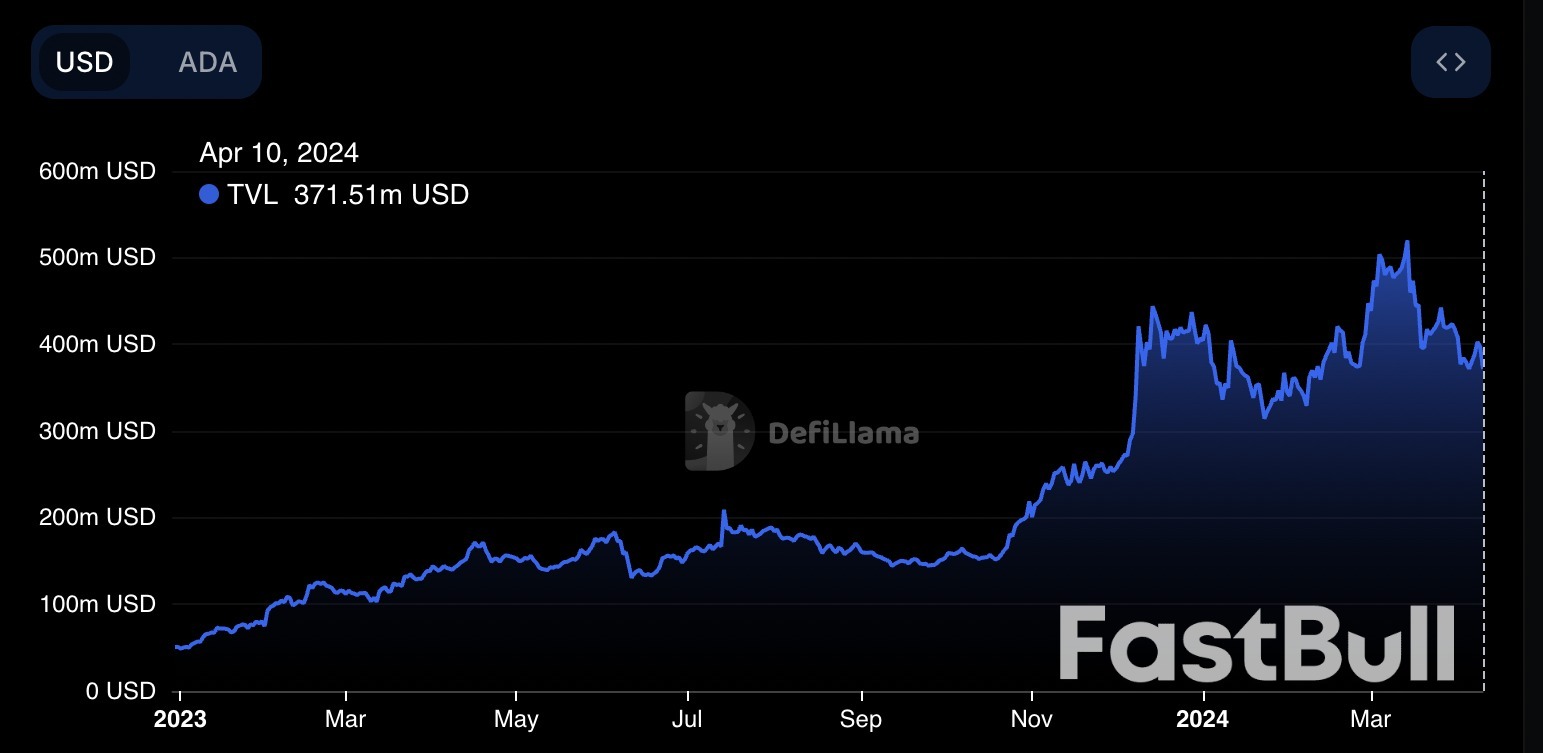
          Additional data from DefiLlama suggests that total value locked (TVL) on the Cardano network plummeted from $473.33 million on March 16 to $371.51 million on April 10.Why is Cardano price down today?_3

          Cardano total value locked, USD. Source: DefiLlama

          The decline in trading volume, active core developers, and TVL coincides with ADA’s 27% price drop over the same period, hinting that these metrics have influenced ADA’s short-term price trends—and April 10 is no different.

          ADA shows weak market structure

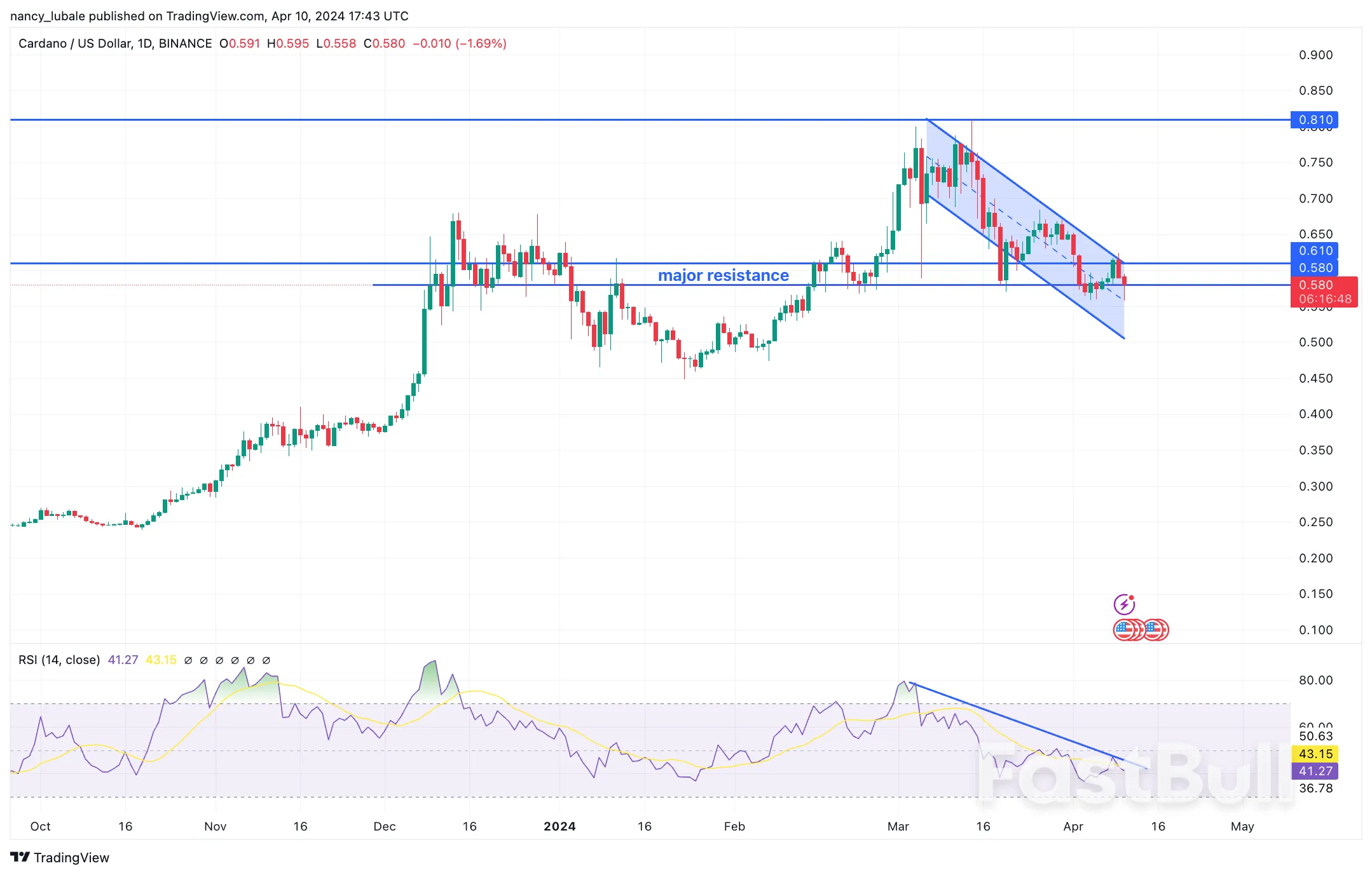
          From the technical point of view, the ongoing correction in the price of ADA is part of a corrective cycle that started in mid-March after the token hit a two-year high of $0.81.
          Traders booked profits as ADA’s relative strength index (RSI) on the daily chart became overbought after crossing 70.
          An RSI reading above 70 means the asset is becoming overvalued and may undergo trend reversal or corrective pullback.Why is Cardano price down today?_4

          ADA/USD daily chart

          ADA is pursuing an extended downtrend, confirmed by its downward movement inside a descending parallel channel. The RSI is positioned at 48, suggesting that the market conditions still favor the downside.

          Cardano price faces a difficult recovery

          The recent retracement in ADA price showed signs of further weakness after rejection from the descending channel’s upper boundary at $0.61— confirming a stiff barrier around this level. If the bulls fail to flip this level to support, then ADA’s likelihood of continuing its prevailing downtrend will be much higher.
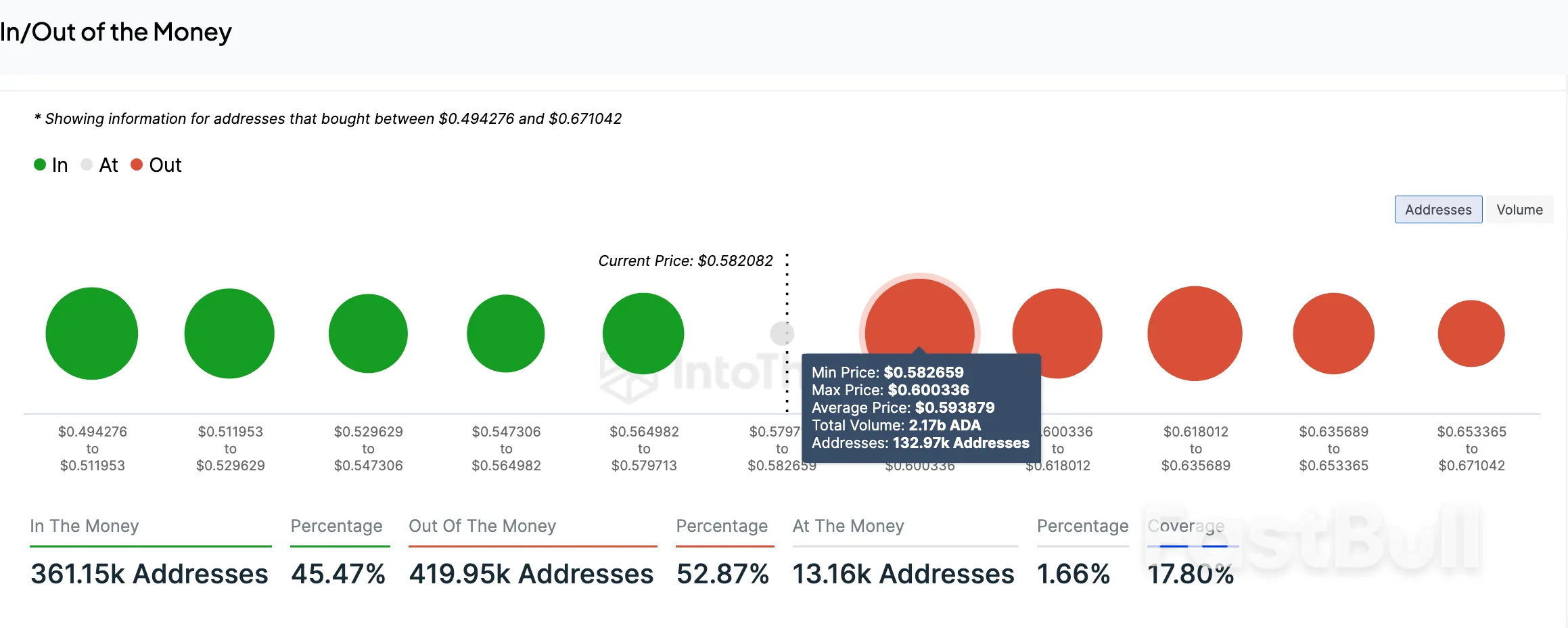
          This negative outlook is corroborated by on-chain data from IntoTheBlock. Its In/Out of the Money Around Price (IOMAP) model showed that the channel’s upper boundary at $0.61 sat just above the $0.58 to $0.60 price range, where approximately 2.17 billion ADA were previously bought by roughly 132,970 addresses.Why is Cardano price down today?_5

          Cardano IOMAP chart. Source: IntoTheBlock

          This resistance was robust enough to absorb any buying pressure attempting to push the ADA price higher. ADA bulls must flip this zone into support to avoid further losses.

          Source: Cointelegraph

          To stay updated on all economic events of today, please check out our Economic calendar
          Risk Warnings and Disclaimers
          You understand and acknowledge that there is a high degree of risk involved in trading. Following any strategies or investment methods may lead to potential losses. The content on the site is provided by our contributors and analysts for information purposes only. You are solely responsible for determining whether any trading assets, securities, strategy, or any other product is suitable for investing based on your own investment objectives and financial situation.
          Add to Favorites
          Share

          China Inflation Stalls As US Speeds, Adding To Pressure On Yuan

          Samantha Luan

          Economic

          China’s consumer prices barely increased from a year earlier and industrial prices continued to slump, underscoring the deflationary pressures that remain a key threat to the economy’s recovery.
          The consumer price index rose 0.1% in March from the prior year, the National Bureau of Statistics reported on Thursday. The median forecast of economists in a Bloomberg survey was a 0.4% gain. The inflation rate dropped from 0.7% in February, when it had climbed above zero for the first time in six months during the Lunar New Year holiday. Producer prices fell for an 18th straight month.
          The price slowdown suggests China may not get much help from local shoppers to meet growth targets that increasingly rely on selling its manufactured goods abroad. What’s more, with US inflation moving in the opposite direction, there’s a risk of an enduring interest-rate gap between the world’s two biggest economies that could add downward pressure on the yuan.China Inflation Stalls As US Speeds, Adding To Pressure On Yuan_1
          “The price data clearly mirrors the weak domestic demand,” said Raymond Yeung, chief economist for Greater China at Australia & New Zealand Banking Group Ltd. “The recent improvement in momentum is primarily export-driven.”
          Before China’s CPI numbers came out, the central bank signaled continued support for the currency, after the offshore yuan weakened by the most in three weeks overnight on the US inflation surprise. It set its daily reference rate at 7.0968 per dollar, exceeding forecasts by the most on record. A gauge of Chinese stocks listed in Hong Kong dropped as much as 1.8% early Thursday, before paring some losses.
          Higher inflation during the February holiday season, along with a tourism revival, had raised hope that Chinese households might be rediscovering their appetite to spend. Absent that, the country’s ability to hit its economic growth target of around 5% this year depends on overseas demand. Buoyant exports and factory activity data in recent weeks encouraged Goldman Sachs Group Inc. and Morgan Stanley to raise their growth forecasts this week.
          The slowdown in consumer inflation was due to “waning consumption demand in March seasonally after the holiday while market supply was generally sufficient,” said NBS analyst Dong Lijuan in a statement accompanying the release of the figures.
          Food price drops pulled the headline CPI number down by 0.5 percentage point, and the year-on-year increase in tourism prices slowed to 6% from 23% in February. Household appliances, and a transportation index that includes cars, extended a slide that’s lasted for more than a year. The government this week announced action plans to boost demand by offering subsidies for households that trade in older machines for new, greener models.
          With the housing-market slump showing no signs of a turnaround, subdued demand for building materials like steel is dragging producer prices down. The overall index declined 2.8%, extending the longest falling streak since 2016. Metal smelting and pressing costs fell at an annual rate of 7.2%, while mining and washing of coal — used for steelmaking — tumbled 15%, the most among all main industries.
          Fading inflation may still ramp up pressure on China’s government to offer more support for the economy. Falling prices squeeze companies’ profit margins, discouraging them from investment, and there’s a risk consumers could become even more reluctant to spend in anticipation that goods will be cheaper in the future.
          “Monetary policy will likely remain loose,” said Bruce Pang, chief economist for Greater China at Jones Lang LaSalle Inc. But he pointed to a constraint for Chinese central bankers: higher-than-expected US inflation could delay easing by the Federal Reserve. That would make it harder for China to trim its own rates — even though it needs to — due to concern about further weakening of the yuan, Pang said.
          China Inflation Stalls As US Speeds, Adding To Pressure On Yuan_2
          In a sign that deflation could continue to haunt the economy in the coming months, price competition in some industries has intensified lately. Companies that produce materials for construction, like zinc smelters, have been forced to lower their charges because of excess capacity while electric-car producers are offering aggressive discounts to lure customers.
          Core inflation, which strips out volatile food and energy prices, slowed to 0.6% last month from 1.2% in February, according to the NBS.

          Source:Bloomberg

          To stay updated on all economic events of today, please check out our Economic calendar
          Risk Warnings and Disclaimers
          You understand and acknowledge that there is a high degree of risk involved in trading. Following any strategies or investment methods may lead to potential losses. The content on the site is provided by our contributors and analysts for information purposes only. You are solely responsible for determining whether any trading assets, securities, strategy, or any other product is suitable for investing based on your own investment objectives and financial situation.
          Add to Favorites
          Share

          Bond Traders Adjust Outlook to a 5% Yield Environment, Anticipating No Rate Cuts

          Ukadike Micheal

          Economic

          Bond

          Bond traders are bracing for the possibility of 10-year US Treasury yields surpassing 5% amid growing speculation that the Federal Reserve may refrain from cutting rates this year. Schroders Plc is actively shorting US bonds across various maturities, anticipating sustained upward pressure on rates due to persistent inflation. Pacific Investment Management Co. also anticipates a more gradual pace of policy easing by the Fed compared to other developed markets, with a significant chance that no rate cuts will occur this year.
          This shift in sentiment marks a swift change from previous expectations, where many anticipated multiple rate cuts starting as early as March. The recent bullishness among bond bears has been further fueled by strong US economic data, which exceeded expectations for the third consecutive month.
          Kellie Wood, deputy head of fixed income at Schroders in Sydney, believes that 10-year yields reaching 5% or higher is a plausible scenario. Schroders is positioning for the potential scenario of the Fed refraining from rate cuts throughout the year, holding bearish positions on US two-, five-, and 10-year bonds. Despite the recent surge in yields, 10-year US bond yields remained relatively stable in Asian trading after surpassing 4.5% for the first time since November in the previous session.
          As investors reassess their rate cut expectations in response to solid US economic data, swap traders have adjusted their forecasts, pushing back the timing of the first expected rate reduction. This shift reflects a growing need among investors to hedge against the possibility of the Fed maintaining its current policy stance amidst renewed inflation concerns.
          Ben Emons, senior portfolio manager at Newedge Wealth, highlights the potential for 10-year yields to fully retrace to pre-financial crisis levels, reaching around 5.30%. This outlook underscores the significant upward pressure on yields driven by evolving inflation dynamics and shifting market expectations regarding Fed policy.
          Abrdn Plc is also adjusting its bond portfolio duration, anticipating a "more resilient growth backdrop" and the potential for higher yields. Duration reduction strategies aim to mitigate the impact of rising interest rates on bond prices, reflecting a broader trend among investors to adapt to evolving market conditions.
          The evolving outlook for US Treasury yields reflects a complex interplay of factors, including inflation dynamics, economic data, and central bank policy expectations. Bond traders are adjusting their strategies in response to shifting market dynamics, highlighting the importance of flexibility and proactive risk management in navigating the current environment.

          Source: Bloomberg

          To stay updated on all economic events of today, please check out our Economic calendar
          Risk Warnings and Disclaimers
          You understand and acknowledge that there is a high degree of risk involved in trading. Following any strategies or investment methods may lead to potential losses. The content on the site is provided by our contributors and analysts for information purposes only. You are solely responsible for determining whether any trading assets, securities, strategy, or any other product is suitable for investing based on your own investment objectives and financial situation.
          Add to Favorites
          Share

          Europe turns to ECB after U.S. inflation selloff

          Warren Takunda

          Traders' Opinions

          Economic

          Forex

          Stocks and the euro were steady ahead of an European Central Bank meeting on Thursday, after stubborn U.S. inflation numbers triggered the biggest global market selloff in months and left Japan's yen at a new 34-year low.
          Euro traders were feeling especially fragile after Wednesday's surprise U.S. CPI figures sent the dollar on its biggest tear in over a year against the single currency by quashing hopes of near-term Fed rate cut.
          Europe's bourses had opened broadly flat in line with MSCI's main global index , opens new tab, with focus on whether ECB chief Christine Lagarde bolsters expectations later that it will start cutting rates in June, thereby opening up a serious wedge with the Fed.
          Bond markets were still reeling, meanwhile, after the 10-year U.S. Treasury yield - the main driver of global borrowing costs - had shot back above 4.5%, its biggest daily leap since September 2022. /US
          Germany's 10-year bond yield - the European benchmark - was up fractionally at 2.45%, after rising 6 bps on Wednesday although that was a small change compared to the 18 bps jump experienced by Treasury traders.
          "The key driver now remains U.S. rates," Amundi's Co-Head of Emerging Markets/Fixed Income Sergei Strigo said, pointing to Treasuries braking up through the 4.5% level again.
          "The question is whether we are going to stick to these levels or are going to go higher".
          For ECB watchers, the bank has kept rates steady since September but has already signalled that cuts are coming into view, with policymakers awaiting a few more comforting wage indicators before pulling the trigger.
          The currency bloc is now in its sixth straight quarter of economic stagnation and the labour market is starting to soften, an obvious contrast to the U.S. economy which continues to grow robustly.
          "While there are limits to how much ECB policy can diverge from the Fed over time, there is nothing to stop the ECB from cutting first or setting its own pace of cuts early on in the easing cycle," Deutsche Bank's Jim Reid said.
          However he also pointed to how markets cut the likelihood of an ECB cut by June back to 82% on Wednesday, down from 91% the previous day. Likewise at the Bank of England, it fell from 74% to 56%, for the Bank of Canada it fell from 78% to 53%, and for the Reserve Bank of Australia it went from 25% to 21%.Europe turns to ECB after U.S. inflation selloff_1

          Reuters Graphics

          INTERVENTION WARNING

          U.S. stock futures , were little changed after Wall Street had fallen around 1%. Treasuries also steadied after the surge in yields had pushed them to their highest levels since November.
          Overnight in Asia, MSCI's broadest index of Asia-Pacific shares outside Japan , opens new tab slipped 0.3%, paring some earlier losses, while Japan's Nikkei, opens new tab dropped 0.5%.
          It was the beleaguered yen that was the main focus though, after the roaring greenback knocked the Japanese currency to a 34-year low of 153.24 per dollar.
          It eased up slightly to 152.90 yen as the risk of government intervention potentially looms large now. Japan's top currency diplomat, Masato Kanda, warned on Thursday that authorities would not rule out any steps to respond to disorderly exchange-rate moves.
          In commodities, metal prices were resilient in the face of a strong dollar while oil held gains after advancing more than 1% following an Israeli strike that killed three sons of a Hamas leader, fuelling worries that ceasefire talks might stall.
          Brent rose 0.15% to $90.62 a barrel, and U.S. crude was 0.1% higher at $86.33 per barrel. Gold prices gained 0.3% to $2,338.79 per ounce, charging towards record highs, after losing 0.8% overnight.

          Source: Reuters

          To stay updated on all economic events of today, please check out our Economic calendar
          Risk Warnings and Disclaimers
          You understand and acknowledge that there is a high degree of risk involved in trading. Following any strategies or investment methods may lead to potential losses. The content on the site is provided by our contributors and analysts for information purposes only. You are solely responsible for determining whether any trading assets, securities, strategy, or any other product is suitable for investing based on your own investment objectives and financial situation.
          Add to Favorites
          Share

          Rising Oil Prices Expected to Push the Won Down to 1,400 Against the Dollar

          Ukadike Micheal

          Commodity

          Economic

          The South Korean won plummeted to a 17-month low on Thursday, reaching 1,364.85 per dollar, marking a significant decline amidst a backdrop of various economic and geopolitical factors. The strengthening US dollar, propelled by rising inflation, and concerns over China's slowing consumer prices contributed to the downward pressure on the won. Furthermore, the unexpected defeat of South Korean President Yoon Suk Yeol's party in parliamentary elections added to the currency's woes, amplifying market uncertainties.
          HI Investment & Securities warned of the potential for further depreciation of the won, projecting a drop to as low as 1,400 per dollar if crude oil prices surge to $100 a barrel. This forecast underscores the susceptibility of South Korea's economy to fluctuations in commodity prices, particularly oil, given its heavy reliance on energy imports. The firm's economist, Park Sang-hyun, emphasized the significant threat posed by rising oil prices, highlighting the potential impact on the country's economic stability.
          The ongoing oil rally, coupled with expectations of substantial dividend payouts by local firms to foreign investors, is expected to exert additional pressure on the won. Technical analysis suggests that the next support level for the won lies at 1,400 per dollar, indicating the potential for further weakness in the currency. As South Korea imports the majority of its energy needs, including oil and natural gas, from global markets, the surge in commodities prices poses significant risks to its economic outlook.
          Recent developments in the oil market, with Brent futures trading above $90 and West Texas Intermediate nearing $86, reflect heightened geopolitical tensions. Concerns about potential conflicts in the Middle East, such as an attack on Israel by Iran or its proxies, have further contributed to market uncertainties. Moreover, ongoing supply cuts by OPEC+ have tightened the global oil market, driving prices higher and fueling speculation of a return to $100 per barrel.
          The surge in oil prices not only strengthens the US dollar trend by fueling global inflation but also prompts increased demand for the dollar from local importers purchasing materials. This double impact exacerbates the pressure on the South Korean won, leading to expectations of further depreciation in the near term. The combination of external economic pressures and domestic political uncertainties underscores the challenges facing South Korea's currency and economy.
          The South Korean won faces mounting challenges amidst a complex economic and geopolitical landscape. Rising oil prices, geopolitical tensions, and domestic political developments pose significant risks to the currency's stability and economic growth prospects. Proactive measures are essential to mitigate these risks and safeguard the resilience of South Korea's economy in the face of external shocks.

          Source: Bloomberg

          To stay updated on all economic events of today, please check out our Economic calendar
          Risk Warnings and Disclaimers
          You understand and acknowledge that there is a high degree of risk involved in trading. Following any strategies or investment methods may lead to potential losses. The content on the site is provided by our contributors and analysts for information purposes only. You are solely responsible for determining whether any trading assets, securities, strategy, or any other product is suitable for investing based on your own investment objectives and financial situation.
          Add to Favorites
          Share

          Overseas Investors Seize Japanese Stocks at Discount Prices

          Ukadike Micheal

          Economic

          Stocks

          During the week ending April 5, foreign investors seized opportunities in Japanese stocks, capitalizing on discounted prices resulting from profit booking by domestic institutions in late March. They injected a net 829.45 billion yen ($5.42 billion) into Japanese equities, marking a sharp reversal from the prior week's net selling of about 1.18 trillion yen.
          Concurrently, domestic institutional investors withdrew a net 334.8 billion yen from Japanese stocks during the same period. Notably, the domestic cash equity markets saw a net influx of 1.18 trillion yen in overseas capital, the highest weekly inflow since at least 2018. However, foreigners offloaded about 352.68 billion yen worth of derivative contracts.Overseas Investors Seize Japanese Stocks at Discount Prices_1
          Last week, the Nikkei shed 3.4%, its most significant weekly decline since December 2022, amidst profit booking and concerns over potential intervention by Japanese authorities in the currency market. The market sentiment was further dampened by a sell-off in Fast Retailing stocks due to worries about slowing domestic demand at its flagship Uniqlo brand, resulting in Fast Retailing shares losing 6.32% during the week, the largest decline since January 2023.
          Despite the recent downturn, the Nikkei continues to trade above a support line formed since February 21, bolstering expectations of a potential rebound. Foreigners sold 349 billion yen of long-term Japanese bonds, marking the second weekly net selling in three weeks, according to data from the Ministry of Finance.
          Conversely, Japanese short-term debt securities attracted a robust 4.39 trillion yen in foreign inflows during the week, the highest amount since January 5. Meanwhile, Japanese investors shifted their focus to purchasing 346.4 billion yen of long-term foreign bonds, in contrast to the net selling of 1.66 trillion yen in the previous week.Overseas Investors Seize Japanese Stocks at Discount Prices_2
          However, Japanese investors continued their net selling trend in short-term debt instruments, withdrawing a marginal 3.1 billion yen for the third consecutive week. The dynamic interplay between foreign and domestic investors in Japanese markets reflects the evolving sentiment and investment strategies amidst fluctuating market conditions.
          The surge in foreign investment in Japanese stocks amidst a backdrop of profit booking and market volatility underscores the resilience of the Japanese equity market and the attractiveness of value opportunities for foreign investors. However, ongoing uncertainties surrounding currency interventions and domestic demand dynamics pose challenges to market stability and investor sentiment.

          Source: Reuters

          To stay updated on all economic events of today, please check out our Economic calendar
          Risk Warnings and Disclaimers
          You understand and acknowledge that there is a high degree of risk involved in trading. Following any strategies or investment methods may lead to potential losses. The content on the site is provided by our contributors and analysts for information purposes only. You are solely responsible for determining whether any trading assets, securities, strategy, or any other product is suitable for investing based on your own investment objectives and financial situation.
          Add to Favorites
          Share

          Mounting Inflation Threatens Joe Biden's White House Campaign

          Ukadike Micheal

          Economic

          Forex

          Political

          A resurgence in US inflation poses a significant challenge to Joe Biden's re-election campaign, complicating his efforts to tout his economic accomplishments and defend his record against criticisms from Donald Trump. The 3.5% annual increase in the March consumer price index, following a 3.2% gain the previous month, undermines Biden's narrative of steady inflation reduction since its peak in 2022.
          The sudden uptick in inflation threatens to delay anticipated interest rate cuts by the Federal Reserve, potentially prolonging high borrowing costs for American households. Despite the creation of over 15 million jobs under Biden's administration, the persistent inflationary pressures have overshadowed his economic stewardship, emerging as a significant vulnerability ahead of the November election.
          While White House officials anticipate a temporary setback in inflation reduction efforts, they remain optimistic about the prospects of easing inflationary pressures in the near future. Biden reaffirmed his expectation of Fed rate cuts during a press conference, albeit acknowledging potential delays due to recent inflationary trends.
          Although Biden has narrowed the polling gap with Trump in recent weeks, the inflationary surge threatens to erode any gains, given the substantial increase in the consumer price index since Biden took office. Republican critics seized on the inflation data to assail Biden's economic policies, highlighting the disconnect between the White House narrative of a strong economy and the escalating cost of living for Americans.
          Biden's economic team emphasizes their commitment to addressing rising prices and proposes policies aimed at alleviating financial burdens on households. However, the political implications of sustained inflationary pressures remain significant, with petrol prices and other factors exacerbating concerns about the cost of living.
          Despite the challenges posed by inflation, Democratic strategists remain hopeful that voters will attribute the primary cause to corporate greed rather than Biden's policies. However, the political landscape remains uncertain, with the potential for further inflationary spikes impacting voter sentiment and shaping the trajectory of the campaign.
          While market reactions to inflation data prompt speculation about Fed rate cuts, their political ramifications may be less significant than the broader economic trends. Nevertheless, the timing and magnitude of any Fed actions will be closely monitored, as they could influence market dynamics and perceptions of the administration's economic management.
          The resurgence of inflation presents a formidable obstacle to Biden's re-election bid, posing challenges to his economic narrative and fueling criticisms from political opponents. As policymakers navigate the complex economic landscape, the political fallout from inflationary pressures remains a key consideration in shaping the outcome of the upcoming election.

          Source: Financial Times

          To stay updated on all economic events of today, please check out our Economic calendar
          Risk Warnings and Disclaimers
          You understand and acknowledge that there is a high degree of risk involved in trading. Following any strategies or investment methods may lead to potential losses. The content on the site is provided by our contributors and analysts for information purposes only. You are solely responsible for determining whether any trading assets, securities, strategy, or any other product is suitable for investing based on your own investment objectives and financial situation.
          Add to Favorites
          Share
          FastBull
          Copyright © 2025 FastBull Ltd

          728 RM B 7/F GEE LOK IND BLDG NO 34 HUNG TO RD KWUN TONG KLN HONG KONG

          TelegramInstagramTwitterfacebooklinkedin
          App Store Google Play Google Play
          Products
          Charts

          Chats

          Q&A with Experts
          Screeners
          Economic Calendar
          Data
          Tools
          Membership
          Features
          Function
          Markets
          Copy Trading
          Latest Signals
          Contests
          News
          Analysis
          24/7
          Columns
          Education
          Company
          Careers
          About Us
          Contact Us
          Advertising
          Help Center
          Feedback
          User Agreement
          Privacy Policy
          Business

          White Label

          Data API

          Web Plug-ins

          Poster Maker

          Affiliate Program

          Risk Disclosure

          The risk of loss in trading financial instruments such as stocks, FX, commodities, futures, bonds, ETFs and crypto can be substantial. You may sustain a total loss of the funds that you deposit with your broker. Therefore, you should carefully consider whether such trading is suitable for you in light of your circumstances and financial resources.

          No decision to invest should be made without thoroughly conducting due diligence by yourself or consulting with your financial advisors. Our web content might not suit you since we don't know your financial conditions and investment needs. Our financial information might have latency or contain inaccuracy, so you should be fully responsible for any of your trading and investment decisions. The company will not be responsible for your capital loss.

          Without getting permission from the website, you are not allowed to copy the website's graphics, texts, or trademarks. Intellectual property rights in the content or data incorporated into this website belong to its providers and exchange merchants.

          Not Logged In

          Log in to access more features

          FastBull Membership

          Not yet

          Purchase

          Become a signal provider
          Help Center
          Customer Service
          Dark Mode
          Price Up/Down Colors

          Log In

          Sign Up

          Position
          Layout
          Fullscreen
          Default to Chart
          The chart page opens by default when you visit fastbull.com