• Trade
  • Markets
  • Copy
  • Contests
  • News
  • 24/7
  • Calendar
  • Q&A
  • Chats
Trending
Screeners
SYMBOL
LAST
BID
ASK
HIGH
LOW
NET CHG.
%CHG.
SPREAD
SPX
S&P 500 Index
6915.62
6915.62
6915.62
6932.95
6895.49
+2.26
+ 0.03%
--
DJI
Dow Jones Industrial Average
49098.70
49098.70
49098.70
49265.46
48963.05
-285.30
-0.58%
--
IXIC
NASDAQ Composite Index
23501.23
23501.23
23501.23
23610.74
23374.26
+65.22
+ 0.28%
--
USDX
US Dollar Index
97.230
97.310
97.230
98.250
97.200
-0.820
-0.84%
--
EURUSD
Euro / US Dollar
1.18281
1.18301
1.18281
1.18334
1.17280
+0.00736
+ 0.63%
--
GBPUSD
Pound Sterling / US Dollar
1.36430
1.36467
1.36430
1.36452
1.34817
+0.01433
+ 1.06%
--
XAUUSD
Gold / US Dollar
4986.45
4986.45
4986.45
4990.01
4899.61
+50.62
+ 1.03%
--
WTI
Light Sweet Crude Oil
61.105
61.357
61.105
61.253
59.453
+1.510
+ 2.53%
--

Community Accounts

Signal Accounts
--
Profit Accounts
--
Loss Accounts
--
View More

Become a signal provider

Sell trading signals to earn additional income

View More

Guide to Copy Trading

Get started with ease and confidence

View More

Signal Accounts for Members

All Signal Accounts

Best Return
  • Best Return
  • Best P/L
  • Best MDD
Past 1W
  • Past 1W
  • Past 1M
  • Past 1Y

All Contests

  • All
  • Trump Updates
  • Recommend
  • Stocks
  • Cryptocurrencies
  • Central Banks
  • Featured News
Top News Only
Share

[Bitcoin Deposit Sentiment Continues, With Cex Net Inflow Of 1,445.66 Btc In The Last 24 Hours] January 24Th, According To Coinglass Data, In The Past 24 Hours, Cex Net Inflow Of 1,445.66 Btc, With The Top Three Cex Inflows As Follows:· Binance Net Inflow Of 1,742.35 Btc;· Bitfinex Net Inflow Of 1,063.94 Btc;· Bithumb Net Inflow Of 210.42 Btc.In Addition, Bitstamp Net Outflow Of 892.07 Btc, Ranking First In The Outflow List

Share

Barron's Mailbag: Waiting For A Peace Scare In Venezuela - Barron'S

Share

South Korea Trade Envoy: Told USTR Greer That Government Probe Of Coupang Is Same As Would Have Been Done On Any South Korean Company

Share

Trump Says US Vp Headed To Azerbaijan, Armenia Next Month

Share

Two Haiti Leaders Say They Plan To Proceed With Prime Minister Removal Despite US Threats

Share

Pentagon Releases Policy Document Calling For “More Limited” USA Support Deterring North Korea

Share

Senior Iranian Official: Iran Will Treat Any Attack On It As 'All-Out War' And Respond In 'Hardest Way Possible'

Share

Ukrainian Capital Under Russian Attack, Air Defences In Operation

Share

[Wind Power Generation To Be Minimal During Mega Winter Storm In The US] Texas Grid Operators Predict That Wind Power, A Key Source Of Electricity, Will Generate Very Little This Weekend. Meanwhile, A Powerful Winter Storm Is Signaling A Surge In Electricity Demand. The Texas Electric Reliability Council (Ercot) Forecasts That System Reserve Capacity Buffers Could Drop To 8.2% Between 7:00 AM And 8:00 AM Local Time Next Monday, At Which Point Demand Could Reach Record Highs For The Winter. If Operating Reserves Fall Below 2.5 Gigawatts (GW), A Level 1 Emergency Declaration May Be Made, Allowing Ercot To Utilize Specific Reserves Available Only In Emergency Situations

Share

[A Mega Storm Was Set To Test The Nation's Power Grid This Weekend] As A Mega Storm Moves Toward The Northeastern United States, Heavy Snow And Dangerously Cold Weather Are Spreading From The Rocky Mountains To The Great Lakes Region, Causing Transportation Disruptions And Threatening Power Supplies Across Much Of The Country. The Storm Is Expected To Bring Heavy Snow, Devastating Freezing Temperatures, And Sub-zero Wind Chill To Some Of The Nation's Largest Cities; Airlines Have Canceled Flights, And Amtrak Has Removed Some Routes From Its Schedules. State And Local Officials Have Warned Residents To Prepare For Power Outages, Frozen Pipes, And Road Blockages; Electricity And Natural Gas Prices Have Already Surged Due To Concerns That Icing Equipment Could Disrupt Supplies

Share

[US Court: AstraZeneca, Johnson & Johnson, Pfizer, Roche, And Other Pharmaceutical Companies Must Face Charges Of Aiding Iraqi Terrorist Organizations] A US Federal Court Has Stated That Victims Of Attacks By The Terrorist Group Jaysh Al-Mahdi Can Proceed With Aiding And Abetting Charges Against Major Pharmaceutical And Medical Device Manufacturers Under The Anti-Terrorism Act (ATA). The District Of Columbia Circuit Court Of Appeals Found That The Plaintiffs Reasonably Alleged That The Defendants' Involvement Was "conscious, Voluntary, And Negligent," And Facilitated The Actions Of Jaysh Al-Mahdi

Share

California Is Suing The Trump Administration Over Its Approval Of Sable Offshore Corp.'s Decision To Restart A Controversial Oil Pipeline In The State. California Calls The Federal Government's Action An "illegal Usurpation Of Power." California Accuses The Pipeline And Hazardous Materials Safety Administration (Phmsa) Of Violating The Administrative Procedure Act, Claiming Its Orders Were Capricious And Arbitrary. California Attorney General Rob Bonta Stated That The Core Of The Lawsuit Is Who Has The Authority To Decide Whether The Pipeline Should Be Restarted, Explicitly Stating That "the Decision Rests With California."

Share

[A Tumultuous Week Leaves Almost No Mark, Bond Market Volatility Returns To Calm] The Turmoil That Rocked Financial Markets Earlier This Week Has Vanished From The $30 Trillion Treasury Market, Dashing Traders' Hopes For A Rebound In Volatility From Historic Lows. Treasury Yields Surged To Their Highest Levels In Months On Tuesday, But A Subsequent Market Rally Erased Most Of The Week's Losses. Investors Expect The Federal Reserve To Keep Interest Rates Unchanged Next Week. The 10-year Treasury Yield Is Currently Around 4.23%, Having Risen By Only About 1 Basis Point This Week; The Weekly Change In This Metric Has Not Exceeded 6 Basis Points For Seven Consecutive Weeks

Share

The MSCI Emerging Markets Equity Index Rose 0.4%, Hitting A Record High And Marking Its Fifth Consecutive Day Of Gains, The Longest Winning Streak Since May 2025. Asian Technology Stocks, Including Alibaba, TSMC, And Mediatek Inc., Contributed Significantly To The Gains. Year-to-date In 2025, The Index Has Risen Approximately 7.0%, Compared To About 1% For The S&P 500. Latin American Stocks Rose On Friday, With The Regional Index Gaining About 1.3%, Bringing Its Year-to-date Gains To Nearly 14%. The MSCI Emerging Markets Latin America Equity Index Hit A Closing High Since 2018. Brazil's Benchmark Stock Index Led The Gains On Friday, Rising About 8.7% This Week

Share

South Korea Prime Minister Kim: Suggested To USA Vp Vance Sending A Special Envoy To North Korea

Share

US Southern Command: Conducted Lethal Kinetic Strike On A Vessel Operated By Designated Terrorist Organizations Transiting In Eastern Pacific

Share

Offshore Yuan Breaks Through 6.95, Hitting A New High Since May 2023. On Friday (January 23), The Offshore Yuan (CNH) Closed At 6.9494 Against The US Dollar In Late New York Trading (05:59 Beijing Time On Saturday), Up 149 Points From Thursday's New York Close. The Yuan Traded Within A Range Of 6.9669-6.9483 During The Day. On Friday, The Offshore Yuan Broke Through 6.95 Again, After A Significant Surge At 09:15. It Then Gradually Gave Back Its Gains, Before Rebounding After 00:00 And Reaching A New Intraday High Near The End Of The Day, The Highest Since May 11, 2023 (when It Peaked At 6.9309), Approaching The Highs Of 6.7898 On February 10 And 6.6975 On January 16 Of That Year. This Week, The Offshore Yuan Rose By Approximately 190 Points, A Gain Of 0.27%

Share

SPDR Gold Trust Reports Holdings Up 0.64%, Or 6.87 Tonnes, To 1086.53 Tonnes By Jan 23

Share

BlackRock's Private Debt Fund Net Asset Value Is Likely To Shrink By 19%

Share

Fitch On Turkiye: Outlook Revision Reflects Further Reduction In External Vulnerabilities From Faster-Than-Expected Rise In Foreign

TIME
ACT
FCST
PREV
U.K. Retail Sales MoM (SA) (Dec)

A:--

F: --

P: --

France Manufacturing PMI Prelim (Jan)

A:--

F: --

P: --

France Services PMI Prelim (Jan)

A:--

F: --

P: --

France Composite PMI Prelim (SA) (Jan)

A:--

F: --

P: --

Germany Manufacturing PMI Prelim (SA) (Jan)

A:--

F: --

P: --

Germany Services PMI Prelim (SA) (Jan)

A:--

F: --

P: --

Germany Composite PMI Prelim (SA) (Jan)

A:--

F: --

P: --

Euro Zone Composite PMI Prelim (SA) (Jan)

A:--

F: --

P: --

Euro Zone Manufacturing PMI Prelim (SA) (Jan)

A:--

F: --

P: --

Euro Zone Services PMI Prelim (SA) (Jan)

A:--

F: --

P: --

U.K. Composite PMI Prelim (Jan)

A:--

F: --

P: --

U.K. Manufacturing PMI Prelim (Jan)

A:--

F: --

P: --

U.K. Services PMI Prelim (Jan)

A:--

F: --

P: --

Mexico Economic Activity Index YoY (Nov)

A:--

F: --

P: --

Russia Trade Balance (Nov)

A:--

F: --

P: --

Canada Core Retail Sales MoM (SA) (Nov)

A:--

F: --

P: --

Canada Retail Sales MoM (SA) (Nov)

A:--

F: --

P: --
U.S. IHS Markit Manufacturing PMI Prelim (SA) (Jan)

A:--

F: --

P: --

U.S. IHS Markit Services PMI Prelim (SA) (Jan)

A:--

F: --

P: --

U.S. IHS Markit Composite PMI Prelim (SA) (Jan)

A:--

F: --

P: --

U.S. UMich Consumer Sentiment Index Final (Jan)

A:--

F: --

P: --

U.S. UMich Current Economic Conditions Index Final (Jan)

A:--

F: --

P: --

U.S. UMich Consumer Expectations Index Final (Jan)

A:--

F: --

P: --

U.S. Conference Board Leading Economic Index MoM (Nov)

A:--

F: --

P: --

U.S. Conference Board Coincident Economic Index MoM (Nov)

A:--

F: --

P: --

U.S. Conference Board Lagging Economic Index MoM (Nov)

A:--

F: --

P: --

U.S. UMich 1-Year-Ahead Inflation Expectations Final (Jan)

A:--

F: --

P: --

U.S. Conference Board Leading Economic Index (Nov)

A:--

F: --

P: --

U.S. Weekly Total Rig Count

A:--

F: --

P: --

U.S. Weekly Total Oil Rig Count

A:--

F: --

P: --

Germany Ifo Business Expectations Index (SA) (Jan)

--

F: --

P: --

Germany IFO Business Climate Index (SA) (Jan)

--

F: --

P: --

Germany Ifo Current Business Situation Index (SA) (Jan)

--

F: --

P: --

Mexico Unemployment Rate (Not SA) (Dec)

--

F: --

P: --

Canada National Economic Confidence Index

--

F: --

P: --

U.S. Non-Defense Capital Durable Goods Orders MoM (Excl. Aircraft) (Nov)

--

F: --

P: --

U.S. Durable Goods Orders MoM (Excl. Defense) (SA) (Nov)

--

F: --

P: --

U.S. Durable Goods Orders MoM (Excl.Transport) (Nov)

--

F: --

P: --

U.S. Durable Goods Orders MoM (Nov)

--

F: --

P: --

U.S. Dallas Fed General Business Activity Index (Jan)

--

F: --

P: --

U.K. BRC Shop Price Index YoY (Jan)

--

F: --

P: --

China, Mainland Industrial Profit YoY (YTD) (Dec)

--

F: --

P: --

Mexico Trade Balance (Dec)

--

F: --

P: --

U.S. S&P/CS 20-City Home Price Index YoY (Not SA) (Nov)

--

F: --

P: --

U.S. S&P/CS 20-City Home Price Index MoM (SA) (Nov)

--

F: --

P: --

U.S. FHFA House Price Index MoM (Nov)

--

F: --

P: --

U.S. FHFA House Price Index (Nov)

--

F: --

P: --

U.S. Richmond Fed Manufacturing Composite Index (Jan)

--

F: --

P: --

U.S. Conference Board Present Situation Index (Jan)

--

F: --

P: --

U.S. Conference Board Consumer Expectations Index (Jan)

--

F: --

P: --

U.S. Richmond Fed Manufacturing Shipments Index (Jan)

--

F: --

P: --

U.S. Richmond Fed Services Revenue Index (Jan)

--

F: --

P: --

U.S. Conference Board Consumer Confidence Index (Jan)

--

F: --

P: --

Australia RBA Trimmed Mean CPI YoY (Q4)

--

F: --

P: --

Australia CPI YoY (Q4)

--

F: --

P: --

Australia CPI QoQ (Q4)

--

F: --

P: --

Germany GfK Consumer Confidence Index (SA) (Feb)

--

F: --

P: --

India Industrial Production Index YoY (Dec)

--

F: --

P: --

India Manufacturing Output MoM (Dec)

--

F: --

P: --

Q&A with Experts
    • All
    • Chatrooms
    • Groups
    • Friends
    dimas eyhh flag
    3419810
    @Pengunjung3419810@Pengunjung3419810I asked seriously
    dimas eyhh flag
    When does the market open?
    Form Forex lk flag
    1. **Trade Entries and Exits**: When and why did you enter or exit your trades? 2. **Trade Frequency**: How many trades are you placing on average per week or month? 3. **Success Rate**: What percentage of your trades are currently profitable? 4. **Risk Management**: Are you using stop-losses or position sizing strategies to manage your risk? 5. **Emotional Factors**: Have you noticed any patterns in your trading behavior, such as fear or overtrading? Once I have more details, I can help analyze your performance, identify patterns or mistakes, and suggest actionable improvements tailored to your specific situation. ### In the Meantime, Here Are Some General Tips: - **Risk Management**: Ensure you're employing a strong risk management strategy. For instance, consider risking no more than 1-2% of your trading capital per trade. Use stop-loss orders to mitigate potential losses. - **Keep a Trading Journal**: Document your trades, including your reasoning, outcomes, and emotional states at the time. This can help you identify patterns and improve over time. - **Education**: Depending on your current understanding, I recommend these resources: - For **trend trading**, you might find the **Trend Following Chart Setup** useful. - If you're interested in **support/resistance levels**, check out the **Support & Resistance Chart Template**. - For a strong foundation in **intraday trading**, the **Intraday Trading Basics: A Beginner's Guide** can be helpful.
    Form Forex lk flag
    AI Trading Coach Personalized for you
    Form Forex lk flag
    https://mlk-trading-hub.base44.app
    Form Forex lk flag
    YOU'VE no trading strategy, don't worried let our {AI TRADING COACH } find you one by simply typing your choice of strategy and our AI TRADING COACH will find you a best strategy base on your request , with details.... that you easily implement to trade . check out our newly created app.https://mlk-trading-hub.base44.app
    Form Forex lk flag
    MLK TRADING HUB? this enhance your strategys.,, 1. **Price Action Chart Template**: - Ideal for focusing on pure price action with candlestick patterns and market structure. - **Key Elements**: Market structure (like Higher Highs), minimal indicators for a cleaner view of price movements. 2. **Breakout Trading Chart Setup**: - Perfect for trading breakouts from consolidation zones and patterns. - **Key Focus**: Identify horizontal consolidations and understand breakout strategies when price moves beyond defined support or resistance levels with increased volume. 3. **Trend Following Chart Template**: - A comprehensive setup for trend trading that includes moving averages. - **Key Components**: 20 EMA for short-term trends, 50 EMA for medium-term, and 200 EMA for long-term trends along with trend lines to help identify the overall direction. 4. **Multi-Timeframe Analysis Template**: - Ideal for analyzing markets on multiple timeframes to improve trade entry decisions. - **Three-Timeframe Approach**: Higher Timeframe for trend direction, Entry Timeframe for setups, and Confirmation Timeframe for timing entries. 5. **Support & Resistance Chart Template**: - Useful for identifying key support and resistance levels visually. - **Components**: Major support levels marked with green lines and resistance levels with red lines. 6. **Fibonacci Retracement Chart Guide**: - Helps in mastering Fibonacci levels for pinpointing entry and exit points during retracements. - **Key Levels**: Understanding levels such as 0%, 23.6%, and 61.8% can enhance your trading decisions. If you're looking to improve your approach, consider utilizing the **Risk Management** resource to solidify your trading strategy. It’s crucial to have clear objectives and criteria for entering and exiting trades, along with risk management rules in place to protect your capital.
    Form Forex lk flag
    https://mlk-trading-hub.base44.app
    Raka flag
    market closed
    dimas eyhh flag
    Raka
    market closed
    @Rakauntil when, sis
    2527238 flag
    dimas eyhh
    @dimas eyhh until Monday morning
    Slow is Fast flag
    I'm almost 5500% now. Awesome
    Form Forex lk flag
    MLK.fx. Tradinghub file pdf.pdf
    1.30MB
    Form Forex lk flag
    Form Forex lk
    [File]MLK.fx. Tradinghub file pdf.pdf
    MLK TRADING SIGNALS, in pdf file open and see how we operate on the platform
    NapaCT$ flag
    Invisible Trader flag
    Slow is Fast
    I'm almost 5500% now. Awesome
    @Slow is Fastwhat
    Ali AFAIK flag
    3426545 flag
    Good morning Asian friends!!!!
    张健明 flag
    Good morning
    One Lucky Chen flag
    Good morning Asia 🌏
    Type here...
    Add Symbol or Code

      No matching data

      All
      Trump Updates
      Recommend
      Stocks
      Cryptocurrencies
      Central Banks
      Featured News
      • All
      • Russia-Ukraine Conflict
      • Middle East Flashpoint
      • All
      • Russia-Ukraine Conflict
      • Middle East Flashpoint
      Search
      Products

      Charts Free Forever

      Chats Q&A with Experts
      Screeners Economic Calendar Data Tools
      Membership Features
      Data Warehouse Market Trends Institutional Data Policy Rates Macro

      Market Trends

      Market Sentiment Order Book Forex Correlations

      Top Indicators

      Charts Free Forever
      Markets

      News

      News Analysis 24/7 Columns Education
      From Institutions From Analysts
      Topics Columnists

      Latest Views

      Latest Views

      Trending Topics

      Top Columnists

      Latest Update

      Signals

      Copy Rankings Latest Signals Become a signal provider AI Rating
      Contests
      Brokers

      Overview Brokers Assessment Rankings Regulators News Claims
      Broker listing Forex Brokers Comparison Tool Live Spread Comparison Scam
      Q&A Complaint Scam Alert Videos Tips to Detect Scam
      More

      Business
      Events
      Careers About Us Advertising Help Center

      White Label

      Data API

      Web Plug-ins

      Affiliate Program

      Awards Institution Evaluation IB Seminar Salon Event Exhibition
      Vietnam Thailand Singapore Dubai
      Fans Party Investment Sharing Session
      FastBull Summit BrokersView Expo
      Recent Searches
        Top Searches
          Markets
          News
          Analysis
          User
          24/7
          Economic Calendar
          Education
          Data
          • Names
          • Latest
          • Prev

          View All

          No data

          Scan to Download

          Faster Charts, Chat Faster!

          Download App
          English
          • English
          • Español
          • العربية
          • Bahasa Indonesia
          • Bahasa Melayu
          • Tiếng Việt
          • ภาษาไทย
          • Français
          • Italiano
          • Türkçe
          • Русский язык
          • 简中
          • 繁中
          Open Account
          Search
          Products
          Charts Free Forever
          Markets
          News
          Signals

          Copy Rankings Latest Signals Become a signal provider AI Rating
          Contests
          Brokers

          Overview Brokers Assessment Rankings Regulators News Claims
          Broker listing Forex Brokers Comparison Tool Live Spread Comparison Scam
          Q&A Complaint Scam Alert Videos Tips to Detect Scam
          More

          Business
          Events
          Careers About Us Advertising Help Center

          White Label

          Data API

          Web Plug-ins

          Affiliate Program

          Awards Institution Evaluation IB Seminar Salon Event Exhibition
          Vietnam Thailand Singapore Dubai
          Fans Party Investment Sharing Session
          FastBull Summit BrokersView Expo

          Vietnam’s International Financial Center Takes Shape After One Month

          Gerik

          Economic

          Summary:

          Just over a month after its establishment, Vietnam’s International Financial Center (IFC) is gradually taking shape, with a clear governance model, defined roles for Ho Chi Minh City and Da Nang...

          From policy vision to early implementation

          Vietnam’s plan to build an International Financial Center represents one of its most significant institutional reforms in recent years, aimed at unlocking resources, restructuring the economy, and shifting growth toward higher productivity and competitiveness. Officially announced on December 21, 2025, the IFC follows a “one center, two destinations” model, with operations split between Ho Chi Minh City and Da Nang to maximize their complementary strengths.
          After more than a month, the center’s organizational structure, governance mechanisms, and initial operational foundations have begun to take form. The government expects the IFC to become a catalyst for attracting international capital, improving financial intermediation, and supporting Vietnam’s transition toward a more innovation-driven growth model.

          Clear division of roles: Ho Chi Minh City and Da Nang

          Under the approved framework, Ho Chi Minh City is positioned as the core financial hub, with a planned area of roughly 899 hectares. It is expected to host large-scale financial activities such as equity and bond markets, banking services, fund management, and international listings. This reflects the city’s role as Vietnam’s largest economic center, with deep capital markets and a dense concentration of financial institutions.
          Da Nang, by contrast, plays a strategic supporting role. With a planned area of about 300 hectares, it focuses on financial services linked to logistics, maritime activities, free trade, and industrial and agricultural supply chains. The dual-location model is designed to avoid internal competition and fragmented investment, instead creating a complementary ecosystem that strengthens the overall attractiveness of the IFC.

          Governance and institutional setup

          To ensure effective coordination, the government has established a dedicated governance structure. The IFC Executive Council was created under Decision No. 2755/QD-TTg, chaired by Deputy Prime Minister Nguyen Hoa Binh, with vice chairs including the Minister of Finance, the Governor of the State Bank of Vietnam, and the chairpersons of Ho Chi Minh City and Da Nang. This high-level structure underscores the political commitment behind the project and aims to accelerate decision-making across ministries and local authorities.
          Earlier, in August 2025, the Prime Minister also formed a National Steering Committee for the IFC, personally chaired by Prime Minister Pham Minh Chinh. Together, these bodies provide strategic direction, policy coordination, and oversight during the center’s formative phase.

          Infrastructure and early milestones

          A notable early milestone was the opening ceremony of the Vietnam International Financial Center in Da Nang on January 9, 2026. The Da Nang site is being developed with modern digital and IT infrastructure embedded within an urban environment offering high-quality services, aimed at attracting international financial institutions and skilled professionals.
          By the second quarter of 2026, authorities plan to complete a 20-story building and an integrated system for data storage, monitoring, and smart operations at Software Park No. 2, with more than 27,000 square meters of floor space. This area is intended to host investment funds, technology firms, startups, and controlled regulatory sandboxes for new models such as digital assets, digital currencies, and digital payments.
          Crucially, the Prime Minister has announced that the International Financial Center in Ho Chi Minh City will be officially launched before February 9, 2026, alongside the publication of detailed operating mechanisms and the designation of the main headquarters. This event is expected to mark a decisive step in bringing the IFC fully into operation.

          Economic significance and long-term implications

          Economists view the IFC as a major opportunity for Vietnam to integrate more deeply into global financial flows. In the near term, it can help attract international financial institutions, asset managers, investment funds, and strategic investors, reducing transaction costs and improving access to capital for Vietnamese businesses. Over time, this should enhance risk management, funding efficiency, and overall competitiveness across the economy.
          At a macro level, the IFC is expected to act as a platform for experimenting with advanced financial regulations and practices aligned with international standards. These controlled institutional “sandboxes” could accelerate reforms in finance, monetary policy, and digital assets, with spillover effects that strengthen the broader legal and regulatory environment.
          The dual-center model also supports more balanced regional development. Ho Chi Minh City anchors financial depth and market scale, while Da Nang integrates finance with logistics, trade, and innovation. Together, they create a more diversified and resilient financial ecosystem, appealing to medium- and long-term global capital seeking stable, transparent, and high-potential destinations in Asia.
          While still in its early stages, the progress made within just one month suggests that Vietnam’s International Financial Center is moving beyond concept toward implementation. If successfully executed, it could elevate Vietnam’s position on the regional financial map, strengthen capital markets and the banking system, and attract high-quality human capital. In the context of shifting global supply chains and capital flows, the IFC has the potential to become a key pillar supporting Vietnam’s ambition for fast yet sustainable growth in the years ahead.
          To stay updated on all economic events of today, please check out our Economic calendar
          Risk Warnings and Disclaimers
          You understand and acknowledge that there is a high degree of risk involved in trading. Following any strategies or investment methods may lead to potential losses. The content on the site is provided by our contributors and analysts for information purposes only. You are solely responsible for determining whether any trading assets, securities, strategy, or any other product is suitable for investing based on your own investment objectives and financial situation.
          Add to Favorites
          Share

          Vietnam's Party Congress: To Lam's Vision for 2030

          Owen Li

          Daily News

          Political

          Economic

          Remarks of Officials

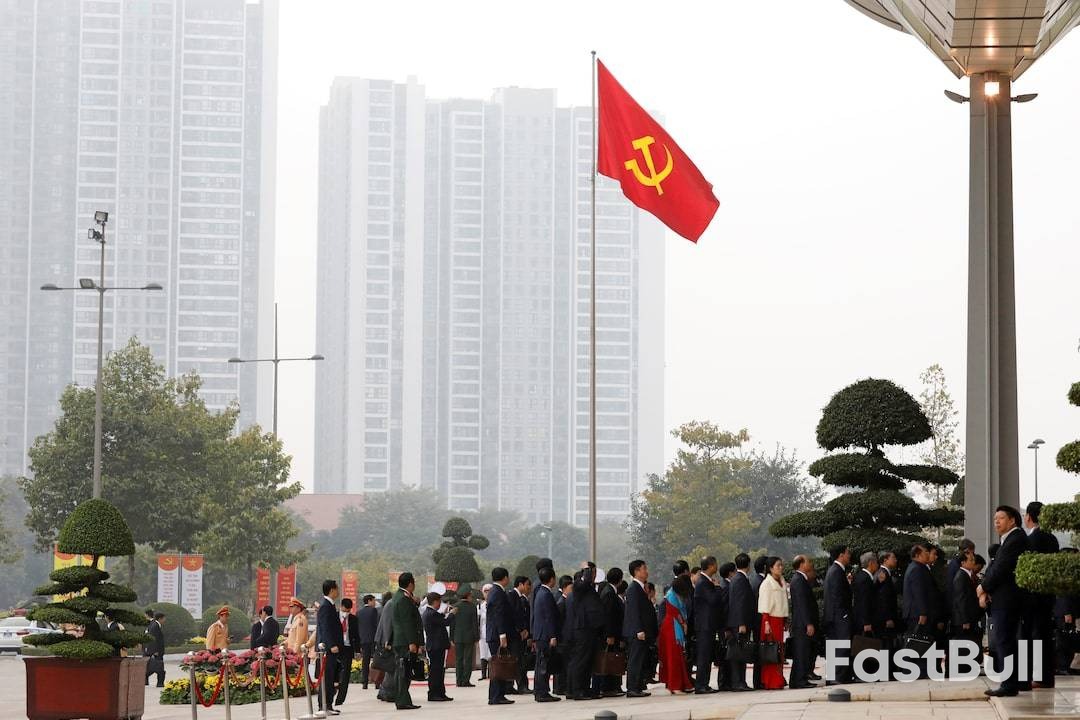
          Vietnam's ruling Communist Party has concluded its 14th five-yearly congress, a pivotal event that selects the nation's top leader and charts its strategic course through 2030. The outcomes will shape the political and economic trajectory of one of Asia's most dynamic economies.

          Inside the Leadership Selection Process

          The party's leadership structure is determined through a multi-layered process. Roughly 1,600 delegates, who represent over 5 million party members, are tasked with appointing about 200 officials to the Central Committee. This body then selects the 17 to 19 members of the Politburo, the party's highest decision-making authority. From this elite group, the general secretary is chosen.

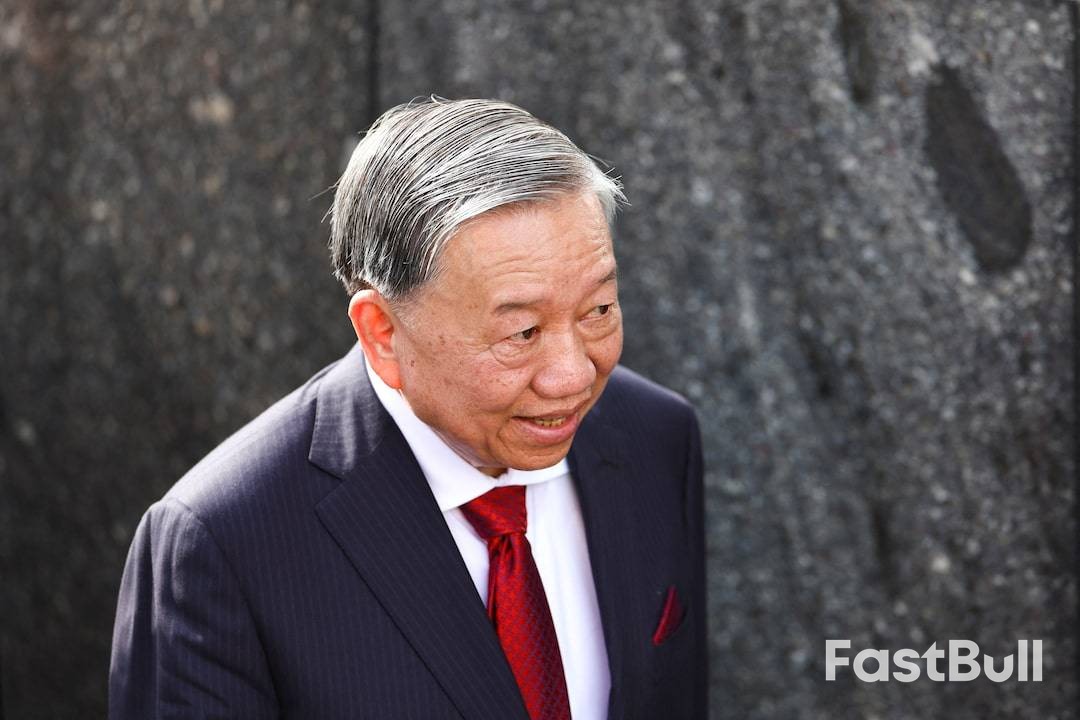
          Current party chief To Lam, 68, received a preliminary endorsement from the party in December to continue in his role. However, the final decision was made by the newly elected delegates at the congress. In his brief tenure, Lam has been known for implementing sweeping reforms, tightening national security, and expanding the influence of the police ministry, an institution he led for nearly a decade.

          Figure 1: Party chief To Lam, 68, is positioned to extend his leadership after implementing significant reforms and tightening state security.

          Following the congress, the Politburo will nominate candidates for president, prime minister, and speaker of the parliament. These appointments must then be confirmed by lawmakers. While parliamentary elections are scheduled for March with a first meeting in April, an extraordinary session could be convened earlier to formalize these key government positions. The role of the party chief has grown increasingly powerful in recent years, making it the most influential post in the country.

          Policy Stability: "Bamboo Diplomacy" and Economic Strategy

          Vietnam’s leadership operates on a principle of collective decision-making, which has ensured remarkable stability in both economic and foreign policy since the landmark Doi Moi reforms of the late 1980s. These reforms were instrumental in transforming the nation from a war-torn state into a fast-growing economic powerhouse.

          On the world stage, Vietnam has long pursued a strategy of "Bamboo Diplomacy," carefully balancing its relationships with major global powers, including China, the United States, and Russia. Although Lam has moved away from using the specific phrase, the underlying pragmatic approach is expected to continue unless major geopolitical shifts occur.

          Economically, Lam has shown a preference for cultivating private enterprise through the development of "national champions" that operate under state guidance. While Vietnam aims to reduce its dependence on the foreign investment that fuels its export-driven economy, it remains focused on attracting advanced technology and capital to achieve its ambitious goal of becoming a high-income country by 2045.

          An Ambitious Economic Blueprint for 2030

          Economic growth remains the cornerstone of the Communist Party's legitimacy. In a speech to the congress, To Lam pledged to achieve annual economic growth of more than 10% for the remainder of the decade. This target is notably ambitious, especially when compared to the 6.5% to 7% goal for the 2021-2025 period, which was missed.

          This bold vision comes as Vietnam navigates a complex global trade environment, including high U.S. tariffs on its goods that could impact revenue from its largest foreign market. To counter these challenges, the party is advancing a new growth model. According to a draft report, this model positions the private economy as the "driving force" while the state maintains a "leading role."

          To support this strategy, the government plans to increase public spending on infrastructure and development projects. This will result in a projected budget deficit of approximately 5% of GDP over the next five years, a significant increase from the 3.1% to 3.2% recorded between 2021 and 2025.

          A Legacy of Unchallenged Rule

          The Communist Party of Vietnam, founded by Ho Chi Minh in 1930, has a long history of governance. It assumed control of northern Vietnam in 1954 following the end of French colonial rule. After the conclusion of the war with the United States and the fall of Saigon in 1975, Vietnam was reunified under the party.

          Since then, it has ruled the country unchallenged, permitting no political opposition. This long-standing political structure provides the backdrop for the country's current leadership decisions and long-term strategic planning.

          To stay updated on all economic events of today, please check out our Economic calendar
          Risk Warnings and Disclaimers
          You understand and acknowledge that there is a high degree of risk involved in trading. Following any strategies or investment methods may lead to potential losses. The content on the site is provided by our contributors and analysts for information purposes only. You are solely responsible for determining whether any trading assets, securities, strategy, or any other product is suitable for investing based on your own investment objectives and financial situation.
          Add to Favorites
          Share

          The UK’s $50 Billion “Silent Tax”: Why People Feel Poorer Despite Higher Pay

          Gerik

          Economic

          Fiscal drag: the hidden tax mechanism

          In an environment where global inflation has yet to fully subside, many workers are being caught in a subtle but powerful fiscal trap known as fiscal drag. Even when nominal wages rise to offset higher living costs, unchanged tax thresholds push incomes into higher tax brackets, increasing tax liabilities without any official rise in tax rates.
          According to the OECD, fiscal drag occurs when tax thresholds and personal allowances fail to adjust in line with inflation. The result is “bracket creep,” where a pay rise intended to preserve living standards instead triggers higher taxation. As inflation erodes purchasing power, post-tax real disposable income can actually decline, leaving households feeling worse off despite earning more on paper.

          The UK case: revenue without a tax hike

          The United Kingdom has become one of the clearest examples of fiscal drag in action. Rather than raising headline tax rates a politically sensitive move the government chose to freeze income tax and national insurance thresholds from 2021 through 2028.
          Data from the Office for Budget Responsibility show the scale of the impact. By 2028, around four million people are expected to start paying income tax for the first time, while a further three million will move from the basic 20% rate into the higher 40% band purely due to income growth and inflation.
          As a result, annual government revenues are projected to rise by roughly £40 billion, or about $50 billion, by the end of the freeze period. The OBR has described this as the largest effective tax rise in a generation a “quiet storm” that boosts public finances without requiring parliamentary approval for explicit tax increases. For middle-income households, however, the cost is a steady erosion of real living standards.

          Germany’s contrasting approach

          Germany has taken a markedly different route, prioritizing the protection of household purchasing power. Through its Inflation Compensation Act, Berlin adjusts tax thresholds and allowances in line with inflation to prevent unintended tax increases.
          In 2024, Germany raised the basic tax-free allowance to €11,604 and increased family-related deductions accordingly. This system acknowledges that inflation-driven wage growth should not automatically translate into higher real tax burdens. By indexing the tax system, Germany aims to preserve fairness while maintaining incentives to work and invest.

          A broader international pattern

          The UK is far from alone. OECD research confirms that tax burdens on labor income have been rising across many advanced economies, largely due to the absence of automatic inflation adjustment mechanisms. Middle- and lower-income workers are typically the most exposed, as even modest wage increases can push them across key thresholds.
          In response, countries such as the United States, Canada and France have adopted indexation systems that link tax thresholds directly to consumer price inflation. This approach removes the randomness of inflation from personal tax liabilities, offering households greater predictability and stability.

          Macroeconomic consequences

          From a macroeconomic perspective, fiscal drag acts as a natural brake on domestic demand. When real disposable income grows more slowly than prices, household consumption tends to weaken, with knock-on effects for retail and service-sector revenues.
          Tax policy also plays a strategic role in global labor competitiveness. In an increasingly mobile workforce, countries that adjust tax systems flexibly are often better positioned to attract and retain skilled workers.
          Economists broadly agree that the central challenge for policymakers lies in balancing the need for fiscal consolidation with the imperative to protect living standards. As inflation reshapes income dynamics, how governments manage fiscal drag will be a defining issue for economic policy in the years ahead.

          Source: BI

          To stay updated on all economic events of today, please check out our Economic calendar
          Risk Warnings and Disclaimers
          You understand and acknowledge that there is a high degree of risk involved in trading. Following any strategies or investment methods may lead to potential losses. The content on the site is provided by our contributors and analysts for information purposes only. You are solely responsible for determining whether any trading assets, securities, strategy, or any other product is suitable for investing based on your own investment objectives and financial situation.
          Add to Favorites
          Share

          Yen Pressured As BOJ Holds Rates, Dollar Set For Steep Weekly Drop

          Blue River

          Economic

          Forex

          The yen stayed under pressure after the Bank of Japan held rates steady on Friday, as expected, while the U.S. dollar headed for its steepest weekly drop since June as geopolitical tensions and abrupt policy shifts around Greenland unsettled investors.

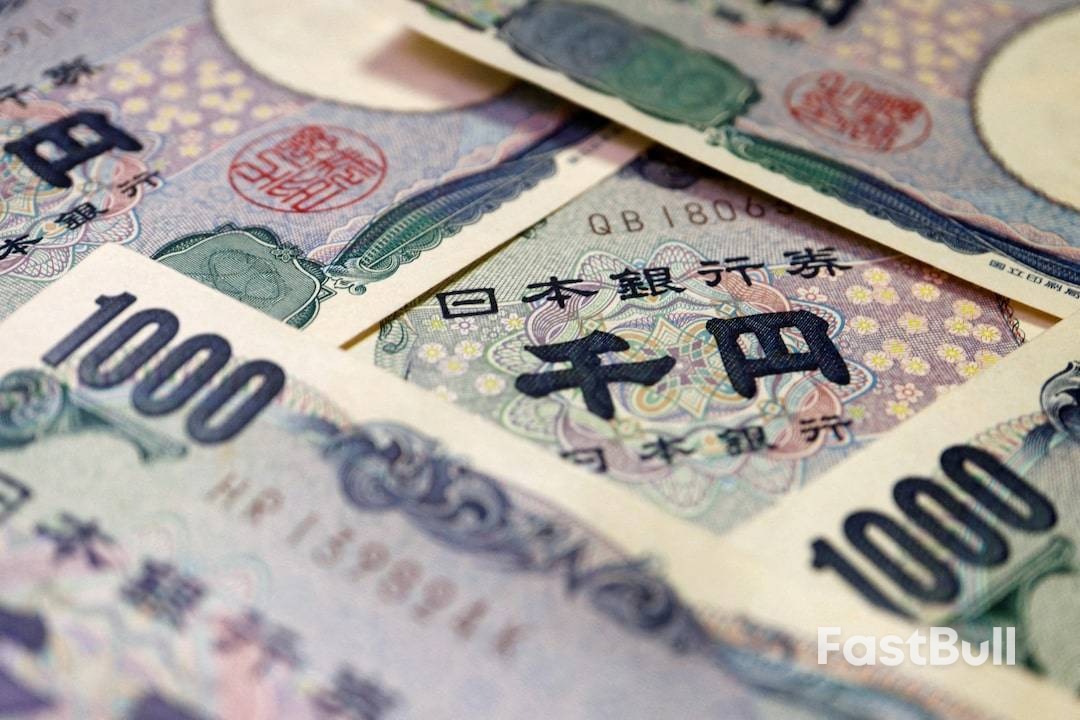
          The yen was slightly weaker at 158.54 following the BOJ's rate decision and after it raised its economic and inflation forecasts, highlighting the central bank's readiness to continue hiking still-low borrowing costs.

          Last month, the BOJ raised its policy interest rate to a 30-year high but that has not helped the frail yen. Traders are concerned that a break beyond 160 per dollar could prompt Tokyo to step into the currency market to support the yen.

          Moh Siong Sim, FX strategist at OCBC, said the market was hoping the yen's weakness might trigger a more forceful BOJ response but the central bank maintained the same rhetoric - an outcome that was pretty neutral for markets.

          "After all, yen indirectly fits into the economic projections if the weakness is sustained," he said.

          The spotlight will now be on comments from Governor Kazuo Ueda to gauge when the next hike will come and whether there is any hawkish tilt to support the yen. Ueda will hold a news conference to explain the decision at 0630 GMT.

          "Governor Ueda in his remarks will likely lean into a more hawkish direction, which may keep the next meetings 'live' for a further policy rate hike," said Fred Neumann, chief Asia economist at HSBC.

          "The Board appears to be leaning more hawkish as well, with one dissenter at today's meeting indicating that further policy rate hikes are on the table."

          The yen has been under relentless pressure since Sanae Takaichi took over as Japan's prime minister in October, dropping more than 4% on fiscal concerns and hovering near levels that have spurred verbal warnings and intervention fears.

          A bond market rout this week underscored investor nerves about Japan's fiscal position as Takaichi called a snap election for February and promised tax cuts, sending Japanese government bond yields to record highs. They have recovered somewhat since then but investors remain skittish.

          Carol Lye, portfolio manager at Brandywine Global, said the authorities have to come up with a more concrete plan to calm the markets. "If there's no action, then it's just words. It's not going to anchor the market down."

          "And until they do, I think there's still room for the JGBs across the entire curve to continue being volatile. The rate hikes are also not coming in quickly enough."

          DOLLAR SELLING MOMENTUM

          The shifting geopolitical landscape has weighed on sentiment this week as Trump said he had secured U.S. access to Greenland in a deal with NATO that came as he backed off tariff threats against Europe and ruled out taking the autonomous territory of Denmark by force.

          The dollar has borne the brunt of investor angst in the currency markets as U.S. assets were pummelled at the start of the week amid the intensifying geopolitical tensions.

          The dollar index , which measures the U.S. currency against six units, was at 98.366 after dropping 0.58% in the previous session, on course for a 1% slide, its worst weekly performance since June 2025.

          The euro was steady at $1.1746, hovering near the three-week high it touched earlier this week, while sterling fetched $1.3496, near a two-week high hit in the previous session.

          The Australian dollar was steady at $0.6841, while the New Zealand dollar was 0.3% weaker at $0.59105.

          Thierry Wizman, global FX & rates strategist at Macquarie Group, said while a Greenland deal solves the immediate problem of tariffs and invasion, it doesn't solve the core issue of the seeming alienation of allies from one another.

          "And that's not a good place to be if you want to preserve the USD's reserve-currency status."

          Source: Reuters

          To stay updated on all economic events of today, please check out our Economic calendar
          Risk Warnings and Disclaimers
          You understand and acknowledge that there is a high degree of risk involved in trading. Following any strategies or investment methods may lead to potential losses. The content on the site is provided by our contributors and analysts for information purposes only. You are solely responsible for determining whether any trading assets, securities, strategy, or any other product is suitable for investing based on your own investment objectives and financial situation.
          Add to Favorites
          Share

          Venezuela Oil Seizure Sparks US-China Debt Standoff

          King Ten

          Remarks of Officials

          Commodity

          Bond

          Political

          Economic

          Washington's control over Venezuelan oil exports has sparked a new showdown with China, directly threatening the oil-for-debt deals that Beijing had relied on for repayment. This move further complicates Venezuela's path out of default and sets the stage for a financial clash between the two global superpowers.

          China's Stake in Venezuelan Oil

          Venezuela is saddled with a foreign debt of approximately $150 billion, and a significant portion of that—an estimated 10%—is owed to China. Until recently, the OPEC nation was servicing these loans by shipping oil directly to China.

          This arrangement, however, was upended when the U.S. moved to control revenue from Venezuelan President Nicolas Maduro's government. According to debt experts, the dispute over these oil cargoes could make it much harder for Venezuela to restructure its debt following its 2017 default. It also jeopardizes Beijing's future cooperation in debt restructuring for other developing nations.

          "Even under the best circumstances, this was going to be very messy—trying to disentangle where all these creditors stand in the credit hierarchy," said Christopher Hodge, chief economist with Natixis and a former U.S. Treasury official. He noted that while Washington only controls oil sale proceeds, this represents Venezuela's main source of revenue.

          "The fact that now America is controlling all the finances into and out of the country... this seems to be unprecedented to me," Hodge added.

          The Oil-for-Debt Mechanics

          Documents from the state-run oil company PDVSA confirm that for the last five years, three supertankers have been transporting oil between Venezuela and China to cover interest payments under a 2019 deal. These shipments represent only a part of Venezuela's total crude exports to China.

          Research from AidData, a lab at the U.S. university William & Mary, shows that cash proceeds from some oil sales to China were deposited into an account controlled by Beijing to service the debt. This allowed China to receive payments even as sanctions and Venezuela's default blocked other creditors.

          US Intervention Changes the Game

          The Trump administration declared that proceeds from Venezuelan oil sales will now be funneled into a Qatar-based account controlled by Washington. This move gives the U.S. president substantial leverage to decide which creditors get paid and when.

          In response, China’s foreign ministry stated that Beijing "has repeatedly stated its position." During a January 7 news conference, Beijing condemned the redirection of the oil exports, insisting that the "legitimate rights and interests of China and other countries in Venezuela must be protected."

          A White House spokeswoman, Taylor Rogers, told Reuters that Trump had brokered an oil deal that "will benefit the American and Venezuelan people." A U.S. official later clarified that the administration is allowing China to buy Venezuelan oil, but not at the "unfair, undercut" prices previously offered. Instead, these are now considered private market transactions, not debt payments.

          "The people of Venezuela will collect a fair price for their oil from China and other nations," the official said. The Venezuelan communications ministry did not respond to a request for comment.

          A Disrupted Creditor Hierarchy

          Restructuring advisors warn that the U.S. takeover of Venezuela's oil revenue could upend the established order of creditors. Some $60 billion of Venezuela's bonds went into default in 2017, and a restructuring agreement is critical for the country to borrow again and attract investment.

          "All of these things will have the practical effect of subordinating the claims of legacy debtholders," said global sovereign debt expert Lee Buchheit, who questioned whether Trump had the legal authority to determine who gets paid first.

          Typically, bilateral lenders negotiate losses together through forums like the Paris Club of creditor nations. This sets a standard for the losses private lenders must also accept.

          "Comparability of treatment will be a real challenge, particularly if the U.S. controls the use of oil revenues," noted Mark Walker, a sovereign debt advisor who has worked on potential Venezuelan restructurings.

          Broader Risks for Global Debt Deals

          If the U.S. pressures China to accept major writedowns on its Venezuelan debt and Beijing refuses, the stalemate could drag out a restructuring and cripple Venezuela's economic recovery.

          Jean-Charles Sambor, head of emerging market debt at TT International, which holds Venezuelan bonds, warned this could keep Venezuela "in very dire straits during the foreseeable future." A prolonged crisis would, in turn, limit the amount the country can ultimately repay to any of its creditors.

          While China has little immediate leverage—countries rarely take legal action against each other over sovereign loans—it holds a powerful long-term card. Beijing is the world's largest bilateral lender to developing nations, and its cooperation through platforms like the Common Framework has been crucial in recent debt talks for countries like Ghana, Zambia, and Ethiopia.

          "China's obvious leverage is to refuse to cooperate in future Common Framework sovereign debt workouts until it feels that it has been treated fairly in Venezuela," Buchheit concluded. "And that threat would have some force."

          To stay updated on all economic events of today, please check out our Economic calendar
          Risk Warnings and Disclaimers
          You understand and acknowledge that there is a high degree of risk involved in trading. Following any strategies or investment methods may lead to potential losses. The content on the site is provided by our contributors and analysts for information purposes only. You are solely responsible for determining whether any trading assets, securities, strategy, or any other product is suitable for investing based on your own investment objectives and financial situation.
          Add to Favorites
          Share

          A Two-Speed US Economy: Strong Growth Masks a Cooling Labor Market

          Gerik

          Economic

          Growth accelerates, powered by consumption

          Revised figures released on January 22 paint a strikingly strong picture of US output growth. The world’s largest economy expanded at an annualized rate of 4.4% in the third quarter of 2025, slightly above the initial estimate of 4.3% and well ahead of the 3.8% recorded in the previous quarter. This marks the fastest pace of expansion since the third quarter of 2023.
          Household consumption remained the dominant engine of growth. Consumer spending, which accounts for roughly 70% of US GDP, grew at a robust 3.5%, underscoring the continued willingness of households to spend despite elevated prices and borrowing costs. External trade also contributed positively, as exports increased while imports declined, providing an additional boost to headline GDP.

          Signs of a “K-shaped” recovery deepen

          Despite the impressive growth figures, analysts increasingly warn that the US economy is evolving into a “K-shaped” pattern. On one side, higher-income households continue to benefit from rising equity markets and asset prices, reinforcing strong discretionary spending. On the other, lower-income households face stagnant wage growth and persistently high living costs, fueling dissatisfaction that is not fully captured by aggregate GDP data.
          This divergence between strong spending data and fragile consumer sentiment highlights a growing imbalance beneath the surface of the expansion, raising questions about its durability if financial conditions tighten further or asset markets lose momentum.

          Labor market momentum continues to fade

          In contrast to the GDP surge, labor market indicators suggest a clear slowdown. Initial jobless claims rose slightly to 200,000 in the week ending January 17, up 1,000 from the previous week. While still below consensus expectations and historically low, the trend reinforces the view that hiring momentum has weakened.
          US employers appear increasingly cautious, adopting a stance of “less hiring, fewer layoffs.” In December 2025, the economy added just 50,000 jobs, little changed from November’s downwardly revised figure. Since March 2025, average monthly job creation has fallen to just 28,000, a dramatic slowdown from the roughly 400,000 jobs per month seen during the post-pandemic boom of 2021–2023.
          Job openings have also declined, slipping from 7.4 million in October to 7.1 million by the end of November. Even so, the unemployment rate remains relatively low at 4.4%, masking the loss of underlying dynamism in hiring.

          A policy dilemma for the Federal Reserve

          This uneven economic backdrop presents a difficult challenge for the Federal Reserve ahead of its policy meeting next week. Most economists expect the central bank to keep its benchmark interest rate unchanged after three consecutive rate cuts, as policymakers weigh strong growth against weakening labor indicators.
          Fed Chair Jerome Powell has recently cautioned that labor market conditions may be weaker than headline figures suggest. He noted that recent employment data could be revised down by as much as 60,000 positions, implying that employers may have been cutting an average of around 25,000 jobs per month since spring 2025. This period coincides with the introduction of broad import tariffs under the Trump administration, adding another layer of uncertainty to the outlook.

          Corporate signals point to further strain

          Adding to concerns, several major US corporations including UPS, General Motors, Amazon and Verizon have announced workforce reductions. These moves suggest that corporate confidence is softening and that labor market pressures could intensify in the coming months, even as overall economic growth remains strong.
          Taken together, the latest data reveal an economy moving at two different speeds. Output and spending remain resilient, but the labor market is steadily losing momentum. For policymakers, this contrast increases the risk of a policy misstep, as decisions made on the basis of strong growth alone may overlook mounting weaknesses beneath the surface.
          To stay updated on all economic events of today, please check out our Economic calendar
          Risk Warnings and Disclaimers
          You understand and acknowledge that there is a high degree of risk involved in trading. Following any strategies or investment methods may lead to potential losses. The content on the site is provided by our contributors and analysts for information purposes only. You are solely responsible for determining whether any trading assets, securities, strategy, or any other product is suitable for investing based on your own investment objectives and financial situation.
          Add to Favorites
          Share

          What Trump’s “Peace Council” Reveals: Power, Payment and a New Diplomatic Model

          Gerik

          Political

          A peace body with an unusually broad mandate

          The so-called “Peace Council” was initially framed as an institution to oversee Gaza’s reconstruction, but its founding charter makes clear that its scope is far wider. According to documents cited by AFP, the council defines itself as an international body aimed at restoring stability, rebuilding legitimate governance and securing long-term peace in regions affected or threatened by conflict, without limiting its remit to Palestine or the Middle East.
          At the center of the structure sits Donald Trump, who would serve simultaneously as council chair and the United States’ representative. The charter grants the chair sweeping authority, including the unilateral power to create, amend or dissolve subsidiary bodies deemed necessary to fulfill the council’s mission. In effect, the institution is designed less like a multilateral organization and more like a centralized executive platform.

          Governance concentrated in one office

          Under the proposed rules, Trump would also appoint the council’s executive leadership, described as “global-scale leaders,” serving two-year terms and removable at the chair’s discretion. The chair themselves can only be replaced through voluntary resignation or incapacity. A US official has confirmed that Trump could remain chair even after leaving the White House, unless he chooses to step down, underscoring how closely the institution is tied to his personal authority rather than to the US presidency as an office.
          The executive board would include figures closely associated with Trump’s foreign-policy circle, among them US Secretary of State Marco Rubio, special envoy Steve Witkoff, former UK prime minister Tony Blair, Trump’s son-in-law Jared Kushner, and financier Marc Rowan. Decisions would be taken by majority vote, with the chair casting the deciding ballot in the event of a tie.

          Membership by invitation and by cheque

          Perhaps the most controversial element is the financial dimension. Membership is by invitation from Trump and limited to heads of state or government. While the charter states that contributions are formally voluntary, it introduces a crucial exception: countries that contribute more than $1 billion in cash during the council’s first year are exempt from the standard three-year membership limit and effectively gain a permanent seat.
          This structure blurs the line between voluntary funding and paid influence. While US officials stress that there is no mandatory fee, the implication is clear: financial commitment buys longevity and, by extension, greater sway in shaping the council’s agenda.

          Who joins and who stays away

          Invitations have reportedly gone out to dozens of countries, spanning close US allies and geopolitical rivals alike. China has been invited, as have Vladimir Putin and Volodymyr Zelensky, despite the ongoing war between their countries.
          Some governments moved quickly to signal participation. Hungary’s Prime Minister Viktor Orbán, one of Trump’s strongest supporters within the European Union, has agreed to join, as have the United Arab Emirates. Canada has also indicated it will participate, while explicitly ruling out any $1 billion payment for permanent status.
          Others have drawn a firm line. France has said it will not join, a decision that prompted Trump to threaten punitive tariffs on French wine. Ukrainian officials have expressed discomfort at the prospect of sitting on the same council as Russia, while the United Kingdom has voiced concerns about Putin’s inclusion.

          A transactional vision of global governance

          Seen in context, the “Peace Council” reflects a broader pattern in Trump’s approach to international relations. It prioritizes deal-making over institutions, personal authority over procedural constraint, and financial leverage over consensus-based legitimacy. The offer of permanent membership in exchange for a billion-dollar contribution is not merely a funding mechanism; it reframes diplomacy as a transaction in which influence is explicitly priced.
          Supporters may argue that such a structure could cut through bureaucratic inertia and mobilize resources quickly in crisis zones. Critics counter that it undermines international law norms, marginalizes existing multilateral bodies and risks turning peacebuilding into a marketplace dominated by wealth and political loyalty.
          Ultimately, the proposed council says less about conflict resolution mechanics and more about how Trump envisions global order: centralized, personalized and unapologetically transactional. Whether it becomes an operational institution or remains a provocative concept, it highlights a growing tension between traditional multilateralism and a new, power-driven model of diplomacy.

          Source: AFP

          Risk Warnings and Disclaimers
          You understand and acknowledge that there is a high degree of risk involved in trading. Following any strategies or investment methods may lead to potential losses. The content on the site is provided by our contributors and analysts for information purposes only. You are solely responsible for determining whether any trading assets, securities, strategy, or any other product is suitable for investing based on your own investment objectives and financial situation.
          Add to Favorites
          Share
          FastBull
          Copyright © 2026 FastBull Ltd

          728 RM B 7/F GEE LOK IND BLDG NO 34 HUNG TO RD KWUN TONG KLN HONG KONG

          TelegramInstagramTwitterfacebooklinkedin
          App Store Google Play Google Play
          Products
          Charts

          Chats

          Q&A with Experts
          Screeners
          Economic Calendar
          Data
          Tools
          Membership
          Features
          Function
          Markets
          Copy Trading
          Latest Signals
          Contests
          News
          Analysis
          24/7
          Columns
          Education
          Company
          Careers
          About Us
          Contact Us
          Advertising
          Help Center
          Feedback
          User Agreement
          Privacy Policy
          Personal Information Protection Statement
          Business

          White Label

          Data API

          Web Plug-ins

          Poster Maker

          Affiliate Program

          Risk Disclosure

          The risk of loss in trading financial instruments such as stocks, FX, commodities, futures, bonds, ETFs and crypto can be substantial. You may sustain a total loss of the funds that you deposit with your broker. Therefore, you should carefully consider whether such trading is suitable for you in light of your circumstances and financial resources.

          No decision to invest should be made without thoroughly conducting due diligence by yourself or consulting with your financial advisors. Our web content might not suit you since we don't know your financial conditions and investment needs. Our financial information might have latency or contain inaccuracy, so you should be fully responsible for any of your trading and investment decisions. The company will not be responsible for your capital loss.

          Without getting permission from the website, you are not allowed to copy the website's graphics, texts, or trademarks. Intellectual property rights in the content or data incorporated into this website belong to its providers and exchange merchants.

          Not Logged In

          Log in to access more features

          FastBull Membership

          Not yet

          Purchase

          Become a signal provider
          Help Center
          Customer Service
          Dark Mode
          Price Up/Down Colors

          Log In

          Sign Up

          Position
          Layout
          Fullscreen
          Default to Chart
          The chart page opens by default when you visit fastbull.com