Markets
News
Analysis
User
24/7
Economic Calendar
Education
Data
- Names
- Latest
- Prev



Signal Accounts for Members
All Signal Accounts
All Contests


[Ethereum Drops Below $2300, Down 2.43% In The Past Hour] February 3, According To Htx Market Data, Ethereum Fell Below $2,300, Now Trading At $2,298.77, Down 2.43% In The Past Hour
[Hamas: Ready To Transfer Gaza Strip Administration] On February 2nd Local Time, Hamas Spokesman Hazem Qasim Issued A Statement Saying That Hamas Has Completed The Necessary Procedures Concerning The Gaza Strip Administration And Is Ready To Transfer It To The Palestinian Technical Bureaucratic Committee. The Statement Said That A Committee Composed Of Representatives From Various Factions, Families, And Civil Society In The Gaza Strip Will Oversee The Transfer Process. The Statement Called On All Parties To Facilitate The Work Of The Technical Bureaucratic Committee In Order To Initiate The Gaza Reconstruction Process
Vietnam Industry Ministry: Imposes Temporary Anti-Dumping Tariffs On Colourless Float Glass From Indonesia, Malaysia
[Trump Team Transfers Wallet To Bitgo Custodial Wallet Holding 5.267M Trump, Equivalent To $22.44M] February 3Rd, According To Onchain Lens Monitoring, Meme Coin Trump Team Allocation Wallet Transferred 5,267,000 Trump To Bitgo Custody Wallet, Worth Approximately 22.44 Million US Dollars
China Central Bank Injects 105.5 Billion Yuan Via 7-Day Reverse Repos At 1.40% Versus Prior 1.40%
Taiwan Overnight Interbank Rate Opens At 0.805 Percent (Versus 0.805 Percent At Previous Session Open)

Indonesia Trade Balance (Dec)A:--
F: --
P: --
Indonesia Inflation Rate YoY (Jan)A:--
F: --
P: --
Indonesia Core Inflation YoY (Jan)A:--
F: --
P: --
India HSBC Manufacturing PMI Final (Jan)A:--
F: --
P: --
Australia Commodity Price YoY (Jan)A:--
F: --
P: --
Russia IHS Markit Manufacturing PMI (Jan)A:--
F: --
P: --
Turkey Manufacturing PMI (Jan)A:--
F: --
P: --
U.K. Nationwide House Price Index MoM (Jan)A:--
F: --
P: --
U.K. Nationwide House Price Index YoY (Jan)A:--
F: --
P: --
Germany Actual Retail Sales MoM (Dec)A:--
F: --
Italy Manufacturing PMI (SA) (Jan)A:--
F: --
P: --
South Africa Manufacturing PMI (Jan)A:--
F: --
P: --
Euro Zone Manufacturing PMI Final (Jan)A:--
F: --
P: --
U.K. Manufacturing PMI Final (Jan)A:--
F: --
P: --
Turkey Trade Balance (Jan)A:--
F: --
P: --
Brazil IHS Markit Manufacturing PMI (Jan)A:--
F: --
P: --
Canada National Economic Confidence IndexA:--
F: --
P: --
Canada Manufacturing PMI (SA) (Jan)A:--
F: --
P: --
U.S. IHS Markit Manufacturing PMI Final (Jan)A:--
F: --
P: --
U.S. ISM Output Index (Jan)A:--
F: --
P: --
U.S. ISM Inventories Index (Jan)A:--
F: --
P: --
U.S. ISM Manufacturing Employment Index (Jan)A:--
F: --
P: --
U.S. ISM Manufacturing New Orders Index (Jan)A:--
F: --
P: --
U.S. ISM Manufacturing PMI (Jan)A:--
F: --
P: --
South Korea CPI YoY (Jan)A:--
F: --
P: --
Japan Monetary Base YoY (SA) (Jan)A:--
F: --
P: --
Australia Building Approval Total YoY (Dec)A:--
F: --
P: --
Australia Building Permits MoM (SA) (Dec)A:--
F: --
P: --
Australia Building Permits YoY (SA) (Dec)A:--
F: --
P: --
Australia Private Building Permits MoM (SA) (Dec)A:--
F: --
P: --
Australia Overnight (Borrowing) Key Rate--
F: --
P: --
RBA Rate Statement
Japan 10-Year Note Auction Yield--
F: --
P: --
Saudi Arabia IHS Markit Composite PMI (Jan)--
F: --
P: --
RBA Press Conference
Turkey PPI YoY (Jan)--
F: --
P: --
Turkey CPI YoY (Jan)--
F: --
P: --
Turkey CPI YoY (Excl. Energy, Food, Beverage, Tobacco & Gold) (Jan)--
F: --
P: --
U.S. Weekly Redbook Index YoY--
F: --
P: --
U.S. JOLTS Job Openings (SA) (Dec)--
F: --
P: --
Mexico Manufacturing PMI (Jan)--
F: --
P: --
U.S. API Weekly Refined Oil Stocks--
F: --
P: --
U.S. API Weekly Gasoline Stocks--
F: --
P: --
U.S. API Weekly Cushing Crude Oil Stocks--
F: --
P: --
U.S. API Weekly Crude Oil Stocks--
F: --
P: --
Japan IHS Markit Services PMI (Jan)--
F: --
P: --
Japan IHS Markit Composite PMI (Jan)--
F: --
P: --
China, Mainland Caixin Services PMI (Jan)--
F: --
P: --
China, Mainland Caixin Composite PMI (Jan)--
F: --
P: --
India HSBC Services PMI Final (Jan)--
F: --
P: --
India IHS Markit Composite PMI (Jan)--
F: --
P: --
Russia IHS Markit Services PMI (Jan)--
F: --
P: --
South Africa IHS Markit Composite PMI (SA) (Jan)--
F: --
P: --
Italy Services PMI (SA) (Jan)--
F: --
P: --
Italy Composite PMI (Jan)--
F: --
P: --
Germany Composite PMI Final (SA) (Jan)--
F: --
P: --
Euro Zone Composite PMI Final (Jan)--
F: --
P: --
Euro Zone Services PMI Final (Jan)--
F: --
P: --
U.K. Composite PMI Final (Jan)--
F: --
P: --
U.K. Total Reserve Assets (Jan)--
F: --
P: --
U.K. Services PMI Final (Jan)--
F: --
P: --


No matching data
Latest Views
Latest Views
Trending Topics
Top Columnists
Latest Update
White Label
Data API
Web Plug-ins
Affiliate Program
View All

No data
U.S.-backed oil reforms in Venezuela spark mixed worker reactions, weighing recovery hopes against deep skepticism.
Workers and retirees from Venezuela's state-run oil company, PDVSA, are watching recent industry reforms with a mix of hope and skepticism. Following U.S. intervention last month, a push to overhaul the sector has many wondering if their declining wages and pensions could finally recover, but confidence is far from universal.
In the oil hub of Maracaibo, some longtime PDVSA employees believe a turnaround could make their jobs and compensation more secure.
"Those of us who are still here have stayed out of love for our work," said one manager with over two decades of experience at PDVSA, who requested anonymity. "We've waited many years to see our oil better paid. Most people are willing to work, though there is still a lot of fear."
This cautious optimism is fueled by the promise that new investment will boost both oil production and paychecks. However, not everyone shares this view.

In nearby Ciudad Ojeda, a town dominated by housing complexes built for oil workers in the 1960s and 70s, many veterans of the industry are wary. They argue that the expected economic boom may not materialize as advertised.
"People in general are living an illusion created by U.S. propaganda about the economic boom Venezuela will supposedly see," said Jose Luis Galindo, a PDVSA retiree.
This skepticism is rooted in years of economic decline, with analysts estimating that inflation hit 400% last year.
Another veteran, 71-year-old Ender Perea, who worked at PDVSA for 38 years, believes foreign companies have their own agenda. Global oil firms are "not coming to rescue (PDVSA), they're coming to invest to open up fields," he commented.
The changes are driven by a new energy-industry reform bill that passed last week. The legislation is designed to revitalize Venezuela's oil and gas production by attracting foreign investment after two decades of state control.
Key components of the reform include:
• Cutting taxes for energy producers.
• Granting autonomy to private companies.
• Allowing for the transfer of assets.
The policy marks a significant shift away from the nationalization era, which saw the government expropriate assets from foreign firms, including U.S. giants Exxon Mobil and ConocoPhillips.
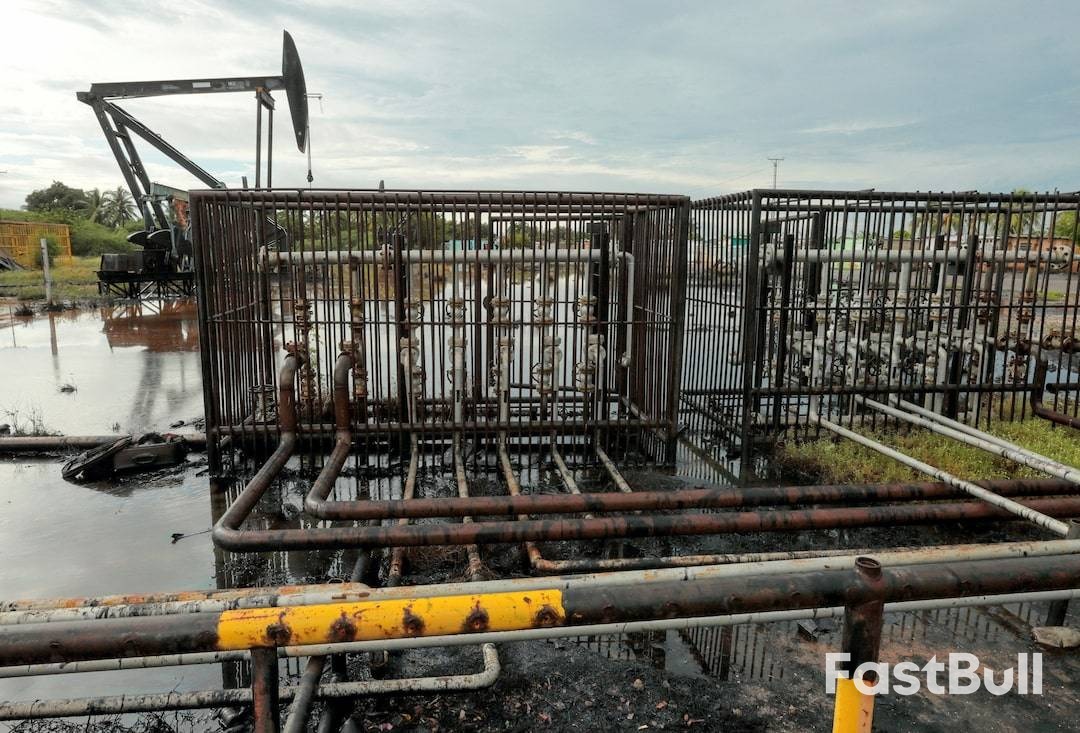
These reforms follow the U.S. capture of President Nicolas Maduro last month. Subsequently, U.S. President Donald Trump announced a plan for Washington to guide the country from afar, proposing a $100 billion energy reconstruction plan he said would benefit Venezuela and its people.
Interim President Delcy Rodriguez, who has been negotiating oil sales deals with the U.S. since Maduro's removal, has expressed support for the plan. While some workers are hopeful, the path forward remains highly uncertain, and the debate over whether this new era will bring prosperity or simply new problems continues in the heart of Venezuela's oil country.
A sweeping oil-industry reform in Venezuela, spurred by recent U.S. intervention, has ignited a mix of hope and skepticism among the workers and retirees of the state-run oil company, PDVSA. Many are cautiously watching to see if the changes will finally restore the purchasing power of their decimated wages and pensions.
In and around the oil hub of Maracaibo in Zulia state, some loyal PDVSA employees express a guarded optimism. They anticipate that a turnaround in the industry could make their jobs, salaries, and retirement funds more secure and valuable after a long period of decline.
"Those of us who are still here have stayed out of love for our work. We've waited many years to see our oil better paid," said one manager with over 20 years of experience at PDVSA, who requested anonymity. "Most people are willing to work, though there is still a lot of fear."
However, this hope is far from universal. Many veterans of the industry believe the promised economic benefits may be overstated.
In the nearby town of Ciudad Ojeda, dominated by housing complexes built for oil workers in the 1960s and 70s, the mood is more doubtful. PDVSA retiree Jose Luis Galindo views the enthusiasm as misplaced. "People in general are living an illusion created by U.S. propaganda about the economic boom Venezuela will supposedly see," he said.
Another long-time employee, Ender Perea, 71, who worked at the state oil company for 38 years, questioned the motives of potential investors. He believes global oil firms are "not coming to rescue (PDVSA), they're coming to invest to open up fields."
The proposed changes follow the U.S. capture of President Nicolas Maduro and a plan from U.S. President Donald Trump for Washington to direct the oil-exporting nation from afar. The White House has proposed a $100 billion energy reconstruction plan, framing the overhaul as a positive step for Venezuela.
An energy-industry reform that passed last week aims to reverse two decades of state control. Its key objectives are:
• Cutting taxes
• Granting autonomy to private producers
• Allowing the transfer of assets
The plan has the support of Interim President Delcy Rodriguez, who has been negotiating oil sales with the United States since Maduro's ouster. The overarching goal is to attract foreign investment to boost Venezuela's oil and gas production, which has struggled under state control since the government expropriated assets from foreign giants like Exxon Mobil and ConocoPhillips.
While some workers hold out hope that new investment will translate to higher output and better pay, the country's path remains uncertain after a prolonged economic decline that saw inflation reach an estimated 400% last year.
Argentina's government has no immediate plans to tap international capital markets, Economy Minister Luis Caputo announced, firmly dismissing speculation that improving economic indicators would soon lead to new external financing.
The statement comes as a surprise to some investors, who have watched the country's sovereign bond yields fall sharply. Recent dollar purchases by the central bank have helped stabilize markets and drive Argentina's country risk index below 500 points, a key milestone in the government's economic plan.
In a radio interview, Caputo clarified that Argentina's strategy does not involve issuing new international debt. "We have no intention of going to the international market," he stated directly.

He explained that as Argentina pays down its existing obligations, investors receiving those funds are choosing to reinvest in Argentine assets rather than exit the market, signaling renewed confidence.
The significant drop in the country's risk premium—the extra yield investors demand for holding Argentine debt over U.S. Treasuries—had fueled market expectations for a new bond sale. Some analysts even drew parallels to Ecuador, which recently returned to international debt issuance.
Elaborating on the government's approach in a post on X, President Javier Milei outlined a debt strategy centered on limiting the supply of sovereign bonds to drive down borrowing costs.
The core components of the plan include:
• Funding Payments with Asset Sales: The government will meet its obligations to multilateral lenders by selling state assets.
• Zero-Deficit Policy: A strict fiscal policy ensures interest payments are covered and, at most, existing debt is rolled over without increasing the total supply.
• Alternative Funding: Officials will continue to explore other funding sources to avoid fresh issuance.
Milei argued that this approach creates a powerful dynamic. With a fixed or non-growing supply of bonds, rising investor demand will naturally push bond prices higher.
"A non-growing supply of bonds combined with growing demand implies higher prices for Argentine bonds and therefore lower interest rates," Milei explained. He added that as the country's economic fundamentals improve, this positive cycle of rising confidence and falling yields will reinforce itself.
U.S. President Donald Trump announced on Monday that he has secured a trade agreement with India. According to the announcement, the deal includes a commitment from New Delhi to cease purchasing Russian oil and increase its imports from the United States and potentially Venezuela.
This development marks a significant turn in a bilateral relationship that had deteriorated sharply over the past year.
The friction in U.S.-Indian trade relations reached a breaking point between April and August of 2025. In a surprise move, President Trump levied an initial 25% tariff on Indian goods shipped to the United States.
This was followed by an additional 25% tariff, which the U.S. justified by citing India's purchases of Russian oil. The cumulative effect of these actions pushed duties to 50% on most Indian products, driving diplomatic and economic relations to a historic low. India officially protested the tariffs, calling them unfair.
By mid-2025, any hope for a bilateral trade agreement had faded as negotiations stalled amid rising tensions. The situation was complicated by the fact that Trump had successfully closed larger trade deals with Japan and the European Union, while offering more favorable terms to Pakistan, India's regional rival.
Trump's repeated comments about mediating the India-Pakistan conflict further strained the negotiations. In response, Indian Prime Minister Narendra Modi began delaying calls and meetings with Trump.
The diplomatic chill became evident when Modi declined Trump's invitation to visit Washington following the G7 meeting in Canada in June. In a public speech, Modi vowed to protect the interests of India's farmers, signaling that disagreements over the politically sensitive agriculture sector were a key reason for the talks' failure. In the wake of the stalemate, India shifted its focus, working to improve its relationship with China and finalizing a landmark trade deal with the European Union.
The trade dispute had a mixed but broadly negative impact on the Indian economy, hitting financial markets hard even as some export sectors showed surprising strength.
Surprising Resilience in Exports
Despite the heavy tariffs, India's merchandise exports to the U.S.—its largest export market—actually increased. In November, for example, exports rose 21% year-on-year. This growth was largely driven by a surge in electronics exports.
However, the tariffs took a severe toll on other key sectors. Consumer goods industries, including textiles, jewelry, and auto parts, were among the hardest hit by the 50% duties.
Rupee and Stocks Feel the Pressure
Indian financial markets have been on edge since the relationship with the U.S. soured. Last year, Indian equity markets and the Indian rupee were the worst performers among their emerging-market peers. This underperformance was fueled by record selling from foreign investors, a trend that has continued into 2026.
France's government has successfully passed its 2026 budget, bringing a period of intense political instability that had rattled investor confidence to a close. Prime Minister Sebastien Lecornu secured the fiscal plan after his government survived two no-confidence votes on Monday, ushering in a chapter of relative calm.
The minority government faced two critical challenges in the National Assembly. A censure motion from far-left lawmakers garnered 260 votes but failed to reach the 289 required to oust the government and reject the budget. A separate motion initiated by the far right also fell short, securing just 135 votes.
Lecornu and his government prevailed by making key concessions that convinced center-left Socialist lawmakers to abstain during a series of recent no-confidence votes. This strategy allowed him to avoid the fate of his predecessors, Michel Barnier and Francois Bayrou, who were both forced to resign over disagreements on austerity measures.
The country's political landscape has been fragile since snap elections in 2024 produced a fractured parliament, with opposing blocs consistently working to unseat any prime minister appointed by President Emmanuel Macron.
The newly adopted budget reflects the government's need for a political compromise. It includes smaller spending cuts and tax increases than originally proposed, which means the deficit for the year is now expected to be 5%, a larger figure than initially planned.
With the budget now adopted, the country is expected to enter a period of greater political stability. Lawmakers will have fewer opportunities to trigger no-confidence votes, and opposition parties are beginning to shift their attention toward municipal elections in March and the run-up to the 2027 presidential race.
The resolution of France's parliamentary turmoil has been a welcome development for financial markets. The country's mix of political risk and fiscal challenges—including the largest deficit in the euro area—had previously triggered sell-offs in French assets and driven up sovereign borrowing costs.
The prospect of a budget deal began buoying French bond markets in January. Last week, the premium on France's 10-year debt over equivalent German bonds fell to around 56 basis points, the lowest since Macron first called the snap elections. By Monday's market close, the gap stood at 58 basis points.
Despite the immediate relief, France faces a long-term challenge in repairing its public finances. The nation's debt burden has swelled to over 117% of economic output, a significant increase from below 100% before the pandemic-era spending programs.
There are some tentative positive signs. Recent data indicates the deficit in the central state's accounts narrowed last year to its smallest level since the COVID-19 pandemic. Still, difficult budget decisions lie ahead. The current government has committed to reducing the national deficit to within the European Union's 3% limit by 2029.
Atlanta Federal Reserve President Raphael Bostic outlined a complex landscape for the U.S. central bank on Monday, highlighting both the formidable challenge facing the next Fed chair and persistent inflation concerns.
Speaking at the Rotary Club of Atlanta, Bostic commented on Kevin Warsh, President Donald Trump's nominee to lead the Federal Reserve, describing the role as a "tall task" and a "very large job."
Bostic emphasized that steering the Federal Reserve requires more than just economic expertise; it demands a unique ability to build consensus among monetary policy committee members. He noted this process is a "huge undertaking" that does not happen overnight.
According to Bostic, a successful Fed chair must:
• Build strong relationships with committee members.
• Earn their trust to effectively guide policy.
• Demonstrate wisdom to convince them to follow a specific direction.
"If you want to have policy enacted or go in a direction that you want, you've got to convince them to go along," Bostic said, wishing Warsh well in the new role.
Turning to the economic outlook, Bostic characterized the U.S. economy as resilient, even before factoring in the effects of tax legislation and deregulation. He projected strong economic performance through the first half of 2026.
However, he warned that inflation remains a significant source of concern and is expected to stay high. "It's premature to say inflation job is done," Bostic stated, adding that the economy is still absorbing the inflationary effects of tariffs.
Despite the inflation warnings, Bostic offered a projection for stabilization, suggesting the economy would find its equilibrium by the middle of the year. He also noted a consensus view that the labor market is not expected to worsen.
White Label
Data API
Web Plug-ins
Poster Maker
Affiliate Program
The risk of loss in trading financial instruments such as stocks, FX, commodities, futures, bonds, ETFs and crypto can be substantial. You may sustain a total loss of the funds that you deposit with your broker. Therefore, you should carefully consider whether such trading is suitable for you in light of your circumstances and financial resources.
No decision to invest should be made without thoroughly conducting due diligence by yourself or consulting with your financial advisors. Our web content might not suit you since we don't know your financial conditions and investment needs. Our financial information might have latency or contain inaccuracy, so you should be fully responsible for any of your trading and investment decisions. The company will not be responsible for your capital loss.
Without getting permission from the website, you are not allowed to copy the website's graphics, texts, or trademarks. Intellectual property rights in the content or data incorporated into this website belong to its providers and exchange merchants.
Not Logged In
Log in to access more features
Log In
Sign Up