Markets
News
Analysis
User
24/7
Economic Calendar
Education
Data
- Names
- Latest
- Prev


Signal Accounts for Members
All Signal Accounts
All Contests


U.K. Input PPI MoM (Not SA) (Dec)A:--
F: --
U.K. Core CPI MoM (Dec)A:--
F: --
P: --
U.K. Retail Prices Index MoM (Dec)A:--
F: --
P: --
U.K. Input PPI YoY (Not SA) (Dec)A:--
F: --
P: --
U.K. CPI YoY (Dec)A:--
F: --
P: --
U.K. Output PPI MoM (Not SA) (Dec)A:--
F: --
P: --
U.K. Output PPI YoY (Not SA) (Dec)A:--
F: --
P: --
U.K. Core Retail Prices Index YoY (Dec)A:--
F: --
P: --
U.K. Core CPI YoY (Dec)A:--
F: --
P: --
U.K. Retail Prices Index YoY (Dec)A:--
F: --
P: --
Indonesia 7-Day Reverse Repo RateA:--
F: --
P: --
Indonesia Loan Growth YoY (Dec)A:--
F: --
P: --
Indonesia Deposit Facility Rate (Jan)A:--
F: --
P: --
Indonesia Lending Facility Rate (Jan)A:--
F: --
P: --
South Africa Core CPI YoY (Dec)A:--
F: --
P: --
South Africa CPI YoY (Dec)A:--
F: --
P: --
IEA Oil Market Report
U.K. CBI Industrial Output Expectations (Jan)A:--
F: --
U.K. CBI Industrial Prices Expectations (Jan)A:--
F: --
P: --
South Africa Retail Sales YoY (Nov)A:--
F: --
P: --
U.K. CBI Industrial Trends - Orders (Jan)A:--
F: --
P: --
Mexico Retail Sales MoM (Nov)A:--
F: --
P: --
U.S. MBA Mortgage Application Activity Index WoWA:--
F: --
P: --
Canada Industrial Product Price Index YoY (Dec)A:--
F: --
Canada Industrial Product Price Index MoM (Dec)A:--
F: --
U.S. Weekly Redbook Index YoYA:--
F: --
P: --
U.S. Pending Home Sales Index YoY (Dec)A:--
F: --
P: --
U.S. Pending Home Sales Index MoM (SA) (Dec)A:--
F: --
P: --
U.S. Construction Spending MoM (Oct)A:--
F: --
U.S. Pending Home Sales Index (Dec)A:--
F: --
P: --
U.S. API Weekly Refined Oil Stocks--
F: --
P: --
U.S. API Weekly Gasoline Stocks--
F: --
P: --
U.S. API Weekly Cushing Crude Oil Stocks--
F: --
P: --
U.S. API Weekly Crude Oil Stocks--
F: --
P: --
South Korea GDP Prelim YoY (SA) (Q4)--
F: --
P: --
South Korea GDP Prelim QoQ (SA) (Q4)--
F: --
P: --
Japan Imports YoY (Dec)--
F: --
P: --
Japan Exports YoY (Dec)--
F: --
P: --
Japan Goods Trade Balance (SA) (Dec)--
F: --
P: --
Japan Trade Balance (Not SA) (Dec)--
F: --
Australia Employment (Dec)--
F: --
P: --
Australia Labor Force Participation Rate (SA) (Dec)--
F: --
P: --
Australia Unemployment Rate (SA) (Dec)--
F: --
P: --
Australia Full-time Employment (SA) (Dec)--
F: --
P: --
Turkey Consumer Confidence Index (Jan)--
F: --
P: --
Turkey Capacity Utilization (Jan)--
F: --
P: --
Turkey Late Liquidity Window Rate (LON) (Jan)--
F: --
P: --
Turkey Overnight Lending Rate (O/N) (Jan)--
F: --
P: --
Turkey 1-Week Repo Rate--
F: --
P: --
U.K. CBI Distributive Trades (Jan)--
F: --
P: --
U.K. CBI Retail Sales Expectations Index (Jan)--
F: --
P: --
U.S. Weekly Continued Jobless Claims (SA)--
F: --
P: --
U.S. Initial Jobless Claims 4-Week Avg. (SA)--
F: --
P: --
U.S. Real Personal Consumption Expenditures Final QoQ (Q3)--
F: --
P: --
Canada New Housing Price Index MoM (Dec)--
F: --
P: --
U.S. Weekly Initial Jobless Claims (SA)--
F: --
P: --
U.S. Real GDP Annualized QoQ Final (Q3)--
F: --
P: --
U.S. PCE Price Index Final QoQ (AR) (Q3)--
F: --
P: --
U.S. Personal Outlays MoM (SA) (Nov)--
F: --
P: --
U.S. Core PCE Price Index YoY (Nov)--
F: --
P: --


No matching data
Latest Views
Latest Views
Trending Topics
Top Columnists
Latest Update
White Label
Data API
Web Plug-ins
Affiliate Program
View All

No data
Treasury Secretary Bessent dismissed a Deutsche Bank analyst's report on European asset sales, citing the CEO's personal disavowal.
US Treasury Secretary Scott Bessent stated that the CEO of Deutsche Bank personally disavowed an analyst report from his own bank that suggested European investors might sell US assets over rising political tensions.
Speaking at the World Economic Forum in Davos, Bessent moved to quash speculation that a dispute between President Donald Trump and the EU over Greenland could trigger a sell-off. He attributed the narrative to a single analyst and criticized the media for amplifying it.
According to Bessent, Deutsche Bank AG CEO Christian Sewing called him directly to distance the financial institution from the research note.
"This notion that Europeans would be selling US assets came from a single analyst at Deutsche Bank," Bessent told reporters. He added that Sewing confirmed "Deutsche Bank does not stand by that analyst report."
Bessent also criticized what he termed "the fake news media led by the Financial Times" for amplifying the story.
In his remarks, the Treasury Secretary also touched on other market stability concerns, noting a "six standard deviation move in Japanese bonds." He said he had been in contact with Japanese officials and was assured that measures would be taken to stabilize the market.
The report in question was authored by George Saravelos, Deutsche Bank's chief forex strategist. Saravelos pointed out a key vulnerability for the United States: its reliance on foreign capital to finance its deficits.
He highlighted that with approximately $8 trillion in US equities and bonds, Europe stands as America's largest creditor.
"We spent most of last year arguing that for all its military and economic strength, the US has one key weakness: it relies on others to pay its bills via large external deficits," Saravelos wrote. "Europe, on the other hand, is America's largest lender."
Saravelos did not predict a mass sell-off of US assets. Instead, he warned that rising geopolitical tensions could compel some European investors to reconsider their heavy exposure to the US dollar.
"In an environment where the geoeconomic stability of the Western alliance is being disrupted existentially, it is not clear why Europeans would be as willing to play this part," the note stated. He suggested recent events could "further encourage dollar rebalancing," citing the past repatriation of assets by a Danish pension fund as a precedent.
This perspective is not universally shared. Bloomberg macro strategist Simon White noted that any "potential threat by Europe to sell its Treasuries in retaliation for President Donald Trump's aim to annex Greenland is likely to be empty."
The French government has publicly refuted claims by Donald Trump that he successfully pressured President Emmanuel Macron to raise drug prices, labeling the assertion "fake news."
In a social media post, the French presidency directly challenged Trump's account, explaining that the country's drug prices are not set by the president but are regulated by its social security system. The statement emphasized that these prices have, in fact, remained stable.
Adding a sharp, modern twist to the diplomatic denial, the Elysee's post on platform X featured a GIF of Trump himself mouthing the words "fake news."
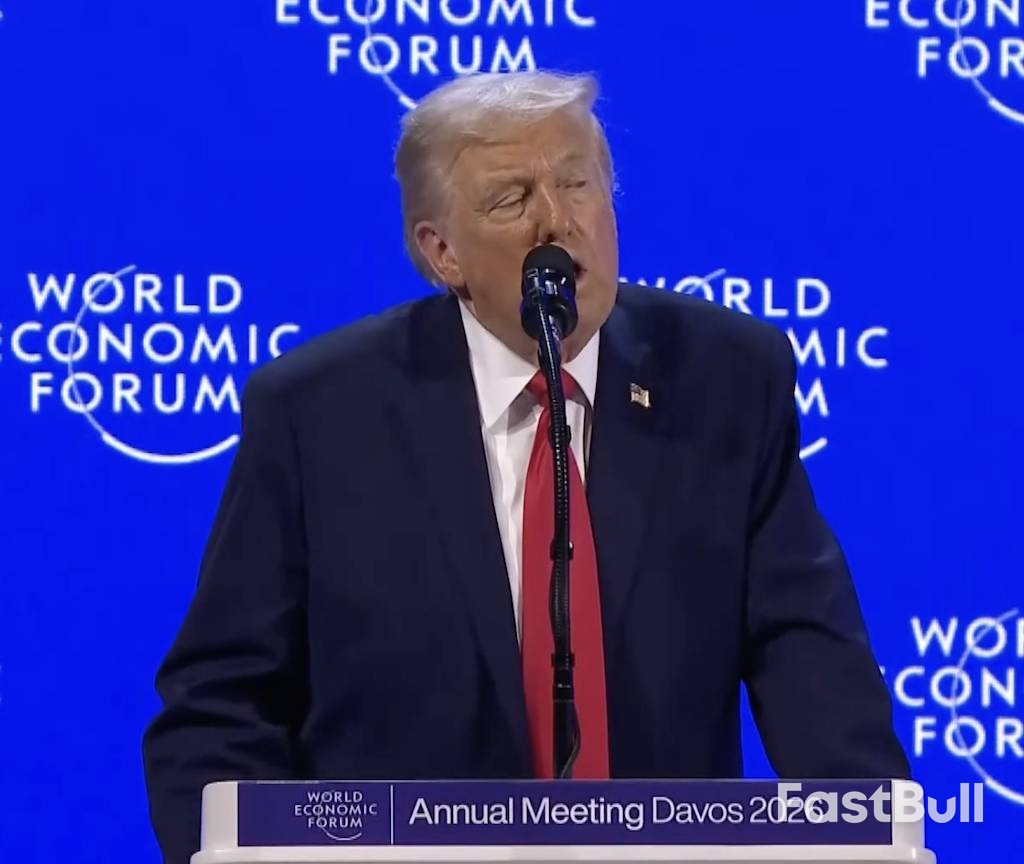
The dispute stems from a speech Trump delivered at the World Economic Forum in Davos, Switzerland. During his address, Trump recounted an alleged conversation where he threatened Macron with steep tariffs to force a change in France's pharmaceutical pricing.
"I said, 'Here's the story, Emmanuel, the answer is, you're going to do it, you're going to do it fast,'" Trump stated. "And if you don't, I'm putting a 25% tariff on everything that you sell into the United States, and a 100% tariff on your wines and champagnes."
According to Trump, Macron immediately conceded. "It took me on average three minutes a country, saying the same thing, 'You will do it'," he added.
This public disagreement is the latest flashpoint in an increasingly strained relationship between the two NATO allies. The war of words reflects a broader pattern of friction under the Trump administration, straining traditional transatlantic ties.
The incidents include:
• Previous Tariff Threats: Trump had previously threatened to impose 200% tariffs on French wines and champagnes in an attempt to compel Macron to join his "Board of Peace" initiative for resolving global conflicts.
• Personal Jabs: Trump also recently mocked the aviator sunglasses Macron wore during his own speech in Davos.
• The Greenland Dispute: Macron has adopted a firmer stance than many European leaders regarding Trump's proposition to take control of Greenland, calling on the EU to use its strongest trade tools against Washington and asserting that Europe will not yield to "bullies."
In response to what it views as misinformation, the French government established an official account named @frenchresponse last year. The account's stated purpose is to expose and correct false narratives. It has become notably more active in recent weeks, particularly in challenging rhetoric from the Trump administration.
At the World Economic Forum in Davos, Switzerland, President Donald Trump made a bold declaration: he has "defeated" inflation. Addressing global leaders, Trump claimed the U.S. has "virtually no inflation" and that consumer prices have been brought under control over the past year.
"Grocery prices, energy prices, air fares, mortgage rates, rent and car payments are all coming down, and they're coming down fast," Trump stated, adding, "We've done a hell of a job in 12 months."
However, a closer look at federal data and analysis from economists suggests this victory claim may be premature.

Inflation measures the rate at which consumer prices are rising, and the U.S. Federal Reserve targets an annual rate of around 2% for long-term economic stability.
Official data shows that inflation remains above this target. The consumer price index (CPI), a primary inflation gauge, stood at a 2.7% annual rate in December 2025. Economists widely view this level as elevated.
"To say the US has 'virtually no inflation' is factually incorrect and a classic Trump overstatement," said Thomas Ryan, a North America economist at Capital Economics. Ryan noted that core CPI, which excludes volatile food and energy prices, "remains uncomfortably high for policymakers at 2.6%."
Mark Zandi, chief economist at Moody's, echoed this sentiment, telling CNBC that inflation is "uncomfortably high." He added, "Inflation is especially problematic for lower and middle-income Americans, given the high inflation for many staples such as groceries, electricity, apparel, furniture, childcare, and healthcare."
Economists suggest that, ironically, the Trump administration's own tariff policies are contributing to upward price pressure and hindering a full victory over inflation. Tariffs are taxes levied on imported goods, which are paid by the U.S.-based importers.
According to the Yale University Budget Lab, the U.S. currently has an average effective tariff rate of 17.5%, the highest level seen since 1932. This figure includes a potential 10% tariff on eight European allies related to control over Greenland. Excluding those, the rate is 16.9%. For comparison, the effective tariff rate was approximately 2% at the start of 2025.
While businesses have not passed on all tariff-related costs to consumers yet, the impact is becoming measurable. John Riccio of the Yale Budget Lab estimates that the average consumer will pay an extra $1,300 to $1,700 in 2026 due to these tariffs compared to before Trump took office.
Joseph Gagnon, a senior fellow at the Peterson Institute for International Economics, believes that while inflation is "pretty close" to the Fed's target, it could have been on target if not for the tariffs.
To verify the President's claims, it's necessary to analyze the specific costs he mentioned. The data reveals a mixed picture, with some expenses falling while others continue to rise.
Mortgage Rates
Mortgage rates have indeed fallen significantly over the last year. The average rate for a 30-year fixed-rate mortgage was 6.21% as of Tuesday, down from over 7% in January 2025. This decline was partly influenced by Trump's directive for Fannie Mae and Freddie Mac to purchase $200 billion in mortgage bonds.
Certified financial planner Stephen Kates noted, "That difference translates into roughly $1,800 per year in lower payments on a $300,000 loan." However, this benefit primarily affects those refinancing or buying a new home, as most homeowners have fixed-rate mortgages.
Rent Prices
Rental payments have also been on a downward trend. The national rent index fell by 0.8% in December, marking the fifth consecutive month of declines and the sharpest winter drop since 2022, according to Apartment List.
Nationally, rents were down 1.3% compared to the previous year, with the median monthly rent at $1,356. Bankrate's Kates explained that "a surge in new apartment construction" has increased supply, pushing prices lower in some areas.

Car Payments
Contrary to the President's statement, car payments have been increasing. The average monthly payment for a new vehicle reached a record high of $772 in the fourth quarter of 2025, up from $754 a year earlier, according to Edmunds.
The average amount financed for a new car also hit a new high of $43,759. "The record-setting figures we're seeing reflect the financial strain many buyers faced throughout the year," said Ivan Drury, Edmunds' director of insights.
Energy Costs
The story on energy prices is divided. Gasoline prices have decreased, with a gallon of regular unleaded costing about $2.81 on average as of January 19. This is nearly a 10% drop from $3.11 on January 20, 2025. The decline is linked to a global oversupply of oil in 2025.
However, other energy costs are rising. Household electricity prices have surged by nearly 7% over the past year, partly driven by the high energy demands of new data centers built for artificial intelligence.

Grocery Bills
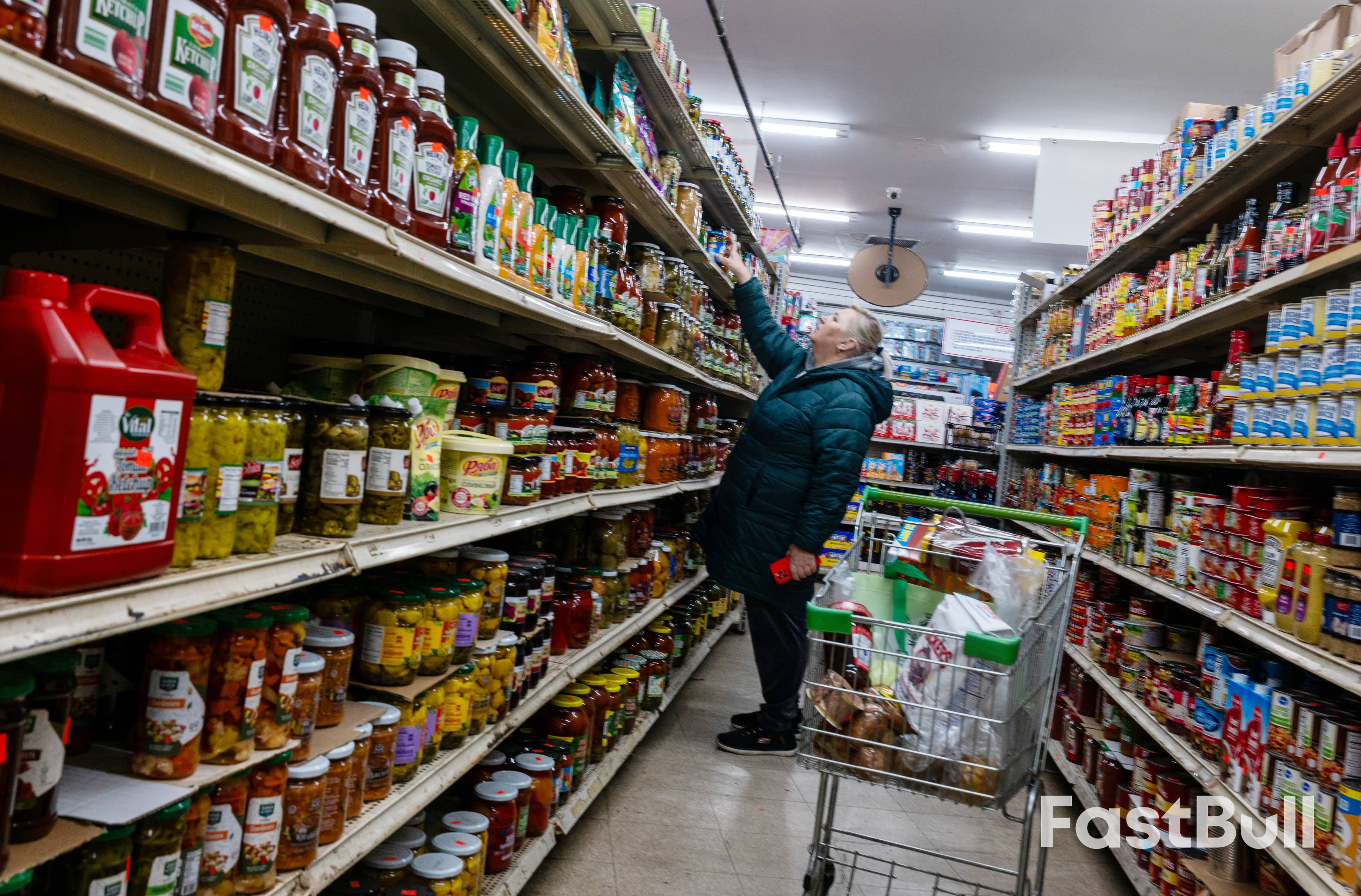
Grocery prices rose by a relatively modest 2.4% over the last year, based on CPI data. However, this overall figure masks significant price hikes for specific items due to supply chain issues.
For example, beef and veal prices jumped 16% year-over-year in December because of a historically small national cattle herd. Similarly, coffee prices are up about 20% after extreme weather affected production in Brazil and Vietnam.
Airfare
Airline fares were down over 3% year-over-year in December. Thomas Ryan noted that lower jet fuel costs and weakening inbound travel demand have contributed to this trend.
Despite the official data, many travelers may not feel the savings. Sally French, a travel expert at NerdWallet, pointed out that the CPI does not account for ancillary fees, such as charges for checked bags, seat selection, or early boarding. "Those extra prices are not captured in this data — despite it still impacting one's travel budget," she wrote.
Speaking at the World Economic Forum in Davos, President Donald Trump revealed a key motivation behind his administration's cryptocurrency policies: outcompeting China. The president explained that China's own regulatory ambitions were a significant factor in his decision-making process.
During his address on Wednesday, Trump confirmed he supported signing the GENIUS Act, a bill focused on payment stablecoins, back in July. He cited two primary reasons: it was "politically good" and a necessary move to counter Beijing's influence, stating, "China wanted that market, too."

"It is politically popular," Trump said of crypto. "But it's, much more importantly, we have to make it so that China doesn't get the hold of it. And once they have that hold, we're not going to be able to get it back."
This speech marks Trump's second time addressing the WEF since his inauguration in January 2025. During the 2025 virtual meeting, he pledged to make the U.S. the "world capital of artificial intelligence and crypto."
Trump also used his Davos platform to speculate that he could sign a broader digital asset market structure bill, known as the CLARITY Act, "very soon." This legislation is currently under consideration in the Senate.
However, the CLARITY Act recently hit a roadblock. The bill's markup was delayed earlier this month after Coinbase CEO Brian Armstrong announced he could not support the legislation "as written." Armstrong and other crypto industry leaders are also attending events at the WEF this week.
While the GENIUS Act was signed into law in July, its implementation is still pending. The bill's text requires a waiting period of either 120 days after U.S. agencies approve regulations or 18 months after its enactment.
A central point of concern for some experts is how new U.S. regulation could position dollar-pegged stablecoins against China's central bank digital currency, the digital yuan. There are fears that the CLARITY Act, without specific clarification on rewards, could create a competitive disadvantage for U.S. offerings.
The contrast in policy approaches is already clear. In January, the People's Bank of China began allowing the country's commercial banks to pay interest on digital yuan deposits. Meanwhile, many U.S. banking groups are actively lobbying for language in the CLARITY Act that would ban third-party platforms and issuers from paying yields on stablecoins.
As of Wednesday, the U.S. Senate Banking Committee had not scheduled a new markup for the CLARITY Act. Some lawmakers and industry insiders have indicated that it could be weeks before the bill is reconsidered.
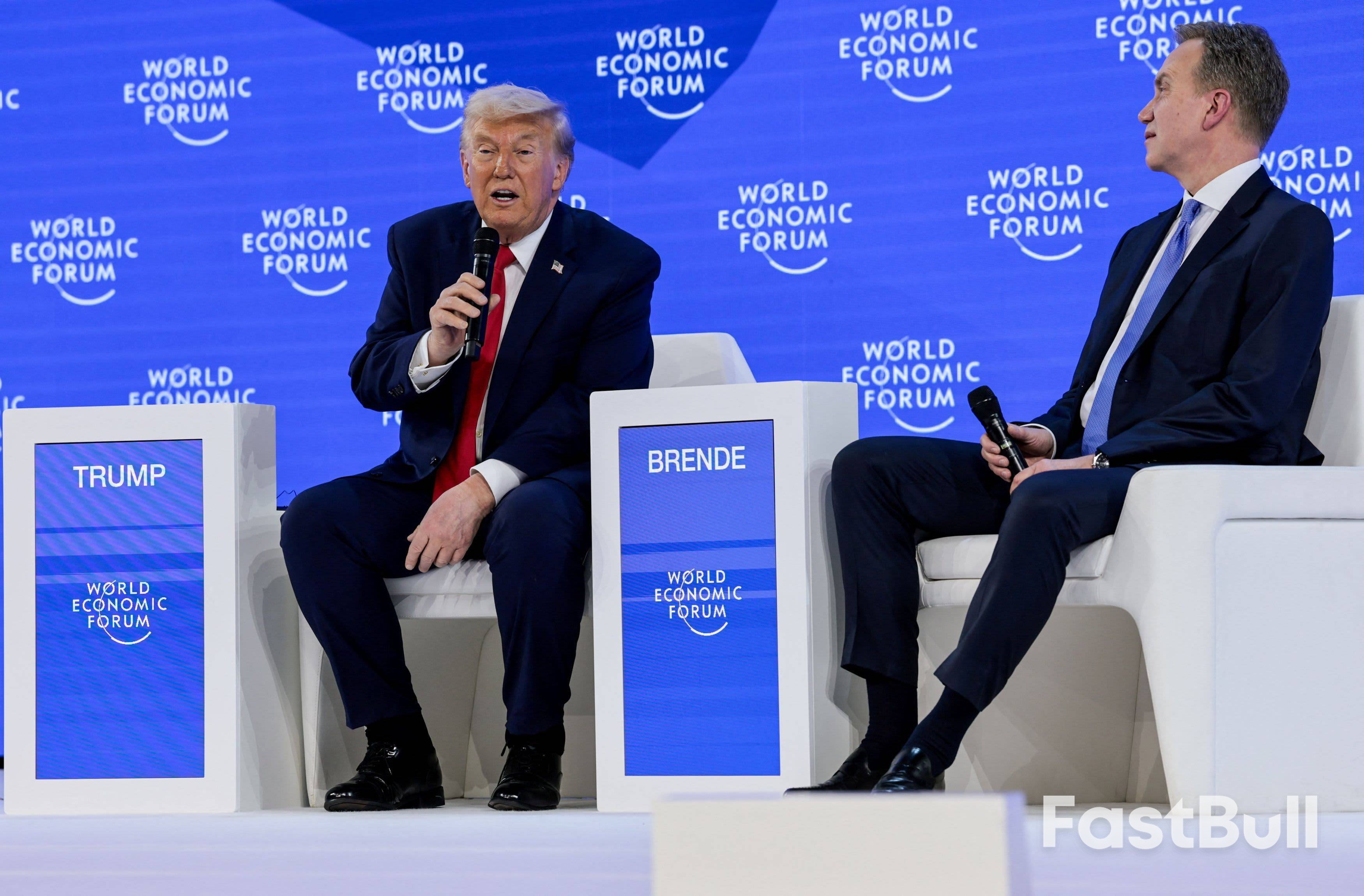
Donald Trump said the US is seeking "immediate negotiations" to acquire Greenland, but ruled out using "excessive force" to take the Artic territory, just after arriving in Davos, Switzerland today.
"I don't have to use force," the US president told business and political leaders gathered for the annual World Economic Forum in a long and combative speech. "I don't want to use force."
He repeated his claims that the island — which is sovereign Danish territory — is key to national security, and insinuated that he'd weigh Europe's response to his demands when considering the US commitment to NATO going forward.
Trump also reiterated his plans to cap credit-card interest rates (which JPMorgan Chase & Co. chief executive officer Jamie Dimon said earlier would spell "economic disaster" for the US), chastised European leaders saying their countries are "not even recognizable, frankly, anymore," and derided Canadian Prime Minister Mark Carney for critical remarks at the forum.
Asked about the timing for a possible Russia-Ukraine peace deal during a Q&A session, Trump said he thinks an agreement is "reasonably close," citing his belief that Vladimir Putin wants to come to the negotiating table.
Following a tense VIP dinner in Davos yesterday, European Central Bank President Christine Lagarde summed up the mood on RTL radio this morning, saying "we are seeing the curtain come up on a new world order."
For more from the Alps, you can follow our live blog here.
Poland's central bank, the world's biggest reported buyer of gold, is boosting purchases by another 150 tons. Buying by central banks has been a key driver of gold's blistering rally, which has seen the metal double in price over the past 18 months. After Trump said the US doesn't want to use excessive force to get Greenland, the advance that took gold to an all-time high cooled slightly.
A tainted infant formula crisis that started with Nestlé is deepening, with French manufacturers Danone and Lactalis pulling products potentially contaminated with a toxin. News that the contamination may be spreading is a worrisome development for a highly regulated food product that millions of parents rely on globally. Danone shares fell as much as 12% in Paris trading on the news before regaining ground. Nestlé is down more than 4% since the recall began.
Netflix shares tumbled after giving a disappointing forecast for earnings in the months ahead as it spends more on programming and works to close its $82.7 billion takeover of Warner Bros. Discovery. The streaming leader said it plans to increase spending on films and TV shows by 10% this year while forging ahead with plans to buy the studio and streaming business of Warner Bros., a deal that would unite two of the world's largest entertainment companies.
The dealmaking environment is thriving, Morgan Stanley Chief Executive Officer Ted Pick said, as companies are in "excellent" health. "I'm pretty amped up," Pick told us in Davos. Not only businesses are thriving, Pick said: consumers are doing well too, at least "at the top end."
A pair of deadly train accidents in just over two days have killed 44 people in Spain, and threaten to trigger another political crisis for the country's beleaguered government. The incidents have cast doubts over Spain's rail system, a source of national pride until this week, and upped pressure on the left-wing administration of Prime Minister Pedro Sánchez, which manages infrastructure and the main passenger operator through state-owned companies.
Larry Fink, the interim co-chief of the WEF, is openly musing about a venue change for the flagship event that would take the annual January meeting outside of Switzerland, citing cities like Detroit and Dublin; Jakarta and Buenos Aires. A possible relocation would be a blow to Switzerland. The WEF, which is a not-for-profit organization, has helped to cement the country's position as a place for high-stakes global diplomacy and business talks.
As workers search for ways to make AI tools relevant to their office life, people are using chatbots to tone-check angry Slack messages, workshop tricky conversations, appear more firm in negotiations and get a second opinion on how their words might be misconstrued.
Japanese Prime Minister Takaichi Sanae shocked the nation on January 19 by announcing she would dissolve the Diet's lower house on January 23 for a snap election on February 8. The move, first reported by the Yomiuri Shimbun on January 9, breaks with convention by dissolving parliament on the first day of its regular session, a decision that could complicate passing the budget for the current fiscal year.
In a highly anticipated speech, Takaichi framed the winter election as a necessary step to secure a public mandate for "major policy shifts at the very core of the state." She argued that with a new prime minister and a changed ruling coalition, it was critical for the public to voice its opinion on a "new set of economic and fiscal policies."
However, major media outlets have pointed to a more strategic motive. They suggest Takaichi is capitalizing on her currently high approval ratings to maximize her chances of victory.
There are also reports that Takaichi has grown frustrated with legislative gridlock, as the governing parties lack a majority in both houses of the Diet. This irritation seemed to surface in her speech when she detailed her experience facing lengthy questioning in both chambers and budget committees. By calling an election, Takaichi is effectively asking the public to either give her the power to govern decisively or force her resignation.
To counter accusations of prioritizing politics over public welfare, Takaichi asserted that her government's supplemental budget created a "fully prepared framework to ensure there would be no disruption to economic management."
Her speech quickly pivoted to a campaign-style address, outlining her administration's central policy concept of "responsible and proactive public finances." She implicitly criticized the newly formed Centrist Reform Alliance (CRA)—a merger of the Constitutional Democratic Party and Komeito—as "politics without the people" and the insider "logic of Nagatacho," Japan's political district.
Positioning herself as a challenger to political orthodoxy, Takaichi even signaled a willingness to consider a consumption tax cut on groceries, a move that would face resistance from fiscal conservatives within her own Liberal Democratic Party (LDP).
Her signature economic initiative rests on two main pillars:
1. Crisis-Management Investment: This involves boosting spending to minimize risk and enhance security across multiple domains. Takaichi stressed a national "responsibility to overcome the constraints of excessive fiscal austerity and take immediate action."
2. Growth-Oriented Investment: This pillar targets the "17 strategic areas" identified by the Japan Growth Strategy Headquarters, alongside efforts to revitalize local communities.
To fund these investments, Takaichi proposed restructuring the budgeting process. Her plan involves allocating all necessary funds in a single annual budget rather than relying on supplementary ones and establishing a mechanism for "multi-year fiscal expenditures." Proponents argue this reform would increase the predictability of government spending, helping businesses plan their own investments more effectively.
Despite Takaichi's strong personal standing, her path to victory is far from guaranteed. A recent poll pegged her approval rating at 67 percent, yet support for her Liberal Democratic Party stands at just 27 percent.
The LDP faces several significant challenges:
• Loss of a Key Ally: The Komeito party, a reliable LDP coalition partner for a quarter-century, has now joined the opposition CRA. The loss of its support base could disrupt results for the LDP in small-district elections.
• A Split Conservative Vote: The growing number of candidates from Sanseito, a party more nationalistic than the LDP, could siphon off conservative votes that would otherwise go to Takaichi.
The upcoming election is set to be a crucial test of Japan's political identity. While the CRA does not directly criticize Takaichi, it has raised concerns about a broader "rightward shift" in Japanese politics and is branding itself as a rallying point for centrist forces.
In a press conference, Takaichi rejected this characterization, framing the trend not as a move to the right but as a step toward becoming a "normal country." Notably, her speech avoided the topic of "foreigners," a contentious issue in the last election, signaling the likely tone of her campaign.
Takaichi is betting that the nation wants her vision of a safe and prosperous Japan. With both the bond market and foreign investors showing nervousness over the country's political trajectory, the world is watching to see if her high-stakes gamble will pay off.
White Label
Data API
Web Plug-ins
Poster Maker
Affiliate Program
The risk of loss in trading financial instruments such as stocks, FX, commodities, futures, bonds, ETFs and crypto can be substantial. You may sustain a total loss of the funds that you deposit with your broker. Therefore, you should carefully consider whether such trading is suitable for you in light of your circumstances and financial resources.
No decision to invest should be made without thoroughly conducting due diligence by yourself or consulting with your financial advisors. Our web content might not suit you since we don't know your financial conditions and investment needs. Our financial information might have latency or contain inaccuracy, so you should be fully responsible for any of your trading and investment decisions. The company will not be responsible for your capital loss.
Without getting permission from the website, you are not allowed to copy the website's graphics, texts, or trademarks. Intellectual property rights in the content or data incorporated into this website belong to its providers and exchange merchants.
Not Logged In
Log in to access more features

FastBull Membership
Not yet
Purchase
Log In
Sign Up