• Trade
  • Markets
  • Copy
  • Contests
  • News
  • 24/7
  • Calendar
  • Q&A
  • Chats
Trending
Screeners
SYMBOL
LAST
BID
ASK
HIGH
LOW
NET CHG.
%CHG.
SPREAD
SPX
S&P 500 Index
6827.42
6827.42
6827.42
6899.86
6801.80
-73.58
-1.07%
--
DJI
Dow Jones Industrial Average
48458.04
48458.04
48458.04
48886.86
48334.10
-245.98
-0.51%
--
IXIC
NASDAQ Composite Index
23195.16
23195.16
23195.16
23554.89
23094.51
-398.69
-1.69%
--
USDX
US Dollar Index
97.950
98.030
97.950
98.500
97.950
-0.370
-0.38%
--
EURUSD
Euro / US Dollar
1.17394
1.17409
1.17394
1.17496
1.17192
+0.00011
+ 0.01%
--
GBPUSD
Pound Sterling / US Dollar
1.33707
1.33732
1.33707
1.33997
1.33419
-0.00148
-0.11%
--
XAUUSD
Gold / US Dollar
4299.39
4299.39
4299.39
4353.41
4257.10
+20.10
+ 0.47%
--
WTI
Light Sweet Crude Oil
57.233
57.485
57.233
58.011
56.969
-0.408
-0.71%
--

Community Accounts

Signal Accounts
--
Profit Accounts
--
Loss Accounts
--
View More

Become a signal provider

Sell trading signals to earn additional income

View More

Guide to Copy Trading

Get started with ease and confidence

View More

Signal Accounts for Members

All Signal Accounts

Best Return
  • Best Return
  • Best P/L
  • Best MDD
Past 1W
  • Past 1W
  • Past 1M
  • Past 1Y

All Contests

  • All
  • Trump Updates
  • Recommend
  • Stocks
  • Cryptocurrencies
  • Central Banks
  • Featured News
Top News Only
Share

Ukraine Says It Received 114 Prisoners From Belarus

Share

USA Embassy In Lithuania: Maria Kalesnikava Is Not Going To Vilnius

Share

USA Embassy In Lithuania: Other Prisoners Are Being Sent From Belarus To Ukraine

Share

Ukraine President Zelenskiy: Five Ukrainians Released By Belarus In US-Brokered Deal

Share

USA Vilnius Embassy: USA Stands Ready For "Additional Engagement With Belarus That Advances USA Interests"

Share

USA Vilnius Embassy: Belarus, USA, Other Citizens Among The Prisoners Released Into Lithuania

Share

USA Vilnius Embassy: USA Will Continue Diplomatic Efforts To Free The Remaining Political Prisoners In Belarus

Share

USA Vilnius Embassy: Belarus Releases 123 Prisoners Following Meeting Of President Trump's Envoy Coale And Belarus President Lukashenko

Share

USA Vilnius Embassy: Masatoshi Nakanishi, Aliaksandr Syrytsa Are Among The Prisoners Released By Belarus

Share

USA Vilnius Embassy: Maria Kalesnikava And Viktor Babaryka Are Among The Prisoners Released By Belarus

Share

USA Vilnius Embassy: Nobel Peace Prize Laureate Ales Bialiatski Is Among The Prisoners Released By Belarus

Share

Belarusian Presidential Administration Telegram Channel: Lukashenko Has Pardoned 123 Prisoners As Part Of Deal With US

Share

Two Local Syrian Officials: Joint US-Syrian Military Patrol In Central Syria Came Under Fire From Unknown Assailants

Share

Israeli Military Says It Targeted 'Key Hamas Terrorist' In Gaza City

Share

Rwanda's Actions In Eastern Drc Are A Clear Violation Of Washington Accords Signed By President Trump - Secretary Of State Rubio

Share

Israeli Military Issues Evacuation Warning In Southern Lebanon Village Ahead Of Strike - Spokesperson On X

Share

Belarusian State Media Cites US Envoy Coale As Saying He Discussed Ukraine And Venezuela With Lukashenko

Share

Belarusian State Media Cites US Envoy Coale As Saying That US Removes Sanctions On Belarusian Potassium

Share

Thai Prime Minister: No Ceasefire Agreement With Cambodia

Share

US, Ukraine To Discuss Ceasefire In Berlin Ahead Of European Summit

TIME
ACT
FCST
PREV
U.K. Trade Balance Non-EU (SA) (Oct)

A:--

F: --

P: --

U.K. Trade Balance (Oct)

A:--

F: --

P: --

U.K. Services Index MoM

A:--

F: --

P: --

U.K. Construction Output MoM (SA) (Oct)

A:--

F: --

P: --

U.K. Industrial Output YoY (Oct)

A:--

F: --

P: --

U.K. Trade Balance (SA) (Oct)

A:--

F: --

P: --

U.K. Trade Balance EU (SA) (Oct)

A:--

F: --

P: --

U.K. Manufacturing Output YoY (Oct)

A:--

F: --

P: --

U.K. GDP MoM (Oct)

A:--

F: --

P: --

U.K. GDP YoY (SA) (Oct)

A:--

F: --

P: --

U.K. Industrial Output MoM (Oct)

A:--

F: --

P: --

U.K. Construction Output YoY (Oct)

A:--

F: --

P: --

France HICP Final MoM (Nov)

A:--

F: --

P: --

China, Mainland Outstanding Loans Growth YoY (Nov)

A:--

F: --

P: --

China, Mainland M2 Money Supply YoY (Nov)

A:--

F: --

P: --

China, Mainland M0 Money Supply YoY (Nov)

A:--

F: --

P: --

China, Mainland M1 Money Supply YoY (Nov)

A:--

F: --

P: --

India CPI YoY (Nov)

A:--

F: --

P: --

India Deposit Gowth YoY

A:--

F: --

P: --

Brazil Services Growth YoY (Oct)

A:--

F: --

P: --

Mexico Industrial Output YoY (Oct)

A:--

F: --

P: --

Russia Trade Balance (Oct)

A:--

F: --

P: --

Philadelphia Fed President Henry Paulson delivers a speech
Canada Building Permits MoM (SA) (Oct)

A:--

F: --

P: --

Canada Wholesale Sales YoY (Oct)

A:--

F: --

P: --

Canada Wholesale Inventory MoM (Oct)

A:--

F: --

P: --

Canada Wholesale Inventory YoY (Oct)

A:--

F: --

P: --

Canada Wholesale Sales MoM (SA) (Oct)

A:--

F: --

P: --

Germany Current Account (Not SA) (Oct)

A:--

F: --

P: --

U.S. Weekly Total Rig Count

A:--

F: --

P: --

U.S. Weekly Total Oil Rig Count

A:--

F: --

P: --

Japan Tankan Large Non-Manufacturing Diffusion Index (Q4)

--

F: --

P: --

Japan Tankan Small Manufacturing Outlook Index (Q4)

--

F: --

P: --

Japan Tankan Large Non-Manufacturing Outlook Index (Q4)

--

F: --

P: --

Japan Tankan Large Manufacturing Outlook Index (Q4)

--

F: --

P: --

Japan Tankan Small Manufacturing Diffusion Index (Q4)

--

F: --

P: --

Japan Tankan Large Manufacturing Diffusion Index (Q4)

--

F: --

P: --

Japan Tankan Large-Enterprise Capital Expenditure YoY (Q4)

--

F: --

P: --

U.K. Rightmove House Price Index YoY (Dec)

--

F: --

P: --

China, Mainland Industrial Output YoY (YTD) (Nov)

--

F: --

P: --

China, Mainland Urban Area Unemployment Rate (Nov)

--

F: --

P: --

Saudi Arabia CPI YoY (Nov)

--

F: --

P: --

Euro Zone Industrial Output YoY (Oct)

--

F: --

P: --

Euro Zone Industrial Output MoM (Oct)

--

F: --

P: --

Canada Existing Home Sales MoM (Nov)

--

F: --

P: --

Euro Zone Total Reserve Assets (Nov)

--

F: --

P: --

U.K. Inflation Rate Expectations

--

F: --

P: --

Canada National Economic Confidence Index

--

F: --

P: --

Canada New Housing Starts (Nov)

--

F: --

P: --

U.S. NY Fed Manufacturing Employment Index (Dec)

--

F: --

P: --

U.S. NY Fed Manufacturing Index (Dec)

--

F: --

P: --

Canada Core CPI YoY (Nov)

--

F: --

P: --

Canada Manufacturing Unfilled Orders MoM (Oct)

--

F: --

P: --

Canada Manufacturing New Orders MoM (Oct)

--

F: --

P: --

Canada Core CPI MoM (Nov)

--

F: --

P: --

Canada Manufacturing Inventory MoM (Oct)

--

F: --

P: --

Canada CPI YoY (Nov)

--

F: --

P: --

Canada CPI MoM (Nov)

--

F: --

P: --

Canada CPI YoY (SA) (Nov)

--

F: --

P: --

Canada Core CPI MoM (SA) (Nov)

--

F: --

P: --

Q&A with Experts
    • All
    • Chatrooms
    • Groups
    • Friends
    Connecting
    .
    .
    .
    Type here...
    Add Symbol or Code

      No matching data

      All
      Trump Updates
      Recommend
      Stocks
      Cryptocurrencies
      Central Banks
      Featured News
      • All
      • Russia-Ukraine Conflict
      • Middle East Flashpoint
      • All
      • Russia-Ukraine Conflict
      • Middle East Flashpoint
      Search
      Products

      Charts Free Forever

      Chats Q&A with Experts
      Screeners Economic Calendar Data Tools
      Membership Features
      Data Warehouse Market Trends Institutional Data Policy Rates Macro

      Market Trends

      Market Sentiment Order Book Forex Correlations

      Top Indicators

      Charts Free Forever
      Markets

      News

      News Analysis 24/7 Columns Education
      From Institutions From Analysts
      Topics Columnists

      Latest Views

      Latest Views

      Trending Topics

      Top Columnists

      Latest Update

      Signals

      Copy Rankings Latest Signals Become a signal provider AI Rating
      Contests
      Brokers

      Overview Brokers Assessment Rankings Regulators News Claims
      Broker listing Forex Brokers Comparison Tool Live Spread Comparison Scam
      Q&A Complaint Scam Alert Videos Tips to Detect Scam
      More

      Business
      Events
      Careers About Us Advertising Help Center

      White Label

      Data API

      Web Plug-ins

      Affiliate Program

      Awards Institution Evaluation IB Seminar Salon Event Exhibition
      Vietnam Thailand Singapore Dubai
      Fans Party Investment Sharing Session
      FastBull Summit BrokersView Expo
      Recent Searches
        Top Searches
          Markets
          News
          Analysis
          User
          24/7
          Economic Calendar
          Education
          Data
          • Names
          • Latest
          • Prev

          View All

          No data

          Scan to Download

          Faster Charts, Chat Faster!

          Download App
          English
          • English
          • Español
          • العربية
          • Bahasa Indonesia
          • Bahasa Melayu
          • Tiếng Việt
          • ภาษาไทย
          • Français
          • Italiano
          • Türkçe
          • Русский язык
          • 简中
          • 繁中
          Open Account
          Search
          Products
          Charts Free Forever
          Markets
          News
          Signals

          Copy Rankings Latest Signals Become a signal provider AI Rating
          Contests
          Brokers

          Overview Brokers Assessment Rankings Regulators News Claims
          Broker listing Forex Brokers Comparison Tool Live Spread Comparison Scam
          Q&A Complaint Scam Alert Videos Tips to Detect Scam
          More

          Business
          Events
          Careers About Us Advertising Help Center

          White Label

          Data API

          Web Plug-ins

          Affiliate Program

          Awards Institution Evaluation IB Seminar Salon Event Exhibition
          Vietnam Thailand Singapore Dubai
          Fans Party Investment Sharing Session
          FastBull Summit BrokersView Expo

          US Stocks Surge as Debt Deal Cheers Investors

          Warren Takunda

          Stocks

          Summary:

          Positive sentiment driven by debt bill passage and monetary policy outlook
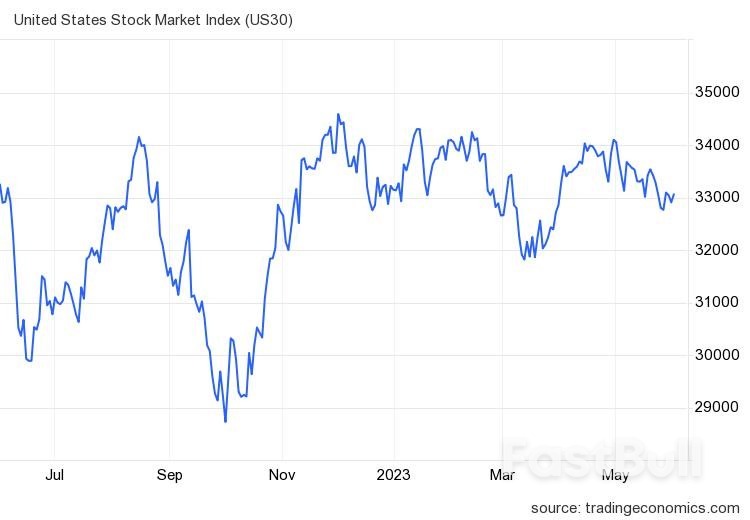
          The US stock market experienced a notable upswing on Thursday, as investor optimism soared following the successful passage of the debt bill in the House of Representatives. The Dow Jones Industrial Average, a prominent blue-chip index, surged over 150 points, while the broader S&P 500 index gained nearly 1%, and the tech-heavy Nasdaq reached a new 40-week high, registering a robust 1.3% increase.
          US Stocks Surge as Debt Deal Cheers Investors_1The House's approval of the debt bill late Wednesday evening was met with enthusiasm from investors, who viewed it as a significant step toward averting a potential default crisis. This development brought a sense of relief and boosted market confidence, fostering a favorable environment for stock market growth.
          Furthermore, market participants closely monitored the monetary policy outlook, which played a pivotal role in driving the positive sentiment. Recent data from the Institute for Supply Management (ISM) revealed that manufacturing activity contracted for the fifth consecutive month. Additionally, price pressures showed a notable easing, further reinforcing expectations that the Federal Reserve would likely pause its tightening cycle during this month. In response to these prospects, Treasury yields declined, while technology shares witnessed a significant boost, contributing to the overall market rally.
          However, amidst the general optimism, Salesforce, a leading technology company, faced a setback as its stock declined by 5%. The decline was triggered by the company's report of higher capital expenses than initially anticipated. Despite this isolated occurrence, the overall market sentiment remained bullish, with investors focusing on the positive aspects of the debt deal and monetary policy expectations.
          Adding to the positive developments, the market celebrated the passage of the Fiscal Responsibility Act of 2023 by a vote of 314-117 in the House of Representatives. This legislation, which aims to address fiscal concerns, is now making its way to the Senate and is anticipated to receive approval prior to the June 5th default deadline. Investors welcomed this news, as it provided further assurance of a stable economic environment, instilling confidence in the market's long-term outlook.
          In summary, the US stock market experienced a significant rally driven by the successful passage of the debt bill and optimistic expectations regarding the Federal Reserve's monetary policy stance. The improved sentiment resulted in impressive gains across major indices, with the Dow Jones, S&P 500, and Nasdaq all exhibiting notable increases. While Salesforce faced a setback due to higher-than-expected capital expenses, the broader market remains buoyant as investors eagerly anticipate further positive developments in the coming weeks.
          Risk Warnings and Disclaimers
          You understand and acknowledge that there is a high degree of risk involved in trading. Following any strategies or investment methods may lead to potential losses. The content on the site is provided by our contributors and analysts for information purposes only. You are solely responsible for determining whether any trading assets, securities, strategy, or any other product is suitable for investing based on your own investment objectives and financial situation.
          Comments
          Add to Favorites
          Share

          U.S. Oil and Gas Output Still Rising in Response to High Prices Last Year

          Owen Li

          Commodity

          U.S. oil and gas production continued to rise strongly in March - the delayed impact of very high prices that prevailed until the third quarter of 2022.
          Oil output increased by 171,000 barrels per day (b/d) in March compared with February, according to the U.S. Energy Information Administration ("Petroleum supply monthly", EIA, May 31).
          The gains were led by the Lower 48 states (+137,000 b/d) and Gulf of Mexico (+45,000 b/d), which more than offset lower production from Alaska (-11,000 b/d).
          Output rose by almost 10% in the first three months of 2023, compared with the same period a year earlier, and was the second-highest for the time of year after 2020.
          On the gas side, dry production hit record 3,171 billion cubic feet in March and was more than 7% higher than in the same month a year earlier ("Natural gas monthly", EIA, May 31).
          Gas output climbed to a record 9,180 billion cubic feet in the first quarter and was also 7% higher than a year before.
          Shale production is often characterised as "short cycle" because wells have a relatively rapid decline rate and new ones must be drilled constantly to replace the dwindling output from older ones.
          But there is still typically a delay of up to 12 months between a change in prices and a change in recorded production.
          The pandemic saw a much faster pass-through from prices to production in 2020, but that was in response to an exceptional once-per-century crisis.
          After adjusting for inflation, U.S. crude prices peaked at a monthly average of $119 per barrel in June 2022 (87th percentile for all months since 2000) providing a strong impetus to increase drilling and output.
          Real gas prices peaked at a monthly average of $9 per million British thermal units in August 2022 (82nd percentile for all months since 2000) again giving strong impetus for more production.
          Since then, prices have fallen to $72 per barrel (45th percentile) and $2.30 per million British thermal units (2nd percentile).
          But the impact of these very high prices during the second and third quarters of 2022 was still filtering through into production growth in the first quarter of 2023.
          The lagged impact of these earlier high prices should start to fade from the third quarter, and especially the fourth quarter.
          The total number of rigs drilling for oil and gas was already down by around 7% in May 2023, compared with its peak in December 2022.
          Slower drilling activity will eventually translate into slower production growth with a typical delay of up to 6 months.
          In the meantime, however, high levels of production are keeping inventories elevated, especially in the case of gas, which is in turn keeping prices under pressure.
          U.S. commercial crude inventories were still +24 million barrels (+5% or +0.43 standard deviations) above the prior 10-year seasonal average at the end of March. They have since normalised.
          U.S. gas stocks were +214 billion cubic feet (+13% or +0.47 standard deviations) above the 10-year average at the end of March and were still +270 billion cubic feet (+13% or +0.63 standard deviations) above it in late May.
          The contrast between fairly average crude inventories and a large surplus in gas explains why oil prices are close to the post-2000 average in real terms while gas prices are still trading near to their lowest point.

          Source: Devdiscourse

          Risk Warnings and Disclaimers
          You understand and acknowledge that there is a high degree of risk involved in trading. Following any strategies or investment methods may lead to potential losses. The content on the site is provided by our contributors and analysts for information purposes only. You are solely responsible for determining whether any trading assets, securities, strategy, or any other product is suitable for investing based on your own investment objectives and financial situation.
          Comments
          Add to Favorites
          Share

          US Initial Jobless Claims Rise Less than Expected, Indicating Resilient Labor Market

          Warren Takunda

          Traders' Opinions

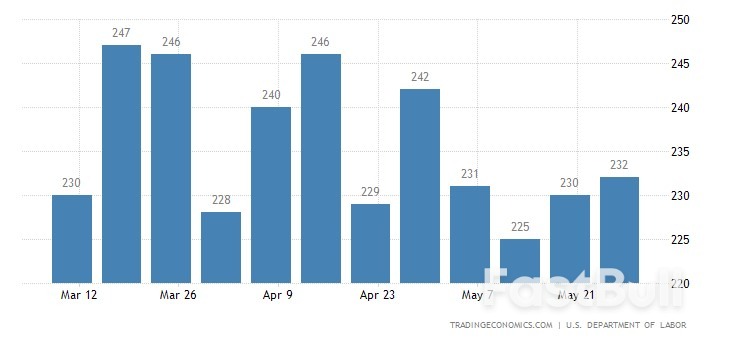
          In the week ending May 27th, the number of Americans filing for unemployment benefits increased by 2,000 from the previous week, reaching a total of 232,000. While this represents the highest level in a month, it fell below market expectations of 235,000. These figures, coupled with the downward trend observed since March, suggest that the labor market in the United States remains robust. This development strengthens the likelihood of the Federal Reserve implementing another interest rate hike in June, extending its tightening cycle.

          US Initial Jobless Claims Rise Less than Expected, Indicating Resilient Labor Market_1Stable Labor Market Signals Persist

          Despite the marginal increase in initial jobless claims, the overall labor market remains firm, as indicated by recent data. The four-week moving average, which smooths out week-to-week fluctuations, declined by 2,500 to 229,500. This downward trend signifies that the labor market has been resilient and capable of absorbing the impact of short-term fluctuations in unemployment claims.

          Seasonal Adjustments and Regional Variations

          When considering the seasonally unadjusted data, initial jobless claims rose by 5,296 to 207,941 during the reported week. Notably, Ohio experienced a significant increase of 2,133 claims, followed by New York with a rise of 1,277. Conversely, several states witnessed declines in unemployment claims, including North Carolina (-607), Arkansas (-576), Georgia (-394), and Florida (-356).

          Potential Implications for Federal Reserve Policy

          The better-than-expected jobless claims figures present an interesting scenario for the Federal Reserve. The persistently tight labor market, as reflected in recent data, may prompt the central bank to consider extending its tightening cycle by implementing another rate hike in June. This move would align with the Fed's objective of maintaining stable inflation and ensuring sustainable economic growth.

          Market Reaction

          In response to the news, financial markets are likely to closely monitor the Federal Reserve's upcoming decisions. A potential interest rate hike in June could impact various sectors, including equity markets, fixed income instruments, and currency exchange rates. Investors will scrutinize the central bank's statements for indications of future monetary policy direction and adjust their portfolios accordingly.
          The increase in US initial jobless claims by 2,000 to 232,000, while below market expectations, suggests a resilient labor market. The consistently low levels of claims, in conjunction with the decline in the four-week moving average, signify the strength of the US economy. These factors reinforce the possibility of the Federal Reserve extending its tightening cycle through another rate hike in June. As the financial markets react to this news, market participants will closely watch for signals from the central bank regarding future monetary policy decisions.
          Risk Warnings and Disclaimers
          You understand and acknowledge that there is a high degree of risk involved in trading. Following any strategies or investment methods may lead to potential losses. The content on the site is provided by our contributors and analysts for information purposes only. You are solely responsible for determining whether any trading assets, securities, strategy, or any other product is suitable for investing based on your own investment objectives and financial situation.
          Comments
          Add to Favorites
          Share

          June 2nd Financial News

          FastBull Featured

          Daily News

          [Quick Facts]

          1. U.S. manufacturing activity contracted for the seventh consecutive month in May.
          2. The U.S. House of Representatives has passed a debt ceiling bill.
          3. Harker: Fed should stop raising rates, at least in June.
          4. ADP makes rate hike expectations rise.
          5. liquidity crisis may cause market concerns.
          6. Bullard: prospects for continued disinflation are good, and continued vigilance is required.

          [News Details]

          U.S. manufacturing activity contracted for the seventh consecutive month in May
          Data from the U.S. Institute for Supply Management (ISM) on Thursday showed that the manufacturing PMI fell to 46.9 in May from 47.1 in April. This is the seventh consecutive month that the index has been below the 50-year mark, indicating a contraction in manufacturing. It's the most durable contraction since the Great Recession. And new orders continued to slump amid rising interest rates, but the employment indicator rose to its highest level in nine months.
          The continued weakness in PMI readings supports analysts' expectations that the economy will fall into recession this year. However, there have been several periods, including the mid-1990s and the mid- and late-1980s, when prolonged periods of PMI below 50 were not accompanied by a recession.
          The U.S. House of Representatives has passed a debt ceiling bill
          The U.S. Senate will consider a bill on Thursday to raise the ceiling for the government's $31.4 trillion debt, with just four days left to pass the bill and send it to Democratic President Joe Biden to sign into law, thus avoiding a catastrophic default.
          The bill would temporarily remove the debt ceiling until Jan. 1, 2025. In exchange, the government will limit its spending.
          Harker: Fed should stop raising rates, at least in June
          Philadelphia Fed President Patrick T. Harker said in a speech yesterday that the Fed should not raise interest rates at its next meeting, despite the disappointingly slow decline in high inflation. He may change his mind if the monthly employment data released on Friday or inflation data released next week is much stronger than expected.
          The economy is expected to grow less than 1% this year and the unemployment rate (currently at 3.4%) will rise to about 4.4%.
          If unemployment rises faster than Harker currently predicts or inflation comes down faster, he could think the Fed will cut rates.
          His baseline forecast is that interest rates remain unchanged, allowing time for inflation to fall. He favors maintaining what he currently sees as a "reasonably broad" path to avoid a possible recession if the Fed tightens policy too much.
          The current interest rates are considered to be in restrictive territory and can stay there for some time. "We don't have to keep moving rates up, and then have to reverse course quickly."
          ADP makes rate hike expectations rise
          The ADP data released on Thursday showed that 278,000 new jobs were added, well above the expected 170,000. ADP also easily beat expectations last month (recording 296,000 jobs compared to 150,000 expected), which was also reflected in the strong payrolls data. Bias has been a powerful force in financial markets recently, so the market is likely to incorporate more upside risk into the upcoming non-farm payrolls data.
          Following the release of the data, CME's FedWatch Tool showed that the probability that the Fed will leave rates unchanged in June is 66.8% and the probability of a 25 basis point rate hike is 33.2%.
          liquidity crisis may cause market concerns
          The U.S. government hit the debt ceiling of $ 31.4 trillion in January this year. The Treasury Department then took "unconventional measures" to avoid a debt default. By May 30, the amount available in the general account of the U.S. Treasury has been reduced to less than $40 billion.
          Once the bill on the federal government debt ceiling and budget is signed into law, the debt ceiling impasse is temporarily eased. The U.S. Treasury will act quickly to fill this account, meaning the Treasury will put a lot of short-term Treasury bonds into the market, which will draw a lot of liquidity from the market.
          As it stands now, the new Treasuries issued could reach about $1.4 trillion. If the U.S. government in the short term issues large-scale bonds and implement the current high-interest rates, it may attract a lot of money originally to be invested in other subjects or stored in banks. This will not only exacerbate the recent widespread deposit outflow from the banking sector, so that banks will face greater liquidity pressure but also may push up short-term loans and bond rates, raising funding costs for companies already under pressure in a high-interest rate environment.
          Bullard: prospects for continued disinflation are good, and continued vigilance is required
          In an article released Thursday titled "Is Monetary Policy Sufficiently Restrictive," St. Louis Fed President James Bullard pointed out that in terms of current macroeconomic conditions, interest rates are at the low end of a sufficiently restrictive range level. The prospects for continued disinflation are good but not guaranteed, and continued vigilance is required.
          At the same time, he noted that where within the sufficiently restrictive zone should the policy rate be? And are there other factors to consider (e.g., financial stability)? Such assessments could be reflected in judgments by the FOMC going forward.

          [Focus of the Day]

          UTC+8 20:30 U.S. Non-Farm Payrolls (May)
          Risk Warnings and Disclaimers
          You understand and acknowledge that there is a high degree of risk involved in trading. Following any strategies or investment methods may lead to potential losses. The content on the site is provided by our contributors and analysts for information purposes only. You are solely responsible for determining whether any trading assets, securities, strategy, or any other product is suitable for investing based on your own investment objectives and financial situation.
          Comments
          Add to Favorites
          Share

          What to Watch for in Friday's U.S. Jobs Report

          Alex

          Economic

          Markets think the Fed will "skip" June hike, but strong jobs could change that
          When Federal Reserve Chair Jerome Powell opened the door to a potential Fed pause after the May FOMC meeting, financial markets swiftly priced a Fed peak with potentially 100bp of rate cuts by January 2024. However, strong jobs, sticky inflation and a raft of hawkish comments from some prominent regional Fed officials saw this completely reversed. As of last Friday a June hike has been seen as more likely than not, with perhaps just a couple of cuts priced by next January. This week though, comments from Fed Governor Philip Jefferson and Philadelphia Fed President Patrick Harker reignited the prospect of skipping a hike in June and a reassessment in July. There is clearly a core group at the Fed who think 500bp of rate hikes and tighter lending conditions may mean they have done enough.
          We outlined our U.S. rates view and the risks surrounding it in this report. It is that the Fed has peaked and we will get rate cuts from the fourth quarter onwards but we must acknowledge that if we get a strong jobs report and U.S. CPI comes in hot on 13 June, the day ahead of the 14 June FOMC meeting, that could be enough to tip the balance in favour of another hike.
          Some data points to strong gains
          At the moment, the consensus is for the economy to add 195,000 jobs in tomorrow's report, which is lower than the 253,000 outcome for April. In fact, none of the 69 organisations surveyed by Bloomberg expect payrolls to come in stronger than last month, which is a little surprising. In terms of the numbers we have seen, we know that job openings remain incredibly high and are in fact larger than the total number of Americans that regard themselves as unemployed. This means that a lack of people with the required skill sets continues to restrict hiring.
          Yet today's ADP jobs release reported private payrolls rose 278k versus the 170k consensus - it is a bit of a black box model that doesn't have a great track record in predicting actual payrolls. Then we have the homebase data on hourly employed workers which was OK and the ISM manufacturing employment which pointed to modest growth. Then there are comments from St. Louis Fed economist Max Dvorkin, reported by MNI as saying that their real-time labour market index points to household employment (not the same as payrolls) rising 638k!
          But other data is more cautious
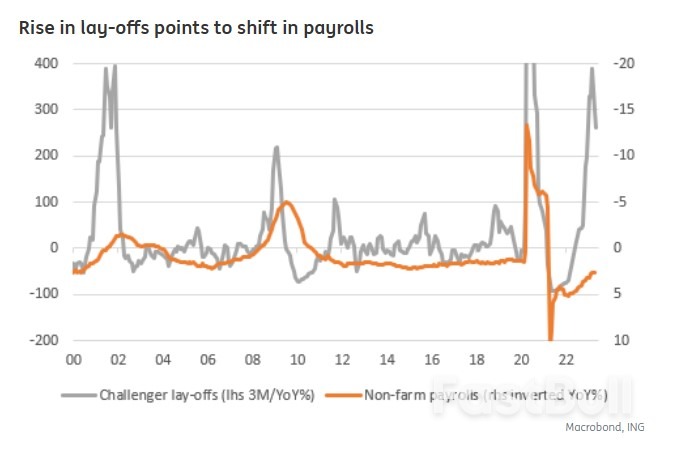
          Nonetheless, we continue to see the number of job lay-off announcements climb. Indeed, today's Challenger job lay-offs report for May showed 80,089 total for lay-offs, up 13,094 on April's level, giving a 286.7% year-on-year change. Hiring announcements totalled just 7,885 versus 23,310 in April. This is the lowest hiring figure since November 2021 and before then, you have to go back to February 2016 to find a lower number than reported today. Yesterday, we had the Federal Reserve's Beige Book which suggested that "Employment increased in most Districts, though at a slower pace than in previous reports".
          What to Watch for in Friday's U.S. Jobs Report_1Watch for slowing wage growth despite record low unemployment
          Putting it all together, we have some very contradictory signals, meaning we have little confidence in our own 200k forecasts and an acknowledgement that pretty much anything could happen. That said, the payrolls number isn't the only figure to watch. Unemployment fell to 3.4% last month, however, it is wages that will probably get more attention given the Fed's wariness that tight labour markets could keep service sector inflation higher for longer. Last month, it rose 0.5% month-on-month, but the market expects this to slow back to 0.3%.
          Nela Richardson, chief economist at ADP, commented within their report that they saw the second month where there has been a "full percentage point decline in pay growth for job changers," before adding that "pay growth is slowing substantially, and wage-driven inflation may be less of a concern for the economy despite robust hiring."
          Inflation could be the clincher
          In terms of consensus expectations, the market is looking for 195k jobs with unemployment ticking up to 3.5% from 3.4% and average hourly earnings rising 0.3% MoM. If we get something similar to that we are likely to see the market remaining of the view that the Fed will not change policy at the June FOMC meeting, but leave the door open for a possible July rate hike.
          However, if we get a 250k+ figure on jobs and wages rise 0.4% MoM or above and unemployment stays at 3.4%, we suspect it is likely to move in the direction of a 50:50 call for a hike. That would leave the outcome determined by the May CPI report, due out the day ahead of the Fed meeting. A 0.4% MoM core CPI print would put the decision on a knife edge and could give enough ammunition to push another hike over the line.

          Source: ING

          To stay updated on all economic events of today, please check out our Economic calendar
          Risk Warnings and Disclaimers
          You understand and acknowledge that there is a high degree of risk involved in trading. Following any strategies or investment methods may lead to potential losses. The content on the site is provided by our contributors and analysts for information purposes only. You are solely responsible for determining whether any trading assets, securities, strategy, or any other product is suitable for investing based on your own investment objectives and financial situation.
          Comments
          Add to Favorites
          Share

          US 30-Year Mortgage Rate Climbs to 6-Month High, Reflecting Market Expectations of Federal Reserve Tightening

          Warren Takunda

          Traders' Opinions

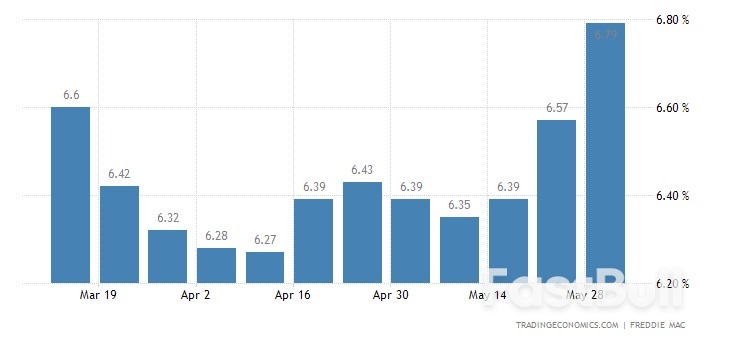
          In a significant development for the US housing market, the average rate on a 30-year fixed mortgage has reached its highest level in six months. According to a survey conducted by mortgage giant Freddie Mac, the rate rose to 6.79% in the week ending May 31st, 2023, up from 6.57% in the previous week. This surge is in line with the Federal Reserve's aggressive tightening measures, leading to growing market expectations of another rate hike. As a result, industry experts anticipate a potential weakening in purchase demand as rates approach the seven percent threshold.US 30-Year Mortgage Rate Climbs to 6-Month High, Reflecting Market Expectations of Federal Reserve Tightening_1

          Rising Mortgage Rates and Economic Outlook

          The recent spike in mortgage rates can be attributed to the buoyant state of the US economy. A thriving economy has instilled confidence in the market, leading to an adjustment in the pricing of mortgage rates. Sam Khater, Chief Economist at Freddie Mac, noted that the rise in rates comes as the market prices in the likelihood of another Federal Reserve rate hike. The current rate of 6.79% is significantly higher than the fixed rate of 5.09% during the same period last year.

          Impact on Housing Market

          The increasing mortgage rates are expected to have implications for the US housing market. Over the past months, there has been a steady flow of purchase demand, primarily driven by attractive rates in the low to mid six percent range. However, with rates inching closer to the seven percent mark, experts anticipate a potential weakening in this demand. Higher mortgage rates generally lead to increased borrowing costs, making homes less affordable for prospective buyers. As a result, this development could potentially slow down the pace of home purchases and impact the overall growth of the housing market.

          Effects on Real Estate Investments

          Rising mortgage rates also have implications for real estate investors. Higher borrowing costs can reduce the affordability of investment properties and potentially affect the returns on such investments. Investors who heavily rely on financing to acquire properties may face challenges in finding favorable terms and interest rates. Moreover, the rising mortgage rates could also impact the demand for rental properties, as potential tenants may reconsider their housing choices in light of increased costs.

          Federal Reserve Policy and Future Outlook

          The Federal Reserve's aggressive tightening measures have played a significant role in the recent surge in mortgage rates. The central bank's actions are aimed at addressing inflationary concerns and maintaining economic stability. However, the impact of these actions on the housing market is a delicate balancing act. While higher rates can help curb inflation, they also have the potential to dampen economic activity, especially in sectors like housing. Therefore, it will be crucial to closely monitor the Federal Reserve's future policy decisions and their implications for mortgage rates and the overall housing market.
          The US 30-year mortgage rate has reached a six-month high, reflecting market expectations of another Federal Reserve rate hike. This increase comes amidst a buoyant economy and the need to address inflationary pressures. However, the rising mortgage rates may weaken purchase demand as affordability becomes a concern for prospective buyers. Additionally, real estate investors may face challenges due to higher borrowing costs. It remains essential to monitor future Federal Reserve policy decisions to better understand their impact on mortgage rates and the broader housing market.
          Risk Warnings and Disclaimers
          You understand and acknowledge that there is a high degree of risk involved in trading. Following any strategies or investment methods may lead to potential losses. The content on the site is provided by our contributors and analysts for information purposes only. You are solely responsible for determining whether any trading assets, securities, strategy, or any other product is suitable for investing based on your own investment objectives and financial situation.
          Comments
          Add to Favorites
          Share

          Finishing the Week with A Flurry

          Damon

          Economic

          Asian markets are looking for a positive end to the week on Friday following a solid rally on Wall Street the day before, as the U.S. debt ceiling vote passed its first congressional hurdle and hopes rose that the U.S. economy will achieve a 'soft landing'.
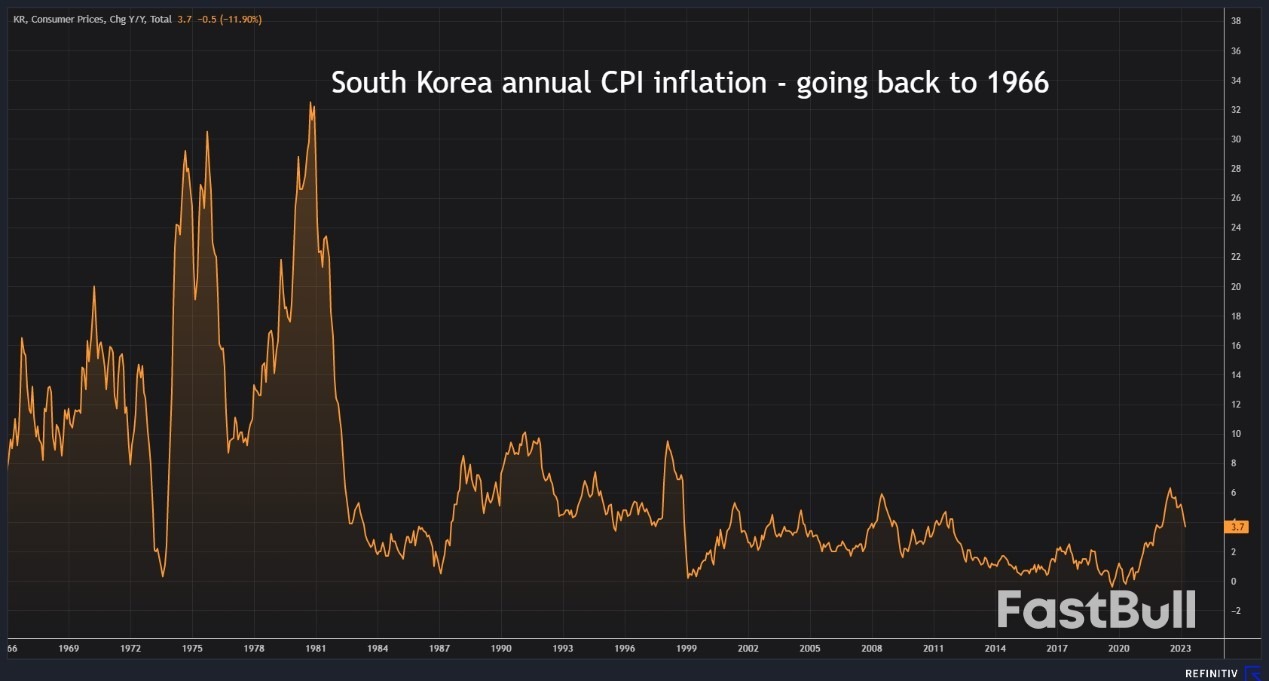
          South Korean inflation for May is the main regional economic indicator on the calendar, and the won could also get a jolt from revised first quarter GDP growth figures. Otherwise, Friday's impetus looks set to come from Thursday's 'Goldilocks' trading on U.S. markets.
          Finishing the Week with A Flurry_1A batch of indicators suggested U.S. inflationary pressures are cooling, which could allow the Fed to pause its rate-hiking cycle later this month, while other data showed the labor market remains strong.
          A win-win for risky assets.
          A weaker dollar and lower Treasury yields also helped fuel the surge in U.S. stocks, with the Nasdaq and tech sector once again the highest fliers. The Nasdaq is on track for a sixth straight weekly gain, which would be its best run since 2019.
          Contrast that with China, where purchasing managers index reports for May were mixed, broader economic data is weak, the central bank is expected to ease policy soon, and investors are pulling their money out of the country.
          Little wonder the yuan is sliding further below 7.00 per dollar to fresh 2023 lows on a near daily basis.
          The dollar's strength against the yuan on Thursday is telling, because it was not replicated across Asia. The Indian rupee registered its biggest rise in three months after PMI data showed factory activity in India grew last month at the fastest pace in two and a half years.
          This follows Wednesday's surprisingly strong GDP data.
          Finishing the Week with A Flurry_2The Australian dollar had its best day in six weeks, and the Japanese yen rose for a fourth consecutive session - its longest winning streak since November.
          Global markets on Friday will take their cue from the U.S. employment report for May but its release comes after Asian markets close, leaving Korean CPI and revised GDP as potentially the main market-moving economic indicators.
          Annual inflation is expected to ease to 3.30% from 3.70% in April, which would be the lowest since October 2021.
          Here are three key developments that could provide more direction to markets on Friday:
          - South Korea CPI inflation (May)
          - South Korea GDP (Q1, revised)
          - Japan monetary base (May)

          Source: Yahoo

          To stay updated on all economic events of today, please check out our Economic calendar
          Risk Warnings and Disclaimers
          You understand and acknowledge that there is a high degree of risk involved in trading. Following any strategies or investment methods may lead to potential losses. The content on the site is provided by our contributors and analysts for information purposes only. You are solely responsible for determining whether any trading assets, securities, strategy, or any other product is suitable for investing based on your own investment objectives and financial situation.
          Comments
          Add to Favorites
          Share
          FastBull
          Copyright © 2025 FastBull Ltd

          728 RM B 7/F GEE LOK IND BLDG NO 34 HUNG TO RD KWUN TONG KLN HONG KONG

          TelegramInstagramTwitterfacebooklinkedin
          App Store Google Play Google Play
          Products
          Charts

          Chats

          Q&A with Experts
          Screeners
          Economic Calendar
          Data
          Tools
          Membership
          Features
          Function
          Markets
          Copy Trading
          Latest Signals
          Contests
          News
          Analysis
          24/7
          Columns
          Education
          Company
          Careers
          About Us
          Contact Us
          Advertising
          Help Center
          Feedback
          User Agreement
          Privacy Policy
          Business

          White Label

          Data API

          Web Plug-ins

          Poster Maker

          Affiliate Program

          Risk Disclosure

          The risk of loss in trading financial instruments such as stocks, FX, commodities, futures, bonds, ETFs and crypto can be substantial. You may sustain a total loss of the funds that you deposit with your broker. Therefore, you should carefully consider whether such trading is suitable for you in light of your circumstances and financial resources.

          No decision to invest should be made without thoroughly conducting due diligence by yourself or consulting with your financial advisors. Our web content might not suit you since we don't know your financial conditions and investment needs. Our financial information might have latency or contain inaccuracy, so you should be fully responsible for any of your trading and investment decisions. The company will not be responsible for your capital loss.

          Without getting permission from the website, you are not allowed to copy the website's graphics, texts, or trademarks. Intellectual property rights in the content or data incorporated into this website belong to its providers and exchange merchants.

          Not Logged In

          Log in to access more features

          FastBull Membership

          Not yet

          Purchase

          Become a signal provider
          Help Center
          Customer Service
          Dark Mode
          Price Up/Down Colors

          Log In

          Sign Up

          Position
          Layout
          Fullscreen
          Default to Chart
          The chart page opens by default when you visit fastbull.com