Markets
News
Analysis
User
24/7
Economic Calendar
Education
Data
- Names
- Latest
- Prev




Signal Accounts for Members
All Signal Accounts
All Contests


U.S. PPI MoM (SA) (Nov)A:--
F: --
U.S. Current Account (Q3)A:--
F: --
U.S. Retail Sales YoY (Nov)A:--
F: --
P: --
U.S. Retail Sales (Nov)A:--
F: --
P: --
U.S. Core Retail Sales MoM (Nov)A:--
F: --
U.S. Retail Sales MoM (Excl. Automobile) (SA) (Nov)A:--
F: --
U.S. Core Retail Sales (Nov)A:--
F: --
P: --
U.S. Retail Sales MoM (Excl. Gas Stations & Vehicle Dealers) (SA) (Nov)A:--
F: --
U.S. Retail Sales MoM (Nov)A:--
F: --
U.S. Core PPI MoM (SA) (Nov)A:--
F: --
Philadelphia Fed President Henry Paulson delivers a speech
U.S. Commercial Inventory MoM (Oct)A:--
F: --
U.S. Existing Home Sales Annualized Total (Dec)A:--
F: --
U.S. Existing Home Sales Annualized MoM (Dec)A:--
F: --
U.S. EIA Weekly Cushing, Oklahoma Crude Oil Stocks ChangeA:--
F: --
P: --
U.S. EIA Weekly Crude Stocks ChangeA:--
F: --
P: --
U.S. EIA Weekly Gasoline Stocks ChangeA:--
F: --
P: --
U.S. EIA Weekly Crude Demand Projected by ProductionA:--
F: --
P: --
U.S. EIA Weekly Crude Oil Imports ChangesA:--
F: --
P: --
U.S. EIA Weekly Heating Oil Stock ChangesA:--
F: --
P: --
U.S. Refinitiv/Ipsos Primary Consumer Sentiment Index (PCSI) (Jan)A:--
F: --
P: --
China, Mainland M2 Money Supply YoY (Dec)--
F: --
P: --
China, Mainland M0 Money Supply YoY (Dec)--
F: --
P: --
China, Mainland M1 Money Supply YoY (Dec)--
F: --
P: --
Japan Domestic Enterprise Commodity Price Index YoY (Dec)A:--
F: --
P: --
Japan PPI MoM (Dec)A:--
F: --
P: --
Japan Domestic Enterprise Commodity Price Index MoM (Dec)A:--
F: --
P: --
Australia Consumer Inflation Expectations (Jan)A:--
F: --
P: --
U.K. 3-Month RICS House Price Balance (Dec)A:--
F: --
South Korea Benchmark Interest RateA:--
F: --
P: --
Saudi Arabia CPI YoY (Dec)--
F: --
P: --
U.K. Services Index MoM (SA) (Nov)--
F: --
P: --
U.K. Services Index YoY (Nov)--
F: --
P: --
U.K. Manufacturing Output MoM (Nov)--
F: --
P: --
U.K. Trade Balance (Nov)--
F: --
P: --
U.K. Monthly GDP 3M/3M Change (Nov)--
F: --
P: --
U.K. GDP MoM (Nov)--
F: --
P: --
U.K. Industrial Output MoM (Nov)--
F: --
P: --
U.K. Trade Balance Non-EU (SA) (Nov)--
F: --
P: --
U.K. Trade Balance (SA) (Nov)--
F: --
P: --
U.K. Manufacturing Output YoY (Nov)--
F: --
P: --
U.K. Construction Output MoM (SA) (Nov)--
F: --
P: --
U.K. Industrial Output YoY (Nov)--
F: --
P: --
U.K. Services Index MoM--
F: --
P: --
U.K. Construction Output YoY (Nov)--
F: --
P: --
U.K. GDP YoY (SA) (Nov)--
F: --
P: --
U.K. Trade Balance EU (SA) (Nov)--
F: --
P: --
France HICP Final MoM (Dec)--
F: --
P: --
Germany Annual GDP Growth--
F: --
Italy Industrial Output YoY (SA) (Nov)--
F: --
P: --
Canada Existing Home Sales MoM (Dec)--
F: --
P: --
Euro Zone Industrial Output MoM (Nov)--
F: --
P: --
Euro Zone Trade Balance (SA) (Nov)--
F: --
P: --
Euro Zone Trade Balance (Not SA) (Nov)--
F: --
P: --
Euro Zone Industrial Output YoY (Nov)--
F: --
P: --
South Africa Refinitiv/Ipsos Primary Consumer Sentiment Index (PCSI) (Jan)--
F: --
P: --
U.K. Refinitiv/Ipsos Primary Consumer Sentiment Index (PCSI) (Jan)--
F: --
P: --
China, Mainland Outstanding Loans Growth YoY (Dec)--
F: --
P: --
Brazil Retail Sales MoM (Nov)--
F: --
P: --
Canada Wholesale Sales MoM (SA) (Nov)--
F: --
P: --


No matching data
Latest Views
Latest Views
Trending Topics
Top Columnists
Latest Update
White Label
Data API
Web Plug-ins
Affiliate Program
View All

No data

Political

Remarks of Officials

Economic

Central Bank

Russia-Ukraine Conflict

Middle East Situation

Daily News
Trump doubted Iran opposition's leader, blamed Zelenskiy for peace talks' stalemate, and dismissed GOP Fed probe criticism.
In an exclusive Oval Office interview on Wednesday, U.S. President Donald Trump weighed in on critical foreign and domestic issues, expressing doubts about Iranian opposition figure Reza Pahlavi's leadership potential, blaming Ukrainian President Volodymyr Zelenskiy for the stalemate in peace talks with Russia, and dismissing Republican criticism of a Justice Department probe into Federal Reserve Chairman Jerome Powell.
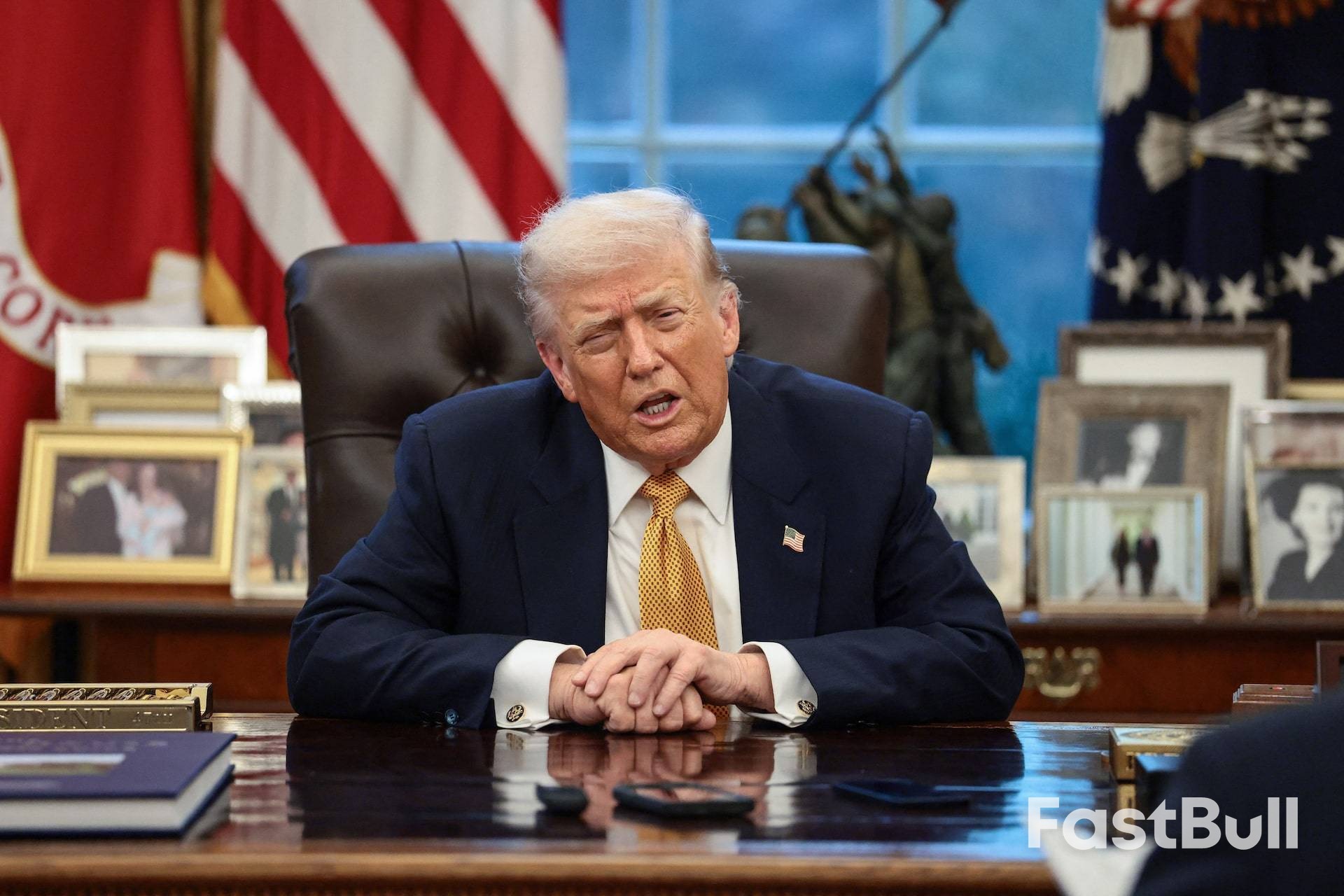
During the 30-minute interview, Trump offered his perspective while closing out the first year of his second term, which began on January 20, 2025.
While acknowledging that Iranian opposition figure Reza Pahlavi "seems very nice," President Trump voiced uncertainty about whether Pahlavi could rally enough internal support to lead Iran. This marks a more direct questioning of Pahlavi's viability, following a statement last week that Trump had no plans to meet with him.
"I don't know how he'd play within his own country," Trump stated. "And we really aren't up to that point yet." He added, "I don't know whether or not his country would accept his leadership, and certainly if they would, that would be fine with me."
Pahlavi, 65, is the U.S.-based son of Iran's late shah, who was overthrown in the 1979 Islamic Revolution. He has become a prominent voice amid ongoing protests against Iran's clerical rule, but the opposition remains fragmented across various factions, including monarchists who support him.
While Trump has previously threatened to intervene in support of protesters, he acknowledged the uncertainty of the situation. He said it is possible the government in Tehran could fall but noted that "any regime can fail."
"Whether or not it falls or not, it's going to be an interesting period of time," he said.
President Trump identified Ukrainian President Volodymyr Zelenskiy as the primary obstacle to resolving the four-year-old war between Russia and Ukraine. Despite campaign promises to end the conflict in a day, Trump has struggled to broker a peace deal.
While he has criticized both Russian President Vladimir Putin and Zelenskiy, his comments suggested a greater frustration with the Ukrainian leader. Trump claimed that Putin is "ready to make a deal." When asked what was causing the delay, Trump responded simply: "Zelenskiy."
"We have to get President Zelenskiy to go along with it," he explained.
On the domestic front, Trump brushed off concerns from Senate Republicans regarding the Justice Department's investigation into Federal Reserve Chairman Jerome Powell. Some lawmakers in his own party have threatened to block his Fed nominees, citing fears of interference with the central bank's independence.
"I don't care. There's nothing to say. They should be loyal," Trump said of the Republican lawmakers.
He also rejected criticism from JPMorgan CEO Jamie Dimon, who warned that meddling with the Fed could fuel inflation. "I don't care what he says," Trump stated.
Managing Midterm Expectations
Looking ahead to the November congressional midterm elections, Trump sought to manage expectations. He noted the historical trend of the president's party losing seats two years into a term.
"When you win the presidency, you don't win the midterms," he said. "But we're going to try very hard to win the midterms."
President Trump confirmed he is scheduled to meet with Venezuelan opposition leader Maria Corina Machado at the White House on Thursday. This will be their first in-person meeting since Trump directed the arrest of Venezuelan President Nicolas Maduro and seized control of the country earlier this month.
"She's a very nice woman," Trump said of Machado. "I've seen her on television. I think we're just going to talk basics."
Machado was awarded the Nobel Peace Prize last year and dedicated it to Trump, even offering to give him the prize, though the Nobel committee stated it cannot be transferred.
Trump also praised Venezuela's acting president, Delcy Rodriguez, who was Maduro's vice president. He described a "fascinating talk" with Rodriguez earlier on Wednesday, adding that "she's been very good to deal with."
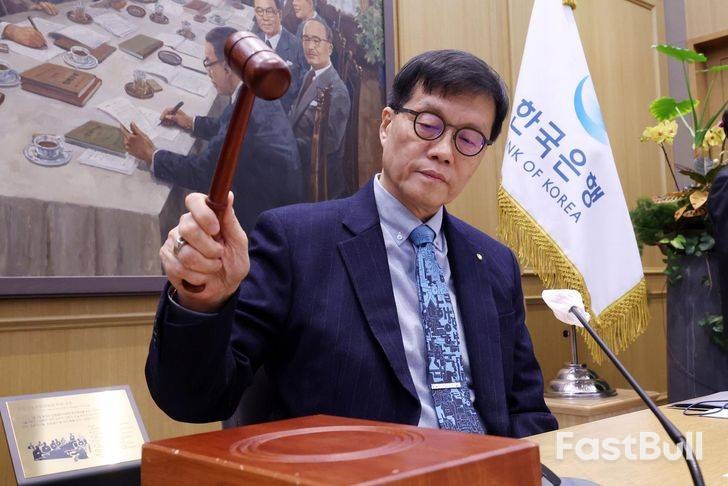
South Korea's central bank has kept its benchmark interest rate unchanged, holding the line as concerns over a weakening currency and rising inflation limit its options for further monetary easing.

At its latest rate-setting meeting in Seoul, the Monetary Policy Board of the Bank of Korea (BOK) decided to maintain the key rate at 2.5 percent. This marks the fifth consecutive meeting since July that the board has opted to hold rates steady.
The decision to pause comes even as the BOK remains in a broader monetary easing cycle. Since October 2024, the central bank has cut its benchmark rate by a total of 100 basis points, down from 3.5 percent. These earlier cuts were implemented in an effort to stimulate economic growth.
The Bank of England's recent decision to lower capital requirements for banks is facing sharp criticism from two former senior officials who helped design the UK's post-crisis financial rules. They argue the policy will primarily enrich shareholders instead of boosting the wider economy.
David Aikman and John Vickers warn that the move to ease regulations comes at a time of growing financial risk, making the policy shift both poorly timed and ill-advised.
In an article for the Centre for Economic Policy Research, the two experts stated that the change will do little to increase lending where it's needed most.
"The most likely practical effect of this weakening of resilience will be higher payouts to bank shareholders, rather than increased lending to the real economy," they wrote. "We see no compelling economic reason for the Financial Policy Committee's loosening of bank capital policy."
This critique directly challenges the rationale behind the first reduction in bank capital estimates in a decade, a move that aligns with a global deregulation trend.
Last month, the Bank of England's Financial Policy Committee (FPC) announced it was lowering its benchmark for how much capital UK banks should hold. The committee said Tier 1 capital should equal around 13% of risk-weighted assets, down from the previous 14% requirement.
Governor Andrew Bailey defended the decision, calling it the "sensible thing to do" and a "reflection of conditions of the health of the banking system." The move also comes as the Labour government pressures regulators to prioritize growth. The BoE now has a secondary mandate to support the competitiveness of the UK's domestic industry.
Despite the official justification, Aikman and Vickers argue that macroeconomic conditions call for the opposite approach. They assert that economic and financial risks have "clearly increased" since the last major review of capital requirements.
"Higher macro-financial risk and sharply reduced fiscal capacity point to a need for higher rather than lower bank capital requirements," they stated, adding, "we believe that the FPC has got it wrong."
The duo pointed to the Bank of England's own analysis to support their claim. The BoE's research noted that its "updated benchmark is within, albeit towards the lower end of, the range of capital requirements that are likely to maximise expected long-term growth."
Aikman and Vickers seized on this point, questioning the regulator's judgment. "It is unclear why a financial stability regulator should choose the lower, and hence riskier, end of its own range," they concluded.
The debate over capital levels has been intense. Ahead of the FPC's decision in December, the banking lobby group UK Finance argued that the country's rules were out of step with international peers. The group claimed the UK's capital requirements "have become misaligned with international peers pursuing the same stability goals, resulting in the highest headline requirements across the G7."
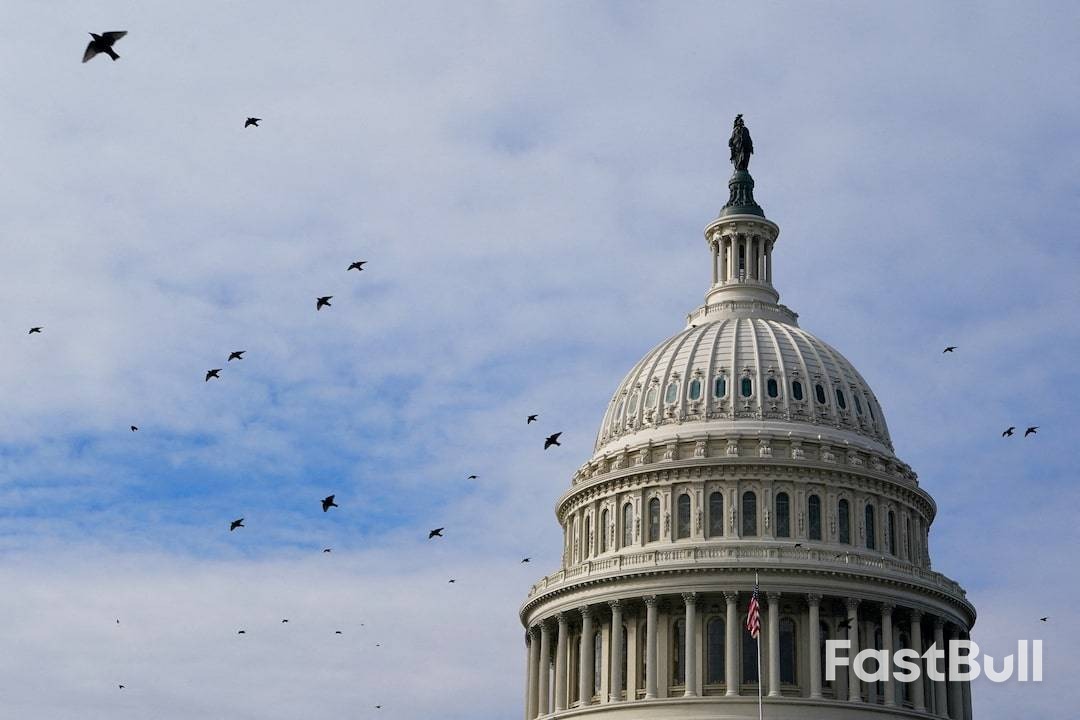
In a narrow 51-50 vote, U.S. Senate Republicans successfully blocked a resolution aimed at preventing President Donald Trump from taking further military action in Venezuela without congressional approval. The move came after intense pressure from the president on party members, with Vice President JD Vance casting the tie-breaking vote to dismiss the measure.

The vote highlights a deepening divide over presidential authority and foreign policy, even as it demonstrates Trump's significant influence over the Republican party.
The resolution's dismissal marks a sharp reversal from just six days earlier. On January 8, the measure had advanced after five Republican senators joined Democrats in a rare rebuke of the president.
In response, Trump publicly condemned the five Republicans—Rand Paul, Susan Collins, Josh Hawley, Lisa Murkowski, and Todd Young—stating they should never be elected again. This was followed by a vigorous lobbying campaign from the administration, including calls from Trump and Secretary of State Marco Rubio, urging the senators to change their position.
The effort proved effective. On Wednesday, Hawley and Young flipped their votes, allowing Republicans to dismiss the resolution. Only three Republicans—Paul, Collins, and Murkowski—voted with the Democrats to move the measure forward.

The debate hinged on whether U.S. actions in Venezuela constituted military operations requiring congressional oversight.
Opponents of the resolution argued it was unnecessary because the U.S. has no ground troops in the country. They framed the January 3 capture of Venezuelan President Nicolas Maduro as a judicial action to face drug charges in the U.S., not a military one.
"We're not currently conducting military operations there," said Republican Senate Majority Leader John Thune, who accused Democrats of being driven by "anti-Trump hysteria."
Supporters of the resolution countered that this view ignores the reality on the ground. They pointed to the large U.S. naval flotilla blockading Venezuela, which has fired on boats for months. They also noted Trump's public threats of additional military action.
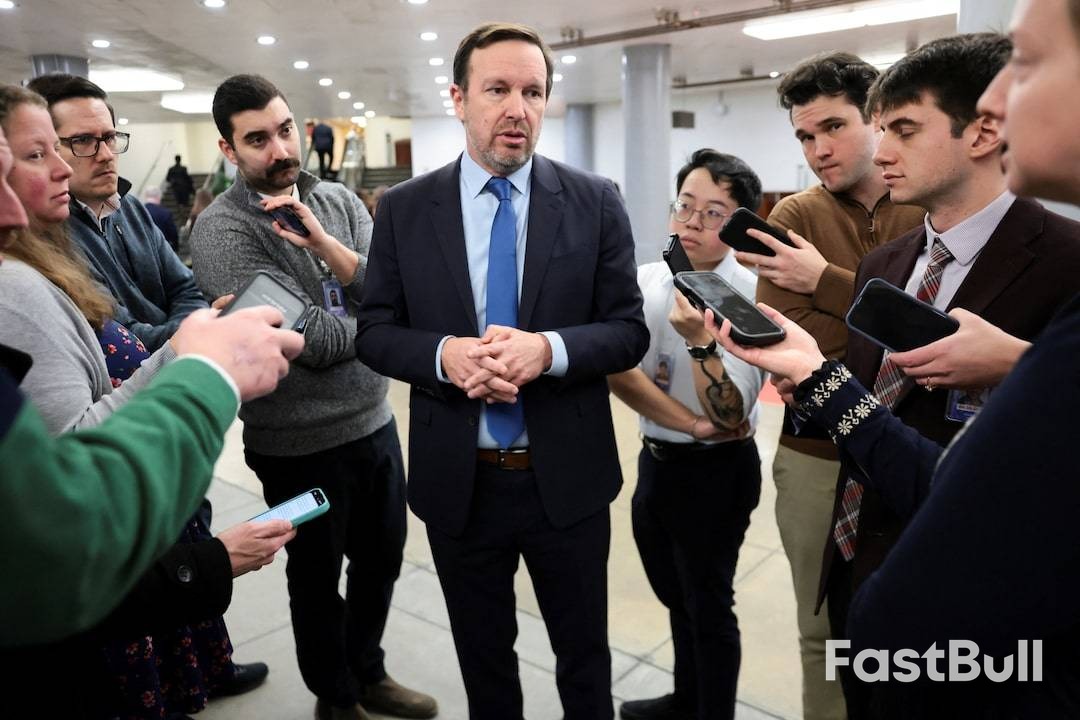
"An argument that the Venezuela campaign is not imminent hostilities within the meaning of the war powers resolution is a violation of every reasonable meaning of that term," argued Democratic Senator Tim Kaine, a key sponsor of the resolution.
The change in stance from Senators Hawley and Young was critical to the outcome. In a statement explaining his reversal, Young said he received assurances from senior national security officials that there are no U.S. troops in Venezuela.
He added, "I've also received a commitment that if President Trump were to determine American forces are needed in major military operations in Venezuela, the Administration will come to Congress in advance to ask for an authorization of force."

Even if the resolution had passed the Senate, it faced an uphill battle. It would have needed to clear the Republican-controlled House of Representatives and then secure two-thirds majorities in both chambers to override an expected presidential veto.
The close vote reflects growing unease in Congress over Trump's foreign policy and the constitutional power to declare war. Lawmakers have become increasingly vocal about reasserting their authority in decisions to send U.S. troops into conflict.
This anxiety extends beyond Venezuela. Recent statements from Trump, including telling Iranian protestors that "help is on the way" and threatening military action to acquire Greenland, have fueled concerns.
After Maduro's capture, some lawmakers accused the administration of misleading them by previously insisting it had no plans to force a change of government in Venezuela. Trump has since posted a meme depicting himself as "Acting President of Venezuela" and told the New York Times that U.S. involvement there would last for years.
Silver prices edged lower, pulling back from a record high after U.S. President Donald Trump delayed imposing new tariffs on critical minerals, though he did not rule them out entirely.
The white metal was trading near $92 an ounce, retreating from its peak on Wednesday. Market anxiety over potential U.S. tariffs on silver, platinum, and palladium was temporarily calmed after a statement indicated Trump would pursue bilateral agreements to secure mineral supplies. The administration also floated the idea of import price floors, rather than simple percentage-based tariffs, to support domestic supply chains.
This measured strategy has eased fears of a sweeping policy that could disrupt commodity markets.
"The order suggests the administration will take a more surgical approach in making future decisions," noted Daniel Ghali, a senior commodity strategist at TD Securities. This "significantly alleviates the fear of a broad-based approach that could have inadvertently impacted the underlying bars that underscore benchmark metals prices."
The news follows a broad rally that sent silver, gold, copper, and tin to new highs on Wednesday. Investors have been piling into hard assets as a hedge against geopolitical tension, supply chain disruptions, and tariff uncertainty. Strong buying in China and the U.S., alongside a wider institutional rotation into commodities, has bolstered the entire sector.
Precious metals also saw ferocious gains earlier this year, partly driven by Trump's renewed criticism of the Federal Reserve. His comments helped spark a "sell America" trade, increasing the appeal of alternative stores of value like gold and silver. On Wednesday, several Fed officials responded by stressing the importance of the central bank's independence.
Looking ahead, most Fed officials, with the exception of Stephen Miran, have signaled they are unlikely to back another interest rate cut this month. They cited a resilient economy and persistent inflation as reasons for caution. A pause in rate reductions could create headwinds for precious metals, which do not offer a yield.
Despite the Fed's current stance, traders are still pricing in one rate cut by July and a total of two by the end of the year.
While both gold and silver have hit major milestones, investor sentiment may be diverging.
According to the latest Markets Pulse survey, gold's rally—which was supercharged by U.S. intervention in Venezuela earlier this month—is expected to have momentum beyond January. For silver and copper, however, there are signs that investment flows are weakening as traders question the longevity of current supply constraints.
As of 8:40 a.m. in Singapore, market prices reflected the cooling sentiment:
• Gold: Down 0.2% to $4,614.18 an ounce.
• Silver: Dropped 0.6% to $92.5977 an ounce.
• Platinum and Palladium: Also declined.
• The Bloomberg Dollar Spot Index: Remained steady.
Investors in Thailand’s bond market are signaling growing unease ahead of the country's general election, pushing the yields on long-term government debt significantly higher amid concerns over post-election fiscal stimulus.
The spread between Thailand's two-year and 10-year government bond yields has widened by approximately 50 basis points over the last four months, hitting its highest level since November 2023. This steepening yield curve reflects market expectations that the incoming government will ramp up debt issuance to fund new spending programs.
While shorter-dated bonds are finding support from the prospect of interest rate cuts, demand for long-term debt is cooling, setting the stage for continued underperformance.
The core issue driving the market is the anticipation of substantial, debt-funded stimulus packages, regardless of which party wins the election. Higher long-term yields make it more expensive for the government to borrow, potentially limiting the fiscal space needed to support Thailand's economy.
The nation's economy is already facing multiple headwinds, including:
• The impact of US reciprocal tariffs
• Severe flooding in its southern provinces
• Border clashes with Cambodia
• A strengthening baht that hurts key export and tourism revenues
"We could see a further steepening in the Thai sovereign bond curve, especially ahead of the elections, which may spell more debt-funded fiscal stimulus," said Kobsidthi Silpachai, head of capital market research at Kasikornbank Pcl.
He predicts the yield spread, currently around 58 basis points, could widen to as much as 80 basis points leading up to the Feb. 8 election.
The potential for unchecked government spending has raised alarms about the country's fiscal health. "If fiscal deficit spending gets out of hand, there's a rising risk of a credit rating downgrade," Kobsidthi warned, also noting the possibility of a 25-basis point rate cut in February.
This sentiment is backed by recent auction results, which show waning investor appetite for longer-dated Thai bonds.
• A sale of 2045 securities on January 7 saw a bid-to-cover ratio of just 1.67 times, below the average of previous auctions for that tenor.
• A December 24 auction for bonds due in 2077 recorded the lowest demand since 2022.
While the long end of the curve faces pressure, shorter-term debt is benefiting from different dynamics. On Tuesday, Bank of Thailand Governor Vitai Ratanakorn stated that there was room to cut interest rates further. However, he cautioned that monetary policy has limitations in addressing the country's structural economic problems.
Even without the election, investors were already preparing for increased debt issuance.
"There is scope for additional steepening" of the yield curve, said Peerampa Janjumratsang, a fixed-income portfolio manager at M&G Investments. She pointed to a significant amount of longer-dated Thai bond issuance on the horizon.
Janjumratsang also suggested the finance ministry might bring its semi-annual bond switching exercise forward to the first quarter of 2026 to extend its debt maturity profile, adding another layer of complexity for bond investors.
Wholesale inflation in Japan slowed in December, driven by a decline in fuel costs that offered some relief to businesses facing pressure from rising labor and raw material expenses.
Data from the Bank of Japan (BOJ) showed the corporate goods price index (CGPI) rose 2.4% in December from the previous year. The CGPI, which measures the prices companies charge one another, matched market forecasts and marked a deceleration from the 2.7% annual increase recorded in November.
This slowdown suggests that falling crude oil prices are beginning to ease cost burdens for Japanese firms.
Despite the overall cooling trend, a weaker yen created renewed upward pressure on the cost of imported goods.
An index tracking yen-based import prices was flat in December compared to the same month a year earlier. This followed a revised 1.7% drop in November, indicating that the benefits of lower global commodity prices are being partially offset by currency movements.
These inflation figures will be a key point of analysis for the Bank of Japan at its next policy meeting, scheduled for January 22-23. The central bank is expected to incorporate this data into its quarterly review of economic growth and inflation forecasts.
White Label
Data API
Web Plug-ins
Poster Maker
Affiliate Program
The risk of loss in trading financial instruments such as stocks, FX, commodities, futures, bonds, ETFs and crypto can be substantial. You may sustain a total loss of the funds that you deposit with your broker. Therefore, you should carefully consider whether such trading is suitable for you in light of your circumstances and financial resources.
No decision to invest should be made without thoroughly conducting due diligence by yourself or consulting with your financial advisors. Our web content might not suit you since we don't know your financial conditions and investment needs. Our financial information might have latency or contain inaccuracy, so you should be fully responsible for any of your trading and investment decisions. The company will not be responsible for your capital loss.
Without getting permission from the website, you are not allowed to copy the website's graphics, texts, or trademarks. Intellectual property rights in the content or data incorporated into this website belong to its providers and exchange merchants.
Not Logged In
Log in to access more features

FastBull Membership
Not yet
Purchase
Log In
Sign Up