Markets
News
Analysis
User
24/7
Economic Calendar
Education
Data
- Names
- Latest
- Prev


Signal Accounts for Members
All Signal Accounts
All Contests


U.K. Input PPI MoM (Not SA) (Dec)A:--
F: --
U.K. Core CPI MoM (Dec)A:--
F: --
P: --
U.K. Retail Prices Index MoM (Dec)A:--
F: --
P: --
U.K. Input PPI YoY (Not SA) (Dec)A:--
F: --
P: --
U.K. CPI YoY (Dec)A:--
F: --
P: --
U.K. Output PPI MoM (Not SA) (Dec)A:--
F: --
P: --
U.K. Output PPI YoY (Not SA) (Dec)A:--
F: --
P: --
U.K. Core Retail Prices Index YoY (Dec)A:--
F: --
P: --
U.K. Core CPI YoY (Dec)A:--
F: --
P: --
U.K. Retail Prices Index YoY (Dec)A:--
F: --
P: --
Indonesia 7-Day Reverse Repo RateA:--
F: --
P: --
Indonesia Loan Growth YoY (Dec)A:--
F: --
P: --
Indonesia Deposit Facility Rate (Jan)A:--
F: --
P: --
Indonesia Lending Facility Rate (Jan)A:--
F: --
P: --
South Africa Core CPI YoY (Dec)A:--
F: --
P: --
South Africa CPI YoY (Dec)A:--
F: --
P: --
IEA Oil Market Report
U.K. CBI Industrial Output Expectations (Jan)A:--
F: --
U.K. CBI Industrial Prices Expectations (Jan)A:--
F: --
P: --
South Africa Retail Sales YoY (Nov)A:--
F: --
P: --
U.K. CBI Industrial Trends - Orders (Jan)A:--
F: --
P: --
Mexico Retail Sales MoM (Nov)A:--
F: --
P: --
U.S. MBA Mortgage Application Activity Index WoWA:--
F: --
P: --
Canada Industrial Product Price Index YoY (Dec)A:--
F: --
Canada Industrial Product Price Index MoM (Dec)A:--
F: --
U.S. Weekly Redbook Index YoYA:--
F: --
P: --
U.S. Pending Home Sales Index YoY (Dec)A:--
F: --
P: --
U.S. Pending Home Sales Index MoM (SA) (Dec)A:--
F: --
P: --
U.S. Construction Spending MoM (Oct)A:--
F: --
U.S. Pending Home Sales Index (Dec)A:--
F: --
P: --
U.S. API Weekly Refined Oil Stocks--
F: --
P: --
U.S. API Weekly Gasoline Stocks--
F: --
P: --
U.S. API Weekly Cushing Crude Oil Stocks--
F: --
P: --
U.S. API Weekly Crude Oil Stocks--
F: --
P: --
South Korea GDP Prelim YoY (SA) (Q4)--
F: --
P: --
South Korea GDP Prelim QoQ (SA) (Q4)--
F: --
P: --
Japan Imports YoY (Dec)--
F: --
P: --
Japan Exports YoY (Dec)--
F: --
P: --
Japan Goods Trade Balance (SA) (Dec)--
F: --
P: --
Japan Trade Balance (Not SA) (Dec)--
F: --
Australia Employment (Dec)--
F: --
P: --
Australia Labor Force Participation Rate (SA) (Dec)--
F: --
P: --
Australia Unemployment Rate (SA) (Dec)--
F: --
P: --
Australia Full-time Employment (SA) (Dec)--
F: --
P: --
Turkey Consumer Confidence Index (Jan)--
F: --
P: --
Turkey Capacity Utilization (Jan)--
F: --
P: --
Turkey Late Liquidity Window Rate (LON) (Jan)--
F: --
P: --
Turkey Overnight Lending Rate (O/N) (Jan)--
F: --
P: --
Turkey 1-Week Repo Rate--
F: --
P: --
U.K. CBI Distributive Trades (Jan)--
F: --
P: --
U.K. CBI Retail Sales Expectations Index (Jan)--
F: --
P: --
U.S. Weekly Continued Jobless Claims (SA)--
F: --
P: --
U.S. Initial Jobless Claims 4-Week Avg. (SA)--
F: --
P: --
U.S. Real Personal Consumption Expenditures Final QoQ (Q3)--
F: --
P: --
Canada New Housing Price Index MoM (Dec)--
F: --
P: --
U.S. Weekly Initial Jobless Claims (SA)--
F: --
P: --
U.S. Real GDP Annualized QoQ Final (Q3)--
F: --
P: --
U.S. PCE Price Index Final QoQ (AR) (Q3)--
F: --
P: --
U.S. Personal Outlays MoM (SA) (Nov)--
F: --
P: --
U.S. Core PCE Price Index YoY (Nov)--
F: --
P: --


No matching data
Latest Views
Latest Views
Trending Topics
Top Columnists
Latest Update
White Label
Data API
Web Plug-ins
Affiliate Program
View All

No data
Trump reveals crypto policy aims to counter China, pushing stablecoin regulation despite legislative snags.
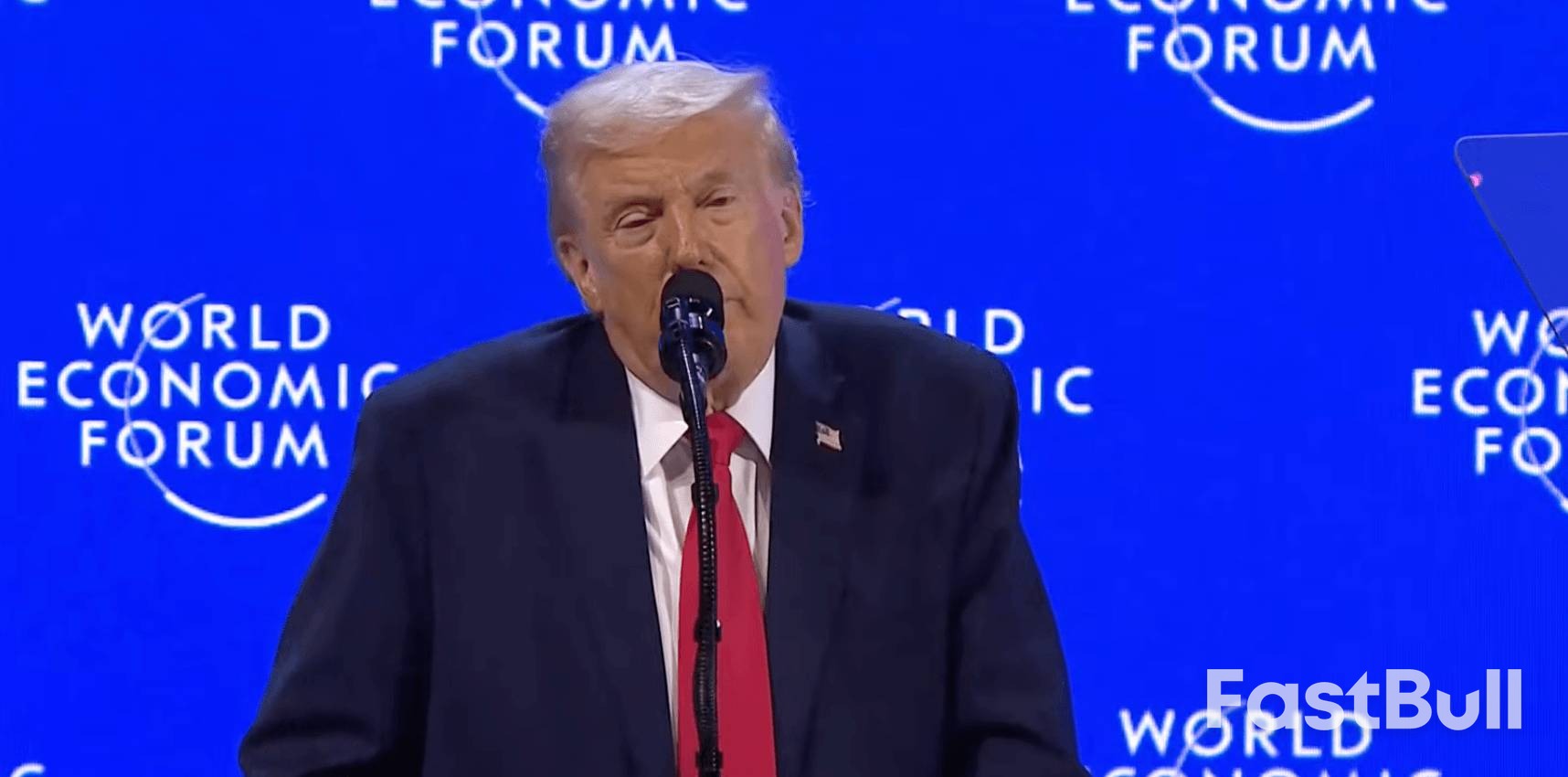
Speaking at the World Economic Forum in Davos, President Donald Trump revealed a key motivation behind his administration's cryptocurrency policies: outcompeting China. The president explained that China's own regulatory ambitions were a significant factor in his decision-making process.
During his address on Wednesday, Trump confirmed he supported signing the GENIUS Act, a bill focused on payment stablecoins, back in July. He cited two primary reasons: it was "politically good" and a necessary move to counter Beijing's influence, stating, "China wanted that market, too."
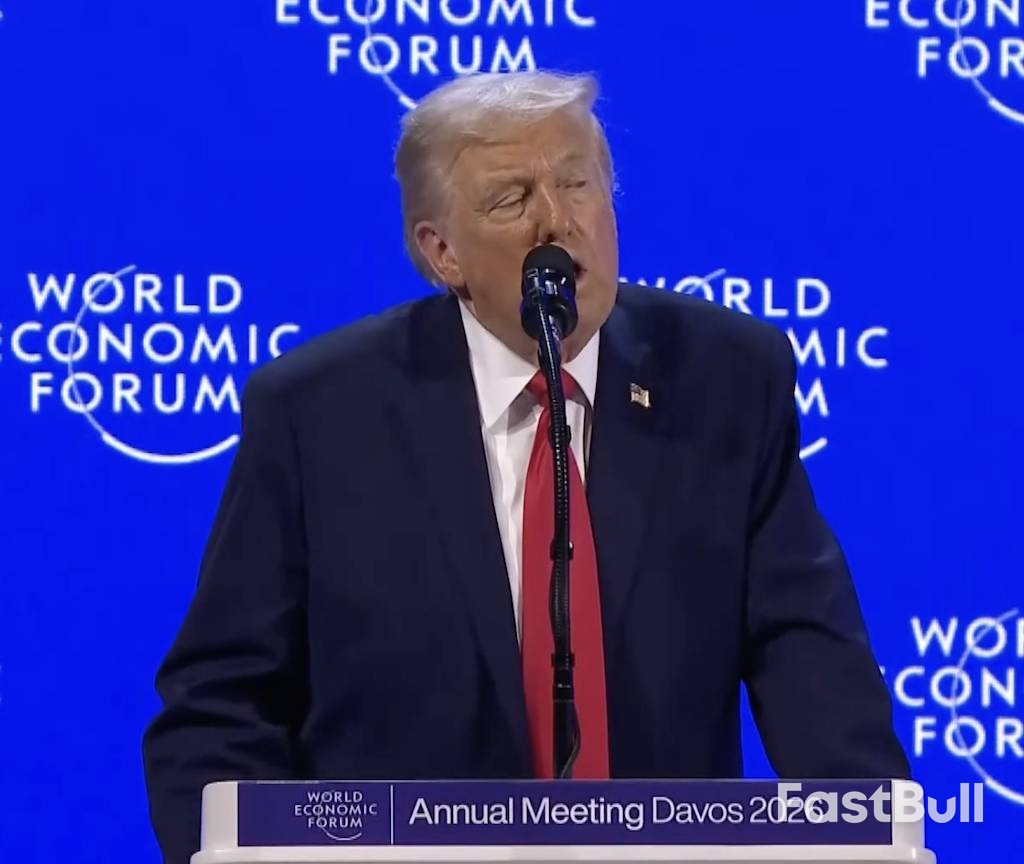
"It is politically popular," Trump said of crypto. "But it's, much more importantly, we have to make it so that China doesn't get the hold of it. And once they have that hold, we're not going to be able to get it back."
This speech marks Trump's second time addressing the WEF since his inauguration in January 2025. During the 2025 virtual meeting, he pledged to make the U.S. the "world capital of artificial intelligence and crypto."
Trump also used his Davos platform to speculate that he could sign a broader digital asset market structure bill, known as the CLARITY Act, "very soon." This legislation is currently under consideration in the Senate.
However, the CLARITY Act recently hit a roadblock. The bill's markup was delayed earlier this month after Coinbase CEO Brian Armstrong announced he could not support the legislation "as written." Armstrong and other crypto industry leaders are also attending events at the WEF this week.
While the GENIUS Act was signed into law in July, its implementation is still pending. The bill's text requires a waiting period of either 120 days after U.S. agencies approve regulations or 18 months after its enactment.
A central point of concern for some experts is how new U.S. regulation could position dollar-pegged stablecoins against China's central bank digital currency, the digital yuan. There are fears that the CLARITY Act, without specific clarification on rewards, could create a competitive disadvantage for U.S. offerings.
The contrast in policy approaches is already clear. In January, the People's Bank of China began allowing the country's commercial banks to pay interest on digital yuan deposits. Meanwhile, many U.S. banking groups are actively lobbying for language in the CLARITY Act that would ban third-party platforms and issuers from paying yields on stablecoins.
As of Wednesday, the U.S. Senate Banking Committee had not scheduled a new markup for the CLARITY Act. Some lawmakers and industry insiders have indicated that it could be weeks before the bill is reconsidered.
Donald Trump said the US is seeking "immediate negotiations" to acquire Greenland, but ruled out using "excessive force" to take the Artic territory, just after arriving in Davos, Switzerland today.
"I don't have to use force," the US president told business and political leaders gathered for the annual World Economic Forum in a long and combative speech. "I don't want to use force."
He repeated his claims that the island — which is sovereign Danish territory — is key to national security, and insinuated that he'd weigh Europe's response to his demands when considering the US commitment to NATO going forward.
Trump also reiterated his plans to cap credit-card interest rates (which JPMorgan Chase & Co. chief executive officer Jamie Dimon said earlier would spell "economic disaster" for the US), chastised European leaders saying their countries are "not even recognizable, frankly, anymore," and derided Canadian Prime Minister Mark Carney for critical remarks at the forum.
Asked about the timing for a possible Russia-Ukraine peace deal during a Q&A session, Trump said he thinks an agreement is "reasonably close," citing his belief that Vladimir Putin wants to come to the negotiating table.
Following a tense VIP dinner in Davos yesterday, European Central Bank President Christine Lagarde summed up the mood on RTL radio this morning, saying "we are seeing the curtain come up on a new world order."
For more from the Alps, you can follow our live blog here.
Poland's central bank, the world's biggest reported buyer of gold, is boosting purchases by another 150 tons. Buying by central banks has been a key driver of gold's blistering rally, which has seen the metal double in price over the past 18 months. After Trump said the US doesn't want to use excessive force to get Greenland, the advance that took gold to an all-time high cooled slightly.
A tainted infant formula crisis that started with Nestlé is deepening, with French manufacturers Danone and Lactalis pulling products potentially contaminated with a toxin. News that the contamination may be spreading is a worrisome development for a highly regulated food product that millions of parents rely on globally. Danone shares fell as much as 12% in Paris trading on the news before regaining ground. Nestlé is down more than 4% since the recall began.
Netflix shares tumbled after giving a disappointing forecast for earnings in the months ahead as it spends more on programming and works to close its $82.7 billion takeover of Warner Bros. Discovery. The streaming leader said it plans to increase spending on films and TV shows by 10% this year while forging ahead with plans to buy the studio and streaming business of Warner Bros., a deal that would unite two of the world's largest entertainment companies.
The dealmaking environment is thriving, Morgan Stanley Chief Executive Officer Ted Pick said, as companies are in "excellent" health. "I'm pretty amped up," Pick told us in Davos. Not only businesses are thriving, Pick said: consumers are doing well too, at least "at the top end."
A pair of deadly train accidents in just over two days have killed 44 people in Spain, and threaten to trigger another political crisis for the country's beleaguered government. The incidents have cast doubts over Spain's rail system, a source of national pride until this week, and upped pressure on the left-wing administration of Prime Minister Pedro Sánchez, which manages infrastructure and the main passenger operator through state-owned companies.
Larry Fink, the interim co-chief of the WEF, is openly musing about a venue change for the flagship event that would take the annual January meeting outside of Switzerland, citing cities like Detroit and Dublin; Jakarta and Buenos Aires. A possible relocation would be a blow to Switzerland. The WEF, which is a not-for-profit organization, has helped to cement the country's position as a place for high-stakes global diplomacy and business talks.
As workers search for ways to make AI tools relevant to their office life, people are using chatbots to tone-check angry Slack messages, workshop tricky conversations, appear more firm in negotiations and get a second opinion on how their words might be misconstrued.
Japanese Prime Minister Takaichi Sanae shocked the nation on January 19 by announcing she would dissolve the Diet's lower house on January 23 for a snap election on February 8. The move, first reported by the Yomiuri Shimbun on January 9, breaks with convention by dissolving parliament on the first day of its regular session, a decision that could complicate passing the budget for the current fiscal year.
In a highly anticipated speech, Takaichi framed the winter election as a necessary step to secure a public mandate for "major policy shifts at the very core of the state." She argued that with a new prime minister and a changed ruling coalition, it was critical for the public to voice its opinion on a "new set of economic and fiscal policies."
However, major media outlets have pointed to a more strategic motive. They suggest Takaichi is capitalizing on her currently high approval ratings to maximize her chances of victory.
There are also reports that Takaichi has grown frustrated with legislative gridlock, as the governing parties lack a majority in both houses of the Diet. This irritation seemed to surface in her speech when she detailed her experience facing lengthy questioning in both chambers and budget committees. By calling an election, Takaichi is effectively asking the public to either give her the power to govern decisively or force her resignation.
To counter accusations of prioritizing politics over public welfare, Takaichi asserted that her government's supplemental budget created a "fully prepared framework to ensure there would be no disruption to economic management."
Her speech quickly pivoted to a campaign-style address, outlining her administration's central policy concept of "responsible and proactive public finances." She implicitly criticized the newly formed Centrist Reform Alliance (CRA)—a merger of the Constitutional Democratic Party and Komeito—as "politics without the people" and the insider "logic of Nagatacho," Japan's political district.
Positioning herself as a challenger to political orthodoxy, Takaichi even signaled a willingness to consider a consumption tax cut on groceries, a move that would face resistance from fiscal conservatives within her own Liberal Democratic Party (LDP).
Her signature economic initiative rests on two main pillars:
1. Crisis-Management Investment: This involves boosting spending to minimize risk and enhance security across multiple domains. Takaichi stressed a national "responsibility to overcome the constraints of excessive fiscal austerity and take immediate action."
2. Growth-Oriented Investment: This pillar targets the "17 strategic areas" identified by the Japan Growth Strategy Headquarters, alongside efforts to revitalize local communities.
To fund these investments, Takaichi proposed restructuring the budgeting process. Her plan involves allocating all necessary funds in a single annual budget rather than relying on supplementary ones and establishing a mechanism for "multi-year fiscal expenditures." Proponents argue this reform would increase the predictability of government spending, helping businesses plan their own investments more effectively.
Despite Takaichi's strong personal standing, her path to victory is far from guaranteed. A recent poll pegged her approval rating at 67 percent, yet support for her Liberal Democratic Party stands at just 27 percent.
The LDP faces several significant challenges:
• Loss of a Key Ally: The Komeito party, a reliable LDP coalition partner for a quarter-century, has now joined the opposition CRA. The loss of its support base could disrupt results for the LDP in small-district elections.
• A Split Conservative Vote: The growing number of candidates from Sanseito, a party more nationalistic than the LDP, could siphon off conservative votes that would otherwise go to Takaichi.
The upcoming election is set to be a crucial test of Japan's political identity. While the CRA does not directly criticize Takaichi, it has raised concerns about a broader "rightward shift" in Japanese politics and is branding itself as a rallying point for centrist forces.
In a press conference, Takaichi rejected this characterization, framing the trend not as a move to the right but as a step toward becoming a "normal country." Notably, her speech avoided the topic of "foreigners," a contentious issue in the last election, signaling the likely tone of her campaign.
Takaichi is betting that the nation wants her vision of a safe and prosperous Japan. With both the bond market and foreign investors showing nervousness over the country's political trajectory, the world is watching to see if her high-stakes gamble will pay off.
A major diplomatic showdown is brewing as European Union leaders consider deploying their most powerful trade weapon against the United States. The move comes as President Donald Trump escalates pressure over Greenland, prompting key European nations to harden their stance.
Germany has joined France in calling for the European Commission to prepare the Anti-Coercion Instrument (ACI), a formidable tool designed to counter economic pressure. According to five diplomats familiar with the discussions, the proposal was slated for an emergency EU leaders' summit in Brussels.
Berlin’s support signals a more unified and forceful European response. President Trump's recent speech in Davos, where he maintained his position on the Danish territory, has only strengthened the resolve among EU capitals to prepare for all possible outcomes.
"The resolve has been there for a few days," one diplomat noted. "We have felt it in our bilateral talks... there is very broad support that the EU must prepare for all scenarios, and that also includes that all instruments are on the table."
While some European leaders attempted to de-escalate the situation in private meetings with the president at Davos, the lack of progress has pushed the EU closer to economic retaliation.
Beyond the ACI, informally known as the "trade bazooka," leaders are also considering a previously prepared retaliation package. This would involve imposing tariffs on €93 billion worth of U.S. exports.
Two EU diplomats suggested that these tariffs could be implemented first, buying time while the Commission navigates the more complex process of activating the ACI.
The Anti-Coercion Instrument provides a list of powerful measures the EU can use to target a country's goods, services, and investments. The primary goal is to halt coercive economic behavior and repair any resulting damage. Its key components include:
• Trade Restrictions: Imposing quotas or licensing requirements to curb imports or exports.
• Public Tenders: Limiting access to the bloc's public procurement market, valued at approximately €2 trillion ($2.3 trillion) annually. This could involve excluding bids where U.S. goods or services exceed 50% of the contract value or applying a penalty score to American bids.
• Service Sector Measures: Targeting key areas where the U.S. holds a trade surplus, potentially affecting digital service providers like Amazon, Microsoft, Netflix, or Uber.
• Investment Curbs: Restricting foreign direct investment from the United States, which is the largest investor in the EU.
• Intellectual Property and Market Access: Limiting protections for intellectual property rights and restricting access to EU financial markets or the ability to sell products like chemicals and food.
The ACI was first proposed in 2021 as a response to the use of trade as a political tool by both the first Trump administration and China. However, activating it is a deliberately slow and multi-stage process.
1. Investigation: The European Commission has up to four months to examine a potential case of economic coercion.
2. Member State Confirmation: If the Commission finds evidence of coercion, EU members have another eight to ten weeks to confirm the finding. This step requires a qualified majority, a higher threshold than for standard retaliatory tariffs.
3. Negotiation: The Commission would then typically enter negotiations with the third country to resolve the issue.
4. Implementation: If negotiations fail, the Commission can implement ACI measures, but only after another vote by EU members. The measures would take effect within three months of approval.
This entire process, from start to finish, could take anywhere from several months to a full year. This lengthy timeline presents a significant challenge, as it may be too slow to effectively counter any immediate actions President Trump might take regarding Greenland.
The Swiss franc surged past 200 yen for the first time in history this week, a milestone driven by the currency's safe-haven appeal amid geopolitical tension and mounting concerns over Japan's fiscal policy.
The currency pair broke the key psychological level in Tokyo on Tuesday before settling slightly lower in the mid-199 yen range during New York trading on Wednesday.
The franc's strength stems from two distinct but converging forces: its traditional role as a stable asset and a sudden sell-off in the Japanese yen.
The Enduring Appeal of a Safe Haven
Switzerland's long-standing neutrality, combined with its economic strength and sound fiscal management, makes the franc a go-to asset during times of international uncertainty. Investors often buy the currency to shield their capital from risk.
The latest catalyst for this move was a dispute between the United States and Europe over control of Greenland, which prompted increased safe-haven buying.
Japan's Fiscal Policy Sparks Yen Sell-Off
While the franc was gaining strength, the yen was simultaneously losing ground. The sell-off was triggered Monday when Japanese Prime Minister Sanae Takaichi announced a snap election and a plan to exempt food and beverages from the 8% consumption tax for two years.
This proposal raised concerns about Japan's fiscal discipline. The reaction was swift in the country's bond market, where yields on ultralong Japanese government bonds surged Tuesday, leading to a broad sell-off of the yen in the foreign exchange market.
The yen is not the only currency facing pressure. The U.S. dollar has also been sold off, with the dollar index—a measure of its strength against a basket of major currencies—falling to a two-week low. Against the dollar, the yen remains weak, trading in the 157 to 158 range.
Looking ahead, the trend favoring the Swiss franc may continue. "A reversal of policy in Japan and the U.S. is unlikely, so the franc will likely be exposed to upward pressure," noted Toshiyasu Endo of Terasu Securities Advisors.
The International Monetary Fund (IMF) has formally requested that Lebanon revise a new law designed to release depositor funds frozen in the country's banking system, according to Prime Minister Nawaf Salam.
Speaking at the World Economic Forum in Davos, Salam confirmed that the IMF "can't endorse the draft as presented" and has proposed several changes. The fund is currently negotiating a financial assistance package with Beirut to address its severe economic crisis.
The proposed law, which Lebanon's cabinet approved last month, aims to allow depositors to withdraw up to $100,000 from their trapped accounts over a four-year period. This legislation is a key part of the government's strategy to resolve the country's long-running financial collapse.
However, the IMF's reservations signal a significant hurdle for the plan's implementation, as the fund's approval is critical for unlocking international aid.
Despite the requested amendments, the prime minister characterized the talks with the IMF as a "positive engagement" that is set to continue.
"We want to have an IMF program as clearly stated in the emergency declaration of my government," added Salam, who was appointed by President Joseph Aoun a year ago. This underscores the government's dependence on securing an IMF deal to stabilize the economy.
News of the government's depositor plan had initially fueled a rally in Lebanese bonds, pushing their value to levels not seen since before the country defaulted on approximately $30 billion of international debt in March 2020.
However, those gains were short-lived. Bond prices have since declined after reports emerged detailing the IMF's objections, highlighting market sensitivity to the negotiations.
Speaking at the World Economic Forum in Davos, Donald Trump painted a picture of a dramatic American resurgence one year into his return to the presidency. He told global business leaders the U.S. was experiencing "the fastest and most dramatic economic turnaround in our country's history" with a "booming" economy.

Trump consistently contrasted his administration's performance with that of Joe Biden, whom he blamed for high inflation, border insecurity, and slow growth. He described the prior period as a "nightmare of stagflation," while claiming his own policies delivered "virtually no inflation, and extraordinarily high economic growth."
Trump's speech heavily emphasized American exceptionalism, positioning the United States as the essential driver of the world economy. "The USA is the economic engine on the planet, and when America booms, the entire world booms," he declared, urging other nations to follow Washington’s model over what he called failed European approaches.
He credited this success to a specific policy mix:
• Aggressive Deregulation: Trump claimed his administration cut regulations at an unprecedented rate.
• Reduced Federal Workforce: He highlighted a reduction in the number of federal employees.
• Pro-Energy Policy: He celebrated the reversal of the "Green New Scam," stating that reopening fossil fuel production and embracing nuclear power lowered gasoline prices and boosted national security.
Pivoting from energy to geopolitics, Trump made a renewed case for the United States to acquire Greenland. He framed the push not as a commercial venture but as a critical national security issue, citing the island's strategic position between the U.S., Russia, and China.
"No nation or group of nations is in any position to be able to secure Greenland other than the United States," he stated, describing the territory as an "enormous, unsecured island" that is geographically part of North America. Trump called for "immediate negotiations" with Denmark to discuss a purchase, an idea entertained by U.S. presidents for nearly two centuries.
While asserting the move would strengthen NATO, he reiterated complaints about ally burden-sharing. He issued a blunt warning to Denmark, saying they could agree to the proposal "or you can say no, and we will remember."
Trump also focused on technology, casting artificial intelligence and crypto as key arenas for global competition with China. He claimed the U.S. was "leading the world in AI by a lot," a success he attributed to deregulation and allowing companies to build their own power generation to fuel energy-hungry data centers.
On digital assets, he was direct. "I'm also working to ensure America remains the crypto capital of the world," he said, citing the signing of the Genius Act and ongoing work on crypto market structure legislation. He argued that crypto had become a significant electoral issue, claiming millions of voters turned against Democrats due to their hostility toward the sector. Trump stressed the urgency of acting before Beijing could gain an advantage, warning, "China wanted that market, too."
Wall Street’s reaction to the Davos speech was subdued. Major stock indexes crept higher following his remarks around 12 p.m. EST but began to slide back into the red fifteen minutes later, ending the session mostly flat.
The crypto markets, however, saw a negative response. Bitcoin (BTC) fell to an intraday low of $87,193 per coin at 12:15 p.m. EST.
In his closing remarks, Trump linked economic strength directly to military power. "National security requires economic security and economic prosperity," he said, concluding that the U.S. was stronger than ever. The core message was clear: for Trump, American leadership is not up for debate, and Greenland remains a strategic priority.
White Label
Data API
Web Plug-ins
Poster Maker
Affiliate Program
The risk of loss in trading financial instruments such as stocks, FX, commodities, futures, bonds, ETFs and crypto can be substantial. You may sustain a total loss of the funds that you deposit with your broker. Therefore, you should carefully consider whether such trading is suitable for you in light of your circumstances and financial resources.
No decision to invest should be made without thoroughly conducting due diligence by yourself or consulting with your financial advisors. Our web content might not suit you since we don't know your financial conditions and investment needs. Our financial information might have latency or contain inaccuracy, so you should be fully responsible for any of your trading and investment decisions. The company will not be responsible for your capital loss.
Without getting permission from the website, you are not allowed to copy the website's graphics, texts, or trademarks. Intellectual property rights in the content or data incorporated into this website belong to its providers and exchange merchants.
Not Logged In
Log in to access more features

FastBull Membership
Not yet
Purchase
Log In
Sign Up