• Trade
  • Markets
  • Copy
  • Contests
  • News
  • 24/7
  • Calendar
  • Q&A
  • Chats
Trending
Screeners
SYMBOL
LAST
BID
ASK
HIGH
LOW
NET CHG.
%CHG.
SPREAD
SPX
S&P 500 Index
6846.50
6846.50
6846.50
6878.28
6827.18
-23.90
-0.35%
--
DJI
Dow Jones Industrial Average
47739.31
47739.31
47739.31
47971.51
47611.93
-215.67
-0.45%
--
IXIC
NASDAQ Composite Index
23545.89
23545.89
23545.89
23698.93
23455.05
-32.22
-0.14%
--
USDX
US Dollar Index
99.000
99.080
99.000
99.000
99.000
+0.050
+ 0.05%
--
EURUSD
Euro / US Dollar
1.16385
1.16393
1.16385
1.16388
1.16322
+0.00021
+ 0.02%
--
GBPUSD
Pound Sterling / US Dollar
1.33235
1.33248
1.33235
1.33235
1.33140
+0.00030
+ 0.02%
--
XAUUSD
Gold / US Dollar
4192.94
4193.38
4192.94
4193.80
4189.64
+3.24
+ 0.08%
--
WTI
Light Sweet Crude Oil
58.650
58.692
58.650
58.676
58.543
+0.095
+ 0.16%
--

Community Accounts

Signal Accounts
--
Profit Accounts
--
Loss Accounts
--
View More

Become a signal provider

Sell trading signals to earn additional income

View More

Guide to Copy Trading

Get started with ease and confidence

View More

Signal Accounts for Members

All Signal Accounts

Best Return
  • Best Return
  • Best P/L
  • Best MDD
Past 1W
  • Past 1W
  • Past 1M
  • Past 1Y

All Contests

  • All
  • Trump Updates
  • Recommend
  • Stocks
  • Cryptocurrencies
  • Central Banks
  • Featured News
Top News Only
Share

KCNA: North Korea's Supreme Leader Kim Jong UN Sends Condolences To Russian Embassy For Ambassador's Death

Share

Japan Prime Minister Takaichi: 30 Injuries Reported So Far From Monday Earthquake

Share

USA Senate Committee Votes To Advance Nomination Of Jared Isaacman To Head Nasa

Share

Singapore Post - New Rate For Standard Regular Mail & Standard Large Mail Will Be S$0.62 And S$0.90 Respectively

Share

Australia's S&P/ASX 200 Index Down 0.27% At 8601.10 Points In Early Trade

Share

Trump: The USA Needs Mexico To Release 200000 Acre-Feet Of Water Before December 31St, And The Rest Must Come Soon After

Share

Trump: I Have Authorized Documentation To Impose A 5% Tariff On Mexico If This Water Isn't Released

Share

Brazil's Sao Paulo State Governor Tarcisio De Freitas Says Flavio Bolsonaro Will Have His Support - Cnn Brasil

Share

Ukraine's Security Must Be Guaranteed, In The Long Term, As A First Line Of Defence For Our Union, Says European Commission President

Share

Ukraine's Sovereignty Must Be Respected, Says European Commission President

Share

The Goal Is A Strong Ukraine, On The Battlefield And At The Negotiating Table, Says European Commission President

Share

As Peace Talks Are Ongoing, The EU Remains Ironclad In Its Support For Ukraine, Says European Commission President

Share

Pepsico: Asking USA-Based Pepna Employees As Well As Pbus Division Offices And Pfus Region Offices To Work Remotely This Week

Share

A U.S. Judge Ruled That President Trump’s Ban On Several Wind Power Projects Was Illegal

Share

Senior USA Administration Official: We Continue To Monitor Drc-Rwanda Situation Closely, Continue To Work With All Sides To Ensure Commitments Are Honored

Share

Israeli Military Says It Has Struck Infrastructure Belonging To Hezbollah In Several Areas In Southern Lebanon

Share

SPDR Gold Holdings Down 0.11%, Or 1.14 Tonnes

Share

On Monday (December 8), In Late New York Trading, S&P 500 Futures Fell 0.21%, Dow Jones Futures Fell 0.43%, NASDAQ 100 Futures Fell 0.08%, And Russell 2000 Futures Fell 0.04%

Share

Morgan Stanley: Data Center ABS Spreads Are Expected To Widen In 2026

Share

(US Stocks) The Philadelphia Gold And Silver Index Closed Down 2.34% At 311.01 Points. (Global Session) The NYSE Arca Gold Miners Index Closed Down 2.17%, Hitting A Daily Low Of 2235.45 Points; US Stocks Remained Slightly Down Before The Opening Bell—holding Steady Around 2280 Points—before Briefly Rising Slightly

TIME
ACT
FCST
PREV
France Trade Balance (SA) (Oct)

A:--

F: --

P: --
Euro Zone Employment YoY (SA) (Q3)

A:--

F: --

P: --
Canada Part-Time Employment (SA) (Nov)

A:--

F: --

P: --

Canada Unemployment Rate (SA) (Nov)

A:--

F: --

P: --

Canada Full-time Employment (SA) (Nov)

A:--

F: --

P: --

Canada Labor Force Participation Rate (SA) (Nov)

A:--

F: --

P: --

Canada Employment (SA) (Nov)

A:--

F: --

P: --

U.S. PCE Price Index MoM (Sept)

A:--

F: --

P: --

U.S. Personal Income MoM (Sept)

A:--

F: --

P: --

U.S. Core PCE Price Index MoM (Sept)

A:--

F: --

P: --

U.S. PCE Price Index YoY (SA) (Sept)

A:--

F: --

P: --

U.S. Core PCE Price Index YoY (Sept)

A:--

F: --

P: --

U.S. Personal Outlays MoM (SA) (Sept)

A:--

F: --

P: --
U.S. 5-10 Year-Ahead Inflation Expectations (Dec)

A:--

F: --

P: --

U.S. Real Personal Consumption Expenditures MoM (Sept)

A:--

F: --

P: --
U.S. Weekly Total Rig Count

A:--

F: --

P: --

U.S. Weekly Total Oil Rig Count

A:--

F: --

P: --

U.S. Consumer Credit (SA) (Oct)

A:--

F: --

P: --
China, Mainland Foreign Exchange Reserves (Nov)

A:--

F: --

P: --

Japan Trade Balance (Oct)

A:--

F: --

P: --

Japan Nominal GDP Revised QoQ (Q3)

A:--

F: --

P: --

China, Mainland Imports YoY (CNH) (Nov)

A:--

F: --

P: --

China, Mainland Exports (Nov)

A:--

F: --

P: --

China, Mainland Imports (CNH) (Nov)

A:--

F: --

P: --

China, Mainland Trade Balance (CNH) (Nov)

A:--

F: --

P: --

China, Mainland Exports YoY (USD) (Nov)

A:--

F: --

P: --

China, Mainland Imports YoY (USD) (Nov)

A:--

F: --

P: --

Germany Industrial Output MoM (SA) (Oct)

A:--

F: --

P: --
Euro Zone Sentix Investor Confidence Index (Dec)

A:--

F: --

P: --

Canada National Economic Confidence Index

A:--

F: --

P: --

U.K. BRC Like-For-Like Retail Sales YoY (Nov)

--

F: --

P: --

U.K. BRC Overall Retail Sales YoY (Nov)

--

F: --

P: --

Australia Overnight (Borrowing) Key Rate

--

F: --

P: --

RBA Rate Statement
RBA Press Conference
Germany Exports MoM (SA) (Oct)

--

F: --

P: --

U.S. NFIB Small Business Optimism Index (SA) (Nov)

--

F: --

P: --

Mexico 12-Month Inflation (CPI) (Nov)

--

F: --

P: --

Mexico Core CPI YoY (Nov)

--

F: --

P: --

Mexico PPI YoY (Nov)

--

F: --

P: --

U.S. Weekly Redbook Index YoY

--

F: --

P: --

U.S. JOLTS Job Openings (SA) (Oct)

--

F: --

P: --

China, Mainland M1 Money Supply YoY (Nov)

--

F: --

P: --

China, Mainland M0 Money Supply YoY (Nov)

--

F: --

P: --

China, Mainland M2 Money Supply YoY (Nov)

--

F: --

P: --

U.S. EIA Short-Term Crude Production Forecast For The Year (Dec)

--

F: --

P: --

U.S. EIA Natural Gas Production Forecast For The Next Year (Dec)

--

F: --

P: --

U.S. EIA Short-Term Crude Production Forecast For The Next Year (Dec)

--

F: --

P: --

EIA Monthly Short-Term Energy Outlook
U.S. API Weekly Gasoline Stocks

--

F: --

P: --

U.S. API Weekly Cushing Crude Oil Stocks

--

F: --

P: --

U.S. API Weekly Crude Oil Stocks

--

F: --

P: --

U.S. API Weekly Refined Oil Stocks

--

F: --

P: --

South Korea Unemployment Rate (SA) (Nov)

--

F: --

P: --

Japan Reuters Tankan Non-Manufacturers Index (Dec)

--

F: --

P: --

Japan Reuters Tankan Manufacturers Index (Dec)

--

F: --

P: --

Japan Domestic Enterprise Commodity Price Index MoM (Nov)

--

F: --

P: --

Japan Domestic Enterprise Commodity Price Index YoY (Nov)

--

F: --

P: --

China, Mainland PPI YoY (Nov)

--

F: --

P: --

China, Mainland CPI MoM (Nov)

--

F: --

P: --

Italy Industrial Output YoY (SA) (Oct)

--

F: --

P: --

Q&A with Experts
    • All
    • Chatrooms
    • Groups
    • Friends
    Connecting
    .
    .
    .
    Type here...
    Add Symbol or Code

      No matching data

      All
      Trump Updates
      Recommend
      Stocks
      Cryptocurrencies
      Central Banks
      Featured News
      • All
      • Russia-Ukraine Conflict
      • Middle East Flashpoint
      • All
      • Russia-Ukraine Conflict
      • Middle East Flashpoint
      Search
      Products

      Charts Free Forever

      Chats Q&A with Experts
      Screeners Economic Calendar Data Tools
      Membership Features
      Data Warehouse Market Trends Institutional Data Policy Rates Macro

      Market Trends

      Market Sentiment Order Book Forex Correlations

      Top Indicators

      Charts Free Forever
      Markets

      News

      News Analysis 24/7 Columns Education
      From Institutions From Analysts
      Topics Columnists

      Latest Views

      Latest Views

      Trending Topics

      Top Columnists

      Latest Update

      Signals

      Copy Rankings Latest Signals Become a signal provider AI Rating
      Contests
      Brokers

      Overview Brokers Assessment Rankings Regulators News Claims
      Broker listing Forex Brokers Comparison Tool Live Spread Comparison Scam
      Q&A Complaint Scam Alert Videos Tips to Detect Scam
      More

      Business
      Events
      Careers About Us Advertising Help Center

      White Label

      Data API

      Web Plug-ins

      Affiliate Program

      Awards Institution Evaluation IB Seminar Salon Event Exhibition
      Vietnam Thailand Singapore Dubai
      Fans Party Investment Sharing Session
      FastBull Summit BrokersView Expo
      Recent Searches
        Top Searches
          Markets
          News
          Analysis
          User
          24/7
          Economic Calendar
          Education
          Data
          • Names
          • Latest
          • Prev

          View All

          No data

          Scan to Download

          Faster Charts, Chat Faster!

          Download App
          English
          • English
          • Español
          • العربية
          • Bahasa Indonesia
          • Bahasa Melayu
          • Tiếng Việt
          • ภาษาไทย
          • Français
          • Italiano
          • Türkçe
          • Русский язык
          • 简中
          • 繁中
          Open Account
          Search
          Products
          Charts Free Forever
          Markets
          News
          Signals

          Copy Rankings Latest Signals Become a signal provider AI Rating
          Contests
          Brokers

          Overview Brokers Assessment Rankings Regulators News Claims
          Broker listing Forex Brokers Comparison Tool Live Spread Comparison Scam
          Q&A Complaint Scam Alert Videos Tips to Detect Scam
          More

          Business
          Events
          Careers About Us Advertising Help Center

          White Label

          Data API

          Web Plug-ins

          Affiliate Program

          Awards Institution Evaluation IB Seminar Salon Event Exhibition
          Vietnam Thailand Singapore Dubai
          Fans Party Investment Sharing Session
          FastBull Summit BrokersView Expo

          Sticky U.S. Inflation is the Biggest Threat to Our FX Views

          Alex

          Forex

          Summary:

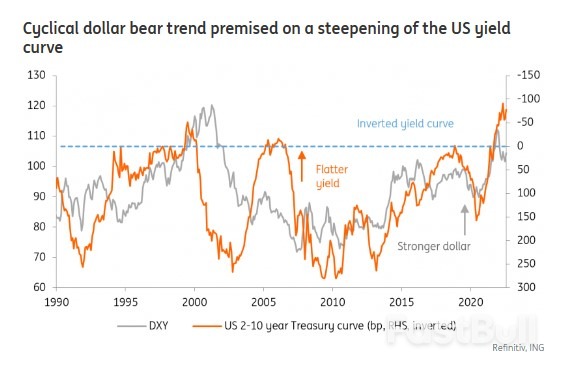
          Our baseline FX view sees the Fed easing cycle kicking off a multi-year dollar bear trend later this year. That should be good news for global growth in that a weaker dollar can export lower U.S. rates around the world.
          Being bearish on the dollar is our baseline view
          Our baseline view in FX markets is that the dollar over the coming months will be entering a cyclical bear trend. This is premised on tighter U.S. credit conditions adding to tighter monetary conditions and delivering the long-awaited U.S. disinflation story. Should the Federal Reserve be in a position to cut rates sharply later this year, we are convinced that the dollar would trade lower. Under that scenario, we think EUR/USD should be somewhere in the 1.15+ area by year-end, while USD/JPY should be below 130.
          Our cyclical call for a weaker dollar later this year should be roughly in sync with the next chapter of the U.S. business cycle, where the bearish inversion of the U.S. Treasury curve rotates into bullish steepening - all premised on the Fed being able to respond to the slowdown with rate cuts.
          Equally, a weaker dollar should be a positive story for global growth. Many countries, especially emerging market countries, have had to support local currencies with higher rates. A turn in the broad dollar trend should give them some breathing room and perhaps attract to emerging markets the kind of positive portfolio inflows not seen since late 2020.
          Sticky U.S. Inflation is the Biggest Threat to Our FX Views_1The alternative is a 1980s style dollar rally
          As above, U.S. disinflation is the vital cog in the wheel to a weaker dollar. Failure of U.S. inflation to slow would keep Fed policy tight/tighter for longer - probably causing a deeper U.S. slowdown if not a recession. Under such a scenario, the U.S. yield curve would stay inverted for a lot longer, and 5-6% dollar interest rates would look even more attractive amid a global slowdown. Such a scenario would loosely resemble that of the early 1980s when Fed Chair Paul Volcker took the U.S. economy into recession in order to get inflation under control. The hugely inverted U.S. yield curve at that time sent the dollar through the roof and added to the U.S. current account deficit. That dollar rally was only reversed in 1985 when the G5 nations agreed on the need for an orderly reversal of the dollar with the Plaza Accord.
          Equally, the Fed keeping rates tight/tighter for longer would exacerbate the global slowdown and exacerbate the decline in pro-cyclical currencies such as the euro. In addition, many emerging market economies looking for breathing room with a weaker dollar would be frustrated. And presumably higher dollar rates would tip more EM sovereigns into default/debt restructuring. Instead of the virtuous cycle of a weaker dollar and lower global rates, the cycle could become a vicious one.

          Source: ING

          Risk Warnings and Disclaimers
          You understand and acknowledge that there is a high degree of risk involved in trading. Following any strategies or investment methods may lead to potential losses. The content on the site is provided by our contributors and analysts for information purposes only. You are solely responsible for determining whether any trading assets, securities, strategy, or any other product is suitable for investing based on your own investment objectives and financial situation.
          Comments
          Add to Favorites
          Share

          Brexit, Three Years Later

          Devin

          Economic

          Brexit formally came into effect in February 2020, some 27 years after the United Kingdom entered the European Communities (the European Union's predecessor) and less than four years after the referendum gave a slight majority (51.9 percent) to the Leavers, a figure that drops to 37.4 percent if one considers all registered voters.
          Brexit happened because British voters had three significant concerns. They did not want to join the eurozone and give up monetary independence, but at the same time, they feared that staying out of the euro area would have weakened their political weight in Brussels and possibly made them vulnerable to undesirable waves of banking regulation coming from the European Central Bank (ECB).
          They were also increasingly worried about the inner dynamic characterizing Brussels' institutions, that is, the transformation of an original European project devoted to free trade, free capital and labor movements into a blueprint for a technocratic planning "superstate" managed by an ever-more powerful and expensive bureaucracy (Britain was a net contributor to the EU budget).
          Last but not least, the British public was stirred by the notion that Brussels' policies could swamp the UK with an unrestricted flood of immigrants from all over the world.
          Magical thinking, misplaced hopes
          By contrast, the main argument put forth by the Remainers had to do with economics. They believed that looser ties with Europe would lead to lower trade volumes and investment and a possibly weaker status for London in global politics and finance. The Remainers thought the UK would be unable to compensate for the lost benefits of tighter European economic integration with closer ties with the United States, China and the former Commonwealth countries. Lower economic growth and a lesser geopolitical role would have followed, their argument went.
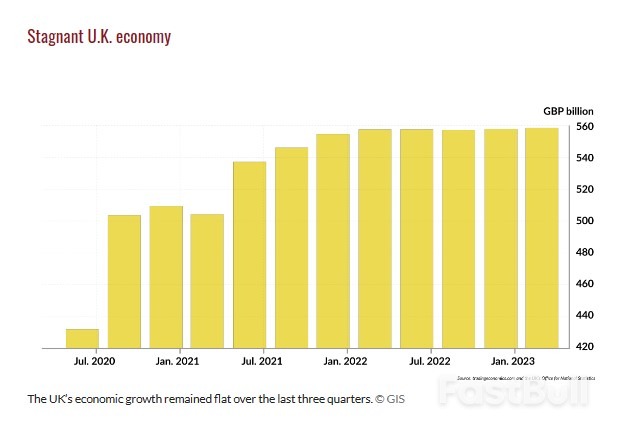
          The evidence suggests that to some extent, both sides were correct. Over the past three years, the growth rate in real gross domestic product (GDP) accelerated at first by about 30 percent in the UK and 21 percent in the EU (during the post-Covid-19 economic restart), but it flattened in both cases in the last three quarters. According to an April 2023 report from the International Monetary Fund (IMF), GDP over the next five years should be more or less stagnant in the UK and the EU. The Leavers had been right in maintaining that Brexit would not bring about an economic catastrophe for the UK. The Remainers argued that leaving the EU alone would not make the dream of a supercharged Britain come true.
          Brexit, Three Years Later_1The policymaking fiascos
          Similar comments apply to monetary policy. Since Brexit, the Bank of England (BoE) and the ECB have both engaged in extensive interest-rate manipulations and unorthodox monetary policies, while doing a lamentable job of monitoring the banking sectors. If one is to judge from the current UK rate of inflation (10.1 percent in March), the BoE has performed worse than the ECB. Brexit has made no positive policy impact, and the banking industry remains fragile on both sides of the English Channel.
          Regarding the quality of policymaking, valuable information comes from the Index of Economic Freedom compiled by the Heritage Foundation and The Wall Street Journal. Between 2020 and 2023, the UK's score dropped 11.85 percent, and its economy is now considered "moderately free" (it used to be "mostly free"). For comparison, during the past three years, the index for Germany (a mostly free economy) has remained nearly constant, while the index for France (moderately free) declined 3.6 percent.
          Brexit, Three Years Later_2The overgrown, overbearing government
          Among the particulars that contribute to the index's final score for each country, the size of government has been a significant factor in the UK case. Its debt-to-GDP ratio is above 100 percent, public expenditure keeps rising (now above 46 percent of GDP) and the predicted budget deficit for the fiscal year 2022-23 is a worrying 6 percent (the EU figure is about 3.5 percent).
          Just as the Remainers feared, Brexit has not improved the quality of policymaking, has failed to strengthen the condition of the UK's public finances and has had a negligible impact on productivity. At the end of last year, the country's productivity was less than 2 percent higher than in 2018 and 2019 (the EU figure was similar).
          Brexit could have been a winning move instead of a fiasco had it led to a better economic situation than under the EU framework. Instead, all remained business as usual. The Liz Truss government briefly tried to alter the picture but failed miserably. Critics bemoaned Ms. Truss's failure to explain how she would balance the budget with significantly lower tax revenues. However, most British were unwilling to accept lighter government and lower public expenditure. Prime Minister Rishi Sunak, a fervent Brexit supporter but not quite a free-market aficionado, belongs to the business-as-usual camp, which earned him his current position.
          No going back to the EU fold
          Mr. Sunak's approach is a good guide to figuring out the future of the British economy. He is not the standard bearer of an economic school of thought. Like most of his counterparts in Europe, is aware that the national economy is in trouble, readily describes the symptoms (deficient education, poor productivity and low investments), and concludes that the solution should come from better government policies.
          Not surprisingly, "less government" is not part of the prime minister's program. Instead, his strategy seems to be: do nothing, increase public expenditure if you can and keep your fingers crossed.
          This attitude is not paying off in electoral terms: opinion polls show that 58 percent of the British believe economic conditions will deteriorate over the next 12 months. Moreover, support for the Conservative Party did recover from the Truss disaster (September-October 2022) but is still behind the pre-Truss months and far behind 2021 levels.
          Only 15 percent of the British are happy about how the government runs the economy. Prime Minister Sunak's popularity is also disappointing: 45 percent of British people have an unfavorable view of him (29 percent have a favorable view).
          Brexit may have opened a window of opportunity, but the British have been unwilling to exploit it, which turned the brave policy move into a fiasco. It seems many thought that the very word – Brexit – would do the magic. Indeed, if elections took place today, the post-Brexit governments and Prime Minister Sunak would be the losers.
          This attitude is not paying off in electoral terms: opinion polls show that 58 percent of the British believe economic conditions will deteriorate over the next 12 months. Moreover, support for the Conservative Party did recover from the Truss disaster (September-October 2022) but is still behind the pre-Truss months and far behind 2021 levels.
          Only 15 percent of the British are happy about how the government runs the economy. Prime Minister Sunak's popularity is also disappointing: 45 percent of British people have an unfavorable view of him (29 percent have a favorable view).
          Brexit may have opened a window of opportunity, but the British have been unwilling to exploit it, which turned the brave policy move into a fiasco. It seems many thought that the very word – Brexit – would do the magic. Indeed, if elections took place today, the post-Brexit governments and Prime Minister Sunak would be the losers.

          Source: GIS

          To stay updated on all economic events of today, please check out our Economic calendar
          Risk Warnings and Disclaimers
          You understand and acknowledge that there is a high degree of risk involved in trading. Following any strategies or investment methods may lead to potential losses. The content on the site is provided by our contributors and analysts for information purposes only. You are solely responsible for determining whether any trading assets, securities, strategy, or any other product is suitable for investing based on your own investment objectives and financial situation.
          Comments
          Add to Favorites
          Share

           Harker Favours 'Skip' in US Interest Rate Tightening

          Justin

          Central Bank

          Economic

          The Federal Reserve should ‘skip’ a further increase in interest rates at its next rate-setting meeting on 13-14 June, according to Patrick Harker, president of the Federal Reserve Bank of Philadelphia. Opening an OMFIF and Philadelphia Fed meeting at the bank’s headquarters on 31 May, Harker laid down a policy of trying to bring back inflation to around 2% over a more extended period, rather than trying to ‘dramatically’ cut it and unduly harm the labour market.
          In a Q&A session with Mark Sobel, OMFIF US chairman, Harker said he was in a ‘camp’ on the Federal Open Market Committee moving to the notion of tightening rates every other meeting rather than at successive sessions. ‘We don’t have to crush the economy’ to return to the Fed’s target of a 2% inflation rate over time, he said.
          He favoured a ‘skip’ in the tightening cycle rather than a ‘pause’ which would imply a more prolonged halt to tightening. ‘We may have to do more [tightening] in subsequent meetings,’ he said, adding that the key to the anti-inflation campaign was ‘moving in the right direction over time’.
          Harker was speaking shortly after the publication of job opening data by the US labour department showing demand for US workers rose unexpectedly in April. The US had 10.1m job vacancies on 30 April, up 358,000 from March – the latest in a string of statistics underlining the resilience of the US economy despite 10 consecutive interest rate rises at FOMC meetings over the last 15 months.
          Harker emphasised he was speaking for himself rather than other FOMC members. He would be putting forward his interest rate views at the next meeting after taking account of payroll and unemployment data due on 2 June as well as the US consumer price index, to be published on 13 June. ‘The economy keeps heading along,’ he said, opining the US was not facing recession. Latest surveys showed some slackening of tight US labour conditions, he added. ‘It’s getting easier to hire.’
          Harker said the Fed had to consider the fractured world economic and political position in view of the ‘incredible tragedy’ of the Russian invasion of Ukraine, as well as fragile social conditions in the US. ‘This adds to volatility… there could be a worse-case scenario. This adds to people’s angst.’
          Latest data indicate consumer prices rising at between 4% and 5% – double the 2% target. Asked if the Fed could tolerate a rate of 3% to 4% over the next three to four years as part of a ‘kinder, gentler’ approach on inflation, where it was more sensitive to societal issues, Harker said the exact figures need to be reviewed with care. Prolonged inflation of 3% to 4% would cause great problems for people on low incomes, he stated.
          Citing Philadelphia Fed research on social issues, Harker said questions such as the price of fuel and the cost of childcare were all supply-side factors affecting labour market conditions, with indirect effects on inflation. ‘It’s not just monetary policy. If they can’t get people to look after their kids, then [employees] won’t be able to work. It’s a supply-side issue… We can affect demand [through monetary policy] but the supply side is important.’

          Source:OMFIF

          To stay updated on all economic events of today, please check out our Economic calendar
          Risk Warnings and Disclaimers
          You understand and acknowledge that there is a high degree of risk involved in trading. Following any strategies or investment methods may lead to potential losses. The content on the site is provided by our contributors and analysts for information purposes only. You are solely responsible for determining whether any trading assets, securities, strategy, or any other product is suitable for investing based on your own investment objectives and financial situation.
          Comments
          Add to Favorites
          Share

          Beware Conflating 'De-Dollarisation' With Weaker Dollar

          Cohen

          Forex

          Even if the U.S. dollar's singular dominance as global currency of choice is in fact ebbing, it may not automatically lead to a weaker dollar exchange rate - and could periodically mean the opposite.
          A Federal Reserve less worried about the overspill of its monetary policies to the rest of the world is a central bank more inclined to extreme tightening and easing. And a less dollarised global economy could potentially free the Fed to stay locally focussed - for better or worse - and keep inflation lower over time.
          Throughout 50 years of the floating exchange rate era, debate has raged about what 'exorbitant privilege' the United States gleans from the dollar being the world's reserve currency, and numeraire since French leaders first used that phrase.
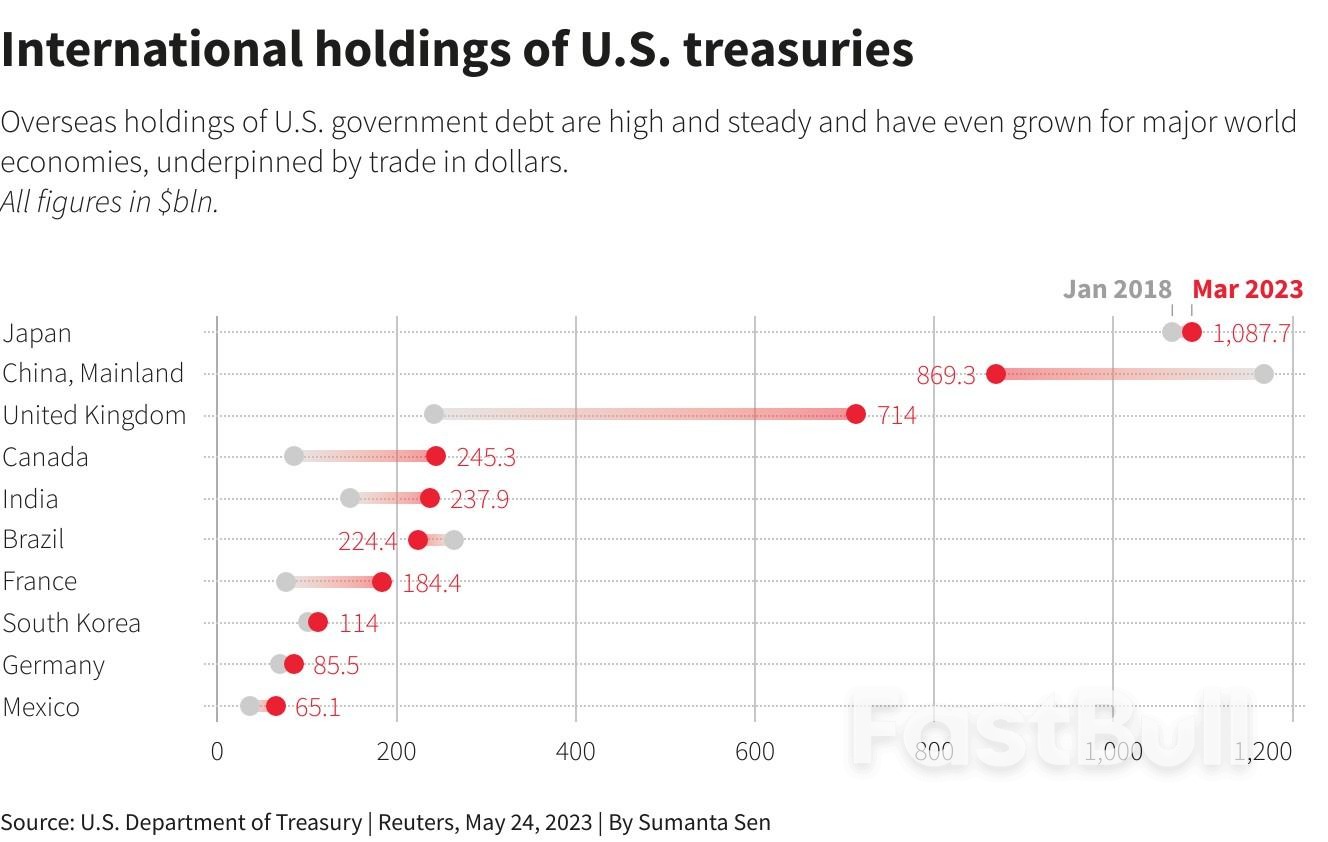
          The big advantage of large dollar reserve holdings alongside wide commercial usage and trade in dollars overseas was clear. U.S. firms avoided added currency volatility in dollar-invoiced imports such as energy and commodities while Washington effectively enjoyed subsidised borrowing as other nations banked precautionary or windfall dollar savings back in Treasury bonds.
          The strategic muscle of being able to limit use of the world's most pervasive currency for political reasons - clearer than ever in recent years - was another.
          But many have also argued over the years that the dollar's international role often constrained the Fed from conducting policy most appropriate to the domestic economy - due mainly to fear that extreme moves may shock an integrated world financial system with the economic backwash hitting America's economy anyway.
          Right now, a similar argument could be made with Fed policymakers chomping at the bit to tighten ever further as a way to drag inflation back to target just as other areas of the world, such as China, are struggling economically, wary of falling prices and looking to ease.
          Were that divergence to widen and cause dollar-related stress, might the Fed be minded to tread more cautiously? Or if the cost of dollars were less an issue for the rest of the world than it has been for decades, would it plough on regardless?
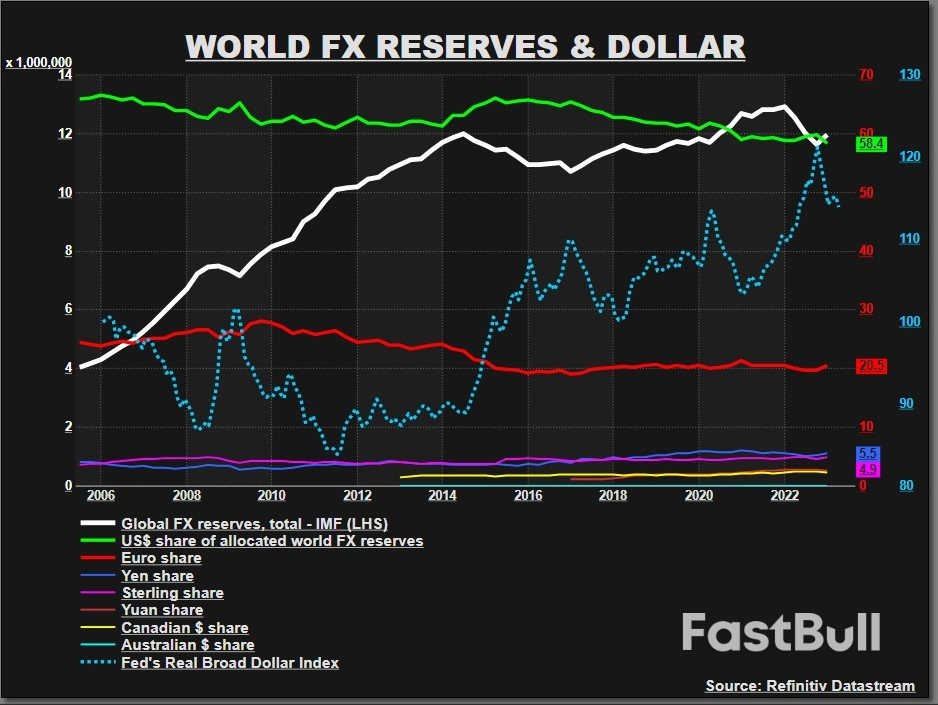
          So-called "de-dollarisation" has been the subject of endless speculation since the geopolitical re-alignments that followed the pandemic and the freezing of Russia's foreign reserves after it invaded Ukraine last year.
          Even though reductions in dollar holdings and usage have been relatively small despite higher perceived sanctions risk, the BRICS group of Brazil, Russia, India, China and South Africa - and already heavily-sanctioned economies such as Iran and Venezuela - have certainly urged carving dollars out of trade and investment ever since.
          But the issue is typically read in markets as a reason to bet on a weakening dollar exchange rate - or even to pump alternatives such as gold or crypto tokens.
          It may not necessarily work that way - especially if it leads to a tighter Fed, higher bond yields and lower inflation over time.Beware Conflating 'De-Dollarisation' With Weaker Dollar_1
          Beware Conflating 'De-Dollarisation' With Weaker Dollar_2'Oasis'
          One of the clearest examples of Fed hesitation was when Alan Greenspan's team cut rates three times in 1998 despite a briskly growing U.S. economy and developing tech boom, arguing the United States could not remain a 'oasis of prosperity' in a global emerging market storm and credit jolt that the Fed's sharp tightening of 1994 had arguably whipped up.
          By late 1999, the Fed had quickly reversed all of those cuts and was then forced to tighten three further times to a peak of 6.5% - eventually pricking what had by then become a runaway dot.com bubble.
          Of course, that was a global economy riven with fixed dollar exchange rate pegs that supercharged the transmission of Fed policy, most of which have since been dismantled.
          And the Fed now has many other tools - such as multilateral dollar swap lines - to ease stress.
          But it wasn't the only time Fed policy was clipped or influenced by dollar pressure overseas.
          Before taking up her current role as Treasury Secretary, Janet Yellen recalled her time as Fed chief and claimed that when the prospect of Fed tightening in 2015 led to massive capital outflows from China and unnerved world markets, it forced the Fed to pause its rate hike campaign.
          The opposite has also been true.
          As the Fed embarked on quantitative easing for the first time after the great financial crash in 2008, there were howls of protest from emerging powers such as Brazil about the United States embarking on 'currency wars' to weaken the dollar for trade gain.
          Yellen also recounted G20 meetings as Fed chair in which criticism arrived whether the Fed was easing or tightening, with complaints mostly about extremity in policy moves, and the Fed was "sensitive to these concerns".
          Fed studies - including one from Fed board economists on 'spillovers' late last year - show a much bigger exchange rate impact from Fed tightening in their model of 'dollar dominance' than a benchmark situation without it - suggesting much less overseas impact in the latter and more scope for higher rates.
          "Central banks around the world do take into account these spillovers and internalize them," they said. "But policymakers have a tough balancing act to manage."
          At the very least, a world less sensitive to the dollar because it uses it less for trade and reserves may also be a world of structurally higher U.S. interest rates - and maybe a more volatile one to boot.
          That may be a world many countries prefer if they are sure of viable alternatives - but may not mean a weaker dollar.Beware Conflating 'De-Dollarisation' With Weaker Dollar_3

          Beware Conflating 'De-Dollarisation' With Weaker Dollar_4Source: KFGO

          Risk Warnings and Disclaimers
          You understand and acknowledge that there is a high degree of risk involved in trading. Following any strategies or investment methods may lead to potential losses. The content on the site is provided by our contributors and analysts for information purposes only. You are solely responsible for determining whether any trading assets, securities, strategy, or any other product is suitable for investing based on your own investment objectives and financial situation.
          Comments
          Add to Favorites
          Share

          The Macroeconomics of Artificial Intelligence

          Justin

          Central Bank

          Economic

          Artificial intelligence is likely to be among the most transformative technologies of our time. The nature of the vast changes ushered in by AI – most notably potential efficiency gains in both white- and blue-collar occupations – can partly explain the attention the technology has garnered, particularly on the heels of developments in large language models such as ChatGPT.
          Although the technology itself is wholly new, the macroeconomic challenges associated with AI are not. History provides ample evidence that, while AI is unlikely to spur joblessness or mass unemployment, the likelihood of rising inequality is high. And this brings with it a host of monetary and macroeconomic considerations that will impact economists and central banks alike.

          What are the macroeconomics of AI?

          A common starting place for economists is to study previous technological revolutions – most notably the industrial revolution and the early 20th century technological transformation (railroads and glassware, for example). Both of these periods coincided with significant growth in labour productivity. Both boosted growth and quality of life for subsequent generations. And both of these moments were replete with contemporary discourse that fretted about the ‘end of work’ and the prospect of widespread unemployment at the hands of new machines.
          We now know that previous major technological revolutions did not induce mass unemployment. And so, it often becomes tempting for economists to dismiss such technophobic angst as having been completely misguided. Efficiency gains allowed households to save money due to the lower costs that emerged from more efficient industries (agriculture, for example), which led to the creation of new occupations.
          There is currently no evidence to suggest that the economics of AI are substantively different from those of previous technologies. AI promises to greatly expand the scope of what occupations can be made ‘digital’, which may boost productivity and encourage a reallocation of labour towards new industries or occupations, which are best performed by humans. It marks an extension of existing trends in digitalisation – present since the 1980s – as opposed to something entirely distinct.

          Rising inequality

          Yet to dismiss concerns about technological disruption would be a mistake. More contemporary economic analysis has shown that living standards for many working- and middle-class Britons declined considerably during the industrial revolution. Rather than boosting standards of living, the productivity gains spurred by industrial technology led to a de-valuing of labour (often accompanying worsened working conditions), the decline in labour’s share of income, wealth accumulation among capital owners and a consequent rise in economic inequality.
          Both the 20th century and early computerisation technological shocks coincided with similar deteriorations in workers’ livelihoods and an often-intolerable growth of inequality. In the early 20th century, the rise of inequality and decline in working class living standards, which defined the ‘gilded age’, were kindled by highly concentrated oil, rail and automobile industries. The early computerisation shock that began in the 1980s was smaller in scale, but highly disruptive to many middle-wage occupations. And from 1980-2014, it was responsible for roughly 33% of the growth in wage inequality that emerged in the US.
          Economists like David Autor, Claudia Goldin and Daron Acemoglu have uncovered the mechanisms that have allowed technological shocks to widen inequality. They describe a process of skill-biased technological change, whereby technology shocks tend to primarily displace ‘middle-skill’ workers and lead to growth in the share of low- and high-wage labour. This makes sense: middle-wage jobs are often slower to emerge and more desirable for firms to automate.
          When technological shocks occur, workers tend to find that their labour is either complemented or devalued. Those that are able to work with the emerging technologies to enhance their output experience wage premiums. Those whose occupational tasks can be completely or partly replaced by machines see wage stagnation and often a decline in their real wages.
          Early evidence suggests that AI kindles SBTC dynamics, which will widen inequality, just as the early computerisation shock did. And so, while the fears of joblessness and unemployment are misplaced, the prospect of rising inequality should be a concern for everyone, particularly in a moment when countries like the US and UK have already experienced a bifurcation of wealth and income since the 1970s. The further growth of inequality would be socio-politically corrosive and disastrous to long-term economic growth, financial stability and a common-sense notion of economic fairness.

          AI and central banks

          The advent of AI is also beginning to influence central bank decision-making. For over a decade, monetary economists have explored the possible erosion of the Phillips curve, which defines an inverse trade-off between inflation and unemployment. Yet the curve no longer seems to provide an accurate depiction of the relationship between employment and price stability.
          A major reason for this has been the reduction in worker power ushered in by the computerisation SBTC shock, which played a role in decreasing labour bargaining capacity. This leads to lower price growth, even when unemployment is low.
          AI is also further kindling market concentration. Previous technological revolutions have tended to coincide with the rise of market power by a small number of individuals and firms. The same has been true of digitalisation and is true again of AI, which tends to rely on expensive talent and computing costs.
          The testimony of Sam Altman, chief executive officer of OpenAI, in US Congress was a welcome public acknowledgement of the very real threats posed by an under-regulated AI. Yet policy-makers should be wary of corporate regulatory capture and the establishment of guardrails to innovation that allow only the most well-funded ventures to succeed.
          The macroeconomic challenges for central banks will be to preserve a healthy economy amid distortions of labour markets that coincide with AI. The benefits of widely deployed AI are potentially significant, taking the form of improved productivity growth after decades of sluggishness. And yet the economics of AI point to an unmistakably disequalising bend, which has implications for how monetary policy should assess countries’ economic health, interest rate deliberations and the vulnerability of middle- and working-class households.
          Each large-scale technological shock has coincided with a significant growth of inequality and period of intense dislocation and disruption. Policy-makers and economists have a fleeting moment right now to make sure it doesn’t happen again.

          Source:Julian Jacobs

          To stay updated on all economic events of today, please check out our Economic calendar
          Risk Warnings and Disclaimers
          You understand and acknowledge that there is a high degree of risk involved in trading. Following any strategies or investment methods may lead to potential losses. The content on the site is provided by our contributors and analysts for information purposes only. You are solely responsible for determining whether any trading assets, securities, strategy, or any other product is suitable for investing based on your own investment objectives and financial situation.
          Comments
          Add to Favorites
          Share

          Eurozone Growth Is Already Dwindling

          Owen Li

          Economic

          Eurozone view: weak growth with falling inflation
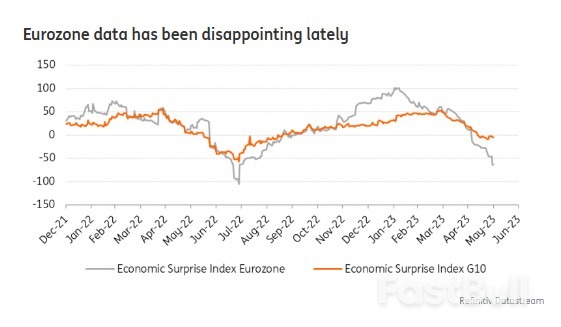
          Eurozone growth disappointed in the first quarter. While falling energy prices and rising wages should support consumption, the soft Chinese reopening, tighter monetary conditions and looming US recession will weigh on growth and bring the economy close to a standstill by year-end. It is mainly services that are currently thriving. The manufacturing sector is struggling with excess inventories while construction is hampered by higher interest rates. It is therefore not surprising to see that services inflation remains quite sticky, while there are budding deflationary pressures in the goods industry. But the further weakening of growth over the course of the year should bring inflation down towards 3% by year-end. As the ECB wants to see a clear decline in core inflation before ending the tightening cycle, 25bp rate hikes seem likely in both June and July, with an additional one in September a genuine risk.
          Eurozone Growth Is Already Dwindling_1Where we differ
          With our 0.5% GDP growth forecast for both 2023 and 2024, we are definitely below consensus (0.6% and 1.0% respectively) and far below official forecasts (for instance, the European Commission foresees 1.1% for 2023 and 1.6% for 2024, quite similar to what the ECB is pencilling in). With our 5.4% inflation forecast for 2023 and 2.5% for 2024, we are close to consensus, but below official estimates, especially for 2024. Market forwards indicate rates plateauing at a level around 50bp above today's level in the second half of the year, with a first rate cut in the second quarter of next year, exactly in line with our predictions.
          Goldilocks after all?
          We might be overly pessimistic about the growth outlook. With wages picking up and inflation coming down on the back of further falling energy prices, consumption growth could accelerate in 2024, certainly if you also pencil in a decline in the savings ratio. The weakness in manufacturing might also be short-lived: once the inventory overhang has been corrected and consumer demand for goods picks up again, manufacturing should become a driver of growth. If at the same time the US manages a soft landing and Chinese growth gathers momentum, net exports could also support the expansion.
          Finally, with the European recovery plan gaining traction, public investment should add to growth. This would be a kind of goldilocks scenario, with growth accelerating and inflation falling in 2024.
          Eurozone Growth Is Already Dwindling_2A deeper downturn is still a genuine risk
          On the other hand, it is certainly possible to come up with a stronger downturn scenario (bear in mind that we haven't pencilled in any negative growth quarters for the next two years). What we find a bit strange, is that in the official forecasts, it seems as if tighter monetary policy does have very little effect after all – even though the ECB's (admittedly somewhat discredited) models are forecasting a significative negative growth impact of monetary policy, both in 2023 and 2024. Also, in the past, it has been very hard for the eurozone to decouple from the US. Therefore, a US recession might hit the eurozone more than we currently anticipate.
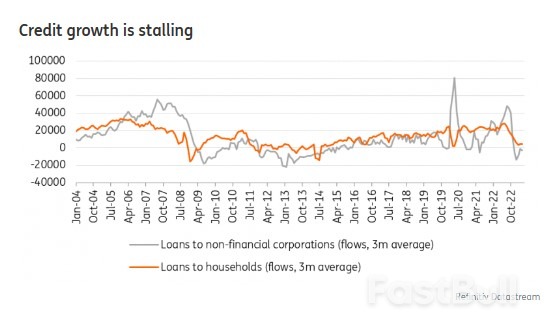
          On top of this, throw in the possibility of a credit crunch: falling house prices and an inverted yield curve will make banks a lot more cautious. So, even though we are already more bearish than the consensus, we cannot dismiss the possibility that growth turns out to be even weaker. Of course, that might allow the ECB to cut back rates a bit more strongly over the course of next year.

          Source: ING

          To stay updated on all economic events of today, please check out our Economic calendar
          Risk Warnings and Disclaimers
          You understand and acknowledge that there is a high degree of risk involved in trading. Following any strategies or investment methods may lead to potential losses. The content on the site is provided by our contributors and analysts for information purposes only. You are solely responsible for determining whether any trading assets, securities, strategy, or any other product is suitable for investing based on your own investment objectives and financial situation.
          Comments
          Add to Favorites
          Share

          Asia Week Ahead: Reserve Bank of Australia to Decide on Policy Rate

          Damon

          Economic

          Persistent inflation could prompt RBA to hike again
          The June Reserve Bank of Australia (RBA) meeting is a tough one to call. The RBA recently confused markets with its reversion to a more hawkish stance, even as inflation was weakening, and now the fall in inflation has reversed, there is a reasonable argument for it to hike again this month. However, the quarterly CPI data still seem to carry more weight than the monthly series at the moment, so some forecasters expect the RBA to wait until the August meeting when it will be able to respond to second-quarter CPI inflation.
          Our forecasts are for inflation in July to have fallen to 5.2% year-on-year, but the second-quarter rate will still probably be in excess of 6%, so the RBA could well argue a further hike was needed then to ensure that inflation was falling fast enough. But with inflation rising again in April, it is going to be very hard for the RBA to sit on the sidelines in June, so a low conviction 25bp hike is our call this month, but we wouldn't be shocked if the central bank decides to pause.
          Philippine trade balance to stay in deficit on soft electronics exports
          April export data is set for release next week and we could see both imports and exports remain in negative territory. Imports are expected to drop on a year-on-year basis on shrinking energy imports, while exports could face another month of contraction due to soft demand for electronics. The Philippine export sector is dominated largely by electronics, and weak global demand for smartphones and gadgets will likely impact the overall Philippine export sector. The trade gap is forecast to remain in deep shortfall ($5.1bn) which points to pressure on the Philippine peso in the near term.
          Inflation readings from Indonesia and the Philippines
          Headline inflation numbers for both Indonesia and the Philippines will be reported next week. We believe headline inflation will continue to cool on a year-on-year basis as favourable base effects help push the headline number back toward target. Core inflation, on the other hand, could prove to be tricky as domestic demand for both countries remains robust. Core inflation in the Philippines may inch lower to 7.5%YoY (down from 7.9%) while Indonesia may even see core inflation inch up to 2.9% from 2.8% previously. Moderating headline inflation gives both Bank Indonesia and the Bangko Sentral ng Pilipinas space to maintain policy settings, however, we don't expect central banks to consider cutting rates just yet given the pressure on their respective currencies.
          Singapore retail sales could manage to post growth
          Singapore retail sales are expected to remain in expansion, although slowing from the pace reported in March. Elevated inflation is likely sapping some consumption momentum. The sustained increase in visitor arrivals however may be helping to provide retail sales a decent lift, especially for department store sales and services related to recreation. We expect retail sales to be subdued in the near term with a potential rebound should inflation decelerate towards year-end.

          Asia Week Ahead: Reserve Bank of Australia to Decide on Policy Rate_1Source: ING

          To stay updated on all economic events of today, please check out our Economic calendar
          Risk Warnings and Disclaimers
          You understand and acknowledge that there is a high degree of risk involved in trading. Following any strategies or investment methods may lead to potential losses. The content on the site is provided by our contributors and analysts for information purposes only. You are solely responsible for determining whether any trading assets, securities, strategy, or any other product is suitable for investing based on your own investment objectives and financial situation.
          Comments
          Add to Favorites
          Share
          FastBull
          Copyright © 2025 FastBull Ltd

          728 RM B 7/F GEE LOK IND BLDG NO 34 HUNG TO RD KWUN TONG KLN HONG KONG

          TelegramInstagramTwitterfacebooklinkedin
          App Store Google Play Google Play
          Products
          Charts

          Chats

          Q&A with Experts
          Screeners
          Economic Calendar
          Data
          Tools
          Membership
          Features
          Function
          Markets
          Copy Trading
          Latest Signals
          Contests
          News
          Analysis
          24/7
          Columns
          Education
          Company
          Careers
          About Us
          Contact Us
          Advertising
          Help Center
          Feedback
          User Agreement
          Privacy Policy
          Business

          White Label

          Data API

          Web Plug-ins

          Poster Maker

          Affiliate Program

          Risk Disclosure

          The risk of loss in trading financial instruments such as stocks, FX, commodities, futures, bonds, ETFs and crypto can be substantial. You may sustain a total loss of the funds that you deposit with your broker. Therefore, you should carefully consider whether such trading is suitable for you in light of your circumstances and financial resources.

          No decision to invest should be made without thoroughly conducting due diligence by yourself or consulting with your financial advisors. Our web content might not suit you since we don't know your financial conditions and investment needs. Our financial information might have latency or contain inaccuracy, so you should be fully responsible for any of your trading and investment decisions. The company will not be responsible for your capital loss.

          Without getting permission from the website, you are not allowed to copy the website's graphics, texts, or trademarks. Intellectual property rights in the content or data incorporated into this website belong to its providers and exchange merchants.

          Not Logged In

          Log in to access more features

          FastBull Membership

          Not yet

          Purchase

          Become a signal provider
          Help Center
          Customer Service
          Dark Mode
          Price Up/Down Colors

          Log In

          Sign Up

          Position
          Layout
          Fullscreen
          Default to Chart
          The chart page opens by default when you visit fastbull.com