• Trade
  • Markets
  • Copy
  • Contests
  • News
  • 24/7
  • Calendar
  • Q&A
  • Chats
Trending
Screeners
SYMBOL
LAST
BID
ASK
HIGH
LOW
NET CHG.
%CHG.
SPREAD
SPX
S&P 500 Index
6846.50
6846.50
6846.50
6878.28
6827.18
-23.90
-0.35%
--
DJI
Dow Jones Industrial Average
47739.31
47739.31
47739.31
47971.51
47611.93
-215.67
-0.45%
--
IXIC
NASDAQ Composite Index
23545.89
23545.89
23545.89
23698.93
23455.05
-32.22
-0.14%
--
USDX
US Dollar Index
99.000
99.080
99.000
99.000
99.000
+0.050
+ 0.05%
--
EURUSD
Euro / US Dollar
1.16389
1.16398
1.16389
1.16389
1.16322
+0.00025
+ 0.02%
--
GBPUSD
Pound Sterling / US Dollar
1.33237
1.33248
1.33237
1.33237
1.33140
+0.00032
+ 0.02%
--
XAUUSD
Gold / US Dollar
4193.00
4193.44
4193.00
4193.80
4189.64
+3.30
+ 0.08%
--
WTI
Light Sweet Crude Oil
58.650
58.692
58.650
58.676
58.543
+0.095
+ 0.16%
--

Community Accounts

Signal Accounts
--
Profit Accounts
--
Loss Accounts
--
View More

Become a signal provider

Sell trading signals to earn additional income

View More

Guide to Copy Trading

Get started with ease and confidence

View More

Signal Accounts for Members

All Signal Accounts

Best Return
  • Best Return
  • Best P/L
  • Best MDD
Past 1W
  • Past 1W
  • Past 1M
  • Past 1Y

All Contests

  • All
  • Trump Updates
  • Recommend
  • Stocks
  • Cryptocurrencies
  • Central Banks
  • Featured News
Top News Only
Share

KCNA: North Korea's Supreme Leader Kim Jong UN Sends Condolences To Russian Embassy For Ambassador's Death

Share

Japan Prime Minister Takaichi: 30 Injuries Reported So Far From Monday Earthquake

Share

USA Senate Committee Votes To Advance Nomination Of Jared Isaacman To Head Nasa

Share

Singapore Post - New Rate For Standard Regular Mail & Standard Large Mail Will Be S$0.62 And S$0.90 Respectively

Share

Australia's S&P/ASX 200 Index Down 0.27% At 8601.10 Points In Early Trade

Share

Trump: The USA Needs Mexico To Release 200000 Acre-Feet Of Water Before December 31St, And The Rest Must Come Soon After

Share

Trump: I Have Authorized Documentation To Impose A 5% Tariff On Mexico If This Water Isn't Released

Share

Brazil's Sao Paulo State Governor Tarcisio De Freitas Says Flavio Bolsonaro Will Have His Support - Cnn Brasil

Share

Ukraine's Security Must Be Guaranteed, In The Long Term, As A First Line Of Defence For Our Union, Says European Commission President

Share

Ukraine's Sovereignty Must Be Respected, Says European Commission President

Share

The Goal Is A Strong Ukraine, On The Battlefield And At The Negotiating Table, Says European Commission President

Share

As Peace Talks Are Ongoing, The EU Remains Ironclad In Its Support For Ukraine, Says European Commission President

Share

Pepsico: Asking USA-Based Pepna Employees As Well As Pbus Division Offices And Pfus Region Offices To Work Remotely This Week

Share

A U.S. Judge Ruled That President Trump’s Ban On Several Wind Power Projects Was Illegal

Share

Senior USA Administration Official: We Continue To Monitor Drc-Rwanda Situation Closely, Continue To Work With All Sides To Ensure Commitments Are Honored

Share

Israeli Military Says It Has Struck Infrastructure Belonging To Hezbollah In Several Areas In Southern Lebanon

Share

SPDR Gold Holdings Down 0.11%, Or 1.14 Tonnes

Share

On Monday (December 8), In Late New York Trading, S&P 500 Futures Fell 0.21%, Dow Jones Futures Fell 0.43%, NASDAQ 100 Futures Fell 0.08%, And Russell 2000 Futures Fell 0.04%

Share

Morgan Stanley: Data Center ABS Spreads Are Expected To Widen In 2026

Share

(US Stocks) The Philadelphia Gold And Silver Index Closed Down 2.34% At 311.01 Points. (Global Session) The NYSE Arca Gold Miners Index Closed Down 2.17%, Hitting A Daily Low Of 2235.45 Points; US Stocks Remained Slightly Down Before The Opening Bell—holding Steady Around 2280 Points—before Briefly Rising Slightly

TIME
ACT
FCST
PREV
France Trade Balance (SA) (Oct)

A:--

F: --

P: --
Euro Zone Employment YoY (SA) (Q3)

A:--

F: --

P: --
Canada Part-Time Employment (SA) (Nov)

A:--

F: --

P: --

Canada Unemployment Rate (SA) (Nov)

A:--

F: --

P: --

Canada Full-time Employment (SA) (Nov)

A:--

F: --

P: --

Canada Labor Force Participation Rate (SA) (Nov)

A:--

F: --

P: --

Canada Employment (SA) (Nov)

A:--

F: --

P: --

U.S. PCE Price Index MoM (Sept)

A:--

F: --

P: --

U.S. Personal Income MoM (Sept)

A:--

F: --

P: --

U.S. Core PCE Price Index MoM (Sept)

A:--

F: --

P: --

U.S. PCE Price Index YoY (SA) (Sept)

A:--

F: --

P: --

U.S. Core PCE Price Index YoY (Sept)

A:--

F: --

P: --

U.S. Personal Outlays MoM (SA) (Sept)

A:--

F: --

P: --
U.S. 5-10 Year-Ahead Inflation Expectations (Dec)

A:--

F: --

P: --

U.S. Real Personal Consumption Expenditures MoM (Sept)

A:--

F: --

P: --
U.S. Weekly Total Rig Count

A:--

F: --

P: --

U.S. Weekly Total Oil Rig Count

A:--

F: --

P: --

U.S. Consumer Credit (SA) (Oct)

A:--

F: --

P: --
China, Mainland Foreign Exchange Reserves (Nov)

A:--

F: --

P: --

Japan Trade Balance (Oct)

A:--

F: --

P: --

Japan Nominal GDP Revised QoQ (Q3)

A:--

F: --

P: --

China, Mainland Imports YoY (CNH) (Nov)

A:--

F: --

P: --

China, Mainland Exports (Nov)

A:--

F: --

P: --

China, Mainland Imports (CNH) (Nov)

A:--

F: --

P: --

China, Mainland Trade Balance (CNH) (Nov)

A:--

F: --

P: --

China, Mainland Exports YoY (USD) (Nov)

A:--

F: --

P: --

China, Mainland Imports YoY (USD) (Nov)

A:--

F: --

P: --

Germany Industrial Output MoM (SA) (Oct)

A:--

F: --

P: --
Euro Zone Sentix Investor Confidence Index (Dec)

A:--

F: --

P: --

Canada National Economic Confidence Index

A:--

F: --

P: --

U.K. BRC Like-For-Like Retail Sales YoY (Nov)

--

F: --

P: --

U.K. BRC Overall Retail Sales YoY (Nov)

--

F: --

P: --

Australia Overnight (Borrowing) Key Rate

--

F: --

P: --

RBA Rate Statement
RBA Press Conference
Germany Exports MoM (SA) (Oct)

--

F: --

P: --

U.S. NFIB Small Business Optimism Index (SA) (Nov)

--

F: --

P: --

Mexico 12-Month Inflation (CPI) (Nov)

--

F: --

P: --

Mexico Core CPI YoY (Nov)

--

F: --

P: --

Mexico PPI YoY (Nov)

--

F: --

P: --

U.S. Weekly Redbook Index YoY

--

F: --

P: --

U.S. JOLTS Job Openings (SA) (Oct)

--

F: --

P: --

China, Mainland M1 Money Supply YoY (Nov)

--

F: --

P: --

China, Mainland M0 Money Supply YoY (Nov)

--

F: --

P: --

China, Mainland M2 Money Supply YoY (Nov)

--

F: --

P: --

U.S. EIA Short-Term Crude Production Forecast For The Year (Dec)

--

F: --

P: --

U.S. EIA Natural Gas Production Forecast For The Next Year (Dec)

--

F: --

P: --

U.S. EIA Short-Term Crude Production Forecast For The Next Year (Dec)

--

F: --

P: --

EIA Monthly Short-Term Energy Outlook
U.S. API Weekly Gasoline Stocks

--

F: --

P: --

U.S. API Weekly Cushing Crude Oil Stocks

--

F: --

P: --

U.S. API Weekly Crude Oil Stocks

--

F: --

P: --

U.S. API Weekly Refined Oil Stocks

--

F: --

P: --

South Korea Unemployment Rate (SA) (Nov)

--

F: --

P: --

Japan Reuters Tankan Non-Manufacturers Index (Dec)

--

F: --

P: --

Japan Reuters Tankan Manufacturers Index (Dec)

--

F: --

P: --

Japan Domestic Enterprise Commodity Price Index MoM (Nov)

--

F: --

P: --

Japan Domestic Enterprise Commodity Price Index YoY (Nov)

--

F: --

P: --

China, Mainland PPI YoY (Nov)

--

F: --

P: --

China, Mainland CPI MoM (Nov)

--

F: --

P: --

Italy Industrial Output YoY (SA) (Oct)

--

F: --

P: --

Q&A with Experts
    • All
    • Chatrooms
    • Groups
    • Friends
    Connecting
    .
    .
    .
    Type here...
    Add Symbol or Code

      No matching data

      All
      Trump Updates
      Recommend
      Stocks
      Cryptocurrencies
      Central Banks
      Featured News
      • All
      • Russia-Ukraine Conflict
      • Middle East Flashpoint
      • All
      • Russia-Ukraine Conflict
      • Middle East Flashpoint
      Search
      Products

      Charts Free Forever

      Chats Q&A with Experts
      Screeners Economic Calendar Data Tools
      Membership Features
      Data Warehouse Market Trends Institutional Data Policy Rates Macro

      Market Trends

      Market Sentiment Order Book Forex Correlations

      Top Indicators

      Charts Free Forever
      Markets

      News

      News Analysis 24/7 Columns Education
      From Institutions From Analysts
      Topics Columnists

      Latest Views

      Latest Views

      Trending Topics

      Top Columnists

      Latest Update

      Signals

      Copy Rankings Latest Signals Become a signal provider AI Rating
      Contests
      Brokers

      Overview Brokers Assessment Rankings Regulators News Claims
      Broker listing Forex Brokers Comparison Tool Live Spread Comparison Scam
      Q&A Complaint Scam Alert Videos Tips to Detect Scam
      More

      Business
      Events
      Careers About Us Advertising Help Center

      White Label

      Data API

      Web Plug-ins

      Affiliate Program

      Awards Institution Evaluation IB Seminar Salon Event Exhibition
      Vietnam Thailand Singapore Dubai
      Fans Party Investment Sharing Session
      FastBull Summit BrokersView Expo
      Recent Searches
        Top Searches
          Markets
          News
          Analysis
          User
          24/7
          Economic Calendar
          Education
          Data
          • Names
          • Latest
          • Prev

          View All

          No data

          Scan to Download

          Faster Charts, Chat Faster!

          Download App
          English
          • English
          • Español
          • العربية
          • Bahasa Indonesia
          • Bahasa Melayu
          • Tiếng Việt
          • ภาษาไทย
          • Français
          • Italiano
          • Türkçe
          • Русский язык
          • 简中
          • 繁中
          Open Account
          Search
          Products
          Charts Free Forever
          Markets
          News
          Signals

          Copy Rankings Latest Signals Become a signal provider AI Rating
          Contests
          Brokers

          Overview Brokers Assessment Rankings Regulators News Claims
          Broker listing Forex Brokers Comparison Tool Live Spread Comparison Scam
          Q&A Complaint Scam Alert Videos Tips to Detect Scam
          More

          Business
          Events
          Careers About Us Advertising Help Center

          White Label

          Data API

          Web Plug-ins

          Affiliate Program

          Awards Institution Evaluation IB Seminar Salon Event Exhibition
          Vietnam Thailand Singapore Dubai
          Fans Party Investment Sharing Session
          FastBull Summit BrokersView Expo

          Ripple's Hinman Victory: Is This the Turning Point?

          Kevin Du

          Cryptocurrency

          Summary:

          The Securities and Exchange Commission (SEC) could be on the verge of defeat following Ripple's Hinman victory. The papers are due for release on June 13. Could they make the legal case unwinnable for the SEC?

          Ripple has achieved a victory against the SEC by successfully opposing the agency's motion to seal the "Hinman speech documents." These include internal drafts and emails related to a speech given by former SEC Director William Hinman over four years ago. A speech that explicitly contradicts the legal basis on which the SEC seeks to prosecute Ripple.
          The Ripple Hinman Victory Could Be Decisive
          Supporters of Ripple say the speech proves that the SEC did not consider ether (ETH) a security at the time Hinman made it. Ripple's lawyers have been trying to uncover more information about Hinman's conclusion, as it could impact the classification of XRP.
          In its recent filing, the SEC attempted to justify the need for confidentiality. The agency claimed that the documents were irrelevant to the summary judgment motions. And also argued their disclosure could harm the agency's interests.
          Brad Garlinghouse, Ripple's CEO, was quick to share his pleasure at the verdict. "Another win for transparency," he tweeted. "Unredacted Hinman emails to be publicly available soon – stay tuned as the lawyers work through the mechanics to make that happen."
          Reactions to the Ripple Hinman Outcome
          People active in the crypto industry, and the legal realm, were quick to react. John Deaton, managing partner of the Deaton Law Firm, said on Twitter: "It is clear that things said in the Hinman emails specifically contradict arguments made by the SEC." Deaton had previously predicted that the Ripple case will not settle due to the Hinman emails, as the SEC seems to have accepted that they will eventually become public.
          Deaton also doubts that SEC Chair Gary Gensler would agree to publicly acknowledge that ongoing and future XRP sales are not securities. Likewise, Ripple is unlikely to settle unless the SEC agrees to these terms.
          Twitter's crypto community celebrated following the Ripple Hinman victory. Crypto Twitter largely saw it as a groundbreaking judgment with far-reaching implications.
          Although, some were disappointed that the decision didn't lead to a sudden move in the markets. "Everyone expected that XRPs win over SEC will trigger a new bull market rally in crypto but this doesn't seem to be happening anytime soon," tweeted one trader. "Seems like it will be again Bitcoin halving leading to a new bull run."
          The Hinman documents are due to be released on June 13, a date agreed by both parties. There had been speculation that this collaboration signaled a settlement. However, analysts generally believe this is unlikely.
          Ripple Going All the Way?
          "Gary is taking this all the way & Ripple will unless XRP gets clarity," said one commentator. "It clearly hasn't to this point."
          "Ripple is not going to settle just to save themselves," said another. "They need the rest of crypto to get clarity for their company to achieve success outside of just cross border payments… use liquidity hub for example… it promotes a basket of other crypto… not just #xrp."
          If Ripple and the SEC settle, the outcome could fail to provide industry-wide clarity about similar digital assets. Much of the speculation about whether or not Ripple would settle rests on the question of whether or not it would continue fighting on the industry's behalf.
          Clearly, the Hinman victory offers hope that Ripple will carry on the fight. The papers offer a legal basis for rejecting the classification of cryptocurrencies as securities.

          Source: Be in Crypto

          Risk Warnings and Disclaimers
          You understand and acknowledge that there is a high degree of risk involved in trading. Following any strategies or investment methods may lead to potential losses. The content on the site is provided by our contributors and analysts for information purposes only. You are solely responsible for determining whether any trading assets, securities, strategy, or any other product is suitable for investing based on your own investment objectives and financial situation.
          Comments
          Add to Favorites
          Share

          Mixed Signals in US Manufacturing and Service Sectors: PMI Data Analysis

          Warren Takunda

          Traders' Opinions

          Economic

          In May 2023, the United States experienced contrasting trends in its manufacturing and service sectors, as indicated by the latest Purchasing Managers' Index (PMI) data released by S&P Global. While the manufacturing sector contracted unexpectedly, the service sector showed robust growth, leading to an overall expansion in the country's private sector. This article provides a detailed analysis of the PMI figures, highlighting the key factors influencing each sector's performance and their potential implications for the US economy.

          US Manufacturing PMI Falls Below Forecasts

          The US Manufacturing PMI for May stood at 48.5, declining significantly from April's reading of 50.2 and falling short of the forecasted 50. This contraction represents the sharpest decline in the manufacturing sector in three months, signaling a renewed deterioration in operating conditions. The main drivers behind this decline were weak demand and reduced inventory needs resulting from improved delivery times and lower new order inflows. Output also slowed during the period, albeit with a notable rise in employment, marking the sector's highest job creation rate since September. The increase in capacity helped manufacturers tackle incomplete work, leading to a sharp decline in backlogs, the fastest in three years. Moreover, input prices fell for the first time since May 2020, and supplier delivery times improved to the greatest extent on record. However, there was a silver lining in the form of optimism about the future, with firms expressing the highest level of confidence in output growth over the next 12 months. This positive sentiment was driven by firms' intent to invest in new product development and hopes for an upturn in client demand.

          US Service Sector Shows Unexpected Acceleration

          In contrast to the manufacturing sector, the US Services PMI displayed unexpected growth, reaching 55.1 in May, up from April's 53.6 and surpassing market expectations of 52.6. The service sector experienced its fastest rate of expansion in over a year, attributed to increased demand from both new and existing clients. Notably, new orders rose at the fastest pace since April 2022, and there was a solid growth in new export orders, ending a year-long period of decline. Additionally, the service sector recorded the highest rate of job creation in ten months. Price-wise, input prices and output charges increased at rates faster than their respective series averages. Looking ahead, the sector exhibited a strong level of confidence, reaching its highest point in a year, primarily fueled by expectations of sustained growth in client demand.

          US Composite PMI Reflects Mixed Performance

          The US Composite PMI, which combines manufacturing and service sector data, registered a rise to 54.5 in May, up from the previous month's 53.4. This preliminary estimate indicates the fastest expansion rate in the country's private sector since April 2022. The acceleration was driven by the service sector's impressive growth, while manufacturing production increased only marginally. Despite a continuous decline in exports for the 12th consecutive month, total new orders experienced a three-month growth streak. Furthermore, employment levels rose at the fastest pace since July 2022. Input prices in the manufacturing sector declined for the first time in three years, while service providers continued to face rising cost burdens. Output charge inflation remained elevated, though still within historical standards. Looking ahead, business expectations for the coming year improved, reflecting hopes of a demand resurgence and plans for investment in new products and marketing.
          The latest PMI data for May 2023 has presented a mixed picture of the US economy. While the manufacturing sector contracted due to weak demand and reduced inventory needs, the service sector exhibited robust growth, driven by increased demand and improved export orders. As a result, the US private sector experienced overall expansion, with the composite PMI reaching a 13-month high. Although concerns linger about the manufacturing sector's performance, particularly in terms of demand and inventory management, the optimistic outlook for future growth in both sectors provides hope for a sustained recovery. It will be crucial to monitor these trends closely as they unfold, as they can significantly impact the US economy and influence financial markets in the coming months.
          To stay updated on all economic events of today, please check out our Economic calendar
          Risk Warnings and Disclaimers
          You understand and acknowledge that there is a high degree of risk involved in trading. Following any strategies or investment methods may lead to potential losses. The content on the site is provided by our contributors and analysts for information purposes only. You are solely responsible for determining whether any trading assets, securities, strategy, or any other product is suitable for investing based on your own investment objectives and financial situation.
          Comments
          Add to Favorites
          Share

          Wall Street Tumbles Amid Concerns over Debt Ceiling Negotiations

          Warren Takunda

          Stocks

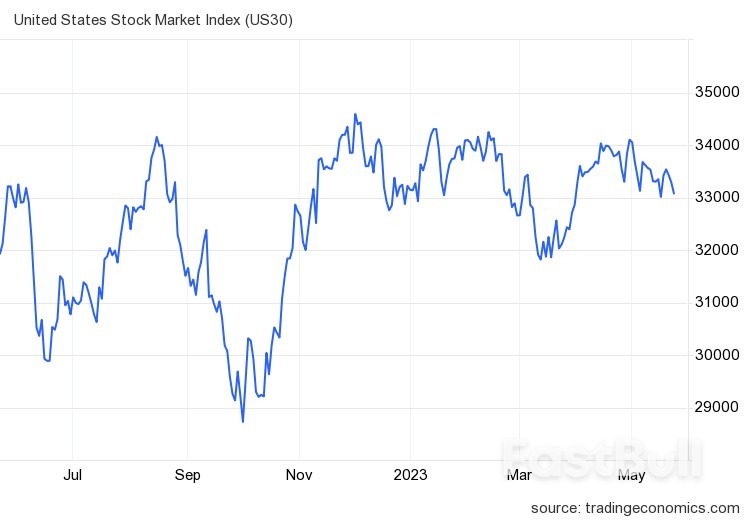
          On Tuesday afternoon, the United States stock market experienced a significant decline as concerns regarding the ongoing debt ceiling negotiations intensified. The Dow Jones Industrial Average witnessed a drop of over 200 points, while the S&P 500 and Nasdaq composite index both slid more than 1%. Despite a productive meeting between President Biden and House Speaker Kevin McCarthy on Monday, progress has been limited, and with the June 1st deadline fast approaching, the risk of default looms. In addition to the debt ceiling worries, the market reacted to various corporate developments and economic data.
          Wall Street Tumbles Amid Concerns over Debt Ceiling Negotiations_1Debt Ceiling Negotiations
          Negotiations surrounding the debt ceiling took center stage in the financial markets, exerting significant pressure on stocks. While the meeting between President Biden and House Speaker McCarthy showed promise, no deal was reached. The lack of progress on Tuesday added to the concerns as the deadline draws closer. Failing to raise the debt ceiling would result in severe consequences for the economy, including the risk of default on existing debt obligations.
          Economic Data
          Amidst the debt ceiling uncertainty, fresh Purchasing Managers' Index (PMI) data provided a glimmer of positive news. The private sector in the United States demonstrated strong growth that surpassed forecasts, with the services sector leading the way. The better-than-expected PMI figures indicated resilience in the economy despite the ongoing challenges.
          Corporate Developments
          Several notable companies experienced significant stock movements due to corporate developments and earnings reports. Zoom, despite reporting an upbeat earnings per share (EPS) and providing guidance in line with expectations, witnessed a sharp decline of over 7%. A disappointing quarter for BJ's Wholesale led to a 7.2% drop for AutoZone, an auto retailer.
          On the other hand, Lowe's, a home improvement retailer, saw its stock rise by 1.8% after beating earnings expectations. Chevron, the multinational energy corporation, experienced a notable surge of 2.6% following an upgrade by HSBC from "hold" to "buy" for the company's stocks. The positive sentiment surrounding Chevron contributed to the stock's upward momentum.

          Market Outlook

          As the debt ceiling talks continue to dominate the market narrative, investors remain cautious about the potential consequences of a failure to raise the ceiling. The uncertainty surrounding this critical issue is likely to keep the markets volatile in the near term. Traders and investors will closely monitor any developments or signs of progress from lawmakers and government officials.

          Conclusion

          The United States stock market experienced a significant decline on Tuesday, primarily driven by concerns over the lack of progress in the debt ceiling negotiations. While positive economic data provided some respite, the prevailing uncertainty surrounding the debt ceiling continues to weigh on investor sentiment. The market also reacted to various corporate developments, with some stocks witnessing notable declines and others experiencing gains. As the June 1st deadline approaches, all eyes will remain on the progress of the debt ceiling talks and their potential impact on the financial markets.
          Risk Warnings and Disclaimers
          You understand and acknowledge that there is a high degree of risk involved in trading. Following any strategies or investment methods may lead to potential losses. The content on the site is provided by our contributors and analysts for information purposes only. You are solely responsible for determining whether any trading assets, securities, strategy, or any other product is suitable for investing based on your own investment objectives and financial situation.
          Comments
          Add to Favorites
          Share

          May 24th Financial News

          FastBull Featured

          Daily News

          【Quick Facts】
          1. Deeply divided in the U.S. bipartisan, and no deal yet.
          2. The U.S. manufacturing PMI is back below the threshold of 50, and the services PMI highlights inflationary pressure.
          3. OPEC+ may consider further production cuts.
          4. BoE Governor Bailey: Getting closer to peak interest rates.
          5. The chance of the Fed raising interest rates by 25bps in June is 28.1%.
          【News Details】
          1. Deeply divided in the U.S. bipartisan, and no deal yet.
          U.S. President Joe Biden and representatives of Republicans concluded another round of debt-ceiling talks on Tuesday with no sign of progress, and the deadline to raise the government's $31.4 trillion borrowing limit to avoid default is looming. The two parties remain deeply divided about spending, with Democrats arguing that wealthy Americans and corporations should pay more taxes, while Republicans want to cut spending, according to the report. Michael Wilson, an equity strategist at Morgan Stanley, said the possibility of a U.S. debt default has not been digested by the market. Even if the two sides reach a deal, it could still have an impact on economic growth, he said.
          2. The U.S. manufacturing PMI is back below the threshold of 50, and the services PMI highlights inflationary pressure.
          The Markit manufacturing PMI prelim in the U.S. in May was 48.5, hitting a two-month low, and was back below 50. However, the Markit services PMI prelim in the U.S. was 55.1 in May, higher than the expected 52.6 and the previous 53.6, the highest level in nearly 13 months. Some analysts believe that the U.S. economic expansion gathered further momentum in May, but the divergence has become increasingly obvious. Although services companies are facing a post-pandemic surge in demand, especially in travel and leisure, manufacturers are struggling with excess inventory and a lack of new orders as spending shifts from goods to services.
          3. OPEC+ may consider further production cuts.
          Production cuts by some OPEC+ members will take effect this month. Saudi Energy Minister Abdulaziz bin Salman said this would make sellers and those who bet on prices would fall feel "pain", and told them to "be careful". Concerns over tightening supplies will be intensified later. OANDA analyst Craig Erlam said the comments could mean that OPEC+ will consider further production cuts at its meeting on June 4.
          4. BoE Governor Bailey: Getting closer to peak interest rates.
          BoE Governor Bailey acknowledged that they have been acting slowly on inflation and promised that tighten monetary policy further will be needed if inflationary pressures prove more persistent. But he also said peak interest rates are getting closer.
          5. The chance of the Fed raising interest rates by 25bps in June is 28.1%.
          According to CME "Fed Watch": The chance of the Fed maintaining interest rates unchanged in June is 71.9%, and raising interest rates by 25bps is 28.1%. The chance of maintaining interest rates at current levels by July is 57.7%, a cumulative 25bps hike is 36.8%, and a cumulative rate hike of 50bps is 5.6%.
          【Focus of the Day】
          UTC+8 10:00 The Reserve Bank of New Zealand Announces its Interest Rate Decision
          UTC+8 11:00 Reserve Bank of New Zealand President Orr Holds a Monetary Policy Press Conference
          UTC+8 14:00 U.K. CPI MoM (Apr)
          UTC+8 16:00 German IFO Business Climate Index (May)
          UTC+8 17:30 Speech by BoE Governor Bailey
          UTC+8 21:00 Speech by BoE Governor Bailey
          UTC+8 22:30 U.S. EIA Weekly Crude Oil Stocks
          UTC+8 00:10 Fed Governor Waller Speaks on the Economic Outlook
          UTC+8 02:00 The Fed Releases the Minutes of its Monetary Policy Meeting
          Risk Warnings and Disclaimers
          You understand and acknowledge that there is a high degree of risk involved in trading. Following any strategies or investment methods may lead to potential losses. The content on the site is provided by our contributors and analysts for information purposes only. You are solely responsible for determining whether any trading assets, securities, strategy, or any other product is suitable for investing based on your own investment objectives and financial situation.
          Comments
          Add to Favorites
          Share

          Aluminium Is the West's Critical Minerals Blind Spot

          Owen Li

          Commodity

          You wouldn't know it from the perilous state of primary metal production on both sides of the Atlantic.
          High energy costs, particularly in Europe, have caused multiple smelters to close or curtail output with the result that run-rates are the lowest this century.
          Back in 2020 the World Bank identified aluminium as a "high-impact" and "cross-cutting" metal in all existing and potential green energy technologies.
          Yet aluminium hasn't even made it onto the list of metals covered by the EU's Critical Raw Materials Act (CRMA), which will set targets for both domestic production and import dependency.
          The United States has tried via import tariffs to support its domestic producers but with little lasting success.
          Even the Inflation Reduction Act with its generous subsidies for domestically-sourced metal is unlikely to work without addressing aluminium's green energy paradox.
          Aluminium Is the West's Critical Minerals Blind Spot_1Production Slump
          Western European primary aluminium production has been sliding since 2017 but Russia's invasion of Ukraine and the resulting spike in energy prices have accelerated the downtrend.
          Output fell by 12.5% last year and has slipped further this year with the region's annualised production averaging 2.7 million tonnes in the first four months of 2023, according to the International Aluminium Institute (IAI). West European run-rates exceeded 4.5 million tonnes fifteen years ago.
          U.S. primary metal production has been falling since 2019 with two out of seven domestic smelters fully curtailed and three operating at reduced capacity, according to the United States Geological Survey (USGS).
          The USGS estimates domestic production was running at just 52% of capacity at the end of last year with import dependency growing to 54% from 41% in 2021.
          The decline in Western production contrasts with the rise of China, which now accounts for around 58% of global production, the sort of dominance that has triggered major re-shoring efforts in other critical minerals such as lithium and rare earths.
          While the U.S. market can lean on Canada for primary aluminium supply, Europe has traditionally relied on Russia, now a highly problematic long-term partner.
          Green Demand
          Even allowing for greater recycling, the world will need another 25 million tonnes of primary production capacity if it is to meet its emissions reduction goals, according to the IAI.
          Aluminium is used directly in all new energy technology, particularly in solar power, where it accounts for 85% of photovoltaic (PV) components in the form of the frames that hold the PV panels together.
          The metal's future demand profile is also tied to the accelerating roll-out of electric vehicles. Auto-makers are using more aluminium to light-weight their cars to get greater efficiency out of batteries.
          The amount of aluminium used in European cars increased by 18% from 174kg in 2019 to 205kg in 2022, according to automotive consultancy Ducker Carlisle in a report commissioned by European Aluminium.
          The report predicts this trend will continue, with the average aluminium content projected to increase from 205kg in 2022 to 237kg by 2026 and 256kg per vehicle by 2030.
          The future should be bright for the West's beleaguered aluminium smelters, particularly as Europe and the United States channel government funding down green accelerator paths.
          Widening The Supply-Demand GAP
          The problem, however, is that too much of that government largesse is going to aluminium's demand side and not enough to supply.
          The Inflation Reduction Act, the CHIPS Act and the Infrastructure Investment and Jobs Act will channel $1.25 trillion to green energy sectors, according to U.S. think-tank SAFE's Center for Strategic Industrial Metals. ("Legislative Analysis for the U.S. Aluminum Industry", May 2023)
          Since all green energy applications from solar to wind to electric vehicles use aluminium, the combined effect is to accelerate demand.
          However, the amount of funding available to aluminium's supply side in the form of manufacturing credits and grants for domestic processing comes in at just $126 billion, according to SAFE. Moreover, investment is "contingent on decarbonization and funding is highly competitive," it notes.
          Being Left Behind
          Carbon is at the heart of aluminium's green energy paradox.
          The metal is both a critical material for enabling economy-wide decarbonization but at the same is one of the highest emitting industrial metals, particularly those smelters powered by fossil fuels.
          "By setting the decarbonization conditionality for supply-side support and simultaneously increasing demand across multiple sectors, the United States entraps itself in this cycle," SAFE contends.
          In other words, simply providing funds for smelters to reduce their direct emissions won't solve the problem unless there is simultaneous investment in greening their power supply.
          The carbon problem is compounded in Europe by the proposed Carbon Border Adjustment Mechanism (CBAM), which "will do more harm than good", according to Emanuele Manigrassi, European Aluminium's Senior Manager of Regulatory Affairs.
          "We expect the CBAM to only increase the costs of production and consumption of aluminium in Europe, with no reduction in global emissions," Manigrassi wrote in a May 17 blog.
          Energy, particularly green energy, holds the key to preserving a primary aluminium production base in both Europe and the United States.
          U.S. policy in its current form "threatens to leave its own aluminium behind" by neglecting to recognise the metal's green power paradox, SAFE warns.
          Both U.S. and European sectors need a more holistic approach from policy makers.
          The EU could start by including aluminium in the CRMA.
          Europe's primary aluminium sector is facing an existential crisis, according to Europe Aluminium's general secretary Paul Voss, speaking at a forum jointly hosted with Eurometaux last month.
          "If the political signal is this material isn't very important, of course you could just let it go to the wall," he said.
          But if Europe wants to stay in the business of making primary aluminium, "just put us on the damn list."

          Source: Minning.com

          Risk Warnings and Disclaimers
          You understand and acknowledge that there is a high degree of risk involved in trading. Following any strategies or investment methods may lead to potential losses. The content on the site is provided by our contributors and analysts for information purposes only. You are solely responsible for determining whether any trading assets, securities, strategy, or any other product is suitable for investing based on your own investment objectives and financial situation.
          Comments
          Add to Favorites
          Share

          US New Home Sales Rise in April: Surprising Growth in the Housing Market

          Warren Takunda

          Traders' Opinions

          Commodity

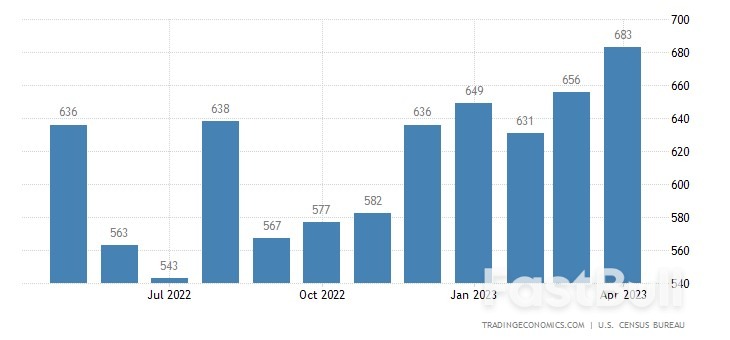
          In a positive turn of events for the US economy, new home sales in the country witnessed an unexpected increase in April 2023. According to the latest data, sales of new single-family houses rose by a notable 4.1% compared to the previous month. This surge brought the seasonally adjusted annualized rate of sales to 683,000 units, marking the highest level since March of the previous year. The April figures also surpassed economists' predictions, which had estimated new home sales to reach 665,000 units.US New Home Sales Rise in April: Surprising Growth in the Housing Market_1
          However, it is important to note that the revised data for March 2023 showed a significant downward revision from the initial estimates. The initial figure of 683,000 new home sales was adjusted down to 656,000 units. While this revision slightly dampens the overall picture, the fact that April's sales exceeded expectations is still a positive development for the housing market.
          Breaking down the regional sales performance, the South and the Midwest regions experienced substantial growth. Sales in the South surged by 17.8%, reaching 443,000 units, while the Midwest witnessed an 11.8% increase, with sales totaling 76,000 units. These robust numbers indicate a strong demand for new homes in these regions, likely driven by favorable economic conditions and attractive housing markets.
          In contrast, the Northeast and the West regions faced challenges in April. New home sales in the Northeast plummeted by a staggering 58.6% to 24,000 units, which is a significant decline compared to the other regions. The West also experienced a decline of 9.1%, with sales totaling 140,000 units. These declines may be indicative of localized factors such as supply constraints, affordability issues, or shifting market dynamics in these regions.
          Another crucial aspect of the housing market is the price of new homes. The median price of newly sold houses in April was $420,800, while the average sales price stood at $501,000. These figures represent a decrease compared to the prices recorded a year ago when the median price was $458,200, and the average sales price was $562,400. This decline in prices could be attributed to a variety of factors, such as increased inventory levels, changes in buyer preferences, or adjustments in the housing market dynamics.
          Looking at the supply side of the market, the data reveals that there were approximately 433,000 houses left to sell in April. This inventory corresponds to an estimated 7.6 months of supply at the current sales rate. This figure indicates a healthy level of inventory that allows buyers to have options while also suggesting that the market is not excessively flooded with unsold homes.
          The unexpected rise in new home sales in April is a positive sign for the US housing market, showcasing resilience and a potential rebound from previous setbacks. The strong performance in the South and Midwest regions indicates a robust demand for housing, driven by factors such as low mortgage rates, a strong job market, and a desire for homeownership. However, challenges remain in the Northeast and West, where sales experienced significant declines. It will be important to closely monitor these regional dynamics to understand the underlying causes and their potential impacts on the overall housing market.
          As the market continues to evolve, factors such as housing affordability, inventory levels, mortgage rates, and economic conditions will play vital roles in shaping the future trajectory of the US housing market. While the unexpected rise in new home sales in April provides a ray of hope, sustained growth and stability will depend on the resolution of these complex factors and market resilience.
          Risk Warnings and Disclaimers
          You understand and acknowledge that there is a high degree of risk involved in trading. Following any strategies or investment methods may lead to potential losses. The content on the site is provided by our contributors and analysts for information purposes only. You are solely responsible for determining whether any trading assets, securities, strategy, or any other product is suitable for investing based on your own investment objectives and financial situation.
          Comments
          Add to Favorites
          Share

          Oil Executive Leading COP28 Climate Talks Faces Calls for Ouster: A Conflict of Interest or a Catalyst for Change?

          Warren Takunda

          Traders' Opinions

          Sultan Al Jaber, the President of the upcoming United Nations Climate Change Conference (COP28) and CEO of the Abu Dhabi National Oil Company (ADNOC), finds himself at the center of a contentious debate. A coalition of lawmakers from both the United States Congress and the European Parliament has called for his ouster, arguing that his position represents a significant conflict of interest and sends the wrong signal to the world. However, Al Jaber defends his role, citing his extensive experience in both renewables and fossil fuels and his commitment to driving faster and more transformative results at COP28. With the United Arab Emirates (UAE) also pledging to become carbon neutral by 2050, the situation raises questions about the delicate balance between sustainability and the influence of fossil fuel companies in global climate talks.
          The Conflict of Interest
          Critics argue that Al Jaber's dual role as an oil industry executive and the head of COP28 creates an inherent conflict of interest. They contend that his appointment undermines the credibility and effectiveness of the conference, as it potentially allows the fossil fuel industry to exert undue influence on climate negotiations. The concern stems from the perception that an oil executive may prioritize the interests of the industry over the urgent need for decisive action to combat climate change.
          The Call for Ouster
          A coalition of lawmakers, comprising members of the US Congress and the European Parliament, has voiced its opposition to Al Jaber's appointment. They argue that the COP presidency should be held by an individual without ties to the fossil fuel industry, ensuring an unbiased and transparent approach to climate negotiations. The coalition seeks to limit the influence of fossil fuel companies in shaping global climate policy, asserting that their interests often diverge from the goals of reducing greenhouse gas emissions and transitioning to clean energy sources.
          Al Jaber's Defense
          Sultan Al Jaber, in his defense, emphasizes the unique perspective and experience he brings to the table. As CEO of ADNOC, he oversees one of the world's largest oil companies. However, he also highlights ADNOC's commitment to a low-carbon future and the significant investments the company has made in renewable energy projects. Al Jaber argues that his position allows him to bridge the gap between fossil fuels and renewables, facilitating a more pragmatic and inclusive approach to combating climate change. He claims that his leadership will drive faster and more transformative results at COP28, leveraging the resources and expertise of both sectors.
          UAE's Commitment to Climate Action
          It is important to note that the UAE has made significant commitments to address climate change. The country has pledged to achieve carbon neutrality by 2050, signaling its intent to transition away from fossil fuels and embrace sustainable energy sources. This commitment aligns with global efforts to limit global warming to well below 2 degrees Celsius above pre-industrial levels, as outlined in the Paris Agreement. Al Jaber's role as the head of COP28 is seen by some as an opportunity for the UAE to demonstrate its commitment to these goals while leveraging its position as a major oil producer.
          The appointment of Sultan Al Jaber as the President of COP28 has sparked controversy, with calls for his ouster based on a perceived conflict of interest. While critics argue that his position compromises the credibility of the conference, Al Jaber defends his role as a means to drive transformative change by bridging the gap between the fossil fuel industry and renewable energy sectors. As the UAE simultaneously commits to carbon neutrality by 2050, it remains to be seen how this delicate balance between sustainability and industry influence will unfold. Regardless of the outcome, the controversy highlights the need for transparent and inclusive decision-making processes in global climate negotiations to effectively address the urgent challenges posed by climate change.
          Risk Warnings and Disclaimers
          You understand and acknowledge that there is a high degree of risk involved in trading. Following any strategies or investment methods may lead to potential losses. The content on the site is provided by our contributors and analysts for information purposes only. You are solely responsible for determining whether any trading assets, securities, strategy, or any other product is suitable for investing based on your own investment objectives and financial situation.
          Comments
          Add to Favorites
          Share
          FastBull
          Copyright © 2025 FastBull Ltd

          728 RM B 7/F GEE LOK IND BLDG NO 34 HUNG TO RD KWUN TONG KLN HONG KONG

          TelegramInstagramTwitterfacebooklinkedin
          App Store Google Play Google Play
          Products
          Charts

          Chats

          Q&A with Experts
          Screeners
          Economic Calendar
          Data
          Tools
          Membership
          Features
          Function
          Markets
          Copy Trading
          Latest Signals
          Contests
          News
          Analysis
          24/7
          Columns
          Education
          Company
          Careers
          About Us
          Contact Us
          Advertising
          Help Center
          Feedback
          User Agreement
          Privacy Policy
          Business

          White Label

          Data API

          Web Plug-ins

          Poster Maker

          Affiliate Program

          Risk Disclosure

          The risk of loss in trading financial instruments such as stocks, FX, commodities, futures, bonds, ETFs and crypto can be substantial. You may sustain a total loss of the funds that you deposit with your broker. Therefore, you should carefully consider whether such trading is suitable for you in light of your circumstances and financial resources.

          No decision to invest should be made without thoroughly conducting due diligence by yourself or consulting with your financial advisors. Our web content might not suit you since we don't know your financial conditions and investment needs. Our financial information might have latency or contain inaccuracy, so you should be fully responsible for any of your trading and investment decisions. The company will not be responsible for your capital loss.

          Without getting permission from the website, you are not allowed to copy the website's graphics, texts, or trademarks. Intellectual property rights in the content or data incorporated into this website belong to its providers and exchange merchants.

          Not Logged In

          Log in to access more features

          FastBull Membership

          Not yet

          Purchase

          Become a signal provider
          Help Center
          Customer Service
          Dark Mode
          Price Up/Down Colors

          Log In

          Sign Up

          Position
          Layout
          Fullscreen
          Default to Chart
          The chart page opens by default when you visit fastbull.com