• Trade
  • Markets
  • Copy
  • Contests
  • News
  • 24/7
  • Calendar
  • Q&A
  • Chats
Trending
Screeners
SYMBOL
LAST
BID
ASK
HIGH
LOW
NET CHG.
%CHG.
SPREAD
SPX
S&P 500 Index
6857.13
6857.13
6857.13
6865.94
6827.13
+7.41
+ 0.11%
--
DJI
Dow Jones Industrial Average
47850.93
47850.93
47850.93
48049.72
47692.96
-31.96
-0.07%
--
IXIC
NASDAQ Composite Index
23505.13
23505.13
23505.13
23528.53
23372.33
+51.04
+ 0.22%
--
USDX
US Dollar Index
98.930
99.010
98.930
98.980
98.740
-0.050
-0.05%
--
EURUSD
Euro / US Dollar
1.16494
1.16502
1.16494
1.16715
1.16408
+0.00049
+ 0.04%
--
GBPUSD
Pound Sterling / US Dollar
1.33374
1.33382
1.33374
1.33622
1.33165
+0.00103
+ 0.08%
--
XAUUSD
Gold / US Dollar
4223.49
4223.90
4223.49
4230.62
4194.54
+16.32
+ 0.39%
--
WTI
Light Sweet Crude Oil
59.366
59.396
59.366
59.543
59.187
-0.017
-0.03%
--

Community Accounts

Signal Accounts
--
Profit Accounts
--
Loss Accounts
--
View More

Become a signal provider

Sell trading signals to earn additional income

View More

Guide to Copy Trading

Get started with ease and confidence

View More

Signal Accounts for Members

All Signal Accounts

Best Return
  • Best Return
  • Best P/L
  • Best MDD
Past 1W
  • Past 1W
  • Past 1M
  • Past 1Y

All Contests

  • All
  • Trump Updates
  • Recommend
  • Stocks
  • Cryptocurrencies
  • Central Banks
  • Featured News
Top News Only
Share

Citigroup Expects European Central Bank To Hold Interest Rates At 2.0% At Least Until End-Of-2027 Versus Prior Forecast Of Cuts To 1.5% By March 2026

Share

Japan Economy Minister Kiuchi: Hope Bank Of Japan Guides Appropriate Monetary Policy To Stably Achieve 2% Inflation Target, Working Closely With Government In Line With Principles Stipulated In Government-Bank Of Japan Joint Agreement

Share

Japan Economy Minister Kiuchi: Specific Monetary Policy Means Up To Bank Of Japan To Decide, Government Won't Comment

Share

Japan Economy Minister Kiuchi: Government Will Watch Market Moves With High Sense Of Urgency

Share

Japan Economy Minister Kiuchi: Important For Stock, Forex, Bond Markets To Move Stably Reflecting Fundamentals

Share

Norway Government: Will Order 2 More German-Made Submarines, Taking Total To 6 Submarines, Increasing Planned Spending By Nok 46 Billion

Share

Norway Government: Plans To Buy Long-Range Artillery Weapons For Nok 19 Billion, With Strike Distance Of Up To 500 Km

Share

Japan Economy Minister Kiuchi: Inflationary Impact Of Stimulus Package Likely Limited

Share

BP : BofA Global Research Cuts To Underperform From Neutral, Cuts Price Objective To 375P From 440P

Share

Shell : BofA Global Research Cuts To Neutral From Buy, Cuts Price Objective To 3100P From 3200P

Share

Russia Plans To Supply 5-5.5 Million Tons Of Fertilizers To India In 2025

Share

Euro Zone Q3 Employment Revised To 0.6% Year-On-Year

Share

Rheinmetall Ag : BofA Global Research Cuts Price Objective To EUR 2215 From EUR 2540

Share

China's Commerce Minister: Will Eliminate Restrictive Measures

Share

Russia - India Statement Says Defence Partnership Is Responding To India's Aspirations For Self-Reliance

Share

Russia - India Statement Says Defence Ties Being Reoriented Towards Joint R&D And Production Of Advanced Defence Platforms

Share

Russia And India Express Interest In Deepening Cooperation In Exploration, Processing And Refining Technologies For Critical Minerals And Rare Earth Elements

Share

Eurostat - Euro Zone Q3 Employment +0.6% Year-On-Year (Reuters Poll +0.5%)

Share

Eurostat - Euro Zone Q3 Employment +0.2% Quarter-On-Quarter (Reuters Poll +0.1%)

Share

Indian Rupee At 89.98 Per USA Dollar As Of 3:30 P.M. Ist, Nearly Unchanged Form 89.9750 Previous Close

TIME
ACT
FCST
PREV
U.S. Challenger Job Cuts MoM (Nov)

A:--

F: --

P: --

U.S. Initial Jobless Claims 4-Week Avg. (SA)

A:--

F: --

P: --

U.S. Weekly Initial Jobless Claims (SA)

A:--

F: --

P: --

U.S. Weekly Continued Jobless Claims (SA)

A:--

F: --

P: --

Canada Ivey PMI (SA) (Nov)

A:--

F: --

P: --

Canada Ivey PMI (Not SA) (Nov)

A:--

F: --

P: --

U.S. Non-Defense Capital Durable Goods Orders Revised MoM (Excl. Aircraft) (SA) (Sept)

A:--

F: --

P: --
U.S. Factory Orders MoM (Excl. Transport) (Sept)

A:--

F: --

P: --

U.S. Factory Orders MoM (Sept)

A:--

F: --

P: --

U.S. Factory Orders MoM (Excl. Defense) (Sept)

A:--

F: --

P: --

U.S. EIA Weekly Natural Gas Stocks Change

A:--

F: --

P: --

Saudi Arabia Crude Oil Production

A:--

F: --

P: --

U.S. Weekly Treasuries Held by Foreign Central Banks

A:--

F: --

P: --

Japan Foreign Exchange Reserves (Nov)

A:--

F: --

P: --

India Repo Rate

A:--

F: --

P: --

India Benchmark Interest Rate

A:--

F: --

P: --

India Reverse Repo Rate

A:--

F: --

P: --

India Cash Reserve Ratio

A:--

F: --

P: --

Japan Leading Indicators Prelim (Oct)

A:--

F: --

P: --

U.K. Halifax House Price Index YoY (SA) (Nov)

A:--

F: --

P: --

U.K. Halifax House Price Index MoM (SA) (Nov)

A:--

F: --

P: --

France Current Account (Not SA) (Oct)

A:--

F: --

P: --

France Trade Balance (SA) (Oct)

A:--

F: --

P: --

France Industrial Output MoM (SA) (Oct)

A:--

F: --

P: --

Italy Retail Sales MoM (SA) (Oct)

A:--

F: --

P: --

Euro Zone Employment YoY (SA) (Q3)

A:--

F: --

P: --

Euro Zone GDP Final YoY (Q3)

A:--

F: --

P: --

Euro Zone GDP Final QoQ (Q3)

A:--

F: --

P: --

Euro Zone Employment Final QoQ (SA) (Q3)

A:--

F: --

P: --

Euro Zone Employment Final (SA) (Q3)

A:--

F: --

P: --
Brazil PPI MoM (Oct)

--

F: --

P: --

Mexico Consumer Confidence Index (Nov)

--

F: --

P: --

Canada Unemployment Rate (SA) (Nov)

--

F: --

P: --

Canada Labor Force Participation Rate (SA) (Nov)

--

F: --

P: --

Canada Employment (SA) (Nov)

--

F: --

P: --

Canada Part-Time Employment (SA) (Nov)

--

F: --

P: --

Canada Full-time Employment (SA) (Nov)

--

F: --

P: --

U.S. Personal Income MoM (Sept)

--

F: --

P: --

U.S. Dallas Fed PCE Price Index YoY (Sept)

--

F: --

P: --

U.S. PCE Price Index YoY (SA) (Sept)

--

F: --

P: --

U.S. PCE Price Index MoM (Sept)

--

F: --

P: --

U.S. Personal Outlays MoM (SA) (Sept)

--

F: --

P: --

U.S. Core PCE Price Index MoM (Sept)

--

F: --

P: --

U.S. UMich 5-Year-Ahead Inflation Expectations Prelim YoY (Dec)

--

F: --

P: --

U.S. Core PCE Price Index YoY (Sept)

--

F: --

P: --

U.S. Real Personal Consumption Expenditures MoM (Sept)

--

F: --

P: --

U.S. 5-10 Year-Ahead Inflation Expectations (Dec)

--

F: --

P: --

U.S. UMich Current Economic Conditions Index Prelim (Dec)

--

F: --

P: --

U.S. UMich Consumer Sentiment Index Prelim (Dec)

--

F: --

P: --

U.S. UMich 1-Year-Ahead Inflation Expectations Prelim (Dec)

--

F: --

P: --

U.S. UMich Consumer Expectations Index Prelim (Dec)

--

F: --

P: --

U.S. Weekly Total Rig Count

--

F: --

P: --

U.S. Weekly Total Oil Rig Count

--

F: --

P: --

U.S. Consumer Credit (SA) (Oct)

--

F: --

P: --

China, Mainland Foreign Exchange Reserves (Nov)

--

F: --

P: --

China, Mainland Exports YoY (USD) (Nov)

--

F: --

P: --

Q&A with Experts
    • All
    • Chatrooms
    • Groups
    • Friends
    Connecting
    .
    .
    .
    Type here...
    Add Symbol or Code

      No matching data

      All
      Trump Updates
      Recommend
      Stocks
      Cryptocurrencies
      Central Banks
      Featured News
      • All
      • Russia-Ukraine Conflict
      • Middle East Flashpoint
      • All
      • Russia-Ukraine Conflict
      • Middle East Flashpoint
      Search
      Products

      Charts Free Forever

      Chats Q&A with Experts
      Screeners Economic Calendar Data Tools
      Membership Features
      Data Warehouse Market Trends Institutional Data Policy Rates Macro

      Market Trends

      Market Sentiment Order Book Forex Correlations

      Top Indicators

      Charts Free Forever
      Markets

      News

      News Analysis 24/7 Columns Education
      From Institutions From Analysts
      Topics Columnists

      Latest Views

      Latest Views

      Trending Topics

      Top Columnists

      Latest Update

      Signals

      Copy Rankings Latest Signals Become a signal provider AI Rating
      Contests
      Brokers

      Overview Brokers Assessment Rankings Regulators News Claims
      Broker listing Forex Brokers Comparison Tool Live Spread Comparison Scam
      Q&A Complaint Scam Alert Videos Tips to Detect Scam
      More

      Business
      Events
      Careers About Us Advertising Help Center

      White Label

      Data API

      Web Plug-ins

      Affiliate Program

      Awards Institution Evaluation IB Seminar Salon Event Exhibition
      Vietnam Thailand Singapore Dubai
      Fans Party Investment Sharing Session
      FastBull Summit BrokersView Expo
      Recent Searches
        Top Searches
          Markets
          News
          Analysis
          User
          24/7
          Economic Calendar
          Education
          Data
          • Names
          • Latest
          • Prev

          View All

          No data

          Scan to Download

          Faster Charts, Chat Faster!

          Download App
          English
          • English
          • Español
          • العربية
          • Bahasa Indonesia
          • Bahasa Melayu
          • Tiếng Việt
          • ภาษาไทย
          • Français
          • Italiano
          • Türkçe
          • Русский язык
          • 简中
          • 繁中
          Open Account
          Search
          Products
          Charts Free Forever
          Markets
          News
          Signals

          Copy Rankings Latest Signals Become a signal provider AI Rating
          Contests
          Brokers

          Overview Brokers Assessment Rankings Regulators News Claims
          Broker listing Forex Brokers Comparison Tool Live Spread Comparison Scam
          Q&A Complaint Scam Alert Videos Tips to Detect Scam
          More

          Business
          Events
          Careers About Us Advertising Help Center

          White Label

          Data API

          Web Plug-ins

          Affiliate Program

          Awards Institution Evaluation IB Seminar Salon Event Exhibition
          Vietnam Thailand Singapore Dubai
          Fans Party Investment Sharing Session
          FastBull Summit BrokersView Expo

          Preliminary Peace Agreement Between Israel and Hamas: A Step Toward Ending the Gaza War

          Gerik

          Political

          Palestinian-Israeli conflict

          Summary:

          In an important development on October 8, 2025, U.S. President Donald Trump announced that Israel and Hamas had reached an agreement on the first phase of a peace plan. ...

          This agreement could pave the way for the end of the ongoing war, which has lasted for nearly two years, and the release of hostages on both sides. Confirmed by Israeli officials, Hamas, and Qatar, the preliminary deal involves significant steps such as a ceasefire and the release of detainees. However, key issues such as Hamas’s potential demilitarization remain unresolved.

          Understanding the Agreement: First Phase and Its Implications

          The first phase of the peace plan involves a series of actions aimed at halting the war and creating a foundation for a more lasting resolution. The agreement has been confirmed by all parties involved, including Israeli officials, Hamas representatives, and the Qatari mediators.
          Key elements of this phase include the release of Israeli hostages and Palestinian prisoners, along with the resumption of humanitarian aid to Gaza. U.S. President Trump expressed confidence that the hostages would be freed soon, with some reports indicating this could begin by the weekend. Israeli Prime Minister Netanyahu hailed the agreement as a diplomatic success, emphasizing the importance of bringing all hostages back home.

          Hostages for Prisoners: A Swap with Symbolic Significance

          A critical part of this agreement is the planned exchange of hostages and prisoners. About 20 Israeli hostages will be released in exchange for nearly 2,000 Palestinian prisoners.
          This swap not only highlights the humanitarian aspects of the agreement but also serves as a powerful symbol of goodwill, marking a potential turning point in the long-standing conflict. However, it is important to note that significant contentious issues remain unresolved, particularly surrounding the demilitarization of Gaza and the future governance of the region.

          The Road Ahead: Key Challenges in the Peace Process

          While the first phase of the peace plan holds promise, there are still many hurdles to overcome. One major issue yet to be settled is whether Hamas will agree to President Trump’s demands for the demilitarization of Gaza.
          This would involve placing weapons permanently beyond use, a proposal that could reshape the region’s security dynamics. Additionally, the governance of Gaza is another point of contention. Trump’s peace plan calls for a temporary, apolitical Palestinian committee to oversee the day-to-day running of Gaza’s public services and municipalities, but Hamas's stance on this proposal remains unclear.

          A Fragile Hope for Peace

          The agreement reached between Israel and Hamas represents a significant step toward ending the Gaza conflict, with the release of hostages and prisoners offering hope for both sides. However, the long-term success of the peace plan depends on resolving deeper issues, including the demilitarization of Gaza and the establishment of new governance structures. While the first phase of the plan offers optimism, the true challenge lies in achieving lasting peace through comprehensive negotiations that address the complex political and security concerns in the region.
          As the situation evolves, it remains to be seen whether these early steps will lead to the durable peace that many in the region hope for.

          Source: CNBC

          Risk Warnings and Disclaimers
          You understand and acknowledge that there is a high degree of risk involved in trading. Following any strategies or investment methods may lead to potential losses. The content on the site is provided by our contributors and analysts for information purposes only. You are solely responsible for determining whether any trading assets, securities, strategy, or any other product is suitable for investing based on your own investment objectives and financial situation.
          Add to Favorites
          Share

          Canada Considers Reviving Keystone XL Pipeline with Trump’s Support

          Gerik

          Economic

          The project, initially canceled by President Joe Biden in 2021 over environmental concerns, was revived by former President Donald Trump in his first term but ultimately stalled. The pipeline, designed to transport crude oil from the oil sands of western Canada to Nebraska, was expected to deliver up to 830,000 barrels per day to U.S. refineries. Carney’s discussions with Trump explored the potential for resuming the pipeline’s construction, emphasizing energy cooperation between the two nations.

          Keystone XL’s Complex Legacy and Political Landscape

          The Keystone XL pipeline has been a point of contention in U.S.-Canada relations for over a decade, with environmental groups and U.S. administrations raising concerns over the pipeline’s impact on climate change. The Biden administration canceled the permit in 2021, citing environmental risks, including the carbon footprint of the oil sands crude it would transport. Despite these challenges, former Alberta Premier Jason Kenney and other advocates for the oil-rich province of Alberta have argued that building the pipeline would be the most efficient and cost-effective way to increase oil shipments to the U.S. Gulf Coast, reducing reliance on other supply routes.
          During his meeting with Trump, Carney framed the potential revival of Keystone XL as part of a broader discussion on energy and economic cooperation. He linked the project to Canada’s steel and aluminum industries, which have been negatively affected by U.S. tariffs. While Trump appeared open to the idea, the Canadian government remains under pressure from domestic oil interests to find a resolution that benefits both economies.

          Strategic Leveraging of Canada-U.S. Trade Relations

          The discussions also touched on the broader implications of trade between the two countries. Carney criticized U.S. tariffs on Canadian aluminum exports, noting that Canada supplies 60% of the aluminum needed by the U.S. Carney emphasized the inefficient use of energy for aluminum production, particularly in the context of the U.S.'s growing reliance on AI and manufacturing. He pointed out the opportunity for both nations to rethink their energy use, with Canada offering substantial resources at a lower environmental cost compared to alternatives.
          Carney also underscored the changing nature of the Canada-U.S. relationship, stating that it would never return to the levels of integration it once enjoyed, especially with the U.S. prioritizing its own interests through policies like "America First." Despite these changes, he expressed hope that renewed cooperation on energy and trade would benefit both countries.
          The potential revival of the Keystone XL pipeline underscores the ongoing tension between economic development and environmental protection. While the project promises to boost Canada’s oil exports to the U.S., it also raises significant environmental concerns. Carney’s approach of leveraging trade relations and energy cooperation suggests a delicate balancing act in negotiations with the Trump administration. However, the outcome remains uncertain, as the discussion continues to evolve against the backdrop of shifting political and economic priorities in both countries.

          Source: AP

          To stay updated on all economic events of today, please check out our Economic calendar
          Risk Warnings and Disclaimers
          You understand and acknowledge that there is a high degree of risk involved in trading. Following any strategies or investment methods may lead to potential losses. The content on the site is provided by our contributors and analysts for information purposes only. You are solely responsible for determining whether any trading assets, securities, strategy, or any other product is suitable for investing based on your own investment objectives and financial situation.
          Add to Favorites
          Share

          Oil Prices Fall Amid Middle East Peace Talks and Rising US Inventories

          Gerik

          Economic

          Commodity

          The latest developments in the Middle East, including an agreement between Israel and Hamas for the release of hostages, brought a sense of optimism, signaling a potential reduction in the region's geopolitical risks. US President Donald Trump mentioned that a visit to Israel could be imminent, further supporting the peace process.

          Middle East Peace Plan and US Crude Inventories

          The breakthrough in the peace talks, mediated by the US and Qatar, has sparked hopes of calming the two-year war between Israel and Hamas. However, concerns remain as crude prices are still under pressure due to factors outside the Middle East.
          In the US, crude stockpiles increased for the second consecutive week, adding more supply to the market. Despite this, the levels of oil stored in Cushing, Oklahoma, declined, alongside a drop in refined product inventories, signaling a possible shift in the supply chain dynamics.
          Geopolitical and Supply Factors Impacting the Oil Market
          While the Middle East conflict is a major concern for global oil supply, the increasing supply from OPEC and other producing nations such as those in the Americas is adding to the pressure. Geopolitical factors outside the Middle East, particularly Ukrainian attacks on Russian oil infrastructure, are also influencing global oil flows.
          Despite the expectations for a surplus in the oil market in the coming months, analysts are divided on how deeply prices will fall. Goldman Sachs, among others, predicts a future average price of $56 per barrel for Brent crude next year as global production is expected to outpace demand. Citigroup, however, suggests that the oil market's outlook could be tempered by non-OPEC+ growth and risks from large producers like Russia and Iran.
          Overall, the oil market remains under significant pressure, with a potential surplus of global supply set to keep prices subdued. However, geopolitical risks, such as the situation in Russia and Iran, continue to complicate the forecast. While some analysts expect a downturn in prices, others believe the pace of decline may be slower due to these uncertainties.

          Source: Bloomberg

          To stay updated on all economic events of today, please check out our Economic calendar
          Risk Warnings and Disclaimers
          You understand and acknowledge that there is a high degree of risk involved in trading. Following any strategies or investment methods may lead to potential losses. The content on the site is provided by our contributors and analysts for information purposes only. You are solely responsible for determining whether any trading assets, securities, strategy, or any other product is suitable for investing based on your own investment objectives and financial situation.
          Add to Favorites
          Share

          U.S. Government Shutdown Stalemate Persists, Gaza Ceasefire Talks Show Signs of Progress

          FastBull Featured

          Daily News

          [Quick Facts]

          1. U.S. Senate fails again to pass Government Funding Bill to end shutdown.
          2. Gaza Ceasefire Talks continue, Hamas demands "International Guarantees" for implementation.
          3. German government raises 2025 economic growth forecast, expects faster growth next year.
          4. Trump claims Israel and Hamas have agreed to the "first phase" of a peace deal.
          5. Fed Minutes: Further rate cuts expected this year, tariffs to keep inflation high.
          6. Canadian rents fall for the 12th consecutive month.

          [News Details]

          U.S. Senate fails again to pass Government Funding Bill to end shutdown
          The U.S. Senate failed to pass government funding bills, pushing the Trump administration's shutdown into its second week. Around 12:50 p.m. Eastern Time, a Democrat-backed bill failed with a vote of 47-52. Shortly afterward, a Republican version was put to a vote. In the previous five votes, these closely contested stopgap measures had all failed. Democrats are pushing for any funding bill to include health care provisions, particularly an extension of Obamacare subsidies set to expire at the end of the year.
          Gaza Ceasefire Talks continue, Hamas demands "International Guarantees" for implementation
          On the 8th, a new round of Gaza ceasefire negotiations between the Palestinian Islamic Resistance Movement (Hamas) and Israel continued in Sharm El-Sheikh, Egypt. According to media outlets such as Al Jazeera, Hamas presented several demands during the previous day's talks: first, Israel must completely end its occupation of Gaza, which must be guaranteed internationally; second, the release of Israeli hostages must be tied to the full withdrawal of Israeli forces. The Israeli government has not yet commented on the progress of the negotiations.
          The day before, Hamas chief negotiator Khalil al-Hayya said in an interview with Cairo News Channel that the Hamas delegation’s goal in coming to Egypt was clear: to immediately stop the conflict, ensure Israel’s withdrawal from Gaza, and reach a deal for the exchange of hostages. He emphasized that Israel must completely end its occupation of Gaza, which must be "genuinely guaranteed" by the ceasefire mediators.
          German government raises 2025 economic growth forecast, expects faster growth next year
          According to updated government projections, Germany's economy is expected to grow modestly by 0.2% this year, but with hundreds of billions of euros in fiscal stimulus, growth is forecast to accelerate to 1.3% in 2026. The latest semi-annual forecast released by German Economy Minister Katherina Reiche on Wednesday is slightly more optimistic than the previous government's April outlook and aligns with projections from major German economic research institutes. Reiche acknowledged that much of the growth in the coming years will come from a surge in government spending, but she warned that the effectiveness of stimulus measures "depends on whether investments can be quickly implemented."
          Trump claims Israel and Hamas have agreed to the "first phase" of a peace deal
          U.S. President Donald Trump announced on social media on the evening of the 8th that Israel and Hamas have agreed to the "first phase" of a peace deal. "This means that ALL of the Hostages will be released very soon, and Israel will withdraw their Troops to an agreed upon line as the first steps toward a Strong, Durable, and Everlasting Peace," Trump wrote on social media.
          "Everybody will be treated fairly," said Trump. He also thanked Qatar, Egypt, and Turkey as mediators, saying their representatives worked with the U.S. to make this historic event possible. Cairo News Channel later reported that Egyptian, Qatari, and other mediator representatives announced that a new round of Gaza ceasefire negotiations had reached an agreement covering all terms and implementation mechanisms of the first phase of the ceasefire, confirming that the final version of the agreement is currently being drafted.
          Hamas and the Israeli Prime Minister's Office each issued statements confirming the agreement. According to earlier reports from The Times of Israel, citing multiple negotiation insiders, the main hurdles in Gaza ceasefire talks have been resolved, with only procedural matters remaining. Israel and Hamas are expected to sign the agreement on the 9th, with Israeli hostages likely to be released on the 11th.
          Fed Minutes: Further rate cuts expected this year, tariffs to keep inflation high
          On October 8th, the Federal Reserve released the minutes of its September meeting, showing that the decision to cut the benchmark interest rate by 25 basis points was supported by the vast majority of committee members. The sole dissent came from new Governor Stephen Miran, who advocated for a larger 50-basis-point cut, citing "labor market conditions had softened", and core inflation is now significantly close to its "2 percent objective."
          Participants noted that, in these circumstances, if policy were eased too much or too soon and inflation continued to be elevated, then longer-term inflation expectations could become unanchored and make restoring price stability even more challenging. By contrast, if policy rates were kept too high for too long, then unemployment could rise unnecessarily, and the economy could slow sharply.
          Tariff increases were still expected to raise inflation this year and to provide some further upward pressure on inflation in 2026. Inflation was projected to decline in 2026, to reach 2 percent in 2027. However, the staff continued to view the uncertainty around the projection as elevated, primarily reflecting uncertainty regarding changes to economic policies, including those for trade, immigration, fiscal spending, and regulation, and their associated economic effects.
          Participants noted that the low level of estimated job gains over recent months likely reflected declines in growth of both labor supply and labor demand. With regard to the outlook for the labor market, participants generally expected that, under appropriate monetary policy, labor market conditions would be little changed or would soften modestly.
          Canadian rents fall for the 12th consecutive month
          Canadian rents declined year-over-year in September, partly due to a weakening job market. Detailed data from real estate firm Urbanation showed that upward pressure on inflation is easing, providing some relief to the Bank of Canada, which may consider further rate cuts. Urbanation reported that asking rents fell 3.2% in September, marking the 12th consecutive month of year-over-year declines. The drop in September was attributed to increased rental supply, immigration restrictions, and a weak labor market. Data showed that Canadian rents are 1.2% lower than they were two years ago. However, Urbanation noted that average rents over the past three months have remained relatively flat.

          [Today's Focus]

          UTC+8 15:00 Speech by ECB Governing Council Member François Villeroy de Galhau
          UTC+8 16:30 Speech by BOE Monetary Policy Committee Member Catherine Mann
          UTC+8 18:00 Speech by ECB Governing Council Member José Luis Escrivá
          UTC+8 19:30 September Monetary Policy Meeting Minutes from the ECB
          UTC+8 20:30 Speech by Federal Reserve Chair Jerome Powell
          UTC+8 20:35 Speech by Federal Reserve Governor Michelle Bowman
          UTC+8 (The Next Day) 00:45 Speech by Federal Reserve Governor Michael Barr on the Economic Outlook
          Risk Warnings and Disclaimers
          You understand and acknowledge that there is a high degree of risk involved in trading. Following any strategies or investment methods may lead to potential losses. The content on the site is provided by our contributors and analysts for information purposes only. You are solely responsible for determining whether any trading assets, securities, strategy, or any other product is suitable for investing based on your own investment objectives and financial situation.
          Add to Favorites
          Share

          SOL’s Next Stop Could Be $300: 3 Forces Shaping Solana’s Next Major Rally

          Samantha Luan

          Cryptocurrency

          Forex

          Economic

          Key takeaways:

          ● Solana ETFs and ETPs recorded $706 million in weekly inflows, outpacing XRP’s $219 million, per CoinShares.

          ● SOL funding rates stayed below the 6% neutral level, signaling reduced appetite for leveraged bullish positions among traders.

          Solana’s native token, SOL, climbed back to $229 on Tuesday after briefly dipping to $218. The move came as investors responded positively to the US Federal Reserve’s release of minutes from its Sept. 17 meeting, which reaffirmed expectations of additional interest rate cuts in 2025.Traders remain optimistic that SOL could advance toward the $300 mark, a target that appears realistic given the strong bullish sentiment reflected in derivatives metrics and onchain data.

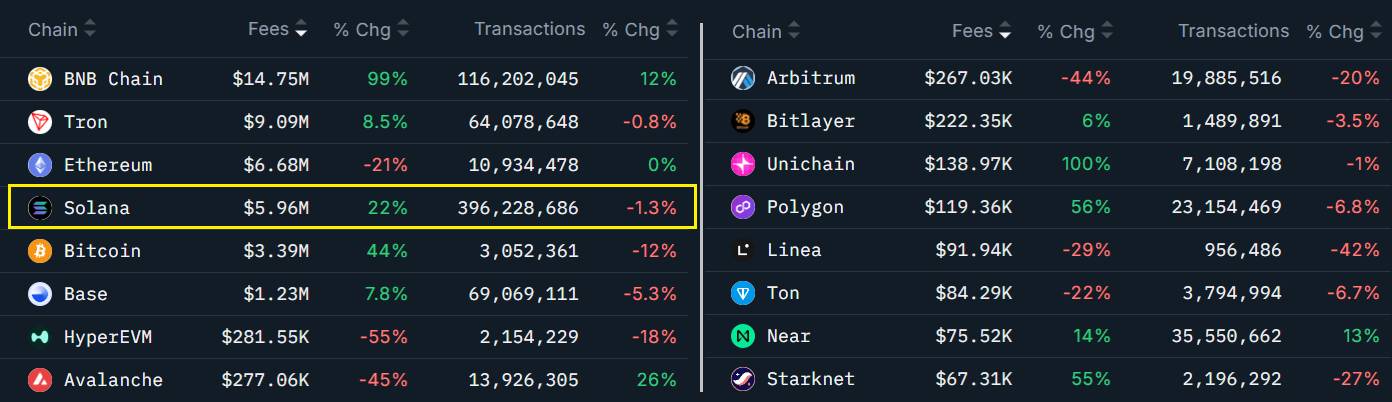
          Blockchains ranked by 7-day fees. Source: Nansen

          Solana recorded a 22% increase in seven-day network fees, driven by rising activity across decentralized exchanges (DEXs). Meanwhile, its main rival by deposits, Ethereum, saw the opposite trend, with network revenue falling 21% during the same period. Solana continues to dominate in transaction count, surpassing the combined total of Ethereum and its layer-2 ecosystem.

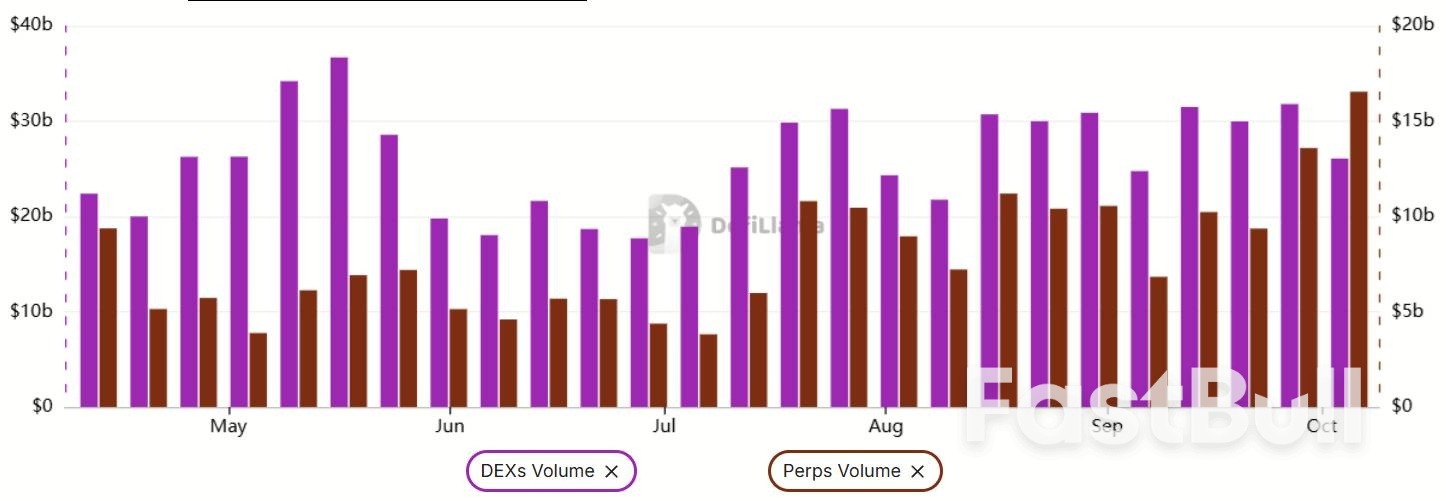
          Weekly Solana DEX (left) and perpetual (right) volumes, USD. Source: DefiLlama

          DEX volumes on Pump rose 78% over the past seven days, followed by a 73% increase on Meteora and a 46% rise on Raydium. Solana regained its leading position in decentralized exchange activity, posting $129 billion in 30-day volume and surpassing Ethereum’s $114 billion, according to DefiLlama data. Notably, the fastest-growing rival, Hyperliquid, has stalled at around $31 billion.

          Solana network activity increases

          Network fees remain a key element for any blockchain focused on decentralized applications, particularly when the revenue helps offset inflationary pressures. Unless the system is centralized, maintaining validators incurs costs, and staking participants expect a reasonable return. In short, weak network activity discourages holding the native token and can trigger sell pressure.

          Solana’s total value locked (TVL) rose 8% in 30 days, supporting further growth in network fees. Standout performers included a 20% rise in Kamino deposits, 12% in Drift, and 12% in Orca. By comparison, Ethereum’s TVL increased 3% over the same period, while Tron deposits grew 6%. As a result, Solana has solidified its position as the second-largest network, with $14.2 billion in TVL, representing an 8% market share.

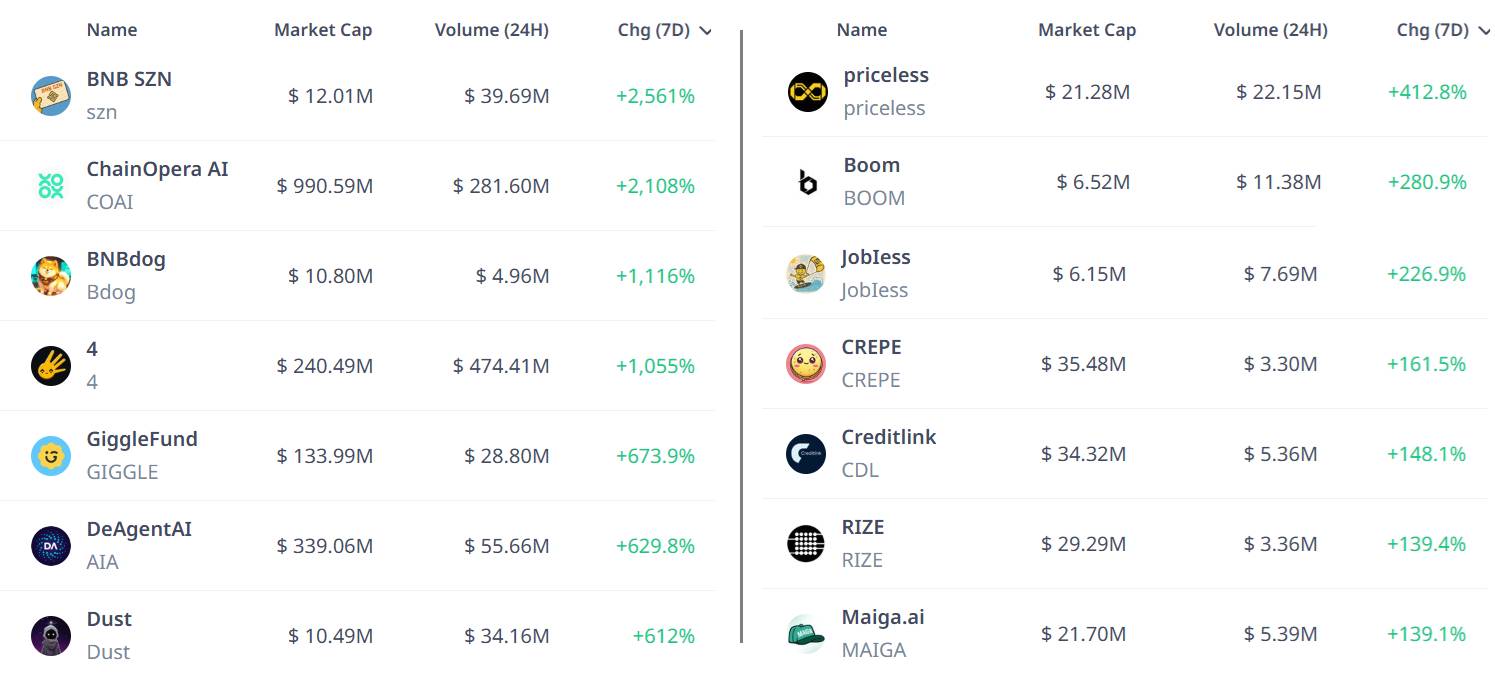
          The rapid surge in activity on the perpetual futures trading platform Aster has redirected traders’ focus toward BNB Chain, following a wave of memecoins that soared 150% or more within seven days. As a result, even though SOL’s price rose 3% during the same period, BNB’s remarkable 28% rally weighed on sentiment among Solana ecosystem investors.

          Top 7-day performances of BNB Chain tokens, USD. Source: Cryptorank.io

          Rising inflows to SOL ETPs signal increasing institutional demand

          Data from SOL perpetual futures provides insight into whether traders have lost confidence after the failed attempt to break above $250 on Sept. 18. Many SOL holders are likely frustrated, especially as some rival tokens have recently reached new all-time highs, including BNB at $1,357 on Tuesday and Mantle at $2.81 on Wednesday.

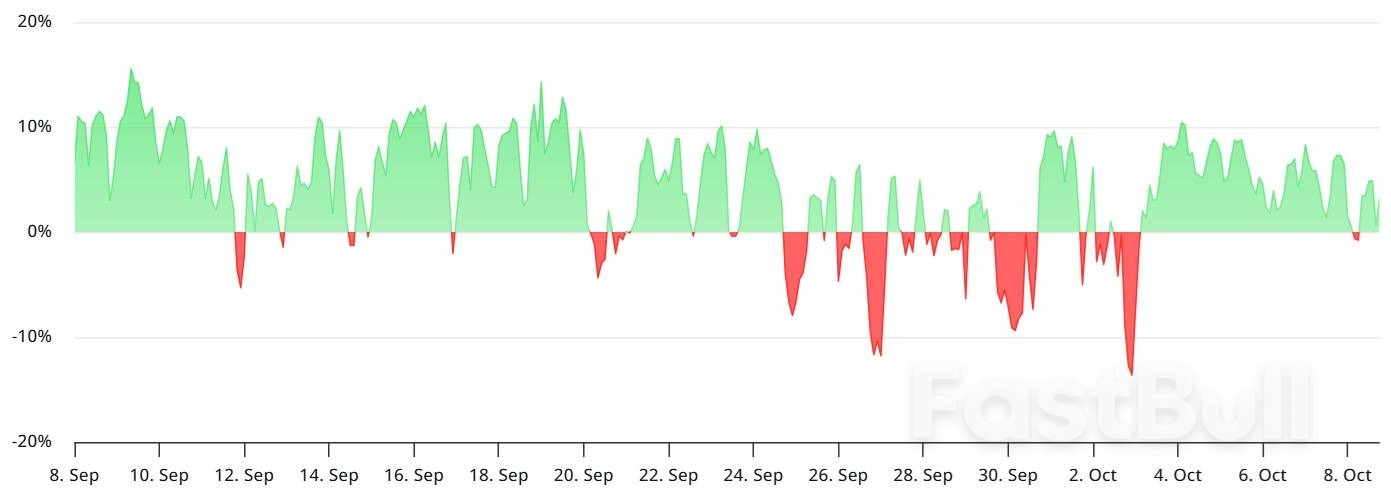
          SOL perpetual futures funding rate, annualized. Source: laevitas.ch

          The funding rate on SOL perpetual futures has remained below the 6% neutral threshold, signaling weak demand for bullish leveraged positions. This cautious stance among traders may be partly attributed to the growing traction of competing blockchains, which have drawn attention away from Solana despite record weekly inflows into its exchange-traded products.

          CoinShares reported that Solana ETFs and ETPs attracted $706 million in inflows during the seven days ending Sept. 5, far surpassing the $219 million recorded by XRP instruments. Investors now anticipate that the US Securities and Exchange Commission will approve multiple spot Solana ETFs on Friday, a development that could drive additional institutional inflows and potentially push SOL’s price beyond $300.

          Source: CryptoSlate

          To stay updated on all economic events of today, please check out our Economic calendar
          Risk Warnings and Disclaimers
          You understand and acknowledge that there is a high degree of risk involved in trading. Following any strategies or investment methods may lead to potential losses. The content on the site is provided by our contributors and analysts for information purposes only. You are solely responsible for determining whether any trading assets, securities, strategy, or any other product is suitable for investing based on your own investment objectives and financial situation.
          Add to Favorites
          Share

          Gold's Record-Breaking Rally: Forecasts and Analysis for Continued Gains

          Gerik

          Economic

          Commodity

          As of now, gold is on track for its best year since 1979, when runaway inflation drove investors toward safe-haven assets. Despite its remarkable rally, analysts are divided on how much further it can climb, with some forecasting even higher prices in the short-term.

          Goldman Sachs: A Continued Surge with 22% Growth Expected by 2026

          Goldman Sachs has set a bullish outlook for gold, raising its price target to $4,900 per ounce by December 2026. This would represent a 20% increase over the next year. The investment bank's optimistic view is driven by strong central bank demand, with purchases expected to average 80 metric tons in 2025 and 70 metric tons in 2026.
          Additionally, the bank predicts that Western investors will continue driving inflows into gold ETFs, bolstered by the Federal Reserve's anticipated rate cuts. These factors are expected to support gold's upward trajectory for the foreseeable future.

          HSBC: Limited Upside with Potential for a Moderation in 2026

          HSBC’s forecast is more conservative. The bank sees gold trading within a range of $3,600 to $4,400 per ounce in 2026, implying an 8% increase from its current levels. Geopolitical uncertainties and concerns over the Fed’s independence are expected to maintain upward pressure on prices in the near term.
          However, HSBC analysts caution that as the rally matures, factors such as increased supply and reduced physical demand could lead to price moderation in the second half of 2026. In the long term, the bank projects prices will ease slightly to around $3,950 in 2026 and further decline to $3,600 by 2027.

          Bank of America: Potential Resistance at $4,000, But $5,000 Is Still Within Reach

          Bank of America has pointed out signs that gold's momentum might be weakening, noting that the metal has been up for seven consecutive weeks and is currently trading 21% above its 200-day moving average.
          Historical patterns suggest that gold might face resistance around the $4,000 mark, but there is also the possibility of a surge to $5,000 before encountering further challenges. The bank draws comparisons to the 2015-2020 period when gold experienced a dramatic 85% rally before correcting.
          Ed Yardeni: Long-Term Bullish Outlook with a Potential $10,000 Price Target by 2030
          Ed Yardeni, president of Yardeni Research, presents a highly optimistic view of gold’s future, predicting that the metal could reach $5,000 by the end of 2026 and potentially surge to $10,000 by the end of the decade. This represents a 146% gain over the next five years. Yardeni’s bullishness is rooted in ongoing economic uncertainty, central bank buying, and the "Gold Put" provided by central banks diversifying their reserves into gold.
          In conclusion, while there are varying opinions on how much further gold can rise, the consensus is that economic uncertainties and central bank demand will continue to fuel its price appreciation. The forecasts range from moderate increases to a potential massive surge over the next few years, with analysts continuing to closely monitor inflation trends, geopolitical developments, and the broader financial landscape.

          Source: Business Insider

          To stay updated on all economic events of today, please check out our Economic calendar
          Risk Warnings and Disclaimers
          You understand and acknowledge that there is a high degree of risk involved in trading. Following any strategies or investment methods may lead to potential losses. The content on the site is provided by our contributors and analysts for information purposes only. You are solely responsible for determining whether any trading assets, securities, strategy, or any other product is suitable for investing based on your own investment objectives and financial situation.
          Add to Favorites
          Share

          China Stocks Rise as AI Enthusiasm Outshines Tepid Spending Data

          Gerik

          Economic

          Stocks

          The CSI 300 Index gained 0.6% after opening, while Chinese stocks listed in Hong Kong saw a slight decline of 0.3%. Despite signs of economic weakness, such as weak holiday consumption and disappointing box office earnings, investors remained buoyed by the positive global sentiment around AI advancements, particularly driven by companies like OpenAI. The rally in Chinese equities has been notably fueled by chip stocks after major announcements from DeepSeek and Huawei Technologies.

          AI-Driven Optimism vs. Weak Consumer Spending

          The recent Golden Week spending data revealed a consumer shift towards more budget-conscious behavior, with weak performance in movie ticket sales and airline bookings, as reported by major financial institutions like Morgan Stanley. This was reflected in declines in entertainment stocks, such as Maoyan Entertainment, as well as a shift from air and rail to highway travel. Although overall passenger traffic increased by almost 7%, this growth marked a decline compared to previous holiday periods. Analysts from Julius Baer noted that consumer-related stocks might experience profit-taking due to these signs of ongoing consumption weakness.
          Nevertheless, the global AI trend has continued to fuel market optimism. AI developments such as the launch of DeepSeek's new AI model and Huawei's plans to double AI chip production have driven investment interest in Chinese stocks, particularly in the tech and chip sectors. Despite the ongoing challenges in consumer sentiment, the broader enthusiasm for AI technology has kept many investors hopeful for a rebound in China’s tech sector.

          Policy and Market Expectations

          As investors look forward to the upcoming Communist Party meeting, attention is shifting to potential policy signals that could address domestic demand weakness. In late September, China introduced a $70 billion capital injection aimed at boosting investment, and the market expects further policy interventions to stimulate domestic consumption. Analysts anticipate that policy measures could focus on addressing deflationary pressures and unlocking excess savings to reinvigorate consumption, which could offer a much-needed boost for China’s economy in the coming months.

          Yuan’s Resilience and Market Sentiment

          Despite a slight dip in the offshore yuan during the holiday period, it remains stronger by over 2% year-to-date, as demand for Chinese assets grows. The market is closely monitoring the People’s Bank of China’s reference rate for further policy guidance, as stability in the yuan will likely serve as a stabilizing factor for regional currencies. Analysts expect the yuan to strengthen further to around 7.07 per dollar by the end of the year, driven by resilient export performance and anticipated demand-side stimulus.
          China’s stock market surged on AI-driven optimism despite weak holiday spending, with investors hopeful that global AI momentum will spill over into the Chinese market. Consumer sentiment remains sluggish, as evidenced by Golden Week data, but expectations of policy measures to stimulate domestic demand may provide support for the market. The yuan remains resilient, with analysts forecasting further strength by year-end.

          Source: Bloomberg

          To stay updated on all economic events of today, please check out our Economic calendar
          Risk Warnings and Disclaimers
          You understand and acknowledge that there is a high degree of risk involved in trading. Following any strategies or investment methods may lead to potential losses. The content on the site is provided by our contributors and analysts for information purposes only. You are solely responsible for determining whether any trading assets, securities, strategy, or any other product is suitable for investing based on your own investment objectives and financial situation.
          Add to Favorites
          Share
          FastBull
          Copyright © 2025 FastBull Ltd

          728 RM B 7/F GEE LOK IND BLDG NO 34 HUNG TO RD KWUN TONG KLN HONG KONG

          TelegramInstagramTwitterfacebooklinkedin
          App Store Google Play Google Play
          Products
          Charts

          Chats

          Q&A with Experts
          Screeners
          Economic Calendar
          Data
          Tools
          Membership
          Features
          Function
          Markets
          Copy Trading
          Latest Signals
          Contests
          News
          Analysis
          24/7
          Columns
          Education
          Company
          Careers
          About Us
          Contact Us
          Advertising
          Help Center
          Feedback
          User Agreement
          Privacy Policy
          Business

          White Label

          Data API

          Web Plug-ins

          Poster Maker

          Affiliate Program

          Risk Disclosure

          The risk of loss in trading financial instruments such as stocks, FX, commodities, futures, bonds, ETFs and crypto can be substantial. You may sustain a total loss of the funds that you deposit with your broker. Therefore, you should carefully consider whether such trading is suitable for you in light of your circumstances and financial resources.

          No decision to invest should be made without thoroughly conducting due diligence by yourself or consulting with your financial advisors. Our web content might not suit you since we don't know your financial conditions and investment needs. Our financial information might have latency or contain inaccuracy, so you should be fully responsible for any of your trading and investment decisions. The company will not be responsible for your capital loss.

          Without getting permission from the website, you are not allowed to copy the website's graphics, texts, or trademarks. Intellectual property rights in the content or data incorporated into this website belong to its providers and exchange merchants.

          Not Logged In

          Log in to access more features

          FastBull Membership

          Not yet

          Purchase

          Become a signal provider
          Help Center
          Customer Service
          Dark Mode
          Price Up/Down Colors

          Log In

          Sign Up

          Position
          Layout
          Fullscreen
          Default to Chart
          The chart page opens by default when you visit fastbull.com