• Trade
  • Markets
  • Copy
  • Contests
  • News
  • 24/7
  • Calendar
  • Q&A
  • Chats
Trending
Screeners
SYMBOL
LAST
BID
ASK
HIGH
LOW
NET CHG.
%CHG.
SPREAD
SPX
S&P 500 Index
6827.42
6827.42
6827.42
6899.86
6801.80
-73.58
-1.07%
--
DJI
Dow Jones Industrial Average
48458.04
48458.04
48458.04
48886.86
48334.10
-245.98
-0.51%
--
IXIC
NASDAQ Composite Index
23195.16
23195.16
23195.16
23554.89
23094.51
-398.69
-1.69%
--
USDX
US Dollar Index
98.000
98.080
98.000
98.070
97.920
+0.050
+ 0.05%
--
EURUSD
Euro / US Dollar
1.17285
1.17292
1.17285
1.17447
1.17276
-0.00109
-0.09%
--
GBPUSD
Pound Sterling / US Dollar
1.33632
1.33642
1.33632
1.33740
1.33546
-0.00075
-0.06%
--
XAUUSD
Gold / US Dollar
4339.69
4340.10
4339.69
4347.21
4294.68
+40.30
+ 0.94%
--
WTI
Light Sweet Crude Oil
57.458
57.488
57.458
57.601
57.194
+0.225
+ 0.39%
--

Community Accounts

Signal Accounts
--
Profit Accounts
--
Loss Accounts
--
View More

Become a signal provider

Sell trading signals to earn additional income

View More

Guide to Copy Trading

Get started with ease and confidence

View More

Signal Accounts for Members

All Signal Accounts

Best Return
  • Best Return
  • Best P/L
  • Best MDD
Past 1W
  • Past 1W
  • Past 1M
  • Past 1Y

All Contests

  • All
  • Trump Updates
  • Recommend
  • Stocks
  • Cryptocurrencies
  • Central Banks
  • Featured News
Top News Only
Share

Reuters Calculation - India's Nov Services Trade Surplus At $17.9 Billion

Share

India Trade Secretary: Reduction In Imports In November Due To Fall In Gold, Oil And Coal Shipments

Share

India Trade Secretary: Gold Imports Have Declined In Nov By About 60%

Share

India Trade Secretary: Exports In Sectors Such Engineering, Electronics , Gems And Jewellery Aided November Figures

Share

India's Nov Merchandise Trade Deficit At $24.53 Billion - Reuters Calculation (Poll $32 Billion)

Share

India's Nov Merchandise Imports At $62.66 Billion

Share

India's Nov Merchandise Exports At $38.13 Billion

Share

Stats Office - Swiss November Producer/Import Prices -1.6% Year-On-Year (Versus-1.7% In Prior Month)

Share

Stats Office - Swiss November Producer/Import Prices -0.5% Month-On-Month (Versus-0.3% In Prior Month)

Share

Thailand To Hold Elections On Feb 8 - Multiple Local Media Reports

Share

Taiwan Dollar Falls 0.6% To 31.384 Per USA Dollar, Lowest Since December 3

Share

Stats Office - Botswana November Consumer Inflation At 0.0% Month-On-Month

Share

Stats Office - Botswana November Consumer Inflation At 3.8% Year-On-Year

Share

Statistics Bureau - Kazakhstan's Jan-Nov Industrial Output +7.4% Year-On-Year

Share

Fca: Sets Out Plans To Help Build Mortgage Market Of Future

Share

Eurostoxx 50 Futures Up 0.38%, DAX Futures Up 0.43%, FTSE Futures Up 0.37%

Share

[Delivery Of New US Presidential Aircraft Delayed Again] According To The Latest Timeline Released By The US Air Force, The Delivery Of The First Of The Two Newly Commissioned Air Force One Presidential Aircraft Will Not Be Earlier Than 2028. This Means That The Delivery Of The New Air Force One Has Been Delayed Once Again

Share

German Nov Wholesale Prices +0.3% Month-On-Month

Share

Norway's Nov Trade Balance Nok 41.3 Billion - Statistics Norway

Share

German Nov Wholesale Prices +1.5% Year-On-Year

TIME
ACT
FCST
PREV
France HICP Final MoM (Nov)

A:--

F: --

P: --

China, Mainland Outstanding Loans Growth YoY (Nov)

A:--

F: --

P: --

China, Mainland M2 Money Supply YoY (Nov)

A:--

F: --

P: --

China, Mainland M0 Money Supply YoY (Nov)

A:--

F: --

P: --

China, Mainland M1 Money Supply YoY (Nov)

A:--

F: --

P: --

India CPI YoY (Nov)

A:--

F: --

P: --

India Deposit Gowth YoY

A:--

F: --

P: --

Brazil Services Growth YoY (Oct)

A:--

F: --

P: --

Mexico Industrial Output YoY (Oct)

A:--

F: --

P: --

Russia Trade Balance (Oct)

A:--

F: --

P: --

Philadelphia Fed President Henry Paulson delivers a speech
Canada Building Permits MoM (SA) (Oct)

A:--

F: --

P: --

Canada Wholesale Sales YoY (Oct)

A:--

F: --

P: --

Canada Wholesale Inventory MoM (Oct)

A:--

F: --

P: --

Canada Wholesale Inventory YoY (Oct)

A:--

F: --

P: --

Canada Wholesale Sales MoM (SA) (Oct)

A:--

F: --

P: --

Germany Current Account (Not SA) (Oct)

A:--

F: --

P: --

U.S. Weekly Total Rig Count

A:--

F: --

P: --

U.S. Weekly Total Oil Rig Count

A:--

F: --

P: --

Japan Tankan Small Manufacturing Outlook Index (Q4)

A:--

F: --

P: --

Japan Tankan Large Non-Manufacturing Diffusion Index (Q4)

A:--

F: --

P: --

Japan Tankan Large Non-Manufacturing Outlook Index (Q4)

A:--

F: --

P: --

Japan Tankan Large Manufacturing Outlook Index (Q4)

A:--

F: --

P: --

Japan Tankan Small Manufacturing Diffusion Index (Q4)

A:--

F: --

P: --

Japan Tankan Large Manufacturing Diffusion Index (Q4)

A:--

F: --

P: --

Japan Tankan Large-Enterprise Capital Expenditure YoY (Q4)

A:--

F: --

P: --

U.K. Rightmove House Price Index YoY (Dec)

A:--

F: --

P: --

China, Mainland Industrial Output YoY (YTD) (Nov)

A:--

F: --

P: --

China, Mainland Urban Area Unemployment Rate (Nov)

A:--

F: --

P: --

Saudi Arabia CPI YoY (Nov)

A:--

F: --

P: --

Euro Zone Industrial Output YoY (Oct)

--

F: --

P: --

Euro Zone Industrial Output MoM (Oct)

--

F: --

P: --

Canada Existing Home Sales MoM (Nov)

--

F: --

P: --

Euro Zone Total Reserve Assets (Nov)

--

F: --

P: --

U.K. Inflation Rate Expectations

--

F: --

P: --

Canada National Economic Confidence Index

--

F: --

P: --

Canada New Housing Starts (Nov)

--

F: --

P: --

U.S. NY Fed Manufacturing Employment Index (Dec)

--

F: --

P: --

U.S. NY Fed Manufacturing Index (Dec)

--

F: --

P: --

Canada Core CPI YoY (Nov)

--

F: --

P: --

Canada Manufacturing Unfilled Orders MoM (Oct)

--

F: --

P: --

U.S. NY Fed Manufacturing Prices Received Index (Dec)

--

F: --

P: --

U.S. NY Fed Manufacturing New Orders Index (Dec)

--

F: --

P: --

Canada Manufacturing New Orders MoM (Oct)

--

F: --

P: --

Canada Core CPI MoM (Nov)

--

F: --

P: --

Canada Trimmed CPI YoY (SA) (Nov)

--

F: --

P: --

Canada Manufacturing Inventory MoM (Oct)

--

F: --

P: --

Canada CPI YoY (Nov)

--

F: --

P: --

Canada CPI MoM (Nov)

--

F: --

P: --

Canada CPI YoY (SA) (Nov)

--

F: --

P: --

Canada Core CPI MoM (SA) (Nov)

--

F: --

P: --

Canada CPI MoM (SA) (Nov)

--

F: --

P: --

Federal Reserve Board Governor Milan delivered a speech
U.S. NAHB Housing Market Index (Dec)

--

F: --

P: --

Australia Composite PMI Prelim (Dec)

--

F: --

P: --

Australia Services PMI Prelim (Dec)

--

F: --

P: --

Australia Manufacturing PMI Prelim (Dec)

--

F: --

P: --

Japan Manufacturing PMI Prelim (SA) (Dec)

--

F: --

P: --

U.K. Unemployment Claimant Count (Nov)

--

F: --

P: --

U.K. Unemployment Rate (Nov)

--

F: --

P: --

U.K. 3-Month ILO Unemployment Rate (Oct)

--

F: --

P: --

Q&A with Experts
    • All
    • Chatrooms
    • Groups
    • Friends
    Connecting
    .
    .
    .
    Type here...
    Add Symbol or Code

      No matching data

      All
      Trump Updates
      Recommend
      Stocks
      Cryptocurrencies
      Central Banks
      Featured News
      • All
      • Russia-Ukraine Conflict
      • Middle East Flashpoint
      • All
      • Russia-Ukraine Conflict
      • Middle East Flashpoint
      Search
      Products

      Charts Free Forever

      Chats Q&A with Experts
      Screeners Economic Calendar Data Tools
      Membership Features
      Data Warehouse Market Trends Institutional Data Policy Rates Macro

      Market Trends

      Market Sentiment Order Book Forex Correlations

      Top Indicators

      Charts Free Forever
      Markets

      News

      News Analysis 24/7 Columns Education
      From Institutions From Analysts
      Topics Columnists

      Latest Views

      Latest Views

      Trending Topics

      Top Columnists

      Latest Update

      Signals

      Copy Rankings Latest Signals Become a signal provider AI Rating
      Contests
      Brokers

      Overview Brokers Assessment Rankings Regulators News Claims
      Broker listing Forex Brokers Comparison Tool Live Spread Comparison Scam
      Q&A Complaint Scam Alert Videos Tips to Detect Scam
      More

      Business
      Events
      Careers About Us Advertising Help Center

      White Label

      Data API

      Web Plug-ins

      Affiliate Program

      Awards Institution Evaluation IB Seminar Salon Event Exhibition
      Vietnam Thailand Singapore Dubai
      Fans Party Investment Sharing Session
      FastBull Summit BrokersView Expo
      Recent Searches
        Top Searches
          Markets
          News
          Analysis
          User
          24/7
          Economic Calendar
          Education
          Data
          • Names
          • Latest
          • Prev

          View All

          No data

          Scan to Download

          Faster Charts, Chat Faster!

          Download App
          English
          • English
          • Español
          • العربية
          • Bahasa Indonesia
          • Bahasa Melayu
          • Tiếng Việt
          • ภาษาไทย
          • Français
          • Italiano
          • Türkçe
          • Русский язык
          • 简中
          • 繁中
          Open Account
          Search
          Products
          Charts Free Forever
          Markets
          News
          Signals

          Copy Rankings Latest Signals Become a signal provider AI Rating
          Contests
          Brokers

          Overview Brokers Assessment Rankings Regulators News Claims
          Broker listing Forex Brokers Comparison Tool Live Spread Comparison Scam
          Q&A Complaint Scam Alert Videos Tips to Detect Scam
          More

          Business
          Events
          Careers About Us Advertising Help Center

          White Label

          Data API

          Web Plug-ins

          Affiliate Program

          Awards Institution Evaluation IB Seminar Salon Event Exhibition
          Vietnam Thailand Singapore Dubai
          Fans Party Investment Sharing Session
          FastBull Summit BrokersView Expo

          New Zealand Dollar Slides on RBNZ Pause Expectations

          Warren Takunda

          Economic

          Central Bank

          Summary:

          The New Zealand dollar is falling and could fall further if the RBNZ pauses rate hikes on Wednesday. This is because investors may take it as a sign that the central bank is concerned about the risk of a recession. The RBNZ is facing a difficult challenge, as it needs to balance the need to combat high inflation with the risk of tipping the economy into a recession.
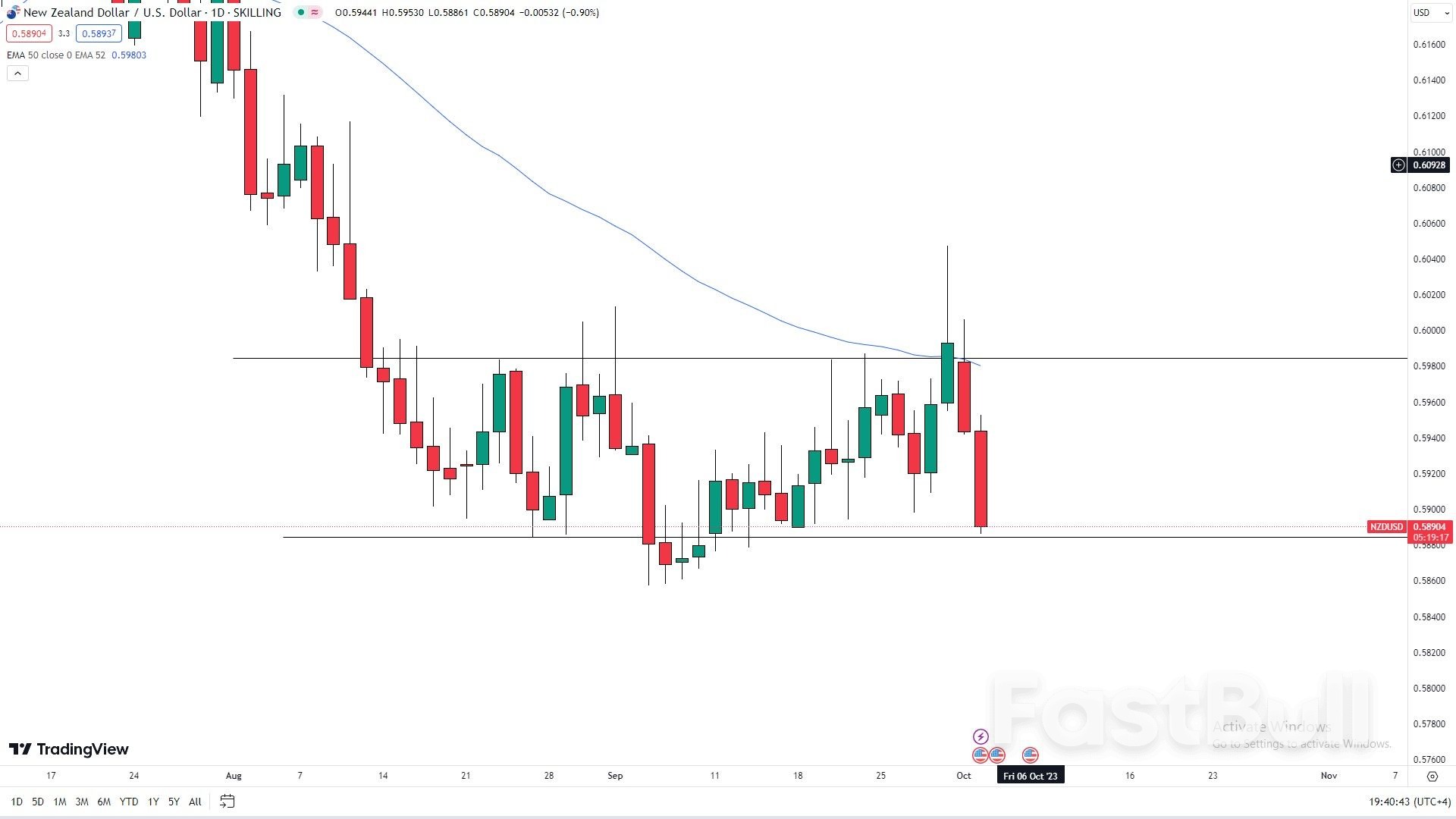
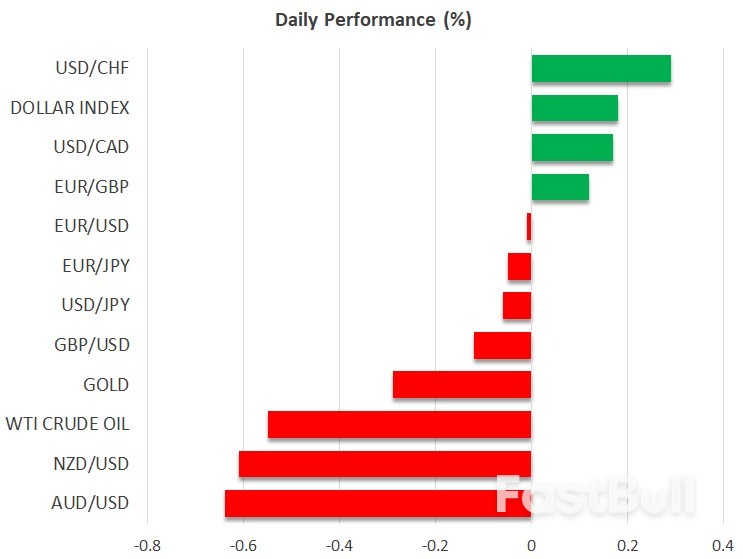
          The New Zealand dollar has been sliding for two consecutive days, down 1.55% so far this week. This is due in part to the strength of the US dollar and higher US Treasury yields, as well as the Reserve Bank of Australia's decision to hold interest rates for a fourth straight time.New Zealand Dollar Slides on RBNZ Pause Expectations_1
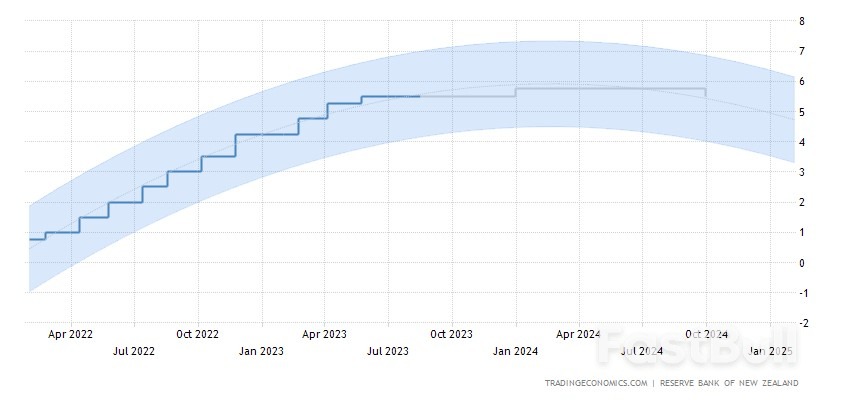
          The Reserve Bank of New Zealand is expected to maintain the cash rate at 5.5% when it meets on Wednesday. If the RBNZ does pause, it would be for the third straight time, and this could weigh on the New Zealand dollar.
          The RBNZ is facing a difficult challenge, as it needs to balance the need to combat high inflation with the risk of tipping the economy into a recession. Inflation in New Zealand is currently at 6%, which is double the upper band of the central bank's target range.
          New Zealand Dollar Slides on RBNZ Pause Expectations_2However, the RBNZ may be reluctant to raise interest rates any further, as the economy is already showing signs of slowing. Domestic consumption is weak and global demand for exports is declining. The central bank has projected a recession, and an end to tightening would be appropriate if it weren't for inflation running at a 6% clip.
          The key question is how long the RBNZ is willing to wait for inflation to fall before hiking again. If the central bank signals that it is prepared to pause for a longer period of time, this could lead to further weakness in the New Zealand dollar.
          To stay updated on all economic events of today, please check out our Economic calendar
          Risk Warnings and Disclaimers
          You understand and acknowledge that there is a high degree of risk involved in trading. Following any strategies or investment methods may lead to potential losses. The content on the site is provided by our contributors and analysts for information purposes only. You are solely responsible for determining whether any trading assets, securities, strategy, or any other product is suitable for investing based on your own investment objectives and financial situation.
          Comments
          Add to Favorites
          Share

          What Are the Next Steps as U.S. House Searches for New Speaker?

          Cohen

          Political

          The U.S. House of Representatives for the first time in its history has booted its speaker out of the job, as infighting in the narrow and bitterly divided Republican majority toppled Kevin McCarthy from the position.
          Here is a look at what comes next:
          Is there an acting speaker?
          Immediately following Tuesday's 216-210 ouster vote, Republican Representative Patrick McHenry, a McCarthy ally, was appointed acting speaker pro tempore. He can serve for only a very limited time - up to three legislative days in this case.
          The acting speaker pro tempore's duties are vague, according to a guide to the chamber's rules and procedures:
          That person "may exercise such authorities of the office of the speaker as may be necessary and appropriate pending the election of a speaker or speaker pro tempore."
          While the speaker sets the overall legislative agenda in the House, it is the House majority leader who schedules specific bills to be debated and voted upon in the chamber.
          Republican Representative Kelly Armstrong told reporters that McHenry's main task will be to "get us a new speaker."
          Anything further, he said, would spark a move to oust McHenry.
          A freeze on legislating?
          Until a House speaker is installed, it is unlikely that further action will be taken on bills to fund the government, with lawmakers facing a Nov 17 deadline to provide more money or face a partial government shutdown.Battles over those bills and anger over McCarthy's failure to win extremely deep spending cuts sought by hard-right conservatives sparked the successful move by Representative Matt Gaetz to unseat him.
          What are house republicans, democrats doing?
          The House's 221 Republicans and 212 Democrats huddled privately to figure out their next steps - both political and legislative.
          Each party was expected to try to settle on a candidate for speaker. That's fairly easy for Democrats as they are solidly behind Minority Leader Hakeem Jeffries, who ran for speaker in January against McCarthy and other candidates.
          Republicans, because of their obvious divisions, especially among a small group of hard-line conservatives seeking very deep cuts in federal spending, could have a harder time settling on a candidate.
          McHenry could have an advantage now that he is an acting speaker. It was unclear whether he wanted the job. McCarthy is not barred from running again.
          The House finds itself in an unprecedented moment and so it was unclear exactly how quickly an election will be held in the full House.Normally, the elections for speaker are scheduled at the start of the new Congress every two years.
          When will the next speaker election be?
          The leaders of both parties will have to decide when they are ready to enter into the process of electing a speaker.
          The January endeavor was sloppy as McCarthy for days could not get enough votes to win and had to endure 15 ballots.
          It could be at least as chaotic this time around for Republicans unless they conclude that such chaos is creating a public backlash that could doom their election prospects in 2024 and they unite.
          Who can run for speaker?
          Under the U.S. Constitution, the House speaker does not have to be a member of Congress.
          That is the reason some Republicans have floated the name of former President Donald Trump for the job, even though he is running for president and has said he does not want the job.

          Source: CNA

          Risk Warnings and Disclaimers
          You understand and acknowledge that there is a high degree of risk involved in trading. Following any strategies or investment methods may lead to potential losses. The content on the site is provided by our contributors and analysts for information purposes only. You are solely responsible for determining whether any trading assets, securities, strategy, or any other product is suitable for investing based on your own investment objectives and financial situation.
          Comments
          Add to Favorites
          Share

          Turkey's Annual Inflation Continued to Rise in September

          Devin

          Economic

          Central Bank

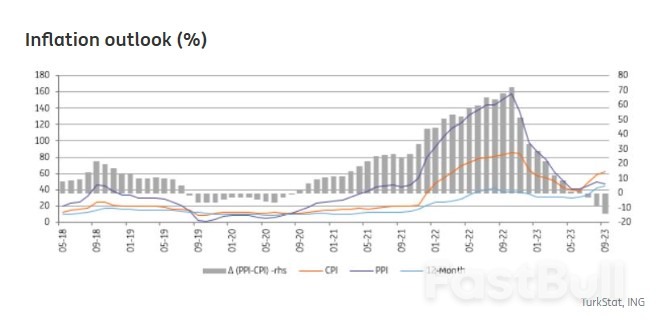
          With monthly inflation at 4.75% (close to our call of 4.7% and the market expectation of 4.9%), annual inflation continued to rise in September, reaching 61.9%. This compares to the government's full-year estimate of 65% as laid out in its medium-term plan and the central bank's forecast of 58%, which it announced towards the end of July. The last inflation report of the year on 2 November will provide further insights into how the central bank assesses the inflation outlook and whether it will change the forecast for 2024.
          The data reflects a continued broad-based deterioration in price dynamics as both food and non-food prices, excluding the housing group, increased above the level seen last September. The rise in energy prices and continuing pressure in services are also attracting attention. Core inflation (CPI-C) came in at 5.3% month-on-month, rising to 68.9% on an annual basis. This was attributable to exchange rate developments, changes in administered prices and commodity prices. Accordingly, the underlying trend in the headline rate (as measured by the three-month moving average, annualised percentage change, based on a seasonally adjusted series) increased further in September though at a slower pace thanks to goods inflation. The services group has maintained its elevated trend due to continuing pressure in rent, catering and transportation services. This supports the Central Bank of Turkey's observation in the September rate-setting statement that the underlying trend is likely to decline in the period ahead.
          September PPI, meanwhile, stood at 3.4% on a monthly basis, translating into 47.4% year-on-year. This elevated annual figure reflects a significant acceleration in the Turkish lira equivalent of import prices due to commodity and exchange rate increases and it implies that cost pressures have gained strength in recent months. While a slight decline from 49.4% YoY a month ago is a positive development, still-strong domestic demand at the end of the third quarter suggests that producers are likely to continue to pass on their cost increases i.e. recent electricity and natural gas hikes to consumers.
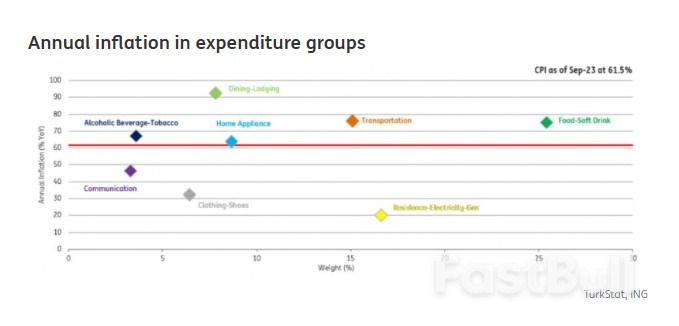
          Turkey's Annual Inflation Continued to Rise in September_1In the breakdown, all of the main expenditure groups positively impacted the headline. Among them, food turned out to be the major contributor, adding 0.88ppt, as both processed and unprocessed food products witnessed significant price increases. With the September figure, annual inflation in the group reached 75.1% vs. the CBT's assumption of 61.5% in the July inflation report. This was followed by transportation at 0.78ppt, on the back of rising energy prices and adjustments in transportation services. Housing, meanwhile, pulled the headline up by 0.71ppt due to rent, water fees and coal prices. Among non-food groups, education, alcohol-tobacco and household goods groups recorded strong increases. As a result, goods inflation rose to 52.4% YoY showing a moderate move from 51.5% YoY a month ago. Annual inflation in services, which is significantly influenced by domestic demand and minimum wage hikes, maintained its strong uptrend and reached another peak of 86.5% YoY.
          Turkey's Annual Inflation Continued to Rise in September_2Overall, given the deterioration in pricing behaviour, exchange-related effects, widespread increase in wages and tax adjustments, continuing strength in domestic demand and the upward reversal in global commodity prices, particularly oil prices, inflation will likely remain under pressure in the near term, as we have already seen a significant jump since the elections. However, a continuation of recent stability in the lira will likely keep the currency-related impact on the CPI basket under control. In this environment, the CBT has taken steps towards normalising interest rates and its exchange rate policy after the elections. The latest rate hikes in August and September were significant and likely raise expectations for the end of the current cycle. These moves and the impact on deposit and loan rates along with other macro-prudential decisions will be important in tightening financial conditions and controlling domestic demand.
          Source: ING

          To stay updated on all economic events of today, please check out our Economic calendar
          Risk Warnings and Disclaimers
          You understand and acknowledge that there is a high degree of risk involved in trading. Following any strategies or investment methods may lead to potential losses. The content on the site is provided by our contributors and analysts for information purposes only. You are solely responsible for determining whether any trading assets, securities, strategy, or any other product is suitable for investing based on your own investment objectives and financial situation.
          Comments
          Add to Favorites
          Share

          October 4th Financial News

          FastBull Featured

          Daily News

          [Quick Facts]

          1. U.S. House votes to remove Republican House Speaker McCarthy.
          2. U.S. job openings rose unexpectedly to 9.61 million in August, while layoffs remained low.
          3. The yen rebounds after falling below 150 amid talk of Japan's intervention.
          4. U.S. Treasury yields continue to climb across the board.
          5. Fed officials strengthen their stance to maintain high rates for long.

          [News Details]

          U.S. House votes to remove Republican House Speaker McCarthy
          The U.S. House of Representatives voted on a motion to remove Republican House Speaker Kevin McCarthy from office on October 3 local time, which was passed by a vote of 216 to 210. It marked McCarthy became the first to be voted out of office as Speaker of the House of Representatives. Last weekend, the U.S. Congress passed a stopgap funding bill, temporarily avoiding a federal government "shutdown" but triggering a "fight" within the Republican Party. Prior to this, ultra-conservative Republicans had been pressuring McCarthy to drastically reduce federal spending and strengthen border control. However, the U.S. Congress approved the short-term stopgap funding bill at the last minute before a government shutdown. The move satisfied the White House, but the bill did not include a substantial reduction in federal spending or strengthen border control provisions, which dissatisfied Republicans. Subsequently, Matt Gaetz, one of the hard-line Republicans, filed a motion in the House in an attempt to remove Republican House Speaker McCarthy.
          U.S. job openings rose unexpectedly to 9.61 million in August, while layoffs remained low
          U.S. job openings rose unexpectedly in August, underscoring the persistence of labor demand. The number of job openings increased to 9.61 million in August, compared with a revised 8.92 million in July, according to the Job Openings and Labor Turnover Survey (JOLTS) released on Tuesday by the U.S. Bureau of Labor Statistics. Employment increased slightly and layoffs remained low. Economists polled by the media forecast a median of 8.82 million job openings. The tight labor market supports wage growth, which fuels consumption and demand-driven inflation, and wage growth remains a focus of the Federal Reserve.
          The yen rebounds after falling below 150 amid talk of Japan's intervention
          The yen has broken away from its lowest level against the dollar in a year. There is speculation that Japanese officials are taking action to slow the yen's decline. The USDJPY once touched 150.16, the yen's lowest level since October 2022, in the New York session on Tuesday. This followed a report showing that U.S. labor demand remained strong. Later, the yen soared nearly 2% in seconds, reaching a high of 147.43 per dollar. But as U.S. Treasury yields rose, the yen depreciated again, and the USDJPY last quoted at 148.90. "We won't know the answer to that until it's officially confirmed. But it does feel that way," said Bipan Rai, global head of FX Strategy at Canadian Imperial Bank of Commerce, when speaking on the possibility that Japanese authorities have intervened.
          U.S. Treasury yields continue to climb across the board
          U.S. Treasury yields continued to climb across the board, with long-term Treasury yields leading the way as the U.S. economy showed more resilience. The benchmark 10-year Treasury yield closed at 4.801%, and the U.S. 30-year Treasury yield rose by 15 basis points to 4.95% during the day, both again setting new multi-year highs. The U.S. 30-year Treasury Inflation-Protected Securities (TIPS) yield exceeded 2.5%, the highest level since 2008. Bridgewater founder Dalio said the equilibrium level of the U.S. 10-year Treasury yield seemed to be around 5%.
          Fed officials strengthen their stance to maintain high rates for long
          "I am not in a hurry to raise, I am not in a hurry to reduce either," said Atlanta Fed President Raphael Bostic. He expected that the next move would be a 25-basis-point cut at the end of next year. Cleveland Fed President Loretta Mester said she is likely to support a rate hike at the next meeting if the current economic situation persists. She doesn't see a rate cut anytime soon.

          [Focus of the Day]

          TBD OPEC+ Meeting of the Joint Ministerial Monitoring Committee
          UTC+8 09:00 The Reserve Bank of New Zealand announces its interest rate decision
          UTC+8 16:00 European Central Bank President Christine Lagarde speaks
          UTC+8 16:30 U.K. Service Industry PMI Final (Sept)
          UTC+8 17:00 Eurozone PPI MoM and Retail Sales MoM (Aug)
          UTC+8 20:15 U.S. ADP Employment (Sept)
          UTC+8 22:00 U.S. ISM Non-Manufacturing PMI (Sept) and Factory Orders MoM (Aug)
          UTC+8 22:25 Fed Governor Bowman speaks
          UTC+8 22:30 U.S. EIA Crude Stocks for the Week Ended Sept. 29
          UTC+8 03:00 Next Day: Fed Goolsbee delivers a speech
          Risk Warnings and Disclaimers
          You understand and acknowledge that there is a high degree of risk involved in trading. Following any strategies or investment methods may lead to potential losses. The content on the site is provided by our contributors and analysts for information purposes only. You are solely responsible for determining whether any trading assets, securities, strategy, or any other product is suitable for investing based on your own investment objectives and financial situation.
          Comments
          Add to Favorites
          Share

          How Elections and the RBNZ Disinflation Gamble Can Steer the Kiwi Dollar

          Alex

          Central Bank

          Economic

          Political

          Forex

          Growth and housing outlook not as bad as expected

          This week's RBNZ announcement is widely expected to see another hold by New Zealand policymakers. A key reason is that the Bank still hasn't seen the third-quarter inflation and jobs data, which will be released on the 16th and 31st of October, respectively.
          The New Zealand data calendar hasn't, however, been totally quiet since the August RBNZ meeting. Growth figures were quite surprising: showing activity rebounded 0.9% quarter-on-quarter in the second quarter, more than doubling consensus expectations, and significantly above the 0.5% projected by the RBNZ. Also, a revision of first quarter figures indicated the country had not actually been in a recession into March.
          Growth should cool again in the second half of the year, but the RBNZ's projections of two negative QoQ GDP readings in the third and fourth quarters by the RBNZ may be overly pessimistic. The Treasury, which has generally been quite more upbeat than the RBNZ, currently forecasts no more negative quarterly GDP reads.
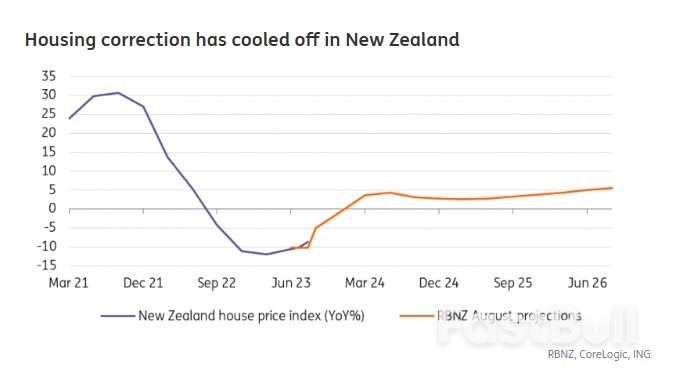
          The house price correction, which has been a major cause for concern and might have argued for less restrictive monetary policy, has eased, largely in line with the revised RBNZ August projections. Latest monthly figures showed the house price index having declined by only 0.2% MoM, and 8.7% year-on-year, reinforcing the view that the worst of the housing correction is past us.How Elections and the RBNZ Disinflation Gamble Can Steer the Kiwi Dollar_1

          RBNZ inflation forecasts still look like a gamble

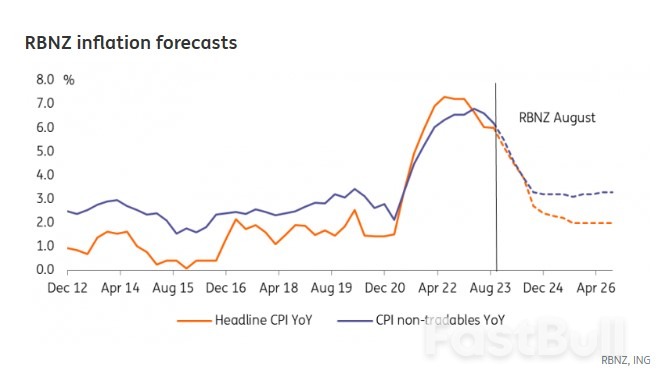
          The RBNZ's latest inflation projections – from the August Monetary Policy Statement – show an optimistic scenario for disinflation, largely based on assumptions about the impact of restrictive monetary policy and slowing domestic as well as external demand.
          Those assumptions are, however, met with the risks associated with: a) the extra spending deployed by the government from May, b) the recent spike in oil prices, c) residual supply-related inflationary effects of severe weather events, and d) the still unclear impact of booming net migration on wages and prices (easing labour supply, but raising demand for housing and other services).
          We think that the RBNZ will continue to acknowledge those risks to inflation and strike a generally hawkish tone this week, with the aim of keeping inflation expectations capped. However, a rate hike seems unlikely a week before the elections and before having seen official CPI and jobs data. Once inflation figures are out, the RBNZ may tolerate a slightly higher-than-anticipated third quarter headline CPI (the projection is for 6.0% YoY), but expect greater scrutiny on non-tradable inflation (projected at 6.2%).How Elections and the RBNZ Disinflation Gamble Can Steer the Kiwi Dollar_2

          Polls point to a National-led coalition

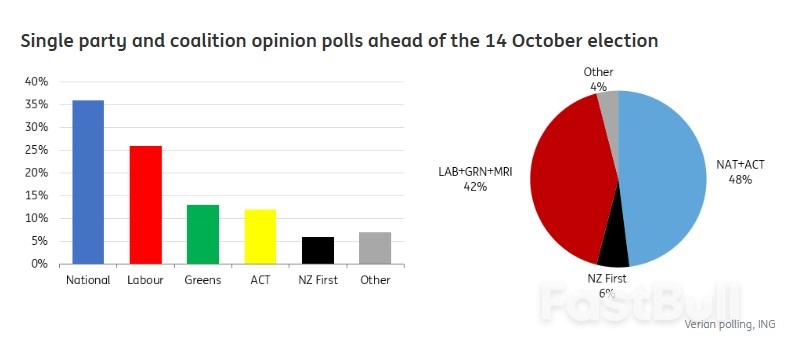
          Advance voting in New Zealand has already been going on for a couple of days, while physical election day will take place on Saturday 14 October, with the preliminary results starting to be released from 7PM local time.
          Latest opinion polls suggest that the incumbent Labour Party (of former Prime Minister Jacinda Ardern) should lose its parliament majority to the opposition National Party. A centre-right coalition, led by the National Party and supported by the right-wing ACT New Zealand is currently projected to secure somewhere between 45% and 50% of parliament seats, possibly short of a majority. A coalition may need to include the nationalist NZ First to secure enough seats: latest polls give NZ First just above the 5% threshold required to enter parliament without winning a single-member seat.How Elections and the RBNZ Disinflation Gamble Can Steer the Kiwi Dollar_3

          The monetary policy implication of a potential shift in government

          First of all, the past few years have taught to take pre-election polls with a pinch of salt. Secondly, the impact of politics on NZD are generally quite limited.
          This time though, a change of government (assuming the polls are right and NZ First joins a National-led coalition) might have some implications for the RBNZ further down the road. The National Party recently published its pre-election fiscal plan, where it pledged more fiscal discipline compared to Labour. Specifically, National said it would spend around NZD3bn less than Labour over four years, with the aim of reducing debt at a faster pace. If the RBNZ links any rebound in CPI to additional fiscal spending, the change in government could suggest a less hawkish RBNZ in the longer run.
          Another aspect to consider is the RBNZ remit. Over the summer, the National Party Finance spokeperson Nicola Willis pledged to restore the central bank's sole focus on the inflation target. This would imply removing the RBNZ's dual mandate (maximum sustainable employment) and potentially reviewing the additional housing stability objective that were added in 2018 and in 2021 respectively.
          The first – and more impactful – effect would suggest higher RBNZ rates in the medium and long term; while removing housing affordability objective would in theory be a dovish argument, the stricter inflation target would likely overshadow any housing-related considerations.

          FX: Domestic factors can determine relative NZD performance

          The Kiwi dollar has resisted USD appreciation better than other commodity currencies in the past month, and we have seen AUD/NZD fall from the recent 1.0900 peak to below 1.0700 – also thanks to the Reserve Bank of Australia hold this week.
          We think that the RBNZ will continue to signal upside risks to their inflation forecasts and keep the door open to more tightening if needed this week, but it is very likely that November will be a much more eventful policy meeting for NZD, with new rate and economic projections being released and after the inflation and jobs data for the third quarter are released. Expect some significant NZD volatility around the two data releases this month: we are still of the view that inflation can surprise to the upside, so expect some positive impact on NZD. Markets are currently pricing in 15bp of tightening by November.
          When it comes to the election outcome, a hung parliament with parties failing to find a working coalition would be the worst scenario for NZD. Should either Labour or National manage to lead a government after the vote, we expect the market implications to be mostly bonded to those for the RBNZ remit (and less so to fiscal spending). So, very limited in the event of Labour staying in power, and moderately positive for NZD (negative for NZ short-dated bonds) in a win by the National Party as markets may speculate on the remit being changed to focus solely on a strict inflation target. The chances of a hike in November will, however, depend almost entirely on CPI and jobs data, not on the vote.
          Expect any meaningful swing in NZD to be mostly visible in the crosses, especially in the shape of relative performance against other commodity/high-beta currencies. A combination of National electoral win (and workable coalition) and CPI surprise could make AUD/NZD re-test the 1.0580 May low and slip to 1.0500. NZD/NOK is another interesting pair, with more room to recover after a large summer slump: a return to 6.60 is possible in the above scenario.
          When it comes to NZD/USD, the swings in USD continue to be an overwhelmingly dominant driver. With U.S. 10-year yields still moving higher and our rates team pointing at 5.0% as a potential top, we see more downside for NZD/USD in the near term. NZD-positive developments domestically would not prevent a drop to 0.5800 if U.S. bonds remain under the kind of pressure we have seen in recent weeks. In the medium run, we still expect U.S. data to turn negative and the Fed to start cutting in first quarter 2024, which should pave the way for a sustained NZD/USD recovery.

          Source: ING

          To stay updated on all economic events of today, please check out our Economic calendar
          Risk Warnings and Disclaimers
          You understand and acknowledge that there is a high degree of risk involved in trading. Following any strategies or investment methods may lead to potential losses. The content on the site is provided by our contributors and analysts for information purposes only. You are solely responsible for determining whether any trading assets, securities, strategy, or any other product is suitable for investing based on your own investment objectives and financial situation.
          Comments
          Add to Favorites
          Share

          King Dollar Returns as U.S. Yields Rip Higher

          XM

          Central Bank

          Economic

          Bond

          Forex

          King Dollar Returns as U.S. Yields Rip Higher_1Dollar shines bright

          King dollar has returned to rule over FX markets. The world's reserve currency has staged a phenomenal rally in recent months, empowered by the stunning rise in U.S. yields, solid economic fundamentals, safe haven flows, and the absence of any attractive alternatives.
          The dollar rally kicked into higher gear yesterday as yields on 10-year U.S. government bonds stormed to new cycle highs, boosted by an encouraging ISM manufacturing survey and Fed officials calling for more rate increases. Manufacturing activity seems to be picking up after a severe post-pandemic contraction, reinforcing the notion of 'higher for longer' rates.
          Reflecting the streak of encouraging U.S. data, the Fed's Bowman and Mester signaled that interest rates will likely have to be raised further. The 10-year Treasury yield hit 4.70% in the aftermath, its highest level since 2007, as hopes of economic resilience have joined forces with massive government deficits to fuel an exodus from bonds.
          Overall, the dollar offers the 'full package' at the moment - the highest real rates among the major economies, the strongest economic growth, and protection from market turbulence thanks to its safe haven qualities. With another deluge of U.S. bond supply also hitting the markets this quarter, the 'high yields, strong dollar' paradigm could remain in effect for some time.

          Gold takes another blow, but stocks resilient

          When bond yields race higher, that usually dampens demand for other assets, as investors gravitate towards the higher returns and safety the bond market offers. It is almost like a gravitational force - the higher bond yields climb, the less attractive everything else becomes.
          This dynamic helps explain why gold has been smashed lately. Since gold pays no interest to hold, it inevitably becomes less attractive in a regime where investors can lock in annual returns of 4.7% on U.S. government bonds. Direct purchases from central banks raising their gold reserves countered this negative pressure for months, but the recent price collapse suggests this marginal gold buyer has now stepped back.
          And yet, stock markets managed to defy the gravity exerted by soaring bond yields. The S&P 500 closed flat on Monday, which in itself is a victory considering the steep rise in yields. But under the hood, there was a striking rotation with high-growth stocks outperforming value shares. That's a strange tape in a rising-yield environment, perhaps driven by flows at the beginning of the new quarter.

          RBA does nothing, RBNZ decision coming up

          Over in Australia, the Reserve Bank kept its policy settings unchanged earlier today. While the central bank kept the door open to further rate increases, it also emphasized the various risks surrounding the economy, striking a relatively cautious tone. That hurt the Australian dollar, which fell to its lowest levels in 11 months, with the strength in the U.S. dollar amplifying the move.
          The central bank torch will pass to the Reserve Bank of New Zealand on Wednesday. Even though markets assign only a 10% probability for a rate increase, it could still be an exciting meeting as inflation appears to be making a comeback. An explosion in population growth coupled with record levels of labor force participation are boosting demand, while the depreciation of the New Zealand dollar and rising oil prices will also help fuel inflation.
          Hence, the question is whether the RBNZ will put another rate increase in November on the table. The economic data pulse certainly warrants it, but there's an election in two weeks, so the risk is that the RBNZ does not deliver any explicit signals to avoid interfering.
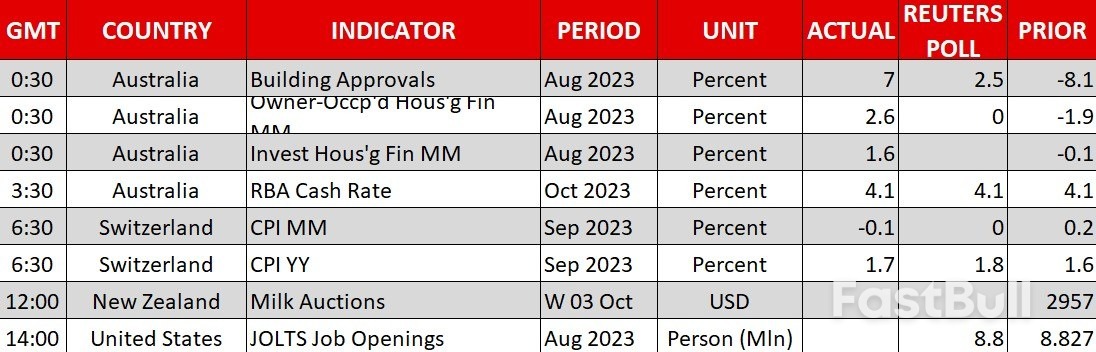
          On the data front, the JOLTS survey from the U.S. will be an important piece of the puzzle for Fed officials, and by extension, for market participants.King Dollar Returns as U.S. Yields Rip Higher_2
          To stay updated on all economic events of today, please check out our Economic calendar
          Risk Warnings and Disclaimers
          You understand and acknowledge that there is a high degree of risk involved in trading. Following any strategies or investment methods may lead to potential losses. The content on the site is provided by our contributors and analysts for information purposes only. You are solely responsible for determining whether any trading assets, securities, strategy, or any other product is suitable for investing based on your own investment objectives and financial situation.
          Comments
          Add to Favorites
          Share

          Dollar Traders Lock Gaze on US Nonfarm Payrolls

          XM

          Forex

          Central Bank

          Economic

          Hawkish Fed turbocharges the dollar

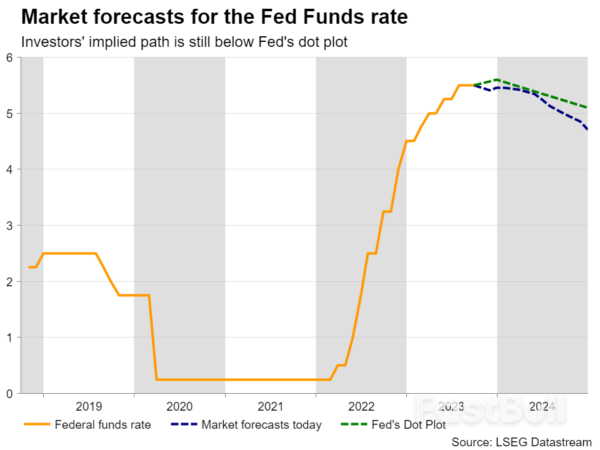
          With the US economy proving more resilient than other major ones and inflation rebounding on the back of rallying oil prices, the Fed raised its rate-path projections at its latest gathering, although it did not press the hike button. Specifically, policymakers forecasted one more quarter-point increase before the end of this year, while they saw interest rates ending 2024 at 5.1%, up from June’s projection of 4.6%.
          This allowed Treasury yields to climb higher and added more fuel to the dollar’s engines. Although the greenback pulled back at the end of last week, it staged a remarkable comeback on Monday following the better-than-expected ISM manufacturing PMI, suggesting that last week’s retreat was probably due to investors rebalancing their portfolios and hedge funds closing their books for the end of Q3, instead of changing fundamentals.

          Will job numbers allow trend continuation?

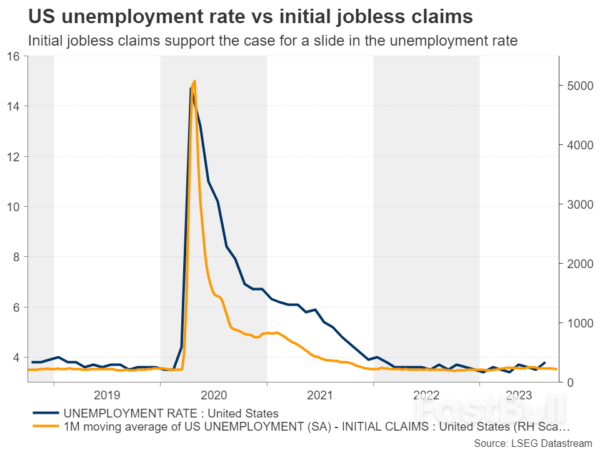
          Moving forward, whether this impulsive wave in the greenback’s uptrend will continue may depend on Friday’s employment report. Nonfarm payrolls are expected to have slowed to 163k from 187k, but the unemployment rate is forecast to have ticked back down to 3.7% from 3.8%, which is supported by the modest decline in the 4-week moving average of initial jobless claims.
          Dollar Traders Lock Gaze on US Nonfarm Payrolls_1
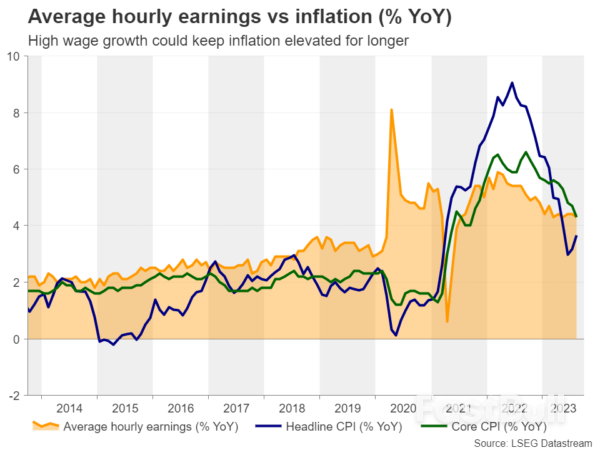
          That said, although the initial reaction in the dollar may come from any surprise in the NFPs or the unemployment rate, whether it will be a lasting one could depend on wage growth, which may provide a glimpse of where inflation may be headed in the months to come. Average hourly earnings are expected to have slightly accelerated in monthly terms, keeping the yoy rate steady at 4.3%.
          Dollar Traders Lock Gaze on US Nonfarm Payrolls_2
          Combined with the uptrend in oil prices, as well as the rebound in headline inflation and projections that the US economy likely performed much better in Q3 than in Q2, elevated wage growth may add to the risk of underlying price pressures intensifying in the months to come.
          With investors still projecting a lower rate path than the Fed, assigning only around a 50% probability for another hike and expecting rates to fall to 4.7% by the end of next year, it seems that there is ample room for upside adjustment should Friday’s jobs data come in strong, which could push yields higher and thereby encourage traders to buy more dollars.
          Dollar Traders Lock Gaze on US Nonfarm Payrolls_3
          At the same time, equities are likely to resume their slide as expectations of ‘higher for longer’ interest rates could exert downside pressure on valuations. Yes, upbeat economic data usually have a positive impact on a nation’s stock market, but the financial community is still in an environment where good news is bad news as it increases the need for additional rate hikes.

          Fed not the sole driver

          What’s more, expectations about the Fed’s future course of action are not the sole driver of the US dollar and Wall Street. There is also a strong note of uncertainty due to the economic challenges facing China, Eurozone and the UK. And with no other alternative, the only place to seek safety seems to be the US dollar. The yen has long lost its safe-haven status due to the BoJ maintaining a lid on Japanese government bond yields at a time when US rates are keep rising, while gold has fallen victim to both surging yields and a strong dollar, which has lost nearly 6% since September 25.

          Euro/dollar keeps printing lower highs and lower lows

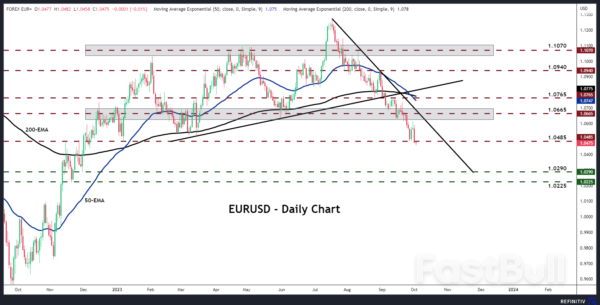
          Euro/dollar was among the pairs that rebounded decently at the end of last week due to the dollar’s pullback. The rebound happened after the price hit support at 1.0485. However, the pair surrendered those gains on Monday, staying below the downtrend line drawn from the high of July 18 and thereby confirming that the short-term outlook remains negative. The bears managed to push the action slightly below 1.0485 today, and if they are willing to stay in the driver’s seat, a dive towards the low of November 30 at 1.0290 could be possible.
          Dollar Traders Lock Gaze on US Nonfarm Payrolls_4
          For traders to allow a bigger dollar correction, Friday’s data may need to disappoint. However, even if euro/dollar climbs above 1.0665, the outlook will not turn positive, rather just neutral as the price would be back within the sideways range that contained most of the price action between January 9 and September 22.
          To stay updated on all economic events of today, please check out our Economic calendar
          Risk Warnings and Disclaimers
          You understand and acknowledge that there is a high degree of risk involved in trading. Following any strategies or investment methods may lead to potential losses. The content on the site is provided by our contributors and analysts for information purposes only. You are solely responsible for determining whether any trading assets, securities, strategy, or any other product is suitable for investing based on your own investment objectives and financial situation.
          Comments
          Add to Favorites
          Share
          FastBull
          Copyright © 2025 FastBull Ltd

          728 RM B 7/F GEE LOK IND BLDG NO 34 HUNG TO RD KWUN TONG KLN HONG KONG

          TelegramInstagramTwitterfacebooklinkedin
          App Store Google Play Google Play
          Products
          Charts

          Chats

          Q&A with Experts
          Screeners
          Economic Calendar
          Data
          Tools
          Membership
          Features
          Function
          Markets
          Copy Trading
          Latest Signals
          Contests
          News
          Analysis
          24/7
          Columns
          Education
          Company
          Careers
          About Us
          Contact Us
          Advertising
          Help Center
          Feedback
          User Agreement
          Privacy Policy
          Business

          White Label

          Data API

          Web Plug-ins

          Poster Maker

          Affiliate Program

          Risk Disclosure

          The risk of loss in trading financial instruments such as stocks, FX, commodities, futures, bonds, ETFs and crypto can be substantial. You may sustain a total loss of the funds that you deposit with your broker. Therefore, you should carefully consider whether such trading is suitable for you in light of your circumstances and financial resources.

          No decision to invest should be made without thoroughly conducting due diligence by yourself or consulting with your financial advisors. Our web content might not suit you since we don't know your financial conditions and investment needs. Our financial information might have latency or contain inaccuracy, so you should be fully responsible for any of your trading and investment decisions. The company will not be responsible for your capital loss.

          Without getting permission from the website, you are not allowed to copy the website's graphics, texts, or trademarks. Intellectual property rights in the content or data incorporated into this website belong to its providers and exchange merchants.

          Not Logged In

          Log in to access more features

          FastBull Membership

          Not yet

          Purchase

          Become a signal provider
          Help Center
          Customer Service
          Dark Mode
          Price Up/Down Colors

          Log In

          Sign Up

          Position
          Layout
          Fullscreen
          Default to Chart
          The chart page opens by default when you visit fastbull.com