• Trade
  • Markets
  • Copy
  • Contests
  • News
  • 24/7
  • Calendar
  • Q&A
  • Chats
Trending
Screeners
SYMBOL
LAST
BID
ASK
HIGH
LOW
NET CHG.
%CHG.
SPREAD
SPX
S&P 500 Index
6846.50
6846.50
6846.50
6878.28
6827.18
-23.90
-0.35%
--
DJI
Dow Jones Industrial Average
47739.31
47739.31
47739.31
47971.51
47611.93
-215.67
-0.45%
--
IXIC
NASDAQ Composite Index
23545.89
23545.89
23545.89
23698.93
23455.05
-32.22
-0.14%
--
USDX
US Dollar Index
99.000
99.080
99.000
99.000
99.000
+0.050
+ 0.05%
--
EURUSD
Euro / US Dollar
1.16369
1.16376
1.16369
1.16388
1.16322
+0.00005
0.00%
--
GBPUSD
Pound Sterling / US Dollar
1.33212
1.33224
1.33212
1.33220
1.33140
+0.00007
+ 0.01%
--
XAUUSD
Gold / US Dollar
4191.62
4192.06
4191.62
4193.27
4189.64
+1.92
+ 0.05%
--
WTI
Light Sweet Crude Oil
58.660
58.702
58.660
58.676
58.543
+0.105
+ 0.18%
--

Community Accounts

Signal Accounts
--
Profit Accounts
--
Loss Accounts
--
View More

Become a signal provider

Sell trading signals to earn additional income

View More

Guide to Copy Trading

Get started with ease and confidence

View More

Signal Accounts for Members

All Signal Accounts

Best Return
  • Best Return
  • Best P/L
  • Best MDD
Past 1W
  • Past 1W
  • Past 1M
  • Past 1Y

All Contests

  • All
  • Trump Updates
  • Recommend
  • Stocks
  • Cryptocurrencies
  • Central Banks
  • Featured News
Top News Only
Share

Japan Prime Minister Takaichi: 30 Injuries Reported So Far From Monday Earthquake

Share

USA Senate Committee Votes To Advance Nomination Of Jared Isaacman To Head Nasa

Share

Singapore Post - New Rate For Standard Regular Mail & Standard Large Mail Will Be S$0.62 And S$0.90 Respectively

Share

Australia's S&P/ASX 200 Index Down 0.27% At 8601.10 Points In Early Trade

Share

Trump: The USA Needs Mexico To Release 200000 Acre-Feet Of Water Before December 31St, And The Rest Must Come Soon After

Share

Trump: I Have Authorized Documentation To Impose A 5% Tariff On Mexico If This Water Isn't Released

Share

Brazil's Sao Paulo State Governor Tarcisio De Freitas Says Flavio Bolsonaro Will Have His Support - Cnn Brasil

Share

Ukraine's Security Must Be Guaranteed, In The Long Term, As A First Line Of Defence For Our Union, Says European Commission President

Share

Ukraine's Sovereignty Must Be Respected, Says European Commission President

Share

The Goal Is A Strong Ukraine, On The Battlefield And At The Negotiating Table, Says European Commission President

Share

As Peace Talks Are Ongoing, The EU Remains Ironclad In Its Support For Ukraine, Says European Commission President

Share

Pepsico: Asking USA-Based Pepna Employees As Well As Pbus Division Offices And Pfus Region Offices To Work Remotely This Week

Share

A U.S. Judge Ruled That President Trump’s Ban On Several Wind Power Projects Was Illegal

Share

Senior USA Administration Official: We Continue To Monitor Drc-Rwanda Situation Closely, Continue To Work With All Sides To Ensure Commitments Are Honored

Share

Israeli Military Says It Has Struck Infrastructure Belonging To Hezbollah In Several Areas In Southern Lebanon

Share

SPDR Gold Holdings Down 0.11%, Or 1.14 Tonnes

Share

On Monday (December 8), In Late New York Trading, S&P 500 Futures Fell 0.21%, Dow Jones Futures Fell 0.43%, NASDAQ 100 Futures Fell 0.08%, And Russell 2000 Futures Fell 0.04%

Share

Morgan Stanley: Data Center ABS Spreads Are Expected To Widen In 2026

Share

(US Stocks) The Philadelphia Gold And Silver Index Closed Down 2.34% At 311.01 Points. (Global Session) The NYSE Arca Gold Miners Index Closed Down 2.17%, Hitting A Daily Low Of 2235.45 Points; US Stocks Remained Slightly Down Before The Opening Bell—holding Steady Around 2280 Points—before Briefly Rising Slightly

Share

IMF: IMF Executive Board Approves Extension Of The Extended Credit Facility Arrangement With Nepal

TIME
ACT
FCST
PREV
France Trade Balance (SA) (Oct)

A:--

F: --

P: --
Euro Zone Employment YoY (SA) (Q3)

A:--

F: --

P: --
Canada Part-Time Employment (SA) (Nov)

A:--

F: --

P: --

Canada Unemployment Rate (SA) (Nov)

A:--

F: --

P: --

Canada Full-time Employment (SA) (Nov)

A:--

F: --

P: --

Canada Labor Force Participation Rate (SA) (Nov)

A:--

F: --

P: --

Canada Employment (SA) (Nov)

A:--

F: --

P: --

U.S. PCE Price Index MoM (Sept)

A:--

F: --

P: --

U.S. Personal Income MoM (Sept)

A:--

F: --

P: --

U.S. Core PCE Price Index MoM (Sept)

A:--

F: --

P: --

U.S. PCE Price Index YoY (SA) (Sept)

A:--

F: --

P: --

U.S. Core PCE Price Index YoY (Sept)

A:--

F: --

P: --

U.S. Personal Outlays MoM (SA) (Sept)

A:--

F: --

P: --
U.S. 5-10 Year-Ahead Inflation Expectations (Dec)

A:--

F: --

P: --

U.S. Real Personal Consumption Expenditures MoM (Sept)

A:--

F: --

P: --
U.S. Weekly Total Rig Count

A:--

F: --

P: --

U.S. Weekly Total Oil Rig Count

A:--

F: --

P: --

U.S. Consumer Credit (SA) (Oct)

A:--

F: --

P: --
China, Mainland Foreign Exchange Reserves (Nov)

A:--

F: --

P: --

Japan Trade Balance (Oct)

A:--

F: --

P: --

Japan Nominal GDP Revised QoQ (Q3)

A:--

F: --

P: --

China, Mainland Imports YoY (CNH) (Nov)

A:--

F: --

P: --

China, Mainland Exports (Nov)

A:--

F: --

P: --

China, Mainland Imports (CNH) (Nov)

A:--

F: --

P: --

China, Mainland Trade Balance (CNH) (Nov)

A:--

F: --

P: --

China, Mainland Exports YoY (USD) (Nov)

A:--

F: --

P: --

China, Mainland Imports YoY (USD) (Nov)

A:--

F: --

P: --

Germany Industrial Output MoM (SA) (Oct)

A:--

F: --

P: --
Euro Zone Sentix Investor Confidence Index (Dec)

A:--

F: --

P: --

Canada National Economic Confidence Index

A:--

F: --

P: --

U.K. BRC Like-For-Like Retail Sales YoY (Nov)

--

F: --

P: --

U.K. BRC Overall Retail Sales YoY (Nov)

--

F: --

P: --

Australia Overnight (Borrowing) Key Rate

--

F: --

P: --

RBA Rate Statement
RBA Press Conference
Germany Exports MoM (SA) (Oct)

--

F: --

P: --

U.S. NFIB Small Business Optimism Index (SA) (Nov)

--

F: --

P: --

Mexico 12-Month Inflation (CPI) (Nov)

--

F: --

P: --

Mexico Core CPI YoY (Nov)

--

F: --

P: --

Mexico PPI YoY (Nov)

--

F: --

P: --

U.S. Weekly Redbook Index YoY

--

F: --

P: --

U.S. JOLTS Job Openings (SA) (Oct)

--

F: --

P: --

China, Mainland M1 Money Supply YoY (Nov)

--

F: --

P: --

China, Mainland M0 Money Supply YoY (Nov)

--

F: --

P: --

China, Mainland M2 Money Supply YoY (Nov)

--

F: --

P: --

U.S. EIA Short-Term Crude Production Forecast For The Year (Dec)

--

F: --

P: --

U.S. EIA Natural Gas Production Forecast For The Next Year (Dec)

--

F: --

P: --

U.S. EIA Short-Term Crude Production Forecast For The Next Year (Dec)

--

F: --

P: --

EIA Monthly Short-Term Energy Outlook
U.S. API Weekly Gasoline Stocks

--

F: --

P: --

U.S. API Weekly Cushing Crude Oil Stocks

--

F: --

P: --

U.S. API Weekly Crude Oil Stocks

--

F: --

P: --

U.S. API Weekly Refined Oil Stocks

--

F: --

P: --

South Korea Unemployment Rate (SA) (Nov)

--

F: --

P: --

Japan Reuters Tankan Non-Manufacturers Index (Dec)

--

F: --

P: --

Japan Reuters Tankan Manufacturers Index (Dec)

--

F: --

P: --

Japan Domestic Enterprise Commodity Price Index MoM (Nov)

--

F: --

P: --

Japan Domestic Enterprise Commodity Price Index YoY (Nov)

--

F: --

P: --

China, Mainland PPI YoY (Nov)

--

F: --

P: --

China, Mainland CPI MoM (Nov)

--

F: --

P: --

Italy Industrial Output YoY (SA) (Oct)

--

F: --

P: --

Q&A with Experts
    • All
    • Chatrooms
    • Groups
    • Friends
    Connecting
    .
    .
    .
    Type here...
    Add Symbol or Code

      No matching data

      All
      Trump Updates
      Recommend
      Stocks
      Cryptocurrencies
      Central Banks
      Featured News
      • All
      • Russia-Ukraine Conflict
      • Middle East Flashpoint
      • All
      • Russia-Ukraine Conflict
      • Middle East Flashpoint
      Search
      Products

      Charts Free Forever

      Chats Q&A with Experts
      Screeners Economic Calendar Data Tools
      Membership Features
      Data Warehouse Market Trends Institutional Data Policy Rates Macro

      Market Trends

      Market Sentiment Order Book Forex Correlations

      Top Indicators

      Charts Free Forever
      Markets

      News

      News Analysis 24/7 Columns Education
      From Institutions From Analysts
      Topics Columnists

      Latest Views

      Latest Views

      Trending Topics

      Top Columnists

      Latest Update

      Signals

      Copy Rankings Latest Signals Become a signal provider AI Rating
      Contests
      Brokers

      Overview Brokers Assessment Rankings Regulators News Claims
      Broker listing Forex Brokers Comparison Tool Live Spread Comparison Scam
      Q&A Complaint Scam Alert Videos Tips to Detect Scam
      More

      Business
      Events
      Careers About Us Advertising Help Center

      White Label

      Data API

      Web Plug-ins

      Affiliate Program

      Awards Institution Evaluation IB Seminar Salon Event Exhibition
      Vietnam Thailand Singapore Dubai
      Fans Party Investment Sharing Session
      FastBull Summit BrokersView Expo
      Recent Searches
        Top Searches
          Markets
          News
          Analysis
          User
          24/7
          Economic Calendar
          Education
          Data
          • Names
          • Latest
          • Prev

          View All

          No data

          Scan to Download

          Faster Charts, Chat Faster!

          Download App
          English
          • English
          • Español
          • العربية
          • Bahasa Indonesia
          • Bahasa Melayu
          • Tiếng Việt
          • ภาษาไทย
          • Français
          • Italiano
          • Türkçe
          • Русский язык
          • 简中
          • 繁中
          Open Account
          Search
          Products
          Charts Free Forever
          Markets
          News
          Signals

          Copy Rankings Latest Signals Become a signal provider AI Rating
          Contests
          Brokers

          Overview Brokers Assessment Rankings Regulators News Claims
          Broker listing Forex Brokers Comparison Tool Live Spread Comparison Scam
          Q&A Complaint Scam Alert Videos Tips to Detect Scam
          More

          Business
          Events
          Careers About Us Advertising Help Center

          White Label

          Data API

          Web Plug-ins

          Affiliate Program

          Awards Institution Evaluation IB Seminar Salon Event Exhibition
          Vietnam Thailand Singapore Dubai
          Fans Party Investment Sharing Session
          FastBull Summit BrokersView Expo

          New BOJ Chief Ueda Sticks to Upbeat View on Wages, Global Economy

          Thomas

          Central Bank

          Summary:

          Bank of Japan Governor Kazuo Ueda said he expects the global economy to rebound after a period of slowdown which will help keep domestic wages rising, maintaining the bank's upbeat economic outlook.

          Bank of Japan Governor Kazuo Ueda said he expects the global economy to rebound after a period of slowdown which will help keep domestic wages rising, maintaining the bank's upbeat economic outlook.
          But Ueda said he told his G20 counterparts the central bank intends to keep monetary policy ultra-loose since inflation, which is now around 3%, is expected to slow back below its 2% target toward the latter half of this fiscal year.
          "The BOJ's forecasts already take into account the chance of a global economic slowdown. But they don't see a severe global recession as a baseline projection," Ueda told a news conference on Thursday after attending the Group of 20 (G20) finance leaders' meeting in Washington.
          "As our base scenario is for global growth to pick up after a period of slowdown, Japan's wages will likely keep rising," he said.
          The remarks came after the International Monetary Fund on Tuesday trimmed its 2023 global growth outlook, and warned that a severe flare-up of financial system turmoil could slash output to near recessionary levels.
          Ueda said his debut international meeting was fruitful and gave him the chance to meet with many overseas counterparts, adding that deepening personal trust with them was crucial to engage in frank discussions on global economic issues.
          Ueda took office on Sunday, succeeding Haruhiko Kuroda who deployed massive monetary stimulus during his decade-long helm that is now drawing criticism for distorting bond markets and straining financial institutions' profit.
          While markets have been rife with speculation he will soon phase out Kuroda's stimulus, Ueda has consistently stressed the need to maintain ultra-loose policy until a more durable rise in wages and inflation can be foreseen.
          Markets are focusing on the BOJ's first policy meeting chaired by Ueda to be held on April 27-28, when the board will produce fresh quarterly growth and inflation forecasts extending through fiscal 2025.
          "It's been just a week since I took office and now I am on a business trip. I'll think about it closely once I'm back," Ueda said, when asked about prospects for the April policy meeting.

          Source: CNA

          Risk Warnings and Disclaimers
          You understand and acknowledge that there is a high degree of risk involved in trading. Following any strategies or investment methods may lead to potential losses. The content on the site is provided by our contributors and analysts for information purposes only. You are solely responsible for determining whether any trading assets, securities, strategy, or any other product is suitable for investing based on your own investment objectives and financial situation.
          Comments
          Add to Favorites
          Share

          Fed’s emergency loans to banks fall for fourth straight week

          Cohen

          Banks reduced their borrowings from two Federal Reserve backstop lending facilities for a fourth straight week as liquidity constraints continue to ease following the collapse of Silicon Valley Bank last month.

          US banks had a combined $139.5 billion in outstanding borrowings in the week through April 12, compared with $148.7 billion the previous week, Fed data showed Thursday.

          Data showed $67.6 billion in outstanding borrowing from the Fed’s traditional backstop lending program, known as the discount window, compared with $69.7 billion the previous week and a record $152.9 billion reached last month.

          Bank demand from the Bank Term Funding Program stood at $71.8 billion compared with $79 billion the previous week. It was the first decline in lending from the facility since it was created last month.

          The continued easing in financial institutions’ demand for liquidity from the Fed suggests stress in the banking sector is abating. Several Fed officials said as much over the past week.

          “I’m not ready to declare all clear but there are hopeful signs that these risks are now better understood and calm is being restored,” Minneapolis Fed President Neel Kashkari said Tuesday during a town hall event at Montana State University in Bozeman.

          The discount window is the Fed’s oldest liquidity backstop for banks. Loans can be extended for 90 days and banks can post a broad range of collateral.

          The BTFP was opened March 12 after the Fed declared emergency conditions following the collapse of California’s Silicon Valley Bank and New York’s Signature Bank. Credit can be extended for one year under the program and collateral guidelines are tighter.

          Thursday’s report “confirms that acute phase of the current banking strains continues to gradually wind down,” Evercore ISI’s Krishna Guha said in a note to clients.

          Fed loans to bridge banks established by the Federal Deposit Insurance Corp. to resolve SVB and Signature Bank fell to $172.6 billion in the week through April 12, from $174.6 billion the previous week.

          Foreign central banks had $30 billion outstanding in the Fed’s Foreign and International Monetary Authorities repurchase-agreement facility in the week through April 12, down from $40 billion.

          Article Source: Theedgemarkets

          Risk Warnings and Disclaimers
          You understand and acknowledge that there is a high degree of risk involved in trading. Following any strategies or investment methods may lead to potential losses. The content on the site is provided by our contributors and analysts for information purposes only. You are solely responsible for determining whether any trading assets, securities, strategy, or any other product is suitable for investing based on your own investment objectives and financial situation.
          Comments
          Add to Favorites
          Share

          Bank Indonesia Forecast to Hold Rates at 5.75% for Rest of 2023

          Thomas

          Central Bank

          Bank Indonesia is expected to keep its key interest rate unchanged at 5.75 per cent for a third consecutive meeting on April 18 and for the rest of this year as it evaluates the impact of previous hikes on inflation, a poll this week by Reuters found.
          Inflation has been largely cooling since September, but March's reading of 4.97 per cent was still above Bank Indonesia's target range of 2 per cent-4 per cent, which the central bank established in 2005.
          But at the March meeting the Indonesian central bank stuck by its previous message that hikes - b225 basis points between August to January - were sufficient to steer inflation back within the target range later this year.
          All 30 economists in the April 10-13 Reuters poll expected no change to the 5.75 per cent seven-day reverse repurchase rate, already the highest since July 2019.
          A majority of economists in the survey predicted the policy rate to stay at the same level for the rest of 2023. Only a handful expected a rate cut this year.
          "It (BI) has made clear that current settings are sufficient to manage inflation, and the latest inflation prints support its view, with both headline and core inflation easing in March," said Krystal Tan, economist at ANZ.
          "There is little pressure for rate hikes from the external front too, with the odds of a very hawkish Fed diminishing and the IDR strengthening. By the same token, there is no urgency for an easing pivot either."
          Most major central banks including the U.S. Federal Reserve were expected to pause their policy tightening cycles soon to assess the impact past hikes have in bringing down inflation.
          Nearly two-thirds of respondents, 12 of 19, forecast BI to reduce rates by at least 25 basis points in or before the first quarter of 2024, with the median forecast putting it at 5.50 per cent.
          Bank Indonesia expects inflation to return to its target range in September, but in the Muslim-majority country, inflation typically rises during Ramadan, which concludes this month, due to increased shopping and consumption.
          Inflation was expected to average 4.0 per cent this year and then fall to 3.2 per cent next - close to the mid-point of BI's target range.
          While a commodities-led export boom helped Indonesia's economy last year, economists expected growth to be more moderate as tighter monetary policy across the world weighs on global demand.
          Economic growth was expected to slow to 4.9 per cent this year from 5.3 per cent in 2022. It was then expected to grow 5.0 per cent next year.

          Source: Reuters

          Risk Warnings and Disclaimers
          You understand and acknowledge that there is a high degree of risk involved in trading. Following any strategies or investment methods may lead to potential losses. The content on the site is provided by our contributors and analysts for information purposes only. You are solely responsible for determining whether any trading assets, securities, strategy, or any other product is suitable for investing based on your own investment objectives and financial situation.
          Comments
          Add to Favorites
          Share

          Europe's Gas Outlook Transformed After Mild Winter

          Owen Li

          Commodity

          Europe has ended the winter of 2022/23 with a record volume of gas in storage – which leaves much less refill needed ahead of the next heating season in 2023/24.
          Inventories in the European Union and the United Kingdom amounted to 632 terawatt-hours (TWh) on March 31, according to Gas Infrastructure Europe ("Aggregated gas storage inventories", GIE, April 13).
          Stocks were at a record high for the time of year and an extraordinary 350 TWh (+80% or +2.40 standard deviations) above the seasonal average for the previous ten years.
          The situation has been transformed from the same date last year when inventories were just 300 TWh and 53 TWh (-15% or -0.46 standard deviations) below the seasonal average.
          As a result, prices have slumped, with front-month futures down to 48 euros per megawatt-hour on March 31 from 189 euros at the start of the heating season on Oct. 1 and a record 339 euros on Aug. 26.
          Record Refill In 2022
          Record end-of-winter inventories are a consequence of a record start-of-winter stock; a mild winter, especially in the first half; and significant cuts in industrial gas use.
          The European Union and United Kingdom added an unprecedented 788 TWh of gas to storage in 2022 to prepare for a possible interruption of pipeline supplies from Russia.
          The refill started on the second-earliest date on record (March 19) and continued until the latest date ever recorded (Nov. 13), lasting for 239 days compared with an average of just 203 days over the previous ten years.
          Refill was also faster and more consistent than usual, with 3.30 TWh added per day compared with an average of 2.96 TWh in 2012-2021.
          As a consequence, inventories started the traditional winter season at 996 TWh on Oct. 1 and continued building to reach 1,079 TWh on Nov. 13, a much higher and later peak than normal.
          The scramble to fill storage regardless of cost, particularly in Germany, was responsible for causing futures prices to spike to a record high in July and August.
          Mild Start to Winter
          High prices coupled with government mandates to reduce consumption and warmer-than-normal temperatures through the first half of winter extended the refill season and delayed the onset of drawdown, a double benefit that stretched inventories even further.
          The first part of the heating season was exceptionally mild in Northwest Europe, with only 860 heating degree days at Frankfurt in Germany by Jan. 15, which was 16% fewer than the average since 2000.
          The second part of the heating season was also mild, but less exceptional, with 761 heating degree days from Jan. 16 to March 31, just 8% below the long-term average.
          For Europe as a whole, both October and January were the warmest on record; warmth in January was especially significant because it is normally the month with the highest heating demand.
          The emergence of warm weather in January, first forecast a month earlier, accelerated the slump in gas prices to 57 euros on Jan. 31 from 149 euros on Dec. 7.
          Reduced Consumption
          Europe's gas consumption was sharply reduced in winter 2022/23 compared with previous years.
          The European Union's top seven consumers (Germany, Italy, France, Netherlands, Spain, Belgium and Poland) used 18% less gas than the average for the previous ten years between October and January.
          High prices and government mandates to reduce consumption had their biggest impact on the most energy-intensive users.
          Makers of fertilisers, steel, cement, ceramics, glass and chemicals all reported capacity closures or longer than usual shutdowns over the Christmas and New Year holiday period.
          Households and other commercial users made less obvious reductions in consumption, mostly in line with warmer temperatures rather than signalling profound behaviour changes.
          Plentiful Gas Stocks
          Europe's gas inventories depleted by only 450 TWh between their peak in early November and their minimum in early April, compared with an average peak to trough drawdown of 588 TWh in the previous ten years.
          Europe emptied around a third of its gas storage space over the whole drawdown period compared with an average of 53% over the previous decade.
          The region has entered the 2023 refill season with storage almost 56% full on March 31, a record high for the time of year, compared with 26% at the same point in 2022 and a ten-year average of 33%.
          The outlook for the rest of 2023/24 is therefore very different from 2022/23. Europe will need a smaller-than-average refill in 2023 which should relieve some of the upward pressure on prices.
          Even if storage is topped up to the maximum, however, Europe will still need to discourage consumption next winter, which is likely to require some combination of industrial closures, recession and high prices later in the year.

          Source: Reuters

          Risk Warnings and Disclaimers
          You understand and acknowledge that there is a high degree of risk involved in trading. Following any strategies or investment methods may lead to potential losses. The content on the site is provided by our contributors and analysts for information purposes only. You are solely responsible for determining whether any trading assets, securities, strategy, or any other product is suitable for investing based on your own investment objectives and financial situation.
          Comments
          Add to Favorites
          Share

          April 14th Financial News

          FastBull Featured

          Daily News

          【Quick Facts】

          1. Initial claims increased, and the U.S. labor market is gradually loosening.
          2. "Leaked documents" reveal U.S. surveillance of Guterres.
          3. U.S. Republican Party plans to extend the suspension of the debt ceiling measure for one year.
          4. OPEC lowered its oil demand forecast for the rest of 2023.
          5. Russian Foreign Ministry: five major issues are not resolved, and the Black Sea grain deal may be coming to an end.

          【News Details】

          1. Initial claims increased, and the U.S. labor market is gradually loosening.
          U.S. initial jobless claims increased more than expected last week, rising by 10,000 to a seasonally adjusted 239,000 for the week ended April 8. Further evidence that labor market conditions are gradually easing as higher borrowing costs dampen demand in the economy.
          Job openings fell below 10 million at the end of February for the first time in nearly two years. Each unemployed person corresponds to 1.7 job openings, which may make it easier for some laid-off workers to find work.
          2. "Leaked documents" reveal U.S. surveillance of Guterres.
          On April 13, local time, in response to a question about "recently leaked classified documents showing that the UN Secretary-General Guterres' communications were surveilled by the US," UN Secretary-General's spokesman Stéphane Dujarric said that countries should respect the security of UN communications. In response to the report, Dujarric said that Guterres has been consistent in his approach to the Russia-Ukraine conflict, hoping to alleviate the suffering of the world's poorest people through measures such as the agreement on the transportation of agricultural products out of the Black Sea, and to end the war with a ceasefire as soon as possible. Dujarric was noncommittal to reports of a conversation between Guterres and U.N. Deputy Secretary-General Amina J. Mohammed. He said the U.N., for its part, is making every effort to improve communications security.
          3. U.S. Republican Party plans to extend the suspension of the debt ceiling measure for one year.
          U.S. House Speaker John McCarthy ( Republican) is poised to unveil a plan next week to suspend the U.S. debt ceiling for a year in exchange for concessions on spending from the Biden administration. The proposal would require a House vote at the end of May on suspending the debt ceiling until around May next year, which would be an opening for negotiations with the White House and congressional Democrats.
          At the same time, it would allow Republicans to seek another round of concessions from the government next year and drag out the subsequent fight until the end of the presidential and congressional election year. The bill Republicans are reportedly preparing would be a wish list of spending cuts and regulatory reforms, and it has little chance of being enacted. But it could form the basis for future separate budget negotiations and end the stalemate over the debt ceiling. McCarthy's initial plan, in return for a vote next month to suspend the debt ceiling, would have to keep nondefense discretionary spending at roughly the same level as in fiscal 2022 and increase it by 1 percent a year for 10 years. The bill is expected to save $4 trillion over the next 10 years, some of which would be raised through easing energy permits.
          4. OPEC lowered its oil demand forecast for the rest of 2023.
          OPEC lowered its global oil demand forecast for the remainder of the year by a cumulative 300,000 BPD, but as it raised its global oil demand forecast for the first quarter, it left its global oil demand growth forecast for all of 2023 essentially unchanged. In its latest monthly report, OPEC raised its global oil demand forecast for the first quarter by 270,000 BPD from the previous report. China, the Middle East and Latin America were the main reasons for the upward revision. However, it lowered its global oil demand forecast for each of the following quarters, leaving its full-year demand growth forecast unchanged at about 2.3 million BPD. OPEC expects total oil demand in 2023 to be 101.9 million BPD. OPEC noted that high inflation, monetary tightening, financial market stability and high levels of debt for sovereign countries, corporations and private individuals could affect oil demand in the coming months.
          5. Russian Foreign Ministry: five major issues are not resolved, and the Black Sea grain deal may be coming to an end.
          The Russian Foreign Ministry said Thursday that there will be no extension of the Black Sea grain deal mediated by the United Nations beyond May 18 unless the West removes a series of obstacles to Russian grain and fertilizer exports. The Russian Foreign Ministry said the Russian Agricultural Bank (Rosselkhozbank) must be reconnected to the SWIFT payment system, the supply of agricultural machinery and parts needs to be restored and restrictions on insurance and reinsurance need to be lifted. Other demands include port access, restoration of the Tolyatti-Odessa ammonia pipeline to allow Russia to deliver chemical materials to Ukrainian ports, and lifting the blockade on the assets and accounts of Russian companies involved in food and fertilizer exports. The Russian Foreign Ministry also said that the inspection system for ships carrying food from Ukraine is problematic.

          【Focus of the Day】

          UTC+8 20:30 U.S. Monthly Import Price Index for March
          UTC+8 20:30 U.S. Monthly Retail Sales Rate for March
          UTC+8 21:15 U.S. Monthly Industrial Output for March
          UTC+8 22:00 U.S. University of Michigan Consumer Confidence Preliminary Index for April
          Risk Warnings and Disclaimers
          You understand and acknowledge that there is a high degree of risk involved in trading. Following any strategies or investment methods may lead to potential losses. The content on the site is provided by our contributors and analysts for information purposes only. You are solely responsible for determining whether any trading assets, securities, strategy, or any other product is suitable for investing based on your own investment objectives and financial situation.
          Comments
          Add to Favorites
          Share

          Soft Landing Hopes Fuel That Friday Feeling

          Samantha Luan

          Economic

          Asian markets are poised to end the week on a positive note, spurred by a powerful rally on Wall Street and growing optimism that the Fed might achieve the holy grail of a 'soft landing' for the U.S. economy.
          Thursday's surge across U.S. markets followed the stunning Chinese trade figures for March earlier in the day that suggested global demand may be stronger than most people had anticipated.
          The upside surprise to the export and trade balance figures was so big that China's broader economic surprises index jumped to its highest in 17 years, and one of the highest on record.
          Soft Landing Hopes Fuel That Friday Feeling_1Little wonder investors in Asia go into the final day of the week in buoyant mood, especially after U.S. data on Thursday showed cooling inflation and labor market pressures, trends that could convince the Fed to pause its rate-hiking campaign.
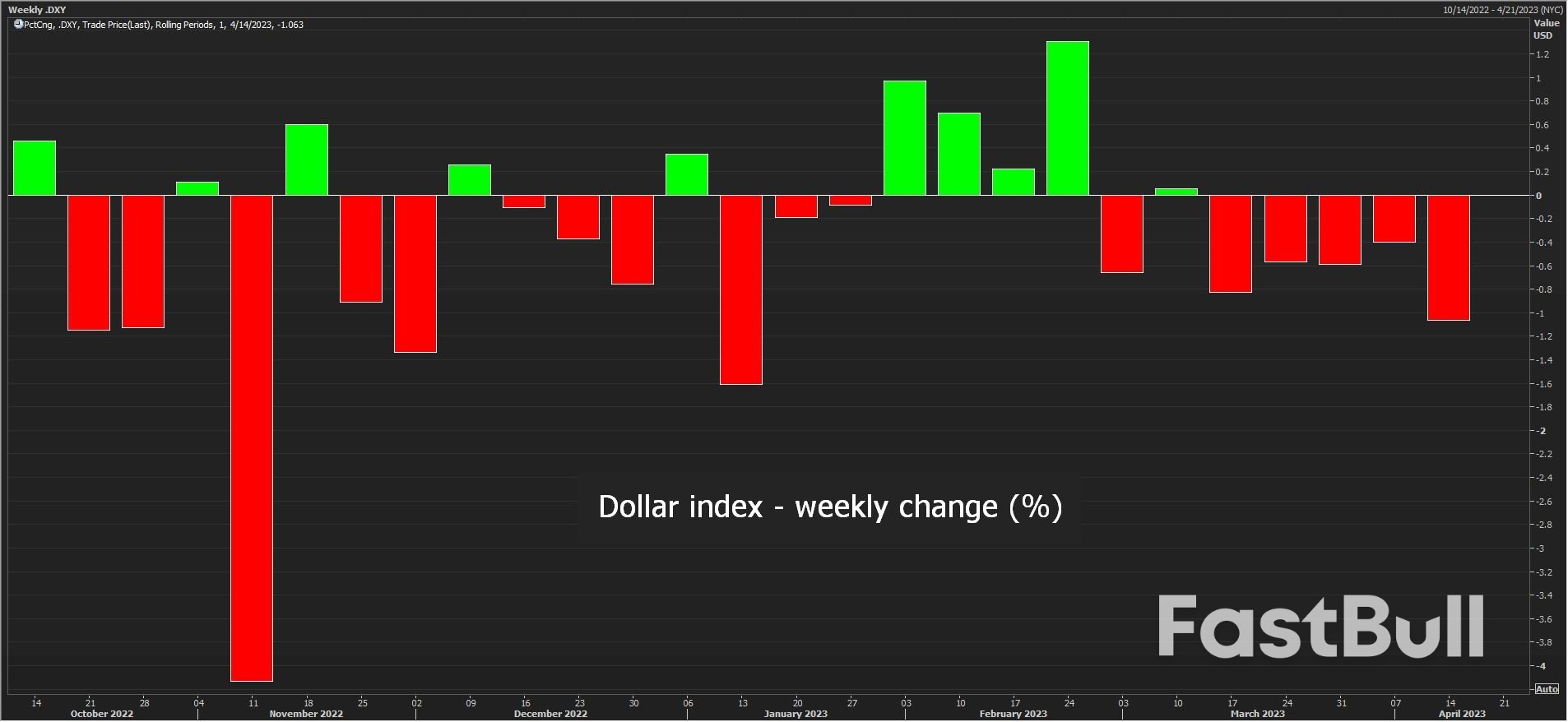
          The Nasdaq surged 2% for its best day in a month, the VIX 'fear gauge' of S&P 500 index volatility fell to its lowest in over two months and U.S. bond market volatility fell back below the pre-banking shock levels of a month ago.
          Another good indication of how broad the 'risk on' rally is globally is the dollar. It continues to weaken and on Thursday fell to its lowest in over two months - it is a whisker away from a one-year low.
          The dollar is on track for its biggest weekly fall in three months and has weakened five weeks in a row - a downturn not recorded since mid-2020.
          Soft Landing Hopes Fuel That Friday Feeling_2Asian currencies are enjoying the ride too - Indonesia's rupiah which hit an eight-month high on Thursday, and Singapore's dollar rose to a two-month peak.
          The 'Sing dollar' is liable to move further on Friday, with traders braced for first quarter GDP growth data and the central bank's semi-annual monetary policy decision.
          The Monetary Authority of Singapore (MAS) is expected to tighten monetary policy for the sixth time in a row, amid persistent price pressures in the Asian financial hub due to global supply chain disruptions.
          A slim majority of analysts polled by Reuters expect MAS to tighten, although this could be the last time if the growth picture is any guide - the first estimate of Q1 GDP is expected to show growth slowing sharply on an annual basis and shrinking from the previous quarter.
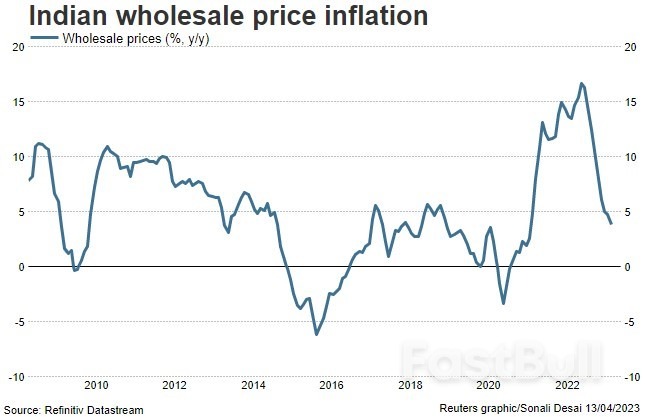
          Lastly, Indian wholesale price inflation is expected to virtually halve in March to a 1.87% annual rate from 3.85%. It was 16% less than a year ago.
          Soft Landing Hopes Fuel That Friday Feeling_3Here are three key developments that could provide more direction to markets on Friday:
          - IMF/World Bank spring meetings in Washington
          - Singapore Q1 GDP and policy decision
          - India WPI inflation (March)

          Source: Reuters

          To stay updated on all economic events of today, please check out our Economic calendar
          Risk Warnings and Disclaimers
          You understand and acknowledge that there is a high degree of risk involved in trading. Following any strategies or investment methods may lead to potential losses. The content on the site is provided by our contributors and analysts for information purposes only. You are solely responsible for determining whether any trading assets, securities, strategy, or any other product is suitable for investing based on your own investment objectives and financial situation.
          Comments
          Add to Favorites
          Share

          Silicon Valley Bank and the DoublE-edged Sword of Digital Efficiency

          Ukadike Micheal

          Central Bank

          The collapse of Silicon Valley Bank perfectly exemplifies the dangers of digital finance. During the bank run in March – enabled by the increased speed and efficiency of digital finance – an unprecedented number of deposits were withdrawn at an unprecedented rate.
          This spurred a liquidity crisis for SVB, which had to sell long-term bonds for losses to meet depositor demands. The result was a swift collapse, which sent tremors through a financial system that was already under pressure from central bank rate hikes. SVB customers withdrew $4.2bn each hour from their accounts, amounting to $42bn in a single day. The previous largest bank run came in 2008, when customers withdrew $16.7bn from Washington Mutual Bank over 10 days.
          It is clear that the global regulatory and financial system is not prepared for the shift towards digital finance. Despite the clear benefits – most notably, increased efficiency and inclusion – the risks of volatility, violent swings in value and rapidly ensuing crashes are high.
          Bank runs are nothing new. The problem is that digital finance enables bank runs to happen at a greater frequency, volume and speed. The young history of digitalisation in finance is replete with instances of new technologies spurring financial risk when they are poorly understood and regulated. The 2010 flash crash was owed in part to the impact of early high frequency trading, which played a role in spurring the 36-minute spiralling of key financial market indexes. Regulators subsequently introduced ‘circuit breaker’ regulations to prevent this sort of flash crash from occurring again.
          The ability to withdraw funds instantly and remotely is something that depositors have already come to take for granted. However, it has yet to be tested across the full lifespan of an economic cycle.
          Today, digital finance is similarly under-regulated. Once panic sets in and customers seek to withdraw or move deposits, bank runs become more likely. Social media allows information to be disseminated at incredible speed. And rumours of a run can take hold before regulators have time to react.
          In such a scenario, even the most even-keeled traders could feel pressure to shift their capital if they were aware that others were trading in a panic. All of this could happen far more quickly than regulators may be able to respond, which was the case for SVB. The bank would likely have been able to post its bonds as collateral and borrow liquidity from the Federal Reserve to meet the deposit demand, staving off crisis. But the speed of withdrawals was so dramatic that it missed the deadline.
          The implications of this capacity for rapidly ensuing panic are of particular concern with respect to digital currencies. In OMFIF’s 2022 digital assets report, we found that over half of central banks are exploring the implementation of a central bank digital currency. And yet, we also observed that regulatory regimes around digital assets remain largely patchwork and not effectively tailored to the challenges and requirements of digital currencies. Instead, regulatory regimes tend to focus on research to better understand digital assets or on placing digital assets into existing regulatory buckets as either currencies or securities.
          The shift to digital currencies may bring valuable benefits to the global financial system, improving efficiency in payments and opening up new business areas. Remittances cost about 7% on average, which is double the target established by the United Nations. Cross-border payments in general remain too slow, expensive and difficult to access. Moreover, 1.7bn people are ‘unbanked’. The move towards digital currencies and assets could help reduce the cost of remittances while simultaneously providing access to the financial system to individuals who have been traditionally outside of it.
          And yet, with greater efficiency, ease and access comes risk. Inefficiencies can be a feature of safety – consider tellers counting out withdrawals by hand and being told to slow down by management. The nature of the risk that comes with greater efficiency was discovered by SVB during its bank run. Since digital finance enables swifter movement of currency and capital, it is possible that a domestic shock – for instance, macroeconomic trouble, unpopular policy or foreign conflict – may spur a panic and rapid currency substitution.
          If a bank run dynamic emerged in foreign exchange markets, this could wreak havoc on national economics and the international economic order. Debts would suddenly become harder to pay off and governments would be hamstrung as the value of their currency collapsed.
          Dollarisation is already a threat in some emerging markets (such as Turkey) and ease of access to digital dollars could represent a dangerous new vector for this threat.
          Beyond this, greater use of digital finance to support easier cross-border payments may hamper developing economies and currencies. Individuals may flee to certain ‘trustworthy’ denominations, such as the dollar. In doing so, the concentration of global monetary control may be consolidated in the hands of a few large economies.
          Regulators are not prepared to meet these challenges. The collapse of SVB provides an effective warning about the importance of setting sufficient protections for digital finance, before letting it run loose.

          Source:Julian Jacobs

          Risk Warnings and Disclaimers
          You understand and acknowledge that there is a high degree of risk involved in trading. Following any strategies or investment methods may lead to potential losses. The content on the site is provided by our contributors and analysts for information purposes only. You are solely responsible for determining whether any trading assets, securities, strategy, or any other product is suitable for investing based on your own investment objectives and financial situation.
          Comments
          Add to Favorites
          Share
          FastBull
          Copyright © 2025 FastBull Ltd

          728 RM B 7/F GEE LOK IND BLDG NO 34 HUNG TO RD KWUN TONG KLN HONG KONG

          TelegramInstagramTwitterfacebooklinkedin
          App Store Google Play Google Play
          Products
          Charts

          Chats

          Q&A with Experts
          Screeners
          Economic Calendar
          Data
          Tools
          Membership
          Features
          Function
          Markets
          Copy Trading
          Latest Signals
          Contests
          News
          Analysis
          24/7
          Columns
          Education
          Company
          Careers
          About Us
          Contact Us
          Advertising
          Help Center
          Feedback
          User Agreement
          Privacy Policy
          Business

          White Label

          Data API

          Web Plug-ins

          Poster Maker

          Affiliate Program

          Risk Disclosure

          The risk of loss in trading financial instruments such as stocks, FX, commodities, futures, bonds, ETFs and crypto can be substantial. You may sustain a total loss of the funds that you deposit with your broker. Therefore, you should carefully consider whether such trading is suitable for you in light of your circumstances and financial resources.

          No decision to invest should be made without thoroughly conducting due diligence by yourself or consulting with your financial advisors. Our web content might not suit you since we don't know your financial conditions and investment needs. Our financial information might have latency or contain inaccuracy, so you should be fully responsible for any of your trading and investment decisions. The company will not be responsible for your capital loss.

          Without getting permission from the website, you are not allowed to copy the website's graphics, texts, or trademarks. Intellectual property rights in the content or data incorporated into this website belong to its providers and exchange merchants.

          Not Logged In

          Log in to access more features

          FastBull Membership

          Not yet

          Purchase

          Become a signal provider
          Help Center
          Customer Service
          Dark Mode
          Price Up/Down Colors

          Log In

          Sign Up

          Position
          Layout
          Fullscreen
          Default to Chart
          The chart page opens by default when you visit fastbull.com
