• Trade
  • Markets
  • Copy
  • Contests
  • News
  • 24/7
  • Calendar
  • Q&A
  • Chats
Trending
Screeners
SYMBOL
LAST
BID
ASK
HIGH
LOW
NET CHG.
%CHG.
SPREAD
SPX
S&P 500 Index
6940.00
6940.00
6940.00
6967.31
6925.10
-4.47
-0.06%
--
DJI
Dow Jones Industrial Average
49359.32
49359.32
49359.32
49616.70
49246.24
-83.11
-0.17%
--
IXIC
NASDAQ Composite Index
23515.38
23515.38
23515.38
23664.26
23446.81
-14.63
-0.06%
--
USDX
US Dollar Index
99.150
99.230
99.150
99.250
98.920
+0.030
+ 0.03%
--
EURUSD
Euro / US Dollar
1.15978
1.15996
1.15978
1.16272
1.15843
-0.00114
-0.10%
--
GBPUSD
Pound Sterling / US Dollar
1.33765
1.33809
1.33765
1.34127
1.33660
-0.00042
-0.03%
--
XAUUSD
Gold / US Dollar
4596.43
4596.43
4596.43
4620.79
4536.73
-19.52
-0.42%
--
WTI
Light Sweet Crude Oil
59.195
59.224
59.195
60.010
58.781
+0.061
+ 0.10%
--

Community Accounts

Signal Accounts
--
Profit Accounts
--
Loss Accounts
--
View More

Become a signal provider

Sell trading signals to earn additional income

View More

Guide to Copy Trading

Get started with ease and confidence

View More

Signal Accounts for Members

All Signal Accounts

Best Return
  • Best Return
  • Best P/L
  • Best MDD
Past 1W
  • Past 1W
  • Past 1M
  • Past 1Y

All Contests

  • All
  • Trump Updates
  • Recommend
  • Stocks
  • Cryptocurrencies
  • Central Banks
  • Featured News
Top News Only
Share

Ecuador Is Preparing For Its First International Debt Market Financing Since 2019 And Has Hired Bank Of America Securities And Citigroup For A Roadshow To Investors

Share

SPDR Gold Trust Reports Holdings Up 1.01%, Or 10.87 Tonnes, To 1085.67 Tonnes By Jan 16

Share

[Iran Condemns G7 Remarks Of Interference In Iran's Internal Affairs] On The Evening Of The 16th Local Time, The Iranian Foreign Ministry Issued A Statement Strongly Condemning The G7's Interference In Iran's Internal Affairs. The Statement Said That, Influenced By The United States And Israel, The G7 Recently Disregarded Facts And Made Interfering Remarks Regarding Iran's Internal Affairs

Share

US Energy Secretary Wright Says Venezuela Was Selling Oil For About $31 A Barrel Before US Captured Maduro, USA Selling It For About $45 A Barrel Now

Share

Fed Vice Chair Jefferson: He Has "Great Respect" For Powell, Considers Him A Person Of The Highest Integrity

Share

Fed Vice Chair Jefferson: Powell's Statement Regarding Department Of Justice Actions "Is There For Everyone To Read"

Share

US Energy Secretary Wright Says Putting Venezuela Oil Proceeds In Qatari Accounts Controlled By US Government Was A Pragmatic Decision

Share

[Zelensky: Ukraine's Air Defense Missile Stockpile Running Low] Ukrainian President Volodymyr Zelenskyy Stated In A Video Address On The Evening Of The 16th That Ukraine's Air Defense Missile Stockpile Is Insufficient, And Allies' Assistance Is Inadequate. Zelenskyy Said That Ukraine Urgently Needs Air Defense Systems And Interceptor Missiles, And Has Been Frankly Informed Of This To Its Allies, But Their Supplies Are Insufficient. The Ukrainian Ministry Of Defense Is Working To Urge Allies To Expedite The Supply Process. He Also Reminded The Ukrainian Public To Pay Close Attention To Air Raid Sirens

Share

US Energy Wright Tells Reuters US Moving Fast To Expand Chevron License For Increased Production And Exports Of Venezuelan Oil

Share

Fitch On Benin: Revision Of Outlook Reflects Authorities' Commitment To A Prudent Fiscal Stance

Share

Fitch: Armenia's Outlook Revision Reflects Higher International Reserves And Continued Solid Growth That Will Support Fiscal Consolidation

Share

Venezuelan Acting President: Venezuela Has Signed Its First Contract For The Export Of Natural Gas

Share

Fitch Affirms Saudi Arabia's A+ Rating With A Stable Outlook

Share

(US Stocks) The Philadelphia Gold And Silver Index Closed Up 0.06% At 395.01 Points, Up 5.47% For The Week. (Global Session) The NYSE Arca Gold Miners Index Closed Down 0.06% At 2760.43 Points, After Trump's Comments On Hassett Triggered A Sharp V-shaped Recovery, Up 5.38% For The Week. (US Stocks) The Materials Index Closed Down 0.21% At 252.23 Points, Up 2.89% For The Week. (US Stocks) The Metals And Mining Index Closed Down 1.09% At 241.90 Points, Up 4.46% For The Week

Share

White House: H.E. Nickolay Mladenov, An Executive Board Member, Will Serve As High Representative For Gaza

Share

New York Silver Futures Fell More Than 2.8%, Narrowing Weekly Gains To Nearly 13%. On Friday (January 16), In Late New York Trading, Spot Silver Fell 2.72% To $89.9079 Per Ounce, A Cumulative Weekly Gain Of 12.70%. Comex Silver Futures Fell 2.82% To $89.740 Per Ounce, A Cumulative Weekly Gain Of 13.12%. Comex Copper Futures Fell 2.45% To $5.8450 Per Pound, A Cumulative Weekly Loss Of 0.96%. Spot Platinum Fell 3.32% To $2332.33 Per Ounce, A Cumulative Weekly Gain Of 2.42%; Spot Palladium Fell 0.72% To $1809.76 Per Ounce, A Cumulative Weekly Loss Of 0.67%

Share

White House: Aryeh Lightstone And Josh Gruenbaum Appointed As Senior Advisors To Board Of Peace

Share

On Friday (January 16), Spot Gold Fell 0.44% To $4,595.23 Per Ounce In Late New York Trading, Plunging After Trump Downplayed The Possibility Of White House Advisor Bessant Becoming Federal Reserve Chairman. Gold Had Risen 1.91% For The Week, Trading Mostly In A Range At High Levels. Comex Gold Futures Fell 0.57% To $4,597 Per Ounce, Up 2.12% For The Week

Share

[Iranian Police Bust Major Arms Smuggling Ring] On The 16th, It Was Learned That Iranian Police Recently Busted A Major Arms Smuggling Ring In Bushehr Province In The South, Thwarting A Potential Threat To The Capital, Tehran. Police Seized Melee Weapons And Other Items During The Operation And Arrested Two Individuals Suspected Of Being Terrorists. These Individuals Planned To Transport The Weapons To Tehran And Attempt To Carry Out Sabotage And Terrorist Activities There. Relevant Departments Are Conducting A Thorough Investigation Into The Organization's Background And Detailed Plans

Share

Moody's: Assume A Diplomatic Solution Will Be Reached Regarding Greenland Which Will Keep Europe's & Denmark's Security Environment Broadly Unchanged

TIME
ACT
FCST
PREV
U.S. NY Fed Manufacturing Prices Received Index (Jan)

A:--

F: --

P: --

U.S. NY Fed Manufacturing New Orders Index (Jan)

A:--

F: --

P: --

U.S. NY Fed Manufacturing Employment Index (Jan)

A:--

F: --

P: --

U.S. Export Price Index YoY (Nov)

A:--

F: --

P: --

U.S. NY Fed Manufacturing Index (Jan)

A:--

F: --

P: --
U.S. Initial Jobless Claims 4-Week Avg. (SA)

A:--

F: --

P: --
U.S. Export Price Index MoM (Nov)

A:--

F: --

P: --

Canada Manufacturing Unfilled Orders MoM (Nov)

A:--

F: --

P: --

Canada Manufacturing New Orders MoM (Nov)

A:--

F: --

P: --

U.S. Philadelphia Fed Manufacturing Employment Index (Jan)

A:--

F: --

P: --

Canada Wholesale Sales YoY (Nov)

A:--

F: --

P: --

Canada Wholesale Inventory MoM (Nov)

A:--

F: --

P: --

U.S. Philadelphia Fed Business Activity Index (SA) (Jan)

A:--

F: --

P: --

U.S. EIA Weekly Natural Gas Stocks Change

A:--

F: --

P: --

Richmond Federal Reserve President Barkin delivered a speech.
U.S. Weekly Treasuries Held by Foreign Central Banks

A:--

F: --

P: --

Germany CPI Final MoM (Dec)

A:--

F: --

P: --

Germany CPI Final YoY (Dec)

A:--

F: --

P: --

Germany HICP Final MoM (Dec)

A:--

F: --

P: --

Germany HICP Final YoY (Dec)

A:--

F: --

P: --

Brazil PPI MoM (Nov)

A:--

F: --

P: --

Canada New Housing Starts (Dec)

A:--

F: --

P: --
U.S. Capacity Utilization MoM (SA) (Dec)

A:--

F: --

P: --
U.S. Industrial Output YoY (Dec)

A:--

F: --

P: --

U.S. Manufacturing Capacity Utilization (Dec)

A:--

F: --

P: --

U.S. Manufacturing Output MoM (SA) (Dec)

A:--

F: --

P: --
U.S. Industrial Output MoM (SA) (Dec)

A:--

F: --

P: --
U.S. NAHB Housing Market Index (Jan)

A:--

F: --

P: --

Russia CPI YoY (Dec)

A:--

F: --

P: --

U.S. Weekly Total Rig Count

A:--

F: --

P: --

U.S. Weekly Total Oil Rig Count

A:--

F: --

P: --

Japan Core Machinery Orders YoY (Nov)

--

F: --

P: --

Japan Core Machinery Orders MoM (Nov)

--

F: --

P: --

U.K. Rightmove House Price Index YoY (Jan)

--

F: --

P: --

China, Mainland GDP YoY (YTD) (Q4)

--

F: --

P: --

China, Mainland Industrial Output YoY (YTD) (Dec)

--

F: --

P: --

Japan Industrial Output Final MoM (Nov)

--

F: --

P: --

Japan Industrial Output Final YoY (Nov)

--

F: --

P: --

Euro Zone Core HICP Final MoM (Dec)

--

F: --

P: --

Euro Zone HICP Final MoM (Dec)

--

F: --

P: --

Euro Zone HICP Final YoY (Dec)

--

F: --

P: --

Euro Zone HICP MoM (Excl. Food & Energy) (Dec)

--

F: --

P: --

Euro Zone Core CPI Final YoY (Dec)

--

F: --

P: --

Euro Zone Core HICP Final YoY (Dec)

--

F: --

P: --

Euro Zone CPI YoY (Excl. Tobacco) (Dec)

--

F: --

P: --

Euro Zone Core CPI Final MoM (Dec)

--

F: --

P: --

Canada National Economic Confidence Index

--

F: --

P: --

Canada CPI MoM (SA) (Dec)

--

F: --

P: --

Canada Core CPI MoM (SA) (Dec)

--

F: --

P: --

Canada CPI YoY (SA) (Dec)

--

F: --

P: --

Canada Trimmed CPI YoY (SA) (Dec)

--

F: --

P: --

Canada CPI YoY (Dec)

--

F: --

P: --

Canada CPI MoM (Dec)

--

F: --

P: --

Canada Core CPI YoY (Dec)

--

F: --

P: --

Canada Core CPI MoM (Dec)

--

F: --

P: --

South Korea PPI MoM (Dec)

--

F: --

P: --

China, Mainland 1-Year Loan Prime Rate (LPR)

--

F: --

P: --

China, Mainland 5-Year Loan Prime Rate

--

F: --

P: --

Germany PPI YoY (Dec)

--

F: --

P: --

Germany PPI MoM (Dec)

--

F: --

P: --

Q&A with Experts
    • All
    • Chatrooms
    • Groups
    • Friends
    umer flag
    Daniel Beninboy
    @Daniel Beninboyhow do you trade
    Daniel Beninboy flag
    umer
    it works on OB, FVG, BOS, Choch, EMA and confirmations
    @umerokay
    Daniel Beninboy flag
    umer
    @umer crt
    john Ekwo flag
    hello do we trade omly xauusd or other pairs
    EuroTrader flag
    3382311
    How do I place a bet here?
    @Visitor3382311You can place a bet here cause this is a platform for chatting not netting
    EuroTrader flag
    john Ekwo
    hello do we trade omly xauusd or other pairs
    @john EkwoGold is the most traded pair here. Here other pairs are being traded here also in the chatroom
    EuroTrader flag
    umer
    @umerWhat's the full meaning of VSA. is it the name of the strategy? i trade smart money concepts
    dimas eyhh flag
    EuroTrader
    @EuroTraderwhere are you from
    3377839 flag
    Pls guy's I've been trying to understand top down analysis Watch so many videos but still don't get it I need help
    EuroTrader flag
    dimas eyhh
    @dimas eyhhAm from Nigeria but currently in Zimbabwe. How about you? where are you from
    EuroTrader flag
    3377839
    Pls guy's I've been trying to understand top down analysis Watch so many videos but still don't get it I need help
    @Visitor3377839Okay that's great .have you watched videos about market structure yet?.
    3377839 flag
    Yh I perfectly understand market structure
    EuroTrader flag
    3377839
    Yh I perfectly understand market structure
    @Visitor3377839Then top down analysis should be quite easy for you to understand then
    EuroTrader flag
    3377839
    Yh I perfectly understand market structure
    @Visitor3377839Are you a scalper or a swing trader or an intraday trader
    EuroTrader flag
    3300740
    @Visitor3300740Pleas don't give your account to someone to help you pass the account.
    otniel328 flag
    otniel328 flag
    This week went very well for me in automatic mode.
    34GMNLRZ0V flag
    otniel328
    This week went very well for me in automatic mode.
    hello guyz did the contest already start or it starts at 20th January?
    otniel328 flag
    34GMNLRZ0V
    @34GMNLRZ0Vthe 20th begins
    Hashmeet P flag
    anyone here trade crypto
    Type here...
    Add Symbol or Code

      No matching data

      All
      Trump Updates
      Recommend
      Stocks
      Cryptocurrencies
      Central Banks
      Featured News
      • All
      • Russia-Ukraine Conflict
      • Middle East Flashpoint
      • All
      • Russia-Ukraine Conflict
      • Middle East Flashpoint
      Search
      Products

      Charts Free Forever

      Chats Q&A with Experts
      Screeners Economic Calendar Data Tools
      Membership Features
      Data Warehouse Market Trends Institutional Data Policy Rates Macro

      Market Trends

      Market Sentiment Order Book Forex Correlations

      Top Indicators

      Charts Free Forever
      Markets

      News

      News Analysis 24/7 Columns Education
      From Institutions From Analysts
      Topics Columnists

      Latest Views

      Latest Views

      Trending Topics

      Top Columnists

      Latest Update

      Signals

      Copy Rankings Latest Signals Become a signal provider AI Rating
      Contests
      Brokers

      Overview Brokers Assessment Rankings Regulators News Claims
      Broker listing Forex Brokers Comparison Tool Live Spread Comparison Scam
      Q&A Complaint Scam Alert Videos Tips to Detect Scam
      More

      Business
      Events
      Careers About Us Advertising Help Center

      White Label

      Data API

      Web Plug-ins

      Affiliate Program

      Awards Institution Evaluation IB Seminar Salon Event Exhibition
      Vietnam Thailand Singapore Dubai
      Fans Party Investment Sharing Session
      FastBull Summit BrokersView Expo
      Recent Searches
        Top Searches
          Markets
          News
          Analysis
          User
          24/7
          Economic Calendar
          Education
          Data
          • Names
          • Latest
          • Prev

          View All

          No data

          Scan to Download

          Faster Charts, Chat Faster!

          Download App
          English
          • English
          • Español
          • العربية
          • Bahasa Indonesia
          • Bahasa Melayu
          • Tiếng Việt
          • ภาษาไทย
          • Français
          • Italiano
          • Türkçe
          • Русский язык
          • 简中
          • 繁中
          Open Account
          Search
          Products
          Charts Free Forever
          Markets
          News
          Signals

          Copy Rankings Latest Signals Become a signal provider AI Rating
          Contests
          Brokers

          Overview Brokers Assessment Rankings Regulators News Claims
          Broker listing Forex Brokers Comparison Tool Live Spread Comparison Scam
          Q&A Complaint Scam Alert Videos Tips to Detect Scam
          More

          Business
          Events
          Careers About Us Advertising Help Center

          White Label

          Data API

          Web Plug-ins

          Affiliate Program

          Awards Institution Evaluation IB Seminar Salon Event Exhibition
          Vietnam Thailand Singapore Dubai
          Fans Party Investment Sharing Session
          FastBull Summit BrokersView Expo

          NATO Bolsters Greenland Defense Amid US Annexation Push

          James Riley

          Remarks of Officials

          Daily News

          Political

          Summary:

          NATO allies deploy troops to Greenland, challenging US annexation pressure and exposing a significant trans-Atlantic rift.

          A coalition of NATO countries is deploying military personnel to Greenland in a direct response to renewed American pressure to annex the strategically vital Arctic island. The move highlights a significant diplomatic rift between the United States and its European allies.
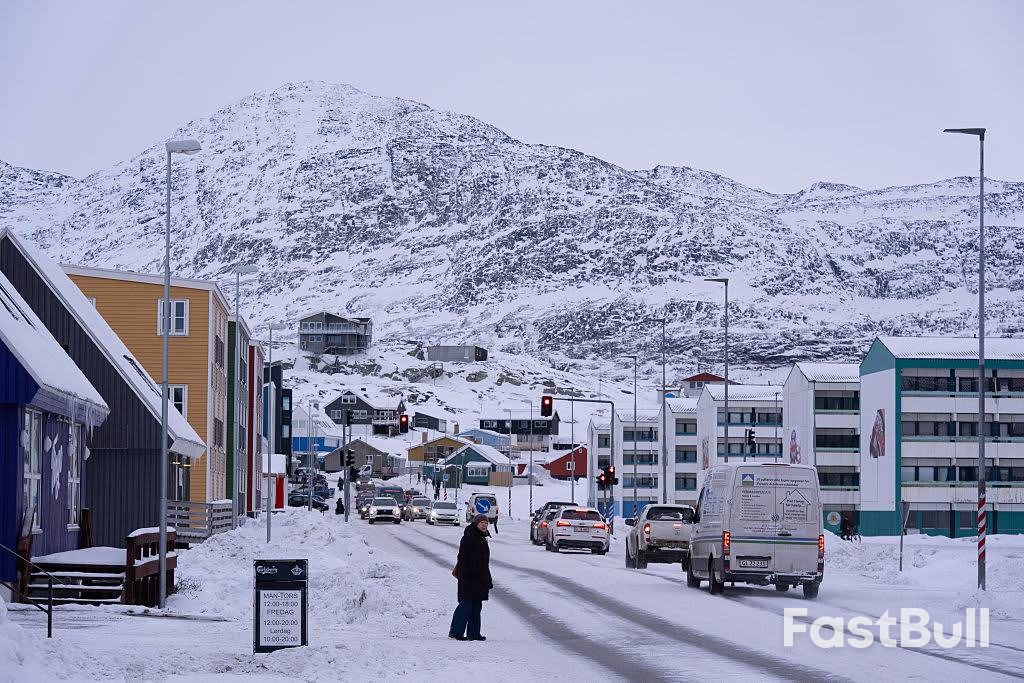
          Denmark, which manages Greenland's defense, along with Germany, France, Sweden, and Norway, have all confirmed plans to send troops this week. This coordinated action follows President Donald Trump's public statements expressing a desire to take control of the island, which he has framed as a matter of national security.

          The U.S. president's focus on Greenland has intensified following a military intervention in Venezuela on January 3 aimed at deposing President Nicolás Maduro.

          Diplomatic Talks Stall in Washington

          The military deployments were announced shortly after tense discussions at the White House between U.S. officials and representatives from Denmark and Greenland. Danish Foreign Minister Lars Løkke Rasmussen and Greenland's Vivian Motzfeldt met with U.S. Vice President JD Vance and Secretary of State Marco Rubio.

          Following the hour-long meeting, Rasmussen described the conversation as "frank but constructive" but admitted to a "fundamental disagreement" with the American position. While U.S. officials did not offer immediate comments, President Trump later told reporters, "We need Greenland for national security."

          Danish Foreign Minister Lars Løkke Rasmussen and Greenland's Foreign Minister Vivian Motzfeldt address reporters in Washington after tense discussions with U.S. officials.

          Although the parties agreed to form a high-level working group to discuss the island's future, no diplomatic resolution was reached to de-escalate the situation.

          European Allies Launch 'Operation Arctic Endurance'

          In response to the diplomatic impasse, several European nations have committed military support under the banner of a Danish-led exercise named "Operation Arctic Endurance."

          Denmark had already announced plans to increase its military activities in and around Greenland, including guarding national infrastructure, conducting naval operations, and deploying fighter aircraft.

          Coordinated European Support

          • Germany: The German Defense Ministry will send a 13-person "reconnaissance team" to Nuuk. Their mission is to evaluate potential military contributions to regional security, focusing on capabilities like maritime surveillance.

          • France: President Emmanuel Macron confirmed French participation via social media, stating, "The first French military elements are already on their way. Others will follow."

          • Sweden: Prime Minister Ulf Kristersson announced that several officers from Sweden's armed forces were scheduled to arrive in Greenland to help prepare for the joint exercise.

          Denmark Rejects US Position, Ramps Up Arctic Investment

          The coordinated military exercise underscores a firm rejection of the U.S. stance, a position that is also strongly held by Greenland's own population. Opinion polls show that Greenlanders overwhelmingly oppose coming under U.S. control, with a majority favoring eventual independence from Denmark.

          Denmark has been actively strengthening its position in the Arctic. Danish Foreign Minister Rasmussen noted that his country has "been stepping up," allocating nearly $15 billion in recent years toward defense capabilities in the High North. This includes purchasing 16 additional F-35 fighter jets. Copenhagen has also pledged to increase spending on healthcare and infrastructure within Greenland.

          "We didn't manage to change the American position," Rasmussen said. "It's clear that the president has this wish of conquering over Greenland."

          He concluded with a firm message: "We made it very, very clear that this is not in the interest of the kingdom."

          Risk Warnings and Disclaimers
          You understand and acknowledge that there is a high degree of risk involved in trading. Following any strategies or investment methods may lead to potential losses. The content on the site is provided by our contributors and analysts for information purposes only. You are solely responsible for determining whether any trading assets, securities, strategy, or any other product is suitable for investing based on your own investment objectives and financial situation.
          Add to Favorites
          Share

          Silver's Surge Ends as Tariff Fears Fade

          Daniel Foster

          Political

          Commodity

          Remarks of Officials

          Economic

          Central Bank

          Traders' Opinions

          Middle East Situation

          China–U.S. Trade War

          Silver prices tumbled as investors cashed in on an explosive rally, with the metal falling as much as 7.3% on January 15. The drop came after the United States signaled it would hold off on imposing broad import tariffs on critical minerals.

          The correction follows a remarkable run-up that saw silver hit an all-time high of US$93.7515 after surging more than 20% over the previous four trading sessions. As silver retreated, gold prices also declined.

          US Policy Shift Eases Supply Squeeze Fears

          A key factor behind the sell-off was President Donald Trump's decision to pursue bilateral agreements for mineral supplies rather than immediate, widespread levies. While price floors were mentioned as a possibility, the move away from tariffs alleviated market anxiety.

          Fears of potential tariffs had previously led to the stockpiling of supplies, including silver, in U.S. warehouses. This contributed to a global short squeeze in 2025 and continued to support prices into 2026. Traders were closely monitoring a U.S. Commerce Department investigation into whether mineral imports posed a threat to national security.

          Daniel Ghali, a senior commodity strategist at TD Securities, noted that the decision "suggests the administration will take a more surgical approach." He added that this "significantly alleviates the fear of a broad-based approach that could have inadvertently impacted the underlying bars that underscore benchmark metals prices."

          What Fueled Silver's Explosive Rally?

          Silver's recent pullback comes after an incredible performance in 2025, when it jumped almost 150%. The metal's gains outpaced those of gold as some investors sought a more affordable alternative.

          The rally was supported by several key factors:

          • Industrial Demand: Silver is a crucial component in industrial applications, particularly for solar panels.

          • Investment Rotation: Investors moved into silver after gold became too expensive.

          • Speculative Buying: A recent speculative frenzy in China added significant upward momentum.

          Christopher Wong, a strategist at OCBC Bank, stated that the medium-term outlook for silver "remains firmly constructive, underpinned by supply shortfalls, industrial consumption and spillover demand from gold." However, he warned that "the velocity of the recent moves warrants some near-term caution."

          Broader Market Forces and Geopolitical Risk

          Both gold and silver benefited from a wider rush into commodities that also propelled tin and copper to record highs. The Trump administration's renewed criticism of the Federal Reserve has bolstered prices and revived the "sell America" trade.

          Haven demand has also been fueled by several geopolitical factors, including the U.S. capture of Venezuela's leader, repeated threats to take Greenland, and the ongoing precarious situation in Iran.

          Ole Hansen, head of commodity strategy at Saxo Bank, cautioned that market dynamics are complex. "Much of what traders see on the screen reflects forced flows, margin dynamics, option hedging and short covering rather than genuine supply-demand price discovery," he said in a social media post. "In this environment, technical levels lose reliability, stops are easily triggered, and even correct macro views struggle to survive short-term noise."

          Market Snapshot and Outlook

          By 1 p.m. in Singapore, silver had fallen 6% to US$87.7795 an ounce. Gold declined 0.7% to US$4,591.51, while both platinum and palladium dropped by more than 2%.

          According to the latest Markets Pulse survey, gold's rally may have legs beyond January. However, while silver and copper have reached similar milestones, there are signs that investment flows into these metals are wavering as traders reassess the durability of supply constraints.

          To stay updated on all economic events of today, please check out our Economic calendar
          Risk Warnings and Disclaimers
          You understand and acknowledge that there is a high degree of risk involved in trading. Following any strategies or investment methods may lead to potential losses. The content on the site is provided by our contributors and analysts for information purposes only. You are solely responsible for determining whether any trading assets, securities, strategy, or any other product is suitable for investing based on your own investment objectives and financial situation.
          Add to Favorites
          Share

          China's Credit Growth Surges in Dec, But 2025 Lags

          Samantha Luan

          Data Interpretation

          Remarks of Officials

          Economic

          Central Bank

          Daily News

          New bank loans in China climbed more than expected in December, signaling that government stimulus measures may be starting to revive a credit appetite that has been weakened by a property market crisis and soft domestic demand.

          Chinese banks extended 910 billion yuan ($130.54 billion) in new loans during the month, a sharp increase from 390 billion yuan in November, according to data from the People's Bank of China (PBOC). This figure surpassed the 800 billion yuan median forecast from a Reuters poll of 19 analysts, though it remained below the 990 billion yuan recorded in December 2024.

          Full-Year Lending Hits Four-Year Low

          Despite the year-end rebound, the data for the entire year painted a weaker picture. New yuan loans for all of 2025 totaled 16.27 trillion yuan, the lowest annual figure since 2018 and a notable drop from the 18.09 trillion yuan issued in 2024.

          This weakness in borrowing highlights the ongoing economic challenges facing policymakers. While China reported a record trade surplus of nearly $1.2 trillion in 2025, authorities have struggled to spark household consumption and counteract a persistent slump in the property sector.

          Corporate Borrowing Up as Household Loans Contract

          A deeper look into the December figures reveals a clear divergence between corporate and household credit demand.

          • Corporate Loans: Grew by 1.07 trillion yuan.

          • Household Loans: Shrank by 91.6 billion yuan, following a 206.3 billion yuan contraction in November.

          The continued decline in household borrowing, which includes mortgages, underscores the lack of confidence in the housing market. Meanwhile, the growth in corporate lending suggests that policy support, such as the 500-billion-yuan financial tool introduced in September to fund major projects, may be gaining traction.

          PBOC Eases Policy as Key Indicators Stabilize

          In response to economic headwinds, Beijing has committed to stabilizing the housing market and boosting domestic demand through investments in national projects and a consumer trade-in scheme.

          Reinforcing these efforts, the PBOC announced on Thursday it would lower the interest rate on some of its structural monetary policy tools by 25 basis points, effective January 19, to further stimulate the economy.

          Broader monetary and credit indicators from the central bank showed a mixed but stable picture in December:

          • Outstanding Yuan Loans: Grew 6.4% year-over-year, matching November's pace and slightly ahead of the 6.3% forecast.

          • Broad M2 Money Supply: Grew 8.5% year-over-year, accelerating from 8% in November and beating the 8% forecast.

          • M1 Money Supply: Growth slowed to 3.8% from 4.9% in the prior month.

          • Total Social Financing (TSF): Outstanding TSF, a broad measure of credit and liquidity, grew 8.3% from a year earlier, down from 8.5% in November.

          To stay updated on all economic events of today, please check out our Economic calendar
          Risk Warnings and Disclaimers
          You understand and acknowledge that there is a high degree of risk involved in trading. Following any strategies or investment methods may lead to potential losses. The content on the site is provided by our contributors and analysts for information purposes only. You are solely responsible for determining whether any trading assets, securities, strategy, or any other product is suitable for investing based on your own investment objectives and financial situation.
          Add to Favorites
          Share

          Sticky Inflation Data Puts Fed Rate Cuts on Hold

          Liam Peterson

          Data Interpretation

          Remarks of Officials

          Economic

          Central Bank

          Energy

          Daily News

          Hopes for an imminent Federal Reserve rate cut are fading as new economic data reveals that inflation is not cooling as quickly as policymakers would like. The latest figures on wholesale and consumer prices will be a critical input for the Fed's economic projections through 2026 and will heavily influence its interest rate decisions this year.

          Recent reports suggest that the path back to the Fed's 2% inflation target remains challenging, making a pivot to easier monetary policy less likely in the near term.

          Inflation's Stubborn Grip on the Economy

          A delayed report from the Labor Department showed that wholesale prices rose by 3% in November, accelerating from a 2.8% increase in October. A surge in energy costs was a primary driver of this increase.

          Even after excluding volatile components like food, energy, and trade services, the core measure of wholesale prices climbed 3.5% for the year ending in November. This figure matches the high set in March, indicating persistent underlying price pressures. According to Stephen Brown, an economist at Capital Economics, the impact of tariffs on these numbers appears minimal for now.

          This trend was echoed in consumer price data for December. The core Consumer Price Index (CPI), which strips out food and energy, registered at 2.6%. While slightly below the 2.7% forecast by experts, this rate has held steady since September and remains well above the Federal Reserve's official 2% goal.

          Based on these figures, Brown projects that the Personal Consumption Expenditures (PCE) index—the Fed’s preferred inflation gauge—could rise to 3%. The PCE index had been stable at approximately 2.8% for the previous three months.

          Corporate America Feels the Squeeze

          According to the Federal Reserve's "Beige Book," a collection of economic anecdotes from across the country, tariffs were a significant concern for businesses in early January. Many companies that initially absorbed these extra costs are now beginning to pass them on to customers to protect their profit margins.

          However, some sectors, such as restaurants and retail, have shown less willingness to raise prices. The general expectation among businesses is that prices will remain elevated as they navigate these increased expenses.

          Despite these price pressures, the broader economy has demonstrated resilience. Eight of the twelve Federal Reserve districts reported minor economic improvement, a step up from the preceding four months when most regions saw little to no growth.

          A Split Emerges Among Fed Officials

          The latest economic data has sparked a range of interpretations among Federal Reserve leaders regarding the future path of monetary policy.

          The Optimistic Case for Gradual Easing

          Anna Paulson, president of the Philadelphia Fed, expressed cautious optimism. She argued that price increases stemming from tariffs are mostly confined to goods, not services, and are unlikely to fuel long-term inflation. Paulson projects that goods inflation will return to the 2% target by the end of 2026, with the most significant impact felt in the first half of this year.

          "I am feeling cautiously optimistic," Paulson noted, suggesting that even if the full-year inflation figure seems high, the short-term trend could hit the 2% mark by December. If inflation continues to moderate and the labor market remains stable, she anticipates "modest" rate reductions later this year.

          The Aggressive Push for Lower Rates

          In contrast, Fed Governor Stephen Miran is advocating for more significant rate cuts. He predicts that declining prices in services and housing will offset the rise in goods prices. Miran has penciled in 150 basis points of rate cuts for 2026, a stark contrast to the single 25-basis-point cut anticipated by most of his colleagues.

          Miran's argument centers on the belief that the "neutral rate"—the interest rate level that neither stimulates nor restricts the economy—has fallen. He attributes this shift to lower population growth from changing immigration patterns, which he believes will eventually cool inflation. He also acknowledged it remains an "open question" what is driving goods prices higher if not tariffs, suggesting lingering pandemic effects or tech export restrictions as possibilities.

          The Cautious Stance on the Final Mile

          Neel Kashkari, president of the Minneapolis Fed, remains more uncertain. While he agrees that inflation is on a downward trajectory, he is unsure whether it will settle at 2.5% or remain higher by the end of the year.

          Kashkari highlighted a growing divide in the economy: high-income families are faring well, but lower-income Americans are struggling with the high cost of living, not a lack of employment. He cautioned that cutting interest rates prematurely to support the job market could backfire, worsening inflation for the very families it aims to help.

          "Overall, the economy seems quite resilient," Kashkari said. He pointed to strong consumer spending and new investments in artificial intelligence as key growth drivers. The economy's failure to slow more significantly despite high interest rates has led him to question whether current monetary policy is as "tight" as it appears.

          What to Expect from the Fed's Next Meeting

          Following a series of three rate cuts last autumn, the Federal Reserve is now widely expected to hold its benchmark interest rate steady in the 3.5% to 3.75% range at its upcoming meeting later this month.

          To stay updated on all economic events of today, please check out our Economic calendar
          Risk Warnings and Disclaimers
          You understand and acknowledge that there is a high degree of risk involved in trading. Following any strategies or investment methods may lead to potential losses. The content on the site is provided by our contributors and analysts for information purposes only. You are solely responsible for determining whether any trading assets, securities, strategy, or any other product is suitable for investing based on your own investment objectives and financial situation.
          Add to Favorites
          Share

          China's Central Bank Flags More Rate and RRR Cuts

          Kevin Morgan

          Forex

          Remarks of Officials

          Economic

          Central Bank

          Daily News

          China's central bank has signaled it has room to lower both interest rates and bank reserve requirements, while also moving to cut the cost of its targeted lending tools to provide more direct support to the economy.

          People's Bank of China (PBOC) Deputy Governor Zou Lan stated Thursday that the central bank sees "some space" to reduce the reserve requirement ratio (RRR) and key policy rates this year. This comes as the PBOC announced it will lower interest rates on its structural monetary policy tools by 0.25 percentage points, effective Monday. The adjustment brings the one-year rate for several relending facilities down to 1.25% from 1.5%.

          These moves underscore a strategy focused on targeted adjustments to aid an economy facing challenges from weak demand and structural imbalances. The signal for broader easing follows a year of limited action, where the PBOC only delivered a single 10-basis-point cut to its policy interest rate in 2025—well short of the 40 to 60 basis points of easing many analysts had anticipated.

          Zou also noted that improved interest margins at commercial banks create the necessary conditions for reducing the main policy interest rate, though he did not provide a specific timeline.

          Yuan Stability Remains a Key Priority

          Addressing recent currency fluctuations, Zou asserted that China has "no need" to devalue the yuan to gain a competitive advantage in global trade. He attributed the yuan's recent gains against the U.S. dollar to a weakening greenback and an easing of geopolitical tensions, rather than a fundamental shift in policy.

          The yuan has strengthened over the last 12 months, breaking the key 7-per-dollar level last month for the first time since May 2023. This rally has been supported by several factors:

          • Broad-based weakness in the U.S. dollar

          • China's expanding trade surplus

          • Signs of an improving domestic economy

          • Inflows of capital ahead of the Lunar New Year

          Zou reiterated that the PBOC is committed to preventing "overshooting" in the currency market and will work to keep the yuan at a "reasonable and balanced equilibrium." He emphasized that the exchange rate has been "basically stable" in recent years and that market forces will continue to play the decisive role.

          Tackling Deflation and Bolstering Credit

          On the domestic front, Zou highlighted recent positive developments in China's inflation outlook. He said that ensuring a "reasonable recovery in prices" has become a key objective for monetary policy in 2026, as officials aim to steer the world's second-largest economy away from deflationary pressures.

          To refine its liquidity management, the central bank also plans to gradually increase its trading of government bonds in its open market operations.

          Furthermore, the PBOC is rolling out new measures to boost credit to specific sectors. This includes establishing a dedicated relending program for private companies and increasing quotas for loans aimed at technological innovation. To amplify this support, the PBOC will also provide an additional 500 billion yuan in lending for small businesses and the agricultural sector.

          To stay updated on all economic events of today, please check out our Economic calendar
          Risk Warnings and Disclaimers
          You understand and acknowledge that there is a high degree of risk involved in trading. Following any strategies or investment methods may lead to potential losses. The content on the site is provided by our contributors and analysts for information purposes only. You are solely responsible for determining whether any trading assets, securities, strategy, or any other product is suitable for investing based on your own investment objectives and financial situation.
          Add to Favorites
          Share

          China's Economy Braces for Slowdown to 4.5%

          Nathaniel Wright

          Data Interpretation

          Remarks of Officials

          Economic

          Central Bank

          China–U.S. Trade War

          China's economic growth is projected to slow to 4.5% in 2026 and hold that pace through 2027, according to a Reuters poll of 73 economists. This forecast increases pressure on policymakers to deliver more stimulus as they confront deep structural issues to secure the nation's long-term economic health.

          For 2025, gross domestic product (GDP) is expected to have expanded by 4.9%, meeting the government's target of around 5%. This performance was supported by strong exports and existing policy measures, demonstrating remarkable resilience amid global challenges.

          However, the economy's reliance on external demand highlights significant underlying vulnerabilities, including weak domestic spending, a prolonged property slump, and persistent deflationary pressures.

          Export Boom Masks Domestic Weakness

          China's economic strength in 2025 was largely driven by its export sector, which benefited from smaller-than-expected U.S. tariff hikes and a successful push to diversify markets. This allowed policymakers to keep stimulus measures modest.

          The country reported a record trade surplus of nearly $1.2 trillion in 2025, fueled by booming exports to non-U.S. markets. This strategy helped producers build global scale to counter sustained pressure from the Trump administration.

          Despite this external success, recent data points to a slowdown. Growth in the fourth quarter of 2025 likely cooled to 4.4% year-over-year, down from 4.8% in the third quarter, marking the weakest pace in three years. On a quarterly basis, the economy is forecast to have grown 1.0% in the fourth quarter, a slight dip from 1.1% in the previous quarter.

          Rising Trade Tensions Cloud Outlook

          The economic outlook for 2026 is clouded by the prospect of rising global trade protectionism and unpredictable U.S. trade policies. President Donald Trump has threatened to impose a 25% tariff on countries that trade with Iran, adding another layer of uncertainty.

          "External demand was the biggest positive surprise in 2025," noted Larry Hu, chief China economist at Macquarie. "Should exports disappoint in 2026, it would trigger additional domestic stimulus from Beijing to defend its growth target."

          Hu added that the scale of any new stimulus will largely be determined by the severity of an export slowdown.

          The Challenge of Rebalancing China's Economy

          Economists warn that deep structural imbalances pose a significant risk to China's long-term growth and its ambitions in high-tech industries. The country's economic model remains heavily skewed toward investment over consumption.

          Key structural challenges include:

          • Low Household Consumption: Chinese household consumption accounts for roughly 40% of the economy, about 20 percentage points below the global average.

          • High Investment: Conversely, investment is approximately 20 percentage points higher than the global average.

          • Unsustainable Gap: This imbalance is seen as increasingly unsustainable and a drag on broader industrial activity.

          Chinese leaders have vowed to "significantly" increase household consumption's share of the economy over the next five years. Many policy advisers believe the target should be to lift this ratio to 45% by 2030. However, efforts to rebalance have been complicated by rising debt levels and external pressures.

          Policy Response: More Stimulus Expected

          At a key economic meeting in December, Chinese leaders pledged to maintain a "proactive" fiscal policy to support economic growth, which analysts expect will be targeted at around 5% for the year.

          The People's Bank of China (PBOC) has signaled its readiness to provide monetary support. The central bank has pledged to cut the reserve requirement ratio (RRR) and interest rates in 2026 to ensure ample liquidity.

          Analysts polled by Reuters expect the PBOC to cut its key policy rate—the seven-day reverse repo rate—by 10 basis points in the first quarter. Meanwhile, consumer price inflation is forecast to rise to 0.7% this year and pick up further to 1.0% in 2027, after remaining flat in 2025.

          To stay updated on all economic events of today, please check out our Economic calendar
          Risk Warnings and Disclaimers
          You understand and acknowledge that there is a high degree of risk involved in trading. Following any strategies or investment methods may lead to potential losses. The content on the site is provided by our contributors and analysts for information purposes only. You are solely responsible for determining whether any trading assets, securities, strategy, or any other product is suitable for investing based on your own investment objectives and financial situation.
          Add to Favorites
          Share

          Venezuela’s Shadow Tanker Network Comes Into View as Sanctions Evasion Unravels

          Gerik

          Political

          Economic

          A Sanctions-Evasion System Moves Into The Open

          The capture of Nicolas Maduro by US forces has prompted a rapid unmasking of Venezuela’s so-called dark fleet, an informal network of oil tankers that operated outside conventional tracking systems to bypass US sanctions. These vessels, which routinely concealed their locations and destinations, were essential to sustaining Venezuela’s oil exports during years of international isolation. With the political leadership removed, the operational secrecy that shielded this fleet has started to dissolve.
          One of the clearest examples is the supertanker Marbella, which had been untraceable for more than a year. Over the past weekend, the vessel switched on its transponder, revealing it was anchored off Venezuela’s coast carrying 1.9 million barrels of crude. This disclosure coincided with efforts by the US government, together with commodity trading houses Vitol and Trafigura, to move Venezuelan oil into formal trading channels.

          Oil Revenues And Regime Survival

          Oil represented the core revenue stream for Maduro’s government, financing everything from essential imports such as food and medicine to military procurement. The dark fleet played a central operational role in keeping this revenue flowing. By obscuring shipping data, Venezuela was able to continue exporting crude even under heavy sanctions, at times lifting production to around 1 million barrels per day, a multi-year high.
          This relationship was functional rather than coincidental. Without access to transparent shipping and insurance markets, Venezuela’s oil exports depended directly on vessels willing to operate outside standard regulatory oversight. The fleet’s existence therefore reflects a structural adaptation to sanctions rather than opportunistic behavior.

          Ghost Ships And Scale Of Operations

          The scale of the shadow shipping network is now becoming clearer. Last year, 71 supertankers, each roughly the length of three football fields, were involved in delivering approximately 400,000 barrels of Venezuelan crude per day to Chinese refiners. This implies that nearly six vessels per month moved through Venezuelan waters without openly broadcasting their positions.
          These ships often manipulated or disabled GPS signals to evade detection. The supertanker Rene illustrates this practice. At the end of December, its tracking data suggested it was near China. Twelve days later, its signal placed it off the Venezuelan coast. Given that a China–Venezuela voyage can take up to 50 days, the data inconsistency points to deliberate signal spoofing rather than navigational anomalies.

          Post-Maduro Shift In Control And Strategy

          The emergence of these vessels accelerated in the days following Maduro’s capture on January 3, when the US moved to assert direct influence over Venezuela’s oil sector. President Donald Trump has stated ambitions to rebuild the Venezuelan economy through its oil industry, targeting up to $100 billion in future investment to restore deteriorating infrastructure.
          As part of this transition, Trafigura and Vitol are assisting the US government in marketing as much as 50 million barrels of Venezuelan crude. An initial tranche of 4.83 million barrels, already loaded onto ghost vessels, is scheduled to be discharged in Caribbean storage facilities. This marks a shift from covert sanctions evasion to managed reintegration into global energy markets.

          Ripple Effects Across Global Shipping

          The sudden visibility of Venezuela’s oil flows has begun to affect the wider shipping market. Freight rates on routes from the Caribbean to the US Gulf have surged to their highest levels in almost two years. Rates have also increased on routes to Europe and for tankers transporting oil from Mexico.
          This pricing response reflects a causal mechanism. As sanctioned crude re-enters legitimate trade channels, demand for compliant vessels rises, tightening available shipping capacity. The effect is not merely correlated with political change but stems directly from altered trade flows and compliance requirements.

          From Shadows To Markets

          The Marbella, now transporting crude assigned to Vitol, is en route to the South Riding Point storage facility in the Bahamas, a visible endpoint that contrasts sharply with its year-long disappearance. Similar reappearances across the fleet suggest that Venezuela’s shadow shipping system is rapidly being dismantled or absorbed into formal structures.
          What is emerging is not only a clearer picture of how sanctions were circumvented, but also a preview of how global oil logistics adjust when opaque systems are forced into transparency. The long-term consequences will depend on how successfully Venezuela’s oil sector transitions from secrecy to regulation, and whether the market can absorb this shift without further volatility.

          Source: Bloomberg

          To stay updated on all economic events of today, please check out our Economic calendar
          Risk Warnings and Disclaimers
          You understand and acknowledge that there is a high degree of risk involved in trading. Following any strategies or investment methods may lead to potential losses. The content on the site is provided by our contributors and analysts for information purposes only. You are solely responsible for determining whether any trading assets, securities, strategy, or any other product is suitable for investing based on your own investment objectives and financial situation.
          Add to Favorites
          Share
          FastBull
          Copyright © 2026 FastBull Ltd

          728 RM B 7/F GEE LOK IND BLDG NO 34 HUNG TO RD KWUN TONG KLN HONG KONG

          TelegramInstagramTwitterfacebooklinkedin
          App Store Google Play Google Play
          Products
          Charts

          Chats

          Q&A with Experts
          Screeners
          Economic Calendar
          Data
          Tools
          Membership
          Features
          Function
          Markets
          Copy Trading
          Latest Signals
          Contests
          News
          Analysis
          24/7
          Columns
          Education
          Company
          Careers
          About Us
          Contact Us
          Advertising
          Help Center
          Feedback
          User Agreement
          Privacy Policy
          Personal Information Protection Statement
          Business

          White Label

          Data API

          Web Plug-ins

          Poster Maker

          Affiliate Program

          Risk Disclosure

          The risk of loss in trading financial instruments such as stocks, FX, commodities, futures, bonds, ETFs and crypto can be substantial. You may sustain a total loss of the funds that you deposit with your broker. Therefore, you should carefully consider whether such trading is suitable for you in light of your circumstances and financial resources.

          No decision to invest should be made without thoroughly conducting due diligence by yourself or consulting with your financial advisors. Our web content might not suit you since we don't know your financial conditions and investment needs. Our financial information might have latency or contain inaccuracy, so you should be fully responsible for any of your trading and investment decisions. The company will not be responsible for your capital loss.

          Without getting permission from the website, you are not allowed to copy the website's graphics, texts, or trademarks. Intellectual property rights in the content or data incorporated into this website belong to its providers and exchange merchants.

          Not Logged In

          Log in to access more features

          FastBull Membership

          Not yet

          Purchase

          Become a signal provider
          Help Center
          Customer Service
          Dark Mode
          Price Up/Down Colors

          Log In

          Sign Up

          Position
          Layout
          Fullscreen
          Default to Chart
          The chart page opens by default when you visit fastbull.com