Markets
News
Analysis
User
24/7
Economic Calendar
Education
Data
- Names
- Latest
- Prev


Signal Accounts for Members
All Signal Accounts
All Contests


France 10-Year OAT Auction Avg. YieldA:--
F: --
P: --
Euro Zone Retail Sales MoM (Oct)A:--
F: --
P: --
Euro Zone Retail Sales YoY (Oct)A:--
F: --
P: --
Brazil GDP YoY (Q3)A:--
F: --
P: --
U.S. Challenger Job Cuts (Nov)A:--
F: --
P: --
U.S. Challenger Job Cuts MoM (Nov)A:--
F: --
P: --
U.S. Challenger Job Cuts YoY (Nov)A:--
F: --
P: --
U.S. Initial Jobless Claims 4-Week Avg. (SA)A:--
F: --
P: --
U.S. Weekly Initial Jobless Claims (SA)A:--
F: --
P: --
U.S. Weekly Continued Jobless Claims (SA)A:--
F: --
P: --
Canada Ivey PMI (SA) (Nov)A:--
F: --
P: --
Canada Ivey PMI (Not SA) (Nov)A:--
F: --
P: --
U.S. Non-Defense Capital Durable Goods Orders Revised MoM (Excl. Aircraft) (SA) (Sept)A:--
F: --
U.S. Factory Orders MoM (Excl. Transport) (Sept)A:--
F: --
P: --
U.S. Factory Orders MoM (Sept)A:--
F: --
P: --
U.S. Factory Orders MoM (Excl. Defense) (Sept)A:--
F: --
P: --
U.S. EIA Weekly Natural Gas Stocks ChangeA:--
F: --
P: --
Saudi Arabia Crude Oil ProductionA:--
F: --
P: --
U.S. Weekly Treasuries Held by Foreign Central BanksA:--
F: --
P: --
Japan Foreign Exchange Reserves (Nov)A:--
F: --
P: --
India Repo RateA:--
F: --
P: --
India Benchmark Interest RateA:--
F: --
P: --
India Reverse Repo RateA:--
F: --
P: --
India Cash Reserve RatioA:--
F: --
P: --
Japan Leading Indicators Prelim (Oct)A:--
F: --
P: --
U.K. Halifax House Price Index YoY (SA) (Nov)A:--
F: --
P: --
U.K. Halifax House Price Index MoM (SA) (Nov)A:--
F: --
P: --
France Current Account (Not SA) (Oct)A:--
F: --
P: --
France Trade Balance (SA) (Oct)A:--
F: --
P: --
France Industrial Output MoM (SA) (Oct)A:--
F: --
P: --
Italy Retail Sales MoM (SA) (Oct)--
F: --
P: --
Euro Zone Employment YoY (SA) (Q3)--
F: --
P: --
Euro Zone GDP Final YoY (Q3)--
F: --
P: --
Euro Zone GDP Final QoQ (Q3)--
F: --
P: --
Euro Zone Employment Final QoQ (SA) (Q3)--
F: --
P: --
Euro Zone Employment Final (SA) (Q3)--
F: --
Brazil PPI MoM (Oct)--
F: --
P: --
Mexico Consumer Confidence Index (Nov)--
F: --
P: --
Canada Unemployment Rate (SA) (Nov)--
F: --
P: --
Canada Labor Force Participation Rate (SA) (Nov)--
F: --
P: --
Canada Employment (SA) (Nov)--
F: --
P: --
Canada Part-Time Employment (SA) (Nov)--
F: --
P: --
Canada Full-time Employment (SA) (Nov)--
F: --
P: --
U.S. Personal Income MoM (Sept)--
F: --
P: --
U.S. Dallas Fed PCE Price Index YoY (Sept)--
F: --
P: --
U.S. PCE Price Index YoY (SA) (Sept)--
F: --
P: --
U.S. PCE Price Index MoM (Sept)--
F: --
P: --
U.S. Personal Outlays MoM (SA) (Sept)--
F: --
P: --
U.S. Core PCE Price Index MoM (Sept)--
F: --
P: --
U.S. UMich 5-Year-Ahead Inflation Expectations Prelim YoY (Dec)--
F: --
P: --
U.S. Core PCE Price Index YoY (Sept)--
F: --
P: --
U.S. Real Personal Consumption Expenditures MoM (Sept)--
F: --
P: --
U.S. 5-10 Year-Ahead Inflation Expectations (Dec)--
F: --
P: --
U.S. UMich Current Economic Conditions Index Prelim (Dec)--
F: --
P: --
U.S. UMich Consumer Sentiment Index Prelim (Dec)--
F: --
P: --
U.S. UMich 1-Year-Ahead Inflation Expectations Prelim (Dec)--
F: --
P: --
U.S. UMich Consumer Expectations Index Prelim (Dec)--
F: --
P: --
U.S. Weekly Total Rig Count--
F: --
P: --
U.S. Weekly Total Oil Rig Count--
F: --
P: --
U.S. Consumer Credit (SA) (Oct)--
F: --
P: --


No matching data
Latest Views
Latest Views
Trending Topics
Top Columnists
Latest Update
White Label
Data API
Web Plug-ins
Affiliate Program
View All

No data
Japan's real wages fell for the ninth consecutive month in September as resurgent inflation outgrew nominal pay, government data showed on Thursday, highlighting the wage-price gap that complicates the Bank of Japan's (BOJ) rate hike plans.
The BOJ kept interest rates unchanged at the October 29-30 policy meeting and Governor Kazuo Ueda signalled that the 2026 wage outlook would be the most crucial factor in determining the timing of the next hike.
Inflation-adjusted real wages, a key determinant of household purchasing power, decreased 1.4% in September from a year before, the labour ministry data showed.
That followed a revised 1.7% drop in August and extended the contraction streak that began in January.
Average nominal wage, or total cash earnings, rose 1.9% year-on-year to 297,145 yen ($1,971) in September, after posting revised 1.3% growth in the previous month.
The gain fell short of the 3.4% rise in consumer prices, which picked up pace for the first time since April. The inflation rate the ministry uses to calculate the headline real wage figure includes fresh food prices but not rent costs.
Regular pay, or base salary, increased 1.9% in September, matching the pace seen in August after a downward revision. Overtime pay, a barometer of business activity strength, rose 0.6% in September, picking up from revised 0.4% growth in August.
Special payments, mostly consisting of one-off bonus payments, rose 4.5% in September after a 7.8% fall in August. The indicator tends to be volatile outside of the common summer bonus months of June and July.
Japan's largest labour organisation, Rengo, last month set a "5% or more" target for the 2026 spring pay talks, which typically conclude in mid-March. This year, Rengo member unions secured an average wage hike of 5.25%, the biggest in 34 years.
New Japanese Prime Minister Sanae Takaichi on Tuesday said the country has yet to achieve sustainable inflation accompanied by wage gains, suggesting her preference for the central bank to go slow in raising interest rates.

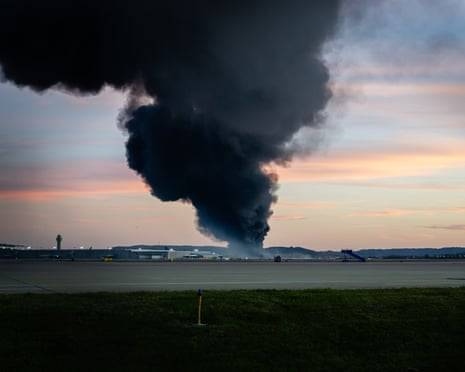
A federal investigator said a UPS cargo plane's left wing caught fire and an engine fell off shortly before it crashed and exploded into a fireball in Louisville on Tuesday night, killing at least 11 people and injuring 15 with some people still unaccounted for.
At least 28 National Transportation Safety Board agents arrived at the site in Kentucky and began searching for clues about the possible cause of the disaster, which saw the UPS plane crash shortly after takeoff at the Louisville Muhammad Ali international airport, leaving behind a fiery trail of destruction on the ground and a huge plume of black smoke.
After the plane was cleared for takeoff, a large fire developed in the left wing, said agent Todd Inman of the NTSB, which is leading the investigation. The plane gained sufficient altitude to clear the fence at the end of the runway before crashing off airport property, Inman told reporters.
Airport security video "shows the left engine detaching from the wing during the takeoff roll", he said.
The cockpit voice recorder and data recorder were recovered, and the engine was discovered on the airfield, Inman said.
"There are a lot of different parts of this airplane in a lot of different places," he said, describing a debris field that stretched for half a mile.
The plane, a McDonnell Douglas MD-11, had three crew members onboard and crashed at about 5.15pm local time on Tuesday, according to the Federal Aviation Administration. It was bound for Honolulu.
So far, 11 deaths and at least 15 injuries have been reported, according to Andy Beshear, Kentucky's governor. He said in a social media post he expected the death toll to rise to 12 by end of day.
"The tough news continues today as the death toll in Louisville has now risen to at least 11, and I expect it to be 12 by end of the day," Beshear's post read. "Even harder news is that we believe one of those lost was a young child."
The UofL Health hospital system said it was treating 15 patients in relation to the crash, with two of them in critical condition at the hospital's burn center. Other injuries ranged from minor to severe burns, blast injuries, shrapnel injuries and smoke inhalation injuries.
"First responders have located nine total [dead] victims at the site of the UPS crash . We will continue to provide information as available," said Craig Greenberg, Louisville's mayor.
Beshear said officials did not expect to find any more victims and were moving from rescue to recovery mode. He said there were a handful of people investigators were still searching for that they hoped were not on site.
Four of those killed were not onboard the plane, said Brian O'Neill, the Louisville fire department chief.
Hundreds of firefighters have fanned out to deal with fires that erupted on the ground after the crash, although local leaders have asked the public to not move any debris and instead report it to help investigators piece together what happened.
"We have put together a form where residents can report debris in your yard," Greenberg posted on X. "We ask that residents do not touch or move any debris on your own."
Investigators will try to find out how a seemingly routine flight – the UPS hub at Louisville has 300 flights a day – went so badly wrong. Officials have said that there were no hazardous materials on the plane.
Videos taken by onlookers showed flames on the plane's left wing, with the aircraft then lifting off the ground before crashing and exploding into a huge fireball. Nearby residents reported hearing loud booms and witnessed flames in the sky and on the ground.
The amount of fuel on the plane would make a large explosion almost inevitable, Pablo Rojas, an aviation attorney, told the Associated Press. "There's very little to contain the flames and really the plane itself is almost acting like a bomb because of the amount of fuel," he said.
Mary Schiavo, a former Department of Transportation inspector general, analyzed video of the crash for CNN.
"[The parts] expel from that engine, and the centrifugal force from the engines, the blades spinning, and they can cut through the plane and cut fuel lines," Schiavo said of the parts. "That engine clearly came off of that plane before the final impact. The poor pilots could do nothing at that point."
The Louisville airport canceled all outbound flights following the crash. A shelter-in-place order surrounding the airport has now been reduced to a quarter-mile radius around the crash site.
Top Trump administration officials briefed members of the Senate and House of Representatives on Wednesday about strikes on alleged drug trafficking boats off Venezuela, after frustration in Congress about a lack of transparency about the operation.
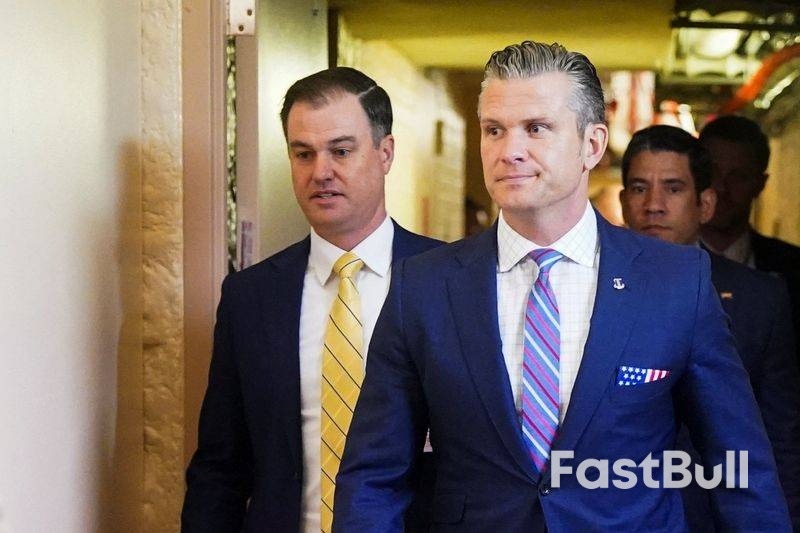
Secretary of State Marco Rubio and Secretary of Defense Pete Hegseth met with Republican and Democratic congressional leaders and senior members of national security committees for about an hour, discussing U.S. strikes on vessels in the Caribbean and Pacific that have killed dozens of people since early September.
President Donald Trump's administration insists those targeted were transporting drugs, without providing evidence or publicly explaining the legal justification for the decision to attack the boats rather than stop them and arrest those on board.
Several senators and House members who attended the briefing said the administration officials said the boats were carrying cocaine, not fentanyl, and explained their legal justification.
Some legal experts say the strikes may violate international law as well as U.S. laws against murder and prohibitions on assassination.
Trump's fellow Republicans said they were pleased with the briefing.
House Speaker Mike Johnson described the intelligence about the vessels as "exquisite," although he said the U.S. knew who had been on board the boats "almost to a person."
Asked to clarify, Johnson said: "What I know from what I've learned so far, we have high reliability. These are the cartels. These are the people involved in it. They are doing this deliberately. These are not people who are haphazardly on a boat. They are intending to traffic into the country, and it does great harm to the American people."
The strikes have raised tensions between Washington and Caracas, more so as Trump ordered a major military buildup in the region and said his administration will carry out strikes against drug-related targets inside Venezuela.
President Gustavo Petro, leader of long-time U.S. ally Colombia, has been feuding with Trump over the strikes, whose victims have included Colombians. Trump has imposed sanctions on him.
Senator Mark Warner, the top Senate intelligence Democrat, said the administration's failure to publicly explain its actions, including the legal justification, had damaged the confidence of the U.S. public and partners in Latin America.
"Kinetic strikes without actually interdicting and demonstrating to the American public that these are carrying drugs and full of bad guys, I think, is a huge mistake that undermines confidence in the administration's actions," Warner said.
Warner last week blasted the administration for holding a briefing on the strikes that excluded Democrats.

Lawmakers from both parties had slammed the Pentagon as recently as Tuesday for not briefing them on national security issues and said at times top defense officials appeared to be undermining Trump's own policies, in a rare bipartisan show of frustration with the administration.
The Pentagon, which Trump has renamed the Department of War, on Wednesday denied accusations that its top policy official, Elbridge Colby, was not fully briefing Congress on important national security issues, suggesting a widening rift between the agency and senators from both parties.
Key Points:
World Economic Forum President Borge Brende, during a visit to São Paulo, Brazil, highlighted potential global financial bubbles in cryptocurrency, AI, and government debt on November 6, 2025.
These warnings underscore potential systemic risks, emphasizing the need for vigilance as countries navigate growing debt, rapid technological adoption, and volatile cryptocurrency markets, potentially impacting global economic stability.
Borge Brende cautioned on November 6th in São Paulo about three potential market bubbles: cryptocurrency, AI, and debt. He underscored the significant risk these pose to global financial stability. Brende stated, "We could possibly see bubbles moving forward. One is a crypto bubble, second an AI bubble, and the third would be a debt bubble."
Brende's warning is crucial due to the potential widespread impacts on economies and markets. The attention to AI highlights the employment threats as companies like Amazon and Nestlé announce layoffs.
Brende's remarks come amid growing investments in artificial intelligence and cryptocurrencies, drawing comparisons to past 'bubble' events. With AI's rapid adoption, stress on white-collar job security increases. Government debt concerns also highlight long-term financial vulnerability, potentially affecting fiscal policies.
Did you know? The "Dot-com bubble" from 1999–2000 saw tech overvaluation similarly to the current AI trends, making parallels between historical trends and current technological investment risks more apparent.
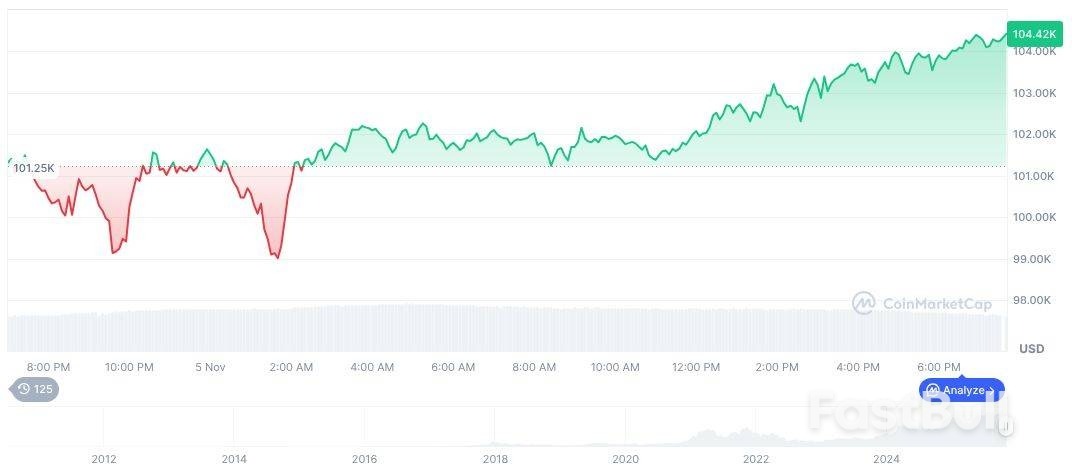
Bitcoin (BTC) recently traded at $103,899.85 with a market cap of $2.07 trillion, maintaining a 59.85% dominance, as per CoinMarketCap. Over 24 hours, BTC rose by 2.68%, but saw declines of 16.75% and 11.47% over 30 and 90 days, respectively. This data underlines the volatile nature of cryptocurrencies, amid Brende's warning of potential bubble dynamics.
Bitcoin(BTC), daily chart, screenshot on CoinMarketCap at 23:36 UTC on November 5, 2025. Source: CoinMarketCapThailand's longer tenor bonds are drawing in global investors after a sharp selloff last month as persistent deflation revives expectations of interest-rate cuts from the central bank.
Thai 10-year bonds are now stabilizing after plunging the most in over two years in October. That slump, which was the sharpest in emerging Asia last month, occurred when the Bank of Thailand defied market forecasts for a rate cut and kept policy unchanged.
Concern over heavy government debt issuance and weaker demand for the benchmark bond at a recent auction exacerbated the rout. However, the prospect of resumed rate cuts, contained inflation and ample cash levels in the banking system are now making Thai bonds appealing, according to M&G Investments.
There is "value emerging at the long-end" of the curve, Peerampa Janjumratsang, Singapore-based portfolio manager at the firm, said. Foreign investors are likely to accumulate Thai government bonds on weakness as they remain underweight on the debt, she said.
Foreign investors have been slow to purchase Thai bonds over the past year compared with historical averages, signaling more room for them to buy. Thai bonds received net inflows of $1.7 billion from foreign investors over the last year, which is 0.3 standard deviations below the five-year average.
This low level of foreign holdings could have spurred interest in the 10-year bond auction on Oct. 29. Demand was "led primarily by offshore investors," according to M&G's Janjumratsang. That's even as a gauge of overall bidding at the auction was the lowest since July.
Foreign bond investors participated in the auction as they still expect more rate cuts from the BOT due to the bearish economic outlook, said Poon Panichpibool, strategist at Krung Thai Bank Pcl.
Increased bond purchases by global investors may help temper any rise in yields should the government resort to additional debt sales to fund its stimulus programs, including a $1.4 billion spend to spur consumption. Onshore investors are overweight on local bonds and may be less inclined to buy them aggressively at current levels, M&G's Janjumratsang said.
Meanwhile, investors still expect the BOT to cut rates even as the government recently upgraded the nation's growth forecast.
While the nation's finance ministry recently lifted its growth forecast for this year to 2.4% from an earlier prediction of 2.2%, investors are less optimistic. Economists surveyed by Bloomberg see the Thai economy expanding by 2.1% this year, before the growth rate falls to 1.8% in 2026.
Investors' skepticism about the upgraded growth figures is reflected in their bond forecasts.
Thailand's 10-year yield is estimated to fall to 1.40% this quarter, according to a median estimate of strategists surveyed by Bloomberg. That represents a drop of around 30 basis points from the current level of about 1.7%.
Krung Thai Bank's Poon sees foreign investors buying Thai bonds at current levels. "I see the 10-year Thai yield at around 1.70% or higher as 'fairly valued' if the BOT delivers one more 25 basis point rate cut."
Key points:
U.S. Secretary of State Marco Rubio said on Wednesday he planned to visit the five Central Asian countries in the coming year, as he met their foreign ministers as part of a Trump administration charm offensive aimed at the resource-rich region.
The presidents of Kazakhstan, Kyrgyzstan, Tajikistan, Turkmenistan and Uzbekistan are set to meet U.S. President Donald Trump in Washington on Thursday for talks that are likely to include discussions of rare earths minerals and other resources in the Central Asian nations.
Rubio told a reception at the State Department that U.S. interests and those of the Central Asian states were aligned when it comes to working together to develop the countries' natural resources.
"You are looking to take the resources ... that God has blessed your nations with, and turn them into responsible development that allow you to diversify your economies," Rubio said.
"I personally intend to visit in the coming year," he added.
"All five (countries)," he said, "so I know it would probably be a week-long trip. So we've got to work on that and make that happen together."
Rich in minerals and energy, the five overwhelmingly Muslim countries of Central Asia remain closely tied economically to Russia, which ruled the region as part of the Soviet Union until 1991. Neighboring China also enjoys significant commercial influence.
Deputy Secretary of State Christopher Landau, who spoke before Rubio, said Trump had invited the five leaders to Washington as part of a personal push by the president to engage more actively with the region.
Landau and Sergio Gor, the U.S. ambassador to India and Trump's special envoy to Central Asia, visited Kazakhstan and Uzbekistan last week to prepare agreements to be announced during the leaders' visit.
"The opportunities are amazing - business opportunities. Many ways to partner there," Landau said.
Senator James Risch, a Republican, who also spoke at the reception, announced he would introduce a bill to Congress this week aimed at repealing the Jackson–Vanik trade rules introduced during the Cold War era that restrict U.S. trade with non-market economies.

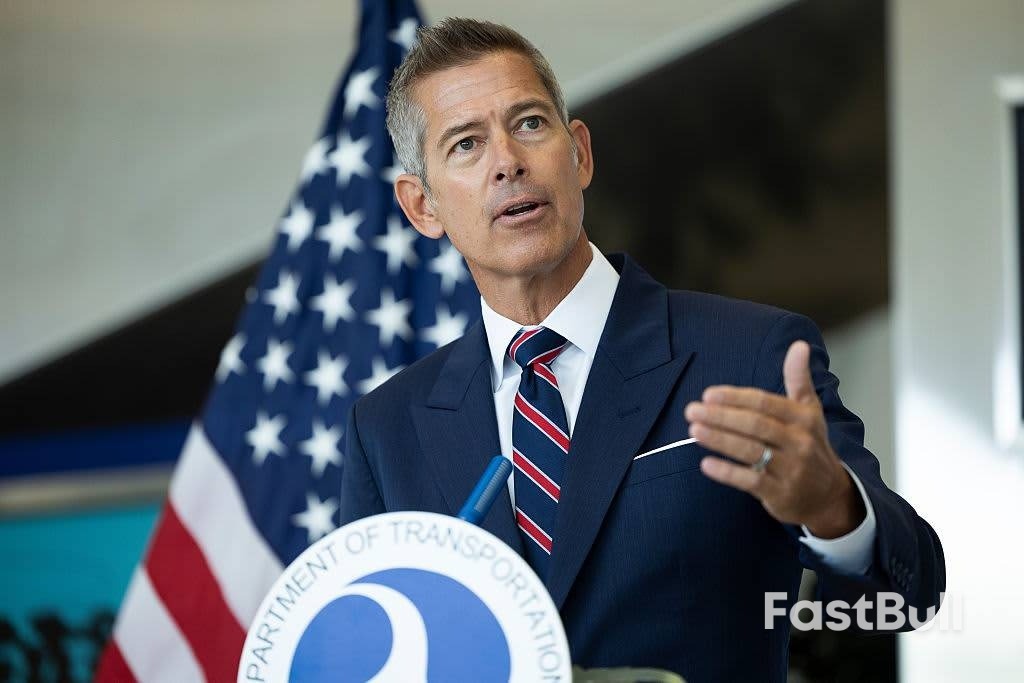
Transportation Secretary Sean Duffy announced Wednesday afternoon that he will be reducing flight capacity by 10% at 40 major airports starting on Friday morning.
It was not immediately clear which airports would be affected.
"This is proactive," Duffy said in a news conference.
Federal Aviation Administration Administrator Bryan Bedford said additional measures could be taken after the initial reduction.
"As we slice the data more granularly, we are seeing pressures build in a way that we don't feel if we allow it to go unchecked will allow us to continue to tell the public that we operate the safest airline system in the world," Bedford said on Wednesday.
Bedford added that the administration will be meeting with the airline community to decide how to move forward on implementing the reduction.
This is breaking news. Please refresh for updates.
White Label
Data API
Web Plug-ins
Poster Maker
Affiliate Program
The risk of loss in trading financial instruments such as stocks, FX, commodities, futures, bonds, ETFs and crypto can be substantial. You may sustain a total loss of the funds that you deposit with your broker. Therefore, you should carefully consider whether such trading is suitable for you in light of your circumstances and financial resources.
No decision to invest should be made without thoroughly conducting due diligence by yourself or consulting with your financial advisors. Our web content might not suit you since we don't know your financial conditions and investment needs. Our financial information might have latency or contain inaccuracy, so you should be fully responsible for any of your trading and investment decisions. The company will not be responsible for your capital loss.
Without getting permission from the website, you are not allowed to copy the website's graphics, texts, or trademarks. Intellectual property rights in the content or data incorporated into this website belong to its providers and exchange merchants.
Not Logged In
Log in to access more features

FastBull Membership
Not yet
Purchase
Log In
Sign Up