• Trade
  • Markets
  • Copy
  • Contests
  • News
  • 24/7
  • Calendar
  • Q&A
  • Chats
Trending
Screeners
SYMBOL
LAST
BID
ASK
HIGH
LOW
NET CHG.
%CHG.
SPREAD
SPX
S&P 500 Index
6827.42
6827.42
6827.42
6899.86
6801.80
-73.58
-1.07%
--
DJI
Dow Jones Industrial Average
48458.04
48458.04
48458.04
48886.86
48334.10
-245.98
-0.51%
--
IXIC
NASDAQ Composite Index
23195.16
23195.16
23195.16
23554.89
23094.51
-398.69
-1.69%
--
USDX
US Dollar Index
97.950
98.030
97.950
98.500
97.950
-0.370
-0.38%
--
EURUSD
Euro / US Dollar
1.17394
1.17409
1.17394
1.17496
1.17192
+0.00011
+ 0.01%
--
GBPUSD
Pound Sterling / US Dollar
1.33707
1.33732
1.33707
1.33997
1.33419
-0.00148
-0.11%
--
XAUUSD
Gold / US Dollar
4299.39
4299.39
4299.39
4353.41
4257.10
+20.10
+ 0.47%
--
WTI
Light Sweet Crude Oil
57.233
57.485
57.233
58.011
56.969
-0.408
-0.71%
--

Community Accounts

Signal Accounts
--
Profit Accounts
--
Loss Accounts
--
View More

Become a signal provider

Sell trading signals to earn additional income

View More

Guide to Copy Trading

Get started with ease and confidence

View More

Signal Accounts for Members

All Signal Accounts

Best Return
  • Best Return
  • Best P/L
  • Best MDD
Past 1W
  • Past 1W
  • Past 1M
  • Past 1Y

All Contests

  • All
  • Trump Updates
  • Recommend
  • Stocks
  • Cryptocurrencies
  • Central Banks
  • Featured News
Top News Only
Share

USA Embassy In Lithuania: Maria Kalesnikava Is Not Going To Vilnius

Share

USA Embassy In Lithuania: Other Prisoners Are Being Sent From Belarus To Ukraine

Share

Ukraine President Zelenskiy: Five Ukrainians Released By Belarus In US-Brokered Deal

Share

USA Vilnius Embassy: USA Stands Ready For "Additional Engagement With Belarus That Advances USA Interests"

Share

USA Vilnius Embassy: Belarus, USA, Other Citizens Among The Prisoners Released Into Lithuania

Share

USA Vilnius Embassy: USA Will Continue Diplomatic Efforts To Free The Remaining Political Prisoners In Belarus

Share

USA Vilnius Embassy: Belarus Releases 123 Prisoners Following Meeting Of President Trump's Envoy Coale And Belarus President Lukashenko

Share

USA Vilnius Embassy: Masatoshi Nakanishi, Aliaksandr Syrytsa Are Among The Prisoners Released By Belarus

Share

USA Vilnius Embassy: Maria Kalesnikava And Viktor Babaryka Are Among The Prisoners Released By Belarus

Share

USA Vilnius Embassy: Nobel Peace Prize Laureate Ales Bialiatski Is Among The Prisoners Released By Belarus

Share

Belarusian Presidential Administration Telegram Channel: Lukashenko Has Pardoned 123 Prisoners As Part Of Deal With US

Share

Two Local Syrian Officials: Joint US-Syrian Military Patrol In Central Syria Came Under Fire From Unknown Assailants

Share

Israeli Military Says It Targeted 'Key Hamas Terrorist' In Gaza City

Share

Rwanda's Actions In Eastern Drc Are A Clear Violation Of Washington Accords Signed By President Trump - Secretary Of State Rubio

Share

Israeli Military Issues Evacuation Warning In Southern Lebanon Village Ahead Of Strike - Spokesperson On X

Share

Belarusian State Media Cites US Envoy Coale As Saying He Discussed Ukraine And Venezuela With Lukashenko

Share

Belarusian State Media Cites US Envoy Coale As Saying That US Removes Sanctions On Belarusian Potassium

Share

Thai Prime Minister: No Ceasefire Agreement With Cambodia

Share

US, Ukraine To Discuss Ceasefire In Berlin Ahead Of European Summit

Share

Incoming Czech Prime Minister Babis: Czech Republic Will Not Take On Guarantees For Ukraine Financing, European Commission Must Find Alternatives

TIME
ACT
FCST
PREV
U.K. Trade Balance Non-EU (SA) (Oct)

A:--

F: --

P: --

U.K. Trade Balance (Oct)

A:--

F: --

P: --

U.K. Services Index MoM

A:--

F: --

P: --

U.K. Construction Output MoM (SA) (Oct)

A:--

F: --

P: --

U.K. Industrial Output YoY (Oct)

A:--

F: --

P: --

U.K. Trade Balance (SA) (Oct)

A:--

F: --

P: --

U.K. Trade Balance EU (SA) (Oct)

A:--

F: --

P: --

U.K. Manufacturing Output YoY (Oct)

A:--

F: --

P: --

U.K. GDP MoM (Oct)

A:--

F: --

P: --

U.K. GDP YoY (SA) (Oct)

A:--

F: --

P: --

U.K. Industrial Output MoM (Oct)

A:--

F: --

P: --

U.K. Construction Output YoY (Oct)

A:--

F: --

P: --

France HICP Final MoM (Nov)

A:--

F: --

P: --

China, Mainland Outstanding Loans Growth YoY (Nov)

A:--

F: --

P: --

China, Mainland M2 Money Supply YoY (Nov)

A:--

F: --

P: --

China, Mainland M0 Money Supply YoY (Nov)

A:--

F: --

P: --

China, Mainland M1 Money Supply YoY (Nov)

A:--

F: --

P: --

India CPI YoY (Nov)

A:--

F: --

P: --

India Deposit Gowth YoY

A:--

F: --

P: --

Brazil Services Growth YoY (Oct)

A:--

F: --

P: --

Mexico Industrial Output YoY (Oct)

A:--

F: --

P: --

Russia Trade Balance (Oct)

A:--

F: --

P: --

Philadelphia Fed President Henry Paulson delivers a speech
Canada Building Permits MoM (SA) (Oct)

A:--

F: --

P: --

Canada Wholesale Sales YoY (Oct)

A:--

F: --

P: --

Canada Wholesale Inventory MoM (Oct)

A:--

F: --

P: --

Canada Wholesale Inventory YoY (Oct)

A:--

F: --

P: --

Canada Wholesale Sales MoM (SA) (Oct)

A:--

F: --

P: --

Germany Current Account (Not SA) (Oct)

A:--

F: --

P: --

U.S. Weekly Total Rig Count

A:--

F: --

P: --

U.S. Weekly Total Oil Rig Count

A:--

F: --

P: --

Japan Tankan Large Non-Manufacturing Diffusion Index (Q4)

--

F: --

P: --

Japan Tankan Small Manufacturing Outlook Index (Q4)

--

F: --

P: --

Japan Tankan Large Non-Manufacturing Outlook Index (Q4)

--

F: --

P: --

Japan Tankan Large Manufacturing Outlook Index (Q4)

--

F: --

P: --

Japan Tankan Small Manufacturing Diffusion Index (Q4)

--

F: --

P: --

Japan Tankan Large Manufacturing Diffusion Index (Q4)

--

F: --

P: --

Japan Tankan Large-Enterprise Capital Expenditure YoY (Q4)

--

F: --

P: --

U.K. Rightmove House Price Index YoY (Dec)

--

F: --

P: --

China, Mainland Industrial Output YoY (YTD) (Nov)

--

F: --

P: --

China, Mainland Urban Area Unemployment Rate (Nov)

--

F: --

P: --

Saudi Arabia CPI YoY (Nov)

--

F: --

P: --

Euro Zone Industrial Output YoY (Oct)

--

F: --

P: --

Euro Zone Industrial Output MoM (Oct)

--

F: --

P: --

Canada Existing Home Sales MoM (Nov)

--

F: --

P: --

Euro Zone Total Reserve Assets (Nov)

--

F: --

P: --

U.K. Inflation Rate Expectations

--

F: --

P: --

Canada National Economic Confidence Index

--

F: --

P: --

Canada New Housing Starts (Nov)

--

F: --

P: --

U.S. NY Fed Manufacturing Employment Index (Dec)

--

F: --

P: --

U.S. NY Fed Manufacturing Index (Dec)

--

F: --

P: --

Canada Core CPI YoY (Nov)

--

F: --

P: --

Canada Manufacturing Unfilled Orders MoM (Oct)

--

F: --

P: --

Canada Manufacturing New Orders MoM (Oct)

--

F: --

P: --

Canada Core CPI MoM (Nov)

--

F: --

P: --

Canada Manufacturing Inventory MoM (Oct)

--

F: --

P: --

Canada CPI YoY (Nov)

--

F: --

P: --

Canada CPI MoM (Nov)

--

F: --

P: --

Canada CPI YoY (SA) (Nov)

--

F: --

P: --

Canada Core CPI MoM (SA) (Nov)

--

F: --

P: --

Q&A with Experts
    • All
    • Chatrooms
    • Groups
    • Friends
    Connecting
    .
    .
    .
    Type here...
    Add Symbol or Code

      No matching data

      All
      Trump Updates
      Recommend
      Stocks
      Cryptocurrencies
      Central Banks
      Featured News
      • All
      • Russia-Ukraine Conflict
      • Middle East Flashpoint
      • All
      • Russia-Ukraine Conflict
      • Middle East Flashpoint
      Search
      Products

      Charts Free Forever

      Chats Q&A with Experts
      Screeners Economic Calendar Data Tools
      Membership Features
      Data Warehouse Market Trends Institutional Data Policy Rates Macro

      Market Trends

      Market Sentiment Order Book Forex Correlations

      Top Indicators

      Charts Free Forever
      Markets

      News

      News Analysis 24/7 Columns Education
      From Institutions From Analysts
      Topics Columnists

      Latest Views

      Latest Views

      Trending Topics

      Top Columnists

      Latest Update

      Signals

      Copy Rankings Latest Signals Become a signal provider AI Rating
      Contests
      Brokers

      Overview Brokers Assessment Rankings Regulators News Claims
      Broker listing Forex Brokers Comparison Tool Live Spread Comparison Scam
      Q&A Complaint Scam Alert Videos Tips to Detect Scam
      More

      Business
      Events
      Careers About Us Advertising Help Center

      White Label

      Data API

      Web Plug-ins

      Affiliate Program

      Awards Institution Evaluation IB Seminar Salon Event Exhibition
      Vietnam Thailand Singapore Dubai
      Fans Party Investment Sharing Session
      FastBull Summit BrokersView Expo
      Recent Searches
        Top Searches
          Markets
          News
          Analysis
          User
          24/7
          Economic Calendar
          Education
          Data
          • Names
          • Latest
          • Prev

          View All

          No data

          Scan to Download

          Faster Charts, Chat Faster!

          Download App
          English
          • English
          • Español
          • العربية
          • Bahasa Indonesia
          • Bahasa Melayu
          • Tiếng Việt
          • ภาษาไทย
          • Français
          • Italiano
          • Türkçe
          • Русский язык
          • 简中
          • 繁中
          Open Account
          Search
          Products
          Charts Free Forever
          Markets
          News
          Signals

          Copy Rankings Latest Signals Become a signal provider AI Rating
          Contests
          Brokers

          Overview Brokers Assessment Rankings Regulators News Claims
          Broker listing Forex Brokers Comparison Tool Live Spread Comparison Scam
          Q&A Complaint Scam Alert Videos Tips to Detect Scam
          More

          Business
          Events
          Careers About Us Advertising Help Center

          White Label

          Data API

          Web Plug-ins

          Affiliate Program

          Awards Institution Evaluation IB Seminar Salon Event Exhibition
          Vietnam Thailand Singapore Dubai
          Fans Party Investment Sharing Session
          FastBull Summit BrokersView Expo

          Japan to Seek Feedback on Bond Issuance Adjustments to Address Market Volatility

          Gerik

          Economic

          Bond

          Summary:

          Japan's Finance Ministry will engage with market players later today to discuss potential changes to its bond issuance strategy, aiming to address recent market turbulence and a rise in bond yields...

          Reducing Super-Long Bond Issuance to Stabilize the Market

          The Japanese Finance Ministry is set to propose cutting the issuance of 20-, 30-, and 40-year bonds by ¥100 billion ($690 million) per auction, effective through March 2026. The meeting, scheduled for 4 p.m. in Tokyo, will involve discussions with primary dealers to seek feedback on the proposed reductions. The move comes in response to a significant rise in yields on super-long bonds since April, which has caused turbulence in the bond market and spilled over into global financial markets. The ministry plans to offset these reductions by increasing the issuance of 2-year and shorter-dated bonds.
          The proposal for a ¥300 billion reduction in the combined issuance of super-long-term bonds per auction is seen by market participants as essential to restoring balance in the market. If the reduction is smaller than expected, investors fear it could lead to a selloff and further spikes in yields. Analysts like Naoya Hasegawa of Okasan Securities believe that a ¥100 billion cut per bond maturity, along with similar reductions in liquidity enhancement auctions, would help avoid disappointing the market.
          Recent bond sales have shown strong demand for intermediate-term notes, which helped push yields down in Tokyo’s bond market. However, the market remains on edge, awaiting confirmation of the proposed adjustments and the potential for further policy actions. The recent spike in yields has been attributed to the Bank of Japan's reduced purchases of government bonds, after it scaled back its quantitative easing program.

          Challenges in the Bond Market and the BOJ’s Role

          The rise in bond yields has been exacerbated by the Bank of Japan's withdrawal from the bond market, which had previously been a major buyer of government debt. Since last summer, the BOJ has significantly reduced its bond purchases, leaving a gap in demand that has not been filled by private-sector banks and life insurers. This gap has contributed to volatility in the bond market, with yields spiking, especially on longer-term bonds.
          To mitigate this issue, the BOJ has announced it will slow its bond market withdrawal starting in April 2026, reducing its quarterly bond purchases from ¥400 billion to ¥200 billion. This move is expected to provide some support for bond prices and demand over the longer term.

          Japan’s Fiscal Challenges and Bond Market Outlook

          Japan remains heavily reliant on bond issuance to finance its government spending, which has been a cause for concern due to its high debt-to-GDP ratio of 232.7%. This ratio remains the highest among developed economies, and as a result, Japan faces significant fiscal challenges. Debt-servicing costs for the country account for a substantial portion of the 2025 fiscal budget, further increasing vulnerabilities to rising yields.
          The Finance Ministry is also facing political pressure ahead of Japan's national election in July. Proposals by political parties, including cash handouts and a reduction in the national sales tax, could lead to higher government spending, which may require additional bond issuance. These political measures are contributing to the broader concerns about fiscal sustainability and the stability of the JGB market.
          The Japanese Finance Ministry’s proposed adjustments to its bond issuance plan reflect its efforts to stabilize the bond market amid rising yields and increased market volatility. The success of these adjustments will depend on restoring balance in supply and demand, especially as the Bank of Japan continues to taper its bond purchases. Investors will be closely watching the ministry’s discussions with primary dealers for further clarity on these plans, as Japan’s high debt levels and fiscal challenges continue to pose risks to the stability of the government bond market.

          Source: Bloomberg

          To stay updated on all economic events of today, please check out our Economic calendar
          Risk Warnings and Disclaimers
          You understand and acknowledge that there is a high degree of risk involved in trading. Following any strategies or investment methods may lead to potential losses. The content on the site is provided by our contributors and analysts for information purposes only. You are solely responsible for determining whether any trading assets, securities, strategy, or any other product is suitable for investing based on your own investment objectives and financial situation.
          Add to Favorites
          Share

          Brent Futures Down Nearly $2 After U.S. Delays Decision On Direct Iran Involvement

          Devin

          Economic

          Political

          Brent crude prices pared gains from the previous session and fell nearly $2 on Friday after the White House delayed a decision on U.S. involvement in the Israel-Iran conflict, but they were still poised for a third straight week in the black.
          Brent crude futures fell $1.89, or 2.4%, to $76.96 a barrel by 0255 GMT. On a weekly basis, it was up 3.8%.
          The U.S. West Texas Intermediate crude for July - which did not settle on Thursday as it was a U.S. holiday and expires on Friday - was up 53 cents, or 0.7%, to $75.67. The more liquid WTI for August rose 0.2%, or 17 cents to $73.67.
          Prices jumped almost 3% on Thursday as Israel bombed nuclear targets in Iran, and Iran fired missiles and drones at Israel after hitting an Israeli hospital overnight. The week-old war between Israel and Iran showed no signs of either side backing down.
          Brent futures trimmed previous session gains following the White House's comments that President Donald Trump will decide whether the U.S. will get involved in the Israel-Iran conflict in the next two weeks.
          "Oil prices surged amid fears of increased U.S. involvement in Israel's conflict with Iran. However, the White House press secretary later suggested there was still time for de-escalation," said Phil Flynn, analyst at The Price Futures Group.
          Iran is the third-largest producer among members of the Organization of the Petroleum Exporting Countries, extracting about 3.3 million barrels per day of crude oil.
          About 18 million to 21 million bpd of oil and oil products move through the Strait of Hormuz along Iran's southern coast, and there is widespread concern the fighting could disrupt trade flows in a blow to supplies.
          "The "two-week deadline" is a tactic Trump has used in other key decisions. Often these deadlines expire without concrete action,.. which would see the crude oil price remain elevated and potentially build on recent gains," said Tony Sycamore, analyst at IG.

          Source: Reuters

          To stay updated on all economic events of today, please check out our Economic calendar
          Risk Warnings and Disclaimers
          You understand and acknowledge that there is a high degree of risk involved in trading. Following any strategies or investment methods may lead to potential losses. The content on the site is provided by our contributors and analysts for information purposes only. You are solely responsible for determining whether any trading assets, securities, strategy, or any other product is suitable for investing based on your own investment objectives and financial situation.
          Add to Favorites
          Share

          Dollar Set for Strong Weekly Gain Amid Geopolitical Tensions and Safe-Haven Demand

          Gerik

          Economic

          Forex

          Geopolitical Uncertainty and Its Impact on the Dollar

          The dollar index, which compares the U.S. currency against a basket of six major currencies, is set to rise by 0.5% this week. The escalation of the Israel-Iran conflict has heightened global market anxiety, with concerns mounting over potential U.S. involvement. The air battle between the two nations has caused disruptions, especially in oil markets, which, in turn, have sparked inflationary fears. The U.S. President, Donald Trump, is expected to make a decision within two weeks regarding U.S. participation in the war, further weighing on global markets.
          The conflict’s impact on oil prices has added a layer of complexity for central banks, many of which are already grappling with inflation and growth concerns. Rising oil prices exacerbate inflation uncertainty at a time when economic growth is showing signs of slowing down. This has left central banks with a difficult balancing act: whether to ease policies to support economic growth or to hold rates to avoid fueling inflation.

          European and Asian Currency Movements

          The euro inched up by 0.16% to $1.151, while the dollar weakened slightly against the yen, falling 0.17% to 145.23 yen. The yen's strength was also supported by hotter-than-expected inflation data in Japan, which has kept the market's expectations for interest rate hikes intact. Recent minutes from the Bank of Japan’s policy meeting indicated that policymakers are determined to continue raising interest rates, which remain at historically low levels.
          The Swiss franc remained stable at 0.816 per dollar but was set for its largest weekly drop since mid-April, following a rate cut by the Swiss National Bank (SNB), which reduced borrowing costs to 0%. This move added to the currency's weakness.
          Risk-Related Currencies and the Fed’s Influence on the Dollar
          Currencies more closely linked to risk sentiment, such as the Australian and New Zealand dollars, held steady, while the British pound remained little changed at $1.34. The U.S. Federal Reserve's policy stance has further bolstered the dollar. Although the Fed reaffirmed its forecast for two rate cuts this year, Chairman Jerome Powell's cautious remarks have been interpreted as a ‘hawkish tilt,’ signaling a potentially stronger dollar.
          Meanwhile, the Norwegian krone experienced an unexpected 25-basis-point interest rate cut by Norges Bank, leading to a more than 1% decline against the dollar this week. This rate cut caught markets off guard and weighed on the krone's performance.

          U.S. Tariff Concerns and Its Effect on the Dollar

          While geopolitical risks have dominated the market this week, concerns about U.S. tariffs and their potential impact on costs, corporate margins, and global growth continue to simmer. U.S. President Trump's tariff deadline in early July is approaching, and sources have indicated that European officials are preparing for a baseline 10% reciprocal tariff rate in any trade deal between the U.S. and the EU. These trade tensions add another layer of complexity to the dollar's trajectory.
          The dollar is poised for its strongest weekly performance in over a month, driven by geopolitical uncertainties and its status as a safe-haven currency. While rising oil prices and inflationary concerns have added to market volatility, the dollar's appeal remains robust as investors seek refuge amid global tensions. With the U.S. Federal Reserve’s cautious stance on interest rates and ongoing tariff concerns, the dollar’s strength is likely to persist in the short term, even as broader economic challenges loom.

          Source: Reuters

          To stay updated on all economic events of today, please check out our Economic calendar
          Risk Warnings and Disclaimers
          You understand and acknowledge that there is a high degree of risk involved in trading. Following any strategies or investment methods may lead to potential losses. The content on the site is provided by our contributors and analysts for information purposes only. You are solely responsible for determining whether any trading assets, securities, strategy, or any other product is suitable for investing based on your own investment objectives and financial situation.
          Add to Favorites
          Share

          Stocks Struggle Amid Geopolitical Tensions, Oil Rises for Third Week as Trump Weighs U.S. Action on Iran

          Gerik

          Economic

          Middle East Situation

          Oil Prices Poised for Third Consecutive Weekly Gain

          Brent crude oil experienced a 2% decline on Friday, settling at $77.22 per barrel, but remained on track for a solid weekly gain of 4%, following a strong 12% surge the previous week. The rise in oil prices comes amid intensifying conflict between Israel and Iran. The White House stated that U.S. President Donald Trump would decide within two weeks whether to involve the U.S. in the conflict, a move that has caused significant debate within the political landscape. The potential for U.S. action, along with the disruption in Middle Eastern energy flows, has kept oil prices elevated.
          The ongoing Israel-Iran conflict has seen Israel bomb Iranian nuclear targets, while Iran retaliated by launching missiles and drones at Israel, signaling no immediate resolution to the situation. Although the U.S. has not made a definitive move, the looming two-week deadline for Trump's decision has added to the uncertainty in markets. Despite the tension, analysts like Tony Sycamore of IG caution that the deadline could pass without concrete action, as seen in previous instances involving Russia, Ukraine, and trade tariffs.

          Asian Markets Struggle as U.S. Markets Remain Closed

          In Asia, stock markets were hesitant, with major indices struggling to find direction. U.S. markets were closed for the Juneteenth holiday, leaving Asian markets without clear guidance. Nasdaq futures and S&P 500 futures were both down by 0.3%, while the MSCI index of Asia-Pacific shares outside Japan inched up by 0.1%, though it was still set for a weekly loss of 1%. Japan’s Nikkei index dropped by 0.2%, while China’s blue chips rose by 0.3%, and Hong Kong’s Hang Seng gained 0.5%.
          In the currency markets, the U.S. dollar weakened by 0.2% to 145.17 yen, following a rise in Japan’s core inflation, which reached a two-year high in May. This increase in inflation kept pressure on the Bank of Japan to reconsider its interest rate stance, although investors anticipate no rate hikes from the BOJ until December.
          The U.S. bond market opened on a subdued note, with the 10-year Treasury bond yield remaining flat at 4.389%, and the two-year yield slipping by 2 basis points to 3.925%. Globally, central banks were active, with the Swiss National Bank cutting rates to zero and hinting at the possibility of negative rates, while the Bank of England opted for a steady policy stance, acknowledging the need for further easing. Norway’s central bank surprised markets by cutting rates for the first time since 2020.
          Gold prices eased by 0.2%, trading at $3,363 per ounce, and were set for a weekly loss of 2%. Despite the slight dip, gold prices remained elevated compared to earlier in the year, continuing to be a safe-haven asset in uncertain times.
          While stock markets in Asia struggled to find direction amid rising geopolitical risks, oil prices continued to climb, benefiting from the Israel-Iran conflict. With geopolitical tensions and central bank policies driving market volatility, investors are closely watching the unfolding situation in the Middle East and potential decisions by the U.S. on its involvement in the conflict. The markets' cautious mood, combined with fluctuating oil and gold prices, highlights the ongoing uncertainties in global financial markets.

          Source: Reuters

          To stay updated on all economic events of today, please check out our Economic calendar
          Risk Warnings and Disclaimers
          You understand and acknowledge that there is a high degree of risk involved in trading. Following any strategies or investment methods may lead to potential losses. The content on the site is provided by our contributors and analysts for information purposes only. You are solely responsible for determining whether any trading assets, securities, strategy, or any other product is suitable for investing based on your own investment objectives and financial situation.
          Add to Favorites
          Share

          U.S. Establishes Bitcoin As Strategic Reserve Asset

          Kevin Du

          Cryptocurrency

          • U.S. government establishes Bitcoin as a strategic reserve asset.

          • Bitcoin treated similarly to gold in reserves.

          • Future implications for altcoin recognition as reserve assets.

          U.S. Establishes Strategic Bitcoin Reserve

          President Trump signed an order on March 6, 2025, establishing the U.S. Strategic Bitcoin Reserve.

          This positions Bitcoin alongside traditional assets, impacting market perceptions and institutional roles.

          U.S. Establishes Strategic Bitcoin Reserve

          President Trump with the Treasury, initiated the Strategic Bitcoin Reserve, marking an official shift in U.S. reserve strategy. This action parallels traditional gold reserves, aligning with prior digital asset reviews.

          "The United States will not sell bitcoin deposited into this Strategic Bitcoin Reserve, which will be maintained as a store of reserve assets." - President Donald J. Trump

          The U.S. Treasury and Department of Commerce are tasked with augmenting the reserve budget-neutrally. Bitcoin is now seen as a sovereign asset, setting a global precedent.

          Bitcoin's Market Value Set to Soar

          The move drastically reduces Bitcoin's circulating supply, potentially raising its value. Institutional confidence in Bitcoin's store-of-value role has surged, contrasting with altcoin perspectives.

          The new reserve strategy may bolster Bitcoin's market status while reinforcing its geopolitical importance. Other cryptocurrencies continue to play peripheral roles without government backing.

          Bitcoin's Shift Mirrors Historical Gold Standard

          Bitcoin's elevation mirrors the gold standard's historical impact. ETF approvals in 2024 highlighted its rising institutional appeal, but altcoins lack similar affirmative governmental steps.

          Experts predict Bitcoin's increased scarcity may boost its valuation. Historical trends suggest altcoins are unlikely to achieve store-of-value recognition without further institutional endorsements.

          Source: CryptoSlate

          Risk Warnings and Disclaimers
          You understand and acknowledge that there is a high degree of risk involved in trading. Following any strategies or investment methods may lead to potential losses. The content on the site is provided by our contributors and analysts for information purposes only. You are solely responsible for determining whether any trading assets, securities, strategy, or any other product is suitable for investing based on your own investment objectives and financial situation.
          Add to Favorites
          Share

          Binance Futures To Launch New Crypto Contracts With 50x Leverage

          Samantha Luan

          Cryptocurrency

          • Main event, leadership changes, market impact, financial shifts, or expert insights.

          • Launch offers 50x leverage on BTC, ETH, BNB, XRP, SOL.

          • High-leverage trading impacts market volatility and liquidity dynamics.

          Binance Unveils 50x Leverage Crypto Contracts

          Binance Futures plans to launch new quarterly 1226 contracts featuring BTC, ETH, BNB, XRP, and SOL after June 27, 2025. This offering will include up to 50x leverage for traders. This move aims to enhance capital efficiency and exposure for traders. Market implications include increased liquidity and volatility, particularly around the launch date.

          Binance Unveils 50x Leverage Crypto Contracts

          Binance Futures has announced the launch of its USD-denominated and coin-margined quarterly 1226 contracts, setting the stage for significant engagement. The contracts, offering up to 50x leverage, span BTC, ETH, BNB, XRP, and SOL, and are available 24/7. The new contracts are designed to push liquidity and engage active traders, aligning with Binance's strategy of expanding its derivatives offerings. Market anticipation suggests a potential surge in trading volumes, as noted in previous launches.

          While key leaders have yet to comment publicly on this new initiative, historical trends show Binance's consistent focus on expanding trading products with advanced leverage features.

          While key leaders have yet to comment publicly on this new initiative, historical trends show Binance's consistent focus on expanding trading products with advanced leverage features.

          Market Data Overview

          Did you know? Binance's historical contract launches often lead to short-lived volume spikes in the cryptos concerned, particularly notable during initial release hours.

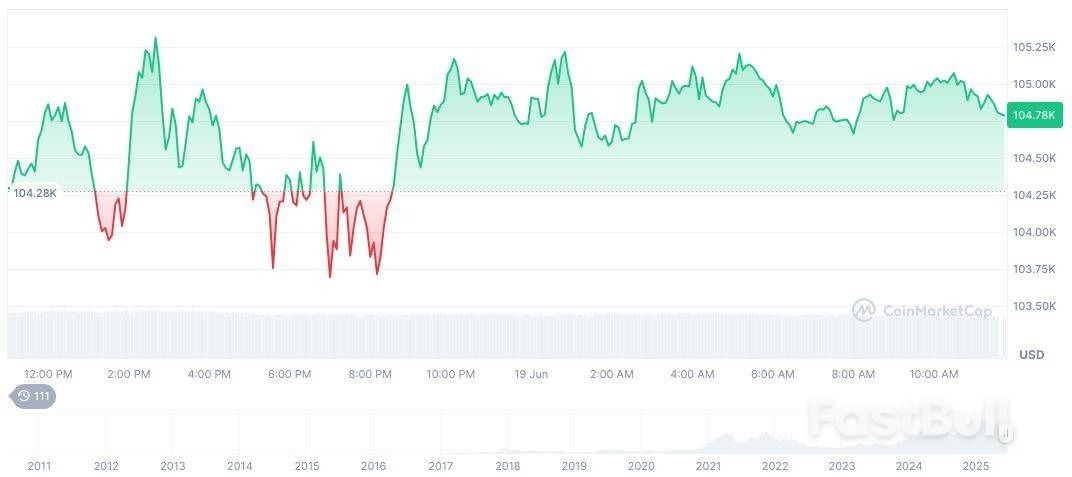
          Bitcoin (BTC) is currently priced at $104,588.66 with a 24-hour volume of $36.56 billion, marking a 24.70% drop. Market cap stands at $2.08 trillion, with circulating supply at 19.88 million. Notably, its 90-day change is a gain of 24.28%, highlighting price volatility.

          Binance Futures To Launch New Crypto Contracts With 50x Leverage_1 Bitcoin(BTC), daily chart, screenshot on CoinMarketCap at 03:15 UTC on June 20, 2025. Source: CoinMarketCap.

          Data from CoinMarketCap indicates Bitcoin's market dominance at 64.06%, suggesting robust investor interest despite fluctuations. The Coincu research team anticipates the new Binance contracts to potentially drive significant shifts in derivative trading patterns across these assets. The provision of 50x leverage may amplify speculative trading. Additionally, the ongoing absence of commentary from key opinion leaders points to a quiet yet pivotal market shift.

          Source: CryptoSlate

          Risk Warnings and Disclaimers
          You understand and acknowledge that there is a high degree of risk involved in trading. Following any strategies or investment methods may lead to potential losses. The content on the site is provided by our contributors and analysts for information purposes only. You are solely responsible for determining whether any trading assets, securities, strategy, or any other product is suitable for investing based on your own investment objectives and financial situation.
          Add to Favorites
          Share

          Gold on Track for First Weekly Drop in Three as Haven Demand Weakens

          Gerik

          Economic

          Commodity

          Easing Geopolitical Tensions and Federal Reserve’s Inflation Warning

          Gold futures dropped by 0.5%, trading near $3,353 per ounce on Friday, marking a decline of more than 2% for the week. This drop follows the easing of geopolitical tensions in the Middle East, particularly as U.S. President Donald Trump is expected to decide in the next two weeks whether to engage in military action against Iran. A potential de-escalation in the region has reduced fears of disruptions to energy flows and inflationary pressures, which typically drive demand for gold.
          Moreover, earlier in the week, Federal Reserve Chairman Jerome Powell highlighted inflation risks, particularly from the tariffs introduced under Trump’s administration. These concerns have increased the likelihood of fewer rate cuts by the Federal Reserve. Gold, which typically thrives in a low-interest-rate environment, has thus been under pressure, as higher rates tend to reduce the appeal of non-interest-bearing assets like bullion.

          Investor Preferences Shift Amid Elevated Gold Prices

          Despite the drop this week, gold is still up over 25% for the year and remains near the record levels just above $3,500 per ounce, achieved in April. However, some investors have started shifting their focus to platinum as an alternative safe-haven investment, given gold's elevated prices. This reflects concerns that the gold rally may be losing momentum.
          The outlook for gold prices remains divided among major Wall Street banks. Goldman Sachs has reaffirmed its bullish forecast for gold, predicting that it could reach $4,000 per ounce by next year. On the other hand, Citigroup has a more bearish outlook, expecting prices to fall below $3,000 by 2026. These differing predictions reflect the uncertainty surrounding both the geopolitical landscape and future monetary policies, making the short-term direction of gold prices difficult to predict.
          Gold is experiencing its first weekly decline in three weeks as the softening of geopolitical tensions and a more cautious Federal Reserve dampen demand for the precious metal. Although gold prices remain significantly higher than at the beginning of the year, concerns about future rate cuts and investor preference for other metals like platinum suggest that the rally may be losing steam. The contrasting forecasts from major banks further illustrate the uncertainty surrounding gold’s future performance, with some predicting further gains while others anticipate a retreat.

          Source: Bloomberg

          To stay updated on all economic events of today, please check out our Economic calendar
          Risk Warnings and Disclaimers
          You understand and acknowledge that there is a high degree of risk involved in trading. Following any strategies or investment methods may lead to potential losses. The content on the site is provided by our contributors and analysts for information purposes only. You are solely responsible for determining whether any trading assets, securities, strategy, or any other product is suitable for investing based on your own investment objectives and financial situation.
          Add to Favorites
          Share
          FastBull
          Copyright © 2025 FastBull Ltd

          728 RM B 7/F GEE LOK IND BLDG NO 34 HUNG TO RD KWUN TONG KLN HONG KONG

          TelegramInstagramTwitterfacebooklinkedin
          App Store Google Play Google Play
          Products
          Charts

          Chats

          Q&A with Experts
          Screeners
          Economic Calendar
          Data
          Tools
          Membership
          Features
          Function
          Markets
          Copy Trading
          Latest Signals
          Contests
          News
          Analysis
          24/7
          Columns
          Education
          Company
          Careers
          About Us
          Contact Us
          Advertising
          Help Center
          Feedback
          User Agreement
          Privacy Policy
          Business

          White Label

          Data API

          Web Plug-ins

          Poster Maker

          Affiliate Program

          Risk Disclosure

          The risk of loss in trading financial instruments such as stocks, FX, commodities, futures, bonds, ETFs and crypto can be substantial. You may sustain a total loss of the funds that you deposit with your broker. Therefore, you should carefully consider whether such trading is suitable for you in light of your circumstances and financial resources.

          No decision to invest should be made without thoroughly conducting due diligence by yourself or consulting with your financial advisors. Our web content might not suit you since we don't know your financial conditions and investment needs. Our financial information might have latency or contain inaccuracy, so you should be fully responsible for any of your trading and investment decisions. The company will not be responsible for your capital loss.

          Without getting permission from the website, you are not allowed to copy the website's graphics, texts, or trademarks. Intellectual property rights in the content or data incorporated into this website belong to its providers and exchange merchants.

          Not Logged In

          Log in to access more features

          FastBull Membership

          Not yet

          Purchase

          Become a signal provider
          Help Center
          Customer Service
          Dark Mode
          Price Up/Down Colors

          Log In

          Sign Up

          Position
          Layout
          Fullscreen
          Default to Chart
          The chart page opens by default when you visit fastbull.com