• Trade
  • Markets
  • Copy
  • Contests
  • News
  • 24/7
  • Calendar
  • Q&A
  • Chats
Trending
Screeners
SYMBOL
LAST
BID
ASK
HIGH
LOW
NET CHG.
%CHG.
SPREAD
SPX
S&P 500 Index
6966.29
6966.29
6966.29
6978.37
6917.65
+44.83
+ 0.65%
--
DJI
Dow Jones Industrial Average
49504.06
49504.06
49504.06
49571.41
49197.06
+237.96
+ 0.48%
--
IXIC
NASDAQ Composite Index
23671.34
23671.34
23671.34
23721.15
23426.48
+191.33
+ 0.81%
--
USDX
US Dollar Index
98.560
98.640
98.560
98.960
98.410
-0.300
-0.30%
--
EURUSD
Euro / US Dollar
1.16760
1.16767
1.16760
1.16956
1.16214
+0.00451
+ 0.39%
--
GBPUSD
Pound Sterling / US Dollar
1.34484
1.34491
1.34484
1.34689
1.33903
+0.00554
+ 0.41%
--
XAUUSD
Gold / US Dollar
4589.79
4590.20
4589.79
4601.04
4512.81
+80.64
+ 1.79%
--
WTI
Light Sweet Crude Oil
58.592
58.622
58.592
59.584
58.493
-0.049
-0.08%
--

Community Accounts

Signal Accounts
--
Profit Accounts
--
Loss Accounts
--
View More

Become a signal provider

Sell trading signals to earn additional income

View More

Guide to Copy Trading

Get started with ease and confidence

View More

Signal Accounts for Members

All Signal Accounts

Best Return
  • Best Return
  • Best P/L
  • Best MDD
Past 1W
  • Past 1W
  • Past 1M
  • Past 1Y

All Contests

  • All
  • Trump Updates
  • Recommend
  • Stocks
  • Cryptocurrencies
  • Central Banks
  • Featured News
Top News Only
Share

German Finance Minister To Die Zeit Newspaper: Transatlantic Partnership "Dissolving"

Share

Hungarian Central Bank Governor Varga: Asked About Dec Inflation, Will Focus On Services, Food Price Developments

Share

Ukraine Grain Exports As Of January 12

Share

Hungarian Central Bank Governor Varga: Wants To See More Pass-Through Of Forint Gains Into Inflation, Especially Consumer Durables

Share

Indian Rupee At 90.1550 Per USA Dollar As Of 3:30 P.M. Ist, Nearly Unchanged From 90.1625 Previous Close

Share

Statistics: Moldova's Inflation Slows To 6.8% Year-On-Year In December

Share

Hungarian Central Bank Governor Varga: Good Chance To See CPI Reaching 3% At Start Of 2026

Share

Goldman Sachs' Hatzius: My Expectation Is That FOMC Will Continue To Make Rate Decisions On Basis Of Mandate, Data

Share

Germany's Merz Floats Possibility Of EU-India Trade Deal By End Of January

Share

India's Nifty 50 Index Extends Gains, Last Up 0.5%

Share

Azerbaijan Exported 12.8 Bcm Of Natural Gas To Europe In 2025- Energy Ministry

Share

Azerbaijan Exported 23.1 Million T Of Oil In 2025 - Energy Ministry

Share

Azerbaijan Oil Output At 27.7 Million T In 2025 - Energy Ministry

Share

Reserve Bank Of India Governor Das: To Work In The Facility's Engineering Design Services (Feed), For Several High-Capacity Trains

Share

London Metal Exchange (LME): Copper Inventories Decreased By 1,750 Tons, Aluminum Inventories Decreased By 2,000 Tons, Nickel Inventories Decreased By 228 Tons, Zinc Inventories Decreased By 650 Tons, Lead Inventories Decreased By 1,275 Tons, And Tin Inventories Increased By 490 Tons

Share

Iran's Foreign Ministry Spokesperson Baghaei Says Communication Line With US Special Envoy Remains Open In Addition To Swiss Intermediary

Share

Ukraine Energy Firm Dtek Says Russia Attacked Energy Infrastructure In Ukraine's Southern Odesa Region Overnight

Share

US Dollar Reverses Earlier Rise Against Yen, Last Down 0.08% At 157.82

Share

Euro Rises Above 1.1683, Highest Since 7 January

Share

Hungary's November Industrial Output Fell By 5.4% Year-On-Year, More Than Expected

TIME
ACT
FCST
PREV
U.S. Average Hourly Wage MoM (SA) (Dec)

A:--

F: --

P: --
U.S. Average Weekly Working Hours (SA) (Dec)

A:--

F: --

P: --

U.S. New Housing Starts Annualized MoM (SA) (Oct)

A:--

F: --

P: --
U.S. Total Building Permits (SA) (Oct)

A:--

F: --

P: --

U.S. Building Permits MoM (SA) (Oct)

A:--

F: --

P: --

U.S. Annual New Housing Starts (SA) (Oct)

A:--

F: --

P: --
U.S. U6 Unemployment Rate (SA) (Dec)

A:--

F: --

P: --

U.S. Manufacturing Employment (SA) (Dec)

A:--

F: --

P: --
U.S. Labor Force Participation Rate (SA) (Dec)

A:--

F: --

P: --

U.S. Private Nonfarm Payrolls (SA) (Dec)

A:--

F: --

P: --
U.S. Unemployment Rate (SA) (Dec)

A:--

F: --

P: --
U.S. Nonfarm Payrolls (SA) (Dec)

A:--

F: --

P: --
U.S. Average Hourly Wage YoY (Dec)

A:--

F: --

P: --
Canada Part-Time Employment (SA) (Dec)

A:--

F: --

P: --

Canada Unemployment Rate (SA) (Dec)

A:--

F: --

P: --

Canada Labor Force Participation Rate (SA) (Dec)

A:--

F: --

P: --

U.S. Government Employment (Dec)

A:--

F: --

P: --

U.S. UMich Consumer Expectations Index Prelim (Jan)

A:--

F: --

P: --

U.S. UMich Consumer Sentiment Index Prelim (Jan)

A:--

F: --

P: --

U.S. UMich Current Economic Conditions Index Prelim (Jan)

A:--

F: --

P: --

U.S. UMich 1-Year-Ahead Inflation Expectations Prelim (Jan)

A:--

F: --

P: --

U.S. UMich 5-Year-Ahead Inflation Expectations Prelim YoY (Jan)

A:--

F: --

P: --

U.S. 5-10 Year-Ahead Inflation Expectations (Jan)

A:--

F: --

P: --

U.S. Weekly Total Oil Rig Count

A:--

F: --

P: --

U.S. Weekly Total Rig Count

A:--

F: --

P: --

China, Mainland M0 Money Supply YoY (Dec)

--

F: --

P: --

China, Mainland M1 Money Supply YoY (Dec)

--

F: --

P: --

China, Mainland M2 Money Supply YoY (Dec)

--

F: --

P: --

Indonesia Retail Sales YoY (Nov)

A:--

F: --

P: --

Euro Zone Sentix Investor Confidence Index (Jan)

A:--

F: --

P: --

India CPI YoY (Dec)

--

F: --

P: --

Germany Current Account (Not SA) (Nov)

--

F: --

P: --

Canada National Economic Confidence Index

--

F: --

P: --

U.S. Conference Board Employment Trends Index (SA) (Dec)

--

F: --

P: --

Russia CPI YoY (Dec)

--

F: --

P: --

Richmond Federal Reserve President Barkin delivered a speech.
U.S. 3-Year Note Auction Yield

--

F: --

P: --

U.S. 10-Year Note Auction Avg. Yield

--

F: --

P: --

New York Federal Reserve President Williams delivered a speech.
Japan Trade Balance (Customs Data) (SA) (Nov)

--

F: --

P: --

Japan Trade Balance (Nov)

--

F: --

P: --

U.K. BRC Overall Retail Sales YoY (Dec)

--

F: --

P: --

U.K. BRC Like-For-Like Retail Sales YoY (Dec)

--

F: --

P: --

Turkey Retail Sales YoY (Nov)

--

F: --

P: --

U.S. NFIB Small Business Optimism Index (SA) (Dec)

--

F: --

P: --

Brazil Services Growth YoY (Nov)

--

F: --

P: --

Canada Building Permits MoM (SA) (Nov)

--

F: --

P: --

U.S. CPI MoM (SA) (Dec)

--

F: --

P: --

U.S. CPI YoY (Not SA) (Dec)

--

F: --

P: --

U.S. Real Income MoM (SA) (Dec)

--

F: --

P: --

U.S. CPI MoM (Not SA) (Dec)

--

F: --

P: --

U.S. Core CPI (SA) (Dec)

--

F: --

P: --

U.S. Core CPI YoY (Not SA) (Dec)

--

F: --

P: --

U.S. Core CPI MoM (SA) (Dec)

--

F: --

P: --

U.S. Weekly Redbook Index YoY

--

F: --

P: --

U.S. New Home Sales Annualized MoM (Oct)

--

F: --

P: --

U.S. Annual Total New Home Sales (Oct)

--

F: --

P: --

U.S. Cleveland Fed CPI MoM (SA) (Dec)

--

F: --

P: --

China, Mainland Imports YoY (CNH) (Dec)

--

F: --

P: --

China, Mainland Trade Balance (CNH) (Dec)

--

F: --

P: --

China, Mainland Imports YoY (USD) (Dec)

--

F: --

P: --

Q&A with Experts
    • All
    • Chatrooms
    • Groups
    • Friends
    "SlowBear ⛅" recalled a message
    Kung Fu flag
    mukesh jha
    @mukesh jhahey, friend. Hahaha. You're back. How are you doing
    SlowBear ⛅ flag
    alpha45
    i have a question for swing traders, which is the preferrable entry tf ?
    @alpha45As a sing trade, i will say 2h and 4h are the most suitable timeframe for an entry
    Victor flag
    @alpha45In my opinion, the D1 timeframe remains the most popular among the swing forex trading community currently
    Victor flag
    @alpha45Trading on the Daily chart usually offers a better Risk-Reward ratio and fewer stop-hunting opportunities compared to the H4 chart buddy
    SlowBear ⛅ flag
    alpha45
    i have a question for swing traders, which is the preferrable entry tf ?
    @alpha45Are you an aspiring swing trader or you are an already swing tradaer that seem to be confused about something?'
    ifan afian flag
    Kung Fu
    @Kung Fu
    Sniper flag
    find
    mukesh jha flag
    Kung Fu
    @Kung Fu TODAY MARKET VALID RETACE THEN BACK TO 4700
    Kung Fu flag
    Sniper
    find
    @Sniperwhat should we go find
    SlowBear ⛅ flag
    Lord Yellow Mountain
    i think it will sell to 4550
    @Lord Yellow MountainSelling at 4550, that is sharp cos at that time, we should have seen a shift on the 5min timeframe
    DICKSON MARIMA flag
    don't get confuse combine what you what you see and make decisive decisions hehe
    alpha45 flag
    SlowBear ⛅
    @SlowBear ⛅ i started as a swing trader but i transitioned to intraday trading
    Kung Fu flag
    mukesh jha
    @mukesh jhayeah, it'll go far high north. I'm not yet in for that slow day trade that I'm looking forward to taking
    DICKSON MARIMA flag
    intraday is better
    SlowBear ⛅ flag
    DICKSON MARIMA
    don't get confuse combine what you what you see and make decisive decisions hehe
    @DICKSON MARIMA Humm, what is what to combine is why he is confused?
    Kung Fu flag
    ifan afian
    @ifan afianhow's your landing going thus far
    SlowBear ⛅ flag
    DICKSON MARIMA
    intraday is better
    @DICKSON MARIMA Interesting, why did you say that bro? intraday is better? oh that is a big one
    享受music flag
    1111
    tracy flag
    DICKSON MARIMA
    intraday is better
    @DICKSON MARIMA I prefer to swing cause of my work
    Type here...
    Add Symbol or Code

      No matching data

      All
      Trump Updates
      Recommend
      Stocks
      Cryptocurrencies
      Central Banks
      Featured News
      • All
      • Russia-Ukraine Conflict
      • Middle East Flashpoint
      • All
      • Russia-Ukraine Conflict
      • Middle East Flashpoint
      Search
      Products

      Charts Free Forever

      Chats Q&A with Experts
      Screeners Economic Calendar Data Tools
      Membership Features
      Data Warehouse Market Trends Institutional Data Policy Rates Macro

      Market Trends

      Market Sentiment Order Book Forex Correlations

      Top Indicators

      Charts Free Forever
      Markets

      News

      News Analysis 24/7 Columns Education
      From Institutions From Analysts
      Topics Columnists

      Latest Views

      Latest Views

      Trending Topics

      Top Columnists

      Latest Update

      Signals

      Copy Rankings Latest Signals Become a signal provider AI Rating
      Contests
      Brokers

      Overview Brokers Assessment Rankings Regulators News Claims
      Broker listing Forex Brokers Comparison Tool Live Spread Comparison Scam
      Q&A Complaint Scam Alert Videos Tips to Detect Scam
      More

      Business
      Events
      Careers About Us Advertising Help Center

      White Label

      Data API

      Web Plug-ins

      Affiliate Program

      Awards Institution Evaluation IB Seminar Salon Event Exhibition
      Vietnam Thailand Singapore Dubai
      Fans Party Investment Sharing Session
      FastBull Summit BrokersView Expo
      Recent Searches
        Top Searches
          Markets
          News
          Analysis
          User
          24/7
          Economic Calendar
          Education
          Data
          • Names
          • Latest
          • Prev

          View All

          No data

          Scan to Download

          Faster Charts, Chat Faster!

          Download App
          English
          • English
          • Español
          • العربية
          • Bahasa Indonesia
          • Bahasa Melayu
          • Tiếng Việt
          • ภาษาไทย
          • Français
          • Italiano
          • Türkçe
          • Русский язык
          • 简中
          • 繁中
          Open Account
          Search
          Products
          Charts Free Forever
          Markets
          News
          Signals

          Copy Rankings Latest Signals Become a signal provider AI Rating
          Contests
          Brokers

          Overview Brokers Assessment Rankings Regulators News Claims
          Broker listing Forex Brokers Comparison Tool Live Spread Comparison Scam
          Q&A Complaint Scam Alert Videos Tips to Detect Scam
          More

          Business
          Events
          Careers About Us Advertising Help Center

          White Label

          Data API

          Web Plug-ins

          Affiliate Program

          Awards Institution Evaluation IB Seminar Salon Event Exhibition
          Vietnam Thailand Singapore Dubai
          Fans Party Investment Sharing Session
          FastBull Summit BrokersView Expo

          Japan Eyes Snap Election in February Amid Soaring PM Takaichi Approval Ratings

          Gerik

          Economic

          Summary:

          Japan’s ruling LDP is preparing to dissolve parliament this month to call a snap election in February, aiming to consolidate power while Prime Minister Sanae Takaichi enjoys historic approval ratings above 75%....

          Ruling Coalition Seeks to Capitalize on Takaichi’s Popularity

          Japan’s political landscape may be heading toward a dramatic shift, as the Liberal Democratic Party (LDP) considers dissolving the Lower House later this month in anticipation of a snap general election in February. The move, reported by public broadcaster NHK, would occur only four months into Prime Minister Sanae Takaichi’s term and appears strategically timed to take advantage of her surging popularity.
          According to a Nikkei survey, Takaichi’s approval rating has remained above 70% for three consecutive months, recently reaching a peak of 75%. This level of support is rare in Japanese politics and is seen by the LDP as an opportune moment to reinforce its ruling position, especially as it forms a new coalition with the Japan Innovation Party (JIP) for the first time.

          Diplomatic Tensions and Domestic Tailwinds Shape the Timing

          The political momentum behind Takaichi has not come without controversy. Her sharp remarks in November regarding potential Japanese military involvement in the event of Chinese aggression toward Taiwan have intensified diplomatic friction with Beijing. However, domestically, her assertive posture has seemingly bolstered public confidence during a time of economic and currency instability.
          Japan's Ministry of Internal Affairs has already instructed prefectural election boards to prepare for an imminent election, reinforcing the likelihood that the dissolution of the Lower House is not speculative but imminent.
          JIP leader Hirofumi Yoshimura acknowledged that Takaichi’s stance on the timing of an election had entered a “new stage,” suggesting internal consensus has coalesced around a February vote.

          Slim Majority and Upper House Weakness Add Pressure

          The ruling coalition comprised of the LDP, JIP, and three independent members currently holds 233 seats in the 465-seat Lower House, granting it a narrow majority. However, in the Upper House, the coalition lags behind with only 119 of 250 seats. The snap election is therefore seen as an attempt to solidify control in the Lower House and provide political momentum to address the legislative gridlock.
          The move is also tactical in the context of past alliances. The LDP's long-time partner, Komeito, broke from the coalition in October 2025 over allegations of illegal political financing during Takaichi’s leadership campaign. The opposition, led by Constitutional Democratic Party (CDP) head Yoshihiko Noda, has since opened discussions with Komeito about forming a new alliance to challenge the LDP-JIP partnership.
          The CDP currently holds 148 Lower House seats and Komeito 24, giving a potential opposition bloc 172 seats a credible challenge if voter sentiment shifts or turnout favors anti-incumbent forces.

          Economic Headwinds and the Currency Crisis

          Despite her political strength, Takaichi’s administration faces structural economic challenges. Japan's economy contracted 0.6% in Q3 2025, with a sharper-than-expected annualized decline of 2.3%. At the same time, inflation has run above the Bank of Japan’s target for a staggering 44 consecutive months, while the yen has plunged to its weakest level in over a year, touching 158.19 per dollar.
          This environment of stagflation poses a risk to the LDP’s electoral calculus. Although the current surge in approval ratings suggests the public views Takaichi as a capable crisis manager, a worsening economic outlook or a new international flashpoint could diminish that support quickly.

          A High-Risk, High-Reward Electoral Gamble

          The decision to pursue a snap election so early in Prime Minister Takaichi’s tenure reflects a strategic gamble by the LDP. By riding the wave of personal popularity and consolidating alliances with the JIP, the party hopes to shore up its parliamentary base and reset the power dynamic after the collapse of its long-standing coalition with Komeito.
          Yet risks remain. Economic vulnerability, unresolved Upper House weakness, and emerging diplomatic challenges may complicate this bid for electoral dominance. With political maneuvering intensifying on both sides, February could usher in one of Japan’s most consequential elections in years.

          Source: CNBC

          To stay updated on all economic events of today, please check out our Economic calendar
          Risk Warnings and Disclaimers
          You understand and acknowledge that there is a high degree of risk involved in trading. Following any strategies or investment methods may lead to potential losses. The content on the site is provided by our contributors and analysts for information purposes only. You are solely responsible for determining whether any trading assets, securities, strategy, or any other product is suitable for investing based on your own investment objectives and financial situation.
          Add to Favorites
          Share

          Goldman Sachs: Oil Prices Face Headwinds from Supply Glut

          Edward Lawson

          Economic

          Traders' Opinions

          Energy

          Commodity

          Political

          Data Interpretation

          Goldman Sachs predicts that oil prices will likely decline this year as a surge in global supply creates a market surplus. While geopolitical tensions involving Russia, Venezuela, and Iran are expected to fuel market volatility, the investment bank sees the fundamental trend pointing downward.

          This forecast follows a challenging year for oil, where both Brent and West Texas Intermediate (WTI) benchmarks saw their worst performance since 2020, dropping nearly 20%. As of the report, Brent crude futures were trading around $63 per barrel, with WTI holding at $59.

          Oil tankers "TATAKI" and "MARAN ASPASIA" are seen here loading crude at an offshore terminal, illustrating the global oil supply chain.

          The 2026 Forecast: A Market in Surplus

          Goldman Sachs maintained its average price forecast for 2026 at $56 per barrel for Brent and $52 for WTI. The bank anticipates that prices will hit a low point in the final quarter of the year, with Brent reaching $54 and WTI at $50, as inventories in OECD countries build up.

          The core driver of this bearish outlook is a projected market surplus of 2.3 million barrels per day (mb/d) in 2026. According to the bank, rebalancing the market will require lower oil prices to slow non-OPEC supply growth and stimulate strong demand, assuming no major supply disruptions or production cuts from OPEC.

          US Policy and Geopolitical Factors

          Analysts at the bank noted that U.S. policymakers' focus on maintaining strong energy supplies and relatively low oil prices will likely prevent any sustained price increases, particularly ahead of the midterm elections.

          While the fundamental picture points to a surplus, ongoing geopolitical risks will continue to introduce uncertainty and potential price swings.

          A Gradual Recovery Path Beyond 2026

          Looking ahead, Goldman expects the market to begin a gradual recovery in 2027. The forecast suggests the market will shift back into a deficit as non-OPEC supply growth slows while demand remains solid.

          For 2027, the bank projects an average price of $58 for Brent and $54 for WTI. This is $5 lower than its previous estimate, reflecting upgraded supply forecasts for the U.S. (+0.3 mb/d), Venezuela (+0.4 mb/d), and Russia (+0.5 mb/d).

          A more substantial price recovery is anticipated later in the decade. After years of low investment in long-cycle projects, Goldman projects average Brent and WTI prices of $75 and $71, respectively, between 2030 and 2035, driven by demand growth through 2040. This long-term forecast is also $5 below the bank's prior estimate.

          Investment Outlook and Downside Risks

          Goldman Sachs stated that the risks to its price forecasts are moderately skewed to the downside. A further increase in non-OPEC supply could exert additional pressure on prices. The bank's base case assumes no production cuts from OPEC, despite geopolitical risks and low speculative positioning in the market.

          Based on this outlook, Goldman Sachs offered two key recommendations:

          • Investors should consider shorting the 2026Q3-Dec2028 Brent time-spread to capitalize on the expected 2026 surplus.

          • Oil producers should hedge against downside price risk for 2026.

          To stay updated on all economic events of today, please check out our Economic calendar
          Risk Warnings and Disclaimers
          You understand and acknowledge that there is a high degree of risk involved in trading. Following any strategies or investment methods may lead to potential losses. The content on the site is provided by our contributors and analysts for information purposes only. You are solely responsible for determining whether any trading assets, securities, strategy, or any other product is suitable for investing based on your own investment objectives and financial situation.
          Add to Favorites
          Share

          Trump Weighs Iran Action as Protests Escalate

          King Ten

          Economic

          Traders' Opinions

          Daily News

          Remarks of Officials

          Political

          Energy

          Middle East Situation

          With recent US operations targeting Venezuela and Greenland, President Donald Trump's attention now appears to be shifting toward Iran, where widespread domestic unrest has created a volatile new flashpoint.

          Nationwide Unrest in Iran Draws US Attention

          For three weeks, Iran has been gripped by a wave of protests. The demonstrations, initially sparked by a sharp rise in inflation, have since grown into nationwide anti-government movements. In response, the Iranian government has moved to suppress the dissent, resulting in the deaths of more than 500 people, according to the U.S.-based Human Rights Activists News Agency.

          Figure 1: Protests have engulfed Iran for three weeks, escalating from economic grievances into widespread anti-government demonstrations.

          White House Considers Military and Economic Options

          President Trump addressed the situation in a Truth Social post on Friday, declaring that "the United States of America will come to their rescue," in a direct reference to the protestors.

          This statement appears to be more than just rhetoric. According to reports from MS Now and other media outlets, White House officials have begun outlining potential courses of action for the president. Briefings are scheduled this week to review a range of responses, which could include military, cyber, and economic measures. As of now, no final decisions have been announced.

          Global Oil Markets on Edge Over Strait of Hormuz Risk

          Any escalation with Iran carries significant consequences for the global economy. Iran is a major oil producer and exerts critical influence over the Strait of Hormuz, a narrow waterway that serves as a vital artery for nearly a third of the world's seaborne crude oil.

          A disruption in this chokepoint would almost certainly send shockwaves through energy markets. "The complete closure of the Strait that can result in a $10 to $20 per barrel spike," warned Andy Lipow, president of Lipow Oil Associates.

          Analysts also highlight that Iran is a far more formidable adversary than other recent U.S. targets. "Iran is far more capable of retaliating against the U.S., especially by attacking regional energy infrastructure," said Matt Gertken, chief geopolitical strategist at BCA Research.

          Tehran Vows Retaliation Against US Aggression

          Iranian officials have issued stark warnings of their own. Parliament Speaker Mohammad Baqer Qalibaf stated that Iran would retaliate if attacked by the U.S.

          "In the case of an attack on Iran, the occupied territories (Israel) as well as all U.S. bases and ships will be our legitimate target," Qalibaf said, as reported by Reuters.

          Global Market and Policy Snapshot

          Several other major developments are shaping the global landscape:

          • Fed Chair Powell Under Investigation: Federal prosecutors are conducting a criminal investigation into Federal Reserve Chair Jerome Powell concerning the $2.5 billion renovation of the Fed's headquarters. Powell stated Sunday that the probe is a result of the central bank's refusal to cut interest rates as fast as President Trump has demanded.

          • US Blocks Venezuelan Oil to Cuba: President Trump announced that Cuba will no longer receive Venezuelan oil and signed an executive order to prevent the seizure of Venezuelan oil revenue held in U.S. Treasury accounts. Cuba has pushed back against the threat.

          • Markets Post Gains: The S&P 500 and Dow Jones Industrial Average reached closing highs on Friday, capping a winning week. On Monday, Asia-Pacific markets were mostly higher, while oil prices rose and spot gold hit an all-time high.

          China's Tech Push Fails to Offset Real Estate Crisis

          China's efforts to pivot its economy toward high-tech industries like artificial intelligence and robotics are not enough to counteract the drag from its struggling property sector, leaving growth exposed to trade risks.

          According to a Monday report from the U.S.-based research firm Rhodium Group, new industries such as AI, robotics, and electric cars added only 0.8 percentage points to economic output between 2023 and 2025. During the same period, traditional sectors, including real estate, experienced a combined decline of 6 percentage points.

          While Beijing has prioritized high-tech development, it has done little to resolve a yearslong slump in real estate, a sector that once constituted over a quarter of the economy. A report last week from the China Real Estate Information Corp. noted that new home sales by floor area fell last year to levels not seen since 2009.

          To stay updated on all economic events of today, please check out our Economic calendar
          Risk Warnings and Disclaimers
          You understand and acknowledge that there is a high degree of risk involved in trading. Following any strategies or investment methods may lead to potential losses. The content on the site is provided by our contributors and analysts for information purposes only. You are solely responsible for determining whether any trading assets, securities, strategy, or any other product is suitable for investing based on your own investment objectives and financial situation.
          Add to Favorites
          Share

          Trump’s Iran Warning Raises Risk of Oil Shock as Market Eyes Military Escalation

          Gerik

          Commodity

          Political

          Iran Under U.S. Scrutiny Amid Worsening Unrest

          President Donald Trump’s latest statements signal a growing likelihood of U.S. intervention in Iran, as protests in the Islamic Republic stretch into a third week. Originating in response to inflation and economic hardship, the unrest has evolved into widespread anti-government demonstrations, with U.S.-based HRANA reporting over 500 deaths due to violent crackdowns.
          On Friday, Trump declared via Truth Social that the U.S. would “come to [the protestors’] rescue,” an assertion supported by multiple reports suggesting the White House is actively reviewing potential plans for engagement. According to MS Now and other sources, these plans span a spectrum from military strikes to non-military actions, such as cyberattacks or economic pressure.

          Oil Market Sensitivity to Escalation

          Iran is a major oil-producing country and plays a central role in global energy dynamics. As such, the prospect of a U.S.-Iran conflict immediately raises the risk of oil market disruption. Even preliminary signs of military intervention could drive a price spike, particularly if Iran’s crude output or export capacity is curtailed. The oil market’s reaction is likely to be disproportionately sharp, as the causal relationship between Gulf instability and price volatility is historically well-established.
          Energy traders have already been monitoring upward pressure on prices due to Iranian unrest, but the potential for direct U.S. military action introduces a new and far more destabilizing element. Any escalation involving Iran’s military infrastructure or shipping lanes such as the Strait of Hormuz could trigger a global oil shock.

          Iran Vows Retaliation, Raising Geopolitical Stakes

          Iranian Parliament Speaker Mohammad Baqer Qalibaf responded with a stark warning: in the event of a U.S. strike, Iranian forces would target both U.S. military bases and Israeli territories. This threat reinforces the high-risk environment and the broader regional implications of any U.S.-led operation.
          While some analysts compare the potential for swift U.S. action to past interventions like Venezuela, Iran’s stronger military and regional alliances make a clean, limited operation unlikely. The correlation between rising geopolitical tension and global market volatility could quickly evolve into a causally driven spiral, particularly if retaliatory strikes affect U.S. assets or energy corridors.

          Economic Context: Weak U.S. Job Report Adds Complexity

          The situation unfolds against a backdrop of mixed U.S. economic data. Friday’s jobs report showed weaker-than-expected nonfarm payroll gains just 50,000 compared to an anticipated 73,000 though unemployment fell slightly to 4.4%. This suggests a decelerating labor market, which could limit the Federal Reserve’s flexibility in maintaining a hawkish stance amid political pressure.
          The timing is critical, given that Fed Chair Jerome Powell is currently under a criminal investigation, a move seen by many as politically motivated. The resulting uncertainty around monetary policy could compound the economic impact of any oil price spike, especially if energy costs feed into inflation at a time when the Fed’s independence is already in question.

          Markets React with Cautious Optimism For Now

          Despite the geopolitical risks, U.S. equities ended last week higher. The S&P 500 rose 1%, while the Dow and Nasdaq gained 2.3% and 1.9%, respectively. European markets also rallied, with the Stoxx 600 up 0.97%. This resilience reflects a belief that direct military conflict remains a tail risk rather than a baseline scenario at least for now.
          However, this calm may prove temporary. As briefing sessions with President Trump are expected to begin Tuesday, markets are likely to become more reactive to headlines. Any confirmed military activity would likely reverse recent equity gains and drive risk-off behavior, characterized by higher gold prices, increased demand for U.S. Treasuries, and upward pressure on crude oil.
          Trump’s increasingly aggressive stance toward Iran comes at a precarious moment for global markets. If military or cyber operations proceed, the consequences would extend well beyond diplomatic tension, directly affecting oil supply chains and investor sentiment. The combination of internal unrest in Iran, U.S. policy volatility, and elevated oil sensitivity sets the stage for heightened volatility across asset classes. Investors and policymakers alike must now monitor developments not just for their political symbolism, but for their tangible impact on energy security and economic stability.

          Source: Bloomberg

          Risk Warnings and Disclaimers
          You understand and acknowledge that there is a high degree of risk involved in trading. Following any strategies or investment methods may lead to potential losses. The content on the site is provided by our contributors and analysts for information purposes only. You are solely responsible for determining whether any trading assets, securities, strategy, or any other product is suitable for investing based on your own investment objectives and financial situation.
          Add to Favorites
          Share

          French Socialists Bolster Govt, Reject Censure Motions

          James Riley

          Remarks of Officials

          Political

          France's fragile government has been handed a crucial lifeline after the Socialist party announced it would not support two no-confidence motions filed by far-right and far-left opposition parties. The decision provides critical breathing room for the administration as it navigates intense political pressure over the EU-Mercosur trade deal.

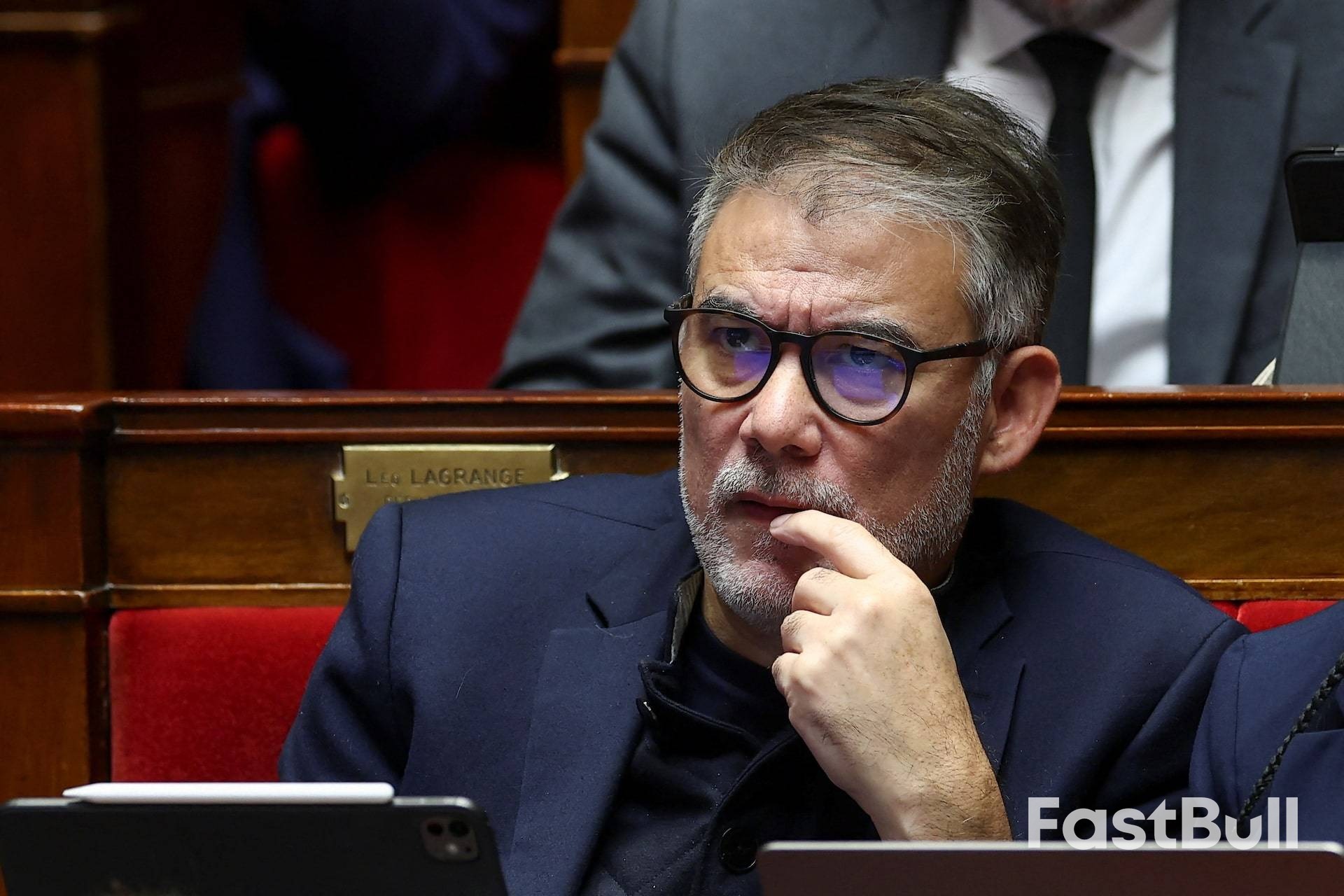
          Olivier Faure, First Secretary of the French Socialist Party, whose decision not to back no-confidence motions has eased immediate pressure on the government.

          Socialist Leader Calls Censure Over Mercosur "Absurd"

          Socialist party leader Olivier Faure made his position clear on Sunday, telling BFM TV that his party would not vote in favor of the motions. The proposed censure votes were aimed at the government's failure to block a landmark trade agreement between the European Union and the Mercosur group of South American nations, a deal that has been 25 years in the making.

          "It would be absurd to censure the government on Mercosur," Faure stated, effectively neutralizing the immediate threat.

          While analysts had already assessed the motions' chances of success as slim—particularly the one filed by the far-right National Rally (RN)—the political maneuvering highlights the precarious position of President Macron's government. With the 2027 presidential election on the horizon, polls suggest the RN has a credible path to victory, making every political challenge a high-stakes test.

          PM Lecornu Pushes for Stability Amid Political Turmoil

          Prime Minister Sebastien Lecornu has emphasized his commitment to stability, stating he wants to avoid both a government censure and a dissolution of the National Assembly. In an interview with Le Parisien newspaper on Saturday, Lecornu stressed, "My fight is for stability and to ward off disorder."

          Despite this, his office has reportedly asked the Interior Ministry to prepare for potential legislative elections on March 15 and 22, signaling that the government is ready for a collapse if necessary.

          Lecornu criticized the no-confidence motions as "cynical partisan posturing" in a message on X and warned that they send a "dramatic signal" internationally, especially at a time when the government is seeking compromise. The votes on the motions are scheduled for early next week.

          Budget Impasse Adds to Government's Challenges

          The political drama unfolds as the government faces a separate, critical battle over its budget. Budget talks are set to resume Tuesday, but a parliamentary committee has already rejected the bill in its current form, underscoring the tough negotiations ahead.

          In a last-resort effort to find a path forward, the government has invited political parties to a meeting at the finance ministry. However, the invitation notably excludes the far-right National Rally and the hard-left France Unbowed, the very parties pushing for the no-confidence vote.

          Confirming his party's attendance, Faure expressed cautious optimism. "There is a meeting tomorrow... with those who are willing to discuss," he said. "I hope for a compromise."

          Risk Warnings and Disclaimers
          You understand and acknowledge that there is a high degree of risk involved in trading. Following any strategies or investment methods may lead to potential losses. The content on the site is provided by our contributors and analysts for information purposes only. You are solely responsible for determining whether any trading assets, securities, strategy, or any other product is suitable for investing based on your own investment objectives and financial situation.
          Add to Favorites
          Share

          Trump's Venezuela Oil Plan Hits a Wall with Big Oil

          Daniel Foster

          Remarks of Officials

          Energy

          Economic

          Political

          Major oil companies are hitting the brakes on President Donald Trump's ambitious plan for a rapid, multi-billion dollar investment into Venezuela, citing a wall of security, commercial, and legal hurdles that make the country's oil sector a non-starter for now.

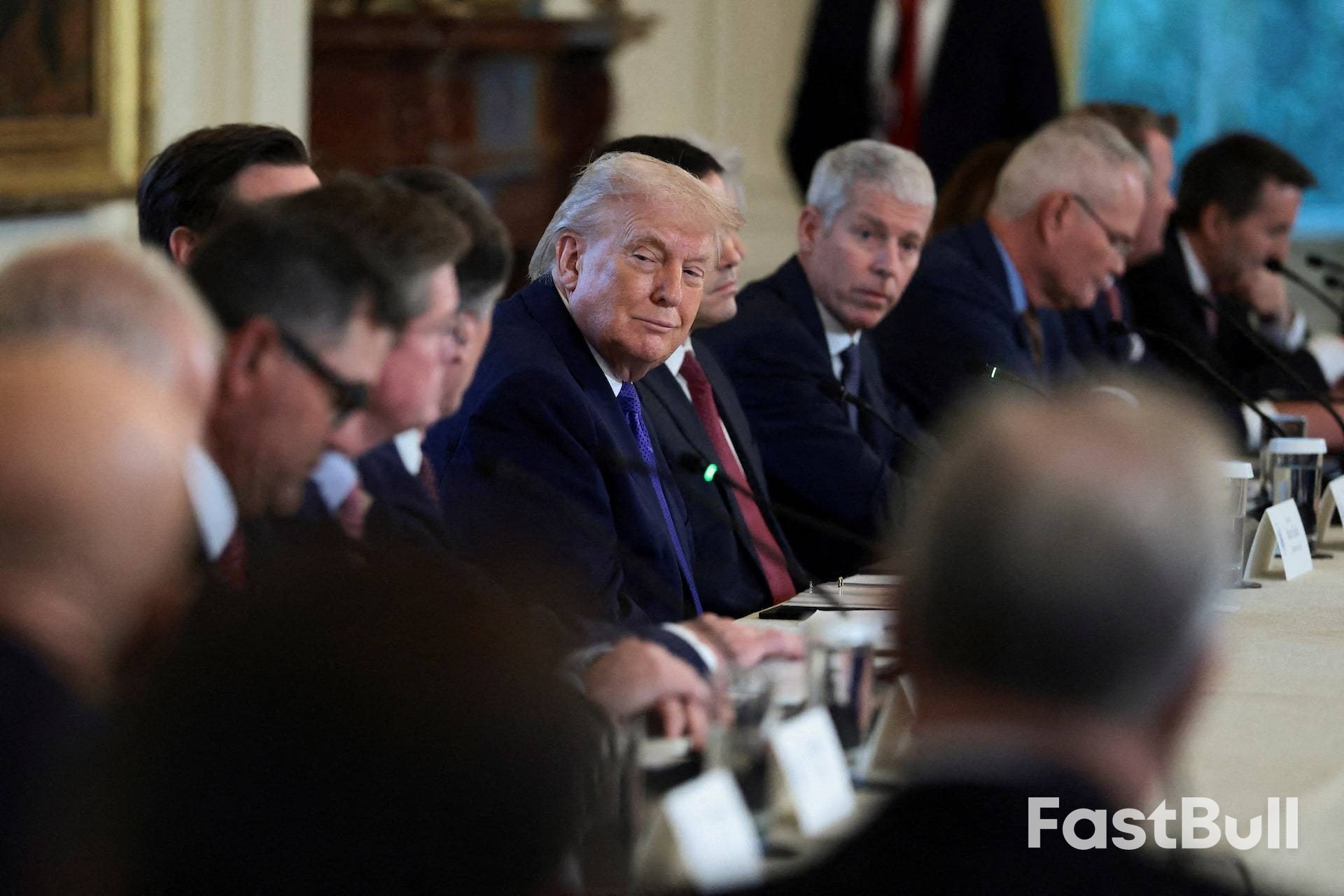
          U.S. President Donald Trump meets with oil industry executives at the White House on January 9, 2026, to discuss potential investment in Venezuela.

          While a televised White House meeting on Friday with top U.S. and European energy executives appeared to be a public relations victory for the president, the conversation revealed a deep disconnect between political ambition and market reality. Despite praise from some executives, the industry delivered a dose of realism to Trump's goal of pouring $100 billion into Venezuela to boost its oil production from the current 900,000 barrels per day.

          Exxon Mobil CEO Darren Woods was blunt, stating that from a commercial and legal standpoint, the Latin American nation is currently "un-investible."

          The Steep Climb to 'Investible' Status

          Woods' assessment reflects a grim reality shaped by nearly a decade of U.S. sanctions and decades of internal corruption and mismanagement. Turning this around would be a monumental task, requiring a stable government that can guarantee physical security and provide fiscal confidence—a process that could take months, if not years.

          The Trump administration is trying to move quickly. Treasury Secretary Scott Bessent confirmed on Saturday that Washington is working on lifting some sanctions to help stabilize Venezuela's economy and facilitate oil sales.

          However, a partial rollback is not enough. According to Carlos Bellorin, an analyst at consultancy Welligence, more significant sanctions relief is needed to allow oil companies to legally engage with the national oil company, PDVSA. It would also be essential for major oil service providers like SLB and Halliburton to bring in critical drilling equipment.

          Quick Wins vs. Long-Term Hurdles

          Removing key restrictions could unlock investment in so-called "low-hanging" barrels. This includes funding to revive abandoned wellheads and overhaul basic infrastructure like pipelines and port facilities.

          Some immediate, albeit modest, gains are possible:

          • Chevron: The only U.S. company still operating in Venezuela under a special license, could increase its output by 50% from 240,000 barrels per day within two years by upgrading existing equipment, said Vice Chairman Mark Nelson.

          • Repsol: The Spanish oil firm could triple its production of 45,000 barrels per day over two to three years, according to CEO Josu Jon Imaz.

          Even with these gains, the total production increase would likely be less than 200,000 barrels per day over the next year—a fraction of the administration's vision.

          Old Debts and Lingering Distrust

          A long and painful history haunts any potential new investment. Most international oil majors have been burned before in Venezuela, particularly during two waves of industry nationalization in the 1970s and 2000s that forced them out and left behind massive, unrecovered losses.

          This history of expropriation creates a major trust deficit. "Oilfield service providers could be reluctant to commit resources in Venezuela because they're still owed massive amount of money," noted Bellorin. He added that a commitment from Venezuela to repay old debts would be a necessary first step.

          President Trump, however, seemed to suggest the opposite. When ConocoPhillips CEO Ryan Lance mentioned his company is still owed about $12 billion from the 2007 nationalization, Trump proposed that Conoco could simply write off the debt, despite years of legal battles. Lance's proposal to involve the U.S. Export-Import Bank (EXIM) to restructure the debt was also seemingly rejected by the president.

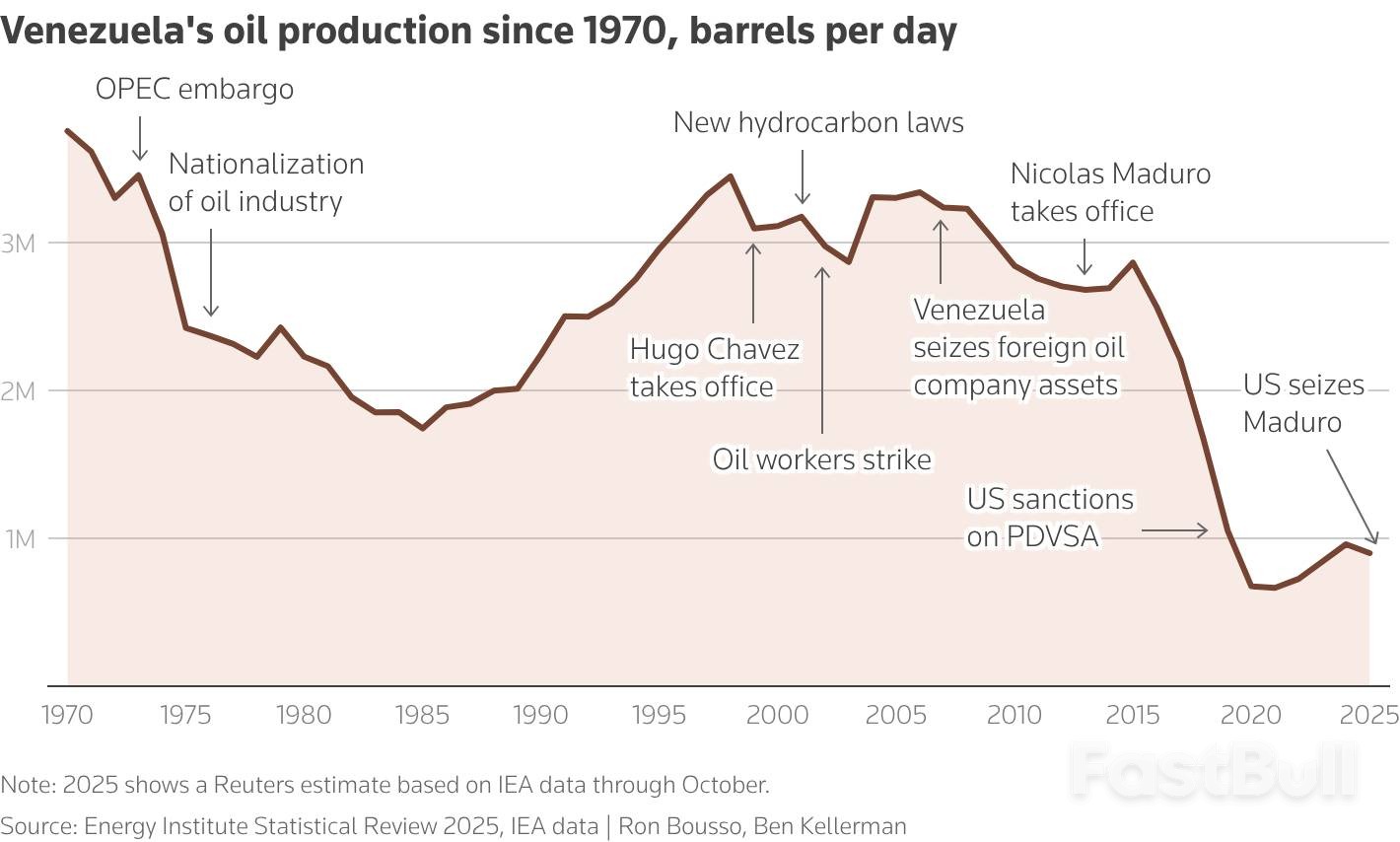
          A chart of Venezuela's oil production from 1970 to 2025 shows a dramatic collapse after 2015, following decades of volatility driven by nationalization, strikes, and U.S. sanctions.

          Deeper Issues: From Bad Laws to Heavy Crude

          To truly unlock Venezuela's potential—which peaked above 3.5 million barrels per day in the 1990s—requires rewriting the country's fundamental hydrocarbon laws.

          Key structural reforms would include:

          • Revisiting the requirement for mandatory state participation of over 50% in upstream joint ventures.

          • Reducing the oil industry's high royalty (30%) and income tax (50%) rates.

          • Modifying PDVSA's monopoly on marketing the country's oil.

          Beyond the legal framework, geological and geopolitical challenges remain. Venezuela holds the world's largest proven reserves, but most of it is heavy oil, which is more expensive to extract. Furthermore, many of these reserves are tied up in joint ventures with Chinese and Russian companies.

          For publicly traded companies with a duty to their shareholders, verbal assurances from the White House are not enough. As Exxon's Woods explained, "We take a very long-term perspective. The investments that we make span decades and decades. So, we do not go into any opportunity with a short-term mindset."

          The Political Pressure to Play Along

          Despite their reservations, oil executives find themselves in a difficult position. Openly refusing to invest in Venezuela could draw the ire of an administration known for playing hardball with businesses it sees as uncooperative, as seen with its recent actions toward law firms and defense contractors.

          Faced with this political pressure, some energy boards might decide that a modest investment in Venezuela is a pragmatic choice to avoid potential blowback, even if the financial case is weak.

          But even a flurry of politically motivated activity is unlikely to restore Venezuela's oil industry to its former glory. For that to happen, the country will need concrete action and fundamental reforms, not just presidential promises.

          To stay updated on all economic events of today, please check out our Economic calendar
          Risk Warnings and Disclaimers
          You understand and acknowledge that there is a high degree of risk involved in trading. Following any strategies or investment methods may lead to potential losses. The content on the site is provided by our contributors and analysts for information purposes only. You are solely responsible for determining whether any trading assets, securities, strategy, or any other product is suitable for investing based on your own investment objectives and financial situation.
          Add to Favorites
          Share

          City Of London Hiring Fell Last Quarter Ahead Of UK Budget

          Daniel Carter

          Economic

          City of London firms held back on hiring in the last quarter of 2025 as uncertainty around the UK budget and global markets led to a 13% drop in job vacancies compared to the prior period, according to a report by Morgan McKinley.
          Fears about tax-raising measures in November's budget helped to amplify the traditional end-of-year lull in job postings, according to the firm's London Employment Monitor released on Monday.
          Still, specific skills-driven roles remained insulated. As financial services firms seeks to deploy artificial intelligence, candidates in technology and regulatory delivery were the most sought-after.
          "Despite the quarterly slowdown, the broader picture remains resilient," said Mark Astbury, director of Morgan McKinley, although he pointed to changes such as the national insurance hike that are dampening employers' confidence.
          Across the UK, there are signs of the labor market softening, with redundancy notices at the highest point in almost three years at 33,392 in December.

          Source: Bloomberg Europe

          To stay updated on all economic events of today, please check out our Economic calendar
          Risk Warnings and Disclaimers
          You understand and acknowledge that there is a high degree of risk involved in trading. Following any strategies or investment methods may lead to potential losses. The content on the site is provided by our contributors and analysts for information purposes only. You are solely responsible for determining whether any trading assets, securities, strategy, or any other product is suitable for investing based on your own investment objectives and financial situation.
          Add to Favorites
          Share
          FastBull
          Copyright © 2026 FastBull Ltd

          728 RM B 7/F GEE LOK IND BLDG NO 34 HUNG TO RD KWUN TONG KLN HONG KONG

          TelegramInstagramTwitterfacebooklinkedin
          App Store Google Play Google Play
          Products
          Charts

          Chats

          Q&A with Experts
          Screeners
          Economic Calendar
          Data
          Tools
          Membership
          Features
          Function
          Markets
          Copy Trading
          Latest Signals
          Contests
          News
          Analysis
          24/7
          Columns
          Education
          Company
          Careers
          About Us
          Contact Us
          Advertising
          Help Center
          Feedback
          User Agreement
          Privacy Policy
          Personal Information Protection Statement
          Business

          White Label

          Data API

          Web Plug-ins

          Poster Maker

          Affiliate Program

          Risk Disclosure

          The risk of loss in trading financial instruments such as stocks, FX, commodities, futures, bonds, ETFs and crypto can be substantial. You may sustain a total loss of the funds that you deposit with your broker. Therefore, you should carefully consider whether such trading is suitable for you in light of your circumstances and financial resources.

          No decision to invest should be made without thoroughly conducting due diligence by yourself or consulting with your financial advisors. Our web content might not suit you since we don't know your financial conditions and investment needs. Our financial information might have latency or contain inaccuracy, so you should be fully responsible for any of your trading and investment decisions. The company will not be responsible for your capital loss.

          Without getting permission from the website, you are not allowed to copy the website's graphics, texts, or trademarks. Intellectual property rights in the content or data incorporated into this website belong to its providers and exchange merchants.

          Not Logged In

          Log in to access more features

          FastBull Membership

          Not yet

          Purchase

          Become a signal provider
          Help Center
          Customer Service
          Dark Mode
          Price Up/Down Colors

          Log In

          Sign Up

          Position
          Layout
          Fullscreen
          Default to Chart
          The chart page opens by default when you visit fastbull.com