• Trade
  • Markets
  • Copy
  • Contests
  • News
  • 24/7
  • Calendar
  • Q&A
  • Chats
Screeners
SYMBOL
LAST
ASK
BID
HIGH
LOW
NET CHG.
%CHG.
SPREAD
SPX
S&P 500 Index
6969.02
6969.02
6969.02
6992.83
6870.81
-9.01
-0.13%
--
DJI
Dow Jones Industrial Average
49071.55
49071.55
49071.55
49292.81
48597.22
+55.96
+ 0.11%
--
IXIC
NASDAQ Composite Index
23685.11
23685.11
23685.11
23840.55
23232.78
-172.33
-0.72%
--
USDX
US Dollar Index
96.260
96.340
96.260
96.560
96.240
+0.290
+ 0.30%
--
EURUSD
Euro / US Dollar
1.19397
1.19404
1.19397
1.19743
1.18947
-0.00305
-0.25%
--
GBPUSD
Pound Sterling / US Dollar
1.37757
1.37767
1.37757
1.38142
1.37313
-0.00336
-0.24%
--
XAUUSD
Gold / US Dollar
5149.89
5150.30
5149.89
5450.83
5112.26
-226.42
-4.21%
--
WTI
Light Sweet Crude Oil
63.964
63.994
63.964
65.611
63.409
-1.288
-1.97%
--

Community Accounts

Signal Accounts
--
Profit Accounts
--
Loss Accounts
--
View More

Become a signal provider

Sell trading signals to earn additional income

View More

Guide to Copy Trading

Get started with ease and confidence

View More

Signal Accounts for Members

All Signal Accounts

Best Return
  • Best Return
  • Best P/L
  • Best MDD
Past 1W
  • Past 1W
  • Past 1M
  • Past 1Y

All Contests

  • All
  • Trump Updates
  • Recommend
  • Stocks
  • Cryptocurrencies
  • Central Banks
  • Featured News
Top News Only
Share

[Israeli Military Reportedly Closely Coordinating With US Military On Military Action Against Iran] According To Israeli Sources On The 30th, The Israel Defense Forces (IDF) And The US Military Are Closely Coordinating On Military Action Against Iran. A Senior US Official Stated That After The Relevant Military Deployments Are In Place, US President Trump May "make A Decision On Whether To Launch A Strike" In The Coming Days. Israeli Assessments Suggest That Even A Limited-scale US Strike Could Trigger A Significant Iranian Military Retaliation, In Which Case Israel Will Respond Forcefully. Israel Believes That The US Is More Likely To Focus Potential Strikes On Iranian Nuclear Facilities And Missile-related Infrastructure, Rather Than Seeking To Directly Overthrow The Iranian Regime Through Limited Military Action

Share

Syrian Kurdish Forces Says It Agreed To Deployment Of Syria's Internal Security Forces In Cities Of Hasakeh, Qamishli

Share

China's Ministry Of Finance Announced That A Provisional Import Tax Rate Of 5% Will Be Implemented On Whiskey Starting February 2, 2026

Share

Syrian Kurdish Force Says It Has Agreed To Phased Integration Of Military Forces Into Syrian Government As Part Of Comprehensive Deal

Share

The French Prime Minister Used Constitutional Tools To Pass The 2026 Budget

Share

Czech Q4 Prelim GDP 0.5% Quarter-On-Quarter (Fcast 0.6%)

Share

Czech Q4 Prelim GDP 2.4% Year-On-Year (Not '2.5% Year-On-Year')

Share

Both WTI And Brent Crude Oil Rose By $0.70 In The Short Term, Currently Trading At $64.46/barrel And $68.41/barrel Respectively

Share

Ukrainian President Zelensky: During The Talks In Abu Dhabi, The United States Proposed That Neither Moscow Nor Kyiv Should Use Long-range Combat Capabilities

Share

Ukrainian President Zelensky: (Regarding Stopping The Attacks On Energy Targets) This Is Our Initiative, And Also President Trump's Personal Initiative. We See It As An Opportunity, Not A Deal

Share

Ukrainian President Zelensky: The Date Or Location Of The Next Meeting Between Ukrainian, Russian, And American Negotiators May Change

Share

Ukrainian President Zelensky: Willing To Attend Any Form Of Leaders' Summit, But Not In Moscow Or Belarus

Share

Ukrainian President Zelensky: There Is No Formal Ceasefire Agreement Between Ukraine And Russia Regarding Energy Targets

Share

Ukrainian President Zelensky: (Regarding Russian President Putin) I Publicly Invited Him (to Kyiv), Of Course, If He Dares To

Share

Ukrainian President Zelensky: Ukraine Will Be Technically Ready To Join The European Union By 2027

Share

Ukrainian President Zelensky: If Russia Stops Attacking Ukraine's Energy Infrastructure, Ukraine Will Not Attack Russia's Energy Infrastructure

Share

Spot Palladium Fell 8.00% Intraday, Currently Trading At $1836.23 Per Ounce

Share

Turkish Trade Deficit Widens 11.9% To $92 Billion In 2025

Share

Thai Net Forward Position $22.8 Billion On Jan 23 Versus$23.1 Billion On Jan 16

Share

Thai International Reserves $289.4 Billion On Jan 23 Versus$284.1 Billion On Jan 16

TIME
ACT
FCST
PREV
U.S. Factory Orders MoM (Excl. Defense) (Nov)

A:--

F: --

P: --

U.S. Factory Orders MoM (Excl. Transport) (Nov)

A:--

F: --

P: --
U.S. Non-Defense Capital Durable Goods Orders Revised MoM (Excl. Aircraft) (SA) (Nov)

A:--

F: --

P: --
U.S. EIA Weekly Natural Gas Stocks Change

A:--

F: --

P: --

Brazil CAGED Net Payroll Jobs (Dec)

A:--

F: --

P: --

U.S. Weekly Treasuries Held by Foreign Central Banks

A:--

F: --

P: --

South Korea Industrial Output MoM (SA) (Dec)

A:--

F: --

P: --

South Korea Services Output MoM (Dec)

A:--

F: --

P: --

South Korea Retail Sales MoM (Dec)

A:--

F: --

P: --

Japan Tokyo CPI YoY (Excl. Food & Energy) (Jan)

A:--

F: --

P: --

Japan Tokyo CPI MoM (Excl. Food & Energy) (Jan)

A:--

F: --

P: --

Japan Unemployment Rate (Dec)

A:--

F: --

P: --

Japan Tokyo CPI YoY (Jan)

A:--

F: --

P: --

Japan Jobs to Applicants Ratio (Dec)

A:--

F: --

P: --

Japan Tokyo CPI MoM (Jan)

A:--

F: --

P: --

Japan Tokyo Core CPI YoY (Jan)

A:--

F: --

P: --

Japan Retail Sales YoY (Dec)

A:--

F: --

P: --
Japan Industrial Inventory MoM (Dec)

A:--

F: --

P: --

Japan Retail Sales (Dec)

A:--

F: --

P: --

Japan Retail Sales MoM (SA) (Dec)

A:--

F: --

P: --
Japan Large-Scale Retail Sales YoY (Dec)

A:--

F: --

P: --

Japan Industrial Output Prelim MoM (Dec)

A:--

F: --

P: --

Japan Industrial Output Prelim YoY (Dec)

A:--

F: --

P: --

Australia PPI YoY (Q4)

A:--

F: --

P: --

Australia PPI QoQ (Q4)

A:--

F: --

P: --

Japan Construction Orders YoY (Dec)

A:--

F: --

P: --

Japan New Housing Starts YoY (Dec)

A:--

F: --

P: --

France GDP Prelim YoY (SA) (Q4)

A:--

F: --

P: --

Turkey Trade Balance (Dec)

A:--

F: --

P: --

France PPI MoM (Dec)

A:--

F: --

P: --
Germany Unemployment Rate (SA) (Jan)

--

F: --

P: --

Germany GDP Prelim YoY (Not SA) (Q4)

--

F: --

P: --

Germany GDP Prelim QoQ (SA) (Q4)

--

F: --

P: --

Germany GDP Prelim YoY (Working-day Adjusted) (Q4)

--

F: --

P: --

Italy GDP Prelim YoY (SA) (Q4)

--

F: --

P: --

U.K. M4 Money Supply (SA) (Dec)

--

F: --

P: --

U.K. M4 Money Supply YoY (Dec)

--

F: --

P: --

U.K. M4 Money Supply MoM (Dec)

--

F: --

P: --

U.K. Mortgage Lending (Dec)

--

F: --

P: --

U.K. Mortgage Approvals (Dec)

--

F: --

P: --

Italy Unemployment Rate (SA) (Dec)

--

F: --

P: --

Euro Zone Unemployment Rate (Dec)

--

F: --

P: --

Euro Zone GDP Prelim QoQ (SA) (Q4)

--

F: --

P: --

Euro Zone GDP Prelim YoY (SA) (Q4)

--

F: --

P: --

Italy PPI YoY (Dec)

--

F: --

P: --

India Deposit Gowth YoY

--

F: --

P: --

Mexico GDP Prelim YoY (Q4)

--

F: --

P: --

Brazil Unemployment Rate (Dec)

--

F: --

P: --

South Africa Trade Balance (Dec)

--

F: --

P: --

Germany CPI Prelim YoY (Jan)

--

F: --

P: --

Germany CPI Prelim MoM (Jan)

--

F: --

P: --

Germany HICP Prelim YoY (Jan)

--

F: --

P: --

Germany HICP Prelim MoM (Jan)

--

F: --

P: --

U.S. Core PPI YoY (Dec)

--

F: --

P: --

U.S. Core PPI MoM (SA) (Dec)

--

F: --

P: --

U.S. PPI YoY (Dec)

--

F: --

P: --

U.S. PPI MoM (SA) (Dec)

--

F: --

P: --

Canada GDP MoM (SA) (Nov)

--

F: --

P: --

Canada GDP YoY (Nov)

--

F: --

P: --

U.S. PPI YoY (Excl. Food, Energy & Trade) (Dec)

--

F: --

P: --

Q&A with Experts
    • All
    • Chatrooms
    • Groups
    • Friends
    Kung Fu flag
    Slow is Fast
    @Slow is FastI thought you'd completed this process. Haven't you passed this
    Thon Vanth flag
    small balance differcult to play
    Slow is Fast flag
    I think you might have encountered a despicable businessman.
    Slow is Fast flag
    Kung Fu
    @Kung Fu withdraw cash in batches
    Kung Fu flag
    Thon Vanth
    Hello sir
    @Thon Vanthhello. Good morning to you, Sir
    Thon Vanth flag
    Kung Fu
    @Kung Fuyes hello sir
    Slow is Fast flag
    slow and steady
    Kung Fu flag
    Thon Vanth
    small balance differcult to play
    @Thon Vanthand what are we looking at here? Is it less than 100 USD
    Thon Vanth flag
    Kung Fu
    @Kung Fuyes correct
    Thon Vanth flag
    i play scapling
    Kung Fu flag
    Slow is Fast
    I think you might have encountered a despicable businessman.
    @Slow is FastI have encountered many despicable businessmen
    Slow is Fast flag
    With current metal prices, it's really difficult to play with small amounts.
    Thon Vanth flag
    but today gold is not stable
    Slow is Fast flag
    Moreover, the margin requirements are now incredibly high.
    Kung Fu flag
    Thon Vanth
    i play scapling
    @Thon Vanththis is the best play for such accounts. And even scalping needs patience too
    Slow is Fast flag
    0.1 lot XAG margin=500u
    @Sarkar flag
    Kung Fu flag
    Slow is Fast
    With current metal prices, it's really difficult to play with small amounts.
    @Slow is Fastthis is true. @Thon Vanthtake note
    Kung Fu flag
    Thon Vanth
    but today gold is not stable
    @Thon Vanthstay away from trading gold. That's not for your account
    Thon Vanth flag
    Kung Fu
    @Kung Fu yes but when i play i just follow the candle up and down
    Type here...
    Add Symbol or Code

      No matching data

      All
      Trump Updates
      Recommend
      Stocks
      Cryptocurrencies
      Central Banks
      Featured News
      • All
      • Russia-Ukraine Conflict
      • Middle East Flashpoint
      • All
      • Russia-Ukraine Conflict
      • Middle East Flashpoint
      Search
      Products

      Charts Free Forever

      Chats Q&A with Experts
      Screeners Economic Calendar Data Tools
      Membership Features
      Data Warehouse Market Trends Institutional Data Policy Rates Macro

      Market Trends

      Market Sentiment Order Book Forex Correlations

      Top Indicators

      Charts Free Forever
      Markets

      News

      News Analysis 24/7 Columns Education
      From Institutions From Analysts
      Topics Columnists

      Latest Views

      Latest Views

      Trending Topics

      Top Columnists

      Latest Update

      Signals

      Copy Rankings Latest Signals Become a signal provider AI Rating
      Contests
      Brokers

      Overview Brokers Assessment Rankings Regulators News Claims
      Broker listing Forex Brokers Comparison Tool Live Spread Comparison Scam
      Q&A Complaint Scam Alert Videos Tips to Detect Scam
      More

      Business
      Events
      Careers About Us Advertising Help Center

      White Label

      Data API

      Web Plug-ins

      Affiliate Program

      Awards Institution Evaluation IB Seminar Salon Event Exhibition
      Vietnam Thailand Singapore Dubai
      Fans Party Investment Sharing Session
      FastBull Summit BrokersView Expo
      Recent Searches
        Top Searches
          Markets
          News
          Analysis
          User
          24/7
          Economic Calendar
          Education
          Data
          • Names
          • Latest
          • Prev

          View All

          No data

          Scan to Download

          Faster Charts, Chat Faster!

          Download App
          English
          • English
          • Español
          • العربية
          • Bahasa Indonesia
          • Bahasa Melayu
          • Tiếng Việt
          • ภาษาไทย
          • Français
          • Italiano
          • Türkçe
          • Русский язык
          • 简中
          • 繁中
          Open Account
          Search
          Products
          Charts Free Forever
          Markets
          News
          Signals

          Copy Rankings Latest Signals Become a signal provider AI Rating
          Contests
          Brokers

          Overview Brokers Assessment Rankings Regulators News Claims
          Broker listing Forex Brokers Comparison Tool Live Spread Comparison Scam
          Q&A Complaint Scam Alert Videos Tips to Detect Scam
          More

          Business
          Events
          Careers About Us Advertising Help Center

          White Label

          Data API

          Web Plug-ins

          Affiliate Program

          Awards Institution Evaluation IB Seminar Salon Event Exhibition
          Vietnam Thailand Singapore Dubai
          Fans Party Investment Sharing Session
          FastBull Summit BrokersView Expo

          Israel Seeks to Limit Entry at Gaza's Rafah Crossing

          Ukadike Micheal

          Political

          Palestinian-Israeli conflict

          Middle East Situation

          Remarks of Officials

          Summary:

          Israel will impose strict entry limits and its own security checkpoints at the reopening Rafah crossing, aiming to control Gaza's population flow amidst a U.S.-backed plan.

          As the Rafah border crossing with Egypt prepares to reopen next week, Israel plans to restrict the number of Palestinians allowed to enter Gaza, aiming for more people to leave the territory than come in. According to three sources familiar with the discussions, Israel also intends to establish its own security checkpoint to screen all individuals moving through the crossing.
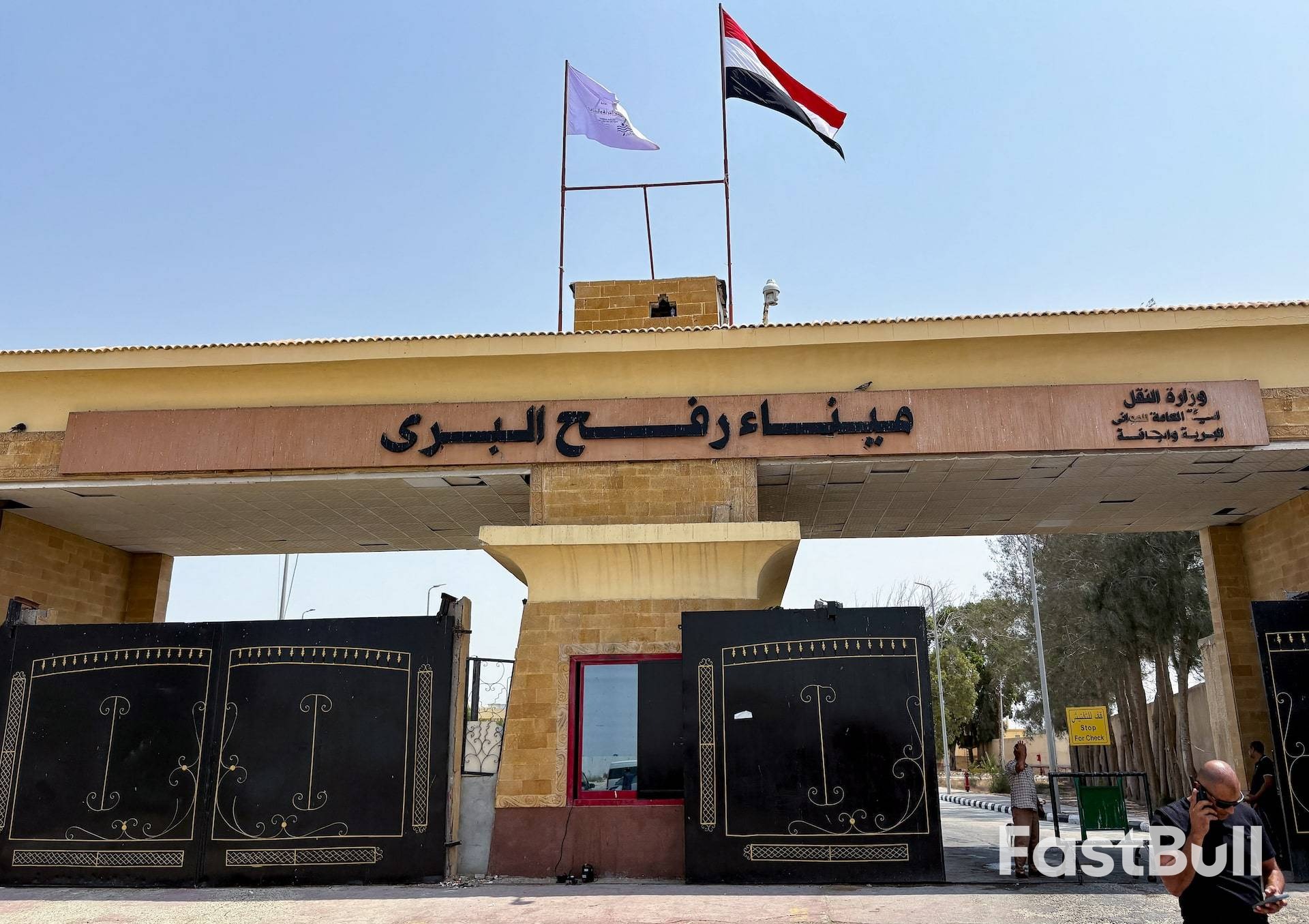
          The Rafah border crossing, pictured here, serves as the primary gateway for Gaza's population and is scheduled to reopen under new Israeli-stipulated conditions.

          The reopening was announced on Thursday by Ali Shaath, head of a transitional Palestinian committee backed by the United States to temporarily administer Gaza. The Rafah crossing is effectively the only route in or out for the vast majority of Gaza's more than 2 million residents.

          New Conditions for Border Operations

          The Gaza side of the border has been under Israeli military control since 2024. Under the new arrangement, the crossing is expected to be staffed by Palestinians linked to the Ramallah-based Palestinian Authority and monitored by European Union personnel. This setup mirrors a similar arrangement during a ceasefire between Israel and Hamas early last year.

          However, sources, who spoke anonymously due to the sensitivity of the matter, confirmed Israel's push for two key measures:

          1. Entry Restrictions: Limiting the number of Palestinians entering Gaza from Egypt.

          2. Security Screening: Establishing a military checkpoint inside Gaza where all Palestinians entering or leaving would undergo Israeli security checks.

          It remains unclear how Israel will enforce these limits or what ratio of exits to entries it seeks to achieve. The Israeli prime minister's office and military declined to comment on the plans.

          Palestinian Emigration and Security Concerns

          Israeli officials have previously discussed encouraging Palestinians to emigrate from Gaza, though they have denied any plans to forcibly transfer the population. The subject is extremely sensitive for Palestinians, who fear that any proposal encouraging Gazans to leave could become a permanent expulsion or bar them from returning.

          Two additional sources confirmed that Israeli officials have insisted on setting up a military checkpoint to screen all cross-border movement. A major unanswered question is what would happen to individuals blocked by the Israeli military at this checkpoint, especially those trying to enter Gaza from Egypt.

          Part of a Wider U.S.-Backed Plan

          The border's reopening is a component of the second phase of a U.S.-led plan initiated by President Donald Trump to end the war between Israel and Hamas. The crossing was originally scheduled to open during the plan's initial phase under a ceasefire agreed upon in October.

          Earlier this month, Washington announced the transition to the second phase, which requires Israel to further withdraw its troops from Gaza and for Hamas to hand over administrative control of the territory.

          In the first phase, the Israeli military conducted a partial pullback but retained control over 53% of Gaza, including the entire land border with Egypt. The majority of Gaza's population remains in the other part of the territory, living under Hamas control, often in makeshift tents or damaged buildings.

          The Israeli government has previously objected to opening the border, with some officials demanding that Hamas first return the body of an Israeli police officer held in Gaza. This was a condition of the ceasefire's first phase that has not yet been met.

          Despite Israel's public stance, U.S. officials have privately indicated that Washington, not Tel Aviv, is the primary driver behind the implementation of the peace plan. The U.S. Embassy in Israel did not immediately respond to a request for comment on its support for Israel's proposed entry limits or screening checkpoint.

          Risk Warnings and Disclaimers
          You understand and acknowledge that there is a high degree of risk involved in trading. Following any strategies or investment methods may lead to potential losses. The content on the site is provided by our contributors and analysts for information purposes only. You are solely responsible for determining whether any trading assets, securities, strategy, or any other product is suitable for investing based on your own investment objectives and financial situation.
          Add to Favorites
          Share

          EU Halts €93B Retaliatory Tariffs Against US

          Isaac Bennett

          Political

          Economic

          Remarks of Officials

          The European Commission announced a proposal Friday to suspend its €93 billion ($109.19 billion) package of retaliatory trade measures against the United States for an additional six months. The move extends a temporary truce beyond its current February 7 expiration date.

          Background of the Trade Measures

          This significant trade package was originally formulated in the first half of last year amid tense trade negotiations between the EU and the U.S. The measures were put on hold for an initial six-month period after both sides reached a joint statement on trade in August 2025, signaling a de-escalation.

          Renewed Tensions and a Path Forward

          The retaliatory package recently regained attention after U.S. President Donald Trump threatened to impose new tariffs on eight European countries during Washington's efforts to acquire Greenland. The EU's pre-planned measures were seen as a ready-to-deploy response had the U.S. tariffs been implemented.

          With the immediate threat now removed, the focus is shifting back to cooperation. "With the removal of the tariff threat by the U.S. we can now return to the important business of implementing the joint EU-US statement," explained Commission spokesman Olof Gill.

          However, Gill stressed that the suspension is not a permanent cancellation. The measures can be reactivated if the situation changes. "Just to make absolutely clear -- the measures would remain suspended, but if we need them at any point in the future, they can be unsuspended," he stated.

          To stay updated on all economic events of today, please check out our Economic calendar
          Risk Warnings and Disclaimers
          You understand and acknowledge that there is a high degree of risk involved in trading. Following any strategies or investment methods may lead to potential losses. The content on the site is provided by our contributors and analysts for information purposes only. You are solely responsible for determining whether any trading assets, securities, strategy, or any other product is suitable for investing based on your own investment objectives and financial situation.
          Add to Favorites
          Share

          RBI Unleashes $23B Liquidity to Stabilize Markets

          Michael Ross

          Central Bank

          Remarks of Officials

          Bond

          Daily News

          Traders' Opinions

          Economic

          Forex

          The Reserve Bank of India (RBI) has announced a plan to inject over $23 billion into the banking system, deploying a powerful combination of bond purchases, foreign exchange swaps, and repo operations to manage mounting market pressures.

          Under the leadership of Governor Sanjay Malhotra, the central bank has increasingly used liquidity injections over the past year. These measures are designed to reinforce its interest rate cuts and counteract the tightening effects of its interventions to support the Indian rupee.

          A Three-Pronged Liquidity Strategy

          The RBI's plan consists of three distinct actions scheduled over the next few weeks:

          • 90-Day Repo Operation: A 90-day variable rate repo (VRR) for 250 billion rupees ($2.7 billion) will be conducted on January 30, marking the first time the RBI has offered a cash infusion of this duration.

          • FX Swap Auction: A three-year, $10 billion USD/INR buy/sell swap auction is scheduled for February 4.

          • Bond Purchases: The central bank will buy 1 trillion rupees of government bonds in two equal tranches on February 5 and February 12.

          This latest round of bond purchases follows 3 trillion rupees in buying during December and January, bringing the total for the fiscal year to a record 5.7 trillion rupees.

          Navigating India's Monetary Trilemma

          The central bank's intervention comes as it grapples with a classic "monetary trilemma"—the challenge of simultaneously supporting the currency, anchoring borrowing costs, and allowing the free movement of capital.

          Recent weeks have seen a sharp rise in Indian bond yields, driven by heavy government borrowing needs. Concurrently, the rupee has come under significant pressure, hitting a record low of 91.9650 against the dollar on Friday amid outflows from foreign portfolio investors and weakness in the stock market.

          Market Reaction and Expert Outlook

          Market participants and economists see the RBI's announcement as a necessary step to restore stability.

          "The announcement was much needed and has come in line with expectations and should lead to some reversal in yields," commented a trader at a state-run bank.

          Gaura Sen Gupta, chief economist at IDFC First Bank, distinguished between the different tools being used. "The durable liquidity measures were expected to ensure that system liquidity rises to RBI target levels of 0.6% to 1% of net demand and time liabilities," she explained, referring to the bond purchases. "The VRR is transient liquidity provided to ensure that overnight rates remain contained."

          Sen Gupta anticipates further action, forecasting an additional 1 trillion rupees in bond purchases in March. This would push banking system liquidity to approximately 0.9% of net deposits, well within the RBI's target range.

          To stay updated on all economic events of today, please check out our Economic calendar
          Risk Warnings and Disclaimers
          You understand and acknowledge that there is a high degree of risk involved in trading. Following any strategies or investment methods may lead to potential losses. The content on the site is provided by our contributors and analysts for information purposes only. You are solely responsible for determining whether any trading assets, securities, strategy, or any other product is suitable for investing based on your own investment objectives and financial situation.
          Add to Favorites
          Share

          Ukraine & Russia Clash Over Donbas in Critical Peace Talks

          Isaac Bennett

          Russia-Ukraine Conflict

          Political

          Remarks of Officials

          Ukrainian and Russian negotiators are preparing for two days of high-stakes talks in Abu Dhabi, with the territorial status of Ukraine's eastern Donbas region emerging as the primary obstacle to ending the four-year war. The talks, scheduled to begin Friday, come as Ukraine faces increasing pressure from the United States to secure a peace deal.

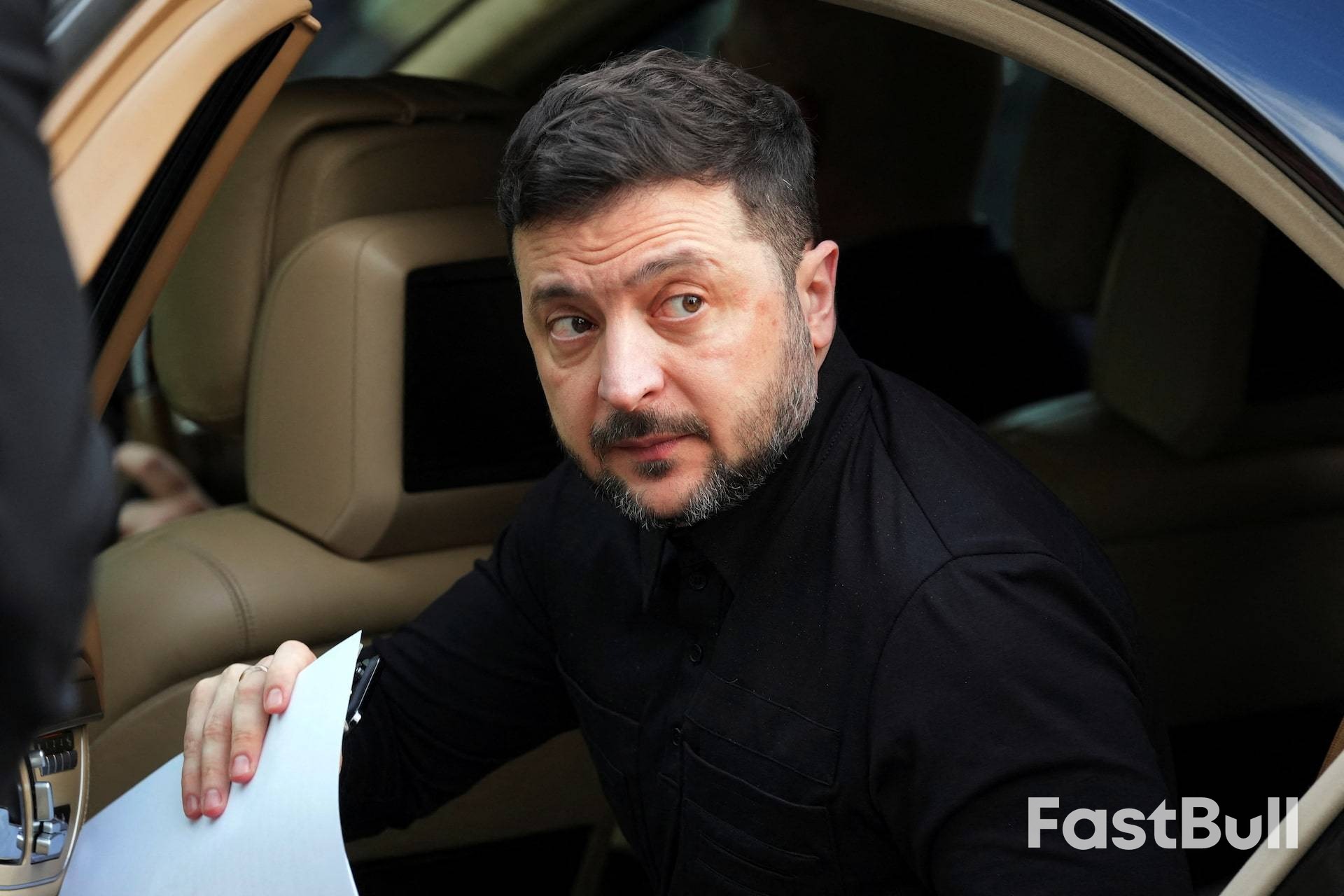
          Figure 1: Ukrainian President Volodymyr Zelenskyy has identified the territorial dispute over Donbas as a key priority for the Abu Dhabi negotiations.

          President Volodymyr Zelenskyy confirmed that the Donbas issue would be the top priority. "The question of Donbas is key," he stated in a media chat. This follows a meeting with U.S. President Donald Trump at the World Economic Forum in Davos, which both leaders described as positive.

          The Battle for Donbas Dominates Negotiations

          The core of the conflict lies in Russia's demand that Ukraine cede its entire eastern industrial area of Donbas. This has been a major stumbling block in efforts to end the war that began with Russia's full-scale invasion in February 2022.

          Specifically, Russian President Vladimir Putin insists that Ukraine surrender the 20% of the Donetsk region it still controls, an area of about 5,000 square kilometers (1,900 square miles). President Zelenskyy has consistently refused to give up land that Russia has failed to capture on the battlefield.

          Kremlin spokesman Dmitry Peskov reiterated Russia's position on Friday, calling the demand for Ukraine to yield the Donbas "a very important condition." A source close to the Kremlin indicated that Moscow is operating under the "Anchorage formula," which it claims was agreed upon between Trump and Putin. Under this interpretation, Russia would control all of Donbas while freezing the current front lines in other parts of eastern and southern Ukraine.

          Donetsk is one of four regions Russia claimed to annex in 2022 following referendums that Kyiv and Western nations have rejected as illegitimate. While most of the world recognizes Donetsk as part of Ukraine, Putin maintains it is "historical" Russian territory.

          Trilateral Talks Mark a Diplomatic Shift

          Zelenskyy noted in Davos that the Abu Dhabi meetings would be the first trilateral talks involving Ukrainian, Russian, and U.S. mediators since the war began.

          The delegations reflect the high-level nature of the discussions:

          • Ukraine: Led by Rustem Umerov, secretary of the National Security and Defence Council.

          • Russia: Led by Admiral Igor Kostyukov, head of Russia's military intelligence agency.

          This format follows previous diplomatic engagements, including a face-to-face meeting between Russian and Ukrainian delegations in Istanbul last year and talks involving U.S. and Russian delegations in Abu Dhabi in November.

          Security Guarantees and Financial Disputes

          Beyond the territorial conflict, two other critical issues are on the table: security guarantees for Ukraine and the fate of frozen Russian assets.

          Ukraine Seeks US Security Pact

          President Zelenskyy announced that a deal on U.S. security guarantees for Kyiv is ready and is merely awaiting a date and location for President Trump to sign it. Ukraine has long sought strong security commitments from Western allies to prevent future invasions should a peace deal be reached.

          The Fight Over Frozen Russian Assets

          The two sides remain far apart on financial reparations. Russia has proposed using nearly $5 billion of its assets frozen in the United States to fund the recovery of Russian-occupied territories within Ukraine.

          Ukraine, with backing from European allies, demands that Russia pay reparations for the damages caused by the war. Zelenskyy dismissed Russia's proposal as "nonsense."

          "Of course, we will fight (to use these assets for Ukraine), and it is absolutely fair regarding the use of all frozen assets (by Ukraine)," he added.

          Peace Talks Amidst Escalating Attacks

          The diplomatic efforts are taking place against a grim backdrop. Ukraine is currently enduring the harshest winter of the war, with Russia launching heavy missile and drone strikes against its energy infrastructure. These attacks have caused widespread power outages and left hundreds of thousands in Kyiv and other cities without heat in freezing temperatures.

          Ukrainian officials argue that Russia's escalating attacks on its energy grid prove that Moscow has no genuine interest in peace. For its part, Russia states it is seeking a diplomatic solution but will continue to pursue its objectives through military means as long as a negotiated settlement is not achieved.

          Risk Warnings and Disclaimers
          You understand and acknowledge that there is a high degree of risk involved in trading. Following any strategies or investment methods may lead to potential losses. The content on the site is provided by our contributors and analysts for information purposes only. You are solely responsible for determining whether any trading assets, securities, strategy, or any other product is suitable for investing based on your own investment objectives and financial situation.
          Add to Favorites
          Share

          UK's China Reset Hides Deeper Economic Risks

          Isaac Bennett

          Energy

          Political

          Economic

          Remarks of Officials

          UK Prime Minister Keir Starmer’s visit to Beijing next week, the first by a British leader since 2018, aims to reset relations and rebuild trade after years of tension. High-level business dialogues are planned, and a meeting with Chinese President Xi Jinping is anticipated, signaling a clear push to thaw diplomatic ties.

          This move follows the UK's controversial decision to approve a new Chinese "mega-embassy" in London. Despite opposition from community groups and even within Starmer’s Labour party over security concerns, the project was greenlit. Critics speculate the approval was timed to build goodwill ahead of the visit, highlighting a complex dynamic.

          But focusing on embassy politics and diplomatic handshakes misses a more significant challenge: China’s invisible economic leverage. This influence, built through deep commercial ties and dependencies, is far harder to detect and counter than overt political moves.

          How Economic Ties Become a Geopolitical Weapon

          In recent years, China has consistently used economic pressure to achieve its geopolitical goals. Countries like Australia, Lithuania, and South Korea have faced trade restrictions and market access bans after enacting policies Beijing opposed.

          This economic statecraft ranges from export controls on critical rare earth minerals to threats of economic fallout. China's party-state system provides a powerful toolkit for this strategy, giving Beijing formal and informal control over Chinese companies, including private ones. National security laws even compel these firms and their employees to assist state intelligence services upon request, both at home and abroad.

          This interdependence creates security risks that extend beyond sensitive sectors. The core vulnerabilities include:

          • Operational Control: Gaining access to and influence over critical infrastructure.

          • Data Extraction: The ability to collect and aggregate sensitive data.

          • Supply Chain Chokepoints: Creating dependencies in key industrial supply chains.

          The Green Transition: A New Front for UK Vulnerability?

          The UK government has identified its green transition as an area for partnership with China, but this creates significant new risks. China dominates global supply chains for electric vehicles, batteries, and renewable energy components, potentially creating major dependencies for the UK's future energy system.

          Security concerns are mounting over China's manufacturing dominance in Internet of Things (IoT) modules, which are embedded in products like solar panels and wind turbines. This equipment could create backdoors for remote disruption or data theft, an alarming prospect as these technologies become integrated into critical national infrastructure.

          China is already the primary supplier of solar panels to the UK. Now, it is making inroads into the wind energy sector. While the UK has traditionally relied on European and US suppliers, leading electricity provider Octopus Energy recently finalized a deal with Chinese manufacturer Ming Yang Smart Energy. This agreement will bring the first Chinese-made turbines to the UK. As the country races to meet climate targets amid rising costs, low-cost Chinese providers will become increasingly attractive, embedding their technology deeper into the national grid.

          Building a More Resilient UK Strategy

          To its credit, the UK has taken some steps to address economic security. The National Security and Investment Act 2021 gives the government powers to scrutinize and block high-risk foreign investments. Strategies for supply-chain resilience and critical minerals have also been introduced.

          However, these measures remain fragmented. The UK still lacks a clear, holistic framework for economic security with defined red lines for cooperation with China. Responsibility is spread across different government departments, resulting in an inconsistent and uncoordinated approach.

          While a complete economic decoupling from China is neither feasible nor wise, the UK must adopt a more strategic, long-term view to manage the risk of Beijing weaponizing economic ties.

          Key Steps for a Coherent Policy

          • Formalize Coordination: The government could create a new permanent interdepartmental cabinet committee focused on economic security or expand the role of the Economic Security Advisory Service to actively coordinate policy across departments.

          • Strengthen Public-Private Engagement: Key vulnerabilities often lie within the private sector. Experience from allies like Australia shows that relying on companies to self-regulate security is not enough. The government must provide systemic support and ensure compliance is properly resourced and enforced.

          • Align with Partners: The UK should deepen its alignment with like-minded partners, including the EU, Australia, Japan, South Korea, and Canada. Multilateral forums like the G7+ and the Comprehensive and Progressive Agreement for Trans-Pacific Partnership (CPTPP) can be used more effectively to advance collective economic security goals.

          As Starmer prepares for his trip to Beijing, the UK's relationship with China is firmly back in the spotlight. Beyond the immediate goal of a diplomatic thaw, London must prioritize developing a coherent and coordinated strategy to manage the profound risks of economic interdependence.

          To stay updated on all economic events of today, please check out our Economic calendar
          Risk Warnings and Disclaimers
          You understand and acknowledge that there is a high degree of risk involved in trading. Following any strategies or investment methods may lead to potential losses. The content on the site is provided by our contributors and analysts for information purposes only. You are solely responsible for determining whether any trading assets, securities, strategy, or any other product is suitable for investing based on your own investment objectives and financial situation.
          Add to Favorites
          Share

          Trump Ignites Firestorm with NATO Afghanistan Claims

          James Riley

          Political

          Remarks of Officials

          U.S. President Donald Trump has triggered a wave of anger in the United Kingdom by suggesting that troops from NATO allies avoided frontline combat during the war in Afghanistan. The comments, made during an interview at the World Economic Forum in Davos, have strained relations with key American partners.

          Trump Questions Allies' Battlefield Commitment

          Speaking with Fox News on Thursday, Trump voiced doubts about whether NATO would defend the United States if requested, describing it as "the ultimate test."

          "I've always said, will they be there if we ever needed them and that's really the ultimate test and I'm not sure of that," Trump stated. "You know, they'll say they sent some troops to Afghanistan, or this or that, and they did, they stayed a little back, a little off the front lines."

          A "Raw" Reaction From the United Kingdom

          The remarks landed with particular force in the U.K., which has been a steadfast U.S. military ally for decades. Following the September 11, 2001 terrorist attacks, then-Prime Minister Tony Blair famously declared that the U.K. would "stand shoulder to shoulder" with America.

          The U.K.'s contribution to the subsequent U.S.-led campaign in Afghanistan was substantial:

          • Over 150,000 British troops served in the conflict, the second-largest contingent after the U.S.

          • A total of 457 British service members died during the campaign.

          The response from British political and military figures was swift and sharp. U.K. Defense Secretary John Healey said, "Those British troops should be remembered for who they were: heroes who gave their lives in service of our nation."

          Ben Obese-Jecty, a lawmaker and former captain in the Royal Yorkshire Regiment who served in Afghanistan, called the comments disheartening. He said it was "sad to see our nation's sacrifice, and that of our NATO partners, held so cheaply by the president of the United States."

          The Irony of Article 5: NATO's Sole Use Was for the U.S.

          Trump's assertion that NATO countries might not support the U.S. overlooks a critical piece of the alliance's history. The only time NATO’s mutual defense clause, Article 5, has ever been invoked was in support of the United States after the 9/11 attacks. This article obligates all members to come to the aid of an ally under threat.

          "When America needed us after 9/11 we were there," noted Martin Tamm Andersen, a former Danish platoon commander.

          Denmark, another key ally, suffered the highest per capita death toll among coalition forces in Afghanistan, with 44 soldiers killed. An additional eight Danish soldiers died in Iraq.

          Part of a Pattern in Trans-Atlantic Tensions

          This is not the first time Trump has publicly questioned the commitment of NATO allies. His latest remarks follow a week of escalating tensions over his stated desire to seize Greenland, a semiautonomous territory of Denmark.

          Trump had threatened to impose tariffs on European nations that opposed his ambitions, raising questions about the future of the alliance. While he later appeared to step back after a meeting with NATO Secretary-General Mark Rutte, where they discussed a "framework" for Arctic security, the episode has damaged trans-Atlantic relations.

          "The Ultimate Insult": A Mother's Call for Accountability

          For some, the president's words were a personal affront. Diane Dernie's son, Ben Parkinson, suffered catastrophic injuries in 2006 when his British Army Land Rover hit a mine in Afghanistan.

          She described Trump's comments as "the ultimate insult" and called on British Prime Minister Keir Starmer to confront him directly over the issue.

          "Call him out," she urged. "Make a stand for those who fought for this country and for our flag, because it's just beyond belief."

          Risk Warnings and Disclaimers
          You understand and acknowledge that there is a high degree of risk involved in trading. Following any strategies or investment methods may lead to potential losses. The content on the site is provided by our contributors and analysts for information purposes only. You are solely responsible for determining whether any trading assets, securities, strategy, or any other product is suitable for investing based on your own investment objectives and financial situation.
          Add to Favorites
          Share

          Friday Briefing: What the Mood at Davos Can Tell Us About a Changing World Order

          Warren Takunda

          Economic

          The annual gathering of political and business leaders in Davos opened against a backdrop of war, trade threats and a rapidly fraying global order – with the World Economic Forum once again struggling to reconcile its talk of cooperation with the realities of great-power confrontation.
          Above all, one figure has dominated the week more than any theme or panel discussion – Donald Trump. He appears to have been determined to use the Alpine summit as a stage for his own vision of how the world should work.
          For today’s newsletter I spoke to the Guardian’s economics editor, Heather Stewart, who has spent the week in Davos, to find out what the mood was on the ground at an event that the US president appeared to be using as a personal publicity stunt. First, though, here are the headlines.

          Five big stories

          Davos | Volodymyr Zelenskyy has taken aim at Europe in a fiery speech at Davos, accusing leaders of being in “Greenland mode” as they waited for leadership from Donald Trump on Ukraine and other geopolitical crises rather than taking action themselves. The day ended with news of trilateral talks to start on Friday in Abu Dhabi between the US, Russia and Ukraine.
          UK news | The UK government borrowed less than expected in December, official figures show, after record-breaking receipts, giving a boost to the chancellor.
          Daily Mail | Elizabeth Hurley has accused the publisher of the Daily Mail of bugging her windowsill as well as using information obtained from tapping her landline as she gave emotional evidence at the high court.
          Climate crisis | Human-caused global heating made the intense heatwave that affected much of Australia in early January five times more likely, new analysis suggests.
          Immigration | Prosecutors were stunned to learn that federal immigration authorities allowed a suspect in a $100m jewellery heist, believed to be the largest in US history, to self-deport to South America.

          In depth: The old world order ‘swept away’

          “It feels very busy. The restaurants feel very busy. The roads are absolutely jammed. It has always been busy, but it is probably even more crowded this year,” Heather tells me.
          This is the third time she has attended the annual meeting of the World Economic Forum – first in 2013, then again last year – and she says the changes over that period are striking. The forum was once a symbol of a stable, rules-based global trading system, dominated by a relatively small group of countries.
          “That order, the trading system as it was, with rich and powerful countries controlling the rules, that’s kind of gone,” she says. “It’s been swept away.”
          That is not entirely down to Trump, although he looms large over this year’s meeting.

          The Trump effect

          Rather like Miley Cyrus, Trump came in like a wrecking ball. Yesterday the morning schedule was simply cleared to allow the US president to unveil his new “board of peace” – a lengthy, unscheduled event featuring a lineup of allies, but notably none of the G7 nations.
          Trump has overshadowed almost everything else at Davos – with the conference also providing a useful platform for him to continue and escalate his rhetoric about Greenland, and his need to “defend it”. Even those deeply sceptical of him wanted to be in the room when he spoke, Heather tells me. “It’s a compelling spectacle,” she says. “People who aren’t necessarily fans still want to be there because it feels historic.”
          In his analysis of Trump’s speech earlier in the week, my Washington colleague David Smith described parts of it as “pure racism”. The US president went on a rambling diatribe against Somalia and outlined what Smith said was Trump’s racially motivated “insidious and sinister project” to portray himself as “the great white hope.”

          Farage in Davos

          The WEF, which organises and hosts Davos, has long been a bogeyman of the populist and anti-globalist right. Danish politician Ida Auken’s speculative thinkpiece for the organisation in 2016 which included the phrase “You’ll own nothing and you’ll be happy” has been repeatedly cited as evidence that the WEF aims to act like a world government bringing in global socialism.
          In 2023, Nigel Farage derided Keir Starmer as a “full-on globalist, hanging out with his mates at the WEF” for attending. Yet this year Farage himself was among the roll-call of attenders, putting out a video to supporters to justify his appearance. “My message to Davos is simple,” he said. “You guys, the globalists, have had it your way for far too long.”
          Heather saw Farage speak at an event and says his argument – that Davos itself has changed – is not entirely wrong. “Globalisation hasn’t suddenly evaporated overnight,” she says. “But it has been eroded and undermined for quite a long time.” Conversations about tariffs, economic nationalism and sovereignty, once marginal here, are now everywhere.

          Davos isn’t entirely about politics

          Davos, Heather stresses, is not only about speeches by world leaders. Away from the headline events, there is still a packed programme of panels on artificial intelligence, the future of work, technology and global growth.
          “It’s supposed to be a place to exchange ideas, business cards and do deals,” she says – and all of that is still happening. But this year, she adds, it has unmistakably been a geopolitics-first gathering.
          At one point during our call she casually name-drops the people walking past her: the UK’s national security adviser, Jonathan Powell and the chief executive of the International Rescue Committee, David Miliband.
          “It’s that kind of place,” she says. “You just spot people like Rishi Sunak wandering around. And there are lots of spontaneous conversations – most of them, obviously, about Trump.”

          A day of resistance

          If Trump dominated the week, Heather says there was also a moment of pushback. On Tuesday – after his weekend threat to use tariffs to force allies to back US ambitions over Greenland – it felt as if a “day of resistance” was taking shape ahead of his delayed arrival.
          Canada’s prime minister, Mark Carney, cut through with a speech – there is a transcript here – arguing that the old rules-based international order was always partly a fiction and has now definitively collapsed. Pretending it will simply re-emerge, he warned, leaves countries vulnerable to coercion. Instead, so-called middle powers need to build new, flexible alliances or risk being “on the menu”.
          As Heather puts it: “We can’t all just sit around waiting for another flavour of US president to show up and then go back to how things were. So much has been blown up. You can’t put the genie back in the bottle.”
          She notes that Emmanuel Macron struck a similar note to Carney in his speech, saying there was a “shift towards a world without effective collective governance where multilateralism is weakened by powers that obstruct it”. What shocked many European leaders, Heather says, was not just the threat itself, but how openly economic power was being used to bludgeon other countries into line.

          What Davos tells us now

          Davos remains an odd, intensely hierarchical bubble – a place where access is everything, badges matter, and the world’s elite briefly cluster in one snowy town. But this year, Heather says, it has also felt unusually alive, precisely because so much feels unsettled.
          “Is it the start of a resistance?” she wonders. “Or is it just acceptance that there’s a new reality? I don’t know.”
          At the moment, it feels like it might be a front row seat to a messier international future.

          Source: Theguardian

          To stay updated on all economic events of today, please check out our Economic calendar
          Risk Warnings and Disclaimers
          You understand and acknowledge that there is a high degree of risk involved in trading. Following any strategies or investment methods may lead to potential losses. The content on the site is provided by our contributors and analysts for information purposes only. You are solely responsible for determining whether any trading assets, securities, strategy, or any other product is suitable for investing based on your own investment objectives and financial situation.
          Add to Favorites
          Share
          FastBull
          Copyright © 2026 FastBull Ltd

          728 RM B 7/F GEE LOK IND BLDG NO 34 HUNG TO RD KWUN TONG KLN HONG KONG

          TelegramInstagramTwitterfacebooklinkedin
          App Store Google Play Google Play
          Products
          Charts

          Chats

          Q&A with Experts
          Screeners
          Economic Calendar
          Data
          Tools
          Membership
          Features
          Function
          Markets
          Copy Trading
          Latest Signals
          Contests
          News
          Analysis
          24/7
          Columns
          Education
          Company
          Careers
          About Us
          Contact Us
          Advertising
          Help Center
          Feedback
          User Agreement
          Privacy Policy
          Personal Information Protection Statement
          Business

          White Label

          Data API

          Web Plug-ins

          Poster Maker

          Affiliate Program

          Risk Disclosure

          The risk of loss in trading financial instruments such as stocks, FX, commodities, futures, bonds, ETFs and crypto can be substantial. You may sustain a total loss of the funds that you deposit with your broker. Therefore, you should carefully consider whether such trading is suitable for you in light of your circumstances and financial resources.

          No decision to invest should be made without thoroughly conducting due diligence by yourself or consulting with your financial advisors. Our web content might not suit you since we don't know your financial conditions and investment needs. Our financial information might have latency or contain inaccuracy, so you should be fully responsible for any of your trading and investment decisions. The company will not be responsible for your capital loss.

          Without getting permission from the website, you are not allowed to copy the website's graphics, texts, or trademarks. Intellectual property rights in the content or data incorporated into this website belong to its providers and exchange merchants.

          Not Logged In

          Log in to access more features

          Connect Broker
          Become a signal provider
          Help Center
          Customer Service
          Dark Mode
          Price Up/Down Colors

          Log In

          Sign Up

          Position
          Layout
          Fullscreen
          Default to Chart
          The chart page opens by default when you visit fastbull.com