• Trade
  • Markets
  • Copy
  • Contests
  • News
  • 24/7
  • Calendar
  • Q&A
  • Chats
Screeners
SYMBOL
LAST
ASK
BID
HIGH
LOW
NET CHG.
%CHG.
SPREAD
SPX
S&P 500 Index
6939.02
6939.02
6939.02
6964.08
6893.47
-29.99
-0.43%
--
DJI
Dow Jones Industrial Average
48892.46
48892.46
48892.46
49047.68
48459.88
-179.09
-0.36%
--
IXIC
NASDAQ Composite Index
23461.81
23461.81
23461.81
23662.25
23351.55
-223.30
-0.94%
--
USDX
US Dollar Index
96.990
97.070
96.990
96.990
96.150
+1.020
+ 1.06%
--
EURUSD
Euro / US Dollar
1.18491
1.18514
1.18491
1.19743
1.18491
-0.01211
-1.01%
--
GBPUSD
Pound Sterling / US Dollar
1.36835
1.36880
1.36835
1.38142
1.36788
-0.01258
-0.91%
--
XAUUSD
Gold / US Dollar
4894.49
4894.49
4894.49
5450.83
4682.14
-481.82
-8.96%
--
WTI
Light Sweet Crude Oil
65.427
65.456
65.427
65.832
63.409
+0.175
+ 0.27%
--

Community Accounts

Signal Accounts
--
Profit Accounts
--
Loss Accounts
--
View More

Become a signal provider

Sell trading signals to earn additional income

View More

Guide to Copy Trading

Get started with ease and confidence

View More

Signal Accounts for Members

All Signal Accounts

Best Return
  • Best Return
  • Best P/L
  • Best MDD
Past 1W
  • Past 1W
  • Past 1M
  • Past 1Y

All Contests

  • All
  • Trump Updates
  • Recommend
  • Stocks
  • Cryptocurrencies
  • Central Banks
  • Featured News
Top News Only
Share

Ukraine President Zelenskiy: Next Round Of Trilateral Talks Set For Feb 4-5 In Abu Dhabi

Share

Russian Defence Ministry: Russia Gains Control Over Two Villages In Ukraine's Kharkiv And Donetsk Regions

Share

Trump Says India Will Buy Oil From Venezuela

Share

Istanbul Jan Consumer Price Index 4.56% Month-On-Month - Chamber Of Commerce

Share

Moody's: Interest Payments To Revenue Ratio Set To Worsen Next Year

Share

Moody's: Federal Government Fiscal Deficit Still Wider Than What It Was Prior To Covid

Share

Saudi Arabia's Stock Index Down 2.1% - Lseg

Share

Pakistan Balochistan Chief Minister Says 145 Militants Killed After Attacks Over 40 Hours

Share

Iran's Supreme Leader Khamenei: If Americans Start A War This Time, It Will Be A Regional Conflict

Share

Ukraine President Zelenskiy: Ukraine Is Recording Russian Attempts To Disrupt Logistics And Connectivity Between Cities And Communities

Share

Musk Says Steps We Took To Stop Unauthorized Use Of Starlink By Russia Have Worked

Share

India's NIFTY IT Index Up 1%

Share

Russian Security Council Secretary Shoigu, China's Wang Yi To Discuss Security Issues

Share

[Bitcoin Briefly Drops Below $78,000] February 1st, According To Htx Market Data, Bitcoin Briefly Dropped Below $78,000, And Is Now Trading At $78,184, With A 24-Hour Decrease Of 6.52%

Share

India Budget: Miscellaneous Capital Receipts Seen At 800 Billion Rupees Including Divestment

Share

India Budget: Sets Limit Of 5 Trillion Rupees For Ways And Means Advances

Share

India Budget: Aims To Raise 500 Billion Rupees Via Cash Management Bills

Share

India Budget: To Borrow 3.86 Trillion Rupees Via National Small Savings Fund

Share

India Budget: Targets 3.16 Trillion Rupees Dividend From Reserve Bank Of India, Financial Institutions

Share

India's Nifty Oil & Gas Index Down 2.1%

TIME
ACT
FCST
PREV
U.K. M4 Money Supply (SA) (Dec)

A:--

F: --

P: --
Italy Unemployment Rate (SA) (Dec)

A:--

F: --

P: --

Euro Zone Unemployment Rate (Dec)

A:--

F: --

P: --

Euro Zone GDP Prelim QoQ (SA) (Q4)

A:--

F: --

P: --

Euro Zone GDP Prelim YoY (SA) (Q4)

A:--

F: --

P: --

Italy PPI YoY (Dec)

A:--

F: --

P: --

Mexico GDP Prelim YoY (Q4)

A:--

F: --

P: --

Brazil Unemployment Rate (Dec)

A:--

F: --

P: --

South Africa Trade Balance (Dec)

A:--

F: --

P: --

India Deposit Gowth YoY

A:--

F: --

P: --

Germany CPI Prelim YoY (Jan)

A:--

F: --

P: --

Germany CPI Prelim MoM (Jan)

A:--

F: --

P: --

Germany HICP Prelim YoY (Jan)

A:--

F: --

P: --

Germany HICP Prelim MoM (Jan)

A:--

F: --

P: --

U.S. Core PPI YoY (Dec)

A:--

F: --

P: --
U.S. Core PPI MoM (SA) (Dec)

A:--

F: --

P: --

U.S. PPI YoY (Dec)

A:--

F: --

P: --

U.S. PPI MoM (SA) (Dec)

A:--

F: --

P: --

Canada GDP MoM (SA) (Nov)

A:--

F: --

P: --

Canada GDP YoY (Nov)

A:--

F: --

P: --

U.S. PPI MoM Final (Excl. Food, Energy and Trade) (SA) (Dec)

A:--

F: --

P: --

U.S. PPI YoY (Excl. Food, Energy & Trade) (Dec)

A:--

F: --

P: --

U.S. Chicago PMI (Jan)

A:--

F: --

P: --
Canada Federal Government Budget Balance (Nov)

A:--

F: --

P: --

U.S. Weekly Total Oil Rig Count

A:--

F: --

P: --

U.S. Weekly Total Rig Count

A:--

F: --

P: --

China, Mainland NBS Manufacturing PMI (Jan)

A:--

F: --

P: --

China, Mainland NBS Non-manufacturing PMI (Jan)

A:--

F: --

P: --

China, Mainland Composite PMI (Jan)

A:--

F: --

P: --

South Korea Trade Balance Prelim (Jan)

A:--

F: --

P: --
Japan Manufacturing PMI Final (Jan)

--

F: --

P: --

South Korea IHS Markit Manufacturing PMI (SA) (Jan)

--

F: --

P: --

Indonesia IHS Markit Manufacturing PMI (Jan)

--

F: --

P: --

China, Mainland Caixin Manufacturing PMI (SA) (Jan)

--

F: --

P: --

Indonesia Trade Balance (Dec)

--

F: --

P: --

Indonesia Inflation Rate YoY (Jan)

--

F: --

P: --

Indonesia Core Inflation YoY (Jan)

--

F: --

P: --

India HSBC Manufacturing PMI Final (Jan)

--

F: --

P: --

Australia Commodity Price YoY (Jan)

--

F: --

P: --

Russia IHS Markit Manufacturing PMI (Jan)

--

F: --

P: --

Turkey Manufacturing PMI (Jan)

--

F: --

P: --

U.K. Nationwide House Price Index MoM (Jan)

--

F: --

P: --

U.K. Nationwide House Price Index YoY (Jan)

--

F: --

P: --

Germany Actual Retail Sales MoM (Dec)

--

F: --

P: --
Italy Manufacturing PMI (SA) (Jan)

--

F: --

P: --

South Africa Manufacturing PMI (Jan)

--

F: --

P: --

Euro Zone Manufacturing PMI Final (Jan)

--

F: --

P: --

U.K. Manufacturing PMI Final (Jan)

--

F: --

P: --

Brazil IHS Markit Manufacturing PMI (Jan)

--

F: --

P: --

Canada National Economic Confidence Index

--

F: --

P: --

Canada Manufacturing PMI (SA) (Jan)

--

F: --

P: --

U.S. IHS Markit Manufacturing PMI Final (Jan)

--

F: --

P: --

U.S. ISM Output Index (Jan)

--

F: --

P: --

U.S. ISM Inventories Index (Jan)

--

F: --

P: --

U.S. ISM Manufacturing Employment Index (Jan)

--

F: --

P: --

U.S. ISM Manufacturing New Orders Index (Jan)

--

F: --

P: --

U.S. ISM Manufacturing PMI (Jan)

--

F: --

P: --

South Korea CPI YoY (Jan)

--

F: --

P: --

Japan Monetary Base YoY (SA) (Jan)

--

F: --

P: --

Australia Building Permits MoM (SA) (Dec)

--

F: --

P: --

Q&A with Experts
    • All
    • Chatrooms
    • Groups
    • Friends
    srinivas flag
    78227 another sell btc initiated!! WTF!!!
    srinivas flag
    now i think even 76 to 73 is possible
    Muhammad Israr flag
    hello everyone
    Muhammad Israr flag
    anyone help me whice one bar reply option how im find anyone tell me kindly
    Muhammad Israr flag
    hello everyone
    Muhammad Israr flag
    hello everyone
    Muhammad Israr flag
    anyone help me whice one bar reply option how im find anyone tell me kindly
    ABU BAKKOR SIDDQUE flag
    ABU BAKKOR SIDDQUE flag
    Have I
    Muhammad Israr flag
    how can im find dear
    3487443 flag
    I think gold will rise slightly next week and then fall back to 4300/4000.
    3487443 flag
    Is the kid here?
    3487443 flag
    Cryptocurrency will be king, but XRP will be the next safe haven, and low-denomination cryptocurrencies like BTC will find their bottom; 57/62k will surge again.
    3487443 flag
    When the future Fed chairman will shut down the underground shelters, he will be able to eat safe.
    3487443 flag
    The new US policy is blowing away safe-haven assets.
    3487443 flag
    Two signs have warned us that money is about to shift from gold to low-value cryptocurrency assets.
    hsjskbdb flag
    Will the situation in Iran next Monday affect the market's rise?
    3487443 flag
    First, Trump didn't appoint his own people as Fed chairman, but unexpectedly appointed a rebellious, hawkish individual who always wants a stronger USD. Second, at the same time, at the gold exchange in Shenzhen, China, people were withdrawing their profits, but the exchange didn't have enough money to pay them, so they closed. These two locations, thousands of kilometers apart, issued unfavorable signs for gold, suggesting a sharp decline in gold prices to levels previously seen in 2024 and 2025, which would surprise us. The most important sign was when the Fed chairman told us that gold had risen too high just hours before, but then it fell sharply.
    3487443 flag
    I think Russia and Ukraine, Iran and the US will stop fighting in March.
    ali flag
    Btc making a small hut pattern means trapping 74300 till fall
    Type here...
    Add Symbol or Code

      No matching data

      All
      Trump Updates
      Recommend
      Stocks
      Cryptocurrencies
      Central Banks
      Featured News
      • All
      • Russia-Ukraine Conflict
      • Middle East Flashpoint
      • All
      • Russia-Ukraine Conflict
      • Middle East Flashpoint
      Search
      Products

      Charts Free Forever

      Chats Q&A with Experts
      Screeners Economic Calendar Data Tools
      Membership Features
      Data Warehouse Market Trends Institutional Data Policy Rates Macro

      Market Trends

      Market Sentiment Order Book Forex Correlations

      Top Indicators

      Charts Free Forever
      Markets

      News

      News Analysis 24/7 Columns Education
      From Institutions From Analysts
      Topics Columnists

      Latest Views

      Latest Views

      Trending Topics

      Top Columnists

      Latest Update

      Signals

      Copy Rankings Latest Signals Become a signal provider AI Rating
      Contests
      Brokers

      Overview Brokers Assessment Rankings Regulators News Claims
      Broker listing Forex Brokers Comparison Tool Live Spread Comparison Scam
      Q&A Complaint Scam Alert Videos Tips to Detect Scam
      More

      Business
      Events
      Careers About Us Advertising Help Center

      White Label

      Data API

      Web Plug-ins

      Affiliate Program

      Awards Institution Evaluation IB Seminar Salon Event Exhibition
      Vietnam Thailand Singapore Dubai
      Fans Party Investment Sharing Session
      FastBull Summit BrokersView Expo
      Recent Searches
        Top Searches
          Markets
          News
          Analysis
          User
          24/7
          Economic Calendar
          Education
          Data
          • Names
          • Latest
          • Prev

          View All

          No data

          Scan to Download

          Faster Charts, Chat Faster!

          Download App
          English
          • English
          • Español
          • العربية
          • Bahasa Indonesia
          • Bahasa Melayu
          • Tiếng Việt
          • ภาษาไทย
          • Français
          • Italiano
          • Türkçe
          • Русский язык
          • 简中
          • 繁中
          Open Account
          Search
          Products
          Charts Free Forever
          Markets
          News
          Signals

          Copy Rankings Latest Signals Become a signal provider AI Rating
          Contests
          Brokers

          Overview Brokers Assessment Rankings Regulators News Claims
          Broker listing Forex Brokers Comparison Tool Live Spread Comparison Scam
          Q&A Complaint Scam Alert Videos Tips to Detect Scam
          More

          Business
          Events
          Careers About Us Advertising Help Center

          White Label

          Data API

          Web Plug-ins

          Affiliate Program

          Awards Institution Evaluation IB Seminar Salon Event Exhibition
          Vietnam Thailand Singapore Dubai
          Fans Party Investment Sharing Session
          FastBull Summit BrokersView Expo

          India's Record 17.2T Rupee Borrowing to Test Bond Market

          Damon

          Traders' Opinions

          Remarks of Officials

          Economic

          Central Bank

          Bond

          Summary:

          India's record borrowing plan for FY27 strains bond markets, challenging new deficit and debt goals.

          India's federal government plans to borrow a record 17.2 trillion rupees ($187.63 billion) in the 2026–27 fiscal year, a figure that surpasses most market expectations. The proposal was announced by Finance Minister Nirmala Sitharaman during her budget speech on Sunday.

          For the upcoming fiscal year, the country's net market borrowing is projected to be 11.70 trillion rupees, which is slightly lower than the borrowing for the 2025-26 fiscal year.
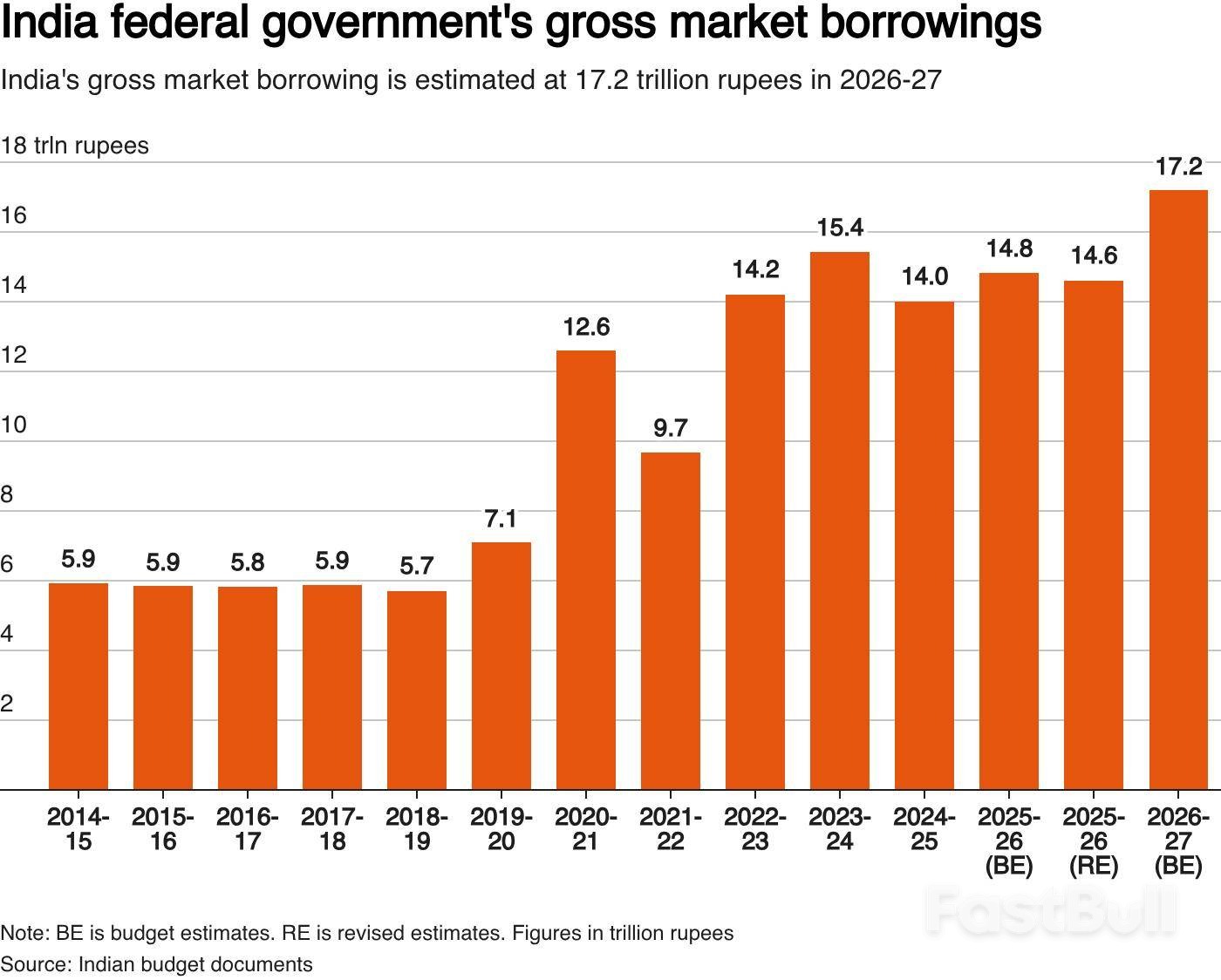
          Figure 1: India's gross market borrowings are projected to hit a record 17.2 trillion rupees in FY 2026-27, continuing a trend of elevated government debt issuance since FY 2020-21.

          Bond Yields Under Pressure Amid Supply Concerns

          The announcement comes as India's bond yields have already been climbing for months. The heavy borrowing by both federal and state governments has been overwhelming demand for government debt securities.

          Even after the Reserve Bank of India cut its policy rate by 125 basis points, the benchmark 10-year bond yield has edged slightly higher since February of last year. Market analysts had anticipated gross borrowings to be in the range of 16 trillion to 17.50 trillion rupees, with a Reuters poll of 35 economists showing a median expectation of 16.3 trillion rupees.

          Traders fear the substantial supply of new debt could continue to suppress demand and keep yields elevated. This concern persists despite significant support from the Reserve Bank of India, which has included record bond purchases and foreign-exchange swaps designed to inject more liquidity into the banking system.

          With government bond markets closed on Sunday, the benchmark 10-year bond yield (IN10YT=RR) is expected to see a further increase when trading resumes on Monday. A trader at a private bank noted that any negative reaction might be partially offset by the central bank's choice of paper for its open market purchase scheduled for Thursday.

          New Fiscal Targets: Debt-to-GDP and Deficit Goals

          The government is shifting its fiscal policy to focus on a debt-to-GDP ratio target. The goal is to lower this ratio to 55.6% in the next fiscal year.

          This strategy corresponds to a fiscal deficit target of 4.3% of the gross domestic product (GDP). The fiscal deficit, which measures the gap between government spending and revenue, is a critical metric for markets as it directly influences borrowing requirements, overall debt levels, and investor confidence.
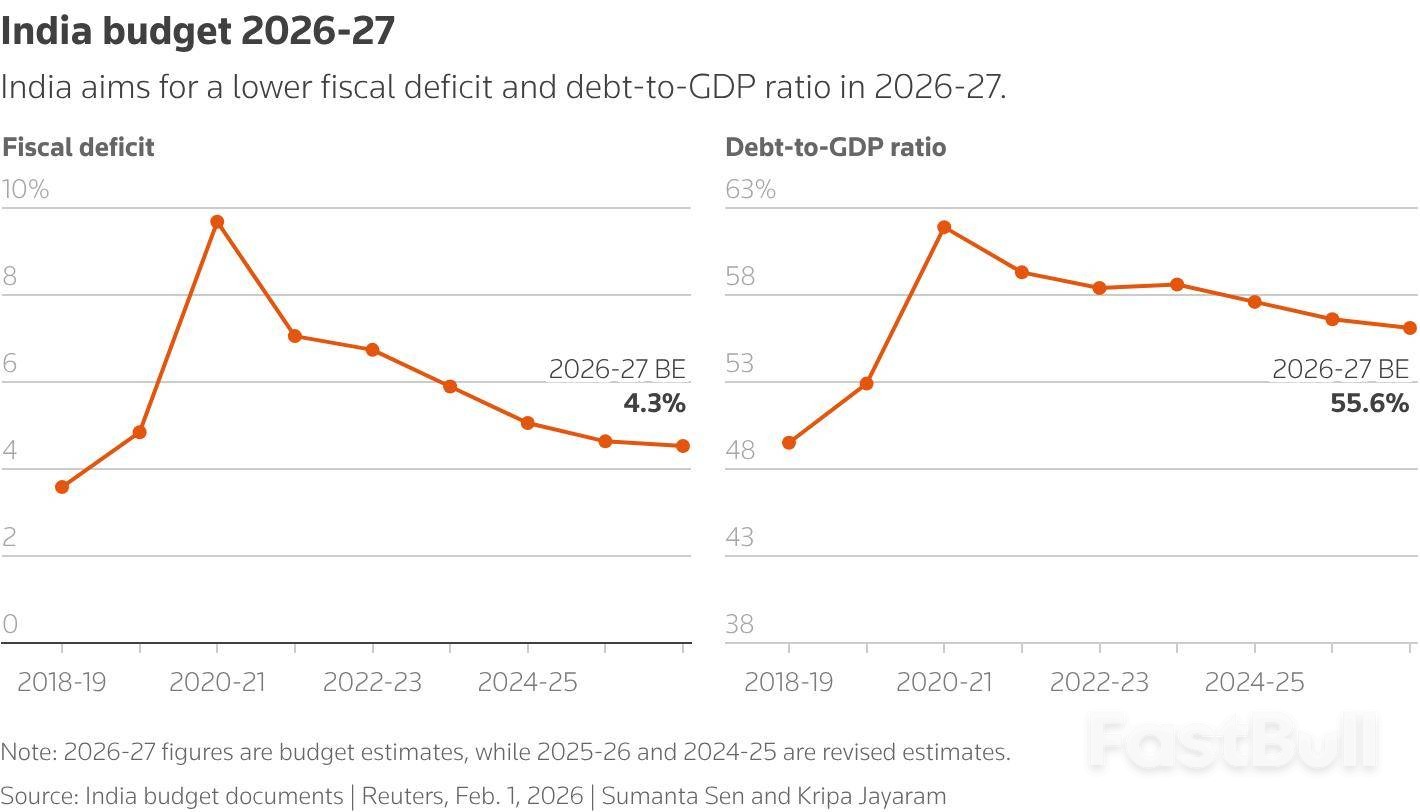
          Figure 2: The government's budget outlines a strategy to reduce both the fiscal deficit to 4.3% of GDP and the debt-to-GDP ratio to 55.6% by the 2026-27 fiscal year.

          ($1 = 91.6710 Indian rupees)

          To stay updated on all economic events of today, please check out our Economic calendar
          Risk Warnings and Disclaimers
          You understand and acknowledge that there is a high degree of risk involved in trading. Following any strategies or investment methods may lead to potential losses. The content on the site is provided by our contributors and analysts for information purposes only. You are solely responsible for determining whether any trading assets, securities, strategy, or any other product is suitable for investing based on your own investment objectives and financial situation.
          Add to Favorites
          Share

          India's Budget Targets Growth Amid Global Volatility

          King Ten

          Economic

          Remarks of Officials

          Political

          Data Interpretation

          India is set to unveil an annual budget designed to accelerate and sustain strong economic growth while enhancing business competitiveness in a volatile global climate. Finance Minister Nirmala Sitharaman announced that the government's priorities are geared towards long-term stability and expansion.

          The upcoming fiscal year's budget will center on critical areas, including structural reforms, strengthening the financial sector, and increasing investment in advanced technologies like artificial intelligence.

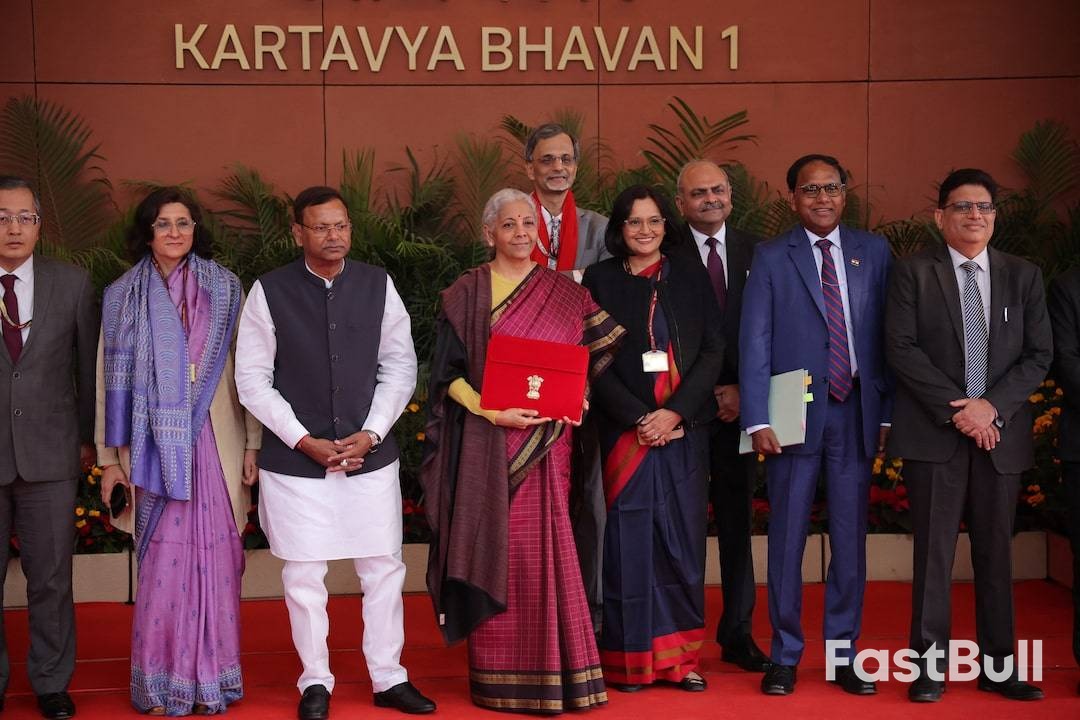
          Finance Minister Nirmala Sitharaman and her team present the annual budget, which outlines a strategy for sustained economic growth and reform.

          Economic Outlook and Projections

          The Indian economy is projected to grow at a rate of 7.4% in the current financial year, with inflation expected to remain near 2%. Meanwhile, the government's fiscal deficit for the year is anticipated to be 4.4% of GDP.

          Looking ahead, the government's economic survey has forecast growth between 6.8% and 7.2% for the fiscal year beginning in April.

          A Foundation of Recent Reforms

          To stimulate private investment and demand, New Delhi has recently implemented a series of significant policy changes. More adjustments are expected in the forthcoming budget. Key reforms already rolled out include:

          • Cuts to consumption and income taxes.

          • A comprehensive overhaul of labor laws.

          • Measures to open up the tightly controlled nuclear power sector.

          Modi's Long-Term Vision for India

          Prime Minister Modi emphasized a shift in focus, stating, "The nation is moving away from long-term problems to tread the path of long-term solutions." He noted that such solutions create the predictability needed to foster global trust.

          Modi added that India will push forward with "next-generation reforms," highlighting the next 25 years as crucial for achieving the goal of transforming the South Asian nation into a developed economy.

          Revitalizing Domestic Manufacturing

          A core component of this long-term strategy is a third major initiative to boost manufacturing's share of the economy, following two previous attempts. The government is also expected to ease regulations for investment in defense manufacturing to support this objective.

          Navigating Global Trade Challenges

          On the international front, India is actively pursuing new trade agreements to mitigate external economic pressures. A landmark trade deal with the European Union is a key example of this strategy.

          This move is intended to offset the impact of the 50% tariffs that President Donald Trump's administration imposed on certain Indian goods exported to the United States.

          To stay updated on all economic events of today, please check out our Economic calendar
          Risk Warnings and Disclaimers
          You understand and acknowledge that there is a high degree of risk involved in trading. Following any strategies or investment methods may lead to potential losses. The content on the site is provided by our contributors and analysts for information purposes only. You are solely responsible for determining whether any trading assets, securities, strategy, or any other product is suitable for investing based on your own investment objectives and financial situation.
          Add to Favorites
          Share

          ECB Eyes Strong Euro as Inflation Worries Grow

          Alice Winters

          Remarks of Officials

          Data Interpretation

          Economic

          Central Bank

          Forex

          Daily News

          The European Central Bank (ECB) is set to confront the issue of a surging euro at its first policy meeting in 2026, a development that analysts warn could push eurozone inflation further below its target. Officials in Frankfurt have already voiced concerns over this trend.

          While the ECB has held interest rates steady since June and no immediate changes are anticipated, several critical issues are demanding the bank's attention. Developments since the last rate decision on December 18, including moves by the Federal Reserve, threats of new tariffs from US President Donald Trump, and a recent decline in the dollar, have all come under scrutiny.

          Dollar's Decline Fuels Euro Surge

          Comments from President Trump, who stated he was not bothered by the US dollar's status, contributed to a significant drop in the currency. This slide propelled the euro to approximately $1.20, a level not seen since 2021.

          In response, ECB officials have expressed concern about how this currency shift might be received. François Villeroy de Galhau, a key member of the ECB's Governing Council, emphasized that the euro will be a crucial determinant of future monetary policy. Another Governing Council member, Martin Kocher, confirmed the bank will closely monitor the currency for any continued upward movement.

          Below-Target Inflation Complicates ECB Policy

          The focus on the euro comes as eurozone inflation fell below 2% in December. Analysts forecast a further decline, predicting the figure will be around 1.7% when Consumer Price Index data is released on Wednesday, February 11.

          The ECB had previously projected that price growth would naturally reach its target without further intervention. However, a persistently strong euro could undermine this outlook and potentially trigger a new round of discussions about rate cuts.

          "Europe has started the year with many geopolitical issues, and the ECB will likely keep its focus on bigger problems," noted analysts. "This means they will probably overlook the recent US trade conflict involving Greenland, the slight drop in inflation below 2%, and the rising euro. However, these changes highlight that there are growing risks to the economic outlook."

          Global Central Banks Diverge on Rates

          The ECB is expected to release quarterly surveys on bank lending and expert economic forecasts soon, positioning it among several central banks scheduled to announce interest-rate decisions this week.

          Globally, a mixed policy landscape is emerging:

          • The UK, Mexico, and the Czech Republic are likely to hold rates steady.

          • India and Poland are expected to implement rate cuts.

          • The Reserve Bank of Australia might become the first major central bank to hike rates this year.

          Meanwhile, this month's US jobs report will be a key data point, measured against the Federal Reserve's view that the labor market is stabilizing after a period of slow hiring late last year.

          To stay updated on all economic events of today, please check out our Economic calendar
          Risk Warnings and Disclaimers
          You understand and acknowledge that there is a high degree of risk involved in trading. Following any strategies or investment methods may lead to potential losses. The content on the site is provided by our contributors and analysts for information purposes only. You are solely responsible for determining whether any trading assets, securities, strategy, or any other product is suitable for investing based on your own investment objectives and financial situation.
          Add to Favorites
          Share

          Iran Signals Talks with US as Tensions Mount

          King Ten

          Remarks of Officials

          Economic

          Middle East Situation

          Daily News

          Political

          A senior Iranian official has indicated that diplomatic negotiations with the United States are making headway, a surprising development that contrasts sharply with a recent American military buildup in the region.

          The signal for de-escalation follows US President Donald Trump's deployment of warships to the area and his public statements that an attack on Iranian soil was possible if the country refused to negotiate a "deal."

          Diplomatic Channels Open Through Regional Allies

          Ali Larijani, head of Iran's Supreme National Security Council, suggested that behind-the-scenes progress was being made. "Contrary to the hype of the contrived media war, structural arrangements for negotiations are progressing," he stated.

          Larijani's comments followed a meeting in Tehran with Qatari Prime Minister Sheikh Mohammed Abdulrahman bin Jassim Al Thani. A statement from Qatar confirmed the two discussed "ongoing efforts to deescalate tensions in the region." Qatar, a major US ally with closer ties to Iran than other Gulf Arab nations, is positioned to act as a key mediator.

          In a separate diplomatic push, Iranian President Masoud Pezeshkian emphasized a desire to avoid conflict during a phone call with Egyptian President Abdel Fattah el-Sissi, another close US ally. "The Islamic Repubic of Iran has never sought, and in no way seeks, war and it is firmly convinced that a war would not be in the interest of neither Iran, nor the United States, nor the region," Pezeshkian said.

          Trump Confirms 'Serious' Dialogue

          Speaking to reporters aboard Air Force One, President Trump confirmed that Iran is talking "seriously" with the US. He expressed hope for an "acceptable" deal, outlining two primary conditions:

          • Iran must commit to having "no nuclear weapons."

          • The Iranian government must stop killing anti-government protesters.

          Domestic Unrest Creates a Volatile Backdrop

          The diplomatic overtures are occurring as Iran grapples with a severe economic crisis and widespread domestic unrest. Demonstrations that began in December, fueled by high unemployment, inflation, and a weakening rial currency, have spread nationwide.

          The government's crackdown on these protests has resulted in significant casualties, according to human rights organizations.

          • The Human Rights Activists News Agency reports 6,713 deaths, including 6,305 demonstrators.

          • The Center for Human Rights Iran places the number of killed at 6,479.

          • The Oslo-based Iran Human Rights watchdog estimates that "at least 40,000 people, including children, have been detained."

          Last month, Trump encouraged the protests, telling Iranians that "help is on its way." However, he later softened his rhetoric on military action, claiming his shift was because Iran had decided not to execute protesters.

          To stay updated on all economic events of today, please check out our Economic calendar
          Risk Warnings and Disclaimers
          You understand and acknowledge that there is a high degree of risk involved in trading. Following any strategies or investment methods may lead to potential losses. The content on the site is provided by our contributors and analysts for information purposes only. You are solely responsible for determining whether any trading assets, securities, strategy, or any other product is suitable for investing based on your own investment objectives and financial situation.
          Add to Favorites
          Share

          Japan's Fiscal Policy Risks 'Truss Shock' Selloff

          Damon

          Remarks of Officials

          Economic

          Central Bank

          Forex

          Daily News

          Political

          Bond

          Japan is on the brink of facing market turmoil over its fiscal policy, with a former top currency diplomat warning that further tax relief could trigger a selloff in government bonds and the yen similar to the UK's "Truss shock."

          Hiroshi Watanabe, a former vice finance minister for international affairs, stated that markets remain highly sensitive to any moves by the ruling Liberal Democratic Party (LDP) to expand sales tax cuts to secure voter support.

          "We're somehow managing to hold the line for now, but it's right at the edge," Watanabe said in an interview. Watanabe, now a visiting professor at Tokyo Seitoku University, was in charge of Japan's currency policy from 2004 to 2007.

          Election Pledges Raise Fiscal Alarms

          The warning comes as Prime Minister Sanae Takaichi seeks a new mandate for her economic reflation strategy in a snap election scheduled for February 8.

          Investors are watching closely for any sign that the LDP might lean toward more tax cuts if the election campaign proves challenging. This political pressure is reviving concerns about fiscal discipline in a country where public debt is more than double the size of its economy.

          A market rout last month provided a stark example after Takaichi pledged to cut the consumption tax on food for two years. The announcement triggered a sharp selloff in super-long Japanese government bonds and pushed the yen toward levels that had previously prompted government intervention.

          Market Reaction and Government Response

          Markets have stabilized since then, with the yen recovering to around 154 per dollar. This rebound followed speculation that Japanese and U.S. authorities conducted rate checks, a move often seen as a precursor to direct currency intervention.

          Watanabe believes that top officials have taken note of the market's negative reaction. "I do think that Takaichi, as well as Finance Minister Satsuki Katayama, have registered the warnings coming from global capital markets," he said, suggesting that caution from U.S. and European investors has likely influenced policymakers' public statements.

          However, he cautioned that investors would react strongly to any hint that tax relief could be expanded beyond the current pledges.

          Headwinds Cloud the Yen's Outlook

          Looking ahead, Watanabe sees limited potential for a sustained recovery in the yen. While he noted that "there is a possibility that the yen could briefly move into the 140s per dollar," he does not foresee a prolonged period of appreciation.

          Several key factors are expected to weigh on the Japanese currency:

          • Persistent concerns over Japan's public finances.

          • The country's structural trade deficit.

          • A lack of clarity regarding the Bank of Japan's future interest rate path.

          These combined pressures make it difficult to envision a scenario where "yen appreciation continues" for an extended period.

          To stay updated on all economic events of today, please check out our Economic calendar
          Risk Warnings and Disclaimers
          You understand and acknowledge that there is a high degree of risk involved in trading. Following any strategies or investment methods may lead to potential losses. The content on the site is provided by our contributors and analysts for information purposes only. You are solely responsible for determining whether any trading assets, securities, strategy, or any other product is suitable for investing based on your own investment objectives and financial situation.
          Add to Favorites
          Share

          Russia, Ukraine & US Talks: 5 Key Issues to Watch

          King Ten

          Russia-Ukraine Conflict

          Remarks of Officials

          Political

          A second round of trilateral talks between Russia, Ukraine, and the United States is scheduled for February 1 in Abu Dhabi, according to Kremlin spokesman Dmitry Peskov. Russia's participation marks a significant policy shift, bringing the US directly into negotiations.

          While details from the first round remain scarce, public statements and recent reports offer crucial clues into the high-stakes discussions. Here are five critical insights into the evolving diplomatic landscape.

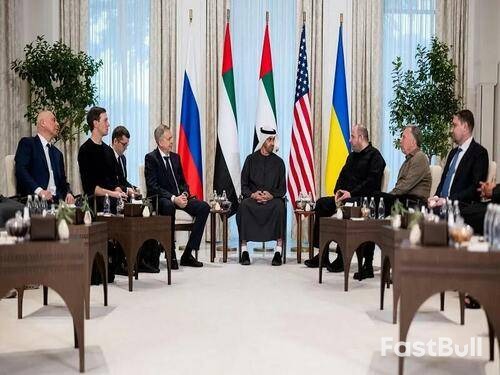
          Figure 1: Officials gather for trilateral talks in Abu Dhabi, a diplomatic format that signals a major policy shift for Russia.

          Donetsk: The Final Sticking Point?

          Territory appears to be the central unresolved issue. On the eve of the initial talks, top Putin aide Yuri Ushakov stated that a lasting settlement was unlikely without addressing the territorial issue based on a previously agreed-upon formula.

          This was echoed last week by US Secretary of State Marco Rubio, who told the Senate Foreign Relations Committee, "The one remaining item … is the territorial claim on Donetsk." This lends credibility to earlier reports that Russia is demanding Ukraine's withdrawal from Donbass.

          A Post-Conflict NATO Deployment Is on the Table

          Discussions are also underway regarding post-conflict security arrangements. Rubio revealed that "security guarantees basically involve the deployment of a handful of European troops, primarily French and the UK, and then a US backstop," a move that would require Russia's consent.

          However, the US is still debating its commitment to a potential future conflict. This follows earlier signals from Steve Witkoff and Jared Kushner indicating American support for NATO troops in Ukraine. This topic will likely be a key focus in the upcoming second round of negotiations.

          The Potential 'Quid Pro Quo' for Peace

          A potential trade-off may be emerging. According to the Financial Times, US security guarantees for Ukraine are contingent on its withdrawal from Donbass. The New York Times adds that the Kiev-controlled portion of the region could become a demilitarized zone or host neutral peacekeepers.

          This suggests a possible deal: Ukraine cedes control of Donbass in exchange for US security guarantees and a NATO military presence. Russia might agree to such terms if neutral peacekeepers serve as a buffer.

          Trump's Cautious Approach to Pressuring Zelensky

          Despite the promise of this potential arrangement, Ukrainian President Zelensky remains defiant about withdrawing from Donbass. For his part, President Trump has avoided publicly pressuring Zelensky with tangible consequences, such as halting arms sales to the EU destined for Ukraine.

          This suggests there are clear limits to how far the United States is willing to go to secure a deal, even as it facilitates the talks.

          Why Russia Agreed to US Involvement

          Despite these limitations, the US diplomatic role has become indispensable. Russia's agreement to expand bilateral talks with Ukraine into a trilateral format is a major change in its foreign policy. This indicates that Moscow believes Washington is sincere in its efforts to negotiate an agreement, even if it won't use all its leverage.

          With the US now formally at the table, the talks are unlikely to revert to a bilateral format unless the conflict is still ongoing by the time of a potential Trump 2.0 administration.

          Overall, these developments suggest that President Putin may be considering significant compromises on the maximum goals set at the beginning of the special operation. While it is too early to draw definitive conclusions, any official agreement—whether a ceasefire, armistice, or peace treaty—will be heavily analyzed to understand the strategic calculations behind Russia's evolving position.

          Risk Warnings and Disclaimers
          You understand and acknowledge that there is a high degree of risk involved in trading. Following any strategies or investment methods may lead to potential losses. The content on the site is provided by our contributors and analysts for information purposes only. You are solely responsible for determining whether any trading assets, securities, strategy, or any other product is suitable for investing based on your own investment objectives and financial situation.
          Add to Favorites
          Share

          South Korea Exports Hit 4.5-Year High on AI Chip Frenzy

          Ukadike Micheal

          Traders' Opinions

          Remarks of Officials

          Data Interpretation

          Economic

          Daily News

          South Korea's exports surged in January, accelerating to their fastest pace in over four years and marking eight straight months of growth. Official data released Sunday shows that a global boom in demand for artificial intelligence servers has ignited semiconductor sales, positioning the country as a key bellwether for global trade.

          January Trade Data at a Glance

          Exports from Asia's fourth-largest economy jumped 33.9% year-over-year in January, reaching a total of US$65.85 billion. This performance significantly outpaced the 29.9% increase forecast by economists in a Reuters poll.

          Imports also grew, rising 11.7% from the previous year to US$57.11 billion.

          Semiconductor Sales Double on AI Demand

          The semiconductor sector was the standout performer, with exports more than doubling by 102.7% compared to a year earlier. According to the trade ministry, this rally is fueled by consistently high demand for AI servers, which has sustained the rise in memory chip prices that began last year.

          Market analysts expect this trend to hold. "The surge in chip sales is expected to continue for the time being due to factors such as soaring semiconductor prices and supply shortages," said Park Sang-hyun, an analyst at iM Securities. He also noted that January's strong performance was partly supported by having more working days compared to the same month last year.

          Growth Is Broad-Based Across Sectors

          The export growth was not limited to technology. Of South Korea's 15 primary export categories, 13 recorded an increase in sales. Key sectors showing strength included:

          • Chips

          • Cars

          • Petrochemical products

          • Steel

          • Computers

          Geographically, exports to China saw the most dramatic growth, jumping 46.7% year-over-year. Shipments to the United States increased by 29.5%, while exports to the European Union grew by 6.9%.

          "It is positive that major items such as semiconductors and automobiles, as well as promising items such as consumer goods, showed even growth," said industry minister Kim Jung-kwan in a press statement.

          US Trade Policy and Protectionism Loom as Risks

          Despite the strong performance, officials remain cautious about the global economic outlook. "Uncertainty in the trade environment has increased due to the US tariff policy and the spread of protectionism," Minister Kim warned.

          His comments follow US President Donald Trump's announcement to raise tariffs. Kim stated on Saturday that South Korea requires further discussions with the United States regarding a trade deal reached last year, after holding two days of talks with his American counterpart through Friday.

          To stay updated on all economic events of today, please check out our Economic calendar
          Risk Warnings and Disclaimers
          You understand and acknowledge that there is a high degree of risk involved in trading. Following any strategies or investment methods may lead to potential losses. The content on the site is provided by our contributors and analysts for information purposes only. You are solely responsible for determining whether any trading assets, securities, strategy, or any other product is suitable for investing based on your own investment objectives and financial situation.
          Add to Favorites
          Share
          FastBull
          Copyright © 2026 FastBull Ltd

          728 RM B 7/F GEE LOK IND BLDG NO 34 HUNG TO RD KWUN TONG KLN HONG KONG

          TelegramInstagramTwitterfacebooklinkedin
          App Store Google Play Google Play
          Products
          Charts

          Chats

          Q&A with Experts
          Screeners
          Economic Calendar
          Data
          Tools
          Membership
          Features
          Function
          Markets
          Copy Trading
          Latest Signals
          Contests
          News
          Analysis
          24/7
          Columns
          Education
          Company
          Careers
          About Us
          Contact Us
          Advertising
          Help Center
          Feedback
          User Agreement
          Privacy Policy
          Personal Information Protection Statement
          Business

          White Label

          Data API

          Web Plug-ins

          Poster Maker

          Affiliate Program

          Risk Disclosure

          The risk of loss in trading financial instruments such as stocks, FX, commodities, futures, bonds, ETFs and crypto can be substantial. You may sustain a total loss of the funds that you deposit with your broker. Therefore, you should carefully consider whether such trading is suitable for you in light of your circumstances and financial resources.

          No decision to invest should be made without thoroughly conducting due diligence by yourself or consulting with your financial advisors. Our web content might not suit you since we don't know your financial conditions and investment needs. Our financial information might have latency or contain inaccuracy, so you should be fully responsible for any of your trading and investment decisions. The company will not be responsible for your capital loss.

          Without getting permission from the website, you are not allowed to copy the website's graphics, texts, or trademarks. Intellectual property rights in the content or data incorporated into this website belong to its providers and exchange merchants.

          Not Logged In

          Log in to access more features

          Connect Broker
          Become a signal provider
          Help Center
          Customer Service
          Dark Mode
          Price Up/Down Colors

          Log In

          Sign Up

          Position
          Layout
          Fullscreen
          Default to Chart
          The chart page opens by default when you visit fastbull.com