• Trade
  • Markets
  • Copy
  • Contests
  • News
  • 24/7
  • Calendar
  • Q&A
  • Chats
Trending
Screeners
SYMBOL
LAST
BID
ASK
HIGH
LOW
NET CHG.
%CHG.
SPREAD
SPX
S&P 500 Index
6827.42
6827.42
6827.42
6899.86
6801.80
-73.58
-1.07%
--
DJI
Dow Jones Industrial Average
48458.04
48458.04
48458.04
48886.86
48334.10
-245.98
-0.51%
--
IXIC
NASDAQ Composite Index
23195.16
23195.16
23195.16
23554.89
23094.51
-398.69
-1.69%
--
USDX
US Dollar Index
97.950
98.030
97.950
98.500
97.950
-0.370
-0.38%
--
EURUSD
Euro / US Dollar
1.17394
1.17409
1.17394
1.17496
1.17192
+0.00011
+ 0.01%
--
GBPUSD
Pound Sterling / US Dollar
1.33707
1.33732
1.33707
1.33997
1.33419
-0.00148
-0.11%
--
XAUUSD
Gold / US Dollar
4299.39
4299.39
4299.39
4353.41
4257.10
+20.10
+ 0.47%
--
WTI
Light Sweet Crude Oil
57.233
57.485
57.233
58.011
56.969
-0.408
-0.71%
--

Community Accounts

Signal Accounts
--
Profit Accounts
--
Loss Accounts
--
View More

Become a signal provider

Sell trading signals to earn additional income

View More

Guide to Copy Trading

Get started with ease and confidence

View More

Signal Accounts for Members

All Signal Accounts

Best Return
  • Best Return
  • Best P/L
  • Best MDD
Past 1W
  • Past 1W
  • Past 1M
  • Past 1Y

All Contests

  • All
  • Trump Updates
  • Recommend
  • Stocks
  • Cryptocurrencies
  • Central Banks
  • Featured News
Top News Only
Share

Pentagon Says Two USA Army Soldiers And One Civilian USA Interpreter Were Killed, And Three Were Wounded In Syria

Share

Israel Says It Kills Senior Hamas Commander Raed Saed In Gaza

Share

Ukraine's Navy Says Russian Drone Attack Hit Civilian Turkish Vessel Carrying Sunflower Oil To Egypt On Saturday

Share

Israeli Military Says It Put Planned Strike On South Lebanon Site On Hold After Lebanese Army Requested Access

Share

Norwegian Nobel Committee: Calls On The Belarusian Authorities To Release All Political Prisoners

Share

Norwegian Nobel Committee: His Freedom Is A Deeply Welcome And Long-Awaited Moment

Share

Ukraine Says It Received 114 Prisoners From Belarus

Share

USA Embassy In Lithuania: Maria Kalesnikava Is Not Going To Vilnius

Share

USA Embassy In Lithuania: Other Prisoners Are Being Sent From Belarus To Ukraine

Share

Ukraine President Zelenskiy: Five Ukrainians Released By Belarus In US-Brokered Deal

Share

USA Vilnius Embassy: USA Stands Ready For "Additional Engagement With Belarus That Advances USA Interests"

Share

USA Vilnius Embassy: Belarus, USA, Other Citizens Among The Prisoners Released Into Lithuania

Share

USA Vilnius Embassy: USA Will Continue Diplomatic Efforts To Free The Remaining Political Prisoners In Belarus

Share

USA Vilnius Embassy: Belarus Releases 123 Prisoners Following Meeting Of President Trump's Envoy Coale And Belarus President Lukashenko

Share

USA Vilnius Embassy: Masatoshi Nakanishi, Aliaksandr Syrytsa Are Among The Prisoners Released By Belarus

Share

USA Vilnius Embassy: Maria Kalesnikava And Viktor Babaryka Are Among The Prisoners Released By Belarus

Share

USA Vilnius Embassy: Nobel Peace Prize Laureate Ales Bialiatski Is Among The Prisoners Released By Belarus

Share

Belarusian Presidential Administration Telegram Channel: Lukashenko Has Pardoned 123 Prisoners As Part Of Deal With US

Share

Two Local Syrian Officials: Joint US-Syrian Military Patrol In Central Syria Came Under Fire From Unknown Assailants

Share

Israeli Military Says It Targeted 'Key Hamas Terrorist' In Gaza City

TIME
ACT
FCST
PREV
U.K. Trade Balance Non-EU (SA) (Oct)

A:--

F: --

P: --

U.K. Trade Balance (Oct)

A:--

F: --

P: --

U.K. Services Index MoM

A:--

F: --

P: --

U.K. Construction Output MoM (SA) (Oct)

A:--

F: --

P: --

U.K. Industrial Output YoY (Oct)

A:--

F: --

P: --

U.K. Trade Balance (SA) (Oct)

A:--

F: --

P: --

U.K. Trade Balance EU (SA) (Oct)

A:--

F: --

P: --

U.K. Manufacturing Output YoY (Oct)

A:--

F: --

P: --

U.K. GDP MoM (Oct)

A:--

F: --

P: --

U.K. GDP YoY (SA) (Oct)

A:--

F: --

P: --

U.K. Industrial Output MoM (Oct)

A:--

F: --

P: --

U.K. Construction Output YoY (Oct)

A:--

F: --

P: --

France HICP Final MoM (Nov)

A:--

F: --

P: --

China, Mainland Outstanding Loans Growth YoY (Nov)

A:--

F: --

P: --

China, Mainland M2 Money Supply YoY (Nov)

A:--

F: --

P: --

China, Mainland M0 Money Supply YoY (Nov)

A:--

F: --

P: --

China, Mainland M1 Money Supply YoY (Nov)

A:--

F: --

P: --

India CPI YoY (Nov)

A:--

F: --

P: --

India Deposit Gowth YoY

A:--

F: --

P: --

Brazil Services Growth YoY (Oct)

A:--

F: --

P: --

Mexico Industrial Output YoY (Oct)

A:--

F: --

P: --

Russia Trade Balance (Oct)

A:--

F: --

P: --

Philadelphia Fed President Henry Paulson delivers a speech
Canada Building Permits MoM (SA) (Oct)

A:--

F: --

P: --

Canada Wholesale Sales YoY (Oct)

A:--

F: --

P: --

Canada Wholesale Inventory MoM (Oct)

A:--

F: --

P: --

Canada Wholesale Inventory YoY (Oct)

A:--

F: --

P: --

Canada Wholesale Sales MoM (SA) (Oct)

A:--

F: --

P: --

Germany Current Account (Not SA) (Oct)

A:--

F: --

P: --

U.S. Weekly Total Rig Count

A:--

F: --

P: --

U.S. Weekly Total Oil Rig Count

A:--

F: --

P: --

Japan Tankan Large Non-Manufacturing Diffusion Index (Q4)

--

F: --

P: --

Japan Tankan Small Manufacturing Outlook Index (Q4)

--

F: --

P: --

Japan Tankan Large Non-Manufacturing Outlook Index (Q4)

--

F: --

P: --

Japan Tankan Large Manufacturing Outlook Index (Q4)

--

F: --

P: --

Japan Tankan Small Manufacturing Diffusion Index (Q4)

--

F: --

P: --

Japan Tankan Large Manufacturing Diffusion Index (Q4)

--

F: --

P: --

Japan Tankan Large-Enterprise Capital Expenditure YoY (Q4)

--

F: --

P: --

U.K. Rightmove House Price Index YoY (Dec)

--

F: --

P: --

China, Mainland Industrial Output YoY (YTD) (Nov)

--

F: --

P: --

China, Mainland Urban Area Unemployment Rate (Nov)

--

F: --

P: --

Saudi Arabia CPI YoY (Nov)

--

F: --

P: --

Euro Zone Industrial Output YoY (Oct)

--

F: --

P: --

Euro Zone Industrial Output MoM (Oct)

--

F: --

P: --

Canada Existing Home Sales MoM (Nov)

--

F: --

P: --

Euro Zone Total Reserve Assets (Nov)

--

F: --

P: --

U.K. Inflation Rate Expectations

--

F: --

P: --

Canada National Economic Confidence Index

--

F: --

P: --

Canada New Housing Starts (Nov)

--

F: --

P: --

U.S. NY Fed Manufacturing Employment Index (Dec)

--

F: --

P: --

U.S. NY Fed Manufacturing Index (Dec)

--

F: --

P: --

Canada Core CPI YoY (Nov)

--

F: --

P: --

Canada Manufacturing Unfilled Orders MoM (Oct)

--

F: --

P: --

Canada Manufacturing New Orders MoM (Oct)

--

F: --

P: --

Canada Core CPI MoM (Nov)

--

F: --

P: --

Canada Manufacturing Inventory MoM (Oct)

--

F: --

P: --

Canada CPI YoY (Nov)

--

F: --

P: --

Canada CPI MoM (Nov)

--

F: --

P: --

Canada CPI YoY (SA) (Nov)

--

F: --

P: --

Canada Core CPI MoM (SA) (Nov)

--

F: --

P: --

Q&A with Experts
    • All
    • Chatrooms
    • Groups
    • Friends
    Connecting
    .
    .
    .
    Type here...
    Add Symbol or Code

      No matching data

      All
      Trump Updates
      Recommend
      Stocks
      Cryptocurrencies
      Central Banks
      Featured News
      • All
      • Russia-Ukraine Conflict
      • Middle East Flashpoint
      • All
      • Russia-Ukraine Conflict
      • Middle East Flashpoint
      Search
      Products

      Charts Free Forever

      Chats Q&A with Experts
      Screeners Economic Calendar Data Tools
      Membership Features
      Data Warehouse Market Trends Institutional Data Policy Rates Macro

      Market Trends

      Market Sentiment Order Book Forex Correlations

      Top Indicators

      Charts Free Forever
      Markets

      News

      News Analysis 24/7 Columns Education
      From Institutions From Analysts
      Topics Columnists

      Latest Views

      Latest Views

      Trending Topics

      Top Columnists

      Latest Update

      Signals

      Copy Rankings Latest Signals Become a signal provider AI Rating
      Contests
      Brokers

      Overview Brokers Assessment Rankings Regulators News Claims
      Broker listing Forex Brokers Comparison Tool Live Spread Comparison Scam
      Q&A Complaint Scam Alert Videos Tips to Detect Scam
      More

      Business
      Events
      Careers About Us Advertising Help Center

      White Label

      Data API

      Web Plug-ins

      Affiliate Program

      Awards Institution Evaluation IB Seminar Salon Event Exhibition
      Vietnam Thailand Singapore Dubai
      Fans Party Investment Sharing Session
      FastBull Summit BrokersView Expo
      Recent Searches
        Top Searches
          Markets
          News
          Analysis
          User
          24/7
          Economic Calendar
          Education
          Data
          • Names
          • Latest
          • Prev

          View All

          No data

          Scan to Download

          Faster Charts, Chat Faster!

          Download App
          English
          • English
          • Español
          • العربية
          • Bahasa Indonesia
          • Bahasa Melayu
          • Tiếng Việt
          • ภาษาไทย
          • Français
          • Italiano
          • Türkçe
          • Русский язык
          • 简中
          • 繁中
          Open Account
          Search
          Products
          Charts Free Forever
          Markets
          News
          Signals

          Copy Rankings Latest Signals Become a signal provider AI Rating
          Contests
          Brokers

          Overview Brokers Assessment Rankings Regulators News Claims
          Broker listing Forex Brokers Comparison Tool Live Spread Comparison Scam
          Q&A Complaint Scam Alert Videos Tips to Detect Scam
          More

          Business
          Events
          Careers About Us Advertising Help Center

          White Label

          Data API

          Web Plug-ins

          Affiliate Program

          Awards Institution Evaluation IB Seminar Salon Event Exhibition
          Vietnam Thailand Singapore Dubai
          Fans Party Investment Sharing Session
          FastBull Summit BrokersView Expo

          How Ukraine Could Become America’s Next Forever War

          Justin

          Russia-Ukraine Conflict

          Political

          Summary:

          The US never had an exit strategy for Iraq and Afghanistan. Does it have one for Ukraine?
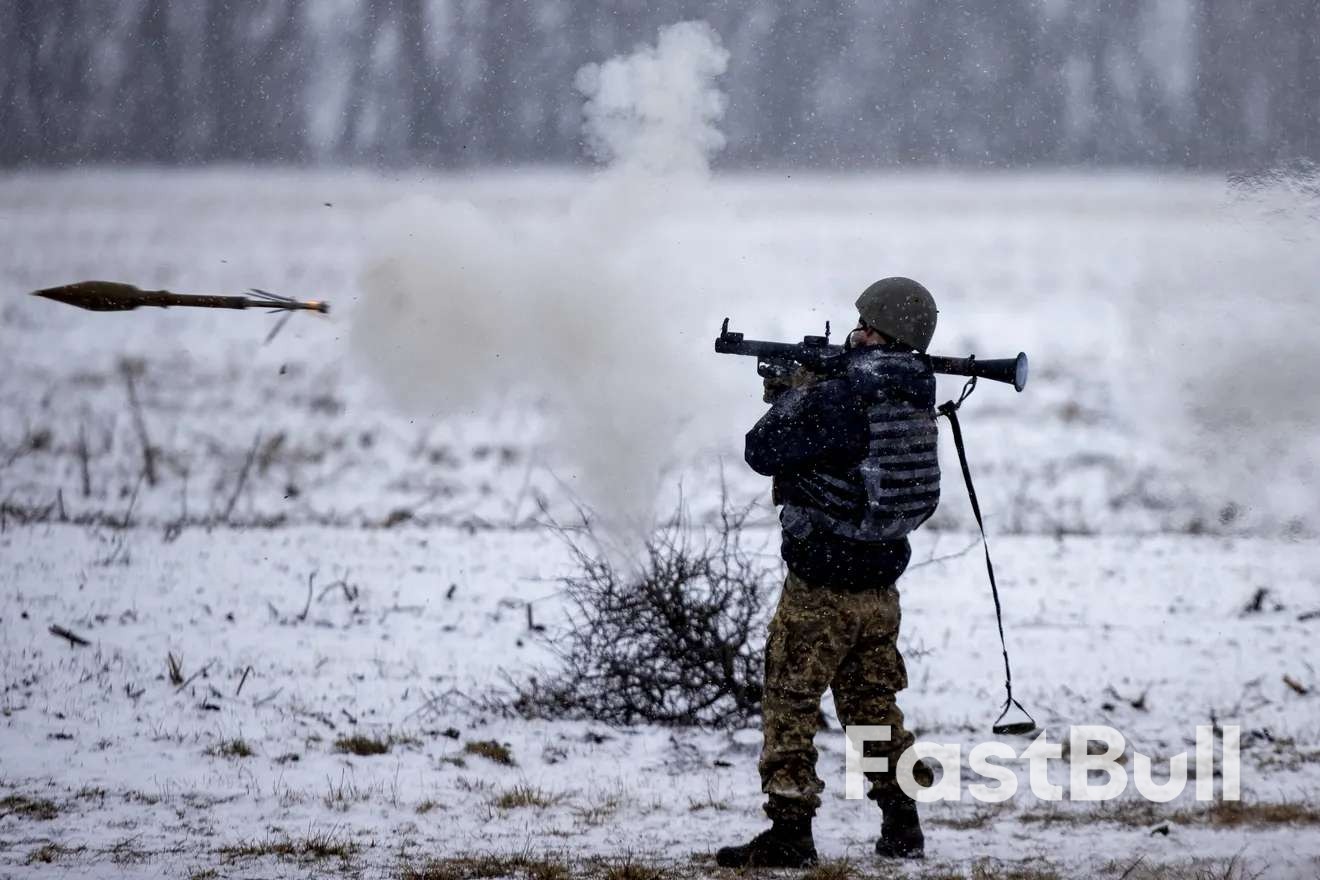
          The United States is good at getting involved in wars and not as good at getting out of them.
          A year on, the Russia-Ukraine war has no end in sight. The war is at a semi-stalemate, and both Russia and Ukraine are sticking to their demands. Ukraine has been able to defend itself against Russian aggression in large part due to the $29.8 billion worth of weapons and equipment that the US has sent so far. While the US has hit some limits, it is sending ever more advanced weaponry and provides Ukraine with intelligence to help it target Russia more effectively. Ukraine cannot continue the war without Western military and economic support.
          All of which raises the question of whether the Russia-Ukraine conflict is entering forever war territory.
          The US’s post-9/11 wars in the Middle East and Afghanistan turned into decades-long conflicts because the objectives kept shifting, because they were guided by ideological goals, and because they were enabled by legal authorizations that gave policymakers room to expand the wars. The situation in Ukraine is obviously different from US engagement in Iraq or Afghanistan — for one, the US does not have troops on the ground in Ukraine. But when I asked former high-ranking military officials and national security experts about the risk of protracted war in Ukraine, they told me that those other forever war factors are currently present in the US’s support for the Ukraine war.
          The Biden administration does not view the war as endless. Defense Secretary Lloyd Austin said in October, “certainly we don’t want to see a forever war,” and he blames Russian President Vladimir Putin for the war’s continuation. But there’s a lot of time between here and forever. And in statement after statement after statement, officials describe the US’s enduring commitment to Ukraine. (Neither the White House nor the Pentagon replied to interview requests.)
          “This is going to be a generational conflict between the West and Russia,” says historian Michael Kimmage of Catholic University, who has researched Putin’s strategy in the war. “The further the West moves in, the more Putin is going to be motivated to keep on going,” he told me. “This is going to be the mother of all forever wars, because of the nature of the adversary.”
          So what can the US learn from its interventions in its Middle East forever wars? In the first year of the Iraq War, a young Gen. David Petraeus said he would repeat the mantra to himself, “Tell me how this ends.”
          These days, Petraeus is retired from active duty and shares on social media daily Ukraine war situation reports from the Institute for the Study of War, where he is a board member. “I think the most important question has to do with how one might see this war ending,” Petraeus wrote in an email. “Related to that is the critical question of what needs to be done to convince Vladimir Putin that the war in Ukraine is not sustainable for Russia on the battlefield in Ukraine and also on the home front in Russia.”
          But there are other ways of posing the question. Thomas Pickering, a former career ambassador who served in Russia and rose to be undersecretary for political affairs at the State Department, says the potential for a nuclear conflict means the US does have to think about “whether it would make sense to try to terminate the war on an advantageous but not perfect basis.”
          “I don’t [think] Ukraine has to become a forever war or even a frozen conflict; in fact, we need to do everything that we and our allies and partners can to enable Ukraine and ensure that this does not become a forever war,” Petraeus, now a partner at the private equity firm KKR, added.
          Talking about how and why Ukraine is becoming a forever war, then, is a fine place to start.

          Lessons from Iraq and Afghanistan

          The global war on terrorism was a sprawling and ill-defined project.
          After 9/11, the US was responding to an attack on its soil, but then the George W. Bush administration expanded its international campaign to target not just al-Qaeda but the concept of terrorism — one that somehow the US is still fighting today. Though President Joe Biden withdrew from Afghanistan, US troops are still in the Middle East, and many aspects of the counterterrorism wars endure.
          The way that Bush’s interventions in Iraq and Afghanistan began made that possible. Congress approved a joint resolution against threats to the US homeland in 2001 that was so broad that it evolved as the threats did. That vote authorized the use of military force against “nations, organizations, or persons” connected to the 9/11 attacks, and in 2002, Congress passed another broad authorization on Iraq that two decades later is used to counter the Islamic State terrorist group.
          The US’s goals in Iraq, for example, ran the gamut of eliminating the risk of purported weapons of mass destruction, regime change, nation-building, countering Iranian influence, and then debilitating ISIS. US troops remain there in 2023. And when there were opportunities to end the initial invasion of Afghanistan — like when hundreds of Taliban fighters surrendered to the US — the Bush administration rejected them. Even now, 18 months after the US withdrew its last troops from Afghanistan and more than a year after the US assassinated perhaps the last known planner of the 2001 attack, the initial authorization has yet to be repealed.
          As Rep. Barbara Lee, the only lawmaker who voted against the authorization of military force in Afghanistan in 2001, warned just days after the 9/11 attacks: “We must be careful not to embark on an open-ended war with neither an exit strategy nor a focused target.”
          Some of the lessons of the Bush and Obama years seem to have been put into action. Strategists now recognize that a small footprint is better than a massive US presence of hundreds of thousands of troops, and that much can be accomplished by partnering with another country’s military (instead of having “boots on the ground”). From the first 20 years of the war on terrorism, the US learned well that corruption among recipients of aid is corrosive to US interests. That commanders on the ground offer overly rosy assessments of progress in a self-deceptive process that ends up extending the war is now a truism.
          Throughout, the American people are somewhat willing to ignore ongoing US wars, even when US soldiers are deeply involved.
          How Ukraine Could Become America’s Next Forever War_1
          But perhaps what the US ought to have learned from the forever wars is the importance of practicing humility and not underestimating one’s enemies. A more difficult lesson to put into practice is the importance of incorporating dialogue and negotiations with adversaries into policy.
          Mara Karlin, a top civilian strategist appointed by Biden to the Pentagon, wrote a 2021 book on what the US learned from the post-9/11 wars. In The Inheritance: America’s Military After Two Decades of War, she details how wars without clear ends affect the morale, preparedness, and even civilian control of the military. Karlin warns of the danger of “overreacting to threats and attacks, as the United States did in response to the September 11, 2001, attacks” and of “under-responding, as the United States has done in its persistent inability to recognize and act on the growing security threats posed by China and Russia to the U.S.-led global order over the last decade or so.”
          Karlin didn’t respond to a request for comment. But that a key Pentagon leader in 2021 worried more about a US underreaction to Russia than the potential for another endless war shows how committed a leading strategist in the Biden administration may be toward a long-haul fight.

          How Ukraine can become America’s next forever war

          The striking parallel between the US’s long wars in Iraq and Afghanistan and the ongoing war in Ukraine is the rhetoric surrounding the conflict.
          The US role in supporting Ukraine has been framed as ideological. Biden from the get-go described the conflict in terms of good versus evil, democracy against autocracy.
          Does the US “stand for the defense of democracy?” Biden asked again in his recent State of the Union address. “For such a defense matters to us because it keeps the peace and prevents open season for would-be aggressors to threaten our security and prosperity.” And senior State Department official Victoria Nuland wrote in testimony to Congress last month that “Ukraine’s fight is about so much more than Ukraine; it is about the world our own children and grandchildren will inherit.”
          The Biden administration may believe that. But rhetoric like that is also how wars continue in perpetuity. It’s how the objectives creep, the goalposts shift. Ideological struggles are not so easy to win.
          By some metrics, the objectives that the US set out to achieve in Ukraine have already been achieved. Christopher Chivvis, a researcher at the Carnegie Endowment for International Peace, explained that the US in the past year has managed to avoid a direct war with Russia, made Russia suffer a strategic defeat, and kept the NATO alliance unified. Ukraine has also maintained its sovereign independence.
          Continued unqualified support is “good in the sense that it puts pressure on the Russians to try to moderate their more extreme objectives,” Chivvis told me. “But it’s not likely to get the Ukrainians to think seriously about restraining their own war aims, because they see the whole set of Western nations backing them to the hilt.”
          Though many experts told me that it’s time to begin plotting the contours of talks between Russia and Ukraine, neither side sees value in negotiating right now.
          The types of military support the West is giving to Ukraine — including US and German tanks and British promises to train Ukrainian pilots on their fighter jets — acknowledge this reality and could help contribute to it, argues Chivvis. The most advanced and heavy weaponry, like the US’s Abrams tanks, likely won’t arrive till next spring. “The trend is toward more and more military support to the Ukrainians, and they have no real reason as of now to limit their own war objectives,” says Chivvis, who previously worked as a US intelligence officer in Europe. “So it’s hard to see how it ends at this point.”
          And yet, the longer the war goes on, the more people will die in Ukraine and Russia, and the risks for the war to spiral out of control are real. As Pickering put it, the US risks stumbling into “an endless war punctuated by nuclear use.”

          What happens when the war keeps going

          The war to defend Ukraine may be more coherent than the war on terrorism, but it also appears ill-defined in terms of goals and strategies. Analysts who might not agree on much else do agree that there isn’t enough of a debate on what outcomes the US seeks.
          The Biden administration, for its unprecedented mustering of allies through NATO, Europe, and elsewhere, has left some gaps unfilled. Deferring to Ukraine, as Biden’s national security leaders have consistently done in public interviews, is not a strategy.
          How Ukraine Could Become America’s Next Forever War_2
          Less attention has been paid to how this conflict might end in a way that serves US interests in Europe and the world, according to Samuel Charap, an analyst at the RAND Corporation. And those trying to have that conversation about how to end the war, he told me, are sometimes cast as Russian sympathizers. But there is an urgency to have these difficult conversations. “We know that, for example, conflicts that last more than a year are more than likely to continue to go on for 10 years,” Charap told me.
          “I don’t think that we should tolerate a war that stretches on for years, because if we do, it means that we are tolerating greater risk that the war will spread,” said Evelyn Farkas, a former Obama defense official who now directs the McCain Institute think tank. “If we knowingly accept a war that will go on for years, then I think we are taking on a moral hazard because Ukrainians are dying every month this war goes on.”
          The toll on human life is unfathomable, and the long-term effects on the country will be many. Kurt Volker, a former ambassador to NATO now at the Atlantic Council think tank, is worried about how the wartime mentality has forever changed Ukrainian institutions. “We’re going to have to help Ukraine get back to normal,” he told me.
          “You have the presidential administration basically running everything. You have one centralized media operation for news for the country, which is highly censored,” Volker said. “These are things that can’t go on in a normal society. So they’re going to have to decentralize. They’re going to have to open new media outlets, going to have to have political pluralism in terms of political parties and competition — all kinds of things that they are not currently grappling with.”
          The rebuilding of Ukraine will require massive investments, too. The country’s energy infrastructure will need to be rebuilt, and just keeping its economy afloat in the meantime may require up to $5 billion a month, the International Monetary Fund has estimated. After the hot conflict ends, the US commitment will likely continue. But an end to the conflict seems increasingly hard to find.
          A Defense Department leader, Celeste Wallander, was recently asked at a Washington think tank event whether the Pentagon is planning for a negotiated outcome or an outright Ukrainian victory on the battlefield. “It is difficult ahead of time to precisely predict how an armed conflict will end,” Wallander said, though she did emphasize that “it ends in Russia’s strategic failure, no question,” and that the US will support the choices made by Ukraine as to whether it would negotiate with Russia.
          But Wallander and her colleagues in the Biden administration have left open the question of how the US would extricate itself from this conflict. Without having a clear answer of how this ends or how the US will get out, they presuppose that Washington will be in this war for the long haul.

          Source:Jonathan Guyer

          Risk Warnings and Disclaimers
          You understand and acknowledge that there is a high degree of risk involved in trading. Following any strategies or investment methods may lead to potential losses. The content on the site is provided by our contributors and analysts for information purposes only. You are solely responsible for determining whether any trading assets, securities, strategy, or any other product is suitable for investing based on your own investment objectives and financial situation.
          Comments
          Add to Favorites
          Share

          Take Five: Strap in for no Landing

          Owen Li

          Economic

          A raft of U.S. data and European inflation numbers will give guidance on how the world's top central banks will navigate the way ahead - including whether we're heading for that hotly debated "no landing" scenario.
          China's post Lunar New Year business activity data will give a reading of the health of the world's number-two economy whilst Nigerians head to the polls in the first of this year's key emerging market elections.
          Here's a look at the week ahead in markets from Ira Iosebashvili in New York, Rae Wee in Singapore and Naomi Rovnick, Dhara Ranasinghe and Karin Strohecker in London.

          1/ Fed v.s. Stocks

          Reports on U.S. durable goods orders, home prices as well as manufacturing and consumer confidence threaten to cement expectations of more Fed rate hikes and to deal a knockout punch to the early-year stocks rally.
          Evidence of a stronger-than-expected economy has forced investors to recalibrate projections for Fed hawkishness, lifting bond yields and weighing on stock gains. The S&P 500 has managed to hang on to a 4.5 per cent year-to-date gain but is well off its highs.
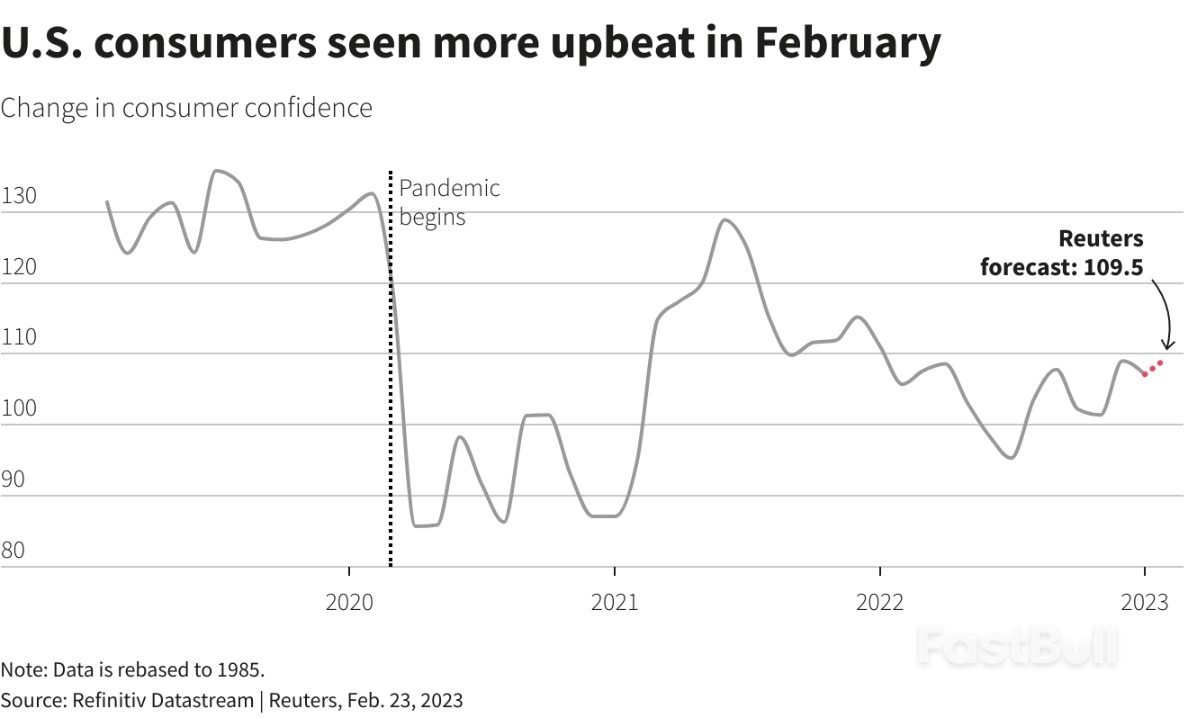
          Tuesday's consumer confidence data may be of particular interest, offering a glimpse into households' views on economic prospects and inflation expectations. Economists polled by Reuters expect a median reading of 109.5 on the index, which unexpectedly fell in January.

          Take Five: Strap in for no Landing_12/ Buckling up for No Landing

          Are economic conditions becoming too rosy for markets to bear? The idea of "no landing," which upends a host of popular trades based on a the scenario of the global economy entering recession is gaining traction thanks to surprisingly upbeat data.
          China has reopened from COVID lockdowns, U.S. labour markets are booming and consumer spending is holding up, while Europe's energy crisis has eased.
          Still, inflation remains sticky, which could keep big central banks on their hawkish path of raising interest rates further.
          This is inconvenient for investors who bought government bonds and bet on a softer dollar this year, expecting economies would decelerate and central banks would pause rate-hike campaigns. A soft landing could still happen. But if data in coming days signal that growth and inflation remain robust, equity and bond markets may turn lower still.

          Take Five: Strap in for no Landing_23/Inflation Week

          It's inflation week in the euro area. Preliminary February data from Germany, France, Spain and Portugal are due on Monday and Tuesday, followed by the bloc-wide flash number on Thursday.
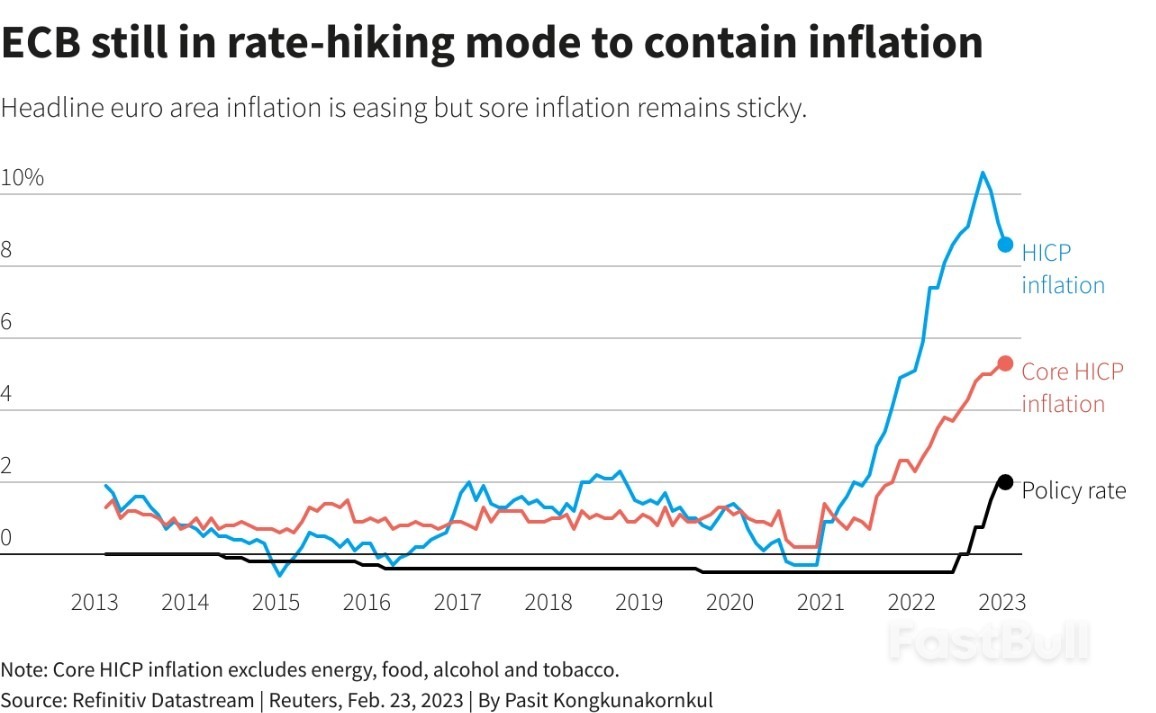
          Price pressures are abating: headline euro area inflation eased to 8.6 per cent in January from 9.2 per cent a month earlier. Still, Thursday's numbers are unlikely to placate European Central Bank hawks pushing for aggressive rate hikes to continue.
          Focus will likely stay on core inflation, stripping out volatile food and energy prices. It's proving stubborn and could still rise from January's 5.3 per cent.
          Markets have got the message and renewed bets on the ECB 2.5 per cent depo rate moving higher. Deutsche Bank just raised its forecast for the peak in ECB rates to 3.75 per cent from 3.25 per cent.

          Take Five: Strap in for no Landing_34/Roaring Restart

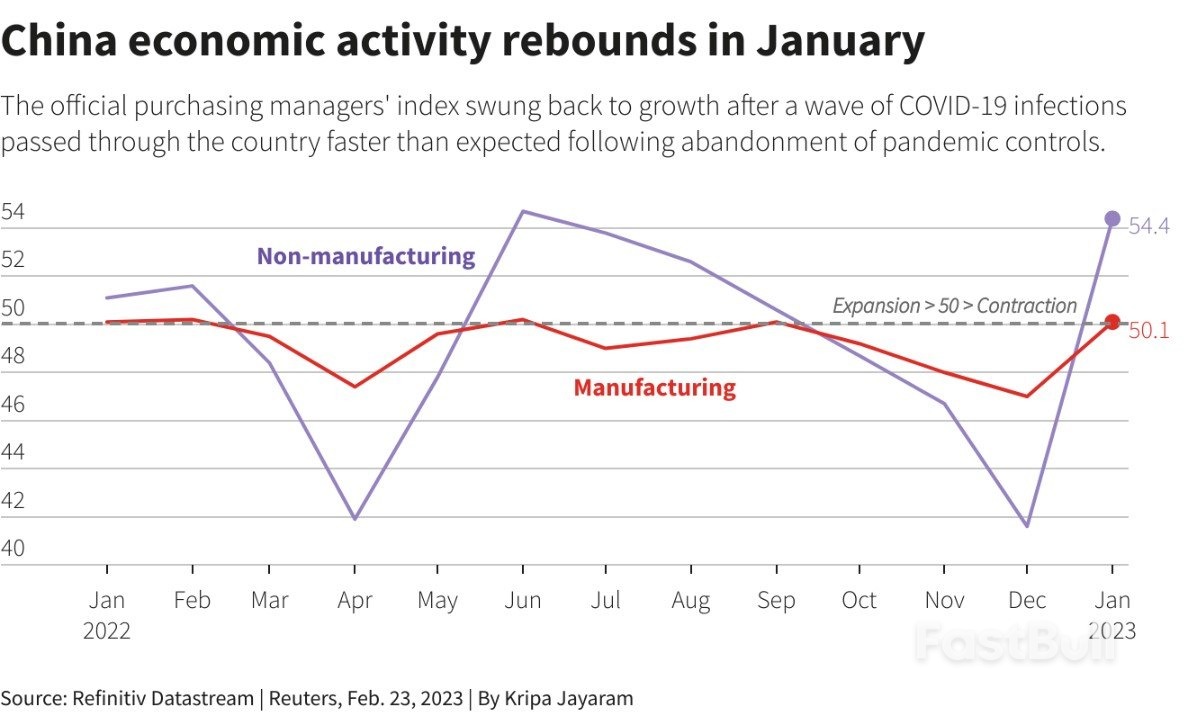
          China's reopening came fast and furious after a three-year lull. Wednesday's PMI releases could show whether factory activity in the world's second-largest economy has returned with a bang or a whimper after the Lunar New Year break.
          Strong figures could revive some of the waning enthusiasm for the reopening trade - where optimism seems to be fizzling out. The A-share blue-chip CSI 300 Index is largely flat on the month after surging 7 per cent in January.
          Retail investors are sitting out the stocks rally, and the recent disappearance of star Chinese dealmaker Bao Fan has investors worrying that Beijing's regulatory crackdowns are far from over. Escalating tensions between Washington and Beijing over a suspected Chinese spy balloon and Taiwan loom large over the China investment thesis.Take Five: Strap in for no Landing_4

          5/ Time to Vote

          Nigerians vote on Saturday in what could be their most credible and close electoral contest since military rule ended nearly a quarter of a century ago. It's also the first election in which a presidential candidate who is not from one of the two main parties stands a chance.
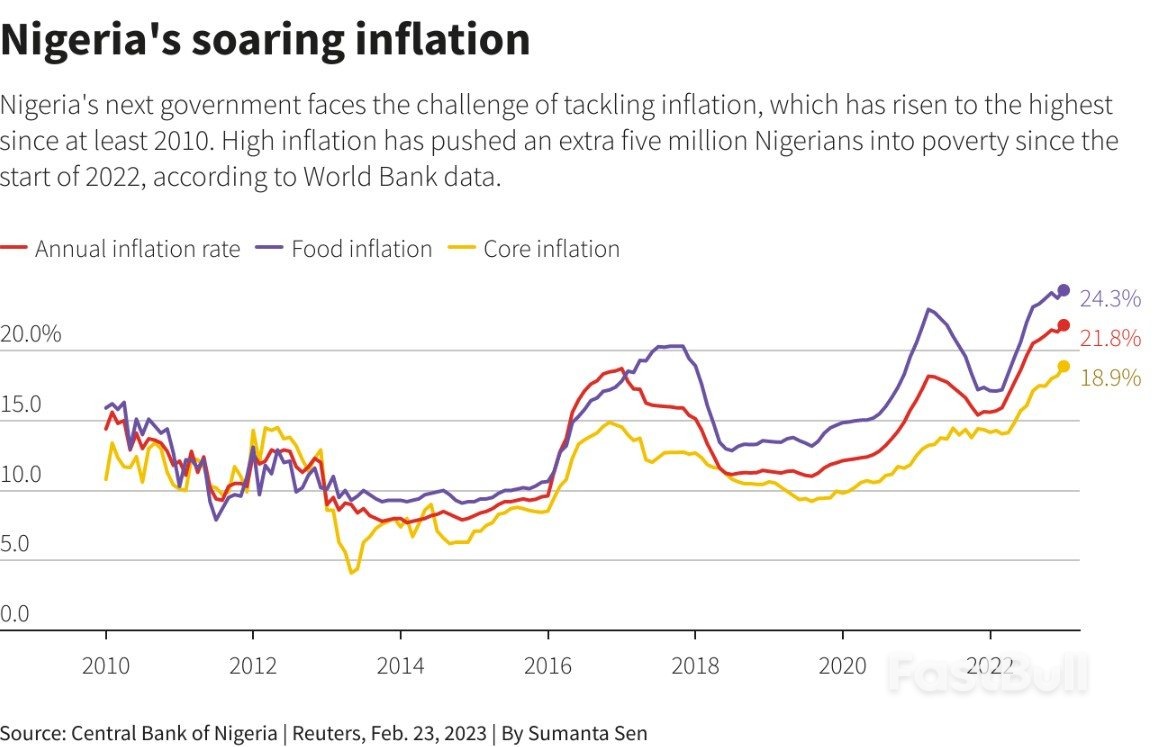
          Whoever Nigerians choose to succeed President Muhammadu Buhari will have to resolve a litany of crises that have worsened under the current administration - from widespread banditry and militant violence to systemic corruption, and from high inflation to widespread cash shortages.
          Many other emerging market economies are also approaching election crossroads. Turkey's government under President Tayyip Erdogan could hold elections in the wake of the devastating earthquake as scheduled in June. Argentina's Peronists are seeking re-election in October and Pakistan voters will likely head to the ballot box the same month.

          Take Five: Strap in for no Landing_5Source: CNA

          To stay updated on all economic events of today, please check out our Economic calendar
          Risk Warnings and Disclaimers
          You understand and acknowledge that there is a high degree of risk involved in trading. Following any strategies or investment methods may lead to potential losses. The content on the site is provided by our contributors and analysts for information purposes only. You are solely responsible for determining whether any trading assets, securities, strategy, or any other product is suitable for investing based on your own investment objectives and financial situation.
          Comments
          Add to Favorites
          Share

          Yen Enters a New Downfall

          Justin

          Central Bank

          Economic

          Forex

          Yen Enters a New Downfall_1
          Japan’s CPI rose 0.5% in January, the 15th month without a decline. The annual rate of increase also continues to grow, taking headline inflation to 4.3% and, excluding food and energy, to 3.2% y/y. This is the highest rate of price increases since the early 1980s.
          From a technical point of view, the nominal CPI has broken through the resistance of the peaks at the end of 1998 and continues to rise steadily. Nevertheless, there are concerns that the monetary and fiscal authorities still need to change their policy stance.
          Yen Enters a New Downfall_2
          The primary candidate for the BoJ chairmanship confirmed in his speech today that low-interest rates are now acceptable, as inflation is being driven by rising import prices rather than demand.
          These comments have the potential to finally undermine hopes that the Bank of Japan has followed much of the rest of the world in turning its back on inflation. Expectations of such a turnaround have recently worked in favour of a stronger Yen. Before, in October and November, demand for the Yen was driven by verbal and actual interventions in defence of the national currency.
          The USDJPY is down more than 15% from its October high of 152 and has found support on the downside at 127, where a local reversal area from last May’s upward correction and a 50% retracement of the rally from the 2021 lows at 102.6 coincide.
          Yen Enters a New Downfall_3
          Comments from the country’s monetary authorities suggest a new wave of pressure on the yen after three months of easing or ‘recharging’. With the Bank of Japan not changing policy, the yen is potentially under pressure from an intensified interest rate differential game. And this game promises to be more aggressive now than a year ago, as yield spreads between Japan and the US have widened for both short and long-term yields.
          Without a reversal by the BoJ, the USDJPY could be back around 150 by June. The yen would then be 15% lower than a year ago, which aligns with the standard depreciation rate for developed market currencies. Our observation is that officials only move from words to deeds when the exchange rate deviates by more than 20% YoY.
          The current higher interest rate environment is an opportunity for Japan to competitively devalue its currency to support national exporters, which it failed to do in the last decade in the era of zero interest rates.

          Source:The FxPro

          To stay updated on all economic events of today, please check out our Economic calendar
          Risk Warnings and Disclaimers
          You understand and acknowledge that there is a high degree of risk involved in trading. Following any strategies or investment methods may lead to potential losses. The content on the site is provided by our contributors and analysts for information purposes only. You are solely responsible for determining whether any trading assets, securities, strategy, or any other product is suitable for investing based on your own investment objectives and financial situation.
          Comments
          Add to Favorites
          Share

          US Fed Inflation Fears Keeps the Pressure on for Rate Hikes

          Justin

          Central Bank

          Economic

          Inflation shows little sign of slowing

          The acceleration in the Federal Reserve’s favoured measure of inflation, the core personal consumer expenditure deflator, is a big story. It rose 0.6% month-on-month versus expectations of a 0.4% print and is also above the 0.4% increase reported by the core CPI report. There were upside revisions too, which means the year-on-year rate has ticked up to 4.7% from 4.6%, above the 4.3% rate expected. This will ensure the Fed mantra of ongoing hikes continues with 25bp moves in March, May and June fully priced by markets. Talk of a potential 50bp move at the March Federal Open Market Committee meeting can’t be completely discounted, although we don't think they will carry through with it.

          US inflation measures (ex food and energy (YoY%))

          US Fed Inflation Fears Keeps the Pressure on for Rate Hikes_1
          Meanwhile, personal incomes didn't rise quite as much as expected, up 0.6% MoM. The consensus was for a 1% gain because of the annual uprating of social security benefits by 9%, but there was a 2.7% MoM drop in farm income while “other benefits” fell 15.5%. Real personal spending rose 1.1% MoM as expected. We will see weaker prints in February and March, but consumer spending is still likely to grow in the 3.5-4% annualised range in the first quarter of this year.

          Household savings ratio and debt service ratio (% of household disposable income)US Fed Inflation Fears Keeps the Pressure on for Rate Hikes_2

          Household finances are under pressure though

          The combination of decent income growth, rising spending and robust inflation means March and May rate hikes are very likely and we have to accept that a further move in June is more likely than not. Our caution centres on the combination of squeezed real incomes, rising interest rates and tightening lending conditions all happening at the same time. Household saving ratios are now well below pre-pandemic levels while the proportion of income spent on servicing the debts on consumer loans is at the highest since 2009 (chart above measures them as % of household disposable income).
          This hints at financial pressures on the household sector and this will increasingly bite as we go through the year. It will only get worse if those lay-off announcements keep coming, which could lead to the economy to slow sharply in coming quarters, opening the door for a path to lower interest rates from the fourth quarter.

          Source:ING

          To stay updated on all economic events of today, please check out our Economic calendar
          Risk Warnings and Disclaimers
          You understand and acknowledge that there is a high degree of risk involved in trading. Following any strategies or investment methods may lead to potential losses. The content on the site is provided by our contributors and analysts for information purposes only. You are solely responsible for determining whether any trading assets, securities, strategy, or any other product is suitable for investing based on your own investment objectives and financial situation.
          Comments
          Add to Favorites
          Share

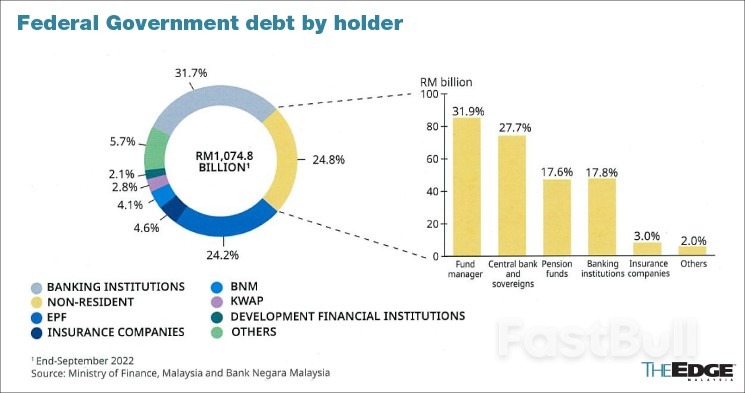
          Fed Govt Debt Likely to rise to 62% of GDP by End-2023 on Higher Borrowings to Fund 12MP, 1MDB Bond Redemption

          Thomas

          Economic

          The Federal Government's debt is estimated to reach around 62% of gross domestic products (GDP) by end-2023, up from 60.4% or RM1.08 trillion last year, as Putrajaya continues to borrow for the financing of development programmes and projects under the 12th Malaysia Plan, and also as the redemption of 1Malaysia Development Bhd (1MDB) bonds mature in March.
          Fed Govt Debt Likely to rise to 62% of GDP by End-2023 on Higher Borrowings to Fund 12MP, 1MDB Bond Redemption_1Borrowings will be primarily sourced from the domestic market, given the sufficient liquidity, the government said in its revised 2023 Economic & Fiscal Outlook report.
          The report also indicated that Putrajaya intends to maintain the current 65% statutory debt ceiling, which was raised from 55% of GDP during the pandemic period.
          "Considering the debt-scarring effect from the Covid-19 crisis, as well as continued requirement post-pandemic recovery programmes and projects, the Federal Government has maintained the 65% of GDP statutory limit by gazetting Loan (Local) (Statutory Ceiling for Borrowing) and Government Funding (Statutory Ceiling of Moneys Received) Order 2022 [P.U. (A) 399/2022], which came into operation on Jan 1, 2023," it said.
          Nonetheless, the government pledges that it is "committed to manage its indebtedness level in the medium term, while ensuring sustainable growth".
          "The government aims to improve debt affordability and sustainability in the medium- and long term, in line with the fiscal consolidation trajectory supported by fiscal reform initiatives," it said.
          Fed Govt Debt Likely to rise to 62% of GDP by End-2023 on Higher Borrowings to Fund 12MP, 1MDB Bond Redemption_2Debt service charges likely to climb to 15.8% of federal govt revenue
          Having said that, the federal government is projecting an increase in debt service charges (DSC) to RM46.1 billion this year, from RM41.27 billion or 14% of revenue of RM294.36 billion in 2022.
          Based on the projected revenue of RM291.5 billion for 2023, the government's DSC is estimated to be at RM46.1 billion or 15.8% of revenue.
          "The government is constitutionally obligated to serve the DSC ahead of spending on other expenses, as stipulated under the Federal Constitution," the report stated.
          DSC stood at RM38.1 billion or 16.3% of government revenue in 2021.
          Fed Govt Debt Likely to rise to 62% of GDP by End-2023 on Higher Borrowings to Fund 12MP, 1MDB Bond Redemption_31MDB debt exposure
          Meanwhile, debt exposure to 1MDB, which is not included in the federal government's debt, stood at RM18.2 billion as at end-2022, down from RM32.1 billion at end-2021, following the debt redemption of both 1MDB Energy Ltd in May 2022 and 1MDB Energy (Langat) Ltd in October 2022.
          These redemptions were done by utilising funds from the Assets Recovery Trust Account, whose balance is estimated at RM1.9 billion, and will be utilised to cover project interests for remaining debt principals.
          There will be another redemption of US$3 billion (about RM13.2 billion) due in March this year for the 1MDB Global Investment Ltd bond.
          The government is allocating RM97 billion for its development expenditure (DE) under Budget 2023, of which US$3 billion is allocated for redemption of the 1MDB Global Investment Ltd bond.
          Subsequent to the March redemption, the government's 1MDB debt exposure will be left with a RM5.0 billion sukuk, which is due in May 2039.

          Source: The Edge Markets

          To stay updated on all economic events of today, please check out our Economic calendar
          Risk Warnings and Disclaimers
          You understand and acknowledge that there is a high degree of risk involved in trading. Following any strategies or investment methods may lead to potential losses. The content on the site is provided by our contributors and analysts for information purposes only. You are solely responsible for determining whether any trading assets, securities, strategy, or any other product is suitable for investing based on your own investment objectives and financial situation.
          Comments
          Add to Favorites
          Share

          German GDP Growth of -0.4% Proves that a Recession is in the Making

          Devin

          Economic

          We've previously had German GDP estimates of stagnation, of -0.2%, and -0.4%. Now we know the third estimate of German GDP growth in the final quarter of 2022 was the correct one. As just released by the German statistical office, the German economy contracted by 0.4% quarter-on-quarter in the fourth quarter of 2022, from +0.5% in the third quarter. This is the first contraction since the first quarter of 2021. On the year, GDP growth came in at 0.9%.
          Recession is in the making
          The economic contraction is no surprise. What is interesting in today's GDP report are the details. Private consumption without lockdown savings languished under high inflation and energy prices and fell by 1% quarter-on-quarter, from +0.7% in the third quarter. Capital investments plunged by 2.5% QoQ, from 1.3%. Net exports, government consumption and a large inventory build-up prevented the economy from falling into a deeper contraction.
          The German economy has surprised by showing more resilience than feared, despite facing a long series of crises. However, while this resilience, driven by fiscal support and warm winter weather, has prevented the economy from falling into a deep recession, it is definitely no guarantee for a strong rebound anytime soon. In fact, even though sentiment indicators have increased in recent months, there is overwhelming evidence of a still weak economy. The second consecutive drop in the Ifo's current assessment component, a falling PMI manufacturing and, as reflected in this morning's data, weak consumer confidence and a willingness to spend close to historical lows, all confirm our view that the German economy will contract once again in the first quarter.
          Recession in the short term and subdued recovery afterward
          Looking beyond the first quarter, the latest improvement in soft data suggests that the German and eurozone economies are in the middle of a typical cyclical recovery, while we fear that we are actually in the middle of a structural transition. If we are right, any rebound this year will be softer and more short-lived than many expect, and subdued growth rather than a strong rebound remains the base case. Or in other words: not falling off the cliff is one thing; staging a strong rebound, however, is a different matter. In Germany, industrial orders have weakened since the start of 2022, consumer confidence, despite some recent improvements, is still close to historic lows, the loss of purchasing power will continue in 2023, and the full impact of monetary policy tightening still has to unfold.
          Today's numbers mark the first part of what could become a technical recession in Germany. We think that the risk of yet another contraction in the first quarter and, thus, a technical recession is high and that the German economy is still miles away from staging a strong rebound.

          Source: ING

          To stay updated on all economic events of today, please check out our Economic calendar
          Risk Warnings and Disclaimers
          You understand and acknowledge that there is a high degree of risk involved in trading. Following any strategies or investment methods may lead to potential losses. The content on the site is provided by our contributors and analysts for information purposes only. You are solely responsible for determining whether any trading assets, securities, strategy, or any other product is suitable for investing based on your own investment objectives and financial situation.
          Comments
          Add to Favorites
          Share

          The New Global Economy: Unmasking India's Crony Capitalist Oligarchy

          Thomas

          Economic

          The recent allegations of accounting fraud and stock manipulation made by New York-based short-selling firm Hindenburg Research against Indian multibillionaire Gautam Adani have startled many in the financial world. The episode is a necessary reality check for those who are expecting India's star to burn brighter in the global economic firmament as China's dims.
          The allegations have highlighted some of the systemic issues that plague the Indian economy and often go ignored, particularly its extreme inequality and corporate concentration. A small slice of the economy produces capital- and skill-intensive goods to meet the demands of the wealthy, whereas most other sectors by and large suffer from insufficient demand and weak productivity, resulting in low aggregate investment and high unemployment.
          Economic wealth is concentrated in the hands of a few conglomerates. Marcellus Investment Managers has estimated that the 20 most profitable firms in India generated 14% of total corporate profits in 1990, 30% in 2010 and 70% in 2019. Most evidence suggests that increased profits were due to market power rather than innovation or large productivity gains, while some commentators consider this corporate inequality to be a factor underlying the disconnect between the Indian stock market and the real economy.
          One could argue that the most profitable firms are not the same as before — there was considerable structural churn in the first two decades after economic liberalisation began in 1991. Significantly, regional capital had grown, particularly in the southern and western states, and competition among new business groups increased. This development coincided with the rise of powerful regional political parties, which played an increasingly assertive role in coalition governments.
          But after the return in 2014 to a one-party dominant system, headed by Prime Minister Narendra Modi, the merger of business and politics led to what journalist Harish Damodaran has described as "conglomerate" capitalism. In most sectors, only two players, or at most three, control a combined market share greater than 50%, while protectionism has inhibited foreign competition.
          It is a classic case of crony capitalism, with favours and special regulatory dispensations often reserved for a select number of large firms. In some cases, rules and goalposts have been changed midgame to help politically connected businessmen. This was obvious in Adani Group's emergence, in a matter of a few months, as the largest commercial holder of airports, despite having no experience in the area. Adani's rise was aided by a relaxation of prior regulations and veiled threats against business rivals by government investigative agencies.
          After complaints about predatory pricing practices by Reliance Jio (run by another tycoon, Mukesh Ambani) in the telecom sector, the Telecom Regulatory Authority of India hastily amended the previous rules: No foul, no harm. Similarly, the Ministry of Commerce and Industry amended the regulations governing special economic zones to benefit Adani's coal-fired power plant in Godda, and environmental regulations were waived for Adani's mines. Even heavily indebted favoured businesses can easily raise domestic or foreign capital because their political connections facilitate regulatory approvals and an implicit "sovereign guarantee".
          Most of the industries in which crony capitalists operate produce non-traded goods or are highly regulated, which means that getting government favours are much more important than being successful in foreign markets (this is the main difference between Indian conglomerates and those in, say, South Korea). It is no surprise that India's business tycoons have not produced a single global champion; they are happier wallowing in mostly rent-heavy industries.
          The problem has only got worse. According to The Economist, India's share of billionaire wealth derived from crony sectors rose from 29% to 43% between 2016 and 2021. Gautam Adani's net worth increased almost fourteenfold from 2014 until the recent scandal.
          In recent years, public-sector banks have forgiven enormous debts, and many large "wilful defaulters" have essentially robbed these banks with impunity (thanks to the nexus between business, politics and the financial industry). The government has also undermined the Insolvency and Bankruptcy Code (IBC), which was widely hailed as transformational legislation when it was enacted in 2016, to preserve its ability to engage in selective regulatory forbearance. (One Reserve Bank of India governor reportedly resigned in objection to such acts.)
          The recovery of loans under the IBC process has so far been absurdly low; the entire system has been brazenly gamed by the politically connected. Delayed court judgments are often due to evasive action by defaulting borrowers, even as they continue to strip assets. In any case, the accounting and regulatory standards are quite lax in the Indian corporate sector more generally, and some claim that nearly half the listed companies in the stock market have accounting problems.
          Crony capitalism pays off handsomely for the ruling Bharatiya Janata Party. Electoral bonds, introduced in 2017, were touted as a way to increase transparency and accountability, but they have done exactly the opposite, reportedly allowing copious funds to flow — without any limits or disclosure requirements — from a small number of conglomerates to the BJP. While these corporate donors remain anonymous to the public, the bonds are issued by the State Bank of India, which means that the bank — and therefore the government — knows who buys them. In a climate of fear, potential business donors to opposition parties will remain hesitant.
          The BJP no longer needs to raise money from an odd assortment of smaller donors — liquor dealers, sugar barons, local real estate magnates or construction contractors — as regional parties did previously. Now, the ruling party simply doles out favours to the large national firms that funnel it ample money.
          Some of these businesses also own media companies that effectively serve as mouthpieces and cheerleaders for the government in exchange for a steady stream of revenue from public advertisements. One of the Adani Group's most brazen acts was a hostile takeover of the independent Indian news channel NDTV.
          The Adani scandal has stoked a media firestorm, framed by a David-versus-Goliath narrative. (It is worth noting that many of the findings were already known to Indian investigative journalists, who had been harassed with lawsuits for some years.) But global financial institutions and investors need to understand that Gautam Adani is merely a symptom of a pervasive problem. India's crony oligarchy is likely to keep much of the economy trapped in a low-productivity mire for quite some time.

          Source: The Edge Malaysia

          To stay updated on all economic events of today, please check out our Economic calendar
          Risk Warnings and Disclaimers
          You understand and acknowledge that there is a high degree of risk involved in trading. Following any strategies or investment methods may lead to potential losses. The content on the site is provided by our contributors and analysts for information purposes only. You are solely responsible for determining whether any trading assets, securities, strategy, or any other product is suitable for investing based on your own investment objectives and financial situation.
          Comments
          Add to Favorites
          Share
          FastBull
          Copyright © 2025 FastBull Ltd

          728 RM B 7/F GEE LOK IND BLDG NO 34 HUNG TO RD KWUN TONG KLN HONG KONG

          TelegramInstagramTwitterfacebooklinkedin
          App Store Google Play Google Play
          Products
          Charts

          Chats

          Q&A with Experts
          Screeners
          Economic Calendar
          Data
          Tools
          Membership
          Features
          Function
          Markets
          Copy Trading
          Latest Signals
          Contests
          News
          Analysis
          24/7
          Columns
          Education
          Company
          Careers
          About Us
          Contact Us
          Advertising
          Help Center
          Feedback
          User Agreement
          Privacy Policy
          Business

          White Label

          Data API

          Web Plug-ins

          Poster Maker

          Affiliate Program

          Risk Disclosure

          The risk of loss in trading financial instruments such as stocks, FX, commodities, futures, bonds, ETFs and crypto can be substantial. You may sustain a total loss of the funds that you deposit with your broker. Therefore, you should carefully consider whether such trading is suitable for you in light of your circumstances and financial resources.

          No decision to invest should be made without thoroughly conducting due diligence by yourself or consulting with your financial advisors. Our web content might not suit you since we don't know your financial conditions and investment needs. Our financial information might have latency or contain inaccuracy, so you should be fully responsible for any of your trading and investment decisions. The company will not be responsible for your capital loss.

          Without getting permission from the website, you are not allowed to copy the website's graphics, texts, or trademarks. Intellectual property rights in the content or data incorporated into this website belong to its providers and exchange merchants.

          Not Logged In

          Log in to access more features

          FastBull Membership

          Not yet

          Purchase

          Become a signal provider
          Help Center
          Customer Service
          Dark Mode
          Price Up/Down Colors

          Log In

          Sign Up

          Position
          Layout
          Fullscreen
          Default to Chart
          The chart page opens by default when you visit fastbull.com