


- GBPUSD
- XAUUSD
- XAGUSD
- WTI
- USDX


Markets
Analysis
User
24/7
Economic Calendar
Education
Data
- Names
- Latest
- Prev










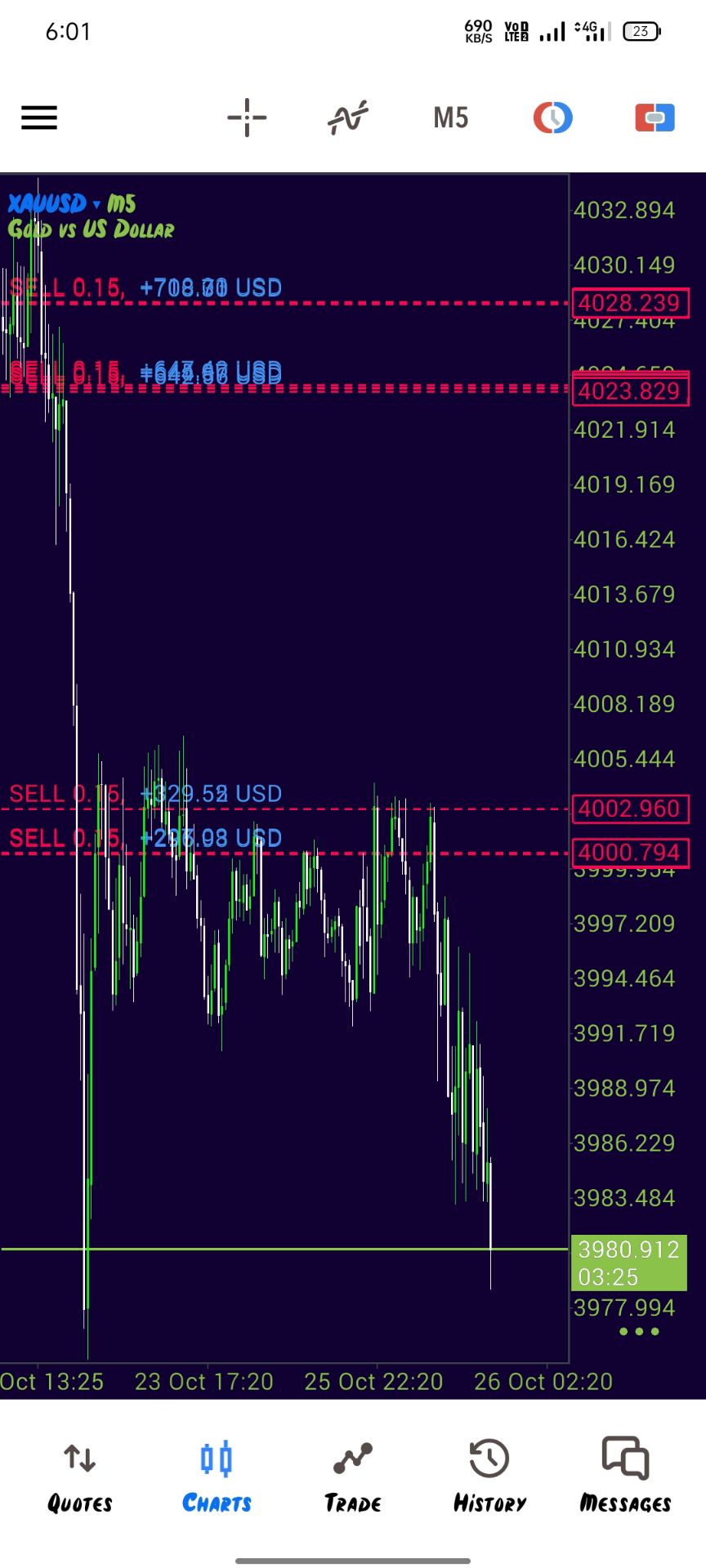


For centuries, gold has been the go-to haven asset in times of political and economic uncertainty. Its status as a reliably high-value commodity that can be transported easily and sold anywhere offers a sense of safety when everything else is in turmoil.
For centuries, gold has been the go-to haven asset in times of political and economic uncertainty. Its status as a reliably high-value commodity that can be transported easily and sold anywhere offers a sense of safety when everything else is in turmoil.
Investors flocked to bullion in 2025, in particular gold-backed exchange-traded funds, driven by President Donald Trump's trade war, his threats to the independence of the US Federal Reserve, geopolitical tensions and concerns over ballooning government debt. Central banks also continued to add to their gold reserves.
This prompted the precious metal to notch a series of price records and eclipse its inflation-adjusted peak from 1980. There was a marked price retreat in October amid fears that the rally had overheated. But the momentum quickly rebuilt on expectations of further US interest rate cuts and gold smashed through $4,400 per troy ounce toward the end of the year to reach a new all-time high.
For modern investors, it's primarily because of gold's stability and liquidity rather than any intrinsic utility.
Bullion is seen as a hedge against inflation, when the purchasing power of currencies is eroded. Price increases and the labor market in the US have been in the spotlight as Trump has piled pressure on the Fed to bend to his will and cut interest rates.
Gold, which pays no interest, typically becomes more attractive in a lower-rate environment, as the opportunity cost of holding it versus interest-earning assets decreases. Investors have been betting that the Fed will trim rates further in 2026, and that the next chair of the central bank — due to be appointed by Trump — will take a more dovish approach to monetary policy than Jerome Powell.
Investors have also turned to gold, silver and other precious metals as part of the so-called debasement trade. Runaway budget deficits around the world have shaken their trust in other traditional shelters from market gyrations, namely sovereign debt and currencies.
Gold has historically been negatively correlated with the US dollar — it's priced in dollars, so when the greenback weakens, bullion becomes cheaper for holders of other currencies.
Beyond market movements, owning gold is deeply rooted in Indian and Chinese cultures — two of the world's largest markets for the metal — where jewelry, bars and other forms of bullion are passed down through generations as a symbol of prosperity and security. Indian households own about 25,000 metric tons of gold, more than five times what's stored in the US depository at Fort Knox.
Physical buyers are famously sensitive to prices. When gold's appeal to investors in financial markets starts to fade, buyers of jewelry and bars often step in to grab a bargain, putting a floor under prices in the process.
The metal's blistering price rally since the start of 2024 has partly been driven by huge purchases by central banks, particularly in emerging markets as they seek to reduce their dependency on the dollar, the world's primary reserve currency.
Central banks have been net buyers of gold for more than a decade but accelerated their purchases in the wake of Russia's invasion of Ukraine. As the US and its allies froze Russian central bank funds held in their countries, it underscored how foreign currency assets are vulnerable to sanctions.
The People's Bank of China has been on a buying streak, adding to its gold holdings for a 13th consecutive month in November. The PBOC is looking to become a custodian of foreign sovereign gold reserves in a bid to strengthen its standing in the global bullion market, Bloomberg reported. Most countries that keep gold abroad store it in the Bank of England.
An increase in the value of the dollar, a major de-escalation of Trump's tariffs, or a peace deal between Russia and Ukraine could spur a gold price decline.
Investors could also opt to bank their gains, although their appetite for the precious metal may not have reached its limit just yet. Total gold ETF holdings are still some way off their 2020 peak.
Central banks have been the most important pillar of gold's momentum, meaning they have the power to do the most damage if they trim their reserves. There's no indication that any large holder is considering this.
The central banks of developed economies have sold very little gold in recent decades compared to the 1990s, when persistent sales sent bullion prices down by more than a quarter over the decade. Amid concerns that those uncoordinated sales were destabilizing the market, the first Central Bank Gold Agreement was struck in 1999, under which signatories agreed to limit their collective sales of bullion.
Owning gold typically isn't free. Because it's a physical object, holders have to pay for storage, security and insurance.
Investors buying gold bars and coins usually pay a premium over the spot price. There can be geographic price differentials, too, and traders take advantage of these arbitrage opportunities.
That's what happened in early 2025. Fears that Trump could introduce tariffs on bullion imports pushed gold futures on New York's Comex significantly above spot prices in London and sparked a worldwide dash to shift the metal to the US.
Gold is usually relatively simple to move, stashed away in the cargo holds of commercial aircraft, unbeknown to the holiday and business travelers in the cabin above. But it's not as straightforward as loading up a jet from Heathrow Airport to JFK thanks to a quirk in the global gold market: different size requirements.
In London, 400-ounce bars are the standard, while for Comex contracts, traders must deliver 100-ounce or 1-kilogram bars. That means bullion being sent to Comex warehouses has to first go to refiners in Switzerland to be melted down and recast to the correct dimensions. This creates a bottleneck when there's a particular rush to rejig the location of bullion stocks.

728 RM B 7/F GEE LOK IND BLDG NO 34 HUNG TO RD KWUN TONG KLN HONG KONG





The risk of loss in trading financial instruments such as stocks, FX, commodities, futures, bonds, ETFs and crypto can be substantial. You may sustain a total loss of the funds that you deposit with your broker. Therefore, you should carefully consider whether such trading is suitable for you in light of your circumstances and financial resources.
No decision to invest should be made without thoroughly conducting due diligence by yourself or consulting with your financial advisors. Our web content might not suit you since we don't know your financial conditions and investment needs. Our financial information might have latency or contain inaccuracy, so you should be fully responsible for any of your trading and investment decisions. The company will not be responsible for your capital loss.
Without getting permission from the website, you are not allowed to copy the website's graphics, texts, or trademarks. Intellectual property rights in the content or data incorporated into this website belong to its providers and exchange merchants.
Not Logged In
Log in to access more features


Log In
Sign Up


