Markets
News
Analysis
User
24/7
Economic Calendar
Education
Data
- Names
- Latest
- Prev


Signal Accounts for Members
All Signal Accounts
All Contests


Japan Tankan Small Manufacturing Outlook Index (Q4)A:--
F: --
P: --
Japan Tankan Large Non-Manufacturing Outlook Index (Q4)A:--
F: --
P: --
Japan Tankan Large Manufacturing Outlook Index (Q4)A:--
F: --
P: --
Japan Tankan Small Manufacturing Diffusion Index (Q4)A:--
F: --
P: --
Japan Tankan Large-Enterprise Capital Expenditure YoY (Q4)A:--
F: --
P: --
U.K. Rightmove House Price Index YoY (Dec)A:--
F: --
P: --
China, Mainland Industrial Output YoY (YTD) (Nov)A:--
F: --
P: --
China, Mainland Urban Area Unemployment Rate (Nov)A:--
F: --
P: --
Saudi Arabia CPI YoY (Nov)A:--
F: --
P: --
Euro Zone Industrial Output YoY (Oct)A:--
F: --
P: --
Euro Zone Industrial Output MoM (Oct)A:--
F: --
P: --
Canada Existing Home Sales MoM (Nov)A:--
F: --
P: --
Canada National Economic Confidence IndexA:--
F: --
P: --
Canada New Housing Starts (Nov)A:--
F: --
U.S. NY Fed Manufacturing Employment Index (Dec)A:--
F: --
P: --
U.S. NY Fed Manufacturing Index (Dec)A:--
F: --
P: --
Canada Core CPI YoY (Nov)A:--
F: --
P: --
Canada Manufacturing Unfilled Orders MoM (Oct)A:--
F: --
P: --
U.S. NY Fed Manufacturing Prices Received Index (Dec)A:--
F: --
P: --
U.S. NY Fed Manufacturing New Orders Index (Dec)A:--
F: --
P: --
Canada Manufacturing New Orders MoM (Oct)A:--
F: --
P: --
Canada Core CPI MoM (Nov)A:--
F: --
P: --
Canada Trimmed CPI YoY (SA) (Nov)A:--
F: --
P: --
Canada Manufacturing Inventory MoM (Oct)A:--
F: --
P: --
Canada CPI YoY (Nov)A:--
F: --
P: --
Canada CPI MoM (Nov)A:--
F: --
P: --
Canada CPI YoY (SA) (Nov)A:--
F: --
P: --
Canada Core CPI MoM (SA) (Nov)A:--
F: --
P: --
Canada CPI MoM (SA) (Nov)A:--
F: --
P: --
Federal Reserve Board Governor Milan delivered a speech
U.S. NAHB Housing Market Index (Dec)A:--
F: --
P: --
Australia Composite PMI Prelim (Dec)--
F: --
P: --
Australia Services PMI Prelim (Dec)--
F: --
P: --
Australia Manufacturing PMI Prelim (Dec)--
F: --
P: --
Japan Manufacturing PMI Prelim (SA) (Dec)--
F: --
P: --
U.K. 3-Month ILO Employment Change (Oct)--
F: --
P: --
U.K. Unemployment Claimant Count (Nov)--
F: --
P: --
U.K. Unemployment Rate (Nov)--
F: --
P: --
U.K. 3-Month ILO Unemployment Rate (Oct)--
F: --
P: --
U.K. Average Weekly Earnings (3-Month Average, Including Bonuses) YoY (Oct)--
F: --
P: --
U.K. Average Weekly Earnings (3-Month Average, Excluding Bonuses) YoY (Oct)--
F: --
P: --
France Services PMI Prelim (Dec)--
F: --
P: --
France Composite PMI Prelim (SA) (Dec)--
F: --
P: --
France Manufacturing PMI Prelim (Dec)--
F: --
P: --
Germany Services PMI Prelim (SA) (Dec)--
F: --
P: --
Germany Manufacturing PMI Prelim (SA) (Dec)--
F: --
P: --
Germany Composite PMI Prelim (SA) (Dec)--
F: --
P: --
Euro Zone Composite PMI Prelim (SA) (Dec)--
F: --
P: --
Euro Zone Services PMI Prelim (SA) (Dec)--
F: --
P: --
Euro Zone Manufacturing PMI Prelim (SA) (Dec)--
F: --
P: --
U.K. Services PMI Prelim (Dec)--
F: --
P: --
U.K. Manufacturing PMI Prelim (Dec)--
F: --
P: --
U.K. Composite PMI Prelim (Dec)--
F: --
P: --
Euro Zone ZEW Economic Sentiment Index (Dec)--
F: --
P: --
Germany ZEW Current Conditions Index (Dec)--
F: --
P: --
Germany ZEW Economic Sentiment Index (Dec)--
F: --
P: --
Euro Zone Trade Balance (Not SA) (Oct)--
F: --
P: --
Euro Zone ZEW Current Conditions Index (Dec)--
F: --
P: --
Euro Zone Trade Balance (SA) (Oct)--
F: --
P: --
Euro Zone Total Reserve Assets (Nov)--
F: --
P: --
U.K. Inflation Rate Expectations--
F: --
P: --


No matching data
Latest Views
Latest Views
Trending Topics
Top Columnists
Latest Update
White Label
Data API
Web Plug-ins
Affiliate Program
View All

No data
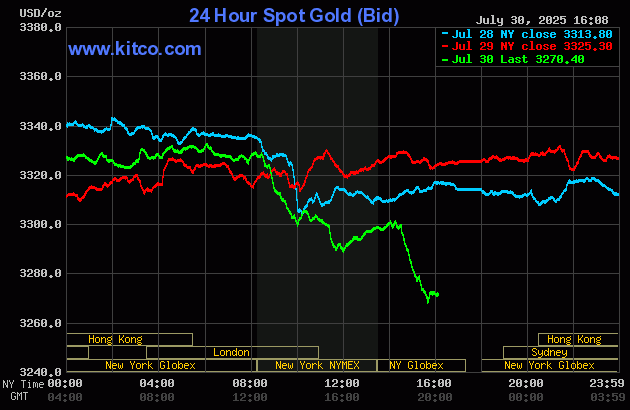
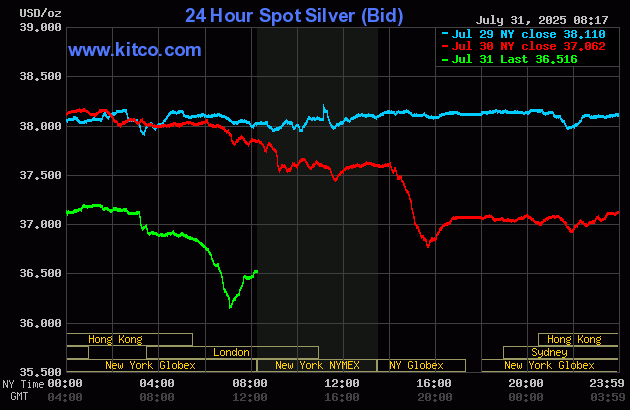
Gold edged higher on bargain buying, while silver slumped amid copper-related pressure. Powell held firm on rates, easing September cut hopes. Asian currencies weakened, and central bank gold demand declined sharply.

U.S. inflation increased in June as tariffs boosted prices for imported goods like household furniture and recreation products, supporting views that price pressures would pick up in the second half of the year and delay the Federal Reserve from resuming cutting interest rates until at least October.
The report from the Commerce Department on Thursday showed goods prices last month posting their biggest gain since January, with also solid rises in the costs of clothing and footwear. The U.S. central bank on Wednesday left its benchmark interest rate in the 4.25%-4.50% range and Fed Chair Jerome Powell's comments after the decision undercut confidence the central bank would resume policy easing in September as had been widely anticipated by financial markets and some economists."The Fed is unlikely to welcome the inflation dynamics currently taking hold. Rather than converging toward target, inflation is now clearly diverging from it," said Olu Sonola, head of U.S. economic research, Fitch Ratings. "This trajectory is likely to complicate current expectations for a rate cut in September or October."
The personal consumption expenditures (PCE) price index rose 0.3% last month after an upwardly revised 0.2% gain in May, the Commerce Department's Bureau of Economic Analysis said. Economists polled by Reuters had forecast the PCE price index climbing 0.3% following a previously reported 0.1% rise in May.
Prices for furnishings and durable household equipment jumped 1.3%, the biggest gain since March 2022, after increasing 0.6% in May. Recreational goods and vehicles prices shot up 0.9%, the most since February 2024, after being unchanged in May. Prices for clothing and footwear rose 0.4%.
Outside the tariff-sensitive goods, prices for gasoline and other energy products rebounded 0.9% after falling for four consecutive months. Services prices rose 0.2% for a fourth straight month. In the 12 months through June, the PCE price index advanced 2.6% after increasing 2.4% in May.
The data was included in the advance gross domestic product report for the second quarter published on Wednesday, which showed inflation cooling, though remaining above the Fed's 2% target. Economists said businesses were still selling inventory accumulated before President Donald Trump's sweeping import duties came into effect.
They expected a broad increase in goods prices in the second half. Procter & Gamble (PG.N), opens new tab said this week it would raise prices on some products in the U.S. to offset tariff costs.
The U.S. central bank tracks the PCE price measures for monetary policy. Excluding the volatile food and energy components, the PCE price index increased 0.3% last month after rising 0.2% in May. In addition to higher goods prices, the so-called core PCE inflation was lifted by rising costs for healthcare as well as financial services and insurance.
In the 12 months through June, core inflation advanced 2.8% after rising by the same margin in May.
U.S. stocks opened higher. The dollar was trading higher against a basket of currencies. U.S. Treasury yields fell.
The BEA also reported that consumer spending, which accounts for more than two-thirds of economic activity, rose 0.3% in June after being unchanged in May. The data was also included in the advance GDP report, which showed consumer spending growing at a 1.4% annualized rate after almost stalling in the first quarter.
In the second quarter, economic growth rebounded at a 3.0% rate, boosted by a sharp reduction in the trade deficit because of fewer imports relative to the record surge in the January-March quarter. The economy contracted at a 0.5% pace in the first three months of the year.
Consumer spending remains supported by a stable labor market, with other data from the Labor Department showing initial claims for state unemployment benefits rose 1,000 to a seasonally adjusted 218,000 for the week ended July 26.
But a reluctance by employers to increase headcount amid uncertainty over where tariff levels will eventually settle is making it harder for those who lose their jobs to find new opportunities, which could hamper future spending.
The number of people receiving benefits after an initial week of aid, a proxy for hiring, was unchanged at a lofty seasonally adjusted 1.946 million during the week ending July 19, the claims report showed.
The government's closely watched employment report on Friday is expected to show the unemployment rate rising to 4.2% in July from 4.1% in June, according to a Reuters survey of economists.
Economists expect the combination of pressure from tariffs and a slowing labor market will put a brake on consumer spending in the third quarter. Slow growth is likely already in the works as inflation-adjusted consumer spending edged up 0.1% in June after declining 0.2% in May. Precautionary saving could also curb spending. The saving rate was unchanged at 4.5% in June, while personal income re
"The June numbers and revisions to previous data set the economy up for fairly weak consumer spending in the third quarter," said Oren Klachkin, financial markets economist at Nationwide. "With wage growth staying contained, we expect the consumer will continue to look for discounts through the rest of the year."Reporting by Lucia Mutikani, Editing by Chizu Nomiyama and Andrea Ricci
President Donald Trump said the U.S. would charge a 15% tariff on imports from South Korea, one of a number of such measures announced in the run-up to his August 1 deadline to impose such levies.He also signed an executive order imposing a 40% tariff on Brazilian exports, bringing the country's total tariff amount to 50%, but with a number of notable exemptions.He has also threatened to impose a 25% tariff on goods imported from India starting on August 1.
Following are key developments:
SOUTH KOREA:
Trump said the U.S. will charge a 15% tariff on imports from South Korea, including autos, as part of a trade deal.He also said South Korea would accept American products, including autos and agriculture into its markets and impose no import duties on them.The U.S. agreed that South Korean firms would not be put at a disadvantage compared with other countries over upcoming tariffs on chips and pharmaceutical products, while retaining 50% tariffs on steel and aluminium.
INVESTMENTS:
Trump said South Korea would invest $350 billion in the United States in projects "owned and controlled by the United States" and selected by Trump.South Korea said $150 billion has been earmarked for shipbuilding cooperation, while investments in chips, batteries, biotechnology and nuclear energy cooperation accounted for the remaining $200 billion.Trump said South Korea would purchase $100 billion worth of liquefied natural gas or other energy products, which the Asian country said would mean a slight shift in energy imports from the Middle East in the next four years.
BRAZIL:
Trump slapped a 50% tariff on most Brazilian goods to fight what he has called a "witch hunt" against former President Jair Bolsonaro, but softened the blow by excluding sectors such as aircraft, energy and orange juice from heavier levies.The new tariffs are due to take effect on August 6 in the case of Brazil.General exemptions also apply to donations intended to relieve human suffering such as food, clothing, medicine, as well as publications, films, music and artworks.
INDIA:
Trump said on Wednesday the United States is still negotiating with India on trade after announcing earlier in the day the U.S. would impose a 25% tariff on goods imported from the country starting on Friday.India has resisted U.S. demands to open its agricultural and dairy markets, saying such moves would hurt millions of poor farmers. New Delhi has historically excluded agriculture from free trade pacts to protect domestic livelihoods.According to a White House fact sheet, India imposes an average MFN (Most Favoured Nation) tariff of 39% on imported farm goods, compared to 5% in the U.S., with some duties as high as 50%.
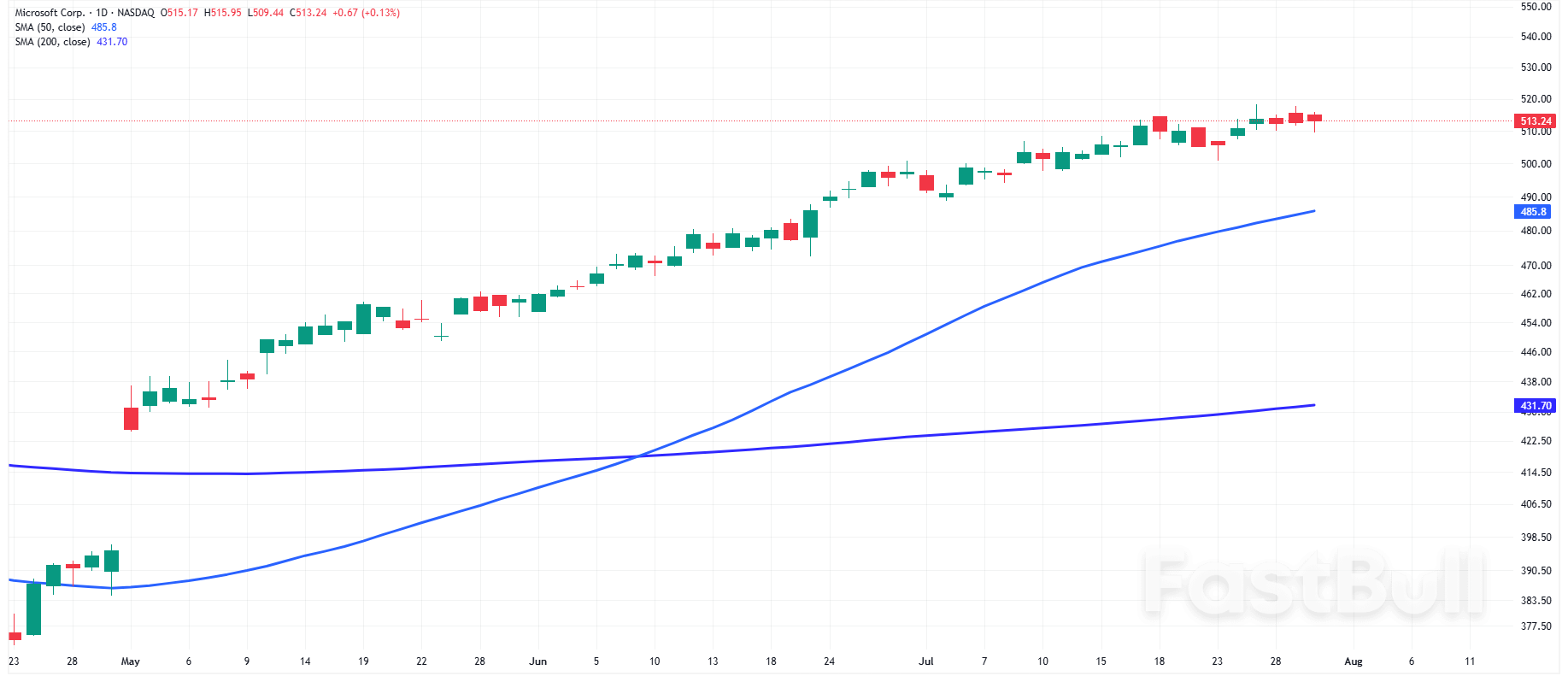
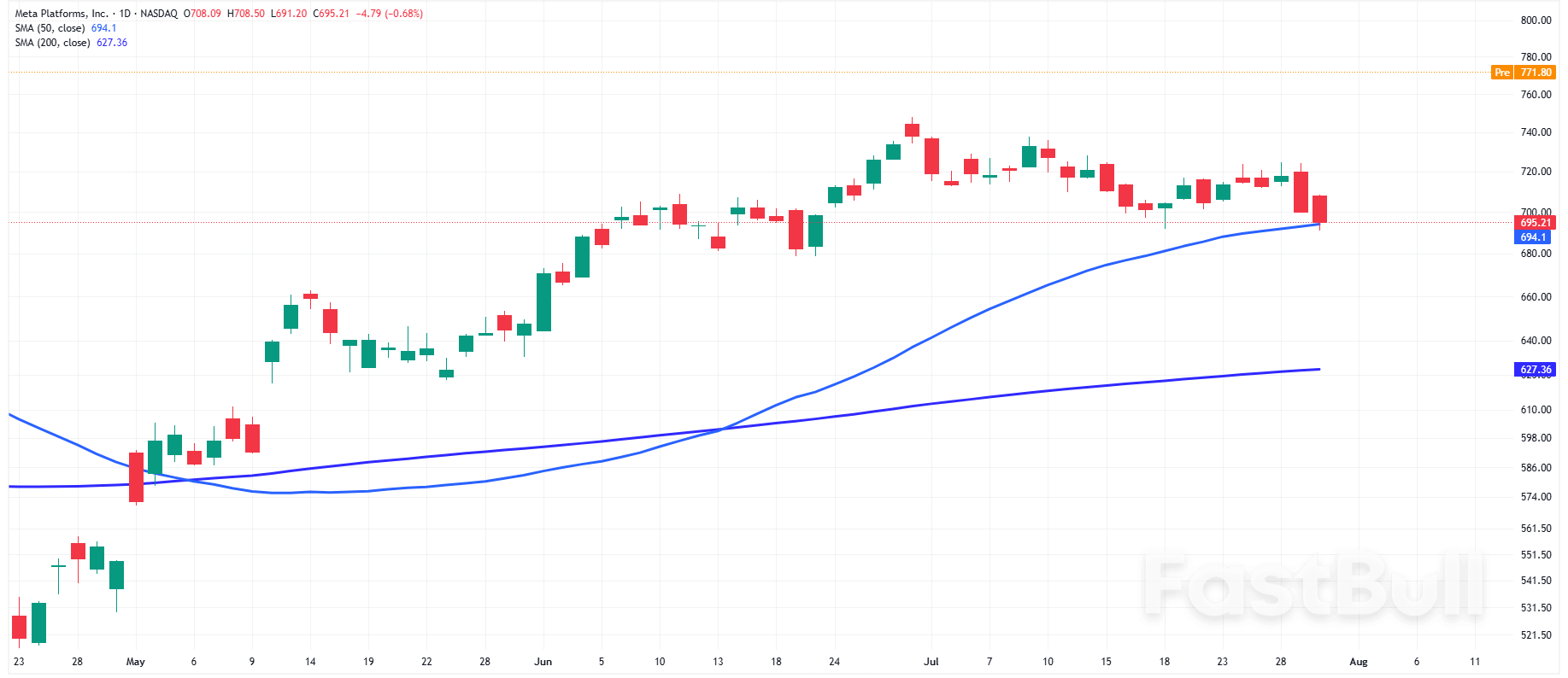
Daily Microsoft Corp.msftMM
President Donald Trump said he extended Mexico’s current tariff rates for 90 days to allow more time for trade negotiations with the US’ southern neighbor.
“We have agreed to extend, for a 90 Day period, the exact same Deal as we had for the last short period of time, namely, that Mexico will continue to pay a 25% Fentanyl Tariff, 25% Tariff on Cars, and 50% Tariff on Steel, Aluminum, and Copper,” Trump said Thursday in a social media post.
Trump threatened last month to increase Mexico’s country-based duty to 30% starting Aug. 1. The president’s decision comes shortly after he said he would not extend his Friday deadline.
“Additionally, Mexico has agreed to immediately terminate its Non Tariff Trade Barriers, of which there were many. We will be talking to Mexico over the next 90 Days with the goal of signing a Trade Deal somewhere within the 90 Day period of time, or longer,” the president added.
A major exemption to President Donald Trump's 50% copper tariff has shocked traders and sent U.S. market prices plummeting.
The final order on copper tariffs, which the Trump administration says will boost the domestic copper production industry, applies to semi-finished products such as pipes, rods, sheets and wires. It also impacts copper-intensive items like cables and electrical components. But crucially, it does not include the raw input material copper cathode, copper ores, concentrates or scraps, as had been widely expected.
However, analysts say that may not be enough to avoid prices for a range of consumer goods containing the metal, from cookware to air conditioning units to plumbing parts, being pushed higher as a result of the tariffs.
U.S. copper prices on the Chicago Mercantile Exchange (CME) shot to a record high earlier this month, also hitting an all-time premium over the global benchmark London Metal Exchange (LME), following the initial July announcement of a 50% tariff. While importers had already sent refined copper flooding stateside at record levels through the first half of the year in anticipation of new duties, the scale of a blanket 50% rate jolted markets and put severe upward pressure on U.S. prices.
The eventual reveal on Wednesday of a tariff targeting only semi-finished products has provided yet another massive shock. In the minutes after the news, COMEX copper (metals futures contracts on the CME) fell 19% in the biggest intraday fall on record, according to bank ING.
The gap between COMEX above LME prices has been around 30% since the initial July 8 announcement, implying continued uncertainty that the overall tariff rate would end up at 50%.
However, traders were instead considering possible exemptions for countries such as major exporter Chile, or for delays to full implementation of tariffs, Albert Mackenzie, copper analyst at Benchmark Mineral Intelligence, told CNBC.
The actual situation is almost a 180-degree pivot from what was expected and what was being priced in to the CME, which was tariffs on refined copper, Mackenzie continued.
The deviation sent the CME price premium plummeting from around $2,637 at the start of Wednesday to just $90 on Thursday morning in Europe, Mackenzie said — a scale of a drop that would look like a mistake were it not for the tariff context, he added.
While traders were taking advantage of a price arbitrage, part of the reason for the huge redirection of copper supply into the U.S. has been that it would take decades for the country to be able to sufficiently increase domestic production of the metal to meet demand. The U.S. currently imports around half its copper, with major exporters including Chile, Canada, Peru and Mexico.
Analysts at Deutsche Bank stressed the "huge shock to the market" this week, noting Thursday that shares of Arizona-based miner Freeport-McMoRan — the copper company most exposed to tariffs on refined copper driving up U.S. prices — closed over 9% lower the previous day.
"Fundamentally, this does not change the copper supply-demand balance (and arguably improves it due to less demand destruction risk), but is likely to put COMEX under heavy pressure," they wrote.
Downward price pressure is likely to follow through onto the LME on a less dramatic scale, they said, in the wake of the massive build-up in refined inventories in the U.S. so far this year. The overhang "could see high shipments from the U.S. back into the global market," they said, where supply has become tight.
Duncan Wanblad, CEO of mining giant Anglo American – which has major copper operations around the world – told CNBC's "Squawk Box Europe" on Thursday that while there was currently a "material dislocation" in the placement of inventories, the demand fundamentals for copper "look great."
"Through a medium- to long- term lens, the fundamentals of copper are really underpinned by the fact that demand is looking to be very strong still in terms of the world's need for an energy transition, for the likes of battery-electric vehicles, for the likes of new energy supply, data centers, AI," he said. Supply on that longer-term outlook remains constrained, he added, amid difficulties obtaining permits and getting product into market.
One policy revealed Wednesday is that the copper tariffs will not stack on top of Trump's new duties on automobile imports, meaning only the latter rate would apply to an impacted product.
However, Benchmark Mineral Intelligence's Mackenzie pointed out that a lower U.S. market price premium does not mean no feed-through into prices for consumer products.
"If you're a manufacturer of fridges or air conditioning units, or even houses, you don't buy copper cathode. You buy wiring and other semi-finished copper products, which are the things being tariffed. So it's reasonable to assume the price increase will be reflected in some end goods," Mackenzie said.
Russ Bukowski, president of manufacturing solutions firm Mastercam, agreed.
"Although there are currently high inventories of copper in the country, the 50% increase on copper tariffs is going to hurt manufacturers in the long run and lead to higher production costs," Bukowski told CNBC.
"To stay afloat, manufacturers may have to pass these costs to consumers, which will likely drive-up prices on various goods."
Michael Reid, senior U.S. economist at RBC Capital Markets, said the impact on consumer prices would be "nuanced" as it appears via an input to other goods.
"The largest sectors that use copper as inputs include motor vehicles, plumbing fixtures and valve fittings, communications wire (i.e., cable and internet providers), and various electrical components. To that end, the manner by which those products are made matters – which is to say, if a car is imported, its copper content won't be tariffed," Reid said by email.
"Where we would expect to see it impact consumer prices the most would be in the housing/construction sector where copper inputs play a big role for electric wiring and plumbing."
"But in the context of the overall cost of a house, the impact is not as harsh as the 50% may sound – assuming the typical cost of plumbing and electric components is $10k then an aggressive full passthrough to the end consumer would mean costs rise to $15k. In the overall cost of a home, that $5k increase would be around 10%," he added.
The big geopolitical headline this week was President Trump on Monday and Tuesday making clear that if Russia can't reach a ceasefire agreement with Ukraine within 10 days, secondary sanctions will follow, which takes the new deadline to Friday, Aug. 8.The Kremlin has again responded in follow-up, boasting that Russia has developed immunity to sanctions, with Kremlin spokesman Dmitry Peskov describing an economy which has been functioning successfully for a long time under huge, unprecedented sanctions.
"We have been living under a huge number of sanctions for quite a long time. Our economy operates under a huge number of restrictions. Therefore, of course, we have already developed a certain immunity to this," Peskov told reporters.Indeed this is consistent with recent observations of Western travelers, including Tucker Carlson, who say that grocery and clothing stores are stocked full, and life is going along as usual in all major cities.Still, not all is rosy - especially in southern border areas impacted by regular Ukrainian drone strikes. Russian forces are busy trying to create sizeable buffer zones within Ukraine.
Also, unexplained internet outages are happening with increased frequency across multiple parts of Russia. One fresh report points to a mobile internet shut down which happened in 62 regions simultaneously on Monday.This has prompted calls for Russians to 'be prepared' - with state sources citing security measures resulting in occasional service disruptions:
A senior Russian lawmaker is urging citizens to adjust to the growing likelihood of widespread internet disruptions by relying more on cash and preparing for reduced access to digital services.Vladimir Gutenev, head of the State Duma’s Industry and Trade Committee, told the pro-Kremlin news outlet Life that Russians should be ready for “regular and necessary” internet shutdowns and recommended withdrawing cash in advance to avoid being caught off guard.
“Restricting or shutting down the internet is a necessary measure,” Gutenev said. “There are critical infrastructure facilities whose failure could have serious consequences.”Essentially, all of this points to the Kremlin's planning not to comply with Trump's ultimatum. Likely, the White House knows that it can't force Russia to the negotiating table, especially when Ukraine's Zelensky is refusing to agree to territorial concessions.
But the Trump administration likely wants to be seen as "doing something" and so the usual sanctions playbook can create that appearance, and perhaps satisfy the hawks as well as some European allies. But it is tantamount to kicking the can down the road, and once again risking direct confrontation with Russia militarily - all the while the policy is unlikely to achieve the intended results.
White Label
Data API
Web Plug-ins
Poster Maker
Affiliate Program
The risk of loss in trading financial instruments such as stocks, FX, commodities, futures, bonds, ETFs and crypto can be substantial. You may sustain a total loss of the funds that you deposit with your broker. Therefore, you should carefully consider whether such trading is suitable for you in light of your circumstances and financial resources.
No decision to invest should be made without thoroughly conducting due diligence by yourself or consulting with your financial advisors. Our web content might not suit you since we don't know your financial conditions and investment needs. Our financial information might have latency or contain inaccuracy, so you should be fully responsible for any of your trading and investment decisions. The company will not be responsible for your capital loss.
Without getting permission from the website, you are not allowed to copy the website's graphics, texts, or trademarks. Intellectual property rights in the content or data incorporated into this website belong to its providers and exchange merchants.
Not Logged In
Log in to access more features

FastBull Membership
Not yet
Purchase
Log In
Sign Up