• Trade
  • Markets
  • Copy
  • Contests
  • News
  • 24/7
  • Calendar
  • Q&A
  • Chats
Trending
Screeners
SYMBOL
LAST
BID
ASK
HIGH
LOW
NET CHG.
%CHG.
SPREAD
SPX
S&P 500 Index
6920.92
6920.92
6920.92
6965.70
6919.18
-23.90
-0.34%
--
DJI
Dow Jones Industrial Average
48996.07
48996.07
48996.07
49621.43
48951.99
-466.00
-0.94%
--
IXIC
NASDAQ Composite Index
23584.26
23584.26
23584.26
23723.37
23504.22
+37.10
+ 0.16%
--
USDX
US Dollar Index
98.650
98.730
98.650
98.760
98.630
+0.020
+ 0.02%
--
EURUSD
Euro / US Dollar
1.16733
1.16741
1.16733
1.16741
1.16536
+0.00074
+ 0.06%
--
GBPUSD
Pound Sterling / US Dollar
1.34804
1.34813
1.34804
1.34851
1.34547
+0.00194
+ 0.14%
--
XAUUSD
Gold / US Dollar
4586.08
4586.51
4586.08
4607.74
4573.45
-11.09
-0.24%
--
WTI
Light Sweet Crude Oil
60.342
60.372
60.342
60.575
59.287
+0.686
+ 1.15%
--

Community Accounts

Signal Accounts
--
Profit Accounts
--
Loss Accounts
--
View More

Become a signal provider

Sell trading signals to earn additional income

View More

Guide to Copy Trading

Get started with ease and confidence

View More

Signal Accounts for Members

All Signal Accounts

Best Return
  • Best Return
  • Best P/L
  • Best MDD
Past 1W
  • Past 1W
  • Past 1M
  • Past 1Y

All Contests

  • All
  • Trump Updates
  • Recommend
  • Stocks
  • Cryptocurrencies
  • Central Banks
  • Featured News
Top News Only
Share

European Central Bank's Kocher: Central Bank Independence Is Essential For Economic Stability

Share

Indian Rupee Ends At 90.19 Per USA Dollar, Down 0.04% From Previous Close

Share

Unicef: Over 100 Children Killed In Gaza Since Ceasefire

Share

Greek December EU-Harmonised Inflation At +2.9 Percent Year-On-Year Versus+2.8 Percent In November

Share

United Arab Emirates, Philippines Sign Comprehensive Economic Partnership Agreement - United Arab Emirates State News Agency

Share

[Dash Surpasses $50, 24-Hour Price Change Reaches 34%] January 13Th, According To Market Data, Dogecoin Has Surpassed $50, With The Current Price At $50.97, Representing A 24-Hour Price Increase Of 34%

Share

[US December CPI Data To Be Released Tonight At 9:30 PM] January 13: The US December CPI Data Will Be Released At 21:30 Beijing Time Tonight, With Mainstream Institutions Including Goldman Sachs, Barclays, And Citibank Expecting The US December Non-Seasonally Adjusted CPI Year-On-Year Rate To Be 2.7%

Share

[Market Update] Brent Crude Oil Rose 1.00% Intraday, Currently Trading At $64.93 Per Barrel. WTI Crude Oil Also Rose 1.00% Intraday, Currently Trading At $60.37 Per Barrel

Share

Brent Crude's Premium To Dubai Settles At $1.97/Bbl, The Highest Since July - Lseg Data

Share

London Metal Exchange (LME): Copper Inventories Increased By 4,325 Tons, Zinc Inventories Increased By 100 Tons, Nickel Inventories Decreased By 414 Tons, Lead Inventories Decreased By 2,525 Tons, Aluminum Inventories Decreased By 1,825 Tons, And Tin Inventories Increased By 25 Tons

Share

Russia's IKAR Sees 2025 Grain Export Potential At 60.2 Million Tons

Share

Serbian President Vucic: Binding Terms On Nis Oil Firm Sale To Be Submitted To Ofac Within 48 Hours - Tanjug Agency

Share

IKAR Consultancy: Russia's 2025/26 Wheat Export Potential Seen At 46.5 Million T (Previously 44.1 Million T)

Share

Indonesia To Allocate $6 Billion To Support Labour Intensive Industries, Kontan Reports

Share

French Budget Balance EUR -155.407 Billion Euros End-November

Share

China Commerce Ministry:Will Impose Tariff Rates Of Up To 113.8%

Share

China Commerce Ministry: Will Continue To Collect Anti-Dumping Tariffs For Another 5 Years

Share

China Commerce Ministry: Announces Final Ruling On Imports Of Solar Polysilicon From US, South Korea

Share

Diesel Loadings From The Baltic Port Of Primorsk Rose 35% In December From November, Data Shows

Share

Russian Foreign Ministry: Summoned Polish Envoy To Protest Over Detention Of Russian Archaeologist

TIME
ACT
FCST
PREV
U.S. Total Building Permits (SA) (Oct)

--

F: --

P: --

U.S. Building Permits MoM (SA) (Oct)

--

F: --

P: --

U.S. Annual New Housing Starts (SA) (Oct)

--

F: --

P: --

U.S. Government Employment (Dec)

--

F: --

P: --

U.S. UMich 5-Year-Ahead Inflation Expectations Prelim YoY (Jan)

--

F: --

P: --

U.S. UMich Consumer Sentiment Index Prelim (Jan)

--

F: --

P: --

U.S. UMich Current Economic Conditions Index Prelim (Jan)

--

F: --

P: --

U.S. UMich Consumer Expectations Index Prelim (Jan)

--

F: --

P: --

U.S. UMich 1-Year-Ahead Inflation Expectations Prelim (Jan)

--

F: --

P: --

U.S. 5-10 Year-Ahead Inflation Expectations (Jan)

--

F: --

P: --

U.S. Weekly Total Oil Rig Count

--

F: --

P: --

U.S. Weekly Total Rig Count

--

F: --

P: --

Indonesia Retail Sales YoY (Nov)

A:--

F: --

P: --

Euro Zone Sentix Investor Confidence Index (Jan)

A:--

F: --

P: --

India CPI YoY (Dec)

A:--

F: --

P: --

Canada National Economic Confidence Index

A:--

F: --

P: --

Germany Current Account (Not SA) (Nov)

A:--

F: --

P: --

U.S. Conference Board Employment Trends Index (SA) (Dec)

A:--

F: --

P: --
China, Mainland M0 Money Supply YoY (Dec)

--

F: --

P: --

China, Mainland M2 Money Supply YoY (Dec)

--

F: --

P: --

China, Mainland M1 Money Supply YoY (Dec)

--

F: --

P: --

U.S. 3-Year Note Auction Yield

A:--

F: --

P: --

Richmond Federal Reserve President Barkin delivered a speech.
U.S. 10-Year Note Auction Avg. Yield

A:--

F: --

P: --

New York Federal Reserve President Williams delivered a speech.
Japan Trade Balance (Customs Data) (SA) (Nov)

A:--

F: --

P: --

Japan Trade Balance (Nov)

A:--

F: --

P: --

U.K. BRC Overall Retail Sales YoY (Dec)

A:--

F: --

P: --

U.K. BRC Like-For-Like Retail Sales YoY (Dec)

A:--

F: --

P: --

Turkey Retail Sales YoY (Nov)

A:--

F: --

P: --

U.S. NFIB Small Business Optimism Index (SA) (Dec)

--

F: --

P: --

Brazil Services Growth YoY (Nov)

--

F: --

P: --

Canada Building Permits MoM (SA) (Nov)

--

F: --

P: --

U.S. CPI MoM (SA) (Dec)

--

F: --

P: --

U.S. CPI YoY (Not SA) (Dec)

--

F: --

P: --

U.S. Real Income MoM (SA) (Dec)

--

F: --

P: --

U.S. CPI MoM (Not SA) (Dec)

--

F: --

P: --

U.S. Core CPI (SA) (Dec)

--

F: --

P: --

U.S. Core CPI YoY (Not SA) (Dec)

--

F: --

P: --

U.S. Core CPI MoM (SA) (Dec)

--

F: --

P: --

U.S. Weekly Redbook Index YoY

--

F: --

P: --

U.S. New Home Sales Annualized MoM (Oct)

--

F: --

P: --

U.S. Annual Total New Home Sales (Oct)

--

F: --

P: --

U.S. Cleveland Fed CPI MoM (SA) (Dec)

--

F: --

P: --

U.S. Cleveland Fed CPI MoM (Dec)

--

F: --

P: --

China, Mainland Exports (Dec)

--

F: --

P: --

China, Mainland Imports YoY (CNH) (Dec)

--

F: --

P: --

China, Mainland Imports (CNH) (Dec)

--

F: --

P: --

China, Mainland Trade Balance (CNH) (Dec)

--

F: --

P: --

China, Mainland Imports YoY (USD) (Dec)

--

F: --

P: --

China, Mainland Exports YoY (USD) (Dec)

--

F: --

P: --

U.S. EIA Natural Gas Production Forecast For The Next Year (Jan)

--

F: --

P: --

U.S. EIA Short-Term Crude Production Forecast For The Next Year (Jan)

--

F: --

P: --

U.S. EIA Short-Term Crude Production Forecast For The Year (Jan)

--

F: --

P: --

EIA Monthly Short-Term Energy Outlook
U.S. 30-Year Bond Auction Avg. Yield

--

F: --

P: --

U.S. Budget Balance (Dec)

--

F: --

P: --

Argentina 12-Month CPI (Dec)

--

F: --

P: --

Argentina National CPI YoY (Dec)

--

F: --

P: --

Argentina CPI MoM (Dec)

--

F: --

P: --

Richmond Federal Reserve President Barkin delivered a speech.
Q&A with Experts
    • All
    • Chatrooms
    • Groups
    • Friends
    Nawhdir. Øt flag
    @EuroTraderstill await from inflation print.
    MUH IRFAN flag
    What matters is profit
    "Nawhdir. Øt" recalled a message
    EuroTrader flag
    Nawhdir. Øt
    @EuroTraderstill await from inflation print.
    @Nawhdir. ØtYeahh . And my hope is to see a poor print from the United states
    MUH IRFAN flag
    Nawhdir. Øt
    @EuroTraderstill await from inflation print.
    @Nawhdir. ØtAre you Indonesian bro?
    Nawhdir. Øt flag
    EuroTrader
    @EuroTraderWow, that's like waiting for a boxing match?
    MUH IRFAN flag
    @dianAre you Indonesian?
    EuroTrader flag
    Nawhdir. Øt
    @EuroTraderstill await from inflation print.
    @Nawhdir. ØtI would love to see a drop in inflation which should trigger calls for more rate cuts
    Nawhdir. Øt flag
    MUH IRFAN
    @MUH IRFANMonaco.
    Nawhdir. Øt flag
    EuroTrader
    @EuroTraderdecreasing inflation, helping bond decisions
    EuroTrader flag
    Nawhdir. Øt
    @Nawhdir. ØtYes that's why trading is boring, trading is boring, trading is boring .it's really boring
    Nawhdir. Øt flag
    hope to calm the economic atmosphere.
    EuroTrader flag
    Nawhdir. Øt
    @Nawhdir. Øtwith decreasing inflation more calls for rate cuts but at the same time it might be interpreted as mixed
    Nawhdir. Øt flag
    EuroTrader
    @EuroTraderYes, it will add value to XAU/USD again.
    Nawhdir. Øt flag
    Nawhdir. Øt
    and BTC/USD alsi
    dian flag
    MUH IRFAN
    @dianAre you Indonesian?
    @MUH IRFANYes bro, East Java.
    EuroTrader flag
    Nawhdir. Øt
    hope to calm the economic atmosphere.
    @Nawhdir. ØtYeahh on one end inflation could be cooling down so we might get to see rate cuts heavy on the agenda. this should weaken the usd
    jamillul f flag
    Wow, there are Javanese people
    Nawhdir. Øt flag
    EuroTrader
    @EuroTraderhave you ever think, how far these CPI makes effect?
    Nawhdir. Øt flag
    Nawhdir. Øt
    @EuroTrader min. 30min - 3 hours or. dailies?
    Type here...
    Add Symbol or Code

      No matching data

      All
      Trump Updates
      Recommend
      Stocks
      Cryptocurrencies
      Central Banks
      Featured News
      • All
      • Russia-Ukraine Conflict
      • Middle East Flashpoint
      • All
      • Russia-Ukraine Conflict
      • Middle East Flashpoint
      Search
      Products

      Charts Free Forever

      Chats Q&A with Experts
      Screeners Economic Calendar Data Tools
      Membership Features
      Data Warehouse Market Trends Institutional Data Policy Rates Macro

      Market Trends

      Market Sentiment Order Book Forex Correlations

      Top Indicators

      Charts Free Forever
      Markets

      News

      News Analysis 24/7 Columns Education
      From Institutions From Analysts
      Topics Columnists

      Latest Views

      Latest Views

      Trending Topics

      Top Columnists

      Latest Update

      Signals

      Copy Rankings Latest Signals Become a signal provider AI Rating
      Contests
      Brokers

      Overview Brokers Assessment Rankings Regulators News Claims
      Broker listing Forex Brokers Comparison Tool Live Spread Comparison Scam
      Q&A Complaint Scam Alert Videos Tips to Detect Scam
      More

      Business
      Events
      Careers About Us Advertising Help Center

      White Label

      Data API

      Web Plug-ins

      Affiliate Program

      Awards Institution Evaluation IB Seminar Salon Event Exhibition
      Vietnam Thailand Singapore Dubai
      Fans Party Investment Sharing Session
      FastBull Summit BrokersView Expo
      Recent Searches
        Top Searches
          Markets
          News
          Analysis
          User
          24/7
          Economic Calendar
          Education
          Data
          • Names
          • Latest
          • Prev

          View All

          No data

          Scan to Download

          Faster Charts, Chat Faster!

          Download App
          English
          • English
          • Español
          • العربية
          • Bahasa Indonesia
          • Bahasa Melayu
          • Tiếng Việt
          • ภาษาไทย
          • Français
          • Italiano
          • Türkçe
          • Русский язык
          • 简中
          • 繁中
          Open Account
          Search
          Products
          Charts Free Forever
          Markets
          News
          Signals

          Copy Rankings Latest Signals Become a signal provider AI Rating
          Contests
          Brokers

          Overview Brokers Assessment Rankings Regulators News Claims
          Broker listing Forex Brokers Comparison Tool Live Spread Comparison Scam
          Q&A Complaint Scam Alert Videos Tips to Detect Scam
          More

          Business
          Events
          Careers About Us Advertising Help Center

          White Label

          Data API

          Web Plug-ins

          Affiliate Program

          Awards Institution Evaluation IB Seminar Salon Event Exhibition
          Vietnam Thailand Singapore Dubai
          Fans Party Investment Sharing Session
          FastBull Summit BrokersView Expo

          Germany's Military Rise Sparks Fear in France

          King Ten

          Remarks of Officials

          Political

          Summary:

          Germany's rearmament creates European anxiety, challenging power balances amid a rising far-right.

          Germany is in the middle of a historic rearmament, committing over €500 billion ($586 billion) to its military by 2029. This massive investment will push its defense spending to 3.5% of GDP six years ahead of NATO's target, a move that the alliance has publicly praised.

          Yet behind the official applause, a deep-seated unease is growing across Europe. The re-emergence of the Bundeswehr as a dominant continental power is stirring old anxieties, especially as Germany's far-right nationalist party climbs to record highs in opinion polls. This political shift has raised questions about whether Berlin's pro-European stance can be guaranteed in the long term.

          Nowhere is this tension felt more acutely than in France, a nation that has long prided itself on having one of Europe's most capable militaries and its only independent nuclear deterrent.

          A Mix of Relief and Anxiety in Paris

          The French reaction to Germany's military expansion is deeply conflicted. On one side, there is relief that Berlin is finally sharing more of the security burden. On the other, there is growing anxiety that Germany's massive spending power could sideline France's own defense industry and diminish its political influence.

          Four French officials, speaking anonymously, confirmed a general sense of apprehension about Germany's rising military might and the political leverage that accompanies it.

          "France is in a fragile situation, and the fact that Germany is committing with such determination will of course create a dynamic that could leave us on the side of the road," warned François-Xavier Bellamy, a French member of the European Parliament. "The domestic fragility is weakening France's geopolitical heft."

          Bellamy, a member of the center-right EPP group and a vocal advocate for a "Buy European" policy in defense, acknowledges the contradiction. "France has long complained about doing the job alone," he noted.

          The Old Franco-German Balance Is Dead

          For decades, European stability rested on an unspoken agreement: France would serve as the continent's geopolitical leader, while Germany would be its economic engine. According to Claudia Major, a senior vice president at the German Marshall Fund, this balance is now being upended.

          "Germany didn't want to be a political giant," Major explained. "Now Germany is doing both, as well as making an effort to embed its new power within Europe. This puts France in a difficult position. Their anxiety says more about France itself than about Germany."

          Under Chancellor Friedrich Merz, Germany effectively set aside its strict borrowing limits for military spending to fund its rearmament and counter a more aggressive Russia. While Nordic, Baltic, and Polish governments are also making significant defense investments, few can match the sheer speed and volume of Germany's spending. In contrast, historical military powers like France, Italy, and Spain have far less fiscal room to maneuver.

          Frictions in European Defense Cooperation

          Despite Germany's efforts to coordinate its military buildup with allies, tensions have already surfaced. France felt pointedly excluded when former German Chancellor Olaf Scholz introduced the European Sky Shield Initiative, a project to purchase missile-defense systems. The frustration in Paris intensified when Scholz later announced a €10 billion deal to buy 35 American-made F-35 fighter jets instead of a European alternative.

          While weapons purchases from the U.S. have reportedly slowed under Merz, collaboration with France remains difficult.

          The Future Combat Air System (FCAS), Europe's most ambitious joint defense project, is on the brink of collapse. After years of talks, French manufacturer Dassault Aviation SA and Airbus SE, representing German interests, have failed to agree on production shares for the next-generation fighter jet.

          Germany's New Influence in NATO

          With its growing military budget, Germany is gaining more clout within both the EU and NATO. Berlin has already proposed an expanded role for the European Defense Agency, which is currently led by a German general. Inside NATO, U.S. officials have reportedly joked that the alliance's top military position—Supreme Allied Commander Europe, always held by an American—might one day go to a German.

          Germany is also best positioned to provide crucial "strategic enablers" for Europe, such as missile defense, space intelligence, and logistics—capabilities for which the continent currently depends almost entirely on the United States.

          "We hope Germany will further develop strategic enablers for the alliance," said General Markus Laubenthal, a high-ranking German general in NATO. "It makes sense to work with key European allies. Together we are stronger."

          The Political Risk: A Resurgent Far-Right

          Ultimately, much of the anxiety in Europe is tied to Germany's domestic politics. The far-right Alternative for Germany (AfD) party is leading in some polls and could make major gains in upcoming local elections.

          While populism is on the rise across the continent, the prospect of a nationalist party holding power in a remilitarized Germany is a unique concern for its neighbors.

          "There is a growing worry about what could happen to this extremely strong German fighting power if the AfD were to take over political leadership," said Jana Puglierin of the European Council on Foreign Relations.

          Risk Warnings and Disclaimers
          You understand and acknowledge that there is a high degree of risk involved in trading. Following any strategies or investment methods may lead to potential losses. The content on the site is provided by our contributors and analysts for information purposes only. You are solely responsible for determining whether any trading assets, securities, strategy, or any other product is suitable for investing based on your own investment objectives and financial situation.
          Add to Favorites
          Share

          Fed's Williams: No Rush to Cut Interest Rates

          Liam Peterson

          Central Bank

          Remarks of Officials

          Economic

          Daily News

          New York Federal Reserve President John Williams has signaled that the central bank is in no hurry to lower interest rates, stating that current monetary policy is effectively steering the economy toward its goals.

          Speaking in New York on January 12, 2026, Williams emphasized that there is no immediate reason for a rate cut. His comments project confidence in the Fed's strategy to manage both employment and inflation.

          Why the Fed is Holding Rates Steady

          According to Williams, the central bank's current interest rate stance is specifically designed to achieve two primary objectives: stabilizing the labor market and bringing inflation back down to the 2% target.

          "Monetary policy is well positioned to stabilize the labor market and return inflation to the 2% target," Williams noted, underscoring his belief that the existing policy framework is appropriate for the current economic climate. This position suggests the Fed sees its strategy as resilient enough to absorb potential shocks without needing immediate adjustments.

          US Economic Strength Supports Current Policy

          The Fed's patient approach is supported by strong underlying economic indicators. Current forecasts project that the U.S. Gross Domestic Product (GDP) will grow at a rate of 2.5% to 2.75% for 2026.

          Furthermore, inflation trends are steadily aligning with the Federal Reserve's long-term targets. This combination of healthy growth and moderating inflation gives policymakers room to maintain a stable economic environment without rushing to alter interest rates.

          Markets Show Confidence as Fed Stays Course

          Financial markets reacted calmly to Williams' remarks, with equity markets showing little change. This stability indicates that investors have confidence in the Federal Reserve's plan and were not anticipating a shift in policy.

          Overall, the outlook communicated by Williams is one of cautious optimism. The Fed's policy remains focused on sustaining economic growth while effectively managing any potential challenges on the horizon.

          To stay updated on all economic events of today, please check out our Economic calendar
          Risk Warnings and Disclaimers
          You understand and acknowledge that there is a high degree of risk involved in trading. Following any strategies or investment methods may lead to potential losses. The content on the site is provided by our contributors and analysts for information purposes only. You are solely responsible for determining whether any trading assets, securities, strategy, or any other product is suitable for investing based on your own investment objectives and financial situation.
          Add to Favorites
          Share

          Gold Forecast: CPI As The Key Catalyst For The Next XAUUSD Move

          ACY

          Commodity

          Forex

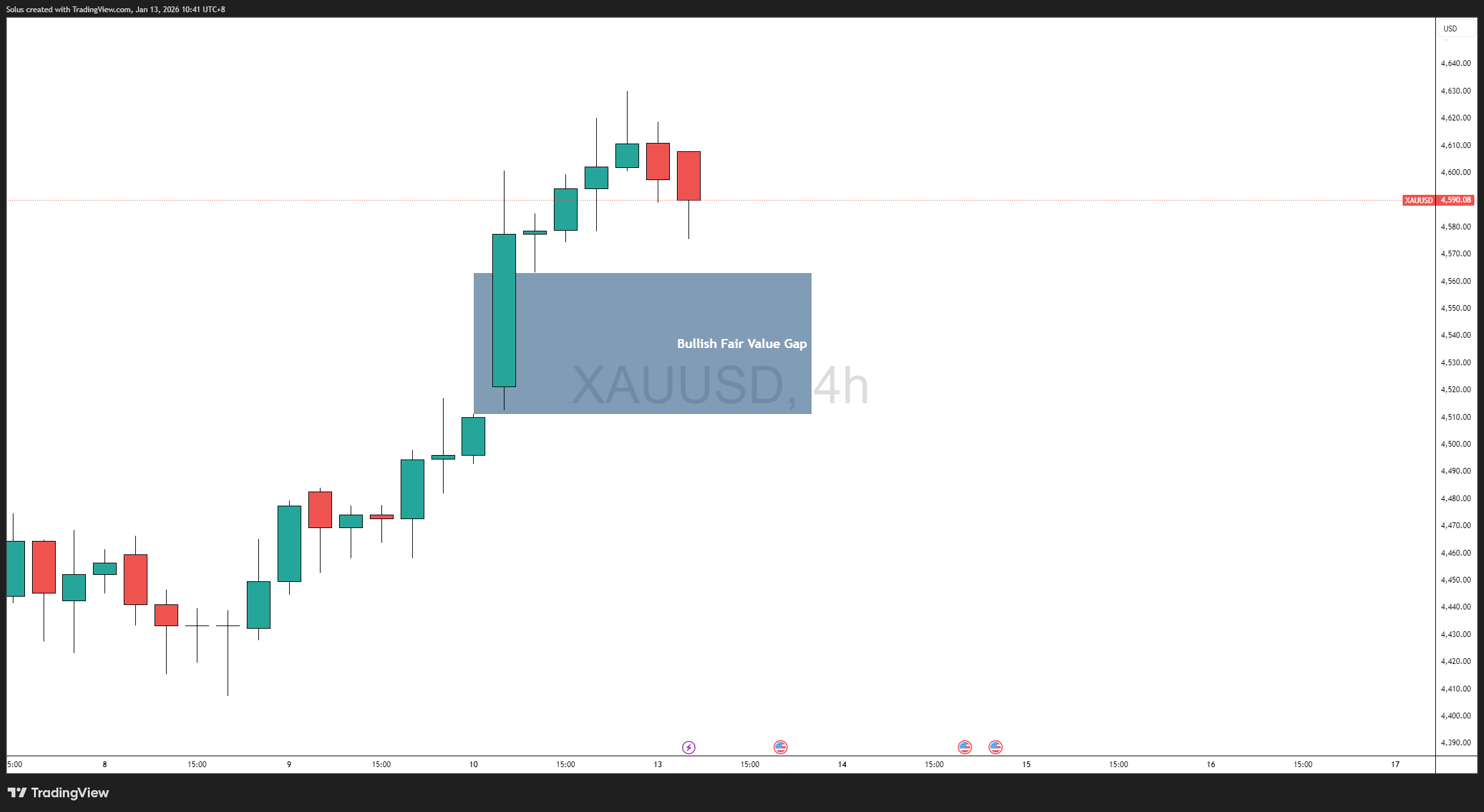
          · Gold remains structurally bullish, with price consolidating above a key 4H bullish Fair Value Gap after an impulsive expansion.
          · The incoming U.S. CPI release is the primary volatility catalyst, likely determining whether price continues higher or retraces into premium demand zones.
          · Higher-timeframe structure remains intact, suggesting any CPI-driven pullback is corrective unless key imbalance levels fail.

          Structure First, CPI Second

          Gold continues to trade at elevated levels, but the current phase is no longer about expansion — it is about acceptance and reaction.

          After a strong impulsive leg higher, price has paused and begun consolidating near highs. This behavior is consistent with institutional digestion, not distribution. The market is now positioned in a premium zone, waiting for CPI to provide the next liquidity-driven catalyst.

          Rather than invalidating the bullish trend, CPI is more likely to act as a trigger for a retracement into value or a continuation breakout, depending on how inflation data reshapes real yield and dollar expectations.

          Drivers with CPI in Focus

          Inflation Expectations and Real Yield Sensitivity

          Gold is acutely sensitive to inflation outcomes—not simply headline inflation, but how CPI reshapes real interest rate expectations.

          · A cooler-than-expected CPI print would reinforce the narrative of easing inflation pressures, likely pushing real yields lower and supporting gold's upside.
          · A hotter-than-expected CPI print could temporarily lift yields and the U.S. dollar, pressuring gold in the short term through repricing of policy expectations.

          Importantly, even upside CPI surprises may struggle to reverse gold's broader trend unless they signal a sustained re-acceleration of inflation that forces a materially more hawkish stance from the Fed.

          Federal Reserve Policy Repricing Risk

          CPI remains one of the Federal Reserve's most influential data points. Markets are currently positioned for a policy environment where restrictive conditions cannot be sustained indefinitely.

          Gold benefits from:

          · Any CPI outcome that reduces confidence in prolonged tight policy
          · Evidence that inflation is cooling faster than expected, increasing the probability of policy flexibility

          Conversely, CPI-induced volatility can create short-term drawdowns, but these are increasingly viewed by market participants as tactical repositioning opportunities rather than structural reversals.

          Safe-Haven Demand Ahead of High-Impact Data

          As CPI approaches, risk appetite across equities and risk-sensitive assets often becomes more cautious. This environment typically benefits gold, especially when positioning turns defensive ahead of binary macro events.

          Gold's ability to hold elevated levels into major data releases is a signal of underlying strength, suggesting buyers are willing to maintain exposure despite headline risk.

          What the Market Is Telling Us

          Daily Structure – Trend Integrity Remains Intact

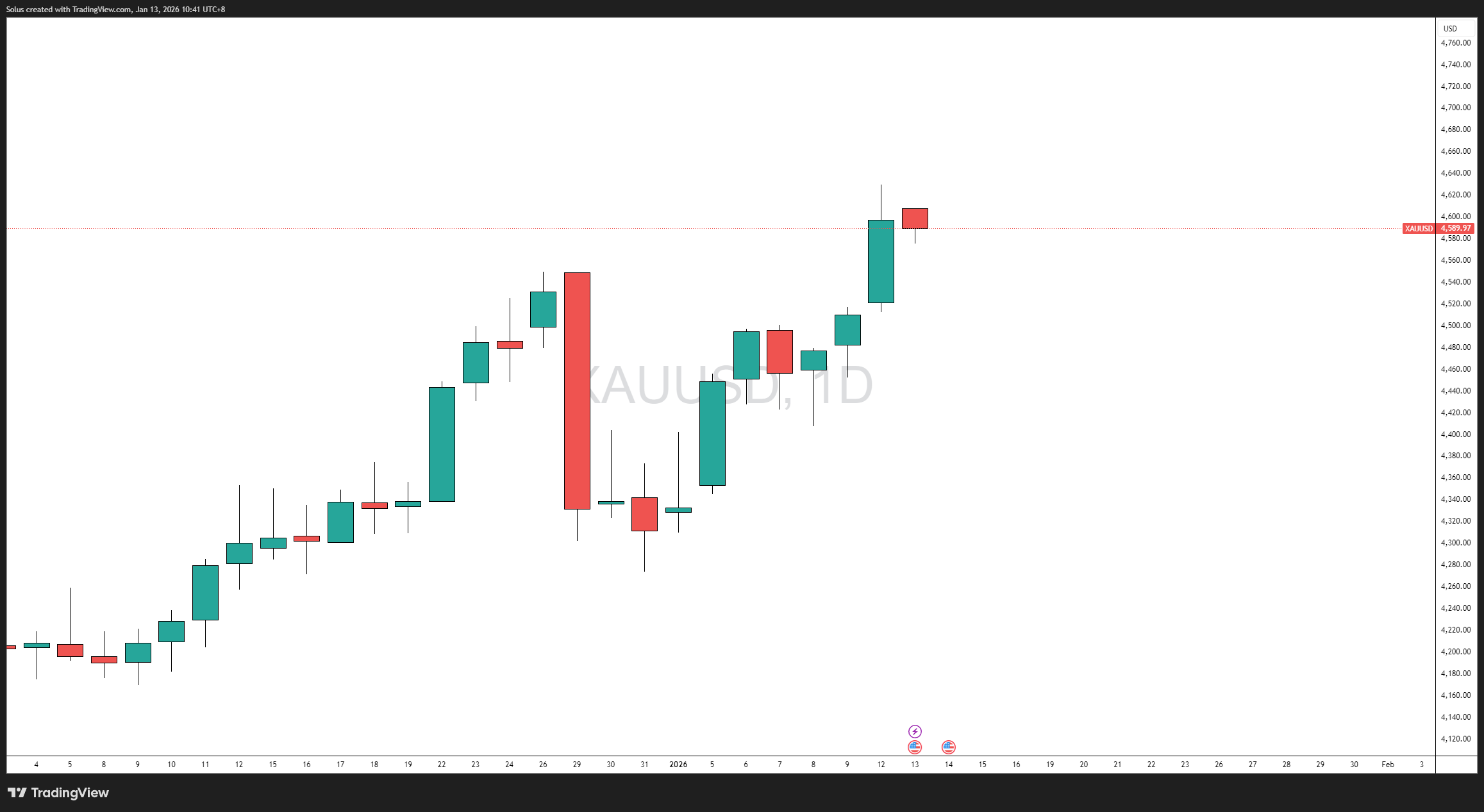
          On the daily timeframe, gold continues to print higher highs and higher lows, maintaining bullish market structure despite intermittent volatility.

          The recent daily pullbacks have:

          · Failed to break structure
          · Respected prior demand zones
          · Shown rejection wicks rather than sustained bearish closes

          This reinforces the idea that sellers lack follow-through at current levels, and that downside moves are primarily liquidity-driven corrections, not trend reversals.

          4H Structure – Bullish Fair Value Gap in Control

          On the 4-hour chart, gold left behind a clear bullish Fair Value Gap following an aggressive displacement to the upside. Price is currently trading above this imbalance, signaling that buyers remain in control of short-term structure.

          This Fair Value Gap represents:

          · Institutional inefficiency from aggressive buying
          · A high-probability reaction zone if price retraces
          · A technical "decision point" ahead of CPI

          As long as price holds above or reacts cleanly within this FVG, the bullish narrative remains valid.

          CPI as the Liquidity Catalyst

          CPI matters not because it changes the trend — but because it determines where liquidity is taken next.

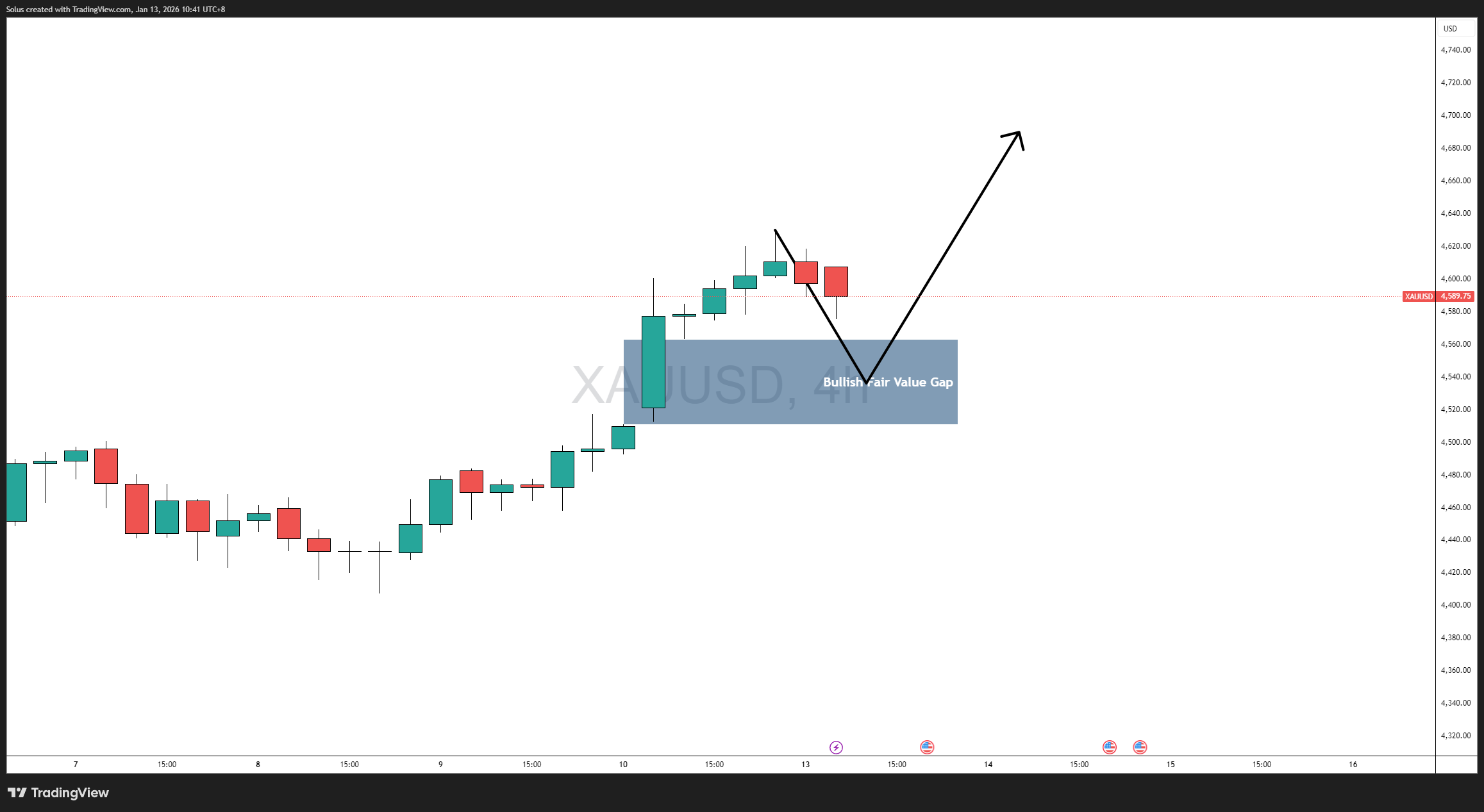
          If CPI Prints Softer or In-Line

          · Real yields likely compress
          · The U.S. dollar weakens or stalls
          · Gold holds above the 4H FVG or reacts shallowly

          In this scenario, CPI becomes a continuation catalyst, allowing gold to resume expansion toward new highs after rebalancing inefficiencies.

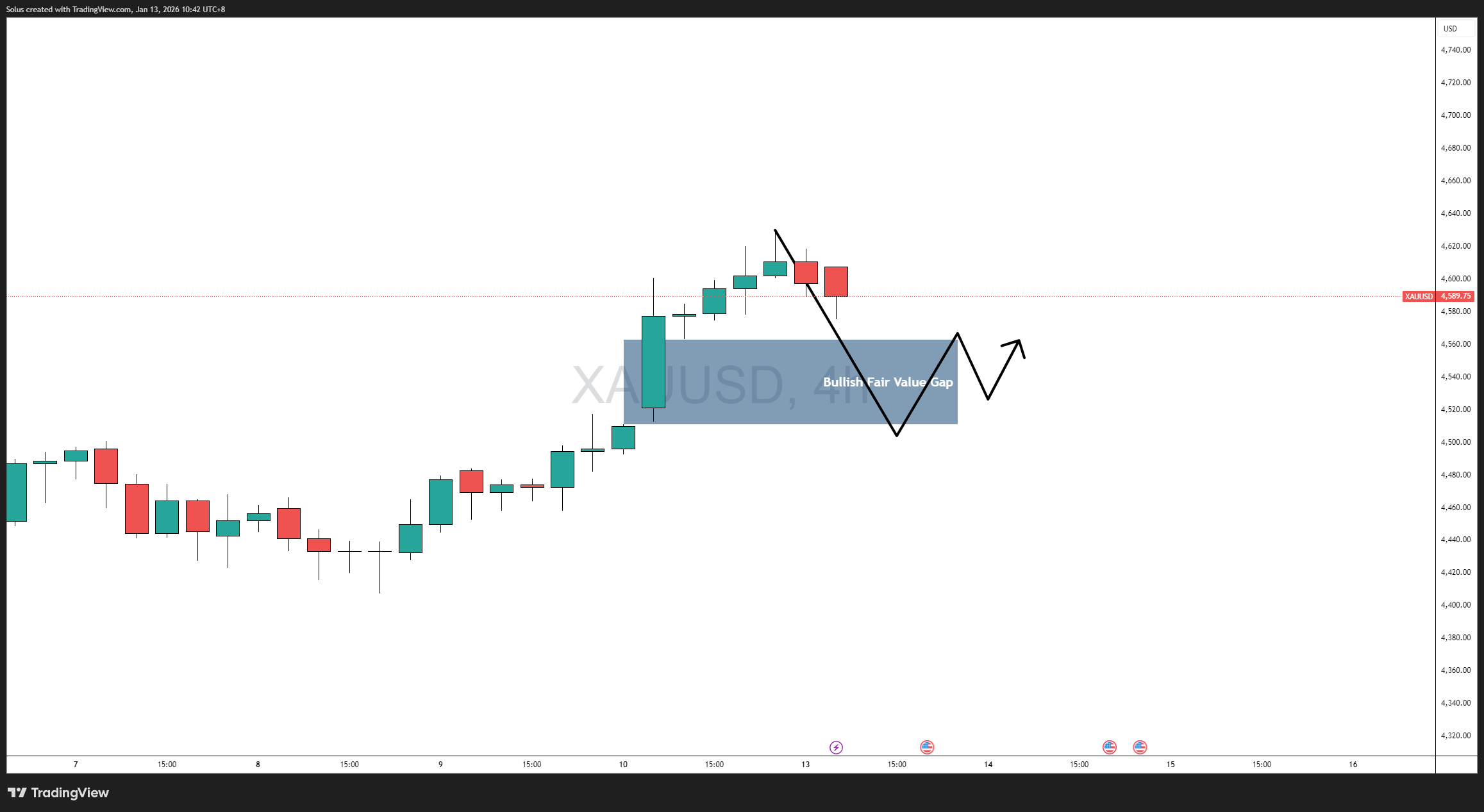
          If CPI Prints Hotter Than Expected

          · Real yields spike temporarily
          · Dollar strength forces a retracement
          · Price likely trades back into the bullish Fair Value Gap

          This scenario does not automatically invalidate the trend. Instead, it creates a mean-reversion move into value, offering structural confirmation if buyers defend the imbalance zone.

          Only a clean breakdown below the FVG with acceptance would suggest a deeper corrective phase.

          Technical Outlook

          Bullish Scenario: FVG Hold and Expansion

          Gold remains bullish if:
          · Price respects the 4H bullish Fair Value Gap
          · CPI does not force sustained acceptance below imbalance
          · Daily structure remains intact

          This sets the stage for continuation toward higher premium zones, driven by institutional positioning rather than retail momentum.

          Bearish Scenario: Acceptance Below Value

          A bearish shift only materializes if:

          · CPI triggers a strong displacement below the Fair Value Gap
          · Price accepts below imbalance with follow-through
          · Daily structure begins to fracture

          Without these conditions, downside moves remain corrective within a broader bullish trend.

          Final Thoughts

          Gold is not breaking down — it is pausing at premium.

          The charts show a market that has expanded aggressively, left behind inefficiencies, and is now waiting for CPI to determine how those inefficiencies are resolved. Until proven otherwise, structure favors buy-side control, with Fair Value Gaps acting as the roadmap rather than lagging indicators.

          CPI will inject volatility — but structure will decide direction.

          Source: ACY

          Risk Warnings and Disclaimers
          You understand and acknowledge that there is a high degree of risk involved in trading. Following any strategies or investment methods may lead to potential losses. The content on the site is provided by our contributors and analysts for information purposes only. You are solely responsible for determining whether any trading assets, securities, strategy, or any other product is suitable for investing based on your own investment objectives and financial situation.
          Add to Favorites
          Share

          Fed's Williams: Interest Rates Are Correct, Cuts on Hold

          Nathaniel Wright

          Central Bank

          Remarks of Officials

          Economic

          John Williams, President of the Federal Reserve Bank of New York, stated that current interest rates are appropriately positioned to support sustainable job creation and economic growth while guiding inflation back to the central bank's 2% target.

          His confidence stems from the belief that the Federal Reserve has gained better control over risks to its dual mandate, particularly after the Federal Open Market Committee (FOMC) projected 75 basis points of rate cuts for 2025.

          Speaking on January 12 at a Council on Foreign Relations event in New York City, Williams affirmed that monetary policy is in a strong position. He is known as a key official who favors a patient approach, preferring to wait for more data before considering further interest rate reductions.

          According to the median estimate from the Fed's latest economic forecast in December, policymakers anticipate only a single quarter-point rate reduction this year.

          Williams Details a Stable Economic Outlook

          Williams provided a specific forecast for the U.S. economy, expressing confidence in the labor market and a predictable path for inflation.

          He expects the unemployment rate to hold steady this year before gradually declining over the next few years. Williams noted that key labor market indicators have returned to pre-pandemic levels, signaling a gradual and healthy normalization. "I want to stress that this has been gradual, with no signs of a sudden increase in layoffs or other quick declines," he said.

          On the inflation front, Williams suggested that import tariffs implemented under the Trump administration would likely have a one-time effect on prices. He projects inflation to peak between 2.75% and 3% in the first half of the year before falling to 2.5% by year-end. He also anticipates that economic growth will continue at an above-average pace.

          Despite this outlook, some policymakers have raised concerns about persistent financial strain, as inflation has remained above the Fed's 2% target for nearly five years.

          A Divided Fed on the Path for Rate Cuts

          The Federal Reserve is not entirely unified on its interest rate strategy. Minutes from the Fed's December meeting, released on December 30, revealed a divided committee.

          The report showed that some officials who voted for a quarter-point rate cut were not fully committed, indicating they could have just as easily supported a decision to hold rates steady. "Some members who favored lowering the policy rate at this meeting mentioned that their decision was very close," the minutes stated.

          The release of these minutes immediately impacted market expectations, with the probability of a rate cut at the next meeting in January dropping to approximately 15%.

          Stephen Stanley, chief U.S. economist at Santander US Capital Markets, commented on the situation. He suggested that the narrow vote in favor of a rate cut highlighted the continued influence of Federal Reserve Chair Jerome Powell over the near-evenly divided committee.

          To stay updated on all economic events of today, please check out our Economic calendar
          Risk Warnings and Disclaimers
          You understand and acknowledge that there is a high degree of risk involved in trading. Following any strategies or investment methods may lead to potential losses. The content on the site is provided by our contributors and analysts for information purposes only. You are solely responsible for determining whether any trading assets, securities, strategy, or any other product is suitable for investing based on your own investment objectives and financial situation.
          Add to Favorites
          Share

          G7 and Partners Seek Strategic Break from Chinese Rare Earth Dominance

          Gerik

          Economic

          Global Finance Leaders Rally to Cut Rare Earth Dependency on China

          In a pivotal meeting held in Washington on Monday, finance ministers from the G7 economies and key partner nations discussed the urgent need to reduce dependence on China for critical mineral supplies, particularly rare earth elements. The meeting, convened by U.S. Treasury Secretary Scott Bessent, brought together representatives from the United States, Japan, the United Kingdom, France, Germany, Italy, Canada, Australia, South Korea, India, and Mexico. The agenda focused on actionable measures to secure and diversify mineral supply chains that are foundational to global industries ranging from defense to renewable energy.
          Rather than pursuing an aggressive decoupling, the collective aim was to adopt what Bessent described as “prudent de-risking.” This approach seeks to lower strategic vulnerability to China's market dominance without destabilizing global trade. China currently controls an overwhelming share of critical mineral processing ranging between 47% and 87% across copper, lithium, cobalt, graphite, and rare earths, according to data from the International Energy Agency.
          This concentration has become a source of significant geopolitical risk, particularly after recent Chinese export restrictions targeting Japan’s dual-use technologies. The urgency of the situation was reinforced by last week’s export ban on materials with both military and civilian applications.

          Policy Options: Price Floors, Incentives, and Market Standards

          Japanese Finance Minister Satsuki Katayama underscored a comprehensive framework of short- to long-term responses. These include setting minimum price levels for rare earths to stabilize markets, offering financial and tax incentives to encourage exploration and processing, and creating new trade and tariff structures to support emerging suppliers. A strong emphasis was placed on enforcing ethical and environmental standards, including labor rights, in future supply contracts a shift that could redefine market entry norms and trade eligibility.
          This strategy introduces a causal link between strategic policy formation and market rebalancing: by reshaping how demand is fulfilled and what conditions are attached to mineral sourcing, participating countries aim to reduce the systemic leverage currently held by China.

          Europe Acknowledges Lag, Vows Independent Action

          German Finance Minister Lars Klingbeil voiced strong support for developing European capacities while cautioning against framing the initiative as an anti-China coalition. He stressed the necessity of increasing EU-level financing, referencing Germany’s new raw materials fund as an example. Klingbeil also emphasized recycling as a vital and underutilized pillar in Europe’s effort to reduce external reliance, citing its untapped potential to broaden domestic supply availability.
          His comments underline a growing consensus that Europe must accelerate both state-supported investment and regulatory initiatives to secure independent access to essential minerals. This illustrates not just a correlation but a deliberate causal pathway: policy inaction directly sustains dependence, while proactive financing and regulation can shift structural outcomes.

          Structural Imperatives: Security and Sustainability

          The strategic minerals at the center of these discussions are essential not only for commercial products like semiconductors and EV batteries but also for national defense and energy resilience. Participants acknowledged that with over 60% of global critical mineral demand coming from this expanded alliance of nations, there exists a powerful incentive to cooperate on joint ventures, stockpiling, and infrastructure development.
          The idea of creating a price floor is particularly notable. It represents a market intervention aimed at reducing volatility and incentivizing investment in mining and refining outside of China. While no joint declaration was issued at the end of the meeting, the cohesion among participants suggests continued momentum.

          Outlook: From Dialogue to Implementation

          Though the talks remain in their early stages, the breadth of participation and alignment signals a turning point in the global minerals landscape. With France set to lead the G7 presidency this year, rare earths and broader supply chain independence are expected to remain central themes. The path forward likely involves a combination of national initiatives and multinational frameworks designed to foster both economic resilience and political autonomy.
          The challenge will be converting this broad agreement into actionable frameworks that reshape trade, investment, and industrial policy. As Katayama warned, commitment not rhetoric will determine whether this emerging coalition can rebalance one of the most strategically sensitive supply chains of the modern era.

          Source: Reuters

          To stay updated on all economic events of today, please check out our Economic calendar
          Risk Warnings and Disclaimers
          You understand and acknowledge that there is a high degree of risk involved in trading. Following any strategies or investment methods may lead to potential losses. The content on the site is provided by our contributors and analysts for information purposes only. You are solely responsible for determining whether any trading assets, securities, strategy, or any other product is suitable for investing based on your own investment objectives and financial situation.
          Add to Favorites
          Share

          Nikkei Soars to Record High on Wall Street Gains and Early Election Hopes

          Gerik

          Economic

          Stocks

          Nikkei Hits Record on Optimism Over Global and Domestic Catalysts

          Japan’s Nikkei 225 index soared to a historic peak on Tuesday, climbing as much as 3.6% to reach 53,814.79, marking a significant bullish milestone for the Japanese equity market. The rally reflected both a delayed reaction to Wall Street’s strong performance and growing investor confidence in the likelihood of domestic stimulus, following reports of a possible snap election by Prime Minister Sanae Takaichi.
          After a public holiday earlier in the week, Japanese markets opened with a strong catch-up momentum. The broader Topix index also hit a record, rising 2.4% to 3,599.31, as optimism swept across both export-heavy and technology sectors.

          Wall Street Momentum Transfers to Tokyo

          The surge followed two consecutive sessions of gains in U.S. markets, where the Dow Jones Industrial Average and the S&P 500 both reached all-time highs. Technology stocks were standout performers, lifting global sentiment and contributing to an upbeat tone in Asian trading. The Nikkei’s rally mirrored the enthusiasm seen globally, suggesting that external tailwinds remain a powerful force behind asset price appreciation.
          A key domestic catalyst for Japan’s market surge came from mounting speculation that Prime Minister Takaichi may dissolve parliament and call an early general election. According to the leader of coalition partner Ishin, Takaichi has been actively weighing the political move, with local media reporting a possible election as soon as next month. This would be her first electoral test since taking office in October and could be an attempt to consolidate her support amid strong approval ratings.
          The potential for a snap election has driven market expectations of expanded fiscal spending, as governments often accompany such moves with voter-friendly stimulus measures. This narrative has strengthened investor belief in a policy mix that includes a weaker yen, rising equity valuations, and declining bond prices factors typically associated with expansionary fiscal strategies.

          Causal Link Between Election Hopes and Market Rally

          The rally in Japanese equities appears to be causally linked to the prospect of political developments that could lead to increased public spending. The expectation that a successful election would empower Takaichi to implement broader fiscal measures has shifted investor behavior toward risk-on positioning, particularly in sectors benefiting from yen depreciation and global demand strength.
          Investor enthusiasm was further amplified by the yen’s depreciation, which enhances the overseas earnings potential of Japanese exporters. The yen was notably weaker compared to Friday’s close, offering a tailwind for automakers and technology companies.
          Toyota Motor surged by 5.1%, while Subaru advanced 4.1%, reflecting stronger outlooks for their international revenue streams. However, the most pronounced gains came from semiconductor-related firms. Advantest, a leading chip-testing equipment manufacturer, soared 8.4%, and Tokyo Electron, which produces chip-making tools, jumped 7.7%. These moves align with a broader global trend of bullish sentiment toward high-tech manufacturing amid strong U.S. tech earnings.

          Investors Downplay U.S. Fed Probe, Focus on Domestic Fundamentals

          Notably, Japanese investors remained relatively unaffected by ongoing political turbulence in the U.S., including the Department of Justice’s criminal probe into Federal Reserve Chair Jerome Powell. While the investigation has rattled global markets and raised concerns about the Fed’s independence, Japanese equities appeared to decouple from that risk narrative, focusing instead on localized political and economic signals.
          With both domestic political developments and global tailwinds driving Japanese equities higher, investor attention will likely remain fixated on signals from the Prime Minister’s office regarding the timing and scope of any early election. Should the election be confirmed, and fiscal stimulus measures accompany it, markets could see continued momentum.
          However, the sustainability of the rally may also depend on global monetary stability and how Japanese policymakers balance fiscal expansion with inflationary control. For now, the combination of political optimism, a softer yen, and strong global cues has propelled Japan’s stock market into uncharted territory.

          Source: Reuters

          To stay updated on all economic events of today, please check out our Economic calendar
          Risk Warnings and Disclaimers
          You understand and acknowledge that there is a high degree of risk involved in trading. Following any strategies or investment methods may lead to potential losses. The content on the site is provided by our contributors and analysts for information purposes only. You are solely responsible for determining whether any trading assets, securities, strategy, or any other product is suitable for investing based on your own investment objectives and financial situation.
          Add to Favorites
          Share

          Indian Rupee Slides as Trump’s Tariff Threat and Weak Asia FX Undermine Sentiment

          Gerik

          Economic

          Forex

          Rupee Faces Renewed Pressure Amid Tariff Uncertainty and Regional Weakness

          The Indian rupee opened under pressure on Tuesday as a confluence of geopolitical tensions and regional currency weakness continued to weigh on investor confidence. The 1-month non-deliverable forward market projected the rupee trading between 90.22 and 90.26 per U.S. dollar, slightly lower than Monday’s close at 90.1525. This decline reflects growing anxiety around U.S. President Donald Trump’s latest tariff warning and the broader risk-off mood in Asia following political instability in the United States.
          On Monday, Trump announced that countries conducting business with Iran would face a 25% tariff on U.S. trade, a move that has yet to be formally codified or clarified through official policy documents. Despite the ambiguity, the announcement has intensified market fears due to India’s long-standing energy and trade ties with Iran. India is among the top destinations for Iranian goods, making it potentially vulnerable if the U.S. adopts a broad interpretation of the new sanctions.
          The threat arrives at a time when India is already contending with an existing 50% U.S. tariff on certain exports one of the highest among major trading partners. The combination of escalating trade barriers and geopolitical tensions has reinforced downward pressure on the rupee, which has already weakened by approximately 0.3% in January following a 5% decline over the course of 2025.

          Intervention Offers Temporary Relief, But Trend Remains Weak

          The Reserve Bank of India (RBI) has intervened at several key moments to stabilize the rupee, including a notable recovery last month after the currency briefly touched an all-time low of 91.0750. However, according to foreign exchange traders, the overall trajectory remains skewed to the downside. Absent a significant reversal in capital flows or a relaxation of global pressure points, the rupee is likely to re-test and potentially breach record lows.
          A currency trader at a global bank emphasized that unless there is a “meaningful shift in flows,” further depreciation seems inevitable. The sentiment reflects not only India’s specific trade dynamics but also broader macroeconomic forces now being shaped by both U.S. domestic politics and global risk aversion.

          Regional Context: Weakness Across Asia and U.S. Political Risk Spillover

          The rupee’s decline is mirrored across Asian currencies, many of which have also slipped amid concerns over political risks in the United States. The announcement of a criminal investigation into Federal Reserve Chair Jerome Powell has sparked a new wave of uncertainty over the independence of U.S. monetary policy, contributing to general investor unease and shifting capital flows away from emerging markets.
          While the direct connection between the Powell probe and the rupee is more correlational than causal, the overall environment of instability and lack of policy clarity in the U.S. amplifies risk sensitivity for vulnerable emerging markets like India.

          Key Market Indicators Reflect Bearish Sentiment

          Broader market indicators support the bearish narrative for the rupee. The U.S. dollar index was up at 98.97, suggesting sustained dollar strength against a basket of global currencies. Brent crude, a key input for India’s import bill, rose modestly by 0.2% to $64 per barrel, adding to concerns over trade imbalances. Meanwhile, the 10-year U.S. Treasury yield hovered at 4.18%, reflecting resilience in U.S. bond markets despite political noise.
          Foreign institutional investors remained net sellers, offloading $409 million in Indian equities and $14.2 million in Indian bonds on January 9, according to NSDL data. These persistent outflows highlight continued capital flight and reinforce downward momentum on the rupee.

          Outlook: Persistent Vulnerability Amid External Shocks

          As long as geopolitical tensions and policy ambiguity persist, the rupee is likely to face sustained depreciation pressure. While the RBI may offer tactical support, the structural factors undermining confidence in the currency including trade risks, foreign investor outflows, and global volatility continue to dominate.
          Without a clear reversal in either geopolitical rhetoric or capital market behavior, the rupee’s trajectory suggests a return to record lows may not be far off. The key inflection points ahead will likely be tied to whether Trump’s tariff threats materialize into policy and whether India can navigate shifting alliances without further economic disruption.

          Source: Reuters

          To stay updated on all economic events of today, please check out our Economic calendar
          Risk Warnings and Disclaimers
          You understand and acknowledge that there is a high degree of risk involved in trading. Following any strategies or investment methods may lead to potential losses. The content on the site is provided by our contributors and analysts for information purposes only. You are solely responsible for determining whether any trading assets, securities, strategy, or any other product is suitable for investing based on your own investment objectives and financial situation.
          Add to Favorites
          Share
          FastBull
          Copyright © 2026 FastBull Ltd

          728 RM B 7/F GEE LOK IND BLDG NO 34 HUNG TO RD KWUN TONG KLN HONG KONG

          TelegramInstagramTwitterfacebooklinkedin
          App Store Google Play Google Play
          Products
          Charts

          Chats

          Q&A with Experts
          Screeners
          Economic Calendar
          Data
          Tools
          Membership
          Features
          Function
          Markets
          Copy Trading
          Latest Signals
          Contests
          News
          Analysis
          24/7
          Columns
          Education
          Company
          Careers
          About Us
          Contact Us
          Advertising
          Help Center
          Feedback
          User Agreement
          Privacy Policy
          Personal Information Protection Statement
          Business

          White Label

          Data API

          Web Plug-ins

          Poster Maker

          Affiliate Program

          Risk Disclosure

          The risk of loss in trading financial instruments such as stocks, FX, commodities, futures, bonds, ETFs and crypto can be substantial. You may sustain a total loss of the funds that you deposit with your broker. Therefore, you should carefully consider whether such trading is suitable for you in light of your circumstances and financial resources.

          No decision to invest should be made without thoroughly conducting due diligence by yourself or consulting with your financial advisors. Our web content might not suit you since we don't know your financial conditions and investment needs. Our financial information might have latency or contain inaccuracy, so you should be fully responsible for any of your trading and investment decisions. The company will not be responsible for your capital loss.

          Without getting permission from the website, you are not allowed to copy the website's graphics, texts, or trademarks. Intellectual property rights in the content or data incorporated into this website belong to its providers and exchange merchants.

          Not Logged In

          Log in to access more features

          FastBull Membership

          Not yet

          Purchase

          Become a signal provider
          Help Center
          Customer Service
          Dark Mode
          Price Up/Down Colors

          Log In

          Sign Up
          Position
          Layout
          Fullscreen
          Default to Chart
          The chart page opens by default when you visit fastbull.com