Markets
News
Analysis
User
24/7
Economic Calendar
Education
Data
- Names
- Latest
- Prev



Signal Accounts for Members
All Signal Accounts
All Contests


[Fear Of Losing To Starlink? French Government Blocks Eutelsat Sale Of Antenna Assets] French Minister Of Economy, Finance, Industry, Energy And Digital Sovereignty, Roland Lescuille, Disclosed To The Media On The 30th That The French Government Recently Blocked Eutelsat's Sale Of Ground Antenna Assets To A Swedish Buyer. He Said The Decision Was Based On "national Security" Concerns, Fearing That The Transaction Would Damage Eutelsat's Competitiveness And Allow Its Rival, SpaceX's Starlink System, To Dominate The European Market
[White House Office Of Management And Budget Instructs Affected Agencies To Begin Implementation Of Shutdown Plans] On January 30, Local Time, CCTV Reporters Learned That The Director Of The White House Office Of Management And Budget Issued A Memorandum To Heads Of Various Departments, Instructing Agencies Whose Funding Was Due At Midnight To Begin Preparations For A Government Shutdown. These Agencies Include The Department Of Defense, Department Of Homeland Security, Department Of State, Department Of Treasury, Department Of Labor, Department Of Health And Human Services, Department Of Education, Department Of Transportation, And Department Of Housing And Urban Development
Mexico's Ministry Of Foreign Affairs Says Minister Spoke With USA Secretary Of State Rubio To Reiterate Bilateral Collaboration On Agendas Of Common Interest
China Southern Command Says Carried Out Naval And Air Patrols Around Scarborough Shoal On 31 Jan
Pentagon - USA State Dept Approves Potential Sale Of Patriot Advanced Capability-3 Missile Segment Enhancement Missiles To Saudi Arabia For An Estimated $9.0 Billion
Hong Kong Port Operator Violated Panama's Constitution, Failed To Serve Public Interest, Panama Court Ruled
South Korea Signs Deal With Norway To Supply Multiple Launch Rocket System Valued At 1.3 Trillion Won -South Korea Presidential Chief Of Staff
[Arctic Cold Wave Hits: Florida Citrus Industry At Risk Of Frost] The Southeastern United States Is Bracing For A Powerful Storm, Potentially Bringing Devastating Frost To Florida's Citrus Belt And Heavy Snowfall To The Carolinas. The Wind Chill In Central Florida's Orange-growing Regions Could Drop To Single Digits (Fahrenheit); Much Of Polk County Is Expected To Experience Sub-zero Temperatures, Threatening The Statewide Citrus Harvest. The Storm Is Also Expected To Bring Strong Winds And Coastal Flooding To The East Coast. Approximately 1,000 Flights Have Already Been Canceled Across The U.S. This Weekend, With Half Of Them Concentrated At Hartsfield-Jackson Atlanta International Airport
[Former Goldman Sachs Executive: Warsh's Fed Chairship Could Reduce Risk Of Massive Sell-Off Of US Assets] Fulcrum Asset Management Stated That Nominating Kevin Warsh As The Next Federal Reserve Chairman Reduces The Risk Of A Massive Sell-off Of US Assets Because The New Leader Is Expected To Take Measures To Address Inflation. "The Market Will Breathe A Huge Sigh Of Relief, And So Will The Dollar Market," Said Gavyn Davies, Co-founder And Chairman Of The London-based Firm, In A Video Released On The Fulcrum Website. He Added That Choosing Warsh Reduces The Risk Of A "crisis-laden 'sell America' Trade."
MSCI Emerging Markets Benchmark Equity Index Fell 1.7%, Its Worst Single-day Performance Since November 2025, Narrowing Its January Gain To Approximately 9%, Still Its Best Monthly Performance Since 2012. The Emerging Markets Currency Index Fell About 0.3%, Narrowing Its January Gain To 0.6%. On Friday, The South African Rand Fell 2.6% Against The US Dollar, Its Worst Performance Since April
Pentagon - USA State Department Approves Sales Of Joint Light Tactical Vehicles To Israel For $1.98 Billion
Federal Reserve Governor Bowman: I Look Forward To Working With Kevin Warsh, President Trump's Nominee For Federal Reserve Chairman
On Friday (January 30), At The Close Of Trading In New York (05:59 Beijing Time On Saturday), The Offshore Yuan (CNH) Was Quoted At 6.9584 Against The US Dollar, Down 137 Points From The Close Of Trading In New York On Thursday, Trading Within A Range Of 6.9437-6.9612 During The Day. In January, The Offshore Yuan Generally Continued To Rise, Trading Within A Range Of 6.9959-6.9313

U.K. M4 Money Supply (SA) (Dec)A:--
F: --
U.K. M4 Money Supply YoY (Dec)A:--
F: --
P: --
Italy Unemployment Rate (SA) (Dec)A:--
F: --
P: --
Euro Zone Unemployment Rate (Dec)A:--
F: --
P: --
Euro Zone GDP Prelim QoQ (SA) (Q4)A:--
F: --
P: --
Euro Zone GDP Prelim YoY (SA) (Q4)A:--
F: --
P: --
Italy PPI YoY (Dec)A:--
F: --
P: --
Mexico GDP Prelim YoY (Q4)A:--
F: --
P: --
Brazil Unemployment Rate (Dec)A:--
F: --
P: --
South Africa Trade Balance (Dec)A:--
F: --
P: --
India Deposit Gowth YoYA:--
F: --
P: --
Germany CPI Prelim YoY (Jan)A:--
F: --
P: --
Germany CPI Prelim MoM (Jan)A:--
F: --
P: --
Germany HICP Prelim YoY (Jan)A:--
F: --
P: --
Germany HICP Prelim MoM (Jan)A:--
F: --
P: --
U.S. Core PPI YoY (Dec)A:--
F: --
U.S. Core PPI MoM (SA) (Dec)A:--
F: --
P: --
U.S. PPI YoY (Dec)A:--
F: --
P: --
U.S. PPI MoM (SA) (Dec)A:--
F: --
P: --
Canada GDP MoM (SA) (Nov)A:--
F: --
P: --
Canada GDP YoY (Nov)A:--
F: --
P: --
U.S. PPI MoM Final (Excl. Food, Energy and Trade) (SA) (Dec)A:--
F: --
P: --
U.S. PPI YoY (Excl. Food, Energy & Trade) (Dec)A:--
F: --
P: --
U.S. Chicago PMI (Jan)A:--
F: --
Canada Federal Government Budget Balance (Nov)A:--
F: --
P: --
U.S. Weekly Total Oil Rig CountA:--
F: --
P: --
U.S. Weekly Total Rig CountA:--
F: --
P: --
China, Mainland NBS Manufacturing PMI (Jan)A:--
F: --
P: --
China, Mainland NBS Non-manufacturing PMI (Jan)A:--
F: --
P: --
China, Mainland Composite PMI (Jan)A:--
F: --
P: --
South Korea Trade Balance Prelim (Jan)--
F: --
Japan Manufacturing PMI Final (Jan)--
F: --
P: --
South Korea IHS Markit Manufacturing PMI (SA) (Jan)--
F: --
P: --
Indonesia IHS Markit Manufacturing PMI (Jan)--
F: --
P: --
China, Mainland Caixin Manufacturing PMI (SA) (Jan)--
F: --
P: --
Indonesia Trade Balance (Dec)--
F: --
P: --
Indonesia Inflation Rate YoY (Jan)--
F: --
P: --
Indonesia Core Inflation YoY (Jan)--
F: --
P: --
India HSBC Manufacturing PMI Final (Jan)--
F: --
P: --
Australia Commodity Price YoY (Jan)--
F: --
P: --
Russia IHS Markit Manufacturing PMI (Jan)--
F: --
P: --
Turkey Manufacturing PMI (Jan)--
F: --
P: --
U.K. Nationwide House Price Index MoM (Jan)--
F: --
P: --
U.K. Nationwide House Price Index YoY (Jan)--
F: --
P: --
Germany Actual Retail Sales MoM (Dec)--
F: --
Italy Manufacturing PMI (SA) (Jan)--
F: --
P: --
South Africa Manufacturing PMI (Jan)--
F: --
P: --
Euro Zone Manufacturing PMI Final (Jan)--
F: --
P: --
U.K. Manufacturing PMI Final (Jan)--
F: --
P: --
Brazil IHS Markit Manufacturing PMI (Jan)--
F: --
P: --
Canada National Economic Confidence Index--
F: --
P: --
Canada Manufacturing PMI (SA) (Jan)--
F: --
P: --
U.S. IHS Markit Manufacturing PMI Final (Jan)--
F: --
P: --
U.S. ISM Output Index (Jan)--
F: --
P: --
U.S. ISM Inventories Index (Jan)--
F: --
P: --
U.S. ISM Manufacturing Employment Index (Jan)--
F: --
P: --
U.S. ISM Manufacturing New Orders Index (Jan)--
F: --
P: --
U.S. ISM Manufacturing PMI (Jan)--
F: --
P: --


No matching data
Latest Views
Latest Views
Trending Topics
Top Columnists
Latest Update
White Label
Data API
Web Plug-ins
Affiliate Program
View All

No data
German inflation defied an ECB rate cut, complicating policy amid surprising eurozone strength and expected stability.
Germany’s inflation rate accelerated in January, challenging the European Central Bank’s decision to cut interest rates just one day prior.
Official data released Friday showed consumer prices in Germany rose by 2.1% last month, an increase from the 2.0% rate recorded in December. The figure surprised analysts who had anticipated that inflation would remain unchanged.
The timing of the data is critical. On Thursday, the ECB lowered its key interest rate by a quarter percentage point to 2.75%, marking the fifth consecutive reduction since June. Despite the cut, central bank officials described their policy as "restrictive" and suggested that further reductions could be on the table.
The slight uptick in German inflation, Europe's largest economy, comes as the broader eurozone demonstrates unexpected resilience. Inflation across the currency bloc has stabilized near the ECB's 2% target, and consumer surveys indicate expectations for prices to continue rising at a similar pace over the next year.
Economic growth in the final quarter of 2025 exceeded forecasts across major economies:
• Spain: 0.6% expansion
• France: 0.5% expansion
• Germany: 0.3% expansion
• Italy: 0.1% expansion
The overall eurozone economy grew by 0.3%, matching Germany's performance.
Despite the conflicting signals from inflation and growth, the market consensus points toward a period of policy stability. Most economists predict that the ECB will hold borrowing costs steady at their current level through at least the end of 2027. Previous speculation about a potential rate hike in 2026 has largely subsided.
This view is echoed by key policymakers. Joachim Nagel, President of Germany's Bundesbank, recently stated there is no immediate need to adjust interest rates, though he cautioned that long-term predictions are difficult.
The ECB's upcoming meetings will force officials to weigh the minor increase in German inflation against the region's recent economic strength, all while navigating ongoing concerns related to trade and the war in Ukraine.

The European Union is preparing for a significant escalation in its economic pressure on Russia, targeting the core of its oil trade with a potentially simpler and more forceful mechanism.
According to Bloomberg sources, Brussels is considering a move to abandon its Russian oil price cap in favor of a complete ban on maritime services. If enacted, this would prohibit European companies from providing insurance, shipping, and transport for any Russian oil cargoes, regardless of price, effectively closing a major loophole in the current sanctions regime.
The existing price cap was designed as a dual-purpose tool: to keep Russian oil on the global market to prevent price shocks while simultaneously cutting into the Kremlin's revenue. While elegant in theory, its real-world implementation has proven messy and difficult to enforce.
The system's effectiveness relies heavily on documentation and declarations in a global oil trade where such oversight is notoriously challenging, making it easy for traders to circumvent the rules.
A blanket ban on services would be a much blunter instrument, simplifying enforcement and making it significantly harder for Russia to work around the sanctions. European officials believe this shift would tighten economic pressure at a critical time, as Russia's oil and gas revenues have already hit a five-year low due to weak prices and an expanding web of sanctions.
The push for a new strategy comes as the EU recognizes the limitations of its current approach. The price cap is scheduled to drop to $44.10 per barrel on February 1, but there is growing awareness within the bloc that merely adjusting the price does little to curb Moscow's income as long as oil continues to move through shadow fleets and opaque channels.
Recent EU measures targeting refined products made from Russian crude have already compelled refiners in Turkey and India to reduce their purchases. Although China has absorbed some of this supply, it has primarily been through smaller "teapot" refineries that demand steep discounts.
While these actions have squeezed Russia's revenues, they have not stopped its oil from reaching the market. A full services ban would push even more of Russia's oil into these high-friction, discounted trade routes and make it more difficult for sanctioned barrels to re-enter Europe through blending or relabeling.
Despite the strategic appeal, implementing a services ban is not a straightforward process. The move requires unanimous consent from all EU member states, and some nations remain hesitant.
Concerns about potential market disruption and Russian retaliation are significant obstacles. The debate is further complicated by Europe's own energy reality: while the continent’s crude oil imports fell by nearly 9% last year, its reliance on expensive liquefied natural gas (LNG) imports surged.
U.S. long-term Treasury prices fell on Friday after President Donald Trump indicated he would nominate former Federal Reserve Governor Kevin Warsh to lead the central bank. The potential appointment is viewed as a bearish signal for bonds, given Warsh's known preference for a smaller Fed balance sheet.
Bond yields, which move opposite to prices, initially pared some of their declines in afternoon trading as volume thinned. However, the prospect of Warsh at the helm prompted a reassessment of future policy support, putting upward pressure on longer-dated Treasury yields.
Warsh has previously advocated for a "regime change" at the Fed, including a reduction in quantitative easing. A push to shrink the central bank's bond portfolio would increase the supply of Treasuries on the market, directly impacting their yields.
A more aggressive approach to reducing the Fed's balance sheet is a primary concern for bond investors.
"If the smaller balance sheet becomes a primary focus, then keeping all things equal, that would put upward pressure on your longer-term bond yields just because you would have that extra supply out there in the Treasury market," explained Jim Barnes, director of fixed income at Bryn Mawr Trust.
However, Barnes suggested this may not be an immediate priority. "I just don't think that's going to be the focus coming out of the gate," he noted. "There's going to be other things that's going to be reviewed, most notably the inflation side and the labor market side of the dual mandate, and trying to figure out what to do with short-term rates."
Some analysts also believe Warsh's previously hawkish positions could counterbalance concerns that he might simply align with President Trump's calls for rate cuts.
The news triggered noticeable shifts across the Treasury yield curve:
• 30-Year Treasury Yields: The long bond yield (US30YT=RR) jumped by as much as 6 basis points (bps) to a session high of 4.914%. It later settled at 4.872%, up 1.7 bps on the day. This puts it on pace for its largest weekly rise since late December and marks its third consecutive monthly increase.
• 10-Year Treasury Yields: The benchmark 10-year yield rose 1.2 bps to 4.239%, contributing to a 9-bp rise for the month of January.
• Yield Curve: The spread between the two-year and 10-year yields steepened to 71.50 bps, its widest in over a week. The curve was last at 71.3 bps.
• Two-Year Treasury Yields: In contrast, the two-year yield (US2YT=RR) fell 2.5 bps to 3.527%, recording its largest weekly drop since mid-November.
Adding to the pressure on bonds, new data showed U.S. producer prices increased more than anticipated in December. The Producer Price Index (PPI) rose 0.5% for the month, well above the 0.2% forecast by economists polled by Reuters. On an annual basis, the PPI was up 3.0%.
Beyond the data, investors are also weighing the implications for Federal Reserve independence. While Warsh is a Trump nominee, analysts caution against overstating his potential immediate impact on monetary policy.
"We remind investors that one vote will not be enough to change the course of monetary policy," said Jack Janasiewicz, lead portfolio strategist at Natixis Investment Managers Solutions. He noted that with only two policymakers voting for a cut at the last meeting, "Warsh would require significant sway to bring other voting members in line."
Following the week's events, U.S. rate futures are now pricing in approximately 51 bps of monetary easing this year, equivalent to about two 25-bps rate cuts. This is an increase from the 44 bps priced in after the Fed's decision last week to hold rates steady.
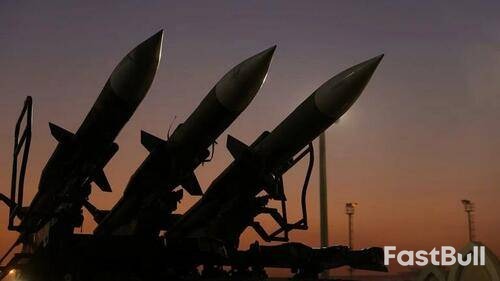
Iran has revealed a network of underwater missile tunnels, issuing a stark warning that the strategically vital Strait of Hormuz will "not be safe" if the country is attacked by the United States. The announcement, broadcast on Iranian state television, significantly raises tensions in the region.
Footage featured Alireza Tangsiri, commander of the Islamic Revolutionary Guard Corps (IRGC) Navy, showcasing submarine missile facilities. The broadcast displayed rows of cruise missiles reportedly equipped with smart guidance systems and capable of hitting targets over 1,000 kilometers (621 miles) away.
"Our capabilities are constantly developing," Tangsiri stated, emphasizing that Iranian forces are prepared to counter any threat "at any level and in any geography."

This development follows earlier warnings from Mohammed Akbarzadeh, the political deputy of the IRGC Navy, who stated that Tehran could disrupt international shipping through the Strait of Hormuz. Iran has consistently signaled that a blockade of the strait is a potential response to any future attack, though it did not implement one during a 12-day US-Israeli conflict in June.
The strait is a critical artery for the global economy, with approximately 37% of the world's daily oil traffic passing through it. Akbarzadeh claimed that Iran possesses real-time intelligence "from the sky, the surface and under the water of the Strait."
Amid the rising military rhetoric, diplomatic efforts are underway. Iranian Foreign Minister Abbas Araghchi visited Turkiye on Friday for talks aimed at preventing a US attack and averting a broader regional conflict. Tehran has cautioned Gulf states and Ankara that while it does not seek war, it will target US bases across the region if attacked.
In response, Washington has increased its military presence in West Asia. The aircraft carrier USS Abraham Lincoln, accompanied by several warships, has arrived in the area, and the US has also deployed additional fighter jet squadrons.
Earlier this week, President Trump described a "beautiful armada" heading toward Iran and called on Tehran to accept US terms at the negotiating table. Washington's demands include the destruction of Iran's enriched uranium, limitations on its missile program, and an end to its support for regional resistance groups.
Iran has met the US pressure with defiance. "Our brave Armed Forces are prepared – with their fingers on the trigger – to immediately and powerfully respond to ANY aggression against our beloved land, air, and sea," Araghchi stated on Wednesday. He added, "The valuable lessons learned from the 12-Day War have enabled us to respond even more strongly, rapidly, and profoundly."
Reinforcing this position, Iran's mission to the United Nations declared this week that Tehran is prepared to respond "like never before" should the country come under attack.
The Canadian economy likely shrank in the fourth quarter of 2025, capping a year of significant trade uncertainty. After Gross Domestic Product (GDP) growth flatlined in November, early estimates point to a contraction, signaling that hefty US tariffs have taken a toll on the nation's economic momentum.
While Canada's service industries posted modest gains in November, these were offset by weakness in goods-producing sectors, particularly manufacturing. This slowdown follows a period of intense pressure from the Trump Administration's trade policies.
Throughout 2025, the US implemented a series of escalating tariffs that directly impacted Canadian industries:
• March: A 25% tariff was placed on all Canadian products, which later rose to 35% in August.
• April: A 25% tariff was imposed on auto imports.
• June: Tariffs on steel and aluminum imports, initially set at 25%, were increased to 50%.
• Energy: A 10% tariff was applied to energy resources, including oil and critical minerals.
These measures hit Canada's manufacturing sector especially hard, contributing directly to the weakened industrial data seen toward the end of the year.
Historically, Canada's economic health has been closely tied to its partnership with the United States. The introduction of tariffs in 2025 caused immediate disruption.
From the first to the second quarter of 2025, Canada's real GDP fell by 1.6%. During this period, the value of Canadian exports plummeted by 10.8%, while imports declined by 3.5%.
However, the third quarter delivered a surprising turnaround. Against many expert predictions, the Canadian economy demonstrated resilience, with real GDP growing by 2.6%. This recovery was driven by a successful pivot toward non-US markets, which pushed export values up by 1.8% while import values continued to fall by another 1.6%.
Despite this mid-year rebound, the economy appeared to run out of steam as the year closed. The Bank of Canada projects that full-year real GDP growth for 2025 will be approximately 1.2%, a significant drop from the 2.3% growth recorded in 2024.
Looking ahead, Canada's economic forecast remains cautious. Real GDP growth for 2026 is projected at 1.1%, suggesting a year of modest expansion as the country continues to navigate US trade barriers.
To counter these pressures, Canada is pursuing a multi-pronged strategy focused on diversifying its trade relationships and stimulating domestic activity.
Pivoting to New Export Markets
A key element of Canada's plan is to reduce its reliance on the US market. The country recently secured a major trade deal with China, aiming to boost exports to the nation by 50% by 2030.
Furthermore, the completion of the Trans Mountain Expansion (TMX) pipeline in 2024 has opened up new channels for Canada to export its oil—one of its most critical commodities—to previously untapped energy markets across the Pacific and Asia.
Domestic Fiscal Support
The government is also set to implement the largest fiscal stimulus package in six years. This plan includes large-scale, deficit-financed capital spending, nation-building projects, and initiatives to promote internal free trade.
According to Oxford Economics, 2026 will be a year of adjustment and opportunity for Canada. However, beyond the trade conflict, several domestic challenges pose risks to growth, including high household debt, a declining population, and an overvalued housing market.
White Label
Data API
Web Plug-ins
Poster Maker
Affiliate Program
The risk of loss in trading financial instruments such as stocks, FX, commodities, futures, bonds, ETFs and crypto can be substantial. You may sustain a total loss of the funds that you deposit with your broker. Therefore, you should carefully consider whether such trading is suitable for you in light of your circumstances and financial resources.
No decision to invest should be made without thoroughly conducting due diligence by yourself or consulting with your financial advisors. Our web content might not suit you since we don't know your financial conditions and investment needs. Our financial information might have latency or contain inaccuracy, so you should be fully responsible for any of your trading and investment decisions. The company will not be responsible for your capital loss.
Without getting permission from the website, you are not allowed to copy the website's graphics, texts, or trademarks. Intellectual property rights in the content or data incorporated into this website belong to its providers and exchange merchants.
Not Logged In
Log in to access more features
Log In
Sign Up