• Trade
  • Markets
  • Copy
  • Contests
  • News
  • 24/7
  • Calendar
  • Q&A
  • Chats
Screeners
SYMBOL
LAST
ASK
BID
HIGH
LOW
NET CHG.
%CHG.
SPREAD
SPX
S&P 500 Index
6882.71
6882.71
6882.71
6936.08
6838.79
-35.10
-0.51%
--
DJI
Dow Jones Industrial Average
49501.29
49501.29
49501.29
49649.86
49112.43
+260.29
+ 0.53%
--
IXIC
NASDAQ Composite Index
22904.57
22904.57
22904.57
23270.07
22684.51
-350.61
-1.51%
--
USDX
US Dollar Index
97.590
97.670
97.590
97.750
97.470
+0.110
+ 0.11%
--
EURUSD
Euro / US Dollar
1.17994
1.18001
1.17994
1.18086
1.17800
-0.00051
-0.04%
--
GBPUSD
Pound Sterling / US Dollar
1.35788
1.35798
1.35788
1.36537
1.35398
-0.00731
-0.54%
--
XAUUSD
Gold / US Dollar
4862.26
4862.67
4862.26
5023.58
4788.42
-103.30
-2.08%
--
WTI
Light Sweet Crude Oil
63.500
63.530
63.500
64.398
63.245
-0.742
-1.16%
--

Community Accounts

Signal Accounts
--
Profit Accounts
--
Loss Accounts
--
View More

Become a signal provider

Sell trading signals to earn additional income

View More

Guide to Copy Trading

Get started with ease and confidence

View More

Signal Accounts for Members

All Signal Accounts

Best Return
  • Best Return
  • Best P/L
  • Best MDD
Past 1W
  • Past 1W
  • Past 1M
  • Past 1Y

All Contests

  • All
  • Trump Updates
  • Recommend
  • Stocks
  • Cryptocurrencies
  • Central Banks
  • Featured News
Top News Only
Share

BOE Governor Bailey: Falling Inflation Should Feed Into Expectations, That Should Give Me Confidence

Share

Indonesia Central Bank: To Work With Government To Strengthen Communication With Markets, Maintain Market Confidence

Share

Indonesia Central Bank: Financial Market Stability Is Also Expected To Remain Stable, Supported By Adequate Liquidity, Strong Banking Capital, Low Credit Risk

Share

US News Website Axios Reports That The United States And Russia Are Close To Reaching An Agreement To Continue To Abide By The New START Treaty After It Expires On Thursday

Share

Indonesia Central Bank: Rupiah Exchange Rate Is Expected To Remain Stable, Supported By Economic Prospects, Central Bank Stabilisation Commitment

Share

BOE Governor Bailey: We Have To Be Very Focused On Underlying Story On Inflation

Share

BOE Governor Bailey: We Need To See More Evidence That We Are Going To Get Sustainable Return To Inflation Target

Share

Indonesia Central Bank: Expects Indonesian Economic Prospects To Remain Solid With Improving Trend, Inflation Under Control

Share

The US News Website Axios Reports That The US And Russia Are Negotiating An Extension Of The New START Treaty

Share

Thomson Reuters: Continue To Assess Acquisition Candidates

Share

Bank Of England Governor Bailey: If The Outlook Develops As We Expect, There Is Still Room For Further Easing In The Near Future

Share

BOE Governor Bailey: For Every Rate Cut, How Much Further To Go Becomes Closer Call

Share

Bank Of England Governor Bailey: More Spare Capacity Could Lead To Inflation Falling Below Target

Share

Bank Of England Governor Bailey: Risk Consumption Will Be Slower Than We Expected

Share

BOE Governor Bailey: On Other Hand, Waiting Too Long Could Cause Sharper Downturn In Activity

Share

BOE Governor Bailey: On One Hand, Cutting Bank Rate Too Quickly Or Too Much Could Lead To Inflation Pressure Persisting

Share

Bank Of England Governor Bailey: Institutions Expect Growth To Remain Sluggish Throughout The Year

Share

Bank Of England Governor Bailey: Official Data Shows A Slight Increase In The Layoff Rate

Share

Turkey's Main Banking Index Down 2%, Main BIST-100 Index Down 1.4%

Share

Bank Of England Governor Bailey: We Expect Wage Growth To Reach Around 3.2% By The End Of The Year

TIME
ACT
FCST
PREV
U.S. ISM Non-Manufacturing Price Index (Jan)

A:--

F: --

P: --

U.S. ISM Non-Manufacturing New Orders Index (Jan)

A:--

F: --

P: --

U.S. ISM Non-Manufacturing Inventories Index (Jan)

A:--

F: --

P: --

U.S. EIA Weekly Crude Oil Imports Changes

A:--

F: --

P: --

U.S. EIA Weekly Heating Oil Stock Changes

A:--

F: --

P: --

U.S. EIA Weekly Crude Demand Projected by Production

A:--

F: --

P: --

U.S. EIA Weekly Gasoline Stocks Change

A:--

F: --

P: --

U.S. EIA Weekly Crude Stocks Change

A:--

F: --

P: --

U.S. EIA Weekly Cushing, Oklahoma Crude Oil Stocks Change

A:--

F: --

P: --

Australia Trade Balance (SA) (Dec)

A:--

F: --

P: --
Australia Exports MoM (SA) (Dec)

A:--

F: --

P: --
Japan 30-Year JGB Auction Yield

A:--

F: --

P: --

Indonesia Annual GDP Growth

A:--

F: --

P: --

Indonesia GDP YoY (Q4)

A:--

F: --

P: --

France Industrial Output MoM (SA) (Dec)

A:--

F: --

P: --
Italy IHS Markit Construction PMI (Jan)

A:--

F: --

P: --

Euro Zone IHS Markit Construction PMI (Jan)

A:--

F: --

P: --

Germany Construction PMI (SA) (Jan)

A:--

F: --

P: --

Italy Retail Sales MoM (SA) (Dec)

A:--

F: --

P: --

U.K. Markit/CIPS Construction PMI (Jan)

A:--

F: --

P: --

France 10-Year OAT Auction Avg. Yield

A:--

F: --

P: --

Euro Zone Retail Sales YoY (Dec)

A:--

F: --

P: --
Euro Zone Retail Sales MoM (Dec)

A:--

F: --

P: --
U.K. BOE MPC Vote Cut (Feb)

A:--

F: --

P: --

U.K. BOE MPC Vote Hike (Feb)

A:--

F: --

P: --

U.K. BOE MPC Vote Unchanged (Feb)

A:--

F: --

P: --

U.K. Benchmark Interest Rate

A:--

F: --

P: --

MPC Rate Statement
U.S. Challenger Job Cuts (Jan)

A:--

F: --

P: --

U.S. Challenger Job Cuts MoM (Jan)

A:--

F: --

P: --

U.S. Challenger Job Cuts YoY (Jan)

A:--

F: --

P: --

Bank of England Governor Bailey held a press conference on monetary policy.
Euro Zone ECB Marginal Lending Rate

--

F: --

P: --

Euro Zone ECB Deposit Rate

--

F: --

P: --

Euro Zone ECB Main Refinancing Rate

--

F: --

P: --

ECB Monetary Policy Statement
U.S. Weekly Initial Jobless Claims (SA)

--

F: --

P: --

U.S. Initial Jobless Claims 4-Week Avg. (SA)

--

F: --

P: --

U.S. Weekly Continued Jobless Claims (SA)

--

F: --

P: --

ECB Press Conference
U.S. JOLTS Job Openings (SA) (Dec)

--

F: --

P: --

U.S. EIA Weekly Natural Gas Stocks Change

--

F: --

P: --

BOC Gov Macklem Speaks
Mexico Policy Interest Rate

--

F: --

P: --

U.S. Weekly Treasuries Held by Foreign Central Banks

--

F: --

P: --

Reserve Bank of Australia Governor Bullock testified before Parliament.
India Benchmark Interest Rate

--

F: --

P: --

India Cash Reserve Ratio

--

F: --

P: --

India Repo Rate

--

F: --

P: --

India Reverse Repo Rate

--

F: --

P: --

Japan Leading Indicators Prelim (Dec)

--

F: --

P: --

Germany Industrial Output MoM (SA) (Dec)

--

F: --

P: --

Germany Exports MoM (SA) (Dec)

--

F: --

P: --

U.K. Halifax House Price Index YoY (SA) (Jan)

--

F: --

P: --

U.K. Halifax House Price Index MoM (SA) (Jan)

--

F: --

P: --

France Trade Balance (SA) (Dec)

--

F: --

P: --

Canada Leading Index MoM (Jan)

--

F: --

P: --

India Deposit Gowth YoY

--

F: --

P: --

Canada Employment (SA) (Jan)

--

F: --

P: --
Q&A with Experts
    • All
    • Chatrooms
    • Groups
    • Friends
    EuroTrader flag
    3548582
    im kinda new on the stock market
    @3548582you are welcome on board, what they mostly do here is talk about the markets and share trading kowledge with each other
    EuroTrader flag
    3548582
    guys what do i do here
    @3548582Do you trade the currency markets or you work on just the stock markets alone my friend
    3548582 flag
    idk i rlly jst started
    3548582 flag
    im checking eurusd
    3548582 flag
    and idrk abt that much
    EuroTrader flag
    3548582
    im checking eurusd
    @3548582okay, thats a good pair to start with, its not very volatile and pretty stable to trade as a beginner
    EuroTrader flag
    3548582
    im checking eurusd
    @3548582Have you learnt technical and fundamantal analysis or price action you make use of in analysing the markets
    3548490 flag
    Sanjeev Ku
    So you haven't seen the whole news report from the past few days, which is about margin trading on exchanges, including the US, China, and India.
    4RZD3WD38X flag
    @Sanjeev Kuwhat level I'd safe to sell on gold it's not moving towards 4935
    4RZD3WD38X flag
    @EuroTraderwhat level are you shorting on gold buddy?
    favour flag
    EuroTrader
    @EuroTraderyeah man and it's likely to repeat itself but on a different pair this time
    EuroTrader flag
    4RZD3WD38X
    @EuroTraderwhat level are you shorting on gold buddy?
    @4RZD3WD38Xi dont have a running sell trade on gold at the moment. still waiting for some further confirmation s
    3426137 flag
    Be patient, friend.
    EuroTrader flag
    favour
    @favourwhat pair is that, can you actually share with me, lets look at it together brotherly
    favour flag
    favour
    @EuroTraderhow's the trade on gold going man
    Sanjeev Ku flag
    Sanjeev Ku
    69629 done now 69335.if 68690 breaks 65676
    favour flag
    EuroTrader
    @EuroTradergold
    favour flag
    favour flag
    EuroTrader flag
    favour
    @favourclosed already on that retracement and i would have to wait for the start of the new york session
    Type here...
    Add Symbol or Code

      No matching data

      All
      Trump Updates
      Recommend
      Stocks
      Cryptocurrencies
      Central Banks
      Featured News
      • All
      • Russia-Ukraine Conflict
      • Middle East Flashpoint
      • All
      • Russia-Ukraine Conflict
      • Middle East Flashpoint
      Search
      Products

      Charts Free Forever

      Chats Q&A with Experts
      Screeners Economic Calendar Data Tools
      Membership Features
      Data Warehouse Market Trends Institutional Data Policy Rates Macro

      Market Trends

      Market Sentiment Order Book Forex Correlations

      Top Indicators

      Charts Free Forever
      Markets

      News

      News Analysis 24/7 Columns Education
      From Institutions From Analysts
      Topics Columnists

      Latest Views

      Latest Views

      Trending Topics

      Top Columnists

      Latest Update

      Signals

      Copy Rankings Latest Signals Become a signal provider AI Rating
      Contests
      Brokers

      Overview Brokers Assessment Rankings Regulators News Claims
      Broker listing Forex Brokers Comparison Tool Live Spread Comparison Scam
      Q&A Complaint Scam Alert Videos Tips to Detect Scam
      More

      Business
      Events
      Careers About Us Advertising Help Center

      White Label

      Broker API

      Data API

      Web Plug-ins

      Affiliate Program

      Awards Institution Evaluation IB Seminar Salon Event Exhibition
      Vietnam Thailand Singapore Dubai
      Fans Party Investment Sharing Session
      FastBull Summit BrokersView Expo
      Recent Searches
        Top Searches
          Markets
          News
          Analysis
          User
          24/7
          Economic Calendar
          Education
          Data
          • Names
          • Latest
          • Prev

          View All

          No data

          Scan to Download

          Faster Charts, Chat Faster!

          Download App
          English
          • English
          • Español
          • العربية
          • Bahasa Indonesia
          • Bahasa Melayu
          • Tiếng Việt
          • ภาษาไทย
          • Français
          • Italiano
          • Türkçe
          • Русский язык
          • 简中
          • 繁中
          Open Account
          Search
          Products
          Charts Free Forever
          Markets
          News
          Signals

          Copy Rankings Latest Signals Become a signal provider AI Rating
          Contests
          Brokers

          Overview Brokers Assessment Rankings Regulators News Claims
          Broker listing Forex Brokers Comparison Tool Live Spread Comparison Scam
          Q&A Complaint Scam Alert Videos Tips to Detect Scam
          More

          Business
          Events
          Careers About Us Advertising Help Center

          White Label

          Broker API

          Data API

          Web Plug-ins

          Affiliate Program

          Awards Institution Evaluation IB Seminar Salon Event Exhibition
          Vietnam Thailand Singapore Dubai
          Fans Party Investment Sharing Session
          FastBull Summit BrokersView Expo

          France's Factory Output Slips, But Is a Rebound Coming?

          King Ten

          Data Interpretation

          Economic

          Summary:

          France's December factory dip, driven by volatile sectors, won't derail modest 2026 growth amid euro risks.

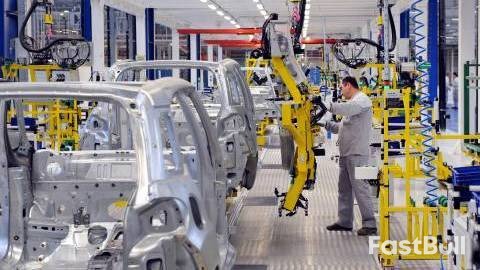
          French manufacturing output registered a 0.8% decline in December, a reversal from the 0.5% growth seen in November. However, a closer look reveals the drop was concentrated in specific, highly volatile sectors and does not signal a broader industrial slowdown.
          Unpacking the December Decline

          The negative headline figure was primarily driven by weaker production in transport equipment, a sector that makes up 13% of France's total manufacturing output. The aerospace segment, in particular, saw a sharp drop that erased the gains from the previous three months.

          Such volatility is typical for the aerospace industry, and this one-month dip is not considered a cause for alarm. In fact, on a yearly basis, production of transport equipment is still up by a strong 12.4%.

          While coke production also fell by 0.9% over the month, every other industrial sector reported an increase in output, underscoring the narrow scope of the December downturn.

          A Positive Outlook for 2026

          Despite the monthly dip, the forecast for French industry in the first half of 2026 remains optimistic. A cyclical improvement is expected, supported by several key factors:

          • Regional Recovery: A broader European economic recovery is gaining momentum.

          • German Stimulus: Germany's stimulus plan is anticipated to boost regional demand.

          • Business Confidence: Improving business sentiment and healthier order books point to higher industrial production in the coming months.

          • Defense Spending: Rising defense budgets will continue to support the industrial sector.

          • Aerospace Strength: Aerospace production is projected to remain a significant driver of growth.

          Potential Risks on the Horizon

          However, the path forward is not without challenges. Several factors could weigh on economic activity and exports:

          • Stronger Euro: The recent appreciation of the euro poses a risk to export competitiveness. The European Central Bank estimates that a further 4.3% rise in the euro against the dollar could reduce eurozone GDP growth by 0.1 percentage points.

          • High Tax Burden: The high tax burden on French companies may constrain business activity.

          • Weak Investment: Recent business surveys indicate that investment intentions remain very weak.

          The Final Verdict: Modest Growth Expected

          Balancing these positive drivers and potential headwinds, the overall outlook for 2026 is moderately positive. GDP growth is forecast to reach approximately 1%, a slight acceleration from the 0.9% growth recorded in 2025.

          To stay updated on all economic events of today, please check out our Economic calendar
          Risk Warnings and Disclaimers
          You understand and acknowledge that there is a high degree of risk involved in trading. Following any strategies or investment methods may lead to potential losses. The content on the site is provided by our contributors and analysts for information purposes only. You are solely responsible for determining whether any trading assets, securities, strategy, or any other product is suitable for investing based on your own investment objectives and financial situation.
          Add to Favorites
          Share

          Why the S&P 500 Could Face a Sharp Drop in 2026

          George Anderson

          Political

          Stocks

          Data Interpretation

          Remarks of Officials

          Economic

          The S&P 500 is navigating a complex landscape. The economic impact of President Trump's tariffs, combined with high stock market valuations and the uncertainty of midterm elections, could trigger a significant decline or even a crash in 2026. For investors, understanding these interconnected risks is crucial.

          President Trump's trade policies, including tariffs, are a central factor in the economic outlook for 2026.

          Trump's Tariffs: Economic Claims vs. Reality

          In a January editorial for The Wall Street Journal, President Trump argued that his administration's tariffs have fueled "extraordinarily high economic growth." He also claimed that foreign exporters are footing the bill. However, a closer look at the data suggests a different narrative.

          Deconstructing 2025 GDP Growth

          The assertion of tariff-driven growth doesn't align with economic figures. Here’s a breakdown of the first nine months of 2025:

          • Underwhelming Performance: Real GDP grew by 2.51%. This rate is actually below the 10-year average (2.75%), the 30-year average (2.58%), and the 50-year average (2.84%).

          • The AI Factor: According to the Federal Reserve Bank of St. Louis, spending on artificial intelligence (AI) contributed 0.97 percentage points to GDP growth during this period. Without the boost from AI, the economy would have expanded by just 1.54%. Goldman Sachs noted that without AI, "U.S. GDP would have almost flatlined."

          Who Really Pays for the Tariffs?

          President Trump’s editorial also stated that foreign producers are absorbing "at least 80% of tariff costs," citing a Harvard Business School study. This appears to be a misinterpretation of the research.

          The study he referenced explicitly concludes, "Our results suggest that U.S. consumers paid up to 43 percent of the tariff burden, with the rest absorbed by U.S. firms." The report does not suggest that foreign exporters paid a substantial portion of the tariffs.

          The takeaway is clear: contrary to claims, GDP growth in 2025 was subpar and heavily propped up by AI investment, not tariffs.

          Historical Headwinds for the Stock Market

          Beyond the tariff debate, two historical patterns are signaling caution for the S&P 500 in 2026: elevated valuations and the midterm election cycle.

          A Market Priced for Perfection

          The S&P 500 currently trades at 22.2 times forward earnings, according to FactSet Research. This is a very expensive valuation from a historical perspective. In the last 40 years, the index has only sustained a forward price-to-earnings (P/E) ratio above 22 during two periods: the dot-com bubble and the COVID-19 pandemic. Both were followed by bear markets.

          This high valuation is particularly risky because the forward P/E metric already incorporates Wall Street's optimistic expectations for accelerated earnings in 2026. If companies fail to meet these high forecasts as tariffs weigh on the economy, stocks could fall sharply.

          Midterm Election Year Jitters

          History shows that midterm election years often bring market volatility. The S&P 500 has experienced a median intra-year drawdown of 19% in these years. This pattern suggests there is a 50/50 chance the index could see a similar decline in 2026.

          This volatility stems from the uncertainty that midterm elections create. The party in power typically loses seats in Congress, leaving investors to speculate about future fiscal, trade, and regulatory policies.

          The Bottom Line for Investors

          The stock market faces a convergence of headwinds in 2026. The combination of high valuations, the economic drag from tariffs, and the historical uncertainty of a midterm election year raises the probability of a bear market or even a crash.

          However, there is a silver lining for long-term investors. Every past market drawdown has ultimately proven to be a buying opportunity, and there is no reason to believe this time will be different.

          To stay updated on all economic events of today, please check out our Economic calendar
          Risk Warnings and Disclaimers
          You understand and acknowledge that there is a high degree of risk involved in trading. Following any strategies or investment methods may lead to potential losses. The content on the site is provided by our contributors and analysts for information purposes only. You are solely responsible for determining whether any trading assets, securities, strategy, or any other product is suitable for investing based on your own investment objectives and financial situation.
          Add to Favorites
          Share

          Kevin Warsh’s Inflation Doctrine And The Test Of Federal Reserve Credibility

          Gerik

          Economic

          An Inflation Hawk With A Pragmatic Voting Record

          During his tenure as a governor at the Federal Reserve from 2006 to 2011, Kevin Warsh consistently emphasized the importance of anchoring inflation expectations and preserving central bank credibility. Yet his voting behavior tells a more nuanced story. Despite his hawkish philosophy, Warsh never dissented from the consensus of the Federal Open Market Committee and frequently supported holding rates steady or cutting them, particularly as economic conditions deteriorated during the global financial crisis.
          This apparent tension reflects a distinction between ideology and implementation. Warsh’s speeches and meeting transcripts show that while inflation risks were always central to his thinking, he remained willing to ease policy when data pointed to weakening growth or financial instability. Former Atlanta Fed president Dennis Lockhart described this approach as fundamentally data-driven, arguing that Warsh understands the need to let economic evidence guide policy decisions rather than rigid doctrine.

          Crisis-Era Warnings And Inflation Expectations

          Warsh’s focus on inflation credibility was especially visible during the 2008 financial crisis. At an April 2008 FOMC meeting, months before the collapse of Lehman Brothers, he voted for a 25 basis point rate cut but warned that repeated easing could signal an excessive tolerance for inflation. He argued that such perceptions risked pushing inflation expectations higher, undermining the Fed’s long-term credibility.
          His remarks during this period highlighted a causal relationship he consistently emphasized. In Warsh’s view, if markets believe the central bank is willing to tolerate higher inflation to support growth, expectations will adjust upward, making inflation harder to control later. This logic echoed again in September 2009, when the Fed committed to keeping rates near zero for an extended period. Warsh cautioned that waiting to normalize policy until the economy returned to full strength would almost certainly mean acting too late, thereby sowing the seeds of future inflation.

          Lessons From The 1970s And The Dual Mandate

          In a 2010 speech, Warsh drew explicit parallels to the inflationary experience of the 1970s. He argued that the willingness to accept slightly higher inflation in exchange for lower unemployment had been a central mistake of that era. From his perspective, any implicit increase in the inflation target would necessarily lift expectations, and once credibility was lost, it would be difficult for a central bank to convincingly promise that the shift was temporary.
          This framework remains highly relevant today as the Fed navigates its dual mandate of price stability and maximum employment. Over the past year, policymakers have debated which side of that mandate was further from balance as inflation eased but remained elevated while the labor market softened. The Fed ultimately chose to cut rates three times last fall, prioritizing employment support. Warsh’s historical record suggests he views such trade-offs with caution, particularly if they risk blurring the central bank’s commitment to price stability.

          A More Dovish Tone In Recent Years

          In contrast to his earlier warnings, Warsh has more recently advocated for lower interest rates, arguing that structural forces could suppress inflation. He has suggested that the Fed should abandon fears of stagflation and recognize artificial intelligence as a powerful driver of productivity gains that could push inflation lower over time. In this view, stronger growth does not automatically translate into higher inflation, weakening the traditional link between demand expansion and price pressures.
          Former Cleveland Fed president Loretta Mester noted that while Warsh has articulated broad views about productivity and AI, translating those beliefs into policy would require building consensus within the committee. This highlights a practical constraint on any Fed chair. Even with strong convictions, policy outcomes depend on persuading a divided committee over multiple meetings rather than imposing a unilateral vision.

          Toward A More Rules-Based Federal Reserve

          Some market participants believe a Warsh-led Fed would mark a shift toward a more disciplined and rules-based institution. Jeffrey Roach of LPL Financial argued that such a transition could elevate price stability as the dominant objective, reduce discretionary interventions, and scale back reliance on large-scale asset purchases. If realized, this approach could have significant implications for financial markets.
          A less interventionist Fed could lead investors to demand higher risk compensation, pushing up long-term interest rates and steepening the yield curve. This would reflect a more market-driven allocation of capital rather than one shaped by persistent central bank support. The relationship here is structural rather than immediate, as expectations of future policy frameworks influence asset pricing over time.

          Independence Under Political Pressure

          Throughout his tenure, Warsh repeatedly stressed the importance of protecting the Fed’s independence. In a March 2010 speech, he argued that credibility required fierce independence from political pressure and short-term interests, whether from Washington or Wall Street. This stance may be tested if he assumes the role of chair.
          As President Donald Trump’s nominee to lead the Fed, Warsh is expected to face pressure from the White House to cut rates, even as the committee itself remains divided. Dennis Lockhart described the situation as a delicate balancing act, requiring Warsh to assert independence while maintaining enough alignment with political expectations to function effectively.
          If confirmed, Warsh will inherit a complex policy environment marked by lingering inflation concerns, evolving productivity dynamics, and political scrutiny. His record suggests a leader who prioritizes credibility and long-term stability, yet remains flexible in the face of compelling data. Whether that balance can be maintained under intense political and economic pressure will determine how his tenure shapes the future of U.S. monetary policy.

          Source: Yahoo Finance

          To stay updated on all economic events of today, please check out our Economic calendar
          Risk Warnings and Disclaimers
          You understand and acknowledge that there is a high degree of risk involved in trading. Following any strategies or investment methods may lead to potential losses. The content on the site is provided by our contributors and analysts for information purposes only. You are solely responsible for determining whether any trading assets, securities, strategy, or any other product is suitable for investing based on your own investment objectives and financial situation.
          Add to Favorites
          Share

          India-US Trade Deal Nears March Signing

          Thomas

          Political

          Remarks of Officials

          Economic

          India's Trade Minister Piyush Goyal confirmed that a formal trade agreement with the United States is expected to be signed in March, a move that will see New Delhi reduce its tariffs on American goods.

          Goyal laid out the first official timeline for the deal, which President Donald Trump first announced on Monday. A joint statement is expected within four to five days, which will trigger Washington to slash duties on Indian exports from 50% to 18%.

          The agreement hinges on India halting its purchases of Russian oil and lowering existing trade barriers in exchange for more favorable tariff treatment from the U.S.

          India's $500 Billion US Import Plan

          A core component of the deal is a commitment from India to import at least $500 billion worth of American goods over the next five years. The purchases will focus on high-value sectors, including energy, aircraft, and computer chips.

          Goyal specified that orders from planemaker Boeing alone could amount to between $70 billion and $80 billion. He added that the total value of these aircraft deals would likely "cross $100 billion" when factoring in the cost of engines.

          To stay updated on all economic events of today, please check out our Economic calendar
          Risk Warnings and Disclaimers
          You understand and acknowledge that there is a high degree of risk involved in trading. Following any strategies or investment methods may lead to potential losses. The content on the site is provided by our contributors and analysts for information purposes only. You are solely responsible for determining whether any trading assets, securities, strategy, or any other product is suitable for investing based on your own investment objectives and financial situation.
          Add to Favorites
          Share

          Japan Election: How a Big LDP Win Could Stabilize Markets

          Ukadike Micheal

          Traders' Opinions

          Political

          Bond

          Data Interpretation

          Daily News

          Remarks of Officials

          Forex

          Economic

          Investors are bracing for Japan's election, but analysts suggest a surprising outcome: a landslide victory for the ruling Liberal Democratic Party (LDP) could be the best news for the country's turbulent bond and currency markets.

          The vote has put markets on edge after fiscal worries recently triggered a sharp selloff in both the yen and Japanese government bonds (JGBs). This instability in Japan quickly spread, pushing up borrowing costs from the United States to Germany and reminding global markets of the high debt levels across major economies.

          Why a Decisive Victory Could Calm Nerves

          Paradoxically, an overwhelming LDP victory may ultimately benefit bonds and the yen. Analysts believe a strong mandate would free Prime Minister Sanae Takaichi from needing to negotiate with opposition parties, many of whom are demanding even deeper tax cuts and more aggressive government spending.

          A comfortable majority would also give her more flexibility to respond to market pressure and adjust policies to prevent further yen weakness or a spike in borrowing costs—a pattern she has demonstrated in the past.

          According to a recent poll, the LDP and its coalition partner Ishin could secure as many as 300 seats in the 465-seat lower house.

          "I don't know if it's going to be a landslide, but certainly Takaichi finds herself in an advantageous situation," said Shoki Omori, chief Japan desk strategist at Mizuho Securities. "That's why she doesn't necessarily need to worry about further ramping up spending... Initially, I think the LDP and Takaichi were a little bit desperate, so to speak."

          Takaichi's Policies and Market Turmoil

          Since Takaichi—a fiscal dove and follower of former premier Shinzo Abe's "Abenomics"—won the LDP leadership in October, markets have been volatile. JGB yields have soared to all-time highs as bond prices have fallen.

          Figure 1: Japanese Government Bond (JGB) yields rose sharply across all maturities under Prime Minister Takaichi, with the January 20 highs (red line) significantly above October 20 levels (blue line), reflecting growing fiscal concerns.

          Meanwhile, the yen has fallen to a near 18-month low against the dollar. This has prompted Japanese policymakers to repeatedly threaten market intervention to defend the currency.

          Voter Concerns and International Scrutiny

          The rising cost of living is a central issue in this election, and voters have increasingly blamed the persistent weakness of the yen for driving up the price of imports. At the same time, rising bond yields translate into higher mortgage rates and increased borrowing costs for businesses, with any debt market rout risking a spillover into Japanese stocks.

          The turmoil has also drawn international attention. The United States has criticized the volatility in Japanese markets for its spillover effects and has urged Tokyo to restore stability—a task that could be easier with a large parliamentary majority.

          "Although the administration may initially aim to strengthen its proactive fiscal expansion, pressure from the markets and the U.S. administration would compel it to exercise restraint," wrote Barclays analysts led by Shinichiro Kadota. "The reduced need for cooperation with the opposition would also support this shift."

          Takaichi has shown a willingness to bend to market pressure. Earlier this week, she walked back campaign comments perceived as favoring a weak yen. In November, she was forced to clarify her fiscal stance after a 21.3 trillion yen ($135.72 billion) stimulus package rattled the bond market.

          How Fiscal Pledges Roiled the Bond Market

          The so-called super-long bonds have been especially sensitive to any hint of loosened fiscal discipline in Japan, which is already the most indebted nation in the developed world.

          On January 20, yields on 30-year bonds surged to a record 3.88% after Takaichi called the election and pledged a two-year suspension of the food tax. She did not specify how she would cover the estimated 10 trillion yen revenue shortfall, spooking investors.

          Figure 2: The 30-year JGB yield surged to an all-time peak near 3.9% in late January after a snap election was called, highlighting the market's extreme sensitivity to fiscal policy announcements.

          While that selloff could resume, Takaichi's fiscal proposals are starting to look conservative compared to those from the opposition.

          A Look at the Opposition's Spending Plans

          An analysis of campaign pledges reveals why a strong LDP mandate might lead to more fiscal restraint:

          • Takaichi's LDP: Pledged to suspend the 8% food tax for two years.

          • Centrist Reform Alliance: Wants to abolish the food tax entirely.

          • Democratic Party for the People: Proposes slashing all value-added taxes to 5%.

          This context suggests that if Takaichi secures a large majority, she may have the political cover to avoid implementing her most costly promises.

          "What the LDP has promised is to 'work on' a reduction of the consumption tax on foods," noted Norihiro Yamaguchi, senior Japan economist at Oxford Economics, implying it is not a firm commitment. "If there is no longer a need to accommodate the opposition's demands, the necessity for doing so naturally diminishes."

          To stay updated on all economic events of today, please check out our Economic calendar
          Risk Warnings and Disclaimers
          You understand and acknowledge that there is a high degree of risk involved in trading. Following any strategies or investment methods may lead to potential losses. The content on the site is provided by our contributors and analysts for information purposes only. You are solely responsible for determining whether any trading assets, securities, strategy, or any other product is suitable for investing based on your own investment objectives and financial situation.
          Add to Favorites
          Share

          Saudi Arabia Opens Stock Market to All Foreign Investors

          Michael Ross

          Traders' Opinions

          Stocks

          Daily News

          Remarks of Officials

          Economic

          Saudi Arabia has opened its stock market to all foreign investors, a landmark move under its Vision 2030 plan to liberalize the economy and reduce its dependence on oil revenue.

          Previously, direct access to the Saudi Exchange, or Tadawul, was restricted to qualified institutional investors selected by authorities. As of February 1, that has changed. Smaller institutions, funds, family offices, and individual investors are now permitted to participate directly, without needing to use swap arrangements or exchange-traded funds.

          The market has responded positively. The Tadawul All-Share Index has climbed approximately 10% since the Capital Market Authority (CMA) announced the reform on January 6, reversing a downtrend from the previous ten weeks. Mohanad Yakout, a senior market analyst at Scope Markets, noted that the jump shows investors view the policy as a "meaningful catalyst for revising up the market's valuation."

          Vision 2030: The Strategy Behind the Market Opening

          The Tadawul is the largest and most liquid stock market in the Middle East, with a capitalization of 8.8 trillion Saudi riyals ($2.35 trillion) at the end of 2025. Foreign stock ownership had already increased by 92 billion riyals to 590 billion riyals in the first three quarters of 2025.

          Several benchmark index companies already have significant foreign investment.

          • Al-Babtain Power & Telecom: 33.8% foreign-held

          • Edarat Group: 24.6% foreign-held

          • Etihad Etisalat: 23.74% foreign-held

          While the 49% cap on foreign ownership in any single listed company remains in place, Yakout believes this liberalization intensifies "competition for regional financial primacy with the Emirati markets that have historically benefited from more permissive foreign ownership regimes."

          This market opening is part of a broader national transformation. Over the past decade, Saudi Arabia has worked to soften its image by easing regulations, opening cinemas, and introducing tourist visas. It has also successfully bid for major global events like the FIFA World Cup 2034 and World Expo 2030. In January, a new law was implemented allowing non-Muslim foreigners to own property.

          The push for economic diversification comes as the government faces pressure from lower oil prices. It more than doubled its 2025 budget deficit forecast to 5.3% of GDP and expects a deficit of 165 billion riyals, or 3.3% of GDP, for this year. This fiscal pressure is widely seen as a key driver for economic reforms.

          Investing in Saudi Arabia: Weighing the Risks

          Despite the opportunities, analysts caution that investing in the Saudi market carries significant risks, primarily because many of its largest companies are closely tied to the state.

          Popular listings with Asian investors—including Saudi Aramco, Saudi Basic Industries, Al Rajhi Bank, and ACWA Power—offer growth at a reasonable price. However, these companies operate in strategic sectors like energy, chemicals, banking, and utilities, which are subject to intense government control.

          Figure 1: State-owned giants like oil producer Saudi Aramco, which went public in 2019, are cornerstones of the Tadawul exchange but also pose unique risks for investors due to significant government influence.

          "Competition is limited, government involvement is high, and decision-making reflects longer-term strategic priorities rather than short-term shareholder returns," said Alice Gower, a partner at Azure Strategy.

          Other risks cited by analysts include the economy's heavy reliance on oil prices and a perceived lack of robust shareholder protections.

          The Case for Investing: Scale, Liquidity, and Stability

          While risks exist, the sheer scale and liquidity of the Saudi market help mitigate them, particularly for long-term investors. In contrast, Dubai's stock market may offer higher potential returns but also comes with greater cyclical risk tied to real estate, retail flows, and shifting investor sentiment. This leads investors to adopt a more tactical approach in Dubai.

          Saudi Arabia also offers a stable investment environment in other ways.

          • No Formal Capital Controls: Foreign investors can generally repatriate capital and profits without restriction.

          • Currency Stability: The Saudi riyal is pegged to the U.S. dollar, anchoring the exchange rate.

          • Free Currency Conversion: Investors can convert currency freely.

          These factors boost investor confidence. However, Pratibha Thaker, editorial director at the Economist Intelligence Unit, pointed out that "indirect constraints remain in the form of foreign ownership limits, sectoral restrictions and administrative frictions, which can still shape investment decisions and limit control-seeking strategies."

          What's Next for the Saudi Market?

          With the Vision 2030 agenda in full swing, some experts expect further liberalization. The most significant potential change on the horizon involves the foreign ownership cap.

          "The biggest needle mover will be any changes to foreign ownership caps, which is considered a possible move later this year," said Gower. Such a reform could unlock another wave of foreign capital and further integrate the Tadawul into the global financial system.

          To stay updated on all economic events of today, please check out our Economic calendar
          Risk Warnings and Disclaimers
          You understand and acknowledge that there is a high degree of risk involved in trading. Following any strategies or investment methods may lead to potential losses. The content on the site is provided by our contributors and analysts for information purposes only. You are solely responsible for determining whether any trading assets, securities, strategy, or any other product is suitable for investing based on your own investment objectives and financial situation.
          Add to Favorites
          Share

          China Urges US-Russia Talks as START Treaty Expires

          James Riley

          Political

          Remarks of Officials

          China's foreign ministry has expressed regret over the expiration of the New START treaty, the landmark nuclear arms agreement between the United States and Russia. Beijing is now urging Washington to resume strategic dialogue with Moscow to maintain global stability.

          The treaty, which for over half a century placed limits on the strategic nuclear arsenals of both nations, officially lapsed on Wednesday. In response, Russia stated it remains open to security discussions but will counter any emerging threats.

          Beijing Voices Concern Over Global Nuclear Order

          Foreign ministry spokesperson Lin Jian articulated China's position, describing the treaty's expiration as a regrettable development with serious implications.

          "China regrets the expiration of the New START Treaty, as the treaty is of great significance to maintaining global strategic stability," Lin stated. He noted widespread international concern that the treaty's end could negatively impact the global nuclear arms control framework.

          Following Russia's proposal to continue observing the treaty's core limitations, China has called on the United States to engage constructively.

          "China calls on the United States to respond positively, handle the treaty's follow-up arrangements responsibly, and resume strategic stability dialogue with Russia as soon as possible," Lin added, emphasizing that this reflects the expectations of the international community.

          China's Stance on Its Own Nuclear Arsenal

          The foreign ministry also took the opportunity to reiterate China's established nuclear policy. Lin emphasized that China adheres strictly to a self-defense strategy and maintains its nuclear forces at the minimum level required for national security.

          "China has consistently adhered to a self-defense nuclear strategy, abided by the policy of no first use of nuclear weapons and has made unconditional commitments not to use or threaten to use nuclear weapons against non-nuclear-weapon states or nuclear-weapon-free zones," he explained.

          Lin also addressed China's role in future arms control negotiations, stating that its arsenal is not comparable in size to those of Washington and Moscow. Citing this disparity, he confirmed that China will not participate in their bilateral disarmament talks at this stage.

          Meanwhile, the White House indicated this week that President Donald Trump would determine the future of U.S. nuclear arms control policy and would "clarify on his own timeline."

          Risk Warnings and Disclaimers
          You understand and acknowledge that there is a high degree of risk involved in trading. Following any strategies or investment methods may lead to potential losses. The content on the site is provided by our contributors and analysts for information purposes only. You are solely responsible for determining whether any trading assets, securities, strategy, or any other product is suitable for investing based on your own investment objectives and financial situation.
          Add to Favorites
          Share
          FastBull
          Copyright © 2026 FastBull Ltd

          728 RM B 7/F GEE LOK IND BLDG NO 34 HUNG TO RD KWUN TONG KLN HONG KONG

          TelegramInstagramTwitterfacebooklinkedin
          App Store Google Play Google Play
          Products
          Charts

          Chats

          Q&A with Experts
          Screeners
          Economic Calendar
          Data
          Tools
          Membership
          Features
          Function
          Markets
          Copy Trading
          Latest Signals
          Contests
          News
          Analysis
          24/7
          Columns
          Education
          Company
          Careers
          About Us
          Contact Us
          Advertising
          Help Center
          Feedback
          User Agreement
          Privacy Policy
          Personal Information Protection Statement
          Business

          White Label

          Broker API

          Data API

          Web Plug-ins

          Poster Maker

          Affiliate Program

          Risk Disclosure

          The risk of loss in trading financial instruments such as stocks, FX, commodities, futures, bonds, ETFs and crypto can be substantial. You may sustain a total loss of the funds that you deposit with your broker. Therefore, you should carefully consider whether such trading is suitable for you in light of your circumstances and financial resources.

          No decision to invest should be made without thoroughly conducting due diligence by yourself or consulting with your financial advisors. Our web content might not suit you since we don't know your financial conditions and investment needs. Our financial information might have latency or contain inaccuracy, so you should be fully responsible for any of your trading and investment decisions. The company will not be responsible for your capital loss.

          Without getting permission from the website, you are not allowed to copy the website's graphics, texts, or trademarks. Intellectual property rights in the content or data incorporated into this website belong to its providers and exchange merchants.

          Not Logged In

          Log in to access more features

          Connect Broker
          Become a signal provider
          Help Center
          Customer Service
          Dark Mode
          Price Up/Down Colors

          Log In

          Sign Up

          Position
          Layout
          Fullscreen
          Default to Chart
          The chart page opens by default when you visit fastbull.com