Markets
News
Analysis
User
24/7
Economic Calendar
Education
Data
- Names
- Latest
- Prev



Signal Accounts for Members
All Signal Accounts
All Contests


[Economist: Fed Could Further Shrink Balance Sheet If It Uses Term Open Market Operations (Tomos)] Bill Nelson, Chief Economist And Head Of Research At The Bank Policy Institute (Bpi), Believes The Federal Reserve's Reluctance To Restart Term Open Market Operations (Tomos) Is Hindering Further Reduction In Its Balance Sheet, And This Resistance Is Based On Misunderstanding. Nelson Writes, "Without Term Open Market Operations, The Fed Simply Cannot Achieve Meaningful Balance Sheet Reduction. To Reduce Its Balance Sheet, The Fed Must Raise Money Market Rates To A Level Slightly Above The Interest Rate On Reserves (IOR) So That Banks Have An Incentive To Shift Funds From Reserves To Other Liquid Assets."
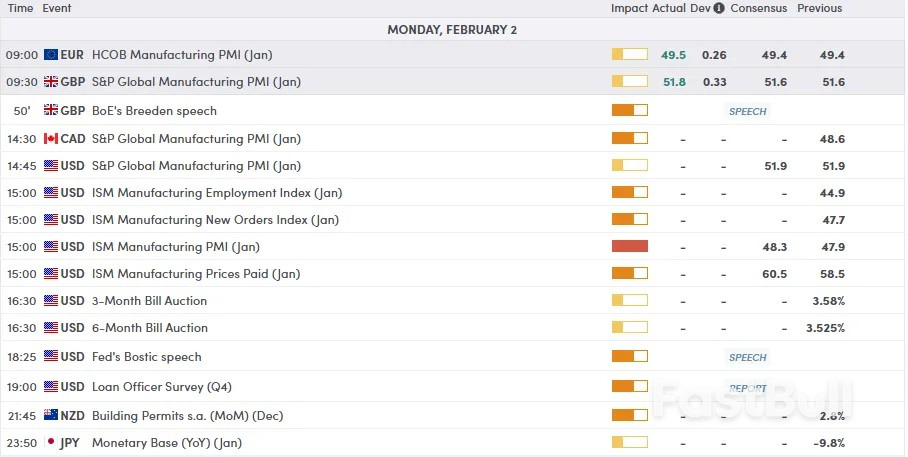
U.S. Treasury Yields Rose Further As Data Showed That The U.S. ISM Manufacturing Sector Expanded At Its Fastest Pace Since February 2022 In January
The US ISM Manufacturing New Orders Index For January Was 57.1, Compared To 47.7 In The Previous Month
Ism USA Manufacturing Prices Paid Index 59.0 In January (Consensus 59.0) Versus 58.5 In December
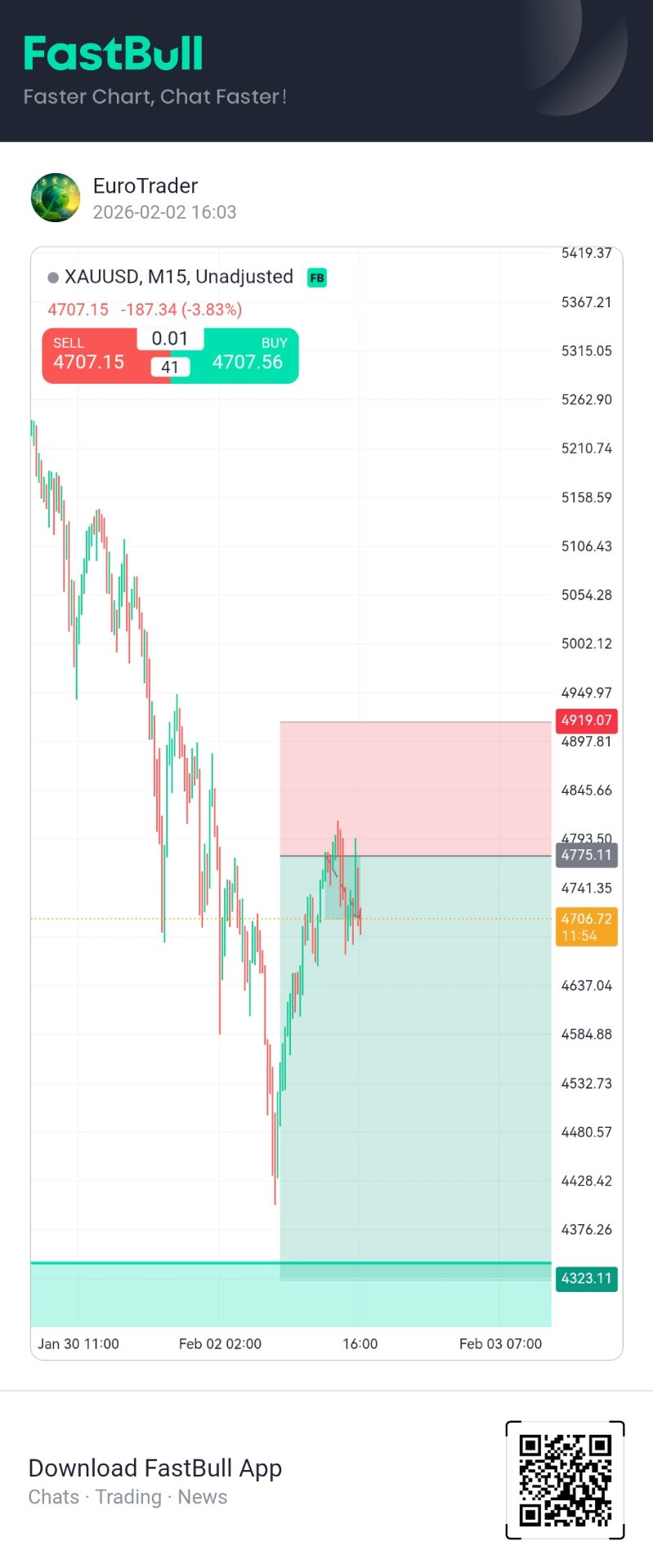
Gold Volatility Hits Highest Level Since 2008, Dwarfing Even Bitcoin's Rollercoaster Ride. Gold's Volatility Has Surpassed That Of Bitcoin, Highlighting The Metal's Dramatic Price Swings, Comparable To The Most Volatile Periods Of The Past Two Decades, Following A Rapid Price Surge. Bloomberg Data Shows That Gold's 30-day Volatility Has Climbed To Over 44%, The Highest Since The 2008 Financial Crisis. This Level Exceeds Bitcoin's Volatility Of Approximately 39%—the Original Cryptocurrency Often Referred To As "digital Gold."
The Final Reading Of The S&P Global Manufacturing PMI Output Sub-index For January Rose To 55.2, A New High Since August, Marking The Eighth Consecutive Month Of Expansion. The Final Reading Of The Employment Sub-index Fell, Reaching A New Low Since October
A White House Official Said U.S. Middle East Envoy Witkov Will Travel To Abu Dhabi On Wednesday And Thursday For Talks With Russia And Ukraine
A White House Official Said U.S. Middle East Envoy Witkov Will Arrive In Israel On Tuesday And Meet With Israeli Prime Minister Netanyahu
The Final Reading Of The S&P Global Manufacturing PMI For January In The United States Was 52.4, In Line With Expectations Of 52 And The Preliminary Reading Of 51.9
Spokesman: US Treasury Has Not Pledged Funds To African Development Bank's Adf 2025 Financing Round

China, Mainland NBS Non-manufacturing PMI (Jan)A:--
F: --
P: --
South Korea Trade Balance Prelim (Jan)A:--
F: --
Japan Manufacturing PMI Final (Jan)A:--
F: --
P: --
South Korea IHS Markit Manufacturing PMI (SA) (Jan)A:--
F: --
P: --
Indonesia IHS Markit Manufacturing PMI (Jan)A:--
F: --
P: --
China, Mainland Caixin Manufacturing PMI (SA) (Jan)A:--
F: --
P: --
Indonesia Trade Balance (Dec)A:--
F: --
P: --
Indonesia Inflation Rate YoY (Jan)A:--
F: --
P: --
Indonesia Core Inflation YoY (Jan)A:--
F: --
P: --
India HSBC Manufacturing PMI Final (Jan)A:--
F: --
P: --
Australia Commodity Price YoY (Jan)A:--
F: --
P: --
Russia IHS Markit Manufacturing PMI (Jan)A:--
F: --
P: --
Turkey Manufacturing PMI (Jan)A:--
F: --
P: --
U.K. Nationwide House Price Index MoM (Jan)A:--
F: --
P: --
U.K. Nationwide House Price Index YoY (Jan)A:--
F: --
P: --
Germany Actual Retail Sales MoM (Dec)A:--
F: --
Italy Manufacturing PMI (SA) (Jan)A:--
F: --
P: --
South Africa Manufacturing PMI (Jan)A:--
F: --
P: --
Euro Zone Manufacturing PMI Final (Jan)A:--
F: --
P: --
U.K. Manufacturing PMI Final (Jan)A:--
F: --
P: --
Turkey Trade Balance (Jan)A:--
F: --
P: --
Brazil IHS Markit Manufacturing PMI (Jan)A:--
F: --
P: --
Canada National Economic Confidence IndexA:--
F: --
P: --
Canada Manufacturing PMI (SA) (Jan)A:--
F: --
P: --
U.S. IHS Markit Manufacturing PMI Final (Jan)A:--
F: --
P: --
U.S. ISM Output Index (Jan)A:--
F: --
P: --
U.S. ISM Inventories Index (Jan)A:--
F: --
P: --
U.S. ISM Manufacturing Employment Index (Jan)A:--
F: --
P: --
U.S. ISM Manufacturing New Orders Index (Jan)A:--
F: --
P: --
U.S. ISM Manufacturing PMI (Jan)A:--
F: --
P: --
South Korea CPI YoY (Jan)--
F: --
P: --
Japan Monetary Base YoY (SA) (Jan)--
F: --
P: --
Australia Building Approval Total YoY (Dec)--
F: --
P: --
Australia Building Permits MoM (SA) (Dec)--
F: --
P: --
Australia Building Permits YoY (SA) (Dec)--
F: --
P: --
Australia Private Building Permits MoM (SA) (Dec)--
F: --
P: --
Australia Overnight (Borrowing) Key Rate--
F: --
P: --
RBA Rate Statement
Japan 10-Year Note Auction Yield--
F: --
P: --
Saudi Arabia IHS Markit Composite PMI (Jan)--
F: --
P: --
RBA Press Conference
Turkey PPI YoY (Jan)--
F: --
P: --
Turkey CPI YoY (Jan)--
F: --
P: --
Turkey CPI YoY (Excl. Energy, Food, Beverage, Tobacco & Gold) (Jan)--
F: --
P: --
Turkey Trade Balance (Jan)--
F: --
P: --
U.S. Weekly Redbook Index YoY--
F: --
P: --
U.S. JOLTS Job Openings (SA) (Dec)--
F: --
P: --
Mexico Manufacturing PMI (Jan)--
F: --
P: --
U.S. API Weekly Refined Oil Stocks--
F: --
P: --
U.S. API Weekly Gasoline Stocks--
F: --
P: --
U.S. API Weekly Cushing Crude Oil Stocks--
F: --
P: --
U.S. API Weekly Crude Oil Stocks--
F: --
P: --
Japan IHS Markit Services PMI (Jan)--
F: --
P: --
Japan IHS Markit Composite PMI (Jan)--
F: --
P: --
China, Mainland Caixin Services PMI (Jan)--
F: --
P: --
China, Mainland Caixin Composite PMI (Jan)--
F: --
P: --


No matching data
Latest Views
Latest Views
Trending Topics
Top Columnists
Latest Update
White Label
Data API
Web Plug-ins
Affiliate Program
View All

No data
France's budget brings stability, but at the cost of Macron's reforms, opening a volatile path to 2027.
France is poised to approve its 2026 budget on Monday, ending a period of intense political instability that has defined President Emmanuel Macron's government since his 2024 snap election resulted in a hung parliament. The budget's passage, secured by the expected failure of two no-confidence motions, provides a much-needed reprieve for Prime Minister Sebastien Lecornu’s weak minority government.
For nearly two years, budget negotiations have paralyzed French politics, coming at a time when a major hole in public finances demanded urgent belt-tightening. The prolonged deadlock cost two prime ministers their jobs, rattled debt markets, and raised concerns among France's European partners.
Prime Minister Lecornu, whose chaotic appointment in October was widely criticized, has managed to navigate the political impasse by securing the support of Socialist lawmakers. This breakthrough, achieved through targeted but expensive concessions, has boosted his political standing.
The newfound stability has been welcomed by investors. The premium on French government debt over the German benchmark has returned to levels last seen before Macron's snap election announcement in June 2024, signaling a return of market confidence.
With the Socialists confirming they will not back the no-confidence motions, the long-overdue 2026 budget is finally set to become law. Veteran political commentator Alain Duhamel summed up the outcome on RTL radio, calling it "a political success and an economic failure," highlighting the trade-offs made to end the gridlock despite a projected budget deficit of 5% of GDP.
The government paid a steep price for the Socialists' support. The most significant concession was the suspension of an unpopular pension reform, which delays the planned increase in the retirement age to 64 until after the 2027 presidential election.
This move effectively stalls Macron’s signature push for supply-side economic reforms. With just over a year left in his second term and historically low approval ratings, his domestic agenda has lost momentum. Lawmakers show little appetite for unpopular spending cuts as the election cycle intensifies.
However, Macron’s allies argue that Lecornu’s flexible approach prevented the return of wealth taxes and protected the president's legacy of making France more attractive to foreign investment.
Having lost control of the domestic agenda, President Macron is now focusing almost exclusively on foreign policy. He is championing a more self-reliant Europe and advocating a firmer stance in confronting U.S. President Donald Trump on issues ranging from tariffs to the Greenland crisis.
At home, however, his centrist political bloc appears significantly weakened and lacks a clear successor.
Several figures from Macron's camp are already preparing for the 2027 presidential race, including two former prime ministers, Edouard Philippe and Gabriel Attal. Prime Minister Lecornu has also seen his popularity rise in recent months.
The risk for the centrists is fragmentation. With no primary planned, it remains uncertain if a mainstream candidate can consolidate enough support to reach the second round of the election. This situation could create a major opening for the resurgent far right, whether it is led by Jordan Bardella or Marine Le Pen.

A temporary truce on energy infrastructure strikes between Russia and Ukraine is facing severe strain, as Ukrainian President Volodymyr Zelenskiy confirmed that facilities in frontline areas continue to come under fire.
While Russia has not conducted targeted missile or drone attacks on Ukraine's energy grid in the last 24 hours, Zelenskiy’s comments on Monday underscore the limited scope of the agreement, which was brokered last week at the request of U.S. President Donald Trump.

According to Zelenskiy, repair crews have successfully restored power facilities damaged by both frequent Russian attacks and recent malfunctions in high-voltage lines over the weekend.
"The (energy) system is operating stably," he stated on the Telegram app. "However, given the extremely cold weather and the impact of Russian strikes, all challenges remain serious."
This fragile stability is further threatened by what Zelenskiy described as a shift in Russian military focus toward transport logistics, particularly railway infrastructure.
The terms of the truce itself remain a point of contention between Kyiv and Moscow. The Kremlin stated that Russian President Vladimir Putin agreed to a personal request from Trump to halt strikes on Kyiv until February 1.
However, Zelenskiy asserted that the agreement was intended to be a week-long truce that began on January 30, highlighting a fundamental disagreement on the timeline.
Despite the pause in targeted energy strikes, attacks on other civilian and industrial sites persist. On Sunday, a Russian drone strike killed 12 miners at a coal mine in Ukraine’s Dnipropetrovsk region. Energy company DTEK reported on Monday that one of its mining enterprises in the same region was attacked for the second time in 24 hours.
In the frontline Donetsk region, regional officials confirmed that a Russian strike killed a father and son, while also wounding two children and their mother.
As the conflict continues, both Kyiv and Moscow are preparing for talks scheduled for Wednesday and Thursday in Abu Dhabi, where discussions on how to end the war are expected to take place.


India's 10-year bond yield surged to its highest level in over a year on Monday, as the government's larger-than-expected borrowing plan unsettled the market ahead of a key central bank policy meeting.
The benchmark 10-year 6.48% 2035 bond yield closed at 6.7662%, a notable increase from Friday's 6.6963% and its highest point since January 17, 2025. This year alone, the 10-year yield has climbed approximately 18 basis points, reflecting mounting concerns over debt supply that have now been amplified by the new budget.
The primary driver behind the market's reaction was the federal budget's announcement of a record gross borrowing of 17.2 trillion rupees ($187.99 billion) for the 2026–27 fiscal year. This figure significantly overshot the 16.3 trillion rupees that analysts had forecasted in a Reuters poll.
According to rating agencies, the budget signals a slower, more gradual approach to fiscal consolidation. The government has set the following targets for the next fiscal year:
• Debt-to-GDP Ratio: 55.6%
• Fiscal Deficit: 4.3% of GDP
This increased borrowing plan has intensified pressure on the bond market, adding to existing worries about high levels of state debt.
In response to the budget, traders began adjusting their portfolios by trimming positions in longer-duration bonds.
Simultaneously, there has been a clear pivot towards shorter-term debt, specifically 1-to-3-year notes. This move is based on the expectation that the Reserve Bank of India (RBI) will continue its liquidity operations, which are anticipated to keep a cap on short-end yields.
Market participants are closely watching for further liquidity measures from the RBI. The central bank has already been active, purchasing 126.55 billion rupees of bonds from the secondary market in the week ending January 23. Furthermore, the RBI has included liquid papers and the former benchmark 6.33% 2035 bond in this week’s 500 billion-rupee bond-buying plan.
The consensus among traders is that the RBI will hold interest rates steady at its policy decision this Friday.
"The budget is positive for growth and neutral for inflation, so we do not expect this to materially influence the RBI at its next MPC meeting on 6 February, where we expect repo rate to be left unchanged," stated analysts at Nomura in a research note.
The Overnight Indexed Swap (OIS) curve steepened on Monday, reflecting the broader trends in the government bond market.
Longer-end swap rates climbed, while short-term swaps saw increased receiving interest due to the RBI's ongoing liquidity support. The one-year OIS rate fell by 1 basis point to 5.5450%. In contrast, the two-year rate rose 1.25 bps to 5.72%, and the five-year OIS rate climbed 3.25 bps to 6.1950%.
White Label
Data API
Web Plug-ins
Poster Maker
Affiliate Program
The risk of loss in trading financial instruments such as stocks, FX, commodities, futures, bonds, ETFs and crypto can be substantial. You may sustain a total loss of the funds that you deposit with your broker. Therefore, you should carefully consider whether such trading is suitable for you in light of your circumstances and financial resources.
No decision to invest should be made without thoroughly conducting due diligence by yourself or consulting with your financial advisors. Our web content might not suit you since we don't know your financial conditions and investment needs. Our financial information might have latency or contain inaccuracy, so you should be fully responsible for any of your trading and investment decisions. The company will not be responsible for your capital loss.
Without getting permission from the website, you are not allowed to copy the website's graphics, texts, or trademarks. Intellectual property rights in the content or data incorporated into this website belong to its providers and exchange merchants.
Not Logged In
Log in to access more features
Log In
Sign Up