Markets
News
Analysis
User
24/7
Economic Calendar
Education
Data
- Names
- Latest
- Prev



Signal Accounts for Members
All Signal Accounts
All Contests


U.S. Average Hourly Wage MoM (SA) (Dec)--
F: --
P: --
U.S. Average Weekly Working Hours (SA) (Dec)--
F: --
P: --
U.S. New Housing Starts Annualized MoM (SA) (Oct)--
F: --
P: --
U.S. Total Building Permits (SA) (Oct)--
F: --
P: --
U.S. Building Permits MoM (SA) (Oct)--
F: --
P: --
U.S. Annual New Housing Starts (SA) (Oct)--
F: --
P: --
U.S. Manufacturing Employment (SA) (Dec)--
F: --
P: --
U.S. Labor Force Participation Rate (SA) (Dec)--
F: --
P: --
U.S. Private Nonfarm Payrolls (SA) (Dec)--
F: --
P: --
U.S. Government Employment (Dec)--
F: --
P: --
U.S. UMich 5-Year-Ahead Inflation Expectations Prelim YoY (Jan)--
F: --
P: --
U.S. UMich Consumer Sentiment Index Prelim (Jan)--
F: --
P: --
U.S. UMich Current Economic Conditions Index Prelim (Jan)--
F: --
P: --
U.S. UMich Consumer Expectations Index Prelim (Jan)--
F: --
P: --
U.S. UMich 1-Year-Ahead Inflation Expectations Prelim (Jan)--
F: --
P: --
U.S. 5-10 Year-Ahead Inflation Expectations (Jan)--
F: --
P: --
U.S. Weekly Total Oil Rig Count--
F: --
P: --
U.S. Weekly Total Rig Count--
F: --
P: --
Germany Current Account (Not SA) (Nov)--
F: --
P: --
Indonesia Retail Sales YoY (Nov)--
F: --
P: --
Euro Zone Sentix Investor Confidence Index (Jan)--
F: --
P: --
India CPI YoY (Dec)--
F: --
P: --
Canada National Economic Confidence Index--
F: --
P: --
Russia CPI YoY (Dec)--
F: --
P: --
U.S. 3-Year Note Auction Yield--
F: --
P: --
U.S. 10-Year Note Auction Avg. Yield--
F: --
P: --
Japan Trade Balance (Customs Data) (SA) (Nov)--
F: --
P: --
Japan Trade Balance (Nov)--
F: --
P: --
U.K. BRC Overall Retail Sales YoY (Dec)--
F: --
P: --
U.K. BRC Like-For-Like Retail Sales YoY (Dec)--
F: --
P: --
Turkey Retail Sales YoY (Nov)--
F: --
P: --
U.S. NFIB Small Business Optimism Index (SA) (Dec)--
F: --
P: --
Brazil Services Growth YoY (Nov)--
F: --
P: --
Canada Building Permits MoM (SA) (Nov)--
F: --
P: --
U.S. CPI MoM (SA) (Dec)--
F: --
P: --
U.S. CPI YoY (Not SA) (Dec)--
F: --
P: --
U.S. Real Income MoM (SA) (Dec)--
F: --
P: --
U.S. CPI MoM (Not SA) (Dec)--
F: --
P: --
U.S. Core CPI (SA) (Dec)--
F: --
P: --
U.S. Core CPI YoY (Not SA) (Dec)--
F: --
P: --
U.S. Core CPI MoM (SA) (Dec)--
F: --
P: --
U.S. Weekly Redbook Index YoY--
F: --
P: --
U.S. New Home Sales Annualized MoM (Oct)--
F: --
P: --
U.S. Annual Total New Home Sales (Oct)--
F: --
P: --
U.S. Cleveland Fed CPI MoM (SA) (Dec)--
F: --
P: --
U.S. Cleveland Fed CPI MoM (Dec)--
F: --
P: --
China, Mainland Exports (Dec)--
F: --
P: --
China, Mainland Imports YoY (CNH) (Dec)--
F: --
P: --
China, Mainland Imports (CNH) (Dec)--
F: --
P: --
China, Mainland Trade Balance (CNH) (Dec)--
F: --
P: --
China, Mainland Imports YoY (USD) (Dec)--
F: --
P: --
China, Mainland Exports YoY (USD) (Dec)--
F: --
P: --
U.S. EIA Natural Gas Production Forecast For The Next Year (Jan)--
F: --
P: --
U.S. EIA Short-Term Crude Production Forecast For The Next Year (Jan)--
F: --
P: --
U.S. EIA Short-Term Crude Production Forecast For The Year (Jan)--
F: --
P: --
U.S. EIA/WTI Crude 1-Year Average Price Forecast (Jan)--
F: --
P: --
U.S. 30-Year Bond Auction Avg. Yield--
F: --
P: --
Argentina 12-Month CPI (Dec)--
F: --
P: --
Argentina National CPI YoY (Dec)--
F: --
P: --


No matching data
Latest Views
Latest Views
Trending Topics
Top Columnists
Latest Update
White Label
Data API
Web Plug-ins
Affiliate Program
View All

No data
Williams’ comments Monday were his first of the year. The Fed is widely viewed as having moved into a holding stage after cutting its short-term interest rate target three-quarters of a percentage point last year.
Japanese stocks are gearing up for a strong open after a long weekend, propelled by a weakening yen and growing speculation that Prime Minister Sanae Takaichi will call a snap election.
As of 8 a.m. Tuesday, Nikkei 225 futures in Osaka were trading 4% higher at 54,150. Meanwhile, the yen sits near its weakest point since January 2025, trading at approximately 158.18 to the dollar. This combination of factors is setting a bullish tone for the Tokyo market.
Chatter about Takaichi dissolving parliament as early as next month intensified over the weekend following local media reports. This has reignited interest in the so-called "Takaichi trade," a market strategy centered on the prime minister's expansionary fiscal policy and accommodative monetary stance.
The core bet is that Takaichi's ruling Liberal Democratic Party (LDP) would secure a stronger mandate in an election, paving the way for more stimulus. This scenario historically fuels equity gains while pushing the yen lower.
Analysts at Citi Research, Ryota Sakagami and Keishi Ueda, noted that the market is leaning into this narrative. "The market view is likely to increasingly be that high cabinet approval ratings mean an LDP victory and hence a stable political platform, making the initial Japanese market reaction likely to be a renewed flare-up of the Takaichi trade," they wrote.
A renewed push for Takaichi's economic agenda is expected to benefit specific industries. According to the Citi analysts, investors should watch for potential "significant gains" in several key areas:
• Government Spending Beneficiaries: Sectors like defense and nuclear power are expected to gain from increased fiscal spending.
• Exporters: A weaker yen is a major tailwind for forex-sensitive exporters, particularly auto manufacturers.
• Financials: The analysts also predict that long-term Japanese government bond yields could climb on expectations of fiscal expansion. Higher yields would likely boost the performance of financial stocks.
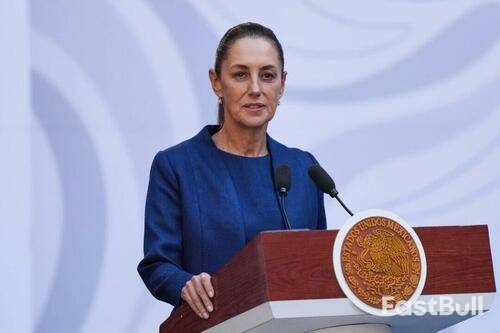
Mexican President Claudia Sheinbaum held a productive conversation with U.S. President Donald Trump on January 12, covering critical issues like security, drug trafficking, and trade. While the dialogue was described as positive, Sheinbaum reaffirmed Mexico's opposition to the deployment of U.S. military forces on its soil.
In a social media post on Monday, Sheinbaum characterized her discussion with Trump as "very good." She noted that their conversation touched on a range of mutual concerns, including security, drug trafficking reduction, trade, and investment.
"Collaboration and cooperation within a framework of mutual respect always yield results," Sheinbaum stated, signaling a commitment to partnership despite underlying tensions.

The call comes amid increased pressure from the Trump administration on Mexico and other Latin American nations to intensify their efforts against drug trafficking. Following the capture of Venezuelan leader Nicolás Maduro by U.S. forces in a pre-dawn raid on January 3, Trump urged Mexico to "get its act together" in dealing with drug cartels.
Trump has consistently offered to send U.S. forces to assist Mexico in these efforts. On January 8, he escalated his rhetoric by suggesting that future U.S. military strikes could target land-based cartel operations inside Mexico.
Sheinbaum Rejects US Troops on Mexican Soil
During a press conference on Monday, Sheinbaum confirmed that she and Trump discussed the possibility of a U.S. force deployment. She recounted that she once again declined the offer and that Trump was understanding of her position.
"He didn't insist," Sheinbaum explained. "I told him, 'Well, no, I've already told you several times that that's not on the table,' but we continue to collaborate within the framework of our sovereignties."
The high-level conversation between the two presidents is part of a broader diplomatic push by the United States. On January 11, U.S. Secretary of State Marco Rubio held a separate call with Mexican Foreign Secretary Juan Ramón de la Fuente.
State Department spokesman Tommy Pigott reported that their discussion focused on "the need for stronger cooperation to dismantle Mexico's violent narcoterrorist networks and stop the trafficking of fentanyl and weapons." Pigott added that Rubio stressed the need for "tangible results."
Tensions with Colombia and Cuba
The Trump administration, emboldened by the Maduro raid, is also applying pressure on other nations in the region, including Colombia and Cuba.
• Colombia: Trump and Colombian President Gustavo Petro have recently exchanged criticisms, with Trump faulting Petro for insufficient cooperation on curbing cocaine production. However, Trump later reported a productive phone call with Petro and announced plans to host him at the White House soon.
• Cuba: In a Truth Social post on Sunday, Trump declared that he had cut off Cuba from Venezuelan oil supplies. "There will be no more oil or money going to Cuba—zero! I strongly suggest they make a deal, before it is too late," he wrote.
For decades, the United States has maintained limited engagement with Cuba's communist government. In response to Trump's comments, Cuban leader Miguel Díaz-Canel Bermúdez stated that U.S.-Cuba relations "must be based on International Law rather than on hostility, threats, and economic coercion."

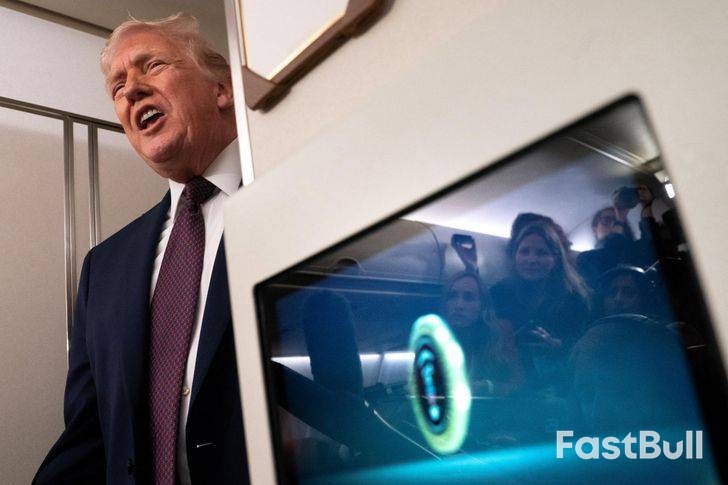
U.S. President Donald Trump announced on Monday a sweeping new policy, imposing an immediate 25% tariff on any country that conducts business with Iran. The move comes as Washington monitors Tehran's response to widespread anti-government protests.
In a post on the social media platform Truth Social, Trump laid out the new economic penalty.
"Effective immediately, any Country doing business with the Islamic Republic of Iran will pay a Tariff of 25% on any and all business being done with the United States of America," he wrote. He emphasized the decisiveness of the move, adding, "This Order is final and conclusive."
The announcement signals a significant escalation in economic pressure, directly linking international trade relations with U.S. foreign policy on Iran.
This new tariff is framed as a response to the Iranian government's handling of recent nationwide demonstrations. According to reports, hundreds of protesters have been killed in over two weeks of demonstrations fueled by economic difficulties and other grievances.
Earlier this month, Trump stated that the United States would "come to their rescue" if Iran "violently kills peaceful protesters."
The tariff policy was announced shortly after comments from White House Press Secretary Karoline Leavitt. Speaking to Fox News, Leavitt confirmed that while diplomacy remains the administration's "first option" in dealing with Iran, the use of military force is still among the options available to the president.
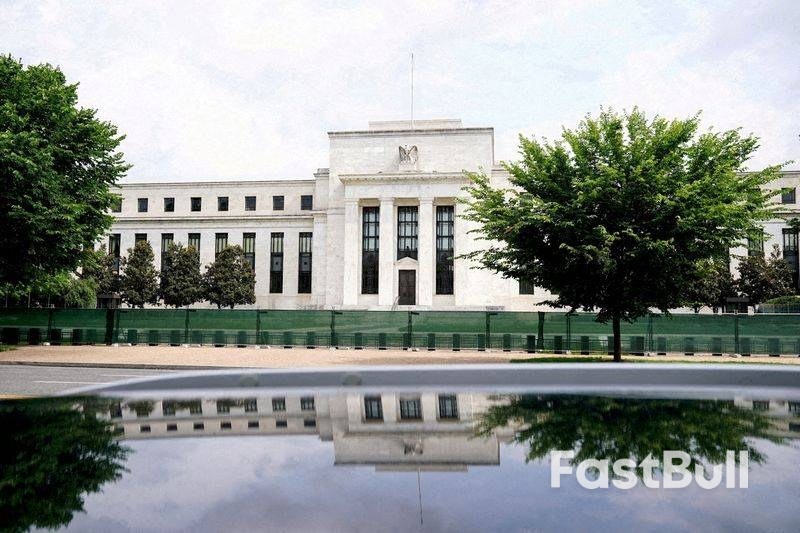
Fitch Ratings said on Monday it views the Federal Reserve's independence as a key supporting factor for its AA+ U.S. sovereign rating.
The credit rating agency will continue to monitor evolution of governance, including "institutional checks and balances," as well as the performance of the Fed in delivering low and stable inflation in its assessment of the U.S. sovereign rating, said Richard Francis, senior director at Fitch Ratings, in emailed comments.
The Fitch comments come after the Trump administration threatened to indict Federal Reserve Chair Jerome Powell over Congressional testimony he gave last summer about a Fed building project, an action Powell called a "pretext" to gain more influence over the central bank and monetary policy.
Credit ratings agency S&P Global Ratings has also cited the credibility of the Fed as a key ratings strength for the U.S. sovereign rating. In an October report, S&P Global said ratings "could come under pressure if political developments weigh on the strength of American institutions and the effectiveness of long-term policymaking or independence of the Fed."

"We continue to view the credibility of the Fed as unparalleled," S&P Global said in the October report. "This supports U.S. monetary flexibility and the role of the dollar as the premier international reserve currency—both of which are key components of the sovereign rating."
Asked on Monday to comment on the latest developments, an S&P spokesman referred to the credit agency's previous reports.
Argentina has repaid a $2.5 billion currency swap to the U.S. Treasury after securing funds from an undisclosed multilateral institution, a central bank official confirmed.
The financing arrangement was not publicly announced. While the official declined to name the lender, they specified that it was not the International Monetary Fund (IMF), with whom Argentina already has a separate $20 billion loan program.
Last Friday, Argentina settled the $2.5 billion debt, which was drawn from a $20 billion swap line established with the Trump administration. The payment was part of a broader effort to manage its financial commitments, which also included a critical $4.3 billion payment to bondholders.
To cover the bond payments, the government used a combination of its own reserves and a $3 billion repurchase agreement, also known as a repo loan, from a consortium of six international banks.
U.S. Treasury Secretary Scott Bessent confirmed the transaction in a post on X, stating that the U.S. had been fully repaid. He noted that the deal generated "tens of millions in USD profit for the American taxpayer."
Bessent also commended Argentina for recent "encouraging changes to its monetary and exchange rate policy framework" and for successfully tapping financial markets.
The original U.S. support was extended as Argentina’s peso faced extreme volatility ahead of a key midterm vote in October. At the time, traders were betting against President Javier Milei’s party.
However, Milei's libertarian party ultimately prevailed in the election, leading to a significant turnaround in market sentiment. This improved outlook has helped stabilize the country's financial position. Despite the recent developments, both U.S. and Argentine officials have released minimal information regarding the original conditions of the swap line.
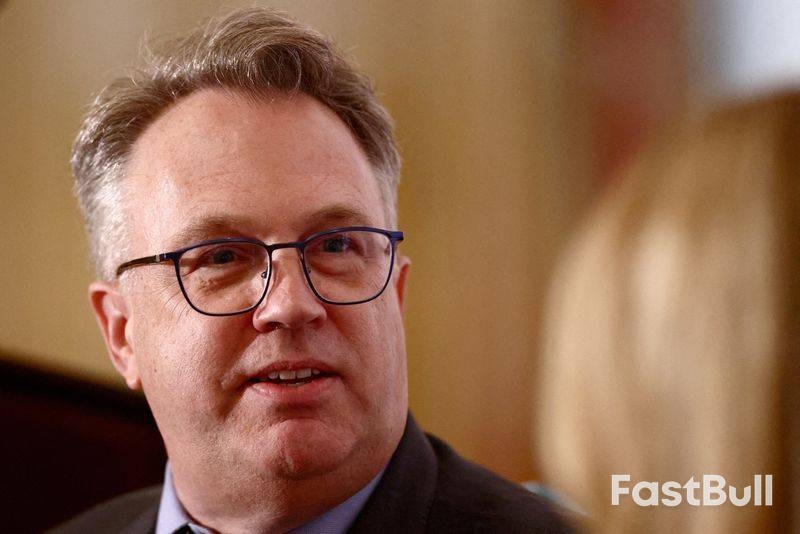
New York Federal Reserve President John Williams stated Monday that he expects a healthy economy in 2026 and sees no immediate reason to lower interest rates, reinforcing the central bank's current wait-and-see approach.
Speaking before the Council on Foreign Relations, Williams characterized the Fed's monetary policy as moving from a "modestly restrictive" stance "closer to neutral."

"Monetary policy is now well positioned to support the stabilization of the labor market and the return of inflation to the FOMC's longer-run goal of 2 percent," he said.
Williams, a key voice on the interest-rate-setting Federal Open Market Committee (FOMC), emphasized that the central bank's primary challenge is guiding inflation back to its 2% target "without creating undue risks" for employment.
He noted a recent shift in the balance of these risks. "In recent months, the downside risks to employment have increased as the labor market cooled, while the upside risks to inflation have lessened," Williams explained.
His comments, the first of the year, align with the broader view that the Fed has entered a holding pattern after cutting its benchmark interest rate by three-quarters of a percentage point last year. The federal funds target rate currently stands in a range of 3.5% to 3.75%.
Those earlier rate cuts were a response by policymakers attempting to navigate a weakening job market while inflation remained above the 2% goal.
In his speech, Williams described his economic forecast as "quite favorable." He projects:
• GDP Growth: Between 2.5% and 2.75% for the year.
• Unemployment: The rate is expected to stabilize this year before declining in subsequent years.
• Inflation: Price pressures are forecast to peak between 2.75% and 3% in the first half of the year, easing to 2.5% for the year as a whole. Williams sees inflation returning to the 2% target by 2027.
This outlook is consistent with the Fed's December meeting, where officials penciled in one additional rate cut for this year. The consensus assumed the job market would remain stable and inflation would cool as the effects of President Donald Trump's trade tariffs diminish.
Williams' stance echoes his comments from a December television interview, where he stated he saw no urgent need for another rate cut. Other Fed officials have recently offered similar outlooks.
This patient approach persists even as the central bank faces continued pressure from President Trump and his associates to cut rates more aggressively, despite inflation running above the Fed's target.
The speech comes at a time of an extraordinary attack on the central bank's independence. On Sunday, Fed Chair Jerome Powell announced that the institution had been served with grand jury subpoenas threatening a criminal indictment related to cost overruns in the renovation of its headquarters.
In a statement, Powell dismissed the legal moves as "pretexts." He argued, "This is about whether the Fed will be able to continue to set interest rates based on evidence and economic conditions—or whether instead monetary policy will be directed by political pressure or intimidation."
While the immediate market impact has been less severe than some anticipated, the threat has reportedly sparked significant bipartisan pushback in Congress. This could potentially prevent the president from installing new members on the central bank's board until the legal challenges are withdrawn.
White Label
Data API
Web Plug-ins
Poster Maker
Affiliate Program
The risk of loss in trading financial instruments such as stocks, FX, commodities, futures, bonds, ETFs and crypto can be substantial. You may sustain a total loss of the funds that you deposit with your broker. Therefore, you should carefully consider whether such trading is suitable for you in light of your circumstances and financial resources.
No decision to invest should be made without thoroughly conducting due diligence by yourself or consulting with your financial advisors. Our web content might not suit you since we don't know your financial conditions and investment needs. Our financial information might have latency or contain inaccuracy, so you should be fully responsible for any of your trading and investment decisions. The company will not be responsible for your capital loss.
Without getting permission from the website, you are not allowed to copy the website's graphics, texts, or trademarks. Intellectual property rights in the content or data incorporated into this website belong to its providers and exchange merchants.
Not Logged In
Log in to access more features

FastBull Membership
Not yet
Purchase
Log In
Sign Up