Markets
News
Analysis
User
24/7
Economic Calendar
Education
Data
- Names
- Latest
- Prev



Signal Accounts for Members
All Signal Accounts
All Contests


Euro Zone Industrial Output MoM (Nov)A:--
F: --
Euro Zone Trade Balance (SA) (Nov)A:--
F: --
Euro Zone Trade Balance (Not SA) (Nov)A:--
F: --
Euro Zone Industrial Output YoY (Nov)A:--
F: --
South Africa Refinitiv/Ipsos Primary Consumer Sentiment Index (PCSI) (Jan)A:--
F: --
P: --
U.K. Refinitiv/Ipsos Primary Consumer Sentiment Index (PCSI) (Jan)A:--
F: --
P: --
Brazil Retail Sales MoM (Nov)A:--
F: --
P: --
U.S. NY Fed Manufacturing Prices Received Index (Jan)A:--
F: --
P: --
U.S. NY Fed Manufacturing New Orders Index (Jan)A:--
F: --
P: --
U.S. NY Fed Manufacturing Employment Index (Jan)A:--
F: --
P: --
U.S. Export Price Index YoY (Nov)A:--
F: --
P: --
U.S. NY Fed Manufacturing Index (Jan)A:--
F: --
U.S. Initial Jobless Claims 4-Week Avg. (SA)A:--
F: --
U.S. Export Price Index MoM (Nov)A:--
F: --
P: --
Canada Manufacturing Unfilled Orders MoM (Nov)A:--
F: --
P: --
Canada Manufacturing New Orders MoM (Nov)A:--
F: --
P: --
U.S. Philadelphia Fed Manufacturing Employment Index (Jan)A:--
F: --
P: --
Canada Wholesale Inventory YoY (Nov)A:--
F: --
P: --
Canada Manufacturing Inventory MoM (Nov)A:--
F: --
P: --
Canada Wholesale Sales YoY (Nov)A:--
F: --
P: --
Canada Wholesale Inventory MoM (Nov)A:--
F: --
P: --
U.S. Import Price Index YoY (Nov)A:--
F: --
U.S. Import Price Index MoM (Nov)A:--
F: --
P: --
U.S. Weekly Continued Jobless Claims (SA)A:--
F: --
Canada Wholesale Sales MoM (SA) (Nov)A:--
F: --
P: --
U.S. Weekly Initial Jobless Claims (SA)A:--
F: --
U.S. Philadelphia Fed Business Activity Index (SA) (Jan)A:--
F: --
P: --
U.S. EIA Weekly Natural Gas Stocks ChangeA:--
F: --
P: --
Richmond Federal Reserve President Barkin delivered a speech.
U.S. Weekly Treasuries Held by Foreign Central BanksA:--
F: --
P: --
Germany CPI Final MoM (Dec)--
F: --
P: --
Germany CPI Final YoY (Dec)--
F: --
P: --
Germany HICP Final MoM (Dec)--
F: --
P: --
Germany HICP Final YoY (Dec)--
F: --
P: --
Brazil PPI MoM (Nov)--
F: --
P: --
Canada New Housing Starts (Dec)--
F: --
P: --
U.S. Capacity Utilization MoM (SA) (Dec)--
F: --
P: --
U.S. Industrial Output YoY (Dec)--
F: --
P: --
U.S. Manufacturing Capacity Utilization (Dec)--
F: --
P: --
U.S. Manufacturing Output MoM (SA) (Dec)--
F: --
P: --
U.S. Industrial Output MoM (SA) (Dec)--
F: --
P: --
U.S. NAHB Housing Market Index (Jan)--
F: --
P: --
Russia CPI YoY (Dec)--
F: --
P: --
U.S. Weekly Total Rig Count--
F: --
P: --
U.S. Weekly Total Oil Rig Count--
F: --
P: --
Japan Core Machinery Orders YoY (Nov)--
F: --
P: --
Japan Core Machinery Orders MoM (Nov)--
F: --
P: --
U.K. Rightmove House Price Index YoY (Jan)--
F: --
P: --
China, Mainland GDP YoY (YTD) (Q4)--
F: --
P: --
China, Mainland Industrial Output YoY (YTD) (Dec)--
F: --
P: --
Japan Industrial Output Final MoM (Nov)--
F: --
P: --
Japan Industrial Output Final YoY (Nov)--
F: --
P: --
Euro Zone Core HICP Final MoM (Dec)--
F: --
P: --
Euro Zone HICP Final MoM (Dec)--
F: --
P: --
Euro Zone HICP Final YoY (Dec)--
F: --
P: --
Euro Zone HICP MoM (Excl. Food & Energy) (Dec)--
F: --
P: --
Euro Zone Core CPI Final YoY (Dec)--
F: --
P: --
Euro Zone Core HICP Final YoY (Dec)--
F: --
P: --
Euro Zone CPI YoY (Excl. Tobacco) (Dec)--
F: --
P: --
Euro Zone Core CPI Final MoM (Dec)--
F: --
P: --


No matching data
Latest Views
Latest Views
Trending Topics
Top Columnists
Latest Update
White Label
Data API
Web Plug-ins
Affiliate Program
View All

No data
The US dollar is on track for a third consecutive weekly gain as resilient economic data reduces expectations for near term Federal Reserve rate cuts....
China is pulling the plug on a key advantage held by high-frequency traders, removing servers dedicated to those firms out of local exchanges' data centers, according to people familiar with the matter.
Commodities futures exchanges in Shanghai and Guangzhou are among those that have ordered local brokers to shift servers for their clients out of data centers run by the bourses, according to the people, who said the move was led by regulators. The change doesn't only affect high-frequency firms but they are likely to feel the biggest impact. The Shanghai Futures Exchange has told brokers they need to get equipment for high-speed clients out by the end of next month, while other clients need to do so by April 30, the people said.
The clampdown will hit China's army of domestic high-frequency firms but will also impact a swathe of global firms that are active in the country. Citadel Securities, Jane Street Group and Jump Trading are among the foreign firms whose access to servers is being affected, the people said, declining to be named as the matter is private.
The changes threaten a speed advantage that high-frequency traders, made famous by Michael Lewis' bestseller Flash Boys, and quant hedge funds have long used to beat rivals. By using servers located in the exchanges' own data centers, these firms can get slightly quicker execution than others — an edge in markets where every millisecond counts.
Trading firms don't directly place their servers within the exchanges but they can do so with the help of local brokerages, who offer the service as a way of securing business. Some Chinese brokers are shifting high-frequency clients' servers out of the Shenzhen Stock Exchange's data centers, one person said.
Representatives for China's securities regulator and Citadel Securities didn't respond to requests for comment. Jane Street, Jump and Hudson River declined to comment.
The move is the latest sign that officials are focused on levelling the playing for investors and ensuring market stability after stocks rallied to multi-year highs this month. Regulators tightened rules on margin trading earlier this week in a bid to cool leveraged bets. They have also scrutinized some ETF trades by foreign market makers.
Futures exchanges have made preliminary plans to add two milliseconds of latency to any servers that connect from third-party computer rooms, two of the people said. It's not clear if other exchanges are considering the same approach.
The delay will be in addition to the time lag trading firms experience from moving servers away from exchanges, the people said.
A delay of just a few milliseconds would be imperceptible to most investors but it could be enough to impact global firms' high-frequency trading in stock index futures, convertible bonds and commodities. Some of their trading strategies may not be viable without the fastest access, though it's unclear how the firms might adapt as they try to stay a step ahead of rivals.
It's unclear whether the timing and details of the changes will apply uniformly across brokers and exchanges.
Chinese quants had assets under management of around 1.7 trillion yuan ($244 billion) by June, according to estimates by Citic Securities Co., a local investment bank. But global giants like Tower Research Capital, Jump and Optiver Holding BV have regularly managed to beat local players, especially in the futures market, according to the people. Optiver declined to comment. Tower didn't respond to requests for comment.
China's stock exchanges define high-frequency trading as more than 300 orders and cancellations per second through one account or more than 20,000 requests in a single day. Such accounts dropped 20% in 2024 to about 1,600 as of June 30 that year, the China Securities Regulatory Commission has said.
The attempt to shift high-frequency traders away from exchanges comes after Beijing's years of unease with these firms, who add liquidity to markets but also enjoy execution advantages that are unthinkable for mom-and-pop investors.
Two years ago, regulators imposed tighter rules on automated stock trading. Officials have also threatened to raise fees on high-frequency traders, although so far they haven't done so.
Officials elsewhere have also made moves to curb the advantages of high-speed traders. Last year, Thailand's stock exchange said it would tighten rules on high-frequency trading, part of a wider move to restore market confidence.
Most economists watching the Bank of Japan believe Governor Kazuo Ueda is raising interest rates too slowly, with baseline forecasts placing the next hike several months away. However, a falling yen is emerging as a critical X-factor that could force the central bank to act much sooner.
A Bloomberg survey of 52 economists highlights this tension. A weaker currency threatens to amplify price pressures in Japan, where inflation has already averaged above the BOJ's 2% target for the last four years.
Despite the BOJ raising its benchmark rate to a three-decade high on December 19, the consensus is that its policy normalization, which began in March 2024, is not keeping pace.
More than 60% of economists surveyed described the central bank's rate-hike cycle as either too slow or on the slow side. In contrast, only 35% viewed the cadence as appropriate. Looking ahead, about 68% of respondents expect the BOJ to settle into a rhythm of raising rates roughly once every six months.
The Japanese yen is the single biggest variable that could upend the BOJ's cautious timeline. Three-quarters of the poll respondents said they see a growing risk of yen weakness prompting an earlier-than-expected rate increase.
"I expect the BOJ to wait about six months before its next rate hike," said Junki Iwahashi, an economist at Sumitomo Mitsui Trust Bank. "However, that timeline could be brought forward if the yen weakens beyond 160 per dollar, pushing up inflation expectations."
As of Friday morning in Tokyo, the yen was trading around 158.50 per dollar, just 2% shy of the low it hit in July 2024—its weakest level since 1986. The currency's decline has accelerated since October, when Prime Minister Sanae Takaichi, a long-time advocate for monetary and fiscal stimulus, took office.
Recent pressure has intensified amid news that Takaichi is planning a snap election next month. Market speculation is growing that a victory would give her a stronger mandate to implement expansionary fiscal measures, further weighing on the yen.
"The number of rate hikes will be largely determined by exchange-rate movements," noted Hiroshi Namioka, chief strategist at T&D Asset Management Co. "As long as the yen continues to weaken or remains persistently weak, the BOJ is likely to continue raising rates."
While the future pace is uncertain, the immediate outlook is clear. All 52 economists predict policymakers will keep the benchmark rate unchanged at 0.75% during the upcoming meeting on January 22-23.
For the next rate hike, the consensus points to the summer:
• July: The most popular choice, selected by 48% of economists.
• April & June: Each month was chosen by 17% of respondents.
Reflecting expectations of a more active BOJ, the median projection for the terminal rate—the point where economists expect the hiking cycle to end—has climbed to 1.5%. This marks the highest estimate since the survey began asking the question at the end of 2023.
A key focus of next week's policy meeting will be the BOJ's updated quarterly economic outlook. This report will be the first to incorporate the economic stimulus package Takaichi's government compiled in November, offering potential clues about the central bank's stance.
Economists' median forecasts suggest the BOJ will maintain its current inflation outlook of 2.7% for the fiscal year ending in March and 1.8% for the following year. Meanwhile, growth forecasts are expected to see minor upward revisions to 0.9% and 0.8% for this fiscal year and the next, partly due to the stimulus.
Takeshi Minami, chief economist at Norinchukin Research Institute, argued that the central bank must shift gears. "In managing monetary policy in 2026, as the underlying inflation rate approaches 2%, the BOJ will be required to move away from its traditionally slow pace of rate hikes," he said. "Given current concerns about upside risks to inflation, it remains essential for the BOJ to maintain a 'fighting stance' that signals its willingness to continue raising rates."
Ford Motor Co. is in talks with China's BYD Co. about potentially supplying batteries for hybrid vehicles to the American automaker's overseas factories, according to people familiar with the negotiations.
BYD, the world's top seller of electric vehicles, is among several battery suppliers Ford is talking to, said the people, who asked not to be identified revealing internal discussions. No deal is imminent, they said.
The discussions are aimed at supplying Ford's international factories with batteries for the automaker's expanding line of hybrids, the people said.
The hybrids built in Ford's overseas factories would be exported worldwide, including to the US, the people said. But most hybrids Ford sells in the US would continue to come from factories in North America.
BYD didn't immediately respond to a request for comment. A spokesperson for Ford said the automaker "talks to lots of companies about many things. We don't comment on rumors or speculation about our business."
Ford has sourced batteries from BYD since 2020 for its joint-venture Chinese factories with state-owned Changan Automobile Co.
Hybrid sales have grown worldwide as the market for pure electric vehicles has slowed. Ford is ramping up hybrid production and has plans to roll out more gas-electric models.
At the Detroit Auto Show earlier this week, the American automaker revealed plans to introduce a plug-in hybrid version of its Bronco sport utility vehicle in China. It will utilize extended-range electric vehicle, or EREV, technology, where an internal combustion engine acts as an on-board generator to recharge the battery when the car is in use.
Chief Executive Officer Jim Farley told reporters on the sidelines of the auto show that there are no plans yet to bring the EREV Bronco to the US, but added, "you should expect a lot of exciting powertrains for Bronco."
"We're really accelerating our investment in EREVs and hybrids," Farley said. "We've been really successful with the F-150 hybrid. Now we want to go across the range with hybrids and EREVs."
News of Ford's talks with BYD, first reported by the Wall Street Journal, sent ADRs of the Chinese automaker up 3.6% Thursday. Ford shares fell less than 1% to close at $13.81.
The potential deal drew immediate political blowback, with House China Panel Chair John Moolenaar saying Ford "should work with our allies, not our adversaries."
"If reports that Ford is in discussions to potentially partner with a second Chinese battery company were to come true, it would diminish Ford's status as an iconic American company," Moolenaar said in an emailed statement.
Ford also has a battery deal with China's Contemporary Amperex Technology Co. Ltd.


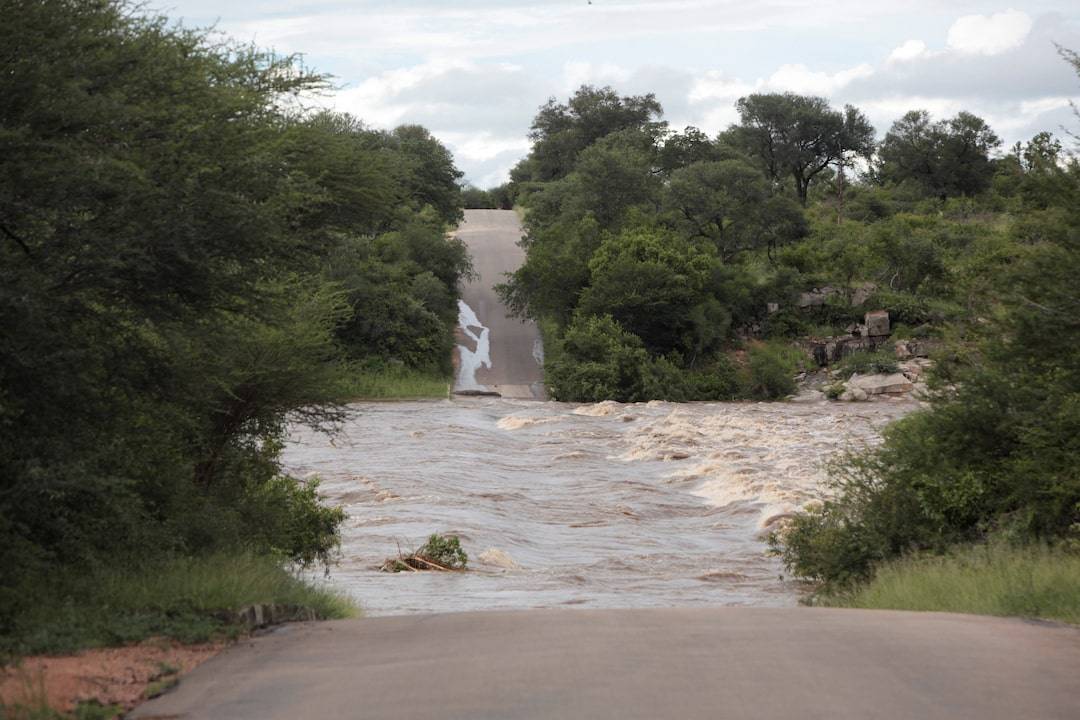
South African authorities shut Kruger National Park on Thursday to day visitors, after several rivers that run through it burst their banks as the result of days of heavy rains, they said.
Tourists already staying at lodges inside the park were permitted to stay, apart from areas around the Letaba river that were evacuated, South African National Parks said.
Reuters TV footage showed vast areas of the park submerged by fast-flowing water, with treetops poking out of the floods and hippos swimming between them. Signs announced that roads were closed.
Flooding in southeastern Africa has become more frequent and severe as climate change makes storms in the adjacent Indian Ocean more powerful.
"This water's moving very fast," Kruger spokesperson Reynold Thakhuli told Reuters on the scene, next to a road that had been closed and was half submerged by running water, adding that authorities had shut the Phalaborwa gate, near Kruger airport.
"We'll close it for 24 hours and monitor what is happening."
He added: "we're not really worried about the animals," because they tended to move to higher ground in such situations.
South African tourist Gerhard Ackerman sat on the veranda of his lodge, overlooking the floods with a drink in his hand.
"It's God's way of putting water back into the earth," he said. "We're enjoying it."


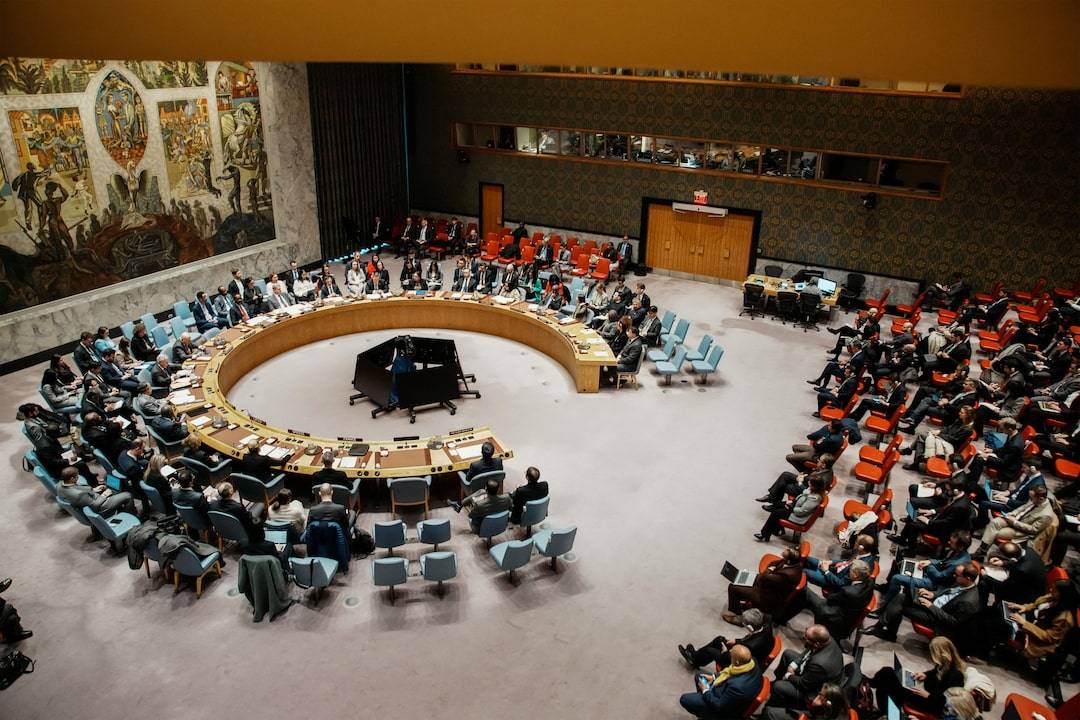
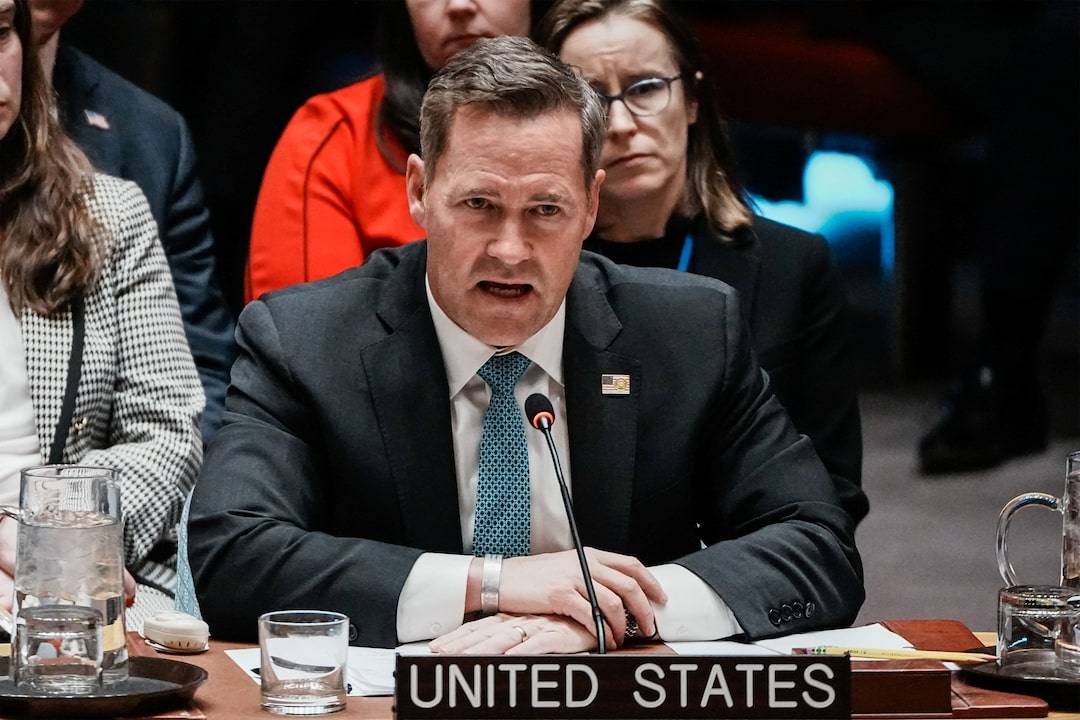
The United States stands by the "brave people of Iran," and President Donald Trump "has made it clear all options are on the table to stop the slaughter," U.S. Ambassador to the United Nations Mike Waltz told the U.N. Security Council on Thursday.
Trump has repeatedly threatened to intervene in support of protesters in Iran, where thousands of people have been reported killed in a crackdown on the unrest against clerical rule.
But on Thursday, Trump adopted a wait‑and‑see posture, saying he had been told that the killings were easing and that he believed there was no current plan for large-scale executions.
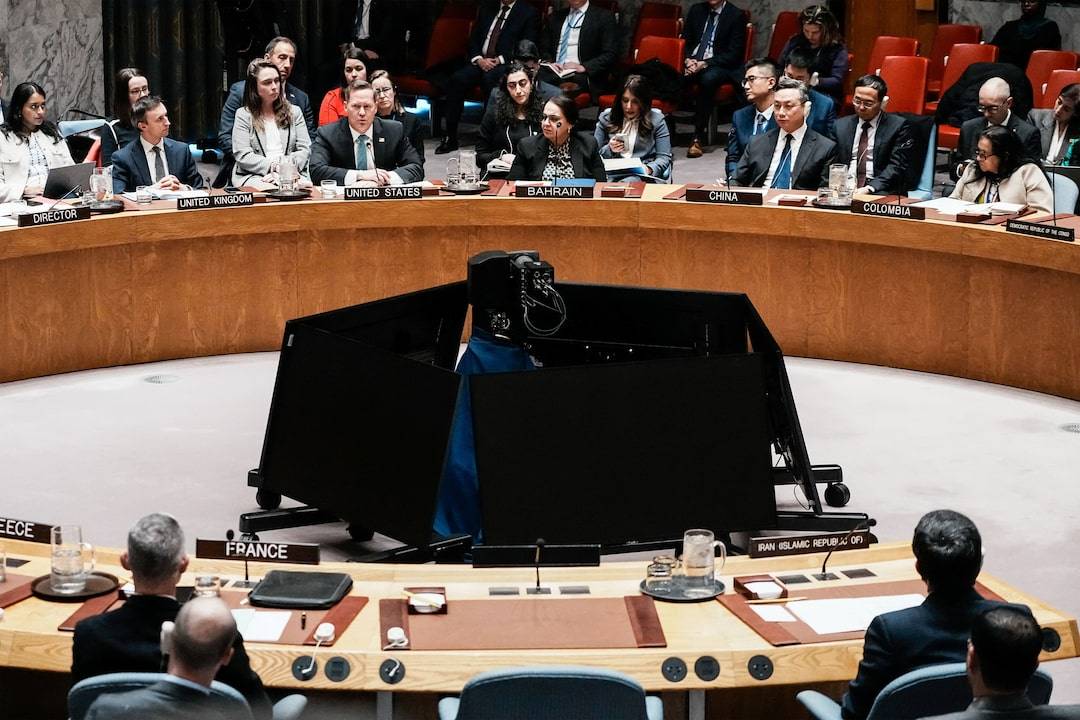
"President Trump is a man of action, not endless talk like we see at the United Nations. He has made it clear all options are on the table to stop the slaughter," Waltz told the Security Council meeting, which Washington had requested.
He dismissed allegations by Iran that the protests are "a foreign plot to give a precursor to military action."
"Everyone in the world needs to know that the regime is weaker than ever before, and therefore is putting forward this lie because of the power of the Iranian people in the streets. They are afraid. They're afraid of their own people," Waltz said.
United Nations Secretary-General Antonio Guterres urges "maximum restraint at this sensitive moment and calls on all actors to refrain from any actions that could lead to further loss of life or ignite a wider regional escalation," senior U.N. official Martha Pobee told the council.
White Label
Data API
Web Plug-ins
Poster Maker
Affiliate Program
The risk of loss in trading financial instruments such as stocks, FX, commodities, futures, bonds, ETFs and crypto can be substantial. You may sustain a total loss of the funds that you deposit with your broker. Therefore, you should carefully consider whether such trading is suitable for you in light of your circumstances and financial resources.
No decision to invest should be made without thoroughly conducting due diligence by yourself or consulting with your financial advisors. Our web content might not suit you since we don't know your financial conditions and investment needs. Our financial information might have latency or contain inaccuracy, so you should be fully responsible for any of your trading and investment decisions. The company will not be responsible for your capital loss.
Without getting permission from the website, you are not allowed to copy the website's graphics, texts, or trademarks. Intellectual property rights in the content or data incorporated into this website belong to its providers and exchange merchants.
Not Logged In
Log in to access more features

FastBull Membership
Not yet
Purchase
Log In
Sign Up