• Trade
  • Markets
  • Copy
  • Contests
  • News
  • 24/7
  • Calendar
  • Q&A
  • Chats
Trending
Screeners
SYMBOL
LAST
BID
ASK
HIGH
LOW
NET CHG.
%CHG.
SPREAD
SPX
S&P 500 Index
6827.42
6827.42
6827.42
6899.86
6801.80
-73.58
-1.07%
--
DJI
Dow Jones Industrial Average
48458.04
48458.04
48458.04
48886.86
48334.10
-245.98
-0.51%
--
IXIC
NASDAQ Composite Index
23195.16
23195.16
23195.16
23554.89
23094.51
-398.69
-1.69%
--
USDX
US Dollar Index
97.950
98.030
97.950
98.500
97.950
-0.370
-0.38%
--
EURUSD
Euro / US Dollar
1.17394
1.17409
1.17394
1.17496
1.17192
+0.00011
+ 0.01%
--
GBPUSD
Pound Sterling / US Dollar
1.33707
1.33732
1.33707
1.33997
1.33419
-0.00148
-0.11%
--
XAUUSD
Gold / US Dollar
4299.39
4299.39
4299.39
4353.41
4257.10
+20.10
+ 0.47%
--
WTI
Light Sweet Crude Oil
57.233
57.485
57.233
58.011
56.969
-0.408
-0.71%
--

Community Accounts

Signal Accounts
--
Profit Accounts
--
Loss Accounts
--
View More

Become a signal provider

Sell trading signals to earn additional income

View More

Guide to Copy Trading

Get started with ease and confidence

View More

Signal Accounts for Members

All Signal Accounts

Best Return
  • Best Return
  • Best P/L
  • Best MDD
Past 1W
  • Past 1W
  • Past 1M
  • Past 1Y

All Contests

  • All
  • Trump Updates
  • Recommend
  • Stocks
  • Cryptocurrencies
  • Central Banks
  • Featured News
Top News Only
Share

Iranian Media Says 18 Crew Members Of Foreign Tanker Seized In Gulf Of Oman Over Carrying 'Smuggled Fuel' Detained

Share

Regional Governor: Two Killed In Ukrainian Drone Strike On Russia's Saratov

Share

Chinese Foreign Ministry - China Foreign Minister Met With United Arab Emirates Counterpart On Dec 12

Share

China's Central Financial And Economic Affairs Commission Deputy Director: Will Expand Export And Increase Import In 2026

Share

Thai Leader Anutin: Landmine Blast That Killed Thai Soldiers 'Not A Roadside Accident'

Share

Thai Leader Anutin: Thailand To Continue Military Action Until 'We Feel No More Harm'

Share

Cambodian Prime Minister Hun Manet Says He Had Phone Calls With Trump And Malaysian Leader Anwar About Ceasefire

Share

Cambodia's Hun Manet Says USA, Malaysia Should Verify 'Which Side Fired First' In Latest Conflict

Share

Cambodia's Hun Manet: Cambodia Maintains Its Stance In Seeking Peaceful Resolution Of Disputes

Share

Nasdaq Companies: Allergan, Ferrovia, Insmed, Monolithic Power Systems, Seagate Technology, And Western Digital Will Be Added To The NASDAQ 100 Index. Biogen, CdW, GlobalFoundries, Lululemon, ON Semiconductor, And Tradedesk Will Be Removed From The NASDAQ 100 Index

Share

Witkoff Headed To Berlin This Weekend To Meet With Zelenskiy, European Leaders -Wsj Reporter On X

Share

Russia Attacks Two Ukrainian Ports, Damaging Three Turkish-Owned Vessels

Share

[Historic Flooding Occurs In At Least Four Rivers In Washington State Due To Days Of Torrential Rains] Multiple Areas In Washington State Have Been Hit By Severe Flooding Due To Days Of Torrential Rains, With At Least Four Rivers Experiencing Historic Flooding. Reporters Learned On The 12th That The Floods Caused By The Torrential Rains In Washington State Have Destroyed Homes And Closed Several Highways. Experts Warn That Even More Severe Flooding May Occur In The Future. A State Of Emergency Has Been Declared In Washington State

Share

Trump Says Proposed Free Economic Zone In Donbas Would Work

Share

Trump: I Think My Voice Should Be Heard

Share

Trump Says Will Be Choosing New Fed Chair In Near Future

Share

Trump Says Proposed Free Economic Zone In Donbas Complex But Would Work

Share

Trump Says Land Strikes In Venezuela Will Start Happening

Share

US President Trump: Thailand And Cambodia Are In A Good Situation

Share

State Media: North Korean Leader Kim Hails Troops Returning From Russia Mission

TIME
ACT
FCST
PREV
U.K. Trade Balance Non-EU (SA) (Oct)

A:--

F: --

P: --

U.K. Trade Balance (Oct)

A:--

F: --

P: --

U.K. Services Index MoM

A:--

F: --

P: --

U.K. Construction Output MoM (SA) (Oct)

A:--

F: --

P: --

U.K. Industrial Output YoY (Oct)

A:--

F: --

P: --

U.K. Trade Balance (SA) (Oct)

A:--

F: --

P: --

U.K. Trade Balance EU (SA) (Oct)

A:--

F: --

P: --

U.K. Manufacturing Output YoY (Oct)

A:--

F: --

P: --

U.K. GDP MoM (Oct)

A:--

F: --

P: --

U.K. GDP YoY (SA) (Oct)

A:--

F: --

P: --

U.K. Industrial Output MoM (Oct)

A:--

F: --

P: --

U.K. Construction Output YoY (Oct)

A:--

F: --

P: --

France HICP Final MoM (Nov)

A:--

F: --

P: --

China, Mainland Outstanding Loans Growth YoY (Nov)

A:--

F: --

P: --

China, Mainland M2 Money Supply YoY (Nov)

A:--

F: --

P: --

China, Mainland M0 Money Supply YoY (Nov)

A:--

F: --

P: --

China, Mainland M1 Money Supply YoY (Nov)

A:--

F: --

P: --

India CPI YoY (Nov)

A:--

F: --

P: --

India Deposit Gowth YoY

A:--

F: --

P: --

Brazil Services Growth YoY (Oct)

A:--

F: --

P: --

Mexico Industrial Output YoY (Oct)

A:--

F: --

P: --

Russia Trade Balance (Oct)

A:--

F: --

P: --

Philadelphia Fed President Henry Paulson delivers a speech
Canada Building Permits MoM (SA) (Oct)

A:--

F: --

P: --

Canada Wholesale Sales YoY (Oct)

A:--

F: --

P: --

Canada Wholesale Inventory MoM (Oct)

A:--

F: --

P: --

Canada Wholesale Inventory YoY (Oct)

A:--

F: --

P: --

Canada Wholesale Sales MoM (SA) (Oct)

A:--

F: --

P: --

Germany Current Account (Not SA) (Oct)

A:--

F: --

P: --

U.S. Weekly Total Rig Count

A:--

F: --

P: --

U.S. Weekly Total Oil Rig Count

A:--

F: --

P: --

Japan Tankan Large Non-Manufacturing Diffusion Index (Q4)

--

F: --

P: --

Japan Tankan Small Manufacturing Outlook Index (Q4)

--

F: --

P: --

Japan Tankan Large Non-Manufacturing Outlook Index (Q4)

--

F: --

P: --

Japan Tankan Large Manufacturing Outlook Index (Q4)

--

F: --

P: --

Japan Tankan Small Manufacturing Diffusion Index (Q4)

--

F: --

P: --

Japan Tankan Large Manufacturing Diffusion Index (Q4)

--

F: --

P: --

Japan Tankan Large-Enterprise Capital Expenditure YoY (Q4)

--

F: --

P: --

U.K. Rightmove House Price Index YoY (Dec)

--

F: --

P: --

China, Mainland Industrial Output YoY (YTD) (Nov)

--

F: --

P: --

China, Mainland Urban Area Unemployment Rate (Nov)

--

F: --

P: --

Saudi Arabia CPI YoY (Nov)

--

F: --

P: --

Euro Zone Industrial Output YoY (Oct)

--

F: --

P: --

Euro Zone Industrial Output MoM (Oct)

--

F: --

P: --

Canada Existing Home Sales MoM (Nov)

--

F: --

P: --

Euro Zone Total Reserve Assets (Nov)

--

F: --

P: --

U.K. Inflation Rate Expectations

--

F: --

P: --

Canada National Economic Confidence Index

--

F: --

P: --

Canada New Housing Starts (Nov)

--

F: --

P: --

U.S. NY Fed Manufacturing Employment Index (Dec)

--

F: --

P: --

U.S. NY Fed Manufacturing Index (Dec)

--

F: --

P: --

Canada Core CPI YoY (Nov)

--

F: --

P: --

Canada Manufacturing Unfilled Orders MoM (Oct)

--

F: --

P: --

Canada Manufacturing New Orders MoM (Oct)

--

F: --

P: --

Canada Core CPI MoM (Nov)

--

F: --

P: --

Canada Manufacturing Inventory MoM (Oct)

--

F: --

P: --

Canada CPI YoY (Nov)

--

F: --

P: --

Canada CPI MoM (Nov)

--

F: --

P: --

Canada CPI YoY (SA) (Nov)

--

F: --

P: --

Canada Core CPI MoM (SA) (Nov)

--

F: --

P: --

Q&A with Experts
    • All
    • Chatrooms
    • Groups
    • Friends
    Connecting
    .
    .
    .
    Type here...
    Add Symbol or Code

      No matching data

      All
      Trump Updates
      Recommend
      Stocks
      Cryptocurrencies
      Central Banks
      Featured News
      • All
      • Russia-Ukraine Conflict
      • Middle East Flashpoint
      • All
      • Russia-Ukraine Conflict
      • Middle East Flashpoint
      Search
      Products

      Charts Free Forever

      Chats Q&A with Experts
      Screeners Economic Calendar Data Tools
      Membership Features
      Data Warehouse Market Trends Institutional Data Policy Rates Macro

      Market Trends

      Market Sentiment Order Book Forex Correlations

      Top Indicators

      Charts Free Forever
      Markets

      News

      News Analysis 24/7 Columns Education
      From Institutions From Analysts
      Topics Columnists

      Latest Views

      Latest Views

      Trending Topics

      Top Columnists

      Latest Update

      Signals

      Copy Rankings Latest Signals Become a signal provider AI Rating
      Contests
      Brokers

      Overview Brokers Assessment Rankings Regulators News Claims
      Broker listing Forex Brokers Comparison Tool Live Spread Comparison Scam
      Q&A Complaint Scam Alert Videos Tips to Detect Scam
      More

      Business
      Events
      Careers About Us Advertising Help Center

      White Label

      Data API

      Web Plug-ins

      Affiliate Program

      Awards Institution Evaluation IB Seminar Salon Event Exhibition
      Vietnam Thailand Singapore Dubai
      Fans Party Investment Sharing Session
      FastBull Summit BrokersView Expo
      Recent Searches
        Top Searches
          Markets
          News
          Analysis
          User
          24/7
          Economic Calendar
          Education
          Data
          • Names
          • Latest
          • Prev

          View All

          No data

          Scan to Download

          Faster Charts, Chat Faster!

          Download App
          English
          • English
          • Español
          • العربية
          • Bahasa Indonesia
          • Bahasa Melayu
          • Tiếng Việt
          • ภาษาไทย
          • Français
          • Italiano
          • Türkçe
          • Русский язык
          • 简中
          • 繁中
          Open Account
          Search
          Products
          Charts Free Forever
          Markets
          News
          Signals

          Copy Rankings Latest Signals Become a signal provider AI Rating
          Contests
          Brokers

          Overview Brokers Assessment Rankings Regulators News Claims
          Broker listing Forex Brokers Comparison Tool Live Spread Comparison Scam
          Q&A Complaint Scam Alert Videos Tips to Detect Scam
          More

          Business
          Events
          Careers About Us Advertising Help Center

          White Label

          Data API

          Web Plug-ins

          Affiliate Program

          Awards Institution Evaluation IB Seminar Salon Event Exhibition
          Vietnam Thailand Singapore Dubai
          Fans Party Investment Sharing Session
          FastBull Summit BrokersView Expo

          Chinese Move Billions to Hong Kong Banks, Seeking Higher Yields

          Cohen

          Economic

          Summary:

          HSBC, Bank of China, StanChart seeing rush of account openings. Mainlanders put money into fixed deposits, insurance, bonds.

          HSBC Holdings Plc attracted more than 130,000 new bank customers in Hong Kong in the first quarter. Bank of China (Hong Kong) gained 200,000 new cross-border clients in 2023, while at Hang Seng Bank, new account openings for non-residents jumped 342% last year.
          The surge is in large part being driven by mainland Chinese flocking to Hong Kong and offers a welcome bright spot for the city that’s struggling to recover after the pandemic and years of political upheaval.
          Many are opening accounts to tap a wider range of investment options — from insurance to fixed deposits — to capture the Asian financial hub’s higher interest rates and escape mainland China’s moribund markets.
          Earlier this year, Standard Chartered Plc was offering short-term deposit rates of as high as 10% to attract Chinese customers. Regulators in Beijing have also clamped down on high-yielding wealth management products onshore, while sinking real estate prices have sapped nest eggs across China.
          “There’s a massive growth of assets under management going from the mainland to offshore markets,” said Maggie Ng, head of wealth and personal banking for Hong Kong at HSBC. “We’re the first port of call for these mainland customers looking to make investments overseas.”
          Hong Kong’s role as an investment hub will be the focus of the Bloomberg Wealth Asia Summit in the city on Wednesday, with speakers from UBS Group AG, HSBC and Julius Baer Group AG.

          Capital Controls

          Still, getting large amounts of cash out from the mainland to Hong Kong is difficult since capital controls only allow the equivalent of $50,000 to be taken out annually.
          Nevertheless, Hu, a housewife from Shanghai who asked to be identified by her last name, is going to move money bit by bit to Hong Kong after traveling to the city last year to open an account with Bank of China’s local operation. She’s helping her daughter buy an apartment in the city at some point.
          For now, she has put her money mostly into fixed deposits and equities. The process of opening an account was “relatively easy” if you come to Hong Kong in person, said Hu.
          During the first quarter, insurance sales to mainland visitors jumped 62.6% to HK$15.6 billion ($2 billion), according to the Insurance Authority. AIA Group Ltd. and Prudential Plc are among the insurers reaping the benefits from mainland Chinese returning to Hong Kong.
          Net inflows for Hong Kong retail funds hit $3.8 billion in the first quarter, a three-year high. For all of last year, net fund inflows into Hong Kong-domiciled investment funds rose 93%, according to the city’s Securities and Futures Commission Chief Executive Officer Julia Leung.
          HSBC’s Ng said portions of the money the bank is attracting is going into fixed deposits to lock in a higher rates, mainly in US and Hong Kong dollars. The bank is increasingly seeing “a lot more protection” needs from Chinese customers post Covid, she said.
          Hong Kong’s government is actively seeking to lure the wealthy with a plan that offers residency to individuals who invest about HK$30 million ($3.85 million) into stocks, debt and funds, while the top talent program has attracted mainlanders to the city.
          “I think people are looking for maybe different options now that they’ve come out of the Covid lockdowns,” said Richard Harris, chief executive officer of Port Shelter Investment Management. “It is part of the diversification process.”
          Of HSBC’s 130,000 new bank customers in the first three months, about 60% were non-residents with “a large proportion” from the mainland, according to Ng.
          Read more: Hong Kong as a Wealth Hub for Affluent Retail Clients From China
          Operating income at rival Standard Chartered’s overall wealth solutions business rose 21% during the first quarter, thanks to affluent new-to-bank customers and net new money which doubled year-on-year to $11 billion.
          There’s a “distinct trend” of rising offshore investment from rich mainland investors, according to Andrew Haslip, head of content for Asia Pacific at research firm GlobalData. The proportion of mass affluent Chinese that invest abroad rose to 51% in 2023 from roughly 28% in 2021, he said, adding that this is likely supported by cross-border programs.
          Wealth Connect, a program that allows residents in major southern cities such as Shenzhen and Guangzhou to invest in Hong Kong, has also picked up. Southbound sales surged to 22.3 billion yuan ($3 billion) in April, up from just 382 million yuan a year earlier. Authorities tripled the investment quota to 3 million yuan for investors in February.

          Yuan Fears

          Concerns about a potential yuan devaluation are also fueling movement of money offshore, according to Natixis SA. Supporters of a sharp currency depreciation say it would allow Beijing boost exports and give the central bank room to cut interest rates.
          “There’s been rumors of a devaluation of the renminbi,” said Alicia Garcia Herrero, chief economist for Asia Pacific at Natixis. “That’s clearly pushing out outflows from China.”
          Money laundering scandal in Singapore has also resulted in tighter standards in Singapore and visas for mainland professionals are harder to come by, according to Garcia Herrero.

          Source:Bloomberg

          To stay updated on all economic events of today, please check out our Economic calendar
          Risk Warnings and Disclaimers
          You understand and acknowledge that there is a high degree of risk involved in trading. Following any strategies or investment methods may lead to potential losses. The content on the site is provided by our contributors and analysts for information purposes only. You are solely responsible for determining whether any trading assets, securities, strategy, or any other product is suitable for investing based on your own investment objectives and financial situation.
          Add to Favorites
          Share

          J.M. Smucker (SJM) Delivers Strong Q4 Earnings, Shares Rise

          Glendon

          Economic

          J.M. Smucker Co. (NYSE: SJM), a leading food manufacturer known for brands like Folgers, Jif, and Milk-Bone, recently reported its fiscal fourth quarter 2024 earnings results. The company's stock price rose in response to the better-than-expected financial performance.

          Earnings Highlights

          J.M. Smucker (SJM) Delivers Strong Q4 Earnings, Shares Rise_1
          For the quarter ended April 30, 2024, J.M. Smucker reported:
          Net sales of $2.21 billion, a 1% decrease from the prior year period
          Adjusted earnings per share (EPS) of $2.66, up 1% year-over-year and beating analyst estimates
          Adjusted operating income of $461.6 million, a 13% increase
          The company attributed the improved profitability to higher net price realization, lower costs, and favorable volume/mix, partially offset by increased selling, distribution and administrative (SD&A) expenses.

          CEO Remarks

          Mark Smucker, Chair of the Board, President and CEO, commented on the results:
          "Our fourth quarter and full-year results underscore the strength of our business and the demand for our leading brands. Our focus on superior execution and disciplined cost management helped drive our strong results in a dynamic operating environment."
          Smucker also highlighted the company's transformed portfolio, including the acquisition of Hostess Brands in November 2023, which he believes has strengthened the business for long-term profitable growth across key platforms like coffee, Uncrustables frozen sandwiches, pet snacks, and sweet baked goods.

          Fiscal 2025 Outlook

          Looking ahead to fiscal 2025, the company plans to invest in its brands, capabilities, and employees. J.M. Smucker expects to deliver its core business, successfully integrate the Hostess acquisition, achieve synergy targets, and advance its transformation and cost discipline initiatives.
          The company provided the following guidance for fiscal 2025:
          Net income per share of $7.20 to $7.60
          Adjusted earnings per share of $9.95 to $10.35
          Free cash flow of $642.9 million to $717.0 million

          Stock Performance

          J.M. Smucker's stock price closed at $121.50 on the day after the earnings release, down 2.09% from the previous day's close. However, the stock has since recovered and is trading higher, reflecting investor optimism about the company's strong financial performance and future prospects.
          Over the past year, SJM stock has generated a total return of 38%, outperforming the broader market. The company's relatively low forward price-to-earnings (P/E) ratio of 11.65 suggests potential upside for value-oriented investors.

          Analyst Opinions

          Analysts remain largely bullish on J.M. Smucker's stock, with a consensus "Buy" rating and an average 12-month price target of $46, implying a potential upside of 14% from the current share price.
          However, investors should conduct their own research and consider their risk tolerance before making investment decisions, as the food manufacturing industry faces challenges such as commodity price volatility, changing consumer preferences, and intense competition.

          Conclusion

          J.M. Smucker's strong fourth quarter results demonstrate the company's ability to navigate a dynamic operating environment and deliver value to shareholders. The company's focus on cost discipline, strategic acquisitions, and investment in key growth platforms positions it well for future success.
          While the stock price initially dipped after the earnings release, the overall positive market reaction and analyst sentiment suggest that J.M. Smucker remains an attractive investment opportunity in the consumer staples sector.
          To stay updated on all economic events of today, please check out our Economic calendar
          Risk Warnings and Disclaimers
          You understand and acknowledge that there is a high degree of risk involved in trading. Following any strategies or investment methods may lead to potential losses. The content on the site is provided by our contributors and analysts for information purposes only. You are solely responsible for determining whether any trading assets, securities, strategy, or any other product is suitable for investing based on your own investment objectives and financial situation.
          Add to Favorites
          Share

          JPMorgan’s Jamie Dimon Is Bracing for Stagflation, But the Economy Could Be Headed for a 1950s-Style Boom Instead

          Kevin Du

          Economic

          With persistent inflation, war-induced energy price shocks, and rising geopolitical tensions gripping the global economy over the past four years, some of Wall Street's most-respected names have repeatedly warned the U.S. could be headed for a repeat of the stagflationary 1970s.
          Even JPMorgan Chase CEO Jamie Dimon has suggested on multiple occasions that stagflation could make a comeback, with his latest warning coming at AllianceBernstein's Strategic Decisions conference just last week. Dimon didn't outright predict a repeat of the toxic combination of high inflation and anemic economic growth that was last seen in the U.S. in the 1970s at the conference, but he said he believes the odds of a nightmare stagflationary scenario are “much higher” than most experts appreciate.
          “I look at the amount of fiscal and monetary stimulus that has taken place over the last five years—it has been so extraordinary, how can you tell me it won't lead to stagflation?”
          “It might not,” he said. “But I, for one, am quite prepared for it.”
          Now though, Henry Allen, a macro strategist at Deutsche Bank, is pushing back on the 1970s narrative. “In recent weeks, we've started to see increasing comparisons with the early 1950s and today,” he explained in a Tuesday note to clients.
          Allen noted that both today's economy and the economy of the 1950s featured a strong labor market, steadily rising stock prices, increasing geopolitical tensions, and a short-lived surge in inflation.
          “Time will tell if the early-1950s offer a good parallel, but if these similarities do hold, there could be a lot of scope for optimism,” the strategist said. “The good news is that the early 1950s were a period of decent economic and productivity growth.”

          Four similarities to the post-war 1950's economic boom

          1. An eerily familiar inflation wave

          When most Americans think of the 1950s, they don't think of inflation. The post-war era is often romanticized as a period of economic and social stability; it's even been labeled the “Golden Age of Capitalism” by some. In many ways, this golden era economic narrative holds true, but just like the 2020s, the 1950s was also a decade of challenges—and they began with a wave of Consumer Price Index (CPI) inflation.
          “U.S. inflation spiked from late-1950 into 1951. At its peak in February 1951, CPI inflation peaked at 9.4%,” Allen noted. “That's a very similar peak to today, when CPI inflation rose to 9.1% in June 2022.”
          After this initial surge of consumer prices in 1950 and 1951, caused in part by the start of the Korean War, inflation fell throughout the rest of the 1950s, however. It's a pattern that is “a closer parallel” to the 2020s, than the 1970s, according to Allen. “So far, we haven't seen the sort of persistence that occurred in the 1970s, when CPI inflation remained above 4% for almost a decade,” he said.
          Instead, in the 2020s, after hitting its 9.1% peak in June 2022, inflation has fallen substantially, hitting 3.4% in April.

          2. Historically low unemployment

          The labor market was the powerhouse of the U.S. economy for much of the 1950s. The unemployment rate averaged roughly 4.5% during the decade, and hit a low of just 2.5% in 1953. Now, even with stubborn inflation, rising interest rates, and geopolitical tensions weighing on consumers and businesses, the 2020's economy is walking a similar path, moving in on a more than 70-year-old labor market record.
          Allen noted that if Friday's jobs report shows the unemployment rate remained under 4% in May, it would mark the longest stretch of below-4% unemployment since the early 1950s, when the economy saw a 35-month period of sub-4% unemployment.

          3. Rising markets

          The stock market's meteoric rise since 2020 is another undeniable parallel between the 1950s and the 2020s. Between January 1950 and the end of 1954, the S&P 500 more than doubled, rising 100 to 225, despite a brief recession caused partly by the decline in military spending following the end of the Korean war.
          Similarly, between the beginning of 2020 and today, the S&P 500 has soared more than 62%, even after a brief, pandemic-induced drop in March 2020 and multiple wars abroad. And while the stock market's performance in the 2020s hasn't been as impressive as it was in the early 1950s, it definitely doesn't look like the 1970s. Between January 1970 and the end of 1974, the S&P 500 sank 45%.

          4. Geopolitical risk

          Geopolitical tensions were a major feature of the 1950s, just like they are today, as the staunchly capitalist U.S. sought the “global containment” of communism after World War 2, while the Soviet Union attempted to spread its own ideology. This war of economic and political systems manifested in ongoing tensions between the world's superpowers, a persistent threat of nuclear war, and even helped spark the Korean War.
          It was a time of “heightened geopolitical risk,” Allen noted, explaining that “this was in the early phase of the Cold War, when there were major tensions between the U.S. and the Soviet Union, and those tensions were evident in several regions.”
          Similarly, today, the global economy is facing a persistent threat from ongoing conflicts in Ukraine and Israel. These battles have routinely caused issues for businesses and consumers in recent years, precipitating a global oil and natural gas price spike in 2022, and spurring a shipping crisis in the Red Sea more recently.

          Two key differences between the 1950's and the 2020's

          Despite the many similarities between the 1950s and the 2020s, Allen noted that there are also a few key differences, and said “we shouldn't exaggerate the comparison.”
          First, the strategist pointed out that U.S. government debt is surging now, while it was heading in the other direction in the 1950s. “There was still a major deleveraging taking place after WWII, with the U.S. government debt burden falling substantially. That is very different to today's environment, where the public debt-to-GDP ratio has been on an upward trend over recent decades,” he wrote.
          To his point, after soaring to a peak of 119% in 1946 after World War 2, the U.S. debt-to-GDP ratio sank dramatically during the 1950s, from 85% at the beginning of the decade to just 53% by 1960.
          On the other hand, during the fourth quarter of 2023, the U.S. debt-to-GDP ratio topped 121%, slightly above its post-World War 2 high. And the Congressional Budget Office expects that figure to rise to 166% by 2054.
          The second key difference between the 1950s and the 2020s lies in birth rates. Allen noted that birth rates surged in the 1950s, leading to the “baby boomers” nickname of the generation that was born in that post-World War era.
          “This was a very favorable trend economically, as it meant there was an expanding cohort of younger workers that would enter the labor force over subsequent decades,” he wrote. “By contrast today, birth rates have been declining and the U.S. population is aging.”
          In 1955, the U.S. fertility rate—the number of children that would be born to a woman if she lived to the end of her childbearing years—was 3.42. Today, that number has been nearly cut in half to just 1.79.
          Some experts also pointed to stubborn inflation and decelerating GDP growth as evidence that stagflation could be on its way earlier this year. CPI inflation has been stuck in a range between 3% and 3.5% for nearly a year now, and GDP growth sank from 3.4% in the fourth quarter of 2023 to just 1.6% in the first quarter of this year.
          “I'm starting to get whiffs of stagflation, dare I say…I know that's a dirty word in a lot of circles,” Steve Sosnick, chief strategist at Interactive Brokers, told Bloomberg when discussing these numbers in late April.
          However, Bank of America economists came out against the Stagflation narrative in a May 16 note to clients, backing up the view of Deutsche Bank's Allen. They argued the economy isn't likely to slow soon, despite more persistent inflation, due to the strength of the U.S. consumer.“After the miss on 1Q GDP growth and continued upside surprises on inflation, the "stagflation" narrative has resurfaced. We push back,” economist Aditya Bhava wrote, noting there is evidence of “robust” consumer demand in the economy, particularly in the services sector, that should prevent economic stagnation.

          The key to avoiding 1970s-style stagflation is a productivity boom

          For Allen, the key to avoiding 1970s-style stagflation is improving labor market productivity—and he believes the economy has the potential to do just that. U.S. labor market productivity has had a renaissance over the past year, rising 2.7% after a nearly two decade period of pain where annual productivity growth averaged just 1.5%.
          “Indeed, there are reasons to believe that can continue,” Allen said. “Low unemployment is often a spur to productivity growth, because firms don't have the ability to hire from a large group of unemployed workers. As such, this incentivises them to invest more in new technologies, and to help their existing staff become more productive.”The Deutsche Bank strategist pointed to emerging technologies, including AI, as a potential catalyst for U.S. productivity growth as well, arguing “this suggests there could well be some upside risk to economic growth over the years ahead.”
          Rising productivity could help combat inflation by reducing unit labor costs as well. “If this happens, then it becomes more likely we can avoid a period like the 1970s, when inflation was persistent,” Allen said.
          Overall, the economy—and stock market—should perform well if we see a repeat of the 1950s, rather than the 1970s, according to Allen. But he also had a warning for investors: no era is exactly alike.
          “Demographic trends are much less favorable, whilst the U.S. national debt is on an upward trajectory. So both those differences could present important headwinds to growth over the years ahead, which weren't experienced in the early 1950s,” he wrote.

          Source: Fortune.com

          To stay updated on all economic events of today, please check out our Economic calendar
          Risk Warnings and Disclaimers
          You understand and acknowledge that there is a high degree of risk involved in trading. Following any strategies or investment methods may lead to potential losses. The content on the site is provided by our contributors and analysts for information purposes only. You are solely responsible for determining whether any trading assets, securities, strategy, or any other product is suitable for investing based on your own investment objectives and financial situation.
          Add to Favorites
          Share

          US Stock Futures Edge Higher As Cooling Labor Data Boosts Rate Cut Hopes

          Alex

          Economic

          Stocks

          U.S. stock index futures rose in evening deals on Tuesday, as a swathe of weak U.S. economic readings ramped up hopes that the Federal Reserve will have to eventually cut interest rates to support growth.
          This notion brought down Treasury yields and pushed investors into more risk-driven assets, albeit at a staggered pace. Fears of a weakening U.S. economy also limited broader risk appetite.
          S&P 500 Futures rose 0.1% to 5,309.50 points, while Nasdaq 100 Futures rose 0.1% to 18,725.75 points by 19:29 ET (23:29 GMT). Dow Jones Futures rose 0.1% to 38,840.0 points.

          Wall Street rises as soft job openings spark rate cut hopes

          Wall Street indexes rose marginally on Tuesday after data showed job openings in the world’s largest economy fell to a three-year low in April.
          The reading followed weak purchasing managers index data from Monday and a downgraded gross domestic product print from last week.
          The weak labor data also comes just days before key nonfarm payrolls data, which is a key gauge of labor market strength. Beyond inflation, which has so far remained sticky, strength in the labor market is also a major consideration for the Fed in cutting interest rates.
          Traders were seen pricing in a 55% chance of a 25 basis point cut in September, up from 52.6% seen a day ago. They also trimmed expectations that the Fed will hold, the CME Fedwatch tool showed.
          Traders were also seen slightly increasing bets on a potential rate cut in July, although the broader consensus remained on a hold. The Fed is set to meet next week and is also set to keep rates on hold.
          Expectations of eventual interest rate cuts offered some strength to Wall Street, although the prospect of a cooling U.S. economy kept gains limited.
          The S&P 500 rose 0.2% to 5,291.34 points on Tuesday, while the NASDAQ Composite rose 0.2% to 16,853.74 points. The economically sensitive Dow Jones Industrial Average was an outperformer, rising nearly 0.4 to 16,853.74 points.

          HPE, CrowdStrike surge on strong earnings

          Among major aftermarket movers, software consultancy Hewlett Packard Enterprise Co surged nearly 18% after it clocked strong quarterly earnings and presented an optimistic outlook on the back of artificial intelligence demand.
          Cybersecurity firm CrowdStrike Holdings Inc rose nearly 7% after it raised its annual guidance following stronger-than-expected quarterly earnings.

          Source:Investing

          To stay updated on all economic events of today, please check out our Economic calendar
          Risk Warnings and Disclaimers
          You understand and acknowledge that there is a high degree of risk involved in trading. Following any strategies or investment methods may lead to potential losses. The content on the site is provided by our contributors and analysts for information purposes only. You are solely responsible for determining whether any trading assets, securities, strategy, or any other product is suitable for investing based on your own investment objectives and financial situation.
          Add to Favorites
          Share

          Hang Seng Index, ASX 200, Nikkei 225: China Services PMI Delivers Hang Seng Boost

          Thomas

          Economic

          Stocks

          Forex

          Rising Bets on a September Fed Rate Cut
          Overnight US labor market data set the tone for the Wednesday Asian session. According to the JOLTs Job Openings Report, job openings fell from 8.355 million to 8.059 million in April. The weaker-than-expected numbers fueled investor bets on a September Fed rate cut.
          According to the CME FedWatch Tool, the probability of the Fed standing pat in September fell from 40.5% to 35.1%.
          US Treasuries and equity markets reacted to the US labor market data. On Tuesday, 10-year US Treasury yields declined by 1.41%, extending the losing streak to four sessions. The Dow advanced by 0.36%. Furthermore, the Nasdaq Composite Index and the S&P 500 ended the session up 0.17% and 0.15%, respectively.
          Nevertheless, Asian economic indicators also needed consideration early in the Wednesday Asian session.
          Wage data from Japan may fuel speculation of a 2024 Bank of Japan interest rate hike. Q1 2024 GDP numbers from Australia fell short of expectations, supporting bets on a 2024 RBA rate cut. Service sector PMI numbers from China painted a rosier picture of the Chinese economy.

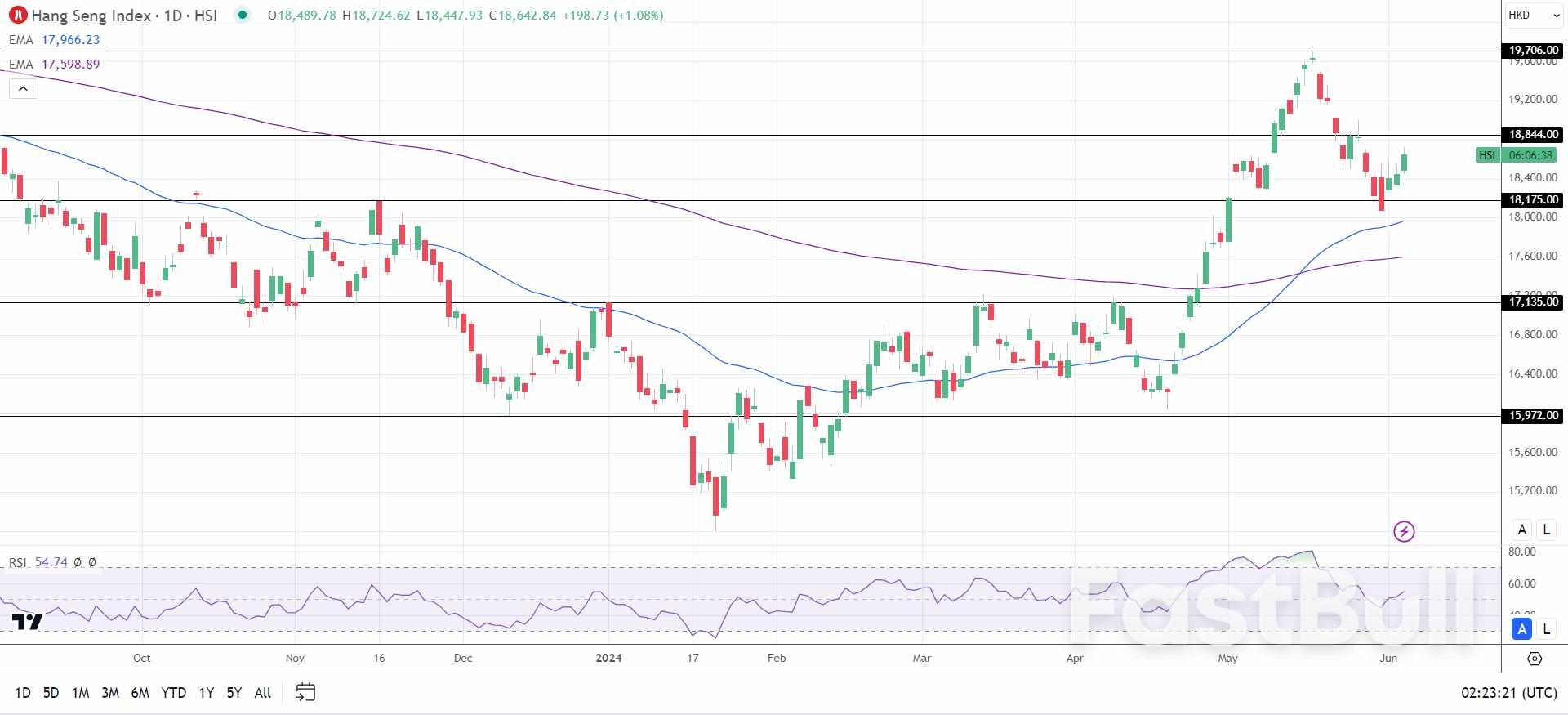
          China Services PMI Sends Positive Signals for the Hang Seng Index

          Hang Seng Index, ASX 200, Nikkei 225: China Services PMI Delivers Hang Seng Boost_1
          The China Caixin Services PMI increased from 52.5 to 54.0 in May. Economists forecast a PMI of 52.6.
          According to the May survey,
          • New business increased at the most marked rate in 12 months.
          • Firms responded to rising demand by increasing staffing levels for the first time in four months.
          • Upward prices for input materials, labor, and transport fueled input cost inflationary pressures.
          • Firms reacted by increasing output prices at the most marked pace since January 2022.
          • Optimism across the services sector weakened to a seven-month low despite the uptrend in new orders.
          • Firms cited concerns about the global economic outlook and inflation.
          The Chinese equity markets reversed early losses in response to the survey.
          On Wednesday, the CSI 300 and the Shenzhen Composite Index advanced by 0.09% and 0.23%, respectively.
          However, the Hang Seng Index enjoyed the added benefit of rising expectations of a September Fed rate cut. During the Wednesday Asian morning session, the Hang Seng Index was up 1.08%.
          Real estate and tech stocks contributed to the early gains. The Hang Seng Mainland Properties Index (HSMPI) gained 0.10%, with the Hang Seng Tech Index (HSTECH) rallying 1.59%.
          Alibaba (9988) and Tencent Holdings (0700) rallied 2.16% and 2.26%, respectively. Baidu (9888) advanced by 0.53%.

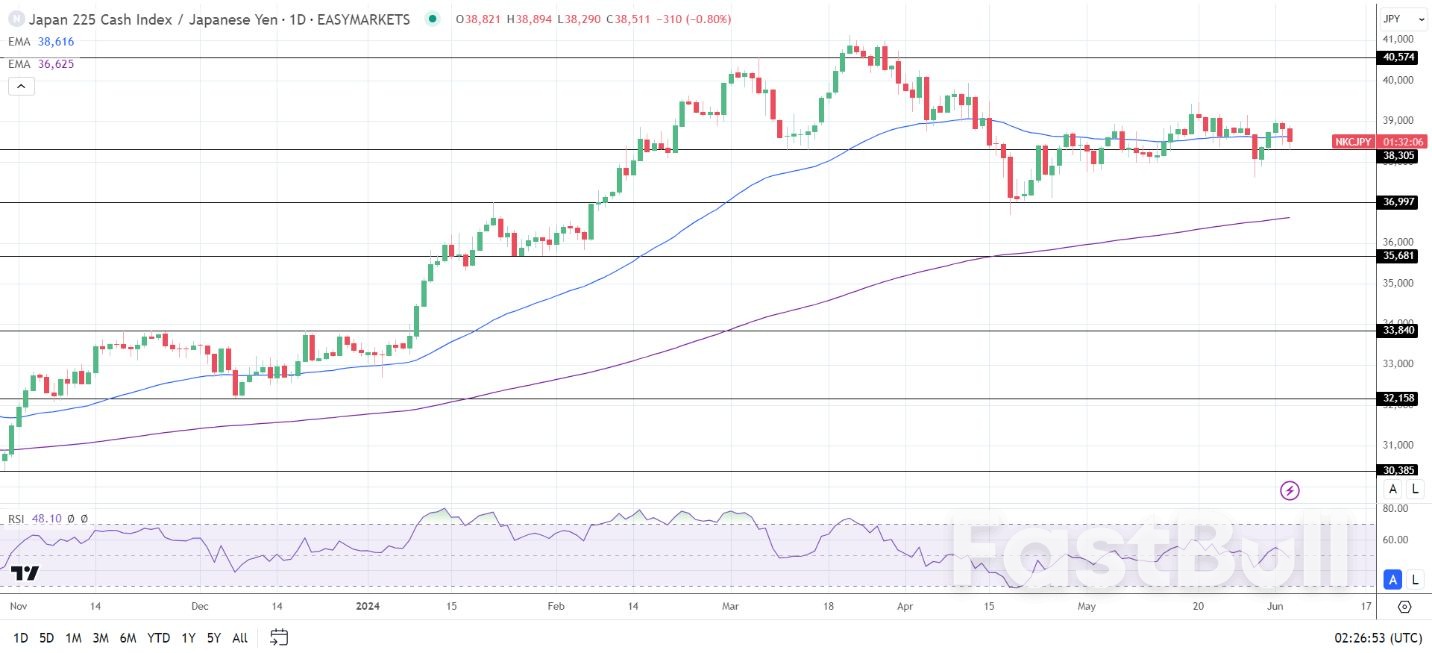
          Nikkei Index Falls in Wage Growth and Yen Weakness

          Hang Seng Index, ASX 200, Nikkei 225: China Services PMI Delivers Hang Seng Boost_2
          The Nikkei Index declined by 1.10% in the Wednesday morning session. USD/JPY trends and wage data from Japan impacted buyer demand for Nikkei-listed export stocks.
          Average cash earnings increased 2.1% year-on-year in April after rising 1.0% in March. Overtime pay declined 0.60% after decreasing 0.50% in March. The jump in average cash earnings could support Bank of Japan discussions about a 2024 interest rate hike.
          Better-than-expected Jibun Bank Services PMIs also needed consideration. The Jibun Bank Services PMI fell from 54.3 to 53.8, up from a preliminary PMI of 53.6.
          Fast Retailing Co. Ltd. (9983) and Softbank Group Corp (9984) increased by 0.39% and 0.84%, respectively. Sony Group Corporation (6758) gained 0.34% in the morning session.
          However, Tokyo Electron Ltd. (8035) and KDDI Corp. (9433) saw losses of 3.02% and 1.17%, respectively.

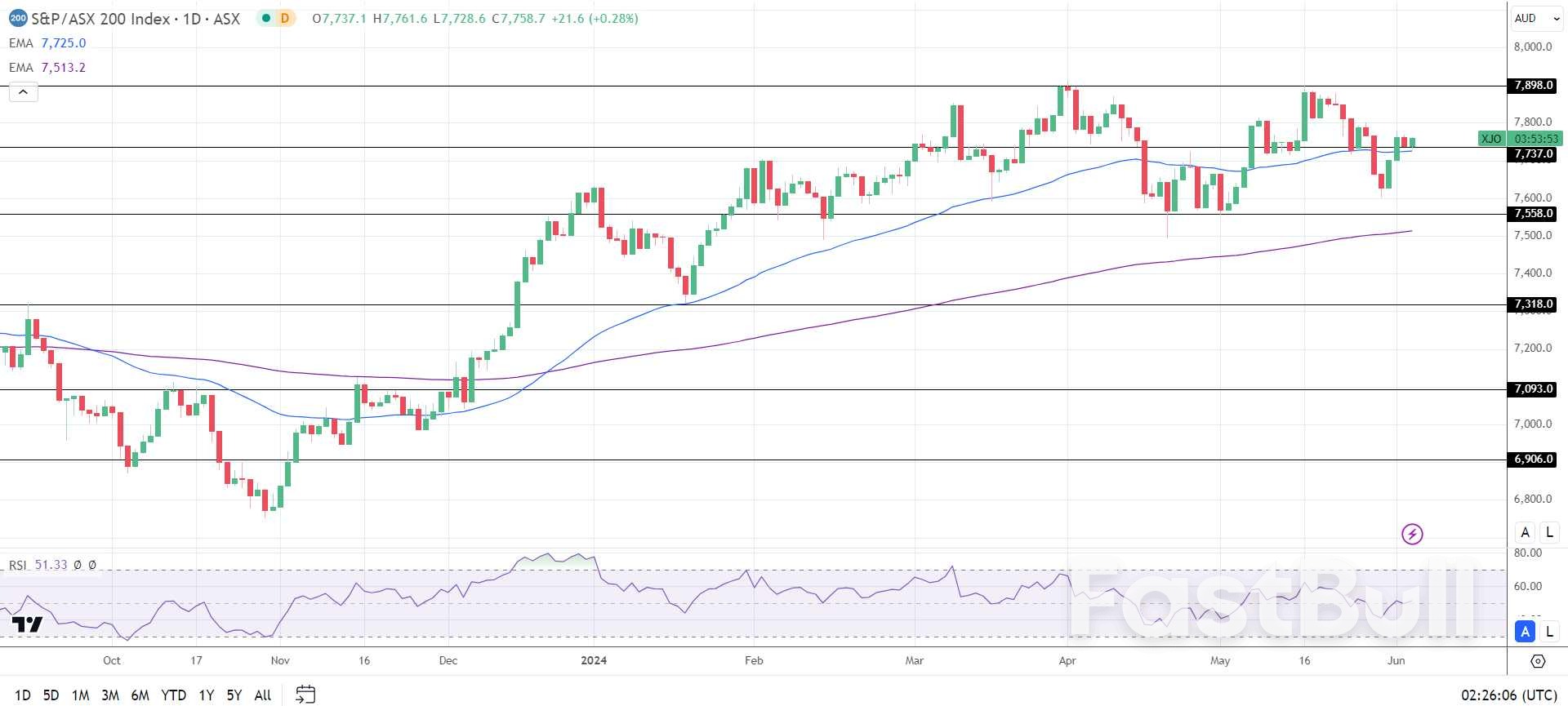
          Banking and Tech Stocks Contribute to Early ASX 200 Gains

          Hang Seng Index, ASX 200, Nikkei 225: China Services PMI Delivers Hang Seng Boost_3
          The ASX 200 gained 0.28% during the Wednesday Asian morning session. Softer-than-expected Services PMI and Q1 2024 GDP numbers from Australia eased fears of a 2024 RBA rate hike, supporting buyer demand for ASX-listed stocks.
          The Judo Bank Services PMI fell from 53.6 to 52.5 in May, down from a preliminary PMI of 53.1. Additionally, the Australian economy expanded by 0.1% in Q1 2024 after growing by 0.2% in Q4 2023.
          Banking and tech stocks contributed to the gains. The S&P/ASX All Technology Index was up 0.51%.
          ANZ Group Holdings Ltd. (ANZ) and National Australia Bank Ltd. (NAB) saw gains of 0.49% and 0.42%, respectively. Furthermore, Commonwealth Bank of Australia (CBA) and Westpac Banking Corp. (WBC) were up 0.83% and 0.37%, respectively.
          However, gold spot (XAU/USD), iron ore, and WTI crude oil price trends impacted buyer demand for gold, mining, and oil stocks.
          Gold-related stocks Northern Star Resources Ltd. (NST) and Evolution Mining Ltd (EVN) were down 1.08% and 2.06%, respectively.
          Woodside Energy Group Ltd (WDS) and Santos Ltd (STO) declined by 0.42% and 0.40%, respectively.
          Mining stocks BHP Group Ltd (BHP) and Rio Tinto Group Ltd. (RIO) saw losses of 1.14% and 1.31%, respectively. Additionally, Fortescue Metals Group Ltd. (FMG) declined by 1.25%.
          For upcoming economic events, refer to our economic calendar.

          Source: FX Empire

          To stay updated on all economic events of today, please check out our Economic calendar
          Risk Warnings and Disclaimers
          You understand and acknowledge that there is a high degree of risk involved in trading. Following any strategies or investment methods may lead to potential losses. The content on the site is provided by our contributors and analysts for information purposes only. You are solely responsible for determining whether any trading assets, securities, strategy, or any other product is suitable for investing based on your own investment objectives and financial situation.
          Add to Favorites
          Share

          Australia Economy Slows To A Crawl In Q1, Grows 0.1% q/q

          Samantha Luan

          Economic

          Australia's economy slowed to a crawl in the March quarter as high borrowing costs and still-elevated inflation put the brakes on consumer spending, even as the prospect of relief on interest rates remains a distant one.
          Data from the Australian Bureau of Statistics on Wednesday showed real gross domestic product (GDP) rose 0.1% in the first quarter, just under market forecasts of 0.2%.
          Annual growth dropped to 1.1%, from 1.5% the previous quarter and the slowest pace in three decades outside of the pandemic.
          Growth in household spending, which accounts for half of GDP, was only a fraction firmer at 1.3%. Most of that was on essential items such as electricity and healthcare, with discretionary spending almost flat for the year.
          There was also grim news for future spending power with the savings rate sinking to a historically low 0.9%, after large downward revisions to past numbers.
          "Given that the savings rate was around 5% before the pandemic, that underlines the severe pressure households have been facing due soaring living costs, interest payments and taxes," said Marcel Thieliant, head of Asia-Pacific economics at Capital Economics.
          "And with real incomes stagnating last quarter, that pressure hasn't fully faded yet."
          Financial markets have already priced out any risk of a further hike in the Reserve Bank of Australia's (RBA) 4.35% cash rate, but neither do they see much chance of a cut anytime soon.
          Futures imply around a 50-50 probability of a move in December and are not fully priced for a cut to 4.10% until May next year.
          Speaking to lawmakers before the data, RBA Governor Michele Bullock acknowledged the economy was "very, very weak", but insisted policy needed to be restrictive to bring demand back into line with supply and curb inflation.
          The last monthly report for consumer price inflation showed a surprise pick up to 3.6% in April, driven by a broad increase in costs from food to health, clothing and travel.
          Measures of prices in the GDP report were also on the high side, with inflation in domestic demand running at 4.6% for the year.
          All this inflation has been a boon for nominal GDP, which expanded 3.5% in the year to March. In current dollars, GDP amounted to A$2.6 trillion ($1.73 trillion) in the year or A$98,224 for every one of Australia's 26.8 million people.
          Once inflation was stripped out, however, per capita GDP actually fell 0.4% in the quarter and was down a steep 1.3% on the year.
          This per capita "recession" reflects booming migration, which had boosted annual population growth to a heady 2.5%, double the average of the last three decades.
          The influx of overseas workers and students has strained the housing market and pushed rents to record highs, leading the Labor government to promise caps on future immigration.

          Source:Reuters

          To stay updated on all economic events of today, please check out our Economic calendar
          Risk Warnings and Disclaimers
          You understand and acknowledge that there is a high degree of risk involved in trading. Following any strategies or investment methods may lead to potential losses. The content on the site is provided by our contributors and analysts for information purposes only. You are solely responsible for determining whether any trading assets, securities, strategy, or any other product is suitable for investing based on your own investment objectives and financial situation.
          Add to Favorites
          Share

          June 5th Financial News

          FastBull Featured

          Daily News

          [Quick Facts]
          1. Japan's base pay rises the most since 1994.
          2. Hamas wants Israel to commit to permanent ceasefire, full withdrawal from Gaza.
          3. U.S. labor market cools.
          4. U.S. factory orders rise for third straight month in April.
          5. Lagarde may pour cold water on hopes for sustained rate cuts.

          [News Details]

          Japan's base pay rises the most since 1994
          Japanese workers' base pay rose 2.3% in April, the biggest increase since 1994, boosting nominal wages by 2.1%. It signaled that corporate pledges to offer the biggest wage increases in three decades are starting to take effect. Wages for full-time workers also rose 2.1%. The findings provide the Bank of Japan (BOJ) with fresh evidence that the virtuous cycle between wages and demand-driven prices is coming into realization. The BOJ has been seeking stronger evidence to confirm this trend since its first interest rate hike since 2007 in March this year.
          Hamas wants Israel to commit to permanent ceasefire, full withdrawal from Gaza
          Hamas will not agree to any deal unless Israel makes a "clear" commitment to a permanent ceasefire and a full withdrawal from the Gaza Strip, a senior official of the Palestinian militant group said on Tuesday.
          "We cannot agree to an agreement that doesn't secure, guarantee, and ensure a permanent ceasefire, a complete withdrawal from the Gaza Strip and completing a real serious swap deal accordingly," the Hamas official, said. "Israel only wants one phase where it takes all its hostages, then it resumes its aggression and war on our people. We ask mediators to get a clear position from the Israeli occupation to commit to a permanent ceasefire and a complete withdrawal," he added.
          U.S. President Joe Biden put forward a three-phase proposal last Friday. The first phase includes a six-week ceasefire, during which the Israeli army would withdraw from all populated areas in Gaza. Hostages including the elderly and women would be released in exchange for hundreds of Palestinian prisoners. Under the plan, Hamas and Israel would negotiate a permanent ceasefire during the same phase. Biden said that the temporary ceasefire would last as long as Hamas honored its commitments.
          In the second phase, the two sides would exchange all surviving hostages, including male soldiers. Israeli troops would withdraw from Gaza and a permanent ceasefire would begin.
          U.S. labor market cools
          U.S. JOLTs job openings registered 8.059 million in April, a new low since March 2021, sharply lower than the previous reading and the expectation. The March figure was also revised downward. This brought the ratio of job openings to the number of unemployed down to 1.2:1, the lowest level since June 2021.
          Job openings declined broadly across sectors; only five industries - professional services, private education, retail, finance and insurance, and transportation - had an increase in job openings.
          The JOLTS report also showed that both hires and layoff rates were flat for the month. In addition, layoffs remained at a historically low, and hiring also slowed, suggesting that companies were satisfied with their staffing levels. The rate of quits remained at its lowest level since 2020, possibly indicating that people are more likely to stay in their current job than change jobs in pursuit of a higher salary, as they are less confident that they will find a better new job.
          Overall, the data may show that the labor market is starting to slow down a bit.
          U.S. factory orders rise for third straight month in April
          New orders for U.S. manufactured goods rose for a third straight month in April, boosted by demand for transportation equipment. Data on Tuesday showed that factory orders rose 0.7% in April, unchanged from the revised increase in March but above the expectation for a 0.6% increase. Orders for transportation equipment rose 1.1% and orders excluding transportation equipment increased 0.7%. Manufacturing, which accounts for 10.4% of the U.S. economy, remained constrained by the Federal Reserve's interest rate hikes. The U.S. manufacturing PMI fell for the second consecutive month in May and has been in contraction for 18 of the past 19 months, according to a survey by the Institute for Supply Management.
          Lagarde may pour cold water on hopes for sustained rate cuts
          Soeren Radde, Head of European Economic Research at Point72, said that European Central Bank (ECB) President Lagarde may pour cold water on hopes for sustained rate cuts at Thursday's ECB policy meeting. It looks like the ECB is almost certain to cut its key interest rate this week and has sent a strong signal. However, President Lagarde is still likely to say that any further easing of monetary policy will require more data and new forecasts. This would essentially limit the number of rate cuts to three this year, Radde wrote in a report.

          [Focus of the Day]

          UTC+8 17:00 Eurozone PPI MoM (Apr)
          UTC+8 20:15 U.S. ADP (May)
          UTC+8 21:45 Bank of Canada Interest Rate Decision
          UTC+8 22:00 U.S. May ISM Non-manufacturing PMI
          Risk Warnings and Disclaimers
          You understand and acknowledge that there is a high degree of risk involved in trading. Following any strategies or investment methods may lead to potential losses. The content on the site is provided by our contributors and analysts for information purposes only. You are solely responsible for determining whether any trading assets, securities, strategy, or any other product is suitable for investing based on your own investment objectives and financial situation.
          Add to Favorites
          Share
          FastBull
          Copyright © 2025 FastBull Ltd

          728 RM B 7/F GEE LOK IND BLDG NO 34 HUNG TO RD KWUN TONG KLN HONG KONG

          TelegramInstagramTwitterfacebooklinkedin
          App Store Google Play Google Play
          Products
          Charts

          Chats

          Q&A with Experts
          Screeners
          Economic Calendar
          Data
          Tools
          Membership
          Features
          Function
          Markets
          Copy Trading
          Latest Signals
          Contests
          News
          Analysis
          24/7
          Columns
          Education
          Company
          Careers
          About Us
          Contact Us
          Advertising
          Help Center
          Feedback
          User Agreement
          Privacy Policy
          Business

          White Label

          Data API

          Web Plug-ins

          Poster Maker

          Affiliate Program

          Risk Disclosure

          The risk of loss in trading financial instruments such as stocks, FX, commodities, futures, bonds, ETFs and crypto can be substantial. You may sustain a total loss of the funds that you deposit with your broker. Therefore, you should carefully consider whether such trading is suitable for you in light of your circumstances and financial resources.

          No decision to invest should be made without thoroughly conducting due diligence by yourself or consulting with your financial advisors. Our web content might not suit you since we don't know your financial conditions and investment needs. Our financial information might have latency or contain inaccuracy, so you should be fully responsible for any of your trading and investment decisions. The company will not be responsible for your capital loss.

          Without getting permission from the website, you are not allowed to copy the website's graphics, texts, or trademarks. Intellectual property rights in the content or data incorporated into this website belong to its providers and exchange merchants.

          Not Logged In

          Log in to access more features

          FastBull Membership

          Not yet

          Purchase

          Become a signal provider
          Help Center
          Customer Service
          Dark Mode
          Price Up/Down Colors

          Log In

          Sign Up

          Position
          Layout
          Fullscreen
          Default to Chart
          The chart page opens by default when you visit fastbull.com