Markets
News
Analysis
User
24/7
Economic Calendar
Education
Data
- Names
- Latest
- Prev




Signal Accounts for Members
All Signal Accounts
All Contests


U.S. NY Fed Manufacturing Prices Received Index (Jan)A:--
F: --
P: --
U.S. NY Fed Manufacturing New Orders Index (Jan)A:--
F: --
P: --
U.S. NY Fed Manufacturing Employment Index (Jan)A:--
F: --
P: --
U.S. Export Price Index YoY (Nov)A:--
F: --
P: --
U.S. NY Fed Manufacturing Index (Jan)A:--
F: --
U.S. Initial Jobless Claims 4-Week Avg. (SA)A:--
F: --
U.S. Export Price Index MoM (Nov)A:--
F: --
P: --
Canada Manufacturing Unfilled Orders MoM (Nov)A:--
F: --
P: --
Canada Manufacturing New Orders MoM (Nov)A:--
F: --
P: --
U.S. Philadelphia Fed Manufacturing Employment Index (Jan)A:--
F: --
P: --
Canada Wholesale Sales YoY (Nov)A:--
F: --
P: --
Canada Wholesale Inventory MoM (Nov)A:--
F: --
P: --
U.S. Philadelphia Fed Business Activity Index (SA) (Jan)A:--
F: --
P: --
U.S. EIA Weekly Natural Gas Stocks ChangeA:--
F: --
P: --
Richmond Federal Reserve President Barkin delivered a speech.
U.S. Weekly Treasuries Held by Foreign Central BanksA:--
F: --
P: --
Germany CPI Final MoM (Dec)A:--
F: --
P: --
Germany CPI Final YoY (Dec)A:--
F: --
P: --
Germany HICP Final MoM (Dec)A:--
F: --
P: --
Germany HICP Final YoY (Dec)A:--
F: --
P: --
Brazil PPI MoM (Nov)A:--
F: --
P: --
Canada New Housing Starts (Dec)A:--
F: --
U.S. Capacity Utilization MoM (SA) (Dec)A:--
F: --
U.S. Industrial Output YoY (Dec)A:--
F: --
P: --
U.S. Manufacturing Capacity Utilization (Dec)A:--
F: --
P: --
U.S. Manufacturing Output MoM (SA) (Dec)A:--
F: --
U.S. Industrial Output MoM (SA) (Dec)A:--
F: --
U.S. NAHB Housing Market Index (Jan)A:--
F: --
P: --
Russia CPI YoY (Dec)A:--
F: --
P: --
U.S. Weekly Total Rig CountA:--
F: --
P: --
U.S. Weekly Total Oil Rig CountA:--
F: --
P: --
Japan Core Machinery Orders YoY (Nov)--
F: --
P: --
Japan Core Machinery Orders MoM (Nov)--
F: --
P: --
U.K. Rightmove House Price Index YoY (Jan)--
F: --
P: --
China, Mainland GDP YoY (YTD) (Q4)--
F: --
P: --
China, Mainland Industrial Output YoY (YTD) (Dec)--
F: --
P: --
Japan Industrial Output Final MoM (Nov)--
F: --
P: --
Japan Industrial Output Final YoY (Nov)--
F: --
P: --
Euro Zone Core HICP Final MoM (Dec)--
F: --
P: --
Euro Zone HICP Final MoM (Dec)--
F: --
P: --
Euro Zone HICP Final YoY (Dec)--
F: --
P: --
Euro Zone HICP MoM (Excl. Food & Energy) (Dec)--
F: --
P: --
Euro Zone Core CPI Final YoY (Dec)--
F: --
P: --
Euro Zone Core HICP Final YoY (Dec)--
F: --
P: --
Euro Zone CPI YoY (Excl. Tobacco) (Dec)--
F: --
P: --
Euro Zone Core CPI Final MoM (Dec)--
F: --
P: --
Canada National Economic Confidence Index--
F: --
P: --
Canada CPI MoM (SA) (Dec)--
F: --
P: --
Canada Core CPI MoM (SA) (Dec)--
F: --
P: --
Canada CPI YoY (SA) (Dec)--
F: --
P: --
Canada Trimmed CPI YoY (SA) (Dec)--
F: --
P: --
Canada CPI YoY (Dec)--
F: --
P: --
Canada CPI MoM (Dec)--
F: --
P: --
Canada Core CPI YoY (Dec)--
F: --
P: --
Canada Core CPI MoM (Dec)--
F: --
P: --
South Korea PPI MoM (Dec)--
F: --
P: --
China, Mainland 1-Year Loan Prime Rate (LPR)--
F: --
P: --
China, Mainland 5-Year Loan Prime Rate--
F: --
P: --
Germany PPI YoY (Dec)--
F: --
P: --
Germany PPI MoM (Dec)--
F: --
P: --


No matching data
Latest Views
Latest Views
Trending Topics
Top Columnists
Latest Update
White Label
Data API
Web Plug-ins
Affiliate Program
View All

No data
China's credit expansion hit a multi-year low, signaling deep economic weakness and deflation amid sluggish demand.
Chinese banks issued the smallest amount of new loans last year since 2018, with credit expansion continuing to slow in December. This downturn highlights sluggish demand from both businesses and consumers, posing a significant drag on the nation's economic growth.
The slowdown in loan growth is not a recent development. It began in early 2023 and persisted throughout the year, signaling deep-seated weakness in the economy. Tepid consumer spending and low business investment have pushed China into a deflationary environment, which in turn reduces the incentive to borrow by eroding corporate profits and household wages.
Several factors are contributing to the decline in credit expansion.
Initially, a surge in government bond sales during the first half of last year provided a temporary boost to overall credit growth. However, the impact of this stimulus has since diminished, partly because a higher base of comparison from 2024 has come into effect, pulling down the expansion rate.
Another headwind is the government's campaign to reduce "hidden" or off-balance-sheet debt, an effort that began in late 2024. As part of this initiative, Beijing has instructed local authorities to issue new bonds to replace these hidden liabilities, some of which were held as bank loans.
Despite the deteriorating credit data, officials are not expected to intervene aggressively in the short term. The People's Bank of China (PBOC) has signaled a tolerance for the slowdown, framing it as part of a patient transition toward new economic growth drivers like advanced technology.
With the central bank taking a secondary role in managing an economy held back by weak demand and structural imbalances, fiscal stimulus is now expected to provide the primary support.
Looking ahead, economists surveyed by Bloomberg anticipate the PBOC will implement modest easing measures in 2026, including policy interest rate cuts totaling 20 basis points.
However, such moves are unlikely to reverse the decline in credit expansion on their own. Without a fundamental turnaround in the demand for financing from companies and individuals, the credit slowdown is poised to continue.
The UK economy expanded more than expected in November, providing a dose of positive news and easing concerns about a potential slump at the end of 2025.
Data from the Office for National Statistics (ONS) released on Thursday showed that Gross Domestic Product (GDP) rose by 0.3%. This figure marks a solid rebound from the 0.1% contraction seen in the previous month and comfortably outpaced the 0.1% growth that economists had predicted.
The British pound, which had seen a slight dip against the US dollar, recovered its footing after the data was published, trading largely unchanged at $1.3442.
A significant recovery in the manufacturing sector was the primary driver behind the surprise growth. Industrial production was responsible for half of the entire GDP increase, with the manufacturing sub-sector growing by a robust 2.1%. The services sector also contributed, expanding by 0.3%.
The ONS highlighted a strong comeback in production at Jaguar Land Rover as a key factor. The car manufacturer's operations had been disrupted by a cyberattack earlier in the autumn.
"Data for the latest month show that this industry has now largely recovered," noted Liz McKeown, ONS Director of Economic Statistics, referencing the hit to car production.
Despite the strong monthly performance, the broader trend remains modest. On a three-month basis, economic output saw a narrow increase of just 0.1%. November was only the second month in the latter half of the year to record economic expansion.
The stronger-than-expected November figures may help calm worries that the economy was deteriorating, especially after recent signs of mounting job losses and cautious consumer spending.
Economists anticipate that economic activity could pick up in early 2026. This outlook is based on the expectation that several temporary drags—including the Jaguar Land Rover cyberattack, budget uncertainty, and strikes—will begin to fade.
However, the economy faces new fiscal pressures. Chancellor Rachel Reeves announced £26 billion ($35 billion) in tax increases in her budget on November 26. While the implementation of these measures is staggered, the new tax burden will primarily fall on households. This contrasts with the previous year's fiscal event, where businesses shouldered the bulk of the tax hikes.
Gold prices declined in Asian trading on Thursday, snapping a three-day streak of record highs. The pullback was driven by comments from U.S. President Donald Trump that eased geopolitical tensions with Iran and reduced uncertainty surrounding the Federal Reserve, dampening demand for the safe-haven metal.
Spot gold fell 0.4% to $4,609.89 per ounce, while U.S. Gold Futures also dropped 0.4% to $4,615.10 per ounce. The move comes after gold reached an all-time high of $4,642.72 in the previous session.
A significant part of gold's recent rally was fueled by fears of escalating conflict in the Middle East. Investors worried that growing unrest in Iran could trigger U.S. military action, driving a flight to safety.
However, those concerns subsided after President Trump signaled a more moderate position. He stated that he had been assured Iranian authorities would stop killing protesters and that he did not believe large-scale executions were planned. These remarks lowered the immediate probability of a U.S. military response, reducing the geopolitical risk premium that had been supporting gold prices.
Gold also faced pressure after Trump addressed concerns about the independence of the U.S. central bank. In a Reuters interview, the president confirmed he had no intention of firing Federal Reserve Chair Jerome Powell, despite an ongoing investigation.
This statement helped ease investor anxiety over the stability and autonomy of U.S. monetary policy, diminishing another key reason for holding gold as a hedge against institutional uncertainty.
Analysts also attributed the price drop to simple profit-taking after the precious metal's sharp and rapid ascent pushed it well above key technical levels.
Despite Thursday's decline, the fundamental case for gold remains supported by several underlying factors:
• Expected U.S. Interest Rate Cuts: Anticipation of lower interest rates later this year continues to provide a floor for gold prices. Lower rates reduce the opportunity cost of holding a non-yielding asset like gold.
• Persistent Geopolitical Risks: While immediate tensions have cooled, broader global uncertainties remain a long-term tailwind.
• Strong Central Bank Buying: Consistent purchases from central banks around the world continue to generate steady demand.
The downturn was not limited to gold, as other metals saw even sharper declines. Silver prices plunged more than 3% to $89.76 per ounce, and platinum dropped 2.5% to $2,323.52 per ounce.
Industrial metals also fell. Benchmark Copper Futures on the London Metal Exchange slipped 1.1% to $13,087.20 a ton, while U.S. Copper Futures declined 1.6% to $5.99 a pound.
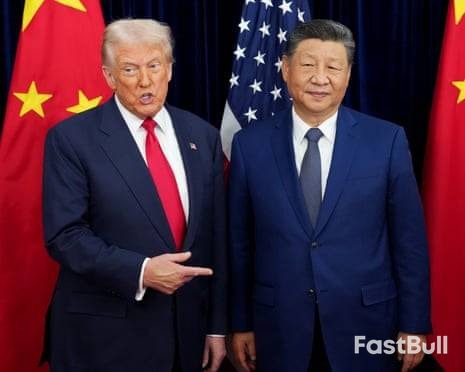
A year after Donald Trump’s return to the White House, a sweeping global survey suggests his "Make America Great Again" agenda is widely seen as making China great instead. The 21-country poll, conducted for the European Council on Foreign Relations (ECFR), reveals that the United States is less feared by its adversaries and viewed as increasingly distant by its traditional allies, particularly in Europe.

The study found that most Europeans no longer consider the US a reliable partner and increasingly support rearmament. In a notable shift, Russians now view the EU as a greater adversary than the US, while Ukrainians are turning more to Brussels than to Washington for support.
The poll, which surveyed nearly 26,000 people across Europe, the US, Asia, and other key nations, found a strong consensus that China's global influence will grow over the next decade.
Majorities in nearly every country surveyed shared this expectation, with figures ranging from 83% in South Africa and 72% in Brazil to 54% in the US and 53% across 10 EU states. Most EU citizens also anticipate China will soon lead the world in electric vehicles and renewable energy.
Despite this anticipated rise, few expressed significant concern. Only in Ukraine and South Korea did majorities see China as a rival or adversary. In fact, more people in South Africa, India, and Brazil now view China as an ally compared to two years ago. In South Africa (85%), Russia (86%), and Brazil (73%), clear majorities see China as either an ally or a necessary partner. The EU's view remained stable, with 45% considering China a necessary partner.
While China's image improves, perceptions of the United States as an ally have soured in almost all surveyed countries. India is now the only nation where a majority still feels the US is an ally that shares its values and interests.
The shift among EU citizens is particularly stark. Only 16% now see the US as an ally, while a striking 20% view it as either a rival or an enemy. Elsewhere, American prestige is also in decline.
At the same time, expectations for Donald Trump's presidency have fallen, sometimes dramatically. Compared to 12 months ago, fewer people believe his re-election is good for US citizens, their own countries, or global peace.
The survey, part of a series with Oxford University's Europe in a Changing World project, highlights how the shifting balance of power is altering perceptions, most notably in Russia.
As the war in Ukraine approaches its fifth year, a majority of Russians (51%) now see Europe as an adversary, up from 41% last year. Meanwhile, fewer Russians (37%) consider the US an adversary compared to 12 months ago (48%).
Ukrainians, conversely, are now more likely to view Europe as their key ally (39%) over the US (18%), a drop from 27% last year. This sentiment is echoed in China, where 61% of respondents see the US as a threat, but only 19% feel the same about the EU.
The survey's authors—Ivan Krastev, Mark Leonard, and Timothy Garton Ash—note that China does not seem to dismiss the EU's importance. A majority of Chinese respondents (59%) consider the EU a great power, and 46% see it as a partner—a view shared by 40% of Americans, despite Trump's anti-EU rhetoric.
However, Europeans themselves are less optimistic. A plurality (46%) do not believe the EU is a power capable of dealing with the US or China on equal terms, a sentiment that has grown since 2024.
European citizens are also worried about the future, with many expressing concern about:
• The future of their countries (49%)
• The future of the world (51%)
• Russian aggression (40%)
• A major European war (55%)
Reflecting these anxieties, more than half (52%) support an increase in defense spending.
The report's authors conclude that the poll reveals "a world in which US actions were boosting China." They argue that with Trump's approach, "Europe could end up squeezed or simply ignored." European leaders, they state, must recognize that their citizens see the old order is over and must find "new ways not just to manage in a multipolar world, but to become a pole in that world—or disappear among the others."
The UK economy grew by 0.3% in November, marking a rebound from the 0.1% contraction seen in October, according to official figures from the Office for National Statistics.
This modest return to growth follows a period of economic sluggishness, partly linked to a cyber-attack on carmaker Jaguar Land Rover earlier in 2025 that hampered vehicle production. While a recovery was anticipated, its materialization has been slow.

Despite the positive November figure, the economic improvement is unlikely to alter the Bank of England's course. Policymakers are still widely expected to press ahead with further interest rate cuts.
Chancellor Rachel Reeves has been a vocal proponent of more rate cuts as a key part of the government's strategy to lower the cost of living for households across the country.
The growth data comes after a period of considerable uncertainty surrounding the Chancellor's second tax-raising budget, which was delivered on November 25. In the lead-up to the announcement, intense speculation and fluctuating tax rumors were blamed by business groups for discouraging both investment and consumer spending.
Looking forward, more crucial economic indicators are on the horizon. Key inflation and unemployment data are scheduled for release next week, which will provide a clearer picture of the economy's health.
Separately, Reeves is expected to announce additional support for the hospitality industry in the coming days. This move follows a backlash from the sector regarding recent changes to the business rates system.
India's surge in Russian crude oil imports appears to be cooling, with purchases expected to either stabilize at lower levels or decline this month. This shift is forcing the world's third-largest oil importer to consider more expensive alternatives and leaving a growing number of Russian oil cargoes stranded at sea.
Ship-tracking data indicates a notable dip in India's intake of Russian crude. Imports in December already fell to a three-year low, dropping by a third from their peak in June.
According to data from firms Vortexa Ltd. and Kpler, India imported approximately 1.3 million barrels per day of Russian crude in December. Sources familiar with the matter suggest January's purchases are also facing pressure, with buying likely to plateau at volumes below previous highs.
Sumit Ritolia, a lead analyst at Kpler, forecasts that imports will likely range between 1.2 million and 1.4 million barrels per day this month. However, insiders caution that the final figures could end up being lower.
This slowdown is unfolding amid sustained pressure from the United States. The Trump administration has repeatedly criticized India for purchasing Russian oil, which Washington argues supports Vladimir Putin's war in Ukraine, and has imposed punitive 50% tariffs. With trade negotiations stalled, the U.S. is now weighing a sanctions bill that would penalize countries buying Russian hydrocarbons.
This pressure has prompted India’s refining sector—the fourth largest globally by capacity—to cut its reliance on discounted Russian feedstock. "Russia remains a core pillar in India's slate for now," Ritolia noted. "But buying becomes more opportunistic, more diversified, and more compliance-sensitive as geopolitics and trade mechanics continue to evolve."
In response, Indian refiners are actively adjusting their procurement strategies. They are increasingly sourcing non-sensitive substitutes from the Middle East, West Africa, and Latin America, which can replace Russia's flagship Urals blend, albeit at a higher cost.
Key developments include:
• Increased Saudi Purchases: Imports from Saudi Arabia, the world's largest exporter, are higher than usual this month.
• Diversified Sourcing: Indian Oil Corp., the country's biggest processor, recently made a rare purchase of Ecuadorian Oriente crude for late March delivery.
• New Tenders: The company also issued two tenders this week with options to buy "sour grades," which have a quality similar to Urals crude.
Refiners are also proceeding with caution regarding Venezuelan crude, holding back on formal bids until they receive clarity that such purchases would not violate any sanctions.
India’s government frames its energy policy as a delicate balance. Randhir Jaiswal, a spokesperson for the Ministry of External Affairs, stated Friday that the country's energy purchases are "dependent on the evolving dynamics in the global market as also the imperative for us to provide energy at affordable rates to our 1.4 billion people."
Meanwhile, with Russia's largest producers under sanctions, the fate of floating Urals cargoes remains uncertain. Few nations besides China are openly willing to defy the U.S.-led restrictions. For refiners still willing to take the risk, the grade is priced at an attractive discount of roughly $8 per barrel to the Dated Brent benchmark, making it one of the cheapest options available.
The Federal Reserve's latest Beige Book, released on January 14, paints a picture of a cautiously recovering U.S. economy. The report indicates slight to moderate economic growth across eight Fed districts, an improvement largely powered by strong consumer spending during the holiday season.
However, this positive momentum is tempered by persistent inflationary pressures directly linked to tariffs, creating a complex outlook for 2026.
The primary engine behind the recent economic uptick was consumer activity. Shoppers drove increased spending over the holidays, providing a welcome boost that contrasted sharply with previous reports showing nearly stagnant economic conditions.
Supporting this trend is a stable labor market. The Beige Book notes that employment levels saw limited change, continuing a pattern of stability that underpins the economy's resilience.
Despite the growth, a significant challenge looms: inflation caused by tariffs. Businesses across multiple districts reported rising costs, which are gradually translating into moderate price increases for consumers.
Analysts suggest this tariff-induced inflation could persist, potentially eroding consumer purchasing power in the quarters ahead. This remains the key risk factor overshadowing the otherwise favorable economic data.
The Federal Reserve's report signals cautious optimism, a notable shift from the minimal growth detailed in prior periods. This improved sentiment may encourage investment, but market observers remain watchful of several factors:
• Prolonged Inflation: The long-term impact of tariff-related costs is a primary concern.
• Fed Policy: Ongoing balance sheet adjustments by the Federal Reserve continue to influence market conditions.
• Political Influence: The process surrounding the nomination of the next Fed Chair is also being closely monitored.
For now, the economic trends outlined in the Beige Book are not expected to have a significant impact on cryptocurrency markets.
White Label
Data API
Web Plug-ins
Poster Maker
Affiliate Program
The risk of loss in trading financial instruments such as stocks, FX, commodities, futures, bonds, ETFs and crypto can be substantial. You may sustain a total loss of the funds that you deposit with your broker. Therefore, you should carefully consider whether such trading is suitable for you in light of your circumstances and financial resources.
No decision to invest should be made without thoroughly conducting due diligence by yourself or consulting with your financial advisors. Our web content might not suit you since we don't know your financial conditions and investment needs. Our financial information might have latency or contain inaccuracy, so you should be fully responsible for any of your trading and investment decisions. The company will not be responsible for your capital loss.
Without getting permission from the website, you are not allowed to copy the website's graphics, texts, or trademarks. Intellectual property rights in the content or data incorporated into this website belong to its providers and exchange merchants.
Not Logged In
Log in to access more features

FastBull Membership
Not yet
Purchase
Log In
Sign Up