• Trade
  • Markets
  • Copy
  • Contests
  • News
  • 24/7
  • Calendar
  • Q&A
  • Chats
Trending
Screeners
SYMBOL
LAST
BID
ASK
HIGH
LOW
NET CHG.
%CHG.
SPREAD
SPX
S&P 500 Index
6827.42
6827.42
6827.42
6899.86
6801.80
-73.58
-1.07%
--
DJI
Dow Jones Industrial Average
48458.04
48458.04
48458.04
48886.86
48334.10
-245.98
-0.51%
--
IXIC
NASDAQ Composite Index
23195.16
23195.16
23195.16
23554.89
23094.51
-398.69
-1.69%
--
USDX
US Dollar Index
97.950
98.030
97.950
98.500
97.950
-0.370
-0.38%
--
EURUSD
Euro / US Dollar
1.17394
1.17409
1.17394
1.17496
1.17192
+0.00011
+ 0.01%
--
GBPUSD
Pound Sterling / US Dollar
1.33707
1.33732
1.33707
1.33997
1.33419
-0.00148
-0.11%
--
XAUUSD
Gold / US Dollar
4299.39
4299.39
4299.39
4353.41
4257.10
+20.10
+ 0.47%
--
WTI
Light Sweet Crude Oil
57.233
57.485
57.233
58.011
56.969
-0.408
-0.71%
--

Community Accounts

Signal Accounts
--
Profit Accounts
--
Loss Accounts
--
View More

Become a signal provider

Sell trading signals to earn additional income

View More

Guide to Copy Trading

Get started with ease and confidence

View More

Signal Accounts for Members

All Signal Accounts

Best Return
  • Best Return
  • Best P/L
  • Best MDD
Past 1W
  • Past 1W
  • Past 1M
  • Past 1Y

All Contests

  • All
  • Trump Updates
  • Recommend
  • Stocks
  • Cryptocurrencies
  • Central Banks
  • Featured News
Top News Only
Share

USA Embassy In Lithuania: Maria Kalesnikava Is Not Going To Vilnius

Share

USA Embassy In Lithuania: Other Prisoners Are Being Sent From Belarus To Ukraine

Share

Ukraine President Zelenskiy: Five Ukrainians Released By Belarus In US-Brokered Deal

Share

USA Vilnius Embassy: USA Stands Ready For "Additional Engagement With Belarus That Advances USA Interests"

Share

USA Vilnius Embassy: Belarus, USA, Other Citizens Among The Prisoners Released Into Lithuania

Share

USA Vilnius Embassy: USA Will Continue Diplomatic Efforts To Free The Remaining Political Prisoners In Belarus

Share

USA Vilnius Embassy: Belarus Releases 123 Prisoners Following Meeting Of President Trump's Envoy Coale And Belarus President Lukashenko

Share

USA Vilnius Embassy: Masatoshi Nakanishi, Aliaksandr Syrytsa Are Among The Prisoners Released By Belarus

Share

USA Vilnius Embassy: Maria Kalesnikava And Viktor Babaryka Are Among The Prisoners Released By Belarus

Share

USA Vilnius Embassy: Nobel Peace Prize Laureate Ales Bialiatski Is Among The Prisoners Released By Belarus

Share

Belarusian Presidential Administration Telegram Channel: Lukashenko Has Pardoned 123 Prisoners As Part Of Deal With US

Share

Two Local Syrian Officials: Joint US-Syrian Military Patrol In Central Syria Came Under Fire From Unknown Assailants

Share

Israeli Military Says It Targeted 'Key Hamas Terrorist' In Gaza City

Share

Rwanda's Actions In Eastern Drc Are A Clear Violation Of Washington Accords Signed By President Trump - Secretary Of State Rubio

Share

Israeli Military Issues Evacuation Warning In Southern Lebanon Village Ahead Of Strike - Spokesperson On X

Share

Belarusian State Media Cites US Envoy Coale As Saying He Discussed Ukraine And Venezuela With Lukashenko

Share

Belarusian State Media Cites US Envoy Coale As Saying That US Removes Sanctions On Belarusian Potassium

Share

Thai Prime Minister: No Ceasefire Agreement With Cambodia

Share

US, Ukraine To Discuss Ceasefire In Berlin Ahead Of European Summit

Share

Incoming Czech Prime Minister Babis: Czech Republic Will Not Take On Guarantees For Ukraine Financing, European Commission Must Find Alternatives

TIME
ACT
FCST
PREV
U.K. Trade Balance Non-EU (SA) (Oct)

A:--

F: --

P: --

U.K. Trade Balance (Oct)

A:--

F: --

P: --

U.K. Services Index MoM

A:--

F: --

P: --

U.K. Construction Output MoM (SA) (Oct)

A:--

F: --

P: --

U.K. Industrial Output YoY (Oct)

A:--

F: --

P: --

U.K. Trade Balance (SA) (Oct)

A:--

F: --

P: --

U.K. Trade Balance EU (SA) (Oct)

A:--

F: --

P: --

U.K. Manufacturing Output YoY (Oct)

A:--

F: --

P: --

U.K. GDP MoM (Oct)

A:--

F: --

P: --

U.K. GDP YoY (SA) (Oct)

A:--

F: --

P: --

U.K. Industrial Output MoM (Oct)

A:--

F: --

P: --

U.K. Construction Output YoY (Oct)

A:--

F: --

P: --

France HICP Final MoM (Nov)

A:--

F: --

P: --

China, Mainland Outstanding Loans Growth YoY (Nov)

A:--

F: --

P: --

China, Mainland M2 Money Supply YoY (Nov)

A:--

F: --

P: --

China, Mainland M0 Money Supply YoY (Nov)

A:--

F: --

P: --

China, Mainland M1 Money Supply YoY (Nov)

A:--

F: --

P: --

India CPI YoY (Nov)

A:--

F: --

P: --

India Deposit Gowth YoY

A:--

F: --

P: --

Brazil Services Growth YoY (Oct)

A:--

F: --

P: --

Mexico Industrial Output YoY (Oct)

A:--

F: --

P: --

Russia Trade Balance (Oct)

A:--

F: --

P: --

Philadelphia Fed President Henry Paulson delivers a speech
Canada Building Permits MoM (SA) (Oct)

A:--

F: --

P: --

Canada Wholesale Sales YoY (Oct)

A:--

F: --

P: --

Canada Wholesale Inventory MoM (Oct)

A:--

F: --

P: --

Canada Wholesale Inventory YoY (Oct)

A:--

F: --

P: --

Canada Wholesale Sales MoM (SA) (Oct)

A:--

F: --

P: --

Germany Current Account (Not SA) (Oct)

A:--

F: --

P: --

U.S. Weekly Total Rig Count

A:--

F: --

P: --

U.S. Weekly Total Oil Rig Count

A:--

F: --

P: --

Japan Tankan Large Non-Manufacturing Diffusion Index (Q4)

--

F: --

P: --

Japan Tankan Small Manufacturing Outlook Index (Q4)

--

F: --

P: --

Japan Tankan Large Non-Manufacturing Outlook Index (Q4)

--

F: --

P: --

Japan Tankan Large Manufacturing Outlook Index (Q4)

--

F: --

P: --

Japan Tankan Small Manufacturing Diffusion Index (Q4)

--

F: --

P: --

Japan Tankan Large Manufacturing Diffusion Index (Q4)

--

F: --

P: --

Japan Tankan Large-Enterprise Capital Expenditure YoY (Q4)

--

F: --

P: --

U.K. Rightmove House Price Index YoY (Dec)

--

F: --

P: --

China, Mainland Industrial Output YoY (YTD) (Nov)

--

F: --

P: --

China, Mainland Urban Area Unemployment Rate (Nov)

--

F: --

P: --

Saudi Arabia CPI YoY (Nov)

--

F: --

P: --

Euro Zone Industrial Output YoY (Oct)

--

F: --

P: --

Euro Zone Industrial Output MoM (Oct)

--

F: --

P: --

Canada Existing Home Sales MoM (Nov)

--

F: --

P: --

Euro Zone Total Reserve Assets (Nov)

--

F: --

P: --

U.K. Inflation Rate Expectations

--

F: --

P: --

Canada National Economic Confidence Index

--

F: --

P: --

Canada New Housing Starts (Nov)

--

F: --

P: --

U.S. NY Fed Manufacturing Employment Index (Dec)

--

F: --

P: --

U.S. NY Fed Manufacturing Index (Dec)

--

F: --

P: --

Canada Core CPI YoY (Nov)

--

F: --

P: --

Canada Manufacturing Unfilled Orders MoM (Oct)

--

F: --

P: --

Canada Manufacturing New Orders MoM (Oct)

--

F: --

P: --

Canada Core CPI MoM (Nov)

--

F: --

P: --

Canada Manufacturing Inventory MoM (Oct)

--

F: --

P: --

Canada CPI YoY (Nov)

--

F: --

P: --

Canada CPI MoM (Nov)

--

F: --

P: --

Canada CPI YoY (SA) (Nov)

--

F: --

P: --

Canada Core CPI MoM (SA) (Nov)

--

F: --

P: --

Q&A with Experts
    • All
    • Chatrooms
    • Groups
    • Friends
    Connecting
    .
    .
    .
    Type here...
    Add Symbol or Code

      No matching data

      All
      Trump Updates
      Recommend
      Stocks
      Cryptocurrencies
      Central Banks
      Featured News
      • All
      • Russia-Ukraine Conflict
      • Middle East Flashpoint
      • All
      • Russia-Ukraine Conflict
      • Middle East Flashpoint
      Search
      Products

      Charts Free Forever

      Chats Q&A with Experts
      Screeners Economic Calendar Data Tools
      Membership Features
      Data Warehouse Market Trends Institutional Data Policy Rates Macro

      Market Trends

      Market Sentiment Order Book Forex Correlations

      Top Indicators

      Charts Free Forever
      Markets

      News

      News Analysis 24/7 Columns Education
      From Institutions From Analysts
      Topics Columnists

      Latest Views

      Latest Views

      Trending Topics

      Top Columnists

      Latest Update

      Signals

      Copy Rankings Latest Signals Become a signal provider AI Rating
      Contests
      Brokers

      Overview Brokers Assessment Rankings Regulators News Claims
      Broker listing Forex Brokers Comparison Tool Live Spread Comparison Scam
      Q&A Complaint Scam Alert Videos Tips to Detect Scam
      More

      Business
      Events
      Careers About Us Advertising Help Center

      White Label

      Data API

      Web Plug-ins

      Affiliate Program

      Awards Institution Evaluation IB Seminar Salon Event Exhibition
      Vietnam Thailand Singapore Dubai
      Fans Party Investment Sharing Session
      FastBull Summit BrokersView Expo
      Recent Searches
        Top Searches
          Markets
          News
          Analysis
          User
          24/7
          Economic Calendar
          Education
          Data
          • Names
          • Latest
          • Prev

          View All

          No data

          Scan to Download

          Faster Charts, Chat Faster!

          Download App
          English
          • English
          • Español
          • العربية
          • Bahasa Indonesia
          • Bahasa Melayu
          • Tiếng Việt
          • ภาษาไทย
          • Français
          • Italiano
          • Türkçe
          • Русский язык
          • 简中
          • 繁中
          Open Account
          Search
          Products
          Charts Free Forever
          Markets
          News
          Signals

          Copy Rankings Latest Signals Become a signal provider AI Rating
          Contests
          Brokers

          Overview Brokers Assessment Rankings Regulators News Claims
          Broker listing Forex Brokers Comparison Tool Live Spread Comparison Scam
          Q&A Complaint Scam Alert Videos Tips to Detect Scam
          More

          Business
          Events
          Careers About Us Advertising Help Center

          White Label

          Data API

          Web Plug-ins

          Affiliate Program

          Awards Institution Evaluation IB Seminar Salon Event Exhibition
          Vietnam Thailand Singapore Dubai
          Fans Party Investment Sharing Session
          FastBull Summit BrokersView Expo

          China Remains Crucial For U.S. Chipmakers Amid Rising Tensions Between The World’s Top Two Economies

          Samantha Luan

          Economic

          Summary:

          Despite increasing restrictions on sales of advanced chips to China, U.S. chipmakers have signaled they are committed to serving the massive market.

          China remains an essential market for most American chipmakers despite Washington’s efforts to restrict chip sales to the country and amid Beijing’s push for self sufficiency in the semiconductor sector.
          Data from S&P Global showed that U.S. chip giants Intel, Broadcom, Qualcomm and Marvell Technology all generate more revenue from China compared with the U.S.
          The U.S. has passed a series of export controls starting in October 2022 aimed at restricting China’s access to advanced chip technology, particularly those used in AI applications.
          “China remains an important market for U.S. chipmakers, and the U.S. restrictions on selling advanced AI chips to China have been designed specifically to allow most U.S. firms to continue selling most types of chips to Chinese customers,” Chris Miller, author of “Chip War,” told CNBC.
          Used in a wide range of products, from smartphones to electric vehicles, semiconductors have become a top priority for governments globally.
          According to data from tech consultancy Omdia, China consumes nearly 50% of the world’s semiconductors as it is the biggest market for assembling consumer devices.
          U.S. chipmakers, which enjoy technological leadership over Chinese competitors, have been able to tap this demand as the U.S. export curbs are focused on some very specific products.
          “There are still plenty of ‘high end’ chips with all types of allowable use cases that are good to go where U.S. based chip companies have the dominant, leading edge,” said William B. Bailey, lead technology, media, and telecommunications analyst at Nasdaq IR Intelligence.

          Navigating export curbs

          U.S. chipmakers, even those with a majority of business in the U.S., such as Micron Technology, AMD, and Nvidia, have strived to serve their Chinese clients even in the face of export controls.
          When the first wave of U.S. restrictions came into effect late in 2022, Nvidia and Intel designed modified versions of AI chip products for the Chinese market.
          A year later, the U.S. updated the export rules to tackle these perceived loopholes. But, soon after, it was reported that Nvidia was working on a new chip made for China.
          Intel has reportedly continued to sell hundreds of millions of dollars worth of laptop processor chips to U.S.-sanctioned Chinese telecoms company Huawei, thanks to an export license issued by the Donald Trump administration.
          The company did not respond to a request for comment on their plans for the China market.
          AMD has also designed an AI chip for China but will need to apply for an export license after failing to get it past U.S. regulators last month.
          Executives of Intel, Qualcomm, and Nvidia, had reportedly been part of a group that planned to lobby Washington against tighter chip restrictions in July last year.
          The companies are also members of Semiconductor Industry Association, a major U.S. semiconductor trade organization, which released a statement around the same time requesting an easing of tensions and a halt on further sanctions due to the importance of the Chinese market for domestic chip companies.
          Amid a tough policy stance by the U.S., China has also responded in kind. In May last year, chips produced by America’s Micron were banned from critical information infrastructure in China after failing a review by the country’s Cyberspace Administration.
          Micron is constructing a new assembly and test manufacturing facility at an existing site in Xi’an, China, as the country “remains an important market for Micron and the semiconductor industry,” a company spokesperson told CNBC. Production is estimated to start in the second half of 2025, they said.

          Market share worries

          China has been striving for self-reliance by building its domestic semiconductor industry in response to countries such as the U.S. and the Netherlands limiting its access to advanced technology.
          Beijing has doled out billions of yuan in subsidies to its chip firms in a bid to boost domestic manufacturing.
          An analysis of Huawei’s Mate 60 Pro smartphone by TechInsights revealed an advanced chip made by China’s top chip maker, SMIC. The smartphone is also said to be equipped with 5G connectivity – U.S. sanctions aimed to block Huawei from accessing this technology.
          The Chinese government is “increasingly focused” on getting its firms to buy locally made chips, Miller said. “Unless foreign companies have a substantial technological advantage over domestic Chinese competitors, they will lose market share in China.”
          However, Phelix Lee, equity analyst at Morningstar, said it does not expect “an overhaul of the supply chain” even as Chinese firms could be innovating legacy chips found in everything from household appliances to medical equipment.
          Legacy chips are typically mature or lower-end semiconductors. U.S. Commerce Secretary Gina Raimondo said about 60% of these chips are manufactured by China.
          According to Brady Wang, associate director at Counterpoint Research, in the AI GPU market segment, American companies such as Nvidia and Intel are estimated to have a technological lead of about three to five years over Chinese competitors.
          “We believe China can still build up its local GPU supply chain for specific market segments, but the amount will be limited, and the cost will be much higher,” he added.

          Source:CNBC

          To stay updated on all economic events of today, please check out our Economic calendar
          Risk Warnings and Disclaimers
          You understand and acknowledge that there is a high degree of risk involved in trading. Following any strategies or investment methods may lead to potential losses. The content on the site is provided by our contributors and analysts for information purposes only. You are solely responsible for determining whether any trading assets, securities, strategy, or any other product is suitable for investing based on your own investment objectives and financial situation.
          Add to Favorites
          Share

          America’s CEOs Feel Confident in the Country’s Current Economic Situation

          Thomas

          Economic

          Despite facing various challenges such as the pandemic, supply-chain disruptions, and multiple wars, CEOs in America are feeling more confident about the country’s current economic situation. However, it’s important to note that there is still turmoil. Wars in places like Kyiv and Jerusalem, as well as important elections in Washington, D.C., could potentially upset the delicate economic balance that has been achieved. Nevertheless, CEOs remained optimistic about the future.
          According to KPMG’s annual CEO Outlook Pulse Survey, 87% of the surveyed CEOs expressed confidence in the United States’ economy. The survey included responses from 100 CEOs who lead companies with at least $500 million in revenue, 70% of which had at least $1 billion. The CEOs’ confidence stemmed from believing they were no longer in perpetual uncertainty.
          Many CEOs were feeling more confident because they believed that uncertain times were behind them. This newfound stability allowed them to plan for the future more effectively. The labor market had improved, inflation had decreased, and the interest rate environment had seemed stable until this week. Surprisingly, CEOs had more trust in the U.S. economy than in their own companies, with 78% expressing confidence in the growth prospects of their own companies. In contrast, many CEOs had faith in the U.S. economy.
          The U.S. economy has been extremely resilient over the past year, defying many economists’ projections of an imminent recession. This is largely due to the American consumer force, who kept spending even during tough times. As a result, most CEOs are optimistic about the future and expect to increase their organizations’ headcount over the next year. According to a study, 72% of CEOs plan to hire more employees, while only 4% anticipate layoffs.
          The current job market is meeting with an incredibly popular business trend: AI. To prepare for future recruitment difficulties like the ones faced in 2021 and 2022, 69% of companies are utilizing generative AI to address workforce gaps, as per the survey. Generative artificial intelligence continues to be perceived as a key element of future business strategies because it can improve productivity and create revenue streams.
          Business leaders are investing in training their workers to use generative AI. In the latest survey, 95% of them stated that they are already training their employees on the ethical risks and potential misuse of this technology. More than 80% of CEOs also plan to implement new programs later this year to ensure they are using AI correctly, such as disclosing when content is created with AI. About half of them also plan to use third parties to audit their use of AI.

          Source: CEOWORLD Magazine

          To stay updated on all economic events of today, please check out our Economic calendar
          Risk Warnings and Disclaimers
          You understand and acknowledge that there is a high degree of risk involved in trading. Following any strategies or investment methods may lead to potential losses. The content on the site is provided by our contributors and analysts for information purposes only. You are solely responsible for determining whether any trading assets, securities, strategy, or any other product is suitable for investing based on your own investment objectives and financial situation.
          Add to Favorites
          Share

          [Fed] Two Officials Hold Opposing Views on Inflation Outlook

          FastBull Featured

          Remarks of Officials

          Boston Fed President Susan M. Collins said in an interview on April 12, local time, as follows.
          Given that the labor market remains healthy and inflation is expected to continue to fall, a rate cut will be appropriate later this year, but it may take longer than previously expected. As there is no urgency to cut interest rates, the Fed must be cautious about rate cuts and cannot completely rule out the possibility of a rate hike.
          Wage grows at a level higher than the pre-pandemic one, but it is not putting upward pressure on inflation. It is too early to judge whether the rising inflation data imply "bumps" or a "reversal" on the road of disinflation.
          Collins also commented on inflation and the job market on April 14. She said that "better-than-expected job market data in recent months allows me to remain optimistic that the Federal Reserve can continue to bring inflation down while the labor market remains healthy."
          Chicago Fed President Austan Goolsbee said in an interview on April 12 that CPI inflation continues to be higher and worrisome, but the Fed is more concerned about PCE inflation. If PCE is reinflating, the Fed will continue to stabilize prices (by maintaining high interest rates for longer).
          With three consecutive months of higher-than-expected CPI data, the Fed will have to analyze these data to determine whether progress in disinflation has stalled. I'm closely watching housing costs, which have defied policymaker expectations that an easing in shelter inflation was imminent. The Fed's job of restoring price stability would be tough unless housing costs behave close to how they did before the pandemic.
          The two officials appeared to diverge on the inflation outlook. Goolsbee, normally the most dovish official, didn't believe the disinflation progress would persist, while Collins indicated that inflation would continue to decline accompanied by a healthy labor market.
          Risk Warnings and Disclaimers
          You understand and acknowledge that there is a high degree of risk involved in trading. Following any strategies or investment methods may lead to potential losses. The content on the site is provided by our contributors and analysts for information purposes only. You are solely responsible for determining whether any trading assets, securities, strategy, or any other product is suitable for investing based on your own investment objectives and financial situation.
          Add to Favorites
          Share

          The Commodities Feed: Uncertainty & risks build in the Middle East

          ING

          Commodity

          Economic

          Energy - Middle East tension builds
          Oil price action is fairly muted in early morning trading today considering developments in the Middle East over the weekend. The market had been expecting some form of retaliation from Iran following a suspected Israeli attack on Iran’s embassy in Syria earlier in the month. The fact that there was limited damage and no loss of life may also provide some comfort to the market, as it may mean a more measured response from Israel.
          However, the scale of the attack over the weekend and the fact that it was the first time Iran has directly attacked Israel means that there is still plenty of risk of further escalation in the region. While Iran considers the altercation “concluded”, markets will have to wait to see how Israel responds. The US and allies are pushing for a diplomatic response, while the risk is that hardliners within the Israeli government push for a more aggressive response.
          For oil, events clearly increase the risk of supply disruptions. Iran pumps a little over 3m b/d of crude oil currently and is the fourth largest producer within OPEC. The first risk is that oil sanctions are more strictly enforced against Iran, which could see anywhere between 500k-1m b/d of oil supply lost. This would ensure that the oil market remains in deficit for the remainder of the year.
          Secondly, there is the risk that Israel’s response includes targeting Iranian energy infrastructure, which would mean the potential for even more significant supply losses. And finally, if we were to see further escalation, there is the risk that Iran would attempt to disrupt or block oil flows through the Strait of Hormuz, through which roughly 20m b/d of oil moves. We believe the risk that is most likely to materialise is stricter sanction enforcement against Iran.
          If we were to see significant supply losses, the US could always release further crude oil from its strategic petroleum reserves. It is also important to remember that OPEC sits on more than 5m b/d of spare production capacity. If prices were to rally significantly on the back of supply losses, one would imagine that the group would look to bring some of this spare capacity back onto the market. OPEC will not want to see prices going too high given the risk of demand destruction.
          While risks are clearly elevated, which should keep oil prices relatively well supported, oil supply remains intact for now. Therefore, we are leaving our ICE Brent forecast unchanged at US$87/bbl for the second quarter, until there is some clarity on how events play out.

          Metals – LME bans Russian metals after US, UK sanctions

          The London Metal Exchange (LME) banned delivery of new Russian metal following sanctions imposed by the US and UK for Russia’s invasion of Ukraine.
          No Russian metal produced from April 13 onwards will be eligible for delivery to the LME, or to the Chicago Mercantile Exchange (CME). The move will be bullish for prices on the LME short-term, which are used as a benchmark in contracts around the world. The LME nickel prices, in particular, remain vulnerable to violent price spikes following the nickel squeeze in March 2022 after Russia’s invasion of Ukraine and a build-up in short positions on the exchange. However, the LME has placed daily limits that prevent prices from rising more than 12% a day for copper and aluminium and 15% for nickel.
          Russian metals had broadly escaped sanctions until December, when the UK prohibited British individuals and entities from trading physical Russian metals, including aluminum, nickel and copper. The UK is the only country in Europe to have adopted such measures. The LME had previously considered banning Russian metal in 2022 but ultimately decided against it and said it would be guided by government sanctions.
          Russia accounts for about 6% of global nickel production, 5% of aluminium and 4% of copper.
          European buyers have been self-sanctioning since the invasion of Ukraine, leading to fears that LME warehouses could be used as a dumping ground for unwanted Russian metals. Over the past year, large surpluses of Russian metals have built up in LME warehouses. At the end of March, Russian metal accounted for 36% of the nickel in LME warehouses, 62% of the copper and 91% of the aluminium. These existing inventories would not be affected by sanctions, the LME said.
          As consumers in the EU have continued to self-sanction, China’s imports of primary aluminium from Russia hit new highs last year. This trend is likely to continue this year with Russian aluminium continuing to be diverted to Asia, particularly China, the world’s biggest aluminium consumer. China is likely to continue to buy discounted Russian material to use domestically and export its aluminium products into Europe leaving the US to fill the gap left by Russian import ban.
          Prices of copper, nickel and aluminium are likely to initially move higher and in the short term, the market will remain volatile, mainly due to the large uncertainty in supply and LME delivery post the sanctions changes. However, the market is likely to adapt to the new dynamics while Russian material will continue to find new sanction-neutral buyers.
          In April 2018, the US administration placed sanctions on Russian aluminium producers. LME prices jumped to $2,718/t, at the time the highest since 2011 before gradually falling in the following weeks and months. Sanctions were then lifted in January 2019.

          Agriculture – UNICA reports record CS Brazil sugar production

          The latest fortnightly report from UNICA shows that sugar cane crushing in Centre-South Brazil rose to 5mt, up 6.5% year-on-year in the second half of March. The cumulative sugar cane crush for the season increased by 19.3% YoY to 654.4mt. Sugar production rose 9% YoY to 183kt in 2H March, with 33.5% of cane allocated to sugar production in the fortnight, lower than the 35.7% allocated in the same period last year. Cumulative sugar output stands at 42.4mt, up 25.7% YoY, which is a record amount for the region. This data marks the official end of the 2023/24 season, with the 2024/25 CS Brazil cane crush starting in April.
          The latest trade numbers from Chinese Customs show that China’s soybean imports fell 20% YoY to 5.5mt in March, following lower feedstock demand due to restrictions on pig production capacity. Cumulative imports fell 10.8% YoY to 18.6mt over the first three months of the year.
          To stay updated on all economic events of today, please check out our Economic calendar
          Risk Warnings and Disclaimers
          You understand and acknowledge that there is a high degree of risk involved in trading. Following any strategies or investment methods may lead to potential losses. The content on the site is provided by our contributors and analysts for information purposes only. You are solely responsible for determining whether any trading assets, securities, strategy, or any other product is suitable for investing based on your own investment objectives and financial situation.
          Add to Favorites
          Share

          Factories Around The World Are Slowly Cranking Into Gear Again

          Alex

          Economic

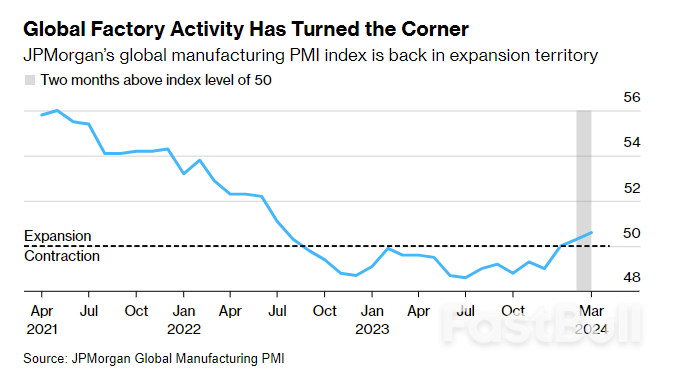
          Assembly lines around the world are starting to hum again, marking a turn in a years-long manufacturing slump.
          The nascent industrial recovery is led by the world’s two biggest economies. Chinese manufacturing has made a strong start to the year, boosting the economic outlook, and US factory activity unexpectedly expanded last month for the first time since September 2022, buoyed by rising new orders and a jump in production.
          JPMorgan/S&P Global’s manufacturing index notched a second month above expansionary territory in March and sits at the highest level since July 2022. If sustained, that’ll help catalyze a broader and stronger economic recovery that’s already spreading beyond the US.
          “Manufacturing PMIs are back to expansion in key economies including China, the UK and the US,” said Janet Mui, head of market analysis at RBC Brewin Dolphin, referring to purchasing manager indexes. “The synchronized nature of the recovery tends to be good signal for a cyclical upturn in global growth.”Factories Around The World Are Slowly Cranking Into Gear Again_1
          Greg Clement, who owns Milwaukee, Wisconsin-based Argon Industries, which makes high-end metal products used in everything from refrigerators and medical equipment to the defense sector, is among those benefiting.
          “We are seeing an uptick in projects,” he said. “Six months ago it was not good and right now we have a really good pipeline of work for 2024.”
          While it’s still early days — a surprise downturn in China’s exports suggests the recovery may be bumpy — the activity nonetheless marks a departure from the slowdown that took hold globally as consumer demand pivoted to spending more on services such as travel and dining out instead of buying more goods as pandemic-era restrictions ended.
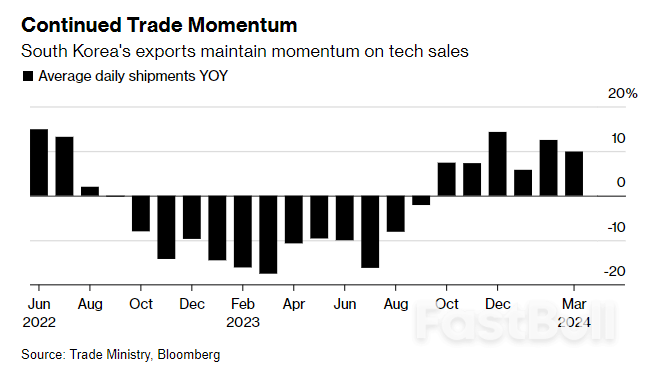
          Adding to the optimism is German industrial production that started the year on a two-month roll, underpinning hopes that Europe’s biggest economy may emerge from a recession. Asian export powerhouses including South Korea and Japan are also showing improvement.Factories Around The World Are Slowly Cranking Into Gear Again_2
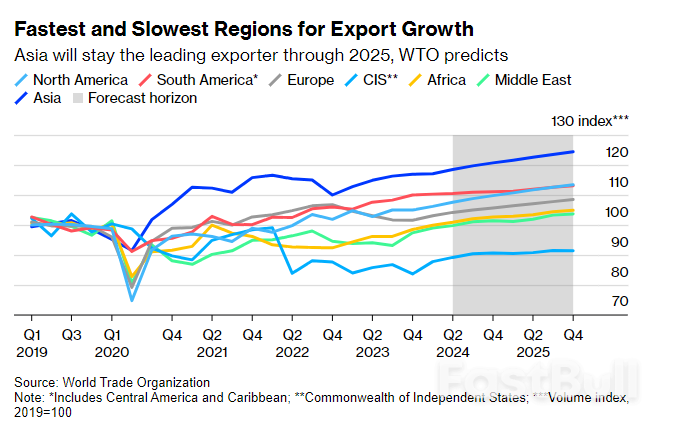
          The Asian Development Bank expects a turnaround in merchandise exports starting around midyear will drive growth in Thailand, Vietnam, the Philippines and Malaysia. Leading the way for South Asia this year and next will be India, which wants to rival China as the world’s factory floor.
          That manufacturing strength will ensure the world skirts a recession and grows closer to its potential, says Moody’s Analytics Chief Economist Mark Zandi.
          “Global manufacturing activity appears to be slowly reviving,” Zandi said. “I don’t expect global manufacturing to come roaring back given continued high global interest rates, higher oil prices, and supply-chain disruptions, but I do expect continued improvement.”
          Such uncertainty is why the World Trade Organization predicted this week that the volume of global merchandise trade will rebound only modestly this year from a rare contraction last year. Total goods trade will increase 2.6% in 2024, the WTO said, a downgrade from its 3.3% growth projection in October and in line with the average pace since 2010.
          “The lingering effects of high energy prices and inflation weighed especially heavily on demand for trade-intensive manufactured goods” in 2023, the WTO said in the report. “But this should recover gradually over the next two years as inflationary pressures ease and as real household incomes improve.”Factories Around The World Are Slowly Cranking Into Gear Again_3
          Still, any talk of a cyclical upturn needs to be distinguished from longer-term realignments. ING economists called the latest report in Germany showing higher industrial production a “balm for the German economic soul.”
          But they also warned that there’s still a way to go before declaring an end to the downturn. German factories are operating 8% below their pre-pandemic levels and industries are still undergoing strctural shifts in trade tied to geopolitical tensions.
          In the UK, a report Friday showed manufacturing jumped 1.2% last month, a much stronger than expected showing, following a March reading on factory purchasing managers that was the best since July 2022.
          Southern European economies are punching above their weight as growth drivers in the euro area. Business surveys by S&P Global released earlier this month showed Spain and Italy beat economists’ expectations with faster expansion in March.
          In the US, the consumption engine for foreign goods appears to be revving up again after companies let inventories run off last year and supply chains that got knotted up during Covid look normal again.Factories Around The World Are Slowly Cranking Into Gear Again_4
          The volume of US container imports reached 6.56 million during the first quarter, up 16% from a year earlier and well above pre-pandemic levels in 2018 and 2019, according to Descartes Datamyne.
          James Knightley, chief international economist at ING, described the improving outlook as more stabilization than rebound and the headwinds won’t be unwinding anytime soon — but it’s a turn nonetheless.
          “I would say there is some cautious optimism that the worst is over,” he said.

          Source:Bloomberg

          To stay updated on all economic events of today, please check out our Economic calendar
          Risk Warnings and Disclaimers
          You understand and acknowledge that there is a high degree of risk involved in trading. Following any strategies or investment methods may lead to potential losses. The content on the site is provided by our contributors and analysts for information purposes only. You are solely responsible for determining whether any trading assets, securities, strategy, or any other product is suitable for investing based on your own investment objectives and financial situation.
          Add to Favorites
          Share

          April 15th Financial News

          FastBull Featured

          Daily News

          [Quick Facts]

          1. Geopolitical risks may weigh on the yen in the long run.
          2. U.S. House speaker tries to pass Israel aid this week.
          3. Israel is divided on whether to launch retaliatory attacks against Iran.
          4. Summers says the Fed has no reason to cut interest rates.
          5. Risk aversion and significant upward momentum fuel the surge in gold prices.
          6. Goolsbee says PCE data is more important.
          7. U.S. consumer confidence moves sideways for the 4th straight month, with inflation expectations rising slightly in April.

          [News Details]

          Geopolitical risks may weigh on the yen in the long run
          Geopolitical risks could push up resource prices, leading to a deterioration in Japan's trade balance and weakening the yen, which is expected to put upward pressure on longer-term consumer prices. This would be similar to the developments following the Russia-Ukraine conflict. Tensions in the Middle East could heighten risk aversion in markets, prompting funds to flow to safe assets such as government bonds.
          If the stock market falls, retirement funds may rebalance their positions by selling bonds and buying stocks. Persistent inflationary pressures and rate-hike expectations by the Bank of Japan could lead to a sell-off in bonds. Uncertainty over the outlook for Middle East tensions has limited traders from building positions on the yen.
          U.S. House speaker tries to pass Israel aid this week
          U.S. House Speaker Mike Johnson said on Sunday that he would try to pass aid to Israel this week, but he did not say whether the bill would include aid to Ukraine and other allies. The White House and top Democrats and Republicans in the Senate called on Johnson to approve a $95 billion bipartisan Senate-passed package that would provide $14.1 billion in aid to Israel and $60 billion to Ukraine.
          Israel is divided on whether to launch retaliatory attacks against Iran
          Far-right members of Netanyahu's government issued strident calls for Israel to react to Iran's attack on Israel with a show of force, while other moderate members, including war cabinet Minister Benny Gantz, urged a balanced approach aimed at avoiding a spiraling escalation, the Times of Israel reported.
          While some members of the security cabinet issued vehement calls for retaliation, the security cabinet authorized the narrow war cabinet — whose only voting members are Gantz, Prime Minister Benjamin Netanyahu, and Defense Minister Yoav Gallant — to make the ultimate decision on a response. In a possible indication of how Israel will respond, Gantz on Sunday afternoon declared that Israel must strengthen the "strategic alliance and the regional cooperation" that allowed it to weather the Iranian attack.
          Summers says the Fed has no reason to cut interest rates
          The U.S. CPI surprised many observers last week, except for former U.S. Treasury Secretary Summers. He pointed out that due to low unemployment and fiscal stimulus driven by budget deficits, the U.S. "economy is growing faster than potential".
          Summers said it confirms that the so-called neutral Fed funds rate "is way above the 2.6% level that the Fed has been using as a North Star. Summers said there is no reason for the Fed to cut rates at this point, not to mention the fact that the data we saw this week were skewed by a problem with how we calculate housing costs.
          Risk aversion and significant upward momentum fuel the surge in gold prices
          Both risk aversion and significant upward momentum are driving the surge in gold prices. The currently continuous influx of funds into the gold market is actually increasing risk exposure. Retail investors, hedge funds, and other institutional investors have all joined the gold boom, trying to profit from this frenzy of "trend momentum", which drove gold prices higher. This explains why the price of gold spikes despite the low activity of ETFs, a key instrument traded by everyday investors. It also suggests that retail investors are not the main driver for the rise in the price of gold.
          Although there seems to be nothing stopping gold from continuing to move higher at the moment, investing at such historically high levels must be risky, so investors should trade with caution.
          Goolsbee says PCE data is more important
          Chicago Fed President Austan Goolsbee said in a speech on Friday that multiple inflation readings were higher than policymakers wanted for the CPI, but the PCE is the better measure. If we start getting better readings that show us inflation is coming down, that will make us feel a lot better about where we are. If PCE is reinflating, we will stabilize prices.
          Goolsbee is closely watching housing costs, which have defied policymaker expectations that an easing in shelter inflation was imminent. Shelter and rising fuel prices accounted for much of the higher-than-expected consumer inflation in March, and Goolsbee said the Fed's job of restoring price stability would be tough unless housing costs behave close to how they did before the pandemic.
          U.S. consumer confidence moves sideways for the 4th straight month, with inflation expectations rising slightly in April
          The University of Michigan's April consumer sentiment index for the U.S. came in at 77.9, which has been fluctuating in the 77-79 range for the fourth consecutive month as consumers see little meaningful progress in the economy. Expectations for personal finances, the business environment, and the labor market have remained stable over the past four months.
          However, one- and five-year inflation expectations have risen to 3.1% (from last month's 2.9%) and 3% (from last month's 2.8%), respectively, reflecting some frustration that the slowdown in inflation may have stalled. Overall, consumers are reserved about the upcoming presidential election, which in the view of many could have a significant impact on economic trends.

          [Focus of the Day]

          UTC+8 20:00 ECB Chief Economist Lane Speaks
          UTC+8 20:30 U.S. Retail Sales MoM (Mar)
          Risk Warnings and Disclaimers
          You understand and acknowledge that there is a high degree of risk involved in trading. Following any strategies or investment methods may lead to potential losses. The content on the site is provided by our contributors and analysts for information purposes only. You are solely responsible for determining whether any trading assets, securities, strategy, or any other product is suitable for investing based on your own investment objectives and financial situation.
          Add to Favorites
          Share

          Pakistan Gold Price Today: A Snapshot and Exploration of Underlying Factors

          Glendon

          Economic

          As of today, April 28, 2024, the Pakistani gold market presents a dynamic picture. This article delves into the current gold price in Pakistan, explores the factors influencing it, and offers insights for informed decision-making.

          Current Price Snapshot

          Karachi Sarafa Association (K-SAP) Benchmark: According to the Karachi Sarafa Association (K-SAP), which sets the benchmark gold price in Pakistan, the price for 24-carat gold per tola (approximately 11.66 grams) stands at approximately PKR 239,000 (Pakistani Rupees). This translates to roughly PKR 20,491 per gram.Understanding Price Variations:
          It's important to note that gold prices can vary slightly across different cities in Pakistan. Major cities like Karachi and Lahore might see slightly higher prices compared to smaller towns due to transportation costs and local market dynamics. Additionally, the price can fluctuate throughout the day based on real-time market movements.

          Factors Influencing Today's Price

          Several factors contribute to the current gold price in Pakistan:
          Global Gold Price: The international gold price plays a significant role. On April 26, 2024, there were reports of a slight increase in the global gold price, which might have a positive influence on the Pakistani market.
          Rupee-Dollar Parity: The Pakistani Rupee's exchange rate against the U.S. dollar is another crucial factor. As of today, any significant fluctuations in the Rupee-Dollar parity can impact the local gold price. A weaker Rupee tends to make dollar-denominated gold more expensive for Pakistani buyers, potentially pushing the local price upwards.
          Domestic Demand: Demand for gold in Pakistan can be influenced by various factors, including upcoming festivals like Eid or wedding seasons. While information on current demand is not readily available, it's important to consider if any such events might be exerting upward pressure on the price.
          Market Sentiment: Overall market sentiment, including local and global economic news, can also influence gold prices.

          Additional Considerations

          Gold Purity and Quality: The price can vary depending on the gold's purity (measured in carats) and craftsmanship. 24-carat gold is the purest but often used in alloys for jewelry due to its softness. The higher the carat, the more expensive the gold.
          Hallmarking: Look for hallmarked gold to ensure its quality and stated carat weight. Hallmarking is a government-regulated process that guarantees the gold's purity.

          Where to Find Updated Prices

          For the most current gold prices in Pakistan, consider these resources:
          Karachi Sarafa Association Website: The K-SAP website provides official benchmark gold prices in Karachi, updated regularly.Bullion Market Websites: Several online platforms track and display real-time gold prices in Pakistan.Newspapers and Financial Websites: These platforms often carry updates on gold prices and market trends.Looking Beyond Today:
          While this article focuses on the current gold price, understanding the broader trends is crucial. Here are some factors to consider for the future:
          Global Economic Outlook: The global economic climate can significantly impact gold prices. Uncertainty or economic downturns can drive investors towards gold as a safe haven, potentially pushing prices higher.
          Government Policies: The Pakistani government's policies on gold imports, duties, and taxes can affect its affordability and overall price.
          The Rise of Digital Gold: The emergence of digital gold platforms might offer a more accessible way for Pakistanis to invest in gold, potentially influencing demand dynamics.

          Conclusion

          The Pakistani gold market is a complex ecosystem influenced by a multitude of factors. While today's price offers a snapshot, staying informed about global trends, domestic news, and market psychology is crucial for making informed decisions about buying, selling, or investing in gold. Remember, consult with financial advisors for personalized guidance before making any significant gold-related decisions.
          To stay updated on all economic events of today, please check out our Economic calendar
          Risk Warnings and Disclaimers
          You understand and acknowledge that there is a high degree of risk involved in trading. Following any strategies or investment methods may lead to potential losses. The content on the site is provided by our contributors and analysts for information purposes only. You are solely responsible for determining whether any trading assets, securities, strategy, or any other product is suitable for investing based on your own investment objectives and financial situation.
          Add to Favorites
          Share
          FastBull
          Copyright © 2025 FastBull Ltd

          728 RM B 7/F GEE LOK IND BLDG NO 34 HUNG TO RD KWUN TONG KLN HONG KONG

          TelegramInstagramTwitterfacebooklinkedin
          App Store Google Play Google Play
          Products
          Charts

          Chats

          Q&A with Experts
          Screeners
          Economic Calendar
          Data
          Tools
          Membership
          Features
          Function
          Markets
          Copy Trading
          Latest Signals
          Contests
          News
          Analysis
          24/7
          Columns
          Education
          Company
          Careers
          About Us
          Contact Us
          Advertising
          Help Center
          Feedback
          User Agreement
          Privacy Policy
          Business

          White Label

          Data API

          Web Plug-ins

          Poster Maker

          Affiliate Program

          Risk Disclosure

          The risk of loss in trading financial instruments such as stocks, FX, commodities, futures, bonds, ETFs and crypto can be substantial. You may sustain a total loss of the funds that you deposit with your broker. Therefore, you should carefully consider whether such trading is suitable for you in light of your circumstances and financial resources.

          No decision to invest should be made without thoroughly conducting due diligence by yourself or consulting with your financial advisors. Our web content might not suit you since we don't know your financial conditions and investment needs. Our financial information might have latency or contain inaccuracy, so you should be fully responsible for any of your trading and investment decisions. The company will not be responsible for your capital loss.

          Without getting permission from the website, you are not allowed to copy the website's graphics, texts, or trademarks. Intellectual property rights in the content or data incorporated into this website belong to its providers and exchange merchants.

          Not Logged In

          Log in to access more features

          FastBull Membership

          Not yet

          Purchase

          Become a signal provider
          Help Center
          Customer Service
          Dark Mode
          Price Up/Down Colors

          Log In

          Sign Up

          Position
          Layout
          Fullscreen
          Default to Chart
          The chart page opens by default when you visit fastbull.com