Markets
News
Analysis
User
24/7
Economic Calendar
Education
Data
- Names
- Latest
- Prev



Signal Accounts for Members
All Signal Accounts
All Contests


U.S. Average Hourly Wage MoM (SA) (Dec)A:--
F: --
U.S. Average Weekly Working Hours (SA) (Dec)A:--
F: --
P: --
U.S. New Housing Starts Annualized MoM (SA) (Oct)A:--
F: --
U.S. Total Building Permits (SA) (Oct)A:--
F: --
P: --
U.S. Building Permits MoM (SA) (Oct)A:--
F: --
P: --
U.S. Annual New Housing Starts (SA) (Oct)A:--
F: --
U.S. U6 Unemployment Rate (SA) (Dec)A:--
F: --
P: --
U.S. Manufacturing Employment (SA) (Dec)A:--
F: --
U.S. Labor Force Participation Rate (SA) (Dec)A:--
F: --
P: --
U.S. Private Nonfarm Payrolls (SA) (Dec)A:--
F: --
U.S. Unemployment Rate (SA) (Dec)A:--
F: --
U.S. Nonfarm Payrolls (SA) (Dec)A:--
F: --
U.S. Average Hourly Wage YoY (Dec)A:--
F: --
Canada Unemployment Rate (SA) (Dec)A:--
F: --
P: --
Canada Labor Force Participation Rate (SA) (Dec)A:--
F: --
P: --
U.S. Government Employment (Dec)A:--
F: --
P: --
U.S. UMich Consumer Expectations Index Prelim (Jan)A:--
F: --
P: --
U.S. UMich Consumer Sentiment Index Prelim (Jan)A:--
F: --
P: --
U.S. UMich Current Economic Conditions Index Prelim (Jan)A:--
F: --
P: --
U.S. UMich 1-Year-Ahead Inflation Expectations Prelim (Jan)A:--
F: --
P: --
U.S. UMich 5-Year-Ahead Inflation Expectations Prelim YoY (Jan)A:--
F: --
P: --
U.S. 5-10 Year-Ahead Inflation Expectations (Jan)A:--
F: --
P: --
China, Mainland M1 Money Supply YoY (Dec)--
F: --
P: --
China, Mainland M0 Money Supply YoY (Dec)--
F: --
P: --
China, Mainland M2 Money Supply YoY (Dec)--
F: --
P: --
U.S. Weekly Total Oil Rig CountA:--
F: --
P: --
U.S. Weekly Total Rig CountA:--
F: --
P: --
China, Mainland M0 Money Supply YoY (Dec)--
F: --
P: --
China, Mainland M1 Money Supply YoY (Dec)--
F: --
P: --
China, Mainland M2 Money Supply YoY (Dec)--
F: --
P: --
Indonesia Retail Sales YoY (Nov)--
F: --
P: --
Euro Zone Sentix Investor Confidence Index (Jan)--
F: --
P: --
India CPI YoY (Dec)--
F: --
P: --
Germany Current Account (Not SA) (Nov)--
F: --
P: --
Canada National Economic Confidence Index--
F: --
P: --
U.S. Conference Board Employment Trends Index (SA) (Dec)--
F: --
P: --
Russia CPI YoY (Dec)--
F: --
P: --
FOMC Member Barkin Speaks
U.S. 3-Year Note Auction Yield--
F: --
P: --
U.S. 10-Year Note Auction Avg. Yield--
F: --
P: --
Japan Trade Balance (Customs Data) (SA) (Nov)--
F: --
P: --
Japan Trade Balance (Nov)--
F: --
P: --
U.K. BRC Overall Retail Sales YoY (Dec)--
F: --
P: --
U.K. BRC Like-For-Like Retail Sales YoY (Dec)--
F: --
P: --
Turkey Retail Sales YoY (Nov)--
F: --
P: --
U.S. NFIB Small Business Optimism Index (SA) (Dec)--
F: --
P: --
Brazil Services Growth YoY (Nov)--
F: --
P: --
Canada Building Permits MoM (SA) (Nov)--
F: --
P: --
U.S. CPI MoM (SA) (Dec)--
F: --
P: --
U.S. CPI YoY (Not SA) (Dec)--
F: --
P: --
U.S. Real Income MoM (SA) (Dec)--
F: --
P: --
U.S. CPI MoM (Not SA) (Dec)--
F: --
P: --
U.S. Core CPI (SA) (Dec)--
F: --
P: --
U.S. Core CPI YoY (Not SA) (Dec)--
F: --
P: --
U.S. Core CPI MoM (SA) (Dec)--
F: --
P: --
U.S. Weekly Redbook Index YoY--
F: --
P: --
U.S. New Home Sales Annualized MoM (Oct)--
F: --
P: --
U.S. Annual Total New Home Sales (Oct)--
F: --
P: --
U.S. Cleveland Fed CPI MoM (SA) (Dec)--
F: --
P: --
China, Mainland Trade Balance (CNH) (Dec)--
F: --
P: --
China, Mainland Exports YoY (USD) (Dec)--
F: --
P: --


No matching data
Latest Views
Latest Views
Trending Topics
Top Columnists
Latest Update
White Label
Data API
Web Plug-ins
Affiliate Program
View All

No data
Amid rising global trade tensions and U.S. tariff pressures, Asia’s real estate sector maintained momentum in 2025 thanks to the explosive growth of AI infrastructure, with data centers emerging as a dominant force across key markets....

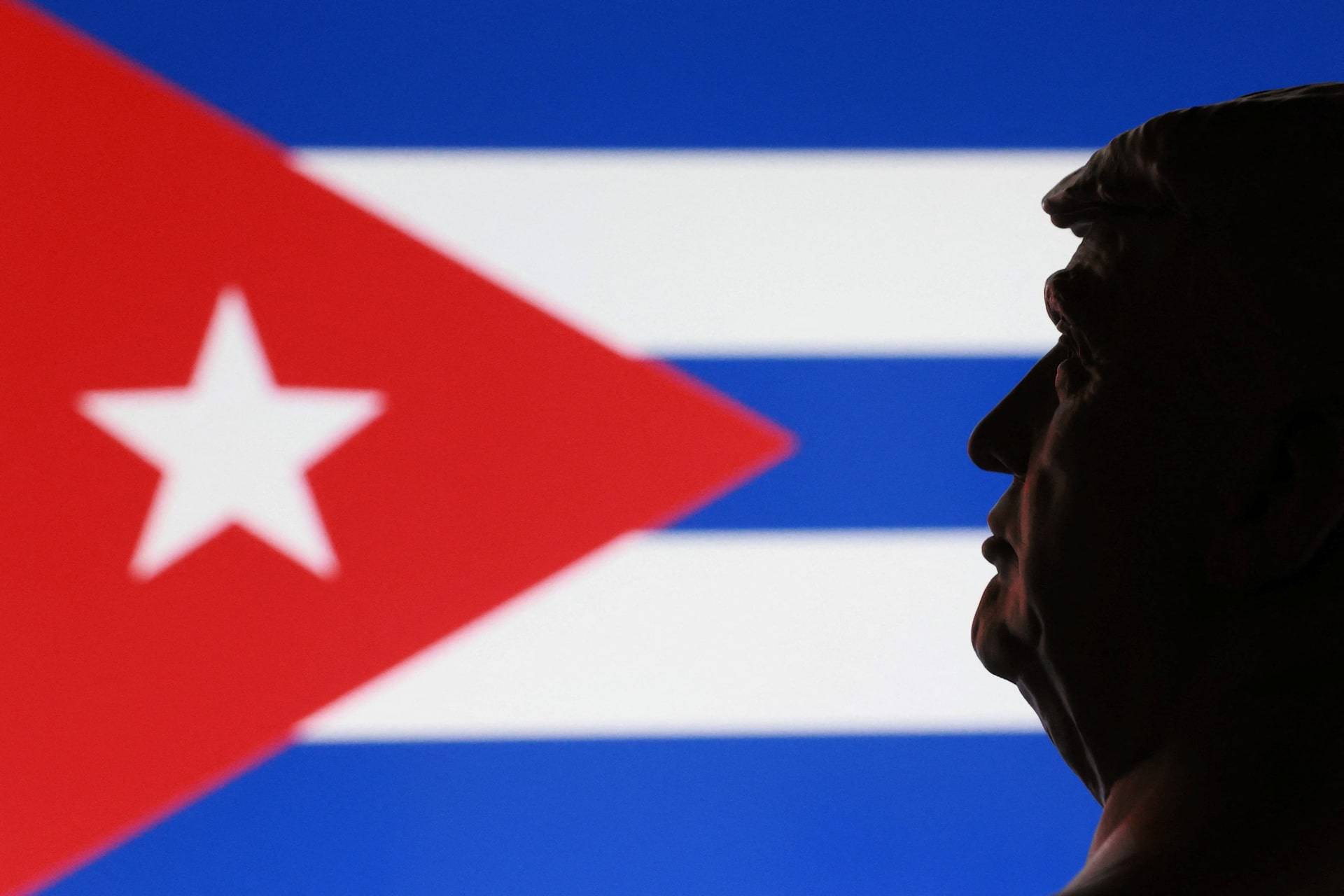
Former U.S. President Donald Trump issued a stark warning to Cuba on Sunday, urging the island nation to negotiate a deal with Washington as its critical supply of Venezuelan oil and money comes to an end.
The ultimatum follows a major geopolitical shift after the capture of Venezuelan President Nicolas Maduro by U.S. forces. Trump successfully pressed interim President Delcy Rodriguez to divert Venezuelan oil shipments, previously destined for Cuba, to the United States instead.
In a post on his Truth Social platform, Trump laid out the new reality for Havana in blunt terms.
"THERE WILL BE NO MORE OIL OR MONEY GOING TO CUBA - ZERO! I strongly suggest they make a deal, BEFORE IT IS TOO LATE," he wrote.
Trump emphasized Cuba's long-standing economic reliance on its South American ally, stating, "Cuba lived, for many years, on large amounts of OIL and MONEY from Venezuela."
While Trump has predicted that Cuba is "ready to fall," confidential assessments from U.S. intelligence agencies paint a more complex picture. According to three sources familiar with the reports, the CIA acknowledges Cuba's grim economic and political situation but does not explicitly support the prediction of an imminent government collapse.
The agency's view is that key sectors of the Cuban economy, including agriculture and tourism, are already under severe strain from frequent blackouts, trade sanctions, and other persistent issues. The potential loss of Venezuelan oil and financial support, which has been a lifeline for decades, is expected to make governing significantly more challenging for the administration that has been in power since the 1959 revolution.
For Cuba, the loss of Venezuelan oil shipments is devastating. Data from last year highlights the island's deep dependency on this single supplier.
Between January and November, Venezuela sent an average of 27,000 barrels per day (bpd) to Cuba. According to shipping data and documents from the Venezuelan state oil company PDVSA, this supply covered approximately 50% of Cuba's entire oil deficit.

Latest news on the Israeli-Palestinian conflict

Palestinian-Israeli conflict

Remarks of Officials

Political

Middle East Situation
President Donald Trump is set to announce a "Board of Peace" this week to spearhead his ambitious 20-point post-war plan for Gaza. The initiative aims to install an interim government to replace Hamas, attract foreign funding, and establish a security force, but a standoff between Israel and Hamas casts a shadow over its prospects for success.
The board, chaired by Trump and composed of global leaders, is designed to drive the reconstruction of the shattered Palestinian territory. Bulgarian diplomat Nickolay Mladenov has been identified as the board's chief executive officer ahead of the formal announcement.
Bishara Bahbah, a Palestinian American who has negotiated with Hamas on behalf of Trump, stated that the board's formation is imminent. In a statement to the people of Gaza, he said, "It is expected that the Board of Peace for Gaza will be announced during the coming week, with its first official meeting to be held on the sidelines of the Davos meetings."
Israeli Prime Minister Benjamin Netanyahu has welcomed the Trump plan and its initial ceasefire, which secured the release of the last living hostages and left Israeli troops controlling over half of Gaza. However, he remains concerned that surviving Hamas fighters could maintain control of the rest of the territory.
During a recent meeting with Mladenov, Netanyahu "reiterated that Hamas must be disarmed and the Gaza Strip must be demilitarized in accordance with the 20-point plan."
Hamas has rejected this demand, stating it would only surrender its weapons to a future Palestinian government that operates without foreign supervision.
The Trump administration is urging a flexible timeline. "Hamas can't continue to postpone disarming," said Mike Huckabee, the US ambassador to Jerusalem. "They're not going to have a future there." He added, "There is a sequence of things that have to happen," noting that different parts of the plan will be implemented as they become feasible.
The board's unveiling is intended to trigger subsequent phases, including:
• The appointment of Palestinian technocrats to form an alternative government in Gaza.
• The contribution of troops from various countries to create an International Stabilization Force (ISF) for interim security.
According to Bahbah, Palestinian factions are expected to meet in Cairo next week to announce their nominations for the new government.
The International Force's Uncertain Role
If Hamas agrees to disarm, the ISF would be responsible for collecting its weapons. However, few negotiators believe the force would be willing or able to compel Hamas to give up its arms.
Eli Cohen, a member of Netanyahu's security cabinet, suggested Israel should give the ISF "a few months" before sending its military back into Gaza to confront Hamas directly. "We would have to take over all of the territory, and to dismantle all of the (Hamas) infrastructure," Cohen said.
The current truce remains fragile and has been repeatedly tested. Israeli airstrikes, described as retaliatory or preemptive, have killed over 400 Palestinians. Three Israeli soldiers have died in Palestinian ambushes.
A major obstacle is Hamas's failure to hand over the remains of the last slain hostage, a key term of the truce agreement. Hamas has cited the difficulty of searching through Gaza's ruins. An Israeli poll found that 57% of the public opposes moving to the plan's second phase until the body is recovered, with only 22% in favor.
This stalemate creates significant challenges for Netanyahu, who faces a tight election required by October. An aide to the prime minister noted that Netanyahu wants the demilitarization process for all of Gaza to be agreed upon and in progress by the time of the vote. Given that clearing unspent ordnance is expected to take two years and demolishing all Hamas tunnels even longer, the aide suggested most Israelis would accept this protracted process as a victory.

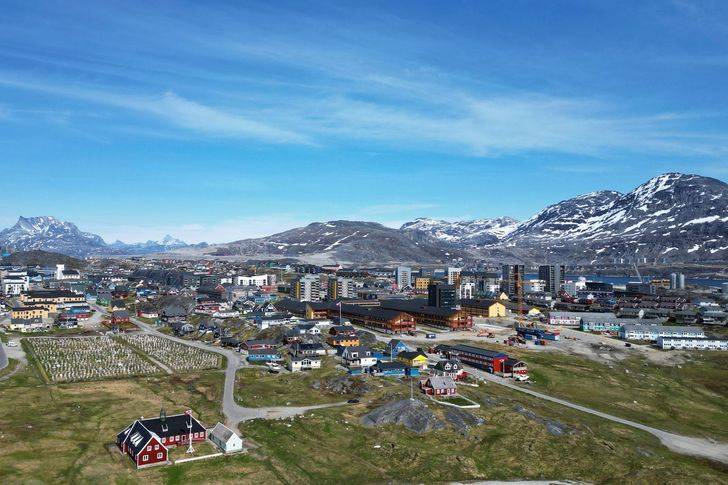
Greenland holds vast deposits of the rare earth elements essential for modern technology, but its brutal environment and lack of infrastructure have kept these resources locked away. Despite President Donald Trump's repeated interest in the Arctic island as a way to challenge China's market dominance, the immense physical and economic hurdles of mining there remain unchanged.
The Trump administration has been working to break China's grip on the global rare earths supply, a vulnerability highlighted when Beijing restricted exports after the U.S. imposed tariffs. While Washington has invested millions in various companies, Trump's idea of gaining control over Greenland to secure these minerals faces a stark reality: it could take years, if not decades, to produce rare earths from the island—if it's even possible at all.
Several companies are exploring Greenland's potential, but efforts to tap into the estimated 1.5 million tons of rare earths are still in their infancy.
Trump's fascination with Greenland may have less to do with mining neodymium and terbium for electric vehicles and fighter jets, and more to do with checking Russian and Chinese expansion in the Arctic.
"The fixation on Greenland has always been more about geopolitical posturing—a military-strategic interest and stock-promotion narrative—than a realistic supply solution for the tech sector," said Tracy Hughes, founder of the Critical Minerals Institute. "The hype far outstrips the hard science and economics behind these critical minerals."
Trump himself confirmed these strategic concerns. "We don't want Russia or China going to Greenland," he said, warning they could become America's "next door neighbor. That's not going to happen."
Even with political will, any mining operation in Greenland would face a daunting set of obstacles that make commercial viability a distant prospect.
• Extreme Remoteness: "Even in the south where it's populated, there are few roads and no railways," noted Diogo Rosa, a researcher at the Geological Survey of Denmark and Greenland. Any mining venture would first have to build its own access routes, power generation, and import skilled labor.
• Environmental Risks: Mining in the fragile Arctic environment poses significant threats. Patrick Schröder, a senior fellow at Chatham House, pointed to the "toxic chemicals needed to separate the minerals out from the rock," which can be highly polluting. This risk is compounded by the fact that rare earths are often found alongside radioactive uranium.
• Unique Geological Problems: Unlike in other parts of the world where rare earths are found in carbonatite rock, Greenland's deposits are encased in a complex rock called eudialyte. Critically, no one has ever developed a profitable method to extract rare earths from this specific type of rock.
• Harsh Climate: Much of the island is covered by ice, and the northern fjords remain frozen for most of the year, severely limiting operational windows.
"If we're in a race for resources—for critical minerals—then we should be focusing on the resources that are most easily able to get to market," argued David Abraham, a rare earths expert and author of "The Elements of Power."
Beyond the physical challenges, the economics of Greenlandic rare earth mining are punishing. While a company like Critical Metals saw its stock price double on plans to build a pilot plant, it and over a dozen other explorers are far from constructing an actual mine and would need to raise hundreds of millions of dollars to do so.
Even the most promising projects are vulnerable to market manipulation. China has a history of dumping excess materials onto the global market to depress prices and drive competitors out of business. Furthermore, most raw critical minerals must ultimately be sent to China for processing, undercutting the goal of supply chain independence.
Many industry experts believe the U.S. should prioritize more practical solutions over high-risk ventures in Greenland. Other mining projects in the United States and allied nations like Australia are not only in more accessible locations but are also much further along in development.
"Everybody's just been running to get to this endpoint. And if you go to Greenland, it's like you're going back to the beginning," said Ian Lange, an economics professor at the Colorado School of Mines.
The U.S. government is already taking steps in this direction, having invested directly in MP Materials, which runs the only rare earth mine in the U.S., as well as in lithium mining and battery recycling firms.
Scott Dunn, CEO of Noveon Magnetics, emphasized the importance of backing proven operators. His Texas-based company already produces over 2,000 metric tons of magnets annually using elements sourced from outside China.
"There are very few folks that can rely on a track record for delivering anything," Dunn said. "That obviously should be where we start." With China still supplying over 90% of the world's rare earths, shifting the balance requires focusing on viable, near-term alternatives, not a long-shot Arctic gamble.
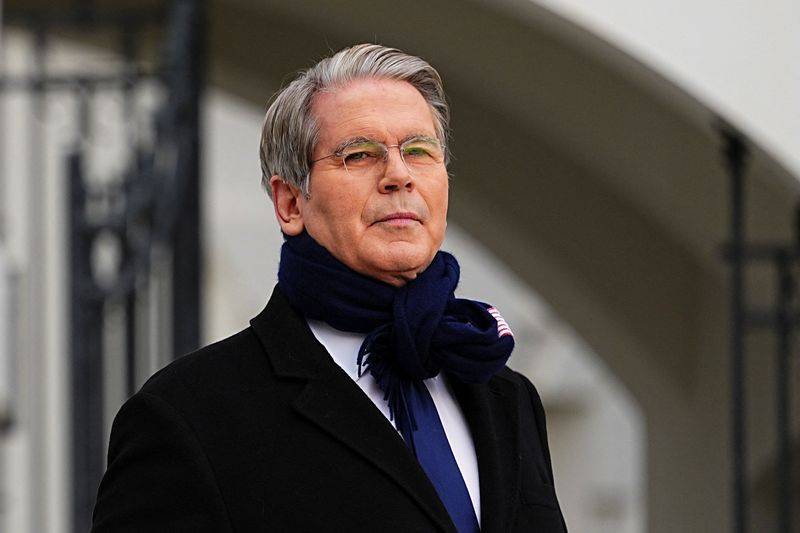
U.S. Treasury Secretary Scott Bessent is set to press top finance officials from the Group of Seven (G7) and other major economies to accelerate efforts to reduce their reliance on critical minerals from China, according to a senior U.S. official.
The high-stakes meeting in Washington will bring together finance and cabinet ministers from the G7, the European Union, Australia, India, South Korea, and Mexico. Combined, these nations account for 60% of the world's demand for these essential materials.
"Urgency is the theme of the day," the official stated. "It's a very big undertaking. There's a lot of different angles, a lot of different countries involved and we really just need to move faster."

The push for a dedicated meeting on mineral supply chains began after the G7 leaders' summit in Canada in June, where Bessent presented on the strategic importance of rare earths. While leaders agreed to an action plan to secure supply chains, Bessent has reportedly grown frustrated with the subsequent lack of urgency from attendees.
With the exception of Japan, which was forced to diversify after China abruptly cut its mineral supplies in 2010, G7 members remain heavily dependent on China. This leaves them vulnerable to potential export controls, which Beijing has threatened to impose.
China's control over the critical minerals supply chain is extensive. According to the International Energy Agency, China refines a significant portion of the world's most vital industrial minerals, including:
• Copper: 47%
• Lithium: 47%
• Cobalt: 47%
• Graphite: 87%
• Rare Earths: 87%
These materials are indispensable for a wide range of modern technologies, from defense systems and semiconductors to renewable energy components and electric vehicle batteries.
The United States is positioning itself as a leader in building alternative supply chains. The senior official noted that the U.S. is "ready to move with those who feel a similar level of urgency," encouraging others to recognize the seriousness of the situation.
While the official did not detail the Trump administration's next steps, the U.S. is already working to boost domestic production and has forged agreements with producers like Australia and Ukraine. In October, the U.S. signed a deal with Australia to counter China's dominance, which includes a project pipeline valued at $8.5 billion. The agreement leverages Australia's proposed strategic reserve for metals like rare earths and lithium.
Canberra has since reported receiving interest in similar partnerships from Europe, Japan, South Korea, and Singapore. Despite this progress, the official conceded that more work is needed, stating, "It's not solved."
The meeting follows recent reports that China has begun restricting exports of rare earths and related magnets to Japanese companies. However, U.S. officials clarified that the Washington gathering was planned well in advance of these developments. A statement from the U.S. is expected after the meeting concludes, but no specific joint action is anticipated.
White Label
Data API
Web Plug-ins
Poster Maker
Affiliate Program
The risk of loss in trading financial instruments such as stocks, FX, commodities, futures, bonds, ETFs and crypto can be substantial. You may sustain a total loss of the funds that you deposit with your broker. Therefore, you should carefully consider whether such trading is suitable for you in light of your circumstances and financial resources.
No decision to invest should be made without thoroughly conducting due diligence by yourself or consulting with your financial advisors. Our web content might not suit you since we don't know your financial conditions and investment needs. Our financial information might have latency or contain inaccuracy, so you should be fully responsible for any of your trading and investment decisions. The company will not be responsible for your capital loss.
Without getting permission from the website, you are not allowed to copy the website's graphics, texts, or trademarks. Intellectual property rights in the content or data incorporated into this website belong to its providers and exchange merchants.
Not Logged In
Log in to access more features

FastBull Membership
Not yet
Purchase
Log In
Sign Up