Markets
News
Analysis
User
24/7
Economic Calendar
Education
Data
- Names
- Latest
- Prev



Signal Accounts for Members
All Signal Accounts
All Contests


No matching data
Latest Views
Latest Views
Trending Topics
Top Columnists
Latest Update
White Label
Data API
Web Plug-ins
Affiliate Program
View All

No data
Argentina repaid $2.5B US swap from an undisclosed source, reflecting market stability post-Milei.
Argentina has repaid a $2.5 billion currency swap to the U.S. Treasury after securing funds from an undisclosed multilateral institution, a central bank official confirmed.
The financing arrangement was not publicly announced. While the official declined to name the lender, they specified that it was not the International Monetary Fund (IMF), with whom Argentina already has a separate $20 billion loan program.
Last Friday, Argentina settled the $2.5 billion debt, which was drawn from a $20 billion swap line established with the Trump administration. The payment was part of a broader effort to manage its financial commitments, which also included a critical $4.3 billion payment to bondholders.
To cover the bond payments, the government used a combination of its own reserves and a $3 billion repurchase agreement, also known as a repo loan, from a consortium of six international banks.
U.S. Treasury Secretary Scott Bessent confirmed the transaction in a post on X, stating that the U.S. had been fully repaid. He noted that the deal generated "tens of millions in USD profit for the American taxpayer."
Bessent also commended Argentina for recent "encouraging changes to its monetary and exchange rate policy framework" and for successfully tapping financial markets.
The original U.S. support was extended as Argentina’s peso faced extreme volatility ahead of a key midterm vote in October. At the time, traders were betting against President Javier Milei’s party.
However, Milei's libertarian party ultimately prevailed in the election, leading to a significant turnaround in market sentiment. This improved outlook has helped stabilize the country's financial position. Despite the recent developments, both U.S. and Argentine officials have released minimal information regarding the original conditions of the swap line.
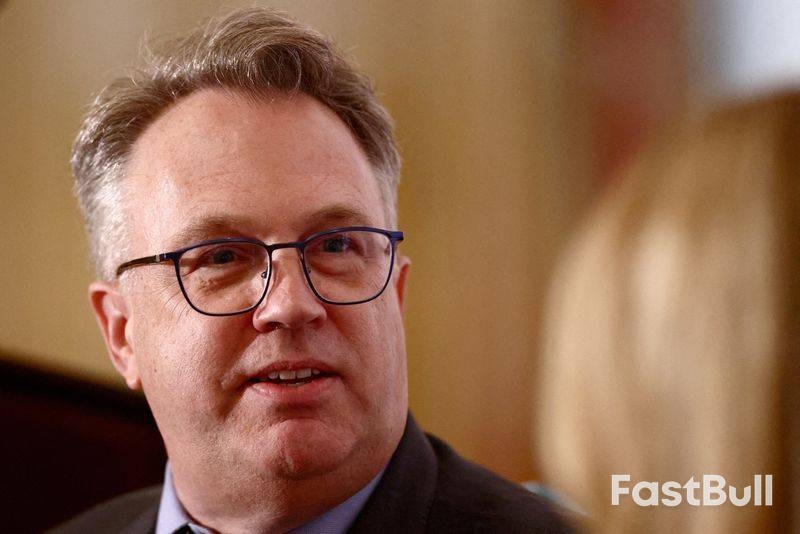
New York Federal Reserve President John Williams stated Monday that he expects a healthy economy in 2026 and sees no immediate reason to lower interest rates, reinforcing the central bank's current wait-and-see approach.
Speaking before the Council on Foreign Relations, Williams characterized the Fed's monetary policy as moving from a "modestly restrictive" stance "closer to neutral."

"Monetary policy is now well positioned to support the stabilization of the labor market and the return of inflation to the FOMC's longer-run goal of 2 percent," he said.
Williams, a key voice on the interest-rate-setting Federal Open Market Committee (FOMC), emphasized that the central bank's primary challenge is guiding inflation back to its 2% target "without creating undue risks" for employment.
He noted a recent shift in the balance of these risks. "In recent months, the downside risks to employment have increased as the labor market cooled, while the upside risks to inflation have lessened," Williams explained.
His comments, the first of the year, align with the broader view that the Fed has entered a holding pattern after cutting its benchmark interest rate by three-quarters of a percentage point last year. The federal funds target rate currently stands in a range of 3.5% to 3.75%.
Those earlier rate cuts were a response by policymakers attempting to navigate a weakening job market while inflation remained above the 2% goal.
In his speech, Williams described his economic forecast as "quite favorable." He projects:
• GDP Growth: Between 2.5% and 2.75% for the year.
• Unemployment: The rate is expected to stabilize this year before declining in subsequent years.
• Inflation: Price pressures are forecast to peak between 2.75% and 3% in the first half of the year, easing to 2.5% for the year as a whole. Williams sees inflation returning to the 2% target by 2027.
This outlook is consistent with the Fed's December meeting, where officials penciled in one additional rate cut for this year. The consensus assumed the job market would remain stable and inflation would cool as the effects of President Donald Trump's trade tariffs diminish.
Williams' stance echoes his comments from a December television interview, where he stated he saw no urgent need for another rate cut. Other Fed officials have recently offered similar outlooks.
This patient approach persists even as the central bank faces continued pressure from President Trump and his associates to cut rates more aggressively, despite inflation running above the Fed's target.
The speech comes at a time of an extraordinary attack on the central bank's independence. On Sunday, Fed Chair Jerome Powell announced that the institution had been served with grand jury subpoenas threatening a criminal indictment related to cost overruns in the renovation of its headquarters.
In a statement, Powell dismissed the legal moves as "pretexts." He argued, "This is about whether the Fed will be able to continue to set interest rates based on evidence and economic conditions—or whether instead monetary policy will be directed by political pressure or intimidation."
While the immediate market impact has been less severe than some anticipated, the threat has reportedly sparked significant bipartisan pushback in Congress. This could potentially prevent the president from installing new members on the central bank's board until the legal challenges are withdrawn.
A coalition of Japanese lawmakers is pushing a proposal to create a massive sovereign wealth fund, aiming to consolidate roughly ¥500 trillion ($3.2 trillion) in public financial assets to generate new revenue for the nation. The initiative seeks to address Japan's chronic budget deficits by actively managing these assets to fund key policy goals.
The core idea is to bring Japan's foreign exchange reserves, pension assets, and exchange-traded funds held by the Bank of Japan under the management of skilled investment professionals in a single entity. Proponents estimate that even a modest 1% annual return could generate ¥5 trillion.
This new income could be used to eliminate the consumption tax on essential goods like food or to cut annual social insurance premiums for working households by approximately ¥70,000.
The Komeito party, formerly part of the ruling coalition with the Liberal Democratic Party (LDP), is spearheading this effort. An alliance of lawmakers backing the fund is expected to form in the coming weeks, drawing members from the LDP, the main opposition Constitutional Democratic Party, and the Democratic Party for the People. A former finance minister is also reportedly among its supporters.
Komeito's immediate goal is to pass foundational legislation for the sovereign wealth fund during the parliamentary session that convenes this month.
The concept of a Japanese sovereign wealth fund isn't new. The LDP explored the idea with a project team back in 2008, but the initiative lost momentum after the global financial crisis.
This time, the proposal is fueled by the successful transformation of the Government Pension Investment Fund (GPIF), one of the world's largest institutional investors. In 2014, the LDP-Komeito government approved a strategic shift for the GPIF, diversifying its portfolio from a heavy concentration in Japanese bonds toward higher-risk domestic and foreign stocks.
The results have been significant. By the end of fiscal 2024, the GPIF's assets under management had grown to about ¥250 trillion, an increase of roughly 80% from fiscal 2014. Komeito hopes to apply the lessons and expertise gained from the GPIF's success to this new, larger fund.
A significant portion of the proposed fund's capital would be sourced from the government's foreign exchange fund special account. This account, managed by the Finance Ministry to stabilize the exchange rate and fund market interventions, held ¥187 trillion in assets as of the end of March 2025.
Currently, these assets are believed to be heavily invested in U.S. Treasurys. The new proposal would diversify these holdings into a broader range of assets, mirroring the strategy that proved successful for the GPIF.
Despite its potential benefits, establishing such a fund presents several challenges.
• Governance Conflicts: Fund managers would need to make investment decisions based on profitability, free from political pressure or influence.
• Managing Losses: Since the fund's capital would not be derived from budget surpluses, any investment losses would directly reduce the government's assets. This would require establishing clear rules to manage such scenarios.
• Legislative Changes: If management of the fund were outsourced to private-sector professionals, new legislation would be required.
• Alternative Priorities: A key counterargument is that Japan should prioritize using its available capital to pay down its substantial public debt rather than investing it in financial markets.

The UK's Conservative Party is drawing a clear line against its right-wing rival, Reform UK, over the future of the Office for Budget Responsibility (OBR).
Mel Stride, the Conservative Treasury spokesman, has stated that while the party is open to overhauling the OBR, its continued existence is "non-negotiable." This stance directly opposes calls from Reform UK leader Nigel Farage, who has suggested the fiscal watchdog should be scrapped entirely.
Stride warned that eliminating the OBR would trigger a market backlash, likely leading to "a premium on our borrowing costs." Farage, however, stated earlier this month that he is giving "serious thought" to whether the UK would be "better off without the OBR."
The independent forecaster has become a center of controversy since Chancellor Rachel Reeves's November budget. The OBR's decision to downgrade the UK's growth outlook at the time forced the Labour chancellor to raise taxes to stay within her own fiscal rules.
This move fueled criticism from populists on both the right and left, who argue that the OBR is effectively making tax and spending decisions instead of the elected government. The situation intensified following an unprecedented leak of budget details nearly an hour before Reeves's speech, followed days later by the resignation of OBR chair Richard Hughes.
In a planned speech at the Institute for Government, Stride is expected to frame the OBR as a pillar of economic credibility for markets, taxpayers, and businesses.
He plans to directly challenge Farage's motives, arguing it's "not hard to see why a politician like Nigel Farage might want to get rid of the OBR when he fought the last election on a manifesto which made £140 billion ($190 billion) of fantasy unfunded commitments."
Labour has also attacked Farage for "fiscal recklessness," describing his proposal to ditch the OBR as "Liz Truss on steroids." The comparison invokes the market chaos that followed former Prime Minister Liz Truss's 2022 mini-budget, which sidelined the OBR. Farage has since said he would prioritize cutting public spending and waste before implementing tax reductions.
While defending the OBR's existence, the Conservatives are also signaling a desire for change. Stride accused Chancellor Reeves of "sidelining the OBR" by cutting its assessments of fiscal rules from twice a year to just once.
He indicated that a Conservative government would explore reforms to the institution, including "innovative approaches" not yet tried in the UK.
"There will be some aspects that might benefit from reform," Stride is expected to say. "For example, is the economic modeling sufficiently flexible to capture the dynamic impacts of policy. We will look carefully at the way in which the OBR works."
Germany is spearheading a diplomatic effort to resolve rising tensions with the United States over Greenland, proposing a new NATO mission to address security in the Arctic. The move aims to de-escalate a dispute sparked by U.S. President Donald Trump's repeated threats to take control of the vast island.
German Foreign Minister Johann Wadephul expressed optimism about reaching a compromise following a meeting with U.S. Secretary of State Marco Rubio in Washington on Monday. Wadephul voiced hope that the U.S. would participate in the proposed NATO mission, which is intended to bolster Greenland's security.
"NATO is currently starting to work on concrete plans which will be discussed with our US partners," Wadephul told reporters. "There's the readiness to do this on all sides within the NATO framework. Germany will also try to contribute to this."
The U.S. State Department has not issued an official statement on the proposal, leaving Washington's reaction to the German initiative unclear. The plan focuses on Arctic security and is designed to mend relations with the U.S. over the strategic territory, which belongs to NATO member Denmark.
The diplomatic friction follows President Trump's inflammatory comments about taking over the island, including by military force, which has angered European leaders. While his administration has explored business deals to increase the U.S. footprint in Greenland, Trump has publicly justified a takeover by pointing to the growing military presence of Russia and China in the Arctic region.
On Sunday, the president reaffirmed his position, telling reporters aboard Air Force One, "If we don't take Greenland, Russia or China will take Greenland and I'm not going to let that happen." He insisted the U.S. will get the island "one way or another."
The controversy has become a significant stress point for the NATO alliance. Danish Prime Minister Mette Frederiksen warned that a U.S. move on Greenland would destroy the transatlantic partnership, prompting fresh criticism from Trump toward other NATO members.
The issue is now being formally addressed within the alliance. "We are indeed discussing Greenland within NATO," German Chancellor Friedrich Merz confirmed during a visit to India. "We share the American concerns that this part of Denmark needs to be better protected."
Further diplomatic talks are scheduled. Danish Foreign Minister Lars Lokke Rasmussen and his Greenlandic counterpart, Vivian Motzfeldt, are set to meet with Secretary Rubio on Wednesday.
Following his meeting in Washington, Wadephul's diplomatic tour continued to New York for a scheduled meeting with United Nations Secretary-General Antonio Guterres. During his discussion with Rubio, Wadephul also addressed the ongoing negotiations between the U.S., Europe, and Ukraine regarding an agreement to end Russia's war of aggression, stating Germany's willingness to support a military mission as part of a security guarantee.
New Zealand's business confidence surged in the fourth quarter, reaching its highest point since March 2014 as lower interest rates begin to stimulate the economy.
A quarterly survey from the New Zealand Institute of Economic Research (NZIER) revealed that a net 48% of firms expect general business conditions to improve. This marks a significant jump in optimism from the 18% recorded in the previous quarter.
According to NZIER Principal Economist Christina Leung, the data indicates that the central bank's interest rate cuts are finally having their intended effect, helping the nation's economic recovery gain momentum.
The dramatic improvement in sentiment was not isolated to one area. "The lift in sentiment was widespread across all sectors and regions," Leung stated.
Key metrics from the survey underscore this growing optimism:
• Seasonally Adjusted Confidence: On an adjusted basis, a net 39% of businesses anticipated better conditions, up from 17% in the prior period.
• Capacity Utilization: The measure of capacity utilization also increased, rising to 89.8% from 89.1%.
This data follows a period of economic sluggishness, where New Zealand's economy contracted in three of the last six quarters before returning to growth in the third quarter. Economists and policymakers now broadly forecast that economic growth will accelerate over the next year.

Despite the strong rebound in activity and confidence, the NZIER survey suggests that inflation pressures remain contained for now.
However, the report also points to emerging challenges. Leung noted that labor shortages are beginning to appear in specific parts of the economy, including the services, manufacturing, and building sectors.
The combination of recovering demand and contained inflation has direct implications for the Reserve Bank of New Zealand. To support the flagging economy, the central bank has cut its official cash rate (OCR) by 275 basis points since August 2024.
A more buoyant economy reduces the need for further stimulus and could prompt the central bank to raise the cash rate earlier than its current forecasts suggest.
Reflecting this outlook, NZIER projects that the monetary policy cycle has reached its turning point.
"With demand starting to recover but inflation remaining contained, we expect no further OCR cuts," Leung said. "We forecast the OCR to trough at 2.25% until the Reserve Bank of New Zealand commences increasing the OCR in the second half of 2026."
White Label
Data API
Web Plug-ins
Poster Maker
Affiliate Program
The risk of loss in trading financial instruments such as stocks, FX, commodities, futures, bonds, ETFs and crypto can be substantial. You may sustain a total loss of the funds that you deposit with your broker. Therefore, you should carefully consider whether such trading is suitable for you in light of your circumstances and financial resources.
No decision to invest should be made without thoroughly conducting due diligence by yourself or consulting with your financial advisors. Our web content might not suit you since we don't know your financial conditions and investment needs. Our financial information might have latency or contain inaccuracy, so you should be fully responsible for any of your trading and investment decisions. The company will not be responsible for your capital loss.
Without getting permission from the website, you are not allowed to copy the website's graphics, texts, or trademarks. Intellectual property rights in the content or data incorporated into this website belong to its providers and exchange merchants.
Not Logged In
Log in to access more features

FastBull Membership
Not yet
Purchase
Log In
Sign Up