Markets
News
Analysis
User
24/7
Economic Calendar
Education
Data
- Names
- Latest
- Prev


The stock market can experience sudden and extreme price movements due to various factors, including economic events, geopolitical tensions, and investor sentiment.
The stock market can experience sudden and extreme price movements due to various factors, including economic events, geopolitical tensions, and investor sentiment. To prevent excessive volatility and maintain market stability, regulatory bodies have implemented mechanisms known as circuit breakers. These measures temporarily halt trading when prices move beyond predetermined thresholds, giving investors time to reassess their decisions and preventing panic-driven sell-offs. In this article, we explore the meaning of circuit breakers, their mechanism, and how they could affect your trading.
Circuit breakers are regulatory mechanisms designed to temporarily halt trading on an exchange to prevent extreme volatility and panic selling. These measures were introduced following the 1987 stock market crash, also known as "Black Monday," to protect market stability and allow investors to reassess their positions during periods of excessive price fluctuations.
Circuit breakers apply to both individual stocks and entire stock indices, such as the S&P 500. They are triggered when prices move beyond predefined percentage thresholds within a given timeframe, pausing trading for a specified duration to provide a cooling-off period. This pause allows market participants to digest information, reassess their positions, and reduce the likelihood of impulsive or panic-driven trades.Circuit breakers are implemented in many stock exchanges; therefore, they can have different names and be based on different conditions.
In the US, for example, stock exchanges implement market-wide circuit breakers (MWCB), which are triggered based on percentage declines in the S&P 500 index, compared to the previous day's closing price. A decline to and below the specific threshold causes cross-market halts.
There is another mechanism called the Limit Up-Limit Down (LULD). It is designed to prevent individual stocks from experiencing extreme price swings in short periods. This system sets price bands based on the average stock price over the preceding five minutes, limiting how much a stock can rise or fall. If a stock's price moves outside the established range and doesn’t recover within 15 seconds, trading is paused for five minutes to stabilize price movements and prevent excessive volatility.
Stock exchanges set circuit breakers based on a stock’s volatility, liquidity, and past trading behaviour. More volatile or thinly traded shares usually have tighter limits, while highly liquid, large-caps may have wider bands. Exchanges periodically review and adjust these limits based on recent price movements and trading activity.
Some stocks have dynamic price bands, where circuit limits expand if a stock consistently trades near its upper or lower band. This prevents artificial price freezes and allows for better price discovery. Moreover, not all stocks have limits. Certain highly liquid derivatives and index-heavy shares may have no intraday price restrictions, as their deep order books naturally absorb volatility.Traders monitor circuit limits closely since stocks hitting these thresholds often indicate strong momentum or panic-driven moves.
When a stock touches circuit breakers, trading doesn't continue as usual.
If a stock reaches its upper band, buy orders often flood in, but sellers become scarce—most holders aren’t keen to part with their shares when prices spike suddenly. This creates an imbalance with lots of demand but very little supply. The exchange then temporarily halts trading or moves into a brief cooling-off period. During this pause, traders can reassess their positions, and new orders might line up, helping the exchange determine the appropriate price once trading resumes.
Conversely, when a stock hits its lower band, panic selling typically dominates, causing a sharp price drop. Buyers vanish as traders hold back, wary of further declines. Just like in the previous scenario, trading usually stops temporarily. Without buyers stepping in, traders can find themselves stuck with shares they're keen to offload but can't because of the halt.
Trading halts triggered by circuit hits can last from a few minutes to several hours, depending on exchange rules and how severe the price swings are. Sometimes, exchanges extend these halts repeatedly if imbalances persist, causing prolonged trading freezes. In some cases, limits are relaxed progressively, allowing trading to restart gradually and prices to stabilise through natural market forces.
Circuit breakers play a crucial role in shaping market conditions, affecting both stock investors and those trading derivatives, e.g. Contracts for Difference (CFDs). These price bands influence liquidity, risk exposure, and sentiment, making them key considerations for anyone dealing with price movements, whether in the underlying stock or through leveraged instruments like CFDs.
When a stock hits its upper band, sellers may disappear, leaving buy orders unfilled. Conversely, at a lower band, buyers vanish, creating a backlog of sell orders. For stock traders, this means difficulty executing trades at desired prices. For CFD traders, liquidity issues can be even more pronounced—since CFDs track the underlying stock, brokers may restrict trading or widen spreads when circuit limits are hit. If trading is paused, CFD positions can become temporarily untradeable, increasing exposure to further market swings.
Since CFDs often involve leverage, even small price differences can have outsized effects. If a stock is locked at a circuit limit for an extended period, the next available price when trading resumes can be significantly different from where it halted. This creates gaps, causing slippage—where orders execute at a worse price than expected. In extreme cases, stop-loss orders might not trigger until after a major price movement, leading to larger-than-anticipated losses.
Circuit limits help prevent excessive volatility, but they don’t remove risk. A stock that repeatedly hits its limit can leave traders unable to exit, leading to prolonged exposure. CFD traders face additional challenges, as margin calls can occur when positions move against them, potentially triggering forced liquidations once trading reopens.
Stocks consistently hitting circuit breakers often indicate extreme sentiment—either speculative interest or panic-driven selling. Traders analyse whether price moves are supported by high volume or driven by short-term speculation. If a stock is reaching its limits on low liquidity, the move may be unsustainable. Understanding these dynamics may help traders assess whether momentum is genuine or artificially fuelled.
Circuit breakers aren’t just theoretical—they’ve been triggered during some of the most dramatic market moves in history.
In March 2020, as COVID-19 fears sent global markets into freefall, the S&P 500 hit its Level 1 circuit breaker (7% drop) multiple times, triggering 15-minute trading halts. On 9th, 12th, 16th, and 18th March, panic selling caused these automatic pauses as investors rushed to offload assets amid uncertainty. Despite these measures, the market continued declining, proving that circuit breakers can slow momentum but don’t necessarily reverse sentiment.
During the GameStop short squeeze in early 2021, GME hit the limit up multiple times as retail traders fuelled an unprecedented rally. Trading halts were repeatedly triggered as GME soared from $20 to over $400 in weeks. However, when momentum reversed, limits down kicked in, with the stock plunging over 60% in a single session. This showed how circuit breakers can amplify volatility, trapping traders on both sides of extreme moves.
On 18th May 2009, the Sensex surged by 17.24% and the Nifty 50 jumped 17.33%, triggering the upper circuit twice in a single day. Trading was halted for two hours at 9:55 AM, and when the market reopened at 11:55 AM, another surge led to a second halt for the rest of the day. The surge occurred the day after the results of the 2009 Indian general elections, where the UPA (United Progressive Alliance) secured a decisive victory.
While circuit limits may help regulate extreme price swings, they also introduce risks that traders need to consider. These restrictions can affect liquidity, execution, and market behaviour, sometimes leading to unintended consequences.
FAQ
What Is a Circuit Breaker in Trading?
A circuit breaker in trading is a regulatory mechanism that temporarily halts trading in a stock or an entire market when prices move beyond a predefined percentage in a short period. This is designed to prevent panic selling or excessive speculation, allowing traders to reassess market conditions. Circuit breakers can apply at the index level (e.g., Nifty 50, S&P 500) or individual stocks.
What Is the Difference Between a Circuit Breaker and a Trading Halt?
A circuit breaker is a rule-based mechanism that automatically halts trading when the market or a stock moves significantly in a short time. It can trigger at different levels (e.g., 5%, 10%, 20%).A trading halt is a temporary suspension of trading imposed by exchanges or regulators due to specific events such as major announcements, news affecting a company, or regulatory concerns.Circuit breakers are predefined and automatic, while trading halts can be discretionary and event-driven.

728 RM B 7/F GEE LOK IND BLDG NO 34 HUNG TO RD KWUN TONG KLN HONG KONG


The risk of loss in trading financial instruments such as stocks, FX, commodities, futures, bonds, ETFs and crypto can be substantial. You may sustain a total loss of the funds that you deposit with your broker. Therefore, you should carefully consider whether such trading is suitable for you in light of your circumstances and financial resources.
No decision to invest should be made without thoroughly conducting due diligence by yourself or consulting with your financial advisors. Our web content might not suit you since we don't know your financial conditions and investment needs. Our financial information might have latency or contain inaccuracy, so you should be fully responsible for any of your trading and investment decisions. The company will not be responsible for your capital loss.
Without getting permission from the website, you are not allowed to copy the website's graphics, texts, or trademarks. Intellectual property rights in the content or data incorporated into this website belong to its providers and exchange merchants.
Not Logged In
Log in to access more features

FastBull Membership
Not yet
Purchase


Log In
Sign Up




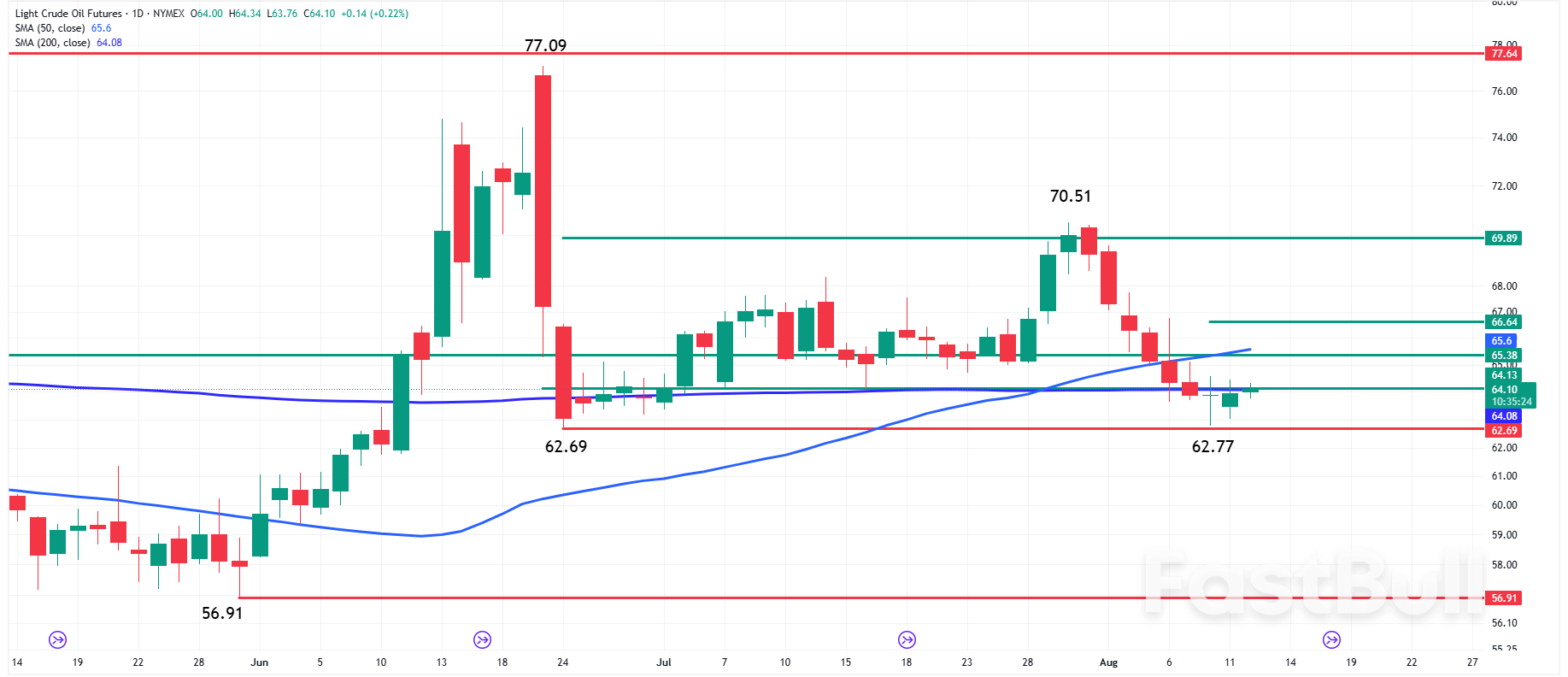 Daily Light Crude Oil Futures
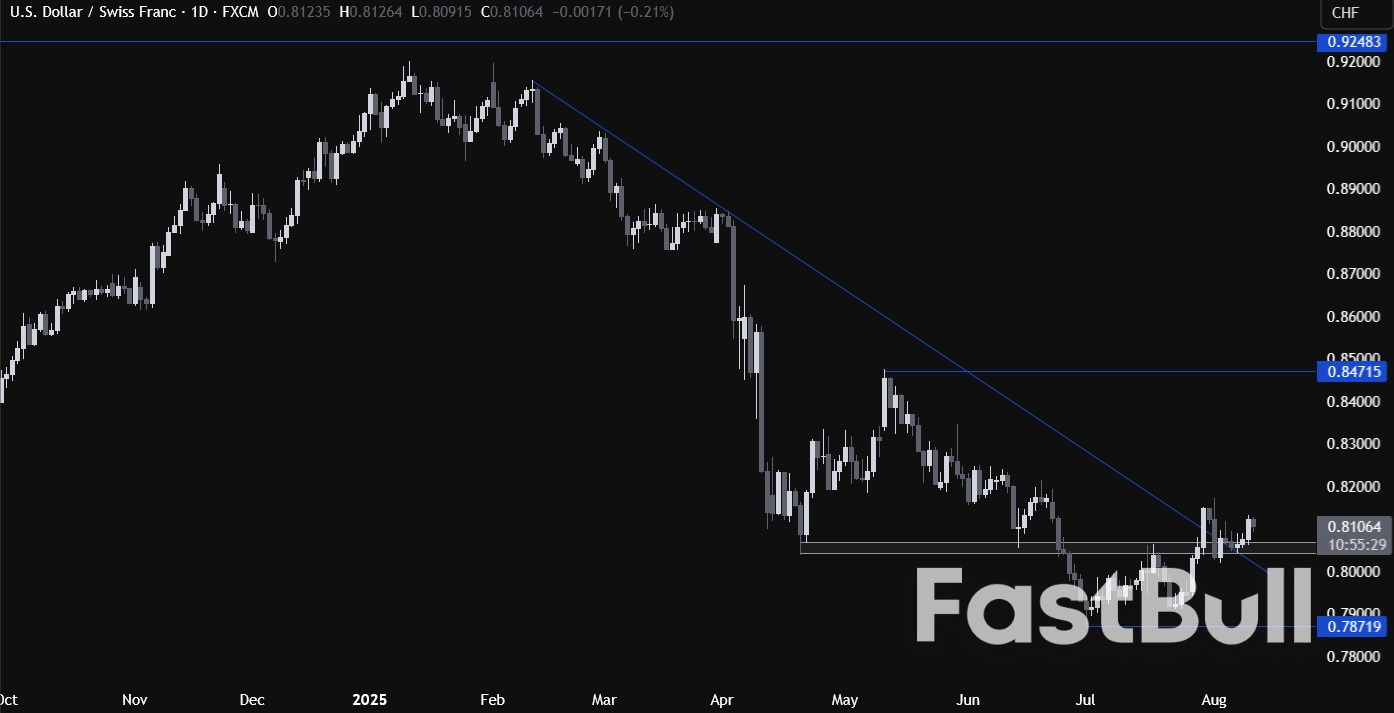 USDCHF Daily
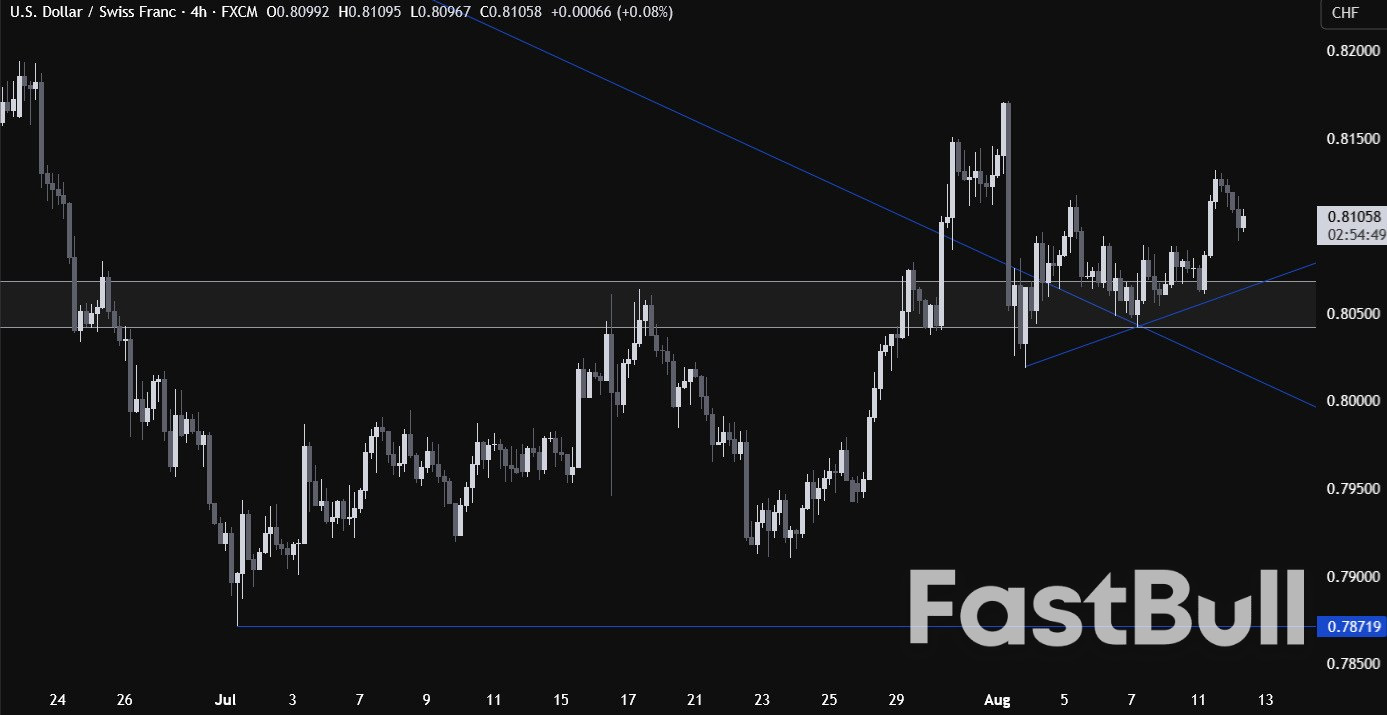 USDCHF 4 hour
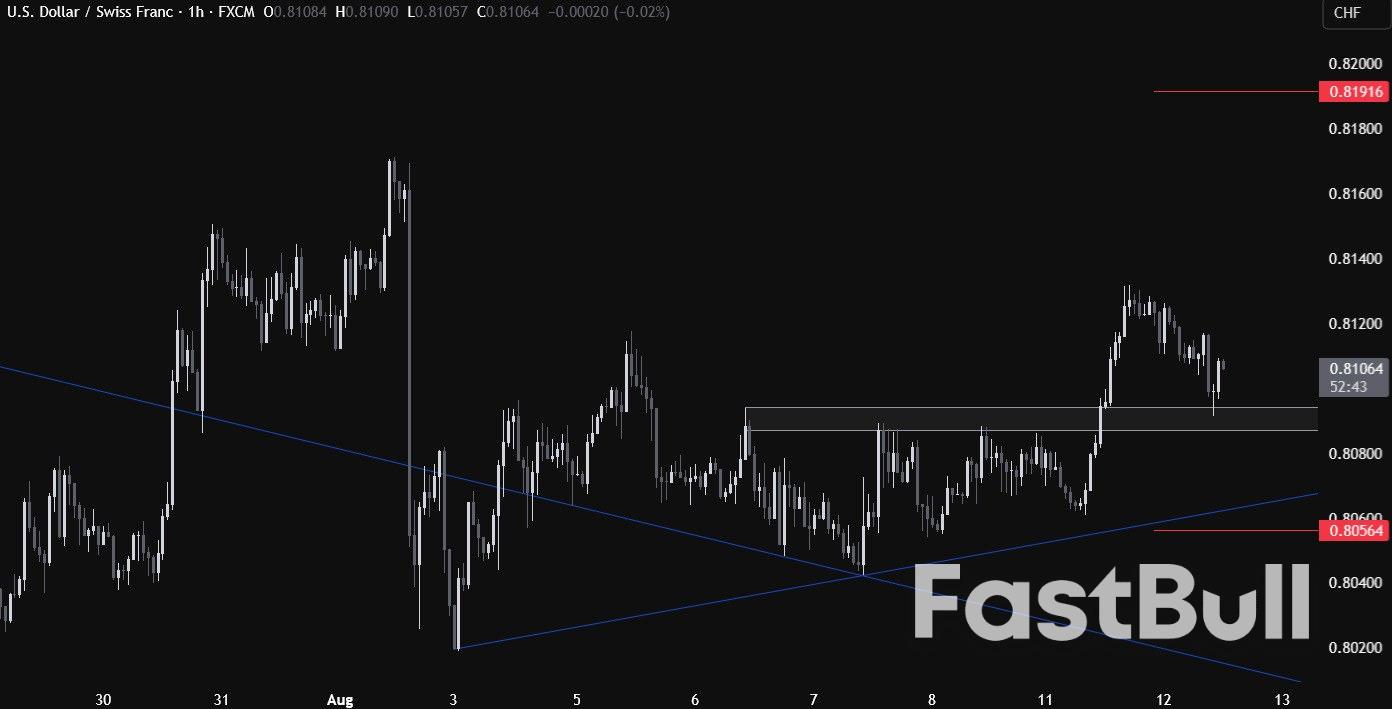 USDCHF 1 hour