• Trade
  • Markets
  • Copy
  • Contests
  • News
  • 24/7
  • Calendar
  • Q&A
  • Chats
Trending
Screeners
SYMBOL
LAST
BID
ASK
HIGH
LOW
NET CHG.
%CHG.
SPREAD
SPX
S&P 500 Index
6846.50
6846.50
6846.50
6878.28
6827.18
-23.90
-0.35%
--
DJI
Dow Jones Industrial Average
47739.31
47739.31
47739.31
47971.51
47611.93
-215.67
-0.45%
--
IXIC
NASDAQ Composite Index
23545.89
23545.89
23545.89
23698.93
23455.05
-32.22
-0.14%
--
USDX
US Dollar Index
99.000
99.080
99.000
99.000
99.000
+0.050
+ 0.05%
--
EURUSD
Euro / US Dollar
1.16370
1.16380
1.16370
1.16388
1.16322
+0.00006
+ 0.01%
--
GBPUSD
Pound Sterling / US Dollar
1.33214
1.33226
1.33214
1.33220
1.33140
+0.00009
+ 0.01%
--
XAUUSD
Gold / US Dollar
4191.65
4192.09
4191.65
4193.27
4189.64
+1.95
+ 0.05%
--
WTI
Light Sweet Crude Oil
58.660
58.702
58.660
58.676
58.543
+0.105
+ 0.18%
--

Community Accounts

Signal Accounts
--
Profit Accounts
--
Loss Accounts
--
View More

Become a signal provider

Sell trading signals to earn additional income

View More

Guide to Copy Trading

Get started with ease and confidence

View More

Signal Accounts for Members

All Signal Accounts

Best Return
  • Best Return
  • Best P/L
  • Best MDD
Past 1W
  • Past 1W
  • Past 1M
  • Past 1Y

All Contests

  • All
  • Trump Updates
  • Recommend
  • Stocks
  • Cryptocurrencies
  • Central Banks
  • Featured News
Top News Only
Share

Japan Prime Minister Takaichi: 30 Injuries Reported So Far From Monday Earthquake

Share

USA Senate Committee Votes To Advance Nomination Of Jared Isaacman To Head Nasa

Share

Singapore Post - New Rate For Standard Regular Mail & Standard Large Mail Will Be S$0.62 And S$0.90 Respectively

Share

Australia's S&P/ASX 200 Index Down 0.27% At 8601.10 Points In Early Trade

Share

Trump: The USA Needs Mexico To Release 200000 Acre-Feet Of Water Before December 31St, And The Rest Must Come Soon After

Share

Trump: I Have Authorized Documentation To Impose A 5% Tariff On Mexico If This Water Isn't Released

Share

Brazil's Sao Paulo State Governor Tarcisio De Freitas Says Flavio Bolsonaro Will Have His Support - Cnn Brasil

Share

Ukraine's Security Must Be Guaranteed, In The Long Term, As A First Line Of Defence For Our Union, Says European Commission President

Share

Ukraine's Sovereignty Must Be Respected, Says European Commission President

Share

The Goal Is A Strong Ukraine, On The Battlefield And At The Negotiating Table, Says European Commission President

Share

As Peace Talks Are Ongoing, The EU Remains Ironclad In Its Support For Ukraine, Says European Commission President

Share

Pepsico: Asking USA-Based Pepna Employees As Well As Pbus Division Offices And Pfus Region Offices To Work Remotely This Week

Share

A U.S. Judge Ruled That President Trump’s Ban On Several Wind Power Projects Was Illegal

Share

Senior USA Administration Official: We Continue To Monitor Drc-Rwanda Situation Closely, Continue To Work With All Sides To Ensure Commitments Are Honored

Share

Israeli Military Says It Has Struck Infrastructure Belonging To Hezbollah In Several Areas In Southern Lebanon

Share

SPDR Gold Holdings Down 0.11%, Or 1.14 Tonnes

Share

On Monday (December 8), In Late New York Trading, S&P 500 Futures Fell 0.21%, Dow Jones Futures Fell 0.43%, NASDAQ 100 Futures Fell 0.08%, And Russell 2000 Futures Fell 0.04%

Share

Morgan Stanley: Data Center ABS Spreads Are Expected To Widen In 2026

Share

(US Stocks) The Philadelphia Gold And Silver Index Closed Down 2.34% At 311.01 Points. (Global Session) The NYSE Arca Gold Miners Index Closed Down 2.17%, Hitting A Daily Low Of 2235.45 Points; US Stocks Remained Slightly Down Before The Opening Bell—holding Steady Around 2280 Points—before Briefly Rising Slightly

Share

IMF: IMF Executive Board Approves Extension Of The Extended Credit Facility Arrangement With Nepal

TIME
ACT
FCST
PREV
France Trade Balance (SA) (Oct)

A:--

F: --

P: --
Euro Zone Employment YoY (SA) (Q3)

A:--

F: --

P: --
Canada Part-Time Employment (SA) (Nov)

A:--

F: --

P: --

Canada Unemployment Rate (SA) (Nov)

A:--

F: --

P: --

Canada Full-time Employment (SA) (Nov)

A:--

F: --

P: --

Canada Labor Force Participation Rate (SA) (Nov)

A:--

F: --

P: --

Canada Employment (SA) (Nov)

A:--

F: --

P: --

U.S. PCE Price Index MoM (Sept)

A:--

F: --

P: --

U.S. Personal Income MoM (Sept)

A:--

F: --

P: --

U.S. Core PCE Price Index MoM (Sept)

A:--

F: --

P: --

U.S. PCE Price Index YoY (SA) (Sept)

A:--

F: --

P: --

U.S. Core PCE Price Index YoY (Sept)

A:--

F: --

P: --

U.S. Personal Outlays MoM (SA) (Sept)

A:--

F: --

P: --
U.S. 5-10 Year-Ahead Inflation Expectations (Dec)

A:--

F: --

P: --

U.S. Real Personal Consumption Expenditures MoM (Sept)

A:--

F: --

P: --
U.S. Weekly Total Rig Count

A:--

F: --

P: --

U.S. Weekly Total Oil Rig Count

A:--

F: --

P: --

U.S. Consumer Credit (SA) (Oct)

A:--

F: --

P: --
China, Mainland Foreign Exchange Reserves (Nov)

A:--

F: --

P: --

Japan Trade Balance (Oct)

A:--

F: --

P: --

Japan Nominal GDP Revised QoQ (Q3)

A:--

F: --

P: --

China, Mainland Imports YoY (CNH) (Nov)

A:--

F: --

P: --

China, Mainland Exports (Nov)

A:--

F: --

P: --

China, Mainland Imports (CNH) (Nov)

A:--

F: --

P: --

China, Mainland Trade Balance (CNH) (Nov)

A:--

F: --

P: --

China, Mainland Exports YoY (USD) (Nov)

A:--

F: --

P: --

China, Mainland Imports YoY (USD) (Nov)

A:--

F: --

P: --

Germany Industrial Output MoM (SA) (Oct)

A:--

F: --

P: --
Euro Zone Sentix Investor Confidence Index (Dec)

A:--

F: --

P: --

Canada National Economic Confidence Index

A:--

F: --

P: --

U.K. BRC Like-For-Like Retail Sales YoY (Nov)

--

F: --

P: --

U.K. BRC Overall Retail Sales YoY (Nov)

--

F: --

P: --

Australia Overnight (Borrowing) Key Rate

--

F: --

P: --

RBA Rate Statement
RBA Press Conference
Germany Exports MoM (SA) (Oct)

--

F: --

P: --

U.S. NFIB Small Business Optimism Index (SA) (Nov)

--

F: --

P: --

Mexico 12-Month Inflation (CPI) (Nov)

--

F: --

P: --

Mexico Core CPI YoY (Nov)

--

F: --

P: --

Mexico PPI YoY (Nov)

--

F: --

P: --

U.S. Weekly Redbook Index YoY

--

F: --

P: --

U.S. JOLTS Job Openings (SA) (Oct)

--

F: --

P: --

China, Mainland M1 Money Supply YoY (Nov)

--

F: --

P: --

China, Mainland M0 Money Supply YoY (Nov)

--

F: --

P: --

China, Mainland M2 Money Supply YoY (Nov)

--

F: --

P: --

U.S. EIA Short-Term Crude Production Forecast For The Year (Dec)

--

F: --

P: --

U.S. EIA Natural Gas Production Forecast For The Next Year (Dec)

--

F: --

P: --

U.S. EIA Short-Term Crude Production Forecast For The Next Year (Dec)

--

F: --

P: --

EIA Monthly Short-Term Energy Outlook
U.S. API Weekly Gasoline Stocks

--

F: --

P: --

U.S. API Weekly Cushing Crude Oil Stocks

--

F: --

P: --

U.S. API Weekly Crude Oil Stocks

--

F: --

P: --

U.S. API Weekly Refined Oil Stocks

--

F: --

P: --

South Korea Unemployment Rate (SA) (Nov)

--

F: --

P: --

Japan Reuters Tankan Non-Manufacturers Index (Dec)

--

F: --

P: --

Japan Reuters Tankan Manufacturers Index (Dec)

--

F: --

P: --

Japan Domestic Enterprise Commodity Price Index MoM (Nov)

--

F: --

P: --

Japan Domestic Enterprise Commodity Price Index YoY (Nov)

--

F: --

P: --

China, Mainland PPI YoY (Nov)

--

F: --

P: --

China, Mainland CPI MoM (Nov)

--

F: --

P: --

Italy Industrial Output YoY (SA) (Oct)

--

F: --

P: --

Q&A with Experts
    • All
    • Chatrooms
    • Groups
    • Friends
    Connecting
    .
    .
    .
    Type here...
    Add Symbol or Code

      No matching data

      All
      Trump Updates
      Recommend
      Stocks
      Cryptocurrencies
      Central Banks
      Featured News
      • All
      • Russia-Ukraine Conflict
      • Middle East Flashpoint
      • All
      • Russia-Ukraine Conflict
      • Middle East Flashpoint
      Search
      Products

      Charts Free Forever

      Chats Q&A with Experts
      Screeners Economic Calendar Data Tools
      Membership Features
      Data Warehouse Market Trends Institutional Data Policy Rates Macro

      Market Trends

      Market Sentiment Order Book Forex Correlations

      Top Indicators

      Charts Free Forever
      Markets

      News

      News Analysis 24/7 Columns Education
      From Institutions From Analysts
      Topics Columnists

      Latest Views

      Latest Views

      Trending Topics

      Top Columnists

      Latest Update

      Signals

      Copy Rankings Latest Signals Become a signal provider AI Rating
      Contests
      Brokers

      Overview Brokers Assessment Rankings Regulators News Claims
      Broker listing Forex Brokers Comparison Tool Live Spread Comparison Scam
      Q&A Complaint Scam Alert Videos Tips to Detect Scam
      More

      Business
      Events
      Careers About Us Advertising Help Center

      White Label

      Data API

      Web Plug-ins

      Affiliate Program

      Awards Institution Evaluation IB Seminar Salon Event Exhibition
      Vietnam Thailand Singapore Dubai
      Fans Party Investment Sharing Session
      FastBull Summit BrokersView Expo
      Recent Searches
        Top Searches
          Markets
          News
          Analysis
          User
          24/7
          Economic Calendar
          Education
          Data
          • Names
          • Latest
          • Prev

          View All

          No data

          Scan to Download

          Faster Charts, Chat Faster!

          Download App
          English
          • English
          • Español
          • العربية
          • Bahasa Indonesia
          • Bahasa Melayu
          • Tiếng Việt
          • ภาษาไทย
          • Français
          • Italiano
          • Türkçe
          • Русский язык
          • 简中
          • 繁中
          Open Account
          Search
          Products
          Charts Free Forever
          Markets
          News
          Signals

          Copy Rankings Latest Signals Become a signal provider AI Rating
          Contests
          Brokers

          Overview Brokers Assessment Rankings Regulators News Claims
          Broker listing Forex Brokers Comparison Tool Live Spread Comparison Scam
          Q&A Complaint Scam Alert Videos Tips to Detect Scam
          More

          Business
          Events
          Careers About Us Advertising Help Center

          White Label

          Data API

          Web Plug-ins

          Affiliate Program

          Awards Institution Evaluation IB Seminar Salon Event Exhibition
          Vietnam Thailand Singapore Dubai
          Fans Party Investment Sharing Session
          FastBull Summit BrokersView Expo

          Sweden's Riksbank Leaves Rates Unchanged at 4% but Signals Possibility of Future Cuts

          Zi Cheng

          Traders' Opinions

          Economic

          Summary:

          Implementing a reduction in May would entail taking action ahead of the ECB and Fed.
          The Riksbank sets the stage for potential monetary easing in May, presenting Sweden’s recession-hit economy with the promise of immediate relief.
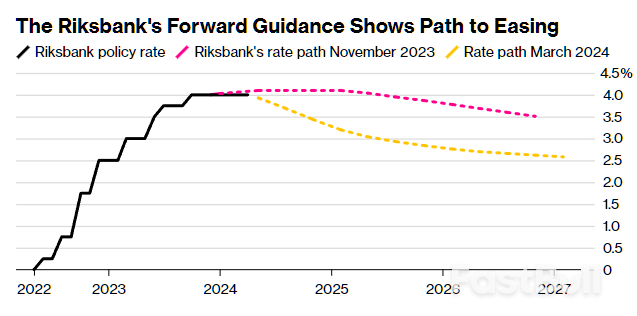
          Despite maintaining the benchmark interest rate at 4%, in line with expectations, policymakers under the leadership of Governor Erik Thedeen intensified indications of a forthcoming cut in the coming quarter. They also outlined a trajectory toward three possible rate reductions within the year. Following the announcement, the krona experienced a depreciation.

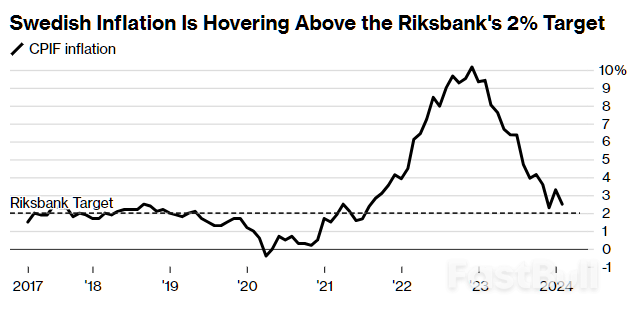
          Sweden's Riksbank Leaves Rates Unchanged at 4% but Signals Possibility of Future Cuts_1Source: Statistics Sweden

          At a press conference, Thedeen stated that there is approximately a 50% chance of action in May.
          This guidance implies that policymakers are sufficiently optimistic about recent consumer price data to perceive success in a two-year struggle against inflation, which resulted in significantly elevated borrowing expenses for an economy now grappling with the aftermath.
          Unless other counterparts swiftly change direction before that time, a reduction declared on May 8th could position Sweden as the second, following Switzerland, among the top ten most traded currency jurisdictions globally to commence loosening monetary constraints.
          Investor forecasts currently indicate that both the Federal Reserve and the European Central Bank are likely to hold off until at least June. In contrast, the Riksbank's decision in June is scheduled for the 27th, considerably later than those of its counterparts.
          Traders in overnight swaps are now pricing in an 86% likelihood of a Riksbank rate reduction at the May meeting, up from the 67% figure observed on Tuesday.
          Despite mentioning in February the possibility of lowering the rate in the first half of 2024, the Swedish central bank did not offer much additional clarity to investors and economists who were divided on when to expect that initial move to 3.75%.

          Sweden's Riksbank Leaves Rates Unchanged at 4% but Signals Possibility of Future Cuts_2Source: The Riksbank

          In the past month, the Swedish krona, ranking as the second weakest among major currencies in the G-10 space, managed to recover its losses. After initially dropping as much as 0.3% against the euro, it stabilized, trading nearly unchanged at 11.4750 as of 11:19 a.m. in Stockholm.
          The resurgence of a fragile currency has become a notable risk in recent weeks. Should this depreciation continue, there's a possibility of retailers increasing prices on imported goods.
          The Riksbank's outlook now indicates a shorter recession for Sweden, with a projected expansion of 0.3% for the full year, compared to the previously estimated 0.2% contraction.
          Although Sweden's substantial export sector has mitigated some of the impact, rising unemployment and struggling rate-sensitive sectors are evident through subdued consumption and a significant decline in housing investments.
          To stay updated on all economic events of today, please check out our Economic calendar
          Risk Warnings and Disclaimers
          You understand and acknowledge that there is a high degree of risk involved in trading. Following any strategies or investment methods may lead to potential losses. The content on the site is provided by our contributors and analysts for information purposes only. You are solely responsible for determining whether any trading assets, securities, strategy, or any other product is suitable for investing based on your own investment objectives and financial situation.
          Add to Favorites
          Share

          Bank of England Steps Up Scrutiny of Private Equity and Bank Valuations

          Warren Takunda

          Central Bank

          The Bank of England said on Wednesday it was taking a deeper look at risks from the opaque private equity sector, and why valuations of Britain's main banks are "subdued" compared with international peers.
          The BoE's Financial Policy Committee said finance for riskier corporates could be particularly vulnerable to a significant deterioration in investor risk sentiment.
          "The private equity sector, which is closely related to private credit and leveraged lending, plays an important role in channelling finance to the UK real economy," the BoE's Financial Policy Committee said in a record of its March quarterly meeting.
          It was difficult to assess asset valuations and leverage in the sector, thus making it harder to assess risks to wider financial stability, the FPC said.
          "The FPC will publish a further assessment of these risks in its June 2024 Financial Stability Report," it added.
          Britain's banking system is "well capitalised" and has "strong liquidity", giving it the capacity to keep on lending even if econonomic and financial conditions were to be substantially worse than expected.
          In the fourth quarter of last year, the major banks, such as NatWest, Lloyds, HSBC and Barclays had an overall core equity capital buffer of 14.7%, with an aggregate 3-month moving average liquidity coverage ratio of 147%, the BoE said.
          However, the Bank will undertake a "desk based" stress test of lenders this year to check on their resilience to shocks.
          The FPC said it would maintain the countercyclical capital buffer - a rainy day reserve - for major UK banks at its "neutral" level of 2%.
          Overall profitability of major banks is expected to remain robust but indicators of market value of their future profitability, such as average tangible price to book ratios, remain subdued, the FPC said.
          The FPC will publish a futher analysis of the ratios in June, echoing wider concerns in Europe at how valuations of banks lag those of U.S. rivals.
          The Bank also flagged that financial firms and market infrastructure, such as payments, clearing and settlement system face further scrutiny of their ability to bounce back from cyber attacks, IT glitches and other disruptions with set deadlines.
          It will start a cyber stress test to check on resilience in the spring, with the findings published in the first half of 2025.
          "The FPC noted, however that resilience of individual firms alone might not be sufficient to ensure system-wide resilience," the committee said.
          Currently, core payment systems have to show they can recover from glitches, but the FPC said it would "consider whether to set impact tolerances for additional vital services beyond payments" to plug any gaps in resilience that it finds.

          Source: Reuters

          Risk Warnings and Disclaimers
          You understand and acknowledge that there is a high degree of risk involved in trading. Following any strategies or investment methods may lead to potential losses. The content on the site is provided by our contributors and analysts for information purposes only. You are solely responsible for determining whether any trading assets, securities, strategy, or any other product is suitable for investing based on your own investment objectives and financial situation.
          Add to Favorites
          Share

          Aluminum Declines as Metals Rally Outpaces Demand Recovery

          Ukadike Micheal

          Economic

          Commodity

          As the recent rally in prices encounters a lack of buying interest in China, aluminum, along with other industrial metals, experienced a decline. The LMEX Metals Index, tracking six main base metals, reached an eight-month high earlier in March, propelled by factors such as supply risks and optimism about global manufacturing.
          However, the anticipated increase in spring activity in China, typically boosting consumption, has not fully materialized. Recent price gains have deterred buyers, leading to widening spot aluminum discounts and an increase in cargo dumping, as noted by Jinrui Futures Co.
          Despite this, there was some positive news in China's latest industrial profits data, showing gains that began in August. However, analysts caution that much of this strength may be attributed to the base effect of comparing to a weak 2023.
          Amidst these developments, aluminum prices fell by 1.0% to $2,280.50 a ton on the London Metal Exchange, with zinc leading all metals lower with a 1.1% decline.
          The subdued demand from China underscores the delicate balance between supply and demand dynamics in the global metals market. While optimism about an improving manufacturing outlook and supply risks initially fueled the rally in metal prices, the reality of sluggish demand in key consuming regions like China has tempered market sentiment.
          From a technical standpoint, the widening spot aluminum discounts and increased cargo dumping indicate a mismatch between supply and demand forces. This divergence could lead to further price adjustments as market participants reassess their positions and adjust to changing market conditions.
          Looking ahead, market participants will closely monitor developments in China's industrial activity and demand trends for further insights into the trajectory of metal prices. Additionally, factors such as global economic recovery prospects, supply disruptions, and geopolitical tensions will continue to influence metal prices in the coming months.
          The recent decline in aluminum and other industrial metals underscores the challenges facing the market as it navigates through a complex landscape of supply and demand dynamics. While initial optimism fueled a rally in prices, the reality of sluggish demand in key consuming regions like China highlights the need for caution. As market participants adapt to evolving market conditions, staying informed and agile will be essential for navigating the uncertainties ahead in the global metals market.

          Source: Bloomberg

          To stay updated on all economic events of today, please check out our Economic calendar
          Risk Warnings and Disclaimers
          You understand and acknowledge that there is a high degree of risk involved in trading. Following any strategies or investment methods may lead to potential losses. The content on the site is provided by our contributors and analysts for information purposes only. You are solely responsible for determining whether any trading assets, securities, strategy, or any other product is suitable for investing based on your own investment objectives and financial situation.
          Add to Favorites
          Share

          A Good Time of Year to Be A Sterling Bull

          Devin

          Central Bank

          Economic

          Forex

          At its March meeting, the BoE left interest rates unchanged at 5.25% and maintained its outlook for inflation and growth. But two policymakers who had previously voted for a rate hike switched to a hold - lending the central bank's decision a more cut-friendly bent than it otherwise would have had.
          One major support for the pound over the last six months has been the expectation that the BoE will be slower to cut rates than either the Fed or the ECB, meaning UK lending rates have been higher than those elsewhere.
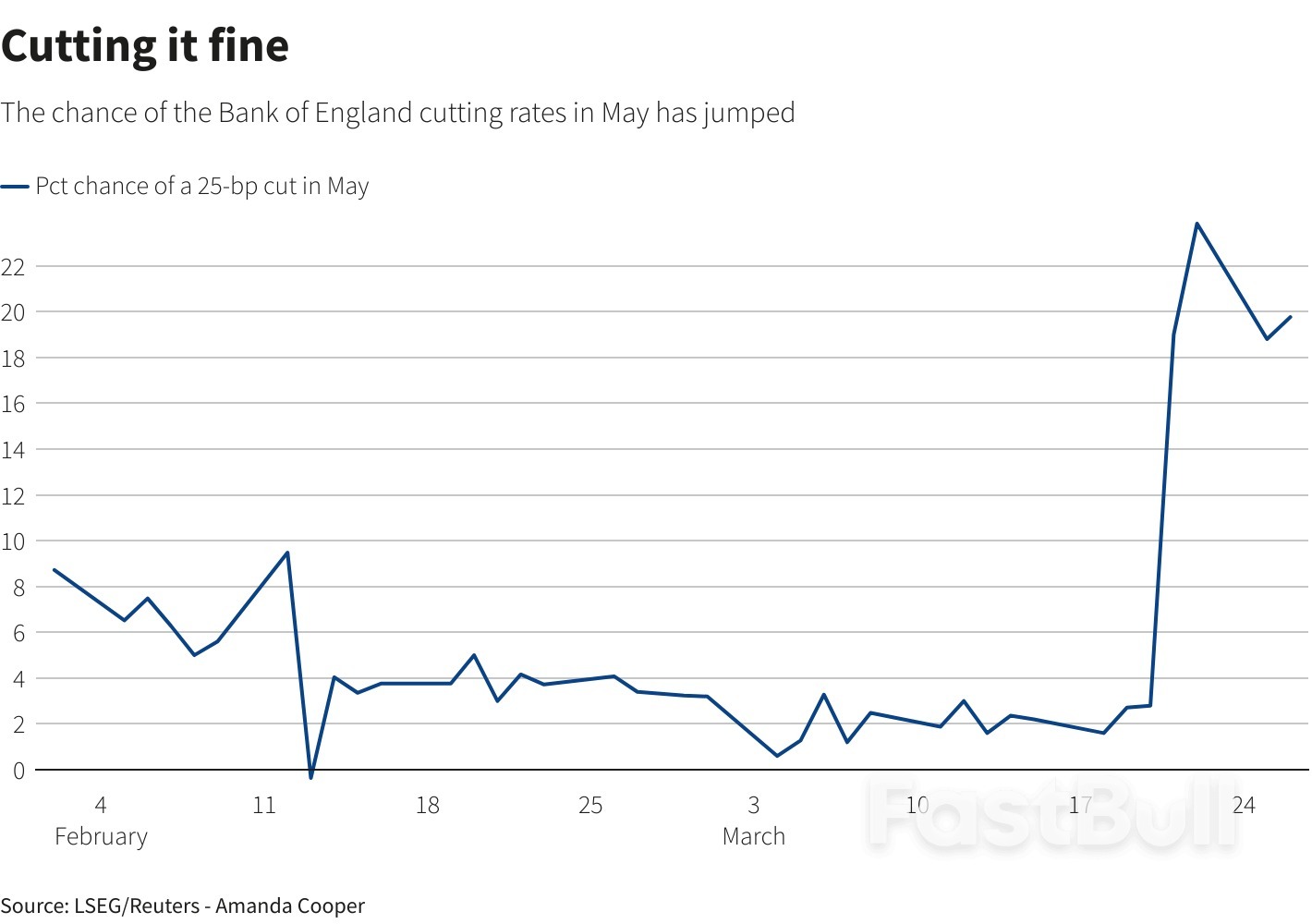
          A week on from the BoE's last meeting and the futures market has flipped. Traders are now placing a small, but nonetheless noticeable, bet the BoE could be the first of the three to cut.
          There is a 20% chance the central bank could deliver a quarter-point cut at its next meeting on May 9, while the chance of a cut from the ECB at its upcoming meeting on April 11 lies at around 5%, and at roughly 13% for the Fed to move on May 1.
          But investors haven't exactly deserted the pound. The most recent weekly data from the U.S. regulator shows speculators trimmed their bullish sterling position to $4.23 billion from $5.623 billion - the largest since records began in 2012.
          The British economy has muddled its way through over two years of almost non-stop rate rises and soaring energy prices with little more than a short, mild recession.
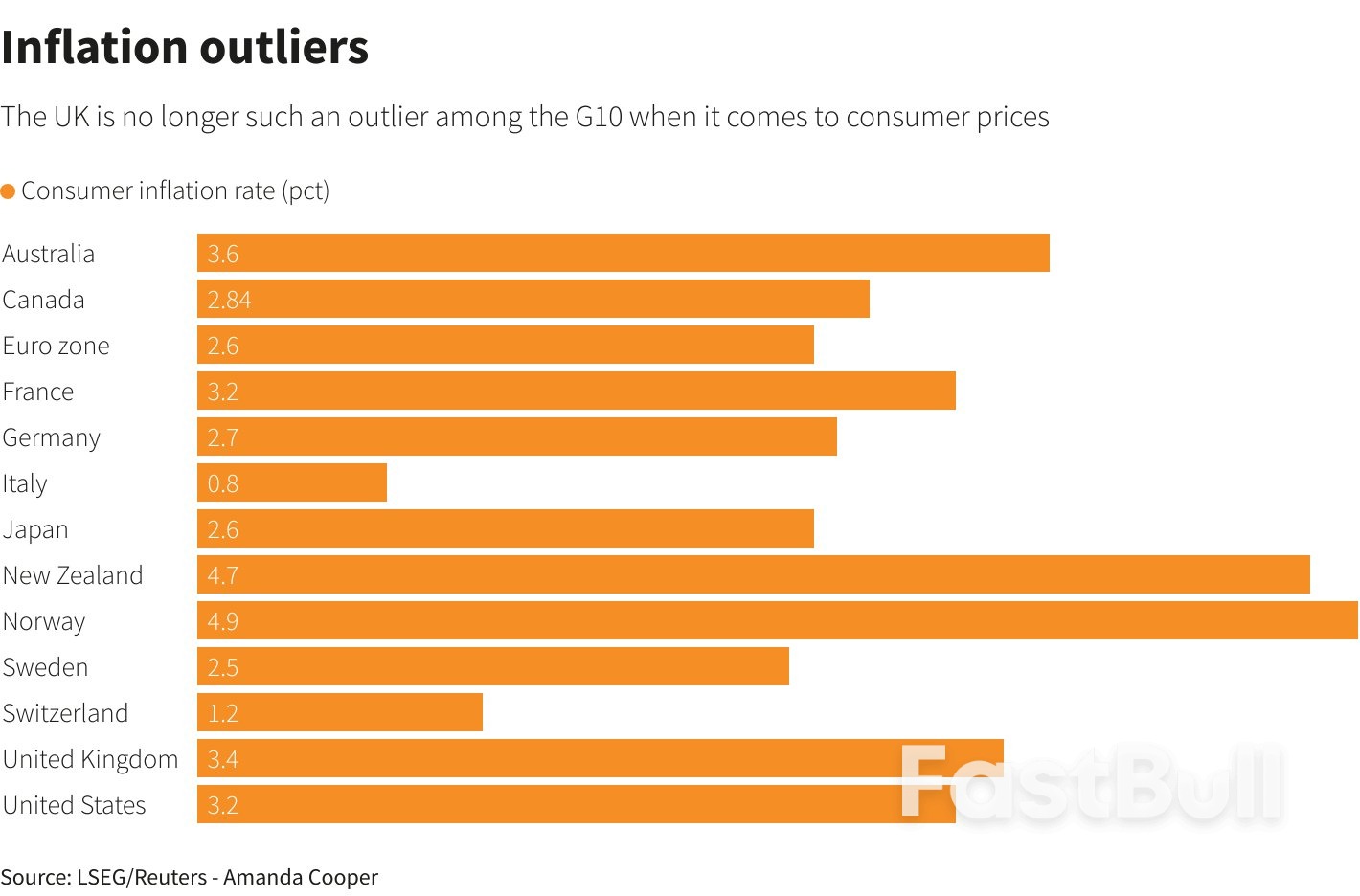
          A number of macro metrics have recently improved. Even inflation has declined enough to bring the UK more in line with the rest of the G10 - a year ago, Britain was a clear outlier, with price pressures well above the average for this group.
          "Sterling's external vulnerabilities screen much lower now, helped in no small part by the fall in energy prices," Deutsche Bank said in a recent note that pointed to the narrowing in the current account deficit as another sterling-positive example.
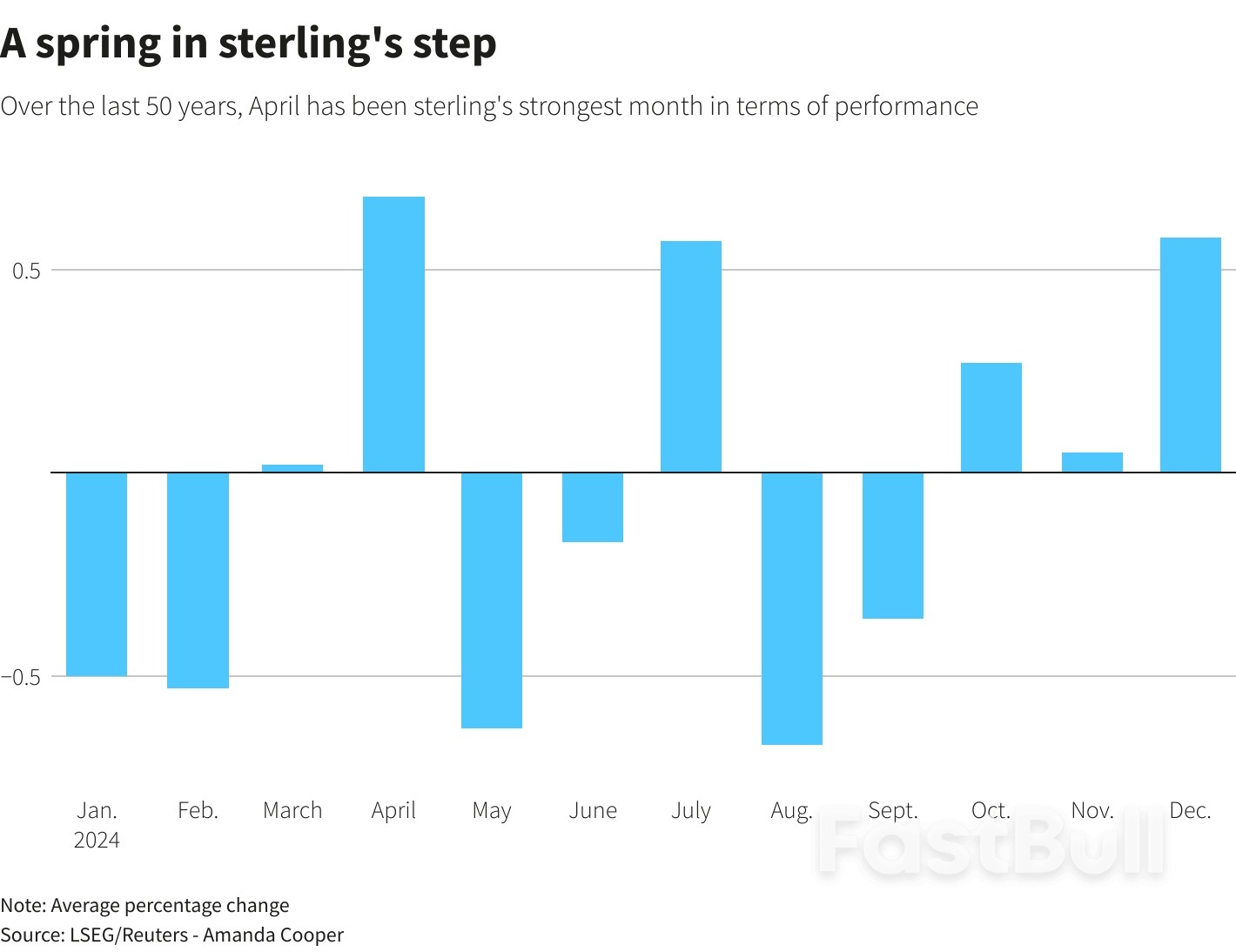
          Sterling might also have time on its side, given that it is fast approaching what has traditionally been its best month of the year for performance.
          April is a sweet spot for the pound, according to strategists at Bank of America, who say if history is any guide, the pound could hit $1.30 next month, up from around $1.266 right now.
          On average over the last 50 years, the pound has gained 0.7% against the dollar in April, making this by far its strongest month for performance, compared with August, its weakest month, when it has lost an average of 0.7%.
          "Seasonality does play a part and partly that's to do with the tax year-end and people filling up their ISAs (individual savings accounts), so there's more investment, UK-wise," XTB research director Kathleen Brooks said.
          "Whilst the yield differential could be eroded, and that's definitely what's driven sterling in the last year, it could be in a way that is growth-positive, which could support the pound," she said.

          A Good Time of Year to Be A Sterling Bull_1A Good Time of Year to Be A Sterling Bull_2A Good Time of Year to Be A Sterling Bull_3Source: Reuters

          To stay updated on all economic events of today, please check out our Economic calendar
          Risk Warnings and Disclaimers
          You understand and acknowledge that there is a high degree of risk involved in trading. Following any strategies or investment methods may lead to potential losses. The content on the site is provided by our contributors and analysts for information purposes only. You are solely responsible for determining whether any trading assets, securities, strategy, or any other product is suitable for investing based on your own investment objectives and financial situation.
          Add to Favorites
          Share

          Yen Recovers on "Decisive" FX Intervention Threat

          Warren Takunda

          Central Bank

          Economic

          The Japanese Yen has staged a sharp recovery on news that Japan's Ministry of Finance may take "decisive steps" to shore up the currency's value.
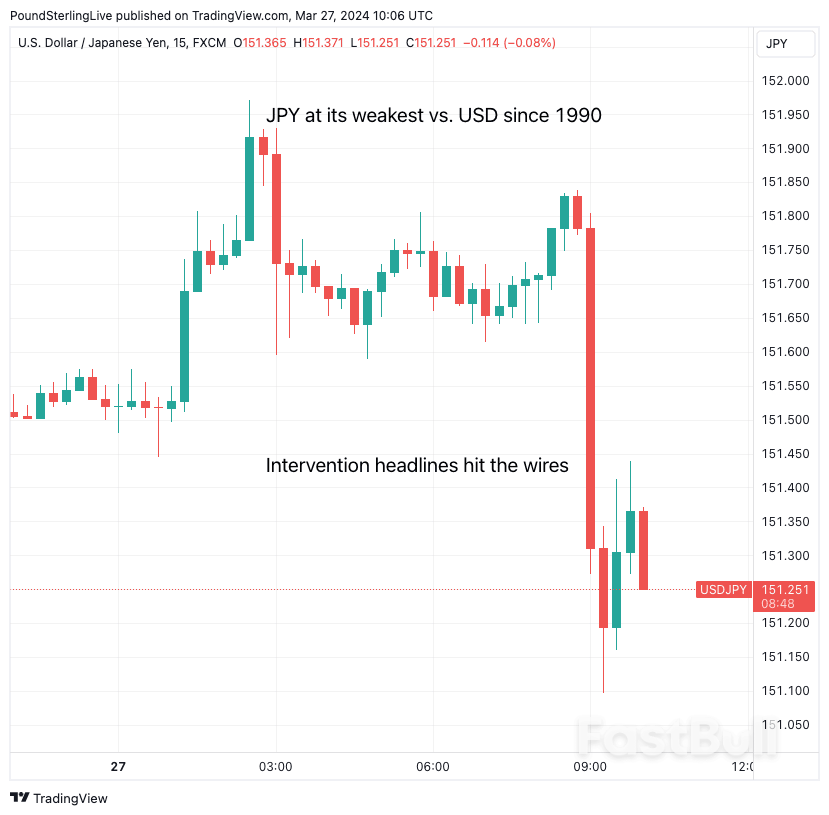
          Japan's finance minister, Shunichi Suzuki, said on Wednesday that authorities could take "decisive steps" against yen weakness after the currency fell to a 34-year low against the dollar. Analysts point out that this is language he hasn't used since 2022 when Japan last intervened in the market.
          After Suzuki's comments, authorities announced that the Bank of Japan, the Finance Ministry and Japan's Financial Services Agency would hold discussions to "discuss" international financial market developments.
          Markets took this as a sign authorities were finally readying to intervene in the markets and prop up the Yen.
          The Dollar-Yen exchange rate fell a third of a per cent to 151.35 on the news, having hit its strongest level since 1990 earlier in the day.Yen Recovers on "Decisive" FX Intervention Threat_1
          "Now we are watching market moves with a high sense of urgency," said Suzuki. "If there's excessive moves, we will take decisive steps and not rule out any options."
          This is the second time this week Suzuki has issued verbal intervention, having said Tuesday that "rapid currency moves are undesirable" and that Tokyo will not rule out any steps to support the Yen.
          Goldman Sachs had lowered its Japanese Yen forecasts, judging the recent interest rate hike at the Bank of Japan was not enough to alter the Yen's direction.
          "The Bank of Japan hiked rates for the first time in 17 years, and for just the fourth time since the introduction of the zero interest rate policy in 1999. While this marks another giant leap for the BoJ, we think it is a small step for the Yen," says Goldman Sachs in a weekly currency research note detailing the forecast changes.
          Regarding the threat of FX intervention, Goldman Sachs expects Japan policy to continue to be sensitive to the exchange rate, but it remains the case that the benign macro risk environment should weigh on the Yen over time.
          "Fundamentally... we do not think the BoJ’s actions will prompt significant repatriation from Japan-based investors—that would need to come from a change in the returns available abroad," explains Goldman Sachs.
          Goldman Sachs raises its forecast path for Dollar-Yen higher again to 155, 150, and 145 in three, six and 12 months (vs 145, 142 and 140 previously).

          Source: Poundsterlinglive

          To stay updated on all economic events of today, please check out our Economic calendar
          Risk Warnings and Disclaimers
          You understand and acknowledge that there is a high degree of risk involved in trading. Following any strategies or investment methods may lead to potential losses. The content on the site is provided by our contributors and analysts for information purposes only. You are solely responsible for determining whether any trading assets, securities, strategy, or any other product is suitable for investing based on your own investment objectives and financial situation.
          Add to Favorites
          Share

          Riksbank Indicates Potential Rate Cut Ahead of ECB and Fed

          Ukadike Micheal

          Economic

          Forex

          The Riksbank's recent announcement regarding potential monetary easing has garnered attention amidst ongoing economic uncertainties. While maintaining the benchmark interest rate at 4%, policymakers have hinted at a forthcoming shift in monetary policy, suggesting the possibility of rate cuts in the near future. This decision comes against the backdrop of speculation over the timing of such easing measures, reflecting the central bank's responsiveness to evolving economic conditions.
          The central bank's statement, released on Wednesday, underscored the importance of further confirmation that inflation will stabilize near the target. This cautious approach reflects policymakers' desire to ensure sustained economic stability while navigating the complexities of monetary policy adjustments. Should inflation prospects remain favorable, the Riksbank indicated that a policy rate cut could be implemented as early as May or June. This forward guidance provides markets with insight into the central bank's thinking and potential policy trajectory, influencing investor sentiment and market dynamics.
          A potential rate cut in May would position Sweden as one of the few major currency jurisdictions to ease monetary policy, potentially diverging from the trajectories of central banks in other advanced economies. Investor expectations currently suggest that the Federal Reserve and the European Central Bank may delay similar actions until at least June, highlighting the Riksbank's proactive stance in addressing economic challenges. The timing of the central bank's decision in June will be significant, as it will occur after those of its counterparts, potentially shaping global market trends and investor behavior.
          Despite earlier indications in February about a potential rate cut in the first half of 2024, the central bank did not provide much clarity on the timing of the initial move to 3.75%. This lack of specificity underscores the inherent uncertainties surrounding monetary policy decisions and the need for policymakers to balance various economic indicators and risks. Lingering doubts over consumer prices remain a key consideration, requiring careful monitoring and assessment before any decisive action can be taken.
          One significant risk contributing to the central bank's cautious approach is the weakening krona, which has reached its lowest level against the euro since November. Continued depreciation of the currency could pose challenges, including potential price hikes on imported goods, which may exacerbate inflationary pressures. This underscores the importance of exchange rate dynamics in shaping monetary policy decisions and economic outcomes.
          Overall, a reduction in borrowing costs would alleviate pressure on Sweden's shrinking economy, which has experienced three consecutive quarters of contraction. While the country's export industry has mitigated some of the impact, rising unemployment and struggling rate-sensitive sectors, reflected in subdued consumption and declining housing investments, highlight the need for supportive monetary measures. By providing the prospect of monetary easing, the Riksbank aims to support economic recovery efforts and mitigate the adverse effects of the ongoing recession.
          The Riksbank's indication of potential rate cuts reflects a proactive stance aimed at supporting Sweden's economic recovery amidst challenging conditions. As policymakers navigate uncertainties and assess various economic indicators, their decisions will have significant implications for domestic economic prospects and global market dynamics. By providing forward guidance and signaling potential policy adjustments, the central bank seeks to enhance transparency and manage market expectations effectively.

          Source: Bloomberg

          To stay updated on all economic events of today, please check out our Economic calendar
          Risk Warnings and Disclaimers
          You understand and acknowledge that there is a high degree of risk involved in trading. Following any strategies or investment methods may lead to potential losses. The content on the site is provided by our contributors and analysts for information purposes only. You are solely responsible for determining whether any trading assets, securities, strategy, or any other product is suitable for investing based on your own investment objectives and financial situation.
          Add to Favorites
          Share

          As Yuan Skids, Markets Bet More Depreciation Is in Store

          Samantha Luan

          Economic

          Several signals have stirred that speculation. While the yuan has declined roughly 2 per cent this year against the dollar, it has become relatively less competitive as Japan's yen and currencies of other neighbours South Korea, Thailand and Taiwan drop more sharply.
          The People's Bank of China (PBOC) also appears to have loosened its grip on the yuan, allowing it to fall to the weak side of the 7.2-per-dollar level that state-owned banks had staunchly defended in the past, though it has continued to lend some support through stronger-than-expected settings of the daily mid-point for the currency.
          Last Friday, traders took the absence of state banks in the market to push the yuan to 7.23 to a dollar initially, and even though state banks eventually stepped in the yuan saw its biggest daily drop in nearly 3 months.
          Analysts at National Australia Bank (NAB) said it was "more than coincidental" that the PBOC’s defence of the yuan had relaxed in the same week the Bank of Japan abandoned its negative rates and yield-curve control policy.
          Though the BOJ's policy shift last week was momentous, Japanese yields are still barely positive and the yen has ironically weakened further. It is down 7 per cent this year against the dollar this year alone, and at a 30-year low against the yuan.
          "Concerns at loss of export competitiveness vis-à-vis Japan too have motivated Friday's decision to lift the 7.20 cap," NAB analysts Ray Attrill and Rodrigo Catril wrote this week.
          The yuan's trade-weighted index is up 2 per cent so far this year as currencies of China's trading partners have weakened, gnawing away at the country's export competitiveness and hobbling its uneven economy recovery.
          The index is at 99.30, far above the 92-98 band that analysts think the PBOC is comfortable with.
          The PBOC did not respond to a Reuters request for comments.

          FLOWS AND OTHER FORCES

          Even though China's exports seem to have rebounded early this year, the manufacturing sector is struggling, and weak export orders suggest the sector needs more support. A weak yuan would help lift export earnings.
          Analysts at Oxford Economics expect the monetary policy divergence between the US Federal Reserve and PBOC to keep the yuan weak in the first half of 2024, but wrote that "any depreciation ahead is likely to be highly controlled", and projected the yuan will not fall beyond 7.34, a level last seen in September.
          UBS strategists Rohit Arora and Teck Quan Koh also reckon there could be a shift in Beijing's policy priorities, similar to the yuan's decline in the second half of 2022, when it gradually fell nearly 9 per cent to as far as 7.328.
          "Put another way, we don’t expect authorities to allow yuan to be fully market-driven, but continue with a managed and orderly adjustment process," they said.
          Barring another big boost for the US dollar, they expect the yuan will head slowly for 7.4.
          Indeed, the steady outflows from frail mainland stock markets and other speculative bets might require the PBOC to dampen volatility, as it does normally through state banks.
          One such pressure point is the yuan's increasing use in 'carry trades' in which investors borrow in a currency with low interest rates and invest the proceeds in a higher-yielding currency.
          Returns on yuan-funded carry trades are lower than that on yen-funded ones, where an easy 5 per cent annualised gain can be made on 3-month swaps. But traders expect the yen to be more volatile under the BOJ's new policy regime, while the yuan has traditionally been sheltered.
          "From where I sit, the only thing preventing the yuan from meaningfully weakening is active policy guidance from PBOC," said Rong Ren Goh, a portfolio manager in the fixed income team at Eastspring Investments.
          Goh has been using the offshore yuan as a funding currency since the beginning of the year, shorting the currency and investing in high-yielding assets such as Indian rupee bonds.
          "If you’ve held a long dollar-CNH position since the beginning of the year, you would have already earned more than 400 pips of carry and capital gains," Goh said.

          Source: Reuters

          To stay updated on all economic events of today, please check out our Economic calendar
          Risk Warnings and Disclaimers
          You understand and acknowledge that there is a high degree of risk involved in trading. Following any strategies or investment methods may lead to potential losses. The content on the site is provided by our contributors and analysts for information purposes only. You are solely responsible for determining whether any trading assets, securities, strategy, or any other product is suitable for investing based on your own investment objectives and financial situation.
          Add to Favorites
          Share
          FastBull
          Copyright © 2025 FastBull Ltd

          728 RM B 7/F GEE LOK IND BLDG NO 34 HUNG TO RD KWUN TONG KLN HONG KONG

          TelegramInstagramTwitterfacebooklinkedin
          App Store Google Play Google Play
          Products
          Charts

          Chats

          Q&A with Experts
          Screeners
          Economic Calendar
          Data
          Tools
          Membership
          Features
          Function
          Markets
          Copy Trading
          Latest Signals
          Contests
          News
          Analysis
          24/7
          Columns
          Education
          Company
          Careers
          About Us
          Contact Us
          Advertising
          Help Center
          Feedback
          User Agreement
          Privacy Policy
          Business

          White Label

          Data API

          Web Plug-ins

          Poster Maker

          Affiliate Program

          Risk Disclosure

          The risk of loss in trading financial instruments such as stocks, FX, commodities, futures, bonds, ETFs and crypto can be substantial. You may sustain a total loss of the funds that you deposit with your broker. Therefore, you should carefully consider whether such trading is suitable for you in light of your circumstances and financial resources.

          No decision to invest should be made without thoroughly conducting due diligence by yourself or consulting with your financial advisors. Our web content might not suit you since we don't know your financial conditions and investment needs. Our financial information might have latency or contain inaccuracy, so you should be fully responsible for any of your trading and investment decisions. The company will not be responsible for your capital loss.

          Without getting permission from the website, you are not allowed to copy the website's graphics, texts, or trademarks. Intellectual property rights in the content or data incorporated into this website belong to its providers and exchange merchants.

          Not Logged In

          Log in to access more features

          FastBull Membership

          Not yet

          Purchase

          Become a signal provider
          Help Center
          Customer Service
          Dark Mode
          Price Up/Down Colors

          Log In

          Sign Up

          Position
          Layout
          Fullscreen
          Default to Chart
          The chart page opens by default when you visit fastbull.com