• Trade
  • Markets
  • Copy
  • Contests
  • News
  • 24/7
  • Calendar
  • Q&A
  • Chats
Trending
Screeners
SYMBOL
LAST
BID
ASK
HIGH
LOW
NET CHG.
%CHG.
SPREAD
SPX
S&P 500 Index
6875.61
6875.61
6875.61
6910.40
6804.97
+78.75
+ 1.16%
--
DJI
Dow Jones Industrial Average
49077.22
49077.22
49077.22
49295.03
48546.03
+588.64
+ 1.21%
--
IXIC
NASDAQ Composite Index
23224.81
23224.81
23224.81
23383.24
22927.88
+270.50
+ 1.18%
--
USDX
US Dollar Index
98.560
98.640
98.560
98.560
98.540
+0.010
+ 0.01%
--
EURUSD
Euro / US Dollar
1.16852
1.16860
1.16852
1.16896
1.16701
-0.00012
-0.01%
--
GBPUSD
Pound Sterling / US Dollar
1.34265
1.34278
1.34265
1.34322
1.34163
-0.00017
-0.01%
--
XAUUSD
Gold / US Dollar
4781.20
4781.65
4781.20
4833.82
4777.40
-50.85
-1.05%
--
WTI
Light Sweet Crude Oil
60.503
60.538
60.503
60.579
60.357
-0.122
-0.20%
--

Community Accounts

Signal Accounts
--
Profit Accounts
--
Loss Accounts
--
View More

Become a signal provider

Sell trading signals to earn additional income

View More

Guide to Copy Trading

Get started with ease and confidence

View More

Signal Accounts for Members

All Signal Accounts

Best Return
  • Best Return
  • Best P/L
  • Best MDD
Past 1W
  • Past 1W
  • Past 1M
  • Past 1Y

All Contests

  • All
  • Trump Updates
  • Recommend
  • Stocks
  • Cryptocurrencies
  • Central Banks
  • Featured News
Top News Only
Share

[U.S. Stocks Close Higher Wednesday, Crypto-Related Stocks Mixed] January 22, According To Bitget Market Data, The US Stock Market Closed On Wednesday, With The Three Major Indexes Rising With The Help Of A Trump Post. The Dow Rose 1.2% At Close, The S&P 500 Rose 1.1%, And The Nasdaq Rose 1.1%.Cryptocurrency-Related Stocks Showed Mixed Performance: Mstr Rose 2.23%, Bmnr Rose 3.93%, Coin Fell 0.35%, Gemini Fell 1.82%, Circle Fell 0.08%

Share

Aussie Dollar Rises To 15-Month High Of $0.6791

Share

[Seeker (Skr) Keeps Surging, Market Cap Exceeds $140 Million] January 22, According To Gmgn Market Information, Seeker (Skr) Continued To Surge, With A 24-Hour Increase Of 252.7%, And Its Circulating Market Cap Exceeded $140 Million

Share

Aussie Dollar Rises 0.2% To $0.6778 After Jobs Data

Share

Australia Dec Participation Rate +66.7%, Seasonally Adjusted (Reuters Poll: +66.8%)

Share

Australia Dec Unemployment Rate +4.1%, Seasonally Adjusted (Reuters Poll: +4.4)

Share

Australia Dec Employment +65.2K Seasonally Adjusted (Reuters Poll: +30.0K)

Share

[Texas And New York On High Alert For This Winter's Strongest Storm] Starting Friday, The Strongest Winter Storm Of 2025 Will Bring Record-breaking Low Temperatures To Texas And The US East Coast. It Will First Sweep Through Texas Before Hurtling North Towards New York And Boston On The East Coast. More Than 175 Million People Across The US Will Face Snow, Rain, Sleet, And Icy Conditions This Weekend

Share

[Cz: Today Will Speak At The Davos Forum Panel Discussion, Followed By A CNBC Interview] January 22Nd, Cz Stated On The X Platform That Tomorrow Morning At 8:30 Local Time (Corresponding To 3:30 P.M. Beijing Time) He Will Speak At A Panel Discussion At The Davos World Economic Forum. Later, At Around 3 P.M. (Corresponding To 10 P.M. Beijing Time), He Will Have An Interview With CNBC

Share

[Market Update] Spot Gold Fell 1.00% Intraday, Currently Trading At $4780.56 Per Ounce. Spot Silver Plunged $2 Intraday, Currently Trading At $91.07 Per Ounce, A Drop Of 2.15%

Share

[Venezuela's Acting President: Unafraid To Face Differences With The US] On The 21st Local Time, Venezuelan Acting President Rodriguez Stated That She Was "unafraid" Of Facing Differences With The United States And Reiterated That She Was Engaged In A Dialogue Process With The Trump Administration. Speaking At A Meeting With Governors And Mayors That Day, Rodriguez Said, "We Are Engaging In Dialogue And Cooperation With The United States, And We Are Not Afraid To Resolve Differences And Difficulties Through Diplomatic Channels, Regardless Of Their Sensitivity."

Share

MOF - Japan Dec Preliminary Crude Oil Import Volume -1.5% Year-On-Year

Share

MOF - Japan Dec Thermal Coal Imports -14.7% Year-On-Year At 9.345 Million Tonnes

Share

MOF - Japan Dec LNG Imports +2.8% Year-On-Year At 6.538 Million Tonnes

Share

MOF - Japan Dec Exports To Asia +10.2% Year On Year

Share

MOF - Japan Dec Exports To EU +2.6% Year On Year

Share

MOF - Japan Dec Exports To China +5.6% Year On Year

Share

MOF - Japan Dec Exports To USA -11.1% Year On Year

Share

Japan Dec Trade Balance +105.7 Billion Yen - MOF (Poll: +356.6 Billion Yen)

Share

Japan Dec Imports +5.3% Year On Year - MOF (Poll: +3.6%)

TIME
ACT
FCST
PREV
Indonesia Lending Facility Rate (Jan)

A:--

F: --

P: --

South Africa Core CPI YoY (Dec)

A:--

F: --

P: --

South Africa CPI YoY (Dec)

A:--

F: --

P: --

IEA Oil Market Report
U.K. CBI Industrial Output Expectations (Jan)

A:--

F: --

P: --
U.K. CBI Industrial Prices Expectations (Jan)

A:--

F: --

P: --

South Africa Retail Sales YoY (Nov)

A:--

F: --

P: --

U.K. CBI Industrial Trends - Orders (Jan)

A:--

F: --

P: --

Mexico Retail Sales MoM (Nov)

A:--

F: --

P: --

U.S. MBA Mortgage Application Activity Index WoW

A:--

F: --

P: --

Canada Industrial Product Price Index YoY (Dec)

A:--

F: --

P: --
Canada Industrial Product Price Index MoM (Dec)

A:--

F: --

P: --
U.S. Weekly Redbook Index YoY

A:--

F: --

P: --

U.S. Pending Home Sales Index YoY (Dec)

A:--

F: --

P: --

U.S. Pending Home Sales Index MoM (SA) (Dec)

A:--

F: --

P: --

U.S. Construction Spending MoM (Oct)

A:--

F: --

P: --
U.S. Pending Home Sales Index (Dec)

A:--

F: --

P: --

U.S. API Weekly Refined Oil Stocks

A:--

F: --

P: --

U.S. API Weekly Gasoline Stocks

A:--

F: --

P: --

U.S. API Weekly Cushing Crude Oil Stocks

--

F: --

P: --

U.S. API Weekly Crude Oil Stocks

A:--

F: --

P: --

South Korea GDP Prelim YoY (SA) (Q4)

A:--

F: --

P: --

South Korea GDP Prelim QoQ (SA) (Q4)

A:--

F: --

P: --

Japan Imports YoY (Dec)

A:--

F: --

P: --

Japan Exports YoY (Dec)

A:--

F: --

P: --

Japan Goods Trade Balance (SA) (Dec)

A:--

F: --

P: --

Japan Trade Balance (Not SA) (Dec)

A:--

F: --

P: --
Australia Employment (Dec)

A:--

F: --

P: --
Australia Labor Force Participation Rate (SA) (Dec)

A:--

F: --

P: --

Australia Unemployment Rate (SA) (Dec)

A:--

F: --

P: --

Australia Full-time Employment (SA) (Dec)

A:--

F: --

P: --

Turkey Consumer Confidence Index (Jan)

--

F: --

P: --

Turkey Capacity Utilization (Jan)

--

F: --

P: --

Turkey Late Liquidity Window Rate (LON) (Jan)

--

F: --

P: --

Turkey Overnight Lending Rate (O/N) (Jan)

--

F: --

P: --

Turkey 1-Week Repo Rate

--

F: --

P: --

U.K. CBI Distributive Trades (Jan)

--

F: --

P: --

U.K. CBI Retail Sales Expectations Index (Jan)

--

F: --

P: --

U.S. Weekly Continued Jobless Claims (SA)

--

F: --

P: --

U.S. Initial Jobless Claims 4-Week Avg. (SA)

--

F: --

P: --

U.S. Real Personal Consumption Expenditures Final QoQ (Q3)

--

F: --

P: --

Canada New Housing Price Index MoM (Dec)

--

F: --

P: --

U.S. Weekly Initial Jobless Claims (SA)

--

F: --

P: --

U.S. Real GDP Annualized QoQ Final (Q3)

--

F: --

P: --

U.S. PCE Price Index Final QoQ (AR) (Q3)

--

F: --

P: --

U.S. PCE Price Index MoM (Nov)

--

F: --

P: --

U.S. PCE Price Index YoY (SA) (Nov)

--

F: --

P: --

U.S. Real Personal Consumption Expenditures MoM (Nov)

--

F: --

P: --

U.S. Personal Income MoM (Nov)

--

F: --

P: --

U.S. Core PCE Price Index MoM (Nov)

--

F: --

P: --

U.S. Personal Outlays MoM (SA) (Nov)

--

F: --

P: --

U.S. Dallas Fed PCE Price Index YoY (Nov)

--

F: --

P: --

U.S. Core PCE Price Index YoY (Nov)

--

F: --

P: --

U.S. EIA Weekly Natural Gas Stocks Change

--

F: --

P: --

U.S. Kansas Fed Manufacturing Composite Index (Jan)

--

F: --

P: --

U.S. Kansas Fed Manufacturing Production Index (Jan)

--

F: --

P: --

U.S. EIA Weekly Crude Stocks Change

--

F: --

P: --

U.S. EIA Weekly Crude Demand Projected by Production

--

F: --

P: --

Q&A with Experts
    • All
    • Chatrooms
    • Groups
    • Friends
    SURYAVANSHI flag
    One Lucky Chen
    Good morning 🌞
    h@One Lucky Chengn
    ThatfxSniper📈 flag
    FlexyG
    alot of accounts got closed today 😓
    @FlexyGdamn
    ThatfxSniper📈 flag
    Are you guys already asleep?
    NEWBIE flag
    FVG in action
    Bang Fakhri flag
    now focus on sell
    Khawatir_ flag
    Khawatir_ flag
    Arv flag
    we look for selling opportunity this day coz trump withdraw the tariifs EU, thats is why the market big reaction
    3428188 flag
    CPO
    朝仓翼 flag
    Arv
    we look for selling opportunity this day coz trump withdraw the tariifs EU, thats is why the market big reaction
    @Arv Temporarily suspended
    comma flag
    bruh gold is crashing and im losing half of my capital
    Khawatir_ flag
    This is the latest D1 today. The setup should obviously be different from the previous D1.
    朝仓翼 flag
    comma
    bruh gold is crashing and im losing half of my capital
    Leverage? @comma
    king pedro flag
    comma
    bruh gold is crashing and im losing half of my capital
    @commaI made 300 pips already
    Khawatir_ flag
    keep your tempo
    GZ81J6NRQD flag
    my rank is 121
    GZ81J6NRQD flag
    wish me luck that I come first
    Khawatir_ flag
    Where is @Hariono?
    Khawatir_ flag
    GZ81J6NRQD
    wish me luck that I come first
    @GZ81J6NRQDWell, maintain your trading scale and tempo. Yes.
    oscar flag
    Good luck!
    Type here...
    Add Symbol or Code

      No matching data

      All
      Trump Updates
      Recommend
      Stocks
      Cryptocurrencies
      Central Banks
      Featured News
      • All
      • Russia-Ukraine Conflict
      • Middle East Flashpoint
      • All
      • Russia-Ukraine Conflict
      • Middle East Flashpoint
      Search
      Products

      Charts Free Forever

      Chats Q&A with Experts
      Screeners Economic Calendar Data Tools
      Membership Features
      Data Warehouse Market Trends Institutional Data Policy Rates Macro

      Market Trends

      Market Sentiment Order Book Forex Correlations

      Top Indicators

      Charts Free Forever
      Markets

      News

      News Analysis 24/7 Columns Education
      From Institutions From Analysts
      Topics Columnists

      Latest Views

      Latest Views

      Trending Topics

      Top Columnists

      Latest Update

      Signals

      Copy Rankings Latest Signals Become a signal provider AI Rating
      Contests
      Brokers

      Overview Brokers Assessment Rankings Regulators News Claims
      Broker listing Forex Brokers Comparison Tool Live Spread Comparison Scam
      Q&A Complaint Scam Alert Videos Tips to Detect Scam
      More

      Business
      Events
      Careers About Us Advertising Help Center

      White Label

      Data API

      Web Plug-ins

      Affiliate Program

      Awards Institution Evaluation IB Seminar Salon Event Exhibition
      Vietnam Thailand Singapore Dubai
      Fans Party Investment Sharing Session
      FastBull Summit BrokersView Expo
      Recent Searches
        Top Searches
          Markets
          News
          Analysis
          User
          24/7
          Economic Calendar
          Education
          Data
          • Names
          • Latest
          • Prev

          View All

          No data

          Scan to Download

          Faster Charts, Chat Faster!

          Download App
          English
          • English
          • Español
          • العربية
          • Bahasa Indonesia
          • Bahasa Melayu
          • Tiếng Việt
          • ภาษาไทย
          • Français
          • Italiano
          • Türkçe
          • Русский язык
          • 简中
          • 繁中
          Open Account
          Search
          Products
          Charts Free Forever
          Markets
          News
          Signals

          Copy Rankings Latest Signals Become a signal provider AI Rating
          Contests
          Brokers

          Overview Brokers Assessment Rankings Regulators News Claims
          Broker listing Forex Brokers Comparison Tool Live Spread Comparison Scam
          Q&A Complaint Scam Alert Videos Tips to Detect Scam
          More

          Business
          Events
          Careers About Us Advertising Help Center

          White Label

          Data API

          Web Plug-ins

          Affiliate Program

          Awards Institution Evaluation IB Seminar Salon Event Exhibition
          Vietnam Thailand Singapore Dubai
          Fans Party Investment Sharing Session
          FastBull Summit BrokersView Expo

          Yen Nears 160 as Tokyo Signals FX Intervention

          Benjamin Carter

          Data Interpretation

          Political

          Commodity

          Forex

          Remarks of Officials

          Economic

          Central Bank

          Middle East Situation

          Energy

          Daily News

          Summary:

          The yen's sharp decline ignites intervention fears, while global markets strengthen. Oil and safe havens cool as the dollar firms on waning Fed rate cut hopes.

          Global markets showed signs of strength as the artificial intelligence trade found new momentum, but the main focus for investors has shifted to the Japanese yen and the growing possibility of government intervention.

          Tokyo on High Alert as Yen Slides

          Japanese Finance Minister Satsuki Katayama intensified market speculation on Friday, stating that Tokyo "won't rule out any options" to address the yen's ongoing weakness. This statement is the latest in a series of verbal warnings from Japanese authorities this week aimed at slowing the currency's decline, which has already fallen about 1% this year.

          The yen did see a brief rally on Friday, partly boosted by a Reuters report suggesting some Bank of Japan policymakers believe an interest rate hike could happen sooner than markets anticipate. Despite this, the currency remains near the critical 160-per-dollar level after hitting an 18-month low earlier in the week, reviving talk that direct intervention could be imminent.

          Recent pressure on the yen stems from the prospect of a snap election in Japan next month. Investors anticipate that Prime Minister Sanae Takaichi could secure a stronger mandate to implement additional economic stimulus. However, officials must weigh the benefits of a weaker yen against the rising cost of imported fuel, food, and raw materials, which could drive up consumer prices.
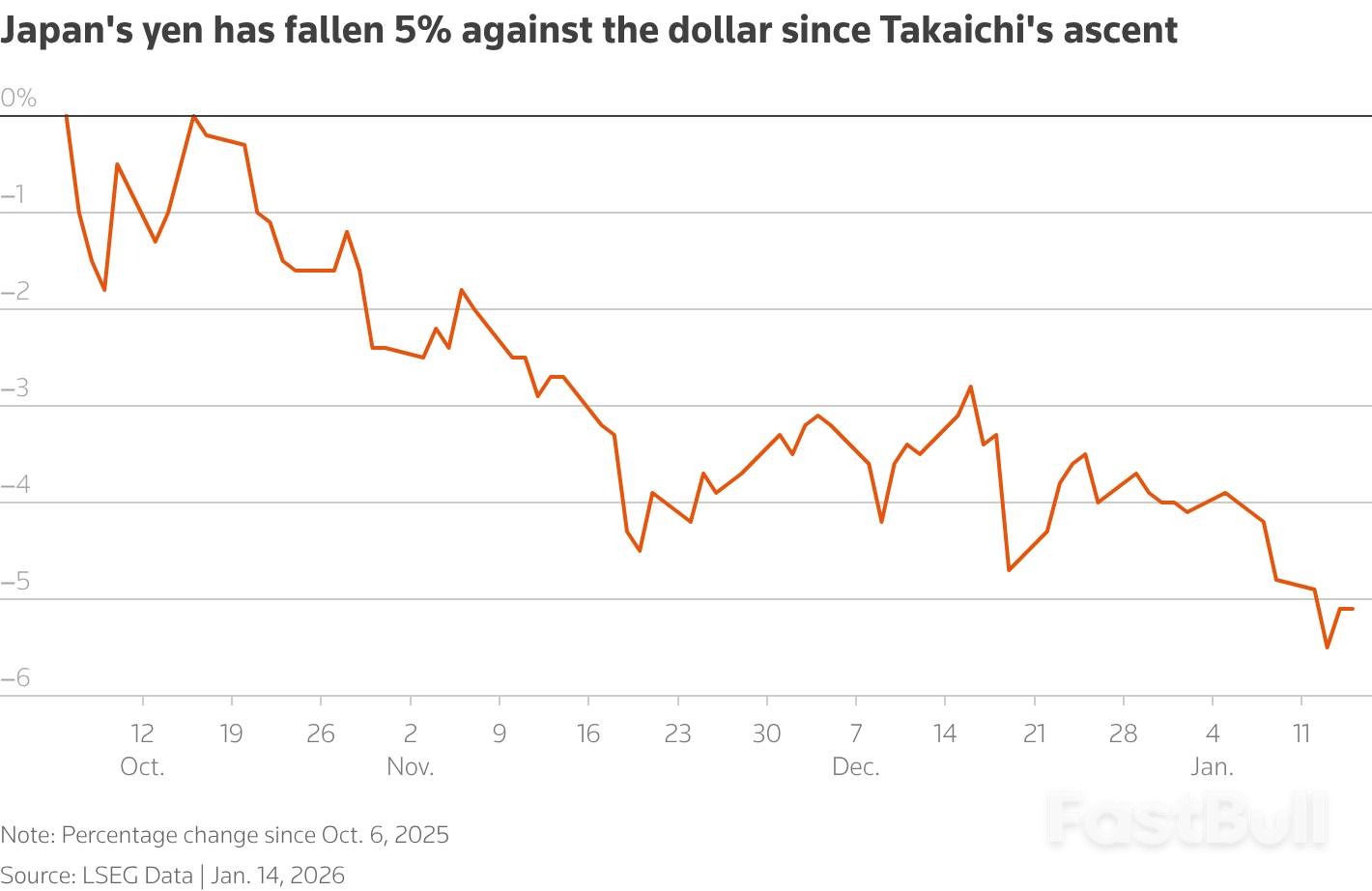
          Figure 1: The Japanese yen has depreciated against the U.S. dollar since October 2025, intensifying pressure on policymakers as it approaches key psychological levels.

          Oil Slides and Safe Havens Cool

          In other markets, oil prices continued their steep decline from the previous session. The rally in safe-haven assets like gold and silver also paused after U.S. President Donald Trump adopted a more measured stance on the unrest in Iran.

          Trump commented that he was told the killings in Iran's crackdown on protests were subsiding and that he did not believe there was a current plan for large-scale executions. His wait-and-see posture eased immediate geopolitical tensions that had previously driven investors toward safer assets.
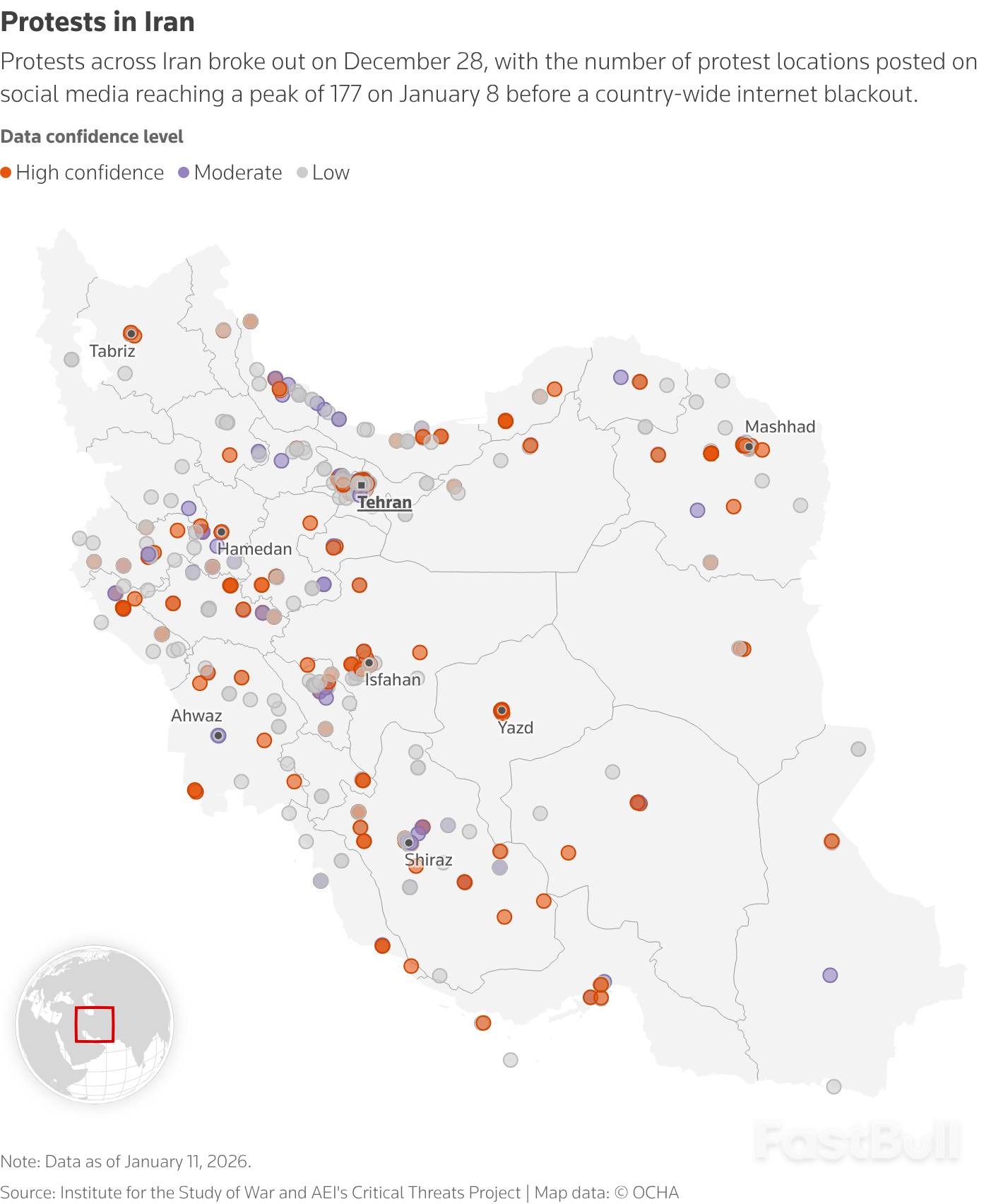
          Figure 2: A map detailing the widespread locations of protests across Iran as of January 11, 2026, a key factor in recent market sentiment and risk assessment.

          Dollar Strengthens as Fed Rate Cut Bets Fade

          The U.S. dollar maintained its position near a six-week high as a string of positive economic data on Thursday led investors to scale back their expectations for Federal Reserve rate cuts this year.

          According to the CME FedWatch tool, markets are now pricing in a 67% probability that the Fed will hold rates steady in April, a significant increase from 37% a month ago. The odds of rates remaining unchanged in June have also risen to 37.5%, up from 17% last month.

          Key Market Movers to Watch

          Traders will be monitoring several key developments that could influence markets on Friday:

          • Speeches from Federal Reserve officials Collins, Bowman, and Jefferson.

          • The release of U.S. industrial production data for December.

          • The National Association of Home Builders' (NAHB) housing market index for January.

          To stay updated on all economic events of today, please check out our Economic calendar
          Risk Warnings and Disclaimers
          You understand and acknowledge that there is a high degree of risk involved in trading. Following any strategies or investment methods may lead to potential losses. The content on the site is provided by our contributors and analysts for information purposes only. You are solely responsible for determining whether any trading assets, securities, strategy, or any other product is suitable for investing based on your own investment objectives and financial situation.
          Add to Favorites
          Share

          Oil Prices Slide As Geopolitical Risk Premium Fades

          Gerik

          Economic

          Commodity

          Prices Ease After Earlier Geopolitical Spike

          Oil prices declined further in Asian trading on Friday, adding to losses from the previous session as market concerns about supply disruptions diminished. Brent crude fell by 21 cents, or 0.3 percent, to $63.55 per barrel, while US West Texas Intermediate dropped 15 cents, also 0.3 percent, to $59.04 per barrel at 0418 GMT.
          Earlier in the week, both benchmarks had climbed to multi month highs following protests in Iran and comments from US President Donald Trump that raised the possibility of military action. Even after the latest decline, Brent remained on track for a fourth consecutive weekly gain, underscoring how elevated prices had been supported by geopolitical tension rather than shifts in physical supply.

          Reduced Strike Risk Calms Markets

          The latest easing in prices followed remarks from Trump late on Thursday, when he said that Tehran’s crackdown on protesters appeared to be easing. This statement helped cool fears of imminent US military strikes on Iran that could have disrupted oil flows from the region.
          According to BMI analysts, Brent prices have retreated from earlier highs but remain above levels seen a week ago. The pullback was linked to Trump’s indication that he would hold off on military action, highlighting how price movements were responding to changes in perceived risk rather than alterations in actual output. Analysts noted that political uncertainty in Iran could still generate volatility as markets continue to assess the potential for supply disruptions.

          Supply Outlook Keeps Bearish Bias Intact

          Despite the recent geopolitical flare up, analysts remain cautious about the medium term price outlook due to expectations of ample supply. Market sentiment has been heavily influenced by headlines, but the underlying balance between supply and demand has shown little sign of tightening.
          Priyanka Sachdeva, senior market analyst at Phillip Nova, said that while sentiment has been driving short term price movements, the impact of such news tends to fade quickly when fundamentals remain comfortable. She added that unless there is a clear rebound in Chinese demand or a significant bottleneck in physical oil flows, prices are likely to stay range bound. In this context, Brent is expected to trade broadly between $57 and $67 per barrel.

          Industry And OPEC Signals On Longer Term Balance

          OPEC said on Wednesday that global oil supply and demand are expected to remain balanced in 2026, with demand growth in 2027 projected to be similar to the pace anticipated for this year. This assessment supports the view that near term market conditions are not pointing to a structural shortage.
          Meanwhile, Shell released its 2026 Energy Security Scenarios on Thursday, presenting a more bullish long term outlook. The company estimated that primary energy demand by 2050 could be 25 percent higher than last year. While this projection highlights potential growth over decades, it does not alter the near term picture of sufficient supply that continues to anchor current oil prices.

          Source: Reuters

          To stay updated on all economic events of today, please check out our Economic calendar
          Risk Warnings and Disclaimers
          You understand and acknowledge that there is a high degree of risk involved in trading. Following any strategies or investment methods may lead to potential losses. The content on the site is provided by our contributors and analysts for information purposes only. You are solely responsible for determining whether any trading assets, securities, strategy, or any other product is suitable for investing based on your own investment objectives and financial situation.
          Add to Favorites
          Share

          Longer Auto Loans Ease Monthly Payments But Quietly Inflate The Real Cost Of Cars

          Gerik

          Economic

          Auto Loan Terms Continue To Stretch

          Car buyers are increasingly turning to longer auto loan terms as rising vehicle prices and elevated interest rates strain affordability. While financial advisors have long suggested keeping auto loans within five years, this guidance is becoming harder to follow in practice. According to Edmunds, more than one in five car loans now run for seven years or longer, marking a record level. Average loan terms reached 69.6 months for new vehicles and 70.1 months for used vehicles in the fourth quarter of 2025.
          Experian data points to a similar pattern. In the third quarter of 2025, nearly 70 percent of new car buyers who financed their purchase took out loans lasting more than five years. Some borrowers committed to terms of seven years or longer, highlighting how extended financing has become normalized rather than exceptional.

          A Decade Long Shift In Borrowing Behavior

          The move toward longer auto loans has been gradual but persistent. Ten years ago, the average new car loan lasted 67.8 months, while used car loans averaged 66.5 months. Today, both figures sit close to 70 months. This shift reflects a correlation between higher vehicle prices and consumer financing choices, rather than a sudden change in borrower preferences.
          Lower monthly payments make vehicles appear more affordable at the point of purchase, but this perception can mask the longer term financial impact. The extended duration increases cumulative interest payments and ties borrowers to debt for longer periods.

          How Longer Loans Increase The True Cost Of A Car

          Auto purchases are commonly negotiated around monthly payments rather than total cost, making longer loan terms appealing. Stretching a loan reduces the monthly bill, but it increases the total amount paid over time because interest accrues for a longer period.
          Consider a new car priced at $50,000, close to the current average. With a $5,000 down payment and a fixed interest rate of 7 percent on the remaining $45,000, the difference between a five year and a seven year loan is substantial. A five year loan results in a monthly payment of $891.05, total interest of $8,463.24, and a total cost of $58,463.24. A seven year loan lowers the monthly payment to $679.17, but raises interest paid to $12,050.33 and the total cost to $62,050.33. The borrower saves about $212 per month but pays nearly $3,600 more overall.
          This outcome reflects a direct mathematical relationship between loan length and interest accumulation, rather than a situational coincidence.

          Rising Financial Risk For Borrowers

          Interest rates on auto loans are partly determined by credit scores, meaning borrowers with weaker credit profiles often face even higher costs. Longer loans also increase the likelihood that borrowers will owe more than the vehicle is worth, a situation known as being underwater. When this happens, selling or trading in the car may require additional cash, and losses can be magnified if the vehicle is stolen or totaled.
          These risks grow over time because vehicles depreciate faster than loan balances decline in the early years of long term loans. The connection between extended loan terms and negative equity follows a predictable financial pattern rather than an isolated outcome.

          Weighing Affordability Against Long Term Impact

          Before committing to a longer loan, buyers are advised to calculate the full cost of extending the term, consider how long they intend to keep the vehicle, and assess whether they could manage payments if their financial situation changes. Lower monthly payments may offer short term relief, but the obligation lasts longer and reduces flexibility.
          If stretching the loan is the only way to afford the car or qualify for financing, it may indicate the vehicle exceeds the buyer’s budget. In such cases, alternatives such as choosing a cheaper model, purchasing a used vehicle, or increasing the down payment can reduce borrowing needs and long term costs.
          Longer auto loans can make higher end cars feel accessible in the short run, but they do so by shifting costs and risk into the future. For many buyers, adjusting expectations or paying more upfront offers a more sustainable path than extending debt over nearly a decade.

          Source: Investopedia

          To stay updated on all economic events of today, please check out our Economic calendar
          Risk Warnings and Disclaimers
          You understand and acknowledge that there is a high degree of risk involved in trading. Following any strategies or investment methods may lead to potential losses. The content on the site is provided by our contributors and analysts for information purposes only. You are solely responsible for determining whether any trading assets, securities, strategy, or any other product is suitable for investing based on your own investment objectives and financial situation.
          Add to Favorites
          Share

          White House Frames 25 Percent Chip Tariffs As Opening Move In Broader Strategy

          Gerik

          Economic

          Tariffs Positioned As A First Stage Measure

          The US administration has characterized the Commerce Department’s decision to impose a 25 percent national security tariff on certain advanced semiconductors as a phase one action. According to a White House official speaking on condition of anonymity, the measure is intended to protect the domestic semiconductor sector and does not represent the full scope of potential trade actions under consideration.
          By labeling the tariff as an opening phase, the administration is indicating that additional steps may follow as discussions continue with other countries and companies involved in the global chip supply chain. This framing suggests a deliberate sequencing of policy tools rather than a single, self contained intervention.

          Link To Domestic Manufacturing Objectives

          President Donald Trump has previously warned that semiconductors not produced in the United States could ultimately face tariffs as high as 100 percent. This earlier threat underscores the administration’s broader objective of rebuilding domestic semiconductor manufacturing capacity. The current 25 percent tariff reflects a calibrated move aligned with that objective, establishing pressure on foreign made chips while leaving room for negotiation and adjustment.
          The relationship between tariff threats and investment decisions reflects a direct policy transmission, where trade barriers are used to influence corporate location choices. At the same time, the phased language implies recognition that abrupt or sweeping measures could disrupt supply chains before alternative capacity is fully in place.

          Negotiations And Future Announcements

          The White House official indicated that further announcements remain possible, contingent on the outcome of talks with trade partners and industry players. This suggests that the tariff regime may evolve in scope or intensity, depending on how negotiations progress and how companies respond.
          By positioning the tariff as part of an ongoing process, the administration is signaling both resolve and flexibility. The approach leaves open the possibility of deeper restrictions while also providing an incentive for cooperation and investment within the United States.

          Source: Reuters

          To stay updated on all economic events of today, please check out our Economic calendar
          Risk Warnings and Disclaimers
          You understand and acknowledge that there is a high degree of risk involved in trading. Following any strategies or investment methods may lead to potential losses. The content on the site is provided by our contributors and analysts for information purposes only. You are solely responsible for determining whether any trading assets, securities, strategy, or any other product is suitable for investing based on your own investment objectives and financial situation.
          Add to Favorites
          Share

          Trump's Greenland Gambit: A China Strategy or Alliance Crisis?

          King Ten

          Remarks of Officials

          China–U.S. Trade War

          Political

          President Donald Trump’s ambition to acquire Greenland has ignited a fierce debate over America's global strategy, exposing deep divisions on how to best deter China in the Indo-Pacific. At a major security forum in Hawaii, this strategic clash was on full display.

          A New Front: Targeting China in the Americas

          Current and former U.S. officials argued that Washington's actions in the Western Hemisphere, from removing Venezuela's president to eyeing Greenland, are part of a coherent plan to weaken Beijing's global reach.

          "Venezuela. Greenland. What is the overarching theme? Denying Chinese access, denying Chinese malign influence," stated Alexander Gray, a former chief of staff on the White House National Security Council during the first Trump administration.

          According to this view, the strategy is fundamentally aligned with tackling the larger challenge from China. By ousting Nicolas Maduro, the U.S. removed one of Beijing's key allies and oil suppliers in Latin America. This has put other regional partners like Cuba—where the U.S. says China operates an intelligence outpost—under renewed pressure. Similarly, American leaders have been open about their goal of controlling Greenland to counter Chinese and Russian military threats emerging from the Arctic.

          Some at the Honolulu Defense Forum suggested these moves demonstrate a powerful capability. Markus Garlauskas of the Scowcroft Center for Strategy and Security noted that operations like the removal of Maduro and strikes on Iranian nuclear facilities showed America's ability "to project power over great distances" with "relatively minimal" cost.

          Allies Question US Leadership and Motives

          Despite these arguments, many participants at the annual gathering of military and government leaders expressed deep unease. Trump's challenge to Denmark, a fellow NATO member, over the sovereignty of Greenland has caused significant friction.

          Lt. Gen. Chun In-bum, a retired South Korean army officer, captured the sentiment of longtime allies. "Now I'm in a situation where I must tell my people that we now have two evils," he said. "And we must choose the lesser evil."

          While most allies quietly supported action against Venezuela's Maduro, the threats over Greenland have prompted a different reaction. Europeans are reportedly establishing a military presence on the island, and the controversy has raised questions about NATO's future. China has seized the opportunity to denounce the U.S. for adhering to "the law of the jungle" and called on nations to respect the UN charter.

          Indo-Pacific Strategy Faces Scrutiny

          Discussions in Hawaii covered methods to counter China's military expansion, including missile defense, artificial intelligence, and strengthening the defense industrial base. However, U.S. officials largely avoided direct criticism of Beijing, navigating a delicate trade truce ahead of a planned meeting between Trump and Chinese leader Xi Jinping in April.

          This cautious approach has worried observers. Ely Ratner, who serves as assistant secretary of defense for Indo-Pacific Security Affairs in the Biden administration, argued that the Trump administration wasn't truly focused on strategic competition with China.

          "You can't tell me that you're prioritizing the China challenge if you're not passing the grade in the Indo-Pacific," he stated.

          U.S. military leaders at the forum pushed back, expressing strong support for America's alliance network in Asia. When asked about the impact of the Greenland issue, Indo-Pacific Command Commander Samuel Paparo said, "I think we're all going to be scrupulous about our alliances and partnerships. I think we're going to move together."

          Taiwan: The Unwavering Focus of Military Planners

          A central theme of the forum was China's ambition to gain control of Taiwan. Many U.S. military planners are focused on the 2027 target set by Xi Jinping for the People's Liberation Army to become a "world-class military," seeing it as a potential timeline for using force—a notion Chinese officials have dismissed.

          Defense officials highlighted the urgent need for Taiwan to possess robust defense systems, including:

          • Missile defenses capable of withstanding cyber and electromagnetic attacks.

          • Resilient energy infrastructure and supply lines to defeat a potential maritime blockade.

          Underscoring the high stakes, Gen. Xavier Brunson, the top U.S. military official in South Korea, said that U.S. Forces Korea was prepared to contribute in any conflict over Taiwan if called upon. South Korea hosts the largest U.S. military base in Asia.

          Power Projection vs. The Rules-Based Order

          The debate ultimately circled back to a fundamental contradiction. Can the U.S. project strength and uphold a global order at the same time? Trump's challenge to a NATO ally over Greenland has raised serious doubts about America's commitment to international law.

          Courtney Stewart, a former Pentagon official now at the Australian Strategic Policy Institute, framed the dilemma sharply. "It's very hard to understand how America would support a rules-based order in this region if you can't uphold a rules-based order in the North Atlantic by challenging the sovereignty of Denmark's claim on Greenland," she said.

          "America's always been viewed as sort of on the moral high ground and the good guy," Stewart added. "And this administration sees that that's not paying off for them, and maybe we need a bit more respect and we actually can throw our weight around a bit more."

          Risk Warnings and Disclaimers
          You understand and acknowledge that there is a high degree of risk involved in trading. Following any strategies or investment methods may lead to potential losses. The content on the site is provided by our contributors and analysts for information purposes only. You are solely responsible for determining whether any trading assets, securities, strategy, or any other product is suitable for investing based on your own investment objectives and financial situation.
          Add to Favorites
          Share

          Poland Poised for February Rate Cut Amid Low Inflation

          Nathaniel Wright

          Remarks of Officials

          Economic

          Central Bank

          A Polish central banker has signaled that the country could resume cutting interest rates as early as next month, citing a strengthening outlook for continued low inflation.

          Ludwik Kotecki, a member of Poland's Monetary Policy Council (MPC), suggested a quarter-point rate reduction could be on the table in February.

          "It is becoming increasingly clear that there is room for further rapid interest rate cuts," Kotecki said in an interview with Bloomberg. "I assume that in February the MPC will resume its activities from last year — the outlook for inflation is increasingly optimistic."

          Recent Policy and Inflation Data

          The 10-member MPC kept its benchmark interest rate unchanged at 4% this week. This hold follows a series of aggressive cuts last year, where policymakers lowered rates by a total of 175 basis points across six separate moves.

          The easing cycle was prompted by a steady decline in inflation. The inflation rate fell within the central bank's tolerance range and ended 2023 at 2.4%, just under the medium-term target.

          Diverging Views on Timing

          While Kotecki is eyeing a move next month, the council's leadership has indicated a slightly more flexible timeline.

          Governor Adam Glapinski confirmed on Thursday that the slowdown in inflation appears sustainable and that there is "some scope" for further rate reductions. However, he did not commit to a specific date, suggesting that an easing could occur in February, March, or potentially even April.

          The Long-Term Rate Outlook

          Looking further ahead, Kotecki sees potential for at least 50 basis points in rate cuts over the course of 2026. He warned that the primary risk may soon shift, noting "it may turn out that actual inflation deviates too much from the target — this time on the low side." This suggests a growing concern that inflation could fall too far below the central bank's goal, justifying further easing.

          To stay updated on all economic events of today, please check out our Economic calendar
          Risk Warnings and Disclaimers
          You understand and acknowledge that there is a high degree of risk involved in trading. Following any strategies or investment methods may lead to potential losses. The content on the site is provided by our contributors and analysts for information purposes only. You are solely responsible for determining whether any trading assets, securities, strategy, or any other product is suitable for investing based on your own investment objectives and financial situation.
          Add to Favorites
          Share

          US & Japan Deepen Military Alliance to Counter China

          Isaac Bennett

          Remarks of Officials

          Political

          The United States and Japan have agreed to significantly strengthen their defense partnership, announcing plans to jointly produce missiles and expand military drills in a direct response to rising pressure from China.

          The new agreements were solidified during a meeting in Washington between Japanese Defense Minister Shinjiro Koizumi and Pentagon chief Pete Hegseth. The two nations also committed to closer cooperation on securing supply chains for critical minerals.

          Diplomatic Tensions Drive Military Strategy

          This move comes amid a heated diplomatic dispute between Tokyo and Beijing. The conflict was sparked in November when Japanese Prime Minister Sanae Takaichi suggested that Japan might intervene militarily if China were to attack Taiwan.

          China, which considers Taiwan a part of its territory, reacted sharply by blocking exports of "dual-use" items with potential military applications to Japan. This has raised concerns in Tokyo that Beijing could also restrict its supply of essential rare earths.

          A statement from Japan's defense ministry emphasized that the alliance remains "absolutely unwavering" in a security environment that is "rapidly growing severe."

          Key Areas of Enhanced Cooperation

          The bolstered alliance focuses on two critical areas: advanced weaponry and operational readiness.

          Joint Missile Production

          The agreement formalizes plans to advance the joint production of key defense systems, including:

          • Air-to-air missiles

          • Surface-to-air interceptors

          This step aims to enhance Japan's defensive capabilities and streamline logistics between the two allied forces.

          Expanded Military Exercises

          Japan and the U.S. will also expand the scope and complexity of their joint military drills. The plan calls for "more sophisticated and practical joint drills" to be held in various locations, with a specific focus on Japan's Southwest region.

          The Strategic Importance of Japan's Southwest

          Strengthening defenses around the Southwest islands, which include Okinawa, is a top priority for Japan's military planning.

          Okinawa hosts the majority of American military bases in Japan and serves as a vital U.S. outpost for monitoring China, the Taiwan Strait, and the Korean peninsula. Both Tokyo and Washington have repeatedly stressed the island's strategic importance for regional stability.

          In line with this focus, Prime Minister Takaichi's government approved a record nine trillion yen in defense spending for the upcoming fiscal year in December.

          During his meeting with Koizumi, Pentagon chief Pete Hegseth praised Japan's increased budget. According to the U.S. Department of War, he called it "hard-nosed realism; a practical, common-sense approach that puts both of our vital national interests together."

          The formal discussions were preceded by a joint morning workout. "The American military-style training was very tough," Koizumi later wrote on X. "But I did my best to labor my way through it, telling myself: 'this is all for the sake of strengthening the Japan-US alliance.'"

          Risk Warnings and Disclaimers
          You understand and acknowledge that there is a high degree of risk involved in trading. Following any strategies or investment methods may lead to potential losses. The content on the site is provided by our contributors and analysts for information purposes only. You are solely responsible for determining whether any trading assets, securities, strategy, or any other product is suitable for investing based on your own investment objectives and financial situation.
          Add to Favorites
          Share
          FastBull
          Copyright © 2026 FastBull Ltd

          728 RM B 7/F GEE LOK IND BLDG NO 34 HUNG TO RD KWUN TONG KLN HONG KONG

          TelegramInstagramTwitterfacebooklinkedin
          App Store Google Play Google Play
          Products
          Charts

          Chats

          Q&A with Experts
          Screeners
          Economic Calendar
          Data
          Tools
          Membership
          Features
          Function
          Markets
          Copy Trading
          Latest Signals
          Contests
          News
          Analysis
          24/7
          Columns
          Education
          Company
          Careers
          About Us
          Contact Us
          Advertising
          Help Center
          Feedback
          User Agreement
          Privacy Policy
          Personal Information Protection Statement
          Business

          White Label

          Data API

          Web Plug-ins

          Poster Maker

          Affiliate Program

          Risk Disclosure

          The risk of loss in trading financial instruments such as stocks, FX, commodities, futures, bonds, ETFs and crypto can be substantial. You may sustain a total loss of the funds that you deposit with your broker. Therefore, you should carefully consider whether such trading is suitable for you in light of your circumstances and financial resources.

          No decision to invest should be made without thoroughly conducting due diligence by yourself or consulting with your financial advisors. Our web content might not suit you since we don't know your financial conditions and investment needs. Our financial information might have latency or contain inaccuracy, so you should be fully responsible for any of your trading and investment decisions. The company will not be responsible for your capital loss.

          Without getting permission from the website, you are not allowed to copy the website's graphics, texts, or trademarks. Intellectual property rights in the content or data incorporated into this website belong to its providers and exchange merchants.

          Not Logged In

          Log in to access more features

          FastBull Membership

          Not yet

          Purchase

          Become a signal provider
          Help Center
          Customer Service
          Dark Mode
          Price Up/Down Colors

          Log In

          Sign Up

          Position
          Layout
          Fullscreen
          Default to Chart
          The chart page opens by default when you visit fastbull.com