• Trade
  • Markets
  • Copy
  • Contests
  • News
  • 24/7
  • Calendar
  • Q&A
  • Chats
Trending
Screeners
SYMBOL
LAST
BID
ASK
HIGH
LOW
NET CHG.
%CHG.
SPREAD
SPX
S&P 500 Index
6836.30
6836.30
6836.30
6878.28
6827.18
-34.10
-0.50%
--
DJI
Dow Jones Industrial Average
47686.98
47686.98
47686.98
47971.51
47611.93
-268.00
-0.56%
--
IXIC
NASDAQ Composite Index
23488.95
23488.95
23488.95
23698.93
23455.05
-89.17
-0.38%
--
USDX
US Dollar Index
99.020
99.100
99.020
99.160
98.730
+0.070
+ 0.07%
--
EURUSD
Euro / US Dollar
1.16392
1.16400
1.16392
1.16717
1.16162
-0.00034
-0.03%
--
GBPUSD
Pound Sterling / US Dollar
1.33264
1.33273
1.33264
1.33462
1.33053
-0.00048
-0.04%
--
XAUUSD
Gold / US Dollar
4190.65
4191.06
4190.65
4218.85
4175.92
-7.26
-0.17%
--
WTI
Light Sweet Crude Oil
58.612
58.642
58.612
60.084
58.495
-1.197
-2.00%
--

Community Accounts

Signal Accounts
--
Profit Accounts
--
Loss Accounts
--
View More

Become a signal provider

Sell trading signals to earn additional income

View More

Guide to Copy Trading

Get started with ease and confidence

View More

Signal Accounts for Members

All Signal Accounts

Best Return
  • Best Return
  • Best P/L
  • Best MDD
Past 1W
  • Past 1W
  • Past 1M
  • Past 1Y

All Contests

  • All
  • Trump Updates
  • Recommend
  • Stocks
  • Cryptocurrencies
  • Central Banks
  • Featured News
Top News Only
Share

Bessent: We Are Still Working On India Trade Deal

Share

Brent Crude Futures Settle At $62.49/Bbl, Down $1.26, 1.98 Percent

Share

Trump: Farming Equipment Has Gotten Too Expensive

Share

Trump: We Will Take Off A Lot Of Environment Rules That Affect Tractor Companies

Share

Kremlin Says Still No Word On US-Ukraine Talks In Florida

Share

Trump: USA Will Take Small Portion Of Tariff Revenues To Give It To Farmers

Share

Trump: Taking Action To Protect Farmers

Share

Nymex January Gasoline Futures Closed At $1.7981 Per Gallon, And Nymex January Heating Oil Futures Closed At $2.2982 Per Gallon

Share

USA Crude Oil Futures Settle At $58.88/Bbl, Down $1.20, 2.00 Percent

Share

Netflix Co-CEO On Warner Bros Deal: We Are Very Confident That Regulators Should And Will Approve It

Share

Alina Habba, The Interim Federal Prosecutor For New Jersey, Has Resigned. This Follows An Appeals Court Ruling That President Trump's Nomination Of Her Was Illegitimate

Share

Netflix Co-CEO On Paramount Skydance Bid For Warner Bros Says The Move Was Entirely Expected- UBS Conf

Share

U.S. Senate Democratic Member And Antitrust Activist Warren Stated That Paramount Skydance's Hostile Takeover Offer Triggered A "Level 5 Antitrust Alert."

Share

Benin Government: Coup Plotters Kidnapped Two Senior Military Officials Who Were Later Freed

Share

Canada: G7 Finance Ministers Discussed Export Controls And Critical Minerals In Call

Share

Benin Government: Nigeria Carried Out Air Strikes To Help Thwart Coup Bid

Share

Fitch: Expects General Government (Gg) Deficit To Fall Modestly In Canada And But Rise Modestly In USA In 2026

Share

An Important Point Of Consensus Was Concern Regarding Application Of Non-Market Policies, Including Export Controls, To Critical Minerals Supply Chains

Share

Fitch: Despite Full-Year Impact Of Tariffs, We Expect USA Fiscal Deficit To Widen In 2026 Due To Additional Tax Cuts Under One Big Beautiful Bill Act

Share

Private Equity Firm Cinven Has Signed A £190 Million Deal To Acquire A Majority Stake In UK Advisory Firm Flint Global

TIME
ACT
FCST
PREV
France Trade Balance (SA) (Oct)

A:--

F: --

P: --
Euro Zone Employment YoY (SA) (Q3)

A:--

F: --

P: --
Canada Part-Time Employment (SA) (Nov)

A:--

F: --

P: --

Canada Unemployment Rate (SA) (Nov)

A:--

F: --

P: --

Canada Full-time Employment (SA) (Nov)

A:--

F: --

P: --

Canada Labor Force Participation Rate (SA) (Nov)

A:--

F: --

P: --

Canada Employment (SA) (Nov)

A:--

F: --

P: --

U.S. PCE Price Index MoM (Sept)

A:--

F: --

P: --

U.S. Personal Income MoM (Sept)

A:--

F: --

P: --

U.S. Core PCE Price Index MoM (Sept)

A:--

F: --

P: --

U.S. PCE Price Index YoY (SA) (Sept)

A:--

F: --

P: --

U.S. Core PCE Price Index YoY (Sept)

A:--

F: --

P: --

U.S. Personal Outlays MoM (SA) (Sept)

A:--

F: --

P: --
U.S. 5-10 Year-Ahead Inflation Expectations (Dec)

A:--

F: --

P: --

U.S. Real Personal Consumption Expenditures MoM (Sept)

A:--

F: --

P: --
U.S. Weekly Total Rig Count

A:--

F: --

P: --

U.S. Weekly Total Oil Rig Count

A:--

F: --

P: --

U.S. Consumer Credit (SA) (Oct)

A:--

F: --

P: --
China, Mainland Foreign Exchange Reserves (Nov)

A:--

F: --

P: --

Japan Trade Balance (Oct)

A:--

F: --

P: --

Japan Nominal GDP Revised QoQ (Q3)

A:--

F: --

P: --

China, Mainland Imports YoY (CNH) (Nov)

A:--

F: --

P: --

China, Mainland Exports (Nov)

A:--

F: --

P: --

China, Mainland Imports (CNH) (Nov)

A:--

F: --

P: --

China, Mainland Trade Balance (CNH) (Nov)

A:--

F: --

P: --

China, Mainland Exports YoY (USD) (Nov)

A:--

F: --

P: --

China, Mainland Imports YoY (USD) (Nov)

A:--

F: --

P: --

Germany Industrial Output MoM (SA) (Oct)

A:--

F: --

P: --
Euro Zone Sentix Investor Confidence Index (Dec)

A:--

F: --

P: --

Canada National Economic Confidence Index

A:--

F: --

P: --

U.K. BRC Like-For-Like Retail Sales YoY (Nov)

--

F: --

P: --

U.K. BRC Overall Retail Sales YoY (Nov)

--

F: --

P: --

Australia Overnight (Borrowing) Key Rate

--

F: --

P: --

RBA Rate Statement
RBA Press Conference
Germany Exports MoM (SA) (Oct)

--

F: --

P: --

U.S. NFIB Small Business Optimism Index (SA) (Nov)

--

F: --

P: --

Mexico 12-Month Inflation (CPI) (Nov)

--

F: --

P: --

Mexico Core CPI YoY (Nov)

--

F: --

P: --

Mexico PPI YoY (Nov)

--

F: --

P: --

U.S. Weekly Redbook Index YoY

--

F: --

P: --

U.S. JOLTS Job Openings (SA) (Oct)

--

F: --

P: --

China, Mainland M1 Money Supply YoY (Nov)

--

F: --

P: --

China, Mainland M0 Money Supply YoY (Nov)

--

F: --

P: --

China, Mainland M2 Money Supply YoY (Nov)

--

F: --

P: --

U.S. EIA Short-Term Crude Production Forecast For The Year (Dec)

--

F: --

P: --

U.S. EIA Natural Gas Production Forecast For The Next Year (Dec)

--

F: --

P: --

U.S. EIA Short-Term Crude Production Forecast For The Next Year (Dec)

--

F: --

P: --

EIA Monthly Short-Term Energy Outlook
U.S. API Weekly Gasoline Stocks

--

F: --

P: --

U.S. API Weekly Cushing Crude Oil Stocks

--

F: --

P: --

U.S. API Weekly Crude Oil Stocks

--

F: --

P: --

U.S. API Weekly Refined Oil Stocks

--

F: --

P: --

South Korea Unemployment Rate (SA) (Nov)

--

F: --

P: --

Japan Reuters Tankan Non-Manufacturers Index (Dec)

--

F: --

P: --

Japan Reuters Tankan Manufacturers Index (Dec)

--

F: --

P: --

Japan Domestic Enterprise Commodity Price Index MoM (Nov)

--

F: --

P: --

Japan Domestic Enterprise Commodity Price Index YoY (Nov)

--

F: --

P: --

China, Mainland PPI YoY (Nov)

--

F: --

P: --

China, Mainland CPI MoM (Nov)

--

F: --

P: --

Italy Industrial Output YoY (SA) (Oct)

--

F: --

P: --

Q&A with Experts
    • All
    • Chatrooms
    • Groups
    • Friends
    Connecting
    .
    .
    .
    Type here...
    Add Symbol or Code

      No matching data

      All
      Trump Updates
      Recommend
      Stocks
      Cryptocurrencies
      Central Banks
      Featured News
      • All
      • Russia-Ukraine Conflict
      • Middle East Flashpoint
      • All
      • Russia-Ukraine Conflict
      • Middle East Flashpoint
      Search
      Products

      Charts Free Forever

      Chats Q&A with Experts
      Screeners Economic Calendar Data Tools
      Membership Features
      Data Warehouse Market Trends Institutional Data Policy Rates Macro

      Market Trends

      Market Sentiment Order Book Forex Correlations

      Top Indicators

      Charts Free Forever
      Markets

      News

      News Analysis 24/7 Columns Education
      From Institutions From Analysts
      Topics Columnists

      Latest Views

      Latest Views

      Trending Topics

      Top Columnists

      Latest Update

      Signals

      Copy Rankings Latest Signals Become a signal provider AI Rating
      Contests
      Brokers

      Overview Brokers Assessment Rankings Regulators News Claims
      Broker listing Forex Brokers Comparison Tool Live Spread Comparison Scam
      Q&A Complaint Scam Alert Videos Tips to Detect Scam
      More

      Business
      Events
      Careers About Us Advertising Help Center

      White Label

      Data API

      Web Plug-ins

      Affiliate Program

      Awards Institution Evaluation IB Seminar Salon Event Exhibition
      Vietnam Thailand Singapore Dubai
      Fans Party Investment Sharing Session
      FastBull Summit BrokersView Expo
      Recent Searches
        Top Searches
          Markets
          News
          Analysis
          User
          24/7
          Economic Calendar
          Education
          Data
          • Names
          • Latest
          • Prev

          View All

          No data

          Scan to Download

          Faster Charts, Chat Faster!

          Download App
          English
          • English
          • Español
          • العربية
          • Bahasa Indonesia
          • Bahasa Melayu
          • Tiếng Việt
          • ภาษาไทย
          • Français
          • Italiano
          • Türkçe
          • Русский язык
          • 简中
          • 繁中
          Open Account
          Search
          Products
          Charts Free Forever
          Markets
          News
          Signals

          Copy Rankings Latest Signals Become a signal provider AI Rating
          Contests
          Brokers

          Overview Brokers Assessment Rankings Regulators News Claims
          Broker listing Forex Brokers Comparison Tool Live Spread Comparison Scam
          Q&A Complaint Scam Alert Videos Tips to Detect Scam
          More

          Business
          Events
          Careers About Us Advertising Help Center

          White Label

          Data API

          Web Plug-ins

          Affiliate Program

          Awards Institution Evaluation IB Seminar Salon Event Exhibition
          Vietnam Thailand Singapore Dubai
          Fans Party Investment Sharing Session
          FastBull Summit BrokersView Expo

          World Bank Lifts Kenya's Growth Forecast On Construction Sector Optimism

          Justin

          Economic

          Summary:

          The World Bank lifted Kenya's economic growth forecast for this year to almost 5% on Monday, citing a pick up in the construction sector in East Africa's largest economy.

          The World Bank lifted Kenya's economic growth forecast for this year to almost 5% on Monday, citing a pick up in the construction sector in East Africa's largest economy.

          Some of Kenya's main industries like construction suffered last year, partly as concerns mounted about the government's finances, but the trend has begun to reverse, the development lender said.

          "Signs of recovery are emerging," a new report on Kenya's economy said, adding that the rebound in construction in the first half of 2025 had offset a slowdown in manufacturing.

          The result is that the economy is now projected to grow by 4.9% this year, up from the World Bank's May forecast of 4.5%, and maintain that rate of growth over the next two years.

          Risks to the outlook stem from international trade uncertainty, including the expiry of a U.S. trade deal with the region, and ongoing fiscal consolidation that could curb government spending, the report said.

          Government officials say Kenya's economic expansion has also been negatively affected by a heavy public debt burden characterised by high annual repayments that have absorbed much of its revenue.

          The government has turned to measures like loans securitised on a motorists' road maintenance levy on petrol prices to raise funds to pay road contractors who had abandoned sites last year due to lack of payment.

          It is also in talks with the International Monetary Fund to secure a new financial support programme. Differences remain, however, including over whether the securitised borrowing should be classified as government debt or not.

          Monday's World Bank report laid out a set of reforms the government should carry out to boost competition and support investment and economic growth.

          Barriers to competition include the presence of more than 200 state owned firms that benefit from undue advantages, distorting competition, and restrictions on foreign investments, it said.

          "There is significant room to make Kenya's regulatory framework less restrictive to competition," the lender said.
          Source: TradingView

          To stay updated on all economic events of today, please check out our Economic calendar
          Risk Warnings and Disclaimers
          You understand and acknowledge that there is a high degree of risk involved in trading. Following any strategies or investment methods may lead to potential losses. The content on the site is provided by our contributors and analysts for information purposes only. You are solely responsible for determining whether any trading assets, securities, strategy, or any other product is suitable for investing based on your own investment objectives and financial situation.
          Add to Favorites
          Share

          US, Ukraine To Continue Work On 'refined' Peace Plan To End War With Russia

          Justin

          Economic

          Political

          Russia-Ukraine Conflict

          · US and Ukraine draft refined peace framework in Geneva talks
          · Trump's peace plan criticized as favoring Russia, faces opposition
          · European allies propose counter-plan with US security guarantee for Ukraine

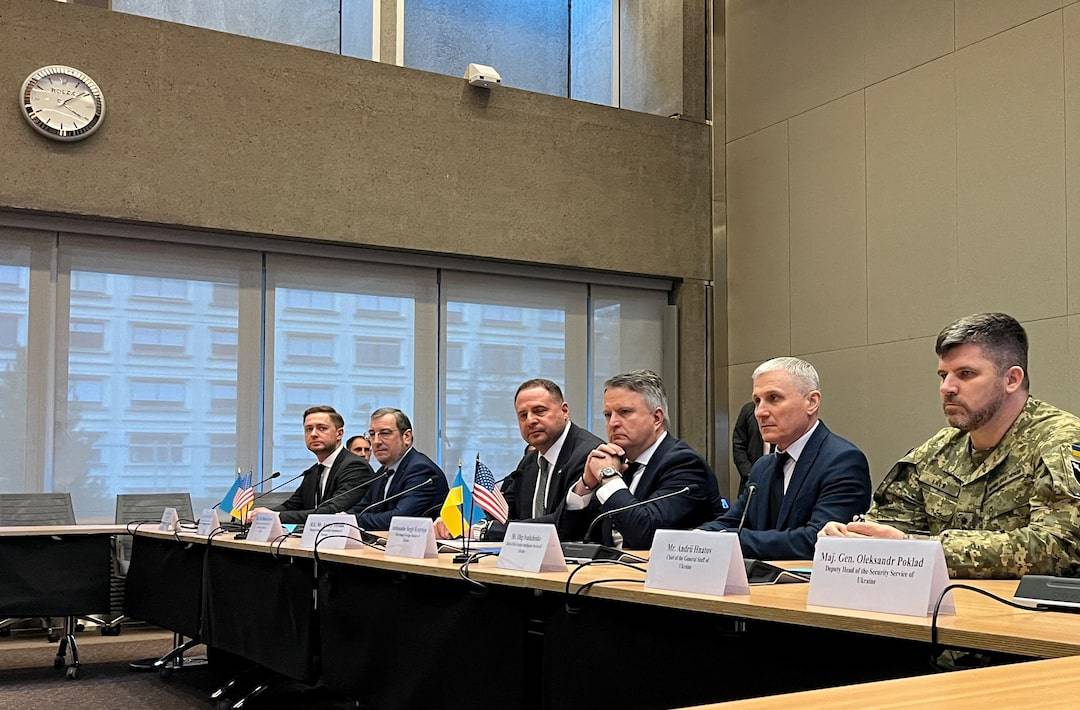
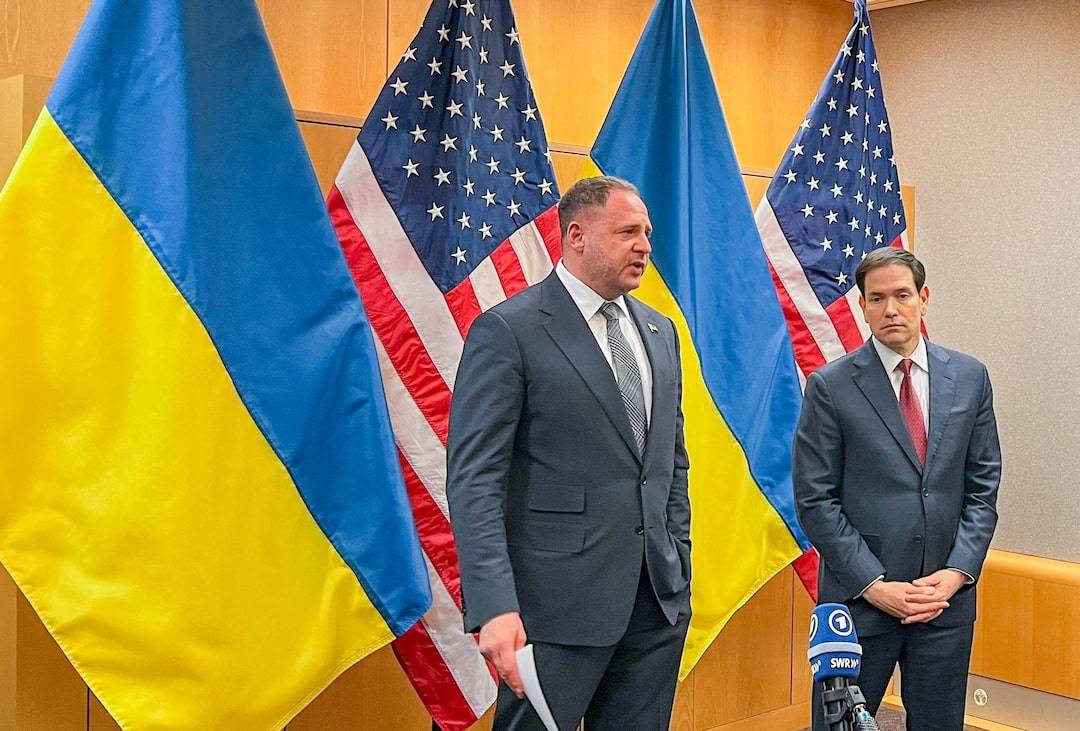
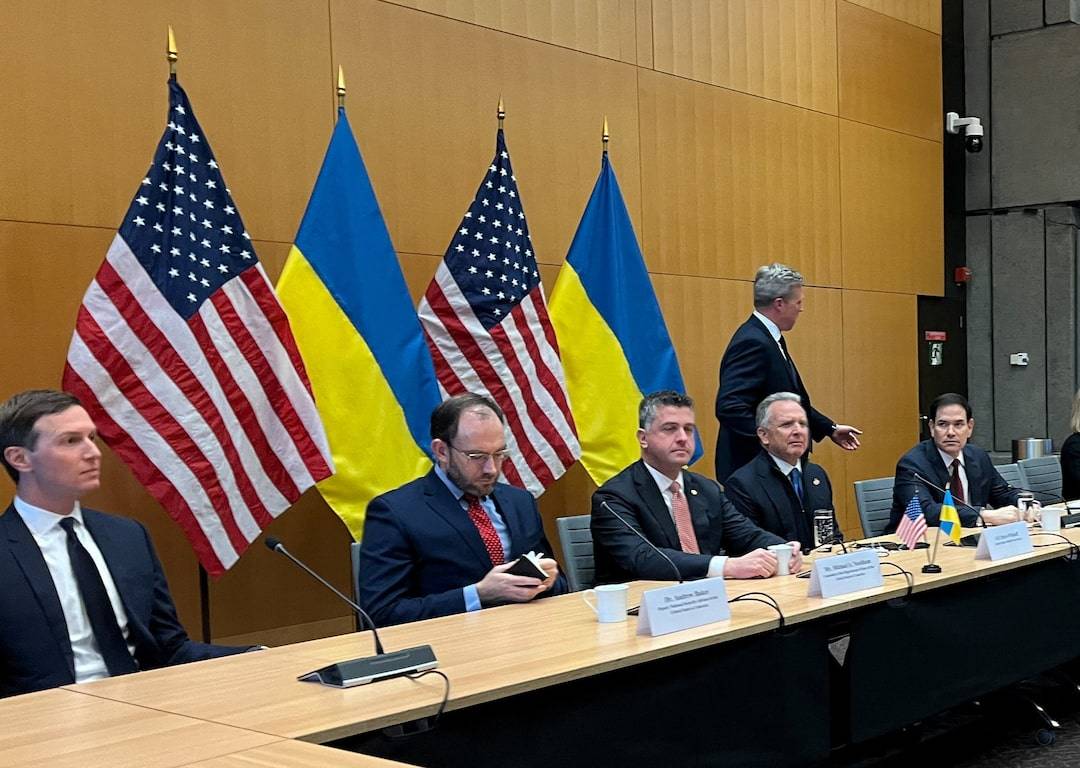
          The United States and Ukraine were set to continue work on Monday on a plan to end the war with Russia after agreeing to modify an earlier proposal that was widely seen as too favorable to Moscow.

          The two sides said in a joint statement they had drafted a "refined peace framework" after talks in Geneva on Sunday, although they did not provide specifics.

          The White House separately said the Ukrainian delegation had told them it "reflects their national interests" and "addresses their core strategic requirements," although Kyiv did not issue a statement of its own.

          It was not clear how the updated plan would handle a host of issues, including how to guarantee Ukraine's security against ongoing threats from Russia. The United States and Ukraine said they would continue "intensive work" ahead of a Thursday deadline, although U.S. Secretary of State Marco Rubio, who led the American delegation during the talks, was flying back to Washington late on Sunday.

          U.S. President Donald Trump has kept up the pressure on Ukraine to reach a deal. On Sunday, he said Ukraine had shown "zero gratitude" for American efforts over the war, prompting Ukrainian officials to emphasize their thanks for Trump's support.

          Trump previously set a Thursday deadline for Ukrainian President Volodymyr Zelenskiy to accept a peace plan, but Rubio said on Sunday that deadline might not be set in stone.

          Zelenskiy could travel to the United States as soon as this week to discuss the most sensitive aspects of the plan with Trump, according to sources familiar with the matter.

          The initial 28-point proposal put forth by the United States last week called on Ukraine to cede territory, accept limits on its military and abandon its ambitions to join NATO. Those terms would amount to capitulation for many Ukrainians after nearly four years of fighting in Europe's deadliest conflict since World War II.

          The original plan came as a surprise to U.S. officials across the administration, and two sources said it was crafted at an October meeting in Miami that included special envoy Steve Witkoff, Trump's son-in-law Jared Kushner, and Kirill Dmitriev, a Russian envoy who is under U.S. sanctions.

          EUROPEAN NATIONS ISSUE COUNTER-PROPOSAL

          Democratic lawmakers have criticized it as essentially a Russian wish list, but Rubio has insisted that Washington authored the plan with input from both sides in the war.

          European allies said they were not involved in crafting the original plan, and they released a counter-proposal on Sunday that would ease some of the proposed territorial concessions and include a NATO-style security guarantee from the United States for Ukraine if it is attacked.

          The talks come as Russia has slowly gained ground in some regions, while Ukraine's power and gas facilities have been pummeled by drone and missile attacks, leaving millions of people without water, heating and power for hours each day.

          Zelenskiy has also been under pressure at home, as a major corruption scandal has ensnared some of his ministers, stirring fresh anger at pervasive graft. That has complicated the country's efforts to secure funding to keep its economy afloat.

          Kyiv had taken heart in recent weeks after the United States tightened on Russia's oil sector, the main source of funding for the war, while its own long-range drone and missile strikes have caused considerable damage to the industry.

          Source: Reuters

          To stay updated on all economic events of today, please check out our Economic calendar
          Risk Warnings and Disclaimers
          You understand and acknowledge that there is a high degree of risk involved in trading. Following any strategies or investment methods may lead to potential losses. The content on the site is provided by our contributors and analysts for information purposes only. You are solely responsible for determining whether any trading assets, securities, strategy, or any other product is suitable for investing based on your own investment objectives and financial situation.
          Add to Favorites
          Share

          Gold Stabilizes Amid Uncertainty Over Fed Policy Path and Delayed Economic Signals

          Gerik

          Economic

          Commodity

          Market Balances Fed Rate Cut Expectations As Gold Holds Firm

          Gold prices remained stable in early Monday trading across Asia, reflecting a market cautiously assessing the Federal Reserve's next move on interest rates. The commodity has entered a holding pattern, driven by a blend of dovish remarks from influential Fed officials and a lack of fresh economic data due to the recent U.S. government shutdown.
          On Friday, gold pared earlier losses after New York Fed President John Williams suggested there is room for a near-term cut in borrowing costs. His comment stood in contrast to the more guarded tone from other Federal Reserve officials, revealing a policy divide that has left investors guessing. Despite Williams' supportive remarks, gold ended Friday’s session slightly lower, showing that market confidence remains tentative.

          Economic Data Vacuum Keeps Traders Cautious

          The 43-day U.S. government shutdown has delayed several key data releases that typically inform interest rate expectations. Crucial figures such as September retail sales and producer price data due Tuesday, and weekly jobless claims on Wednesday are now expected to provide clearer insight into the current health of the economy. In the absence of this data, market sentiment remains speculative.
          Fed fund futures currently reflect a roughly 60% probability of a 25-basis-point rate cut at the next FOMC meeting. This aligns with growing expectations that the Federal Reserve may take action to counteract softening labor conditions and address persistent macroeconomic headwinds, particularly with inflationary pressures showing signs of moderation.

          Technical Pause After Record Highs

          From a price trend perspective, gold has entered a consolidation phase following its meteoric rise to an all-time high above $4,380 per ounce on October 20. As of Monday morning in Singapore, spot gold was quoted at $4,064.32 per ounce, largely unchanged, after losing 0.3% in the previous session. The Bloomberg Dollar Spot Index gained 0.1%, slightly reducing gold’s upside due to their inverse correlation.
          Despite the current plateau, gold remains one of the top-performing assets in 2025, gaining approximately 55% year-to-date. This performance has been largely supported by geopolitical instability, ongoing trade tensions, and worsening fiscal balances in key economies factors that have historically driven flight-to-safety behavior and enhanced the appeal of bullion.

          Gold’s Sensitivity to Monetary Signals

          The link between rate expectations and gold prices is causal rather than merely correlated. Lower interest rates tend to reduce the opportunity cost of holding non-yielding assets like gold, making them more attractive relative to interest-bearing instruments. Thus, dovish Fed commentary particularly from a central figure like John Williams has a direct impact on bullion sentiment.
          However, this causal influence is currently diluted by data uncertainty. Without timely inflation or employment reports, markets cannot fully validate Fed signals, which introduces a feedback gap and suppresses stronger directional moves in gold.

          Awaiting Clarity in a Foggy Macro Landscape

          Going forward, the short-term trajectory of gold will depend heavily on this week’s economic releases and any further policy hints from Fed officials. If upcoming data confirms economic cooling or rising joblessness, the likelihood of a December rate cut will increase, strengthening gold's upside momentum.
          At the same time, traders remain wary of premature pricing, especially given that inflation data like CPI will only arrive after the Fed’s December meeting. This timing gap could either force the Fed to act preemptively or maintain a holding stance, both scenarios carrying implications for gold.
          Gold’s stability at current elevated levels reflects a market in transition: driven by policy speculation, constrained by delayed data, and bolstered by systemic risk factors. As investors await a clearer picture from upcoming U.S. economic indicators, the metal’s next move hinges on whether the Fed reinforces or retreats from its softening stance. In the meantime, gold remains a barometer of uncertainty both economic and geopolitical.

          Source: Bloomberg

          To stay updated on all economic events of today, please check out our Economic calendar
          Risk Warnings and Disclaimers
          You understand and acknowledge that there is a high degree of risk involved in trading. Following any strategies or investment methods may lead to potential losses. The content on the site is provided by our contributors and analysts for information purposes only. You are solely responsible for determining whether any trading assets, securities, strategy, or any other product is suitable for investing based on your own investment objectives and financial situation.
          Add to Favorites
          Share

          Germany Eyes Bitcoin Buyback At 35% Drop

          Samantha Luan

          Forex

          Cryptocurrency

          · Germany sold Bitcoin earlier this year at higher prices
          · A 35% BTC dip would allow a repurchase at original rates
          · Strategic timing could benefit Germany's crypto holdings

          Earlier this year, the German government made headlines for selling off a large chunk of its Bitcoin holdings. Now, the possibility of a price correction in the crypto market may give Germany a rare chance to buy those coins back — and at the exact prices they sold them for.

          Why a 35% Drop Matters

          Bitcoin has seen a strong rally throughout the year, pushing prices well above where they were when Germany decided to sell. But if the market were to fall by roughly 35%, analysts point out that this would bring the BTC price back in line with the original sale levels from Germany's liquidation move.

          This means the government could theoretically buy back the same amount of Bitcoin it sold — without financial loss — and possibly even increase its holdings if conditions align.

          A Strategic Play for Crypto Reserves?

          The potential for a buyback raises important questions about whether Germany timed its initial sale as part of a longer-term strategy. With ongoing global discussions around crypto regulation, central bank digital currencies, and institutional adoption of Bitcoin, countries may begin treating digital assets like strategic reserves.

          If Bitcoin were to correct significantly, Germany could be among the first major economies to take advantage of a discount window. Whether this will actually happen remains uncertain, but the idea alone reflects the evolving view of digital assets in national finance strategies.

          Source: CryptoSlate

          Risk Warnings and Disclaimers
          You understand and acknowledge that there is a high degree of risk involved in trading. Following any strategies or investment methods may lead to potential losses. The content on the site is provided by our contributors and analysts for information purposes only. You are solely responsible for determining whether any trading assets, securities, strategy, or any other product is suitable for investing based on your own investment objectives and financial situation.
          Add to Favorites
          Share

          Japan Can Actively Intervene To Prop Up Yen, Says Govt Panel Member Aida

          Samantha Luan

          Forex

          Political

          Economic

          Japan can actively intervene in the currency market to mitigate the negative economic impact of a weak yen, Takuji Aida, a private-sector member of a key government panel, said in a television programme on public broadcaster NHK on Sunday.

          "Japan has excessive foreign reserves, so it can become active in tapping them to conduct (yen-buying) intervention," said Aida, an adviser to Prime Minister Sanae Takaichi.

          "It can therefore be active in mitigating the side effect of a weak yen with intervention."

          Aida advocates stimulating the economy by keeping interest rates low and boosting spending even at the cost of ramping up debt issuance.

          In an interview with Reuters on October 9, Aida had said the yen's weakness benefits the economy and the hit to households from rising import costs can be offset by aggressive spending.

          While a weak yen boosts exports, it has become a headache for Japanese policymakers fretting about the inflationary impact such as pushing up import costs.

          The yen is down around 6% since Takaichi was elected leader of her party last month due to market concern that her administration could issue more debt to fund a big spending package, casting doubt on Japan's grip on finances.

          As the yen fell to 10-month lows against the dollar, Finance Minister Satsuki Katayama threatened last week to intervene, in a shift away from the administration's initially sanguine approach over the demerits of a weak currency.

          Aida, who is chief Japan economist at Credit Agricole, sits on Takaichi's advisory panel which reviews and implements the administration's growth strategy.

          Source: Reuters

          To stay updated on all economic events of today, please check out our Economic calendar
          Risk Warnings and Disclaimers
          You understand and acknowledge that there is a high degree of risk involved in trading. Following any strategies or investment methods may lead to potential losses. The content on the site is provided by our contributors and analysts for information purposes only. You are solely responsible for determining whether any trading assets, securities, strategy, or any other product is suitable for investing based on your own investment objectives and financial situation.
          Add to Favorites
          Share

          Southeast Asian Fintech Sector Embraces Wave Of Tokenization And AI

          Winkelmann

          Forex

          Cryptocurrency

          Economic

          Tokenized digital assets, such as stablecoins, and the use of artificial intelligence took center stage at the annual Singapore FinTech Festival held in the city-state, with companies showcasing their latest services while regulators called for rule-making to support their healthy development.

          "If we look ahead to the next 10 years, two transformative themes commonly come up. They are AI and tokenisation," said Chia Der Jiun, managing director of the Monetary Authority of Singapore (MAS), in his speech on Nov. 13, the midpoint of the three-day event.

          It featured around 600 exhibitors from financial institutions and fintech companies, attracting over 65,000 visitors.

          At the booth of Singapore fintech company StraitsX, an orange juice vending machine was set up, allowing users to easily purchase juice with stablecoins -- which hold value linked to a legal tender -- through a payment app. Users scanned the QR code displayed on the vending machine with their smartphone payment app and chose stablecoins such as the dollar-pegged Tether (USDT) or USD Coin (USDC).

          This service was launched in September through a partnership between GrabPay, crypto exchange OKX Singapore and StraitsX, and is already available at some vending machines and stores in the country. Stablecoins used for the purchases are converted from dollar equivalents to StraitsX's Singapore dollar-pegged stablecoin, XSGD, with retailers receiving legal tender in Singapore dollars.

          From 2024, StraitsX partnered with GrabPay and Ant Group's platform Alipay+, enabling overseas travelers to use stablecoins for QR code payments in Singapore. StraitsX is further expanding its reach, announcing a partnership with Thailand's Kasikornbank on Nov. 4, with future expansions planned for Taiwan and Japan, according to the company.

          "We realized that [stablecoin] has an opportunity to help us really bridge the cross-border use cases across Asia-Pacific," Liu Tianwei, CEO and co-founder of StraitsX, told Nikkei in an interview on the sidelines of the event.

          Liu Tianwei, CEO and co-founder of StraitsX, poses during an interview with Nikkei at the Singapore FinTech Festival. (Photo by Fumika Sato)

          With the technology, users can use their e-wallets from their home country while traveling abroad. At the same time, cross-border payments and remittances benefit from reduced costs and shorter processing times, according to Liu.

          "If you look at it in the past, where there's an overseas acquirer like us that facilitates an Alipay, WeChat Pay or any foreign wallet, typical fees that the merchants have to pay are around 1% to 1.5%," said Liu, adding that settlements would need two to three business days.

          With stablecoin, "What it means is they (merchants) pay only 0.5% to 1%, which is like 50% better than what they are doing with the foreign domestic payment," he said. "And they get their settlement on the same day or on the next business day, which is a huge improvement."

          Partnerships with apps like Grab and Alipay, which have large user bases, would make it easier to use stablecoins without downloading new apps, thereby driving broader customer adoption. On Nov. 18, StraitsX announced a new partnership with Grab, aimed at developing infrastructure to enable stablecoin payments at GrabPay-affiliated stores across Southeast Asia.

          As digital assets become more common, Liu predicts that tokens of real-world assets (RWAs) such as bonds, stocks and mutual funds will increase.

          "You're going to see a lot of RWA and financial products that will be denominated in local currency," he said. "They will drive the kind of use cases that will be interesting to a local that already has very strong payment rails."

          Chia of the MAS said in his speech that "sound and robust regulation of stablecoins will be critical to underpin their stability," pointing out that regulations are taking shape rapidly across nations. "This is an important start."

          In the U.S., the Genius Act stablecoin regulation bill was passed in July. The MAS has also "finalized the features of our stablecoin regulatory regime and will be preparing draft legislation," Chia revealed. "Under our regime, we have given importance to sound reserve backing and redemption reliability."

          The other theme, the use of AI, was also a hot topic.

          AI use by financial institutions is expanding from improving internal business processes to software development, customer service, market analysis, credit screening and fraud detection. In the future, autonomous AI agents are expected to be used for a series of lending operations and insurance claim processes, from credit screening to approval, according to the event participants.

          "If I think about generative AI, that helped a lot of financial institutions to think about moving to this hyper personalized experience for customers," Mark Micallef, managing director of Southeast Asia at Google Cloud, said at the event. He said that many banks are "reimagining customer experience through the lens of that."

          Shayan Hazir, HSBC's chief digital officer for Asia (excluding Hong Kong) and MENAT, poses during an interview. (Photo by Fumika Sato)

          HSBC, in collaboration with Google Cloud, released the Digital Frontiers 2030 report at the event, which surveyed 2,436 consumers in six Southeast Asian countries: Indonesia, Malaysia, the Philippines, Singapore, Thailand and Vietnam. The personalized banking service most valued by users was "smart budgeting tools" (53%), followed by "investment advice" (48%) and "spending insights" (43%).

          Shayan Hazir, HSBC's chief digital officer for Asia (excluding Hong Kong) and MENAT -- which stands for the Middle East, North Africa and Turkey -- emphasized the need to develop solutions that integrate AI with digital assets, quantum and other emerging technologies.

          "Technology operates never in silos," he told Nikkei in an interview, saying that AI, digital assets and quantum together form the new tech stack and work in tandem. "(AI) agents will find it easier to execute on a blockchain, on digital assets, on programmable money, than they would for fiat currency. So I think convergence will happen across all aspects," he said.

          Meanwhile, during the event, the MAS published the Guidelines for AI Risk Management, which require financial institutions to identify AI risks and manage the entire process from development to operation, based on the scale and risk of AI use.

          "As AI adoption in the financial industry grows, governance and safety are essential," Chia said. "In fact, one of the key factors determining the pace of AI use, and the extent of AI autonomy permitted in work processes, is the robustness of guardrails and controls over the AI life cycle. FIs (financial institutions) have told us that they would like more regulatory clarity."

          Source: Asia_Nikkei

          To stay updated on all economic events of today, please check out our Economic calendar
          Risk Warnings and Disclaimers
          You understand and acknowledge that there is a high degree of risk involved in trading. Following any strategies or investment methods may lead to potential losses. The content on the site is provided by our contributors and analysts for information purposes only. You are solely responsible for determining whether any trading assets, securities, strategy, or any other product is suitable for investing based on your own investment objectives and financial situation.
          Add to Favorites
          Share

          China's Copper Dominance Undermines Global Benchmark System as Industry Faces Existential Supply Showdown

          Gerik

          Economic

          Commodity

          Benchmark System Under Threat As China Redefines Copper Trade Dynamics

          The global copper industry is entering a pivotal phase as benchmark pricing negotiations face increasing strain. At the core of this instability is China’s expansive grip on copper concentrate supply, which has drastically weakened traditional pricing frameworks such as the annual treatment and refining charges (TC/RCs). These mechanisms, historically set during consensus-based negotiations between miners and Chinese smelters, are now teetering under the weight of China’s industrial growth and structural shifts in raw material availability.
          What was once a predictable pricing ritual now faces disruption, with bilateral deals, price caps, floors, and even quarterly arrangements becoming increasingly viable alternatives. Analysts from CRU Group and Mysteel Global note that these developments mark not just temporary deviations, but a structural breakdown of the global benchmark system.

          China's Expansion Crowds Out Global Smelters

          The core causal factor in this pricing upheaval is China’s aggressive expansion of smelting capacity, even as global mined copper supply struggles to keep pace due to disruptions at major sites like Glencore’s Mount Isa operations. This mismatch has not only pushed spot treatment charges into negative territory where processors effectively pay miners to access material but also led to the closure of smelters outside China.
          While Chinese processors suffer from low TC/RCs, they benefit from surging refined copper prices and increased demand for sulfuric acid, a byproduct. As a result, China's refined copper output rose 9.7% year-over-year through October, crowding out non-Chinese players and crushing fee structures across the board.
          This trend reflects a causal, not merely correlational, market transformation. China’s ability to secure the lion’s share of global concentrate supply allows it to control not just downstream copper flows but also upstream pricing power, leaving others to absorb the consequences of margin erosion.

          Smelter Pushback And Fragmentation Of Pricing Mechanisms

          In response, smelters in Japan, South Korea, and Spain have united to protest what they deem punitive TC/RCs and uncompetitive practices. Mitsubishi Materials, one of Japan’s key producers, described current market conditions as “significantly deteriorated,” and JX Advanced Metals announced plans to reduce output by tens of thousands of tons.
          This industrial pushback coincides with the Asia Copper Week and World Copper Conference in Shanghai, events that have become symbolic battlegrounds for pricing negotiations. Some miners, like Freeport McMoRan, are now openly reconsidering their participation in the benchmark system, favoring custom contracts that better reflect current market complexities.

          Structural Supply Tightness Fuels Long-Term Volatility

          Unlike past cycles of supply tension, current shortages stem from structural constraints. Panmure Liberum analysts characterize the 2026 TC/RC negotiation backdrop as “a brutal game of industrial survival.” This year’s spot treatment charges plunged to as low as negative $60 per ton, signaling an unprecedented cost environment.
          Furthermore, disparities between term-based and spot-based pricing are growing, weakening the relevance of annual benchmarks. Analysts now question whether Chinese smelters can even lock in sufficient annual volumes or whether the market will splinter into fragmented bilateral relationships.

          Strategic Consequences For Global Copper Markets

          The collapse of coordinated pricing has deep strategic consequences. As long as Chinese smelters can afford to pay a premium, their dominance will persist. This not only reshapes global pricing architecture but also accelerates a bifurcation of copper trade one shaped by national policy objectives rather than multilateral market rules.
          China’s ongoing commitments to economic growth and infrastructure expansion suggest continued capacity ramp-ups, reinforcing its upstream leverage. This momentum makes a reversal of current dynamics unlikely, leaving international smelters exposed to consolidation or closure unless alternative supply routes and pricing agreements are secured.
          Copper’s 2026 pricing cycle may mark a turning point in the metal’s global trade regime. What began as a supply squeeze has evolved into a structural rebalancing of market power, with China emerging as the decisive actor in both volume and pricing control. As benchmark systems fragment and bilateral negotiations rise, the copper industry faces not just a pricing challenge but a foundational reckoning over how value is distributed across the global supply chain. Whether miners, smelters, and governments can adapt to this new landscape will determine the sector’s future resilience.

          Source: Bloomberg

          To stay updated on all economic events of today, please check out our Economic calendar
          Risk Warnings and Disclaimers
          You understand and acknowledge that there is a high degree of risk involved in trading. Following any strategies or investment methods may lead to potential losses. The content on the site is provided by our contributors and analysts for information purposes only. You are solely responsible for determining whether any trading assets, securities, strategy, or any other product is suitable for investing based on your own investment objectives and financial situation.
          Add to Favorites
          Share
          FastBull
          Copyright © 2025 FastBull Ltd

          728 RM B 7/F GEE LOK IND BLDG NO 34 HUNG TO RD KWUN TONG KLN HONG KONG

          TelegramInstagramTwitterfacebooklinkedin
          App Store Google Play Google Play
          Products
          Charts

          Chats

          Q&A with Experts
          Screeners
          Economic Calendar
          Data
          Tools
          Membership
          Features
          Function
          Markets
          Copy Trading
          Latest Signals
          Contests
          News
          Analysis
          24/7
          Columns
          Education
          Company
          Careers
          About Us
          Contact Us
          Advertising
          Help Center
          Feedback
          User Agreement
          Privacy Policy
          Business

          White Label

          Data API

          Web Plug-ins

          Poster Maker

          Affiliate Program

          Risk Disclosure

          The risk of loss in trading financial instruments such as stocks, FX, commodities, futures, bonds, ETFs and crypto can be substantial. You may sustain a total loss of the funds that you deposit with your broker. Therefore, you should carefully consider whether such trading is suitable for you in light of your circumstances and financial resources.

          No decision to invest should be made without thoroughly conducting due diligence by yourself or consulting with your financial advisors. Our web content might not suit you since we don't know your financial conditions and investment needs. Our financial information might have latency or contain inaccuracy, so you should be fully responsible for any of your trading and investment decisions. The company will not be responsible for your capital loss.

          Without getting permission from the website, you are not allowed to copy the website's graphics, texts, or trademarks. Intellectual property rights in the content or data incorporated into this website belong to its providers and exchange merchants.

          Not Logged In

          Log in to access more features

          FastBull Membership

          Not yet

          Purchase

          Become a signal provider
          Help Center
          Customer Service
          Dark Mode
          Price Up/Down Colors

          Log In

          Sign Up

          Position
          Layout
          Fullscreen
          Default to Chart
          The chart page opens by default when you visit fastbull.com