• Trade
  • Markets
  • Copy
  • Contests
  • News
  • 24/7
  • Calendar
  • Q&A
  • Chats
Trending
Screeners
SYMBOL
LAST
BID
ASK
HIGH
LOW
NET CHG.
%CHG.
SPREAD
SPX
S&P 500 Index
6870.39
6870.39
6870.39
6895.79
6858.28
+13.27
+ 0.19%
--
DJI
Dow Jones Industrial Average
47954.98
47954.98
47954.98
48133.54
47871.51
+104.05
+ 0.22%
--
IXIC
NASDAQ Composite Index
23578.12
23578.12
23578.12
23680.03
23506.00
+72.99
+ 0.31%
--
USDX
US Dollar Index
98.860
98.940
98.860
98.960
98.730
-0.090
-0.09%
--
EURUSD
Euro / US Dollar
1.16534
1.16541
1.16534
1.16717
1.16341
+0.00108
+ 0.09%
--
GBPUSD
Pound Sterling / US Dollar
1.33250
1.33258
1.33250
1.33462
1.33151
-0.00062
-0.05%
--
XAUUSD
Gold / US Dollar
4213.85
4214.26
4213.85
4218.85
4190.61
+15.94
+ 0.38%
--
WTI
Light Sweet Crude Oil
60.025
60.055
60.025
60.063
59.752
+0.216
+ 0.36%
--

Community Accounts

Signal Accounts
--
Profit Accounts
--
Loss Accounts
--
View More

Become a signal provider

Sell trading signals to earn additional income

View More

Guide to Copy Trading

Get started with ease and confidence

View More

Signal Accounts for Members

All Signal Accounts

Best Return
  • Best Return
  • Best P/L
  • Best MDD
Past 1W
  • Past 1W
  • Past 1M
  • Past 1Y

All Contests

  • All
  • Trump Updates
  • Recommend
  • Stocks
  • Cryptocurrencies
  • Central Banks
  • Featured News
Top News Only
Share

Hsi Down 319 Pts, Hsti Closes Flat At 5662, Ccb Down Over 4%, Ping An, Hansoh Pharma, Global New Mat Hit New Highs, Market Turnover Rises

Share

It Was Gazprom's First Such LNG Delivery Since Sanctions Introduced In January, Lseg Data Shows

Share

United Arab Emirates Energy Minister: We Are Working To Open Opportunities For Ai Firms To Improve Efficiency Of Electricity Andwater Grids, We Already Saved 30% Of Energy Consumption By Using Ai

Share

Switzerland's Consumer Confidence Index Fell To 34 In November, Compared With A Previous Reading Of -36.9

Share

Shares In Italy's Fincantieri Up 3.2% In Early Trade

Share

India's Nifty Smallcap 100 Index Falls 2.75%

Share

Britain's FTSE 100 Up 0.17%, France's CAC 40 Down 0.07%

Share

Europe's STOXX Index Up 0.04%, Euro Zone Blue Chips Index Up 0.02%

Share

United Arab Emirates Energy Minister: Natural Gas Is Important And We Intend To Not Only Satisfy Our Local Demand, But Also Grow Our Export Of LNG

Share

Yomiuri: Mitsubishi Ufj Bank Chief Hanzawa Likely To Become MUFG President

Share

Benin's International Bonds Slip After Attempted Coup, 2052 Maturity Down By 1.5 Euro Cents, Tradeweb Data

Share

China Vice Commerce Minister, On Nexperia: Root Cause Of Chaos In The Global Semiconductor Supply Chain Lies In The Netherlands

Share

United Arab Emirates Energy Minister: We Should Not Be Worrying About When Demand For Fossil Fuels Will Peak

Share

China Vice Commerce Minister: Urges Germany And EU Auto Association To Push EU Commission To Resolve EV Anti-Subsidy Case

Share

China Vice Commerce Minister Held Video Conferences With The President Of The German Association Of The Automotive Industry And The President Of The European Automobile Manufacturers Association, Respectively, To Exchange Views On Cooperation In The Automotive Industry And Supply Chain Between China And Germany And Between China And Europe

Share

China Vice Commerce Minister: Welcomes Eu Automakers To Continue To Invest In China

Share

China Says It Is Ready To Improve US Ties While Safeguarding Sovereignty

Share

The Chinese Foreign Ministry Stated That Japanese Prime Minister Takaichi And The Right-wing Forces Behind Him Continue To Misjudge The Situation, Refuse To Repent, Turn A Deaf Ear To Criticism Both Domestically And Internationally, Downplay Their Interference In Other Countries' Internal Affairs And Threats Of Force, Distort The Truth, Disregard Right And Wrong, And Show No Basic Respect For International Law And The Fundamental Norms Of International Relations. They Attempt To Revive Japanese Militarism By Instigating Conflict And Confrontation, Thus Breaking Through The Post-war International Order. Neighboring Asian Countries And The International Community Should Remain Highly Vigilant

Share

Indonesia Government Proposes Additional 11.5 Trillion Rupiah State Injection In 2025 For Housing, Transportation Sectors

Share

Sweden Prime Minister, In Letter Sent To European Commission And European Council President: Russia's Aggression Against Ukraine Is An Existential Threat To Europe

TIME
ACT
FCST
PREV
Italy Retail Sales MoM (SA) (Oct)

A:--

F: --

P: --

Euro Zone Employment YoY (SA) (Q3)

A:--

F: --

P: --

Euro Zone GDP Final YoY (Q3)

A:--

F: --

P: --

Euro Zone GDP Final QoQ (Q3)

A:--

F: --

P: --

Euro Zone Employment Final QoQ (SA) (Q3)

A:--

F: --

P: --

Euro Zone Employment Final (SA) (Q3)

A:--

F: --

P: --
Brazil PPI MoM (Oct)

A:--

F: --

P: --

Mexico Consumer Confidence Index (Nov)

A:--

F: --

P: --

Canada Unemployment Rate (SA) (Nov)

A:--

F: --

P: --

Canada Labor Force Participation Rate (SA) (Nov)

A:--

F: --

P: --

Canada Employment (SA) (Nov)

A:--

F: --

P: --

Canada Part-Time Employment (SA) (Nov)

A:--

F: --

P: --

Canada Full-time Employment (SA) (Nov)

A:--

F: --

P: --

U.S. Personal Income MoM (Sept)

A:--

F: --

P: --

U.S. PCE Price Index YoY (SA) (Sept)

A:--

F: --

P: --

U.S. PCE Price Index MoM (Sept)

A:--

F: --

P: --

U.S. Personal Outlays MoM (SA) (Sept)

A:--

F: --

P: --

U.S. Core PCE Price Index MoM (Sept)

A:--

F: --

P: --

U.S. Core PCE Price Index YoY (Sept)

A:--

F: --

P: --

U.S. UMich 5-Year-Ahead Inflation Expectations Prelim YoY (Dec)

A:--

F: --

P: --

U.S. Real Personal Consumption Expenditures MoM (Sept)

A:--

F: --

P: --

U.S. 5-10 Year-Ahead Inflation Expectations (Dec)

A:--

F: --

P: --

U.S. UMich Current Economic Conditions Index Prelim (Dec)

A:--

F: --

P: --

U.S. UMich Consumer Sentiment Index Prelim (Dec)

A:--

F: --

P: --

U.S. UMich 1-Year-Ahead Inflation Expectations Prelim (Dec)

A:--

F: --

P: --

U.S. UMich Consumer Expectations Index Prelim (Dec)

A:--

F: --

P: --

U.S. Weekly Total Rig Count

A:--

F: --

P: --

U.S. Weekly Total Oil Rig Count

A:--

F: --

P: --

U.S. Unit Labor Cost Prelim (SA) (Q3)

--

F: --

P: --

U.S. Consumer Credit (SA) (Oct)

A:--

F: --

P: --

RBA Rate Statement
RBA Press Conference
EIA Monthly Short-Term Energy Outlook
BOE Gov Bailey Speaks
ECB President Lagarde Speaks
BOC Monetary Policy Report
U.S. Refinitiv/Ipsos Primary Consumer Sentiment Index (PCSI) (Dec)

--

F: --

P: --

Russia CPI YoY (Nov)

--

F: --

P: --

U.S. Federal Funds Rate Projections-Longer Run (Q4)

--

F: --

P: --

U.S. Federal Funds Rate Projections-2nd Year (Q4)

--

F: --

P: --

U.S. Budget Balance (Nov)

--

F: --

P: --

U.S. Target Federal Funds Rate Lower Limit (Overnight Reverse Repo Rate)

--

F: --

P: --

U.S. Federal Funds Rate Projections-Current (Q4)

--

F: --

P: --

U.S. Interest Rate On Reserve Balances

--

F: --

P: --

U.S. Target Federal Funds Rate Upper Limit (Excess Reserves Ratio)

--

F: --

P: --

U.S. Federal Funds Rate Projections-1st Year (Q4)

--

F: --

P: --

U.S. Federal Funds Rate Projections-3rd Year (Q4)

--

F: --

P: --

U.S. Federal Funds Rate Target

--

F: --

P: --

FOMC Statement
FOMC Press Conference
Brazil Selic Interest Rate

--

F: --

P: --

U.K. 3-Month RICS House Price Balance (Nov)

--

F: --

P: --

Australia Employment (Nov)

--

F: --

P: --

Australia Full-time Employment (SA) (Nov)

--

F: --

P: --

Australia Labor Force Participation Rate (SA) (Nov)

--

F: --

P: --

Australia Unemployment Rate (SA) (Nov)

--

F: --

P: --

Turkey Retail Sales YoY (Oct)

--

F: --

P: --

Italy Quarterly Unemployment Rate (SA) (Q3)

--

F: --

P: --

IEA Oil Market Report
South Africa Gold Production YoY (Oct)

--

F: --

P: --

South Africa Mining Output YoY (Oct)

--

F: --

P: --

Q&A with Experts
    • All
    • Chatrooms
    • Groups
    • Friends
    Connecting
    .
    .
    .
    Type here...
    Add Symbol or Code

      No matching data

      All
      Trump Updates
      Recommend
      Stocks
      Cryptocurrencies
      Central Banks
      Featured News
      • All
      • Russia-Ukraine Conflict
      • Middle East Flashpoint
      • All
      • Russia-Ukraine Conflict
      • Middle East Flashpoint
      Search
      Products

      Charts Free Forever

      Chats Q&A with Experts
      Screeners Economic Calendar Data Tools
      Membership Features
      Data Warehouse Market Trends Institutional Data Policy Rates Macro

      Market Trends

      Market Sentiment Order Book Forex Correlations

      Top Indicators

      Charts Free Forever
      Markets

      News

      News Analysis 24/7 Columns Education
      From Institutions From Analysts
      Topics Columnists

      Latest Views

      Latest Views

      Trending Topics

      Top Columnists

      Latest Update

      Signals

      Copy Rankings Latest Signals Become a signal provider AI Rating
      Contests
      Brokers

      Overview Brokers Assessment Rankings Regulators News Claims
      Broker listing Forex Brokers Comparison Tool Live Spread Comparison Scam
      Q&A Complaint Scam Alert Videos Tips to Detect Scam
      More

      Business
      Events
      Careers About Us Advertising Help Center

      White Label

      Data API

      Web Plug-ins

      Affiliate Program

      Awards Institution Evaluation IB Seminar Salon Event Exhibition
      Vietnam Thailand Singapore Dubai
      Fans Party Investment Sharing Session
      FastBull Summit BrokersView Expo
      Recent Searches
        Top Searches
          Markets
          News
          Analysis
          User
          24/7
          Economic Calendar
          Education
          Data
          • Names
          • Latest
          • Prev

          View All

          No data

          Scan to Download

          Faster Charts, Chat Faster!

          Download App
          English
          • English
          • Español
          • العربية
          • Bahasa Indonesia
          • Bahasa Melayu
          • Tiếng Việt
          • ภาษาไทย
          • Français
          • Italiano
          • Türkçe
          • Русский язык
          • 简中
          • 繁中
          Open Account
          Search
          Products
          Charts Free Forever
          Markets
          News
          Signals

          Copy Rankings Latest Signals Become a signal provider AI Rating
          Contests
          Brokers

          Overview Brokers Assessment Rankings Regulators News Claims
          Broker listing Forex Brokers Comparison Tool Live Spread Comparison Scam
          Q&A Complaint Scam Alert Videos Tips to Detect Scam
          More

          Business
          Events
          Careers About Us Advertising Help Center

          White Label

          Data API

          Web Plug-ins

          Affiliate Program

          Awards Institution Evaluation IB Seminar Salon Event Exhibition
          Vietnam Thailand Singapore Dubai
          Fans Party Investment Sharing Session
          FastBull Summit BrokersView Expo

          Why Is IONQ Stock Dropping? An In-Depth Look at the Key Factors

          Winkelmann

          Stocks

          Summary:

          Why Is IONQ Stock Dropping? Explore how dilution fears, profit-taking, and market volatility impact IonQ’s price, and whether it signals a long-term opportunity.

          Why Is IONQ Stock Dropping: Dilution Fears, Profit-Taking & Quantum Hype Tailwind

          Despite achieving a pioneering quantum computing milestone, Why Is IONQ Stock Dropping remains a pressing query for investors. A recent $2 billion equity offering, coupled with short-term profit-taking and macro headwinds, triggered a sharp pull-back. Yet, beneath the surface, IonQ’s long-term growth narrative and technical edge continue to command attention.

          What Happened to IONQ Stock?

          Recent Price Performance Overview

          To understand Why Is IONQ Stock Dropping, let’s review its short-term trend. The IonQ stock price surged earlier in October after news of a record 99.99% two-qubit fidelity but reversed when investors took profits and reacted to a $2 billion equity offering.

          PeriodPrice Range (USD)Change
          One Week59 → 55-6.9%
          One Month72 → 55-23%
          YTD High / Low85 / 13Extremely volatile

          Key Events Driving the Move

          • Technical Breakthrough – 99.99% Fidelity: confirmed IonQ’s technology lead but led to “sell-the-news” activity.
          • $2 Billion Equity Offering: raised capital for expansion yet triggered dilution fears.
          • Market Volatility: high-rate conditions pressured speculative tech stocks.

          Investor Sentiment Snapshot

          Many traders searched for why is IonQ stock dropping today as social-media mentions spiked. While short-term holders exited, long-term investors debated whether is IonQ a good stock to buy at lower levels. Some analysts still highlight the company’s long-run potential in quantum computing, citing its inclusion in several IonQ stock forecast models projecting growth through 2030.

          Key Takeaway: The IonQ current stock price decline stems mainly from short-term psychology—profit-taking and dilution—rather than fundamental weakness. For patient investors, understanding these drivers is essential before deciding whether the recent pullback is value or risk.

          Reason 1 – Dilution Fears from the $2 Billion Stock Offering

          What Is Share Dilution?

          One immediate reason Why Is IONQ Stock Dropping is the impact of share dilution. When a company issues new shares, existing ownership percentages and per-share metrics can decline. Traders often react by marking down the IonQ stock price until the benefits of the new capital are clearer.

          • More shares outstanding → potential pressure on EPS and valuation multiples.
          • Near-term supply increase in the market can dampen demand at prior levels.
          • Uncertainty persists until capital deployment translates into revenue or margin gains.

          Why IonQ Chose to Raise Capital

          The company aims to fund R&D, expand infrastructure, and accelerate commercialization of its quantum roadmap. Long-term investors weighing is IonQ a good stock to buy will note that fresh capital can strengthen execution, even if it pressures the IonQ current stock price in the short run.

          Use of ProceedsPotential Investor Benefit
          R&D & product developmentBetter performance, faster roadmap, moat expansion
          Capacity & infrastructureScalability and readiness for enterprise demand
          Go-to-market & partnershipsRevenue visibility and pipeline growth

          Takeaway: dilution anxiety is rational, but the long-term payoff depends on execution—an important nuance often missed when people ask why is IonQ stock dropping today.

          Reason 2 – Profit-Taking After a Rapid Rally

          Following strong runs, high-beta growth names frequently face “sell-the-news” pressure as short-term holders lock in gains. Even with positive technical milestones, momentum can fade, inviting a reset before the next leg higher.

          • Pre-announcement rallies attract fast money that exits on headlines.
          • Stops and systematic flows can amplify intraday swings.
          • Later, fundamentals reassert; this is often when IonQ stock forecast narratives diverge between bulls and bears.

          Practical lens: a pullback can coexist with improving fundamentals—explaining why some days you may also see queries like why is IonQ stock going up as bargain hunters accumulate.

          Reason 3 – Macro Headwinds & Technology Market Volatility

          Rates, Liquidity, and Risk Appetite

          Higher real rates compress valuation multiples for long-duration assets. In choppy liquidity conditions, speculative tech often underperforms defensives regardless of company-specific news.

          Positioning and Sector Rotations

          When investors rotate toward cash-flow-rich megacaps, earlier-stage innovators can lag. That macro overlay can obscure idiosyncratic progress and keep the IonQ stock price range-bound until the cycle turns.

          What This Means for Expectations

          Forecast dispersion widens in volatile regimes. Long-horizon models—such as IonQ stock price prediction 2030 scenarios—may still screen attractive, but near-term paths can be noisy. This gap between vision and visibility is central to why investors continue to ask Why Is IONQ Stock Dropping during risk-off phases.

          Note: the company does not pay a dividend (IonQ stock dividend), so total return relies on price appreciation and future cash-flow realization.

          Is IonQ’s Stock Drop a Long-Term Buying Opportunity or the Start of a Downtrend?

          Is IonQ a Good Stock to Buy Right Now?

          After its recent decline, investors are debating Why Is IONQ Stock Dropping and whether the pullback offers value. The company’s fundamentals remain intact, with strong R&D momentum and government contracts. However, short-term uncertainty from dilution and volatility keeps traders cautious. Evaluating is IonQ a good stock to buy depends on your time horizon: long-term believers in quantum computing may view weakness as opportunity, while momentum investors may wait for stability.

          • Bullish view: clear leadership in trapped-ion quantum technology, growing enterprise adoption.
          • Bearish view: steep valuation vs. near-term revenue, dilution concerns, and macro pressure.
          • Neutral stance: consolidation likely until catalysts reappear.

          IonQ’s Quantum Breakthroughs and Stock Outlook: Are They Enough to Sustain Growth?

          The company’s recent 99.99% two-qubit fidelity milestone positions IonQ as a top innovator in quantum hardware. Yet, market optimism is tempered by the gap between lab performance and commercial monetization. The IonQ stock price tends to react sharply to technical headlines—rising on breakthroughs, then retracing as investors refocus on earnings visibility. That cycle explains both why is IonQ stock dropping today and why its rebound potential depends on converting innovation into scalable products.

          Analyst Price Targets and Long-Term Forecast for IonQ Stock

          Analyst consensus shows wide dispersion in IonQ stock forecast scenarios, reflecting high uncertainty but strong conviction in the sector’s future. Price targets range from roughly $45 to $90, depending on commercialization pace and partnership traction. Some models of IonQ stock price prediction 2030 imply potential multi-fold growth if quantum computing achieves cloud integration at scale.

          Analyst ViewTarget Range (USD)Assumptions
          Bullish80–90Rapid enterprise adoption, steady margin expansion
          Base60–70Gradual revenue build, limited competition
          Bearish40–50Execution delays, slower commercialization

          IonQ Investment Strategies: Navigating Short-Term Volatility and Long-Term Potential

          Strategic investors balance near-term risks with the potential of exponential value creation. Monitoring the IonQ current stock price alongside volume and sentiment data helps identify entry points. Dollar-cost averaging and position scaling can mitigate volatility. Long-term portfolios may hold IonQ as a speculative innovation play, accepting no dividend (IonQ stock dividend) but targeting capital appreciation over years.

          Key takeaway: while daily swings may puzzle those asking why is IonQ stock dropping, patience and disciplined risk sizing are critical to capture the upside once sentiment and fundamentals align.

          FAQs about Why Is IONQ Stock Dropping

          1. Has Bill Gates invested in IonQ?

          IonQ’s early funding rounds included several notable tech investors, and Microsoft has shown strong interest in quantum computing, but there is no verified record that Bill Gates personally holds IonQ shares.

          2. Why is quantum computing stock falling?

          Many quantum-related equities decline for similar reasons as IonQ—high valuations, long commercialization timelines, and rate-driven risk aversion. Those factors explain why is IonQ stock dropping today alongside peers in the same innovation sector.

          3. Is IonQ stock a good investment?

          For speculative investors seeking exposure to frontier technology, IonQ offers asymmetric upside potential but high volatility. Evaluating is IonQ a good stock to buy depends on tolerance for drawdowns and belief in quantum computing’s eventual mainstream adoption.

          Conclusion

          In summary, Why Is IONQ Stock Dropping comes down to a mix of dilution fears, profit-taking, and macro headwinds. Yet IonQ’s breakthroughs and expanding partnerships still anchor its long-term story. For investors, separating short-term noise from structural growth remains key to navigating this volatile quantum stock.

          Risk Warnings and Disclaimers
          You understand and acknowledge that there is a high degree of risk involved in trading. Following any strategies or investment methods may lead to potential losses. The content on the site is provided by our contributors and analysts for information purposes only. You are solely responsible for determining whether any trading assets, securities, strategy, or any other product is suitable for investing based on your own investment objectives and financial situation.
          Add to Favorites
          Share

          Euro Area Consumer Confidence, A Missing Key To Future Growth

          Samantha Luan

          Economic

          Commodity

          Forex

          In focus today

          In the euro area, we monitor the October consumer confidence indicator. Confidence has remained low over the past half year likely due to geopolitical tensions and rising food prices. The weak confidence is hurting private consumption which remains low despite improving real incomes. Normalising consumer confidence will thus be key for the growth outlook in order for households to lower their elevated savings rate and drive consumption.

          In Norway, wage growth appears to have slowed in Q3 from elevated levels close to 6% in Q2. Today, the September figures will confirm whether this trend continued or not. High wage growth remains a major concern for Norges Bank due to the risk of persistently high inflation, so further slowdown is a necessary condition for Norges Bank to deliver rate cuts next year. Also keep an eye on the LFS figures to see if the rise in unemployment continues.

          Economic and market news

          What happened overnight

          In the Ukraine war, the US hit Russia with sanctions on Rosneft and Lukoil, two of Russia's largest oil companies. The sanctions come just after the summit between US President Trump and Russian President Putin was cancelled yesterday. The tariffs were announced as an effort to damage Moscow's ability to fund its war machine and also mark the first cost imposed by the Trump administration on Russia over the war. Oil prices rose immediately following the announcement. This move is adding fuel to the fire and comes just after the EU approving the 19th package of sanctions, which include a ban on Russian liquefied natural gas imports.

          What happened yesterday

          In the UK, September inflation surprised significantly to the downside. Headline inflation came in at 3.8% y/y (cons: 4.0%, prior: 3.8%), core at 3.5% (cons: 3.7%, prior: 3.6%) and importantly, services at 4.7% (cons: 4.9%, prior: 4.7%). The momentum slowed across categories, and the print was also below the BoE's expectations from the latest MPR in August, where it had headline at 4.0%. Following last week's downside surprise to wage growth and the lower-than-expected inflation, markets have increased their expectations for rate cuts from the BoE, pricing 9bp for the November meeting and 60bp for the coming 12 months.In the EU, trade Chief Maros Sefcovic announced an urgent meeting with the Chinese Commerce Minister to address the rare earth export controls as well as the recent fallout over the chipmaker Nexperia, which was owned by a Chinese company until the Dutch government took control last week.

          In China, more than 170 foreign companies gathered for a meeting with Vice Commerce Minister Ling Ji, where he aimed to clarify that the country's new rare earth export controls are not intended to obstruct regular trade. During the meeting Ling Ji said: "China will continue to approve legitimate transactions according to law and work to maintain the stability of global supply chains".

          Equities: Equities traded lower yesterday, though without any clear macro or geopolitical trigger to justify the move. In the absence of major data releases, one might have looked to earnings for direction, yet it is hard to see why results should have prompted such a negative reaction. The move instead looked more like a defensive rotation following the strong run we have seen over recent months in cyclicals. The energy sector outperformed after the US announced new Russian sanctions. In the US yesterday, Dow -0.7%, S&P 500 -0.5%, Nasdaq -0.9% and Russell 2000 -1.5%. In Asia overnight, markets followed Wall Street lower, with most indices in the red, particularly the more tech-heavy ones. Futures in Europe and the US are largely unchanged this morning.

          FI and FX: Risk sentiment turned sour after reports that the Trump administration is considering new restrictions on software exports to China, adding to trade uncertainty, while corporate earnings continued to underwhelm. US Treasury yields were little changed, slipping 1-2bp across the curve. In the euro area, price action was muted, with front-end Bund yields unchanged, while the long end edged 1-2bp higher in a mild bear-steepening move. EUR/USD is consolidating around 1.16 in a quiet session; with the broad USD little changed amid a lack of fresh catalysts. GBP faced significant headwinds during yesterday's session as September inflation surprised to the downside. USD/JPY has generally extended its upward trend over the past month, with JPY broadly underperforming across G10. Both EUR/SEK and EUR/NOK extended their declines again yesterday, especially NOK FX had a strong day yesterday reflecting the rise in global energy prices incl. oil.

          Source: ACTIONFOREX

          To stay updated on all economic events of today, please check out our Economic calendar
          Risk Warnings and Disclaimers
          You understand and acknowledge that there is a high degree of risk involved in trading. Following any strategies or investment methods may lead to potential losses. The content on the site is provided by our contributors and analysts for information purposes only. You are solely responsible for determining whether any trading assets, securities, strategy, or any other product is suitable for investing based on your own investment objectives and financial situation.
          Add to Favorites
          Share

          Trump and Carney Display Unity but Fail to Deliver Breakthrough on Canadian Tariffs

          Gerik

          Economic

          Warm Optics Overshadow Lack of Tangible Progress

          Prime Minister Mark Carney's second visit to the White House since taking office was marked by friendly gestures and light-hearted banter, but the outcome offered little substance in addressing the economic burden U.S. tariffs are placing on Canada. President Trump emphasized a strong relationship with Carney, stating the Canadian leader would "walk away very happy," yet neither leader provided details on how the current trade tensions particularly tariffs on steel, aluminum, automobiles, and now heavy trucks might be resolved.
          The meeting arrives at a moment of heightened political pressure for Carney, who campaigned on his crisis management credentials and vowed to counteract the economic harm caused by Trump’s aggressive tariff strategy. Despite this, Carney left Washington without securing any commitments, a fact not lost on domestic critics and political analysts.

          Economic Stakes High as GDP Declines and Opposition Grows

          With 75% of Canadian exports heading to the U.S. and recent GDP figures showing a 1.5% contraction in Q2, the economic fallout from prolonged trade friction is increasingly severe. Monday’s announcement by Trump to impose a 25% tariff on all imported heavy trucks starting November 1 adds further strain. Though Carney stated confidence that Canada would eventually secure the “right deal,” no roadmap was offered.
          The absence of a breakthrough has only intensified criticism at home. Opposition leader Pierre Poilievre issued a scathing public letter warning Carney against returning with “excuses” and “photo ops,” accusing him of failing Canadian workers and businesses. The comment highlights a growing perception that Carney’s diplomacy, while tactful, has yet to yield practical outcomes.

          Concessions Without Reciprocity Raise Political Costs

          One of the most contentious points is Carney’s earlier decision to cancel a proposed tax on American tech giants reportedly under direct pressure from Trump as well as lifting tariffs imposed by his predecessor. These moves, viewed as unilateral concessions, have raised questions about the balance of negotiation and whether Canada is securing reciprocal benefits.
          Political analysts argue that while Carney’s rapport with Trump may secure access to the negotiating table, it has not yet translated into policy gains. The Canadian prime minister is therefore walking a political tightrope: managing expectations at home while navigating an unpredictable and often transactional U.S. administration.

          High-Level Access, Low-Level Agreements

          Despite the lack of breakthroughs, Carney's ability to secure a second Oval Office visit an opportunity that has tripped up other leaders such as Ukraine’s Volodymyr Zelensky demonstrates diplomatic resilience. However, analysts like Genevieve Tellier of the University of Ottawa caution that such visits are inherently risky, where missteps unfold in real-time and outcomes are heavily scrutinized.
          Carney's post-visit remarks were vague, only acknowledging “areas for competition and others where [Canada and the U.S.] can work together.” This lack of clarity reinforces concerns that key industries especially those targeted by U.S. tariffs remain in limbo.
          The White House meeting between Trump and Carney produced more symbolism than substance. While the warm rhetoric may have helped maintain diplomatic ties, the absence of tariff relief or clear commitments casts doubt on the effectiveness of Canada’s negotiation strategy. With economic pressure mounting and domestic political backlash intensifying, Carney now faces a narrowing window to turn high-level dialogue into meaningful results. As USMCA renegotiations loom, the challenge will be not just sustaining access to American markets but doing so on terms that protect Canadian industry and economic stability.

          Source: Bloomberg

          To stay updated on all economic events of today, please check out our Economic calendar
          Risk Warnings and Disclaimers
          You understand and acknowledge that there is a high degree of risk involved in trading. Following any strategies or investment methods may lead to potential losses. The content on the site is provided by our contributors and analysts for information purposes only. You are solely responsible for determining whether any trading assets, securities, strategy, or any other product is suitable for investing based on your own investment objectives and financial situation.
          Add to Favorites
          Share

          Trump’s Global Tariff Strategy Tests Energy Alliances as Russian Oil Trade Becomes Political Leverage

          Gerik

          Economic

          Commodity

          Trump’s Claims on India’s Russian Oil Imports Stir Caution, Not Confirmation

          In a week marked by aggressive rhetoric and shifting geopolitical narratives, U.S. President Donald Trump made a bold claim that India would soon stop buying oil from Russia — a statement Indian officials did not corroborate. Despite the lack of confirmation, Trump insisted India had “already de-escalated,” suggesting imminent changes in trade behavior. However, muted responses from New Delhi and restrained market reactions imply a degree of skepticism among traders and analysts.
          The backdrop of this announcement was a series of high-level meetings in Washington, including India’s participation in the IMF and World Bank sessions. These discussions reportedly included U.S. threats of blanket 25% tariffs on Indian goods tied to its energy ties with Moscow, in addition to existing reciprocal tariffs.
          Here, the link between energy and trade policy is not merely coincidental but strategic. Trump’s use of tariffs functions as an instrument of diplomatic pressure, transforming energy procurement into a geopolitical bargaining chip.

          Oil Prices React Modestly as Market Assesses Credibility

          Despite the intense headlines, Brent crude oil prices moved only slightly, with Oxford Economics suggesting that markets are unconvinced by Trump’s assertions. The lack of significant volatility reflects a broader sentiment: while geopolitical developments matter, traders are waiting for verifiable shifts in trade volumes rather than rhetoric.
          Trade data shows Russian oil still constitutes roughly one-third of India’s energy mix. A partial reduction, even if short of a full embargo, could have meaningful implications for Russia’s budgetary stability. Reuters reporting indicates some Indian refiners are preparing to reduce Russian imports, though the scale remains uncertain. Capital Economics notes the deep ties between India and Moscow, which make a complete cut-off unlikely, but still acknowledges the economic risk such developments pose for Russia.
          This is not merely a correlation; there is potential causality. Should Trump succeed in applying enough pressure to shift Indian behavior, Russia’s energy revenues already under strain would take a direct hit.

          China Named as Next Target in Energy Leverage Strategy

          Trump signaled that his next aim would be to get China to follow suit, stating it would be “a big step” if India ceased Russian oil imports, before pivoting to say, “Now, I’ve got to get China to do the same thing.” This reveals a deliberate sequencing in his pressure campaign, suggesting an evolving policy doctrine where energy import patterns are forcibly aligned with U.S. geopolitical objectives.
          China’s response or lack thereof will be critical, particularly as Trump prepares to meet President Xi Jinping later this month in South Korea. A meeting that may also include discussions on ending the war in Ukraine, revealing how Trump sees energy sanctions not just as trade policy, but as conflict resolution tools.

          Zelensky Visit Reinforces Energy as a Reconstruction and Security Asset

          Ukrainian President Volodymyr Zelensky’s concurrent visit to Washington reinforced the strategic centrality of energy. While formally about security and reconstruction, Zelensky explicitly highlighted meetings with major U.S. energy firms aimed at rebuilding Ukraine’s infrastructure. His appearance with Trump was notably more cordial than their previous contentious exchange, underscoring a shared interest in integrating Ukraine’s energy needs into the broader Western alliance framework.
          Zelensky also advocated for further U.S. military support, including long-range Tomahawk cruise missiles, tying energy and security together in a comprehensive appeal. The presence of Treasury Secretary Scott Bessent and Vice President JD Vance during these discussions further indicates that the Trump administration views energy not in isolation, but as a lever within its broader economic and geopolitical strategy.

          Looking Ahead: Hungary Summit and Energy Diplomacy

          The political theater is set to continue in Hungary, where Trump is scheduled to meet Russian President Vladimir Putin. Though a direct Zelensky-Putin face-to-face remains unlikely, the U.S. president suggested both leaders might be present, hinting at a potential symbolic moment. Trump’s stated hope that “the war is over” before the summit aligns with his escalating use of trade and energy pressure to force geopolitical shifts.
          In this context, even partial reductions in Russian oil purchases by India and China driven by tariff threats rather than voluntary diplomacy would represent a shift with significant financial repercussions for Moscow and strategic gains for Washington.
          Trump’s tariff threats over Russian oil purchases mark a dramatic extension of his administration’s use of economic policy as geopolitical leverage. By intertwining energy markets with trade penalties, he is attempting to shape foreign policy outcomes including the war in Ukraine through financial and commodity-based pressure. While markets remain skeptical and India offers only vague signals of compliance, the long-term implications of weaponized tariffs in energy diplomacy could reshape alliances, supply chains, and power dynamics well beyond oil.

          Source: Yahoo Finance

          To stay updated on all economic events of today, please check out our Economic calendar
          Risk Warnings and Disclaimers
          You understand and acknowledge that there is a high degree of risk involved in trading. Following any strategies or investment methods may lead to potential losses. The content on the site is provided by our contributors and analysts for information purposes only. You are solely responsible for determining whether any trading assets, securities, strategy, or any other product is suitable for investing based on your own investment objectives and financial situation.
          Add to Favorites
          Share

          Trump’s $900 Billion Investment Drive Faces Backlash from Korea and Japan Over Unrealistic Terms

          Gerik

          Economic

          South Korea Rejects Cash Demand as Impractical

          Donald Trump’s ambitious push to secure $900 billion in investment from America’s closest Asian allies is faltering, as South Korea formally rejected the idea of contributing $350 billion in cash. National Security Adviser Wi Sung-lac made clear that the pledge, made in July, is not financially viable without major concessions. With the proposed amount equal to over 80% of South Korea’s foreign reserves, Wi stressed the position was “objective and realistic,” not a bargaining tactic.
          The financial scale of the pledge raises legitimate concerns about economic sustainability and foreign exchange stability. Prime Minister Kim Min-seok earlier warned that without a currency swap to cushion capital outflows, the deal could severely destabilize Korea’s financial system. The emphasis on this safeguard reveals a causal relationship between the structure of the agreement and the long-term health of the Korean economy.

          Japan Voices Doubts as Party Leadership Race Looms

          Meanwhile, signs of hesitation are emerging in Japan, where a similar $550 billion commitment to the U.S. remains ambiguous in funding terms. Sanae Takaichi, a leading candidate to become Japan’s next prime minister, has publicly floated the idea of reopening negotiations. She emphasized that any implementation misaligned with Japan’s interests could prompt a reassessment of the deal.
          Japan’s trade negotiator Ryosei Akazawa added further complexity, noting that the Japan Bank for International Cooperation (JBIC) and Nippon Export and Investment Insurance (NEXI) will not approve funding for projects that fail to benefit Japan. According to Akazawa, only 1–2% of the $550 billion commitment might be direct investment, with the rest in the form of loans or guarantees a crucial detail that clarifies the correlation between Japan’s contribution model and the U.S.'s upfront cash expectations.

          Currency, Tariffs, and Trade Imbalances at the Core

          The divide between Washington and Seoul goes beyond cash flow logistics. U.S. Commerce Secretary Howard Lutnick reportedly told Korean officials that cash not loans is preferred. This demand places Seoul in a tight position, especially as it contends with exchange rate pressures and unresolved tariff issues. Korea’s Prime Minister Kim has openly tied the fate of the investment project to progress on visa and trade matters, further underlining the interconnected nature of diplomacy and economics.
          Adding to this complexity, Korea’s Finance Minister Koo Yun-cheol has concluded talks on FX policy with the U.S., with details expected soon. While the Bank of Korea has set an unofficial cap of $20 billion annually in outward capital commitments to protect the won, Seoul remains under pressure to commit to a longer-term roadmap.
          The Korean won has shown signs of volatility, influenced by speculation over the deal’s future. A failure to resolve the structure of this investment could keep the currency under pressure, reinforcing the need for a predictable and measured approach.

          Implementation Timeline and Political Uncertainty

          With both deals announced in July but still lacking concrete frameworks, the timelines remain unclear. Trump’s insistence on “upfront” capital transfers is creating tension in both capitals. In Japan, a memorandum of understanding signed earlier this month required Tokyo to fund any Trump-selected project within 45 business days an inflexible timeline that raises logistical and political concerns.
          In Korea, Wi confirmed that alternatives are being explored ahead of the Asia-Pacific Economic Cooperation (APEC) summit in Gyeongju, where Trump is expected to meet both South Korean President Lee Jae Myung and Chinese President Xi Jinping. Korean officials hope that the summit can bring clarity and a more realistic financial roadmap.
          The Trump administration’s attempt to secure nearly $1 trillion in Asian investment is facing a credibility challenge. South Korea’s flat rejection of cash payments and Japan’s quiet reassessment reflect a broader hesitancy over the U.S.'s increasingly unilateral demands. With domestic political transitions looming in both countries particularly Japan and unresolved questions about implementation mechanisms, both Seoul and Tokyo are signaling that they are willing to engage, but not at any cost. The outcome of these negotiations will not only shape trade balances and investment flows but could also define the future of U.S. economic influence in the Indo-Pacific.

          Source: AFP

          To stay updated on all economic events of today, please check out our Economic calendar
          Risk Warnings and Disclaimers
          You understand and acknowledge that there is a high degree of risk involved in trading. Following any strategies or investment methods may lead to potential losses. The content on the site is provided by our contributors and analysts for information purposes only. You are solely responsible for determining whether any trading assets, securities, strategy, or any other product is suitable for investing based on your own investment objectives and financial situation.
          Add to Favorites
          Share

          South Korea Reframes $350 Billion Deal with US as Structural Investment, Not Currency Swap

          Gerik

          Economic

          Structural Focus Marks Shift in Korea-US Investment Deal Talks

          South Korea’s Finance Minister Koo Yun Cheol confirmed that negotiations between Seoul and Washington are now centered on designing the structure of a landmark $350 billion investment package, rather than securing a currency swap. This pivot comes amid fears that an immediate deployment of such a large sum could destabilize South Korea’s foreign exchange market. Treasury Secretary Scott Bessent reportedly acknowledged these risks and is internally discussing strategies to respond to the growing market sensitivity surrounding the won.
          The Korean currency, which briefly rallied to 1,428.11 per dollar following Koo’s remarks, later settled near 1,433 reflecting persistent investor caution due to unresolved deal specifics. The prolonged depreciation of the won, especially its plunge to the weakest level since 2009 earlier this year, is being increasingly tied to the uncertainty around the finalization of this investment arrangement.

          Currency Swap Now a Secondary Option

          Contrary to prior expectations that a large-scale currency swap would accompany the deal to stabilize the won, Koo indicated that the necessity of such a mechanism depends entirely on how the investment is structured. Options under consideration include phased direct investments, loan arrangements, and government guarantees. He stated that a swap might be unnecessary or, at most, implemented on a limited scale.
          This response represents a subtle bargaining tactic. By raising the swap issue early on, Seoul may have gained additional leverage during ongoing negotiations. The Bank of Korea has already signaled that deploying more than $20 billion annually risks disrupting the FX market, supporting the case for gradual disbursement. Reports suggest a structure involving annual tranches of $25 billion over eight years is under discussion.
          Comparison with Japan’s $550 Billion Investment Raises Strategic Stakes
          The evolving Korea-US talks follow a similar but controversial $550 billion investment pledge signed between the US and Japan. That memorandum included stringent conditions, including a 45-day deadline for project approval or risk of retaliatory tariffs. The lack of transparency in Japan’s deal is raising pressure for Korea to secure more balanced terms. However, delays in concluding the Korean agreement, first announced in July, indicate the government’s insistence on a more detailed, customized structure.
          Unlike Japan, Korea’s trade balance is more directly affected by unresolved tariff issues, especially in the automotive sector. Korean car exports to the US still face a 25% tariff, while Japan’s face only 15% under the new arrangement. This eliminates Korea’s earlier competitive edge, since Japanese automakers previously contended with a 2.5% tariff under WTO rules, while Korea enjoyed duty-free access under a bilateral free trade agreement. The change, if left unaddressed, introduces a direct causal disadvantage for Korean automakers in the U.S. market.

          Currency Volatility and Trade Uncertainty Cloud Market Sentiment

          The continued weakness of the won trading at 1,432.55 per dollar on Wednesday night reflects persistent investor anxiety tied to both the investment deal and tariff disparity. Koo argued that once trade and investment terms are clarified, this uncertainty would likely ease, helping stabilize the currency. He also dismissed U.S. concerns about Korea’s currency policy, emphasizing that American officials understand the macroeconomic pressures facing Seoul.
          Looking ahead, Korea plans to enhance market transparency and investor confidence through structural reforms, including the planned introduction of 24-hour won trading. The initiative aims to eliminate the so-called “Korea discount” and is part of a broader campaign to qualify for MSCI Developed Market status. Technical implementation is underway, with the government seeking to operationalize the platform rapidly.

          Long-Term Vision: Innovation-Led Economic Strategy

          Beyond the immediate negotiations, Koo outlined South Korea’s long-term economic vision centered on innovation. The government is targeting transformative sectors such as AI, digital transformation, and advanced technology to address demographic and fiscal challenges. With an aging population and a rising debt-to-GDP ratio, Korea is channeling investment into what it calls “deep-tech” solutions to improve productivity and fiscal health.
          While government projections estimate a potential debt ratio of 58% under worst-case assumptions, even partial success in innovation sectors such as breakthroughs in high-bandwidth memory could drive significant economic returns. Koo emphasized that the goal is not indiscriminate spending, but focused investment in technologies with long-term national value.
          South Korea’s $350 billion pledge to the US is evolving into a comprehensive and strategic financial package designed not only to reinforce bilateral relations but also to safeguard domestic market stability and propel national innovation. By deprioritizing the currency swap and emphasizing structural design, Seoul signals its intent to build a future-facing economic partnership with the United States, while carefully managing its own financial risks and industrial competitiveness. As the APEC summit approaches, finalizing the deal could mark a pivotal step in South Korea’s economic diplomacy and internal reform strategy.

          Source: Bloomberg

          To stay updated on all economic events of today, please check out our Economic calendar
          Risk Warnings and Disclaimers
          You understand and acknowledge that there is a high degree of risk involved in trading. Following any strategies or investment methods may lead to potential losses. The content on the site is provided by our contributors and analysts for information purposes only. You are solely responsible for determining whether any trading assets, securities, strategy, or any other product is suitable for investing based on your own investment objectives and financial situation.
          Add to Favorites
          Share

          US Sanctions Rosneft And Lukoil In Push For Ukraine Talks

          Samantha Luan

          Economic

          Forex

          Stocks

          Political

          Russia-Ukraine Conflict

          The Trump administration announced sanctions on Russia's biggest oil producers, rolling out its first major package of financial punishments on Russian President Vladimir Putin's economy as part of a fresh bid to end the war in Ukraine.The US Treasury Department blacklisted state-run oil giant Rosneft PJSC and Lukoil PJSC because of "Russia's lack of serious commitment to a peace process to end the war in Ukraine," according to a statement on Wednesday.

          The curbs mark a U-turn for US President Donald Trump, who had held off on major sanctions and announced earlier this month that he would meet Putin in the coming weeks. It is also a radical change for Western policy around Russian oil, where previously efforts including a Group-of-Seven cap on Russian oil prices had sought to limit revenue for the Kremlin, but without impacting the flow of barrels.

          In the last day, Trump indicated a change of heart, saying he didn't want a wasted meeting.

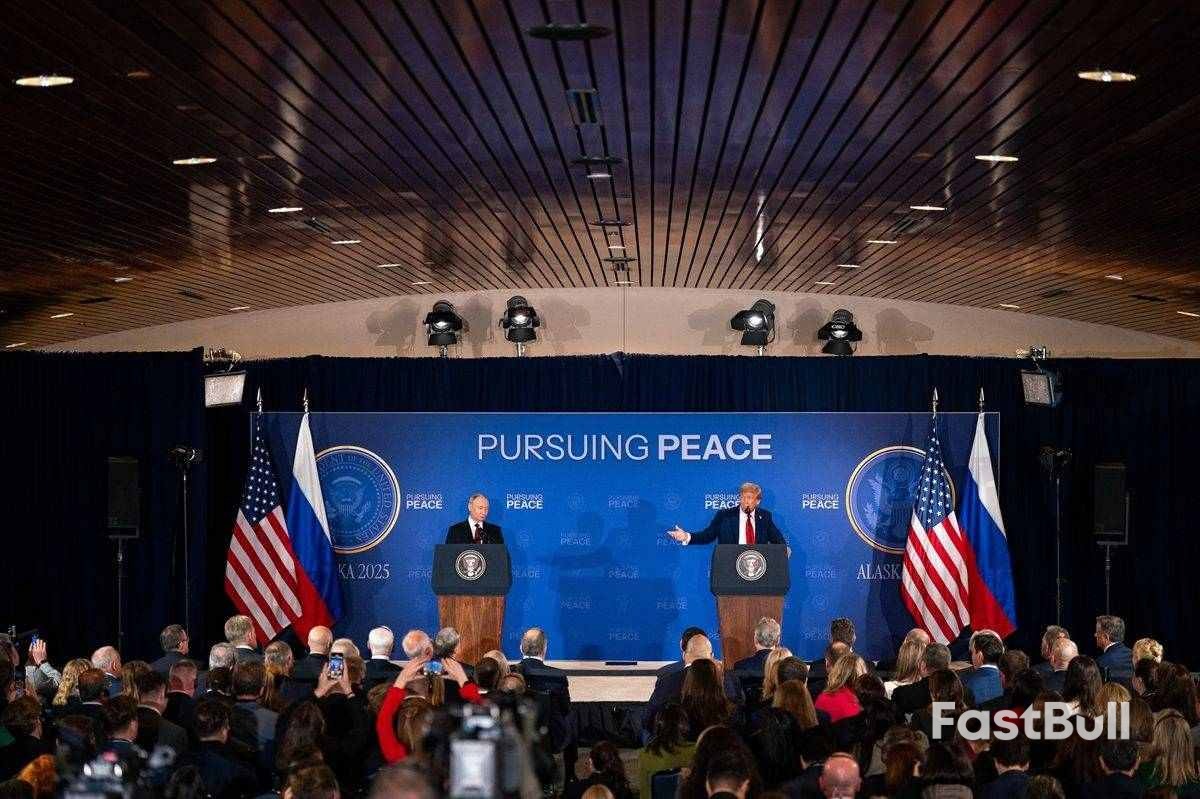
          Vladimir Putin, Russia's president, left, and US President Donald Trump during a joint news conference at Joint Base Elmendorf-Richardson in Anchorage, Alaska, US, on Friday, Aug 15, 2025.

          Oil prices immediately spiked in response to the sanctions, with Brent advancing as much as 3% on Thursday to trade above US$64 (RM270.77) a barrel. The renewed threat of disruption to Russian supplies galvanises a global oil market that has been bracing itself for a dramatic supply glut.State-controlled Rosneft, headed by Putin's close ally Igor Sechin, and privately held Lukoil, are the two largest Russian oil producers, jointly accounting for nearly half of the nation's total crude exports, according to Bloomberg estimates. Taxes from the oil-and-gas industries account for about a quarter of the federal budget.

          "I just felt it was time," Trump said in a meeting with Nato secretary general Mark Rutte in the Oval Office. He said he hoped "they won't be on for long" and he expected the war would be settled."The only thing I can say is, every time I speak with Vladimir, I have good conversations, and then they just don't go anywhere," Trump said. He said a meeting with the Russian leader will take place in the future.Before Wednesday, Trump had repeatedly backed away from threats of tariffs, sanctions and other punishments against Russia. On July 29, he gave Russia 10 days to reach a truce with Ukraine. But the Aug 8 deadline came and went without further action by the US leader. He then met Putin in Alaska but the meeting produced no progress on the war.

          The latest gambit was one former US president Joe Biden considered in the waning days of his presidency. But he resisted over fears of spooking global energy markets and spiking the price of oil. Given Trump's own focus on keeping gasoline prices low, it marks a major gamble and signals his patience with Putin may finally be running out. In the Oval Office meeting, he said he believed gas would go to US$2 a gallon.

          Ukraine welcomed the move.

          "For the first time during the tenure of the 47th President of the United States, Washington has decided to impose full blocking sanctions against Russian energy companies," Ambassador Olga Stefanishyna said in a statement.In Ukraine earlier Wednesday, Russia launched multiple drone and missile strikes, killing at least seven civilians including children in the early hours of Wednesday. Russia continues to ramp up its attacks on energy infrastructure, with Kyiv attempting to respond by targeting refineries.It's unclear whether the latest restrictions can seriously impact Putin's calculus on the war. The Biden administration imposed wave after wave of sanctions against Russia after its invasion in 2022, damaging the economy but never deterring Putin from pressing ahead.

          Because the focus is on the oil companies themselves — not secondary sanctions that would penalise third-parties that do business with them — many of those barrels are still likely to find their way to market, albeit at a higher cost.The latest sanctions could, however, have unexpected impacts including on India and oil purchases that have long irked Trump. Refining giant Reliance Industries Ltd, the country's largest importer of Russian oil, has been buying cargoes under a term deal with Rosneft.

          The UK sanctioned Rosneft and Lukoil a week ago, already increasing pressure on buyers like India's refiners. On Thursday, the European Union is set to announce a new sanctions package that will include an import ban on liquefied natural gas.With the US action too, "you have some coordination that could meaningfully increase the challenge of buying Russian oil," said Kevin Book, managing director at Washington-based ClearView Energy Partners. "This is really the first affirmative and significant step of Trump 2.0 on Russian oil."

          Still, Thomas Graham, a fellow at the Council on Foreign Relations, warned that the latest sanctions may ultimately amount to less than Trump hopes."If the White House thinks this is going to lead to radical change in the Kremlin's conduct or Putin's policy, they're deluding themselves — and I don't think that they actually believe that," Graham said."Sanctions work slowly and the Kremlin has been very good at circumventing these kinds of sanctions," he said.

          Source: Theedgemarkets

          To stay updated on all economic events of today, please check out our Economic calendar
          Risk Warnings and Disclaimers
          You understand and acknowledge that there is a high degree of risk involved in trading. Following any strategies or investment methods may lead to potential losses. The content on the site is provided by our contributors and analysts for information purposes only. You are solely responsible for determining whether any trading assets, securities, strategy, or any other product is suitable for investing based on your own investment objectives and financial situation.
          Add to Favorites
          Share
          FastBull
          Copyright © 2025 FastBull Ltd

          728 RM B 7/F GEE LOK IND BLDG NO 34 HUNG TO RD KWUN TONG KLN HONG KONG

          TelegramInstagramTwitterfacebooklinkedin
          App Store Google Play Google Play
          Products
          Charts

          Chats

          Q&A with Experts
          Screeners
          Economic Calendar
          Data
          Tools
          Membership
          Features
          Function
          Markets
          Copy Trading
          Latest Signals
          Contests
          News
          Analysis
          24/7
          Columns
          Education
          Company
          Careers
          About Us
          Contact Us
          Advertising
          Help Center
          Feedback
          User Agreement
          Privacy Policy
          Business

          White Label

          Data API

          Web Plug-ins

          Poster Maker

          Affiliate Program

          Risk Disclosure

          The risk of loss in trading financial instruments such as stocks, FX, commodities, futures, bonds, ETFs and crypto can be substantial. You may sustain a total loss of the funds that you deposit with your broker. Therefore, you should carefully consider whether such trading is suitable for you in light of your circumstances and financial resources.

          No decision to invest should be made without thoroughly conducting due diligence by yourself or consulting with your financial advisors. Our web content might not suit you since we don't know your financial conditions and investment needs. Our financial information might have latency or contain inaccuracy, so you should be fully responsible for any of your trading and investment decisions. The company will not be responsible for your capital loss.

          Without getting permission from the website, you are not allowed to copy the website's graphics, texts, or trademarks. Intellectual property rights in the content or data incorporated into this website belong to its providers and exchange merchants.

          Not Logged In

          Log in to access more features

          FastBull Membership

          Not yet

          Purchase

          Become a signal provider
          Help Center
          Customer Service
          Dark Mode
          Price Up/Down Colors

          Log In

          Sign Up

          Position
          Layout
          Fullscreen
          Default to Chart
          The chart page opens by default when you visit fastbull.com