Markets
News
Analysis
User
24/7
Economic Calendar
Education
Data
- Names
- Latest
- Prev


Signal Accounts for Members
All Signal Accounts
All Contests


Japan Tankan Small Manufacturing Outlook Index (Q4)A:--
F: --
P: --
Japan Tankan Large Non-Manufacturing Outlook Index (Q4)A:--
F: --
P: --
Japan Tankan Large Manufacturing Outlook Index (Q4)A:--
F: --
P: --
Japan Tankan Small Manufacturing Diffusion Index (Q4)A:--
F: --
P: --
Japan Tankan Large Manufacturing Diffusion Index (Q4)A:--
F: --
P: --
Japan Tankan Large-Enterprise Capital Expenditure YoY (Q4)A:--
F: --
P: --
U.K. Rightmove House Price Index YoY (Dec)A:--
F: --
P: --
China, Mainland Industrial Output YoY (YTD) (Nov)A:--
F: --
P: --
China, Mainland Urban Area Unemployment Rate (Nov)A:--
F: --
P: --
Saudi Arabia CPI YoY (Nov)A:--
F: --
P: --
Euro Zone Industrial Output YoY (Oct)A:--
F: --
P: --
Euro Zone Industrial Output MoM (Oct)A:--
F: --
P: --
Canada Existing Home Sales MoM (Nov)A:--
F: --
P: --
Canada National Economic Confidence IndexA:--
F: --
P: --
Canada New Housing Starts (Nov)A:--
F: --
U.S. NY Fed Manufacturing Employment Index (Dec)A:--
F: --
P: --
U.S. NY Fed Manufacturing Index (Dec)A:--
F: --
P: --
Canada Core CPI YoY (Nov)A:--
F: --
P: --
Canada Manufacturing Unfilled Orders MoM (Oct)A:--
F: --
P: --
U.S. NY Fed Manufacturing Prices Received Index (Dec)A:--
F: --
P: --
U.S. NY Fed Manufacturing New Orders Index (Dec)A:--
F: --
P: --
Canada Manufacturing New Orders MoM (Oct)A:--
F: --
P: --
Canada Core CPI MoM (Nov)A:--
F: --
P: --
Canada Trimmed CPI YoY (SA) (Nov)A:--
F: --
P: --
Canada Manufacturing Inventory MoM (Oct)A:--
F: --
P: --
Canada CPI YoY (Nov)A:--
F: --
P: --
Canada CPI MoM (Nov)A:--
F: --
P: --
Canada CPI YoY (SA) (Nov)A:--
F: --
P: --
Canada Core CPI MoM (SA) (Nov)A:--
F: --
P: --
Canada CPI MoM (SA) (Nov)A:--
F: --
P: --
Federal Reserve Board Governor Milan delivered a speech
U.S. NAHB Housing Market Index (Dec)--
F: --
P: --
Australia Composite PMI Prelim (Dec)--
F: --
P: --
Australia Services PMI Prelim (Dec)--
F: --
P: --
Australia Manufacturing PMI Prelim (Dec)--
F: --
P: --
Japan Manufacturing PMI Prelim (SA) (Dec)--
F: --
P: --
U.K. 3-Month ILO Employment Change (Oct)--
F: --
P: --
U.K. Unemployment Claimant Count (Nov)--
F: --
P: --
U.K. Unemployment Rate (Nov)--
F: --
P: --
U.K. 3-Month ILO Unemployment Rate (Oct)--
F: --
P: --
U.K. Average Weekly Earnings (3-Month Average, Including Bonuses) YoY (Oct)--
F: --
P: --
U.K. Average Weekly Earnings (3-Month Average, Excluding Bonuses) YoY (Oct)--
F: --
P: --
France Services PMI Prelim (Dec)--
F: --
P: --
France Composite PMI Prelim (SA) (Dec)--
F: --
P: --
France Manufacturing PMI Prelim (Dec)--
F: --
P: --
Germany Services PMI Prelim (SA) (Dec)--
F: --
P: --
Germany Manufacturing PMI Prelim (SA) (Dec)--
F: --
P: --
Germany Composite PMI Prelim (SA) (Dec)--
F: --
P: --
Euro Zone Composite PMI Prelim (SA) (Dec)--
F: --
P: --
Euro Zone Services PMI Prelim (SA) (Dec)--
F: --
P: --
Euro Zone Manufacturing PMI Prelim (SA) (Dec)--
F: --
P: --
U.K. Services PMI Prelim (Dec)--
F: --
P: --
U.K. Manufacturing PMI Prelim (Dec)--
F: --
P: --
U.K. Composite PMI Prelim (Dec)--
F: --
P: --
Euro Zone ZEW Economic Sentiment Index (Dec)--
F: --
P: --
Germany ZEW Current Conditions Index (Dec)--
F: --
P: --
Germany ZEW Economic Sentiment Index (Dec)--
F: --
P: --
Euro Zone Trade Balance (Not SA) (Oct)--
F: --
P: --
Euro Zone ZEW Current Conditions Index (Dec)--
F: --
P: --
Euro Zone Trade Balance (SA) (Oct)--
F: --
P: --
U.S. Retail Sales MoM (Excl. Automobile) (SA) (Oct)--
F: --
P: --


No matching data
Latest Views
Latest Views
Trending Topics
Top Columnists
Latest Update
White Label
Data API
Web Plug-ins
Affiliate Program
View All

No data
In his second term as US president, Donald Trump has used tariffs as a blanket solution to pursue a wide range of goals...
In his second term as US president, Donald Trump has used tariffs as a blanket solution to pursue a wide range of goals: increasing domestic manufacturing and foreign market access, boosting federal revenue, and even punishing the government of Brazil for prosecuting his political ally, former President Jair Bolsonaro. Now he’s deployed a tool he calls a “secondary tariff” in an effort to get countries to distance themselves from US adversaries.
Such a tariff on imports from India took effect on Aug. 27. On top of a 25% levy on goods from India imposed earlier, Trump added an additional 25% tariff to penalize India for buying oil from Russia.
The idea behind “secondary tariffs” is to use a weapon against one country to penalize or try to influence a different country. The concept is similar to the one behind so-called secondary sanctions.
The US uses secondary sanctions to multiply the effect of its primary sanctions on countries or entities. Secondary sanctions target commercial activity involving a party under primary sanctions but occurring outside US legal jurisdiction. They are meant to force companies, banks and individuals to make a tough choice: continue doing business with the sanctioned entity or with the US, but not both.
Unlike primary sanctions, which can be enforced by fines and the seizure of US-held assets, secondary sanctions rely on the centrality of the US financial system to the world economy and the widespread use of the dollar as the global reserve currency to work. A company or individual who violates a secondary sanction could be hit by US export controls or be placed on the Treasury Department’s Specially Designated Nationals and Blocked Persons List, which would prevent Americans from doing business with it.
The “secondary tariff” Trump imposed on imports from India isn’t aimed at magnifying the impact of a primary tariff, as the name might suggest. US tariffs on energy from Russia are irrelevant given that such imports were banned in 2022 after the country’s full-scale invasion of Ukraine. Instead, the extra 25% tariff on imports from India appears to be aimed at compelling its government to adopt a similar ban, with the larger goal of pushing Russia to stop its war.
In March, Trump created a mechanism for imposing tariffs on imports from countries that buy oil from Venezuela, whose regime, he said, poses a threat to US national security.
Ships on the water have identifying transponders that allow third parties to track their location in real time via satellite. That enables analysts in and out of government to, for example, follow oil tankers loading in Russia and unloading in India.
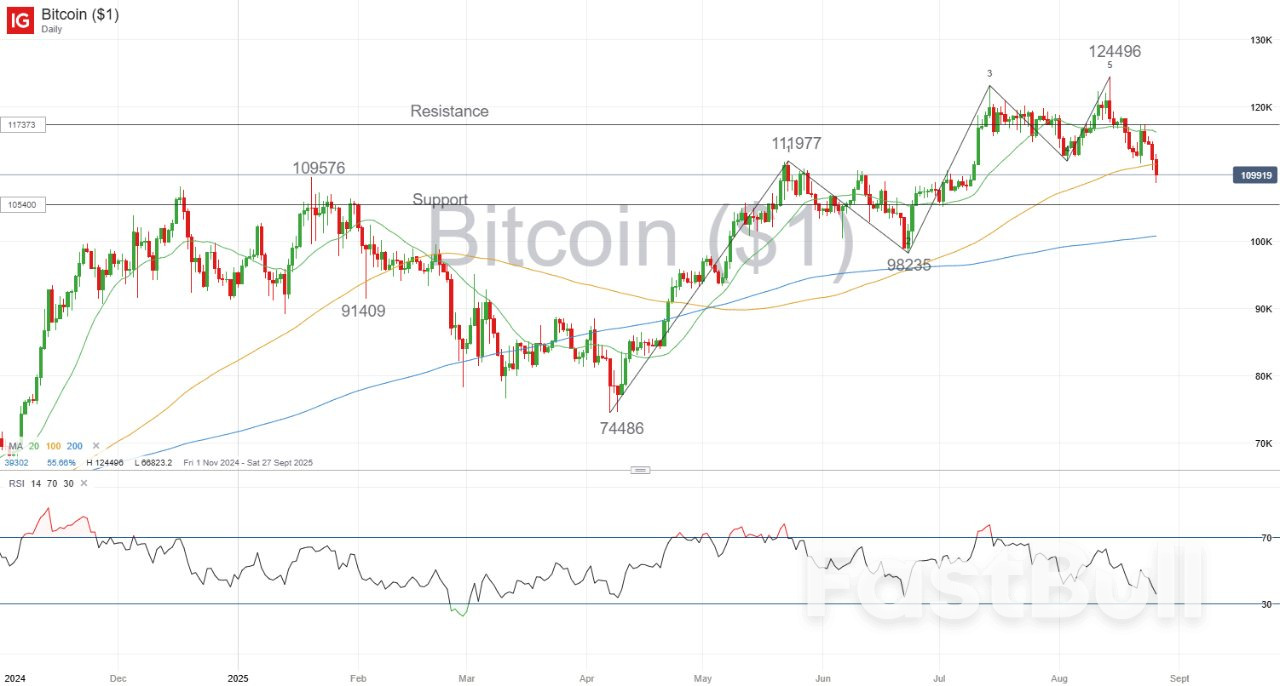
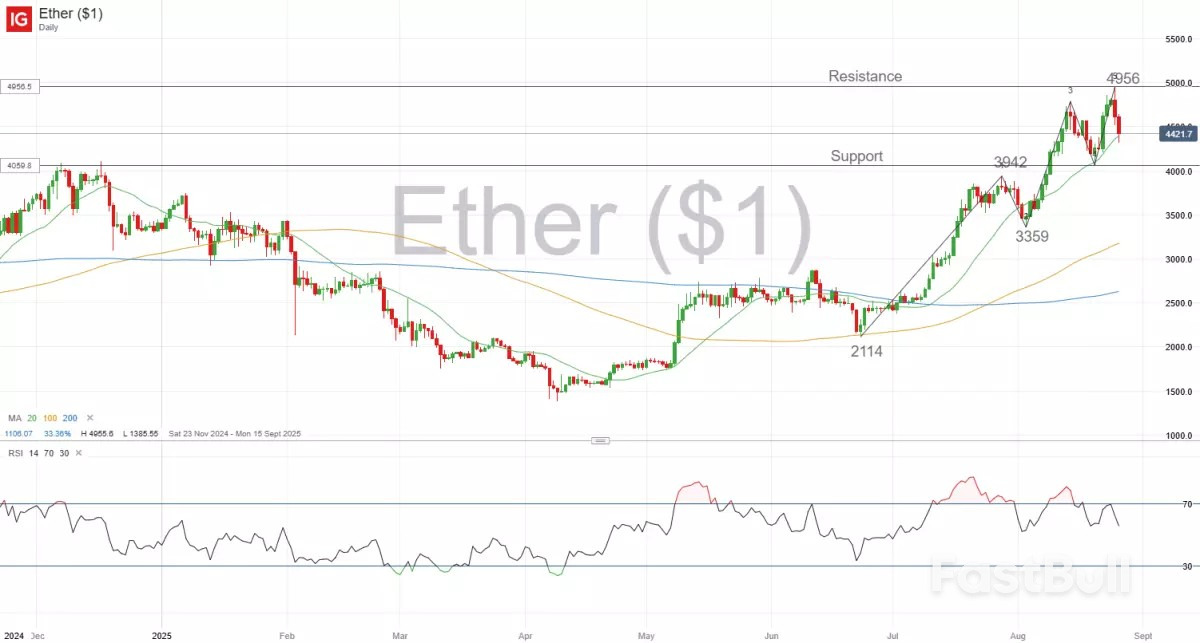
IG as of 26 August 2025
as of 26 August 2025. Past performance is not a reliable indicator of future performance.


President Donald Trump's top economic adviser Kevin Hassett said Wednesday that Federal Reserve Board of Governors member Lisa Cook should go on leave from the central bank even as she plans to file a lawsuit challenging her removal by Trump.
"If I were her in her circumstance, I would take leave," Hassett told reporters outside the White House.
"I think it's the honorable thing to do," he continued, after a reporter asked about whether Cook should be presumed innocent of allegations of mortgage fraud raised by another Trump-appointed official.
Hassett also defended Trump's ability to remove a Fed governor "for cause," which is the legal requirement for a president to fire a board member at the central bank.
Cook, the first Black woman to serve as a Fed governor, is expected to soon file a lawsuit over Trump's move, her attorney, Abbe Lowell, said Tuesday.
Trump's " attempt to fire her, based solely on a referral letter, lacks any factual or legal basis," Lowell said in a statement.
The Fed said Tuesday that "Cook has indicated through her personal attorney that she will promptly challenge this action in court and seek a judicial decision that would confirm her ability to continue to fulfill her responsibilities as a Senate-confirmed member of the Board of Governors of the Federal Reserve System."
The battle over Cook's removal could end with the Supreme Court issuing a final decision on the matter.
New York Fed President John Williams announced on August 27 that the upcoming Federal Open Market Committee meeting will be "live," indicating potential interest rate adjustments.
This announcement follows Chair Jerome Powell's remarks on rising employment risks, prompting market speculation about a possible rate cut in September.
Fed Officials Hint at Significant September Rate Decision
John Williams and Jerome Powell's recent statements have sparked interest in the upcoming Federal Open Market Committee meeting. Williams emphasized every meeting as "live," indicating ongoing evaluations and potential changes in monetary policy. Powell reiterated concerns about employment risks influencing policy decisions.
Market anticipation is growing around a possible interest rate cut in September. The current stance is termed "moderately restrictive," suggesting room for easing while maintaining economic stability. Investors are preparing for shifts in interest rates as economic assessments continue.
GDP growth in NZ is on course to outpace Australia over the next few years. Even so, economic and labour market conditions in Australia look set to remain firmer than in NZ for some time yet.
When we last peeked over the Tasman in late 2024, the Australian economy was enjoying more robust economic conditions than New Zealand, with firmer GDP growth and a stronger labour market.Jump forward a year and we are now moving into a new phase of the economic cycle, with economic growth in New Zealand set to outpace Australia over the next few years.
These diverging economic trends in New Zealand and Australia in large part reflect differences in monetary policy. The Reserve Bank of New Zealand’s earlier aggressive tightening of policy meant that we experienced a sharper downturn in growth in recent years. However, now that inflation has dropped back, the RBNZ has also been able to cut rates faster, with a 250bp reduction in the Official Cash Rate to date and a likely 50bps more to come before the end of 2025. Over time, that will help to boost both domestic demand and employment.
In contrast, the Reserve Bank of Australia took a more gradual approach to tightening policy which helped to support growth and the labour market in previous years. However, its easing cycle has also been more gradual—with Australia’s cash rate having only been cut by 75bps since the start of this year, interest rates across the Tasman remain at mildly restrictive levels.But despite the slower pace of monetary easing and cooling economic growth, Australia’s economy and labour market have remained firmer than in New Zealand, and that’s set to continue for some time yet.

White Label
Data API
Web Plug-ins
Poster Maker
Affiliate Program
The risk of loss in trading financial instruments such as stocks, FX, commodities, futures, bonds, ETFs and crypto can be substantial. You may sustain a total loss of the funds that you deposit with your broker. Therefore, you should carefully consider whether such trading is suitable for you in light of your circumstances and financial resources.
No decision to invest should be made without thoroughly conducting due diligence by yourself or consulting with your financial advisors. Our web content might not suit you since we don't know your financial conditions and investment needs. Our financial information might have latency or contain inaccuracy, so you should be fully responsible for any of your trading and investment decisions. The company will not be responsible for your capital loss.
Without getting permission from the website, you are not allowed to copy the website's graphics, texts, or trademarks. Intellectual property rights in the content or data incorporated into this website belong to its providers and exchange merchants.
Not Logged In
Log in to access more features

FastBull Membership
Not yet
Purchase
Log In
Sign Up