• Trade
  • Markets
  • Copy
  • Contests
  • News
  • 24/7
  • Calendar
  • Q&A
  • Chats
Screeners
SYMBOL
LAST
ASK
BID
HIGH
LOW
NET CHG.
%CHG.
SPREAD
SPX
S&P 500 Index
6939.02
6939.02
6939.02
6964.08
6893.47
-29.99
-0.43%
--
DJI
Dow Jones Industrial Average
48892.46
48892.46
48892.46
49047.68
48459.88
-179.09
-0.36%
--
IXIC
NASDAQ Composite Index
23461.81
23461.81
23461.81
23662.25
23351.55
-223.30
-0.94%
--
USDX
US Dollar Index
96.980
97.060
96.980
97.140
96.840
-0.010
-0.01%
--
EURUSD
Euro / US Dollar
1.18562
1.18570
1.18562
1.18745
1.18393
+0.00071
+ 0.06%
--
GBPUSD
Pound Sterling / US Dollar
1.36815
1.36822
1.36815
1.37053
1.36600
-0.00020
-0.01%
--
XAUUSD
Gold / US Dollar
4597.53
4597.87
4597.53
4884.47
4402.03
-296.96
-6.07%
--
WTI
Light Sweet Crude Oil
61.650
61.680
61.650
63.933
61.209
-3.777
-5.77%
--

Community Accounts

Signal Accounts
--
Profit Accounts
--
Loss Accounts
--
View More

Become a signal provider

Sell trading signals to earn additional income

View More

Guide to Copy Trading

Get started with ease and confidence

View More

Signal Accounts for Members

All Signal Accounts

Best Return
  • Best Return
  • Best P/L
  • Best MDD
Past 1W
  • Past 1W
  • Past 1M
  • Past 1Y

All Contests

  • All
  • Trump Updates
  • Recommend
  • Stocks
  • Cryptocurrencies
  • Central Banks
  • Featured News
Top News Only
Share

India's Nifty 50 Index Last Up 0.5%

Share

Swedish Manufacturing PMI 56.0 Points In Jan - Silf/Swedbank

Share

Stats Office - Swiss December Retail Sales +2.9% Year-On-Year Versus Revised +1.7% In Previous Month

Share

Iran's Foreign Ministry Spokesperson Baghaei Says Tehran Is Examining Details Of Various Diplomatic Processes, Hopes For Results In Coming Days

Share

Israel Expected To Reopen Gaza's Rafah Border Crossing To Egypt, With Limits

Share

FAA Head Says Concerned Other Countries Aren't Putting Enough Resources Into Certifying USA Aircraft

Share

European Benchmark Gas Contract Falls 10.5% To 35.50 EUR/Mwh - Lseg Data

Share

Statistics Bureau - Kazakhstan's January CPI At 1.0% Month-On-Month

Share

S&P Global: Kazakhstan January Manufacturing PMI At 49.8%

Share

German Dec Retail Sales +1.5 Percent Year-On-Year (Versus Reuters Consensus Forecast For +1.1 Percent)

Share

Russian Security Committee's Vice Chairman Medvedev: Russia Will Not Accept NATO-Member Forces In Ukraine

Share

Russian Security Committee's Vice Chairman Medvedev: Nuclear Arms Control For Past 60 Years Helped Verify Intentions And Build Trust

Share

Russian Security Committee's Vice Chairman Medvedev: The Territorial Issue In Ukraine Talks Is Most Complicated

Share

Russian Security Committee's Vice Chairman Medvedev: If New Start Expires It Does Not Necessarily Mean A Catastrophe But It Should Alarm Everyone

Share

Russian Security Committee's Vice Chairman Medvedev: Our Proposal To USA On Extending The Limits Of New Start Remains On The Table

Share

USA Dollar Jumps 1% Against Norwegian Crown To 9.7062

Share

Turkey's Main BIST 100 Index Down 1.7% At Early Trading

Share

India's Nifty 50 Index Last Up 0.4%

Share

Kazakhstan's Central Bank Says It Sold Foreign Currency Worth 350 Billion Tenge In January To Mirror Gold Purchases, Will Sell Foreign Currency Worth 350 Billion In February

Share

Spot Gold Extends Losses, Last Down Over 9% At $4403,29.Oz

TIME
ACT
FCST
PREV
U.S. Core PPI YoY (Dec)

A:--

F: --

P: --
U.S. Core PPI MoM (SA) (Dec)

A:--

F: --

P: --

U.S. PPI YoY (Dec)

A:--

F: --

P: --

U.S. PPI MoM (SA) (Dec)

A:--

F: --

P: --

Canada GDP MoM (SA) (Nov)

A:--

F: --

P: --

Canada GDP YoY (Nov)

A:--

F: --

P: --

U.S. PPI MoM Final (Excl. Food, Energy and Trade) (SA) (Dec)

A:--

F: --

P: --

U.S. PPI YoY (Excl. Food, Energy & Trade) (Dec)

A:--

F: --

P: --

U.S. Chicago PMI (Jan)

A:--

F: --

P: --
Canada Federal Government Budget Balance (Nov)

A:--

F: --

P: --

U.S. Weekly Total Oil Rig Count

A:--

F: --

P: --

U.S. Weekly Total Rig Count

A:--

F: --

P: --

China, Mainland NBS Manufacturing PMI (Jan)

A:--

F: --

P: --

China, Mainland NBS Non-manufacturing PMI (Jan)

A:--

F: --

P: --

China, Mainland Composite PMI (Jan)

A:--

F: --

P: --

South Korea Trade Balance Prelim (Jan)

A:--

F: --

P: --
Japan Manufacturing PMI Final (Jan)

A:--

F: --

P: --

South Korea IHS Markit Manufacturing PMI (SA) (Jan)

A:--

F: --

P: --

Indonesia IHS Markit Manufacturing PMI (Jan)

A:--

F: --

P: --

China, Mainland Caixin Manufacturing PMI (SA) (Jan)

A:--

F: --

P: --

Indonesia Trade Balance (Dec)

A:--

F: --

P: --

Indonesia Inflation Rate YoY (Jan)

A:--

F: --

P: --

Indonesia Core Inflation YoY (Jan)

A:--

F: --

P: --

India HSBC Manufacturing PMI Final (Jan)

A:--

F: --

P: --

Australia Commodity Price YoY (Jan)

A:--

F: --

P: --

Russia IHS Markit Manufacturing PMI (Jan)

A:--

F: --

P: --

Turkey Manufacturing PMI (Jan)

A:--

F: --

P: --

U.K. Nationwide House Price Index MoM (Jan)

A:--

F: --

P: --

U.K. Nationwide House Price Index YoY (Jan)

A:--

F: --

P: --

Germany Actual Retail Sales MoM (Dec)

A:--

F: --

P: --
Italy Manufacturing PMI (SA) (Jan)

--

F: --

P: --

South Africa Manufacturing PMI (Jan)

--

F: --

P: --

Euro Zone Manufacturing PMI Final (Jan)

--

F: --

P: --

U.K. Manufacturing PMI Final (Jan)

--

F: --

P: --

Brazil IHS Markit Manufacturing PMI (Jan)

--

F: --

P: --

Canada National Economic Confidence Index

--

F: --

P: --

Canada Manufacturing PMI (SA) (Jan)

--

F: --

P: --

U.S. IHS Markit Manufacturing PMI Final (Jan)

--

F: --

P: --

U.S. ISM Output Index (Jan)

--

F: --

P: --

U.S. ISM Inventories Index (Jan)

--

F: --

P: --

U.S. ISM Manufacturing Employment Index (Jan)

--

F: --

P: --

U.S. ISM Manufacturing New Orders Index (Jan)

--

F: --

P: --

U.S. ISM Manufacturing PMI (Jan)

--

F: --

P: --

South Korea CPI YoY (Jan)

--

F: --

P: --

Japan Monetary Base YoY (SA) (Jan)

--

F: --

P: --

Australia Building Approval Total YoY (Dec)

--

F: --

P: --

Australia Building Permits MoM (SA) (Dec)

--

F: --

P: --

Australia Building Permits YoY (SA) (Dec)

--

F: --

P: --

Australia Private Building Permits MoM (SA) (Dec)

--

F: --

P: --

Australia Overnight (Borrowing) Key Rate

--

F: --

P: --

RBA Rate Statement
Japan 10-Year Note Auction Yield

--

F: --

P: --

Saudi Arabia IHS Markit Composite PMI (Jan)

--

F: --

P: --

RBA Press Conference
Turkey PPI YoY (Jan)

--

F: --

P: --

Turkey CPI YoY (Jan)

--

F: --

P: --

Turkey CPI YoY (Excl. Energy, Food, Beverage, Tobacco & Gold) (Jan)

--

F: --

P: --

Q&A with Experts
    • All
    • Chatrooms
    • Groups
    • Friends
    SlowBear ⛅ flag
    Ikeh Sunday
    @Ikeh SundayReally? cos the chart i saw earlier wa sthat of XAUUSD and not XAGUSD
    Ikeh Sunday flag
    SlowBear ⛅
    @SlowBear ⛅am on one month on silver chart. it was gold i show 15m view
    Ikeh Sunday flag
    SlowBear ⛅
    @SlowBear ⛅the one with entry is silver not gold
    SlowBear ⛅ flag
    Ikeh Sunday
    @Ikeh Sunday Oh got it now, thanks for that clarification
    Ikeh Sunday flag
    SlowBear ⛅
    @SlowBear ⛅ur well come
    SlowBear ⛅ flag
    Ikeh Sunday
    @Ikeh Sunday Cool that is clear now, so you are selling and targeting 70.20 on Silver not bad i will look into it myself
    SlowBear ⛅ flag
    Ikeh Sunday
    @Ikeh Sunday Wow, you are one discipline trader bro, you are very loyal to silver
    Ikeh Sunday flag
    SlowBear ⛅
    @SlowBear ⛅am use to it and besides it's the only instrument that moves in volume . we just have to get it right or get wiped
    SlowBear ⛅ flag
    Ikeh Sunday
    @Ikeh Sunday I completely understands you bro, experience mixed with sustainability - Silver provides both!
    Kung Fu flag
    Ikeh Sunday
    @Ikeh SundayI'd rather target a sellside when or if silver drops to $70.
    SlowBear ⛅ flag
    Ikeh Sunday
    @Ikeh SundayAnd getting it right comes in slow but once mastered that is all you need to buy a mansion in Johanesburg!
    Kung Fu flag
    I'd look for more sellside just below $70, precisely at $69.50. That's a breakout to the downside @Ikeh Sunday
    Kung Fu flag
    @Ikeh Sunday$65 will be, in that case, my very first target.
    JOSHUA flag
    Seems gold is picking up
    SlowBear ⛅ flag
    JOSHUA
    Seems gold is picking up
    @JOSHUAIt will pick up, but the pick will be slow and sluggish - so stay on a look out
    favour flag
    JOSHUA
    Seems gold is picking up
    @JOSHUAnot yet
    favour flag
    JOSHUA
    Seems gold is picking up
    @JOSHUAjust respected a FVG
    SlowBear ⛅ flag
    JOSHUA
    Seems gold is picking up
    @JOSHUAif you in fact wants to trade Gold today just look for an entry on 5min timeframe
    Kung Fu flag
    JOSHUA
    Seems gold is picking up
    @JOSHUAmaybe. Maybe that pickup is only a shallow retracement
    Kung Fu flag
    @JOSHUAin what time frame are you viewing it
    Type here...
    Add Symbol or Code

      No matching data

      All
      Trump Updates
      Recommend
      Stocks
      Cryptocurrencies
      Central Banks
      Featured News
      • All
      • Russia-Ukraine Conflict
      • Middle East Flashpoint
      • All
      • Russia-Ukraine Conflict
      • Middle East Flashpoint
      Search
      Products

      Charts Free Forever

      Chats Q&A with Experts
      Screeners Economic Calendar Data Tools
      Membership Features
      Data Warehouse Market Trends Institutional Data Policy Rates Macro

      Market Trends

      Market Sentiment Order Book Forex Correlations

      Top Indicators

      Charts Free Forever
      Markets

      News

      News Analysis 24/7 Columns Education
      From Institutions From Analysts
      Topics Columnists

      Latest Views

      Latest Views

      Trending Topics

      Top Columnists

      Latest Update

      Signals

      Copy Rankings Latest Signals Become a signal provider AI Rating
      Contests
      Brokers

      Overview Brokers Assessment Rankings Regulators News Claims
      Broker listing Forex Brokers Comparison Tool Live Spread Comparison Scam
      Q&A Complaint Scam Alert Videos Tips to Detect Scam
      More

      Business
      Events
      Careers About Us Advertising Help Center

      White Label

      Data API

      Web Plug-ins

      Affiliate Program

      Awards Institution Evaluation IB Seminar Salon Event Exhibition
      Vietnam Thailand Singapore Dubai
      Fans Party Investment Sharing Session
      FastBull Summit BrokersView Expo
      Recent Searches
        Top Searches
          Markets
          News
          Analysis
          User
          24/7
          Economic Calendar
          Education
          Data
          • Names
          • Latest
          • Prev

          View All

          No data

          Scan to Download

          Faster Charts, Chat Faster!

          Download App
          English
          • English
          • Español
          • العربية
          • Bahasa Indonesia
          • Bahasa Melayu
          • Tiếng Việt
          • ภาษาไทย
          • Français
          • Italiano
          • Türkçe
          • Русский язык
          • 简中
          • 繁中
          Open Account
          Search
          Products
          Charts Free Forever
          Markets
          News
          Signals

          Copy Rankings Latest Signals Become a signal provider AI Rating
          Contests
          Brokers

          Overview Brokers Assessment Rankings Regulators News Claims
          Broker listing Forex Brokers Comparison Tool Live Spread Comparison Scam
          Q&A Complaint Scam Alert Videos Tips to Detect Scam
          More

          Business
          Events
          Careers About Us Advertising Help Center

          White Label

          Data API

          Web Plug-ins

          Affiliate Program

          Awards Institution Evaluation IB Seminar Salon Event Exhibition
          Vietnam Thailand Singapore Dubai
          Fans Party Investment Sharing Session
          FastBull Summit BrokersView Expo

          US-Iran Standoff: What's Next for Oil Prices?

          Edward Lawson

          Commodity

          Energy

          Remarks of Officials

          Economic

          Middle East Situation

          Political

          Summary:

          Geopolitical uncertainty from US-Iran tensions fuels global energy market volatility, pushing oil and gas prices higher.

          Geopolitical uncertainty is rattling global energy markets as the US administration's unpredictable stance on Iran leaves both Tehran and traders guessing. With a US armada positioned off the Iranian coast, the lack of a clear strategy has injected significant volatility into oil and gas prices.

          Oil prices climbed above $70 per barrel on Thursday, reaching a high not seen since last July. While this surge is partly fueled by fears of a US-Iran conflict, it's also propped up by temporary supply disruptions. Recent winter storms have interrupted US output, and fires at Kazakhstan's key Tengiz field have caused a sharp drop in its supply.

          This tension extends to the natural gas market. European prices rose sharply last month due to a prolonged cold spell that depleted storage reserves. The freeze in the US has further complicated the situation, forcing Europe to confront its potential over-reliance on American liquefied natural gas (LNG) just as it sought to reduce its dependence on Russian pipelines.

          A High-Stakes Game of Threats and Diplomacy

          The war of words has escalated, amplifying market jitters. President Donald Trump issued a warning, posting, "The next attack will be far worse! Don't make that happen again," as the USS Abraham Lincoln carrier group remains near Iran.

          In response, Ali Larijani, secretary of Iran's national security council, stated from Moscow that "structural arrangements for negotiations are progressing," dismissing the tension as a "contrived media war." Simultaneously, Tehran announced plans for a live-fire military exercise in the Strait of Hormuz, while attributing several domestic explosions to gas leaks.

          Meanwhile, regional powers including the UAE, Saudi Arabia, and Qatar have consistently advocated for a diplomatic solution over military conflict.

          Mapping the Potential Conflict Scenarios

          The current standoff could unfold in several ways, ranging from a quiet de-escalation to a major regional conflict.

          • Limited Strikes: The confrontation could end with minor US military strikes on Iranian missile or nuclear facilities, leaving the country's energy sector untouched, similar to the brief conflict last June.

          • Targeting Energy Infrastructure: The US and/or Israel could attack Iran's domestic energy grid, focusing on gas, electricity, and fuel distribution systems.

          • Regime-Change Campaign: Following Iran's suppression of recent protests, Washington might launch a prolonged military campaign or an oil export blockade designed to destabilize or topple the regime.

          • Iranian Retaliation: Tehran could strike back by targeting regional energy assets, as it did last year when it damaged a refinery in Haifa, Israel. Other potential targets include Israeli offshore gas platforms that supply Egypt and Jordan.

          • A Negotiated Deal: In the face of an attack, Iran might be pushed to the negotiating table, possibly after a change in leadership.

          This wide spectrum of outcomes makes it difficult for energy markets to price in the risk accurately. The situation is far more complex than the one-way bet on Venezuelan oil at the start of the year, where exports had little direction to go but up.

          The Real Impact on Global Oil and Gas Supply

          Iran's role in the global oil market means any disruption would have a significant impact. The country currently exports between 1.5 million and 1.7 million barrels per day (bpd) of crude oil and condensate, along with 0.5 million bpd of refined products. A sudden halt to these exports could drive oil prices higher by about $15 per barrel.

          However, several factors could cushion the blow. OPEC's spare capacity, held primarily by Saudi Arabia and the UAE, is more than sufficient to cover the shortfall. Furthermore, China—Iran's largest customer—could slow the filling of its strategic petroleum reserves or purchase more discounted Russian oil.

          While Iran is the world's third-largest natural gas producer, it is not a major exporter. Its main customer, Turkey, has other options, including increasing LNG purchases or buying more gas from Russia.

          Beyond the "Close Hormuz" Threat

          The most severe risk—though one with low probability—is an interruption of energy transit through the Gulf. The often-repeated threat from Tehran to "close Hormuz" is largely seen as a last resort, as such an act would be almost suicidal for the regime.

          A more plausible scenario involves asymmetric warfare. Houthi forces in Yemen have demonstrated how a campaign of missile, drone, and mine attacks can effectively disrupt shipping in a critical waterway. A similar strategy in the Gulf would not stop oil and LNG transit entirely, but it would severely limit it and cause shipping and insurance premiums to skyrocket.

          What a Diplomatic Breakthrough Would Mean

          If diplomacy prevails, the market dynamics would shift dramatically. The geopolitical risk premium would evaporate from oil prices. An easing or suspension of sanctions could allow Iran to boost its exports by 300,000 to 500,000 bpd, bringing its total output to around 3.8 million bpd.

          A deal would also be a financial windfall for Tehran. By gaining access to customers beyond China, Iran could end its reliance on a "shadow fleet" of tankers and stop offering deep discounts, saving an estimated $8 to $10 per barrel.

          Iran's Long-Term Production Challenges

          Even if a political agreement is reached, a surge in Iranian oil production is unlikely. International oil companies have historically found Tehran a difficult place to operate, and the country's aging fields require massive investment just to offset natural decline rates.

          Iran also lacks sufficient natural gas to inject into its fields for crucial enhanced oil recovery projects. Under the most favorable conditions, a realistic production target is 4.5 million bpd by 2030—a moderate increase, but not a game-changer for global supply.

          For now, the balance of risk points toward higher oil and gas prices. While a peaceful resolution would loosen the market, it wouldn't fundamentally reshape it. The key players have yet to reveal their next move, leaving the world's energy markets waiting in suspense.

          To stay updated on all economic events of today, please check out our Economic calendar
          Risk Warnings and Disclaimers
          You understand and acknowledge that there is a high degree of risk involved in trading. Following any strategies or investment methods may lead to potential losses. The content on the site is provided by our contributors and analysts for information purposes only. You are solely responsible for determining whether any trading assets, securities, strategy, or any other product is suitable for investing based on your own investment objectives and financial situation.
          Add to Favorites
          Share

          China’s Kling AI Sparks a Global Wave as AI Video Creation Enters a New Phase

          Gerik

          Economic

          From Experimental Tool To Global Creative Infrastructure

          AI powered video generation has evolved at remarkable speed, moving beyond novelty and experimentation to become a practical production tool for professional creators, marketers, and media organizations. In this increasingly competitive landscape, Kling has emerged as one of the most closely watched new entrants, positioning itself alongside Google Veo and OpenAI Sora in the global race for AI driven video technology.
          Launched in June 2024, Kling has quickly become a strategic growth engine for Kuaishou, a firm that has long competed in the shadow of ByteDance in China’s short video market. The speed at which Kling has scaled suggests that AI video generation is no longer a peripheral experiment but a core pillar of future content ecosystems.

          User Adoption Signals A Structural Shift

          Within just a few months of launch, Kling attracted approximately 12 million monthly active users. This rapid uptake reflects a broader transformation in how generative AI is being consumed. AI created videos, once viewed as technical demos or curiosity driven content, are now deeply embedded in everyday digital consumption across social media platforms.
          Animated animals, cinematic science fiction scenes, and AI generated virtual presenters have become familiar to online audiences. While concerns persist about low quality AI content flooding digital spaces, Kling’s growth indicates that demand is increasingly shaped by usefulness and creative control rather than novelty alone.

          Why Kling Stands Out In A Crowded AI Market

          The breakout success of Kling raises an important question for the broader AI industry: why has this platform gained traction while many similar tools struggle to reach scale. The answer appears to lie in Kling’s alignment with real world creative workflows. Instead of positioning itself purely as a technological showcase, Kling integrates generative capabilities with practical needs such as speed, stylistic flexibility, and commercial usability.
          This approach suggests a causal relationship between product design and adoption. Platforms that successfully translate AI complexity into intuitive creative outputs are more likely to achieve sustained engagement, rather than experiencing short lived viral attention.

          Commercial Performance Reinforces Market Credibility

          Kling’s financial performance further strengthens its position. Company disclosures and market estimates indicate that the platform generated more than 20 million USD in revenue in December alone, contributing to an annual total of roughly 140 million USD. This figure exceeded Kuaishou’s internal target of 60 million USD for early 2025 by more than double, underscoring how quickly monetization has accelerated.
          Looking ahead, growth momentum has carried into the new year. In January, Kling’s average daily revenue rose by around 30 percent compared with the previous month. This trend points to increasing willingness among users to pay for AI video services, especially as output quality and reliability improve.

          Implications For The Global AI Video Race

          Kling’s rise highlights a broader recalibration in the global AI landscape. Innovation is no longer concentrated exclusively in Western technology hubs, and Chinese platforms are increasingly capable of competing at the highest technological and commercial levels. While comparisons with Google Veo and OpenAI Sora often focus on model sophistication, Kling’s advantage lies in execution speed and market integration.
          Rather than signaling a short term surge, Kling’s performance suggests that AI video generation is entering a more mature phase. In this phase, success depends not only on model capability but on the ability to convert technological breakthroughs into scalable, revenue generating creative infrastructure.
          As AI generated video continues to reshape digital storytelling, Kling’s trajectory indicates that the next chapter of global AI competition will be defined as much by adoption and monetization as by raw technical power.
          To stay updated on all economic events of today, please check out our Economic calendar
          Risk Warnings and Disclaimers
          You understand and acknowledge that there is a high degree of risk involved in trading. Following any strategies or investment methods may lead to potential losses. The content on the site is provided by our contributors and analysts for information purposes only. You are solely responsible for determining whether any trading assets, securities, strategy, or any other product is suitable for investing based on your own investment objectives and financial situation.
          Add to Favorites
          Share

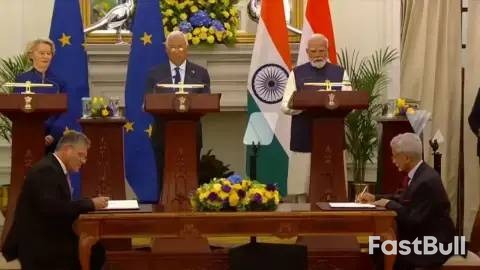
          India-EU Trade Deal: 5 Key Wins for a Rising Economy

          King Ten

          Economic

          India and the European Union have finalized a long-awaited free trade agreement (FTA), a landmark deal that arrives at a critical moment for global commerce. As economies across Asia seek to diversify their export markets beyond the United States, this agreement provides significant momentum. The pact is being hailed as the "mother of all deals" for its sheer scale and its potential to reshape global trade alignments.

          The deal underscores the EU's pragmatic approach to accommodating India's economic sensitivities—a flexibility that some argue has been missing in negotiations with the US. For India, this agreement is a milestone in its trade diversification strategy. Here’s a breakdown of what the FTA means for the country's economy.

          Unpacking the India-EU Trade Agreement

          Under the terms of the new agreement, India will gain preferential access to 97% of EU tariff lines, which covers an estimated 99.5% of its trade value. A significant portion of these goods will be eligible for immediate duty elimination, particularly benefiting labor-intensive sectors that contribute nearly 2% of India's GDP in exports.

          The economic relationship is already robust. India maintains a net exporter status with the EU in both goods and services. Bilateral merchandise trade reached approximately $137 billion in fiscal year 2024–25, with India’s exports to the EU totaling $76 billion. The services trade is equally strong, hitting $83 billion in 2024.

          Five Major Advantages for India's Economy

          The FTA offers India several clear advantages, from tariff elimination on goods to a major boost for its world-class services sector.

          1. Pivoting Beyond the US Market

          The EU is already India's second-largest export destination, accounting for 17% of its total exports, just behind the United States at 21%. The EU's share has grown by three percentage points since the pandemic. Since India's export mix to both markets is similar (with the exception of petroleum products having a larger share in EU exports), the new FTA allows India to strategically pivot toward the European market if high US tariffs persist. This move can effectively reduce its reliance on a single major trading partner without requiring a major overhaul of its export industries.

          2. Boosting Jobs in Labor-Intensive Industries

          The agreement will eliminate EU tariffs on a wide range of Indian products, including:

          • Marine products (especially shrimp)

          • Leather and footwear

          • Textiles and garments

          • Handicrafts

          • Gems and jewellery

          • Plastics and toys

          These sectors are highly labor-intensive and represent areas where India competes directly with China, Bangladesh, and Vietnam. Having faced pressure from US tariffs in recent years, these industries now gain a meaningful advantage in the EU market, which can spur job creation in some of India’s largest employment sectors.

          3. Strategic Access in Protected Sectors

          While securing broad market access, India successfully protected its most sensitive domestic sectors, such as agriculture and dairy. At the same time, it agreed to reduce tariffs on other key goods like food, beverages, and automobiles. This balanced approach allows India to expand its export opportunities without compromising its core domestic industries.

          4. Attracting More Foreign Direct Investment (FDI)

          Deeper economic integration with the EU is expected to drive stronger foreign investment into India. The EU already accounts for about 15% of India's FDI inflows, led by the Netherlands, Germany, Belgium, and France. Historically, EU investment has concentrated in the services sector, particularly IT and software.

          With India’s net FDI inflows softening recently, the FTA could revive investment momentum. This is especially true for manufacturing industries like automobiles, chemicals, and construction, which have previously lagged. Over time, increased FDI can fortify India's supply chains and strengthen its external financial balances.

          5. Expanding India's Dominant Services Sector

          The benefits of the FTA extend well beyond goods. India already exports services equivalent to about 1% of its GDP to the EU and maintains a surplus of around 0.2% of GDP. The new agreement includes "broader and deeper" commitments from the EU across 144 services subsectors.

          This covers key areas where India is globally competitive, including:

          • IT and Information Technology Enabled Services (ITeS)

          • Professional services

          • Education

          • A wide range of business services

          The deal creates a more stable and predictable policy environment for Indian service providers, while giving EU businesses and consumers better access to India's high-quality, cost-efficient service offerings.

          Key Hurdles Ahead for the FTA's Success

          Although the agreement marks a significant step, its formal signing is still several months away pending legal vetting. Its long-term success will ultimately depend on two critical factors.

          First, India's manufacturing sector must meet the EU's stringent health, safety, and product standards. This may require substantial upgrades, especially for smaller manufacturers who may not be fully prepared to comply with these requirements.

          Second, the ease of doing business remains a crucial factor. While India has made progress in liberalizing FDI, it continues to rank relatively high on the FDI Regulatory Restrictiveness Index. Further reforms to streamline approvals and regulatory processes will be necessary to fully unlock the potential benefits of this historic trade agreement.

          To stay updated on all economic events of today, please check out our Economic calendar
          Risk Warnings and Disclaimers
          You understand and acknowledge that there is a high degree of risk involved in trading. Following any strategies or investment methods may lead to potential losses. The content on the site is provided by our contributors and analysts for information purposes only. You are solely responsible for determining whether any trading assets, securities, strategy, or any other product is suitable for investing based on your own investment objectives and financial situation.
          Add to Favorites
          Share

          Selling America: Why a Global Portfolio Shift Is Turning Into a Structural Risk

          Gerik

          Economic

          The Emergence Of A Global Sell America Trade

          Entering early 2026, global financial markets are witnessing a notable strategic pivot. Investment approaches that long relied on the structural dominance of the United States are increasingly being recalibrated. The direction is becoming clearer: a gradual but broad based reduction in exposure to US assets rather than an outright exit, driven by risk management and portfolio diversification concerns.
          This sentiment first took shape after the tariff shock in April last year, when both US equities and government bonds fell sharply. Since then, the idea of reallocating capital away from the US has gained traction, moving from a defensive hedge into a more explicit allocation strategy.

          From Diversification To Market Impact

          According to Lauren Goodwin, economist at New York Life Investments, the ex America investment theme dominated discussions at the firm’s recent global investment meeting. European investors were reportedly surprised by how open US based investors had become toward diversifying beyond domestic markets.
          Crucially, this strategy is framed as a response to rising market risks rather than a wholesale withdrawal from the US. Even so, its effects have been tangible. Over the past month alone, selling pressure has contributed to a weaker US dollar, restrained equity market performance, higher government borrowing costs, and a sharp rise in precious metals prices.

          Dollar Volatility And Policy Signals

          The nomination of Kevin Warsh as the next chair of the Federal Reserve, together with a last minute budget funding agreement, briefly supported the dollar in late January. Despite this rebound, the dollar still ended the month down 1.2 percent against a basket of major currencies including the euro, pound sterling, and Japanese yen.
          Measured over a longer horizon, the decline is more striking. The US dollar has fallen around 10 percent over the past 12 months, an unusually large move for a currency that typically anchors global financial stability. In this environment, gold and silver have both reached new highs. Even after a sharp correction on January 30, gold and silver remained up 24 percent and 19 percent respectively for January, while gold has surged roughly 75 percent over the past year.

          Equities Repriced Through A Currency Lens

          US equity markets have lost momentum since the start of the year, particularly when returns are translated into foreign currencies. Adam Turnquist, chief technical strategist at LPL Financial, notes that the relationship between the dollar and US stocks has fundamentally shifted. Previously, rising dollar strength amplified US equity returns for foreign investors. That dynamic has now reversed, making US assets less attractive on a currency adjusted basis.
          This shift is especially visible to international investors, for whom currency movements directly influence realized returns. The adjustment does not imply an immediate collapse in US equities but signals a rebalancing of relative attractiveness across regions.

          Political Messaging And Investor Confidence

          Further unease emerged when Donald Trump publicly welcomed a prolonged period of dollar weakness, arguing that it would improve the competitiveness of US exports. Markets reacted nervously, as investors have long associated US economic policy with support for a strong and stable currency.
          The following day, Treasury Secretary Scott Bessent attempted to reassure markets that the government remains committed to a strong dollar and to the principle of American exceptionalism that has underpinned investment strategies for more than a decade. While these assurances helped limit immediate volatility, they did not fully dispel concerns about policy consistency.

          Why US Assets Are Losing Some Of Their Shine

          Fundamentally, the United States remains the backbone of global growth, with unmatched market depth and liquidity. The dollar continues to dominate global trade and finance. However, the shift away from US assets reflects deeper structural anxieties. Investors are increasingly uneasy about geopolitical risks, political pressure on independent institutions, expanding public debt, and questions surrounding the durability of the legal and institutional framework.
          Despite political promises to address living cost pressures, many analysts argue that trade tariffs and unchecked government spending are exacerbating inflationary and fiscal risks. This concern is mirrored in the bond market. The yield on 10 year US Treasury bonds has climbed to 4.25 percent from below 4 percent in October 2025, an increase comparable to a standard interest rate hike by the Fed and contrary to the administration’s preference for lower borrowing costs.

          Bond Yields And The Cost Of Confidence

          The administration has partly attributed rising yields to bond selloffs in Japan spilling over into US markets. Investors, however, remain focused on domestic political risk as a key driver. As Steve Englander, currency strategist at Standard Chartered, observes, a weaker dollar combined with higher interest rates is a problematic mix. If this also dampens demand for US equities, the broader signal becomes negative rather than stimulative.
          Over the past decade, one dollar invested in US equities has roughly quadrupled in value, while European equities delivered about half that return based on the Stoxx 600. This persistent outperformance has dramatically increased the weight of US stocks in global benchmarks. Today, US equities account for around 70 percent of the MSCI All World, up from roughly 50 percent ten years ago.
          This concentration has made global portfolios highly sensitive to US market movements. With valuations elevated and expectations increasingly tied to artificial intelligence driven growth, some investors view diversification not as optional but as necessary risk control.

          Gold As The Primary Beneficiary

          Unlike previous periods of dollar weakness, no major fiat currency has emerged as a clear alternative beneficiary. Instead, capital has flowed decisively into gold and other precious metals. Earlier versions of the sell America strategy were largely confined to central banks seeking to reduce dependence on US assets after Russian reserves were frozen following the Ukraine conflict.
          According to Ryan McIntyre, president of Sprott Inc., the perceived safety of US assets is now being reassessed. Data from the US Treasury shows that China’s holdings of US Treasuries have fallen steadily from 1.1 trillion dollars to below 700 billion dollars over the past decade. Brazil and India have also reduced their holdings, with the pace accelerating recently.
          Selling Treasuries reduces the need to hold dollars, placing additional pressure on the currency. In parallel, data from the World Gold Council indicates that central bank gold purchases nearly doubled after the seizure of Russian assets and accelerated again late last year. More recently, strong inflows into gold exchange traded funds have opened this safe haven to retail investors seeking alternatives to US assets.
          Taken together, these developments suggest that selling US assets is no longer a niche hedge but an evolving structural trend, one that carries meaningful implications for currencies, capital markets, and the future balance of global financial power.
          To stay updated on all economic events of today, please check out our Economic calendar
          Risk Warnings and Disclaimers
          You understand and acknowledge that there is a high degree of risk involved in trading. Following any strategies or investment methods may lead to potential losses. The content on the site is provided by our contributors and analysts for information purposes only. You are solely responsible for determining whether any trading assets, securities, strategy, or any other product is suitable for investing based on your own investment objectives and financial situation.
          Add to Favorites
          Share

          French Banks Accelerate Digital Restructuring as Thousands of Jobs Come Under Threat

          Gerik

          Economic

          A Banking Sector Entering A Structural Turning Point

          The French banking industry is entering one of its most profound restructuring phases in decades. Rising competitive pressure, shrinking margins, and the rapid shift toward digital banking models are forcing traditional institutions to overhaul their operating structures. Recent announcements from Société Générale and Crédit Agricole illustrate how this transformation is unfolding simultaneously through cost cutting, workforce reductions, and internal reorganization.
          Rather than isolated corporate decisions, these moves reflect a broader redefinition of how banks operate, how value is created, and how human labor fits into increasingly automated financial systems.

          Société Générale And The Logic Of Cost Compression

          Société Générale has officially confirmed plans to eliminate 1,800 positions in France by 2027, following the removal of 900 jobs at its headquarters earlier in 2024. Unlike previous restructuring cycles, management has ruled out voluntary departure schemes or early retirement programs. Instead, the bank has adopted a strategy of natural attrition, allowing positions to disappear as employees leave, combined with internal redeployment.
          Chief executive Slawomir Krupa has framed this approach as necessary to reduce operating costs and raise profitability to levels comparable with other European banks. From a financial perspective, the relationship is clear: lower fixed labor costs are associated with improved return on equity. From a workforce perspective, however, trade unions argue that this strategy imposes unilateral outcomes on employees while shielding management from negotiation, intensifying concerns over workload concentration and organizational stress. The cuts are concentrated in headquarters functions and regional structures, signaling a deep reconfiguration of the bank’s operational backbone.

          Crédit Agricole And An Unprecedented Labor Conflict

          At the same time, Crédit Agricole is facing the first system wide strike in its history, involving 78,000 employees. The immediate trigger was a proposed salary increase capped at 0.5 percent, set against a backdrop of strong financial performance. Between January and September 2025, the group’s regional banks generated 3.2 billion euros, equivalent to 3.76 billion US dollars, in net profit.
          Unions accuse management of using an internal Efficiency plan as a mechanism for gradual workforce reduction. Support functions are being centralized, processes increasingly automated, and the role of local units steadily diminished. In several regions, hundreds of jobs are reportedly at risk. While wage negotiations sparked the strike, union representatives emphasize that the dispute reflects a deeper confrontation over the future banking model, particularly the balance between local presence and centralized digital platforms.

          The Rapid Retreat Of Physical Banking Networks

          These labor tensions are unfolding against the backdrop of a rapid contraction in France’s physical banking network. Over the past five years, more than 3,000 branches have closed nationwide. Société Générale alone has eliminated nearly 20 percent of its points of sale, while Crédit Agricole continues to accelerate network rationalization.
          Branch closures are closely linked to the consolidation of back office and customer support functions into centralized hubs. The intended effects include cost reduction, service standardization, and faster digital deployment. The associated trade off is the gradual erosion of local expertise and rising pressure on employees working in high volume operational centers, where efficiency metrics increasingly dominate performance evaluation.

          Limited Political Response And A Growing Social Question

          Despite the scale of job losses, political reaction has been relatively muted. While industrial employment is frequently framed as a strategic priority, the disappearance of thousands of banking jobs is often treated as a technical adjustment rather than a social issue. This distinction overlooks the unique role banks play in credit allocation, especially for small businesses and rural communities.
          The substitution of human advisers with centralized platforms and algorithms raises fundamental questions about service accessibility, advisory quality, and the social responsibility of financial institutions. These are not merely correlated outcomes of digitalization but interconnected consequences of strategic choices about cost structures and operational design.

          Shareholders Gain While Workforce Pressure Intensifies

          So far, the primary beneficiaries of cost cutting efforts appear to be shareholders and capital strengthening objectives. Savings generated from workforce reductions are largely reinvested in technology and digital infrastructure, which banks view as essential competitive tools against fintech firms and online only banks.
          For employees, the adjustment path looks markedly different. Career progression is narrowing, work intensity is rising, and participation in strategic decision making feels increasingly distant. The strikes and tensions now emerging suggest that the industrialization of French banking has moved beyond internal management debates and into the realm of broader economic and social concern, with implications that extend well beyond balance sheets.
          To stay updated on all economic events of today, please check out our Economic calendar
          Risk Warnings and Disclaimers
          You understand and acknowledge that there is a high degree of risk involved in trading. Following any strategies or investment methods may lead to potential losses. The content on the site is provided by our contributors and analysts for information purposes only. You are solely responsible for determining whether any trading assets, securities, strategy, or any other product is suitable for investing based on your own investment objectives and financial situation.
          Add to Favorites
          Share

          Global Exchange Rates Enter a Period of Heightened Uncertainty

          Gerik

          Economic

          Forex

          A Sharp Shift In The Euro Dollar Balance

          The global foreign exchange market has entered a phase marked by elevated volatility as the euro recently surpassed the 1.20 USD per euro threshold, its highest level since June 2021. This movement signals more than a short term fluctuation. It highlights a relative strengthening of the European common currency alongside a visible erosion of confidence in the US dollar as a stable anchor in international finance.
          Market observers note that exchange rate movements of this magnitude rarely occur in isolation. The euro’s advance reflects changes in investor expectations regarding macroeconomic stability, policy consistency, and institutional credibility on both sides of the Atlantic.

          Monetary Policy Considerations Inside The Euro Area

          The European Central Bank has been closely monitoring the appreciation of the euro. French central bank governor François Villeroy de Galhau has reiterated that the ECB does not target exchange rates directly. Even so, a stronger euro exerts downward pressure on imported prices, which tends to soften inflation dynamics within the eurozone.
          This relationship matters for interest rate decisions. Lower inflation creates additional room for accommodative monetary policy, potentially allowing the ECB to continue reducing interest rates to support consumption and investment. In this context, the euro’s strength functions as a correlated variable that influences, rather than dictates, policy outcomes.

          Political Signals And The Loss Of Dollar Safe Haven Status

          Since Donald Trump returned to the White House, the US dollar has lost more than 15 percent of its value against the euro. This decline coincides with renewed trade tensions, unpredictable public statements, and increasing political pressure on the Federal Reserve.
          These developments have unsettled investors who traditionally viewed the dollar as a safe haven. Uncertainty surrounding US economic governance has encouraged a reduction in exposure to American assets. Paradoxically, repeated political assurances regarding the strength of the dollar have tended to amplify currency swings rather than stabilize expectations.

          Winners And Losers From A Stronger Euro

          Within the euro area, currency appreciation produces divergent effects across sectors. On one side, a stronger euro raises the foreign currency price of European exports, placing pressure on industries such as automobiles, machinery, industrial equipment, and luxury goods. Germany, with its export driven economic model, is widely regarded as particularly exposed, especially as European firms also face US tariff measures.
          On the other side, euro strength reduces the cost of imports, especially energy and raw materials priced in US dollars. This dynamic supports household purchasing power and benefits sectors that rely heavily on imported inputs, including chemicals, construction, aviation, and heavy industry. The effect is a redistribution of economic advantage rather than a uniformly positive or negative outcome.

          Inflation Dynamics And Interest Rate Space

          The appreciation of the euro contributes to restraining inflation across the eurozone by lowering import costs. This interaction broadens the scope for further interest rate reductions by the ECB. While lower rates can stimulate borrowing, spending, and capital investment, the relationship remains one of correlation shaped by multiple variables rather than a single determining factor.
          Beyond short term market impacts, the weakening of the US dollar is reinforcing a broader trend toward diversification in global reserves and investment portfolios. The euro is gradually becoming more attractive to international investors, even as European policymakers remain cautious about any suggestion that it could replace the dollar’s dominant global role.
          At the same time, political instability and fiscal risks across several Western economies continue to drive capital toward tangible assets such as gold and silver. This sustained demand helps explain why precious metal prices have repeatedly reached record highs in recent months.
          Taken together, these developments suggest that global exchange rates are entering a structurally uncertain phase, where confidence, policy credibility, and geopolitical signals play an increasingly central role in shaping currency movements.
          To stay updated on all economic events of today, please check out our Economic calendar
          Risk Warnings and Disclaimers
          You understand and acknowledge that there is a high degree of risk involved in trading. Following any strategies or investment methods may lead to potential losses. The content on the site is provided by our contributors and analysts for information purposes only. You are solely responsible for determining whether any trading assets, securities, strategy, or any other product is suitable for investing based on your own investment objectives and financial situation.
          Add to Favorites
          Share

          China's Factory Activity Up in Jan, Defying Gloom

          Owen Li

          Economic

          Data Interpretation

          China’s manufacturing sector showed unexpected signs of life in January, according to a private survey, offering a rare piece of good news for an economy facing considerable headwinds.

          Private Survey Signals Unexpected Growth

          The RatingDog China manufacturing purchasing managers index (PMI) climbed to 50.3 in January, up from 50.1 in December. This reading surpassed the median forecast from a Bloomberg survey of economists, who had anticipated the gauge would fall to the 50.0 mark.

          A PMI figure above 50 indicates expansion in the manufacturing sector, while a reading below 50 signals contraction.

          Divergence from Official Government Data

          The positive results from the private survey stand in contrast to the official government data released over the weekend. The official poll revealed that China's factory activity had unexpectedly worsened last month, following a brief recovery in December.

          This divergence can often be explained by the different compositions of the surveys. The private RatingDog poll tends to focus more on smaller, export-oriented firms. In recent months, these results have generally been stronger than the official data, reflecting the resilience of China's export market.

          Broader Economic Headwinds Persist

          This flicker of manufacturing strength comes as China's broader economy continues to lose momentum. Policymakers have shown little inclination to introduce major stimulus, as they remain focused on managing risks associated with local government debt.

          There are also indications that Beijing may be recalibrating its growth expectations. President Xi Jinping has signaled a greater tolerance for slower growth in certain regions, and the government may lower its national economic growth target for the first time in four years.

          In the previous year, China's gross domestic product grew by 5%, a figure largely propped up by record exports that helped offset cooling private consumption and a significant drop in investment.

          To stay updated on all economic events of today, please check out our Economic calendar
          Risk Warnings and Disclaimers
          You understand and acknowledge that there is a high degree of risk involved in trading. Following any strategies or investment methods may lead to potential losses. The content on the site is provided by our contributors and analysts for information purposes only. You are solely responsible for determining whether any trading assets, securities, strategy, or any other product is suitable for investing based on your own investment objectives and financial situation.
          Add to Favorites
          Share
          FastBull
          Copyright © 2026 FastBull Ltd

          728 RM B 7/F GEE LOK IND BLDG NO 34 HUNG TO RD KWUN TONG KLN HONG KONG

          TelegramInstagramTwitterfacebooklinkedin
          App Store Google Play Google Play
          Products
          Charts

          Chats

          Q&A with Experts
          Screeners
          Economic Calendar
          Data
          Tools
          Membership
          Features
          Function
          Markets
          Copy Trading
          Latest Signals
          Contests
          News
          Analysis
          24/7
          Columns
          Education
          Company
          Careers
          About Us
          Contact Us
          Advertising
          Help Center
          Feedback
          User Agreement
          Privacy Policy
          Personal Information Protection Statement
          Business

          White Label

          Data API

          Web Plug-ins

          Poster Maker

          Affiliate Program

          Risk Disclosure

          The risk of loss in trading financial instruments such as stocks, FX, commodities, futures, bonds, ETFs and crypto can be substantial. You may sustain a total loss of the funds that you deposit with your broker. Therefore, you should carefully consider whether such trading is suitable for you in light of your circumstances and financial resources.

          No decision to invest should be made without thoroughly conducting due diligence by yourself or consulting with your financial advisors. Our web content might not suit you since we don't know your financial conditions and investment needs. Our financial information might have latency or contain inaccuracy, so you should be fully responsible for any of your trading and investment decisions. The company will not be responsible for your capital loss.

          Without getting permission from the website, you are not allowed to copy the website's graphics, texts, or trademarks. Intellectual property rights in the content or data incorporated into this website belong to its providers and exchange merchants.

          Not Logged In

          Log in to access more features

          Connect Broker
          Become a signal provider
          Help Center
          Customer Service
          Dark Mode
          Price Up/Down Colors

          Log In

          Sign Up

          Position
          Layout
          Fullscreen
          Default to Chart
          The chart page opens by default when you visit fastbull.com